Fifty Years of Cranbrook Schools

Happy Fiftieth Anniversary, Cranbrook Schools!

But wait. Weren’t the schools opened in the 1920s and 1930s? If the Golden Anniversary milestone seems a little off to you, well, let me explain. 2020 does not mark the anniversary of the individual schools themselves—Brookside was established in 1922, Cranbrook School for Boys in 1927, and Kingswood School in 1931—but for the single entity, Cranbrook Schools.

Newly minted Cranbrook Schools students gather around a Dodge Charger, ca. 1972. Cranbrook Archives.

When the three schools were established by George and Ellen Booth, they were independent institutions loosely united by a shared estate and under the umbrella of the Cranbrook Foundation. But by and large, they were three distinct schools with three distinct heads, three distinct boards, and three distinct staffs.

In 1967, the Cranbrook Foundation centralized management of the three schools’ non-academic functions under the new Cranbrook Business Office. Each school head and the executive director of the Business Office met monthly to discuss mutual problems. New committees and professional staff began to work collaboratively between all three schools.

However, as reported in the Cranbrook Magazine (Summer 1970), this loose connection wasn’t much of an improvement from the old, independent model. There was a feeling that there was still too much redundancy, too little long-term financial planning, and too much untapped potential between Brookside, Cranbrook, and Kingswood.

In the twelve years before 1970, multiple solutions to what was, at its heart, an organizational problem had been put forward. Ultimately, the New York City-based management consultant firm of Heald, Hobson and Associates, Incorporated helped the Cranbrook Foundation develop the winning solution in late 1969: one Cranbrook Schools.

By the summer of 1970, the reorganization was complete. A single Board of Trustees replaced three separate boards and directors. The new board was responsible for the management of the properties and affairs, both academic and non-academic, of Brookside, Cranbrook, and Kingswood.

When students and staff returned in the fall of 1970, they were attending, for the first time, Cranbrook Schools. But very little of the student experience had changed. For instance, the upper school would not be made coeducational until 1985. Yet there was still worry about what this new “Cranbrook Schools” meant for the identity of three proud institutions.

The reorganization created the position of President of Cranbrook Schools. What was the president going to do? Who would fill this new, ambiguous but ambitious administrative role? Following a nationwide search by the new Board of Trustees, who narrowed down hundreds of applicants to thirty-two candidates, on July 1, 1971 Arthur H. Kiendl was installed as Cranbrook Schools President.

Arthur Kiendal, ca. 1970. Photographer: Benyas-Kaufman. Cranbrook Archives.

Art Kiendl (pronounced “Kendall”) came to Cranbrook Schools from the all-boys Mount Hermon School in Gill, Massachusetts, where, as headmaster, he coordinated its merger with the nearby girls school, Northfield. Prior to Mount Herman, Kiendl served as dean of students at the University of Colorado (1958-1963) and as an administrator and dean at Dartmouth College (1948-1958). He earned his bachelor’s degree from Dartmouth and a master’s in education administration from Columbia University.

On his installation, the heads and faculty of the new Cranbrook Schools gathered in the Cranbrook House Library. Kiendl told those gathered, “I think the whole concept is that the schools will merge in the sense of common purpose without loss of identity. They merge for strength and efficiency.” As he eloquently explained to his nervous audience,

I have lived through mergers, I know they are painful, I know they are traumatic, and I know that ultimately they are very exciting. We come together as a federation to be an exciting beacon, because such a beacon is needed, a beacon that believes in such things as humility, trust, honor, and humor for the freedom of the human spirit [. . .]

I hope I can leave you with a sense of rededication in the excitement that George and Ellen both brought to this place; the excitement that we can so trust each other that it can be said of us in the future, ‘they are not only people who dared and cared, but, you know, they loved each other.’

Interestingly, when Cranbrook Magazine reported on the union of the schools in 1970 it was careful to point out that “the reorganization program as evolved combines the strengths of three closely allied organizations. Yet it does not attempt to integrate dissimilar operations (the Institute of Science, Academy of Art, and Christ Church Cranbrook) into one large complex.” Those connections were still managed by the Foundation and the Business Office—until 1973, when, sans church, we became Cranbrook Educational Community. Kiendl was elected as the Community’s first president, a position he held until December 1978.

So, is it a little bit weedy to celebrate fifty years of Cranbrook Schools? Probably. Would it confuse our students and parents to launch a 50th birthday party now, when there’s already chatter about the 100th coming up? Maybe, but who doesn’t love an anniversary, even if it does take an asterisk and a seven-hundred-word blog post to explain!

Kevin Adkisson, Associate Curator, Cranbrook Center for Collections and Research

Eds. Note: Speaking of 50th anniversaries! This Sunday, the Center is joining in a national celebration with Docomomo, a modernist architecture preservation organization, to mark “the ’70s turn 50.” Head to our website for tickets, and join us (via Zoom) at 4:00pm for a very groovy virtual tour of the Smith House and Bowlero lanes!
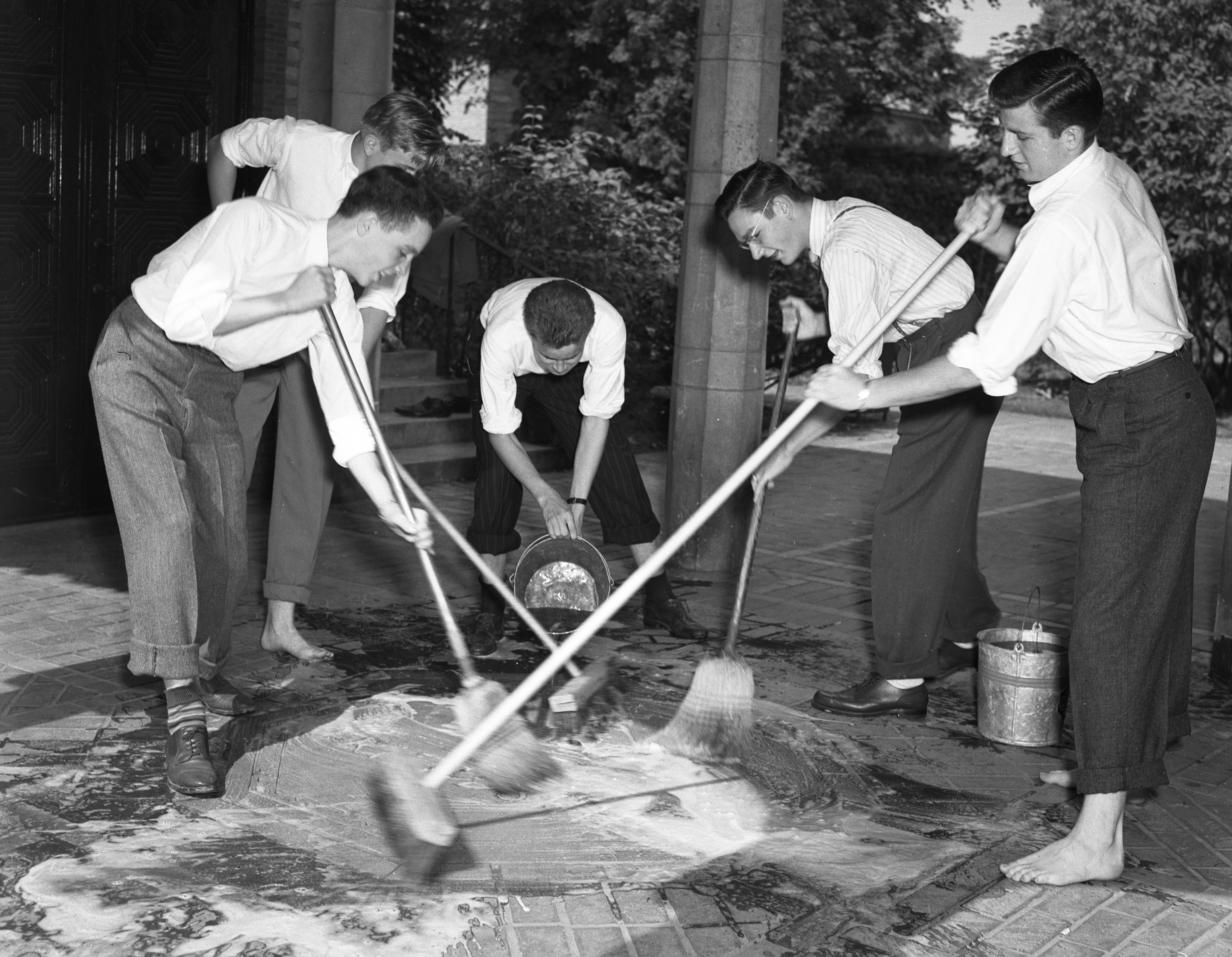
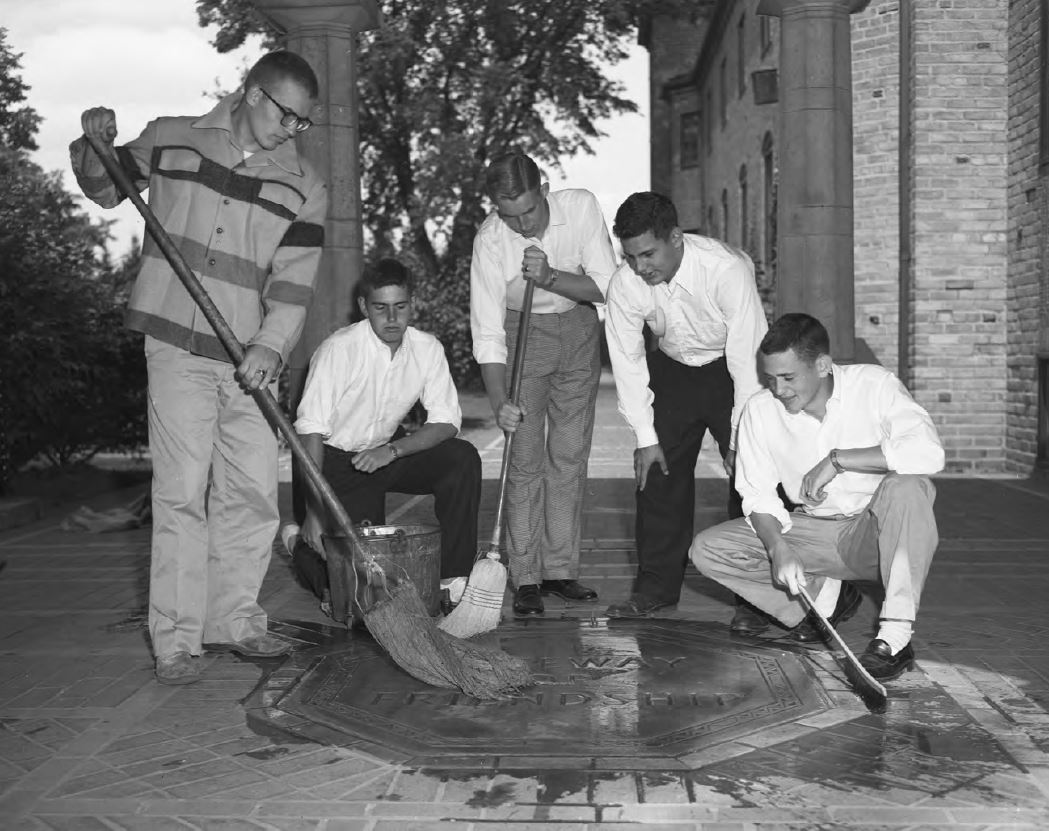
Photo Friday: Foaming Friendship

Prefects scrubbing the Gateway of Friendship plaque, Cranbrook School for Boys. September 18, 1944. Cranbrook Archives.

In the early 1940s, Cranbrook School students Pete Wilson and Tom Tyree wrote a modest suggestion in their “Cranium” column in The Crane student newspaper. The young men, both from the Class of 1943, suggested that students:

…refrain from walking on the plaque in the center of the gateway. It is inscribed “Gateway of Friendship” and it was pointed out that usually we do what we can to strengthen and propagate our friendships rather than trampling on them. The Crane feels this is a good point and a good example of a custom we might start.

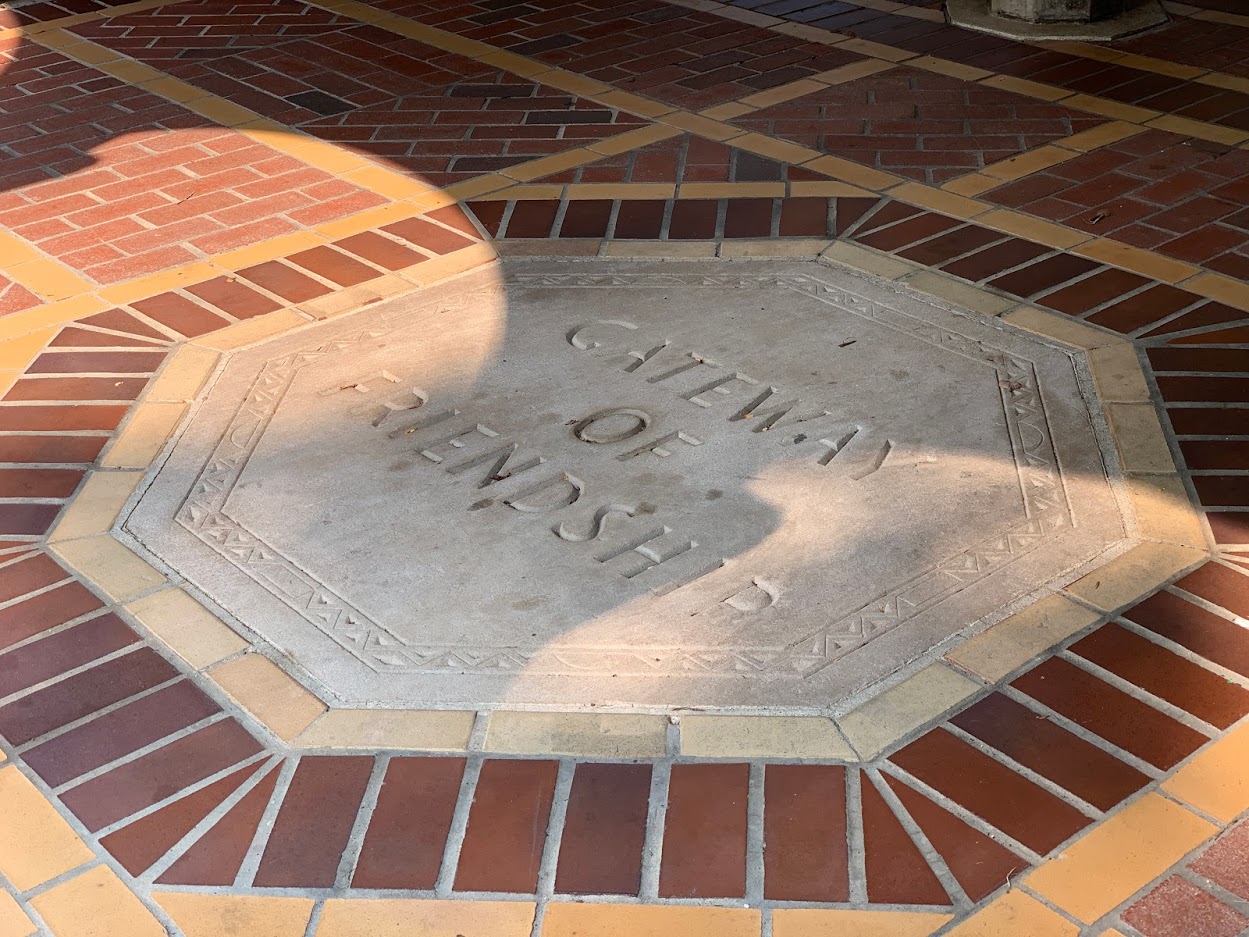
The tradition stuck, and today students resist walking over the octagonal “Gateway of Friendship” plaque. One tradition that hasn’t stuck around, unfortunately: the annual scrubbing of the plaque!

Prefects scrubbing the Gateway of Friendship plaque, Cranbrook School for Boys. September 1953. Cranbrook Archives.

Meant to symbolize the importance of friendship among the Cranbrook community, Cranbrook School for Boys Prefects would clean the plaque at the start of each school year. It’s not clear, looking at the photographs, how clean they got the stone compared to how wet and soapy they got themselves, but it was an important symbolic gesture. In caring for the stone, the boys were demonstrating the spirit of the quotes carved into the archway. One, from James Fenimore Cooper, seems especially relevant:

Friendship that flows from the heart cannot be frozen by adversity as the water that flows from the spring cannot congeal in winter.

While the cleaning ceremony was described as a “sacred rite” in 1976 by Bruce Coulter in his history of the School, Forty Years On, I am not sure when or why the tradition stopped.

Gateway of Friendship plaque, unscrubbed. September 2020. Design attributed to Eliel Saarinen, ca. 1927-1928. Cranbrook Center for Collections and Research.

Cranbrook Schools students returned to class this past Monday for a school year like no other, donning masks and sitting at desks spread six feet apart. Instead of scrubbing the plaque, the most important thing students can wash this year is their hands! Maybe the tradition will return for 2021?

Kevin Adkisson, Associate Curator, Cranbrook Center for Collections and Research

A Tale of Two Chairs

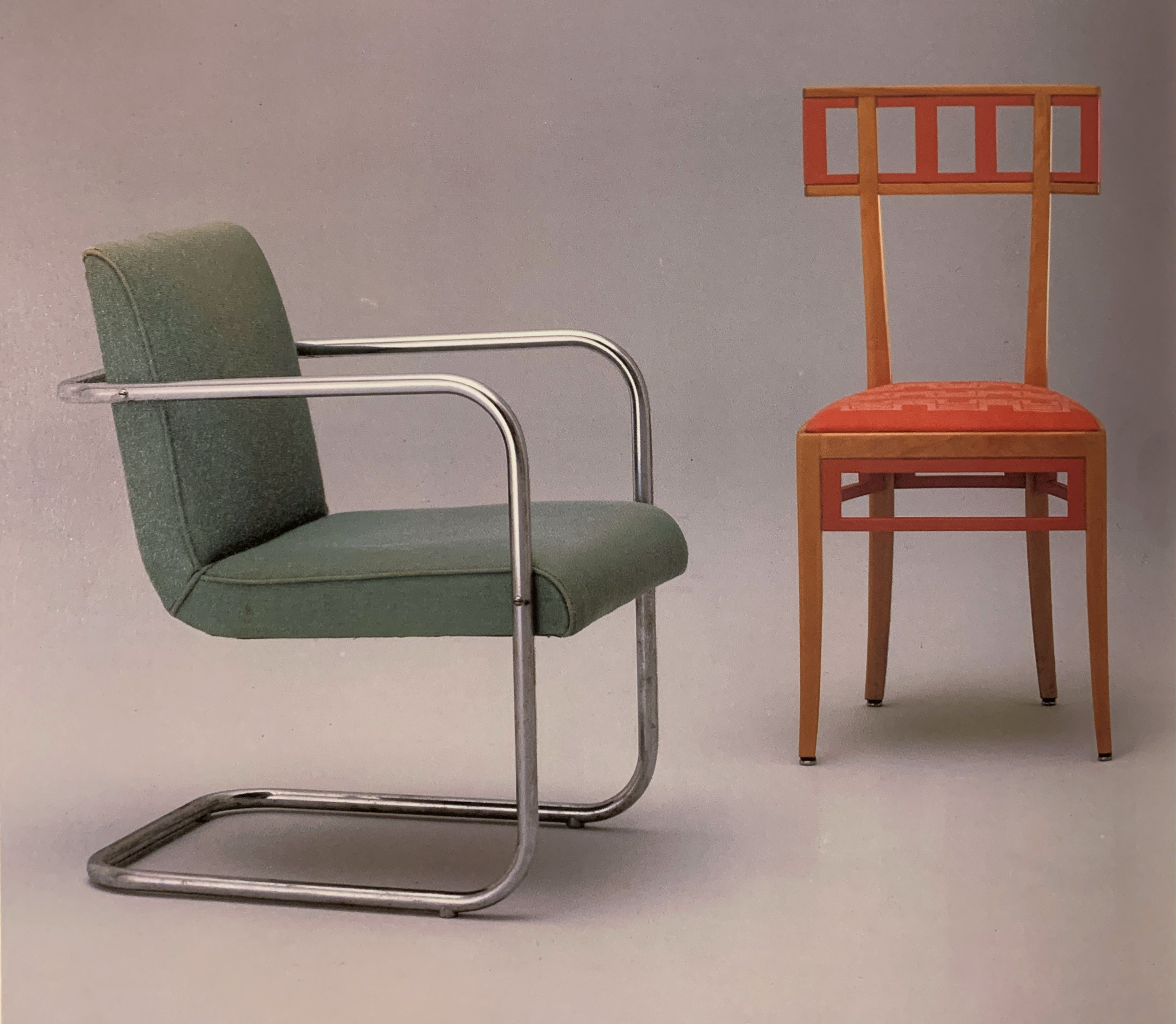
When asked, late in life, about the furniture he designed for Kingswood School for Girls, Eero Saarinen referred to himself as “a child of my period.” Two chairs in particular show how the young, precocious designer was able to work in both traditional and modern modes. As designers in the 1920s and 1930s debated the merits of traditional and modern design, Eero worked with both.

Auditorium and Dining Hall chairs for Kingswood School for Girls by Eero Saarinen, 1929-1931. Cranbrook Art Museum.

He was just 18 years old when he began sketching designs for Kingswood in 1929.  Later that year, he departed for Paris to study sculpture for eight months. These two Kingswood chairs show an understanding of two major European designs trends of the era: the evolutionary Art Deco, with its roots in neoclassical design, and the revolutionary Modern movement, emerging most forcefully out of the German Bauhaus.

First, the Kingswood Dining Hall chairs. These birch wood chairs with painted coral-colored elements and linen damask upholstery are delicate adaptations of the ancient Greek klismos chair. The klismos form, which features curving splayed legs and a concave crest rail, became popular in late-18th-century Europe and America as part of the Greek Revival and the neoclassical style. The form again became a favorite among designers in the 1920s, when its clean lines and soft curves were used throughout Art Deco interiors. Kilsmos chairs were especially fashionable in Scandinavian modern design, with architects and designers like Aino and Alvar Aalto, Gunnar Asplund, Erik Bryggman, and Carl Malmsten producing versions of the chair. In fact, Carl Milles had a set of Malmsten-designed klismos chairs in his Cranbrook dining room. Eero Saarinen’s klismos chairs for Kingswood fit perfectly within the clean lines, rich materials, and Swedish Grace-styling of the light-filled dining hall.

Left: Klismos-stlye chair from Carl Milles House at Cranbrook Academy of Art by Carl Malmsten, manufactured by Firma David Blomberg, designed 1926. Right: Chair for Kingswood Dining Hall by Eero Saarinen, manufactured by Stickley Brothers Furniture Company, designed 1929-1931. Courtesy Cranbrook Art Museum.

Second, a chair that eschews historic forms for the avant-garde: the chrome plated, tubular steel Kingswood Auditorium armchair. Eero Saarinen’s cantilevered design recalls the furniture coming out of Germany in the 1920s, particularly the work of Marcel Breuer at the Bauhaus. Breuer was a twenty-three-year-old student at the revolutionary German design school when, inspired by bicycle handlebars, he ordered tubular steel from the bicycle manufacturer Adler and built the world’s first tubular steel chair in 1925. Architect and president of the Bauhaus Walter Gropius was so taken with the initial tubular steel chair he invited Breuer to design most of the furnishings for the school’s new modern buildings in Dessau.

Continue reading

Weaving Lessons: Ruth Ingvarsson’s Manuscripts

Among the treasures in Cranbrook Archives is a manuscript that, although I can’t read anything written inside, is one of my favorite things at Cranbrook. Bound in handwoven cloth by the author herself, the cover hints at what’s inside. This is Ruth Ingvarsson’s weaving book.

Ruth Ingvarsson’s weaving manuscript, hand-bound in a cloth cover of her own design and execution, ca. 1932-1935. Rigid Swedish-style counterbalanced loom depicted on the front, “R I” on reverse. Copyright Cranbrook Archives.

One of two manuscripts written in Swedish and assembled by Ingvarsson between 1932 and 1935, each of the more than 100 pages discuss different weave structures, materials, patterns, and techniques. Who was Ingvarsson, and how did these treasures end up at Cranbrook?

Rut “Ruth” Elisabeth Ingvarsson was born on October 1, 1897 in Glemminge, Skäne, Sweden. Like many Scandinavian girls, she learned weaving first from her mother and then at school, graduating from the Glemminge Folkskola in 1918. In 1922, Ingvarsson began studies at the celebrated weaving studio of Märta Måås-Fjetterström in Båstad, Sweden.

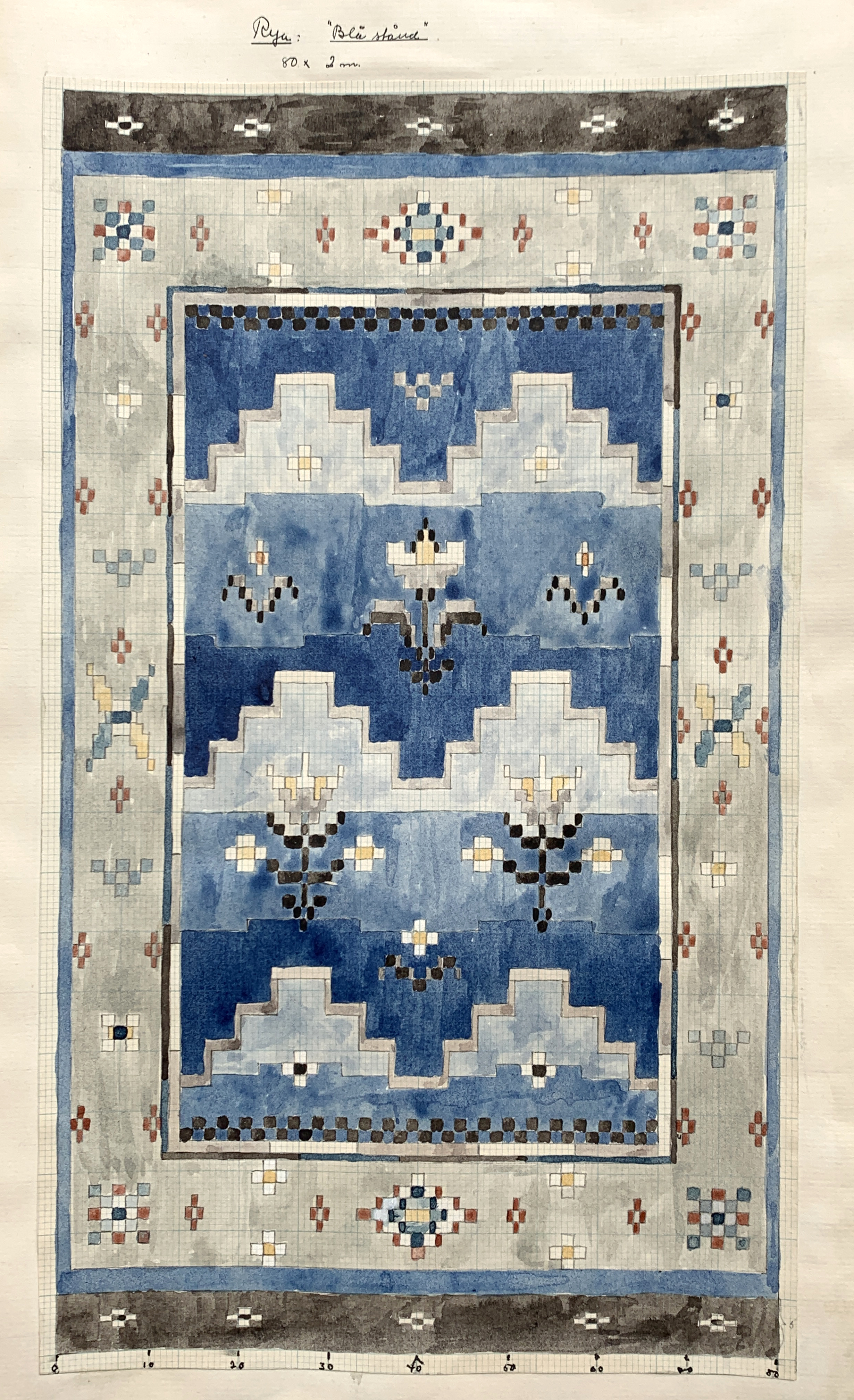
Ingvarsson continued working for Måås-Fjetterström until 1928, learning technical skills including knotted pile rya or flossa weaves, rölakan flatweave, and a discontinuous (or supplemental) weft style of tapestry weaving known as the MMF technique. Under Måås-Fjetterström, Ingvarsson developed great skill painting watercolor sketches on graph paper in the popular “Swedish Grace” (or “Swedish Modern”) style. She also befriended another young weaver, Lillian Holm, who entered into the Måås-Fjetterström studio in 1926.

Watercolor of a rug design in the “Swedish Grace” style by Ruth Ingvarsson in her untitled manuscript on weaving, ca. 1932-1935. Copyright Cranbrook Archives.

In late 1929, Ruth Ingvarsson and Lillian Holm immigrated to America to start work that December at Studio Loja Saarinen, Cranbrook’s weaving workshop. Here, Ingvarsson executed designs from Loja herself and other members of the Saarinen family, as well as designs by the Studio’s shop supervisor and prominent Swedish weaving expert Maja Andersson Wirde.

Continue reading

Stuck in the Mud

As Michigan emerges from our lockdown and we slowly begin driving to more places and contemplating summer road trips, I thought we’d look back to a time before asphalt, air conditioning, and safety features.

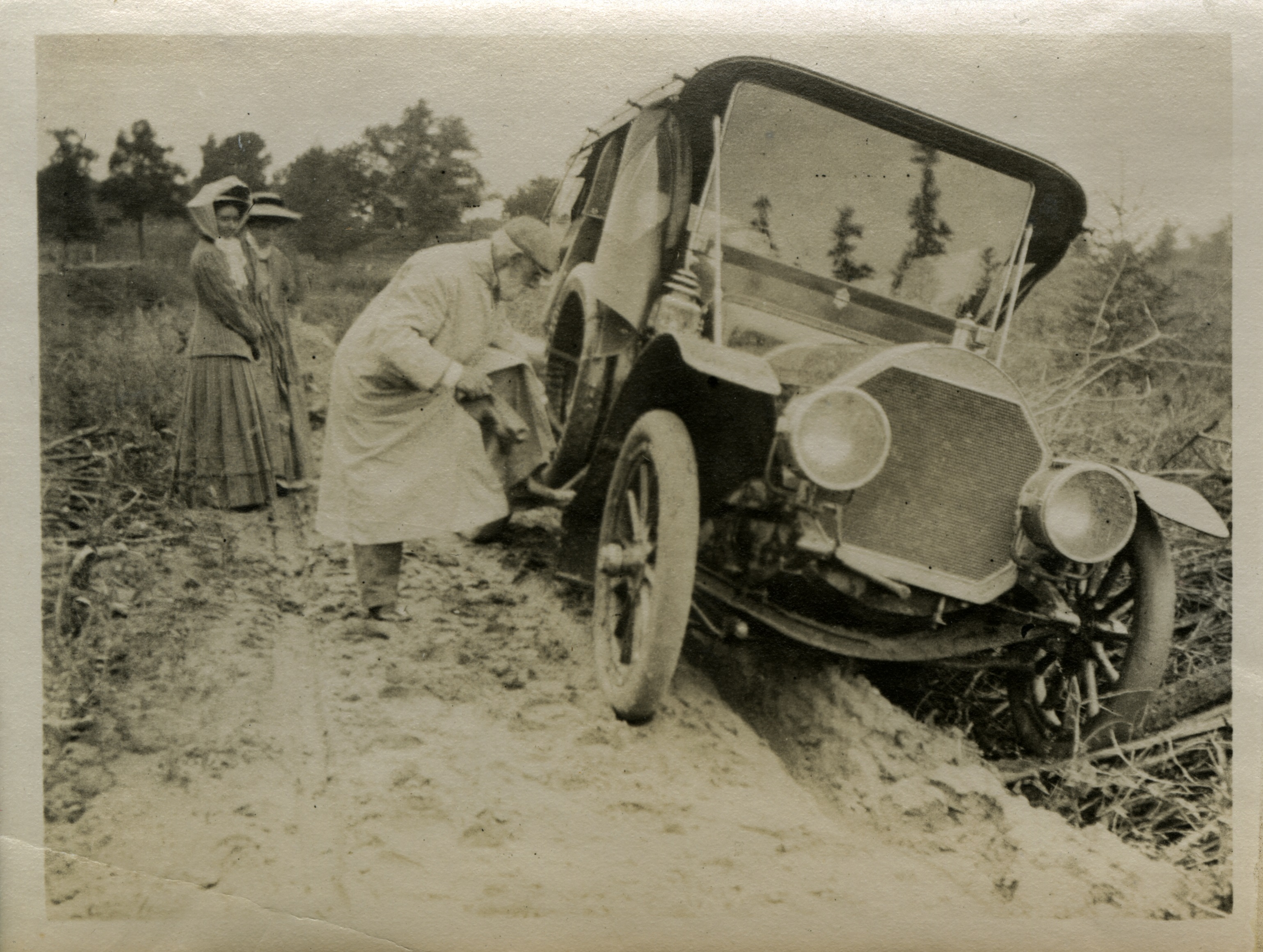
Ellen Scripps Booth, Jean McLaughlin Booth and Henry Scripps Booth on Lahser Road with the 1908 Pierce-Arrow in the ditch, 1911. Courtesy Cranbrook Archives.

Here, we see Ellen Scripps Booth, daughter-in-law Jean McLaughlin Booth, and young Henry stranded somewhere along Lahser Road. I love the ladies’ wide hats and wraps, intended to keep their hair in and dust out. Henry looks particularly pleased with the situation (sort of like me when my own mom got a speeding ticket—she didn’t appreciate my backseat smirking, either).

Instead of AAA, the family turned to their own skills. Here’s Henry Wood Booth, Ellen’s father-in-law, addressing the situation:

Henry Wood Booth works on the Pierce-Arrow on Lahser Road, 1911. Courtesy Cranbrook Archives.

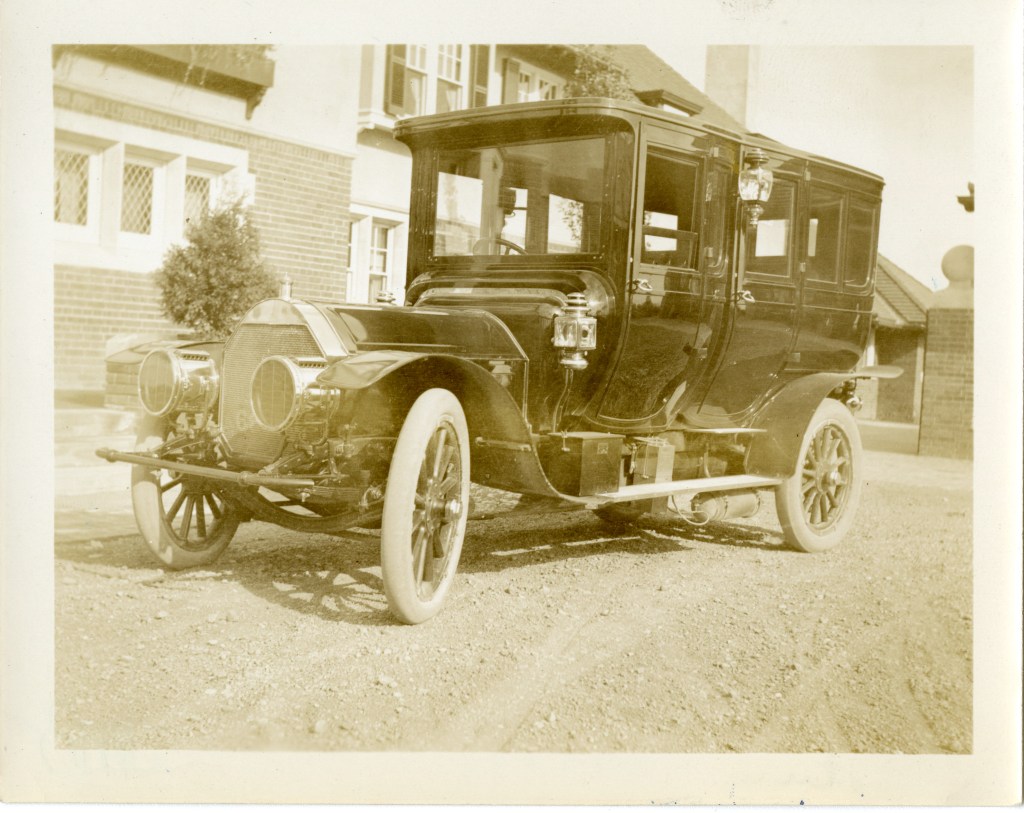
The Booth family’s Pierce-Arrow Limousine was one of several cars they used to move about here in Michigan and in Europe (where they traveled with the Pierce-Arrow and chauffeur). Purchased for $7,750 in July 1908 ($215,984.08 in 2020), the seven-seater, 6-cylinder touring car came with two bodies: a closed limousine body for winter use and a sports-touring body for summer. As Henry Scripps Booth later wrote:

The original garage at Cranbrook House had a traveling crane in it so the Pierce-Arrow’s winter and summer bodies could be conveniently changed with the seasons.  The crane spanned the depth of the garage, having an iron track bolted to the east and west walls on which the crane with a hand operated hoist could be pulled to the spot where the two respective bodies could be removed or hoisted into place. 

The accident on Lahser Road wasn’t the first time Ellen had been betrayed by poor road conditions. In 1908, she wrote in her diary of a similar event that took place as the family traveled from Grand Rapids to Lake Michigan:

“Wed. Aug. 12. We decided to take the auto as far as Holland on the way to Ottawa Beach but I wish we hadn’t for it took us five hours to go the 25 miles—We got off the road and one place slid into a ditch. It took an hour & a half to get a team to pull us out. We later frightened a horse and it ran down this deep ditch and horse, top-buggy and all just lay right down flat. The old couple in it were not hurt at all.”

If you want to learn more about the history and social impact of cars, register for our free virtual Bauder Lecture this Sunday, June 28, 2020, at 3:00pm EST. Brendan Cormier, Senior Design Curator at the Victoria and Albert Museum in London, will be speaking about his recent exhibition and publication, Cars: Accelerating the Modern World. Center for Collections and Research Director Greg Wittkopp will deliver an introduction about Cranbrook and cars, featuring more treasures from Cranbrook Archives relating to our place in automobile history.

—Kevin Adkisson, Associate Curator, Cranbrook Center for Collections and Research

What’s in a Brick?

There are many beautiful bricks around Cranbrook’s campus. From the Roman brick details at Cranbrook School, the buckskin “Cranbrook brick” at the Academy and Institute of Science, or the beautiful green and gold bricks of Kingswood, Eliel Saarinen was a master of the ancient building material.

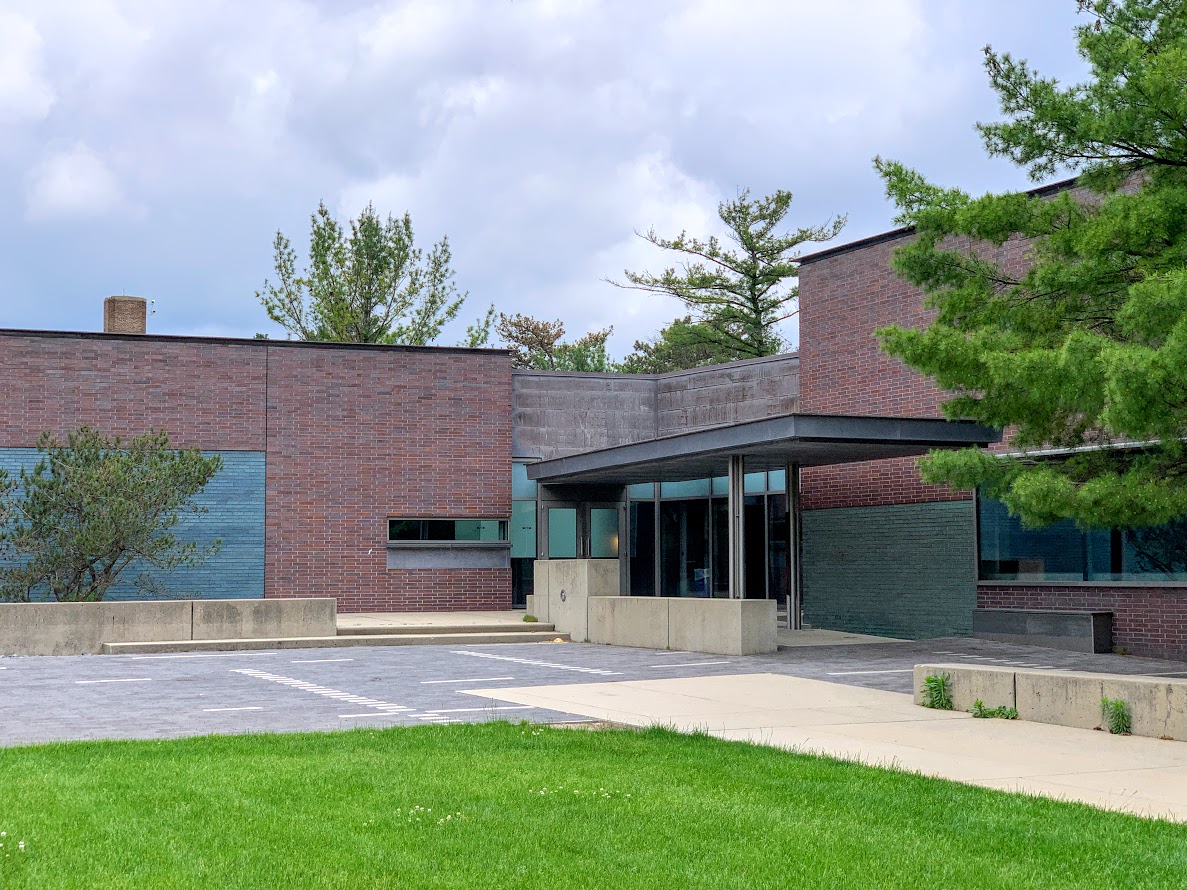
The richness of this legacy made architects Tod Williams and Billie Tsien extremely diligent in specifying materials for their own addition to campus, the Williams Natatorium. Completed in 1999 and sited within the heavily wooded area adjacent to the Saarinen-designed Keppel Gymnasium, the 26,000-square-foot swimming facility features very few details that are not custom made. This includes the bricks.

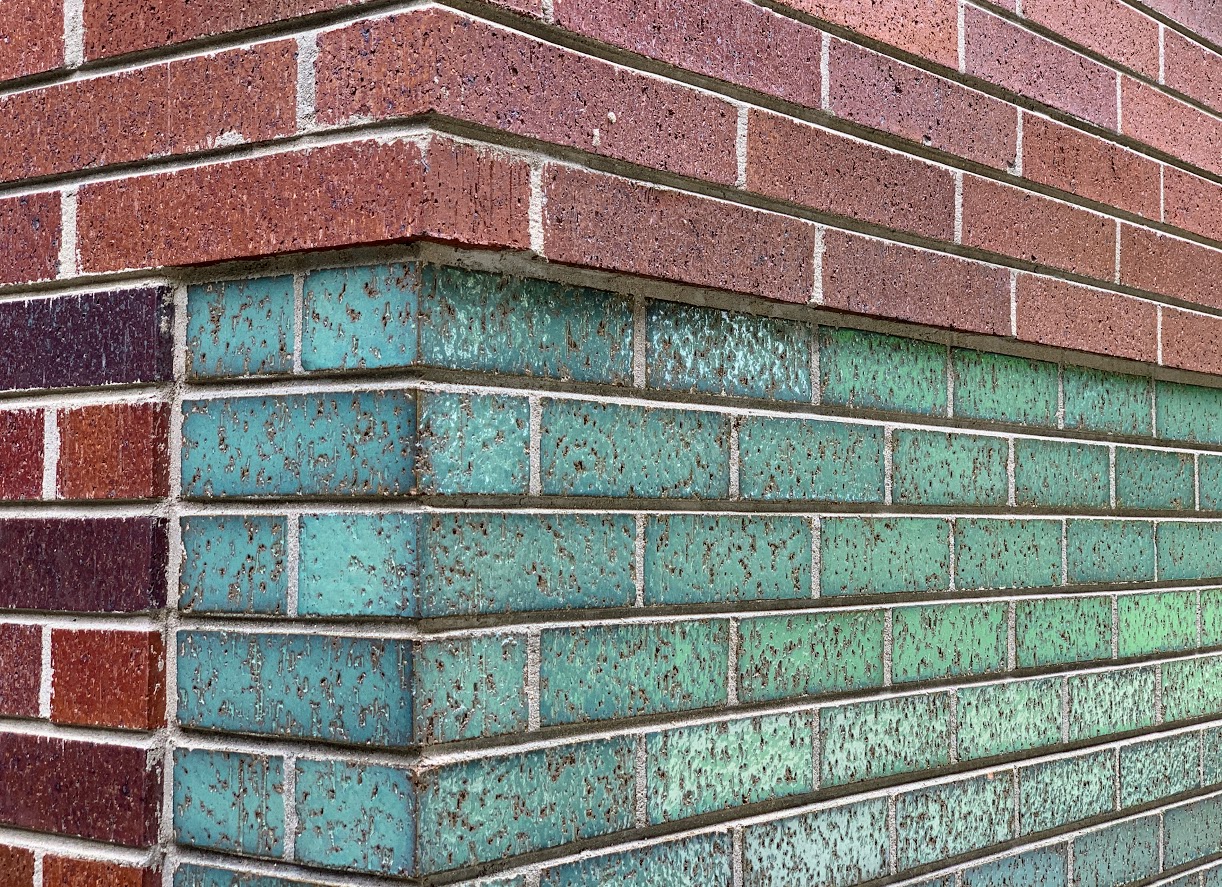
The entrance to the Cranbrook Natatorium, showcasing purple Norman brick, glazed blue and green brick, concrete, and lead-coated copper. Courtesy Cranbrook Center for Collections and Research.

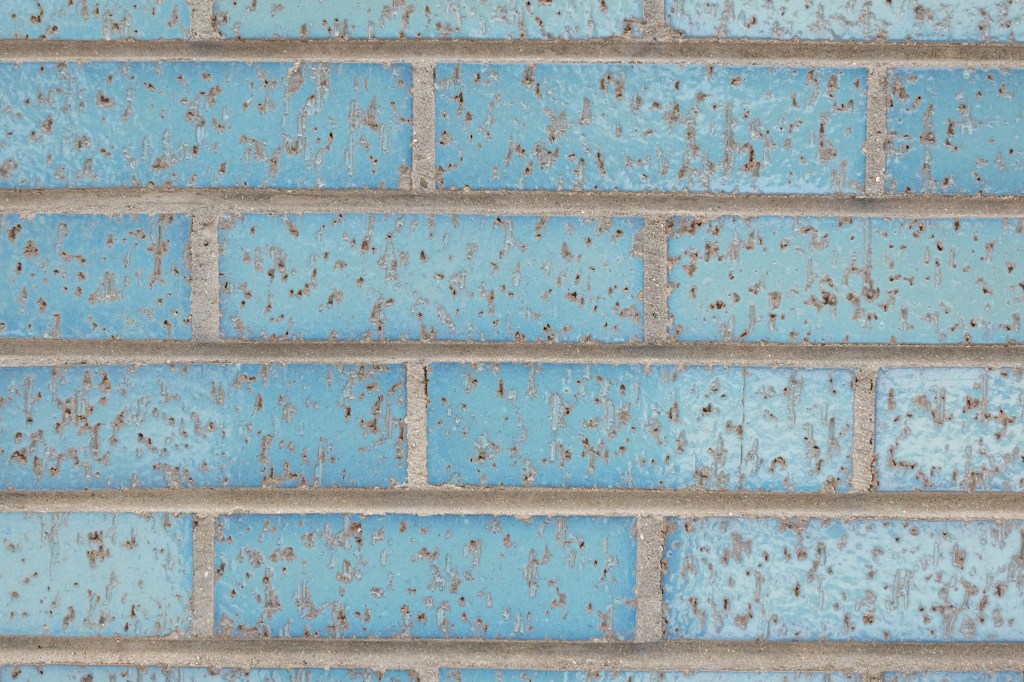
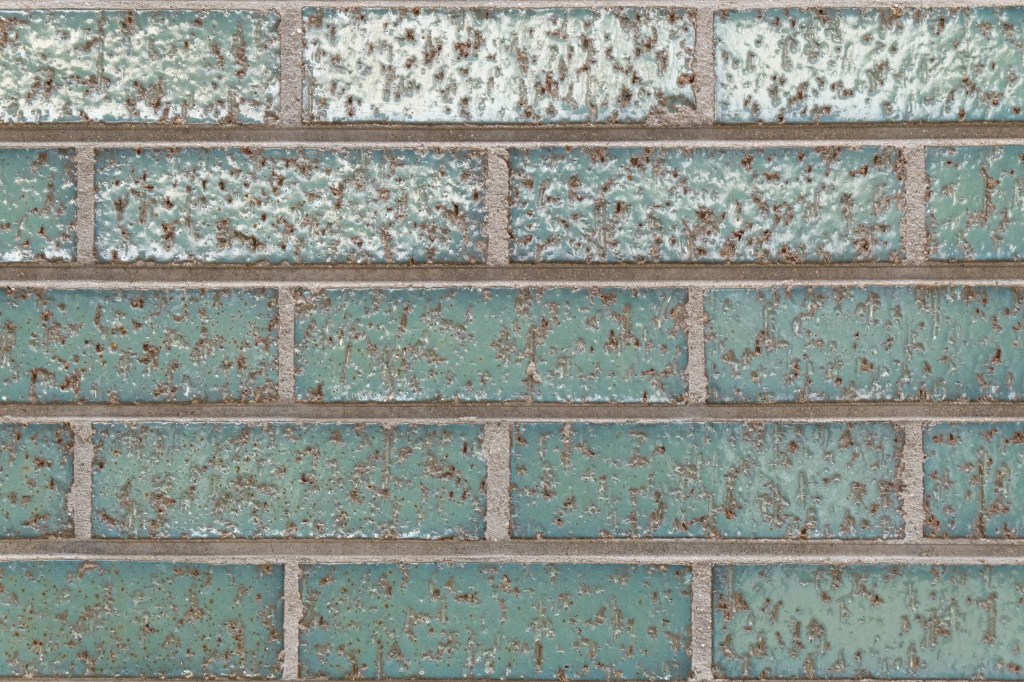
The architects wanted glazed bricks (a material famously used by Eero Saarinen at the General Motors Technical Center), but they couldn’t find any product available on the market that meet their needs. Project architect Martin Finio told Construction Association of Michigan Magazine (Fall 2000) that:

Typical glazing tends to resemble a painted surface. The glaze becomes the object of interest. The brick behind it could be anything. What we were interested in was trying to find a way of glazing brick in such a way that you can feel the body of the brick through it.

The architects turned to Endicott Clay of Fairbury, Nebraska to help craft custom glazed brick, with a base of ironspot brick the company already produced. In ironspot bricks, manganese in the clay creates dark spots when fired. The goal for Cranbrook was to have these spots remain visible behind the glaze.

After receiving dozens of sample test glazed bricks that weren’t what the architects wanted, Martin Finio, Billie Tsien, and project manager Gary Scheuren traveled to Nebraska to learn more about the process and to work on getting the Natatorium bricks just right. When they arrived, Tsien saw a stack of samples Endicott Clay had deemed failures, rejected, and never sent to the architects in New York. Within the trash pile was the exact finish the architects wanted. Endicott Clay simply reverse engineered the once-rejected bricks and made enough mottled blue and green glazed bricks for the building.

Beyond the colors’ ties to water and earth (appropriate for a pool in the woods), the specific shade of blue and green have special Cranbrook associations. The blue is the famed “Grotell blue” of Cranbrook’s longtime Head of Ceramics, Maija Grotell, while the green relates to the lovely shades of aqua used by Pipsan Saarinen Swanson inside Kingswood and that building’s great patinated copper roof.

The Norman bricks above the green glazed bricks. Notice the raked horizontal mortar lines. Cranbrook Center for Collections and Research.

Alongside the glazed bricks, the architects specified manganese ironspot Norman bricks in deep purple. Norman bricks are longer than standard bricks and enhance the horizontality of the building. Using a tradition made famous by Frank Lloyd Wright and also used by Eliel Saarinen at Cranbrook, the horizontal mortar is raked and the vertical mortar is flush, casting the horizontal joints in shadow and increasing the sense of compression across the façade.

This hinge joint of blue glazed and purple Norman bricks terminates the east-west axis running from George Booth’s office in Cranbrook House, past the Art Museum and Orpheus fountain, and to the Natatorium. Daniel Smith, photographer. Cranbrook Center for Collections and Research.

Other materials used on the exterior of the Natatorium include cast in place concrete (sandblasted to give it a warmer feel and richer texture), warm toned ground-faced concrete block (custom made in Grand Blanc), Honduran mahogany, Mexican river rock, and Pietra Cardosa Italian slate.

—Kevin Adkisson, Curatorial Associate, Cranbrook Center for Collections and Research

Getting a Green Roof

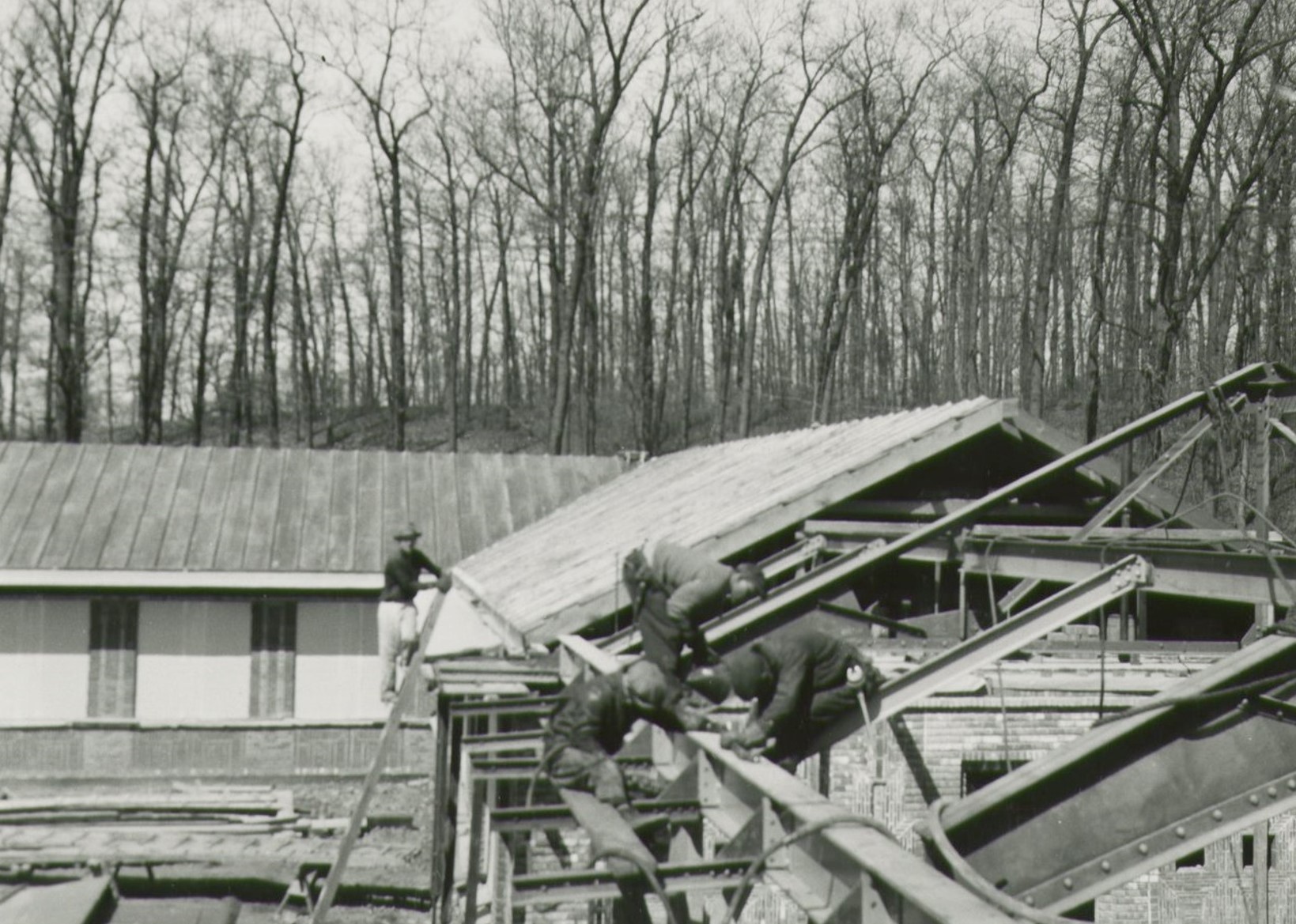
In the Architectural Forum of January 1932, an advertisement announced that 160,000 pounds of 16-ounce Anaconda Copper had been used for the newly opened Kingswood School Cranbrook. There are copper gutters, cornices, louvers, moldings, and chimney covers, but most impressive is the 90,000 square foot batten seam copper roof.

Kingswood Roof Construction Copyright Cranbrook Archives

Workers assembling the roof structure above Unit A, the classroom wing of Kingswood School for Girls. The copper roof behind them is already installed. No barrels of uric acid can be spotted in construction photos. c. 1931. Copyright Cranbrook Archives.

There was just one problem with the new copper roof: it was installed with rolls of bright, new-penny-orange, sheet copper. Eliel Saarinen wanted a green roof, and I think he wanted it quickly.

Yes, he could have waited for the shiny new copper to patinate naturally from rain, humidity, and time. But who has the patience for natural aging when you have an architectural tour de force to complete? Instead, Saarinen turned to chemistry. Using a historic technique common in Europe, the contractor, A. C. Wermuth, directed his workmen to collect their urine in small jars and transfer it to barrels on site. These barrels were then hoisted to the ridge line of the roof, where the pungent catalyst was poured down the copper slope and then spread evenly with brooms.

Science did the rest, and Saarinen got his verdigris color which the Architectural Forum described as a “neutralized complement” to the warm tan brick and buff Mankato stone walls which “harmonized admirably with the heavy foliage of the location.”

Kingswood Early Slide c 1940 Copyright Cranbrook Archives

Color slide of Kingswood School for Girls showing the harmony between landscape, building mass, and materials. c. 1940-1945. Copyright Cranbrook Archives.

The story of more than just rain tinkling on the roof is recorded in Archives as told to former archivist Mark Coir by Dominick Vettraino, who grew up at Cranbrook and served as our landscaper, fireman, superintendent, and jack-of-all-trades. I was asked about the story of peeing-on-the-roof this week by an Upper School chemistry teacher, who’d heard the rumor and is now using it in her lessons for students stuck at home. You, too, can run the experiment: you just need to have a glass, a penny, and be hydrated!

Just like rust develops on iron, patina develops on copper when left exposed to the elements. The copper sulfate on the surface reacts to oxygen in the environment. Unlike rust, the patina actually protects and preserves the copper. However, copper doesn’t turn green quickly: it can take twenty to thirty years for copper to become green! Uric acid can significantly speed up the process. The fact that the Kingswood roof is quite green in early color photos does reinforce the idea that they used a catalyst to age the roof.

The entire copper roof was recycled and replaced in two phases, from 1998 to 2002 and from 2005 to 2007. In the replacement, the copper patination was not accelerated. The fact that the replacement roof is still not green, seventeen to thirteen years on, is to be expected. The roof quickly changed from bright orange to dull brown, and then slowly toward the purplish black you see today. However, I am noticing this spring that when you look at the section of 2002 roof at an acute angle, it’s distinctly turning green at the seams!

05-Cranbrook-Kingswood-School-Copper-Roof-Replacement-HIstorical-Building-Renovations-by-CASS-Detroit-MI-500w

Progress on the new roof. Phase one, completed in 2002, is at the far left and already dull brown. The original (though urethane coated) roof is at right. The new copper roof is shining at the center. May 27, 2006. Courtesy of C.A.S.S. Sheet Metal Specialist, Detroit.

The current color of the roof disappoints many graduates, but in time, it will return to the beautiful green color Saarinen and Wermuth achieved through their very affordable, if not very polite, method. And if you were at Kingswood between 1988 and the new roof replacement: you weren’t seeing a green patina, but a mint-green urethane coating sprayed on the entire roof to (unsuccessfully) slow the leaks!

—Kevin Adkisson, Curatorial Associate

PS: Between the joined “Studio #3” and “Dorm # 2” at the Academy, built in 1932 and 1936 respectively, there is a visible difference between the color of the two copper roofs where the patination has never matched. This can be attributed to different batches of copper. In the new Kingswood roof, every delivery of copper sheeting and copper solder delivered to the site was tested for quality and composition: we wouldn’t want the roof to change color irregularly.

From Concept to Cover

The General Motors Technical Center is one of Eero Saarinen’s most acclaimed projects. Dedicated in 1956, the “Corporate Cranbrook” was years in development, starting with initial designs by Eliel Saarinen and J. Robert F. Swanson (with Eero consulting) in 1945.

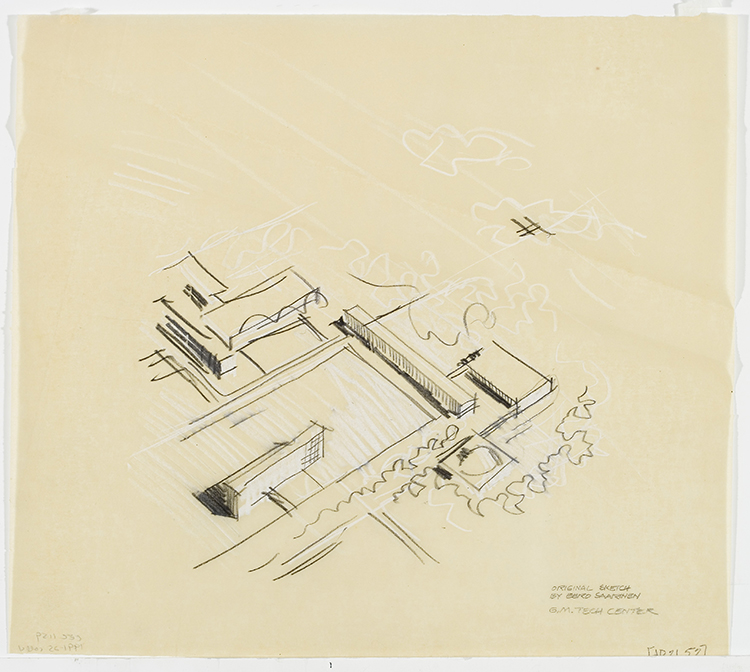
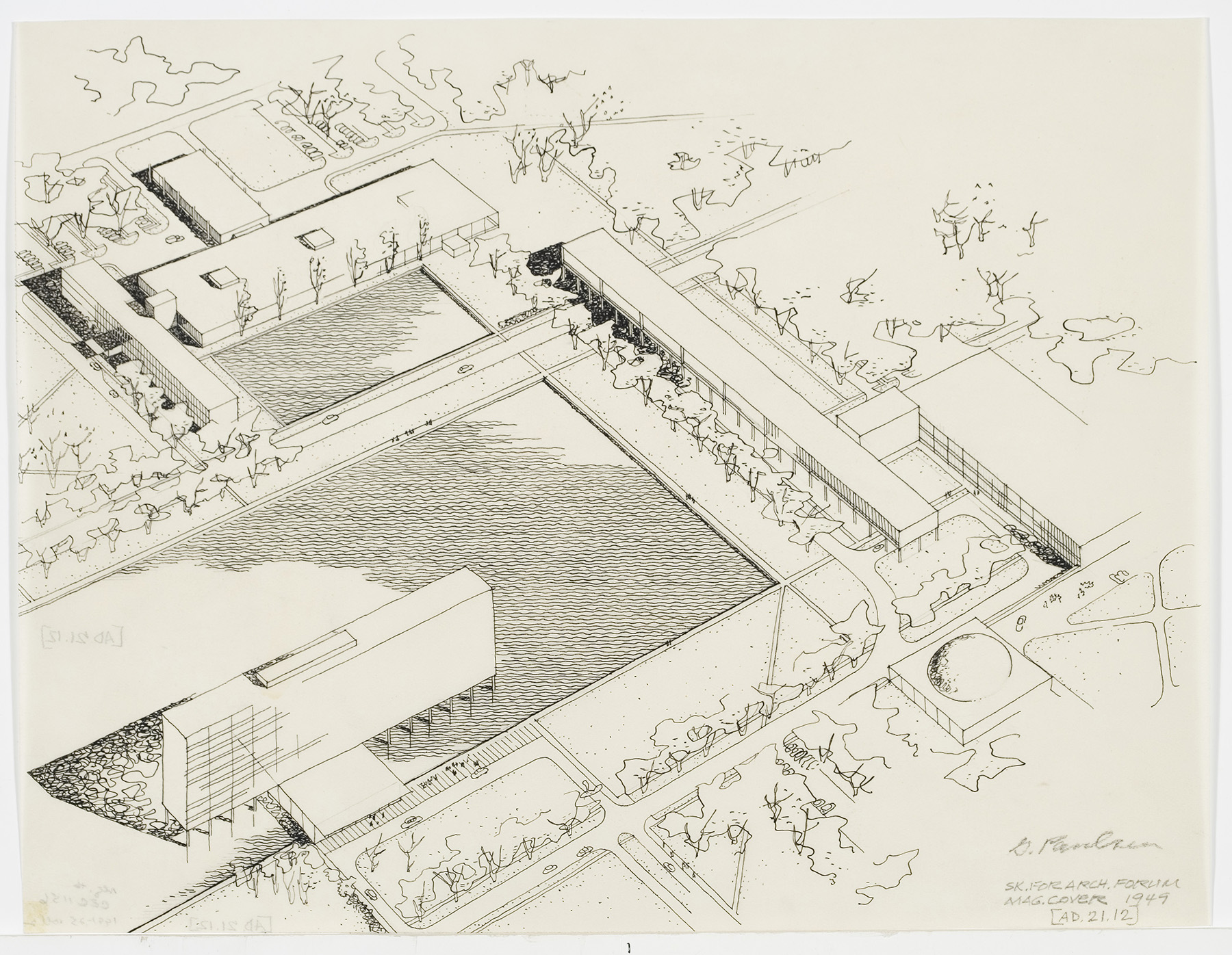
After a hiatus in the project by GM and reorganization of the Saarinen Swanson office, Eero completely redesigned the scheme in late 1948. The new design is high modernism at its finest: clean lines, experimental materials, and a lot of flat roofs. We can see Eero’s boxy proposal here, a treasured sketch from Cranbrook Archives:

Eero Saarinen GM Tech Center Sketch Small ad21-12

Eero Saarinen sketch of General Motors Technical Center, Warren, Michigan, 1949. Copyright Cranbrook Archives.

As the son of a world-famous architect building for one of America’s greatest companies, the project drew lots of attention well before it opened. Architectural Forum, in fact, featured the Tech Center as its cover story in July 1949. But what to show of the yet-constructed campus?

Glen Paulsen Eero Saarinen GM Tech Center Rendering ad21-12

Glen Paulsen drawing depicting Eero Saarinen’s proposed General Motors Technical Center, Saarinen Saarinen and Associates, 1949. Copyright Cranbrook Archives.

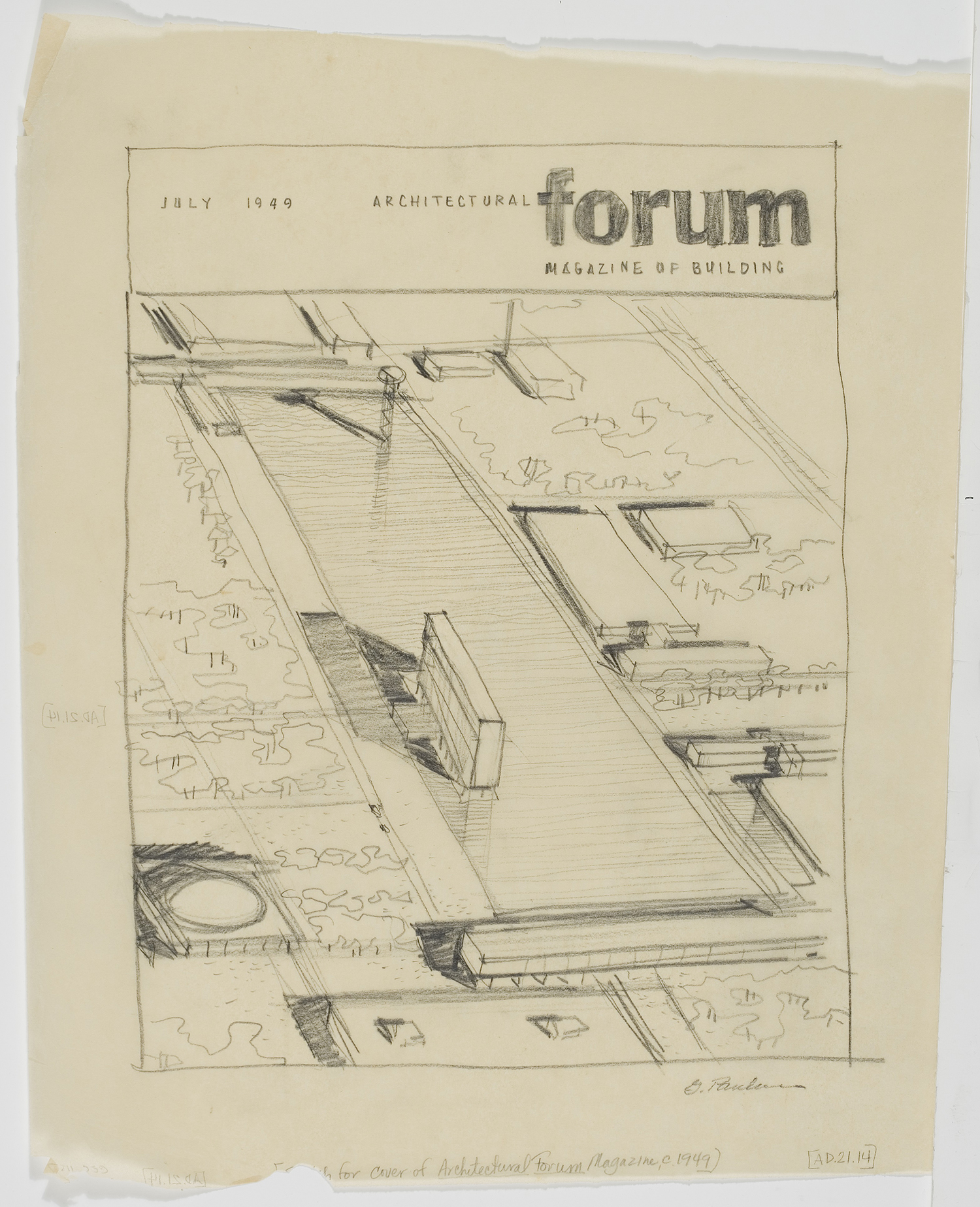
Eero turned to a talented young architect in his office, Glen Paulsen, to delineate the Tech Center for the magazine cover. Paulsen was known for his complex and sophisticated architectural renderings, and had worked for various firms as a renderer before coming to Saarinen’s office in 1949 as a design architect.  He sketched out several different options for Forum , and my favorite includes the entire layout of the cover, not just the buildings:

Arch Forum July 1949 Glen Paulsen rendering Eero Saarinen ad21-14

Concept art for cover of Architectural Forum by Glen Paulsen, depicting Eero Saarinen’s proposed General Motors Technical Center, Saarinen Saarinen and Associates, 1949. Copyright Cranbrook Archives.

Finally, in June 1949, the magazine hit the presses with a crisp, color drawing by Glen Paulsen depicting Eero’s General Motors Tech Center.

Architectural Forum July 1949 Glen Paulsen cover for Eero Saarinen

Architectural Forum 91, no. 1 (July 1949). Cover art by Glen Paulsen of Saarinen Saarinen and Associates. Courtesy of Cranbrook Academy of Art Library.

—Kevin Adkisson, Curatorial Associate

A New Cranbrook House

January has been busy with research for my upcoming History of American Architecture: Cranbrook in Context lecture series. In preparing for the first lecture, which examines Cranbrook House and the larger Arts and Crafts movement, I found myself deep in the Archives looking through the architectural sketches of George Booth.

Around 1932, George Booth considered converting Cranbrook House into a home for both the Art Museum and the Institute of Science. With this proposal, the Booths would need a new “Cranbrook House.”

Mr. Booth sketched two plans for building south of the existing manor home, in the meadow along Lone Pine Road.

IMG_4684

Caption written by George Gough Booth in pencil at a later date: “Scheme for a moderate sized residence for G.G.B. & E.S.B. on lawn directly south of Cranbrook House facing Lone Pine Road, by G.G.B. 1932 & considered in connection with plan to turn Large Residence over to Foundation for Educational Purposes. Museum—Library—School of Music, etc. etc.” Cranbrook Archives.

The simple, rectangular house is strikingly similar to the original plan of Cranbrook House from 1908 (before its 1918 and 1922 expansions), rotated 180 degrees. A front vestibule opens into a cross gallery, centered on a fireplace. Beyond is a long, 18 by 32 foot living room. A library and large dining room flank either side, with the only other public room being a reception hall.

A stairway surrounding an elevator shaft connects to a second floor with two bedrooms (one for George and one for Ellen) joined by a sitting room, again mirroring the original configuration of rooms at Cranbrook House. Even the double bay windows of the bedrooms match the double bay windows on the northern plan of Cranbrook House.

The problem of symmetrical houses is that not everything generally fits in a pleasingly symmetrical way. George’s solution to this problem, like many architects before and since, is to add a service wing for the kitchen, maids’ rooms, and storage.

IMG_4689

Caption written by George Gough Booth in pencil at a later date: “Suggestion for personal house (?) South of homestead.” c. 1932. Cranbrook Archives.

In what I presume to be a later sketch, the plan is further refined. Here, the vestibule sits more comfortably under the stairway, leading guests directly into the long gallery and living room beyond–one would see directly from the front door out of the living room window. The proportions of this proposed house are smaller, and the service wing substantially smaller (and even appears added on by Booth as a later sketch). The entire house is more symmetrical and regular, and there are fewer service spaces.

Had the Booths moved out of Cranbrook House, what did George envision happening with the space? Well, Booth sketched ideas of how Cranbrook House would be converted into an educational facility.

full plan cranbrook house addition2

Proposed modifications and additions to Cranbrook House, for its conversion to use by the Institute of Science and Art Museum, by George Gough Booth, c. 1932. Cranbrook Archives.

The first floor of the house remained largely intact (though another plan shows subdividing the reception hall for offices). The kitchens were to be removed and converted to galleries, and the living room and sunset porch converted to a conference room and lounge. West of the 1918 Library wing offices was to be a large room for the Cranbrook Foundation and then a very large building of smaller rooms, including a library and assembly room. It is unclear what the smaller rooms are, but in one plan, they are drawn identically to Booth’s sketches for the Institute of Science’s research wing.

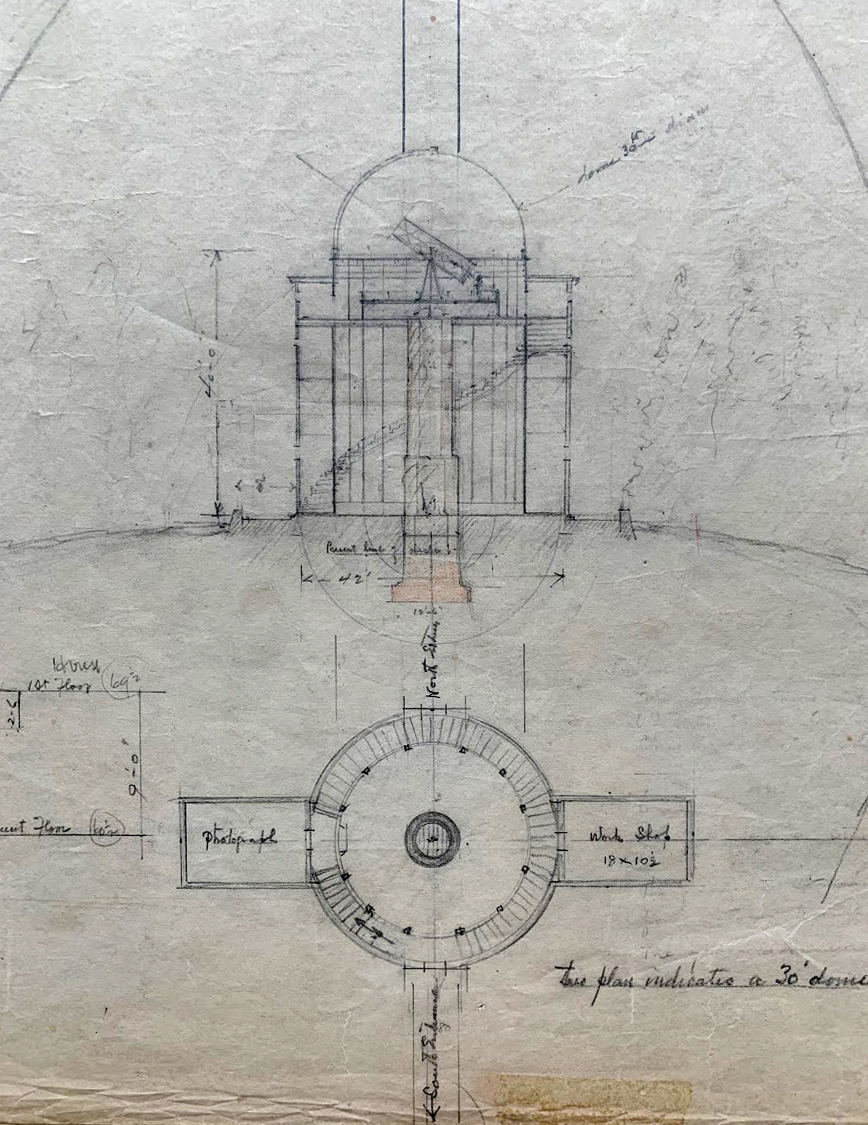
detail of ggb forum2

Proposed “Forum” (Observatory) on the “Mountain” south of Cranbrook House, sketch by George Gough Booth. Detail from the above plan. Cranbrook Archives.

The idea that Booth intended portions of the house to be dedicated to the Institute is further supported by what might be my favorite of George Booth’s unrealized plans for Cranbrook House: the transformation of the reproduction Fountain of the Tritons atop the “Mountain” south of the auto court into an observatory!

new second floor

Proposed modifications to the second floor of Cranbrook House for its use as gallery space, by George Gough Booth, c. 1925-1935. Cranbrook Archives.

On the second floor, the series of family bedrooms and bathrooms, as well as the warren of service spaces, would have been cleared out, windows boarded up, and a series of interconnected galleries created. The bedrooms (not bathrooms) of George and Ellen were to remain intact as offices–previews to their use now as Cranbrook’s President’s suite of offices.

While the Booths did eventually leave Cranbrook House and its contents to the Cranbrook Foundation, they remained living in the house until their deaths in 1948 and 1949. The area where George proposed building their new residence is today the location of the Cranbrook House Parking Lot.

You never know what you’ll find in Cranbrook Archives!
Kevin Adkisson, Curatorial Associate

A Mexican Adventure & South American Sojourn

Cranbrook’s founders George and Ellen Booth loved to travel, collecting memories and mementos wherever they went. With Europe at war in 1939, they headed south—way south!

The Booths explored Mexico from the ancient Mayan ruins of Chichen Itza to bustling Mexico City. Along for the journey was their nurse and traveling companion, Nellie Beveridge. We’re lucky Nellie was there—her camera documented the journey. Unlike other trips the family made, where we can reconstruct detailed itineraries through letters, postcards, and even menus in Cranbrook Archives, there’s not a lot of documentation about this trip other than Nellie’s slide images:

This slideshow requires JavaScript.


Two years later, in the Spring of 1941, George, Ellen, Nellie Beveridge, and Nellie’s camera set sail from New York City aboard the Grace Line South American Cruise. The six-week journey started in Barranquilla, Colombia; moved through the 44-miles of the Panama Canal; and down the South American coast, stopping in Ecuador, Peru, Chile, and across land to Buenos Aires.

This slideshow requires JavaScript.

Looking closely at the photographs, we see highlights of the trip included a ride on one of the many funiculars of Valparaiso, Chile, visits to more ancient sites, museums, and markets, and a journey on “the Chair,” a hand-powered lift in the port of Mollendo, Peru.

Inspired by the Booth’s adventures, for this year’s Holiday Splendor event at Cranbrook House we’ve brought together a selection of slide images and items from the 1939 and 1941 trips, along with objects from Latin and South America held at Cranbrook Institute of Science and folk art decorations from Mexico and Peru.

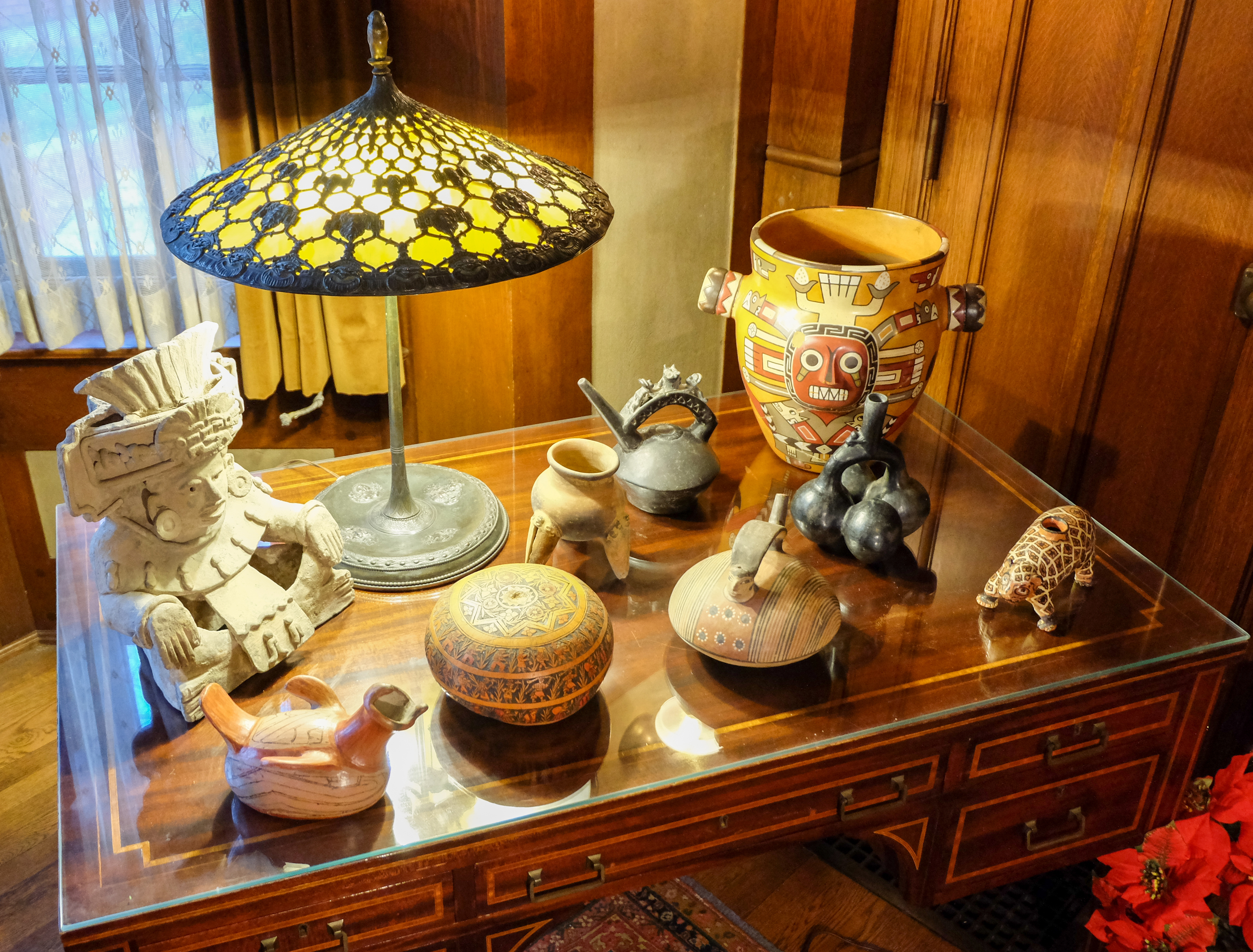
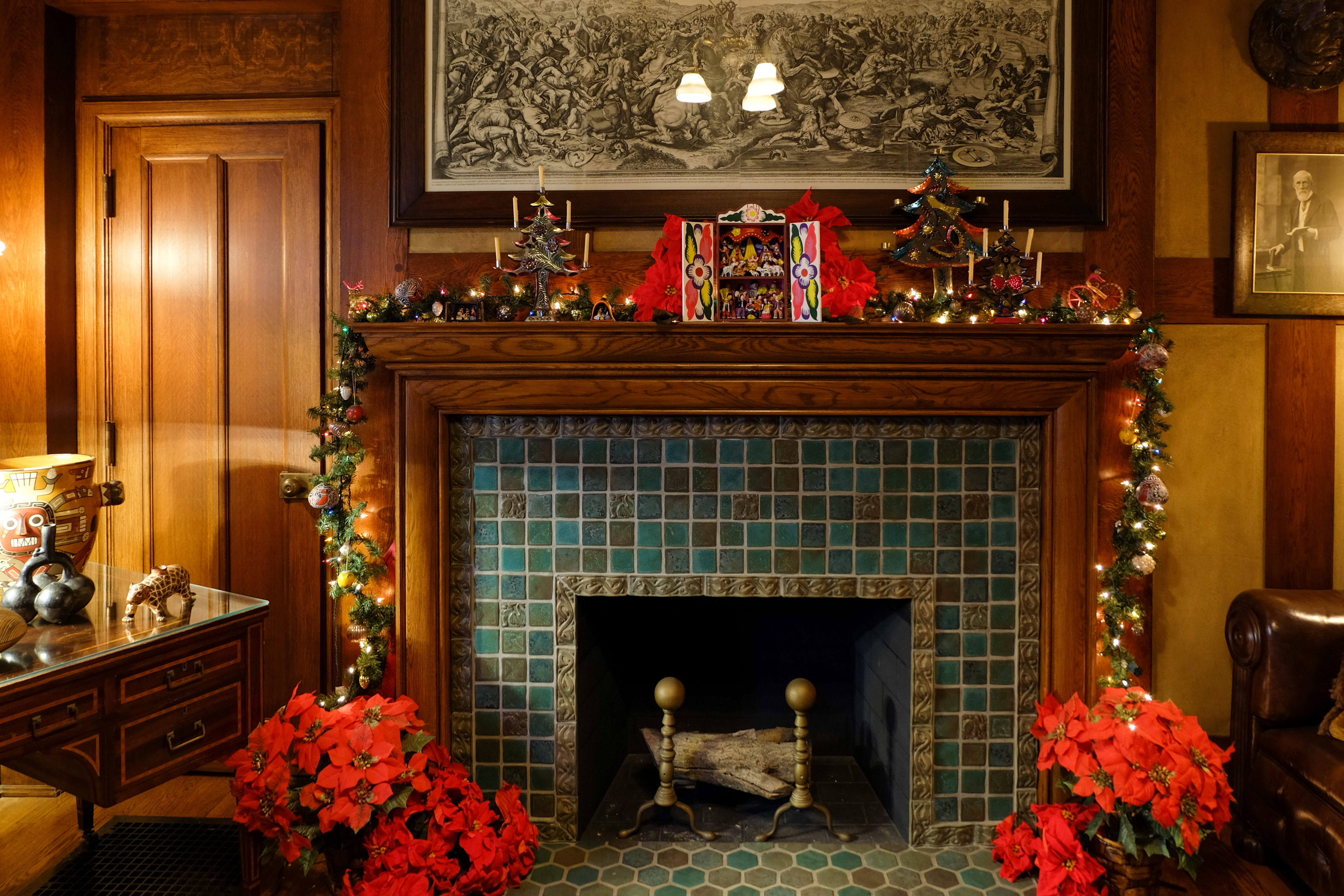
Mr. Booth's Original Office decorated for Holiday Splendor, 2019. Photo by Daniel Smith, CAA '21.

Mr. Booth’s Original Office decorated for Holiday Splendor, 2019. Photo by Daniel Smith, CAA ’21.

On both trips, Mr. Booth likely collected souvenirs, one of which, a Peruvian decorated gourd, is on display. On his return to Michigan, it would seem Booth was inspired to collect more Pre-Columbian art from dealers in New York and San Francisco for his burgeoning Cranbrook Academy of Art Museum, which opened in its current building in 1942.

Working with Anthropology Coordinator/Museum Educator Cameron Wood at Cranbrook Institute of Science, Leslie Mio and I were able to study a number of fascinating pieces that Booth collected for the Art Museum and Institute, and see other works of art, domestic objects, and pieces of ancient and modern life from the countries the Booths traveled through. (In the 1980s, the Art Museum transferred many of its ancient pottery and anthropological items to the Institute of Science).

DSCF7198

Nazca double-spout-and-bridge vessel with mask decoration; Pre-Columbian double-chambered jar from Panama; and carved and painted wooden toys of people and llamas from Peru, 1940s. Photo by Daniel Smith, CAA ’21.

One of my favorite pieces we selected from the Institute is a double-spout-and-bridge vessel with mask decoration from the 2nd—4th century by the Nazca people, who lived in what is now Peru. The Nazca culture (100BC-800CE) is characterized by its beautiful polychrome pottery, painted with at least 15 distinct colors. Their vessels were constructed by the coil method and then decorated with a multicolored slip before the vessels were fired. This allowed for bright and permanent colors, and the images served as a way of recording stories for a people without a written language. The sheen of the vessel was enhanced by burnishing after it was fired. This type of vessel was used for ritual purposes, as they are most often found in graves.

The Peruvian decorated gourd (front center-left) collected by Mr. Booth is on display with ancient and 20th-century objects generously on loan from Cranbrook Institute of Science. Photo by Daniel Smith, CAA ’21.

George Booth would have seen pieces like the double-spout-and-bridge vessel on his travels through Peru’s museums, galleries, and archaeological digs. However, this piece was purchased from an American dealer after he returned home. Another, much larger piece, is in the Nazca style but dates to the 1940s and was also purchased by Booth for the museum. It is interesting to see how the ancient, Pre-Columbian pieces and the modern Peruvian works share similar styles, forms, and motifs.

The mantle in Mr. Booth's Original Office, featuring Mexican tin trees and a Peruvian retablo.

DSCF7186

The mantle in the office, featuring Mexican hojalata (tin artwork) candelabra Christmas trees and Peruvian retablo. Photo by Daniel Smith, CAA ’21.

After Spanish invasion and colonization, indigenous cultures and design became mixed with Catholicism. Today, the most prominent decor at Christmastime in South America is the nativity. Retablos, a reverent diorama-altar typical of the Ayacucho region of Peru, combines Catholic imagery with indigenous style and stories, and have been made throughout South America since colonial times. Our retablo was purchased through UNICEF Market, helping to support artisans and charity work in Peru.

DSCF7184

The mantle in the office, featuring Mexican hojalata (tin artwork) and a handmade woven bicyclist. Tin art has been popular in Mexico since the 1500s. Photo by Daniel Smith, CAA ’21.

The ornaments on the tree and along the mantel include hand-carved gourds and clay nativities from Peru, along with painted ceramic candle holders, tin animals, and hand-woven bicyclists from Mexico. These are all types of small souvenirs the Booths would have seen on their travels. In fact, there is a stall selling very similar gourd ornaments in one of the images Nellie took!

DSCF7192

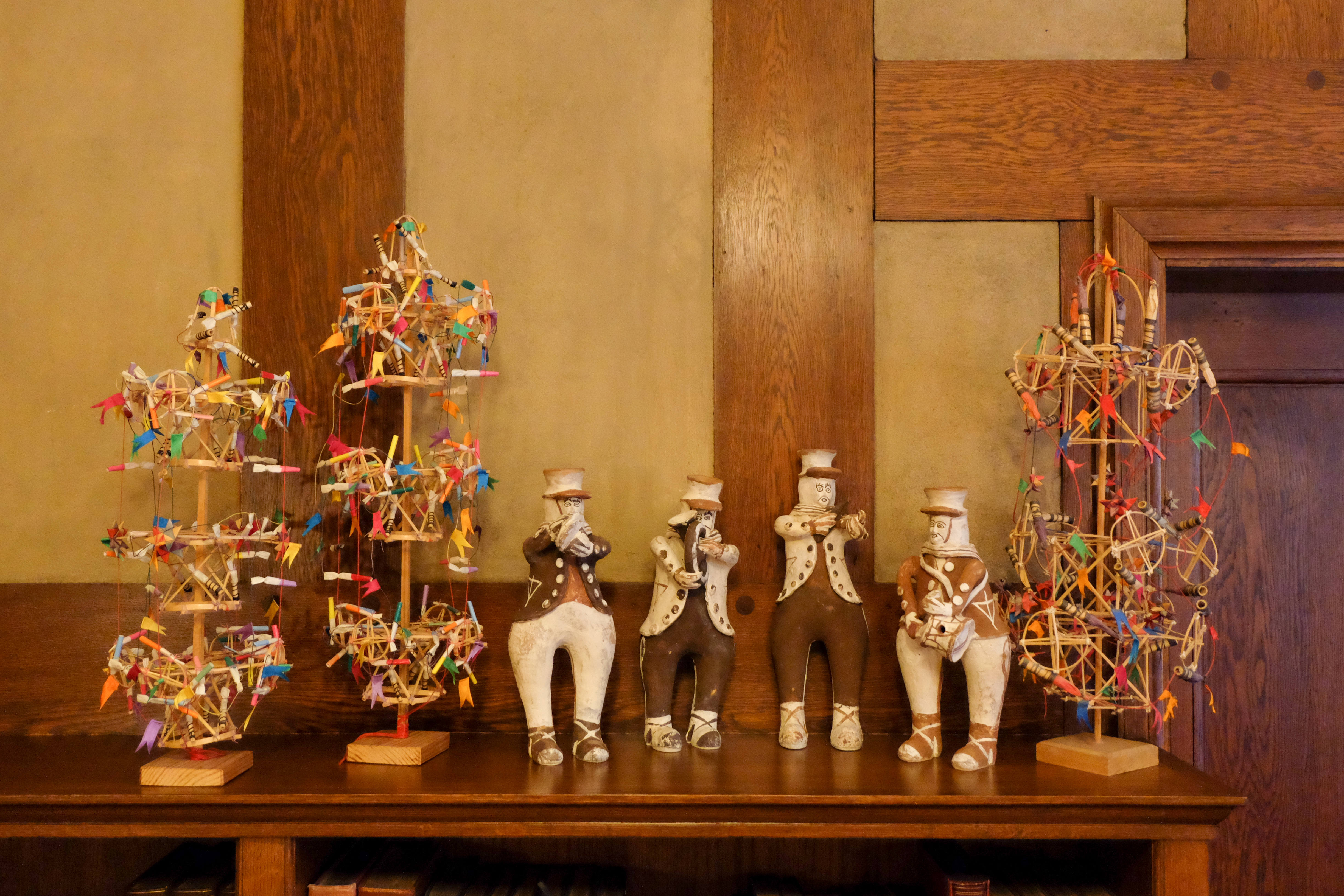
Four Peruvian pottery figures of musicians from the 1940s and models of Mexican castillo (castle) firework frames. Fireworks have been popular for patron-saint festivals and holidays in Mexico since the mid-19th century. Photo by Daniel Smith, CAA ’21.

Leslie and I are grateful to Cranbrook Institute of Science for loaning objects from the areas of the Booths’ trips; to Deborah Rice in Cranbrook Archives for scanning all the great images (you can see more here); and to Michael Sinelli, Gerhardt Knodel, and Kenneth Gross for sharing pieces of Mexican and Peruvian folk art from their own collections to help make our room a festive, holiday scene!

Kevin Adkisson, Curatorial Associate

PS: There is one letter from George Booth to his son, Henry, where he writes about Mexico from Los Angeles: “Having passed out of the desert Mexican influence I find I am still greatly impressed with all I saw…I don’t like the bugs of Yucatan…the spots stay with you some time…, however a real traveler never lets such little things bother them–and with it all it in no way distracts from my good opinion of the Country–its history and the people of to-day.”

Create a website or blog at WordPress.com