The Name Game
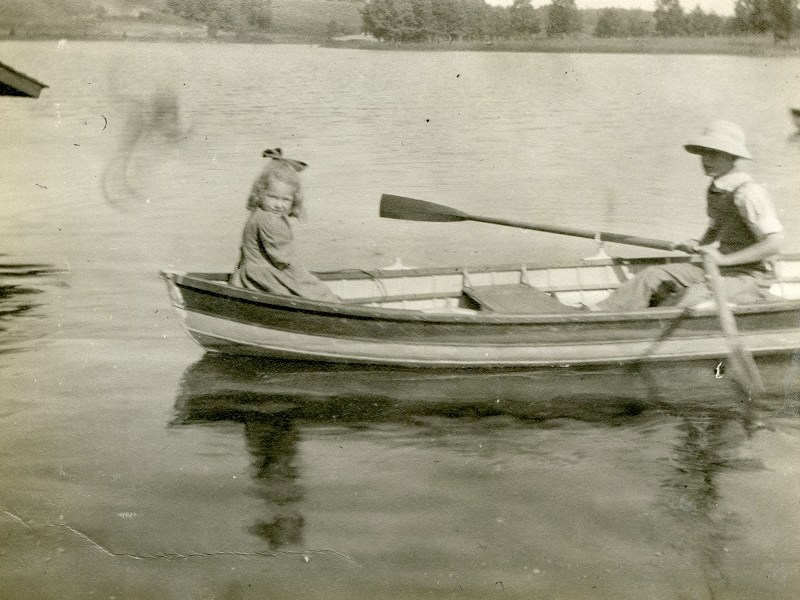
From the beginning of Cranbrook’s history in 1904, place names at Cranbrook have evolved and changed. Once the Booths turned the original mill pond into a lake,…
Read moreThis spring, Dawn Straith, Innovation & Technology Specialist at the Vlasic Early Childhood Center & Cranbrook Kingswood Lower School Brookside, used the bridges in the Japanese Garden as a tool in her Design Thinking Unit with the Senior Kindergarteners. I asked Mrs. Straith to explain the project.
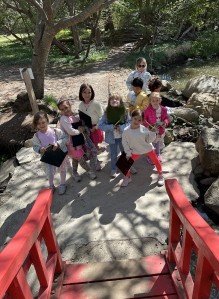
DS: In our design thinking and engineering unit, the Senior Kindergarten students became bridge investigators! They explored six different bridges in the Japanese Garden to see how safe and strong they are. While investigating, they discovered that bridges with beams and columns are much stronger than those without. They considered what goes over and under the bridges, who and what use the bridges, the materials the bridges are made from, and whether they had handrails. Some bridges didn’t have handrails at all, which we determined made them feel a bit less safe. They also noticed that the ground near a few of the bridges was eroding, which isn’t as safe either.

DS: The bridge to “Round Island” (a small island the children have affectionately named for themselves as “SK Island”) got the lowest safety score—it’s tilted, there are no support beams, the ground is eroding, the materials used aren’t the strongest and there are no handrails to hold onto!
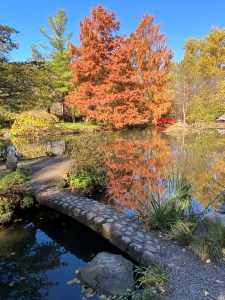
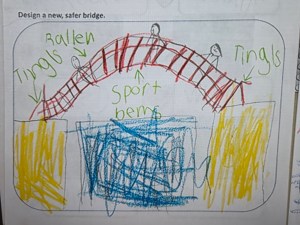
DS: After analyzing all this, the students got to work designing a safer bridge for “SK Island”. They learned that triangles are super strong shapes and that engineers use them all the time when building bridges. With their users in mind, the students carefully designed and built models of brand-new, safer bridges. Their final step is to share their ideas with the garden’s groundskeepers.
Enter the Center, the aforementioned “garden’s groundskeepers”!

As the Associate Registrar, and once-a-month “Gardener” in the Japanese Garden, I was invited to visit the SK classes as they presented their bridge models.
Most of my friends in SK had already helped cover garden sculptures for a number of seasons, so I knew they understood taking care of objects on the campus, but I was once again impressed by our students. They carefully considered what changes could be made to make our bridge safer for all visitors — kids, parents, guests with limitied mobility, and furry friends.

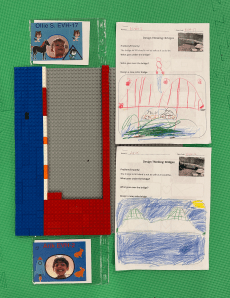
A very big THANKS! to our SK engineers.
Some of the students’ ideas even aligned with designs by our garden designer Sadafumi (Sada) Uchiyama, a third-generation Japanese gardener, registered landscape architect, and Curator Emeritus of Portland Japanese Garden.


As we start the construction of the new Welcome Garden in the Japanese Garden this summer, we hope our future structural engineers will return in the fall to see how we are progressing.
– Leslie Mio, Associate Registrar, Cranbrook Center for Collections and Research
What would you want for your 75th birthday? If you were painter Robert Hopkin, it would be an artists’ club named in your honor. The Hopkin Club, formed in 1907, had no rules, officers, or dues. The members wanted to get together occasionally, to talk about art or host artists visiting Detroit. Hopkin passed away in 1909, but the club continued. In 1913, The Hopkin Club established by-laws and was renamed the Scarab Club–the name it continues under today.
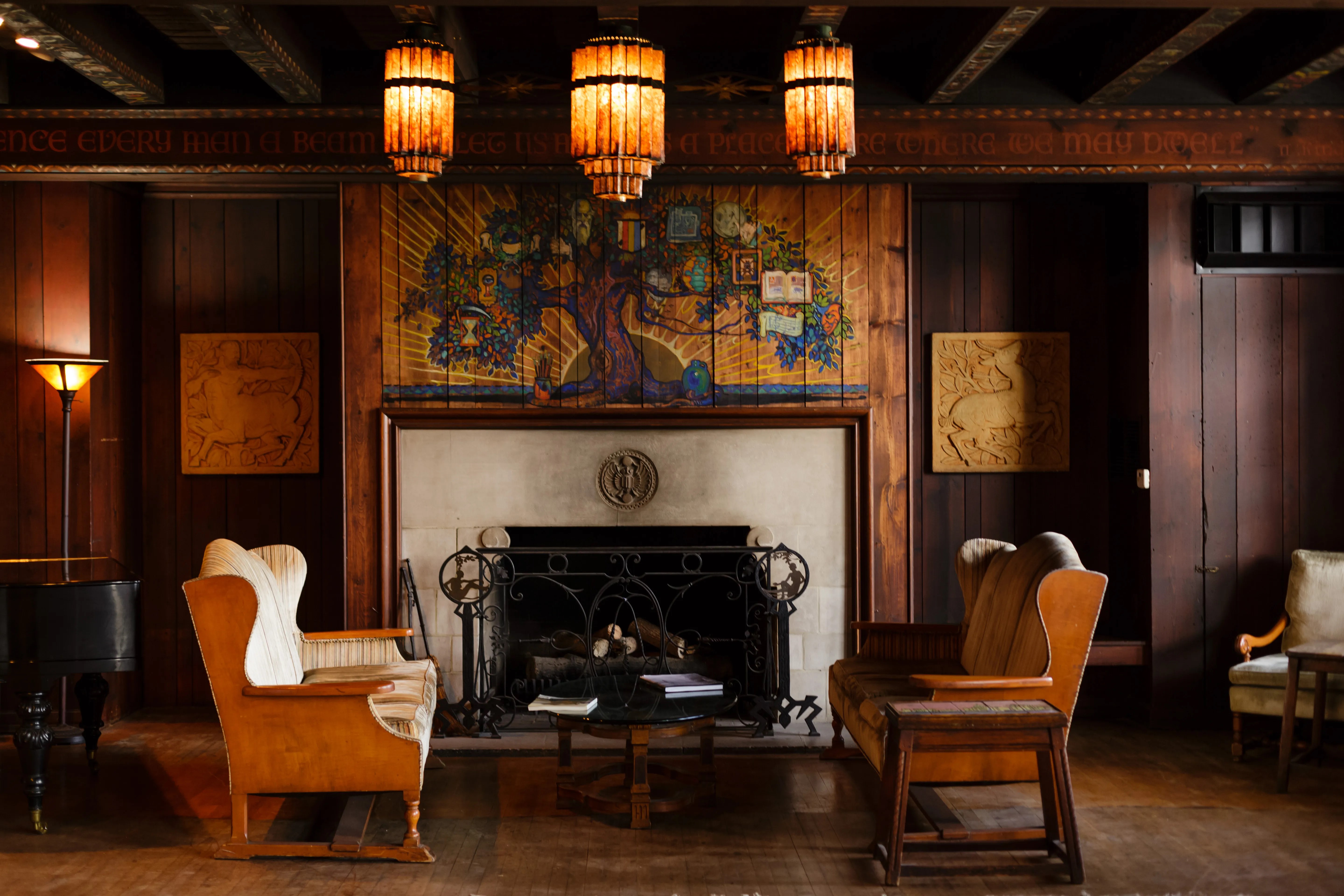
But who was the man the club was originally named after?
Robert Hopkin was a maritime/marine artist born in Glasgow, Scotland, in 1832. He learned to paint and draw from his father. The family emigrated to Detroit in 1842. His grandfather was a sea captain which drew Hopkin to work on the wharves in Detroit and inspired his art. Though chiefly known as a painter of marine scenes and seascapes, Hopkin made frequent trips throughout the American west from 1860 to 1885, painting murals for public buildings and drop curtains and scenery for theaters, including the Tabor Grand Opera House in Denver.
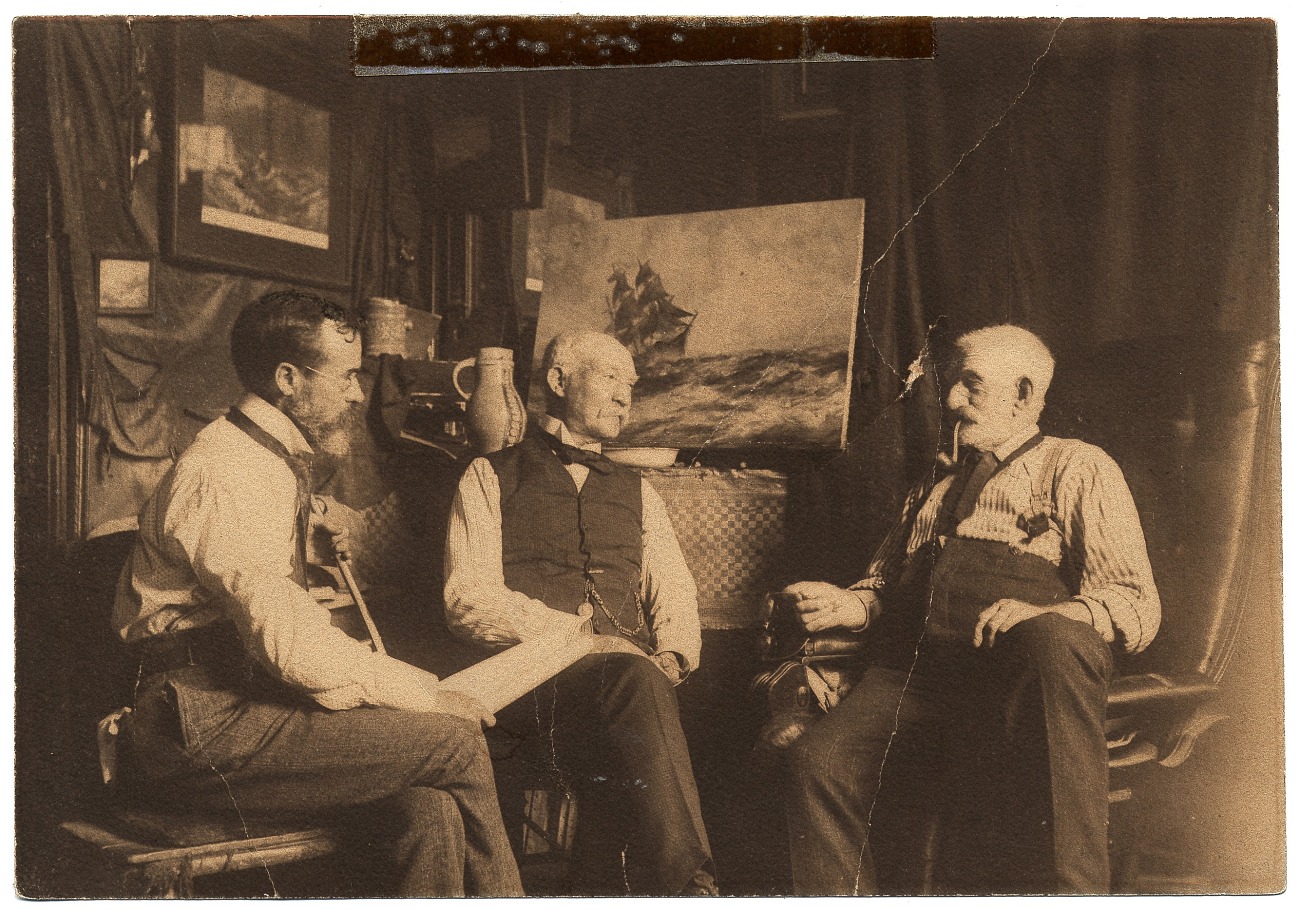
In the latter half of the 19th century, Hopkins was considered the dean of Detroit artists; he decorated the interior (as well as the stage curtain) for the original Detroit Opera House (1868), painted murals in Detroit’s Fort Street Presbyterian and Ste. Anne’s churches, as well as the Cotton Exchange in New Orleans (1883). By April 1900, the Detroit Free Press wrote, “Many of the art lovers of this city possess one or more of [Hopkin’s] splendid marines, and they have been reproduced and published until everyone is familiar with his work.”
When Mr. Robert Hopkin’s Collection of Paintings opened at the Detroit Museum of Art in May 1901, “There was a large attendance of art-loving Detroiters” (Detroit Free Press, May 16, 1901).

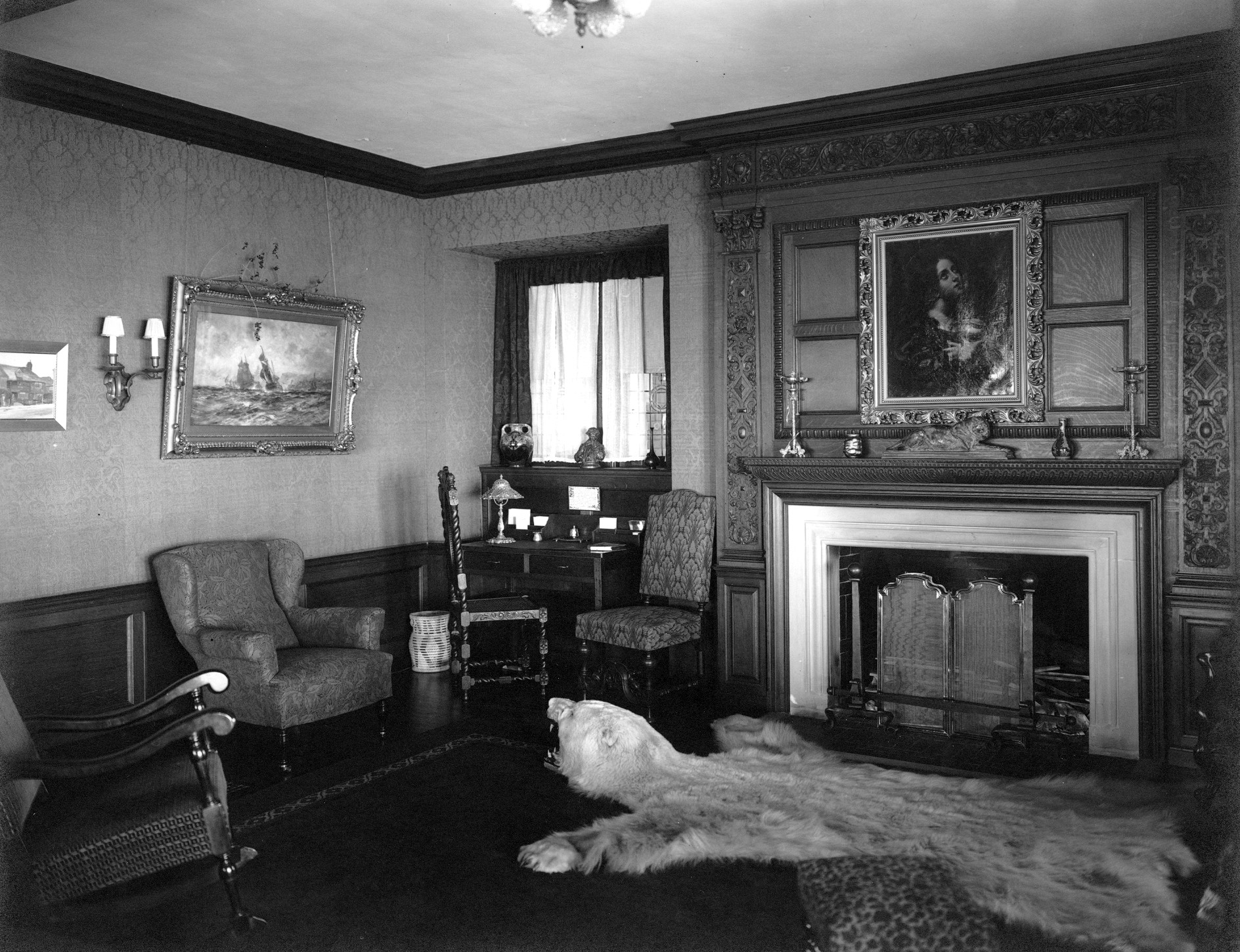
George and Ellen Booth were no exception. Art lovers with many Detroit-based and self-taught artists in their growing collection, the first inventory of Cranbrook House in 1914 lists two Hopkin “Marine” paintings. The Booths gifted the larger of the two paintings to their daughter Grace Ellen Booth and her husband Harold L. Wallace. The painting returned to Cranbrook House about 1955, when Grace Booth Wallace’s collection was donated to the Cranbrook Foundation.
The Detroit Historical Society has a copy of the Souvenir Catalogue of Mr. Robert Hopkin’s Collection of Paintings in its collection. The 85 exhibited paintings are listed, with several black and white images of them. “Price List” is written on the cover, and notes have been made indicating which have been sold and who purchased them. (Sadly, the name “Booth” does not appear.)
Another art-loving Detroiter was Merton E. Farr president of the American Shipbuilding Company and owner of a number of freighters on the Great Lakes. His daughter, Carolyn, married George and Ellen Booth’s youngest son, Henry.

In 1927, Farr gifted the couple a Hopkin “Marine.” The painting hung in Thornlea, home to Harry and Carol Booth, from 1927.
The painting’s official title is not noted. The Thornlea painting is interchangeably referred to as Homeward Bound, Schooner on a Stormy Sea, Sailing Ship at Sea, and Marine. However, the 1901 Hopkin exhibition catalog does not list any paintings with those titles.
– Leslie Mio, Associate Registrar, Cranbrook Center for Collections and Research
If you would like to learn more about Robert Hopkin and the amazing club he inspired, join the Center for Edible Landscapes Dinner: An Evening at the Scarab Club in Detroit on Sunday, May 18th, 2025 from 5:00pm – 9:00pm.
In addition to Varity and Junior Varsity sports, students at Cranbrook School for Boys also participated in Club Athletics.
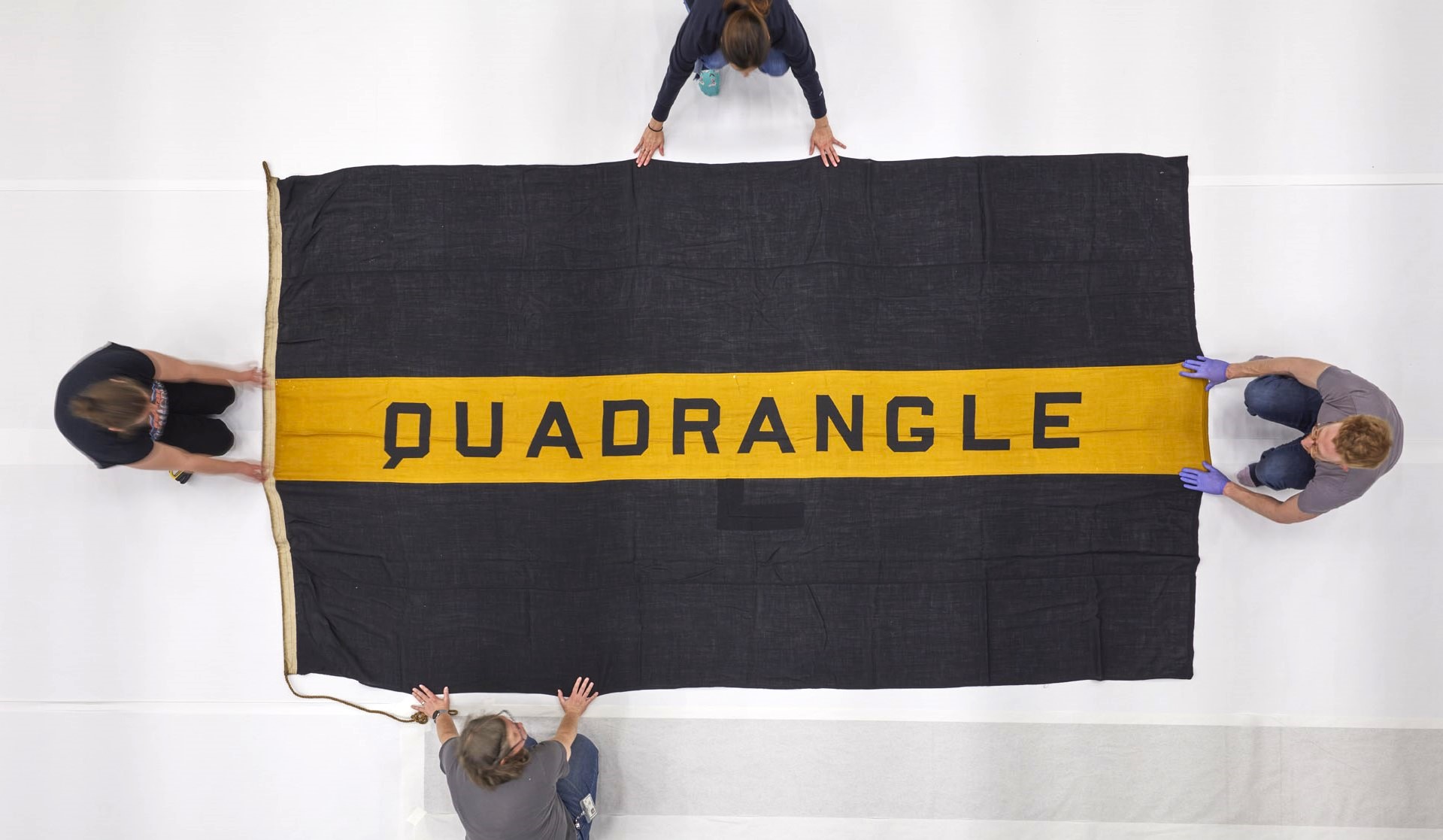
In the 1932 The Brook (the school’s yearbook), it states: “The fact that inevitably there has to be a large proportion of the student body left over from varsity teams has fostered the club system. By dividing the whole school up into the three factions of Fountains, Towers, and Quadrangles . . . every student is able to take an active part in athletics and thus enjoy competitive games.”
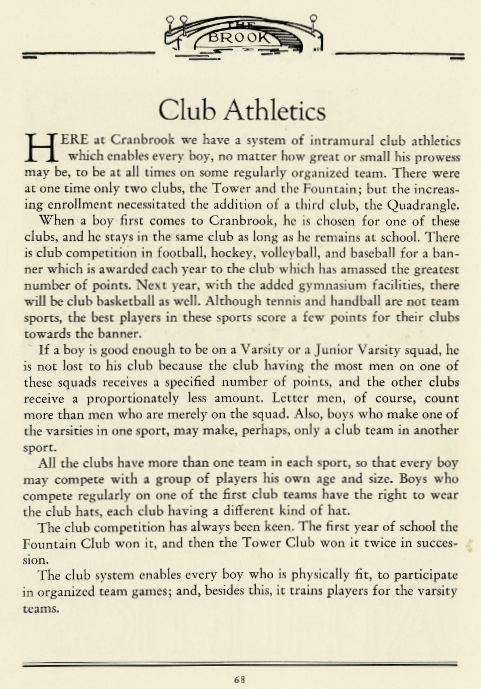
And, each of the three factions had a flag! Here are the flags of the clubs, stored alongside other Cranbrook School Cultural Properties.
The flags are very large, over 13 feet long and 7½ feet high. Pretty heavy to wave around! These wonderful photographs were made by James Haefner when we photographed all our Studio Loja Saarinen rugs.


The club system did not last very long at Cranbrook School for Boys. Looking at the copies of The Brook, it seems to have been gone by the 1940s. Perhaps some spirited students from Cranbrook Kingswood Upper School might revive the faction system? If so, we are ready to help with your flags!
– Leslie Mio, Associate Registrar, Cranbrook Center for Collections and Research
Friday, September 27, 2024, is Homecoming at Cranbrook Kingswood Upper School. The game will be held in the Thompson Oval, to the east of The Football Game by David Evans.

Sculptor David Evans (1895-1959) was hired by the Cranbrook Foundation (through George Booth) as Professor of Sculpture and Life Drawing at the Academy of Art for 1929-1930. During that time, Booth commissioned him to create this bas relief for the football field at Cranbrook School for Boys. It is not just a bunch of nameless faces on the relief; it actually features members of the first football squad at Cranbrook School for Boys.


During the 1930 football season, thirteen boys posed for Evans.
Members of the 1930 Cranbrook Football Team featured on The Football Game. Photos taken from 1931 and 1932 copies of The Brook. Courtesy Cranbrook Archives

The bas relief is in its original location – mounted above the steps leading to Alumni Court and overlooking Thompson Oval. If you are on campus for Homecoming, pose for a photo in your CKU green and blue with the 1930 football squad.
– Leslie Mio, Associate Registrar, Cranbrook Center for Collections and Research
Ed. Note: The Football Game was recently cleaned and waxed by our friends at McKay Lodge Conservation Laboratory. They also touched up other Upper School favorites: Hermes, Discus Thrower, The Wrestlers, Running Dogs, Masque Art, Diana, Dancing Girls, and Aim High.
Nothing at Cranbrook is just one thing. Every tree, garden, rock, and railing has a story–and often times, a name.
In 2022, with the help of an anonymous donor and our friends at RE-TREE, a Camperdown elm (Ulmus glabra ‘Camperdownii’) was transplanted from a local garden to the Meadow in Cranbrook House Gardens, where it joined another established Camperdown elm. Since RE-TREE names all of the trees they relocate, I decided our Camperdown elms needed names, too. I started to refer to the larger tree as Thistle and the smaller tree as Smike to honor the two youngest Booth children, who grew up primarily on the Cranbrook Estate.

In 1908, George and Ellen Booth and their children, James, Grace, Warren, Harry, and Florence, moved from their home on Trumbull Avenue in Detroit to their new home Cranbrook, in the “wilds” of Bloomfield Township. At the time of the move, James was twenty, only two years away from marriage; Grace was eighteen; and Warren, fourteen, was already in boarding school. Youngest siblings Harry (eleven) and Florence (six) pretty much had the run of the grounds, exploring every nook and cranny (pun intended).
As the family explored and improved their country estate, they also took to naming significant features: every pond, hill, tree, and drive would be christened with its own name. Some names stuck (Angley Woods), others changed (Glassenbury Lake became Kingswood Lake), and others have been forgotten.
From the beginning of Cranbrook’s history in 1904, place names at Cranbrook have evolved and changed. Once the Booths turned the original mill pond into a lake,…
Read moreHarry and Florence were no exception; they had pet names for each other. Harry, known as Thistle, received his nickname during an illness. He did not shave for days, and someone said kissing his cheek was like kissing a thistle. We don’t have a record of the origin of Florence’s nickname, but friends and family called her Smike her whole life.

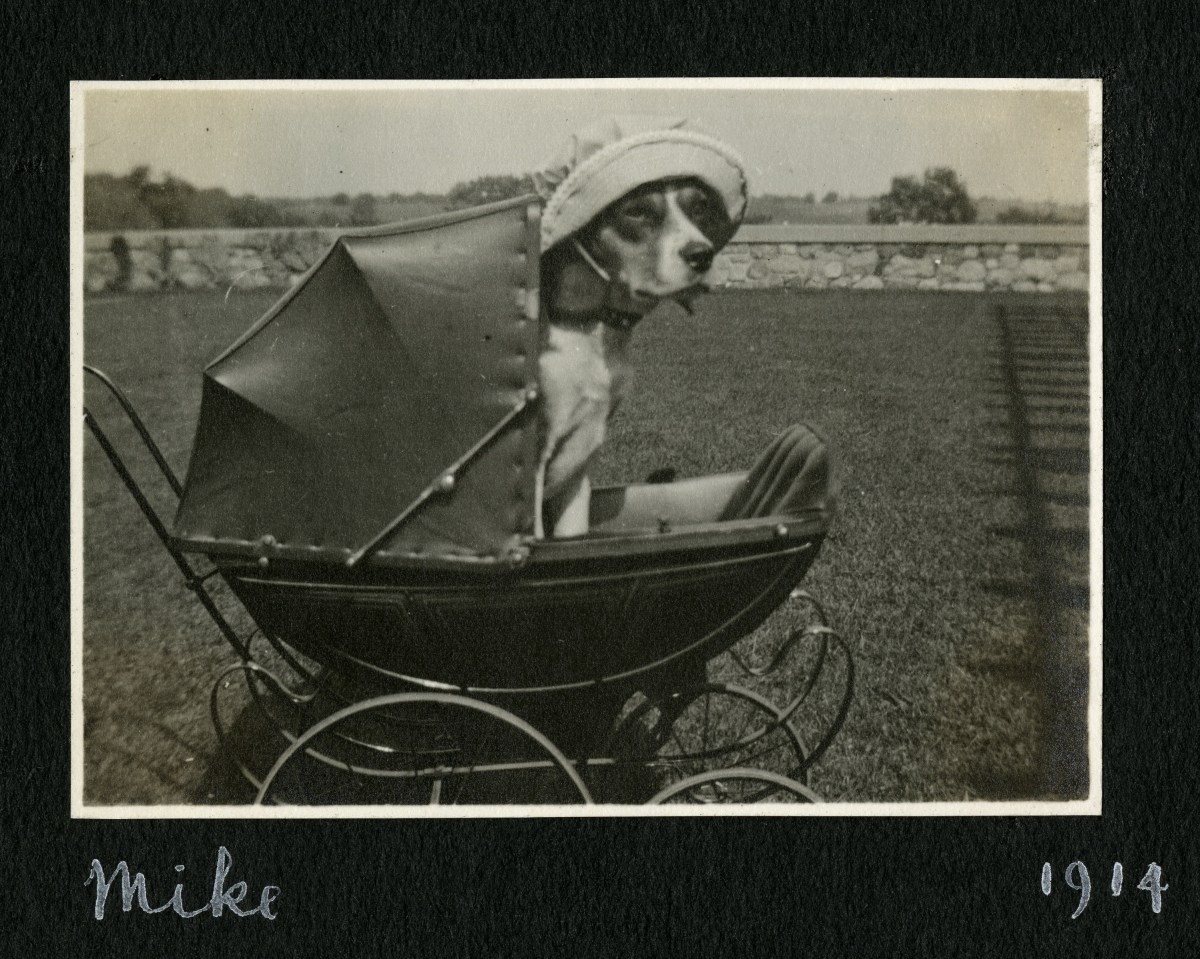
The Camperdown elms’ location below the West Terrace are also significant to Smike’s story. The Booths (especially Florence) loved animals. Family dogs Bud, Sandy, Spot, Prince, Larkspur, and Craig were well cared for and loved. The family beagle Mike was so beloved as to be made to wear a bonnet as he travelled around in a baby carriage!
The biggest canine event at Cranbrook came in 1914. As Harry Booth later wrote, “On June 20, 1914, the Booth family celebrated the 70th anniversary of the family’s landing on North America from England. After a picnic, everyone attended a dog show Florence Booth organized on the new West Terrace.”


So, when I look at the two Camperdown elms below the West Terrace–one slightly bigger than the other–I think of all the stories the grounds of Cranbrook hold, and of the happy days Thistle and Smike spent growing, adventuring, and imagining around campus.
Perhaps you’ll agree with my names for the trees, and next time you are strolling in the Meadow at Cranbrook House Gardens, just below the West Terrace, say hello to Thistle and Smike.
– Leslie Mio, Associate Registrar, Cranbrook Center for Collections and Research
Ed. note: Special thanks to Paul Nelson, one of the arborists for Cranbrook House and Gardens Auxiliary. He has been a champion for Thistle and Smike, making sure they are trimmed, watered, fertilized, and kept looking their best.
Every four years, we add an extra day to the calendar to catch up to Earth’s revolutions around the Sun. For most of us, it is just February 29th, an extra day in the week. For leaplings, it is a day to celebrate their true birthday.
Different cultures have different customs associated with February 29th, known as Leap Day. In some cultures, it is also known as Bachelor’s Day or Ladies’ Privilege, because that is the day that women can propose to men.

In Finland, leap-year day proposals are considered good luck. If, however, the gentleman says “no,” he is required to give the woman enough fabric to make a skirt.
According to Medium.com, “The tradition reflects the Finnish spirit of equality and a shared sense of humor within romantic relationships. It challenges gender norms in a playful manner, encouraging women to take the lead in expressing their feelings and creating a shared memory that will be cherished for years to come.”
“While leap-year day may be just one day every four years, the tradition of women proposing adds a touch of magic and unpredictability to Finnish love stories. It’s a celebration of love, luck, and the joy of shared laughter, reminding couples that romance can be both traditional and delightfully unexpected in the heart of Finland.”
Something else unexpected is an elopement, a sudden and secret ceremony involving a flight from home without parental approval. One of Cranbrook’s “Finnish love stories” involved one such elopement.
Shortly after she turned 21, Eva-Lisa “Pipsan” Saarinen eloped to Toledo, Ohio with Jons Robert Ferdinand “Bob” Swanson, one of Eliel’s architecture students. They were married on May 8, 1926. According to Pipsan Saarinen researcher Alison Kowalski, “The young couple eloped because Eliel and/or Loja objected to the match, probably in part because Bob was of a lower socio-economic status than the Saarinens. According to Henry Scripps Booth, a close friend of Bob and Pipsan, Loja felt Bob was using Pipsan to get close to Eliel.”

Bob struggled to support himself and Pipsan at the beginning of their marriage. Perhaps she proposed, and he didn’t have enough money to cover the cost of skirt fabric for such a fashionable lady.

More likely, they were truly in love. They were married from 1926 until Pipsan passed away in 1979.
—Leslie Mio, Associate Registrar, Cranbrook Center for Collections and Research
People of a certain age will remember listening to American Top 40 on the radio. Detroiter Casey Kasem offered an opportunity for listeners to give “long-distance dedications,” requesting a song for a loved one, a friend, or if they themselves needed cheering up.
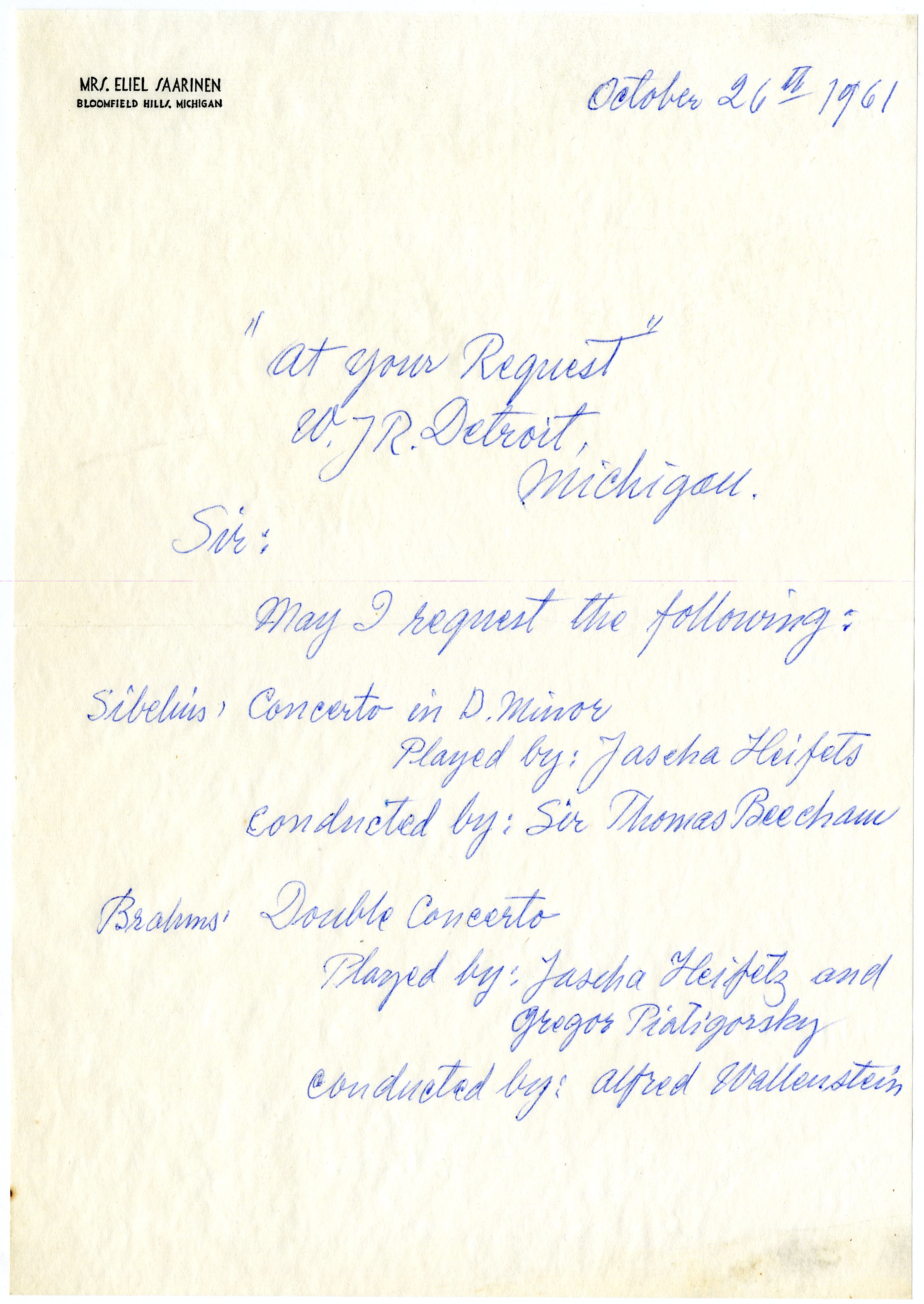
Loja Saarinen wrote this note to the programers at WJR in Detroit, asking them to play two songs. Though she did not send this note to Casey Kasem, I imagine what Loja Saarinen’s words may have been if she had in October of 1961. On September 1, 1961, Eero Saarinen had died during surgery for a brain tumor:
Dear Casey,
I recently lost my son at far too young an age (51). He was overseeing the completion of a new music building for the University of Michigan School of Music, Theatre & Dance and our family so loved music. Casey, could you kindly play Concerto in D Minor by my good friend and fellow Finn Jean Sibelius?
Yours, Loja
Well, Loja, here is your long-distance dedication, Sibelius’ Concerto in D Minor played by Jascha Heifetz and conducted by Thomas Beecham.
If you’d like to make your own dedication, no need to be long-distance. Chamber Music in the Age of Resistance: Finland, Korea, Haiti and America, and France is being presented by Cranbrook Center for Collections and Research, in Collaboration with the University of Michigan “Art & Resistance” Fall 2023 Theme Semester, on Sunday, November 12th, 2023 at Cranbrook House.
Please join us for the concert and remember, as Casey Kasem said, “keep your feet on the ground and keep reaching for the stars.”
– Leslie S. Mio, Associate Registrar, Cranbrook Center for Collections and Research
Each year, the Center staff does spring cleaning around the Cranbrook Community’s campus.
To kick off our spring cleaning this year, in collaboration with Meghan Morrow from Cranbrook Art Museum, Brookside’s Vlasic Early Childhood Center Pre K, JK, and multi-age classes helped us “awaken” the outdoor sculptures, covered for the winter, with a good-morning song. They helped remove the covers, check for any new cracks, and wipe and polish the sculptures.

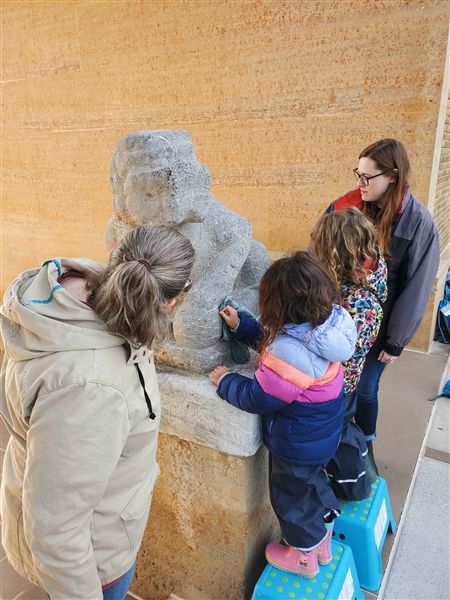
We then needed to get the fountains and sculptures ready for our House Party fundraiser on May 20 (sorry, already sold out). Utilizing Graffiti Solutions’ “Elephant Snot,” we worked with Cranbrook House and Gardens Auxiliary volunteers to clean the Fountain on West Terrace and Mario Korbel’s Harmony.


Below are the results. This was just one day after the cleaning, and, typically, the sculptures look better and better as the weeks go on.


Look for an upcoming post about our ECC friends working with the Elephant Snot to clean more stonework in the garden!
The spring also means a new season of work in the Japanese Garden. Pulling vines, before the poison ivy blooms, was a fun, end-of-the-day task for our volunteers this week.
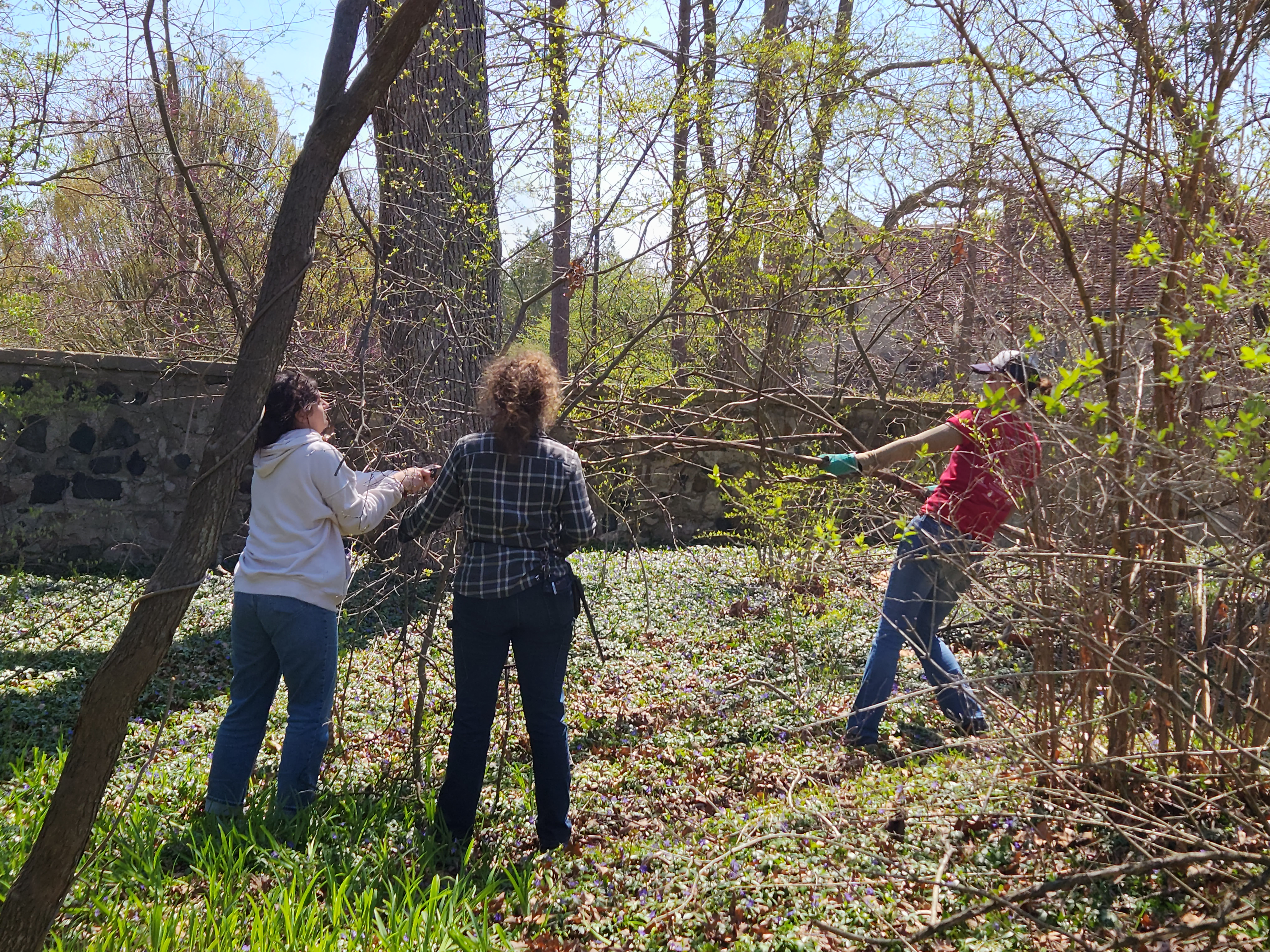
Interested in becoming a Cranbrook Japanese Garden Volunteer Gardener? We would love to hear from you!
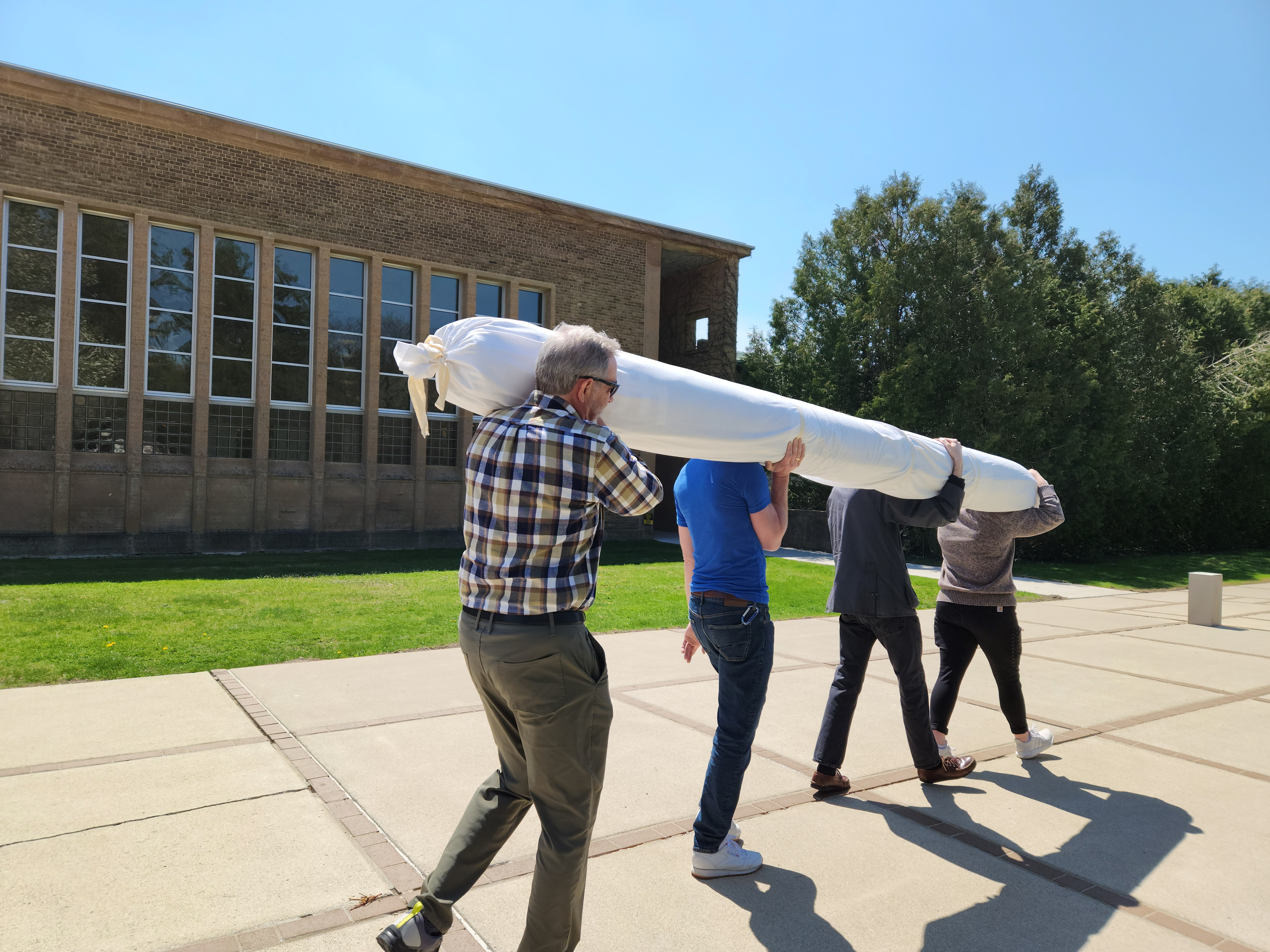
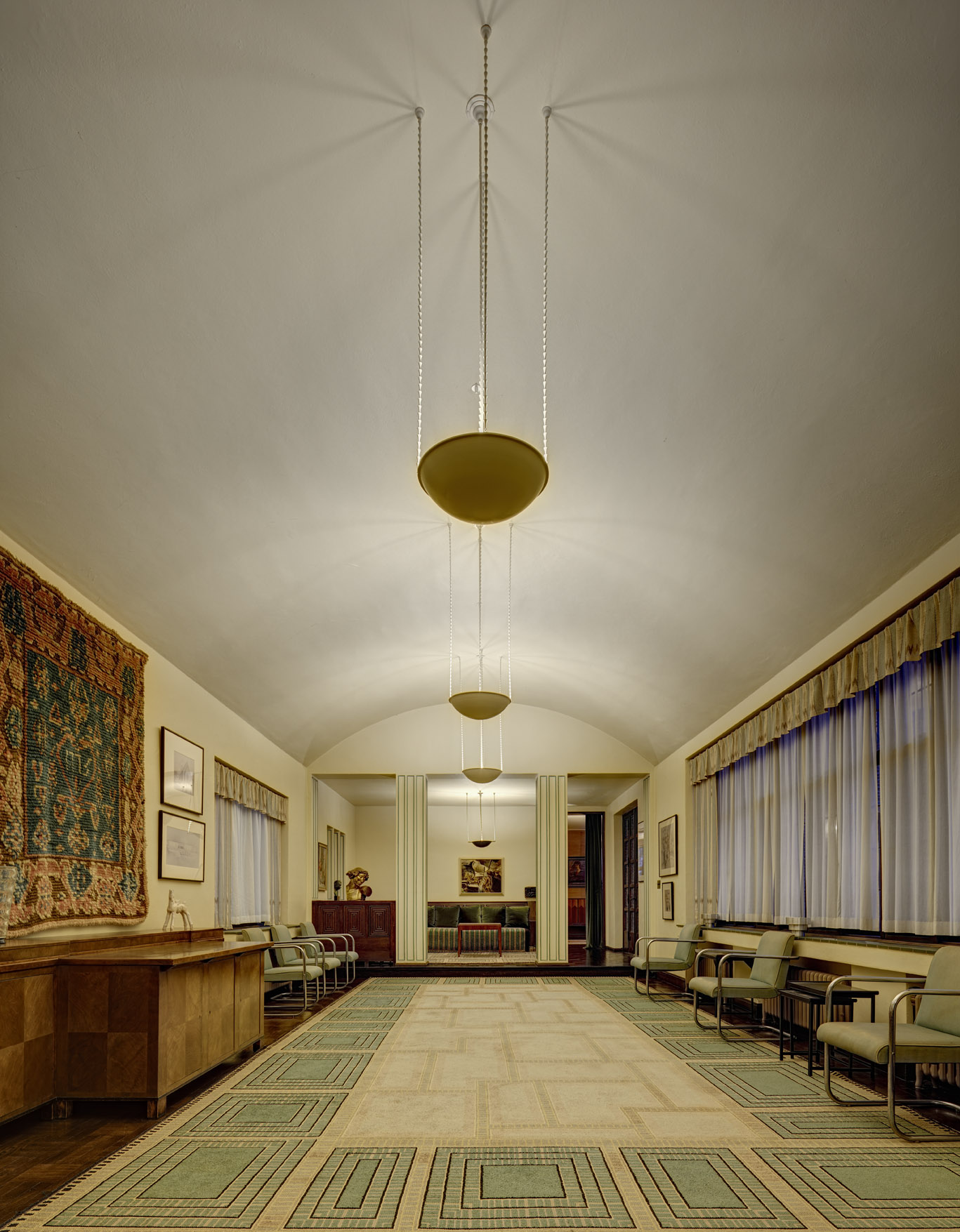
Not to be outdone, Saarinen House wanted to be part of spring cleaning as well. On location in the Art Museum vault for a photoshoot this past winter, the Saarinen House Studio rug was carried back to the house and reinstalled. As Greg Wittkopp, Center Director, said, “The room does look less Gesamtkunstwerk-ish without it.”

The best part about our spring cleaning is showing off the results. Come see Harmony in the Cranbrook House gardens on a warm day.

The Center’s 2023 Tour season is also beginning. In addition to our Saarinen House and Smith House tours, new tours have been added:
Japanese Garden Tours – Center staff-guided tours of the Japanese Garden have been added to the public tour calendar on one Sunday a month at 1:30pm, May through October.
Three Visions of Home tours – Join Cranbrook Center for Collections and Research as we take you inside three remarkable homes from across the twentieth century. There’s no tour quite like it, with a look into the distinct visions for American life from three internationally significant architects: Albert Kahn, Eliel Saarinen, and Frank Lloyd Wright. Your expert guide will take you through the architecture and innovations of each home, while also sharing the stories of the families who built and lived in these special places.
We hope to see you on campus this season!
– Leslie Mio, Associate Registrar, Cranbrook Center for Collections and Resarch
I have mentioned in the blog before that I am working with Center Director Gregory Wittkopp and Center Curator Kevin Adkisson on reviewing all fourteen of our cultural properties collections (over 9,000 objects), reviewing the data already on file and adding as much additional information about each object as we can.
The most recent collection I have been working on is Cranbrook Kingswood Upper School – Cranbrook Campus (f.k.a. Cranbrook School for Boys). The current campus buildings, classrooms, and staff offices, all had the potential to contain cultural properties (historic objects). And many that we visited did!
When I researched the Cranbrook Kingswood Upper School – Kingswood Campus (f.k.a. Kingswood School for Girls), I was fortunate to have the “Kingswood School Cranbrook Inventory of Equipment and Supplies.” It recorded the purchases and payments made from 1930-1938 for the outfitting of the school. It proved invaluable in locating quantities and makers of objects.
There had to be an equivalent for Cranbrook Campus?! Unfortunately, not that I had yet seen.
I only had a 1952 Inventory which listed fixed items, like light fixtures; and “movable” furniture and fixtures, like chairs, tables, desks, artwork. This was a great resource, but it did not always give me the makers or artists. Undeterred, I started searching in Cranbrook Archives, the “little gem” at Cranbrook, to borrow a phrase from Frank Lloyd Wright.
In Box 43, Folder 11 of the Cranbrook Foundation Office Records were the “Building Costs for Cranbrook School from 1926-1946.” And then, I saw it. A small black book labeled “Cranbrook School Book.” Could it be what I was looking for?

Inside were listed payments made to the builder Wermuth & Son and to the W. J. Sloane Company for furniture. It listed the artists who painted, carved, and outfitted the school, as well as contractors who installed various materials in the buildings.


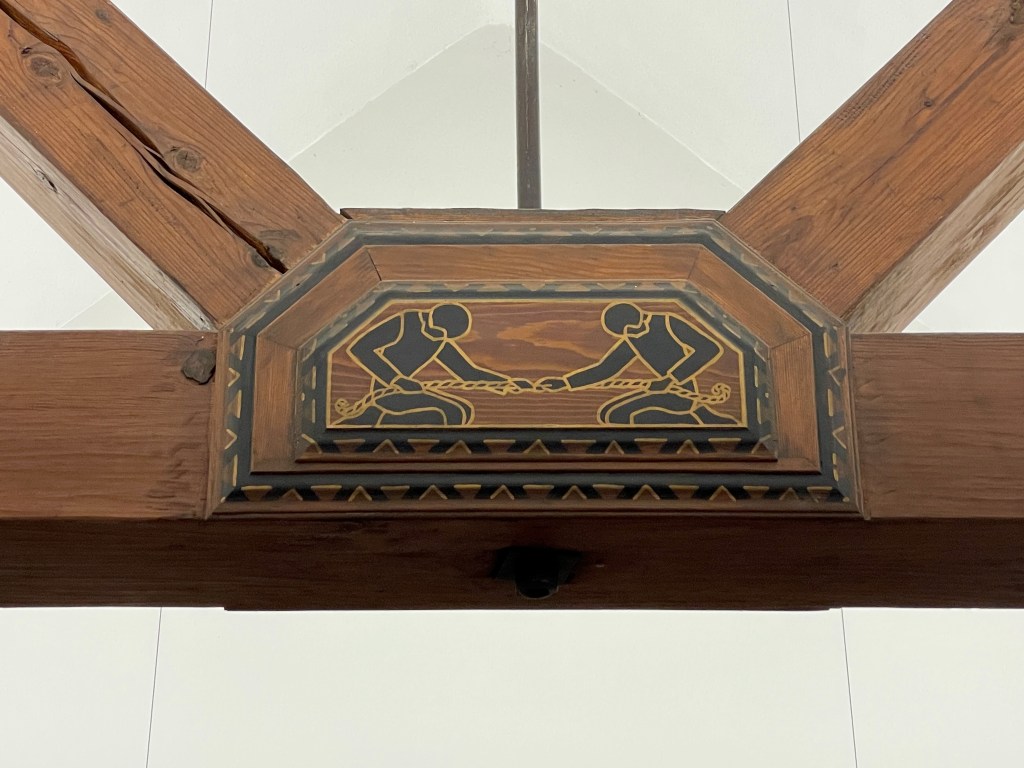
These entries were great, but what else would it lead to? The answer: the “Cranbrook Schools” series in the Cranbrook Architectural Office Records.
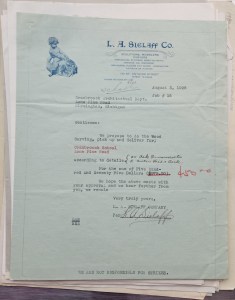
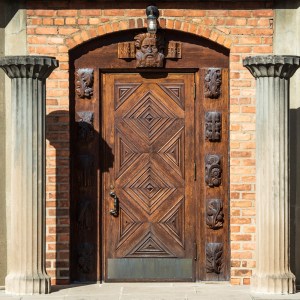
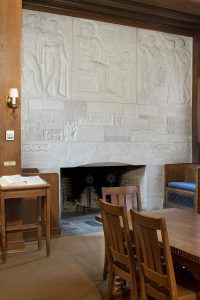
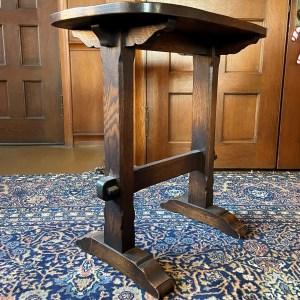
Many of the folders were labeled “Cranbrook School correspondence, Wermuth & Son” with dates. The “Cranbrook School Book” had given me an idea of what to look for. Who Wermuth and the Cranbrook Architectural office (and sometimes George G. Booth himself) were corresponding with was the key. Inside were letters from vendors of tiles, furniture, stained glass, stonework, mirrors, mattresses, windows, everything needed to build a well-appointed school.
Here are just a few examples:



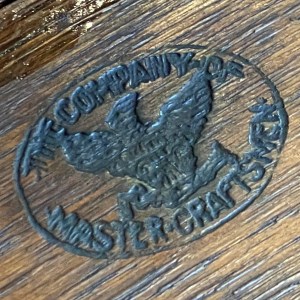
Next up, Cranbrook Campus’ custom light fixtures! I can already hear Kevin’s words in my head . . .
. . . Cranbrook light fixtures are all around campus. There are multiple types of the light fixtures. These were designed by architect and former Head of the Architecture Department Dan Hoffman. He was the architect-in-residence who probably did more to revive the tradition at Cranbrook that was so such a passion project of George Booth and Eliel Saarinen . . .
– Leslie S. Mio, Associate Registrar, Cranbrook Center for Collections and Research
p.s. For more on Cranbrook Campus, check out these videos by Center Curator Kevin Adkisson:
Does your family have a certain pose that they always do for a family picture? My cousins and I always had to stand or sit by the same log at our cottage each summer to get a group picture. Even when the log had disintegrated, and we were all adults, we still stood in the same spot to take the picture.
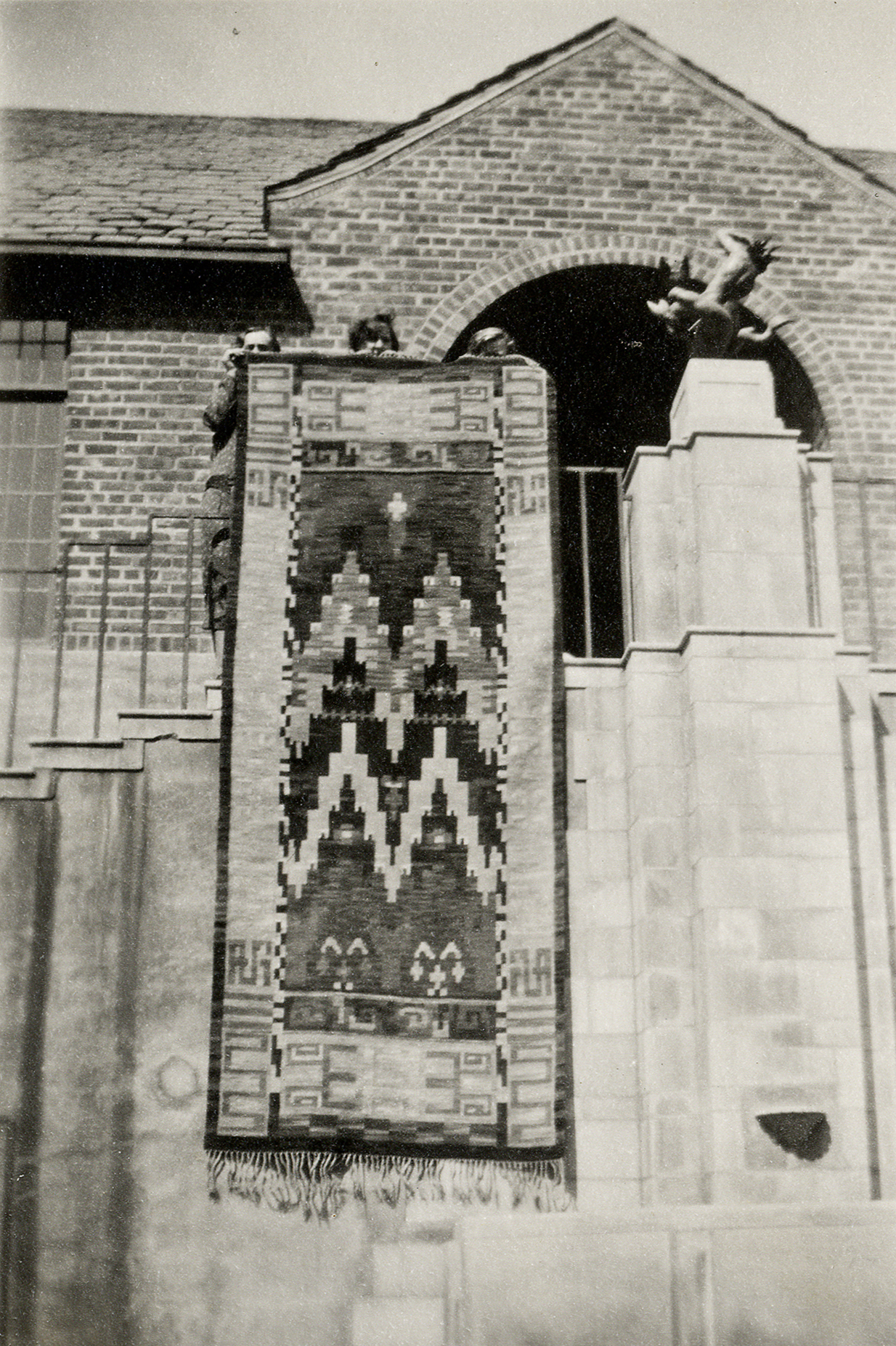
The Swedish weavers of Studio Loja Saarinen were the same way. After every rug was completed, they would unroll it behind the studio, lay it on the lawn, and pose at the end. This not only documented their work, but also served as a record of who worked on each piece. In Cranbrook Archives, we have a few examples of these images.
This rug lay in the center of the Studio Loja Saarinen Weaving Room. A flatwoven rug with stylized meanders in the border, and an elegant color scheme of dark browns, blues, and beiges, in form, structure, color, and design it shows the contemporary style of Swedish weaving that would become the foundation of Studio Loja Saarinen’s work.

This was one of the first rugs executed under the “Design and Supervision” of Maja Andersson Wirde, who was Loja’s right-hand-woman from 1930 to 1933. The rug is actually a variation of a design Wirde made for the 1925 International Exhibition of Modern Decorative and Industrial Arts in Paris (the “Art Deco” World’s Fair).
When Wirde wrote to Cranbrook’s secretary from Sweden before immigrating, she said she would bring along prepared designs and wool and linen yarns to be able to get started right away. She certainly did! Below, you can see Wirde and possibly Lillian Holm and Ruth Ingvarsson holding up the rug behind Studio Loja Saarinen just months after their arrival to Cranbrook.
 Cranbrook Kitchen Sink