The Kingswood Riding Club (1939-1943)

Shortly after the opening of Kingswood School for Girls in the fall of 1931, headmistress Katherine Adams reported that horseback riding would be a part of the physical education program, due in large part to the cooperation of nearby Bloomfield Open Hunt Club.  Several of the girls already boarded horses in nearby stables, including the Hunt Club. The Kingswood Riding Club was officially established in 1939 and the school catalog outlined that girls would ride on the Hunt Club’s bridle paths in spring and fall, and in the covered ring during winter months.  Girls rode on Wednesday afternoons as part of “club day” but the sport quickly became so popular that they also rode on Sunday mornings.  In the spring of 1940, Cranbrook School boys joined the girls for the Sunday morning rides, during which they enjoyed breakfast at the Club House.
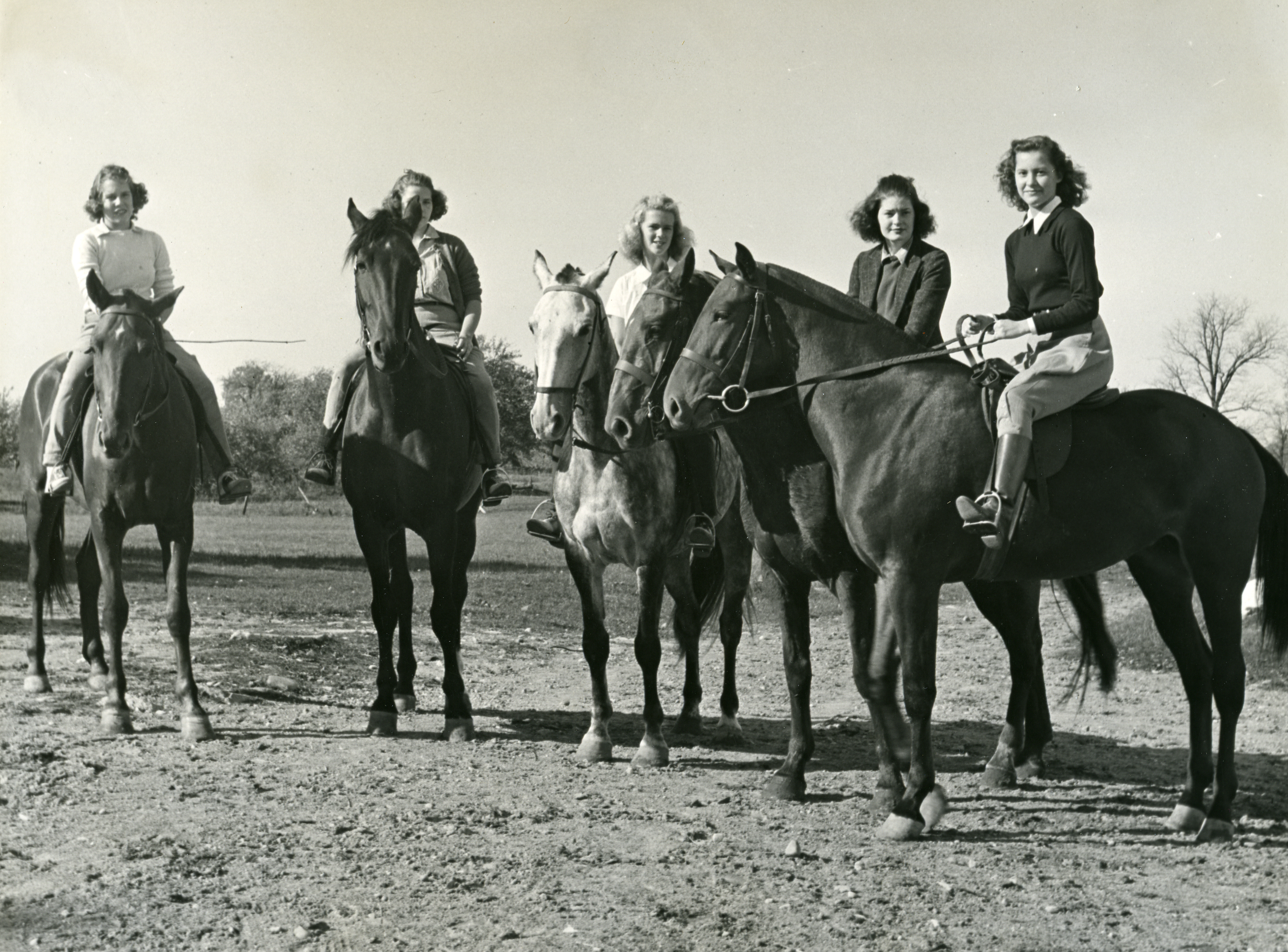
Kingswood Riding Club

Kingswood Riding Club, 11 Oct 1939. Cranbrook Archives.

By the fall of 1940, the club had grown to 26 members and met on Mondays and Wednesdays.  Katherine Unger, of Walled Lake, was hired to “teach the riding club the fine points of riding and horsemanship”, and in the spring of 1941, the Kingswood Riding Club held its first horse show.  Riding took place at nearby Bloomfield Hunt Club and at the Outland Riding Stables (located on 14 Mile Road) where there was an inside ring. The following spring, the Kingswood Riding Club held its first horse show.

In September 1941, Unger expressed hope that 1-2 indoor shows would be held during the winter, and that more girls would own horses. “The school horses are all right for beginners but as was so apparent at the show the girls who had their own mounts made the best showing.”  Headmistress Margaret Augur felt the school could not encourage horse ownership (due to the added expense for the girls) and worried that competitions would become a “rich girl’s sport” and thus, a bad tendency for the school.
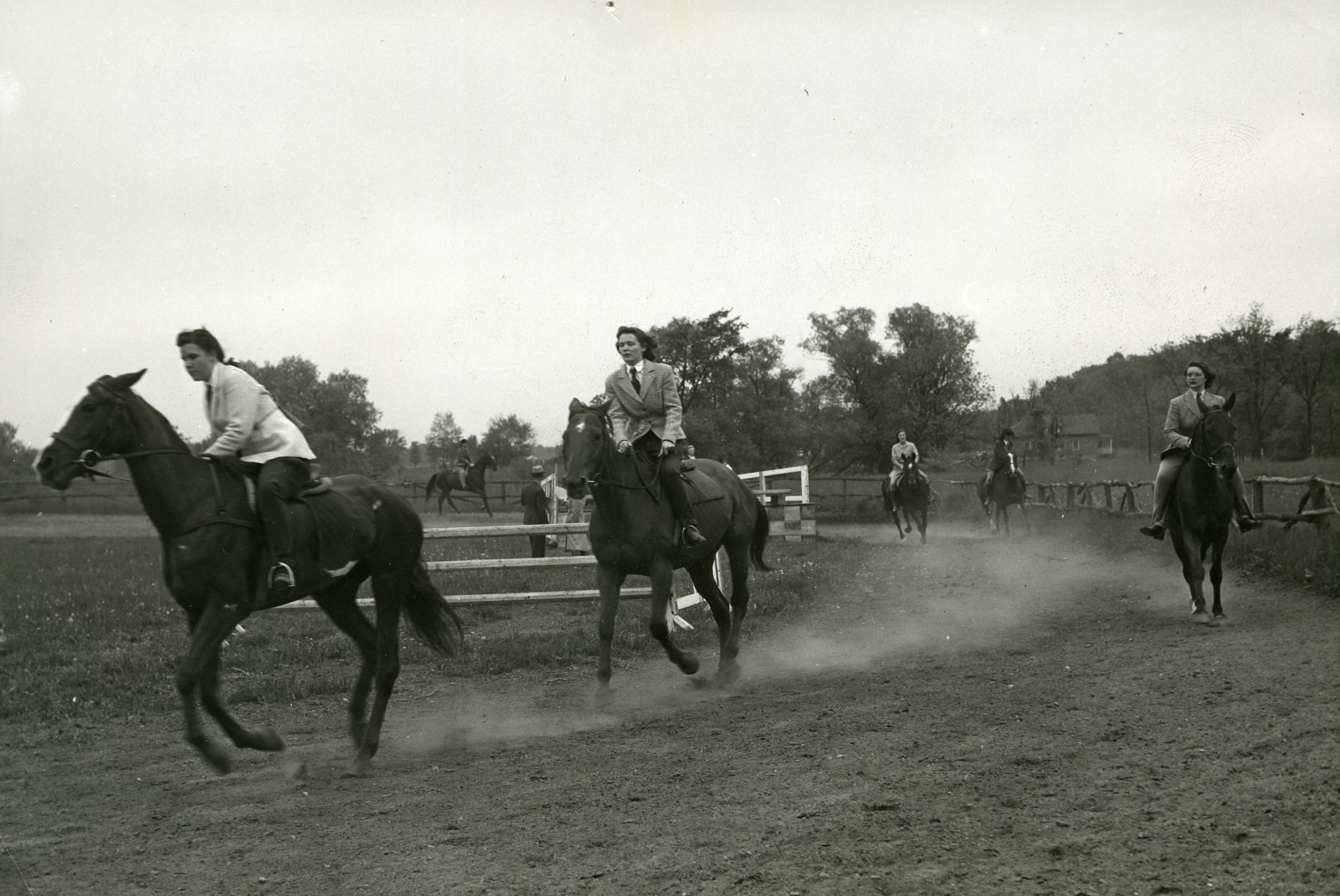
Horse Show

The 2nd annual Kingswood Horse Show, 20 May 1942. Cranbrook Archives.

The second annual Kingswood Horse Show was held on May 20, 1942 at Outland Riding Stable with judged competitions and an awards presentation.  Virginia McCullough won first place in all of the classes she entered – Hunters Class, 3 Foot Jump, Horsemanship for Owners, Open Jumping 3’6” and Hunter Hacks. Phyllis Klinger took first in the Three-gaited Class and Anita Bray for Horsemanship for Non-Owners.  During the fall of 1942, the girls planned a spring horse show but by December, gas rationing due to World War II meant that the girls were unable to secure taxis to the stables.  By March 1943, taxi service was discontinued and even though riding continued to appear as a sport in the school catalog until 1947, the club was never reinstated.

Leslie S. Edwards, Head Archivist and Gina Tecos, Archivist
Remembering Svea Kline: Artist and Teacher

As we continue to celebrate the women of Cranbrook during Women’s History Month, our Friday post is dedicated to sculptor and teacher, Svea Kline (1902-1989). Born in Karlskrona, Sweden, Kline came to Chicago in 1928 with her twin sister. Following her mother’s advice to find a “practical profession,” Kline studied physiotherapy at Northwestern University for two years and practiced with a physician. She also took art classes at the Art Institute of Chicago during this time.

In 1940, Kline came to Cranbrook Academy of Art to attend the summer session, which she also did the following year. In 1942 she received a scholarship award that provided her residence at the Academy during the academic year during which she won first prize in a student competition. From 1942-46 she studied sculpture with Carl Milles and ceramics with Maija Grotell. She became a lifelong friend of Milles, and often lectured about the sculptor and his work.

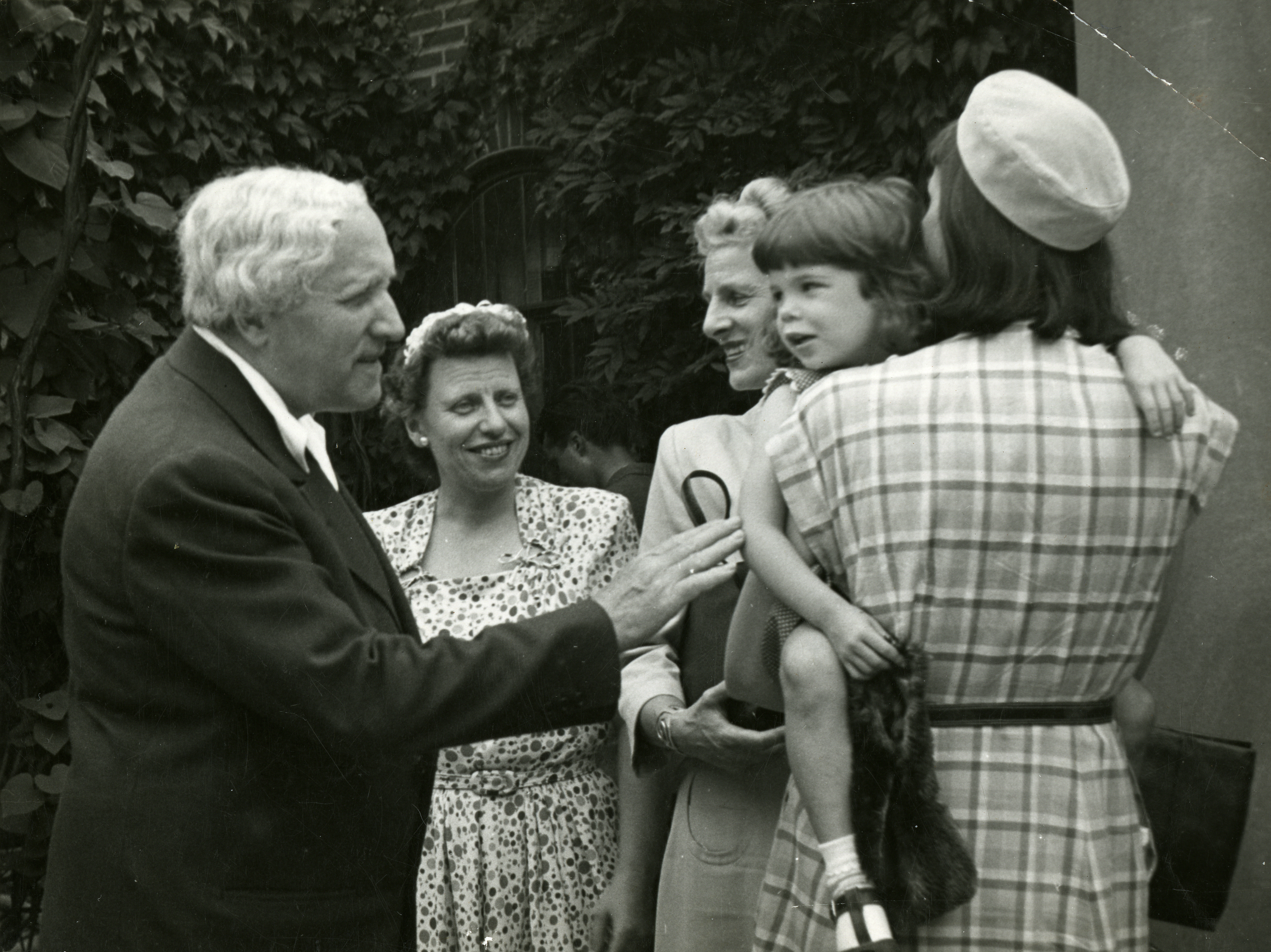
1990-21190

Carl Milles, Svea Kline, Mabel Deardon, and Mary Woolf (holding Dinah Mitchell) in Millesgarden, ca 1944. Cranbrook Archives.

In 1943, Kline started the Sculpture Department at the Flint Institute of Arts, and began teaching there part-time. From 1950 she taught there full-time and also at the Saginaw Museum of Art. Kline also taught at what was then the Bloomfield Art Association and Haystack School for the Arts in Maine, worked as Milles’ assistant from 1949-50, and was one of the founders of the Sculptors Guild of Michigan. Founded in 1952 as the Terra Cotta Sculptors, the group “provided an umbrella for women to prove their validity as artists to the community and to provide support and inspiration to each other.” (Men were invited to join in 1977.)

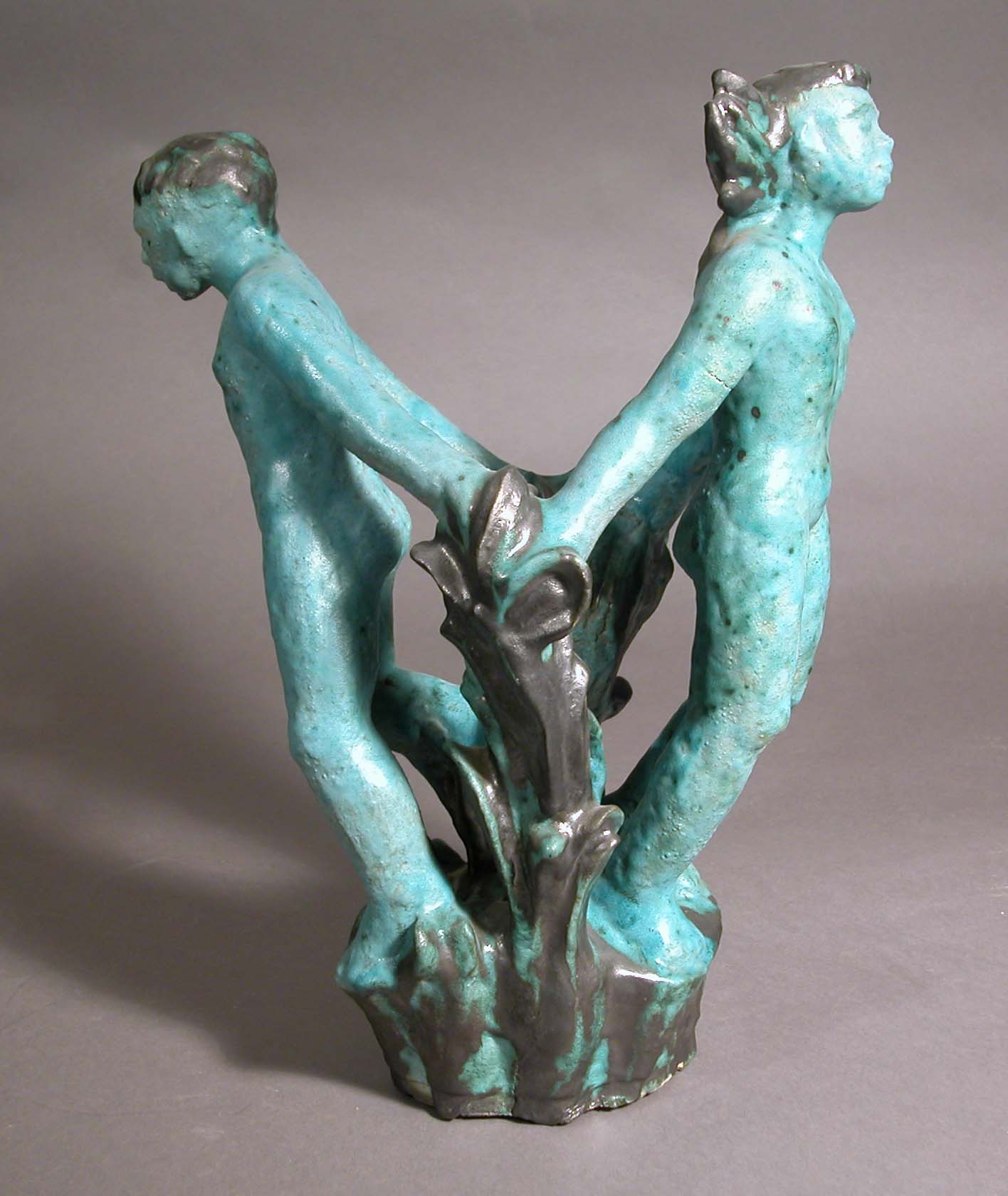
S1944_35

Fountain Piece, 1944. Cranbrook Art Museum.

As a sculptor, Kline worked in metal, bronze, wood, ceramic and glass. Her innovative work with glass was considered “ahead of her time.” She molded glass, fused glass, painted on glass, and embedded pieces of colored glass into a background layer of glass—a process she called “gemaux.” In Michigan her works are displayed at the Berkley Public Library, Flint Public Library, Genesee Merchants Bank and Trust, Detroit Broach Company, Koebel Diamond Tool Company, Michigan Credit Union League, and the First Baptist Church of Royal Oak.

In a December 1983 interview in the Birmingham Eccentric, Kline fondly remembered her days at Cranbrook. “I thought it was just heaven on earth—so well-kept, so many interesting people from all over the world. There was a marvelous spirit.” She also recalled with pleasure the great artists with whom she was associated—Eliel Saarinen, Carl Milles, Maija Grotell, and Harry Bertoia. Coincidentally, we have an image (displayed below) of Kline wearing a brooch designed by Harry Bertoia. In honor of the Cranbrook Art Museum’s exhibition of Harry Bertoia’s jewelry (which opens tonight), we are featuring a photograph of Kline wearing a Bertoia brooch.

AA-87

Svea Kline, Marguerite Kimball, Lillian Holm, and Joy Griffin West at the opening night of the student exhibition, May 1944. Cranbrook Archives.

Gina Tecos, Archivist

The Amelia Elizabeth White Gift

In honor of Women’s History Month, we like to try to tell the stories of women that might otherwise go unnoticed. Thousands of women have stepped foot on the Cranbrook campus, or have been involved with Cranbrook in some way. One such woman was Amelia Elizabeth White (1878 – 1972), philanthropist, passionate champion for the rights of the Pueblo, and a collector and promoter of Native American Art. In 1937, she donated a very large collection of Native American art and artifacts to Cranbrook Institute of Science, where they remain today.

From the 1938 Cranbrook Institute of Science Annual Report.

From the 1938 Cranbrook Institute of Science Annual Report.

Born into an upper class family in New York City, White was educated at Bryn Mawr and traveled widely before she and her sister Martha served as volunteer nurses with the Red Cross in World War I. After the war, White, who had first traveled to New Mexico in 1913 to visit a friend, arrived in Santa Fe where she purchased a tract of land just south of the city. She soon built a home called “El Delirio” or “The Madness” (designed by William Penhallow Henderson) which quickly became a popular gathering place for writers, artists and intellectuals. By 1923, White had opened an art gallery called “Ishauu” in Manhattan ( run by Dolly Sloan), in order to promote southwestern Native American Art.

White was a member of the Eastern Association on Indian Affairs (EAIA) initially composed of men and women residing in and around the city of New York who shared an interest in the life and crafts of the Pueblo. She was instrumental in the organization of The Exposition of Indian Tribal Arts in 1931 and served as chairman of the Executive Committee. Along with other patron-philanthropists including Mary Cabot Wheelwright and Abby Rockefeller, White’s goal was to show Native American art as a traditional art form. The exposition included more than 600 pieces of pottery, jewelry, textiles, sculpture, paintings, beadwork, and basketry, many of which were from White’s personal collection.

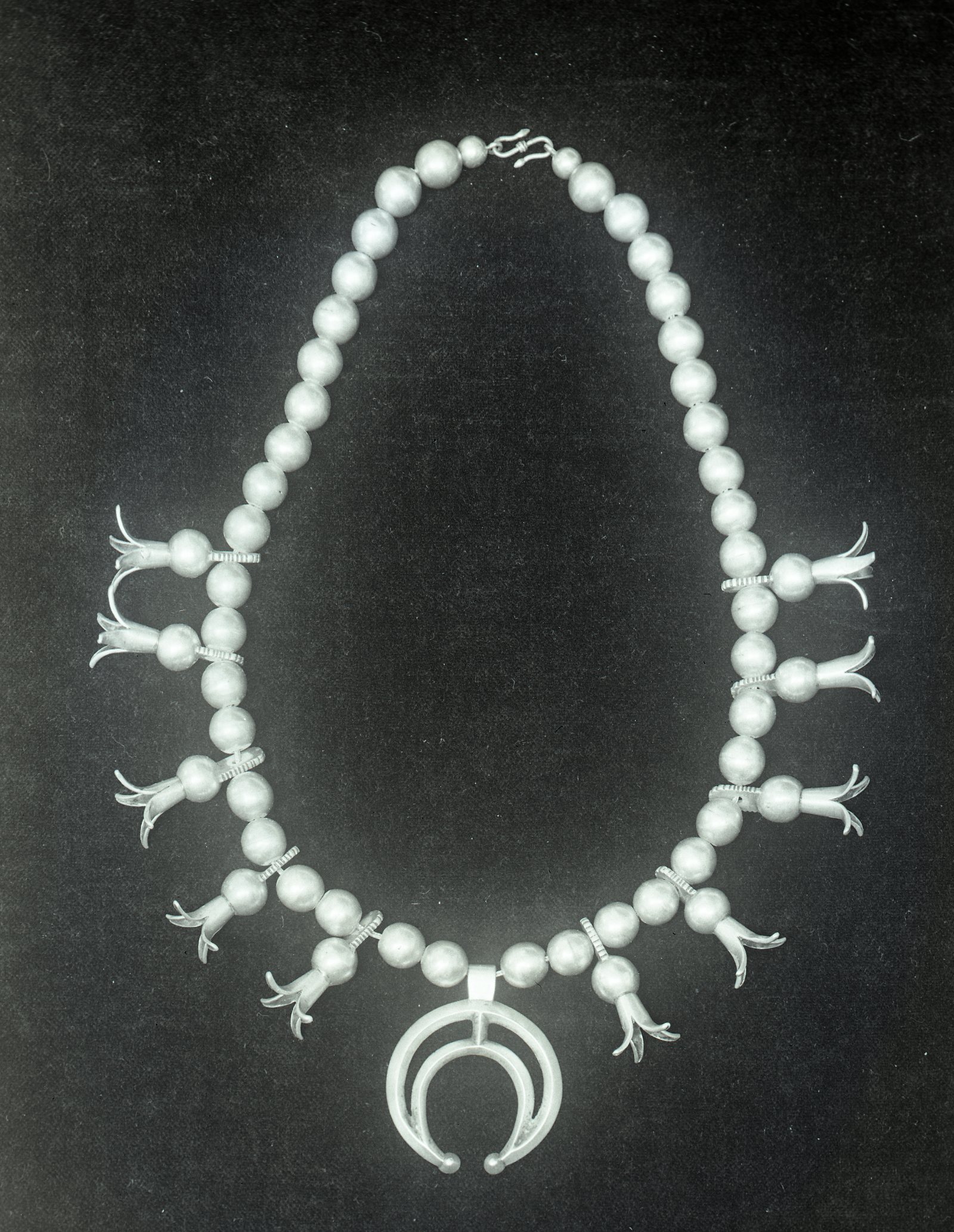
Navajo necklace

Navajo necklace. Image courtesy Cranbrook Archives.

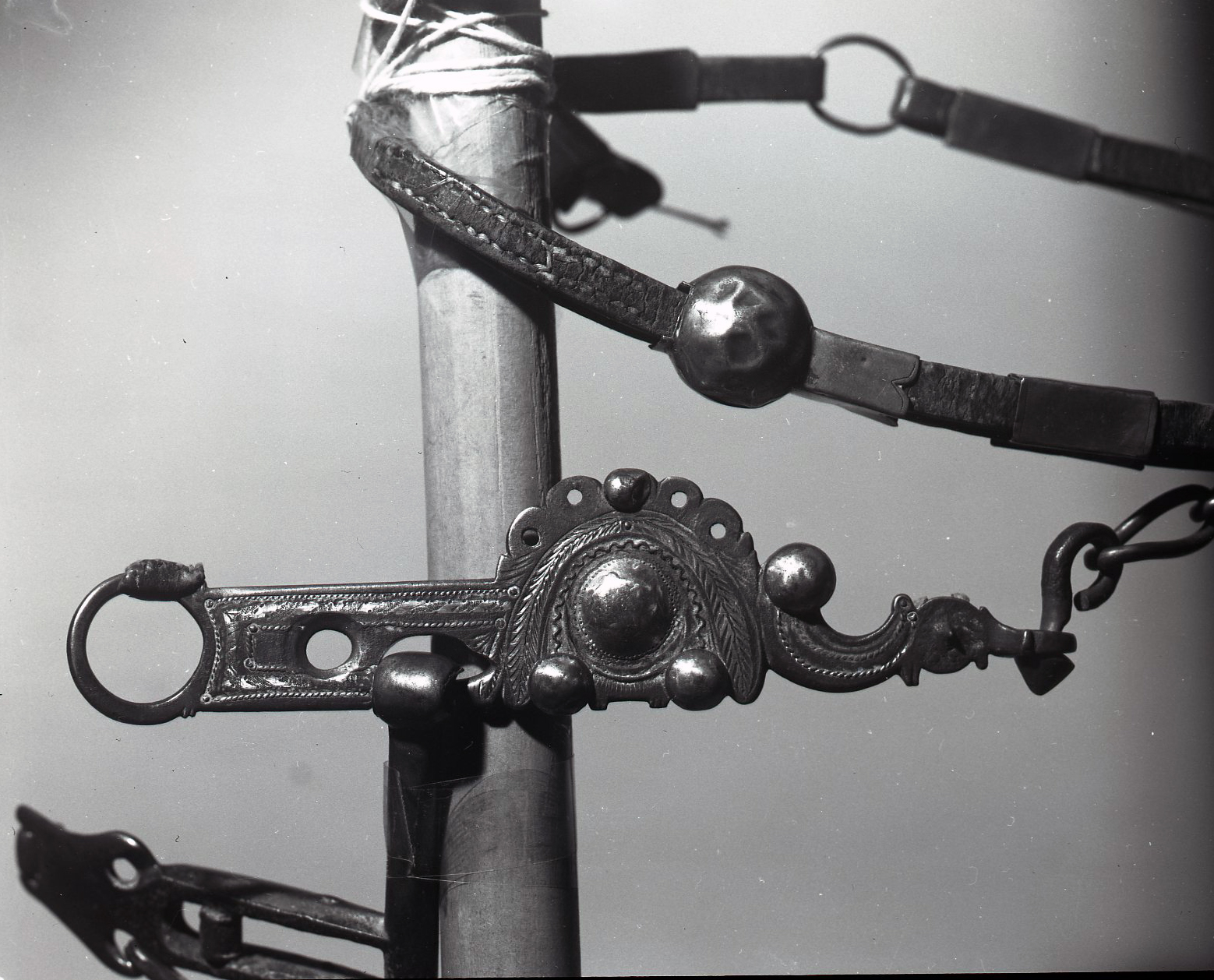
To continue her wish to “have the American Indian take his place in the museums for American art in this country,” White dispersed her collection of art and artifacts to numerous museums across the country including Cranbrook Institute of Science, Cleveland Museum of Art, the National Anthropological Archives at the Smithsonian, the New Mexico History Museum, and the Detroit Institute of Arts. White’s collection, which she donated in 1937, was the largest single accession of the Institute other than our founders, George and Ellen Booth. The donation included textiles, pottery, jewelry and artifacts from the Pueblo, Navajo, Kiowa and Alaskan Inuit.

Navajo wedding belt

Navajo wedding belt. Image courtesy Cranbrook Archives.

A fascinating woman in her own right, White’s contributions to the Institute’s anthropological collection has been nearly forgotten. In his letter to White on December 16th 1937, then Institute of Science Director, Robert T. Hatt, expresses his gratitude for the donation: “I hasten to assure you that no finer thing has ever happened to this organization than the bestowal which you have made.”

Leslie S. Edwards, Head Archivist and Gina Tecos, Archivist
A Man of Many Words

At Cranbrook, the legacy of Samuel Simspon Marquis is clearly visible. A trusted advisor to George Booth, Dr. Marquis oversaw the completion of Christ Church Cranbrook and became the first Rector when the parish was officially established in 1927. He was also instrumental in the founding of the Cranbrook School for Boys and was a Trustee of the school from 1926-1939. On 23 May 1940, Marquis Hall was dedicated in his honor.

Prior to his arrival at Cranbrook, Dr. Marquis was invited by Henry Ford to head the Sociological Department at Ford Motor Company. Marquis remained in this position for five years and accompanied Ford on the ill-fated “Peace Ship” to Europe in 1915. In 1923 Marquis published Henry Ford: An Interpretation, one of the first works written by an employee close to Ford. Marquis’ work with Ford is well-documented in our collection here at Cranbrook and at the Benson Ford Research Center.

When the Fairies Go To Church

Unpublished poem by Samuel S. Marquis, Samuel Simpson Marquis Papers, Cranbrook Archives.

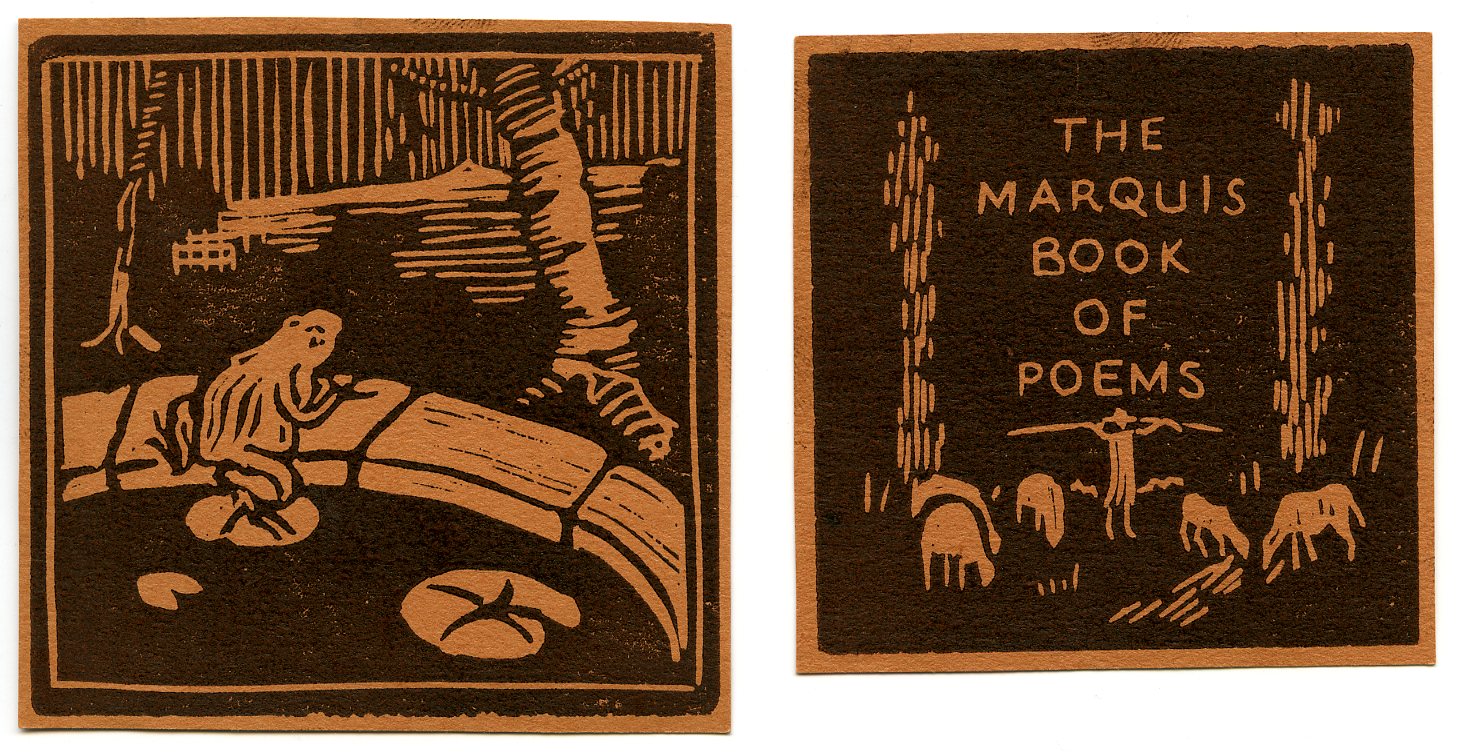
While doing research here at Cranbrook, I discovered that Marquis was also a prolific writer. He wrote not only about religious topics, but about history, the political climate of the day, and even poetry. Below are samples of the book plates for the unpublished Marquis Book of Poems. Enjoy!

Marquis Book of Poetry

Cover and interior plates from The Marquis Book of Poems, Samuel Simpson Marquis Papers, Cranbrook Archives.

Gina Tecos, Archivist
Naturalist & Photographer Walter E. Hastings

Often times in collections we discover materials that are unexpected, rare, or just plain fabulous.  The following images are all of the above.  Several years ago, when processing a set of negatives from the Institute of Science, I was pleasantly surprised to discover a set of photographic images of Native Americans, primarily Odawa/Ottawa from Leelanau County in northern Michigan.  They were taken by Walter E. Hastings (1887-1965) between 1928-1933.  Hastings was a naturalist, photographer, and lecturer, and was Michigan’s first conservation film-maker.

Capture

From “He Knows All About Michigan’s Birds,” Detroit Free Press, 12 March 1922

Hastings’s interest in nature began as a child when his mother put together a collection of stones, shells, and Native American artifacts for him with the hope that he might become a naturalist. Clearly, it worked!  His interest in photography began in 1918 when he received an inexpensive camera for Christmas from his boy scout troop. From 1921-1932, Hastings worked for the University of Michigan Museum as the “Custodian of Birds’ Eggs.”  In that capacity, he served as a collections manager, enlarging and arranging the collection, and took numerous photographs which documented the nesting habits of Michigan birds.  Employed as the photographer for the Michigan Department of Conservation from 1926-1951, Hastings was a pioneer of wildlife and conservation photography.

CISC3261

Johnny Willow Bird, age 3 yrs.  Taken at St. Ignace, Michigan, Oct 1933.  Courtesy Cranbrook Archives.


CISC0078

Native American Campsite, Horton’s Bay, Michigan, Jul 1933.  Courtesy Cranbrook Archives.


The Institute of Science has several Odawa/Ottawa and Chippewa objects, collected and donated by Hastings, from the same geographical region where the photographs were taken. It is likely that the photographs were donated to the Institute of Science along with the artifacts. The Institute of Science photograph collection was later transferred to Cranbrook Archives. The Walter E. Hastings collection is located at the Archives of Michigan (MS 88-27).

~ Leslie S. Edwards, Head Archivist

It’s all in the details: Cranbrook’s Homestead Property

In 1914 George Gough Booth commissioned the Coats & Burchard Company to complete an appraisal of the “Homestead Property” which included a full inventory of Cranbrook House and its outbuildings. This was not uncommon, and Booth continued the practice several times during his life as the Cranbrook campus and its buildings grew and changed.

Blog_1.26_image1

Selection of Cranbrook House flooring materials. Courtesy Cranbrook Archives.

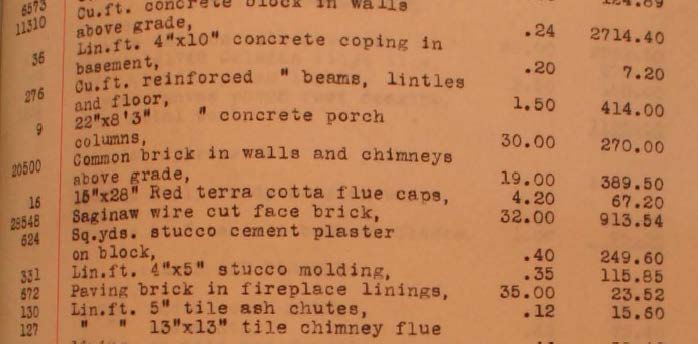
Since Cranbrook House was constructed in 1908, the 1914 appraisal ledger is the first in our collection, and is markedly different from the subsequent ones. The biggest difference is that in addition to the furnishings and artwork, all building materials, down to every last detail including number of bricks used, cubic feet for flooring, and even all of the hardware was judiciously and meticulously cataloged.

Blog_1.26_image2

Selection of “Bill of Materials” for Cranbrook House. Courtesy Cranbrook Archives.

This ledger and the others (which were taken in 1921, 1933, 1937, and in 1944) have been immensely helpful in historic research of the home and properties. They can be used to help locate objects in their original location in the house, and often point to the year they were purchased and even original purchase invoices. Using this ledger in conjunction with the original drawings and blueprints have been assisted campus architects and project managers with restoration projects on campus as well as projects which determine the structural integrity of buildings for building use and preservation.

Stefanie Kae Dlugosz, Collections Fellow, Center for Collections and Research

Photo Friday: The Art of Richard Thomas

While researching an archival query this past week I discovered yet more hidden gems in our collection—the work of metalsmith Richard Thomas (1917-1988). Thomas held several positions at Cranbrook, including Head of the Metalsmithing Department, Dean of Students, Registrar, and Administrative Assistant to the President. The Archives has a small collection which documents many of Thomas’ private commissions.

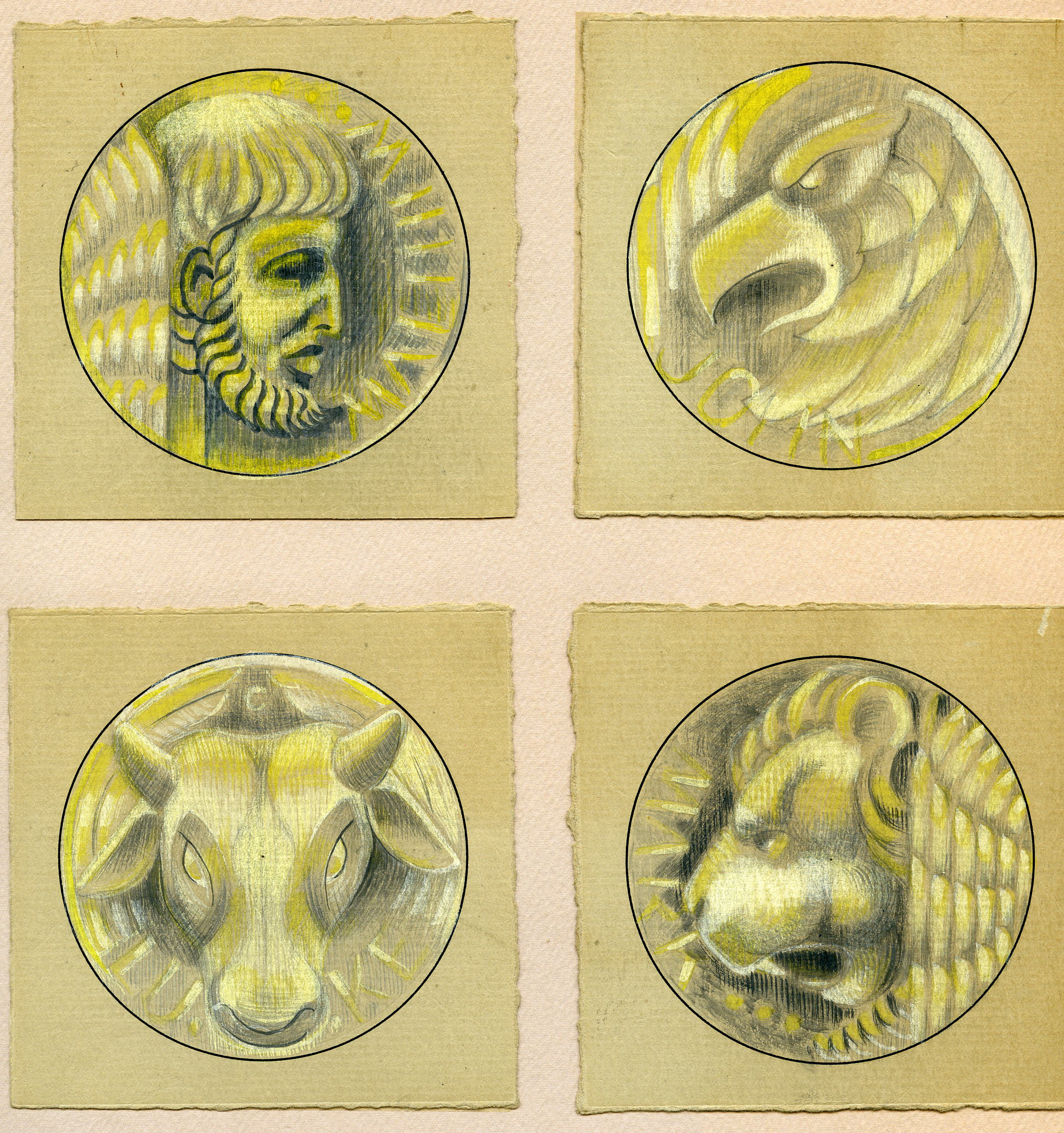
One of the key works he created for Cranbrook was the Ceremonial Mace (1978) at the request of the Cranbrook Educational Community. Traditionally, the Christian processional cross had been carried at Cranbrook and Kingswood Upper School graduation ceremonies, but by the 1970s, upper school students objected to the fact that the cross did not accurately reflect the religious beliefs of the diverse student body. In 1973 and 1974, Kingswood head, Wilfred Hemmer, moved the cross from the front of the processional to the rear, then in 1975 agreed to remove it from the ceremony altogether.

Cranbrook Mace

Photo courtesy Cranbrook Art Museum.

After Hemmer’s resignation in early 1976, acting head Christopher Corkery reinstated the processional cross and a student protest ensued. Letters to the editor were written to both upper school newspapers and four Kingswood seniors refused to attend the Kingswood commencement. By May, ten percent of the student body threatened to boycott the ceremony.

Thomas’ design of the Cranbrook Mace incorporates symbols of four major religions: the Christian cross, the Star of David, the Crescent of Islam, and the symbol of Yin and Yang which represents the Eastern philosophies of China, Japan, India and Indonesia. The seals of the Cranbrook institutions are also a part of the design of the mace, which is made of rosewood, ivory, steel, sterling silver and gold.  The Cranbrook Mace is still used in graduation ceremonies to this day.

Richard Thomas sketch

Sketch from the Richard Thomas Papers, Cranbrook Archives.

In 1981, Thomas was awarded the Cranbrook’s Founders Medal. His design and fabrication of liturgical objects can be seen in more than ninety churches, synagogues, and temples across the country. He designed the Cranbrook Foundation’s silver punch bowl, the Saarinen Medal, and the commemorative medal for the Academy of Art’s fiftieth anniversary.

Gina Tecos, Archivist and Leslie S. Edwards, Head Archivist
A Love for Teaching: Cranbrook’s “Bird Man”

On a cold January day, it’s nice to think about the grandeur of Spring – warmer days, flowers blooming, and birds chirping. There are several places in the Archives we could look for signs of Spring, but today we remember Cranbrook Institute of Science (CIS) naturalist and ornithologist, Walter P. Nickell (1903-1973).

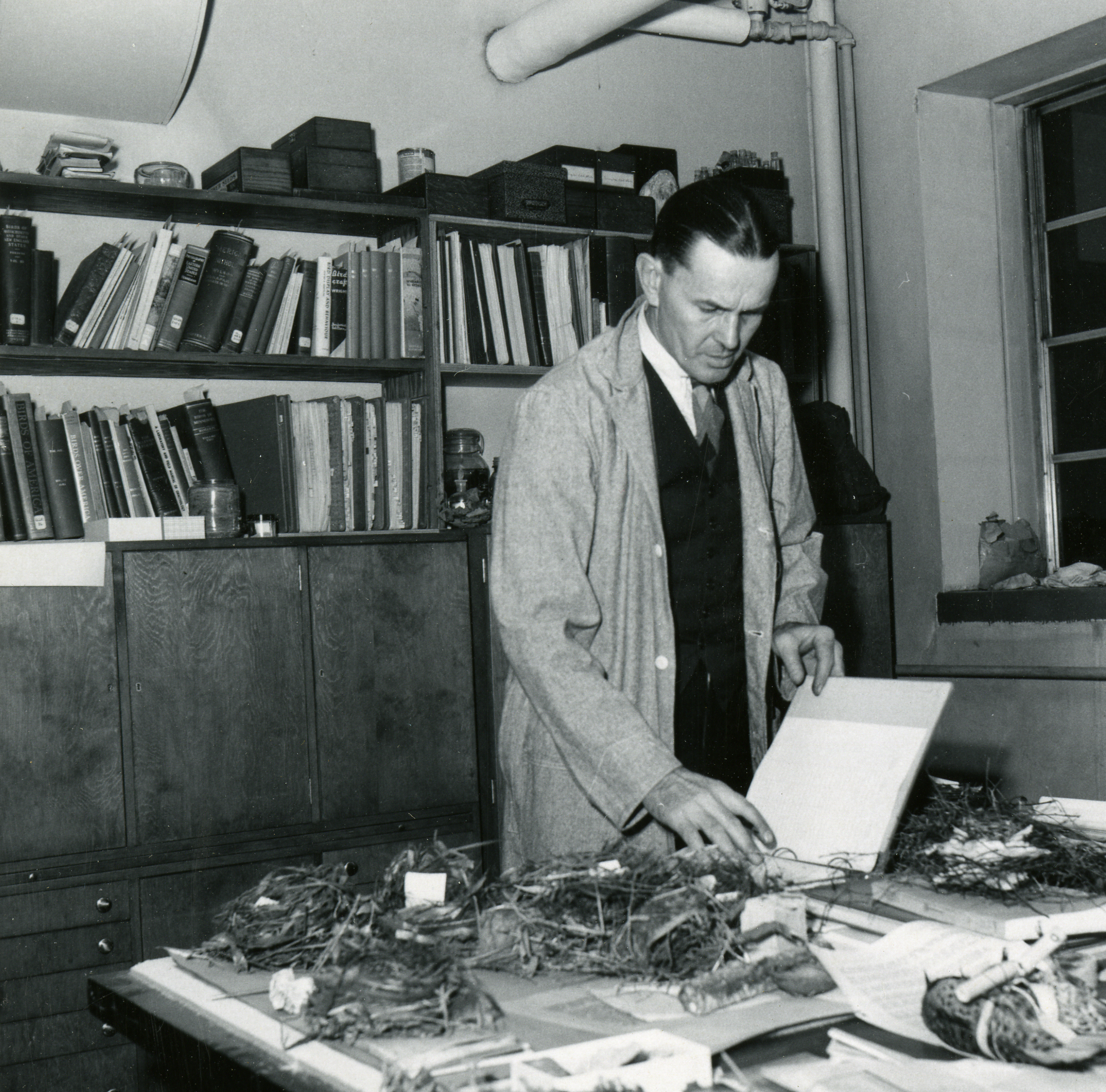
Born in 1903, Nickell worked at CIS for 33 years. During this time he banded over 160,000 birds in the contiguous United States, Mexico, Canada, and British Honduras. He also recorded notes on more than 50,000 nests – primarily in Michigan. In 1964 Central Michigan University awarded Nickell an honorary Doctor of Laws degree and in 1968 Nickell was awarded Cranbrook’s Founders Medal.

Bird Nest Studies, 1951

Bird Nest Studies, 1951.

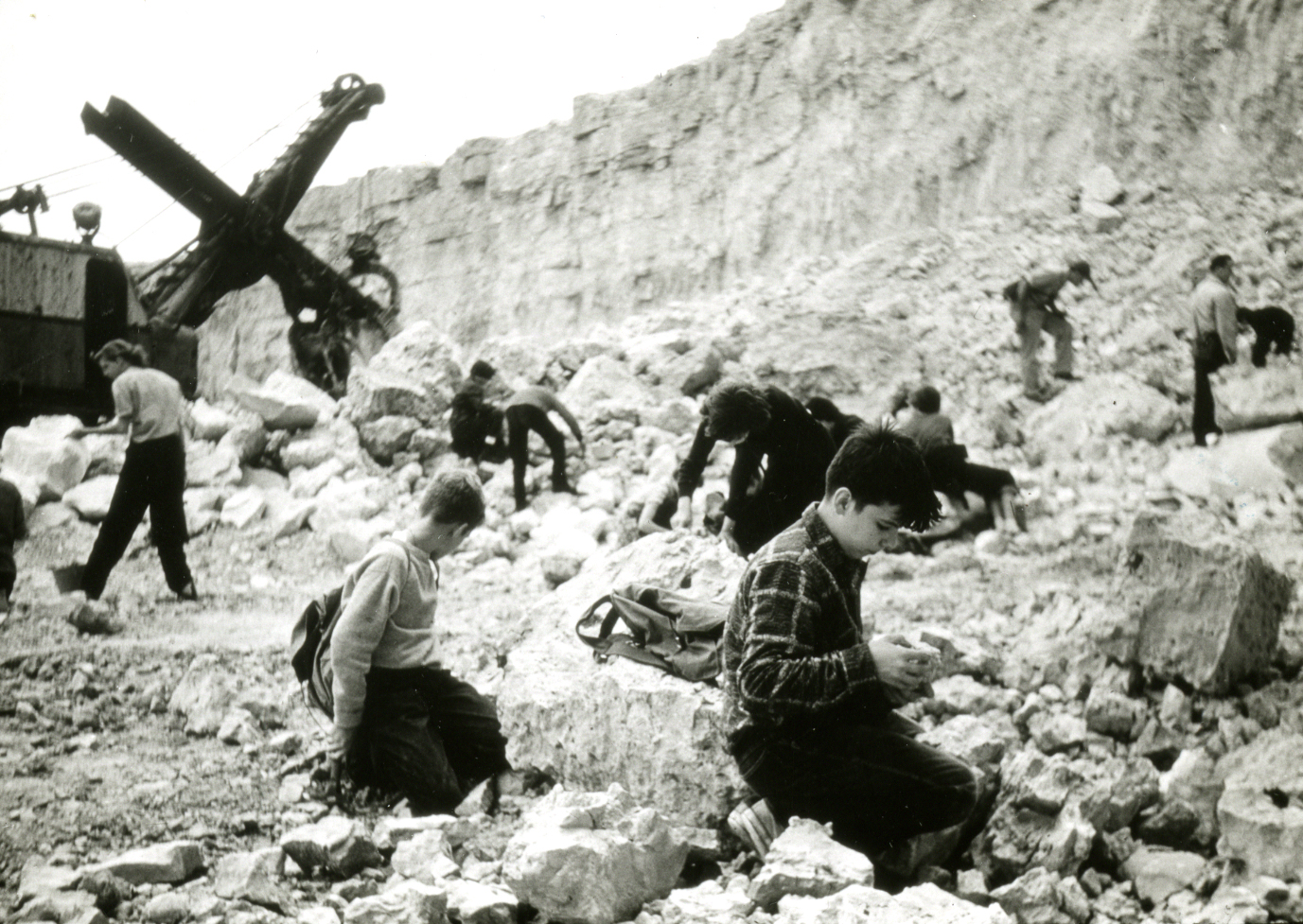
In addition to developing numerous exhibitions at CIS and publishing more than 130 scientific articles, Nickell is well-known for his enthusiasm for teaching. During his tenure at CIS he lectured on natural science at local schools and colleges, including the University of Michigan. He also led junior and adult groups on numerous natural science expeditions.

Student fossil exhibition

Students on a fossil exhibition, 1956.

In a 1959 address delivered by Nickell at the Mid-Winter Science Teachers Institute of the Metropolitan Detroit Science Club, he said: “We must seek ways by which education can be made an adventure, a dramatic procedure, a thrilling experience with most of the elements which have always impelled the discoverers, the explorers, the inventors and the researchers.”

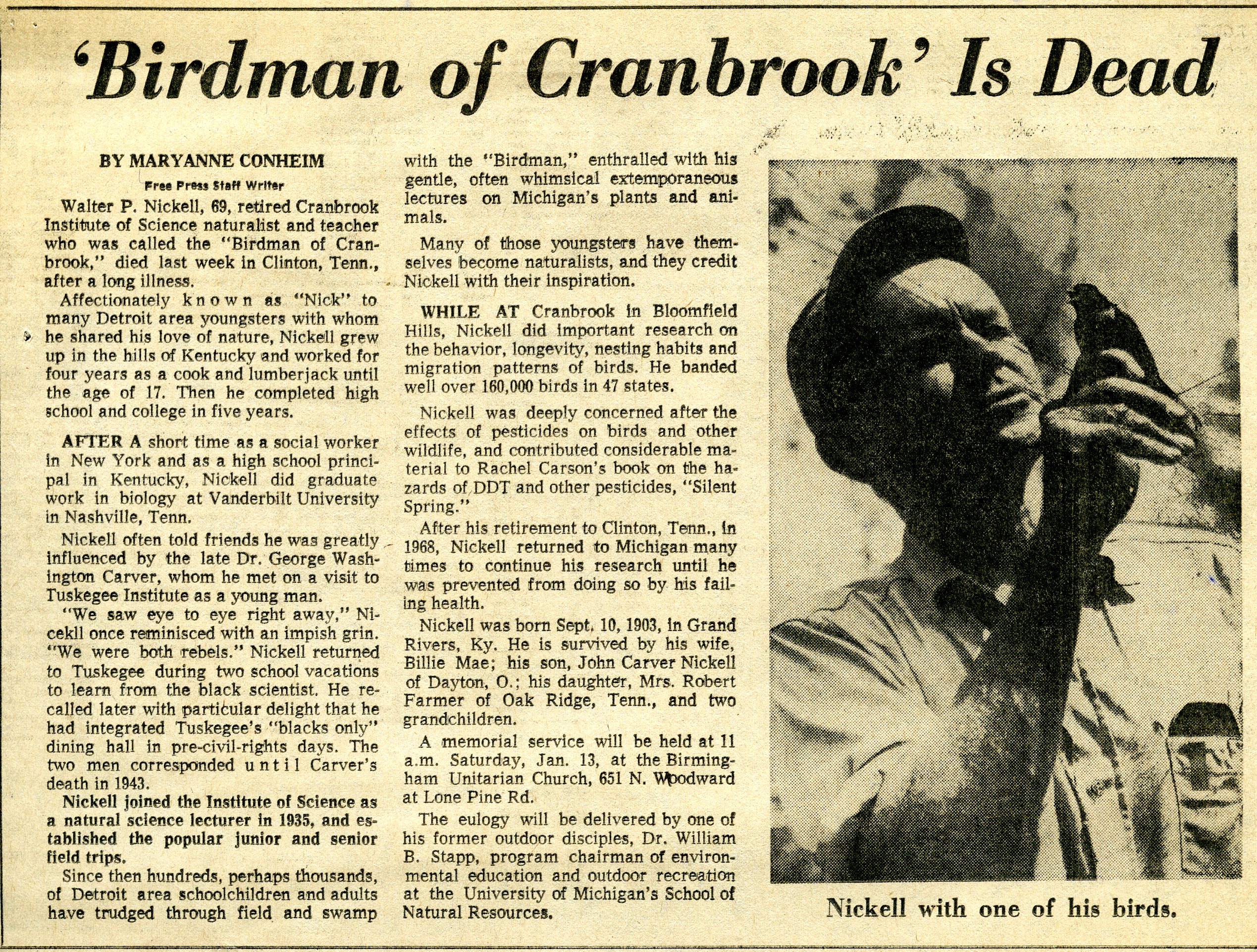
Detroit Free Press, 13 Jan 1973

Detroit Free Press, 13 Jan 1973.

Gina Tecos, Archivist

Photo Friday: The Great Outdoors

Photo Friday12_26_14

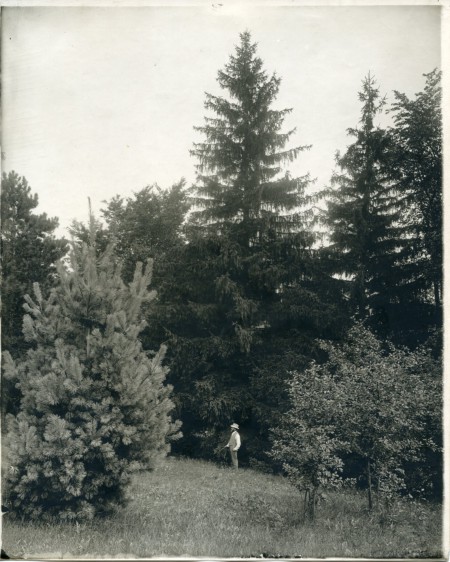
George G. Booth by Kingswood school area. c. 1906. Courtesy Cranbrook Archives.

Since it has yet to snow and cover the campus with glistening white, I though it best to show the beauty of the greenery and foliage all over this campus. Enjoy the end of the year and holidays with this photo of George G. Booth in the midst of the nature of Cranbrook! We will see you next year!

– Stefanie Kae Dlugosz, Collections Fellow, Center for Collections and Research

A Fond Farewell

Farewell Gretchen

Gretchen in front of the North Gates before they head off to conservation.

As the end of the year approaches, it is with a heavy heart that the Center for Collections and Research is saying a fond farewell to our Associate Registrar Gretchen Sawatzki. After 2 years of working hard at Cranbrook cataloging and restoring cultural properties all over the campus, organizing the restoration of the North Gates, contributing to the blog, maintaining objects, coordinating loans, and much much more, Gretchen will be leaving Michigan. She has taken a position in California and will be driving out west in the new year! We couldn’t be happier for her and her new opportunity but she will be greatly missed here at the Center for Collections and Research, as well as at all over the Cranbrook Campus.

Please feel free to leave comments and well wishes to Gretchen as she begins this new chapter!

Stefanie Kae Dlugosz, Collections Fellow, Center for Collections and Research

Create a website or blog at WordPress.com