Particular Architects, Elusive Materials: Headaches in Green and Red

I recently found myself at Joann Fabrics five minutes before the store closed, desperately selecting supplies for a project that was, of course, best completed that night. My delay was self-inflicted, but it got me thinking about times when much larger projects have been strained by access to supplies.

Specifically, both Eliel Saarinen and Frank Lloyd Wright created buildings with strong creative vision. Their architecture demanded specific, and sometimes hard to source, materials. Let’s look at two examples and decide if the headaches my favorite architects caused their suppliers and contractors/builders were worth the final product!

Example 1: Eliel Saarinen and Pewabic Pottery Tiles

Eliel Saarinen, Kingswood School for Girls Main Entrance Lobby (Green Lobby) plan, section, elevation, and reflected ceiling plan, c. 1930-1931. Ink, colored pencil, and pencil on tracing paper. Approx. 28½ inches x53 inches. Cranbrook Art Museum 1982.35. Photography by P.D. Rearick, Courtesy Cranbrook Center for Collections and Research.

When Eliel Saarinen specified thousands of hand-molded, hand-glazed, and hand-fired Pewabic Pottery tiles for use at Kingswood School for Girls, his contractor pushed back. Pewabic was less a tile factory than an artists’ workshop. As supplier of Kingswood’s industrially produced tile for bathrooms and basements, a concerned Mr. Burt of the Detroit Mantel and Tile Company wrote to the contractor, Charles Wermuth & Son:

We are doubtful as to [Pewabic Pottery] being able to manufacture the amount of tile as selected for this job. We raised this question during the course of selections but [Pewabic cofounder and artist] Mrs. Stratton advises that she will be able to produce this tile without any hold-up. We have advised her that any hold-up or delays caused from her material will be charged back to her.

We are writing you this letter merely as a protection against delays beyond our control.

Cranbrook Architectural Office, Box 26 Folder 11. Cranbrook Archives.

Saarinen wasn’t wrong to select Pewabic Pottery for Kingswood—it’s stunning and perfect in every way—but Burt wasn’t wrong about issues of production. It does appear that delays in the tile making caused delays in construction, raising blood pressure on both ends of Woodward Avenue.

As the first day of classes at Kingswood drew nearer, truck drivers from Cranbrook made near-daily trips to the pottery for small batches of tiles. I imagine the kiln-fresh mini-masterpieces still warm to the touch!

Did the delay in tile delivery keep Kingswood from opening on time? No. An outbreak of polio in metro Detroit meant all schools were closed by state health officials. But Wermuth used the extra time to finish the building—all Pewabic tiles were well-set and grouted for classes to begin September 21, 1931.

Eliel Saarinen and Mary Chase Perry Stratton’s 1931 masterpiece, the Green Lobby Stair. The headache of contractor Charles Wermuth and Son was worth the stress. Photography by James Haefner, 2018. Courtesy Cranbrook Center for Collections and Research.

Example 2: Frank Lloyd Wright and “The Wood Eternal”

In February 1949, Melvyn Maxwell Smith was ready to start building his long-awaited dream: a wood and brick Usonian house designed by Frank Lloyd Wright. With enough money squirreled away to begin construction, Smithy was ready to order materials. Including 14,000 linear feet of clear, old-growth, 16’ x 1’ x 2” boards of Tidewater Red Cypress wood.
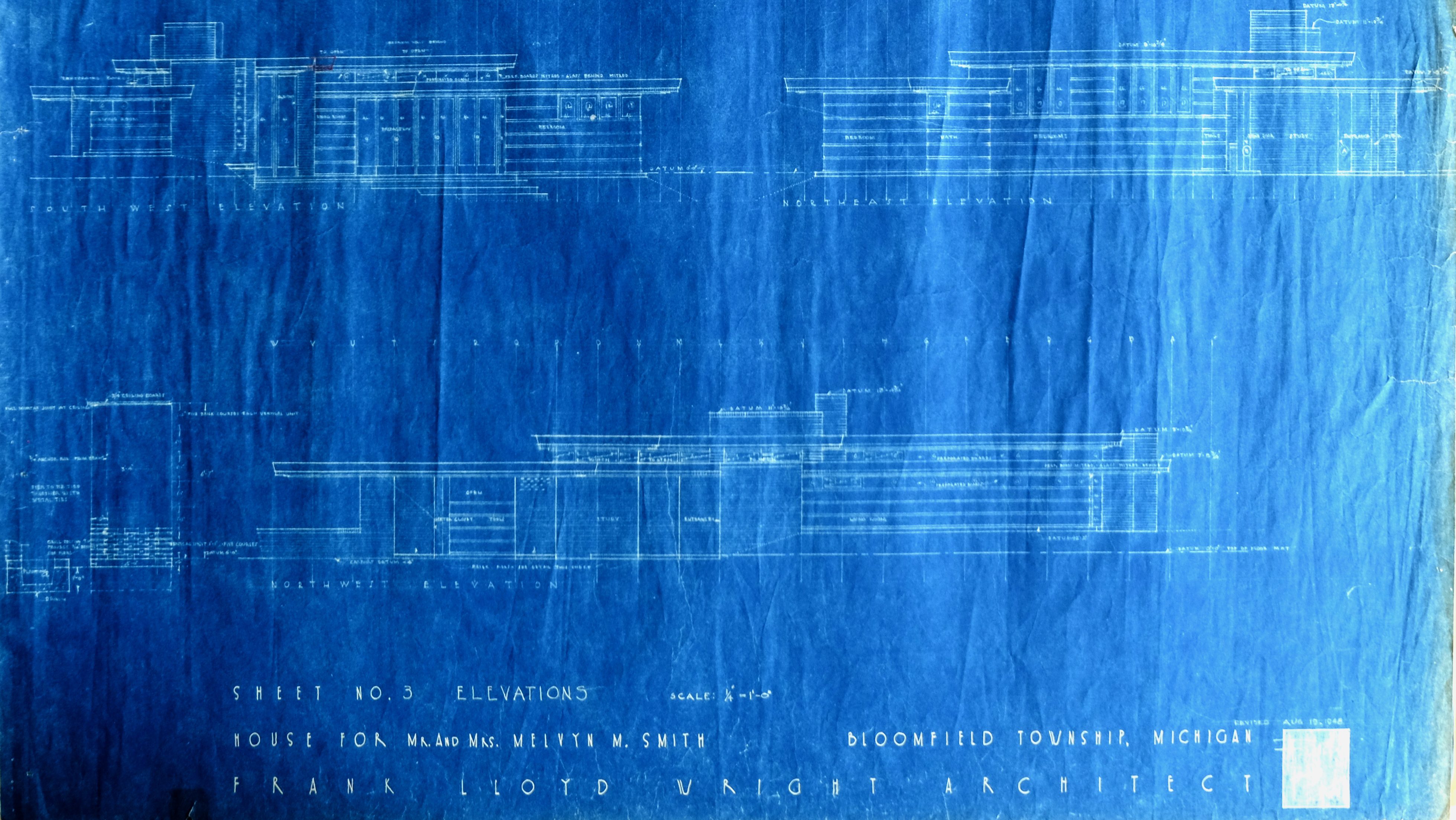
Frank Lloyd Wright, detail of House for Mr. and Mrs. Melvyn M. Smith elevation, August 1948. Blueprint. Courtesy Cranbrook Archives.

Wright had built in Cypress since at least 1914, with his first all-Cypress design, the Wiley House, coming off the drafting board in 1932. The iconic Usonian houses of the 30s and 40s are mostly built of this swamp-grown, super strong, rot-resistant golden wood.

Cypress proved to be perfect for Wright’s organic architecture. And by 1949, Cypress was incredibly hard to find.

Smithy wrote to many different lumberyards with his needed material list. Those closest to the swamps where Cypress grows—lumberyards in South Carolina and Louisiana—were unable to furnish the volume of wood needed. Lumber yards in the Midwest simply stated they did not carry Cypress. Chicago-based Hilgard Lumber Company wrote, “We duly received your inquiry…on a carload of Tidewater Red Cypress (clear grade) but clear grade in this species is extremely scarce.”

In February 1949, Fleishel Lumber Company of St. Louis (who had been forwarded Smithy’s large request) agreed to fulfill the order. Smithy simply needed to let the yard know when he wanted the wood delivered. Or at least, that was the idea.
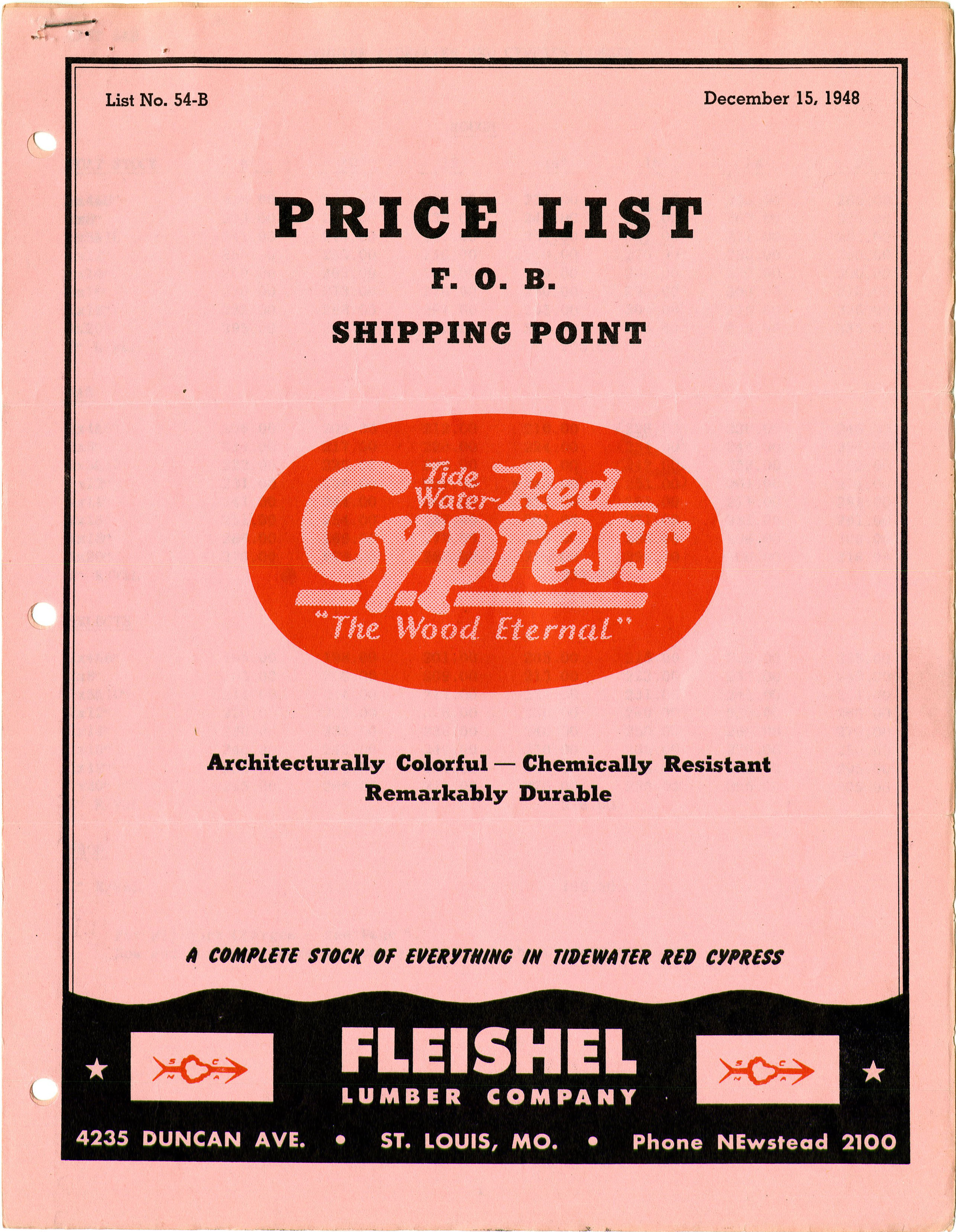
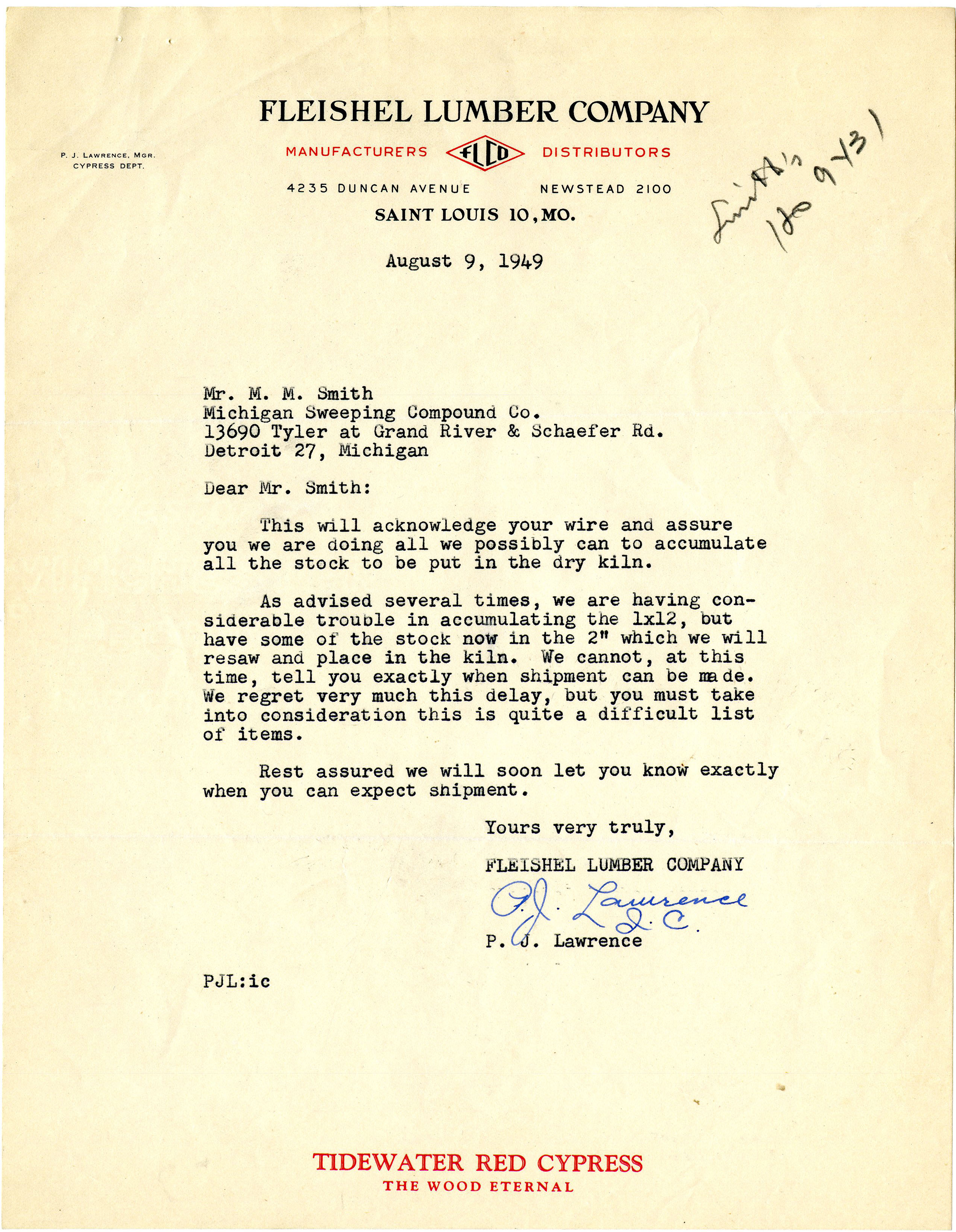
Every month, Smith wrote, called, or telegrammed Fleishel, asking for his order. And every month, the lumber yard replied: we don’t have it all, but we have some. As time ticked by and Smithy’s house waited to take shape, Fleishel offered up concessions. Instead of kiln dried, would Smithy accept natural dried Cypress? No. Recycled or swamp-preserved? No. Smaller boards, but more boards? No.

Smithy needed what Wright specified: long, wide boards. By August 9, 1949, things were looking up, even if Fleishel’s salesman sounds a bit annoyed:

…We are doing all we possibly can to accumulate all the stock to be put in the dry kiln.

As advised several times, we are having considerable trouble in accumulating the 1×12…We cannot, at this time, tell you exactly when shipment can be made. We regret very much this delay, but you must take into consideration this is quite a difficult list of items.

Smithy’s goal of having the lumber on hand during the Summer holiday, when he could be on-site every day, did not happen. His first day teaching his Cody High English class that year? September 5.

Finally, on September 23, 1949, Fleishel Lumber packed a railroad car full of 14,000 linear feet of clear, kiln-dried Cypress and sent it toward Bloomfield Hills. Just seven months and a few days after it was ordered.
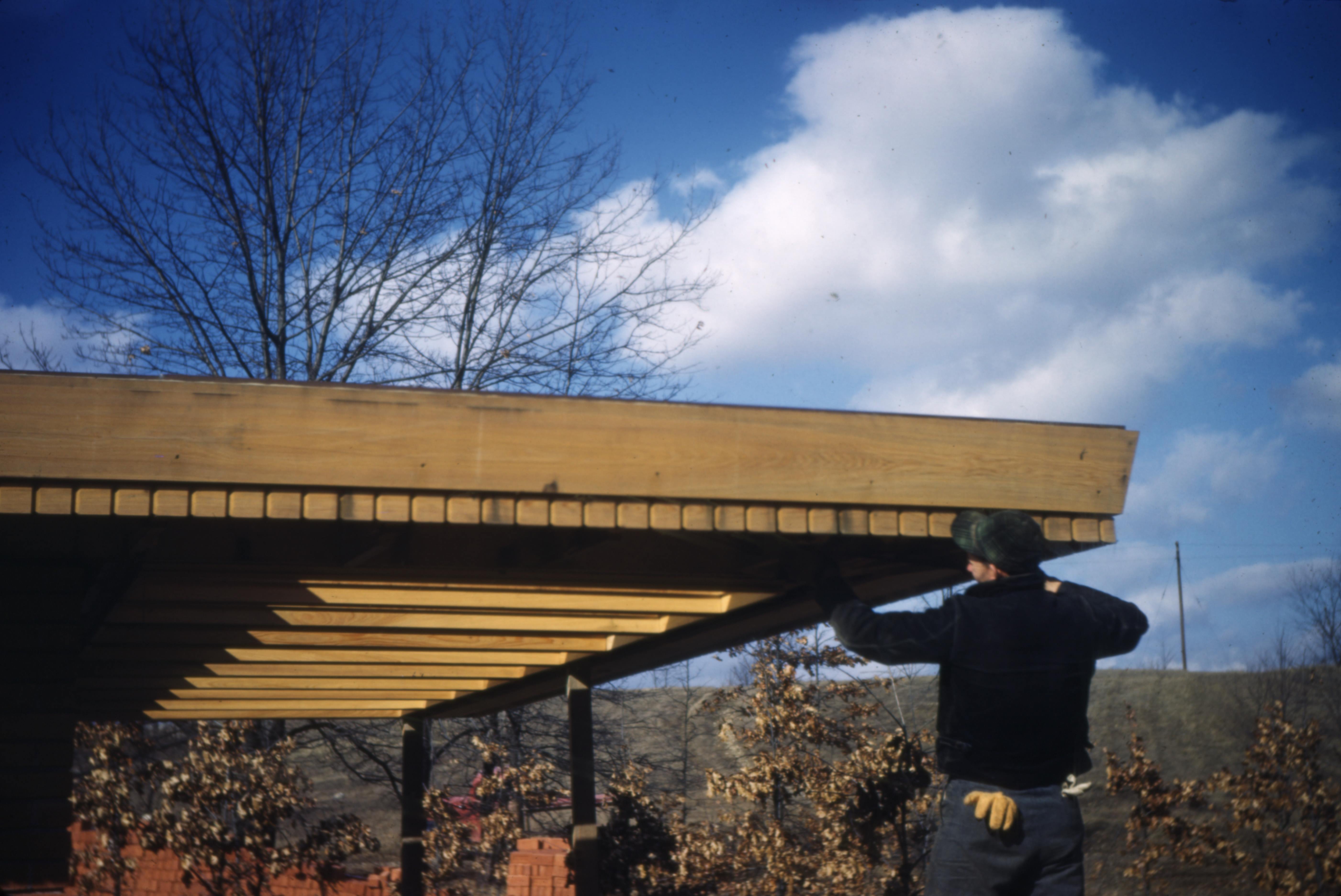
Work continues on Cypress boards of Smith House, winter 1949-1950. Courtesy Cranbrook Archives.

About seven months later, Melvyn and Sara Smith had a Cypress house! When it was completed in May 1950, the Smith House became Frank Lloyd Wright’s last entirely Cypress-built project.

Tidewater Red Cypress with Detroit Common Brick defines the Frank Lloyd Wright-designed Smith House, 1950. Courtesy Cranbrook Archives.

So, did being particular about materials pay off for Mr. Wright and Mr. Saarinen? I think the Smiths and thousands of Cranbrook students would agree: absolutely.

Kevin Adkisson, Curator, Cranbrook Center for Collections and Research

Note: Oh, and if you want old-growth Cypress today? The current owner of the Frank Lloyd Wright Willey House, Steve Sikora, described the purchasing of Cypress wood in the 2010s as operating among “an assortment of hucksters, charlatans, and petty criminals, or in industry parlance, ‘wood brokers.’” Head on over to The Whirling Arrow blog to read a lot more about Cypress and Wright!
Summer School: HUB Architecture Edition

On this, the last day of summer, I thought we’d look back at the Center’s second-annual Architecture Elective for the Horizons-Upward Bound Summer Component. It was a real highlight of my summer!

A grant from the Society for Architecture Historians enabled Nina Blomfield, the Center’s Collection Fellow, and me to co-teach the six-week elective. Each Monday and Wednesday morning from June 28 to August 2, we met in Gordon Hall of Science at Cranbrook with fifteen enthusiastic HUB students, grades 9 through 12. While we started most mornings in the classroom with our textbook or a slideshow of images, the real excitement came on class trips.

I mean, what better way to learn about excellent architecture than to study the buildings of Cranbrook?

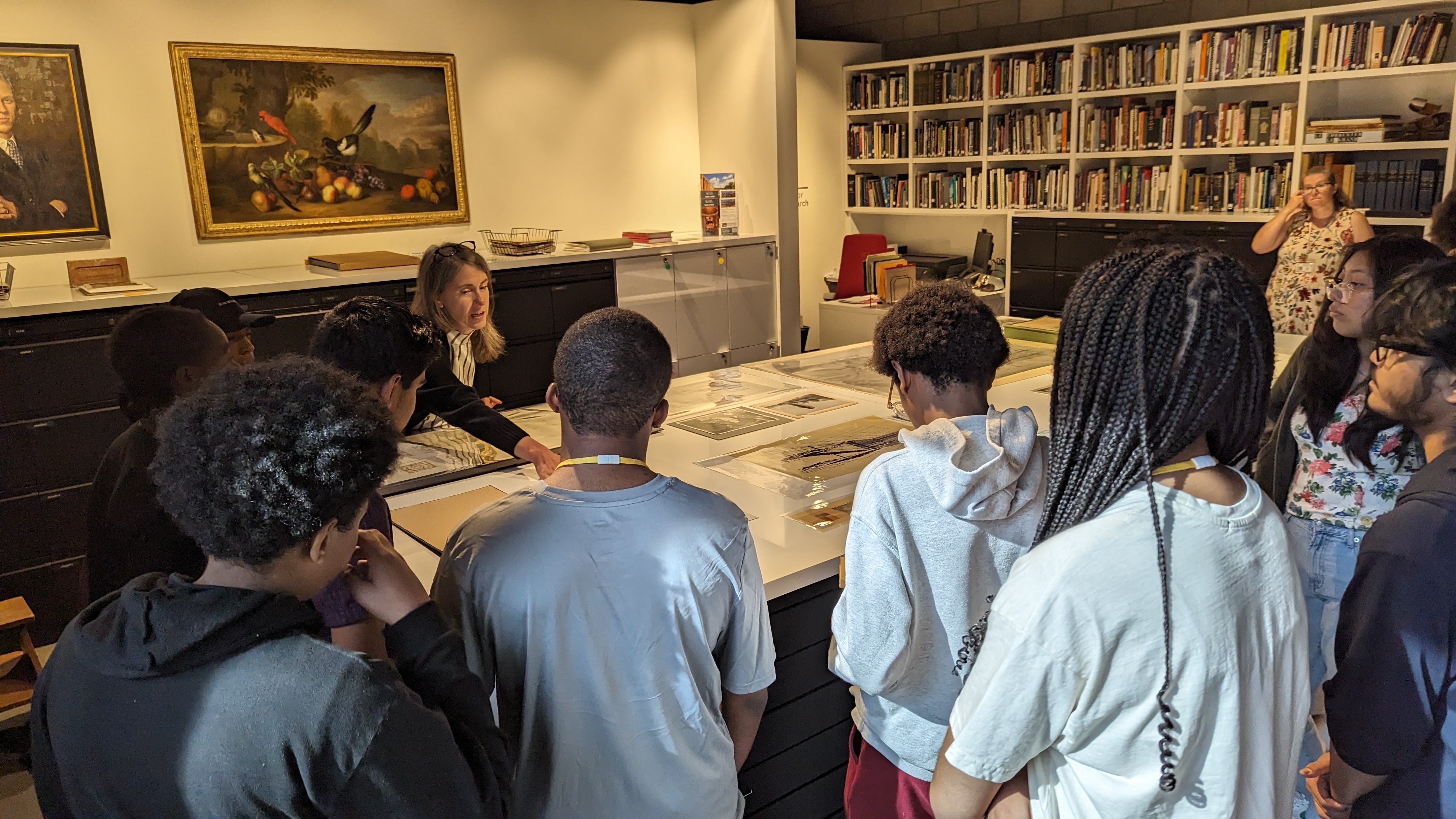
Head Archivist Deborah Rice showing our HUB students architectural treasures from Cranbrook Archives. Nina Blomfield, photographer.

To orient ourselves, we started with a morning spent in Cranbrook Archives, studying original sketches, renderings, blueprints, photographs, and even fundraising literature about Cranbrook’s many architectural treasures. We saw the great diversity of how our buildings were imagined, represented, and constructed, and how an architect moves from a loose, gestural sketch to formal construction documents that communicate complex structural systems.

Then, we spent a class period each at Cranbrook House, Saarinen House, and the Frank Lloyd Wright-designed Smith House. In each location, students carried their sketchbooks and made notes and drawings about the architecture. I was especially impressed at the students’ analytical skills. In fact, while I usually love talking about the nitty-gritty specifics of Saarinen House, I found myself sitting much more quietly, asking students questions about what they noticed, liked, or disliked in each room. Listening to their observations and conversation helped me see each space anew.

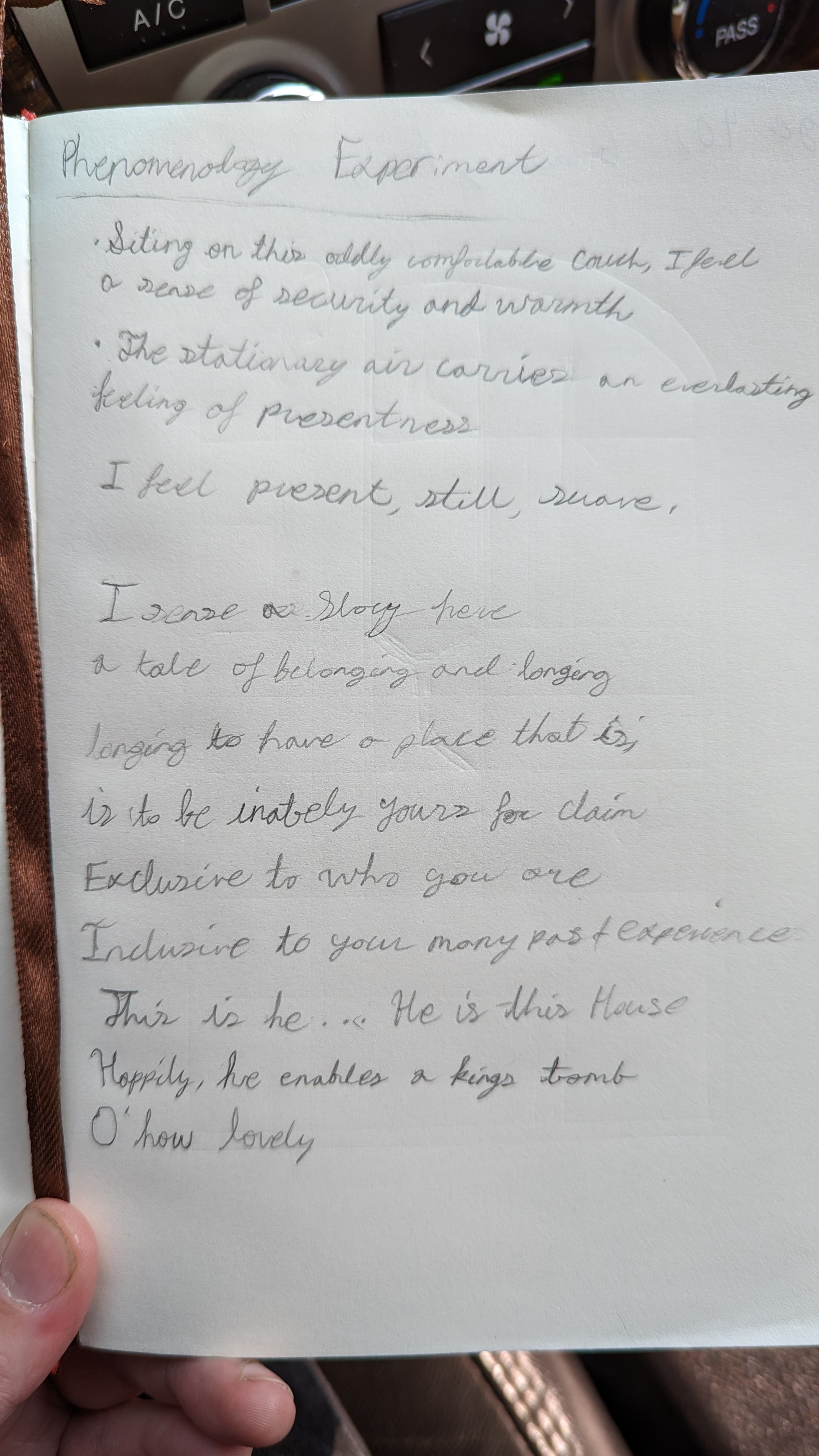
At Smith House, Nina led a phenomenology exercise, where, instead of telling the students the story of Frank Lloyd Wright and the Smiths, she simply asked each student to find a spot in the house to sit in quietly. Then, they wrote or sketched what they observed and sensed. Having such a tactile experience with the architecture and nature proved to be more memorable than a conventional tour.

Continue reading

Photo Friday: Smith House and the 1960 Plymouth Suburban

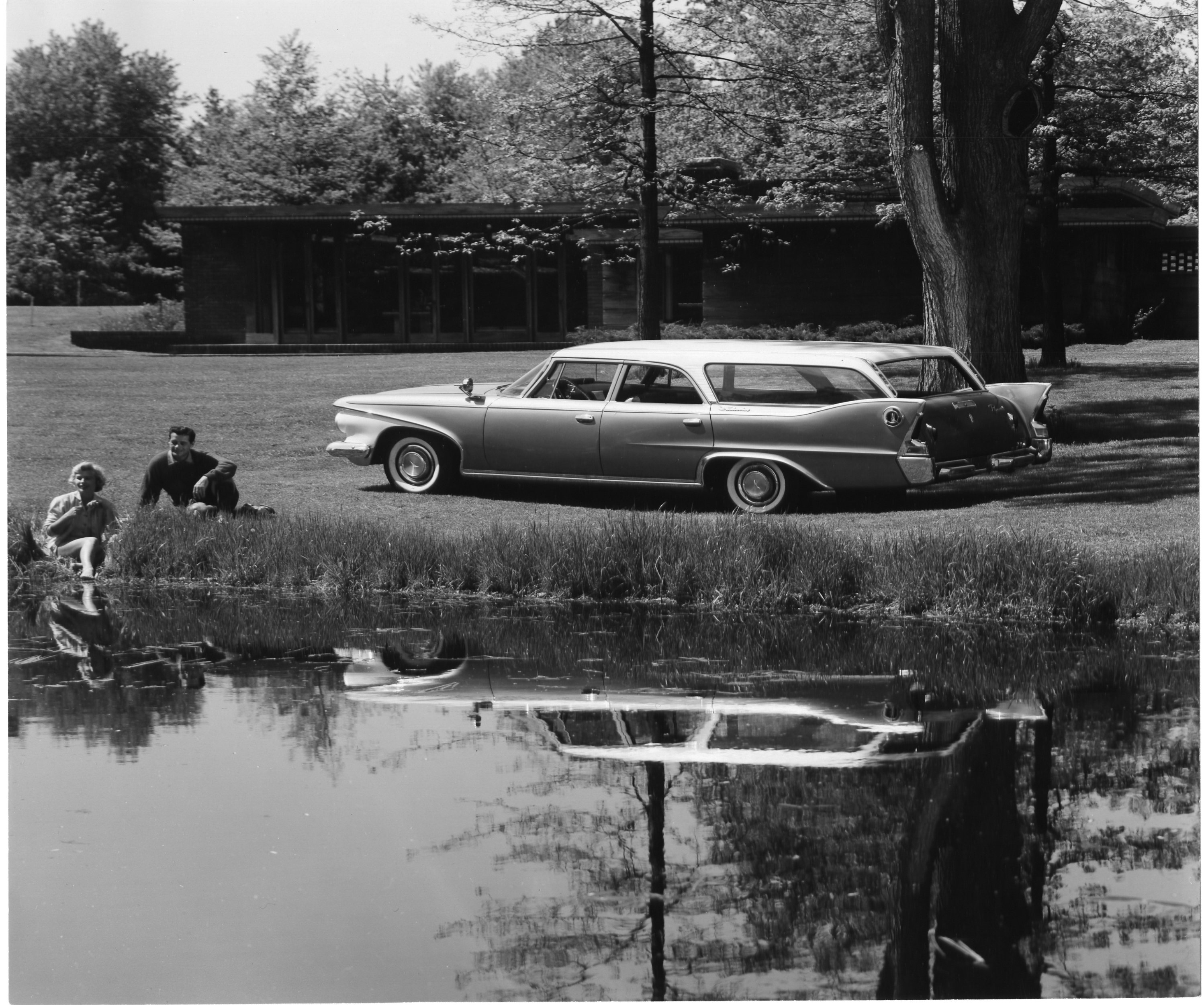
Oakland County is decked out in checkered flags this Friday for the annual Woodward Dream Cruise. As the crowds gather in their folding chairs and thousands of classic cars roar past my windows, I’m reminded of a much more serene image from automotive history: the 1960 Plymouth Suburban stretched out on the manicured lawn of the Frank Lloyd Wright Smith House.

1960 Plymouth Suburban, on location at the Frank Lloyd Wright Smith House. Smith Papers, Cranbrook Archives.

In 1959, Chrysler was developing promotional materials for the 1960 Plymouth. Seeking a sleek, modern backdrop for the long lines of the Suburban station wagon, Chrysler’s Public Relations Department contacted Melvyn and Sara Smith about staging a photoshoot at their Frank Lloyd Wright-designed home in Bloomfield Hills. The resulting photographs show the 18-ft long Suburban, not parked in the pea-gravel driveway or the distinctive cantilevered carport, but pulled to the back of the house where it could be reflected in the natural setting of the Smith’s newly expanded pond.

1960 Plymouth Suburban, on location at the Frank Lloyd Wright Smith House. Smith Papers, Cranbrook Archives.

The long, low horizon line of Frank Lloyd Wright’s Usonian architecture, with its stacking roof planes, seems a great fit for the station wagon’s extended style lines and characteristic fins. In a second image, two casually-dressed models (check out those long socks and walking shorts!) lounge in rattan Tropi-Cal armchairs on the living room patio. Designed by Danny Ho Fong, the Tropi-Cal armchairs were recently identified through the diligent research of the Center’s Summer intern Clare Catallo.

Continue reading

Indescribable Warmth: Underfloor Heating at Frank Lloyd Wright Smith House

Stepping into the Smith House on a grim and wintry day, one is instantly enveloped in warmth. The warm tones of brick and tidewater cypress walls, and the soft, textured furnishings help to create a cozy atmosphere, but the real effect is felt through radiant heat rising from the pigmented concrete floors.

Red concrete floors dominate this view of the Smith House Living Room, circa 1959. Melvyn Maxwell and Sara Evelyn Smith Papers, Courtesy of Cranbrook Archives.

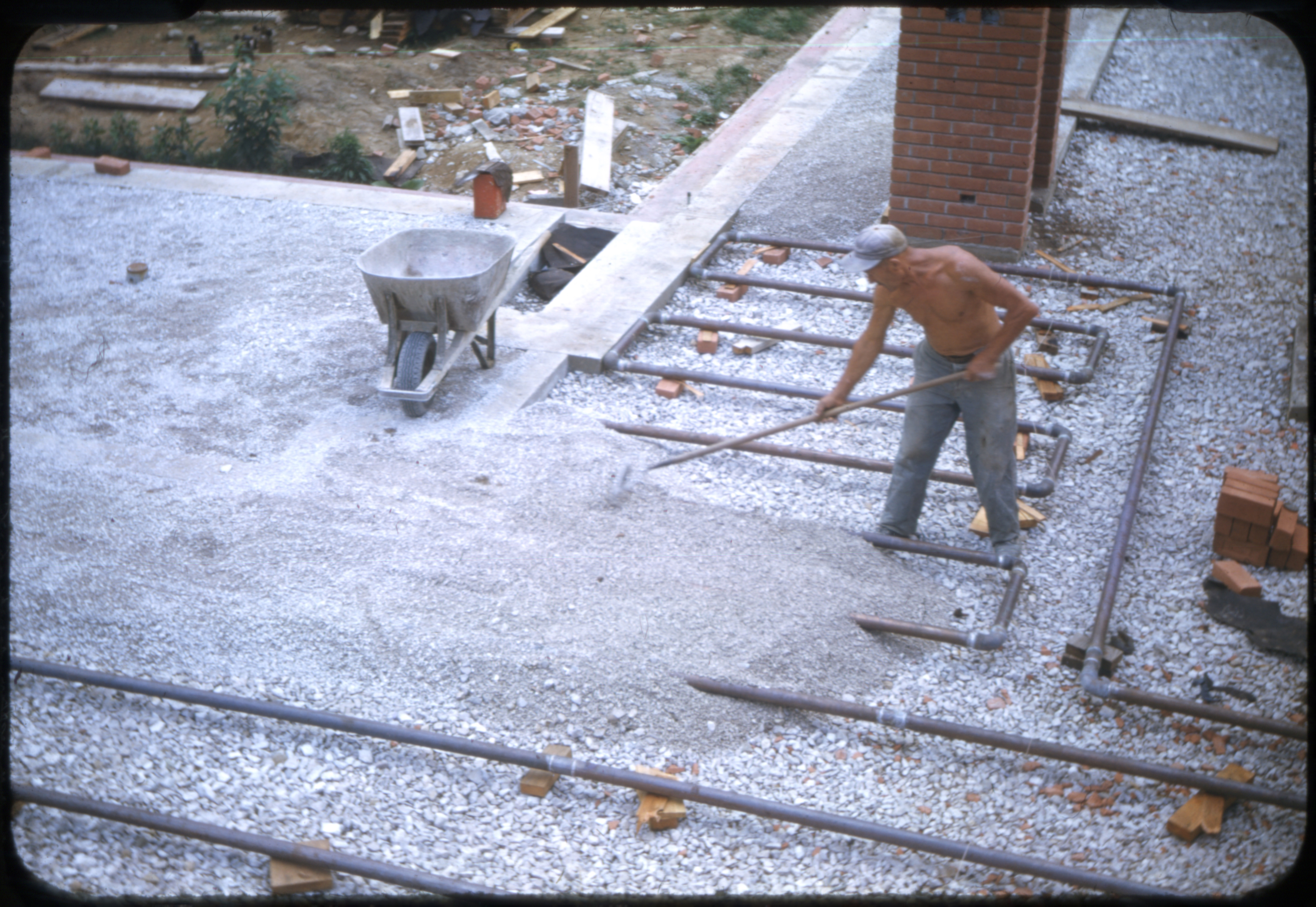
Underfloor heating was a frequent feature of Frank Lloyd Wright’s Usonian houses. Concerned with elegant and efficient use of space, these modest buildings for middle-income families utilized radiant heating set into the concrete slab flooring. Warm floors prevented heat transfer from bodies to cold buildings and allowed the air to be kept at a cooler temperature than conventional radiator-heated homes. 

A worker rakes gravel over underfloor heating pipes during Smith House construction, 1949. Melvyn Maxwell and Sara Evelyn Smith Papers, Courtesy of Cranbrook Archives.

Frank Lloyd Wright’s ideas about underfloor heating were adapted from the principles of the Korean heating system called ondol, literally ‘warm stone,’ that he encountered during his time in Japan. While working on the Imperial Hotel project, Wright was invited to visit the Tokyo residence of Baron Okura Kihachiro. After dinner in a freezing cold dining room, the party was invited for coffee in the Baron’s heated “Korean Room.” In his 1943 autobiography, Wright described the shift in temperature in rapturous terms: 

The climate seemed to have changed. No, it wasn’t the coffee; it was Spring. We were soon warm and happy again – kneeling there on the floor, an indescribable warmth. No heating was visible nor was it felt directly as such. It was really a matter of not heating at all but an affair of climate. 

Frank Lloyd Wright, 1943

Wright was instantly taken with this “indescribable warmth” and immediately specified electric heating in the Imperial Hotel bathrooms. On returning to the United States, he continued to explore the use of heating systems in both residential and commercial projects.

His first private home to incorporate underfloor heating was the Herbert Jacobs House, in Madison, Wisconsin, completed in 1937. The Jacobs House would become a model for Wright’s Usonian houses and an inspiration to architects and homeowners worldwide. By the time that Melvyn and Sara Smith began construction of Smith House in 1949, developers like William Levitt were popularizing the use of radiant heating in tract housing developments across the United States. 

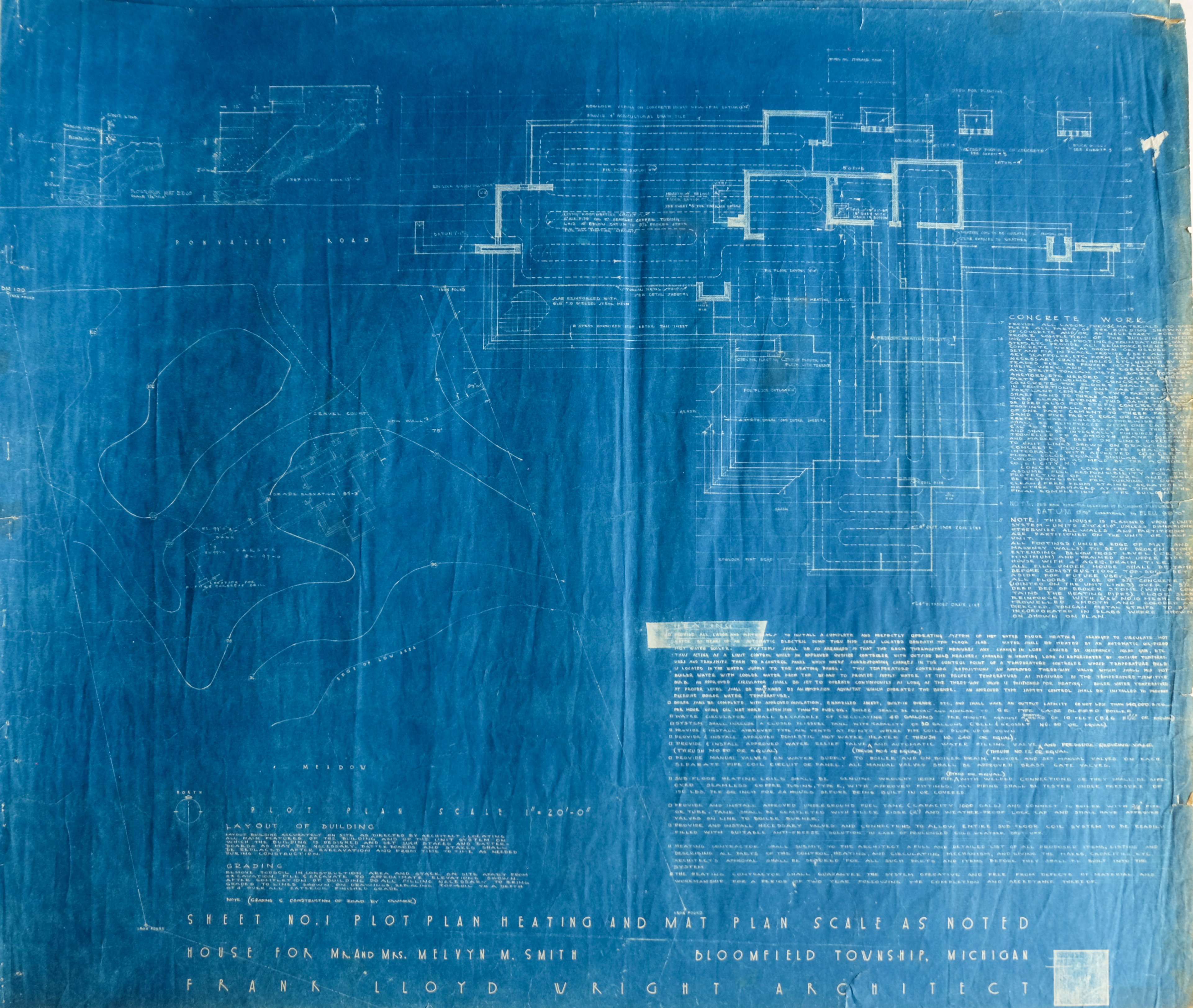
Frank Lloyd Wright, Plot Plan and Heating Plan for Mr. and Mrs. Melvyn M. Smith, 1949. Melvyn Maxwell and Sara Evelyn Smith Papers, Courtesy of Cranbrook Archives.

The Smiths employed engineer Clarence Toonder to help implement the heating plan designed by Frank Lloyd Wright’s office. Blueprints show the copper tubing as it snakes through the L-shaped floor plan of Smith House, ensuring that every room would be warm and comfortable. 

Continue reading

Cranbrook’s Great Books (Part II)

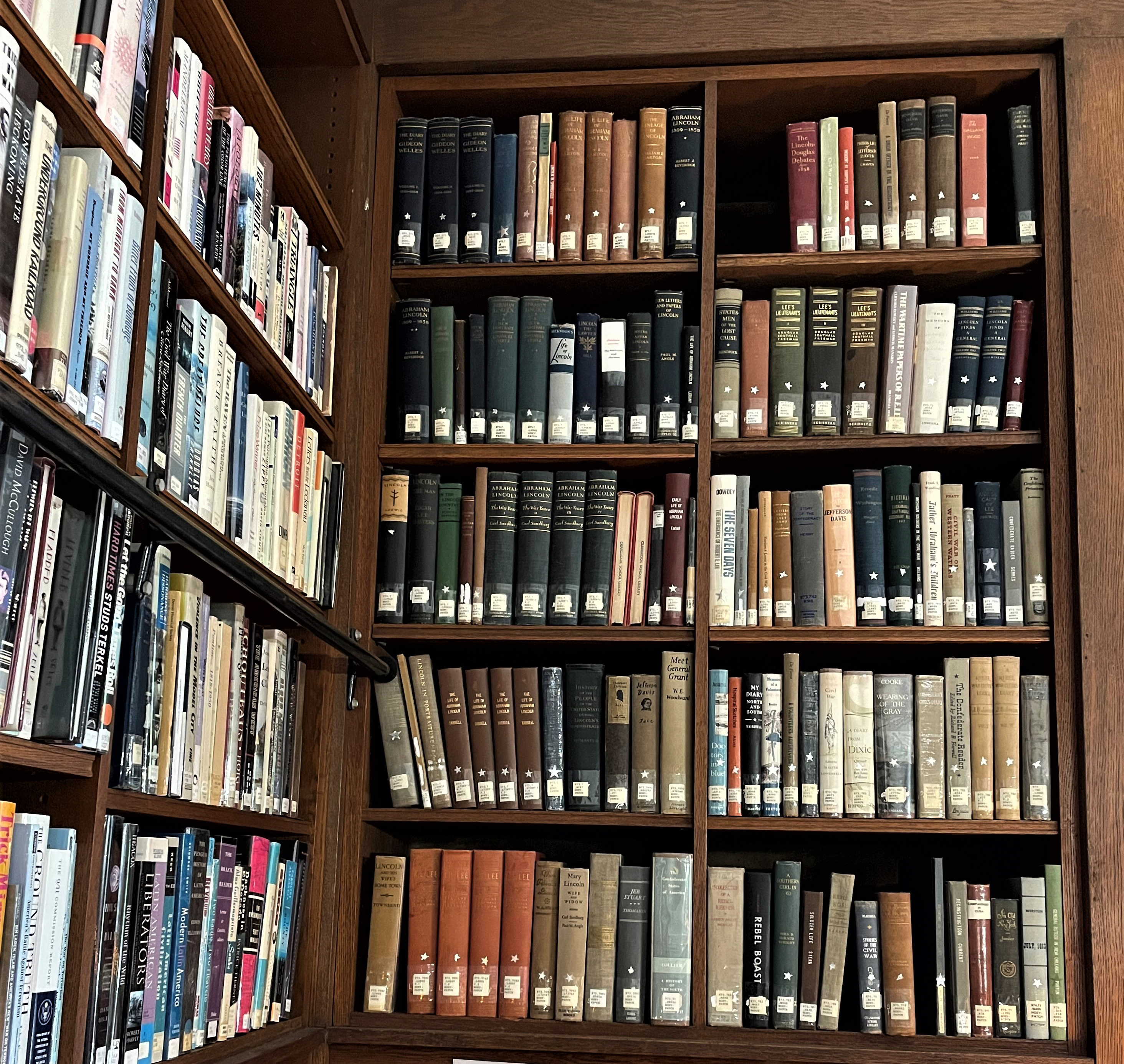
In Part I of this post, we explored Cranbrook’s love of the book, from its origins with founders George and Ellen Booth, to the existing special collections at the Archives and Academy of Art. I invite you now to learn of the many rare, valuable, and historical tomes whose existence may be unknown to most or simply overlooked in collections at the Schools, Institute of Science, and two historic homes cared for by the Center for Collections and Research: Saarinen House and Smith House.

Hoey Patch Collection at the Cranbrook School Library. Courtesy of Kate Covintree, Cranbrook Kingswood Upper Schools.

Like the Academy of Art, although not at all on the same scale, books from George and Ellen’s Cranbrook House Library were dispersed to the Cranbrook Schools Libraries, now comprised of five separate spaces. Following the Booth’s example, Cranbrook School Headmaster Harry D. Hoey (1950-1964) and Latin teacher George Patch (1928-1944, Emeritus 1944-1950) donated 120 books from their personal libraries to the School’s library in the 1950s, forming one of several special collections. Known as the Hoey Patch Collection, all of the volumes focus on an aspect of Abraham Lincoln or the American Civil War.

He Knew Lincoln, a fictionalized account written by Ida Tarbell, a progressive journalist, and published in 1907. The book’s custodial history is documented with correspondence from the author, written directly on the inside of the book. Courtesy of Kate Covintree, Cranbrook Kingswood Upper Schools.

Highlights include a First edition of The Life of Abraham Lincoln, the first full-scale biography of the President. Written by newspaper editor J.G. Holland, it was published shortly after Lincoln’s assassination in 1865. Also included is a first edition, two-volume set of the Personal Memoirs of U.S. Grant. Ulysses S. Grant penned his autobiography shortly before his death in 1885 as a means of financial support for his family. It was published with the support of his friend Mark Twain by the Charles L. Webster Company (owned by Twain’s nephew).

Continue reading

Little Gem: Sara Smith’s Enamel Butterfly 

When Frank Lloyd Wright visited Smith House in 1951, he affectionately referred to the home as “my little gem.” Over the years, Melvyn and Sara Smith filled up their “little gem” with many treasures of their own. As I continue my detailed research into the Smith House collection, I am learning that even the smallest of these objects has a rich story to tell. 

One such detail is a yellow enamel butterfly. For over 50 years, the butterfly has rested its wings on an artificial ivy vine in a small corner between the Smith House living space and dining room.  

Albert Weiss, Butterfly Brooch, 1964. Photograph by Nina Blomfield, Cranbrook Center for Collections and Research. 

The butterfly is in fact a brooch, manufactured by costume jeweler Albert Weiss & Co. Albert Weiss began his career as a designer for Coro Jewelry before breaking off to start his own firm in 1942. Better known for elaborate rhinestone creations, Weiss also produced jewelry featuring enameled flowers and animals. My research has revealed that the Smith House brooch was part of a 1964 collection described in the New York Times as “a flock of butterflies that are meant to settle – one at a time – on the neckline of a dress or coat.” An advertisement for the collection shows the brooches pinned, labeled, and framed as if specimens in a natural history display. 

“Albert Weiss presents the Butterfly Pin Collection,” New York Times, February 23, 1964.

It is no surprise that the Smiths were drawn to the butterfly form, as these flying jewels have captivated artists as diverse as Vincent van Gogh and Damien Hirst. The Smiths’ collection no longer includes the Knoll BKF ‘butterfly’ chairs seen in family photographs, but there are still other butterflies in the house.

Smith House interior, c.1950.
Seen in the foreground, the BKF “Butterfly” chair manufactured by Knoll.

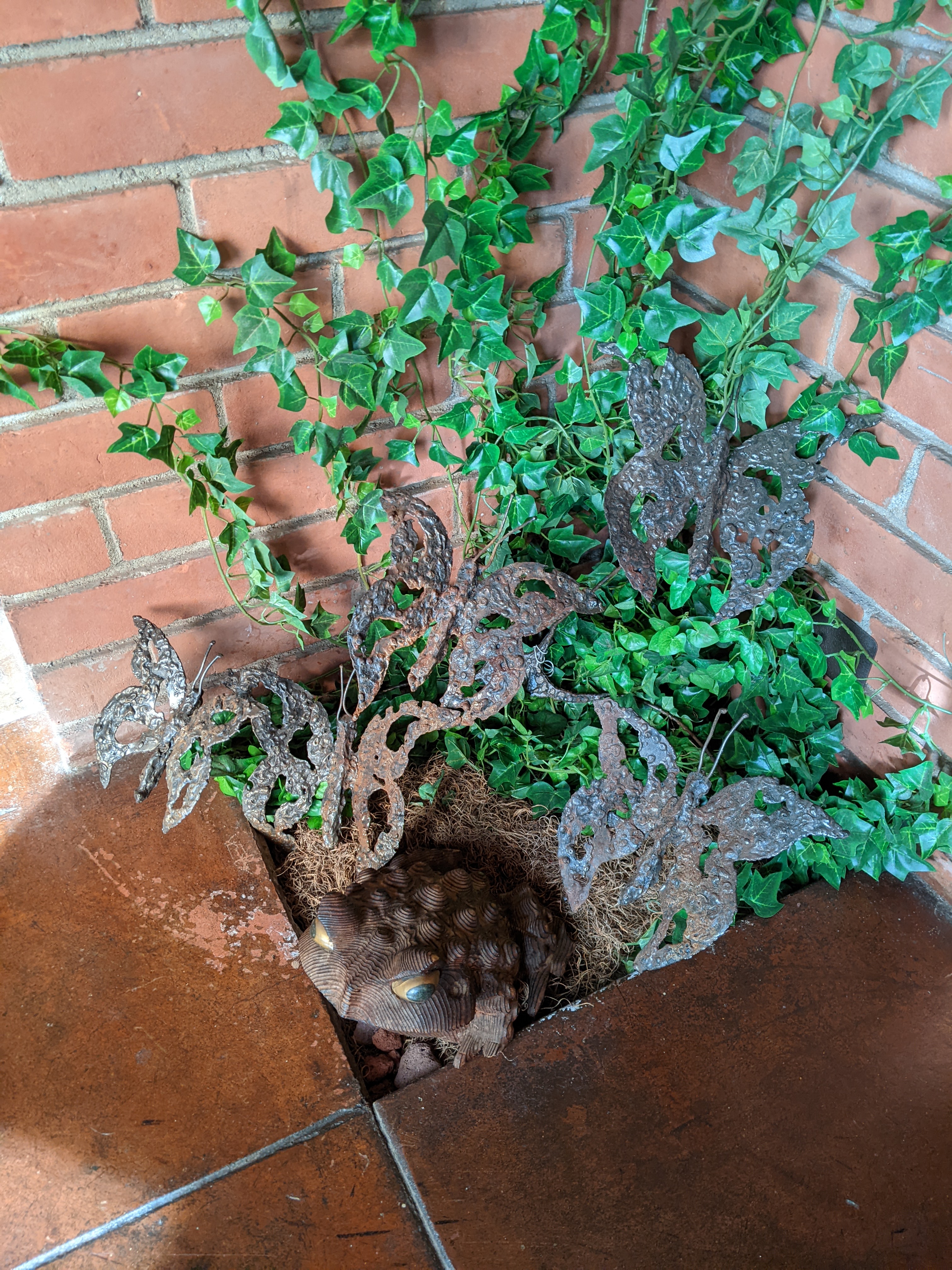
Silas Seandel’s sculptural butterflies were formed form torch-cut metal and their craggy brutalist forms are attached to flexible wire that give them movement and life. On a windowsill in the guest room, real butterfly specimens take flight in a Perspex cube. Given the dynamism of these other butterflies, it makes sense that the Smiths used the enamel pin to adorn their home rather than allowing it to languish in a jewelry box. Instead, this ivy-clad corner created a kind of habitat for the butterflies. 

Continue reading

Sketching to Jazz and Judo: the Young People’s Art Center

Did you know that Cranbrook Art Museum’s educational partnerships with surrounding communities date back over sixty years? Long before the current museum trend of interactive educational programs for youth audiences, the Academy of Art and the Junior League of Birmingham had an idea:  the Young People’s Art Center (YPAC).

Young People’s Art Center logo, from the 1962 enrollment form. Courtesy of Cranbrook Archives.

The year was 1958, and the Museum had recently changed names to the Academy of Art Galleries, shifting focus to feature more contemporary art practices. With that, came the desire to encourage young visitors to express their own artistic voices—participatory education, rather than simply art appreciation. Documenting the program’s first year, a June 1959 Detroit News Pictorial Magazine feature noted that YPAC “is fast gaining a national reputation for its lively approach to art education.”

In particular, it was Henry Booth (Academy Board of Trustees Chairman), Wallace Mitchell (Head of Galleries), and Zoltan Sepeshy (Academy Director) that approached the Junior League with a plan. In a 1957 report by Mitchell during the Center’s development phase, he states, “ The personnel of the Cranbrook Academy of Art has become increasingly aware of the growing country-wide interest in the visual arts and has long wished to more directly participate in the fostering and guiding of this interest as expressed in our community.” Seeking support from the Junior League, this “unique opportunity to bring to the children of Oakland County an integrated program in art education which concerns itself with the totality of the art experience” was green-lighted for the following year.

Children watch a judo demonstrator as part of a class exercise. Erik Strylander, photographer. From the article “Sketching to Jazz and Judo,” Detroit News Pictorial Magazine, June 28, 1959.

A perfect partnership was formed. The Academy would provide leadership, through the support of its trustees, director, and faculty; the Junior League would provide the necessary finances. Naturally, with so many talented artists on campus, there was no lack of creativity or helping hands! Junior League members were also heavily involved, providing volunteer docents to conduct gallery tours and assist with classes, both of which were located on the ground level of the Museum below the Academy Library.

Continue reading

New Archival Collection: the Melvyn Maxwell and Sara Evelyn Smith Papers

Cranbrook Archives is delighted to announce that the Melvyn Maxwell and Sara Evelyn Smith Papers are now open for research. This archival collection was acquired as part of the Frank Lloyd Wright Smith House, which was donated to Cranbrook in 2017 by the Towbes Foundation with assistance from Anne Smith Towbes. Melvyn and Sara were schoolteachers who dreamed of building a Frank Lloyd Wright designed home – a dream that was realized in 1950. They cherished their dream home and adorned it with art objects which they bought from local artists, including Cranbrook Art Academy students and artists-in-residence. Over the years they welcomed many visitors, students, and guests into their home, including Frank Lloyd Wright himself and the landscape architect, Thomas Church.

2017-10 23-9 FLW

Frank Lloyd Wright’s entry in the Smiths’ guest book, 1951. Courtesy Cranbrook Archives.

The collection documents the personal and professional life of the Smiths, as well as their many contributions to the community through patronage of the arts, including theater and performing arts. It documents the construction and adornment of the house, as well as its preservation as a historic home and renovation under the Towbes Foundation. It also contains a rare and unique collection of news clippings and periodicals, spanning from 1937 to 2016, about Frank Lloyd Wright and his work .

2017-10 2-8

Letter from Sara to Melvyn Smith, July 1940. Courtesy Cranbrook Archives.

Melvyn Maxwell Smith aspired to be an architect. After graduating Northern High School in Detroit, Michigan, he was accepted into the School of Architecture at the University of Michigan. However, due to the economic depression, his parents suggested he attend Wayne University College of Education until his brother had completed his degree in dentistry. Much inspired by an English teacher, Miss Boyer, in his first semester, Melvyn decided to pursue a career in teaching, and remained at the university to pursue a doctorate. Melvyn’s architectural aspirations were instead to manifest in his life in quite a different way than he had first anticipated. In an art history class taught by Jane Betsey Welling, Melvyn learned of Frank Lloyd Wright. This was the beginning of a lifelong love of Wright’s work and the pursuit of Melvyn’s dream home. After graduating, Melvyn became a teacher at Cody High School in Detroit, where he remained for his entire career of 38 years. He later became a board member of the Wayne State University Alumni Association and created the Betsey Welling Memorial Court for which he donated the sculpture, In Lieu, by Robert Schefman.

2017-10 6-1

Melvyn, Sara and Robert Schefman in front of Schefman’s sculpture, In Lieu, at Wayne State University, 1977. Courtesy Cranbrook Archives.

Sara Evelyn Stein was born in Pennsylvania and moved to Detroit during her childhood. She met Melvyn at the B’nai Moshe Sunday School in 1937 and they were married in 1940. Sara had dreamed of being an actress, but she too joined the teaching profession and trained to be a kindergarten teacher. As it had been for Melvyn, Sara’s theatrical aspirations were fulfilled in a different way than her young mind had envisioned, namely an enthusiasm for teaching the performing arts to others. She was deeply involved in community theaters, including the Popcorn Players at Birmingham Community House and the Cranbrook Theatre School. Both Melvyn and Sara were passionate supporters of all the arts and actively worked to cultivate and sustain the arts in Detroit, Bloomfield Hills, and the surrounding communities.

2017-10 26-13.jpg

Frank Lloyd Wright Smith House, August 1960. Courtesy Cranbrook Archives.

Sara shared Melvyn’s dream of a Frank Lloyd Wright designed home. In 1941, they traveled to Lake Louise and Banff National Park in Alberta. Their journey took them through Wisconsin, where they were able to visit Taliesin, the home and studio of Frank Lloyd Wright, and meet with the architect himself. Melvyn later recalled that during the visit, Wright had advised him to find land that no one else wants because it will likely have an interesting natural feature. In 1942, Melvyn joined the US Army and it would be 1946 before he returned to Detroit. Sara was able to join him for much of the time and their son, Robert “Bobby” Nathaniel Smith, was born in 1944. Having located a property upon which to build their home on Ponvalley Road in Bloomfield Township, they began work in 1949. The house was completed in 1950, and Wright visited the house for the first time in 1951, calling it “My Little Gem.” He visited several more times – among the highlights of this collection are his entries in the guest books. Also included in the collection are two books signed by Wright (there are more than 900 books in the Center’s cultural properties collection at Smith House, which may be made available for research in the Archives reading room by request).

The Smiths welcomed countless guests and visitors to their home, providing house tours for local community groups as well as architectural schools. The collection also contains an abundance of thank you letters in gratitude for the hospitality of the Smiths. Many visitors thank Sara for her gift of sharing joy.

2017-10 8-6

Letter to Melvyn and Sara Smith from Wayne State University Theatre, 1973. Courtesy Cranbrook Archives.

The Melvyn Maxwell and Sara Evelyn Smith Papers tell the story of the Smiths’ home and of the lives of the couple who dreamed the home. The Smiths were not only teachers in the classroom: through their tenacity, generosity, and sheer joy of living, they inspired countless people who visited their home or met them through their artistic and philanthropic endeavors. As the Smiths’ home is preserved just as it was when they lived in it, their zeal to share and teach is perpetuated. This collection is a fine example of how the team at the Center for Collections and Research works together to tell the story of Cranbrook through historic houses, cultural properties, and archival materials.

The Frank Lloyd Wright Smith House is a must-see. Find out more about house tours here. If you’ve already been, consider going again in a different season to see the changing blend of architecture and nature that is pure Frank Lloyd Wright.

–Laura MacNewman, Associate Archivist


Create a website or blog at WordPress.com