Meeting House Inaugurated


Henry Wood Booth outside the Meeting House (now Brookside School)

Henry Wood Booth outside the Meeting House (now Brookside School).

On January 5, 1919, Henry Wood Booth (HWB), father of George Gough Booth (GGB), “opened the Meeting House for divine worship,” according to the historical notes of Henry Scripps Booth (HSB). HWB, who would turn 82 on January 21st, conducted a vesper service and continued to officiate for six months. The Meeting House, designed by GGB and HSB, was the foundation for what later became Brookside School.

Cheri Gay, Archivist

Photo Friday: The Great Outdoors

Photo Friday12_26_14

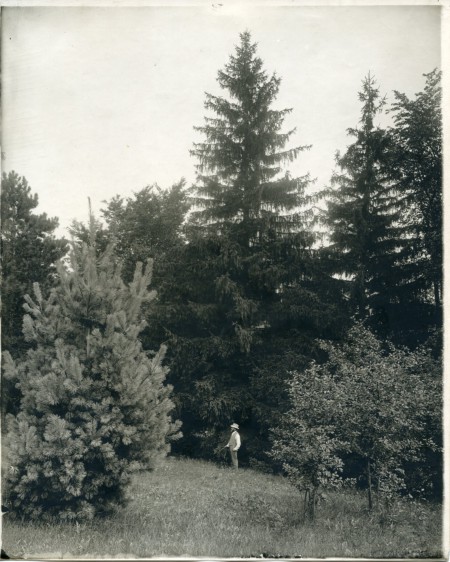
George G. Booth by Kingswood school area. c. 1906. Courtesy Cranbrook Archives.

Since it has yet to snow and cover the campus with glistening white, I though it best to show the beauty of the greenery and foliage all over this campus. Enjoy the end of the year and holidays with this photo of George G. Booth in the midst of the nature of Cranbrook! We will see you next year!

– Stefanie Kae Dlugosz, Collections Fellow, Center for Collections and Research

Sailing the High Seas: John Martell and the War of 1812

martell1

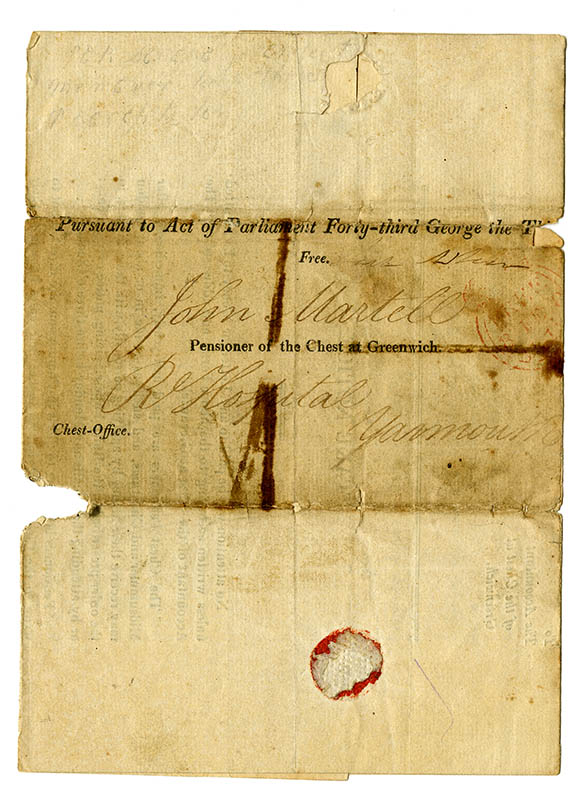
Greenwich Hospital Out-Pensioner Application, John Martell, n.d. Henry Wood Booth Papers.

martell2

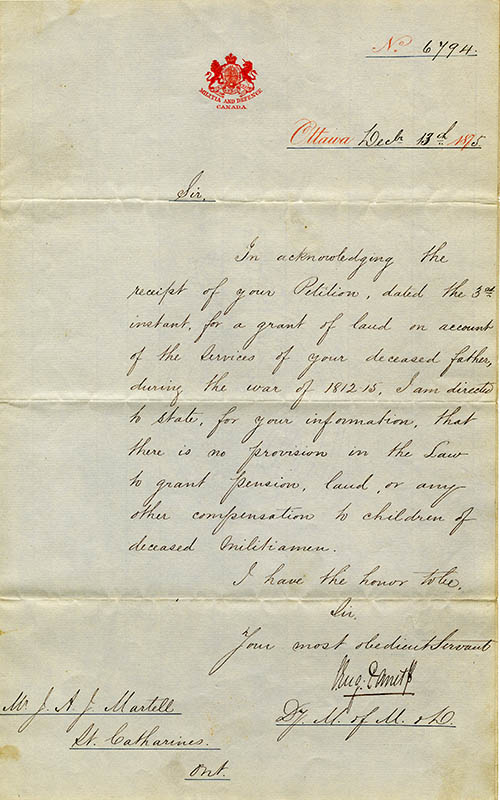
Petition for Pension, John Martell Jr., 1875. Henry Wood Booth Papers.

George Gough Booth’s maternal great-grandfather was John Martell  (1791-1836), a purser in the British Royal Navy.  Martell served on the HMS Aeolus, a 32-gun frigate, which was part of a flotilla of five ships charged with patrolling the waters between New York and Halifax, Nova Scotia during the War of 1812.  On July 16, 1812, the Aeolus was part of the squadron that gave chase to the USS Constitution, which finally managed to escape and sail safely to Boston.  After the war, Martell spent several years stationed first at Isle-aux-Noix in Quebec, a key ship-building center for the British at Lake Champlain.  He was a clerk in the dock yards at the Kingston Royal Naval Yard in Ontario, and was a store porter at the Grand River Naval Depot (Port Maitland) on Lake Erie until his discharge in 1832. Martell and his wife Mary (nee O’Keefe) then resided in St. Catherines, Ontario where Martell served as the first Postmaster and the first division court clerk.  John Martell died in 1836.

Leslie E. Edwards, Head Archivist

Lighting Up Cranbrook House: Edward F. Caldwell & Co.

HT_2014_1

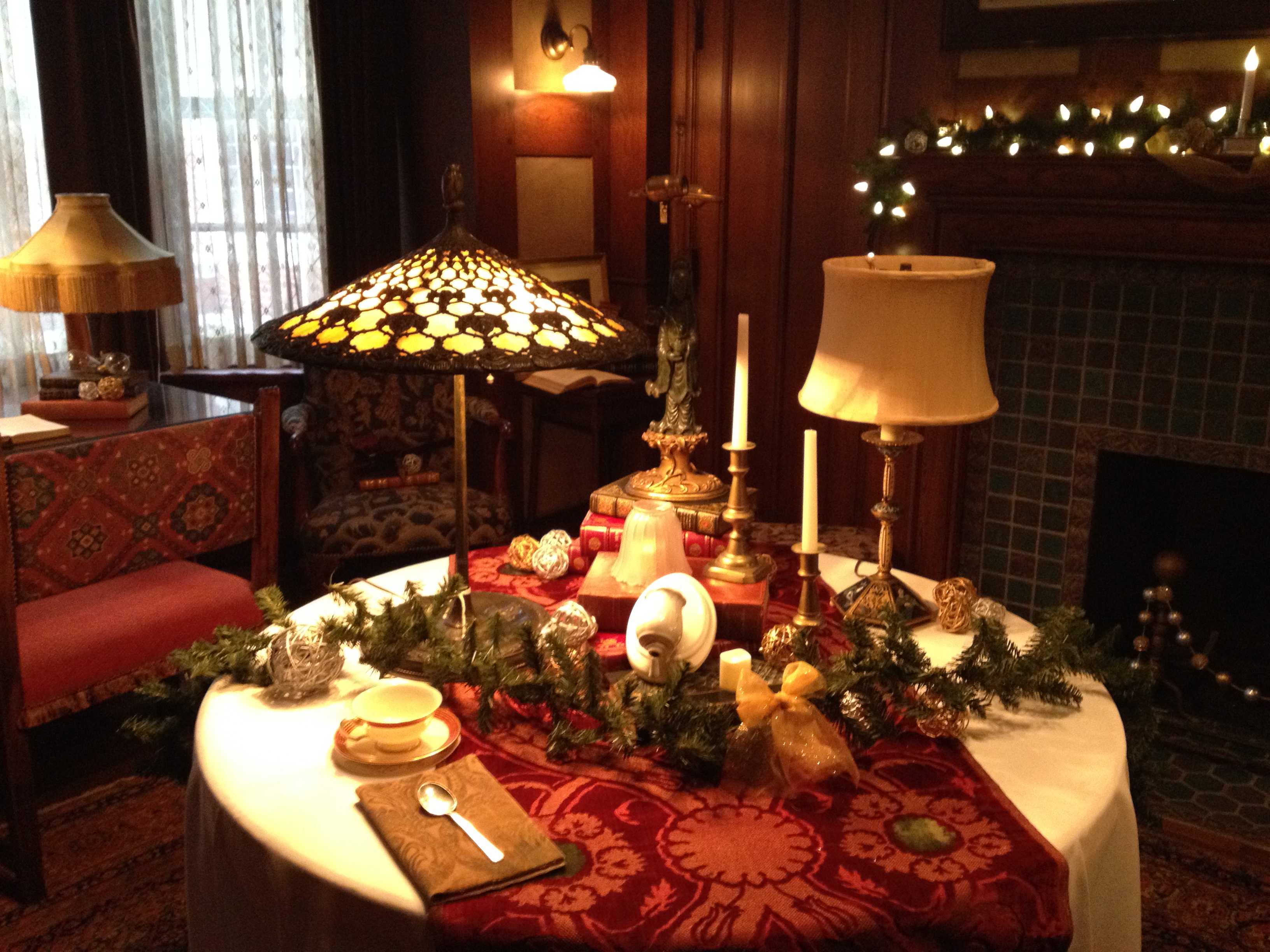
Holiday Tables, 2014. Stefanie Dlugosz, photographer.

This past weekend the Center for Collections and Research put on a display for Holiday Tables at Cranbrook House, organized by the Cranbrook House and Gardens Auxiliary.  Associate Registrar Gretchen Sawatzki and I put together a display highlighting the electric lighting original to the home, focused on lamps and lighting by the Edward F. Caldwell & Company.

Cranbrook House was designed and built in 1908, and George Gough Booth always had the intention of having electric lighting throughout the home. Within the city of Detroit there had been an interest in electricity, and by 1906 there were two power plants on the Detroit River owned and operated by the Detroit Edison Company. However, with Cranbrook House being roughly 20 miles to downtown Detroit, this was an achievement. The Booth’s interest in innovation propelled them to always be ahead of their time by investing in the newly available widespread utility for their home.

HT_2014_2

Holiday Tables, 2014. Stefanie Dlugosz, photographer.

HT_2014_3

Holiday Tables, 2014. Stefanie Dlugosz, photographer.

In the first half of the twentieth century Edward F. Caldwell & Company was America’s premier design and manufacturer for electric light fixtures. The New York firm founded in 1895 created designed and works with several prominent clients at the time including the Frick, Morgan, and Carnegie families. Much of their work was done in tandem with architectural commissions, and therefore clients like Booth were able to provide input and alter details to customize their lighting choices. Booth provided his own ideas about a few pieces for the home, but overall selected most of the pieces directly from their catalogues. During the construction and design of Cranbrook House, George G. Booth was actively involved in conversations with Albert Kahn, the architect, and many of the vendors providing goods and products for the home. Booth was enthusiastically involved in providing input on the design elements of the home, and the lighting was no different. Many of the Edward F. Caldwell & Co. catalogues can be found online through the Cooper-Hewitt Museum Library, Smithsonian Institution Libraries

Stefanie Dlugosz, Collections Fellow, Center for Collections and Research


Lost and Found in a Sea of Cranbrook History

Ye Triumphe Ship

Ye Triumphe Ship, CEC 1918.1

Every day at the Center for Collections and Research brings new adventures and discoveries. During a visit to one of the storage spaces on Cranbrook’s campus, I stumbled upon a curious object, which inspired me to research it and its past. Like most things around here, the object has a great lineage throughout the campus with connections to George Booth, the Detroit Society of Arts and Crafts, and Cranbrook School.

The Ye Triumphe model ship was crafted by Henry Brundage Culver (1869-1946), and although it is a model, it is a large one: about 40 inches long and 32 inches high. George Gough Booth purchased the Ye Triumphe in September 1918 from the Detroit Society of Arts and Crafts. The model, which was advertised in the Detroit Sunday News, had been on display in the window of the Detroit Society of Arts and Crafts shop during that same year.

Henry Brundage Culver worked as an attorney and also served as secretary for The Ship Model Society in New York. He participated in building ship models, and contributed to scholarship on the art of model-making. He produced several publications including Contemporary Scale Models of Vessels of the Seventeenth Century (1926) and The Book of Old Ships: Something of their Evolution and Romance (1924). In the introduction to Contemporary Scale Models Culver compares the art of ship-model building to that of painting.

The finest examples of these miniature vessels are, in the eyes of those best fitted to judge productions of the highest artistic quality, appealing in general composition, line, mass and technical execution, to the aesthetic susceptibilities of those, who have eyes to see, in a no less degree than do the best examples of pictorial art.”

­—Henry B. Culver, Contemporary Scale Models of Vessels of the Seventeenth Century, New York: Payson and Clarke Ltd.1926, pg.ix.

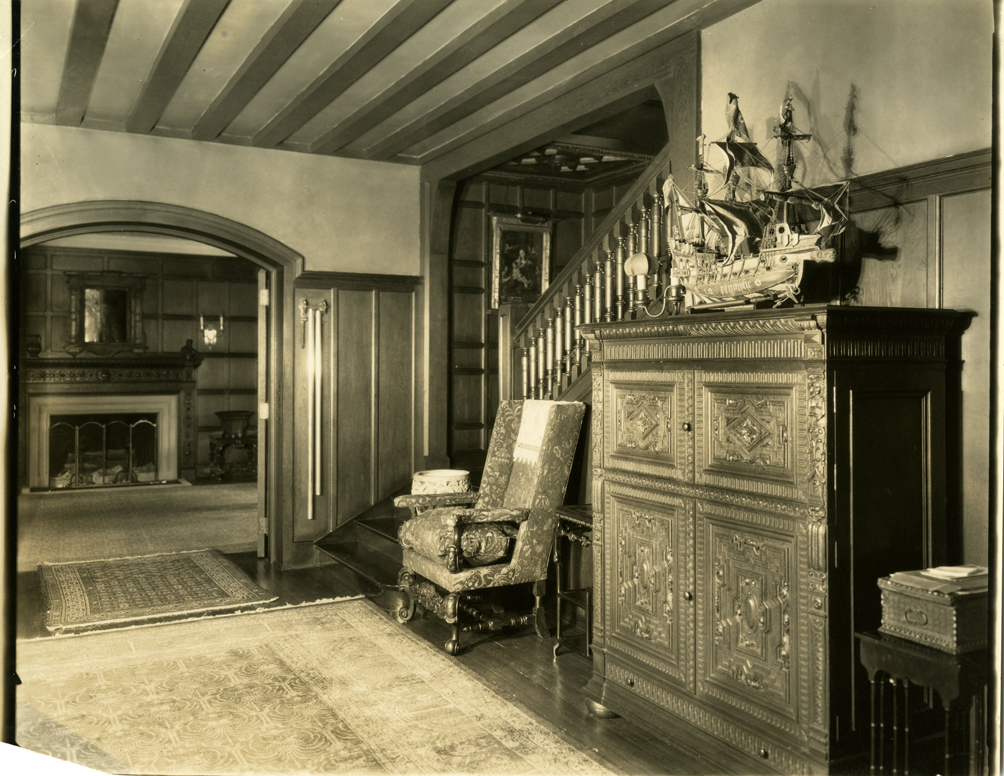
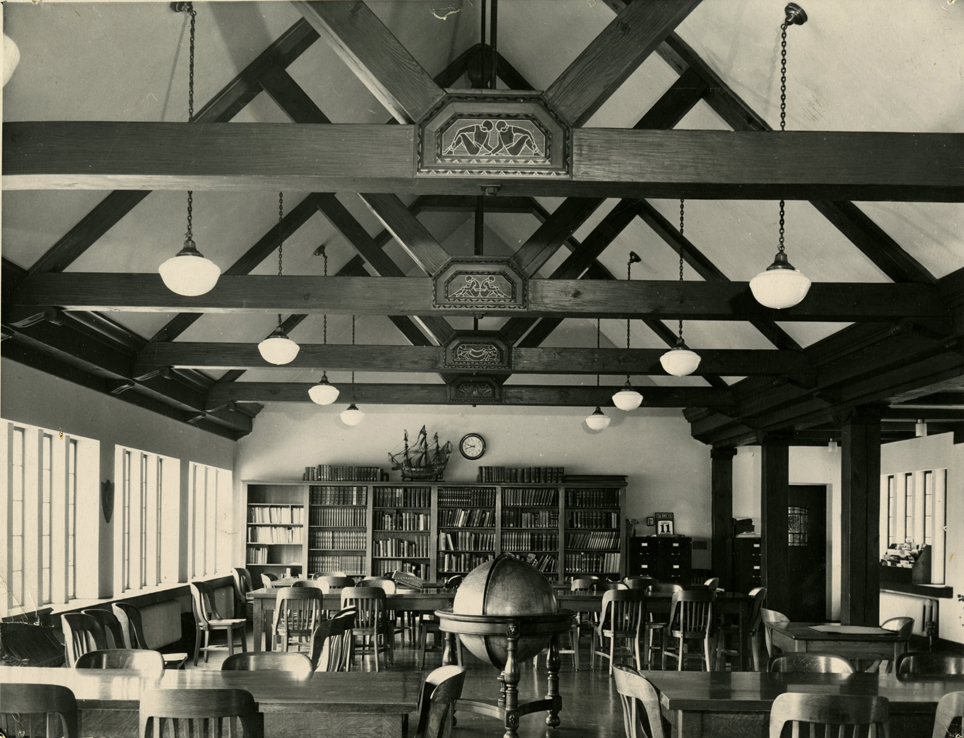
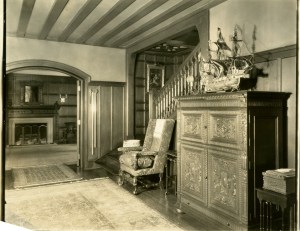
Originally, the ship was placed in the reception hall of Cranbrook House, and was later loaned by Booth for display in the library at Cranbrook School for Boys. Each of the photographs show the ship on display and its presence throughout Cranbrook.
CH_entrance hall_Ship_Blogpost

Cranbrook House reception hall, ca. 1920. Cranbrook Archives

CS_Library_Ship_Blogpost

Cranbrook School for Boys, Library interior, ca. 1945. Cranbrook Archives.

The Ye Triumphe will be returning to view at the Cranbrook Art Museum’s upcoming exhibition The Cranbrook Hall of Wonders: Artworks, Objects, and Natural Curiosities opening November 23rd, 2014. Come and check out the Ye Triumphe and many other fabulous objects from across the Cranbrook campus including works from the Center for Collections and Research, Cranbrook Art Museum, and the Cranbrook Institute of Science!

—Stefanie Kae Dlugosz, Center for Collections and Research, Collections Fellow
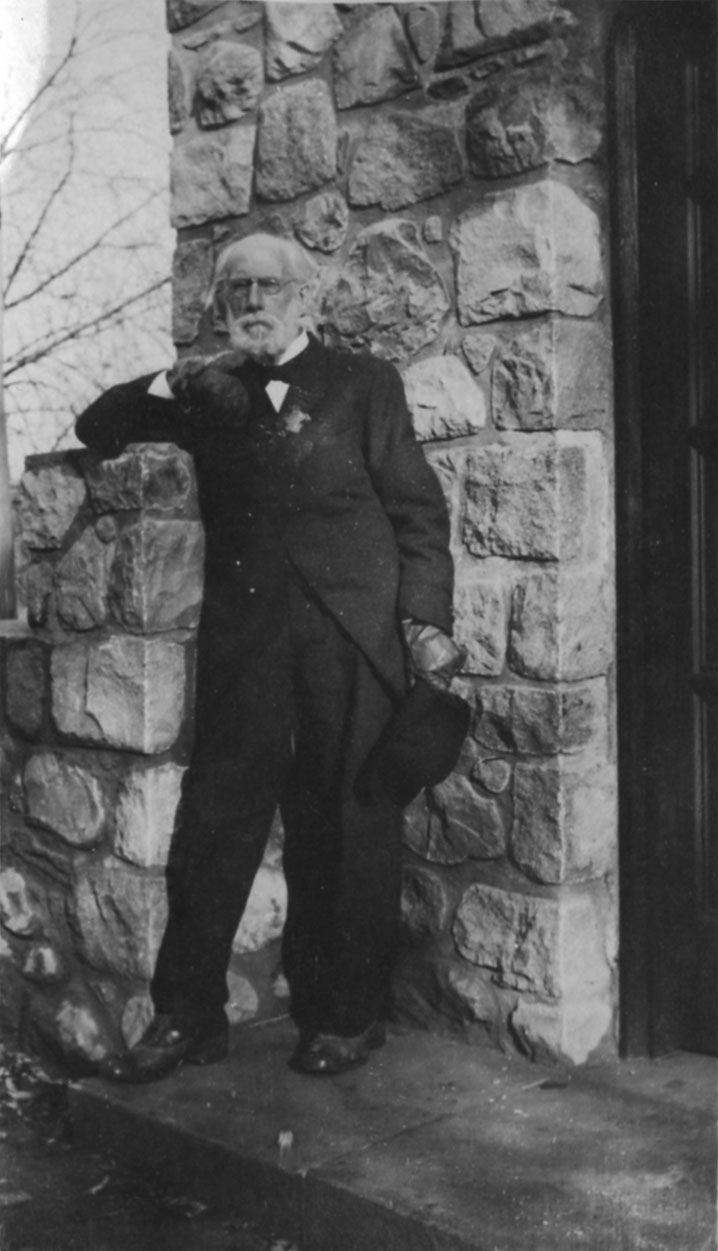
Photo Friday: The Fate of the North Gates

Arriving at  Cranbrook House you have probably noticed the large wrought iron entrance gates that welcome guests to the property along Lone Pine Road. A collaborative design by Cranbrook Founder, George Gough Booth (1864 – 1949) and Polish-American blacksmith, Samuel Yellin (1885 – 1940), this pair of gates were completed in 1917and are among the most cherished historic decorative elements at Cranbrook. But did you know that they are not the only gates that were a Booth-Yellin collaboration situated on the property?

North Gates

The North (Woods) Entrance Gates in Yellin’s studio, 1917. Courtesy Cranbrook Archives

Affectionately referred to as the North Gates, the gates seen in this photograph were also a collaborative design by Booth and Yellin. Forged by Yellin in his Philadelphia studio in 1917, the North Gates were installed as a part of a stone entrance wall at the old Cranbrook House entrance drive just north of Kingswood School on Cranbrook Road. When the drive was closed to re-route traffic to the house, the gates were ultimately removed and put into storage where they have remained – until now! Next week the North Gates will be leaving Cranbrook for a short journey to Cleveland for a full restoration. The six month project will include the fabrication of hand-wrought ironwork to replicate missing elements, chiseling to recreate bird faces and leaf veins, sandblasting, and the replication of a historic surface finish. Upon their return next spring the gates will be reinstalled at the new exit drive at Cranbrook House on Lone Pine Road just west of the South Entrance gates. So keep your eyes peeled for the triumphant return of the freshly restored gates!

CECT852det11

The original site of the North Gates as it appears today on Cranbrook Road. Photographer, Gretchen Sawatzki


Gretchen Sawatzki, Associate Registrar


To check out some more gate related information click here and here!

Photo Friday: A Splash of Color

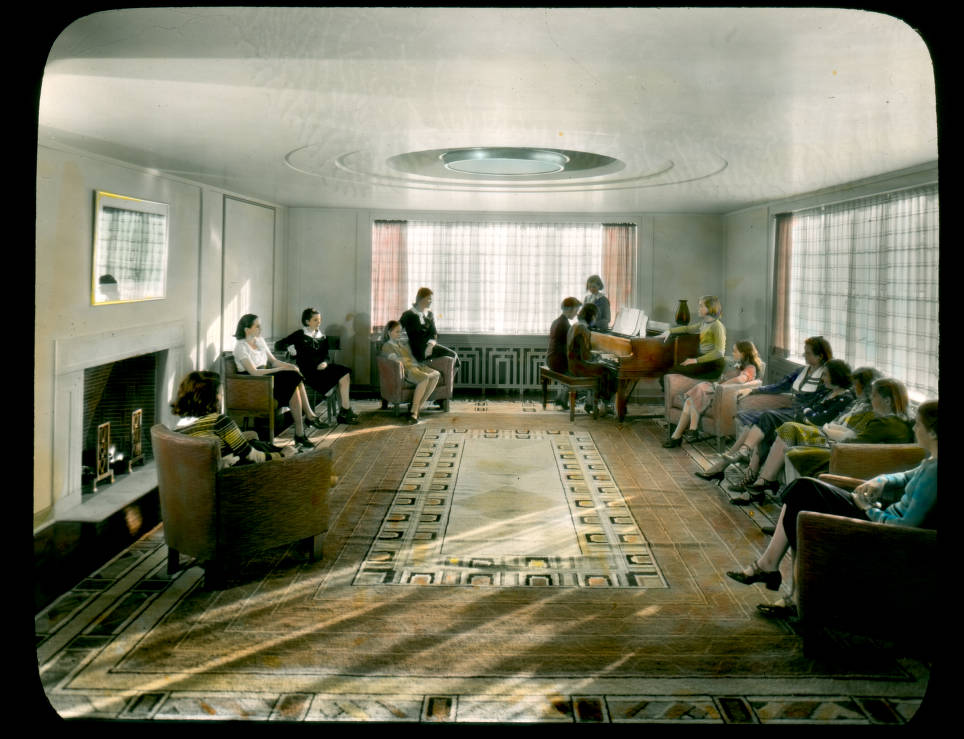
Kingswood School Rose Lounge. Cranbrook Archives

Kingswood School Rose Lounge, The Cranbrook Hand-Colored Lantern Slide Collection. Cranbrook Archives

As the weather here at Cranbrook is more than a little dreary, today’s photo provides a look into a bright and cozy atmosphere perfect for reading, relaxing and being inside. Taken around 1932, it shows a group of students gathered in the lounge of the Kingswood School dormitory (originally known as Reception Room III) listening to two of their peers play the piano. The photograph comes from Cranbrook Archives’ Hand-Colored Lantern Slide Collection. The photographs in this collection were originally black-and-white and were painted with watercolor years later, and not by the original photographer. This jump in time explains the vibrant color choices in the photograph as the painter was not present when the image was originally captured.

The Cranbrook Hand-Colored Lantern Slide Collection contains over 30 images of Cranbrook institutions taken primarily during the 1920s and 1930s. Several of the original black and white images were taken by architectural photographers for inclusion in publications.

Today’s photo was taken by George W. Hance, Cranbrook’s first paid staff photographer (1931-1932). Hance had been commissioned by George Booth as early as 1916 to photograph his art collection and later photographed Cranbrook’s campus and grounds including Kingswood, Cranbrook House (home to George and Ellen Booth) and Thornlea (home to Henry Scripps Booth). Explore more photographs like these on our digital image database or in person at the Archives!

Stefanie Dlugosz, Collections Fellow, Cranbrook Center for Collections and Research


Happy Belated Birthday to Our Founder!

September 24th marked the 150th birthday of Cranbrook’s founder, George Gough Booth. Born in Toronto, Mr. Booth had an early interest in art and architecture. In 1881 his family moved to Detroit and he put his artistic talents to work by purchasing half of an interest in an ornamental ironworks firm. The business was successful and used many of Booth’s product designs.

George Gough Booth, ca 1876.  W. E. Lindop, photographer.  Cranbrook Archives

George Gough Booth, ca 1876. W. E. Lindop, photographer. Cranbrook Archives

In 1887 Booth married Ellen Warren Scripps, daughter of Detroit News founder James Scripps. The following year he sold his share in the ironworks business and joined the News staff as its business manager. The News blossomed under Booth’s direction, becoming one of the leading metropolitan dailies in the nation. In 1906, Booth became president of the newspaper, succeeding his father-in-law.

In 1904 George and Ellen Booth purchased a run-down 174 acre farm in Bloomfield Hills and named it Cranbrook after Booth’s ancestral town in England. Booth called upon his long-time friend, and noted Detroit architect, Albert Kahn, to prepare working drawings for the building of Cranbrook House. Kahn responded with an English Arts and Crafts inspired design the Booths moved into their new home in 1908.

In 1922, believing their country estate could serve a larger public purpose, the Booths shifted their focus toward building the six institutions at Cranbrook: Brookside School, Christ Church Cranbrook, Cranbrook School (for boys), Cranbrook Academy of Art, Cranbrook Institute of Science, and Kingswood School (for girls). George Booth was a visionary, and with his wife Ellen, set new standards for generosity, leaving us a legacy we are proud to be a part of. Happy belated birthday George!

“We were unwilling to go through life with our aims centered mainly in the pursuit of wealth and with a devotion wholly to the ordinary opportunities for social satisfaction.  We were not willing to leave all of the more enduring joys for our children or the joy of work in so good a cause entirely to our friends after we had passed on; rather did we wish, in our day, to do what we could and give tangible expression now to our other accomplishments by adventures into a still more enduring phase of life.  We wished to see our dreams come true while we were, to the best of our ability, helping to carry on the work of creation.”  (George Gough Booth, Address at Founders Day, October 28, 1927)

Gina Tecos, Archivist

Photo Friday: Back to School in 1912

Stock certificate for the Bloomfield Hills Seminary issued in 1912/Courtesy Cranbrook Archives.

Stock certificate for the Bloomfield Hills Seminary issued in 1912. Cranbrook Archives.

In early June of 1912 a small group of Bloomfield Hills residents assembled at the home of William T. Barbour (president of Detroit Stove Works) to discuss the formation of a small local private school. After general discussion, it was moved by George Gough Booth to establish a corporation with capital of $5,000.00 in order to establish the school. According to meeting minutes, the objectives were to “give the young people of Bloomfield Hills, and those from nearby towns, the opportunity to study in the country; to offer a course of study that will fit them for life as well as for college.” With these objectives in place, the Bloomfield Hills Seminary was incorporated in August.

Often referred to as the precursor to Brookside School, the Seminary was located on five acres at the corner of Woodward Avenue and Lone Pine, in a historic house built in 1820 by Ezra Parke. Booth, who had purchased the property in 1910, offered use of the house and added a five-class-room addition with the caveat that the property would revert back to him should the school ever close.

Mary Eade, who had been the principal of the Detroit Seminary for Girls, became the principal and taught grammar and upper level courses, including History of Art. Elizabeth K. Seward (granddaughter of William Henry Seward of the Alaska purchase fame) taught intermediate classes including French, and Winifred Eastman was responsible for the elementary age children. The coeducational day school used the Montessori method of instruction.

In 1916, the trustees voted to change the name of the school to the Bloomfield Hills School. At its peak, there were eight teachers and fifty-one students enrolled. Due in part to the resignation of Mary Eade (who resigned to do war work) and the construction of new schools in Birmingham and Pontiac, the school closed in 1918 after six years. The property reverted back to Booth who purchased all of the stock certificates back from the trustees, and later became known as the Lone Pine Inn and Tea House, but that’s another story!

Leslie S. Edwards, Head Archivist and, Gina Tecos, Archivist

Photo Friday: Arthur Nevill Kirk on Facebook

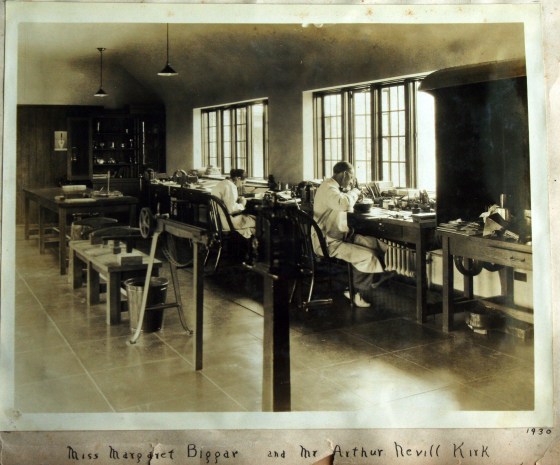
Famed metalsmith Arthur Nevill Kirk and apprentice Margaret Elleanor Biggar work in the metalsmithing studio at the Cranbrook Academy of Art, 1930. Cranbrook Archives.

Famed silversmith Arthur Nevill Kirk and apprentice Margaret Elleanor Biggar work in the metalsmithing studio at the Cranbrook Arts and Crafts Studios, 1930. Cranbrook Archives.

In this scrapbook page from 1930, “Miss Margaret Biggar” and “Mr. Arthur Nevill Kirk” are found working in the metalsmithing studios at the arts and crafts studios, the predecessor to the Cranbrook Academy of Art. An English-born silversmith, Arthur Nevill Kirk came to Cranbrook in 1927 at the urging of George Booth, who contracted him to produce silver designs for Christ Church Cranbrook. Kirk eventually taught silversmithing at the Cranbrook Arts and Crafts Studios before going on to found the Metals department at Wayne State, where he worked until 1957.

We at the Kitchen Sink are excited to use this post as an opportunity to promote not just the amazing history of Arthur Nevill Kirk but also highlight a new edition to the Cranbrook social media landscape – Cranbrook Archives’ Facebook page! As the beating heart of the Center for Collections and Research and the repository for all things historical at Cranbrook, the Archives uses Facebook to promote its extensive holdings, provide a portal through which researchers can access information about the collection, and give casual readers a daily glimpse into the fascinating history of the community through posts like yesterday’s, which featured this very photo. Check out their Facebookpage and learn more about this incredible resource!


Create a website or blog at WordPress.com