July 5th, 2025, marks one hundred years since the groundbreaking for Christ Church Cranbrook. As we mark this milestone in Cranbrook’s history, I believe it is important to reflect on George Gough Booth’s long discernment of this generous gift to the community.
From the beginning, there were always places of worship at Cranbrook. The story that leads us through these spaces to the establishment of Christ Church Cranbrook is especially meaningful to me.
Rev. Dr. S. S. Marquis, D.D. with the first spade of earth, July 5, 1925. Courtesy of Cranbrook Archives, Cranbrook Center for Collections and Research.
After George and Ellen Booth purchased ‘The Farm’ in January 1904, his father, Henry Wood Booth, was the first family member to live on the country estate. The elder Booth stayed for the month of May with Frank Brose, the farmer, and his family. On May 15, 1904, the first worship service at Cranbrook took place under a tent, on the site upon which the Altar of Atonement now sits, with Henry as lay preacher. He continued in this ministry, also offering Sunday School, at the same spot until 1909. This was the first act of service offered to the Bloomfield Hills community at Cranbrook.
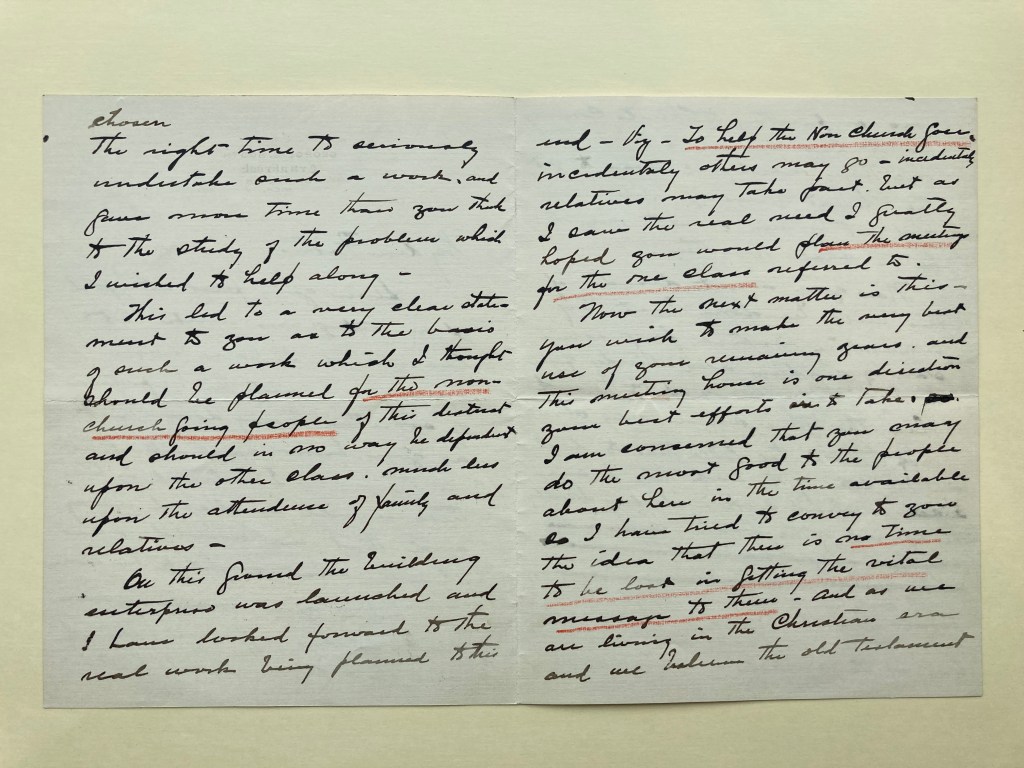
Letter from George Gough Booth to Henry Wood Booth, August 24, 1918. Courtesy of Cranbrook Archives, Cranbrook Center for Collections and Research.
In 1914, George and Ellen considered building a chapel at the site on which the Kingswood flagpole now sits, but the project was rejected, most likely due to the outbreak of World War I. As the war ended, a permanent place of worship and Sunday School was established with the building of the Meeting House.
The letter, above, preserves the dignity with which George writes of the Meeting House “building enterprise” to honor and give freedom to his father’s calling to share the Christ message with the non-church goers in the district. From this letter, we can learn and understand why George built the Meeting House for worship and Bible study through his father’s ministry.
Decoration of the Meeting House by Katherine McEwen, 1918. Laura MacNewman, photographer.
In the letter from George to his father, we also learn that he is prudent in observing the religious character of Bloomfield residents. During the years in which the Meeting House was used for religious services (1918-1926), Mr. Booth would reflect on the visiting clergy and service attendees (both of which came from diverse denominations), from which he would eventually discern the denomination of “Cranbrook church.”
What would you want for your 75th birthday? If you were painter Robert Hopkin, it would be an artists’ club named in your honor. The Hopkin Club, formed in 1907, had no rules, officers, or dues. The members wanted to get together occasionally, to talk about art or host artists visiting Detroit. Hopkin passed away in 1909, but the club continued. In 1913, The Hopkin Club established by-laws and was renamed the Scarab Club–the name it continues under today.
Scarab Club Room. Photography courtesy of Scarab Club.
But who was the man the club was originally named after?
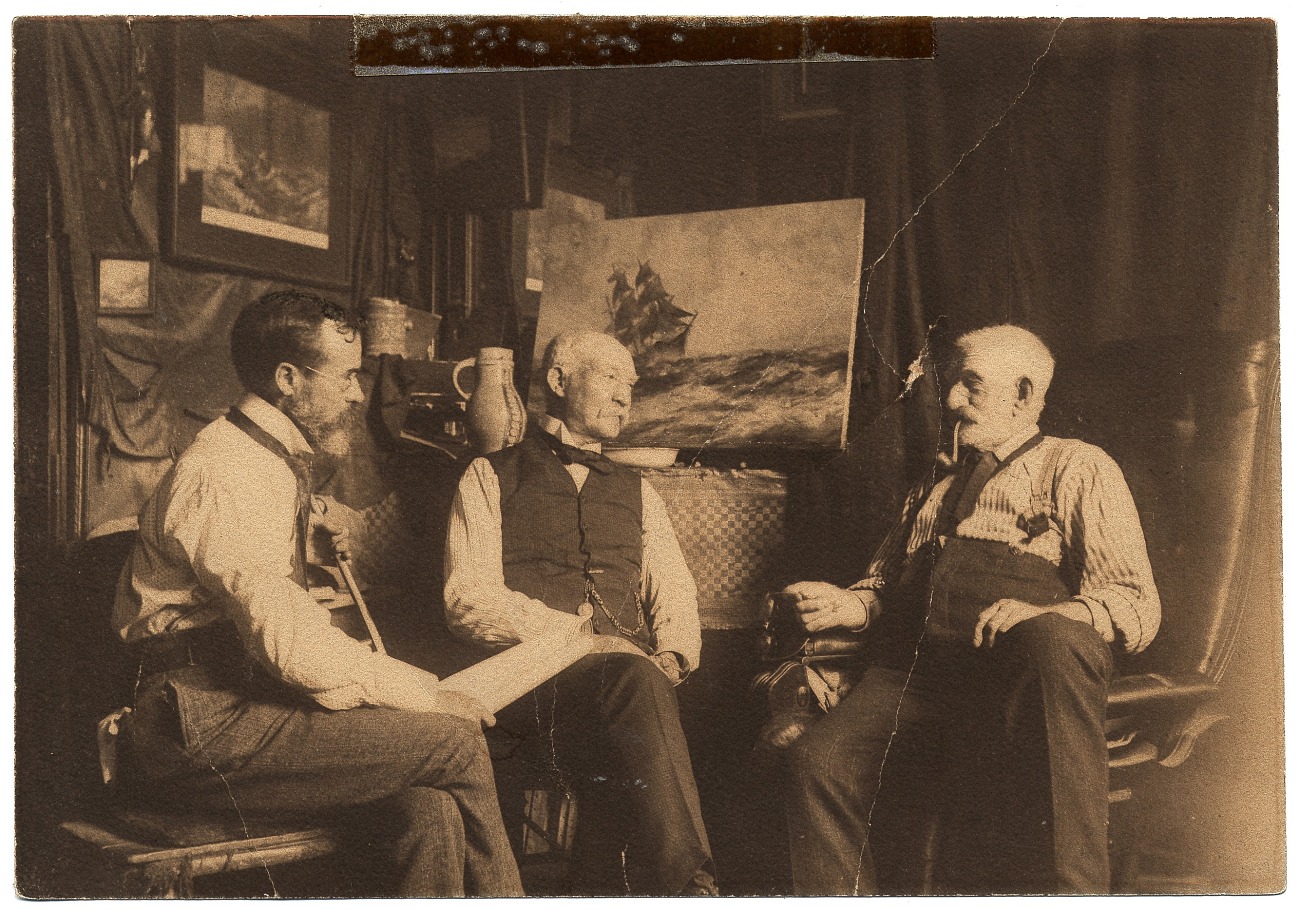
Robert Hopkin was a maritime/marine artist born in Glasgow, Scotland, in 1832. He learned to paint and draw from his father. The family emigrated to Detroit in 1842. His grandfather was a sea captain which drew Hopkin to work on the wharves in Detroit and inspired his art. Though chiefly known as a painter of marine scenes and seascapes, Hopkin made frequent trips throughout the American west from 1860 to 1885, painting murals for public buildings and drop curtains and scenery for theaters, including the Tabor Grand Opera House in Denver.
Robert Hopkin (right) and others in studio, ca. 1900. William H. Thomson papers, 1912-1950. Archives of American Art, Smithsonian Institution
In the latter half of the 19th century, Hopkins was considered the dean of Detroit artists; he decorated the interior (as well as the stage curtain) for the original Detroit Opera House (1868), painted murals in Detroit’s Fort Street Presbyterian and Ste. Anne’s churches, as well as the Cotton Exchange in New Orleans (1883). By April 1900, the Detroit Free Press wrote, “Many of the art lovers of this city possess one or more of [Hopkin’s] splendid marines, and they have been reproduced and published until everyone is familiar with his work.”
When Mr. Robert Hopkin’s Collection of Paintings opened at the Detroit Museum of Art in May 1901, “There was a large attendance of art-loving Detroiters” (Detroit Free Press, May 16, 1901).
Robert Hopkin (Scottish American, 1832 – 1909), Marine,Oil on Canvas. Cranbrook Center for Collections and Research.
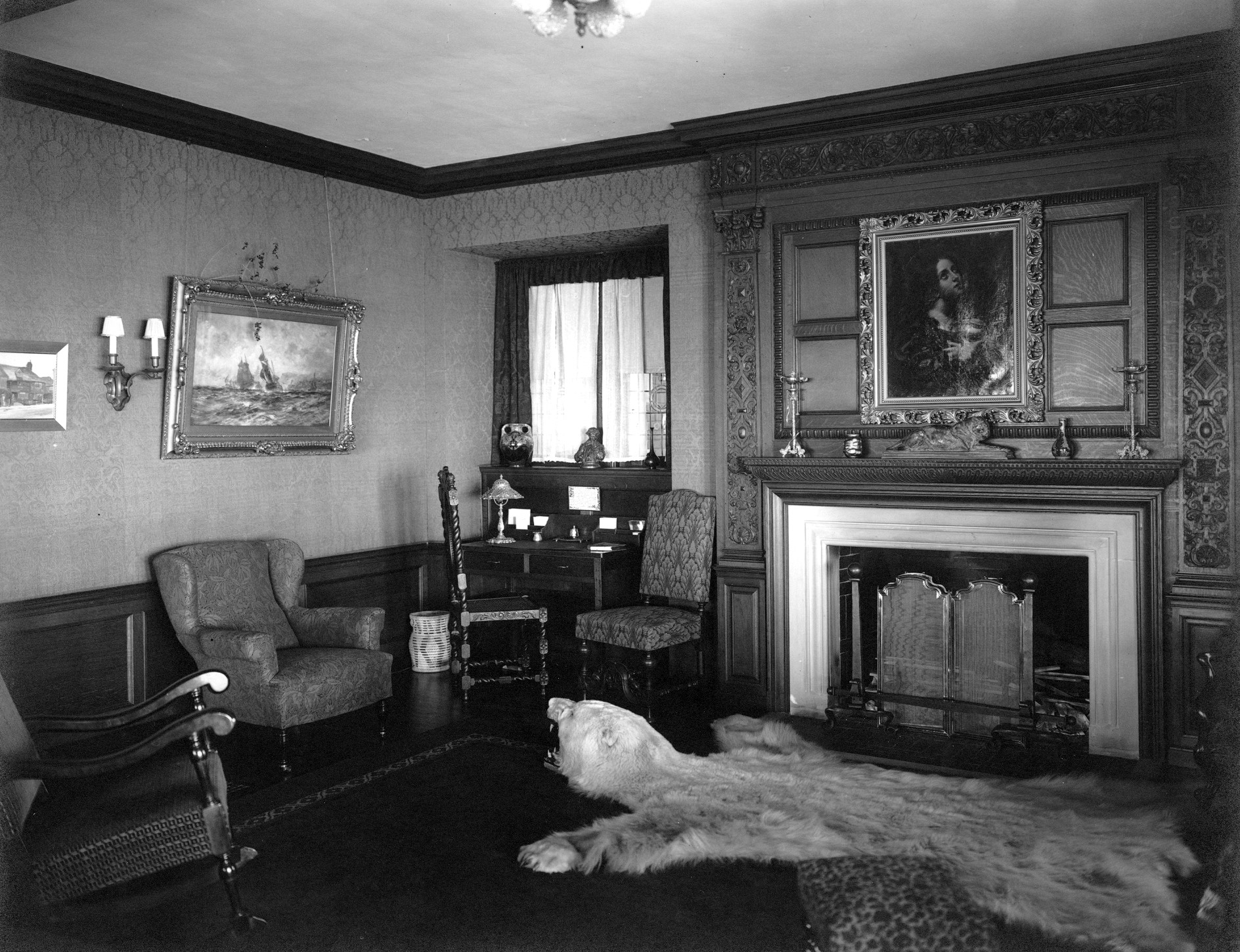
George and Ellen Booth were no exception. Art lovers with many Detroit-based and self-taught artists in their growing collection, the first inventory of Cranbrook House in 1914 lists two Hopkin “Marine” paintings. The Booths gifted the larger of the two paintings to their daughter Grace Ellen Booth and her husband Harold L. Wallace. The painting returned to Cranbrook House about 1955, when Grace Booth Wallace’s collection was donated to the Cranbrook Foundation.
Cranbrook House Living Room, circa 1909, with Marine visible on the left. Cranbrook Archives, Cranbrook Center for Collections and Research.
The Detroit Historical Society has a copy of the Souvenir Catalogue of Mr. Robert Hopkin’s Collection of Paintings in its collection. The 85 exhibited paintings are listed, with several black and white images of them. “Price List” is written on the cover, and notes have been made indicating which have been sold and who purchased them. (Sadly, the name “Booth” does not appear.)
Another art-loving Detroiter was Merton E. Farr president of the American Shipbuilding Company and owner of a number of freighters on the Great Lakes. His daughter, Carolyn, married George and Ellen Booth’s youngest son, Henry.
The Hopkin painting in the Thornlea collection. Cranbrook Center for Collections and Research.
In 1927, Farr gifted the couple a Hopkin “Marine.” The painting hung in Thornlea, home to Harry and Carol Booth, from 1927.
The painting’s official title is not noted. The Thornlea painting is interchangeably referred to as Homeward Bound, Schooner on a Stormy Sea, Sailing Ship at Sea, and Marine. However, the 1901 Hopkin exhibition catalog does not list any paintings with those titles.
– Leslie Mio, Associate Registrar, Cranbrook Center for Collections and Research
Did you know that Horizons-Upward Bound (HUB) had its own flag and that it was created by a HUB student? Continuing with the HUB Records digitization project, I came across evidence of this unique item and an interesting story behind it.
Feature on the front page of The Hub, a newsletter published by students in the Summer Program Publications Class, July 26, 1974. Courtesy of Cranbrook Archives.
In 1974, Gregory Loving, HUB student and a senior from Cass Technical High School (17 years old), won a flag design contest for Cranbrook School’s event, Soulfest II. Building on the tradition of institutional flags at Cranbrook begun by Henry Scripps Booth, Gregory’s design incorporated three wide vertical stripes. The center stripe displayed multiple hands of varying skin tones holding an upward-pointing arrow, a motif that would repeat often in HUB graphics and is likely based on Cranbrook School’s logo.
Detroit News clipping featuring Gregory Loving with Henry S. Booth, and Nancy Corkery, May 1974. Courtesy of Cranbrook Archives.
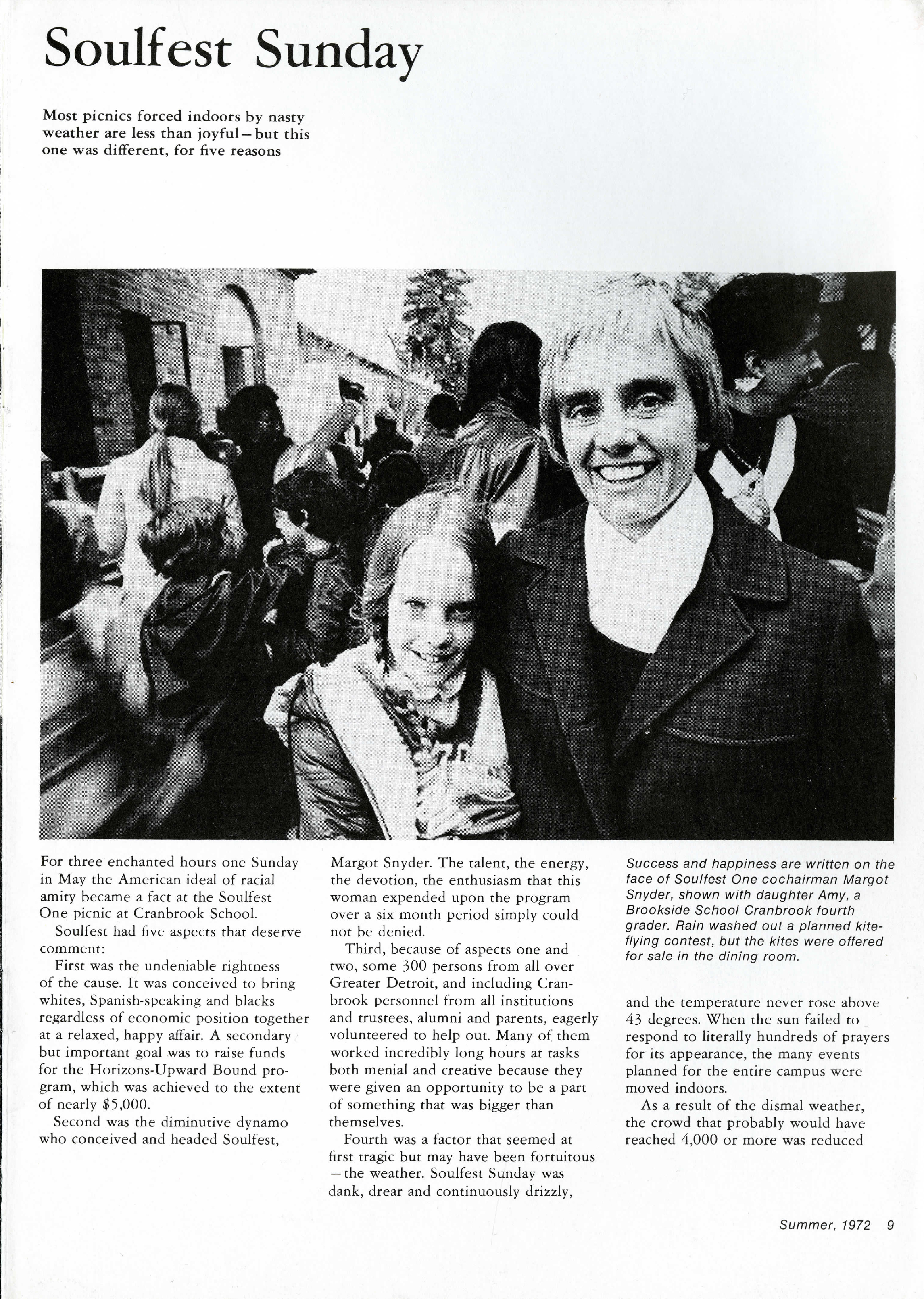
Soulfest was an biannual and major community fundraising event for the HUB program in the 1970s. It was inspired by HUB parent, Lula Barnes, who also provided the recipes, and created and organized by Margot Snyder. Margot, “whose sustaining and nurturing hands…helped shape Horizons-Upward Bound since its beginnings, ” was an integral and beloved member of the Cranbrook Schools and HUB community and wife of HUB founder Ben M. Snyder (HUB class brochure, 1994).
Cranbrook Magazine, Vol. 3, No. 4, Summer 1972, featuring Soulfest’s inaugural event with Margot Snyder and daughter, Amy. Courtesy of Cranbrook Archives.
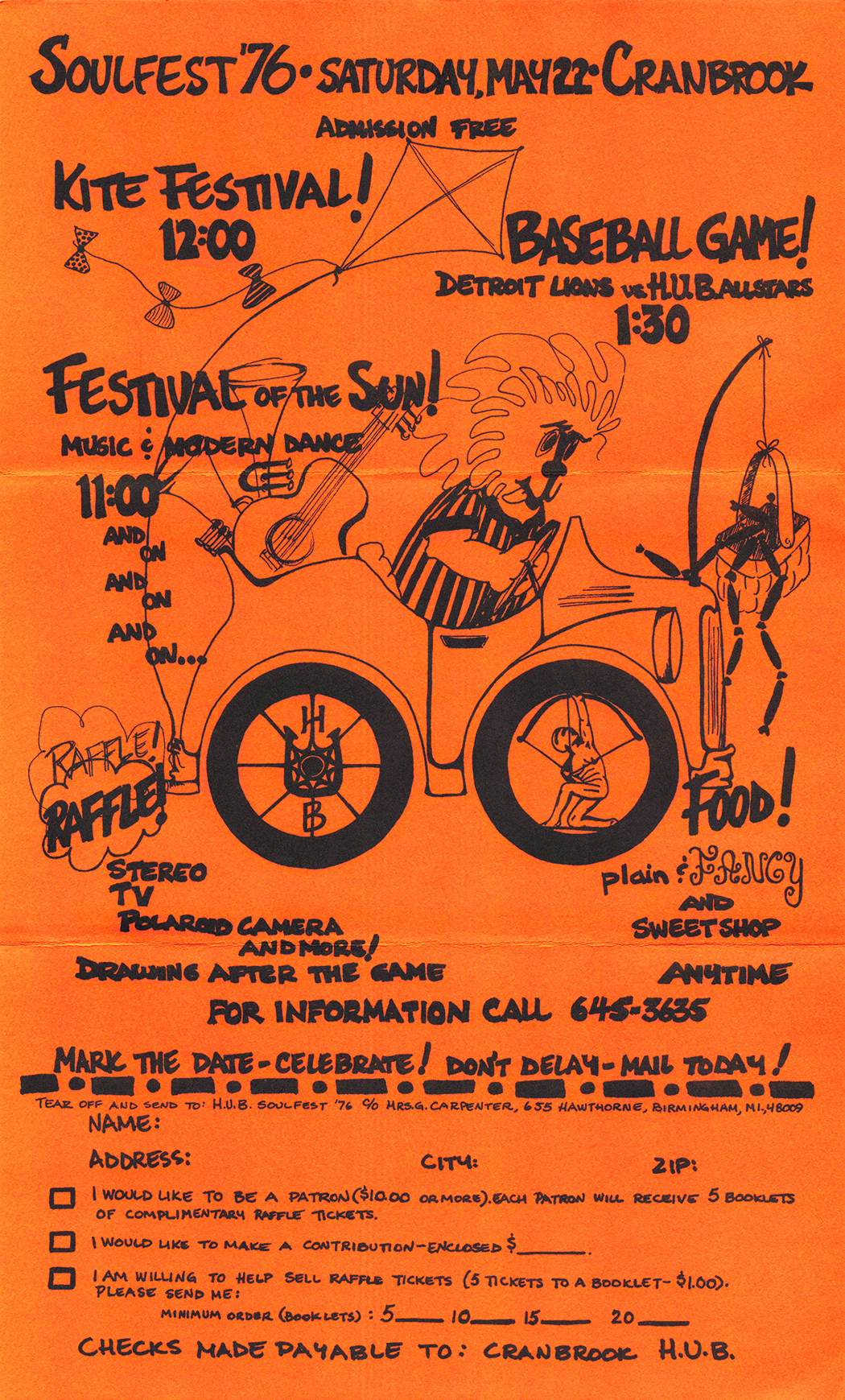
1976 flyer featuring repeats of popular features of the 1974 event, including participation of the Detroit Lions! Courtesy of Cranbrook Archives.
In a memo to Cranbrook School and HUB faculty in March 1974, Margot writes, ” We look upon this as a project stressing Cranbrook’s involvement with the community at large…we hope to raise some much need funds for HUB, we are trying to beat the high cost of living and labor.” Gregory’s winning flag design can be viewed as a visual interpretation of Margot and the Soulfest committee’s goal of increased community involvement. Both the event and flag embody collectivity and upward mobility through the work of multiple hands from varying backgrounds.
—Courtney Richardson, Project Archivist, Cranbrook Center for Collections and Research
HUB digitization is funded by a NHPRC Archival Projects Grant for projects that ensure online public discovery and use of historical records collections. The NHPRC was established by Congress in 1934 as a statutory body affiliated with the National Archives and Records Administration and chaired by the Archivist of the United States.
With thousands of years of recorded history to draw from, every day of the year has some distinction as an anniversary. Today, the 27th of September, is the 958th anniversary of the day William, Duke of Normandy, set sail to conquer England, the 560th anniversary of the birth of Cosimo de’ Medici, founder of the de facto ruling family of Renaissance Florence, and the 100th anniversary of the wedding of Henry Scripps Booth to Carolyn Elizabeth Farr. Here at Cranbrook, it is this last anniversary that holds top billing on our calendars.
Carolyn Elizabeth Farr, on her wedding day. Courtesy of Cranbrook Archives, Cranbrook Center for Collections and Research.
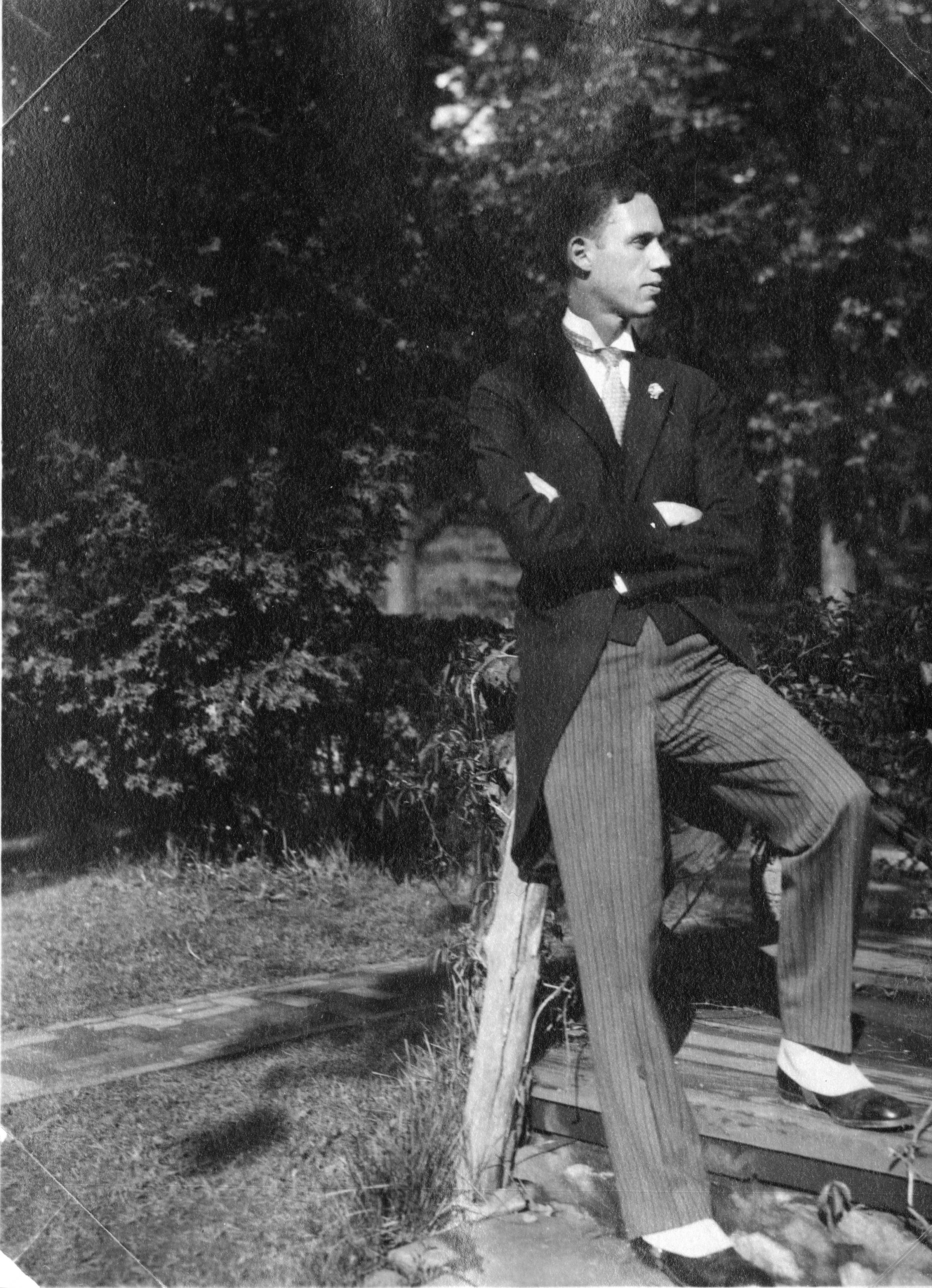
Henry Scripps Booth, on his wedding day. He later joked that it was the last time that he would ever wear a waistcoat. Courtesy of Cranbrook Archives, Cranbrook Center for Collections and Research.
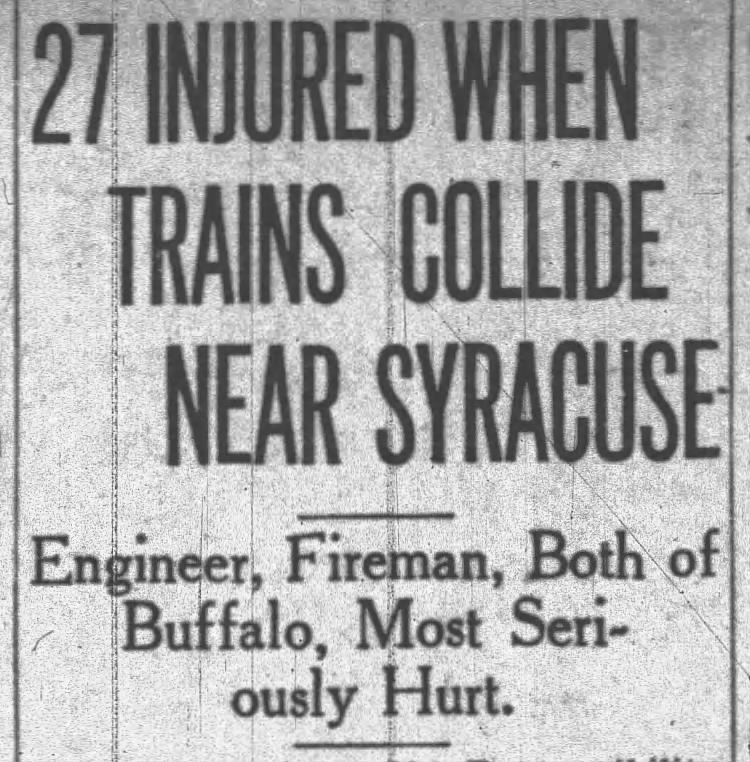
Henry Booth, youngest son of Cranbrook’s founders, George and Ellen Booth, and Carolyn Farr, daughter of shipbuilding magnate Merton Elmer Farr and Emma Rothe, first announced their engagement on June 29th, 1925. Neither of them believed in long engagements, it appears, as they were married just three months later, at the First Congregational Church in Detroit. The wedding had some competition for most memorable event of the year for Carolyn Farr. On August 30th, while on her way home from a shopping trip to New York City to complete her trousseau, Carolyn’s train crashed into the back of another train which had made an accidental stop on the westbound line near Syracuse.
Clipping from Buffalo Courier, August 31, 1924, page 56
Fortunately, no one was killed in the crash. Some members of a Boy Scouts troop riding at the back of the rear train actually slept through the collision and had to be shaken awake by their bemused troop leaders. Though she escaped serious injury, the crash left Carolyn with cuts on her nose and mouth, which may have still been painful on her wedding day, though they are invisible in her wedding photos.
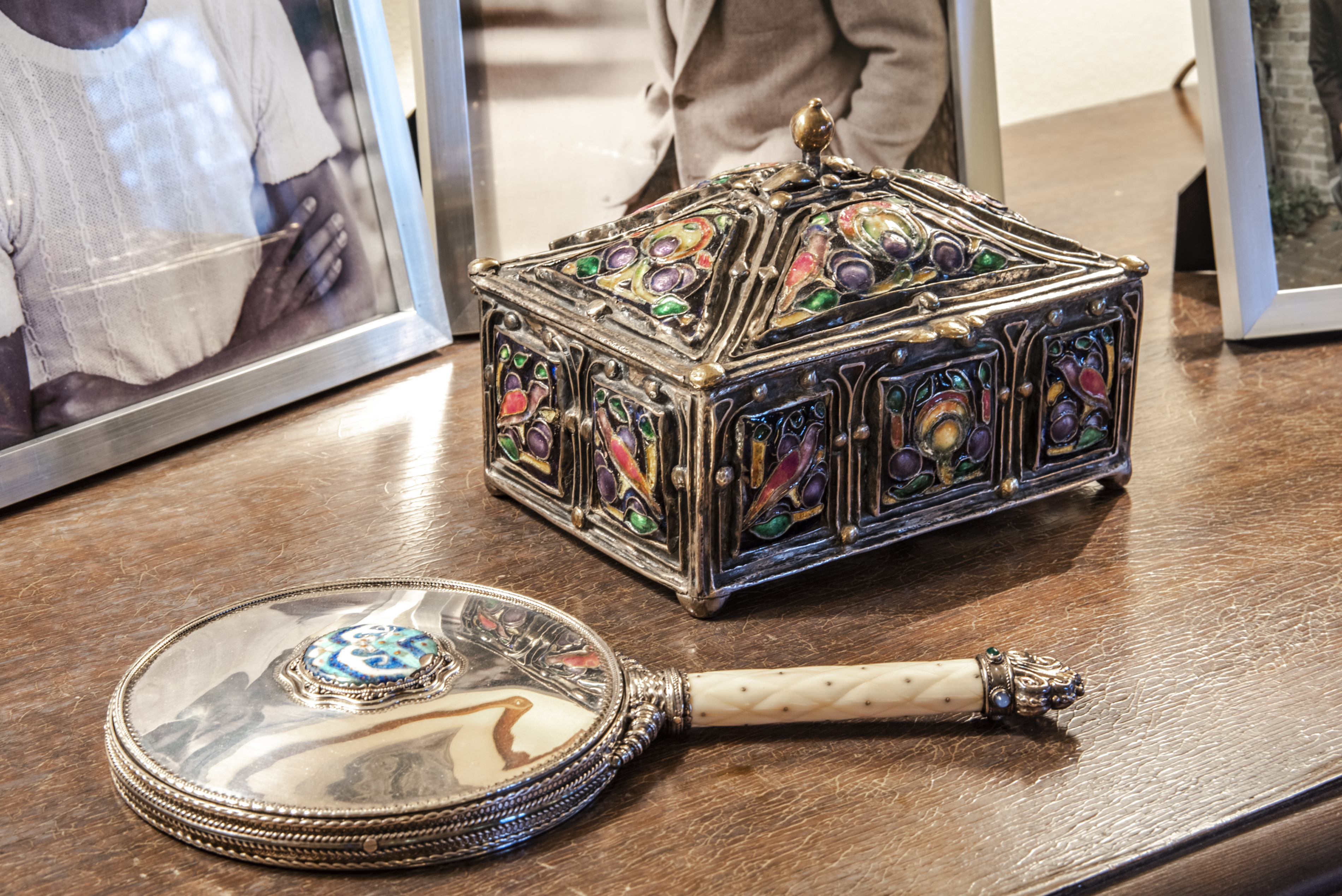
Both of Henry’s sisters were married at Cranbrook House itself, Grace Booth in the living room and Florence Booth in the library. Although Henry was not married at Cranbrook, the wedding was still very much a Cranbrook event in one way, because it featured an Arts and Crafts artwork. The ring was carried down the aisle by Carolyn’s nephew, Henry Gerhauser, in a silver and enamel box made by the noted Boston-based artist Elizabeth Copeland.
Carolyn Farr and ring bearer Henry Gerhauser holding the Copeland box. Detroit Free Press, October 5th, 1924.
Enameled silver casket, Elizabeth E. Copeland, circa 1922. Courtesy of Cranbrook Center for Collections and Research.
Enameling, like tapestry weaving and illumination, was a medieval art form revived by the Arts and Crafts movement in England in the nineteenth century. In the twentieth century, enameling evolved out of the medievalist styles that characterized its revival to become a primary medium of both Art Nouveau and Art Deco decorative art and jewelry.
Elizabeth Copeland was the foremost enamel artist of the American Arts and Crafts movement. Born in Revere, Massachusetts in 1866, she did not begin her artistic training until she was in her early thirties. Like many women artists, she was expected to balance her own work with domestic labor. Copeland had to commute daily to attend the Cowles Art School in Boston, and she studied her design patterns while carrying out household chores. So great was her talent, however, that within just a few years her enamels and silver work were already enjoying critical acclaim, including a feature in Craftsman magazine in 1903. Her work is now in many museum collections, including the Metropolitan Museum of Art, the Art Institute of Chicago, and the Museum of Fine Arts, Boston.
As an artist, Copeland embraced the Arts and Crafts movement’s ideals. Eschewing a machine-like precision in her work, her silver work proudly exhibits subtle variations and inconsistencies that distinguish them as truly hand-crafted objects. Her enamel work embraces the fluidity of the medium, allowing different colors to flow into one another within each metal embrasure shaped to contain the liquid medium. Unlike most women artists of her time, Copeland was able to support herself independently through the sale of her work, during a career of more than three decades. She exhibited her work at many venues, including the Detroit Society of Arts and Crafts, where Henry Scripps Booth purchased the silver box that would hold the ring for his wedding, two years later.
Henry Scripps Booth with his first child, Stephen Farr Booth, in Brookside Cottage, February 17th, 1925. Note the Copeland box on the mantelpiece. Courtesy of Cranbrook Archives, Cranbrook Center for Collections and Research.
The Copeland Box in Thornlea with a hand mirror by Arthur Nevill Kirk. Photography by Tryst Red, 2021. Courtesy of Cranbrook Center for Collections and Research.
After the wedding, the new couple moved into Brookside Cottage, the little stone house just west of Kingswood School, where they lived for two years until Thornlea House was completed. The Copeland box became a fixture of their new home, where they lived together from 1927 until Carolyn’s death in 1984. During her lifetime, the ring box spent many years on a table in Carolyn’s own bedroom, as a memento of a milestone occasion which we are celebrating again, one hundred years down the line.
— Mariam Hale, 2023-2025 Collections Fellow, Cranbrook Center for Collections and Research
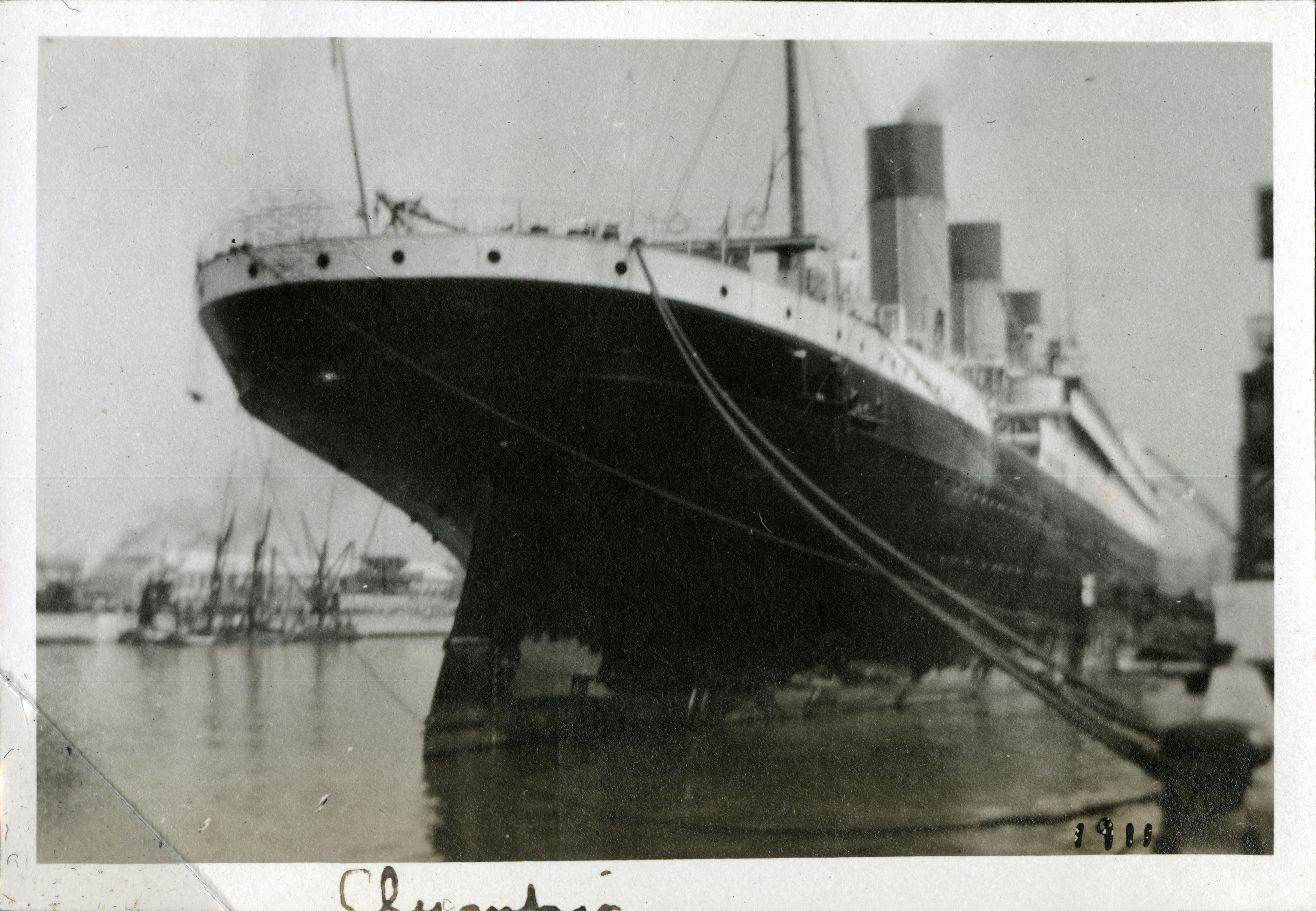
Some years ago, former Cranbrook Archivist, Robbie Terman, posted a short blog post on one of the Titanic’s sister ships, RMS Olympic. In recent years, Cranbrook Archives has responded to numerous requests for images of the Olympic which are preserved in the first volume of Harry Scripps Booth’s Pleasures of Life albums.
View of RMS Olympic before its first eastward crossing, June 28, 1911. [POL1.14.5]. Courtesy of Cranbrook Archives, Cranbrook Center for Collections and Research.
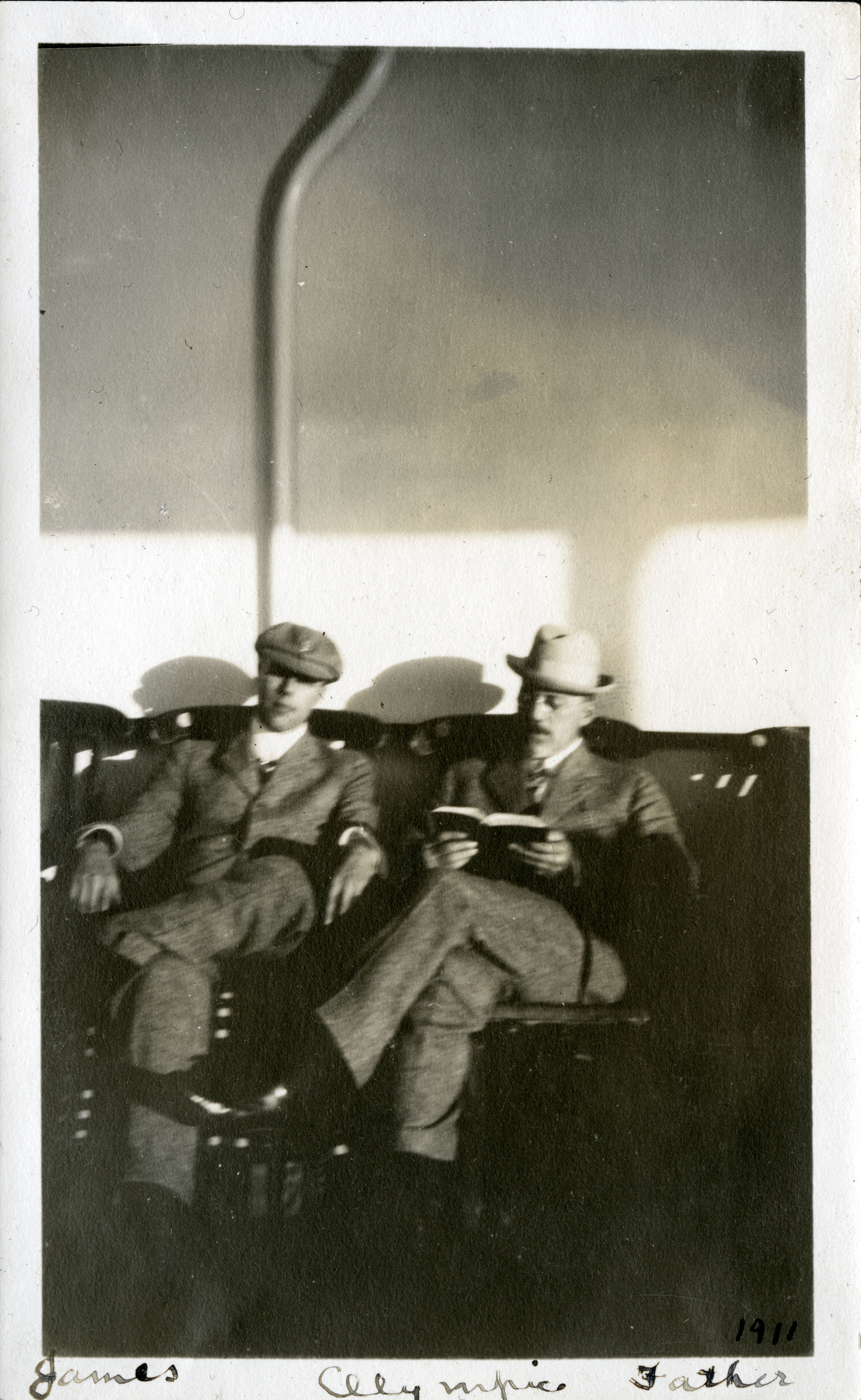
On June 28, 1911, the Booth family took the first eastward crossing of RMS Olympic from New York to Southampton, England. The family at that time was George and Ellen Booth; James Scripps and Jean McLaughlin Booth who had married the previous year; Grace, Warren, Henry, and Florence. They were joined by their Grand Rapids cousin, Esther Booth.
As I come from a maritime nation, these requests are particularly intriguing to me. I have wondered what other archives we have at Cranbrook to tell the story of transatlantic crossing and explain some of the images. George Gough Booth kept a record of the expenses in planning for the trip. These records tell us that he booked the steamship tickets with the Christian Leidich Travel Bureau in Detroit and he purchased Motor Union badges for himself and James.
James Scripps Booth and George Gough Booth on the RMS Olympic, July 1911.[POL1.10.2] Courtesy of Cranbrook Archives, Cranbrook Center for Collections and Research.
As Henry recalls in his memoir after listing the family members who sailed,
“That wasn’t enough. Parks, the chauffeur, went; also The Pierce-Arrow, a 7-passenger touring car, and a Lozier Briarcliff, which accommodated four plus one in an airy seat on the left running board, designed for the chauffeur when the “master” took the wheel. That seat was a thrill for the young at heart.”
Then I came upon something quite wonderful—Henry’s journal of the sea crossing! He began the trip when he was just 14 years old, celebrating his 15th birthday in August during the vacation. As I read the entries, the images in the Pleasures of Life came alive. Here follows some moments from the journey in Henry’s words.
“Stayed at the Plaza. Esther’s trunk was lost. We found it later. On June 28, we went abord [sic] the great ship, “Olympic.” Henry Scripps Booth, June 27, 1911
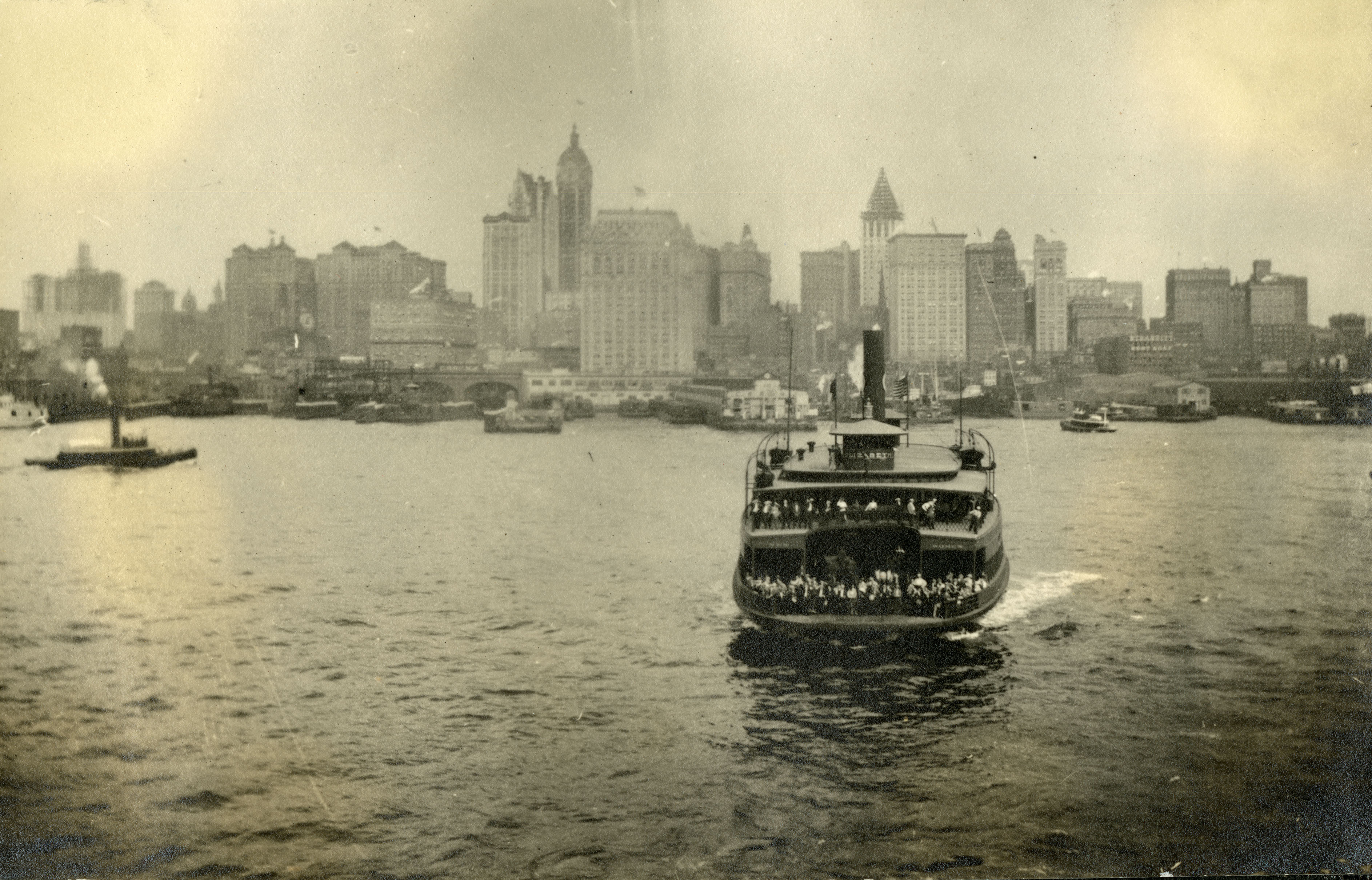
Leaving New York, June 28, 1911. Courtesy of Cranbrook Archives, Cranbrook Center for Collections and Research.
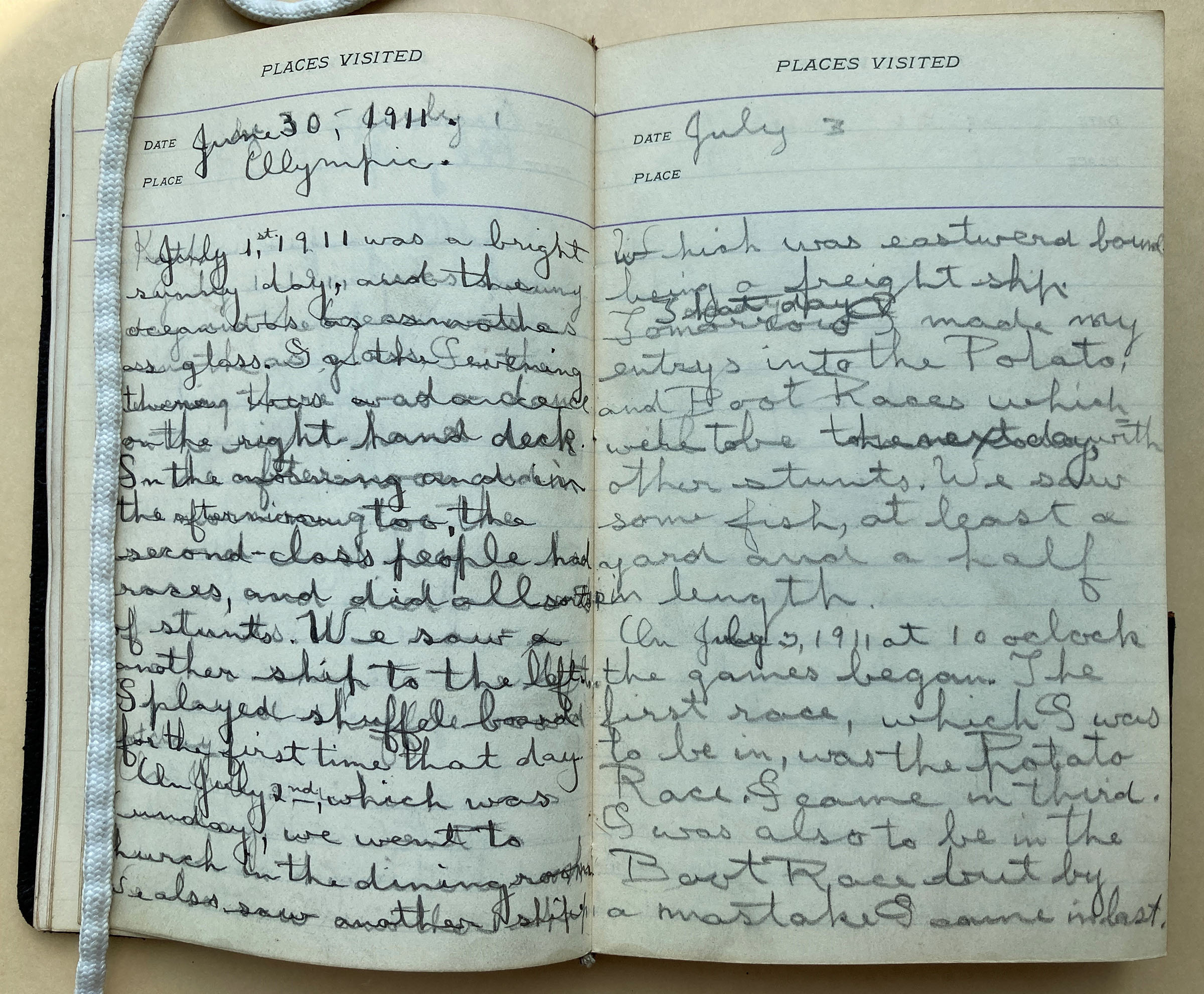
“On June 28, we went abord [sic] the great ship, “Olympic”. The Olympic is a fine ship. Florence was sick first night and day. It was somewhat rough on June 29th. I met a new friend but did not remember his name. In the morning, I could hardly stand, because of the new sensation. I was somewhat sick, but ate lots and I felt fine.” Henry Scripps Booth, June 28, 1911
“On June 30th the Campania was in view. I got acquainted with two girls, Constance Peabody and Katherine somebody.” Henry Scripps Booth, June 30th, 1911
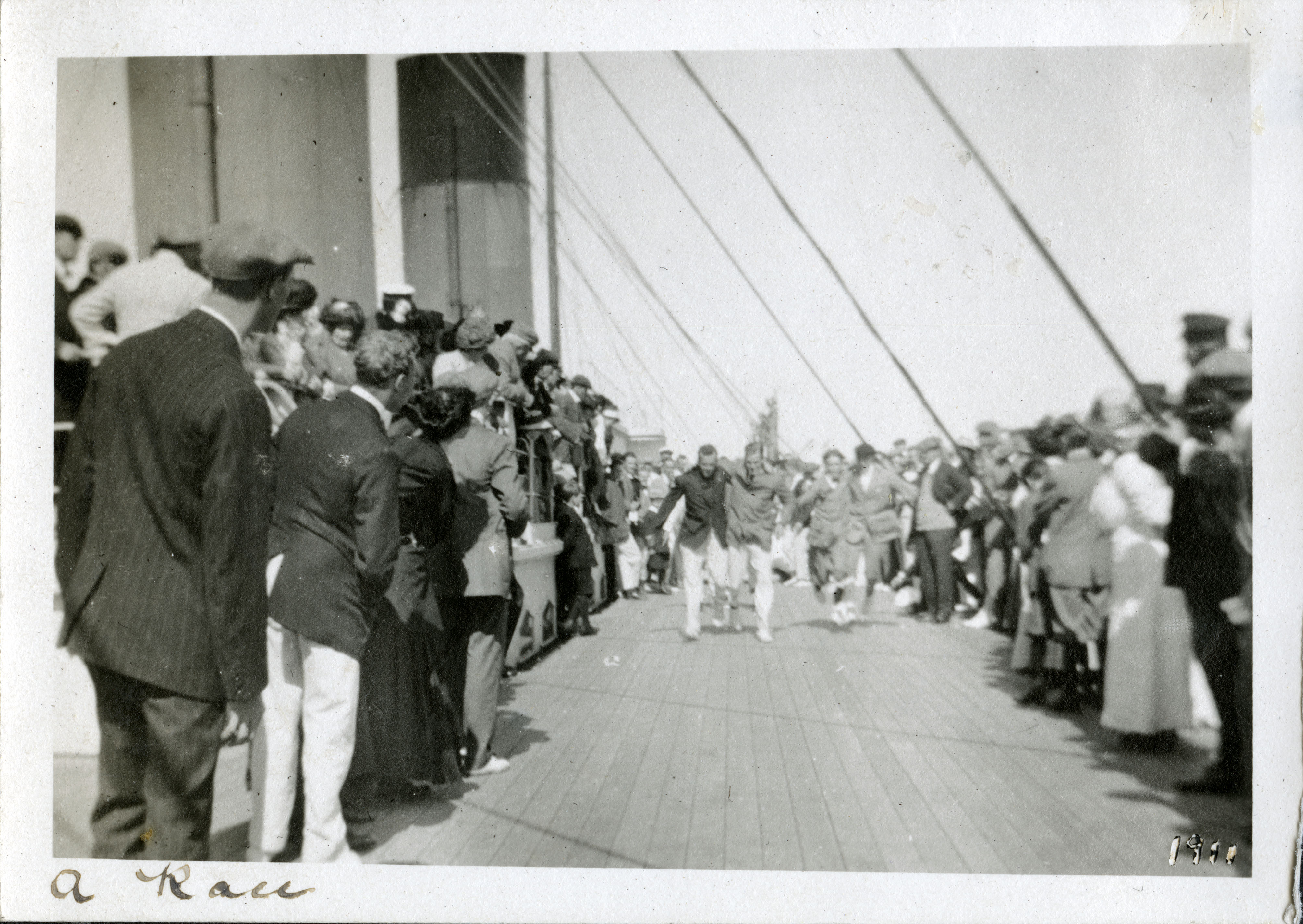
A race aboard the RMS Olympic on its first eastward crossing from New York to Southampton, July 1911. [POL1.11.4]. Courtesy of Cranbrook Archives, Cranbrook Center for Collections and Research.
“July 1st, 1911, was a bright sunny day, and the ocean was as smooth as glass. In the evening, there was a dance on the right hand deck. In the morning and in the afternoon too, the second-class people had races, and did all sorts of stunts. We saw another ship to the left. I played shuffleboard for the first time that day. On July 2nd, which was Sunday, we went to church in the dining room. We also saw another ship [July 3] which was eastwerd [sic] bound being a freight ship.” Henry Scripps Booth, July 1, 1911
A race aboard the RMS Olympic on its first eastward crossing from New York to Southampton, July 1911. [POL1.12.5]. Courtesy of Cranbrook Archives, Cranbrook Center for Collections and Research.
“Tomorrow That day, I made my entrys [sic] into the Potato and Boot Races which were to be the next day with other stunts. We saw some fish, at least a yard and a half in length.
On July 3, 1911, at 10 o’clock the games began. The first race, which I was to be in, was the Potato Race. I came in third. I was also to be in the Boot Race but by a mistake, I came in last.
After other races came the Standing Broad Jump in which James sliped [sic].” Henry Scripps Booth, July 3, 1911
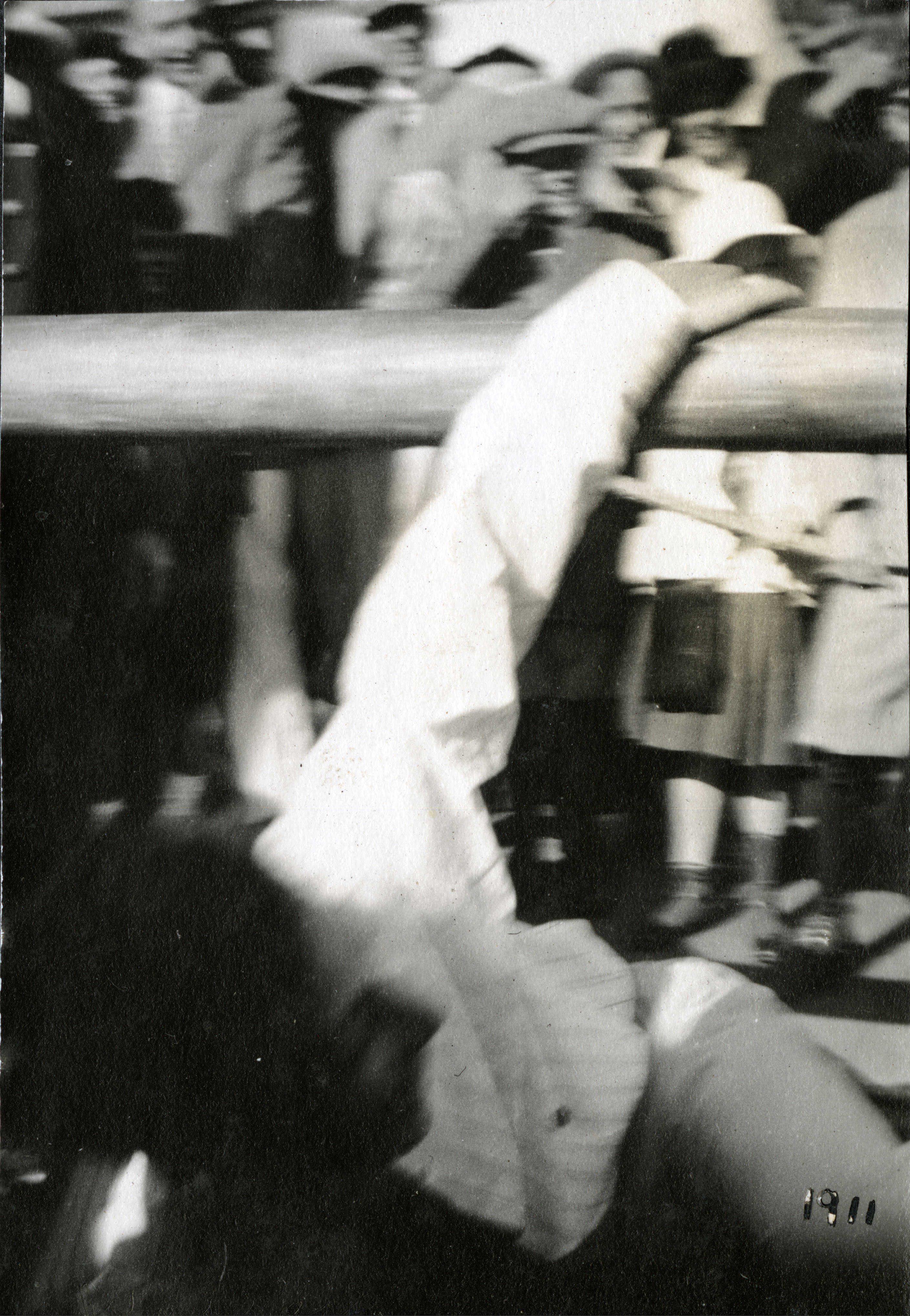
Warren Scripps Booth during a Spar Pillow Fight aboard the Steamship RMS Olympic, July 1911. [POL1.12.4]. Courtesy of Cranbrook Archives, Cranbrook Center for Collections and Research.
“James and Warren were both in the Spar Pillow Fight. In Warren’s case both fell off the bar at first but Warren was nocked [sic] off a second time. Warren did not win. James stayed on a number of times but was forced to give up. After dinner in the Reception Room the prizes were awarded. Also a dance on deck was given.” Henry Scripps Booth, July 3, 1911
Disembarking the RMS Olympic, July 5, 1911. [POL1.14.1]. Courtesy of Cranbrook Archives, Cranbrook Center for Collections and Research.
“Breakfast was served in the usual manner. After breakfast in the hall on the Sun Deck the band played the national cirs. Every body stood up. In the afternoon, at 4 o’clock we entered Plymouth Harbor. The mailtender got the mail and other boats got passengers off to land. We then started across the channel.” Henry Scripps Booth, July 4, 1911
“After getting off the steamer and having the officers make sure that we had no cigars or liquors with us, we took a cab to the hotel.” Henry Scripps Booth, July 5, 1911
Unloading the cars in France, August 1911. Courtesy of Cranbrook Archives, Cranbrook Center for Collections and Research.
As always, it is a great delight to share with scholars, colleagues, and those who are simply curious, these stories from the Archives. What is preserved in Cranbrook Archives help us to understand and enjoy not just Cranbrook, but any number of historic events from new perspectives.
There are more stories to tell about the family’s sojourn through England and France in 1911, which are both heartwarming and educational. But those tales must wait for another blog post–or for you to schedule a visit and come into the Archives Reading Room!
— Laura MacNewman, Associate Archivist, Cranbrook Archives, Cranbrook Center for Collections and Research
Nothing at Cranbrook is just one thing. Every tree, garden, rock, and railing has a story–and often times, a name.
In 2022, with the help of an anonymous donor and our friends at RE-TREE, a Camperdown elm (Ulmus glabra ‘Camperdownii’) was transplanted from a local garden to the Meadow in Cranbrook House Gardens, where it joined another established Camperdown elm. Since RE-TREE names all of the trees they relocate, I decided our Camperdown elms needed names, too. I started to refer to the larger tree as Thistle and the smaller tree as Smike to honor the two youngest Booth children, who grew up primarily on the Cranbrook Estate.
Thistle and Smike, the Camperdown elms below the West Terrace, in the Meadow, in Cranbrook House Gardens. Photographed by Leslie Mio, July 2024.
In 1908, George and Ellen Booth and their children, James, Grace, Warren, Harry, and Florence, moved from their home on Trumbull Avenue in Detroit to their new home Cranbrook, in the “wilds” of Bloomfield Township. At the time of the move, James was twenty, only two years away from marriage; Grace was eighteen; and Warren, fourteen, was already in boarding school. Youngest siblings Harry (eleven) and Florence (six) pretty much had the run of the grounds, exploring every nook and cranny (pun intended).
As the family explored and improved their country estate, they also took to naming significant features: every pond, hill, tree, and drive would be christened with its own name. Some names stuck (Angley Woods), others changed (Glassenbury Lake became Kingswood Lake), and others have been forgotten.
From the beginning of Cranbrook’s history in 1904, place names at Cranbrook have evolved and changed. Once the Booths turned the original mill pond into a lake,…
Harry and Florence were no exception; they had pet names for each other. Harry, known as Thistle, received his nickname during an illness. He did not shave for days, and someone said kissing his cheek was like kissing a thistle. We don’t have a record of the origin of Florence’s nickname, but friends and family called her Smike her whole life.
Harry (Thistle) and Florence (Smike) Booth with Spot in 1912. Courtesy Cranbrook Archives, Cranbrook Center for Collections and Research.
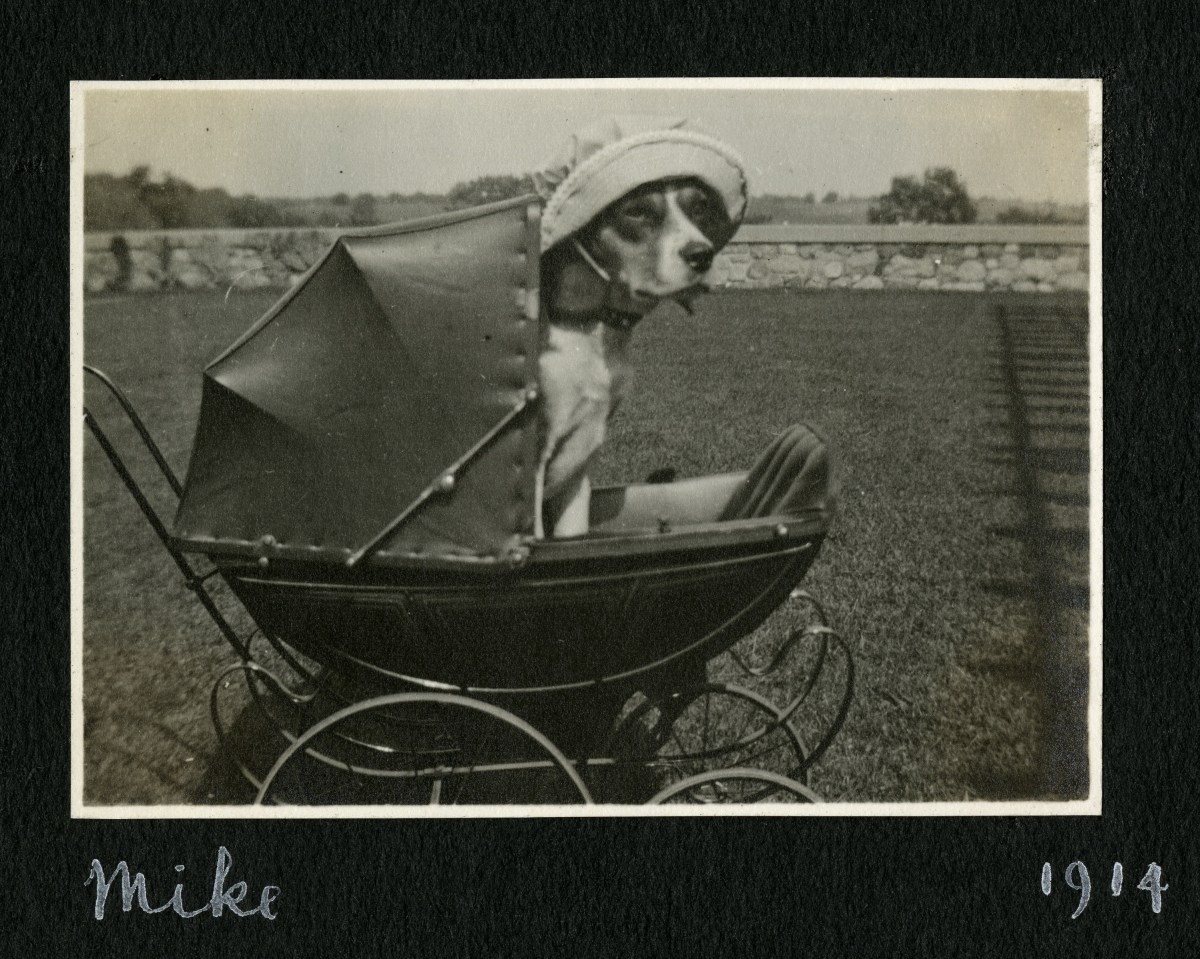
The Camperdown elms’ location below the West Terrace are also significant to Smike’s story. The Booths (especially Florence) loved animals. Family dogs Bud, Sandy, Spot, Prince, Larkspur, and Craig were well cared for and loved. The family beagle Mike was so beloved as to be made to wear a bonnet as he travelled around in a baby carriage!
The biggest canine event at Cranbrook came in 1914. As Harry Booth later wrote, “On June 20, 1914, the Booth family celebrated the 70th anniversary of the family’s landing on North America from England. After a picnic, everyone attended a dog show Florence Booth organized on the new West Terrace.”
The Bloomfield Hills Dog Show, June 20, 1914, on the West Terrace at Cranbrook House. Courtesy Cranbrook Archives, Cranbrook Center for Collections and Research.
Invitation to the Bloomfield Hills Dog Show, June 20, 1914, on the West Terrace at Cranbrook House. Courtesy Cranbrook Archives, Cranbrook Center for Collections and Research.
So, when I look at the two Camperdown elms below the West Terrace–one slightly bigger than the other–I think of all the stories the grounds of Cranbrook hold, and of the happy days Thistle and Smike spent growing, adventuring, and imagining around campus.
Perhaps you’ll agree with my names for the trees, and next time you are strolling in the Meadow at Cranbrook House Gardens, just below the West Terrace, say hello to Thistle and Smike.
– Leslie Mio, Associate Registrar, Cranbrook Center for Collections and Research
Ed. note: Special thanks to Paul Nelson, one of the arborists for Cranbrook House and Gardens Auxiliary. He has been a champion for Thistle and Smike, making sure they are trimmed, watered, fertilized, and kept looking their best.
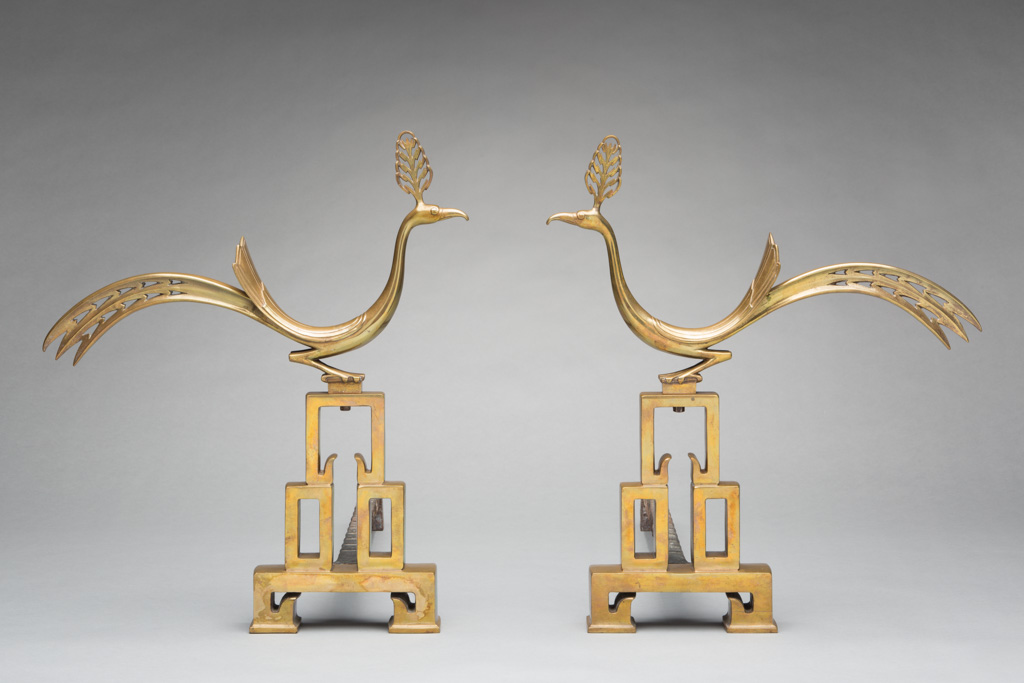
While researching the step-backed Peacock Andirons at Saarinen House last spring, I enthusiastically mustered a muster of peacocks from across Cranbrook’s campus with the generous help of my colleagues.
“Muster” is the official label for a group of peacocks.
Unlike a gaggle of geese, a muster of peacocks lacks both onomatopoeia and alliteration and implies a level of formality and regimental order in direct conflict with the species’ behavior! That is…judging by the peacocks I’ve witnessed at historic homes and castles throughout Europe, including a visit to Scone Castle in Scotland where an earlier visitor captured these free-spirited troops. Whether iridescent blue or albino, their graceful necks and distinctive crests rise to magnificence when tail feathers are splayed to attract a peahen mate or intimidate predators.
Throughout the ages, blue aka Indian peafowl have symbolized beauty and prosperity and served as sources of artistic inspiration. A favored theme at Cranbrook, the peacock’s dramatic curvilinear lines are represented at each institution across the campus.
One can discover…
WORKS IN METAL:
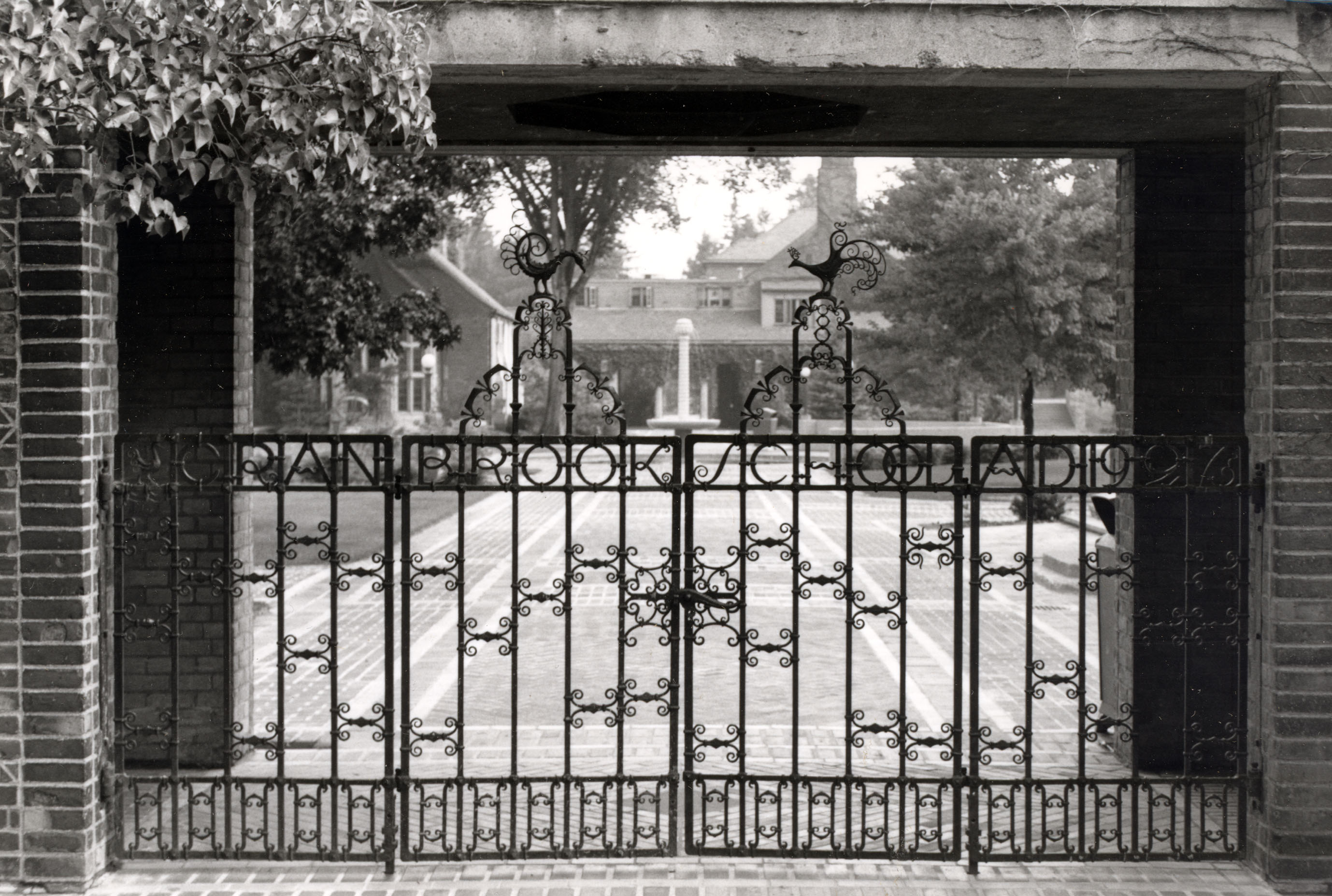
• The famed Peacock Gates designed by Finnish-American architect Eliel Saarinen and fabricated in wrought and cast iron by Oscar Bruno Bach, 1927, marking the former Lone Pine Road entrance to Cranbrook School for Boys:
Peacock Gates at Cranbrook School circa 1980. Jeffrey Welch, photographer. Courtesy Cranbrook Archives.
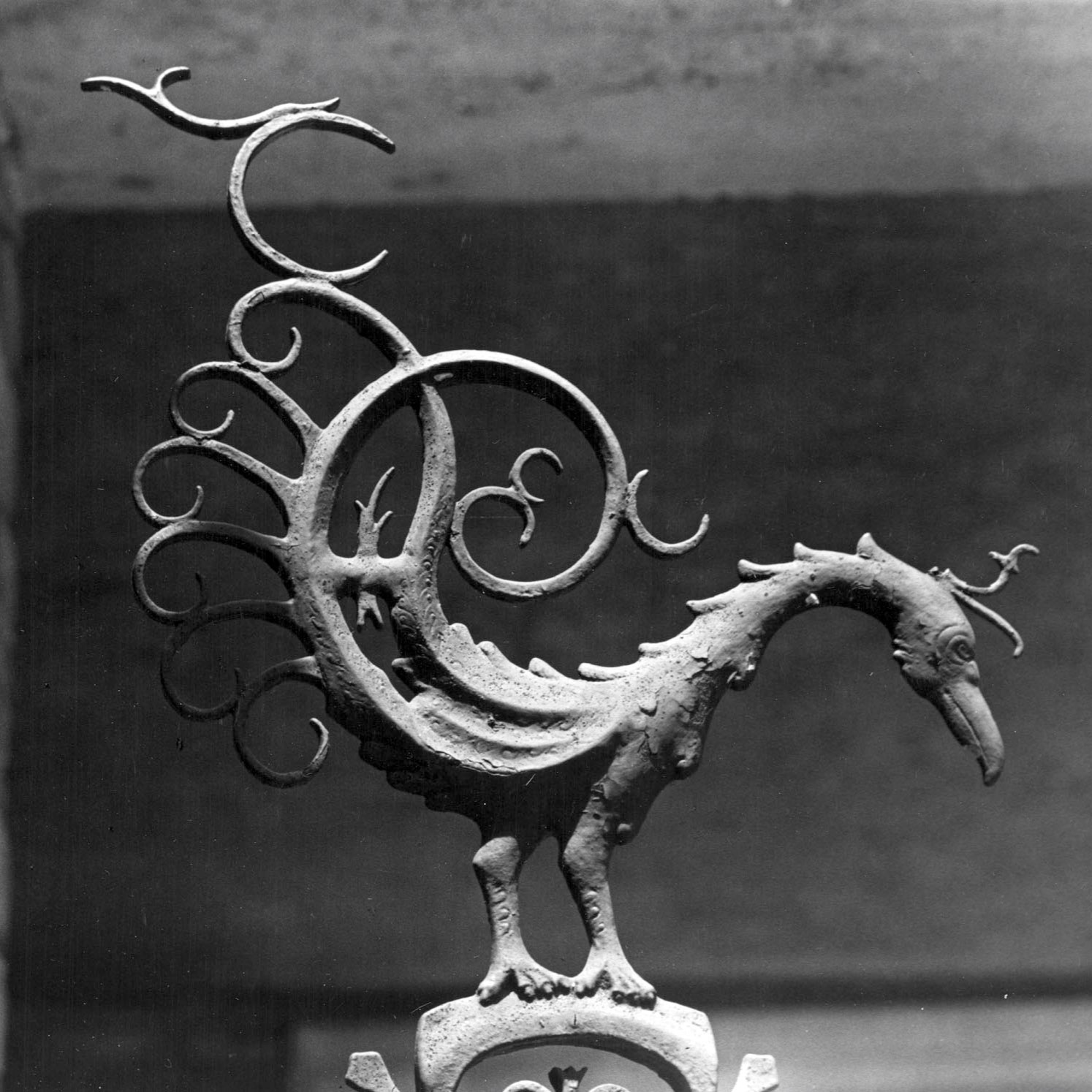
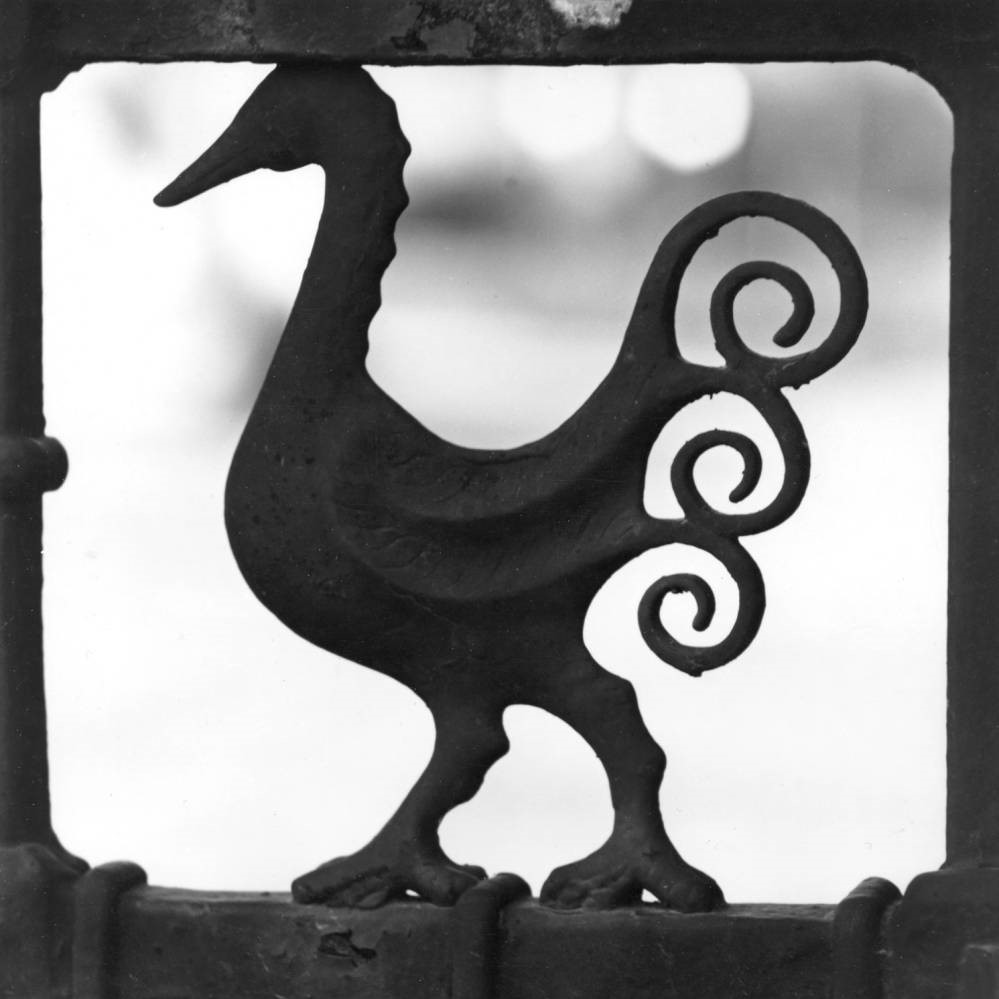
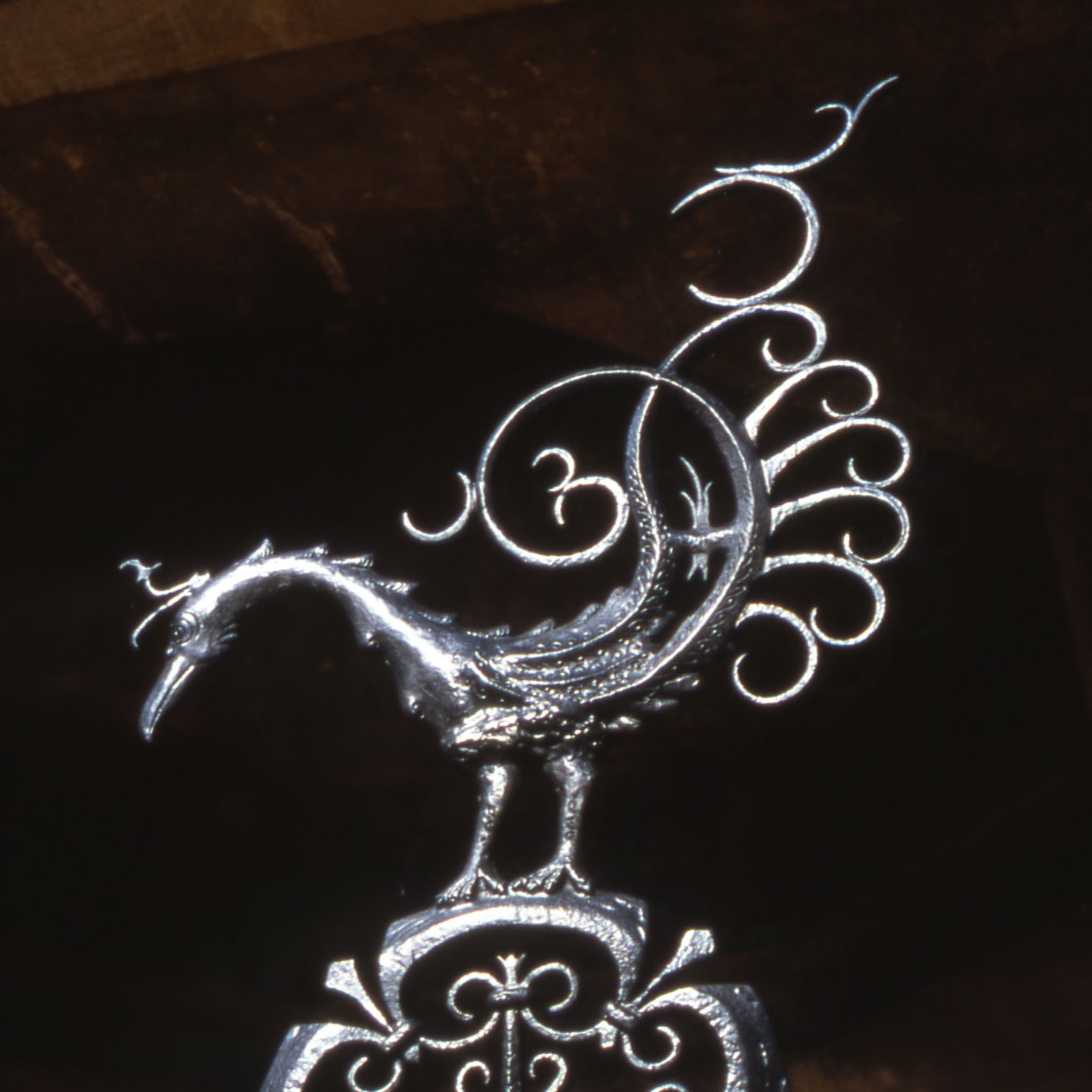
Details of the peacocks in cast iron:
Detail of Cranbrook School Peacock Gate, circa 1935. Courtesy Cranbrook Archives.
Detail of Cranbrook School Peacock Gate, circa 1935. Courtesy Cranbrook Archives.
Detail of Cranbrook School Peacock Gate, 2001. Balthazar Korab, photographer. Copyright Balthazar Korab | Cranbrook Archives.
• Eliel Saarinen’s cast bronze Peacock Andirons, 1928-29, on view at Saarinen House. Collection of Cranbrook Art Museum. Produced by Sterling Bronze Company, New York, between 1928 and 1929, these cast bronze andirons were paid for by the Cranbrook Foundation and entered in the 1928-1930 Arts & Crafts Building ledger on pages 40-41—Date: 1-7-30; No.: 515; Name: Sterling Bronze Co; Remarks: 1 pair/ Andirons for Saarinen Res[idence]; Amount: $152.50 (the equivalent of $2,704 in 2024):
Robert Hensleigh, photographer. Courtesy Cranbrook Art Museum.
Classical music, wandering musicians, ballet, cabaret, white paper lanterns, illuminated boats on the lake, Hawaiian torches, Italian tree lights, champagne, dinner, and dancing on a night with a fair-sized moon—these were some of the possibilities that Henry Scripps Booth recorded in December 1964 notes for a music gala called Night of Delight, a fundraiser for the Cranbrook Music Guild of which he was a founding member.
Patrons in line to attend Cranbrook Music Guild concert and ballet performance, July 10, 1960. Harvey Croze, photographer. Courtesy of Cranbrook Archives.
The Guild is one of the most eminent accomplishments in Cranbrook’s legacy of music and it endures to this day (the Archives holds records for the organization through 2007). Born of the inspiration of Christ Church Cranbrook Music Director, Maurice Garabrandt, and Betty (Mrs. Benjamin) Brewster, the Guild was established in 1951 to utilize Cranbrook’s setting as a wonderful place to appreciate music.
During the first decade alone, the Guild sponsored performances by distinguished artists, including violinists Zino Francescatti and Mischa Mischakoff, pianists such as Mischa Kottler, Phillipe Entremont, Jean Casadesus, and Leon Fleischer, cellist George Miquelle, the Severo ballet, jazz musicians such as Dave Brubeck and Don Shirley, classical guitarist Richard Dyer-Bennet, and soprano Eileen Farrell.
Program for Jean Casadesus performance, November 16, 1960. Courtesy of Cranbrook Archives.
The objectives of the Guild were not only to provide high quality programming, support the creation of new music, and the development of high caliber performers, but also to share knowledge about the appreciation of music through lectures, demonstrations, recitals, and exhibitions. The programs for the concerts thus shared brief contextual comments on the history of the piece and the composer.
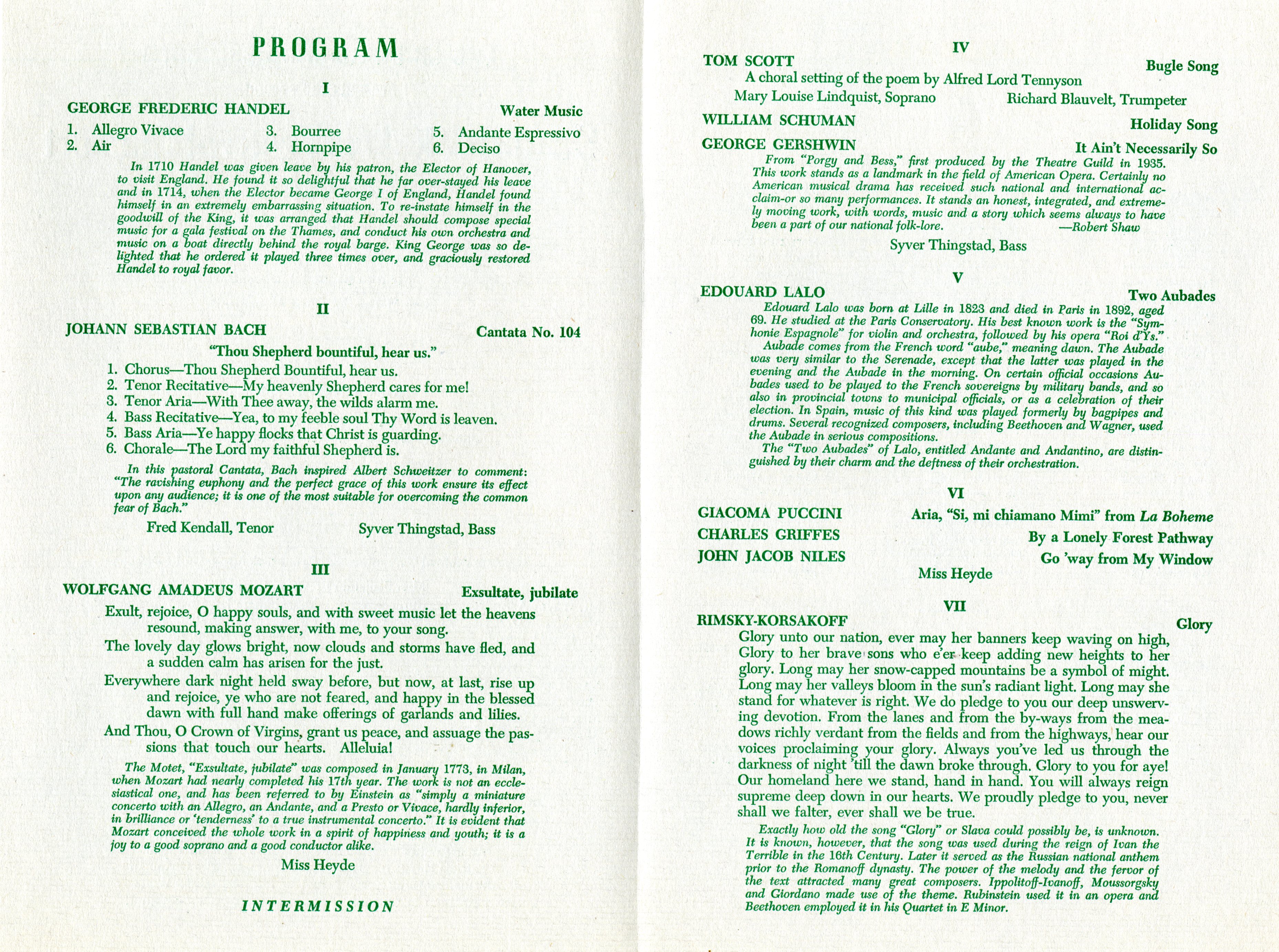
In the program for the Second Cranbrook Arts Festival Concert, which was performed at the Greek Theatre on June 1, 1952, I noticed a comment that is playfully instructive but also particularly salient to later developments in the Guild programming. The second concert program included Johann Sebastian Bach’s Cantata 104, “Thou Bountiful Shepherd, Hear Us,” and it was noted that it had inspired Albert Schweitzer to comment:
“The ravishing euphony and the perfect grace of this work ensure its effect upon any audience; it is one of the most suitable for overcoming the common fear of Bach.”
Program for Second Cranbrook Arts Festival Concert, June 1, 1952. Courtesy of Cranbrook Archives.
The Cantata must have worked its magic, because in 1966, the idea of a Bach at Cranbrook festival was introduced. It would be a satellite festival chaired by James L. Schneider and hosted by Christ Church Cranbrook with the aim to perform Bach’s music as he intended—with a small chorus and orchestra in a church setting. At a special meeting on February 23, 1966, the Cranbrook Music Guild agreed to sponsor the Bach at Cranbrook festival.
At a regular meeting a few days later, Henry expressed concern regarding the conflict of dates. The Bach festival was set for May 14 and his Night of Delight was being planned for the 21st. The Board responded that it was impossible to sponsor two big events that would appeal to same group of people, and that there was no choice but to sponsor the Bach festival, to which they had already committed, and postpone the gala to another year.
Program cover from the first Bach at Cranbrook festival, May 14, 1966. Courtesy of Cranbrook Archives.
Thus, the first Bach at Cranbrook festival took place on May 14, 1966 at Christ Church with 25 members of the Detroit Symphony Orchestra and the 40-voice Kenneth Jewell Chorale. It was a stellar success with an audience of over 1,200 people. The following year, the festival grew into a two-day, three-day concert event. After being renamed the Cranbrook Festival with a broader scope of classical and baroque composers, the festival was dissolved in 1979.
A scene from the Bach at Cranbrook festival, May 14, 1966. Harvey Croze, photographer. Courtesy of Cranbrook Archives.
The gala, Night of Delight, would never take place beyond Henry’s musings. For those with a romantic imagination, his words invite one to feel the warm summer evening, the fragrance of fresh flowers, strains of music across the courtyard filled with joyful chatter, elegance, and conviviality beneath the light of the moon. If your senses require something more tangible, fear not, for the Center for Collections and Research is celebrating the legacy of music at Cranbrook at our House Party on May 18th. Join us for live music, dinner, dancing, paper lanterns, and even a fair-sized moon! It will truly be a Night of Delight!
Following on the heels of Leonard Bernstein, Don Shirley, and Dave Brubeck, yet another famous musician came to Cranbrook: Harry Belafonte. While his trip to campus, unfortunately, did not involve a performance, it is well-recorded in the Archives: in news items, photographs, and a Society page headline in the Wednesday, November 23, 1960, Birmingham Eccentric.
Being a relatively new recording star on the RCA record label, the 1960 visit included Belafonte’s third Detroit performance. After his debut in 1956 in a show called “Sing, Man, Sing!” Belefonte played the newly converted live venue, the Grand Riviera Theater the following year in support of his record album, “An Evening With Belafonte.”
Portrait of Harry Belafonte, singer and actor. Courtesy of E. Azalia Hackley Collection, Detroit Public Library.
At this point, the actor and singer was pretty much a household name, having starred in the 1954 film Carmen Jones, and riding the wave of his 1956 breakthrough hit album, Calypso, the first million-selling LP by a single artist. Who doesn’t know the song “Day-O (The Banana Boat Song)?”
When Belafonte returned to the Riviera in 1960, his show was again billed as “An Evening With Belafonte” but now featuring an opening performance by South African singer Miriam Makeba, sponsored by the Junior Women’s Association for the Detroit Symphony Orchestra. And this time, in the audience were Henry Scripps Booth (son of Cranbrook founders George and Ellen Booth), his wife Carolyn, and their son Stephen with his wife Betty.
It’s not surprising that Henry (known to family and friends as Harry) was in attendance. An avid music aficionado, he was a charter member of the Cranbrook Music Guild, founded in 1951, and had been floating the idea of a creative music center on Cranbrook campus for at least that long. In fact, earlier in 1960, he had even proposed in a letter to Eero Saarinen the building of a music shell on the west lawn of Cranbrook House. Alas, the music center (and Saarinen music shell) never came to be.
In any case, Henry must have been visibly enjoying Belafonte’s concert. According to another Eccentric columnist, “Cheers went up at Harry Booth’s impromptu performance. Mr. Belafonte took his mike down to Mr. Booth’s ringside seat and induced him to give forth on a chorus of ‘Matilda‘ (it was all unrehearsed – we checked).”
Harry Belafonte with Academy students in the Painting Department, including Annie Sanders (Fiber ’62) and Dan Radin (Painting ’62). Harvey Croze, photographer. Courtesy of Cranbrook Archives.
A few days later, Belafonte made the trip from Detroit, at Henry’s invitation, to dine at the Booth’s home, Thornlea, with the family. Afterwards, he was given a brief tour of Cranbrook where he stopped at the Academy of Art to meet students and view work in their studios.
Join the Center on May 18 to help us celebrate the legacy of music at Cranbrook—dine at Thornlea and enjoy musical stylings from the era of Harry Belafonte’s visit. Head to our website to learn more and purchase your tickets to A House Party at Cranbrook!
—Deborah Rice, Head Archivist, Cranbrook Center for Collections and Research
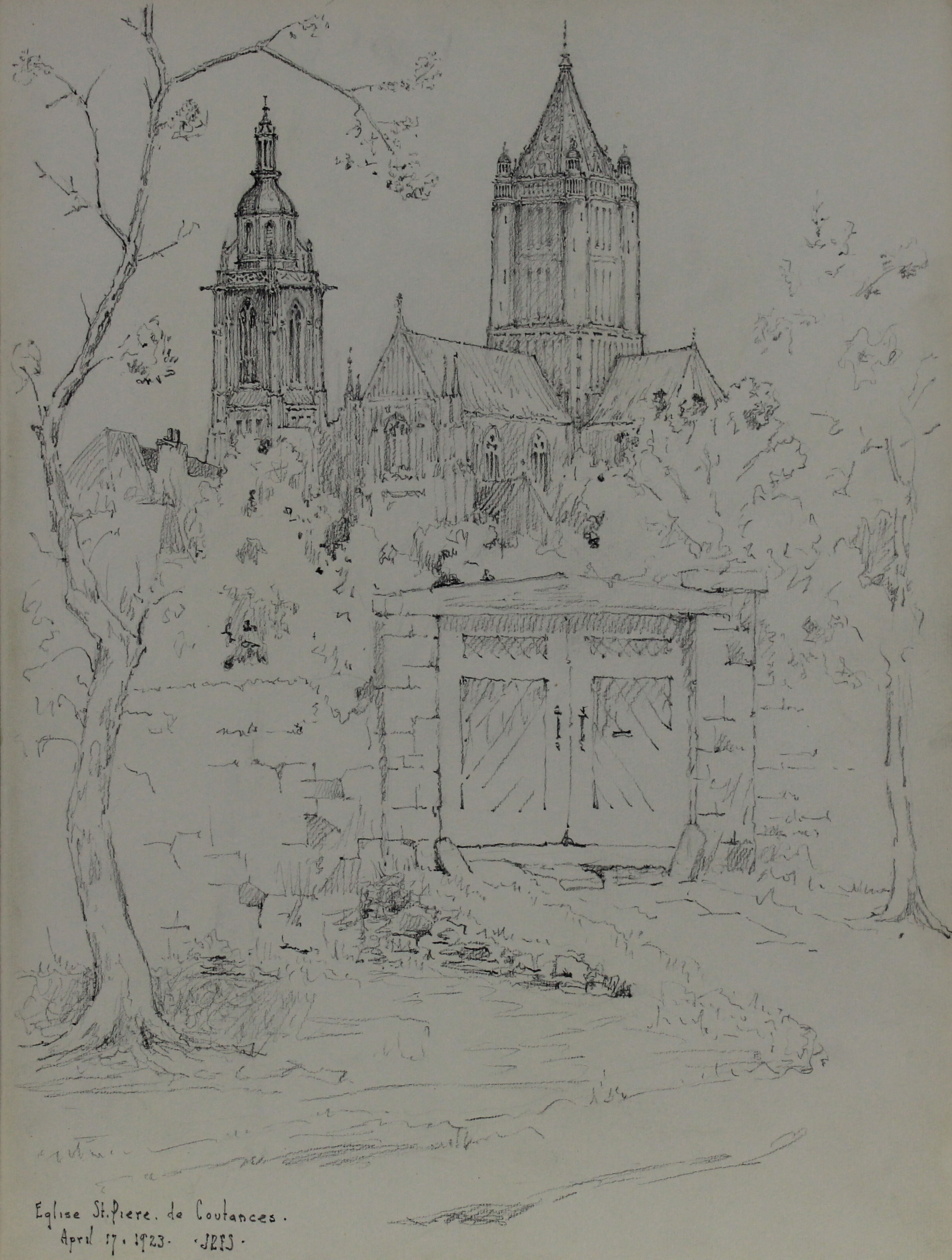
May 30, 2023, marks one hundred years since Henry S. Booth and J. Robert F. Swanson returned home from ten months of travel in Europe. Midway through their architecture studies at the University of Michigan, the friends and classmates set off on August 1, 1922 for a “Grand Tour” through Norway, Finland, Sweden, Denmark, Germany, Tunisia, Italy, France, and England to study and sketch European architecture.
In today’s post, I want to share moments from their journey through France, which is so beautifully documented by Henry’s letters and photographs, and by both of their sketches.
Eglise St. Pierre de Coutances, April 29, 1923, J. Robert F. Swanson. Courtesy of Cranbrook Art Museum.
Arriving in France in March 1923, Harry and Bob journeyed through Nice to Cannes, then through Lyon to the city of Bourges. Henry describes the scenery en route:
“…mountains on the right and the “Cote d’Azure” on the other, flowers overhanging balustraded walls, old olives and tall but easily climbed palms, rocks and breaking waves, and then always the bluest of skies and sea to match, and dazzling sunlight–quite warm and ‘drowsy’.“
At Bourges, they headed for the Cathedral, which they visited several times: at night by the light of gas lamps; in the afternoon sunlight; at dusk with a handful of worshippers on their knees; and then later that evening filled with the faithful.
Cathédrale St. Etiénne de Bourges, March 1923. Henry Scripps Booth, photographer. Courtesy of Cranbrook Archives.
“It was an inspiring sight—the nave packed, and both the inner and outer aisles (for there are two) on the north side filled also, and not a few on the other side of the church. The light was dim all during the sermon, and when that was over, a quantity of candles were lighted almost instantaneously about the “Host,” and all the electric candles down the nave came on, so that suddenly this great cathedral was changed from a imaginative forrest in the night, to a great cathedral church ablaze with the lights associated with a feast.
“But I thought more of other things than of the architecture that night. The preacher talked too fast for me to understand his French, but I knew what he should have been saying even if he wasn’t…, I looked at the great number of long black vails [sic] everywhere, noticed the lack of men of middle age, and saw many young fellows who are now “heads” of their father’s family standing by their veiled mother’s side.”
They stopped in Tours before taking in the Chateaux of the Loire: from Loche to Langais, Ussé, Villandry and Azey.


















 Cranbrook Kitchen Sink
