Photo Friday: Days of Yore

The year was 1918, fourteen years after George and Ellen Booth purchased the property they called Cranbrook.  The lay of the land was far different from the lush greenery, grading hillsides, and bountiful gardens which exist today.  An estimated 150,000 trees were planted during George’s lifetime, a testament to his devotion to the Arts & Crafts ideal of surrounding one’s self with nature.  Buildings during this time were scarce; in this aerial view, the only two existing Cranbrook buildings seen are Cranbrook House (top middle) and the Meeting House (middle left), which would later become Brookside Lower School.  The house seen in the lower left, called Edgevale, was the home of George’s cousin, Clarence Booth.

~Robbie Terman, archivist
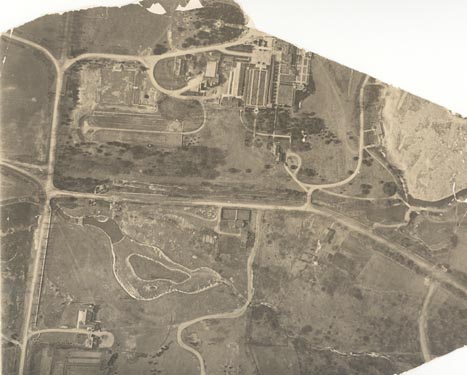
Intersection of Lone Pine and Cranbrook Roads, c1917. Cranbrook Archives
Intersection of Lone Pine and Cranbrook Roads, c1917. Cranbrook Archives

Photo Friday: The Man Behind the Camera

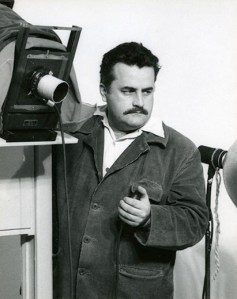
For nearly thirty years, a stocky man with his trademark black mustache and the nickname “chief mug-taker” was a ubiquitous figure around Cranbrook. He was Harvey Croze, and he served as the official Cranbrook Foundation photographer from 1943-1970. Croze started his career in the darkrooms of Chrysler and General Motors, later studying under Ansel Adams. As chief photographer, Croze was a fixture at all Cranbrook institutions, snapping shots at everything from Cranbrook School for Boys sports games to the Academy of Art studios to the Institute of Science exhibitions and beyond. An award-winning photographer whose photographs have appeared worldwide, Croze will forever be remembered at Cranbrook as the man who captured history in the lens of his Leica.

~Robbie Terman, archivist

Cranbrook photographer, Harvey Croze. Cranbrook Archives

Cranbrook photographer Harvey Croze. Cranbrook Archives

Photo Friday Part 2: Bud West Caption Contest Winner!

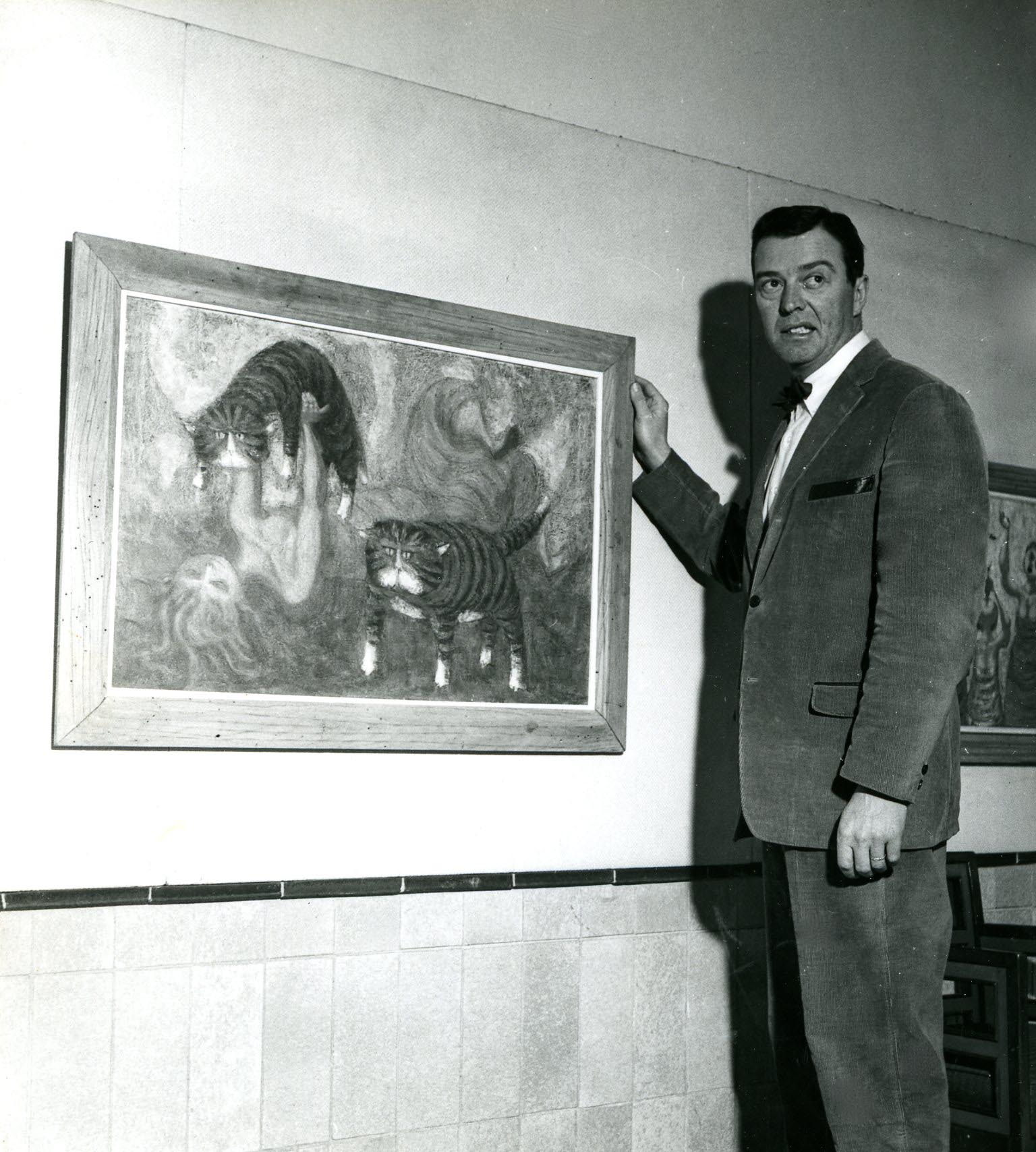
Apparently, my brain was already celebrating the fourth of July, because I posted Photo Friday on Wednesday (for no other reason than I thought Wednesday was Friday.  By the way, who else thinks today is Saturday?).  So, this week we’re going to  have TWO Photo Fridays.  Remember a few weeks back, when we held a caption contest for this fabulous photo of Clifford “Bud” West?

Our question was simple: what is Bud West thinking?  We had some great answers, but we’ve got to give the win to West’s son, Justin, who said, “What do the cats represent?  Heck, sometimes cats are just cats!”  We swear – only a hint of nepotism was involved in the decision.  Thanks to all who entered, and congrats, Justin!  And a special thanks to my colleagues, who never bothered to mention on Wednesday that I was confused about which day it was.

Photo Friday: Design of Radio Cabinets

In the early days at Cranbrook Academy of Art, students were encouraged to submit entries to a myriad of design and architecture competitions.  Sponsored by museums, magazines, colleges and industry, competitions were a way for fledgling designers to make a name for themselves.  Winning entries could catapult a designer or architect into the national arena.  In 1939, the “Design of Radio Cabinets” was sponsored by the Radio and Television Department of the General Electric Company through Interior Design and Decoration.  Designs were submitted in two categories: a table model and a console model.  The only design requirement was that a “dial or tuning control treatment” be incorporated in the design.

Entry for "Design of Radio Cabinets" competition.

Entry for “Design of Radio Cabinets” competition, 1939. Cranbrook Archives.

This entry was submitted by the team of Edward Elliott and Ted Luderowski, both architecture students studying under Eliel Saarinen.

Photo Friday: Cranbrook in Bloom

As a part of Cranbrook Archives architectural slide collection*, this image shows Cranbrook House’s sunken garden in full bloom in 2003.  If you’re in the area, be sure to stop by the gardens this summer – with new patterns and plants, they are in full bloom and open for visitors!

The sunken garden at Cranbrook House in full bloom, 2003.  Balthazar Korab, Cranbrook Archives.

The sunken garden at Cranbrook House in full bloom, 2003. Balthazar Korab, Cranbrook Archives.

*If the colors of the photo appear slightly off to you, don’t worry – that’s just because we scanned the image directly from the slide, which has a different coloration than a digital photograph would.  We considered correcting it, but we enjoy seeing the indication of historic photographic processes and we figured you would too!

Photo Friday: Come as a Song Party

It has been a crazy few weeks at the Cranbrook Center for Collections and Research  – we mounted our two exhibitions at the Cranbrook Art Museum and helped CAM celebrate the opening of the summer museum season with the blockbuster Michigan Modern show.   What that means now is that we’ve all got celebratory parties and vacation on the brain, and what better way to celebrate a museum success than with evidence of the parties of the past?

"Come as a Song" party, 1942.  Cranbrook Archives.

“Come as a Song” party, 1942. Cranbrook Archives.

This photo, taken in March of 1942, captures Harry Bertoia (far right) and Brigitta Valentiner (middle) with an unidentified student (left, and conveniently marked by a Joker card costume).   These three costumed young people are attending the “Come as a Song” party, one of the many themed get-togethers hosted at the Academy in the mid-century period.

Harry Bertoia, of course, went on to become a sculptor and furniture designer.  Two years after this photo was taken, Harry and Brigitta Valentiner, dressed here as a young maid, married.  A Detroit native and a published author, Valentiner was the daughter of Wilhelm Valentiner, the Detroit Institute of Art’s legendary director from 1924 to 1945.

Photo Friday: Cranbrook Soda Fountain

Students at the Cranbrook School Soda Fountain, May 1955.

Students at the Cranbrook School Soda Fountain, May 1955.  Historic Photograph Collection, Cranbrook Archives.

We were all set to write something pithy and charming about boarding school life and 1950s Cranbrook, but let’s be serious: it’s Friday, and we all wish there was still a soda fountain on campus.  Who wants to build one?

P.S. stop by the Cranbrook Archives reading room sometime if you want to see one of those original Cranbrook School pennants still in action!

Photo Friday: Maija and Nelly

Maija Grotell and Nelly Beveridge at work on the base of a fountain, 1940.

Maija Grotell and Nelly Beveridge at work on the base of a fountain, 1940. Richard P. Raseman, Historical Photograph Collection, Cranbrook Archives.

Finnish-born ceramicist Maija Grotell served as the head of the Ceramics Department at the Cranbrook Academy of Art from 1938 to 1966.  Here, she works on the base of a fountain with student Nelly Beveridge.  Beveridge played many roles on campus, serving as a companion and nurse to George and Ellen Booth in their later years even as she completed her studies at the Academy.

Photo Friday: Swimming in Lake Jonah, 1953

Image

Lake Jonah, 1953. Cranbrook Archives.

With the start of May, spring has finally arrived at Cranbrook.  Flowers bloom, warm breezes sweep through the hills, and the various campus lakes look more and more inviting with each passing day.  Swimming in Lake Jonah is strictly forbidden, of course, but once upon a time the lake functioned as the campus swimming pool.  Here, students at the 1953 Cranbrook Academy of Art Summer Institute learn to swim in Lake Jonah, while in the background other students contemplate the possibility of canoeing.

Photo Friday: Planning a Planetarium

Workmen spray down the McMath Planetarium dome, which is under construction. 1955. Cranbrook Archives.

Workmen spray down the McMath Planetarium dome while under construction at the Cranbrook Institute of Science.  1955. Cranbrook Archives.

The workmen who built the McMath Planetarium at the Cranbrook Institute of Science in the 1950s must have been circus performers as well as skilled craftsmen.  Here they balance on plywood platforms, managing a high-pressure hose as they perch above the nearly-completed dome.   The planetarium, which opened in 1955, has now been expanded into the Acheson Planetarium and includes research resources as well as visitor viewing opportunities.


Create a website or blog at WordPress.com