This spring, Dawn Straith, Innovation & Technology Specialist at the Vlasic Early Childhood Center & Cranbrook Kingswood Lower School Brookside, used the bridges in the Japanese Garden as a tool in her Design Thinking Unit with the Senior Kindergarteners. I asked Mrs. Straith to explain the project.
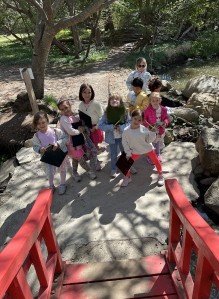
The Senior Kindergarteners exploring the Cranbrook Japanese Bridge (aka Red Wood Bridge) in the Japanese Garden, 2025.
DS: In our design thinking and engineering unit, the Senior Kindergarten students became bridge investigators! They explored six different bridges in the Japanese Garden to see how safe and strong they are. While investigating, they discovered that bridges with beams and columns are much stronger than those without. They considered what goes over and under the bridges, who and what use the bridges, the materials the bridges are made from, and whether they had handrails. Some bridges didn’t have handrails at all, which we determined made them feel a bit less safe. They also noticed that the ground near a few of the bridges was eroding, which isn’t as safe either.
Side view of the Japanese Garden Round Island Footbridge.
DS: The bridge to “Round Island” (a small island the children have affectionately named for themselves as “SK Island”) got the lowest safety score—it’s tilted, there are no support beams, the ground is eroding, the materials used aren’t the strongest and there are no handrails to hold onto!
Japanese Garden Round Island Footbridge from the eastern shore of the Lily Pond. Photo by Saida Malarney.
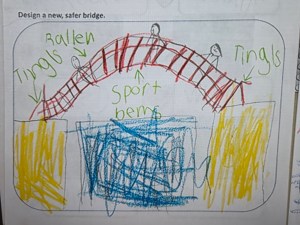
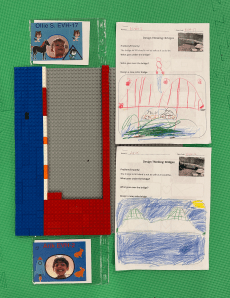
DS: After analyzing all this, the students got to work designing a safer bridge for “SK Island”. They learned that triangles are super strong shapes and that engineers use them all the time when building bridges. With their users in mind, the students carefully designed and built models of brand-new, safer bridges. Their final step is to share their ideas with the garden’s groundskeepers.
Round Island Bridge design, incorportating safety features like “rallens” and “sport beams.”
Enter the Center, the aforementioned “garden’s groundskeepers”!
I am the “Proud Museum Person” with some of our Japanese Garden volunteers working in the garden in April 2025.
As the Associate Registrar, and once-a-month “Gardener” in the Japanese Garden, I was invited to visit the SK classes as they presented their bridge models.
Most of my friends in SK had already helped cover garden sculptures for a number of seasons, so I knew they understood taking care of objects on the campus, but I was once again impressed by our students. They carefully considered what changes could be made to make our bridge safer for all visitors — kids, parents, guests with limitied mobility, and furry friends.
A very big THANKS! to our SK engineers.
Some of the students’ ideas even aligned with designs by our garden designer Sadafumi (Sada) Uchiyama, a third-generation Japanese gardener, registered landscape architect, and Curator Emeritus of Portland Japanese Garden.
Design for Round Island Bridge by Sadafumi Uchiyama.
Design for Round Island Bridge by Gretchen and Liam.
As we start the construction of the new Welcome Garden in the Japanese Garden this summer, we hope our future structural engineers will return in the fall to see how we are progressing.
– Leslie Mio, Associate Registrar, Cranbrook Center for Collections and Research
July 5th, 2025, marks one hundred years since the groundbreaking for Christ Church Cranbrook. As we mark this milestone in Cranbrook’s history, I believe it is important to reflect on George Gough Booth’s long discernment of this generous gift to the community.
From the beginning, there were always places of worship at Cranbrook. The story that leads us through these spaces to the establishment of Christ Church Cranbrook is especially meaningful to me.
Rev. Dr. S. S. Marquis, D.D. with the first spade of earth, July 5, 1925. Courtesy of Cranbrook Archives, Cranbrook Center for Collections and Research.
After George and Ellen Booth purchased ‘The Farm’ in January 1904, his father, Henry Wood Booth, was the first family member to live on the country estate. The elder Booth stayed for the month of May with Frank Brose, the farmer, and his family. On May 15, 1904, the first worship service at Cranbrook took place under a tent, on the site upon which the Altar of Atonement now sits, with Henry as lay preacher. He continued in this ministry, also offering Sunday School, at the same spot until 1909. This was the first act of service offered to the Bloomfield Hills community at Cranbrook.
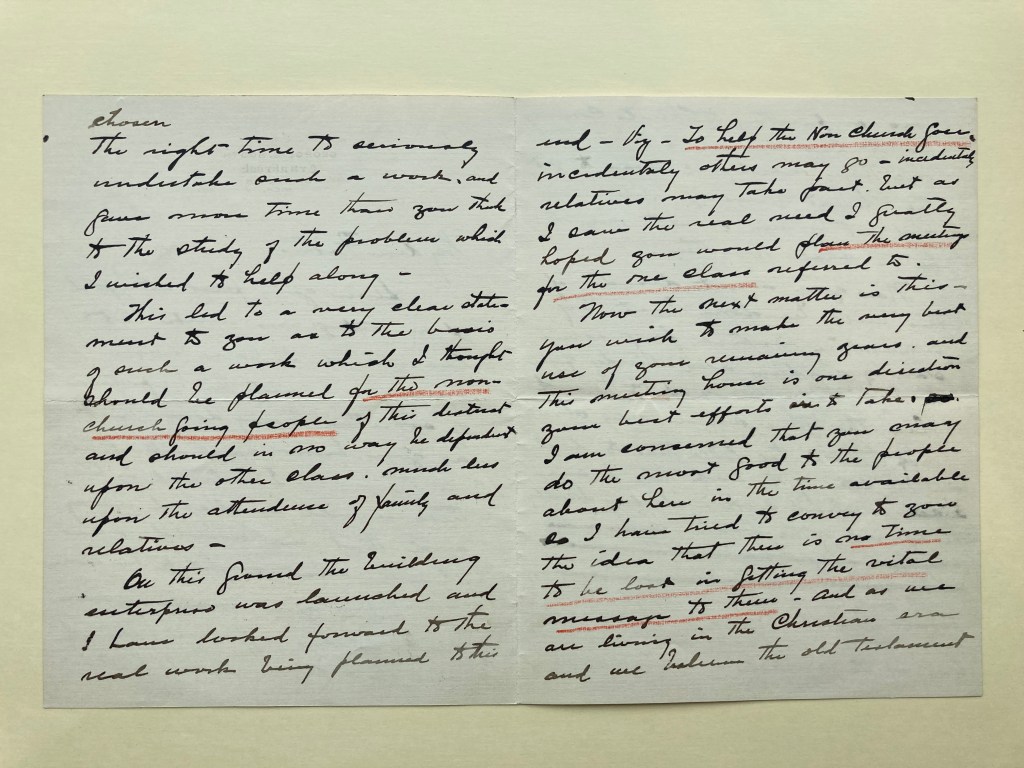
Letter from George Gough Booth to Henry Wood Booth, August 24, 1918. Courtesy of Cranbrook Archives, Cranbrook Center for Collections and Research.
In 1914, George and Ellen considered building a chapel at the site on which the Kingswood flagpole now sits, but the project was rejected, most likely due to the outbreak of World War I. As the war ended, a permanent place of worship and Sunday School was established with the building of the Meeting House.
The letter, above, preserves the dignity with which George writes of the Meeting House “building enterprise” to honor and give freedom to his father’s calling to share the Christ message with the non-church goers in the district. From this letter, we can learn and understand why George built the Meeting House for worship and Bible study through his father’s ministry.
Decoration of the Meeting House by Katherine McEwen, 1918. Laura MacNewman, photographer.
In the letter from George to his father, we also learn that he is prudent in observing the religious character of Bloomfield residents. During the years in which the Meeting House was used for religious services (1918-1926), Mr. Booth would reflect on the visiting clergy and service attendees (both of which came from diverse denominations), from which he would eventually discern the denomination of “Cranbrook church.”
Do you love sharing great stories? Are you the person who says “Did you know…?” at parties? When you discover something wonderful, do you instantly need to share it with friends? Do you love art, architecture, and design, and, have you ever mused to yourself, “‘Life without beauty is only half lived,’ and I want to be fully living!“?
Collections Interpreter Diane VanderBeke Mager welcoming guests to the Center’s gala fundraiser, A House Party at Cranbrook Celebrating Loja Saarinen, May 2022. Collections Interpreters are storytellers, teachers, hosts, and style icons! Photography by PD Rearick.
If you answered “yes!” to any of the above, the Cranbrook Center for Collections and Research has a place for you on our Collections Interpreter team! As tourism to Detroit grows—and with Cranbrook recently earning a three-star Michelin Guide rating—we are looking for more great storytellers to help us share the magic of Cranbrook’s art, architecture, and design. Read on to learn more, or go ahead and sign up for a Collections Interpreter information session with me (curator Kevin Adkisson) here!
Kevin Adkisson, then the Center Collections Fellow, learning the joy of teaching during a Summer Camp tour of Saarinen House, June 2017. Photography by Cranbrook Art Museum.
Each year from May to November, Collections Interpreters (CIs) lead public and private tours through Cranbrook’s architectural gems. Regularly scheduled public tours focus on two of our historic houses.
First is Saarinen House, the jewel-box Art Deco home of architect Eliel Saarinen and textile designer Loja Saarinen, filled with furniture, fabrics, and works of art made at Cranbrook to the Saarinen family’s own design. As you walk with visitors past the dancing fountains and verdant grounds, tours of Saarinen House also touch on the history of Cranbrook Academy of Art.
Just a short drive away, CI’s lead tours of the Frank Lloyd Wright-designed Smith House, a 1950 Usonian treasure tucked into the neighborhood. Built for two Detroit public school teachers, it is a masterpiece of modesty—proving that great architecture is not just for the wealthy. Tours talk about Wright’s architecture and its quirks, share the story of how the Smiths’ manifested their remarkable dream, and highlight objects of your choosing from the inspiring (and vast) collection of midcentury studio craft.
Collections Interpreter Lynette Mayman shares one of many tumultuous tales around cooking and dining with Sara Smith, October 2017. Photography by Kevin Adkisson.
Collections Interpreters also lead monthly Japanese Garden Tours, helping guests explore one of North America’s oldest Japanese-style gardens, and the Three Visions of Home Tour. A fascinating look at three famed architects ways of shaping home, this tour connects Cranbrook’s founders’ Albert Kahn-designed home, Saarinen House, and Smith House. The CI’s also help guide and share stories during other Center Behind-the-Scenes Tours or special events.
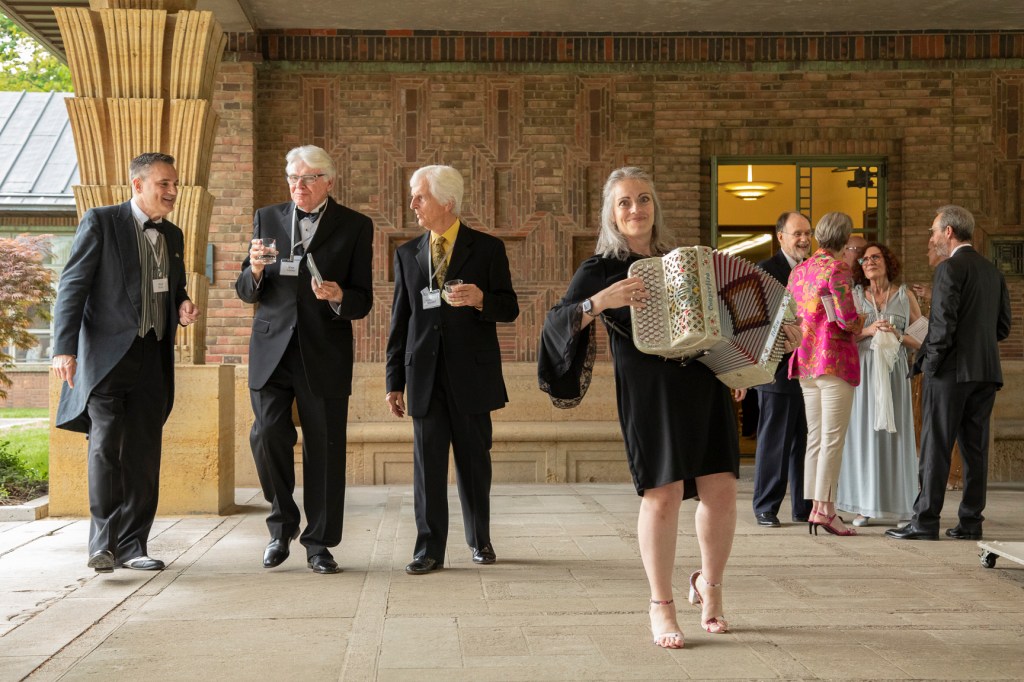
At A House Party Celebrating Loja Saarinen, Collections Interpreter Matt Horn shares stories of weaving at Kingswood School with Ken Gross and Academy Director Emeritus Gerhardt Knodel, while being serenaded from the accordion of Brookside music teacher Rosalia Schultz, May 2022. Photography by PD Rearick.
CIs may also help lead tours for Cranbrook Schools classes; Academy of Art students, artists-in-residence, and visiting artists; Horizons-Upward Bound scholars; and student groups of all ages and interests.
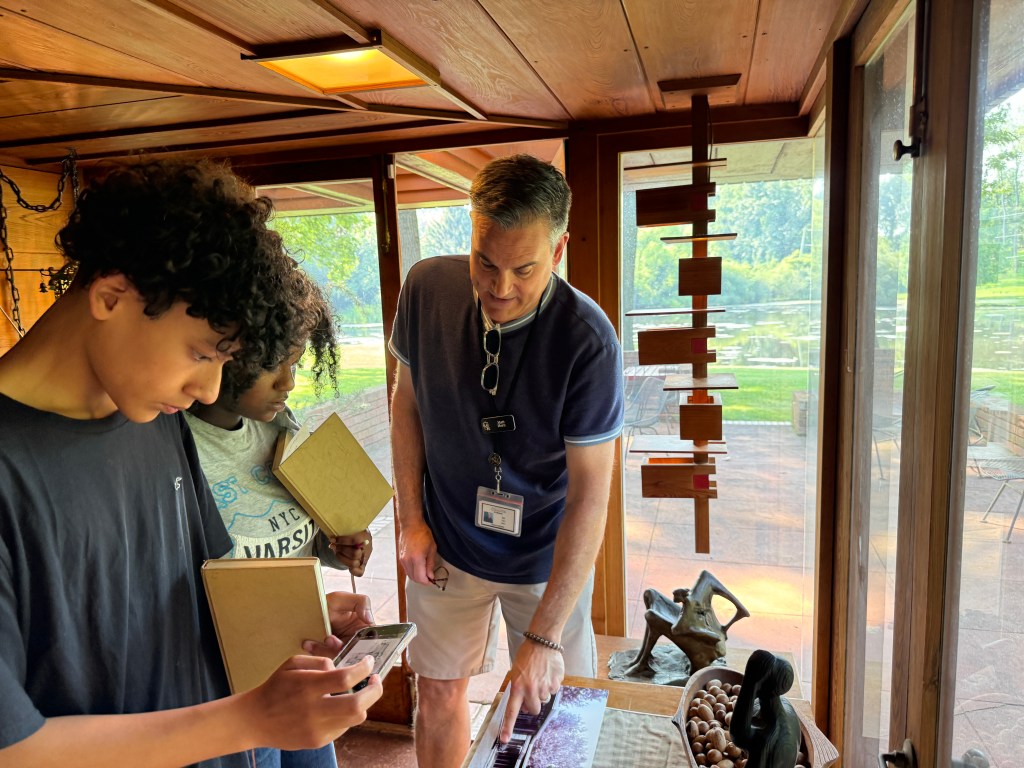
Matt Horn taught elementary music before retiring and joining the Center as a Collections Interpreter. Here, he teaches our summer Horizons-Upward Bound architecture elective in Smith House, July 2024. Photography by Kevin Adkisson.
You might be wondering: who comes to Cranbrook? People from Birmingham, Baltimore, Bangkok—and just about everywhere in between. As a Collections Interpreter, you help to welcome them all. It’s easy when your setting is Cranbrook, a place The New York Times Magazine famously called “the most enchanted and enchanting setting in America.”
No two tours—and no two visitors—are ever the same. It’s exciting!
The belated arrival of winter weather this year has allowed us all to enjoy the grounds of Cranbrook House far later into the year than is usually possible. However, the time has finally come to shroud our exterior sculptures and fountains in protective tarps for the season. This process is an annual reminder to our staff – and to the Brookside students who come to sing the statues to sleep – of just how numerous and varied the outdoor art collection at the house is. One part of the gardens is particularly rich in art and history: the north staircase.
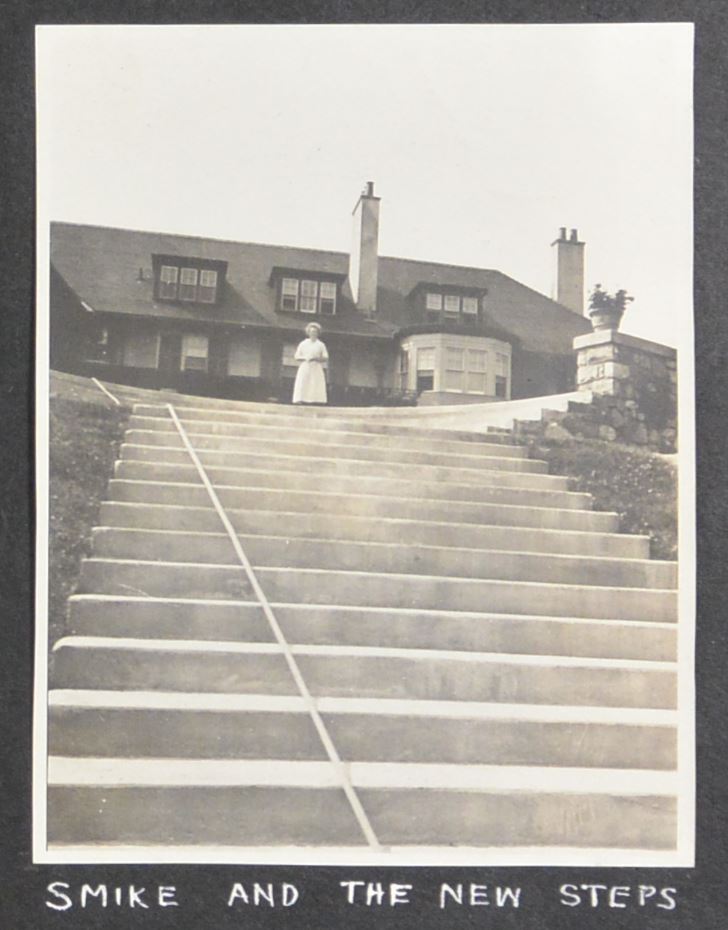
Florence Booth standing at the top of the new stairs connecting the upper and lower terraces at Cranbrook House, Summer 1921. From The Pleasures of Life, vol. 4, by Henry Scripps Booth. Courtesy Cranbrook Archives.
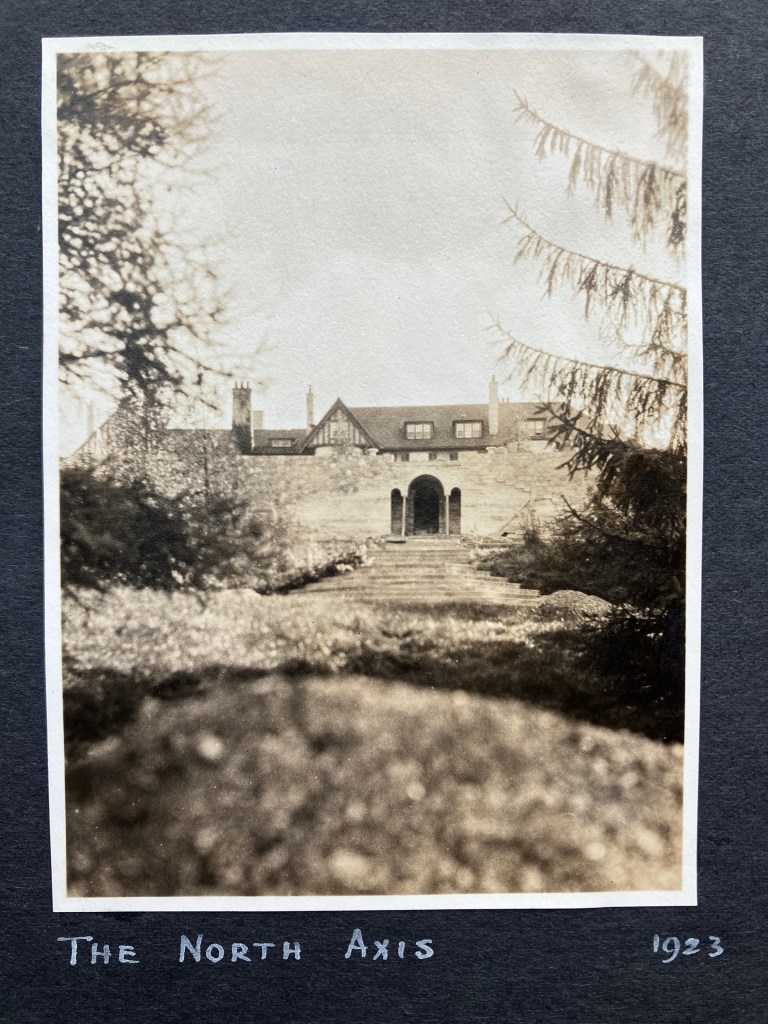
Stretching from the lakeside path at its base to the uppermost lawn outside Cranbrook House’s North Porch at its apex, the eighty concrete steps are lined with artworks, transforming the stairs into an open-air museum gallery. The stairs themselves were first built in the summer of 1921, as part of a spur-of-the-moment project to improve the view from the North Porch undertaken by James and Henry Scripps Booth. As their grandfather, Henry Wood Booth, recalled,
After ten years of sitting on the north porch and looking at a blank terrace wall, and talking about creating a vista through it, James and Henry got busy one May day with sledge hammers, and beside raising many blisters, razed about ten feet of wall the first day. Immediately a view of the lake came into being, and plans were made for a stairway down the hill.
Whether or not James and Henry had permission to make this change is contested; their grandfather’s account frames it as a collective impulse, while Henry remembers being disciplined for their impetuous action:
After construction of the curved steps, masons started building a series of flights which headed for a large wild cherry tree almost on axis along side rue Gagnier. According to one account, James and I were required to cut that tree down as a penalty for our reputed vandalism. While neither of us had a guilty conscience, we went to work sawing very hard wood and eventually (a full day later, I believe) the tree fell.
The concrete staircase was poured in July of 1921. The hillside around the new staircase was improved with new trees and paths under the oversight of O. C. Simonds, the landscape architect responsible for much of the re-foresting of the estate. After these changes, Henry Wood Booth noted with satisfaction that “[t]his hill, which for so many years had been an object of regret, was at last to be something really fine.”
Aeriel view of Cranbrook House and grounds, showing the new staircase at center right, circa 1921. From The Pleasures of Life, vol. 4, assembled by Henry Scripps Booth. Courtesy Cranbrook archives.
Further improvements were still in store, in the form of a dozen sculptural embellishments.
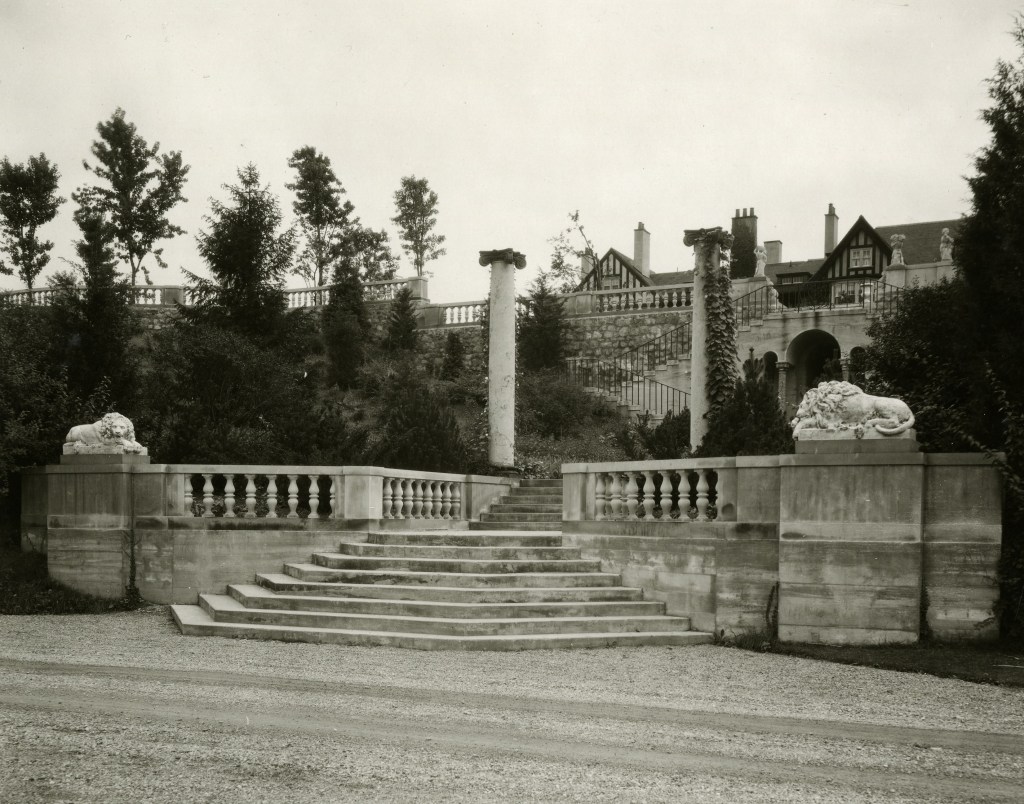
Walkers along the lakeside path today are met by two stone lions on pedestals flanking the base of the stairs. Carved from travertine and purchased by George Booth from the Galleria Sangiorgi in Rome in 1924, the lions are copies of works by the Italian neoclassical sculptor Antonio Canova, best known for his Cupid and Psyche, now in the Louvre, Paris. Canova sculpted the original lions in 1774 for the tomb of Pope Clement XIII in St Peter’s Basilica, in Rome. On Pope Clement’s tomb, the lions, one sleeping, one waking, face one another, symbolizing the confrontation of life and the long sleep of death. Here at Cranbrook, the lions face out toward the lake, one on guard, one enjoying a nap in the shade of the hill.
Stairway to Lower Terrace at Cranbrook House and Gardens, circa 1924. Photograph by George W. Hance. Courtesy Cranbrook Archives.
Although George Booth’s letters home from Italy in 1924 do not say as much, he and Ellen probably saw the original lions in the Vatican on their visit to Rome in 1922. In the intervening year, George Booth had considered buying copies of the Canova lions in cast stone, a form of concrete, from an American garden sculpture company, Howard Studios.
Just a few steps up, the stairway is flanked by concrete columns, topped with red stone Corinthian capitals. Their origins have not yet been traced, but George Booth purchased many marble capitals in Italy, most of them Roman or early medieval, for the Cranbrook Academy of Art. It would have been characteristic for the Booths to have retained a few Italian finds to ornament Cranbrook House as well.
The construction of the fountain niche and surrounding stairs, 1923. From The Pleasures of Life, vol. 7, assembled by Henry Scripps Booth. Courtesy Cranbrook archives.
From the lower landing of the staircase, its centerpiece is already visible – a fountain niche, added in 1923, requiring considerable reconstruction of this section of the stairs. At the back of the niche, now forming the fountain cascade, are a few of the original 1921 stairs.
The niche houses Mario Korbel’s Dawn, a near life-size female figure holding an apple. The symbolism of the figure is ambiguous. The apple may refer to Eve, the “dawn” of womanhood. It may also associate the figure with the goddess Aphrodite, who was awarded a golden apple as the prize in a divine beauty contest, and is associated with the planet Venus, sometimes called the morning star.
The staircase niche, photographed in 2016.
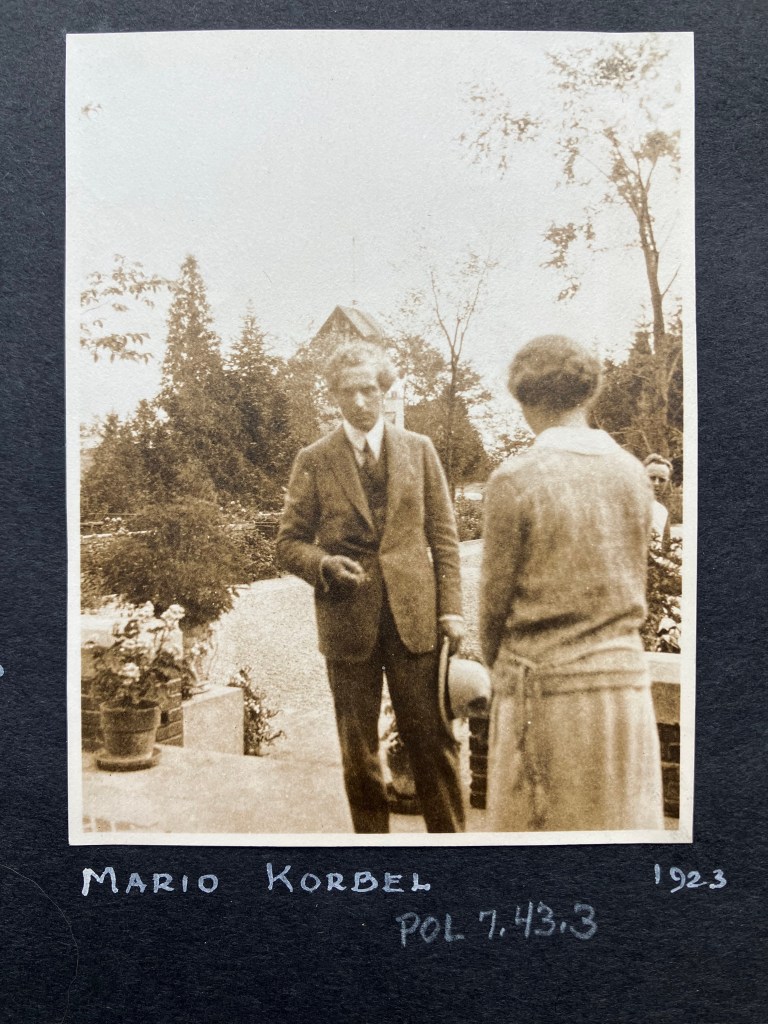
Korbel visited the grounds in 1923 and contributed ideas to the design of the niche for his sculpture. Cranbrook once also boasted a figurine version of Dawn, offered to George Booth by Korbel during the planning process for the full-size version, until it was stolen in 1926. George Booth did his best to soften the blow when informing Korbel of the loss, framing the theft as a compliment to the artist’s skill:
…you may feel flattered to learn that only a few nights ago some expert burglars after rifling the safe at the Cranbrook Office, ran off with your small figure of “Dawn”, taking along with her a supply of rugs and other articles so as to surround her with suitable luxury.
The Booths’ small Dawn was never recovered.
Mario Korbel in the gardens at Cranbrook House in 1923. From The Pleasures of Life, vol. 7, assembled by Henry Scripps Booth. Courtesy Cranbrook archives.
The newly completed niche, 1923. From The Pleasures of Life, vol. 7, assembled by Henry Scripps Booth. Courtesy Cranbrook archives.
The columns that flank Dawn’s niche are the work of an unknown Italian artist, and probably purchased by George Booth in the early or mid 1920s. Their design is based on twelfth-century examples from the Benedictine cloister at Monreale Cathedral, in Sicily. The courtyard fountain at Cranbrook School is a replica of a fountain from the same cathedral complex. First spotted by Henry Scripps Booth in 1922, George Booth later ordered a replica fountain from the Chiurazzi Foundry, who also carved the Canova lions at the base of the stairs. As evidenced by the blend of geometric, botanical, and animal ornament on this pair of columns, the architecture of medieval Sicily blended classical, Gothic, and Islamic influences, a reflection of the cultural diversity of the Norman Kingdom of Sicily. Their stylistic syncretism aptly complements the polysemy of Korbel’s figure of Dawn-Eve-Aphrodite.
The columns are not wrapped in the wintertime, allowing visitors to enjoy this feature of the staircase year-round.
The topmost landing of the stairs is ornamented with a curling iron railing, quite possibly designed by George Booth and executed at the Cranbrook metalsmithing workshop. To either side of the landing stand four cast stone cherubs, replacements for the original quartet of cherubic representations of the four seasons, which fell to pieces within fifty years of their purchase. One was already missing a head by 1949. The originals were purchased in Italy in 1924. Their replacements were donated by the Cranbrook House and Gardens Auxiliary in 1974.
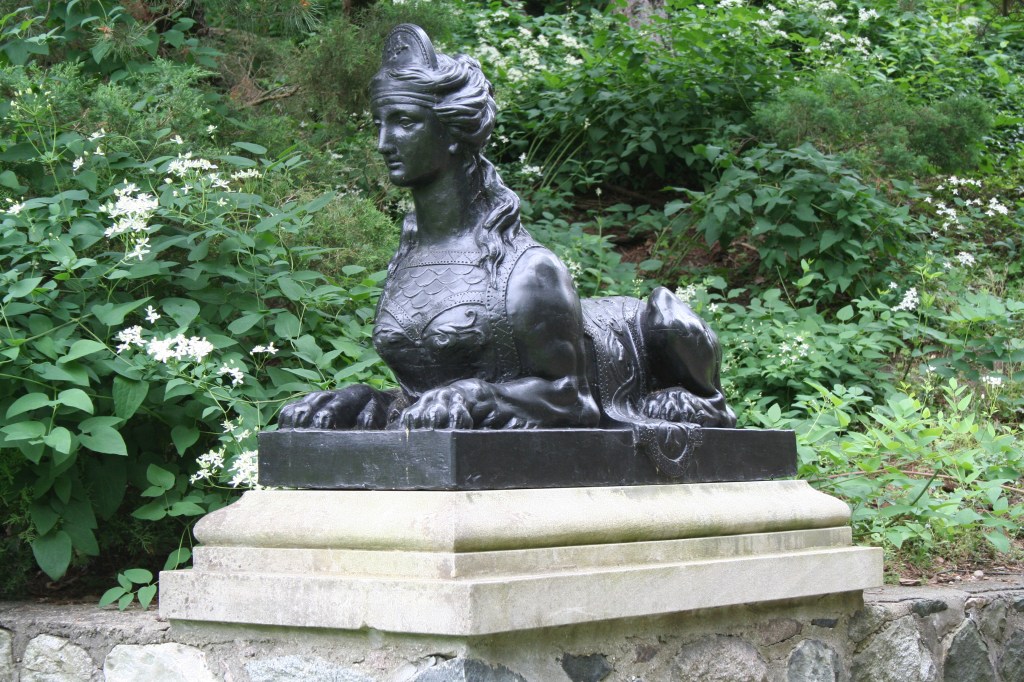
One of two bronze sphinxes by John Cheere, photographed on the north terrace of Cranbrook House in 2016.
Although the original cherub statues brought an end to the staircase’s parade of sculptures in George and Ellen Booth’s day, Henry Scripps Booth added a final flourish to the ascent in 1963. Two sphinxes, cast bronze copies of sculptures by the English artist John Cheere, bought at auction in England, keep watchful guard over the middle north terrace from either side of the wide upper stair. These bronzes, like so many other features of the staircase, are copies of European artworks. In this case, the eighteenth-century originals were created for Chiswick House, the Greater London home of Earls of Burlington, a Palladian style villa renowned for its refined neoclassical air.
As we set forth into the darkest season of the year, with all the familiar sculpted denizens of the gardens hidden beneath their winter coats, the grounds might start to feel a little lonely. Recalling the history of their making, from the reshaping of the hillsides to the final placing of statuary in their niches or atop their pedestals, can re-animate the familiar byways of Cranbrook, even on the coldest and greyest days. The Booths’ tribulations – a statuette stolen, others shattered by cold – remind us of the evolving nature of even a historic and well-preserved garden, and of the many winters that have passed over these grounds and left them largely unharmed.
The north terraces at Cranbrook House, photographed in January 2024.
The north staircase, a project begun in 1921 and completed more than forty years later, is still “something really fine,” with or without its sculptures and fountain. And the view from the top, which inspired the project, is even finer in winter, when frosty, leafless branches part to reveal a sparkling view of the frozen surface of Kingswood Lake and the snowy hills beyond.
— Mariam Hale, 2023-2025 Collections Fellow, Cranbrook Center for Collections and Research
I recently found myself at Joann Fabrics five minutes before the store closed, desperately selecting supplies for a project that was, of course, best completed that night. My delay was self-inflicted, but it got me thinking about times when much larger projects have been strained by access to supplies.
Specifically, both Eliel Saarinen and Frank Lloyd Wright created buildings with strong creative vision. Their architecture demanded specific, and sometimes hard to source, materials. Let’s look at two examples and decide if the headaches my favorite architects caused their suppliers and contractors/builders were worth the final product!
Example 1: Eliel Saarinen and Pewabic Pottery Tiles
Eliel Saarinen, Kingswood School for Girls Main Entrance Lobby (Green Lobby) plan, section, elevation, and reflected ceiling plan, c. 1930-1931. Ink, colored pencil, and pencil on tracing paper. Approx. 28½ inches x53 inches. Cranbrook Art Museum 1982.35. Photography by P.D. Rearick, Courtesy Cranbrook Center for Collections and Research.
When Eliel Saarinen specified thousands of hand-molded, hand-glazed, and hand-fired Pewabic Pottery tiles for use at Kingswood School for Girls, his contractor pushed back. Pewabic was less a tile factory than an artists’ workshop. As supplier of Kingswood’s industrially produced tile for bathrooms and basements, a concerned Mr. Burt of the Detroit Mantel and Tile Company wrote to the contractor, Charles Wermuth & Son:
We are doubtful as to [Pewabic Pottery] being able to manufacture the amount of tile as selected for this job. We raised this question during the course of selections but [Pewabic cofounder and artist] Mrs. Stratton advises that she will be able to produce this tile without any hold-up. We have advised her that any hold-up or delays caused from her material will be charged back to her.
We are writing you this letter merely as a protection against delays beyond our control.
Saarinen wasn’t wrong to select Pewabic Pottery for Kingswood—it’s stunning and perfect in every way—but Burt wasn’t wrong about issues of production. It does appear that delays in the tile making caused delays in construction, raising blood pressure on both ends of Woodward Avenue.
As the first day of classes at Kingswood drew nearer, truck drivers from Cranbrook made near-daily trips to the pottery for small batches of tiles. I imagine the kiln-fresh mini-masterpieces still warm to the touch!
Did the delay in tile delivery keep Kingswood from opening on time? No. An outbreak of polio in metro Detroit meant all schools were closed by state health officials. But Wermuth used the extra time to finish the building—all Pewabic tiles were well-set and grouted for classes to begin September 21, 1931.
Eliel Saarinen and Mary Chase Perry Stratton’s 1931 masterpiece, the Green Lobby Stair. The headache of contractor Charles Wermuth and Son was worth the stress. Photography by James Haefner, 2018. Courtesy Cranbrook Center for Collections and Research.
Example 2: Frank Lloyd Wright and “The Wood Eternal”
In February 1949, Melvyn Maxwell Smith was ready to start building his long-awaited dream: a wood and brick Usonian house designed by Frank Lloyd Wright. With enough money squirreled away to begin construction, Smithy was ready to order materials. Including 14,000 linear feet of clear, old-growth, 16’ x 1’ x 2” boards of Tidewater Red Cypress wood.
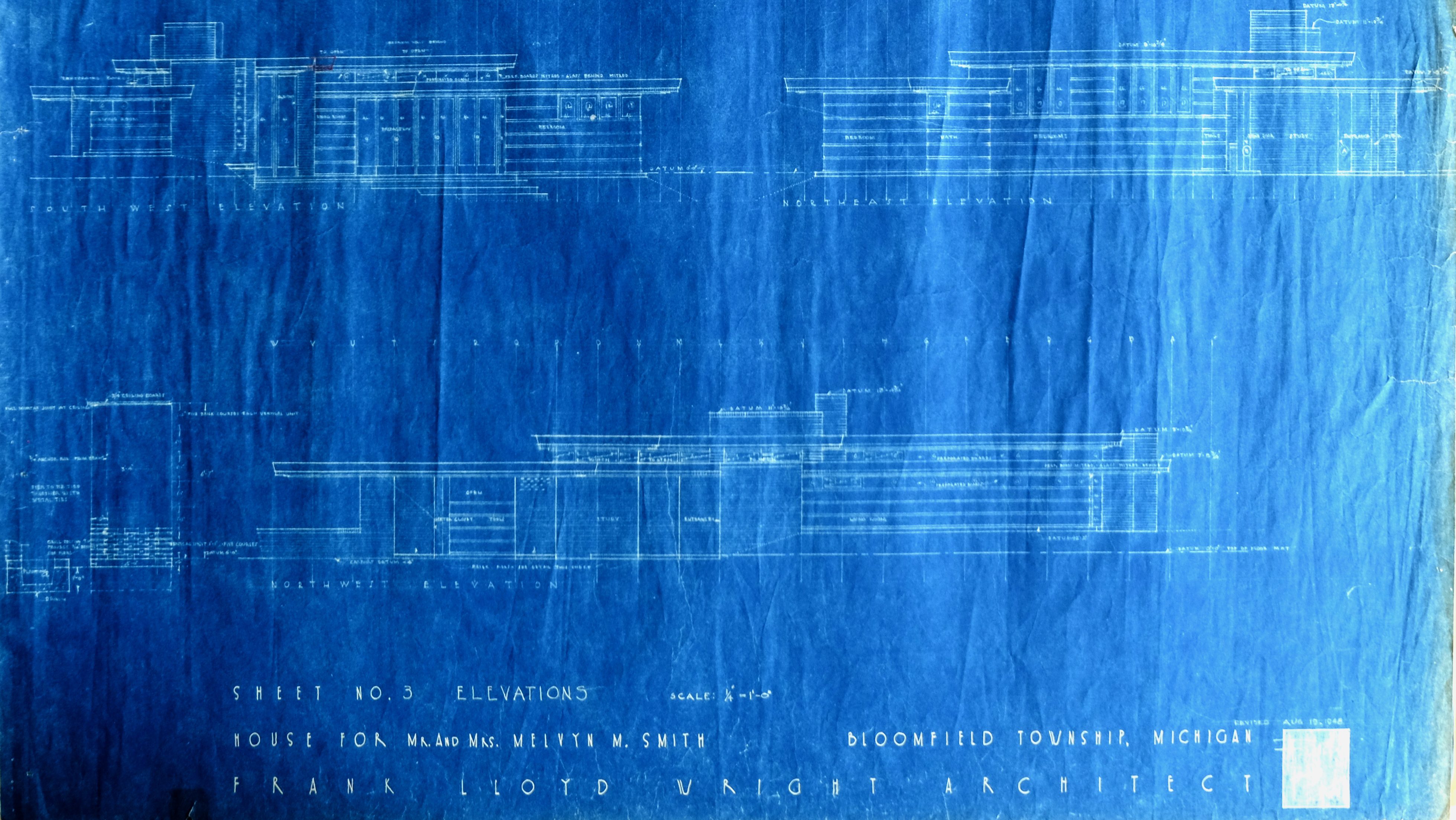
Frank Lloyd Wright, detail of House for Mr. and Mrs. Melvyn M. Smith elevation, August 1948. Blueprint. Courtesy Cranbrook Archives.
Wright had built in Cypress since at least 1914, with his first all-Cypress design, the Wiley House, coming off the drafting board in 1932. The iconic Usonian houses of the 30s and 40s are mostly built of this swamp-grown, super strong, rot-resistant golden wood.
Cypress proved to be perfect for Wright’s organic architecture. And by 1949, Cypress was incredibly hard to find.
Smithy wrote to many different lumberyards with his needed material list. Those closest to the swamps where Cypress grows—lumberyards in South Carolina and Louisiana—were unable to furnish the volume of wood needed. Lumber yards in the Midwest simply stated they did not carry Cypress. Chicago-based Hilgard Lumber Company wrote, “We duly received your inquiry…on a carload of Tidewater Red Cypress (clear grade) but clear grade in this species is extremely scarce.”
In February 1949, Fleishel Lumber Company of St. Louis (who had been forwarded Smithy’s large request) agreed to fulfill the order. Smithy simply needed to let the yard know when he wanted the wood delivered. Or at least, that was the idea.
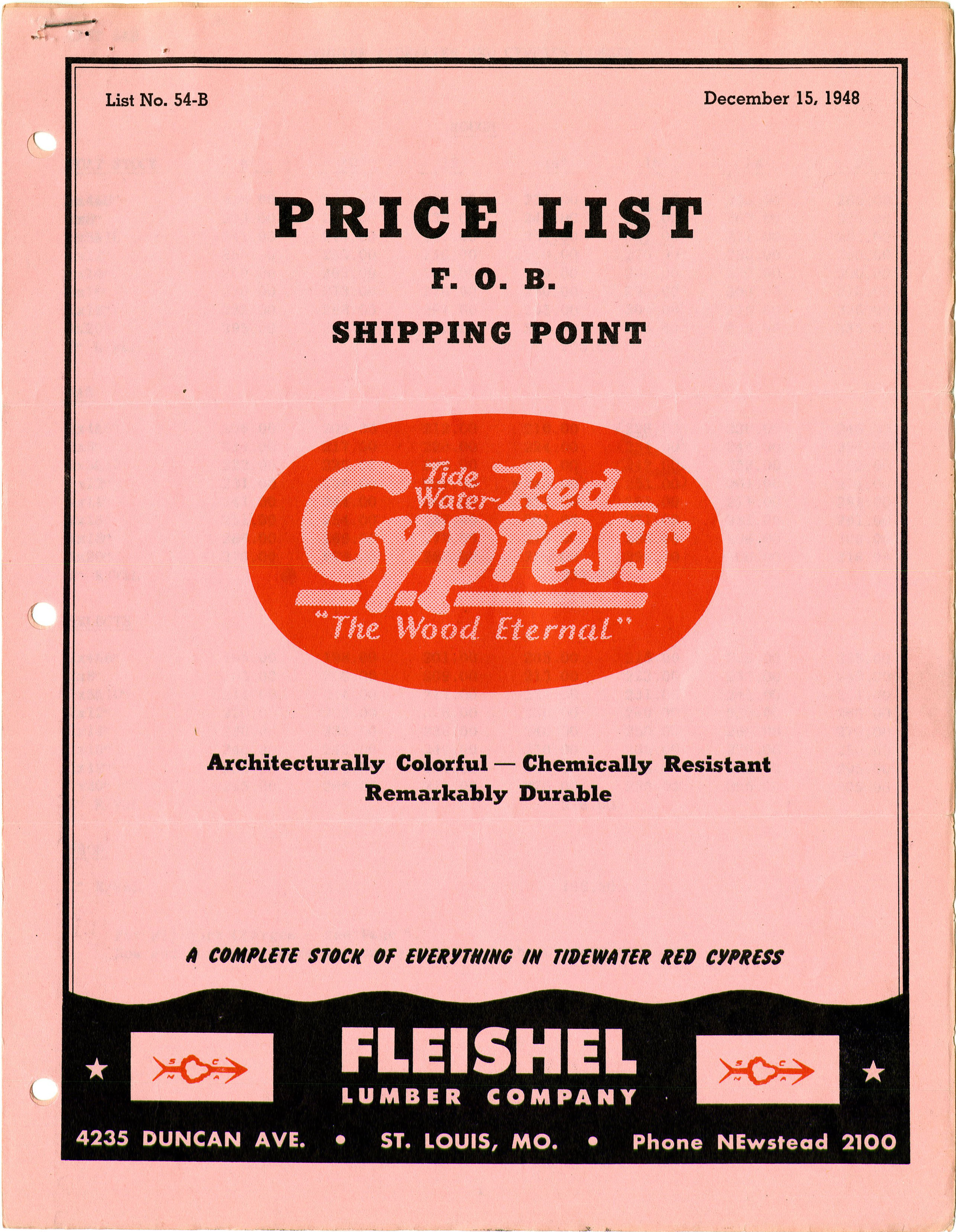
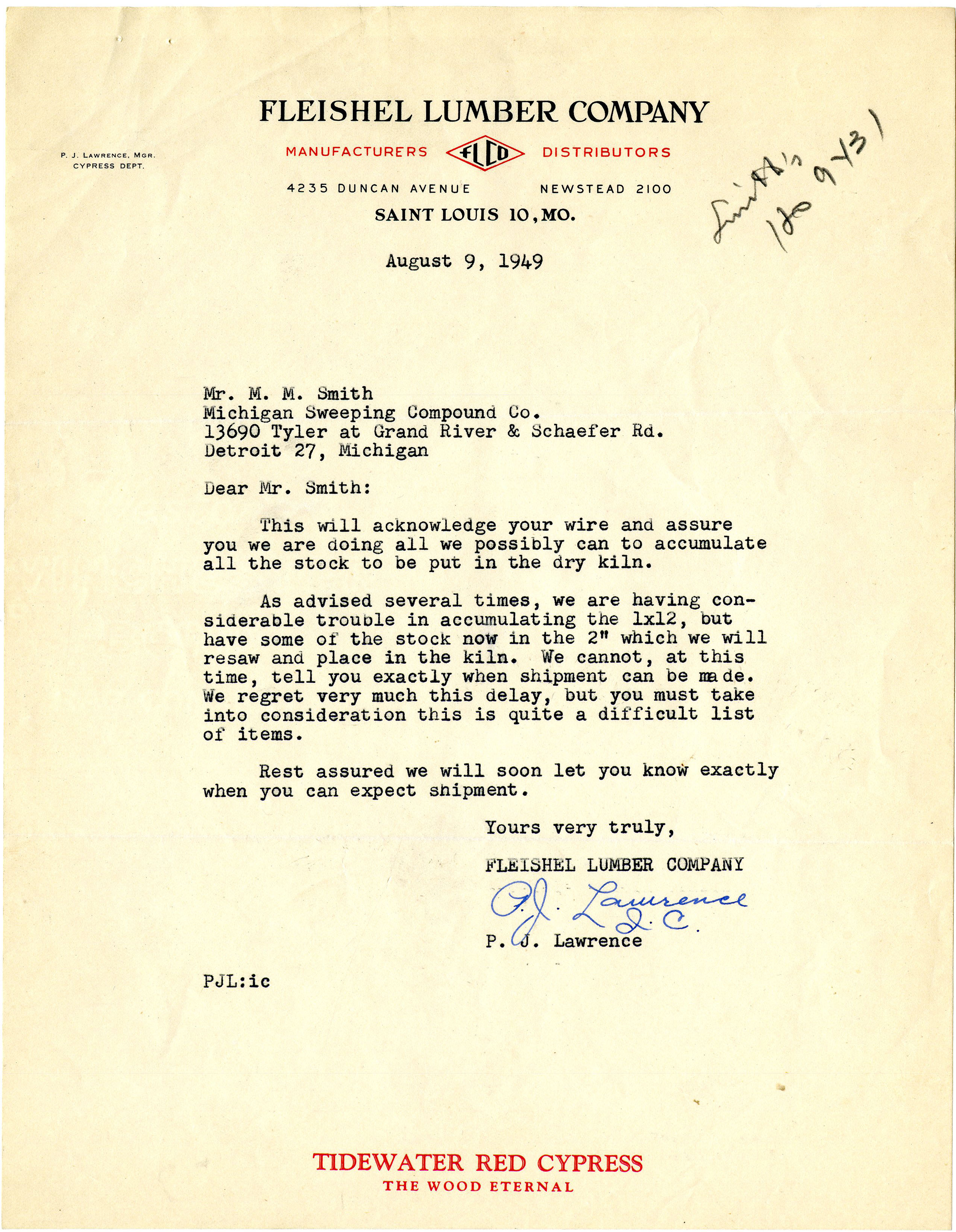
The initial price list for “Tidewater Red Cypress ‘The Wood Eternal'” from Fleishel Lumber Company, sent to Melvyn Maxwell Smith on February 21, 1949, followed by an August disappointment, and then, the packing list of the Cypress shipment sent on September 23, 1949. Cranbrook Archives. Smith Papers, 2017-10, Box 11, Folder 11.
Every month, Smith wrote, called, or telegrammed Fleishel, asking for his order. And every month, the lumber yard replied: we don’t have it all, but we have some. As time ticked by and Smithy’s house waited to take shape, Fleishel offered up concessions. Instead of kiln dried, would Smithy accept natural dried Cypress? No. Recycled or swamp-preserved? No. Smaller boards, but more boards? No.
Smithy needed what Wright specified: long, wide boards. By August 9, 1949, things were looking up, even if Fleishel’s salesman sounds a bit annoyed:
…We are doing all we possibly can to accumulate all the stock to be put in the dry kiln.
As advised several times, we are having considerable trouble in accumulating the 1×12…We cannot, at this time, tell you exactly when shipment can be made. We regret very much this delay, but you must take into consideration this is quite a difficult list of items.
Smithy’s goal of having the lumber on hand during the Summer holiday, when he could be on-site every day, did not happen. His first day teaching his Cody High English class that year? September 5.
Finally, on September 23, 1949, Fleishel Lumber packed a railroad car full of 14,000 linear feet of clear, kiln-dried Cypress and sent it toward Bloomfield Hills. Just seven months and a few days after it was ordered.
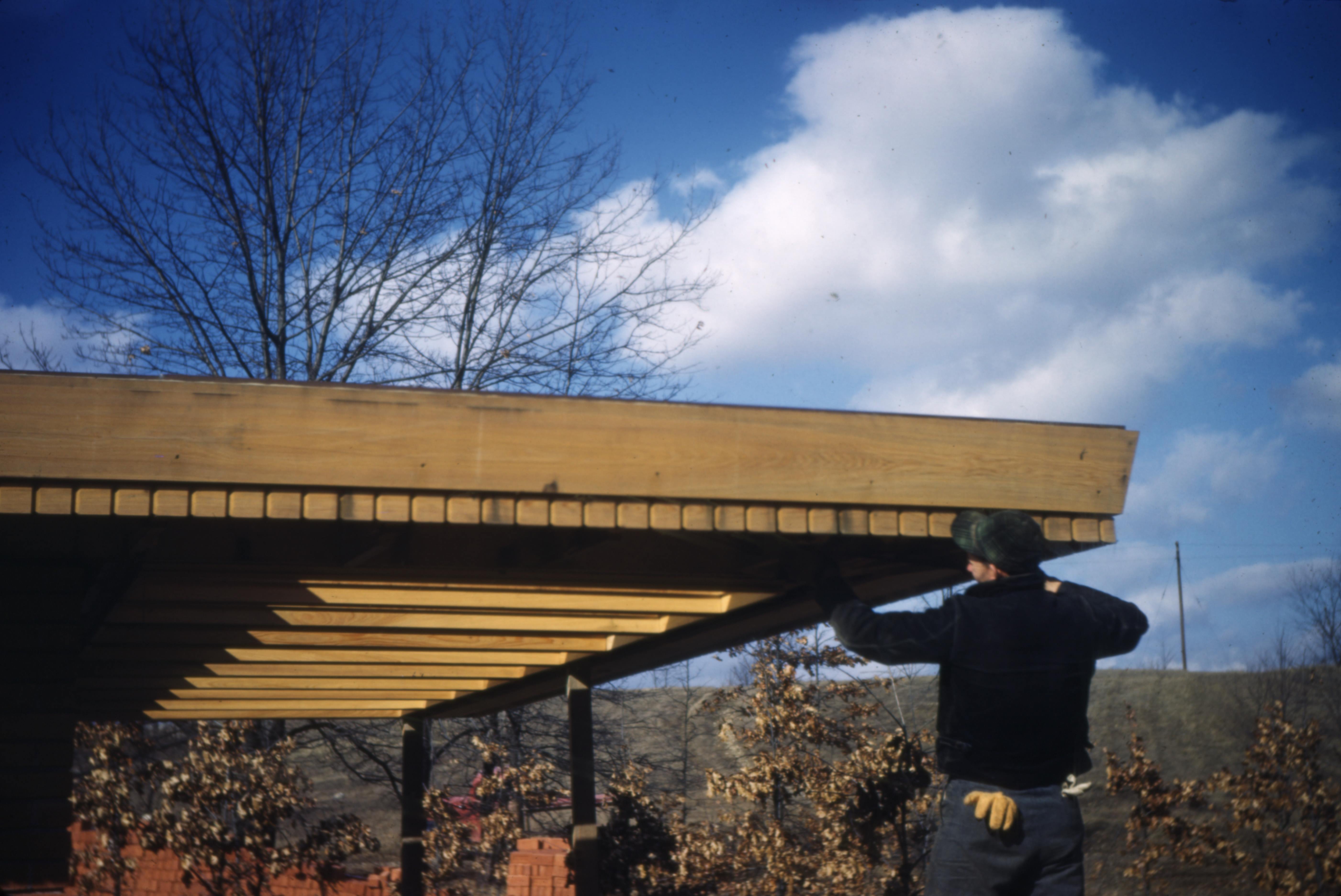
Work continues on Cypress boards of Smith House, winter 1949-1950. Courtesy Cranbrook Archives.
About seven months later, Melvyn and Sara Smith had a Cypress house! When it was completed in May 1950, the Smith House became Frank Lloyd Wright’s last entirely Cypress-built project.
Tidewater Red Cypress with Detroit Common Brick defines the Frank Lloyd Wright-designed Smith House, 1950. Courtesy Cranbrook Archives.
So, did being particular about materials pay off for Mr. Wright and Mr. Saarinen? I think the Smiths and thousands of Cranbrook students would agree: absolutely.
—Kevin Adkisson, Curator, Cranbrook Center for Collections and Research
Note: Oh, and if you want old-growth Cypress today? The current owner of the Frank Lloyd Wright Willey House, Steve Sikora, described the purchasing of Cypress wood in the 2010s as operating among “an assortment of hucksters, charlatans, and petty criminals, or in industry parlance, ‘wood brokers.’” Head on over to The Whirling Arrowblog to read a lot more about Cypress and Wright!
In recent years, new residential development along the small strip of Cranbrook Road between Lone Pine Road and Woodward Avenue has given Cranbrook a few new neighbors. One of Cranbrook’s first neighbors on the street, however, dates back one hundred years!
As George and Ellen Booth began developing their country estate in the mid-1920s into what we know today as Cranbrook Educational Community, a new house was completed just north of what would soon become Kingswood School for Girls.
Picture of Stonelea from an ad in Afterglow: A Country Life Magazine, August-September 1925.
Ralph Stone, president of the Detroit Trust Company, with which George Booth did business, purchased this land around 1923. He quickly commissioned Albert Kahn to design a country residence for the site, which Stone named “Stonelea.” This was just a few years after Kahn had completed additions to Cranbrook House.
Residence for Mr. Ralph Stone. Albert Kahn Architect. November 17, 1923. Courtesy of Cranbrook Archives.
The close neighbors shared some correspondence regarding their properties that provides a glimpse of both men’s personalities, and highlights their shared affability and elegance of prose. Their letters, part of the George Gough Booth Papers, begin a year before Ralph Stone and his wife Mary would finalize construction of their home in 1925. It seems they could not wait to spend a summer of leisure in Bloomfield Hills, away from the hustle and bustle of Detroit. The Stones sought to rent the Booth’s Brookside Cottage–an impossibility due to occupancy by Booth family members.
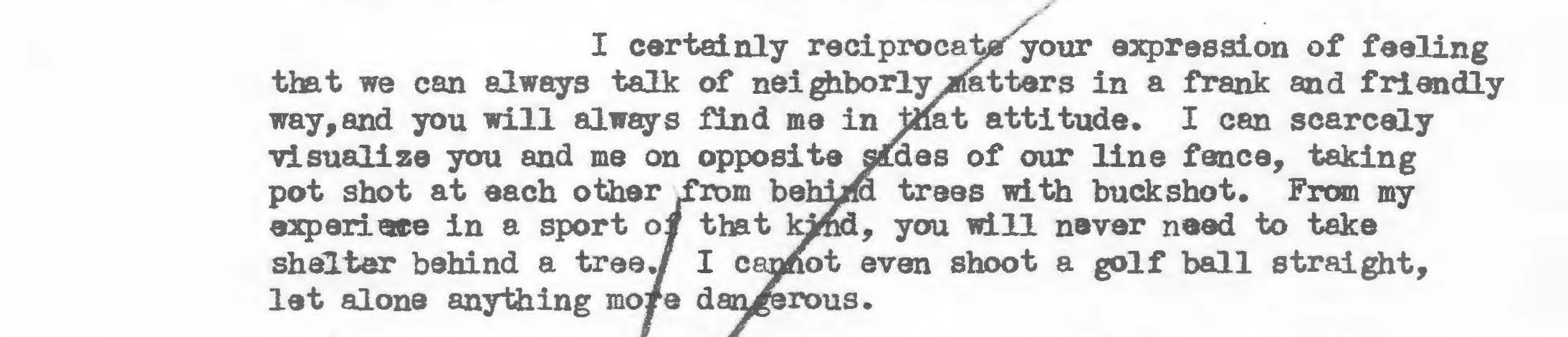
But perhaps the most interesting exchange takes place in 1926 when Ralph writes regarding the shocking lack of water needed to preserve his lawn and garden in a green state in the middle of July (not a problem in 2024!). He proposes to pump water from Cranbrook, but George’s reply a week later masterfully circumnavigates the issue:
Opening lines of the George Booth letter, August 2, 1926. Courtesy of Cranbrook Archives.
In Ralph’s reply he acquiesces with good humor:
Second paragraph of the Ralph Stone letter, August 3, 1926. Courtesy of Cranbrook Archives.
The sentiments expressed in these letters appear genuine as their families remained on neighborly terms. George and Ellen were occasional guests at Stonelea for dinner parties until the Stones sold their property in 1931.
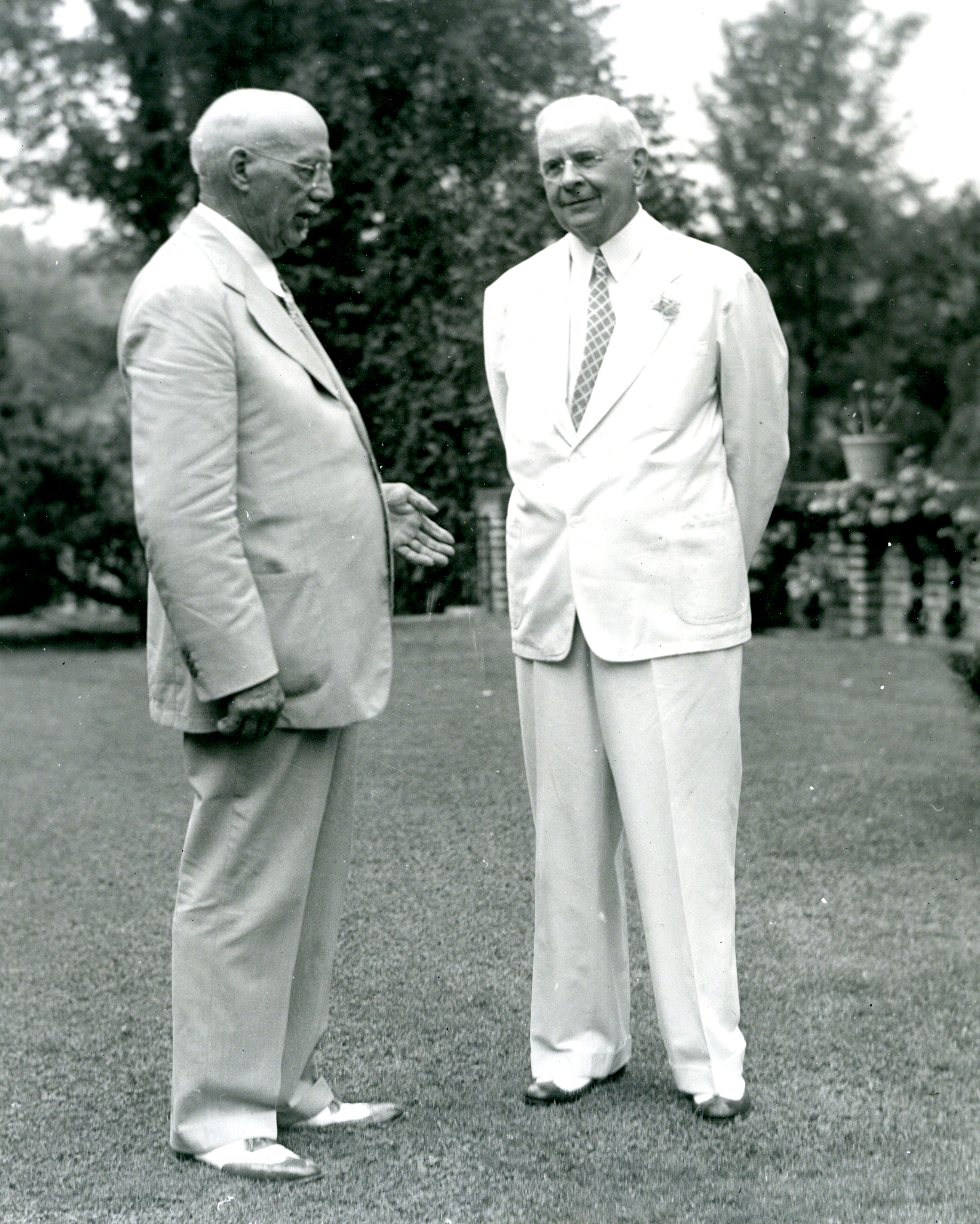
In fact, Ralph Stone proved to be much more than just a friendly neighbor of George Booth, continuing his connection to Cranbrook long after he had moved from the area. He was an early and steadfast supporter of Cranbrook, serving on various boards for over twenty-five years as a Cranbrook School Trustee (1928-1951), Kingswood School Trustee (1930-1951), Brookside School Trustee (1945-1951), Academy of Art Trustee (1941-1946), and Foundation Trustee (1940-1952).
George Gough Booth and Ralph Stone attend the 80th birthday party of Ellen Scripps Booth at Cranbrook House, 1943. Courtesy of Cranbrook Archives.
Today, Stonelea is no longer just a neighbor: the property was acquired by Cranbrook Educational Community in 2003. In the coming years, Stonelea will become the future home of Cranbrook Center for Collections and Research!
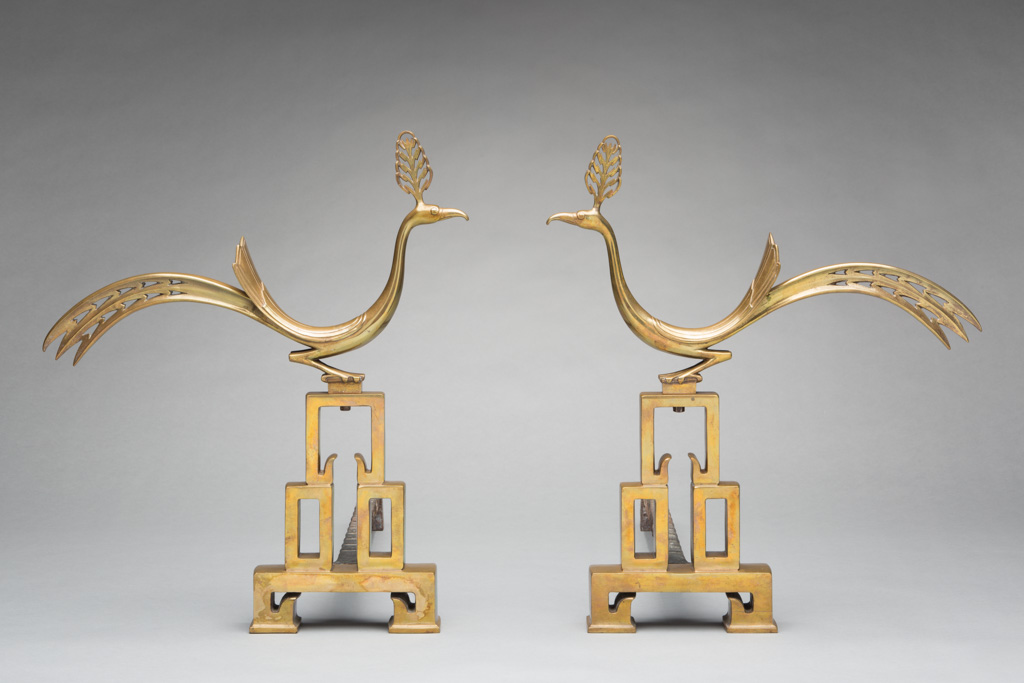
While researching the step-backed Peacock Andirons at Saarinen House last spring, I enthusiastically mustered a muster of peacocks from across Cranbrook’s campus with the generous help of my colleagues.
“Muster” is the official label for a group of peacocks.
Unlike a gaggle of geese, a muster of peacocks lacks both onomatopoeia and alliteration and implies a level of formality and regimental order in direct conflict with the species’ behavior! That is…judging by the peacocks I’ve witnessed at historic homes and castles throughout Europe, including a visit to Scone Castle in Scotland where an earlier visitor captured these free-spirited troops. Whether iridescent blue or albino, their graceful necks and distinctive crests rise to magnificence when tail feathers are splayed to attract a peahen mate or intimidate predators.
Throughout the ages, blue aka Indian peafowl have symbolized beauty and prosperity and served as sources of artistic inspiration. A favored theme at Cranbrook, the peacock’s dramatic curvilinear lines are represented at each institution across the campus.
One can discover…
WORKS IN METAL:
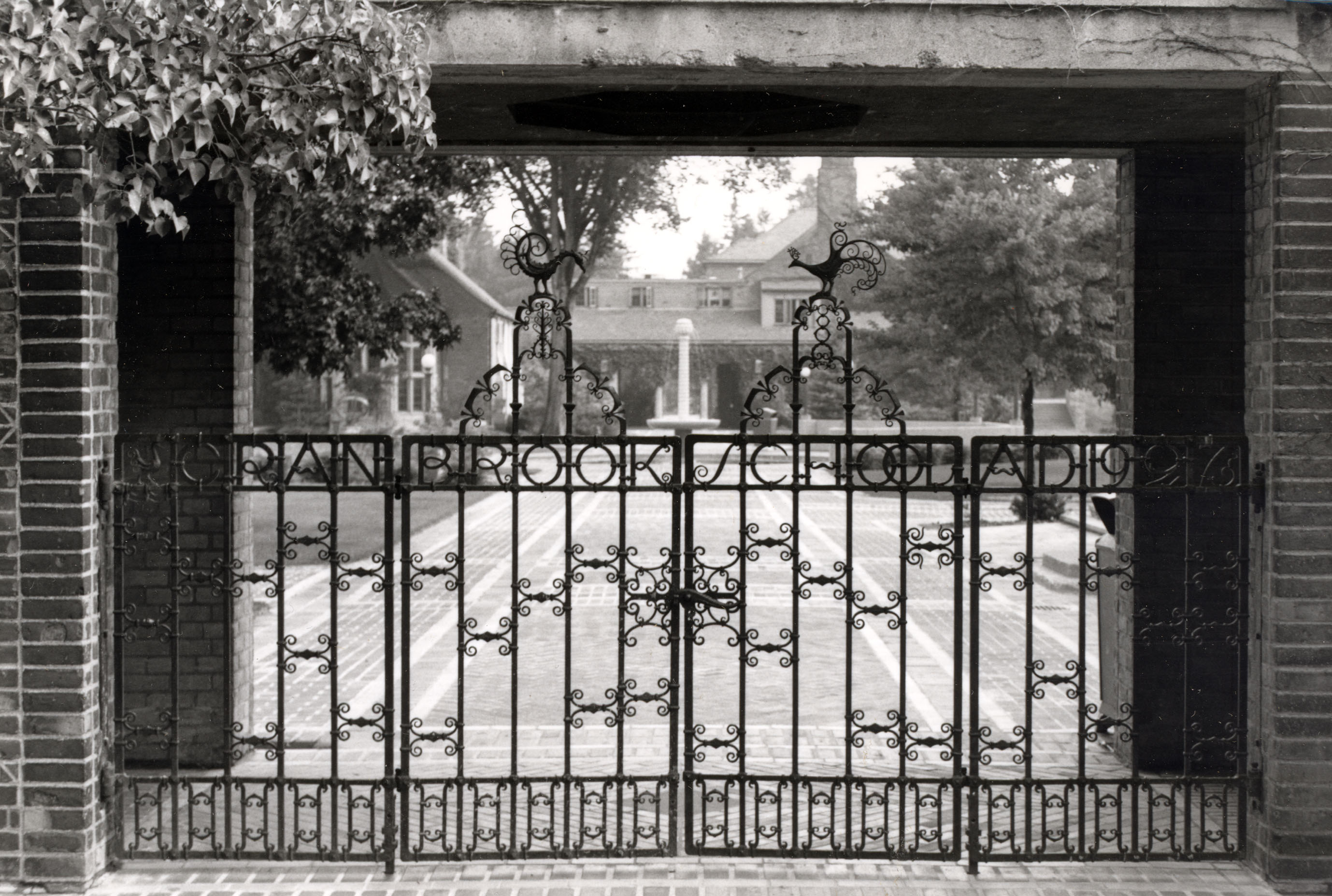
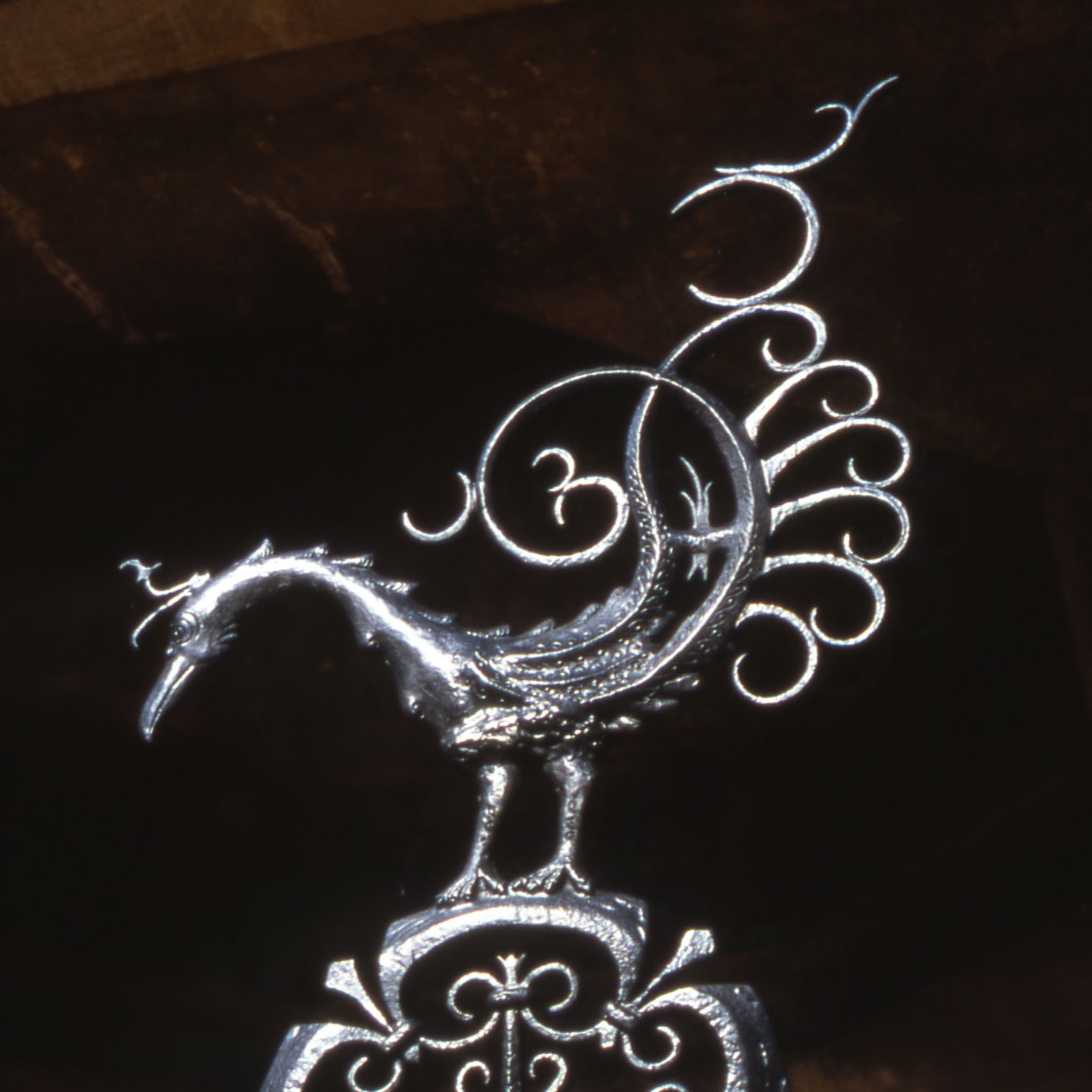
• The famed Peacock Gates designed by Finnish-American architect Eliel Saarinen and fabricated in wrought and cast iron by Oscar Bruno Bach, 1927, marking the former Lone Pine Road entrance to Cranbrook School for Boys:
Peacock Gates at Cranbrook School circa 1980. Jeffrey Welch, photographer. Courtesy Cranbrook Archives.
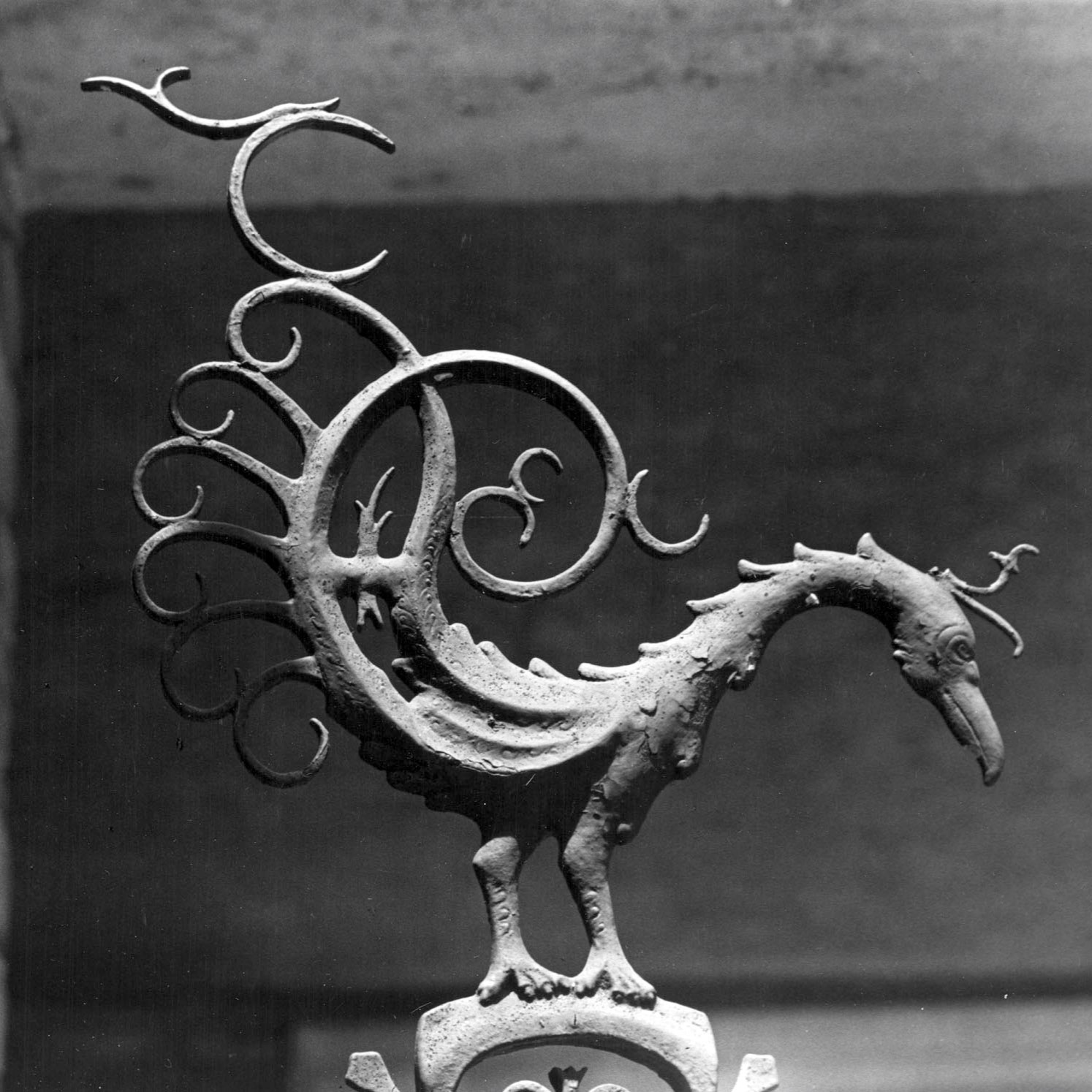
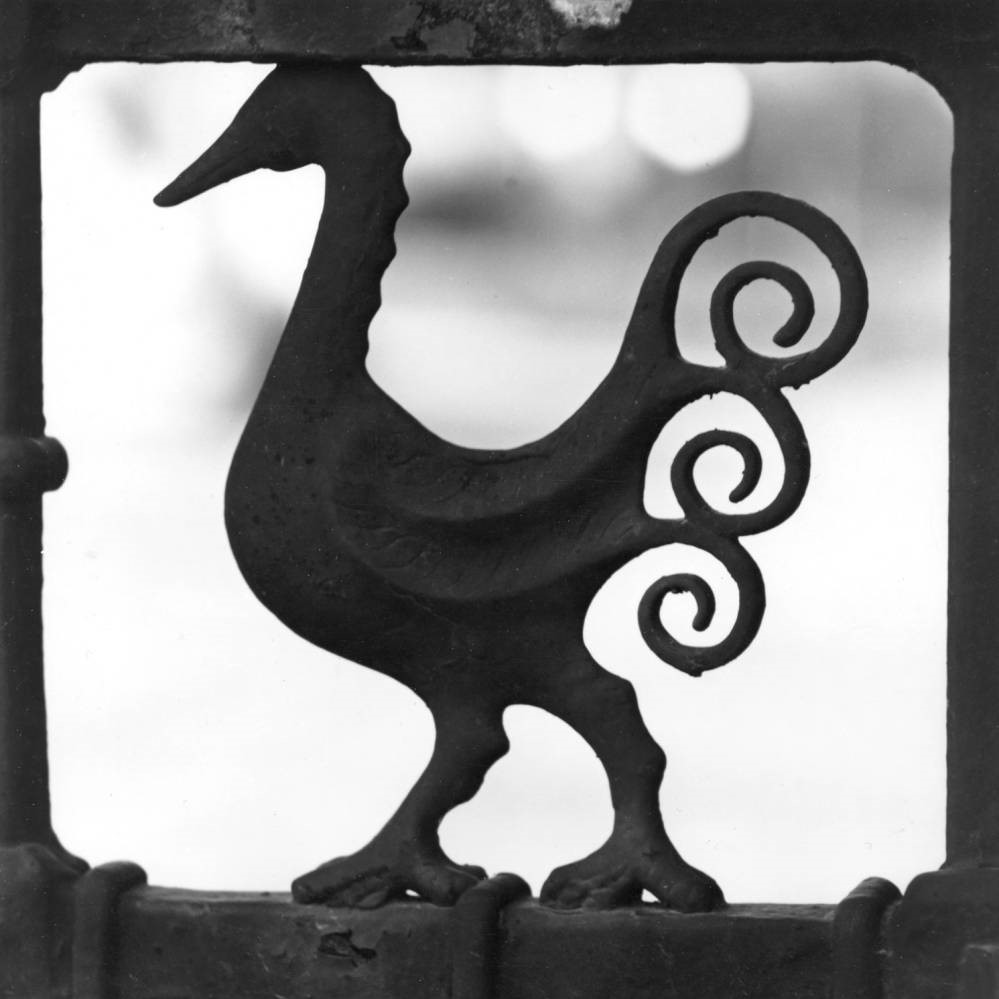
Details of the peacocks in cast iron:
Detail of Cranbrook School Peacock Gate, circa 1935. Courtesy Cranbrook Archives.
Detail of Cranbrook School Peacock Gate, circa 1935. Courtesy Cranbrook Archives.
Detail of Cranbrook School Peacock Gate, 2001. Balthazar Korab, photographer. Copyright Balthazar Korab | Cranbrook Archives.
• Eliel Saarinen’s cast bronze Peacock Andirons, 1928-29, on view at Saarinen House. Collection of Cranbrook Art Museum. Produced by Sterling Bronze Company, New York, between 1928 and 1929, these cast bronze andirons were paid for by the Cranbrook Foundation and entered in the 1928-1930 Arts & Crafts Building ledger on pages 40-41—Date: 1-7-30; No.: 515; Name: Sterling Bronze Co; Remarks: 1 pair/ Andirons for Saarinen Res[idence]; Amount: $152.50 (the equivalent of $2,704 in 2024):
Robert Hensleigh, photographer. Courtesy Cranbrook Art Museum.
From 1908 to 1919, the room we now call the Old Country Office was George Booth’s personal workspace in Cranbrook House, where he carried on managing his newspapers and met with the many farm employees, contractors, and artists involved in the operation and transformation of the estate. A side door leads directly into the entry vestibule, allowing outdoor workmen to come inside without tracking mud onto the hall carpeting.
George Booth’s tastes shaped the whole of Cranbrook House, but here in his own office we see a concentrated expression of his personal preferences in interior design. Yet, because it was also the space where George interacted with employees and colleagues, the office speaks not only to what George liked, but also to how he wished to be perceived.
George Booth’s office, photographed in 1910. Cranbrook Archives.
The office’s dark tones and simple, solid materials reflect the serious and businesslike side of George’s personality. The exposed timbers, wood paneling, and prominent fireplace all demonstrate George’s enthusiasm for historic English homes, and his pride in his own English heritage. Its furnishings – books, prints, and statuary – speak to his desire, despite his working-class background and his position as a newspaper manager, to be seen primarily as a sophisticated art lover.
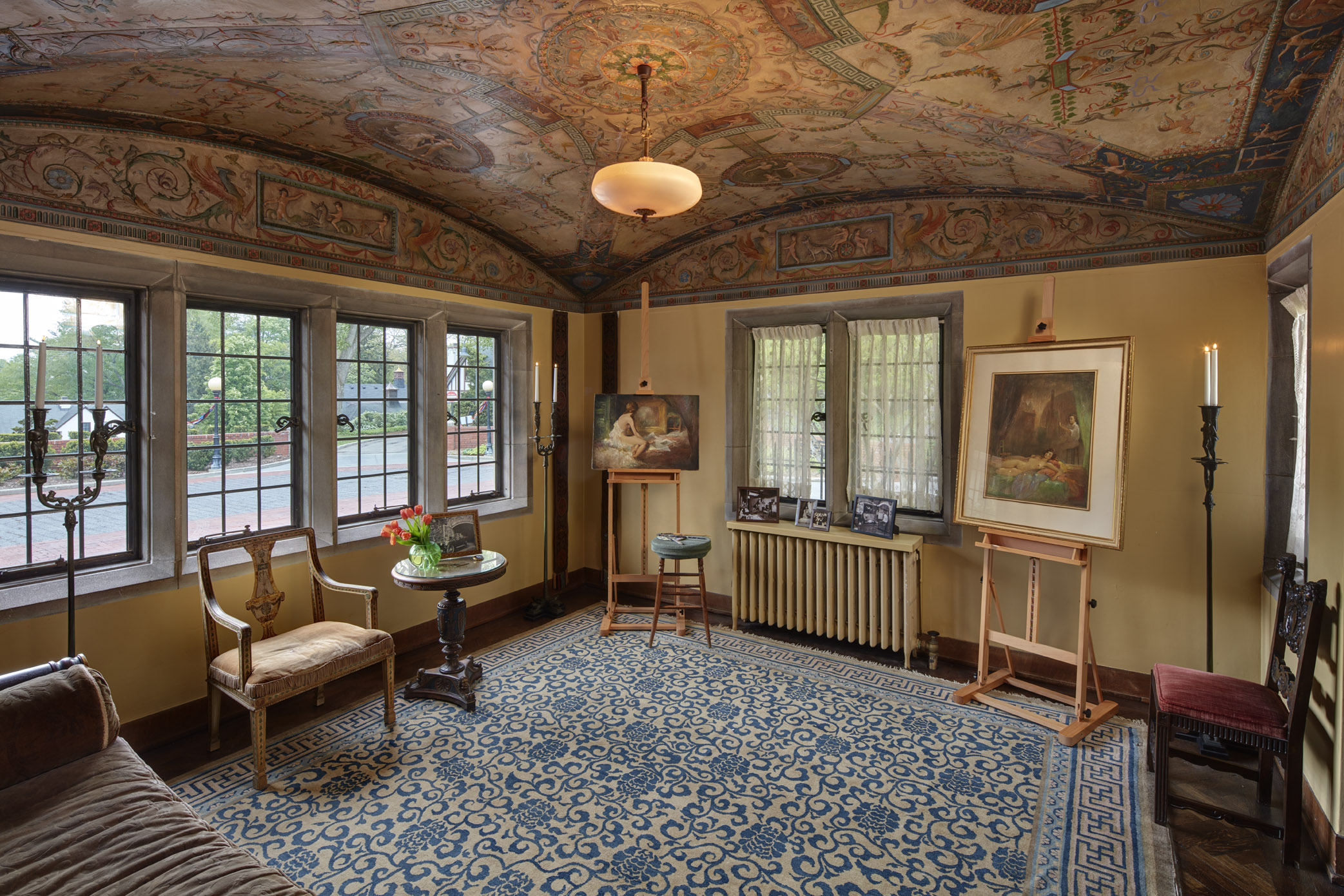
How different an impression of George’s personality we might form from the exuberant colors and rich textures of the Still Room! That space, wholly set aside for private relaxation, with its rainbow ceiling, walls hung with gold fabric, and violet velvet sofa (sadly faded now), reveals George’s inner aesthete. Yet both rooms, the luxurious Still Room and the somber office, tell us something about his character – specifically, how highly he valued the arts.
The Still Room at Cranbrook House, Summer 2023. Photograph by Jim Haefner.
In England in the 19th-century, a new school of thought about domestic design arose, which argued that the houses we live in do not just shelter us – they also shape us, emotionally, morally, and intellectually. Having a beautiful home with well-made furnishings could elevate the spirit, encourage thoughtfulness. Collectively, a community that dwelt surrounded by art would be a better society than one that lived without it. This ideal was embraced by the Arts and Crafts movement from its early days, and taken up by the Booths.
The mantelpiece in George’s Old Country Office, Cranbrook House. Photograph by Daniel Smith, CAA Architecture ’21.
George Booth once wrote, “A life without beauty is only half lived.” In his office, we can see how important it was to him to always be within reach of some great work of art or craftsmanship, even in the most ordinary moments of daily life. This same principle shaped the greater Cranbrook campus, for the benefit of all its community members.
— Mariam Hale, 2023-2025 Collections Fellow, Cranbrook Center for Collections and Research
Each year before my History of American Architecture lecture series, I like to commission Cranbrook Academy of Art student or recent alumni to design a poster to promote the event. This year, I asked second-year 2D Design student Luis Quintanilla to create a poster for this year’s series, Detroit and the World. I am thrilled with how the poster turned out—you can pick one up at the first lecture February 6, 2024—and thought I would share with you some of how it came about.
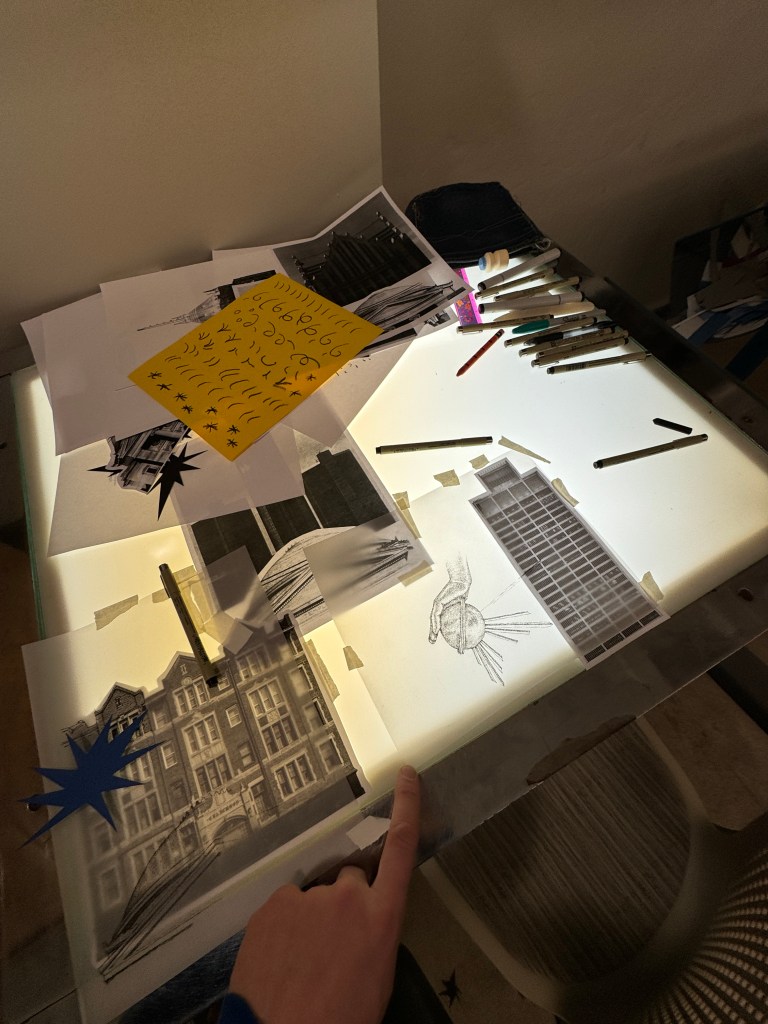
When I visited Luis’ studio in the Arts and Crafts Court, I was struck by their graphic sensibility combining imagery and text in sticker-like collages. I was also very impressed by a series of stipple drawings in ink on tracing paper, which Luis kept in a shoebox. As we talked about the themes of my upcoming lectures, and what we both admire about Detroit and its architecture, the idea of the poster came about. With Luis’ sketches strewn across the table in their studio, I was reminded of the great tradition of architectural capricci.
Architectural capprici are fantasies, where artists or architects combine buildings from across time in a single image. Traditionally, 18th century capprici could be oil paintings, pencil or ink sketches, or engravings. Joseph Michael Gandy is the most famous painter of architectural fantasies. Here, he is combining the London works of Sir John Soane into a single fantasy, set within the studio of Soane’s own house.
Joseph Michael Gandy, Public and Private Buildings Executed by Sir John Soane between 1780 and 1815, first exhibited 1818. Courtesy of Sir John Soane Museum, London.
If you’ve come to many of my previous architecture lectures, you might recognize my favorite painting: Thomas Cole’s The Architect’s Dream of 1840, a capprici which embodies the mid-19th century debate between gothic and classical styles. Contemporary British painter Carl Laubin creates stunning work inspired by Gandy, using contemporary architects for elaborate capprici.
What might an architectural capprici of Detroit include?
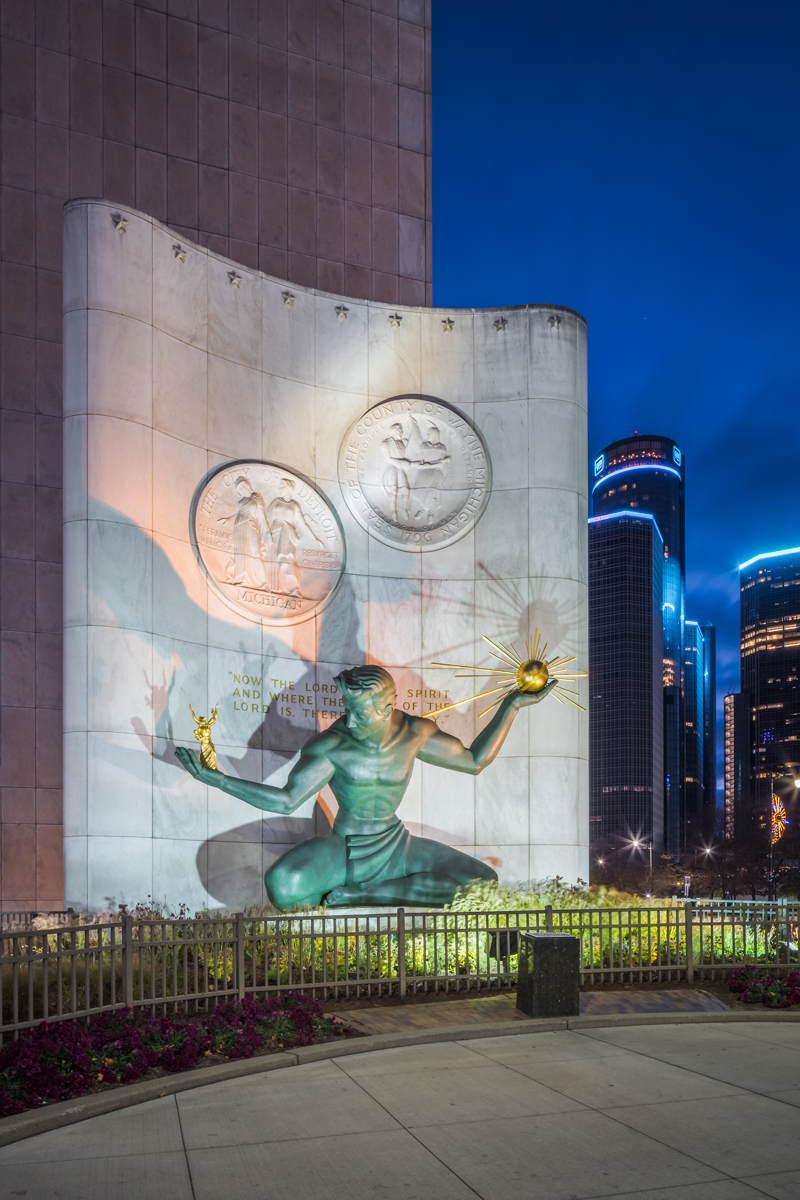
Marshall M. Fredericks’ The Spirit of Detroit, 1958, photographed by Helmut Ziewers for Historic Detroit Area Architecture.
I created a list of forty buildings I thought embodied the best of Detroit architecture. I narrowed it down to twenty buildings for Luis’ consideration, and shared images of each. My only real request: include at least one building from each of the five lectures, and center the poster on John Portman and Associates’ 1977 Renaissance Center.
I don’t think Detroit has a more iconic building than the RenCen, with its piston-like glass towers rising up from the Detroit River. There are better works of architecture, sure, but as far as an associated image of Detroit? Nothing tops the RenCen.
I suggested, too, that Luis include the 1901 St. Josaphat’s church by architects Joseph G. Kastler and William E. N. Hunter in front of the RenCen, to recall the almost too-good-to-be-true alignment of these two structures when driving into the city from the northern suburbs on I-75. After all, by the nature of delivering lectures about Detroit from the distance of Cranbrook, this is the view (from the suburbs, from the car) many of us hold toward the city.
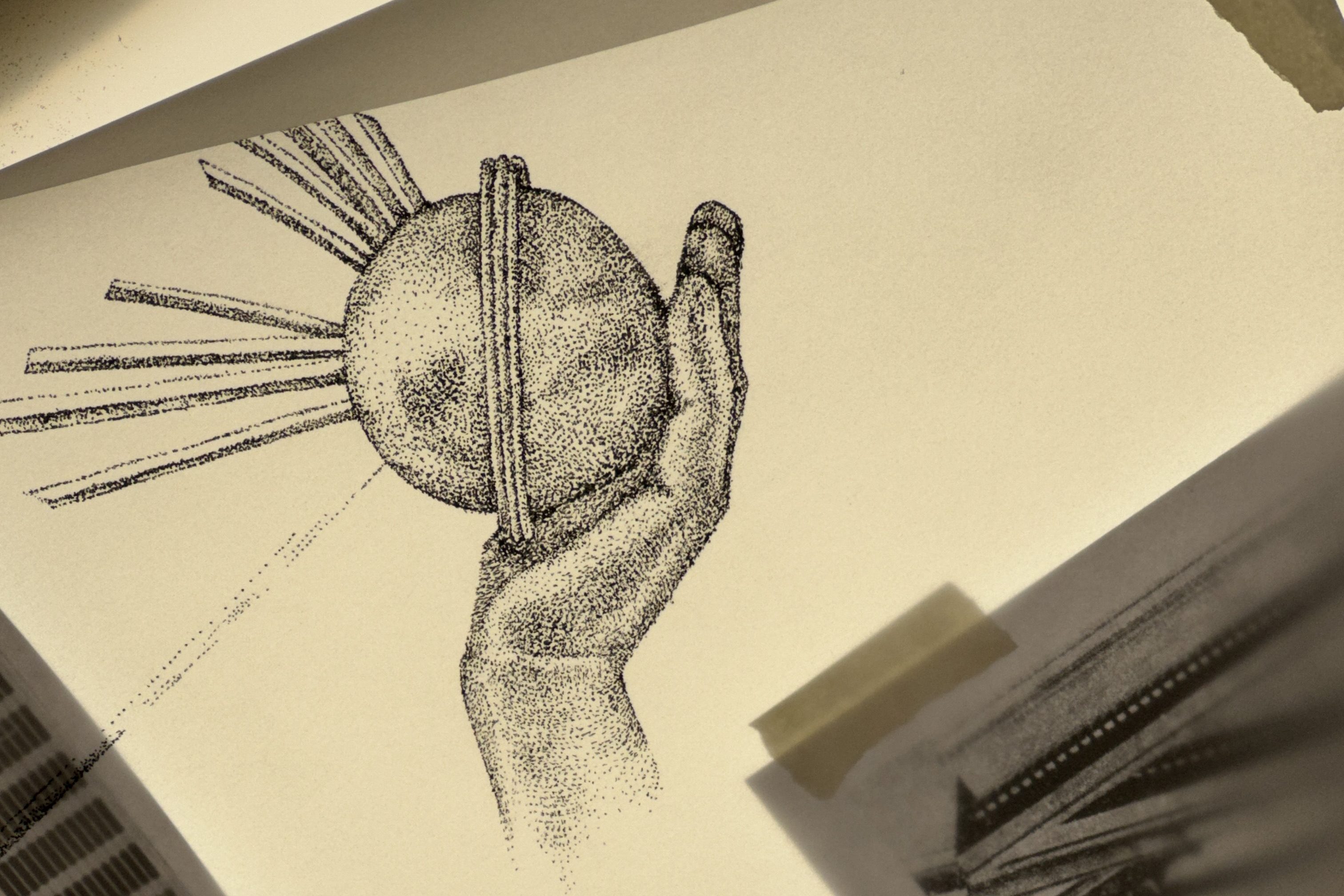
We went back and forth about including the Spirit of Detroit, former Cranbrook Schools faculty member Marshall M. Fredericks’ monumental bronze at the Detroit City-County Building. What attracts me to the Spirit is its iconic status and its graphic replicability: whether on the redesigned city buses or the new city holiday lights, all you really need is an orb and some rays of light to know: that’s the Spirit of Detroit.
What would be the mood of our Detroit capprici?
Inextricably linked to the history of Detroit since 1980 is Detroit Techno, a form of Electronic Dance Music (EDM) that combines synth-pop with African American styles such as house, electro, and funk. For me, Detroit is most exciting, and its dynamism most electrifying, at night. In riding through the city after dark, buildings become speeding landmarks, and its possible to disappear for a time into a former factory or repurposed commercial building for a party or a rave. In these moments, buildings become less defined by their former glory or current decay than by their inhabitation as a dancefloor pulsating with music and lights. It’s a new way of occupying the city’s architecture to unique advantage.
Luis went to work. They began by printing out and arranging the buildings I’d shared. Then, they began overdrawing some of the images—distorting or highlighting certain features.
Layering on tracing paper, Luis dutifully stippled certain prominent architectural elements. I was especially impressed at the beautifully rendered hand, orb, and rays of Spirit of Detroit.
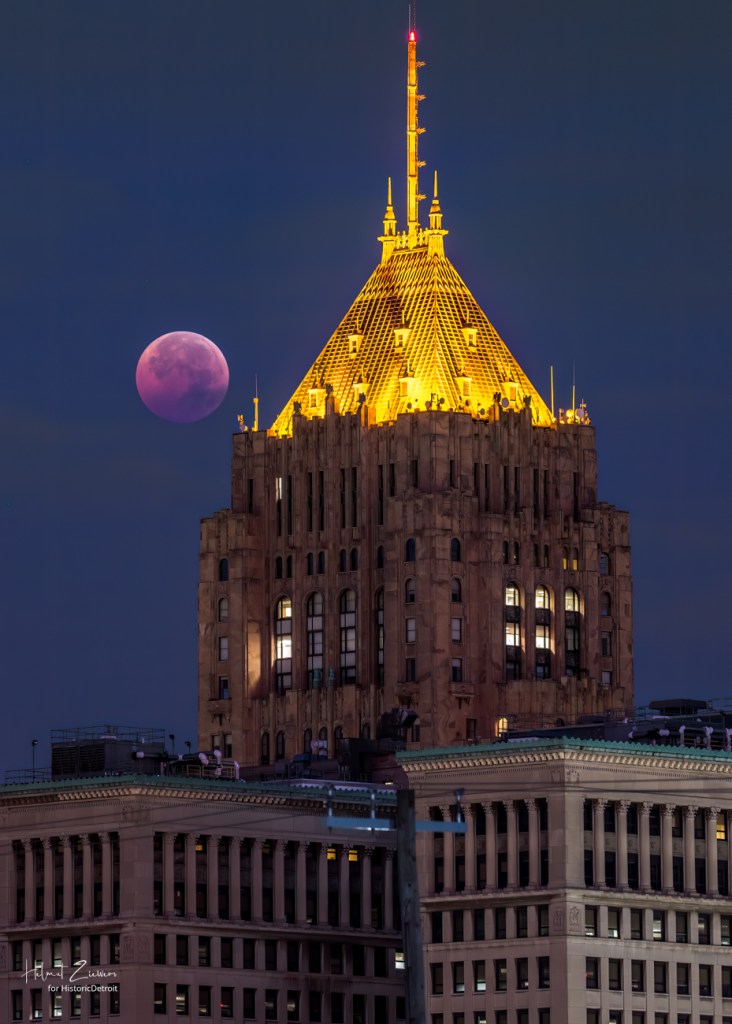
Luis then cut out stars on blue and yellow paper, adding in light sources to the night scene. The Ambassador Bridge, Dodge Memorial Fountain, Penobscot and Fisher Buildings are all recognized for their dramatic nighttime illumination, and Luis captured this with hand-drawn and cut stars.
Fisher Building with Full Moon Eclipse in Nov. 2022
Finally, Luis scanned in the physical elements of the poster and reassembled them in Illustrator, where text was added. Luis took inspiration from Detroit Techno posters for the colors and fonts. I could not be more thrilled with our poster, and the capprici of Detroit at night (with techno).
Luis Quintanilla, CAA ’24, working on the poster. Luis is from Austin, Texas, and earned their BFA from Virginia Commonwealth University.
Can you identify all the buildings shown? Can you speculate why I chose them?
If you can, you’ll love this year’s History of American Architecture: Detroit and the Worldlecture series! If you can’t, you’ll also love this year’s History of American Architecture: Detroit and the World lecture series! The first lecture is February 6, 2024, at 12:00pm ET online and at 6:30pm ET online and in de Salle Auditorium at Cranbrook Art Museum. Purchase your tickets and learn more on our website. All lectures will be available for viewing after the lecture to ticket holders. See you there!
—Kevin Adkisson, Curator, Cranbrook Center for Collections and Research
Special thanks to Artist-in-Residence Elliot Earls, Head of 2D Design, for suggesting Luis for this project. A perfect fit!
On this, the last day of summer, I thought we’d look back at the Center’s second-annual Architecture Elective for the Horizons-Upward Bound Summer Component. It was a real highlight of my summer!
A grant from the Society for Architecture Historians enabled Nina Blomfield, the Center’s Collection Fellow, and me to co-teach the six-week elective. Each Monday and Wednesday morning from June 28 to August 2, we met in Gordon Hall of Science at Cranbrook with fifteen enthusiastic HUB students, grades 9 through 12. While we started most mornings in the classroom with our textbook or a slideshow of images, the real excitement came on class trips.
I mean, what better way to learn about excellent architecture than to study the buildings of Cranbrook?
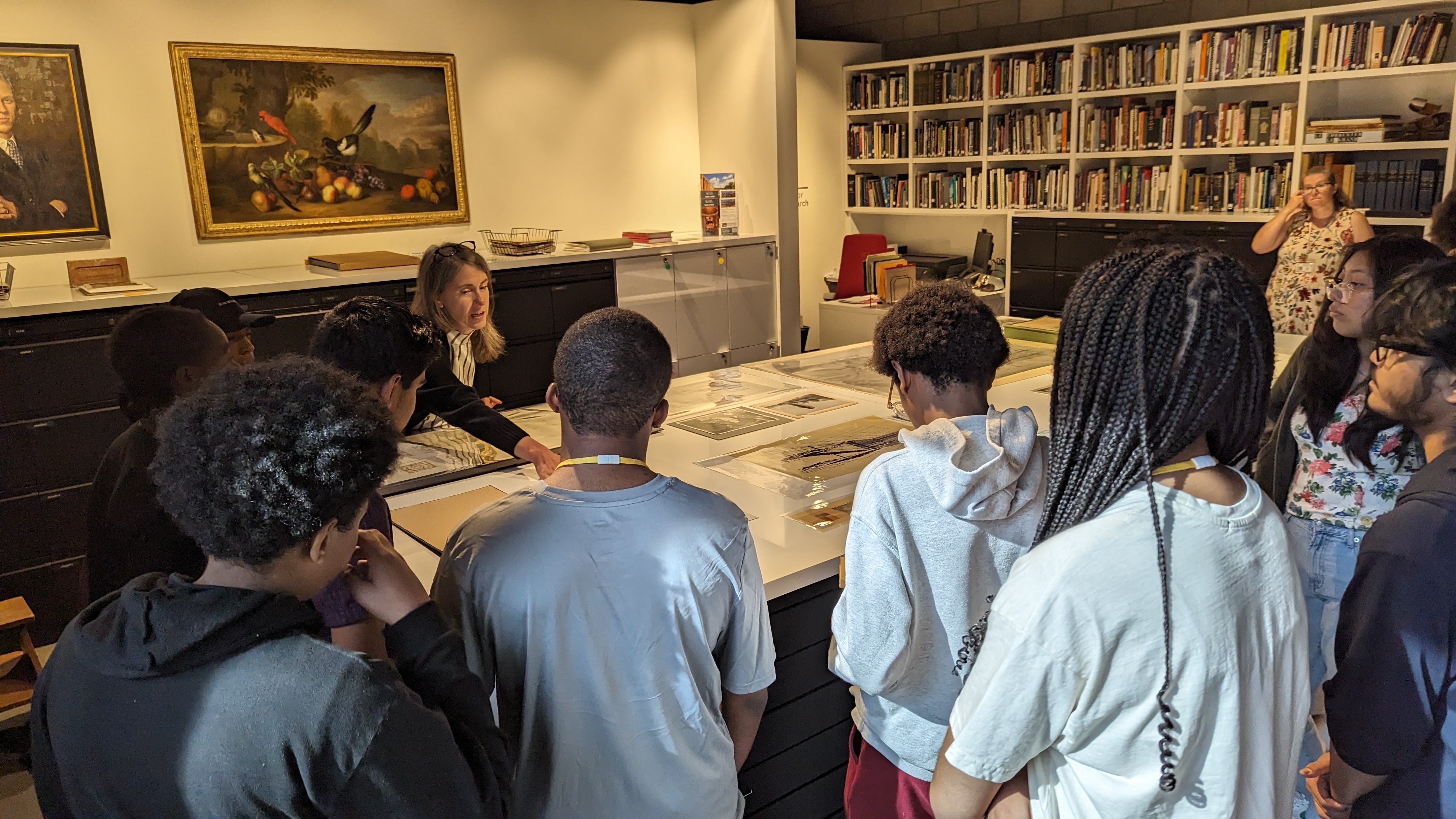
Head Archivist Deborah Rice showing our HUB students architectural treasures from Cranbrook Archives. Nina Blomfield, photographer.
To orient ourselves, we started with a morning spent in Cranbrook Archives, studying original sketches, renderings, blueprints, photographs, and even fundraising literature about Cranbrook’s many architectural treasures. We saw the great diversity of how our buildings were imagined, represented, and constructed, and how an architect moves from a loose, gestural sketch to formal construction documents that communicate complex structural systems.
Then, we spent a class period each at Cranbrook House, Saarinen House, and the Frank Lloyd Wright-designed Smith House. In each location, students carried their sketchbooks and made notes and drawings about the architecture. I was especially impressed at the students’ analytical skills. In fact, while I usually love talking about the nitty-gritty specifics of Saarinen House, I found myself sitting much more quietly, asking students questions about what they noticed, liked, or disliked in each room. Listening to their observations and conversation helped me see each space anew.
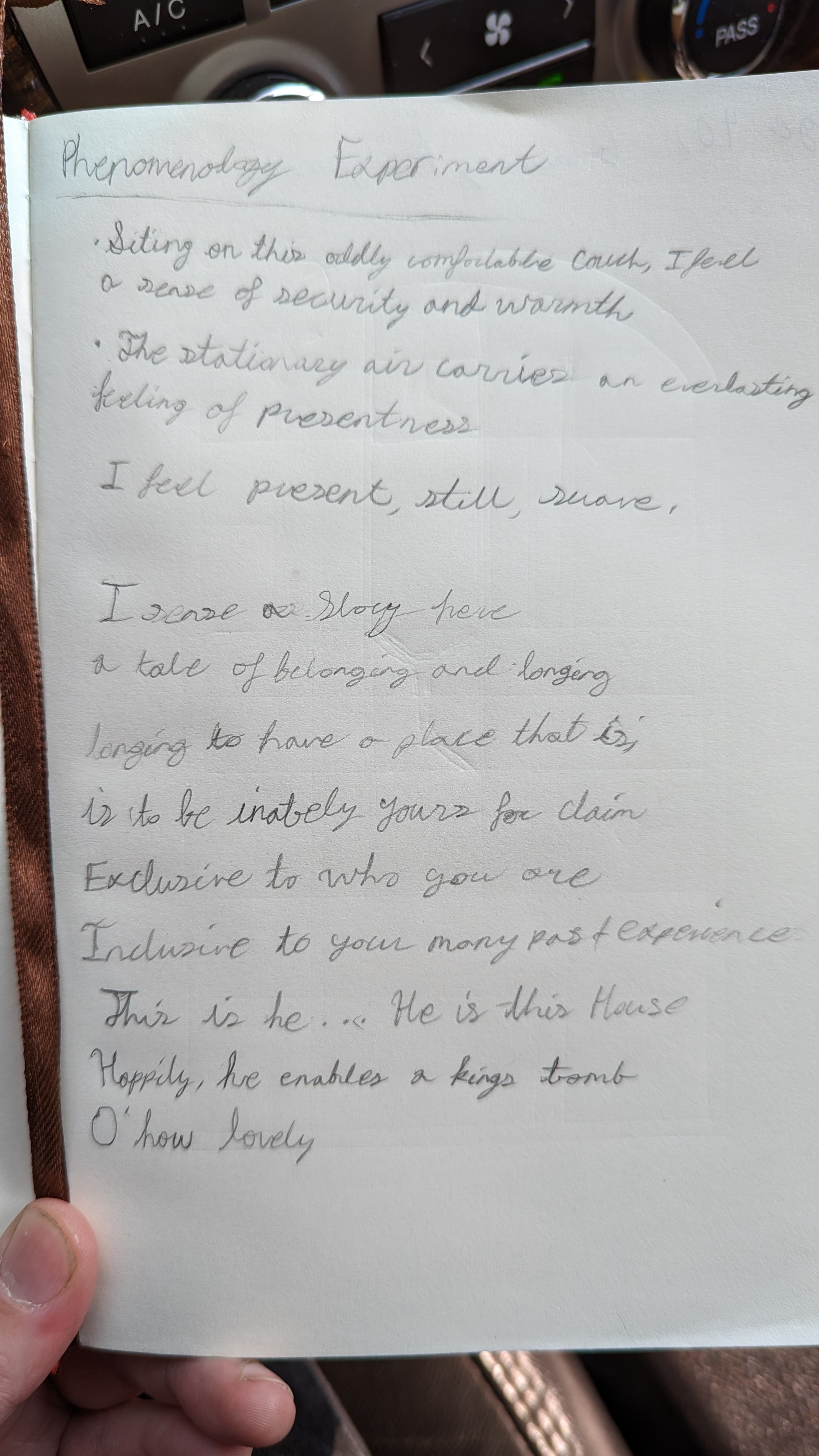
At Smith House, Nina led a phenomenology exercise, where, instead of telling the students the story of Frank Lloyd Wright and the Smiths, she simply asked each student to find a spot in the house to sit in quietly. Then, they wrote or sketched what they observed and sensed. Having such a tactile experience with the architecture and nature proved to be more memorable than a conventional tour.


























 Cranbrook Kitchen Sink