New Digital Collection Focusing on the Middle East

Thanks to a generous grant from the Fred A. and Barbara M. Erb Family Foundation, thousands of negatives from the collections at Cranbrook Archives have been re-housed to ensure their long-term stability and preservation. One of these collections, which documents a research trip conducted in the Middle East by Cranbrook Institute of Science (CIS), has been digitized and is now available to users from our online database.
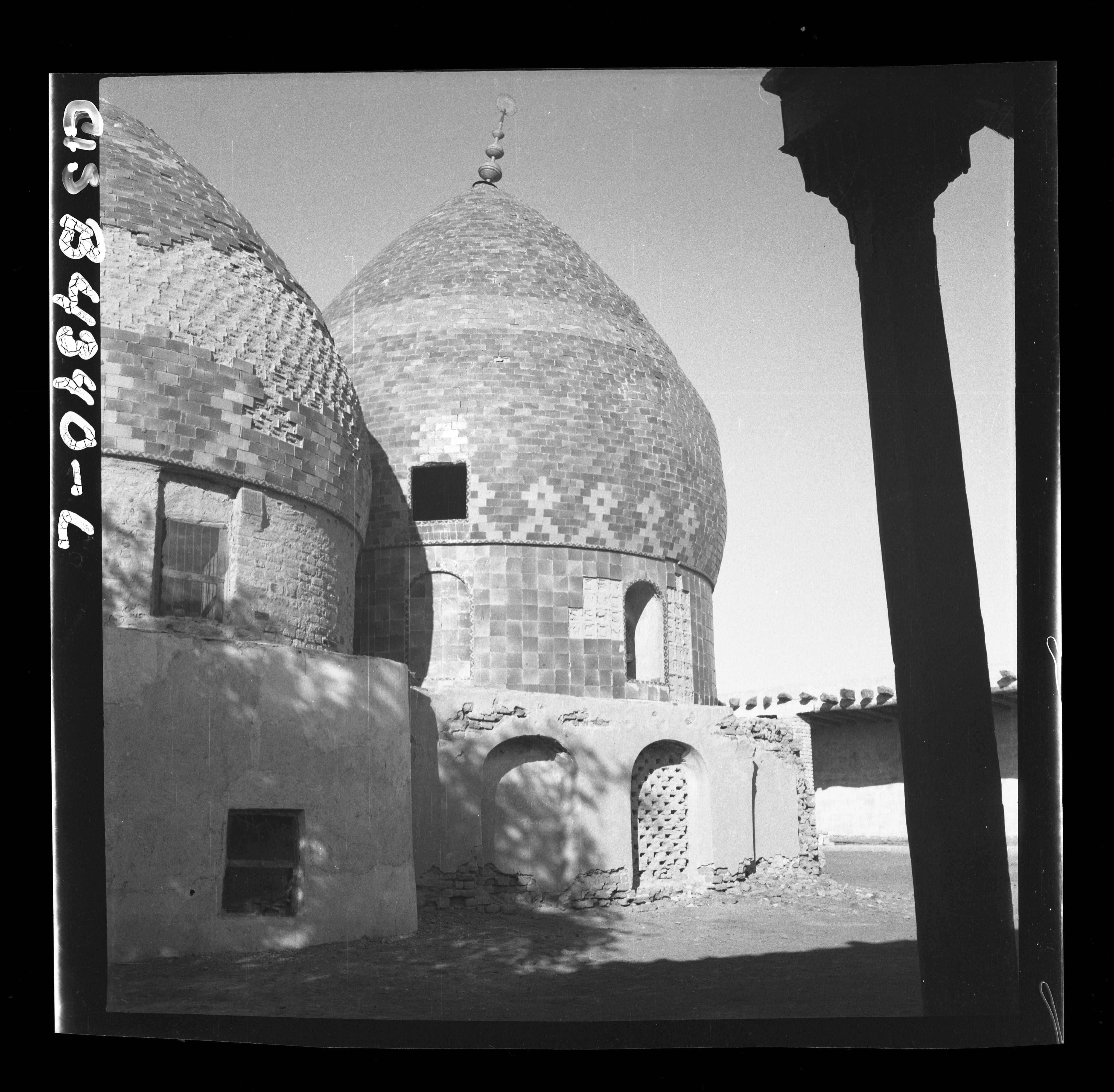
Domed Structures near Babylon. Photograph by Robert T. Hatt.

From 1952-1953, Dr. Robert T. Hatt (Director of CIS from 1935-1967) led an exhibition in Iraq, Syria, Jordan, and Egypt. Hatt recorded his observations in a travel journal which is part of the Robert Torrens Hatt Papers at Cranbrook Archives. In addition to his research and work as a scientist, Hatt was an avid photographer. Our collection includes more than 400 photographs taken by Hatt during his travels.

Dr. Hatt’s travel diary, 1952-1953. Courtesy Cranbrook Archives.

We are excited to share this unique collection that documents communities and antiquities which may no longer exist. Users can browse the collection image by image, or use the Search box at the top of each page in the online database.  To browse the 400+ images in the collection, click the Browse All button (next to Home).

Dr. Hatt (right) and an unidentified man in Babylon.

We hope you enjoy this new collection! Special thanks to Archives Assistants Veronica Wood and Kaitlin Scharra Eraqi for their hard work and the many hours they spent on this project.

Gina Tecos, Archivist
 

First Female Graduates

We recently had a query in the Archives about who the first woman was to receive an MFA at the Academy of Art. Actually, there were two – both in Ceramics. Edna Vogel’s bio can be found in a previous blog post. The other woman was Florence Kee Chang, a Chinese-American from Hawaii. Born in 1915 in Wahiawa on Oahu Island, Chang attended the California College of Arts and Crafts in Oakland, California after high school, where she received her B.A. in Art Education in 1942. She immediately applied to Cranbrook, where she studied ceramics with Maija Grotell, weaving with Marianne Strengell, and took a course in Metals with Harry Bertoia.

Picture1.jpg

Chang’s bowl and vase acquired by Cranbrook Academy of Art in 1943 as part of the Acquisitions Honors. On the right is Chang’s mark.

In May 1943, Chang was part of the first class of MFA graduates at the newly accredited Academy of Art. She and Vogel were the only two women to receive degrees that inaugural year. In addition, the Academy purchased two of her pieces of pottery, for which she received an “Acquisitions Honor.”

IMG_7389.jpg

Although she was from Hawaii, Chang adapted well to winter in Michigan! Courtesy Margueritte Kimball Papers.

Very little is known about Chang after she graduated. In 1955, she traveled to Japan, where she worked for two years as an arts and crafts director for the U.S. Army as part of what became known as The Army Crafts Program. Chang returned to Hawaii where she passed away in 2001.

Chang.jpg

Chang’s 1942 Christmas card reflects the Academy Art’s sculpture and architecture.

If you have any further information about Florence Kee Chang, please contact us!

– Leslie S. Edwards, Head Archivist

Photo (Shoot) Friday

In preparing for the Center’s upcoming Edible Landscapes Dinner, I came across a series of images from a photo shoot of George and Ellen Booth in the 1940s. Some images were clearly taken in the Cranbrook House Library or Oak Room, but other images were harder to place.

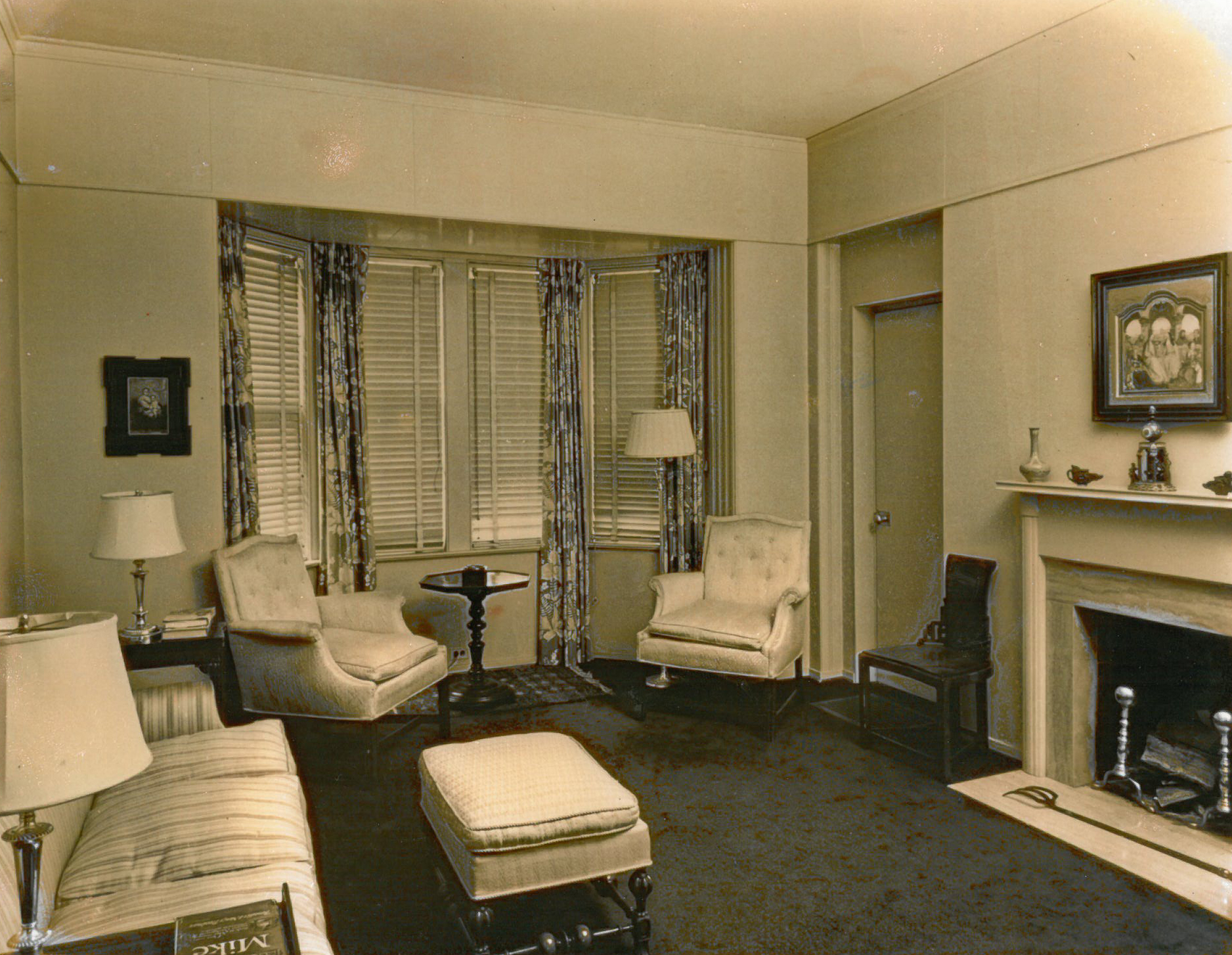
Here, George and Ellen are seated with a magazine, and she is examining a vase. Below (after a wardrobe change), they’re seen opening a package. While it may not look like a room we know in Cranbrook House, they’re in Mrs. Booth’s Morning Room—Mr. Booth’s old office.

With the completion of the West Wing addition to Cranbrook House in 1918, George Booth relocated his office to a larger suite of rooms beyond the grand new Library. His first office, original to the 1908 home, was converted into a Morning Room for use by Ellen. The conversion was spearheaded by the Booth children, who remodeled the space as a Christmas gift for their mother in the 1930s. Mrs. Booth apparently loved the room, and made great use of its bright, cheery atmosphere.

Ellens Morning Room 1952.jpg

Ellen Booth’s Morning Room in Cranbrook House, 1952. Cranbrook Archives.

George insisted that the renovation of his old office be reversible to the original Albert Kahn design. You can see in the photographs the seams of the panels that made up the new pale walls. In 1993, the room was returned to its original appearance as George’s office by the Cranbrook House & Gardens Auxiliary.

The images from this photo shoot in the 1940s have been used over the years in various Cranbrook histories and publications focused on the Booths themselves. I’m appreciating the photos for showing a small glimpse into the life of Ellen and her now-gone Morning Room.

Kevin Adkisson, Collections Fellow, Cranbrook Center for Collections and Research

“Smoking and Coking”: The Kingswood Senior Cabin

In March 1940, Kingswood girls were invited to party at Cranbook School’s senior cabin. (George Booth had given the boys the gift of the senior cabin in December 1927.) While the girls had known about the cabin, their visit really brought home the fact that they did not have one to enjoy for themselves. Spearheaded by then sophomore, Mary Adie ‘42, the Kingswood girls began to push for their own cabin.

Henry Scripps Booth supported the idea and was the architect. The cabin had an open floor plan with a fireplace, bathroom, and a small kitchenette. Bench seating lined the window wall that looked out over the brook. The Cranbrook Foundation paid for the structure which cost $2392. The Kingswood School Board of Directors felt that student involvement would help stimulate class and school spirit, and that the cabin would provide an informal respite from the rigors of the school day. The girls raised money and paid for furnishings themselves (from Sears), and even made curtains to decorate the space. Each successive senior class left their mark by adding something to the décor. Mr. Wentz made a wrought iron screen for the fireplace which featured the Kingswood seal. Mrs. Dow contributed a combination radio-Victrola which was very popular as it played twelve records simultaneously! And eventually, the girls even got a telephone.

View of the Senior Cabin (left) with the Western Playfield Shelter, 1963. Courtesy Cranbrook Archives

Once the plan was approved, a location was determined. Then Headmistress, Margaret Auger stated: “I thought I was very clever” when she sited the cabin on the edge of the Kingswood School grounds – close enough where there could be adult supervision, but far enough away so it did not seem as if the faculty was spying on the students. Ground was broken November 19, 1940, and the girls had a housewarming party May 9, 1941 with juniors and the outgoing seniors. The party became an annual “right of passage” which transferred the rights to use the cabin from one class to another. The cabin was so popular that initially there was a column in The Clarion called “Cabin Close-ups!”

Kingswood Seniors hanging out, Feb 1957. Notice the décor.

The cabin was used for a variety of leisure activities. Bridge club was held on Wednesdays, which was the only time that girls were allowed to smoke on campus. Auger’s smoking rule was that students could smoke cigarettes at the cabin, but only on Wednesdays, when faculty member Josephine Waldo was there to supervise. (She, by the way, was a smoker herself). The catch was that if Auger found out that the girls smoked on any other day of the week, she would close the cabin. By far, one of the best parts was that the girls could drink cokes – by the case full! During exam weeks, girls took study breaks at the cabin and revived themselves by “smoking and coking.” In 1964, smoking at the cabin ended when Michigan State law outlawed cigarette smoking for  minors under the age of eighteen.

Smoking and Coking, Dec 1952. Courtesy Cranbrook Archives.

As time went on, various updates and changes were made to the cabin. However, by 1966, the foundation of the building had begun to erode. In the early 1980s, the cabin was only used as a restroom facility for Kingswood School outdoor events, end of year parties for the Girls Middle School field hockey team, and by Academy of Art students as a space to build the models for the Design in America: The Cranbrook Vision 1925-1950 exhibition. The cabin faced increased neglect. There was not enough interest or funds to maintain or repair it and it in the mid 1990s it was demolished. The boys’ Senior Cabin still stands today.

Leslie S. Edwards, Head Archivist

Speak up!

Every once in a while, you stumble upon an artifact that takes you down an interesting path.

Recently, while discussing interesting artifacts in museum collections – specifically “Edison’s Last Breath” in the collections of The Henry Ford – I discovered that we had George Booth’s hearing aid!

SpeakUpBlog (3)

The hearing aid was manufactured by Western Electric Company of Kearny, NJ in 1938. A Google search directed me to the Hearing Aid Museum (yes, there is a museum for everything), which claims to be the “largest on-line hearing aid museum in the world, and indeed, probably the second largest collection of old hearing aids in the world.”

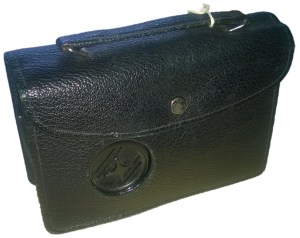
George Booth’s hearing aid is a Model 1-A “Ortho-Technic” Carbon Hearing Aid. We have the microphone, receiver, amplifier, battery, and soft leather carrying case. We are only missing the molded earpiece which was attached to the receiver.

SpeakUpBlog (2).jpg

Having a “use” item in such great condition is rare in most museum collections and I’m glad we have it as part of the George Gough Booth Papers in the archives.

– Leslie Mio, Associate Registrar


Squawk Like an Animal

While many of us know that George Booth’s acquisition of a mineral collection formed the nucleus of the Institute of Science, who knew that Cranbrook once maintained a zoo? In 1929, Cranbrook’s “Natural History Museum of the [Cranbrook] Foundation” was established (it was the pre-cursor to the Institute of Science) with naturalist W. Bryant Tyrrell as the director. In addition to the mineral collection, Cranbrook’s “modern scientific” museum also had a small collection of taxidermied birds and mammals which were housed in what is now the Academy of Art administration building. A workshop was set up in the basement which doubled as a preparation space and classroom where Tyrrell taught Cranbrook School boys about natural history. Tyrrell was also instrumental in designing the science portion of Cranbrook’s first exhibition space.

When the first science building (designed by George Booth) was constructed in late 1930 on Sunset Hill, plans were made for a small zoo which would eventually house smaller mammals, reptiles, and amphibians of the Great Lakes Region in “pens of modern design.” With Tyrrell’s experience as a taxidermist and naturalist at both the Field Museum in Chicago and the Detroit Children’s Museum, Cranbrook’s Natural History Museum found itself the recipient of live raccoons, snakes, frogs, and even a mother skunk and her babies.

Feeding Shelter, Mar 1930. W. Bryant Tyrrell, photographer. Courtesy Cranbrook Archives.

Soon, the informal Cranbrook zoo spilled out of the rear of the new building and down into the small ravine behind it. Temporary cages for the animals were placed along the edges of the ravine, and were of considerable interest not only to the Cranbrook School boys but also to the general public. The first issue of the Institute’s Newsletter (November 1931) stated that “the zoo is growing rapidly, and is beginning to achieve quite professional proportions with the addition this month of a wildcat, red fox, several weasels, and three white rats. The rats were loaned by [student] J. O’Connor of Cranbrook School.”

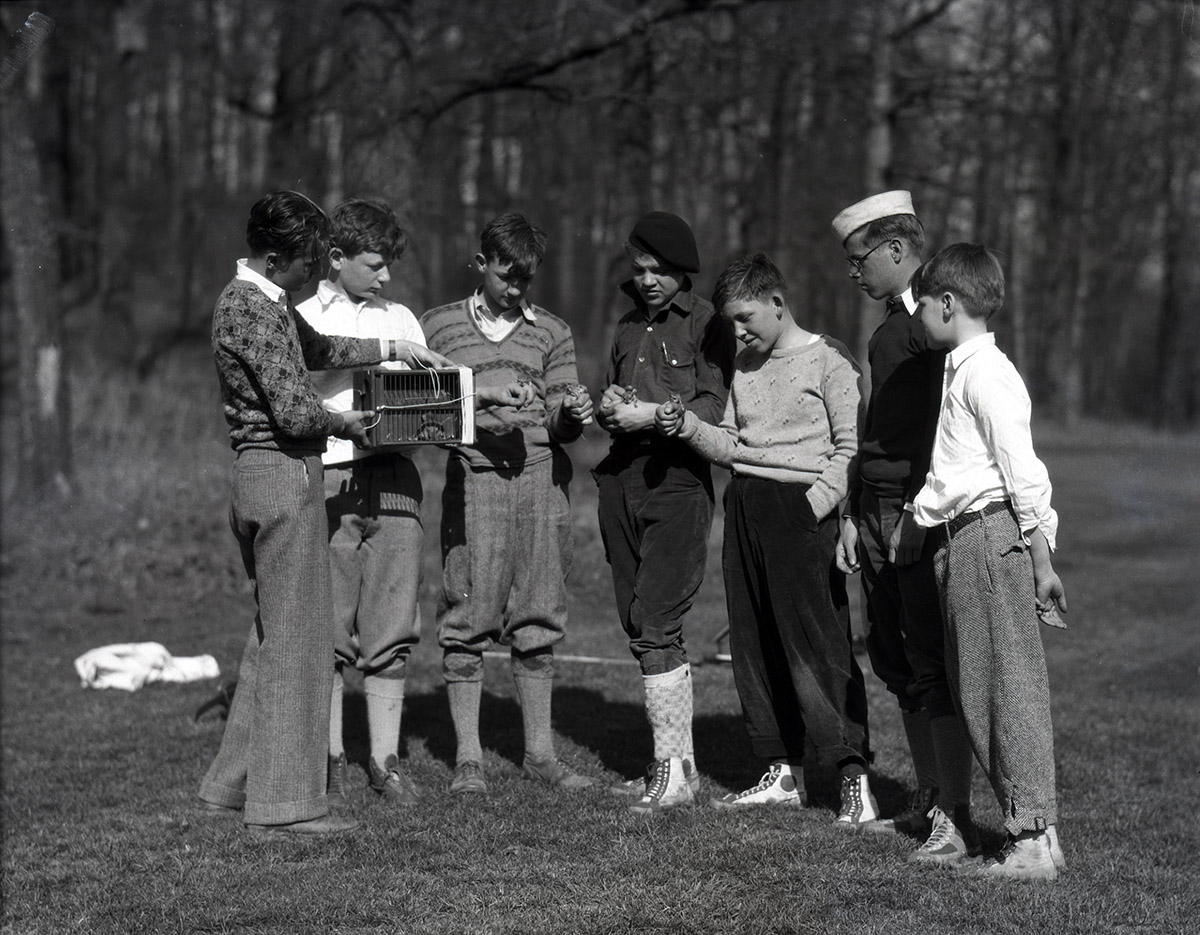
Cranbrook School boys with flying squirrels, May 1930. W. Bryant Tyrrell, photographer. Courtesy Cranbrook Archives

However, not all were so enamored with the idea of live animals including George Booth, especially when a black snake was found in the hallway by one of the secretaries who fainted in fright! And, in fact, the Institute did not have the resources to support a really good zoo. Ultimately, several factors contributed to the demise of the short-lived zoo including a new curator for the museum (which led to Tyrrell’s resignation in June 1931) and the formal establishment of the Institute of Science in 1932. The national-wide financial crisis and the Bank Holiday of 1933 put a final end to Cranbrook’s brief foray into zookeeping.

Leslie S. Edwards, Head Archivist

Cranbrook Kitchen Sink: Best of 2017

This was a great year for the Center. We are honored so many of you, our readers, joined us on Cranbrook’s campus to attend tours, lectures, exhibitions, and concerts; or rode along with us on Day Away trips; or visited Cranbrook Archives to research, volunteer, or just explore. If you’re a reader from farther afield, thank you for following our blog and your continued interest in the many Cranbrook legacies. We hope everyone has enjoyed learning more about Cranbrook through the Kitchen Sink!Here are ten of our most viewed (and favorite) blog posts of the year. In no particular order, take a look back and catch up on posts you might have missed!

The Devil Made Him Do It Learn about the iconic (and enigmatic) 1989 rock sculpture by Richard Nonas near Kingswood Lake

Three C’s: China, Cranbrook, and the Crane Read about cross-cultural connections our Head Archivist Leslie S. Edwards made after spotting countless cranes in China

May The Fork Be With You Read about the many, many pieces of silverware selected by Loja Saarinen for use in the Kingswood Dining Hall

House of the Poet Take a look back at this special unbuilt project for Cranbrook by legendary architect John Hejduk

Pergola Restored! Follow along with Capital Project’s Project Manager Ryan Pfeifer and his team’s restoration of the Cranbrook Gardens pergola

Indiana Jones and the Search for the Pergola Picture: My Senior May Experience Learn what it’s like to be a Cranbrook Kingswood student volunteer with the Center and our Archives

Going Green: LED Lightbulbs at our Historic Houses Learn about how our Assistant Registrar Leslie Mio successfully converted Saarinen House to LED Lightbulbs

Frank Lloyd Wright’s Landscapes Read this post about a late summer visit with the horticulturalist of Fallingwater to Wright’s Bloomfield Hills homes, and then learn about Edna Vogel: Cranbrook’s Other Wright Weaver, a Cranbrook Academy student who met with Wright and wove rugs for his Affleck House

Evolution of a Rink Learn about Cranbrook’s history of ice hockey, rink technology, and the move from outdoor to indoor skating

Harry and Nerissa Hoey’s Weekend Retreat Finally, warm up reading about the Ralph Rapson-designed midcentury modern summer house for a former Cranbrook School Headmaster

Brookside School Tower, designed by Henry Booth in 1929, photographed on a winter walk. Kevin Adkisson, Dec. 2017.

In addition to continuing our Friday blog posts, the Center has lots of exciting programming coming up in 2018. You can be the first to find out about Center events through our emails (if you’re not subscribed, you can join here), or on the Center’s website.

I hope you enjoy looking back over these posts, ideally from the comfort of some place warm (or at least out of the snow). I’m off to polish my sequins and tune my kazoo for New Years Eve! Happy New Year everyone!

– Kevin Adkisson, Collections Fellow, Cranbrook Center for Collections and Research


Enduring Traditions: The Festival of Gifts

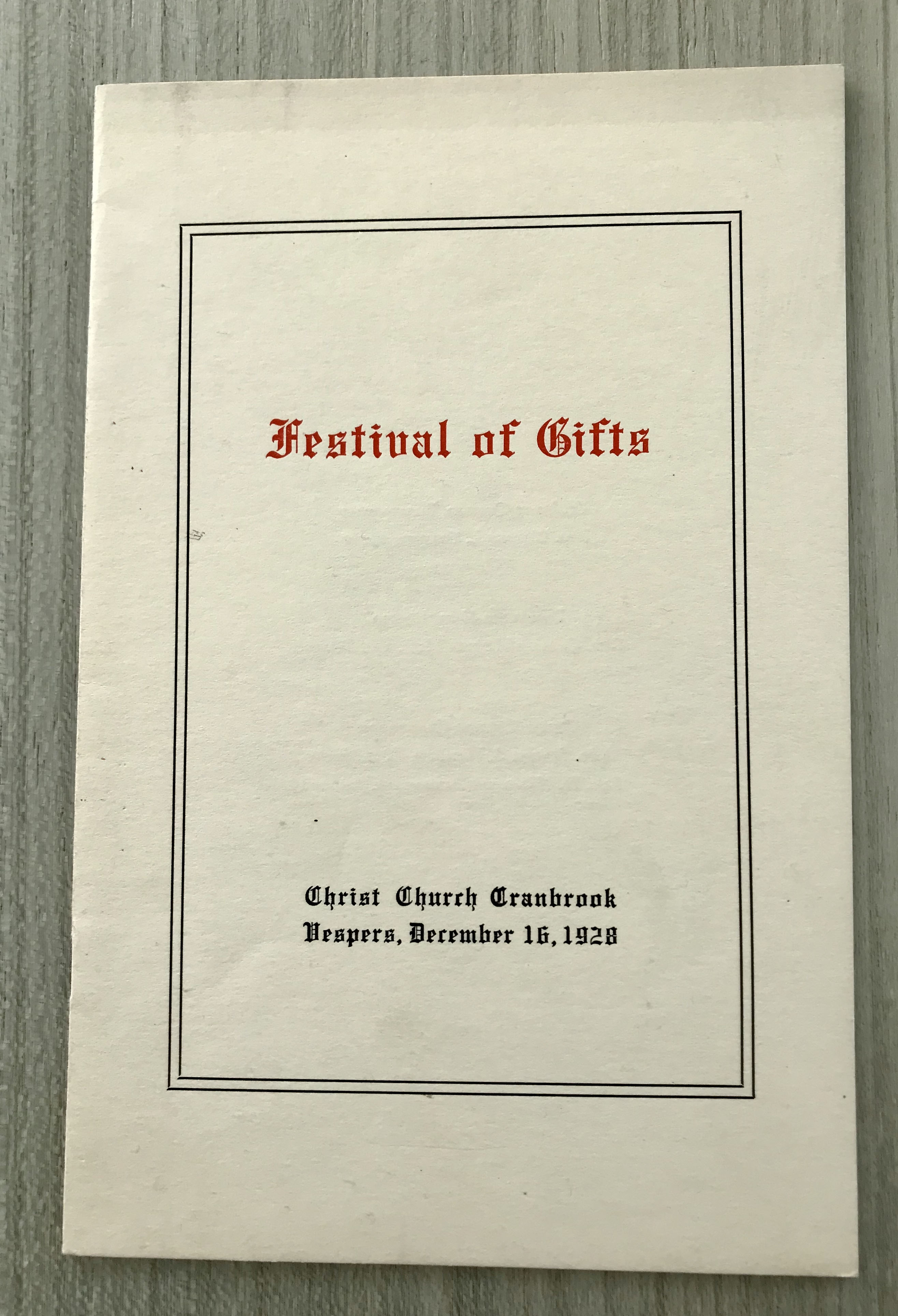
Next year will mark the 90th celebration of the Festival of Gifts at Christ Church Cranbrook – as the church also celebrates its 90th anniversary in 2018. Henry Scripps Booth wrote, produced, and participated in a nativity play at St. James Church in Birmingham prior to the building of Christ Church. With the establishment of the new parish, Booth suggested that the two combine efforts in a special Christmas program. According to documentation in the Henry Scripps and Carolyn Farr Booth papers, “the cooperation turned out to be in name only.”

Festival of Gifts order of procession and liturgy, 1928. Courtesy Cranbrook Archives.

The Festival of Gifts is an adaptation of the St. James play, with a procession of the entire congregation to the nativity tableau followed by the entrance of the Holy Family, shepherds, and wise men as the story of the birth of Christ is read. As the congregation proceeds to the altar they lay gifts at the manger, which are then distributed to local families in need.

Some of the original festival costumes were re-purposed from the 1916 Cranbrook Masque and others were purchased by Henry Scripps Booth in Tunisia in 1922. Originally a doll was laid in the manger, but at some point, the decision was made to cast an infant from the parish. Animals have also been a part of the event, however, according to Henry Scripps Booth, “Brighty” (star of Stephen Booth’s movie Brighty of the Grand Canyon) made the greatest impression!

Gina Tecos, Archivist

The Tale of a Bodhisattva

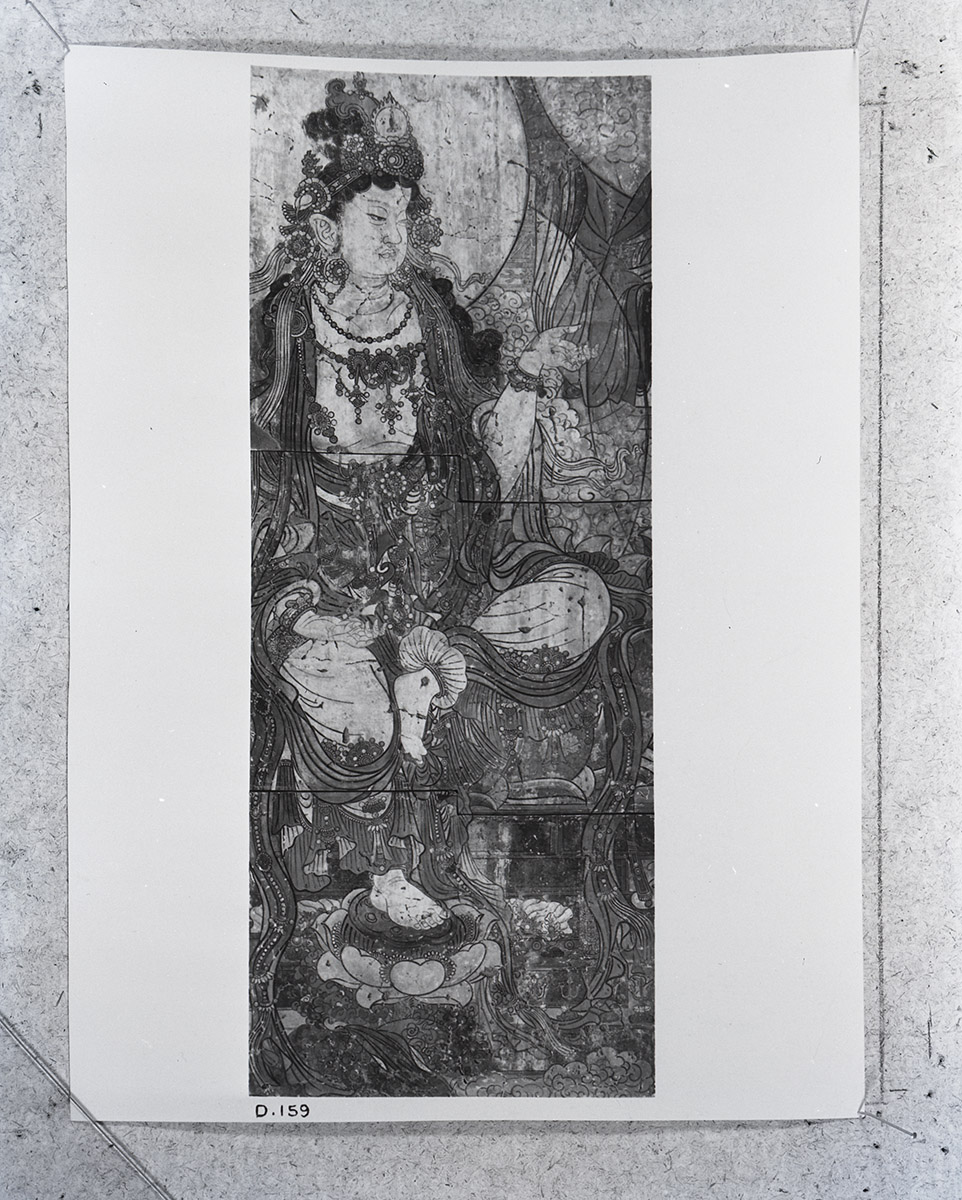
Nearly every day I run across some previously unknown person or event relative to Cranbrook’s history. My latest obsession is with a Chinese wall painting purchased in 1939 by George Booth for the Art Museum’s collection. Sadly, it is no longer in our collection, but the story is quite interesting nonetheless.

As early as 1916, Booth was acquiring Chinese objects from the Japanese dealer Yamanaka & Company, and soon after from Duveen Brothers and the Parish-Watson Company in New York, Spink & Son in London, and Gumps in San Francisco. As was customary, dealers maintained a relationship with their clients via letters often suggesting objects they might be interested in and including photographs and catalogs. In 1939, Booth began a relationship with the well-known Chinese dealer, C.T. Loo, who had offices and gallery space in both New York and Paris.

Bodhisattva from the Five Dynasties Period. Cisheng Monastery, Wenxian, Henan Province, China. You can clearly see where the wall painting had been cut into three sections in order to remove it from the temple.

Loo was widely considered one of the most prominent, and controversial, dealers in Chinese art and artifacts in the early twentieth century. Loo traveled annually to China to hand-pick the objects he wanted, many of which were chiseled out of or pilfered from ancient Buddhist Temples and monasteries. Daisy Yiyou Wang, Curator of Chinese and East Asian Art at the Peabody Essex Museum in Salem, Massachusetts, and the pre-eminent scholar of Loo, stated “he is remembered as a culprit for the depletion of the nation’s cultural heritage.” Loo justified his practice by stating that he was preserving China’s history by getting the objects out of China – that the Chinese couldn’t or wouldn’t take care of them! In 1915, after a visit to the U.S., Loo opened a gallery in New York. His first sale was to Charles Lang Freer.

CAM1940_3

The three sections were shipped to Paris and reassembled by restorers there.

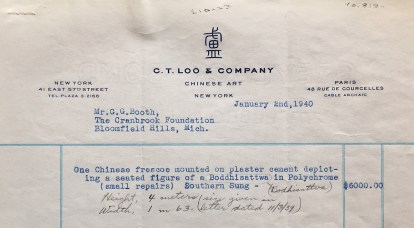
Booth’s first interaction with C.T. Loo came in the fall of 1939 when he acquired two Chinese bronzes. In correspondence about the bronzes, Loo also suggested to Booth a large “fresco” (or wall painting) which stood thirteen feet tall. After consultation with Eliel Saarinen, Booth acquired the work, which arrived in January 1940.

AD.11.236

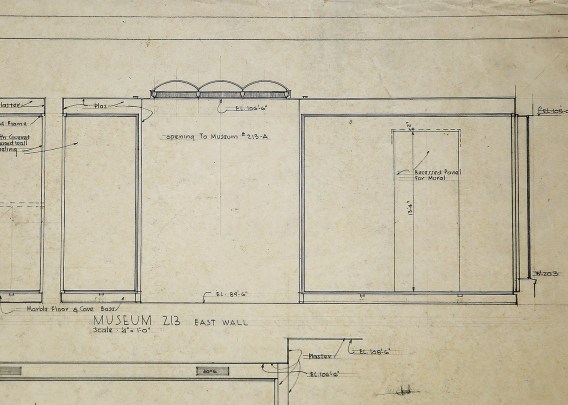
Part of the detail drawing of the Art Museum’s east wall. Saarinen designed a recessed panel which housed the painting. AD.11.236, November 5, 1940. Courtesy Cranbrook Archives

In December 1941, John Gettens of the Fogg Museum examined the painting and found it to be in generally good condition. It was of the “usual mud wall of Chinese temple paintings” which included organic matter – straw, seed hulls, and rice. It was covered with a very thin white coating of kaolin, and the colored pigments were malachite, azurite, red iron oxide, yellow ochre, vermilion, and white clay.

The painting hung in the main gallery of Cranbrook Art Museum for more than thirty years. In 1974, the Museum Committee unanimously decided to sell the painting instead of pay the $5-6,000 to have it restored. Funds from the sale were to go towards the care and restoration of other works in the collection, as well as for renovations to museum storage space.

Tracing which shows the location of small areas of in-painting by Cranbook’s Marshall Fredericks, October 1941. Courtesy Cranbrook Archives.

Thus ends the saga of the Chinese temple wall painting at Cranbrook as we do not know its whereabouts today. Other temple paintings can be found in the collections of the Art Institute of Chicago, Nelson-Atkins Museum of Art in Kansas City, Princeton University Art Museum, and the Toledo Museum of Art.

Leslie S. Edwards, Head Archivist

Booth and Birds

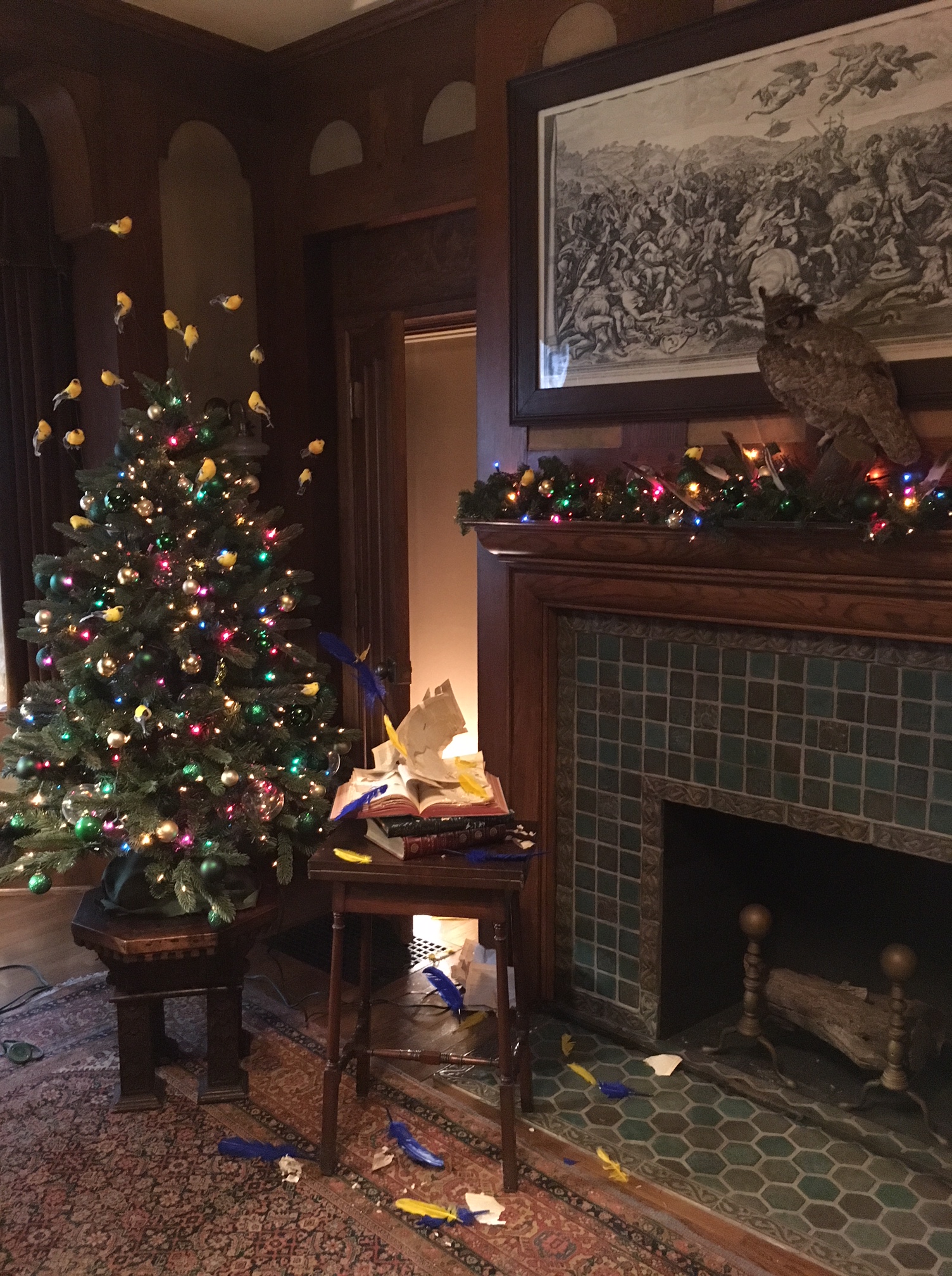
In a corner of George Booth’s Old Country Office, there is a door that opens into a blank wall. I became curious about this door to nowhere last year when I was setting up the Center’s holiday display, and so this year’s Christmas scene is inspired by the door’s original purpose.

Around 1919, Booth purchased a blue and yellow macaw and named him Mack. Mack, like all parrots, enjoyed chewing things—Booth’s picture frames, furniture, and the walls themselves. Booth thought getting a second macaw, which he named Jack, might calm Mack’s chewing, but alas, he simply doubled the trouble.

In early 1920, Booth added a flat-roofed glass walled aviary outside of his office to give Mack and Jack their own space (and save the furniture). It was bound by the exterior walls of the office, living room, and library. Accessed through a door left of the fireplace, Mack and Jack were joined by canaries in the aviary, and according to Henry Booth’s memories, every time the canaries sang or the telephone rang, the macaws’ squawk would fill the house.

This ca 1925 view of Cranbrook House shows the exterior window of the aviary, covered with a cabana striped awning, between the bay window of the office and the library wing. Courtesy Cranbrook Archives.

Eventually, the Booth’s gave Mack and Jack to the Belle Isle Zoo. The canaries remained for a time, cared for by one of the maids, Harriet. When she retired, the aviary was disassembled and the window was reused as a kitchen window for Brookside School, where it remains.

For my holiday display, I’ve opened the door to the aviary and staged a scene as if Mack and Jack were just here: destroying a book and leaving their feathers all around. You can find the canaries enjoying themselves around the Christmas Tree.

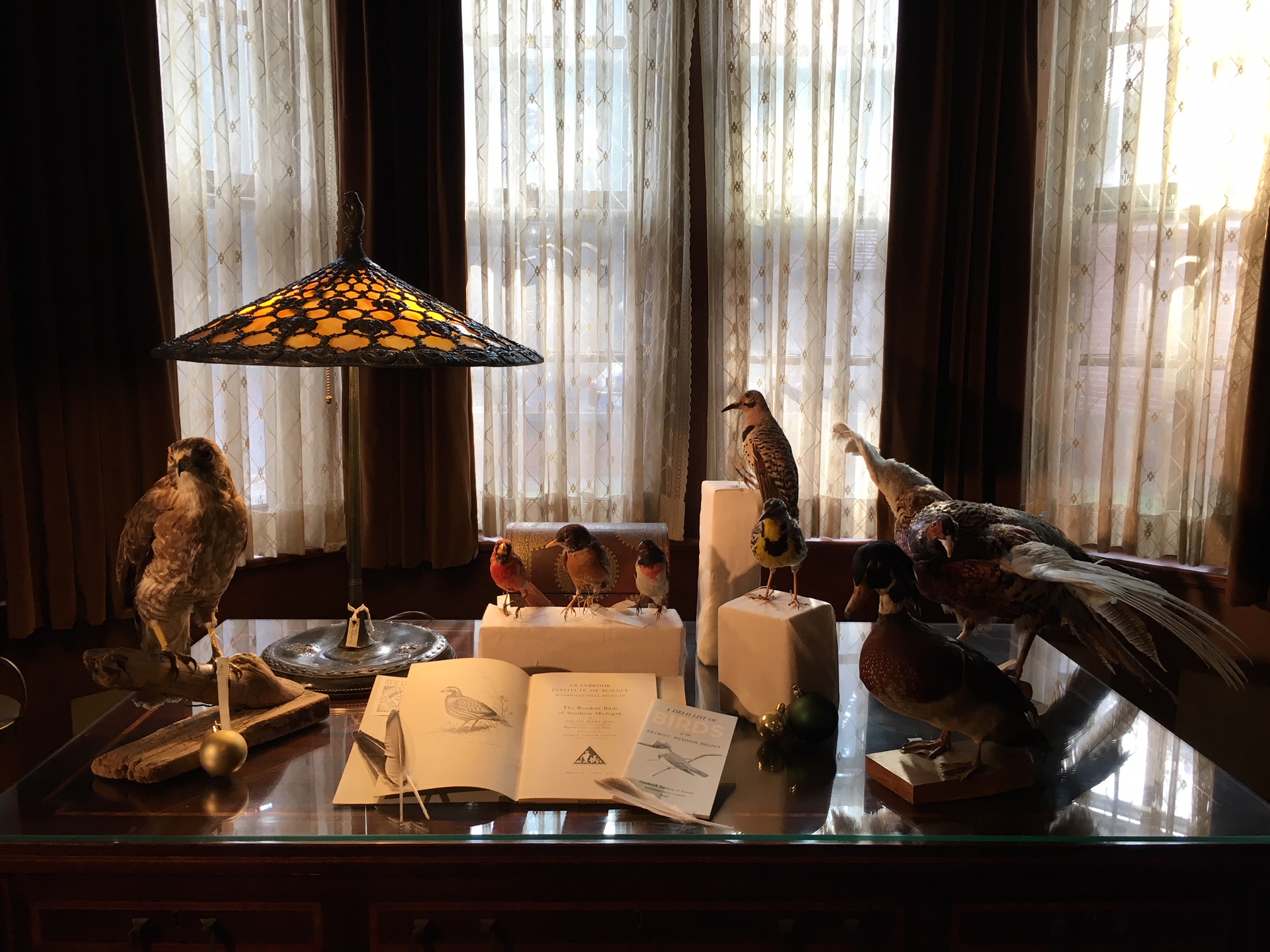
IMG_0798Also on display in the office, is a series of birds that Booth could have seen on his many walks around the Cranbrook estate–hawks, cardinals, robins, and plenty of ducks (on loan to me from Cranbrook Institute of Science). All are native to Michigan, except for the pheasant which would have been introduced to the area by early settlers. Pheasants, however, love fallow fields and run-down farms—exactly what the land which became Cranbrook was when Booth purchased the property in 1904!

IMG_0799Alongside the taxidermy I’ve included pieces from the Cranbrook Archives: early copies of Institute bulletins on the Birds of Michigan, original artwork from an ornithogist working at Cranbrook in the 1930s, and photographs and short biographies of other bird-related Cranbrook people, like W. Bryant Tyrrell, Walter P. Nickell, and Edmund J. Sawyer.

Come and see the Office display this weekend (December 1-3) for the House and Gardens Auxiliary’s Holiday Splendor event (Friday, 10-4pm, Saturday 9-4pm, and Sunday 12-4pm), visit it with me next Wednesday before or after the Center’s Järnefelt Piano Trio: Jean Sibelius Concert, or at any of the other Cranbrook House events before January 8th.

Kevin Adkisson, 2016-2018 Collections Fellow, Cranbrook Center for Collections and Research

Create a website or blog at WordPress.com