As part of a module assignment for my MA in Archives Administration with Aberystwyth University (Wales), I have been researching a selection of tapestries that George Gough Booth purchased and commissioned from Morris & Co., Herter Looms, and Edgewater Tapestry Looms. I chose the theme of tapestry and time, inspired by Francis Thomson’s idea of tapestry as “mirror of history”. I was particularly interested in the Morris & Co. case study because I much admire William Morris as an artist and social reformer. Although the Morris & Co. tapestries that George Booth purchased were made after Morris’ death in 1896, they were made under the supervision of his former student, J.H. Dearle, who became Art Director in 1905.
Early Bicycle Sled?
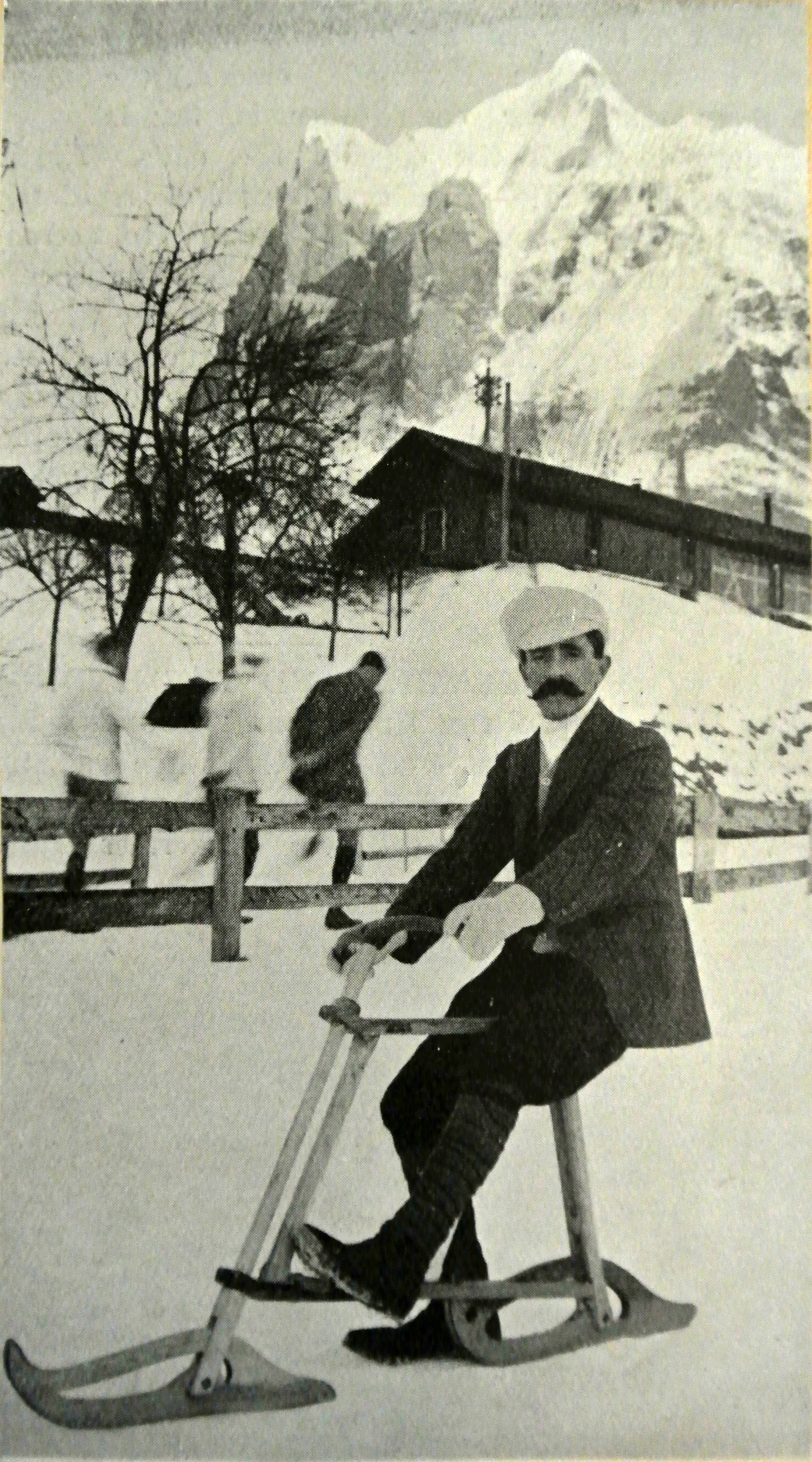
Courtesy Cranbrook Archives
This gentleman caught my eye as a colleague was browsing through a George G. Booth (GGB) scrapbook containing clippings of illustrations from magazines. The scrapbook was GGB’s “Dream Book” of art and architecture examples on which to model his new home at Cranbrook, and is part of his papers.
Amidst illustrations of terraces, statues and waterfalls was this Alpine dandy. Why is his picture there, and what is that contraption he’s sitting on? A search on the Internet revealed no information on this early 20th century, bladed “vehicle” for seated conveyance. If anyone out there knows more about it, I’d be delighted to know!
–Cheri Gay, Archivist
Good news! One of the Archives’ volunteers, Lois Harsh, spent a cold afternoon diligently searching the Internet and found this web site, www.ski-bike.org that identifies several versions of the ski bike. This particular version is from around 1914. Thanks, Lois!
Illumination!
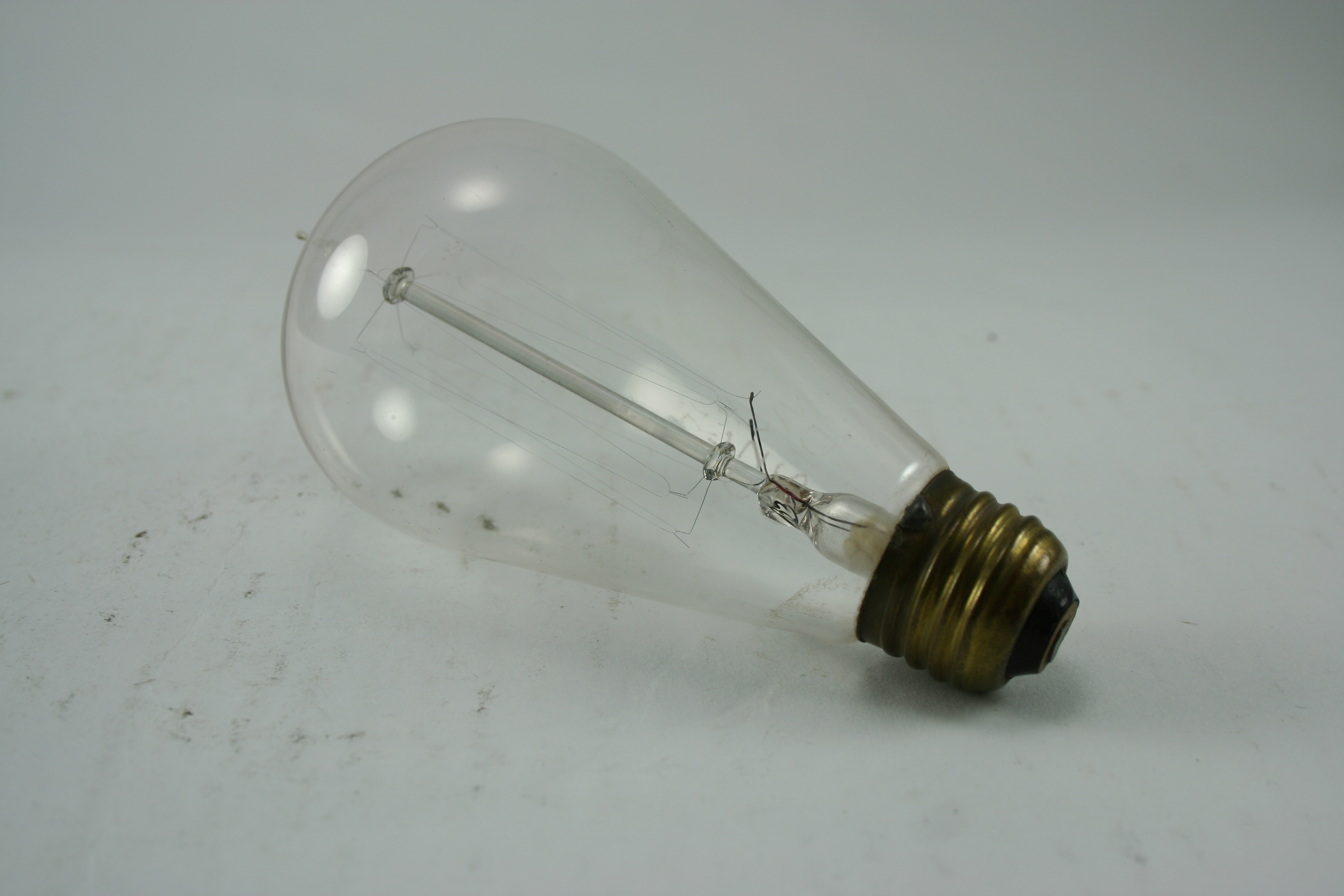
Glass-etched Edison bulb from 1920, Cranbrook Cultural Properties Collection..
While browsing the historical writings of Henry Scripps Booth recently, I came upon the answer to a question that Collections Fellow, Stefanie Dlugosz, had posed late last year. As she prepared the Center for Collections and Research’s Holiday Tables exhibit (“Illuminate the Seasons” was the theme), which highlighted the early use of electricity in Cranbrook House, Stefanie had wondered what the source of electricity was, in 1908, for a relatively isolated place like Cranbrook. Efforts by several people could not turn up an answer. Until now.
“Although Caldwell’s electric fixtures had been installed about December 1, we still had to use candles and oil lamps for light because the private Edison line being installed from Highland Park to Cranbrook House was incomplete.” This was recorded during the 1980’s in Henry’s unpublished History (which relates the history of Cranbrook Educational Community and the Booth family between 1800 and 1987).
As the bill from Albert Kahn shows, George G. Booth spent $1863.48, around $49,000 in today’s dollars, on lighting fixtures in Cranbrook House. The order is itemized, room by room, on seven pages of legal-sized paper, in Booth’s papers.

George Gough Booth Papers, courtesy Cranbrook Archives.
Read the original blog for more information on the Caldwell lighting fixtures at Cranbrook House.
— Cheri Gay, Archivist
Photo Friday: Excavation at Greenwood Mound
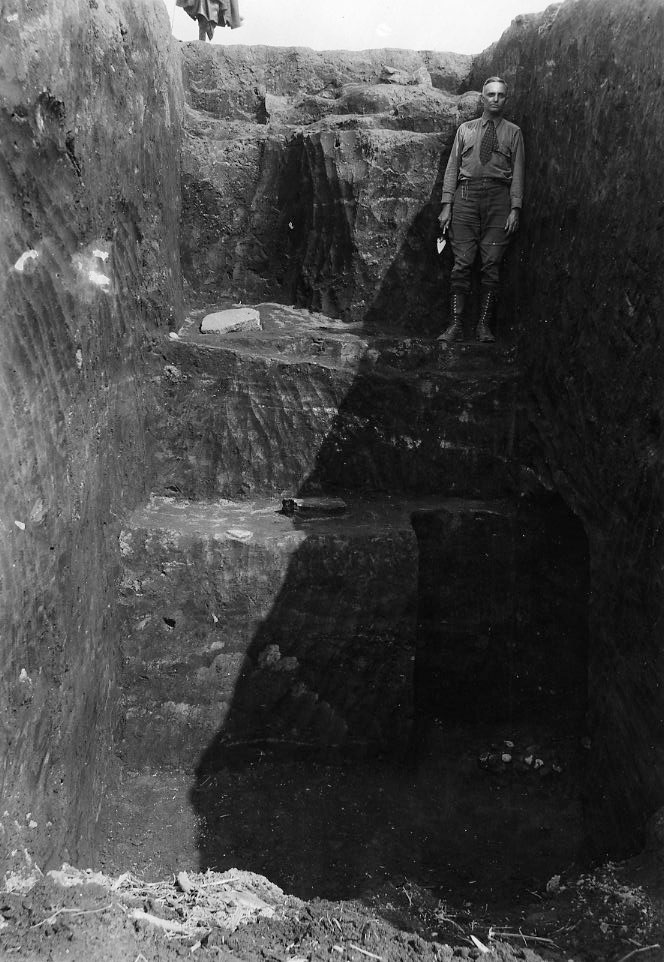
William Colburn, February 1932. The William Colburn Papers, Cranbrook Archives.
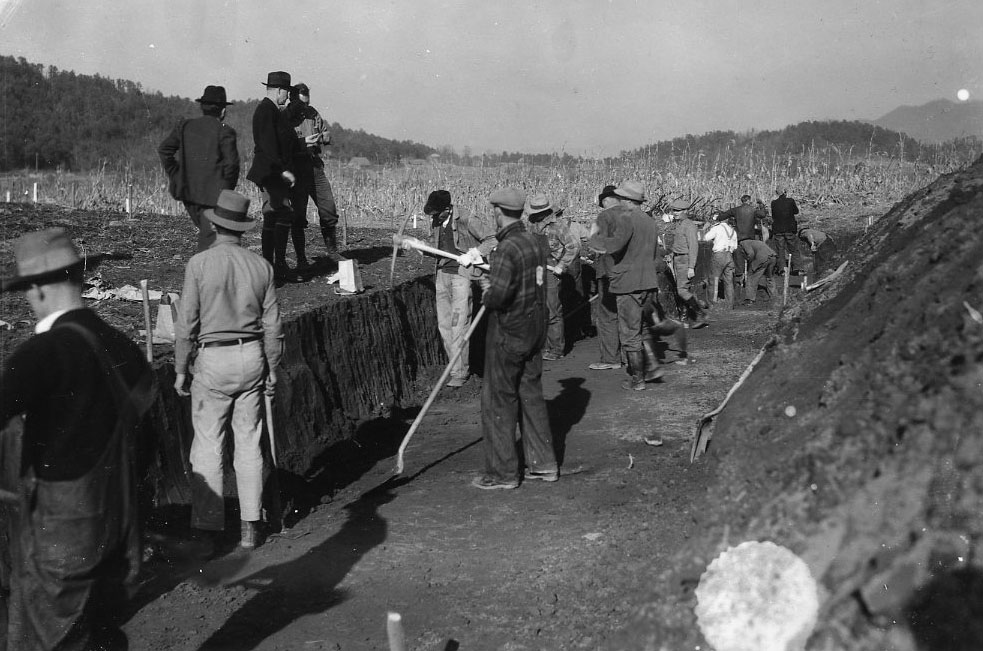
Team of men at dig. The William Colburn Papers, Cranbrook Archives.
In honor of International Archaeology Day, today’s Photo Friday is a tribute to Archaeologist William Colburn (1882-1966). Colburn, a Detroit native, first visited Cranbrook Institute of Science in 1932. He spent a few weeks in December of the same year fixing display and lighting issues the Institute had in the “mineralogical room.” It came to his attention in 1933 that there were multiple collections of mineral specimens held by the Detroit Museum of Art (now the Detroit Institute of Art) that were not being displayed due to lack of space. Colburn secured an indefinite loan of these collections to the Institute, and spent the majority of the summer of 1933 cataloging and displaying them. Subsequently, Colburn accepted a position on the Institute’s Board of Trustees, a position he held from 1933-1944.

Colburn’s sketch of the bowling alley. The William Colburn Papers, Cranbrook Archives.

Taken after the rain, the arrangement of fieldstones can be seen. The William Colburn Papers, Cranbrook Archives.
Colburn is well-known for an excavation he led in February 1932 of the J.J. Greenwood Mound, a Cherokee civilization near Dillard, Georgia. Although he did not find any major burials or relics, Colburn’s team did come across some interesting finds. In his report, Colburn describes the discovery of a stone alignment that he interpreted as a Cherokee “bowling alley” (a Native American game). A formation of fieldstones was found with a smooth hard-baked clay runway. A rainstorm shortly after the discovery shifted the original arrangement of the stones. Thirty-two disk-shaped stones with rounded edges discovered at the sides of the “runway” were used for the game. One of the stones was found with a chip that had been carefully repaired by the Cherokee.

Colburn’s drawing of the mound site. The William Colburn Papers, Cranbrook Archives.
Colburn made several innovations for which Cranbrook became known, including internally lit display cases and back-lighting mineral specimens. Colburn sought out specimens, making numerous trips to the Upper Peninsula, and even the Eastern and Western parts of the country, in order to build the collections at the Institute. Through his many excavations Colburn obtained numerous mineral specimens for the Institute. In addition, he bequeathed a generous amount of specimens to the Institute.
– Gina Tecos, Archivist
Photo Friday: A Labor of Love
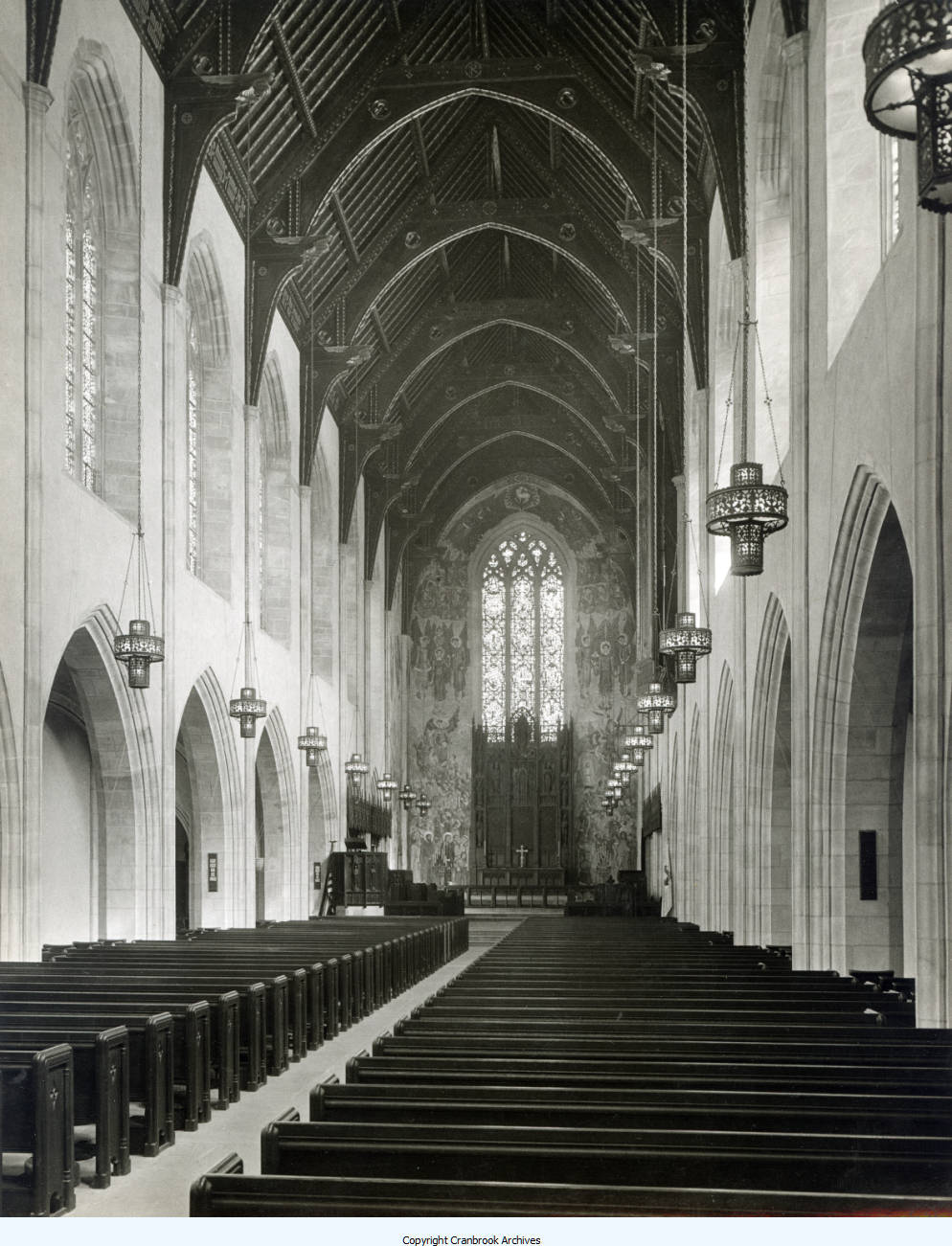
Christ Church Cranbrook Interior. Cranbrook Historic Photograph Collection, Cranbrook Archives.
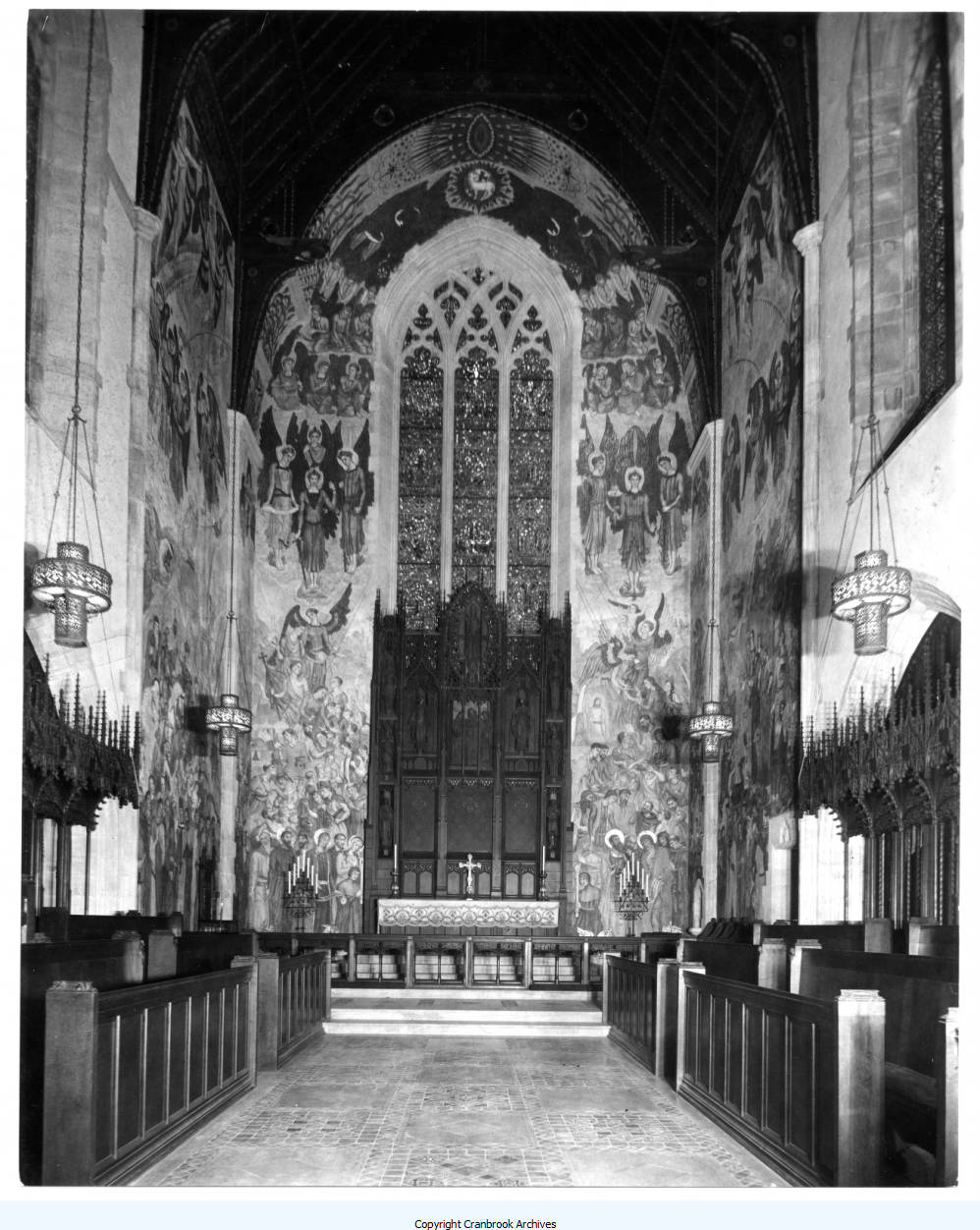
Christ Church Cranbrook Nave. Cranbrook Historic Photograph Collection, Cranbrook Archives.
After a visit to Christ Church Cranbrook earlier this week, I knew it needed to be highlighted as today’s Photo Friday! George G. Booth conceived Christ Church to be the moral center of the new community which he was building at Cranbrook. The photos show a great overview of the expansiveness of the church and shed some light on the magnitude of the work involved in its design. Each of these elements adds to the overwhelming detail of George Booth’s vision and the care in the design of Christ Church Cranbrook.
The church is Booth’s testament to the Arts and Crafts movement. He carefully acquired and commissioned each work of art to add to the overall wonderment of the church and to pay tribute to those who have devoted their lives toward artistic and altruistic pursuits. The works of art range from the sterling altar plate to stained glass windows, altar frontals, tilework, woodcarvings, paintings, sculptures, and metalwork, most from noted Arts and Crafts men and women.
These photographs, taken five years after the 1928 dedication of Christ Church Cranbrook show the interior of the church sanctuary and a detail view of the nave of the church. The large fresco flanking the high altar was designed and executed by Katherine McEwen, an old friend of Booth’s, and one of the founding members of the Detroit Society of Arts and Crafts. From the work of Katherine McEwen to Oscar Bach, Samuel Yellin, and Hildreth Meire, to name a few, Christ Church Cranbrook is an architectural gem which should be experienced in person!
–Stefanie Dlugosz, Center for Collections and Research, Collections Fellow
Photo Friday: Wartime Conservation, Kingswood-Style

Kingswood students Blenda Isbey, Irene Bard, and Nollie Campbell collect waste fat after their Home Economics class at Kingswood School, 1944. Harvey Croze, Cranbrook Archives.
During World War II, students at the Cranbrook and Kingswood Schools became increasingly involved in homefront activities. Here, Kingswood students Blenda Isbey, Irene Bard, and Nollie Campbell collect waste fat after they’ve finished their Home Economics class. Fat could be used to make soap, in great demand because of wartime rations, but was also consolidated for use in explosives.

Poster advocating the re-use of waste fats in explosives. Henry Koerner, Printed by the Office of War Information, 1943. National Archives.
– Shoshana Resnikoff, Collections Fellow
Gruss aus
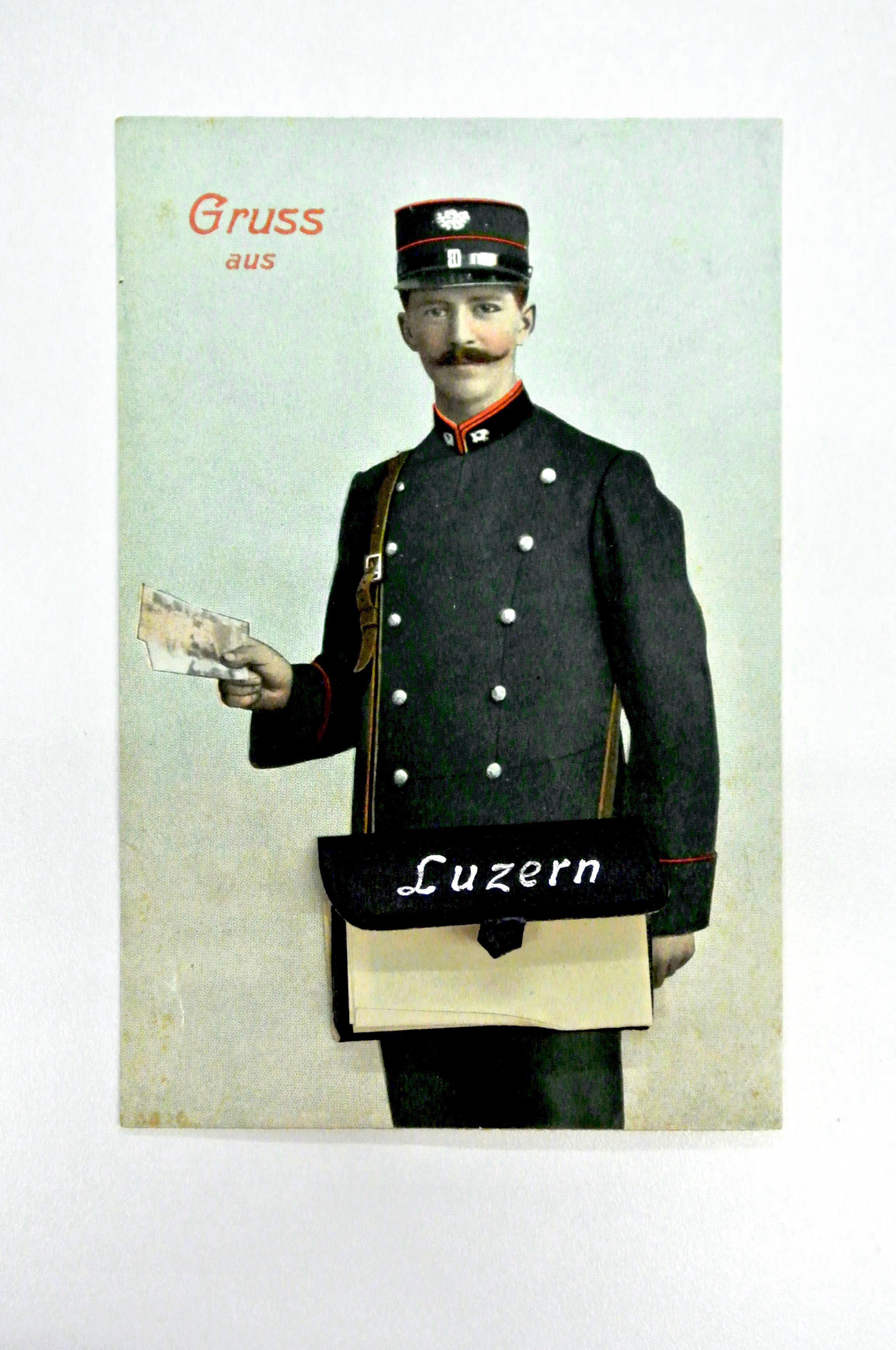
This postcard shows a Swiss postal worker with a small pouch. 1921, Cranbrook Archives
This week’s Friday photo is actually a postcard from the Virginia Kingswood Booth Vogel Papers. In 1921, Ralph Harmon Booth ─ one of the founders of the Detroit Institute of Arts and first president of the City of Detroit Arts Commission ─ traveled to Europe with his family. Booth’s son John (Virginia’s brother) collected postcards throughout the trip. “Gruss aus” translates to “Greetings from”, and was a popular souvenir travel postcard series printed in Germany with the chromo-lithography process.
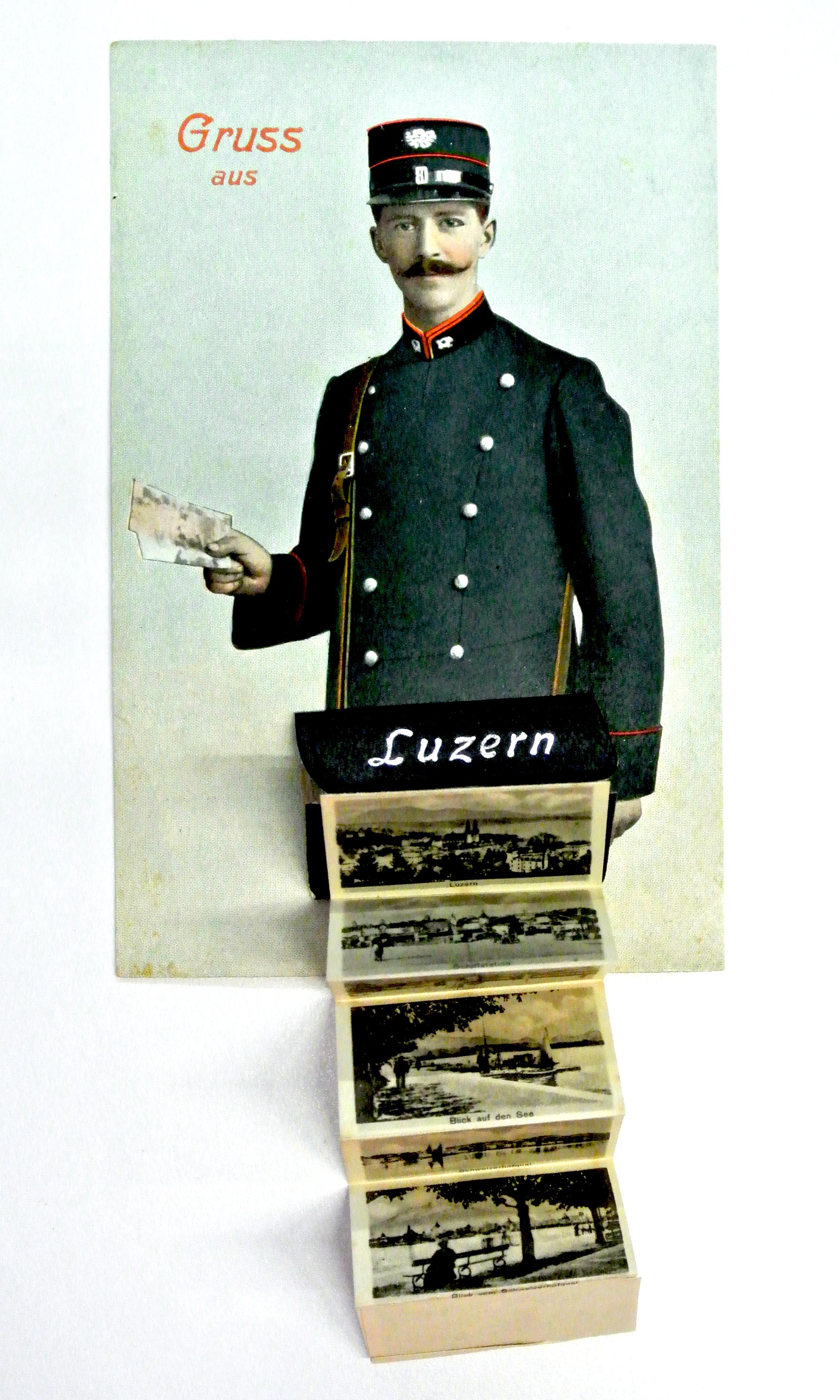
Open the pouch and voila! ─ the foldout shows scenes of Lucerne, Switzerland. 1921, Cranbrook Archives
From an Intern’s Eyes: Old Drama and Timeless Art
In the second week of May, I began my first day at the Cranbrook Archives for my Senior May Project, a program ran by the Cranbrook Upper School to send anxious fourth quarter seniors off campus for internships and adventures. And now, after two weeks of dealing with numerous dusty, yellowed papers (and one suspicious wooden box featuring some dead bugs and cobwebs) my initial excitement only grew.
One of my first projects here was to research the tenure of past Academy of Art faculty and staff members between the years of 1932-1976, and to make a comprehensive spreadsheet on the matter. That project led me to read through old faculty files comprised of payroll information (“how did people survive on $200 a month!” I thought to myself), retirement records, old correspondence—I even came across the first telegram I had ever seen. I wondered, from time to time: “Did the secretary who typed this letter up ever think that a teenaged intern from China would one day behold this work and marvel at its antiquity?”

The first telegram I’ve ever seen. 1943, Cranbrook Art Museum Exhibition Records, Cranbrook Archives.
 Cranbrook Kitchen Sink