Cranbrook Archives is excited to announce the acquisition of the Clifford B. West and Joy Griffin West Papers. Since the boxes arrived this past summer, I have been inventorying their contents in preparation for making them accessible to the public for research. Completing this work involves continually unravelling the many interesting facets of Clifford and Joy’s stories to be brought to light through the collection. Among many other things, are their experiences at Cranbrook in the mid-twentieth century.
Joy Griffin and Clifford West in front of Carl Milles’ sculpture on the north wall of the Academy of Art library, 1941. Harvey Croze, photographer. Courtesy of Cranbrook Archives.
Clifford and Joy attended the Academy of Art at the tail end of its golden age, meeting and marrying in 1941. At that time, Carl Milles, Eliel Saarinen, Loja Saarinen, and Eero Saarinen taught and worked on campus. Clifford earned his MFA in painting under Zoltan Sepeshy and Joy took ceramics classes from Maija Grotell. Fellow students included Lily Swann Saarinen and Harry Bertoia, among others.
Bertoia and West: Three Decades
It was with Harry Bertoia, sculptor and designer, that Clifford enjoyed a lifelong friendship, serving as best man at his 1943 wedding to Brigitta Valentiner (fellow Academy student and daughter of Wilhelm Valentiner, Director of the Detroit Institute of Arts). While living in different parts of the country after graduation (or different countries all together), the two artists maintained close ties, both personally and professionally, evidenced by correspondence and other materials found in the Wests’ papers. Of particular note is the original 16mm film Clifford made in 1965, titled Harry Bertoia’s Sculpture, featuring a soundtrack by Bertoia.
Harry Bertoia in his studio, circa 1976. Clifford West, photographer. Courtesy of Cranbrook Archives.
Another fascinating connection is Clifford’s involvement with a few 1976-1977 exhibitions of Bertoia’s sculptures in Norway. Bertoia’s work, including his sound sculptures, had been introduced to the Norwegian art scene in the late 1960s through Bente Torjusen, an educator at the Munch Museum who assisted Clifford on his 1968 film about artist Edvard Munch and later became his third wife. An accomplished filmmaker and photographer by the late 1970s, Clifford photographed the Bertoia exhibitions and designed the accompanying catalogs. In true Cranbrook fashion, Clifford’s artistic talents were not limited to just one medium.
Poster for The Sculpture of Harry Bertoia exhibition at the Grieg Music Festival, Bergen, Norway, 1976. Clifford West, photographer and designer. Courtesy of Cranbrook Archives.
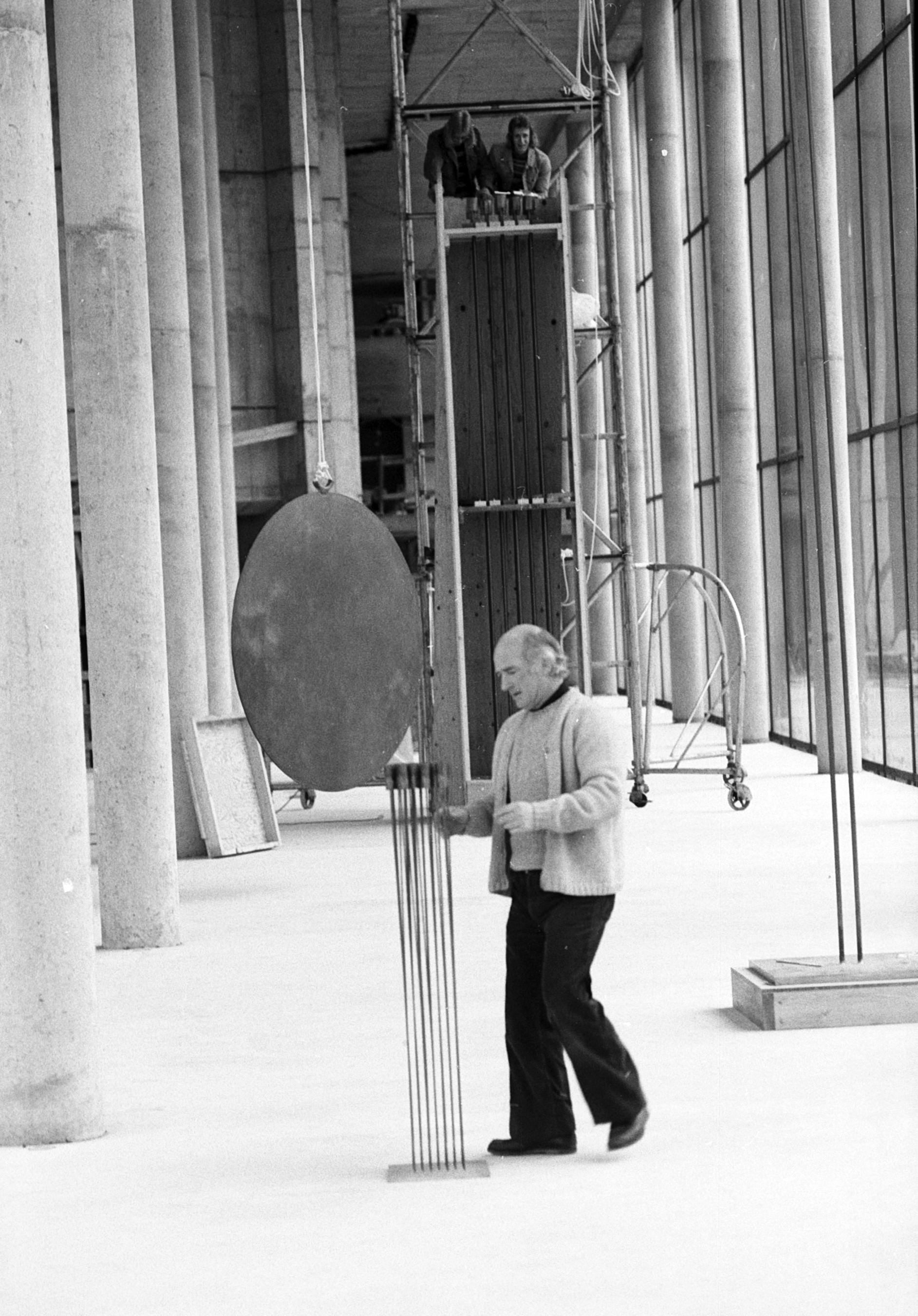
On left: Bertoia installs his sculpture at Grieg Hall, Bergen, Norway, 1976. Clifford West, photographer. On right: Children enjoy outdoor sculpture at, Harry Bertoia, at the Henie-Onstad Foundation, Oslo, Norway, 1977. Clifford West, photographer. Courtesy of Cranbrook Archives.
The exhibitions would be the last collaborations between Clifford West and Harry Bertoia, as Bertoia would succumb to lung cancer one year later. Fifty years on, Cranbrook Art Museum will celebrate Harry Bertoia in an upcoming exhibition, opening summer of 2027. Bertoia’s work was last featured at Cranbrook in the 2015 exhibition, Bent, Cast, and Forged: The Jewelry of Harry Bertoia, which marked the centennial of his birth and the first exhibition devoted to his jewelry designs (see the full catalog here).
I look forward to uncovering and sharing more about Clifford and Joy’s remarkable lives. Stay tuned!
—Deborah Rice, Head Archivist, Cranbrook Center for Collections and Research
Related announcement from the Harry Bertoia Foundation:
The Harry Bertoia Catalogue Raisonné is announcing a call for works from the Cranbrook community to more fully develop the publication’s coverage of the artist’s early jewelry practice, a currently under-described area of the artist’s oeuvre.
Present owners of jewelry believed to be by Bertoia are invited to contact the Harry Bertoia Foundation and Harry Bertoia Catalogue Raisonné by sending an email to: catalogue@harrybertoia.org, and submitting an owner questionnaire, available on our website. Museums, art galleries, and other institutions that are in possession of works by the artist are also invited to submit relevant data and photographic documentation. All information will be treated with discretion and held in strictest confidence.
With Maestro now streaming on Netflix—and nominated for four Golden Globe Awards—it’s high time I set the record straight about the Cranbrook House Steinway Grand and its most famous pianist, Leonard Bernstein. It is a legendary story, told and retold for decades, that places Bernstein composing none other than his most famous work, West Side Story, here, at Cranbrook.
It is a story, however, that is hard to unravel fact from fiction. So, like all Center historians and archivists, I started by doing some digging in Cranbrook Archives. This is the story I uncovered.
Cranbrook has several Steinway grand pianos, including two of the grandest: a Model D concert grand in Page Hall on the original School for Boys campus, and a second Model D in the Cranbrook House Library. The Cranbrook House concert grand piano was manufactured by Steinway & Sons of New York City and completed a little more than eighty-five years ago on December 18, 1929. It was purchased by Grinnell Brothers of Detroit in January 1930 and, later that year, sold to the Colony Town Club, a women’s club located on East Jefferson Avenue in Detroit.
Cranbrook House library facing south. Steinway & Sons Model D Concert Grand piano sits below the “Story of Ceres” tapestry, March 1957. Photographer Harvey Croze. Courtesy of Cranbrook Archives.
Enter, George Booth
The black concert grand piano was to have a short life at the Colony Town Club. Within a few years, its members sold it back to Grinnell Brothers where, in February 1935, it was purchased by George Booth. I remain intrigued by the fact that Booth purchased a “pre-owned” piano. While America was in the throes of the Great Depression, I think it was more than a simple cost-saving measure; it was a decision warranted by the piano’s intended use.
The piano did not begin its life at Cranbrook in the Booths’ Library, the center of their social life after it was completed in 1919. Rather, Booth first placed the piano in the main hall of the Cranbrook Pavilion on Lone Pine Road. Known today as St. Dunstan’s Playhouse, in 1935 the recently renovated pavilion was being used as an exhibition gallery and event space for the Academy of Art and its nascent Art Museum. The piano was played at exhibition openings and for preludes before lectures, including at least one by Frank Lloyd Wright. Although St. Dunstan’s Guild began using the pavilion in 1937 for rehearsals and storage, Cranbrook Academy of Art continued to hold exhibitions there until 1942, when the new Eliel Saarinen-designed museum opened.
Cranbrook Pavilion staged for an Academy of Art formal party, January 16, 1936. In the center is what would become known as the Cranbrook House Steinway concert grand piano; in the background is the Cranbrook Map Tapestry, designed by Eliel Saarinen and woven by Studio Loja Saarinen in 1935. Courtesy of Cranbrook Archives.
Sometime between 1942 and the summer of 1946, when the pavilion was cleared out and rented by the Cranbrook Foundation to St. Dunstan’s Guild, George Booth moved the Steinway down the road to Christ Church Cranbrook “to protect the instrument from damage by dampness or other causes and to give it the benefit of expert use.” It was also during this period, in March 1944, that George and Ellen Booth formally deeded to the Cranbrook Foundation the Homestead Property, which encompassed not only Cranbrook House but also the forty acres adjacent to the house, including the Cranbrook Pavilion and its Steinway.
Each year, the Center staff does spring cleaning around the Cranbrook Community’s campus.
To kick off our spring cleaning this year, in collaboration with Meghan Morrow from Cranbrook Art Museum, Brookside’s Vlasic Early Childhood Center Pre K, JK, and multi-age classes helped us “awaken” the outdoor sculptures, covered for the winter, with a good-morning song. They helped remove the covers, check for any new cracks, and wipe and polish the sculptures.
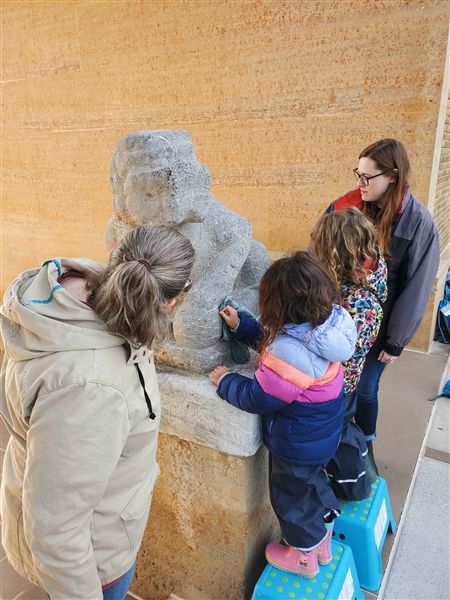
Friends from the ECC help polish Marshall M. Fredericks’ TheThinker . . .
. . . and the ChineseLion at Cranbrook Art Museum. Both images are courtesy Cranbrook Schools.
We then needed to get the fountains and sculptures ready for our House Party fundraiser on May 20 (sorry, already sold out). Utilizing Graffiti Solutions’ “Elephant Snot,” we worked with Cranbrook House and Gardens Auxiliary volunteers to clean the Fountain on West Terrace and Mario Korbel’s Harmony.
Cranbrook House and Gardens Auxiliary volunteers Helen Maiman, Bruce Kasl, Cheryl Becker, and Joyce Harding assist me in cleaning the Fountain on West Terrace at Cranbrook House. Auxiliary volunteer Nancy Kulish, photographer.
Joyce and I giving Harmony her spring mani-pedi. Nina Blomfield, photographer.
Nina gives Harmony a quick rinse. Leslie Mio, photographer.
Below are the results. This was just one day after the cleaning, and, typically, the sculptures look better and better as the weeks go on.
Look for an upcoming post about our ECC friends working with the Elephant Snot to clean more stonework in the garden!
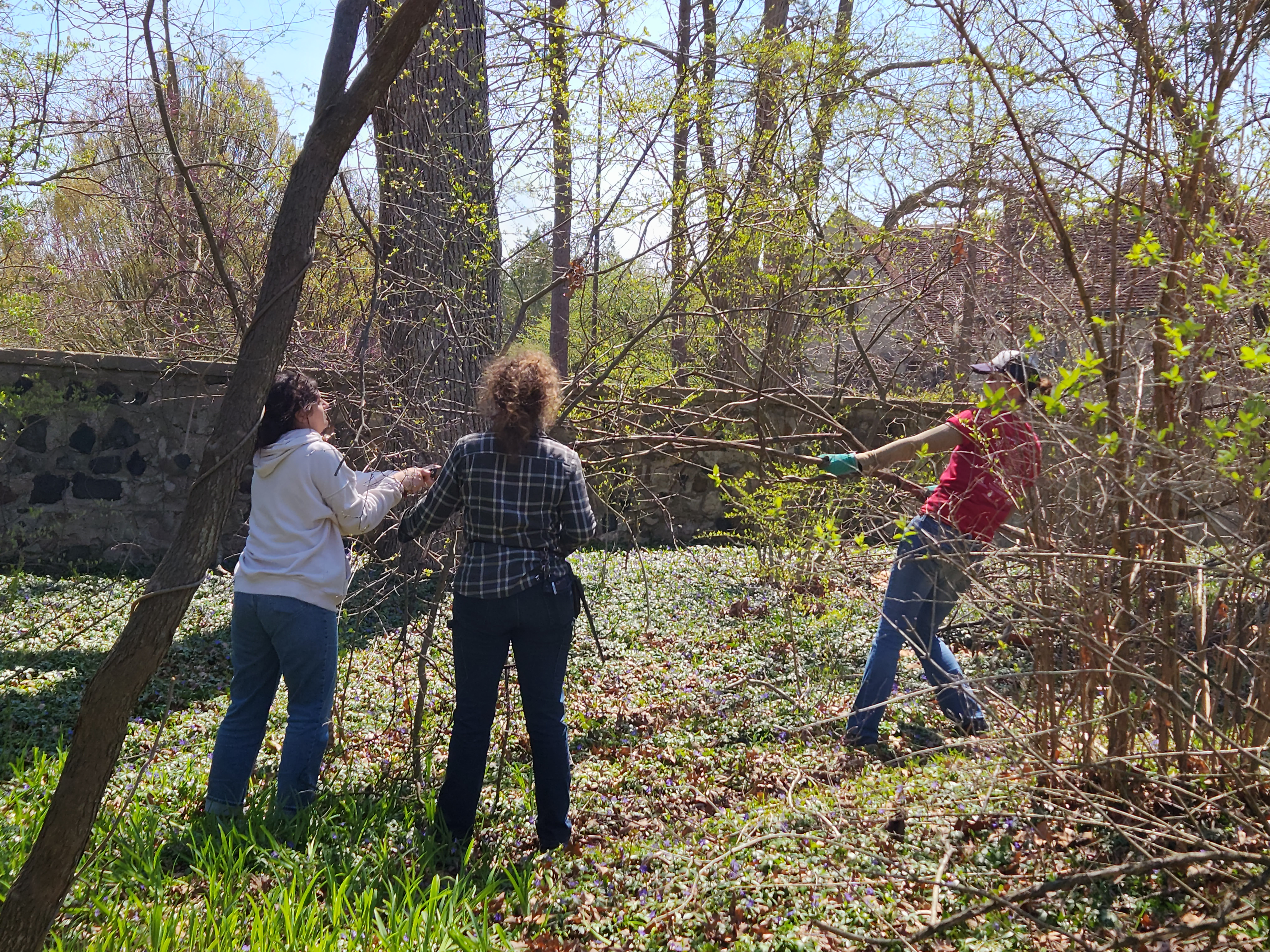
The spring also means a new season of work in the Japanese Garden. Pulling vines, before the poison ivy blooms, was a fun, end-of-the-day task for our volunteers this week.
Volunteers Lindsay Shimon and Melinda Krajniak assist Master Gardener Emily Fronckowiak with invasive vines around the Japanese Garden. Leslie Mio, photographer.
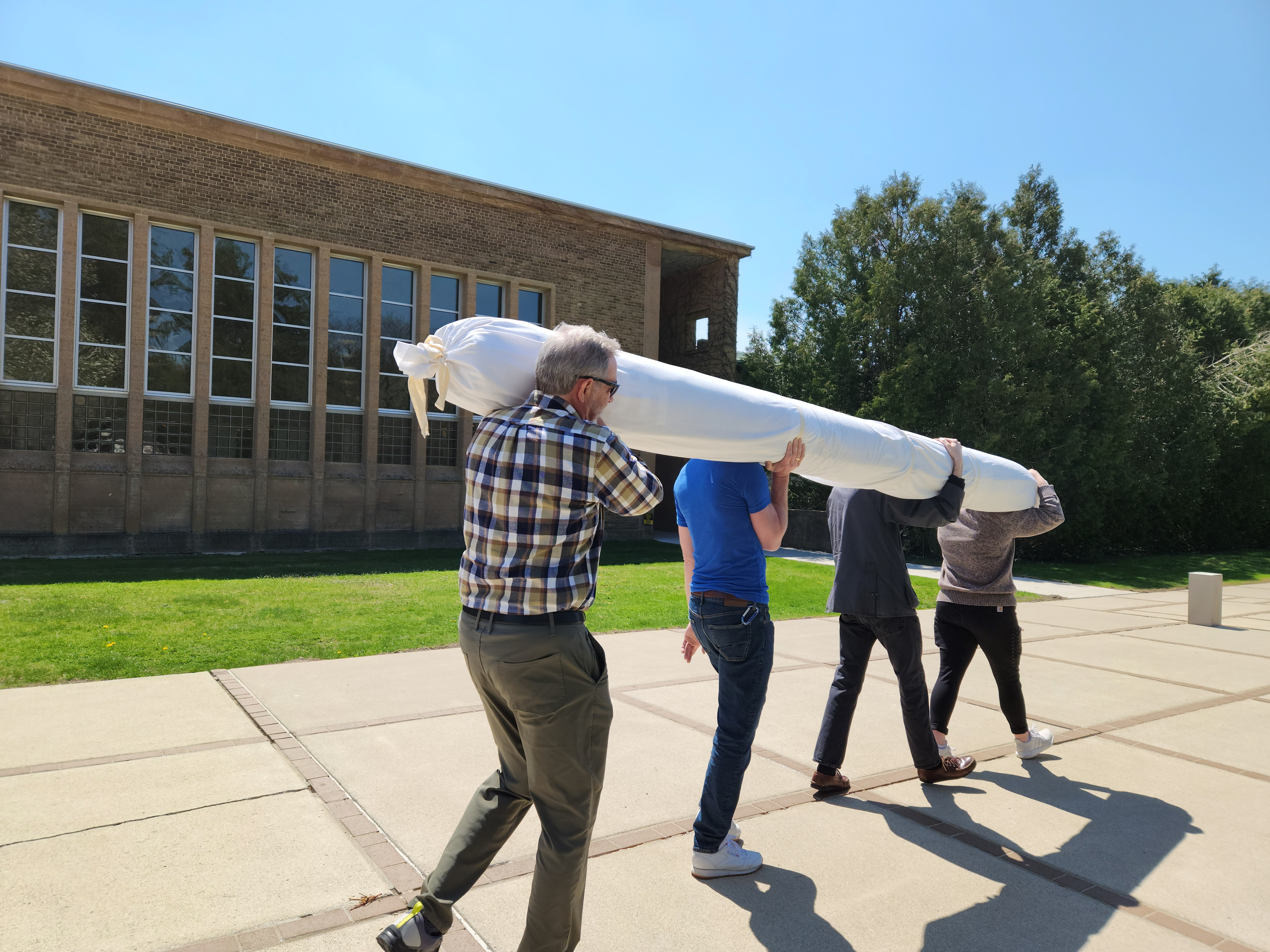
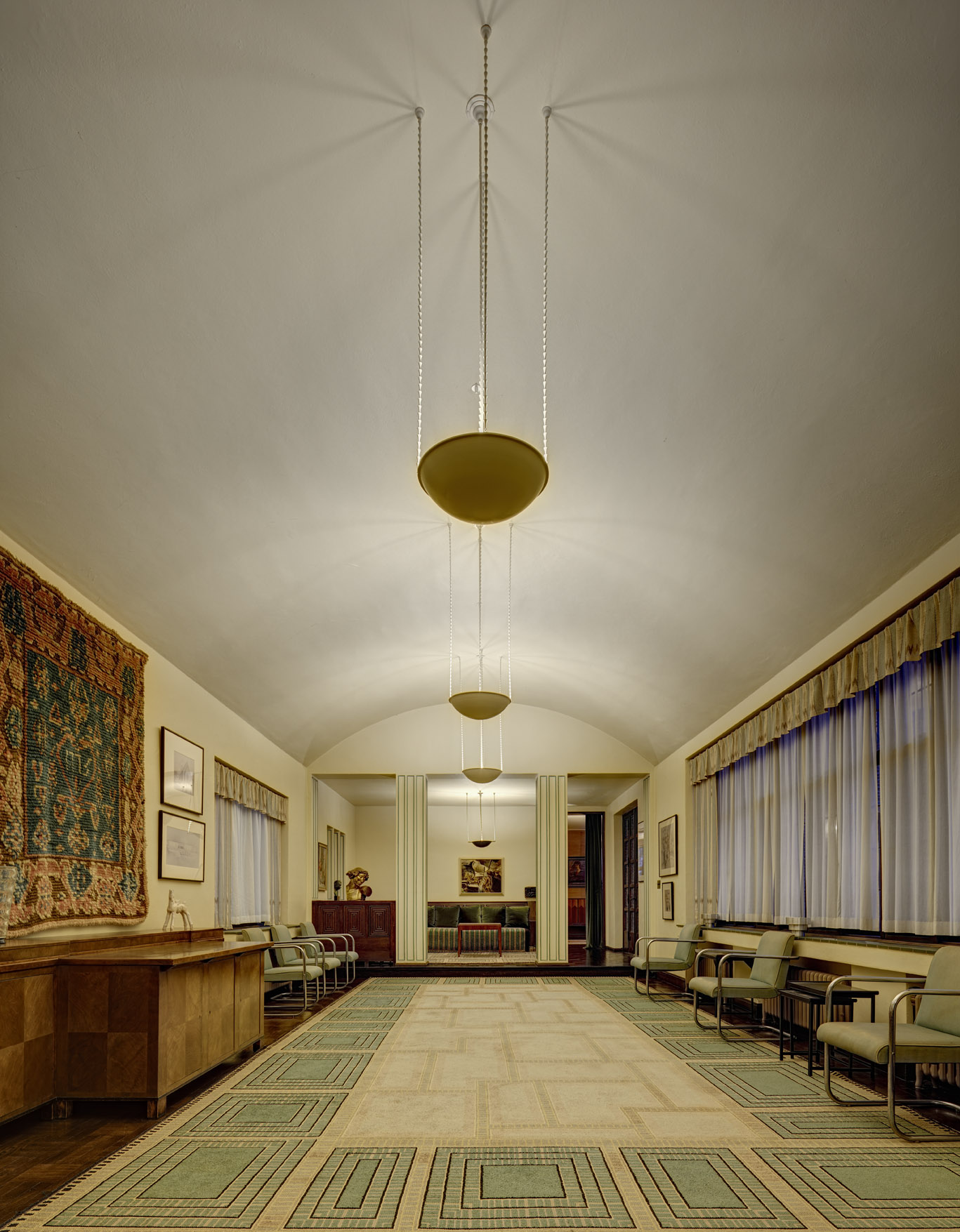
Not to be outdone, Saarinen House wanted to be part of spring cleaning as well. On location in the Art Museum vault for a photoshoot this past winter, the Saarinen House Studio rug was carried back to the house and reinstalled. As Greg Wittkopp, Center Director, said, “The room does look less Gesamtkunstwerk-ish without it.”
“I’m ready for my close-up, Mr. [Haefner].” The Saarinen House Studio rug gets the star treatment from photographer James Haefner as Center volunteer Jessica Majeski looks on. Kevin Adkisson, photographer.
Center staff and volunteers move the Studio rug back to Saarinen House. Leslie Mio, photographer.
Gesamtkunstwerk! James Haefner, photographer.
The best part about our spring cleaning is showing off the results. Come see Harmony in the Cranbrook House gardens on a warm day.
The Center’s 2023 Tour season is also beginning. In addition to our Saarinen House and Smith House tours, new tours have been added:
Japanese Garden Tours – Center staff-guided tours of the Japanese Garden have been added to the public tour calendar on one Sunday a month at 1:30pm, May through October.
Three Visions of Home tours – Join Cranbrook Center for Collections and Research as we take you inside three remarkable homes from across the twentieth century. There’s no tour quite like it, with a look into the distinct visions for American life from three internationally significant architects: Albert Kahn, Eliel Saarinen, and Frank Lloyd Wright. Your expert guide will take you through the architecture and innovations of each home, while also sharing the stories of the families who built and lived in these special places.
We hope to see you on campus this season!
– Leslie Mio, Associate Registrar, Cranbrook Center for Collections and Resarch
Eric Perry photographs work from Megha Gupta (CAA Ceramics 2023) alongside collections from the Frank Lloyd Wright-designed Smith House and eggs from Cranbrook Institute of Science.
If you walked into Cranbrook House, Saarinen House, or Smith House this week, you might have noticed some surprising guests have arrived at the table. Your Center for Collections and Research team have been busy installing Brought to the Table, the fifth intervention of new work by Cranbrook Academy of Art students and Artists-in-Residence in our three historic homes.
This year’s virtual exhibition is a Cranbrook-wide collaboration that brings site-specific work from across the Academy’s eleven departments into conversation with objects from Cranbrook’s Cultural Properties, Art Museum, and Institute of Science collections.
Kiwi Nguyen (CAA Metals 2023), Iris Eichenberg (Metals Artist-in-Residence), and Kevin Adkisson (Center Curator) strategize in the Saarinen House studio.
Brought to the Table engages with the long tradition of functional art at Cranbrook and pairs new works of art with objects from the Cranbrook collections made for dining tables, coffee tables, desks, or side tables. Before the exhibition kicks off at the Virtual Opening and Lecture on March 27th, I’d like to give you a sneak peek at the exhibition process.
This was my first experience curating contemporary art and I was grateful to learn from my capable co-curators, Metalsmithing Artist-in-Residence (AIR) Iris Eichenberg and Center Curator Kevin Adkisson.
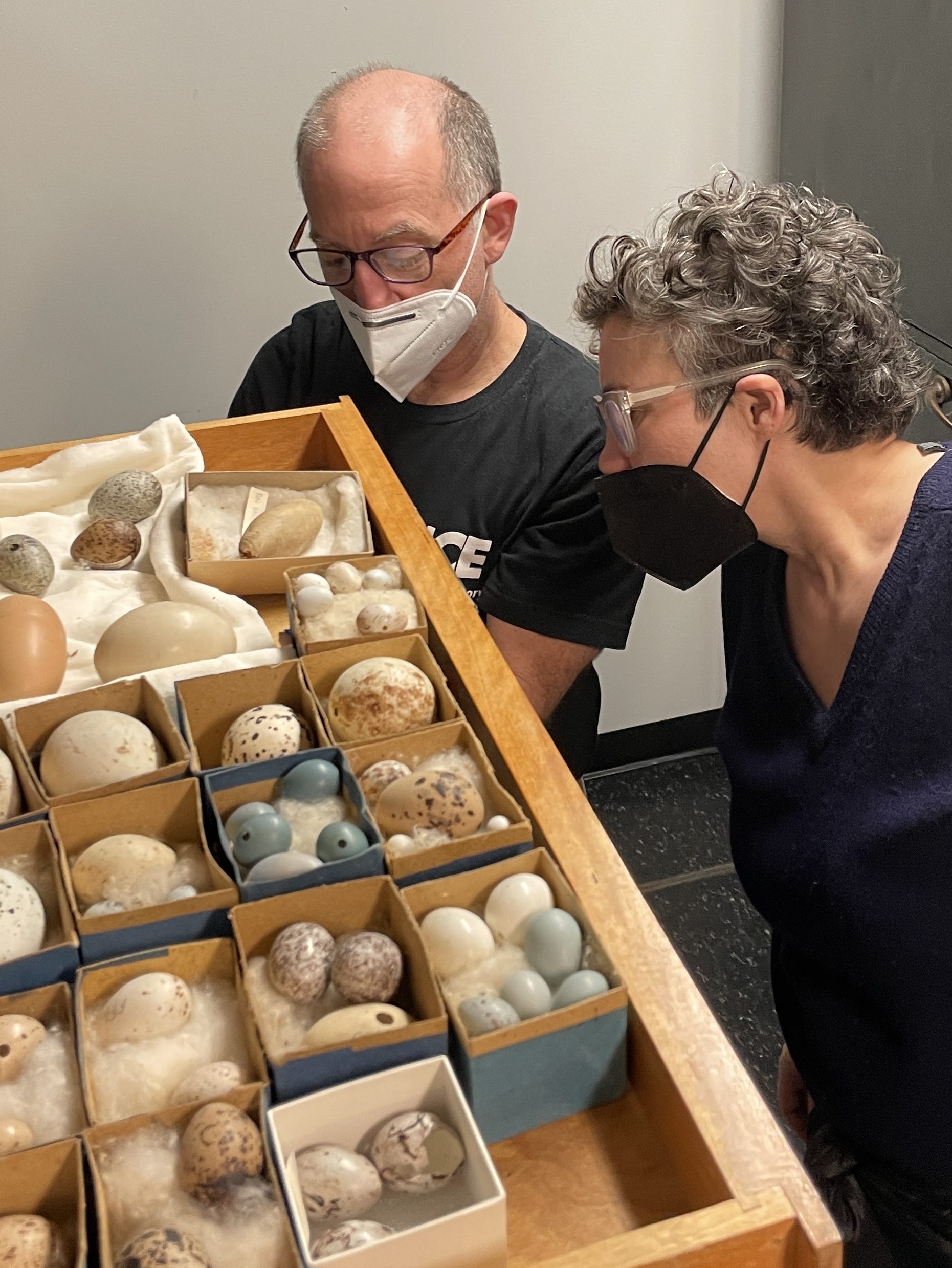
Cameron Wood (Cranbrook Institute of Science Curator for Collections) and Iris Eichenberg (Metalsmithing AIR) examine eggs from the Institute’s oological collection.Kiwi Nguyen (CAA Metalsmithing 2023) on the hunt for objects for our exhibition in the vault of Cranbrook Institute of Science.
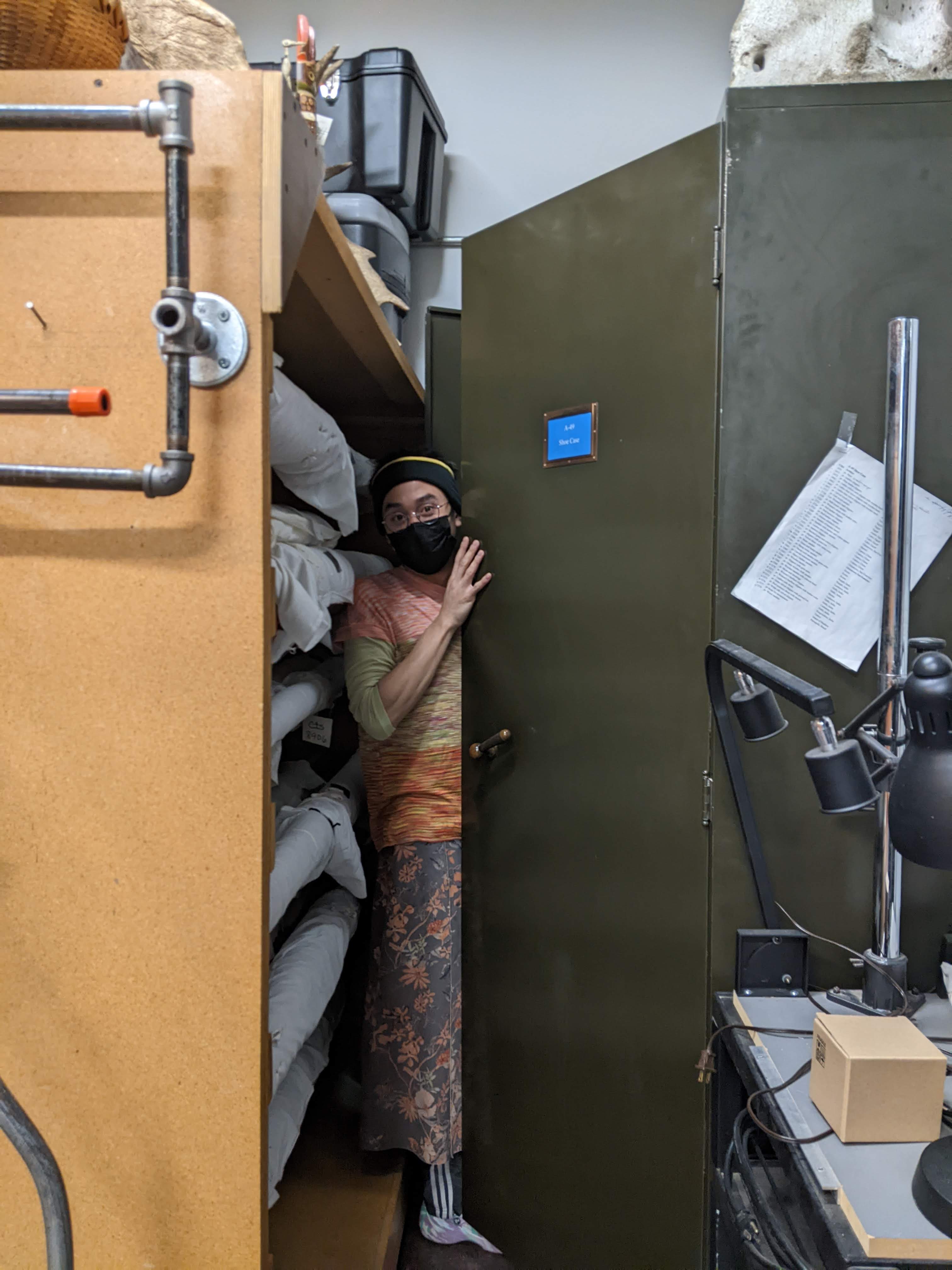
From planning with Kevin and Iris; coordinating with our wonderful Academy artists; selecting objects with colleagues at the Institute of Science and Art Museum; installing with the help of students; and assisting with photography, this exhibition took me all over the Cranbrook campus.
In 2021, the home of Loja Saarinen at Cranbrook Academy of Art, which she shared with her husband Eliel, was designated as a site in the Historic Artists’ Homes & Studios program. As the team at the Center were going through the process of researching Loja, the too-often-overlooked designer of textiles, gardens, and clothing, we were constantly reminded that the rugs created by Loja and her professional weaving studio, Studio Loja Saarinen, were poorly documented in our records.
Studio Loja Saarinen made rugs, window treatments, wall hangings, upholstery fabrics, and more at Cranbrook between 1928 and 1942. Many of the Studio’s largest rugs were made for Kingswood School for Girls between 1930 and 1932. Because of the fragility of the rugs, and through natural wear-and-tear, almost all of the original Studio Loja Saarinen rugs were put in storage at Cranbrook Art Museum in the 1970s and 1980s.
Loja Saarinen, circa 1934. Courtesy Cranbrook Archives.
We have excellent archival records about the operation of the studio, including records of yarn orders and charts of the time spent weaving rugs (it was a lot!). But the rugs are very large, and often, we only had black-and-white photographs of the rugs on the floor in the 1930s. Color photographs were limited to poorly distorted slides, or photographs of portions of the rugs taken on early digital cameras while the rugs were half-rolled-up in storage.
We had almost no ‘born digital’ high-resolution photographs of Loja’s work–these are the best kind of photographs for sharing her work in slides, online, or in print. The lack of excellent, high quality images limited not only how we at Cranbrook understood and shared Loja’s legacy, but also made it difficult for students or scholars researching Loja Saarinen to get a complete sense of her artistic output.
This winter, as the Center prepares for our next fundraiser, A House Party at Cranbrook Celebrating Loja Saarinen on May 21, 2022, it has become mission-critical to get better documentation of Studio Loja Saarinen’s rugs.
Enter in our latest project!
Jim Haefner and his assistant set up the camera in Cranbrook Art Museum’s Vault. Photographer Kevin Adkisson, Courtesy of Cranbrook Center for Collections and Research.Jim Haefner checking his image of Kingswood School Rug No. 31, Reception Hall Rug, Auditorium Lobby Rug. Photographer Leslie Mio, Courtesy of Cranbrook Center for Collections and Research.Kingswood School Rug No. 31, Reception Hall Rug, Auditorium Lobby Rug. Photographer Kevin Adkisson, Courtesy of Cranbrook Center for Collections and Research.
On January 7, 2022, photographer James Haefner and his assistant Erik Henderson, with the help of Center Curator Kevin Adkisson, Center Associate Registrar Leslie Mio, Cranbrook Art Museum Registrar Corey Gross, Cranbrook Art Museum Head Preparator Jon Geiger, and Jon’s installation crew embarked on a very ambitious project: documenting all the Studio Loja Saarinen rugs in the Cranbrook collections.
First, we had to take the several-hundred-pound rugs down from racks where they are stored, rolled. Then, we covered the floor in clean plastic drop cloths. With a camera bolted via a vise-grip to the ceiling of the Cranbrook Art Museum Collections Wing, and controlled via computer from a remote workstation, we unrolled, photographed, and rerolled over forty works of Studio Loja Saarinen’s functional art.
Kingswood School Rug No. 3, 1928-1929; Studio Loja Saarinen (maker), Loja Saarinen (designer); Linen warp, wool weft; 66½ x 49 inches (168.9 x 124.5 centimeters); Cultural Properties Collection, Kingswood School for Girls. Photographer James Haefner.Curator Kevin Adkisson and his attention to detail. Photographer Leslie Mio, Courtesy of Cranbrook Center for Collections and Research.Maker’s label on Kingswood School Rug No. 3, 1928-1929; Studio Loja Saarinen (maker), Loja Saarinen (designer); Linen warp, wool weft; 66½ x 49 inches (168.9 x 124.5 centimeters); Cultural Properties Collection, Kingswood School for Girls.
No detail went undocumented, from weaver’s signatures knotted into the face of a rug, to maker’s labels written and sewn on by Loja herself.
Below is just a fraction of the forty-plus pieces photographed:
Kingswood School Rug No. 31, Reception Hall Rug, Auditorium Lobby Rug, 1931; Studio Loja Saarinen (maker), Loja Saarinen (designer); Wool pile, wool weft, linen warp; 312 x 144 inches (792.5 x 365.8 centimeters); Cultural Properties Collection, Kingswood School for Girls. Photographer James Haefner.Detail of Kingswood School Rug Number 28, Library Rug, 1931; Studio Loja Saarinen (maker), Maja Andersson Wirde (designer); Wool pile, wool weft, linen warp; 243½ x 96 inches (618.5 x 243.8 centimeters); Cultural Properties Collection, Kingswood School for Girls. Photographer James Haefner.Detail of Kingswood School Blue Rug for Reception Room I, 1931; Studio Loja Saarinen (maker), Maja Andersson Wirde (designer); Wool pile, wool weft, linen warp; 183 x 142½ inches (464.8 x 362 centimeters); Cultural Properties Collection, Kingswood School for Girls. Photographer James Haefner.Rug with Animal Motif, 1932; Studio Loja Saarinen (maker), Maja Andersson Wirde (designer); Linen warp, wool weft, wool file; plain weave with four picks of weft between each row of knots; 151½ x 108 inches (384.8 x 274.3 centimeters); Collection of Cranbrook Art Museum. Photographer James Haefner.Detail of Kingswood School Rug No 29 – Rooftops, 1931; Studio Loja Saarinen (maker), Maja Andersson Wirde (designer); Wool pile, wool weft, linen warp; 85 x 137½ inches (215.9 x 349.3 centimeters); Cultural Properties Collection, Kingswood School for Girls. Photographer James Haefner.Rug, 1932; Studio Loja Saarinen (maker), Maja Andersson Wirde (designer); Wool and linen; 119 x 98 inches (302.3 x 248.9 centimeters) including fringe; Collection of Cranbrook Art Museum. Photographer James Haefner.Detail of Rug with Tree Motif, 1930; Studio Loja Saarinen (maker), Maja Andersson Wirde (designer), Lillian Holm (weaver), Lilly Bjerken (weaver); Wool and linen; 131 x 54½ inches (332.7 x 138.4 centimeters); Collection of Cranbrook Art Museum. Photographer James Haefner.Detail of Studio Loja Saarinen Rug No. 2, 1929; Studio Loja Saarinen (maker), Loja Saarinen (designer/weaver), Eliel Saarinen (designer), Walborg Nordquist Smalley (weaver); Cotton warp; wool pile; plain weave with ten picks of weft between each row of knots; 110½ x 39 inches (280.7 x 99.1 centimeters); Collection of Cranbrook Art Museum. Photographer James Haefner.Tree of Life Tapestry, circa 1933; Loja Saarinen (designer/weaver); Linen and wool; 60½ x 54 inches (153.7 x 137.2 centimeters); Collection of Cranbrook Art Museum. Photographer James Haefner.
It was a joy to unroll and see these pieces up close after knowing many of them for years through black-and-white images. While even these photographs do not do justice to seeing their beauty in person, having such high-resolution photography of Studio Loja Saarinen’s rugs means that future scholars and fans of Loja Saarinen will be able to have a richer understanding of her, and Cranbrook’s, remarkable legacy.
For even more Loja Saarinen, join the Center in person or online on May 21, 2022 for A House Party at Cranbrook Celebrating Loja Saarinen. We’ll be premiering a new, thirty-minute documentary about Loja, produced by the Center, at the event–you don’t want to miss it!
– Leslie S. Mio, Associate Registrar, and Kevin Adkisson, Curator, Cranbrook Center for Collections and Research
Across Cranbrook’s campus are eleven different spaces, including the Archives, that house book collections – some 110,000 physical items. Several of these spaces are typical school or academic research libraries, where students, faculty, and staff can check out the majority of these books. As a library and information science professional, I champion the importance of these lending libraries and the egalitarian access to information they provide.
In this post, however, I’d like to focus on Cranbrook’s non-circulating book collections – those rare, historic, or valuable tomes that, in many cases, hide in plain sight in public areas. With help from colleagues at the Academy of Art, Schools, Institute of Science, and Center for Collections and Research, I’ll highlight some of these gems that promise to delight the bibliophile, art appreciator, historian, or simply the Cranbrook curious.
Cranbrook’s special book collections are carefully preserved as both informational and evidential artifacts, and many are housed within cultural heritage areas. Valued not only for research purposes, they also serve as historical objects which help individually or collectively to tell the Cranbrook story.
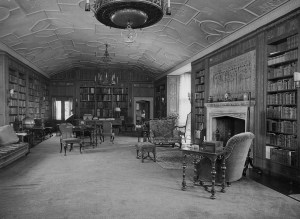
South end view of the newly completed Cranbrook House Library, 1920. John Wallace Gillies, photographer. Courtesy of Cranbrook Archives.
The origin of book collecting at Cranbrook actually predates any of the current collection spaces and begins with Cranbrook founders George and Ellen Booth. George, in particular, was an enthusiastic collector, and started acquiring volumes in 1900, commissioning purchases of William Morris works and other fine books in London. As George explained, “I am not a millionaire and cannot pay the big prices now prevailing in New York.” His strategy allowed him to accumulate 1,000 books by 1916, effectively seeding the Cranbrook House Library Collection when construction of the library wing was completed four years later.
How many high schools can lay claim to hosting a performance of the legendary Detroit band, the MC5? In 1967, Cranbrook School joined a handful of Metro Detroit high schools as a venue for arguably one of the most influential rock bands of all time.
Cover of the MC5’s debut album, recorded live at Grande Ballroom in Detroit, 1969. Courtesy of private collection.
Known the world over today for their groundbreaking music, and as progenitors of the subsequent 1970s punk rock movement, the MC5 (Motor City Five) were relatively unknown outside the Detroit area when they played the Cranbrook School Little Gym on April 28, 1967.
Rob Tyner, lead singer of the MC5, performing for the Cranbrook audience. The Brook, 1968. Courtesy of Cranbrook Archives.
Billed as a Jazz Psychedelic, the concert featured fellow Detroit musicians, the Charles Moore Octet and the Joseph Jarman Quartet, both avant-garde jazz groups. Trumpeter Charles Moore’s band had already played earlier that year at Cranbrook (their musical repertoire including poetry by John Sinclair) and had developed a following among students and faculty. Accompanying the music at the April concert was a light show by the Magic Veil, which consisted of several sheets placed around the gym, a large number of lenses, watercolors, and an overhead projector. Open to Cranbrook and Kingswood students, faculty, and the area’s interested general public, tickets cost $3.25.
Charles Moore Octet at Cranbrook. The Crane, January 20, 1967. Courtesy of Cranbrook Archives.
The event was sponsored by the revamped Jazz Society, a student club formed in 1966 with a goal of exposing students to different forms of jazz (including a trip to the Masonic Temple in Detroit to see Count Basie). Under their new name, REAL (Revolutionary Enjoyment Authenticity and Love), they continued to arrange musical experiences both on and off campus, providing tickets and transportation to venues such as the Fisher Theater, Meadowbrook, and the Grande Ballroom. A trip to this last venue, “home base,” if you will, of the MC5, included a concert by the Eric Clapton band, Cream.
Throughout this past spring and summer, I’ve been arranging and describing the recently donated papers of designer and architectural educator Ken Isaacs. Isaacs was an Academy of Art design student and faculty alumnus–his Superchair and a film by Barbara Isaacs are currently featured in the With Eyes Opened exhibit at the Art Museum and in the beautiful new book of the same title. Organizing his papers to ready them for researchers has led my learning about the environments Isaacs designed as well as the larger environments he navigated. These include Cranbrook, Manhattan, Chicago, and the rural acres of Groveland, Illinois where he designed and built a village of stylish, portable Microhouses, predating the current Tiny House movement by decades.
Portrait of Ken Isaacs, found tucked into his 1957 daybook. Courtesy of Cranbrook Archives.
For example, while completing his MFA at Cranbrook from 1952-1954, Isaacs redesigned the interior of The Little Gallery, founded by Peggy DeSalle in neighboring Birmingham in 1949. DeSalle was a great supporter and benefactor of the Cranbrook community and the lead donor and namesake of Cranbrook Art Museum’s DeSalle Auditorium, so how wonderful to get a peek at The Little Gallery’s early years through Isaacs’ papers. I learned DeSalle was once married to Cranbrook President Zoltan Sepeshy, though long before Isaacs came to study here. I also learned, thanks to one of Isaacs’ presentation boards, that Peggy’s second husband and lifelong partner, Albert DeSalle, bought a 1955 couch Isaacs designed of steel and canvas.
A third anniversary announcement from The Little Gallery and Isaacs’ 1955 presentation board for his steel couch. Courtesy of Cranbrook Archives.
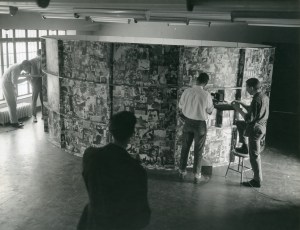
During those same years, Ken Isaacs built the 18-foot-long, seven-foot-tall Matrix Drum environment. This large structure with its curving wall of graphic, black and white collage was stored here on campus until Zoltan Sepeshy persuaded Isaacs to return as faculty. (No wonder Isaacs was still on Sepeshy’s mind, having left a work larger than a Buick Roadmaster on the president’s turf).
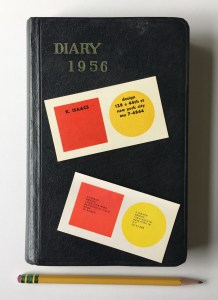
On left: K. Isaacs Design business cards, which used the same graphics as his letterhead, c. 1956. Center and right: A 2-page handwritten note from “Zoltan S” gives Isaacs directions to New Milford, Connecticut, June 1956. Courtesy of Cranbrook Archives.
I’ve recently foldered letters back and forth from Isaacs and Sepeshy. Their correspondence is a study in contrasts: Isaacs’ design stationery is mid-century modern with simple shapes in bold primary colors; one of Sepeshy’s handwritten notes has elegant, looping script that stands out against typed missives. They negotiated that Isaacs would retain and commute to his New York City design offices from Bloomfield Hills. The arrangement worked, for a while. The contract for the 1956-1957 school year included a residence for Ken and Barbara Isaacs in the “apartment in Guest House” on Academy Way and Isaacs headed the Design department from 1956 to 1958.
Isaacs regards a student’s work in an Art Academy studio. Courtesy of Cranbrook Archives.
Back at Cranbrook, photographs show Isaacs’ reuse of his Matrix Drum structure as a collaborative art project with Academy students who helped to collage its black and white pholage exterior. His notes detail how he redesigned the first Academy year to include field trips and visiting experts. They also explain how students designed a multimedia, immersive Matrix Drum lesson about the American Civil War using multiple slide projectors and moving pallets for participants to sit upon.
On left: The Matrix Drum (1954-1958) at Cranbrook: Outside and In. Isaacs in foreground regards students at work on the Drum’s exterior. On right: design students listen to a lecture from visiting anthropology professor Dan Crowley inside the drum. Courtesy of Cranbrook Archives.
These are a few curiosity-rousing items in the Ken Isaacs Papers, from just his time at Cranbrook, with plenty more boxes of his writings and images left to go through. I’ll confess, his papers make it a real challenge for me to stay on task with processing duties, when there are so many things I want to know more about. Stay tuned for further finds!
– Meredith Counts, Archives Assistant, Center for Collections and Research
Last week, I was happy to welcome a small group tour into the reading room to view archival materials about chairs. After the tour request appeared in my inbox, I learned a lot about chairs in a short time and found a new appreciation for this commonplace object.
As I searched and gathered materials for the display, I began to see how imagination and inspiration can transform an ordinary thing from complete obscurity to one of curiosity and sometimes great celebrity.
Florence Knoll in Eero Saarinen’s Grasshopper Chair in the Dallas Original Showroom, 1950. Courtesy of Cranbrook Archives
The chair has been creatively reinvented time and again according to the social context of its use, the cultural meaning imbued in it, or the inspiration from which its design sprang. Just think throne, pew, sofa, deck chair, chaise-lounge, and so on.
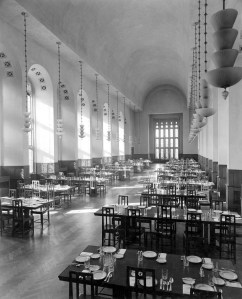
Take one of Cranbrook’s most iconic chairs – Eliel Saarinen Cranbrook School dining hall chair. Designed to withstand use by teenage boys, it combines durability with sophistication and has stood the test of time as they are still in use after 94 years. At the back of each chair is a bronze crane insert, a symbol that subtly gives identity to the community using the chair.
Cranbrook School Dining Hall, October 1936. Courtesy of Cranbrook Archives.
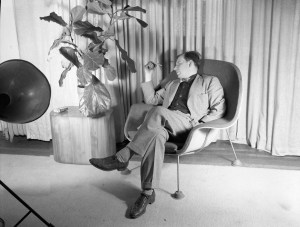
Interestingly, Eero’s later chair designs are all much inspired by nature—the Grasshopper chair, the Womb chair, and the Tulip Chair.
Eero Saarinen sitting in the prototype of his Womb Chair at his Vaughn Road home. 18 June 1947. Photographer: Harvey Croze. Courtesy of Cranbrook Archives.
Inspired by nature in a different way, Finnish architect and furniture designer Olav Hammarstrom has a variety of designs that are born of the possibilities to which natural materials lend themselves. Hammarstrom worked with Alvar Aalto and Eero Saarinen and Associates, working on projects such as the Baker House dormitory at MIT and the furnishings at the GM Tech Center. Married to Head of the Weaving Department Marianne Strengell, he designed their house in Wellfleet on Cape Cod, as well as houses for friends and colleagues, along with chairs to go in them.
Bamboo Experimental “Basketchair” by Olav Hammarstrom. 10 February 1956. Courtesy of Cranbrook Archives.
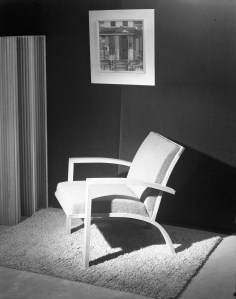
Furniture design was also the focus of another Academy affiliated designer, Pipsan Saarinen Swanson. Working in partnership with her husband, architect J. Robert F. Swanson, Pipsan typically designed the interiors while he designed the structure and exterior.
Chair designed by Pipsan Saarinen Swanson. December 8, 1945. Photographer: Harvey Croze. Courtesy of Cranbrook Archives.
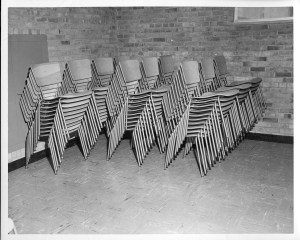
But Robert Swanson also designed furniture. Perhaps the most surprising thing I learned was that Swanson invented a ‘Stackable Chair,’ patented in 1957. A form we take for granted nowadays, these chairs can still be found in many buildings and classrooms on Cranbrook’s campus.
The “Stackable Chair” by J. Robert F. Swanson, 1957. Courtesy of Cranbrook Archives.
It was a great pleasure to share these archival stories with our guests and to explore Cranbrook’s part in the story of the chair. In the process I learned to see an everyday thing in a new light and how creativity can transform the ordinary into the extraordinary.
–Laura MacNewman, Associate Archivist, Cranbrook Center for Collections and Research
In early June, the Center’s Assistant Curator Kevin Adkisson and Collections Interpreter Lynette Mayman hosted the Cranbrook Kingswood Middle School for Girls students and staff for Greek Day tours around the sculptures of Cranbrook Academy of Art. Today, Lynette explores one of the myths central to the sculpture of Carl Milles: Orpheus and Eurydice.
The tale of Orpheus and Eurydice has many versions, most of them adding and leaving out various details. As in all Greek myths everything has a back story, and everything is linked. If you start to retell one tale, then you end up telling many more, which is how you might have been invited to stay at the palace indefinitely, recounting the myths.
These days many of these myths are known only in part, the grimmer consequences and endings forgotten or deliberately omitted to make them less peculiar and frightening.
Carl Milles’ Orpheus Fountain, well-described elsewhere, does not actually include the massive sculpture of Orpheus, though the model for it, once on display atop the column in the Arts and Crafts Court, is currently on display at Cranbrook Art Museum.
Carl Milles’ Sketch for Orpheus, circa 1926, on display in the Cranbrook Arts and Crafts Courtyard, July 17, 1945. Harvey Croze, photographer. Cranbrook Archives, Center for Collections and Research.
Ancient tellers of the myth include Plato and Virgil, but perhaps the best-known and longest version is from Ovid (43 BCE-17 CE) in books X and XI of his Metamorphoses. Ovid is renowned for relishing the lugubrious and not sparing the gory details in lightly tripping dactylic hexameters. He also gives us a rare glimpse into the how and why of tales which were well-known to his readers.
Ovid skips the early part of the myth where Apollo may or not be Orpheus’ father and how Orpheus plays his lyre and sings to the Argonauts to drown out the Sirens; he cuts to the chase, as it were.




















 Cranbrook Kitchen Sink