For many years, one of Brookside School’s highly anticipated end-of-year traditions was the Faculty/Sixth Grade Softball game. Every June, faculty and sixth graders would meet on the sandlot at Hedgegate, the faculty residence, to play against each other in friendly rivalry. It was a special day when students could play their favorite pastime with their teachers.
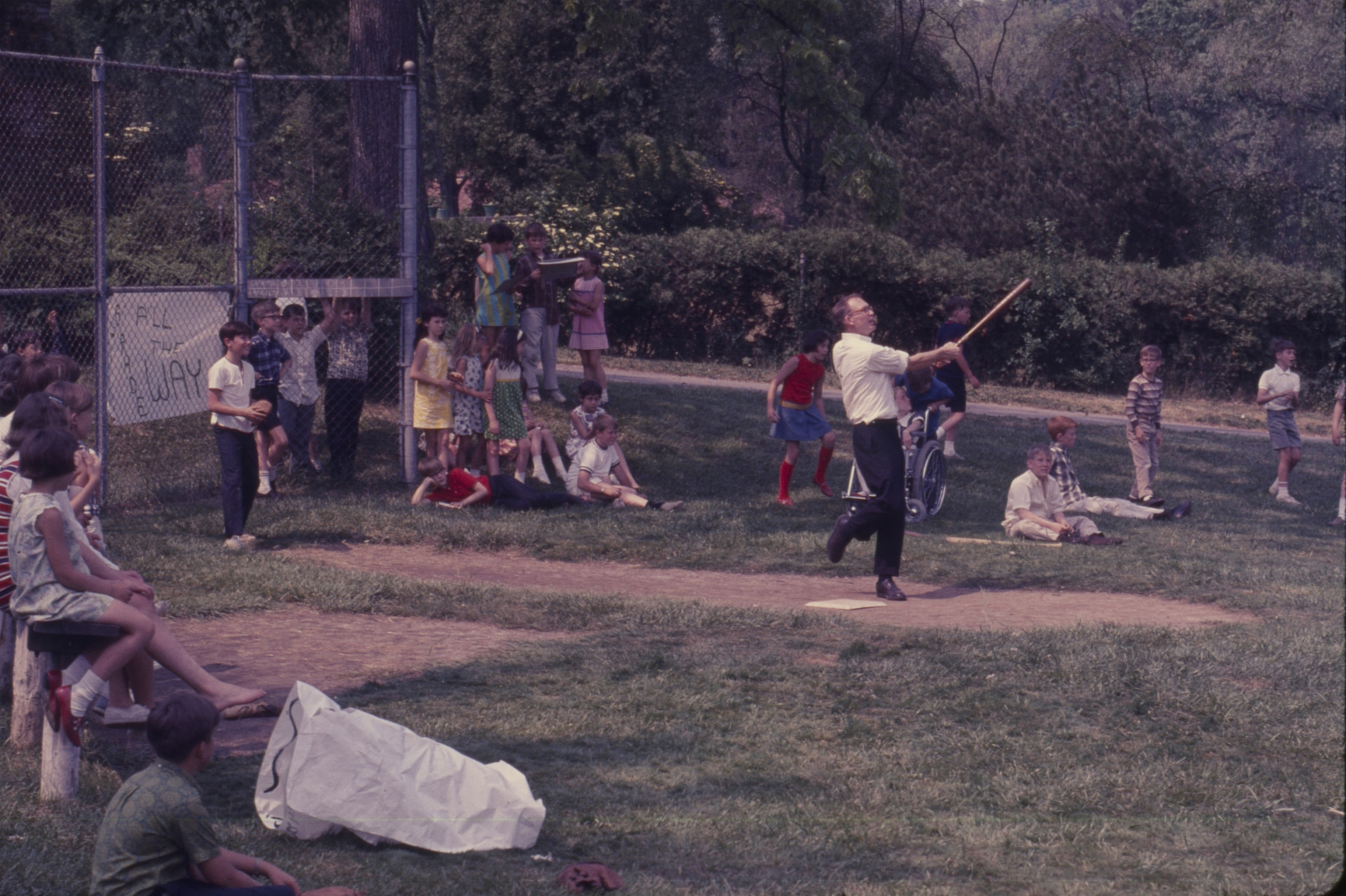
Brookside School Headmaster, Jock Denio, at bat, June 1967. Courtesy of Cranbrook Archives
We recently received an addition to the James Carmel Papers from his son, which includes slides capturing the June 1967 softball game. The colorful images convey the camaraderie and joy of the event, with both faculty and students enthralled by the gameplay.
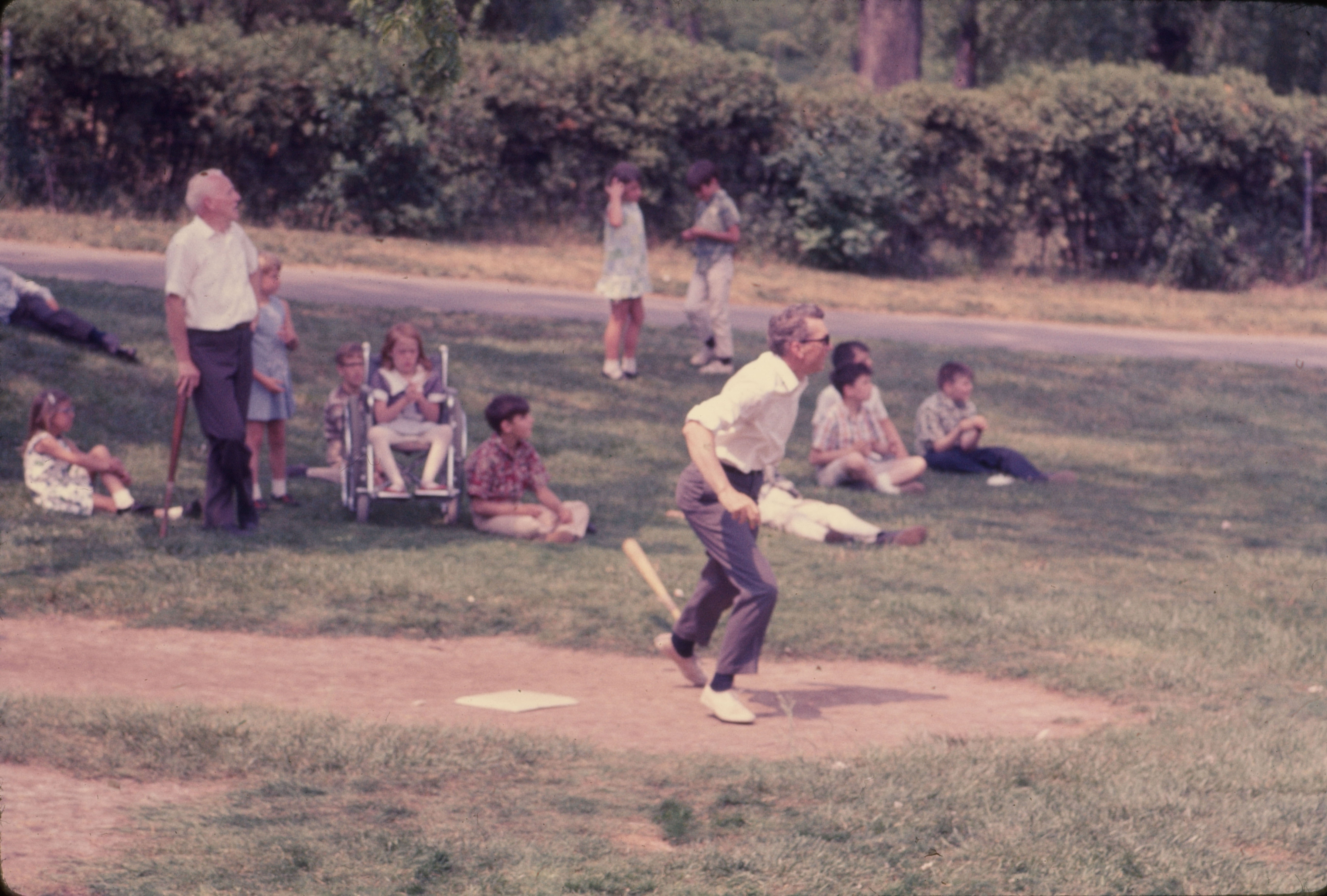
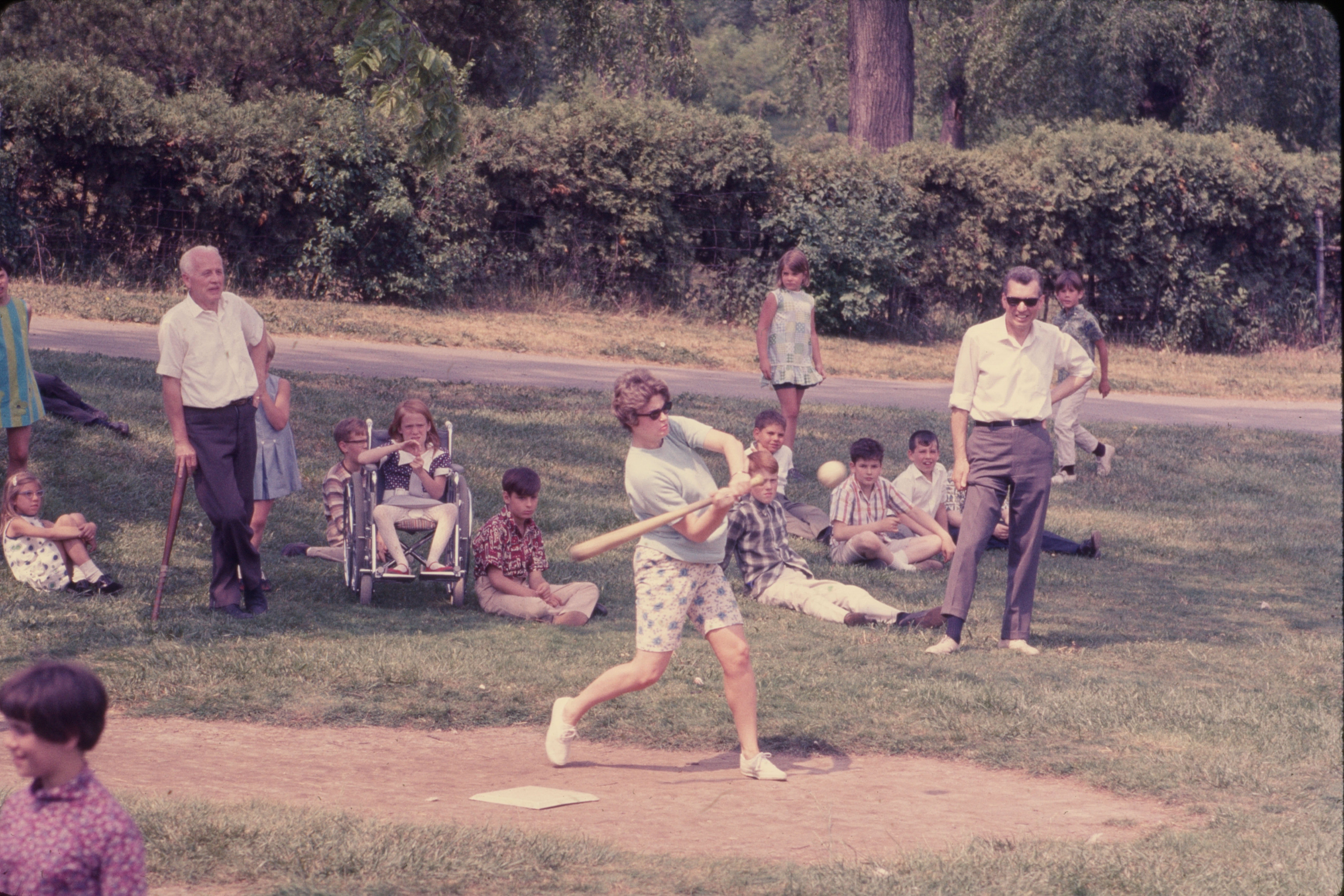
Brookside School students watch the softball game, June 1967Carolyn Tower and Paul Gerhardt, June 1967Louis Beer, June 1967Carolyn Tower at bat, with Paul Gerhardt, Louis Beer, and Brookside students looking on, June 1967. All images Courtesy of Cranbrook Archives
The sixth graders were up against Jock Denio, Brookside’s long-serving Headmaster; Carolyn Tower, music teacher; Louis Beer, third-grade teacher; and Paul Gerhardt, social studies teacher and director of testing and records.
In my work “fielding” research inquiries, I find that there is always a heartfelt nostalgia and tenderness in the memories and stories evoked by Brookside, a Cranbrook institution so deeply cherished by its alumni and former staff.
— Laura MacNewman, Associate Archivist Cranbrook Center for Collections and Research
This spring, Dawn Straith, Innovation & Technology Specialist at the Vlasic Early Childhood Center & Cranbrook Kingswood Lower School Brookside, used the bridges in the Japanese Garden as a tool in her Design Thinking Unit with the Senior Kindergarteners. I asked Mrs. Straith to explain the project.
The Senior Kindergarteners exploring the Cranbrook Japanese Bridge (aka Red Wood Bridge) in the Japanese Garden, 2025.
DS: In our design thinking and engineering unit, the Senior Kindergarten students became bridge investigators! They explored six different bridges in the Japanese Garden to see how safe and strong they are. While investigating, they discovered that bridges with beams and columns are much stronger than those without. They considered what goes over and under the bridges, who and what use the bridges, the materials the bridges are made from, and whether they had handrails. Some bridges didn’t have handrails at all, which we determined made them feel a bit less safe. They also noticed that the ground near a few of the bridges was eroding, which isn’t as safe either.
Side view of the Japanese Garden Round Island Footbridge.
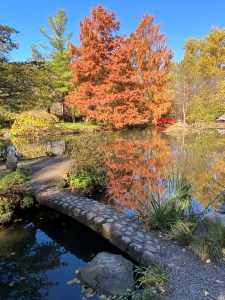
DS: The bridge to “Round Island” (a small island the children have affectionately named for themselves as “SK Island”) got the lowest safety score—it’s tilted, there are no support beams, the ground is eroding, the materials used aren’t the strongest and there are no handrails to hold onto!
Japanese Garden Round Island Footbridge from the eastern shore of the Lily Pond. Photo by Saida Malarney.
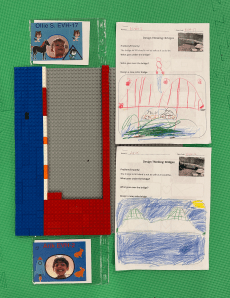
DS: After analyzing all this, the students got to work designing a safer bridge for “SK Island”. They learned that triangles are super strong shapes and that engineers use them all the time when building bridges. With their users in mind, the students carefully designed and built models of brand-new, safer bridges. Their final step is to share their ideas with the garden’s groundskeepers.
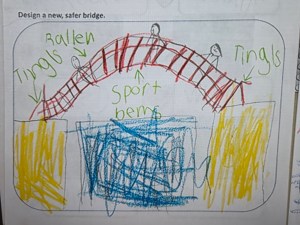
Round Island Bridge design, incorportating safety features like “rallens” and “sport beams.”
Enter the Center, the aforementioned “garden’s groundskeepers”!
I am the “Proud Museum Person” with some of our Japanese Garden volunteers working in the garden in April 2025.
As the Associate Registrar, and once-a-month “Gardener” in the Japanese Garden, I was invited to visit the SK classes as they presented their bridge models.
Most of my friends in SK had already helped cover garden sculptures for a number of seasons, so I knew they understood taking care of objects on the campus, but I was once again impressed by our students. They carefully considered what changes could be made to make our bridge safer for all visitors — kids, parents, guests with limitied mobility, and furry friends.
A very big THANKS! to our SK engineers.
Some of the students’ ideas even aligned with designs by our garden designer Sadafumi (Sada) Uchiyama, a third-generation Japanese gardener, registered landscape architect, and Curator Emeritus of Portland Japanese Garden.
Design for Round Island Bridge by Sadafumi Uchiyama.
Design for Round Island Bridge by Gretchen and Liam.
As we start the construction of the new Welcome Garden in the Japanese Garden this summer, we hope our future structural engineers will return in the fall to see how we are progressing.
– Leslie Mio, Associate Registrar, Cranbrook Center for Collections and Research
Each May, the Center is honored to host outstanding seniors from Cranbrook Kingswood Upper School for a three-week immersive internship.
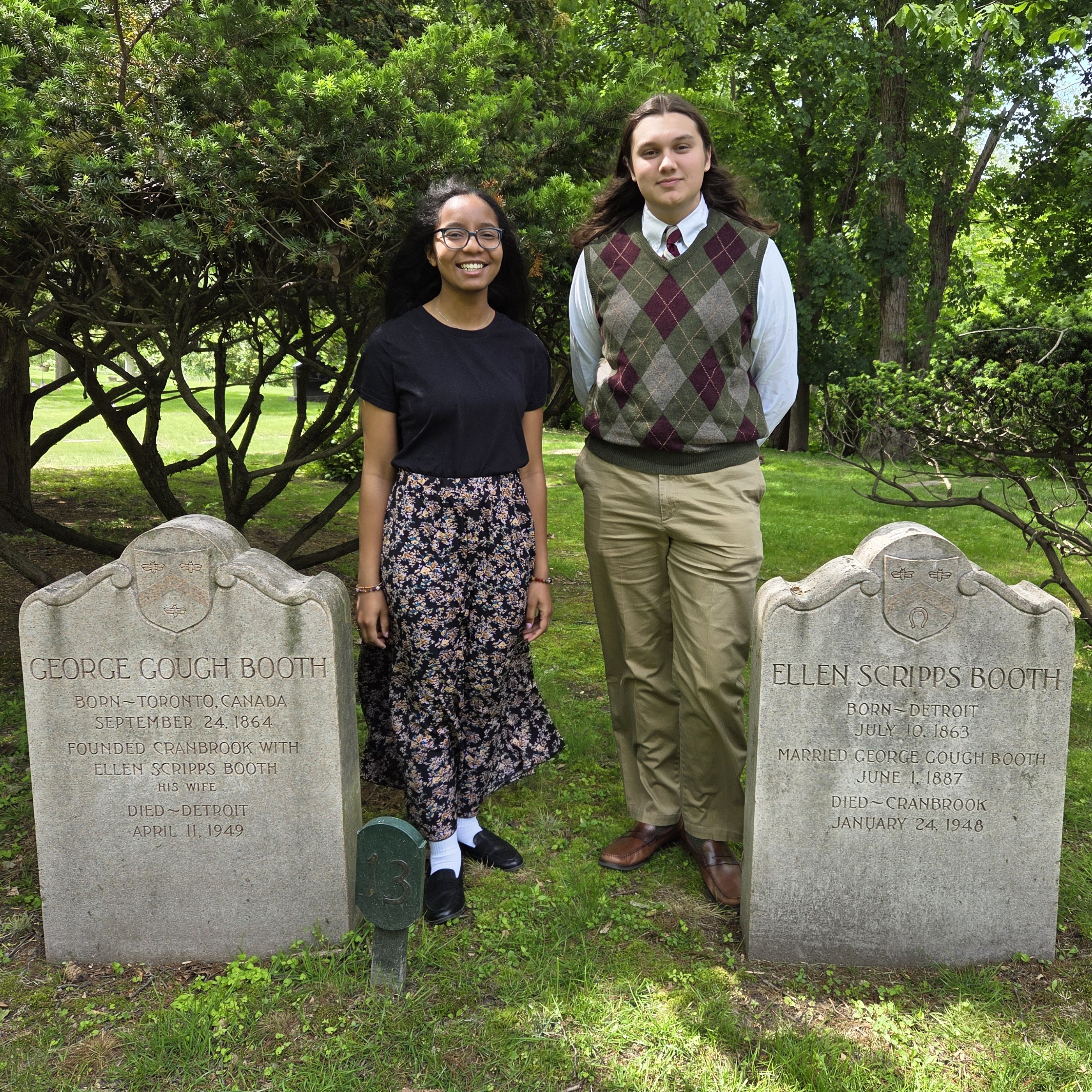
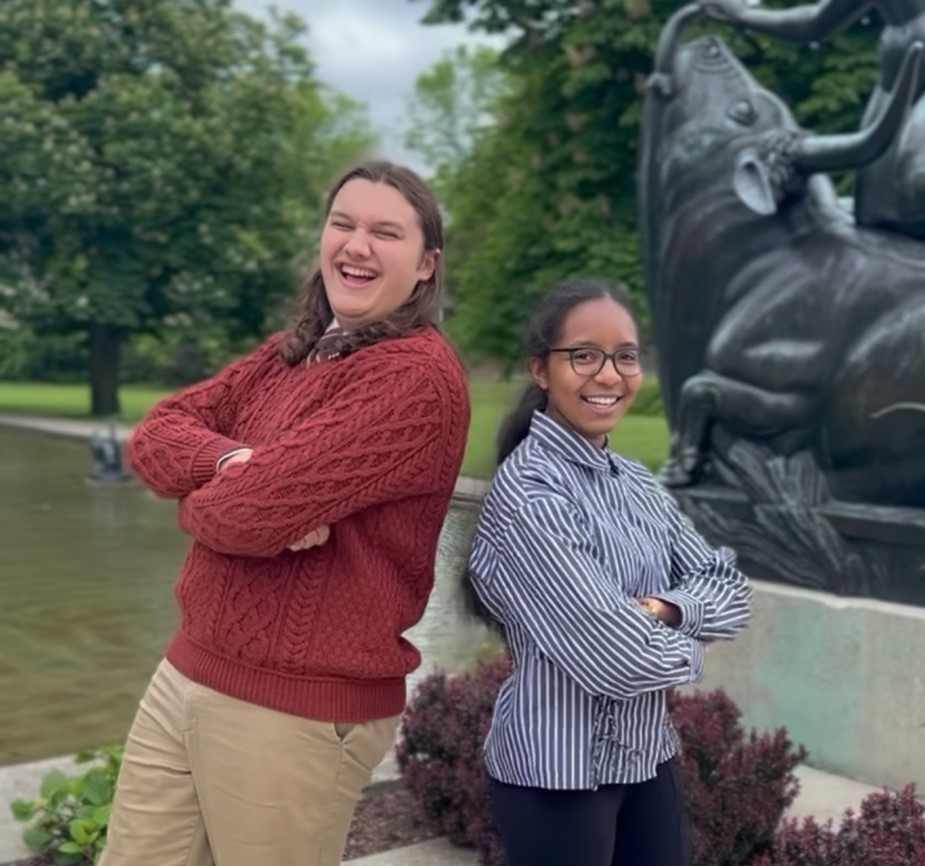
Kamilah Moore and Joel Kwiatkowski, 2025 Senior May interns, visit George and Ellen Booth at Greenwood Cemetery, Birmingham. Photography by Leslie Mio.
This year two seniors, Kamilah Moore and Joel Kwiatkowski, worked with the Center and Archives staff, including writing blogs! Hear from Joel today and look out for Kamilah’s post next week.
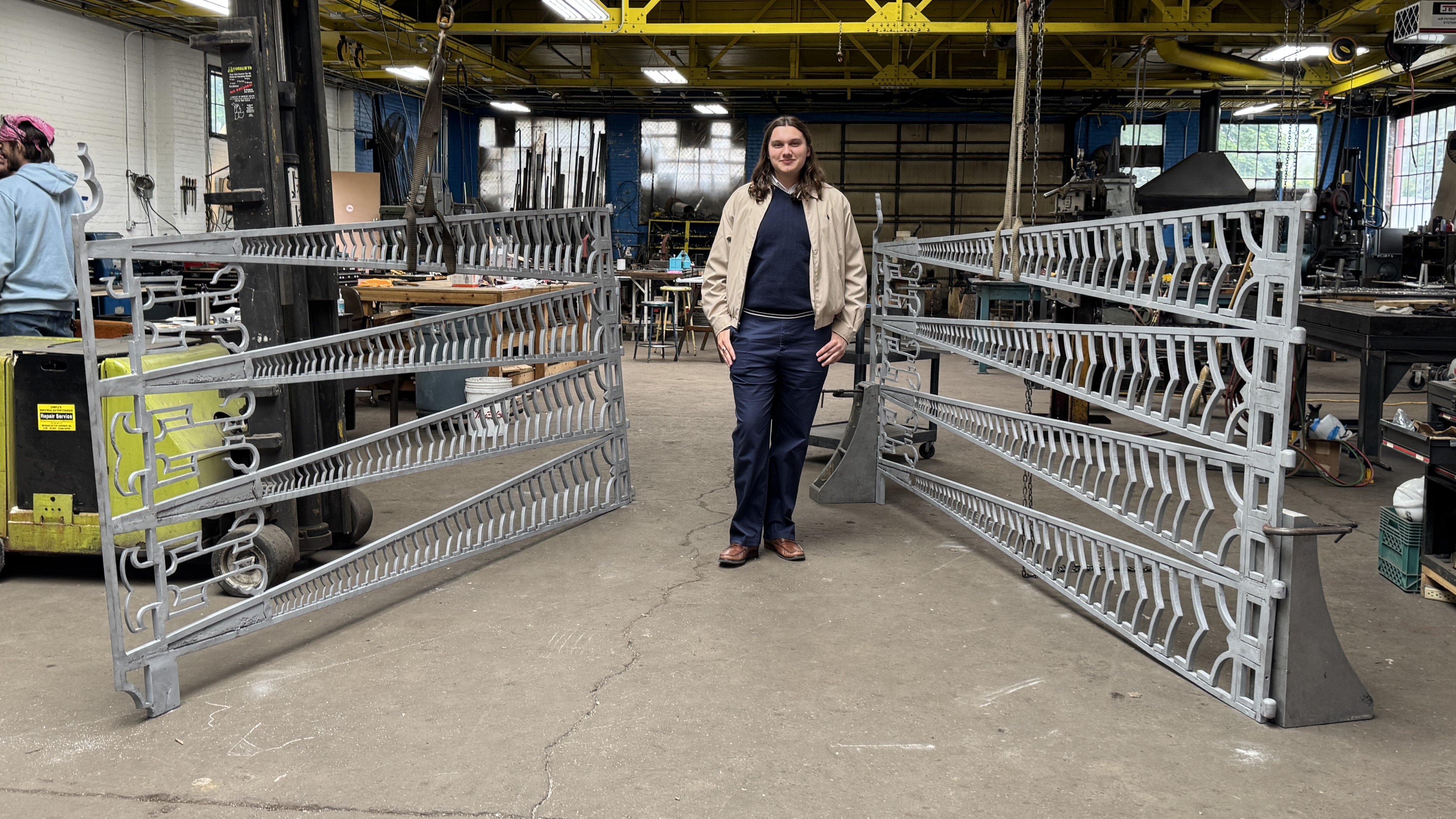
Checking in on the Eliel Saarinen-designed Kingswood main gate at Smith Shop in Highland Park, May 2025. Photography by Kevin Adkisson.
Cranbrook Center for Collections and Research is a name that invokes the image of some grand museum or hall, with many sterile prep rooms and rows upon rows of file cabinets. Now don’t get me wrong, there are plenty of file cabinets, but the Annex is far from grand. Instead, the rather humble staff apartment-turned-offices are befitting the lovely people there.
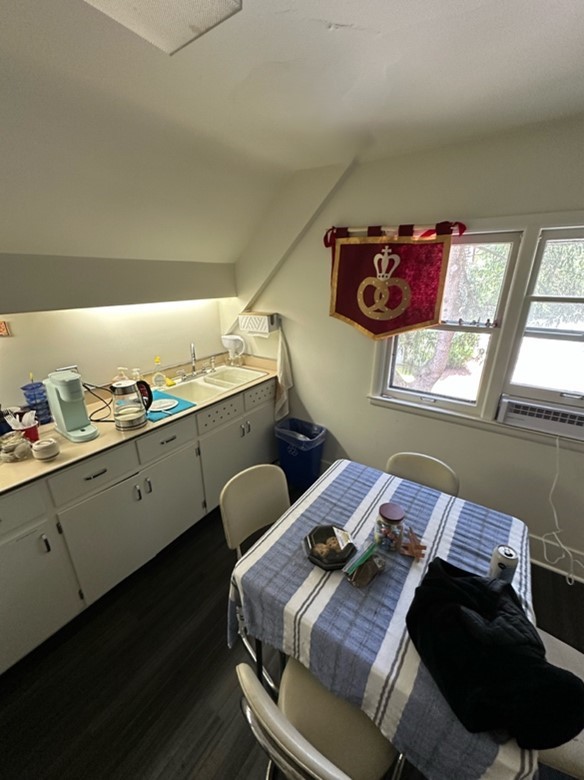
The Center’s Annex, next door to Cranbrook House, is situated above the House & Garden Auxiliary offices, up a set of winding stairs that require me to duck in a few places. But up there you will find a quaint little kitchen (complete with a toaster oven and healthy snack collection), a few offices, and closets and cabinets dotted with curiosities.
The quaint kitchenette of the Annex, compete with decommissioned Cranbrook Institute of Science Library chairs, May 2025. Photography by the Author.
It was this atmosphere, over many chatty lunches, that I got to know Leslie Mio, the Associate Registrar, and Mariam Hale, the 2023-2025 Center Collections Fellow. It was a pleasure to find two individuals who cared so greatly for history and conservation, and we bonded over our shared love of museums and particular historical eras.
But, let it be known that work at the collections isn’t all comfortable work behind a desk or searching a filing cabinet. This illusion, if I ever had it, was quickly broken on my first full day of the internship. Our task? Moving five solid wood cabinets from the rooms of retirement-age nuns across the building to be used to store Cranbrook’s lacy dresses and costumes.
Briarbank, a neighboring estate to Booth’s land, was converted into a place for sisters to stay once they needed a bit more care later in life. But, at some point, the demand for a place such as that ran dry, and Cranbrook bought the campus. And now, in that spirit, I was near horizontal in my penny loafers, shoving a giant wardrobe into place across some very tasteful carpet.
Mariam and I defy the friction of decades old carpet, May 2025. Photography by Leslie Mio.
In the coming days, the purpose of these heavy cabinets would be realized, as we began the true overarching theme of my time at the Center: moving a seemingly infinite number of objects from the hot attic of Cranbrook House to the comparatively “less hot” and climate-controlled storage area at Briarbank. Paintings, prints, textiles, rugs, hats, and racks of clothing and costumes were deftly maneuvered through the halls and offices of Cranbrook House (or, alternatively, very carefully down the narrowest, steepest, stairwell known to mankind).
Each day packing and moving Cultural Properties in the attic was sure to bring new surprises. Everything from a fur hat belonging to George Booth to paper parasols, or entire handwoven rugs the size of a small house. While these days meant a bit of manual labor, they never ceased to bring me joy, as the wonderful folk of the Center doled out tidbits of Cranbrook’s story connected to each unearthed gem.
The fabulous hat in a box marked “G.G.B.” — the box is possibly a later acquisition by Henry S. Booth — May 2025. Photography by the Author.
Now those familiar with the Center may be wondering: “Now wait just a minute. Where is my favorite curator? Where is the delightful presence of the steward of Saarinen House?” Well, fear not good reader, for while Kevin may not have been at every boxing and unboxing, Kevin joined Kamilah and me on many excursions outside the Samuel-Yellin-forged gates of Cranbrook. For those unacquainted, Kevin Adkisson is Curator of the Center, the veritable fountain of all knowledge concerning Cranbrook, and legend in his own time among students.
My first trip with Kevin came when we were tasked with heading to Detroit to give a tour of Holy Redeemer Church to a group of 8th graders from the Catholic school next door. I thought that getting middle schoolers excited about Corinthian columns would be impossible, but Kevin’s energy and skill made it look easy.
Kevin and I had fun teaching Holy Redeemer 8th graders about architecture. Photography by Holy Redeemer.
Afterword, we headed to visit the master ironworkers at Smith Shop, where the Eliel Saarinen-designed Kingswood main gate is being repaired and restored. I stood back and observed while Kevin, Cranbrook Capital Projects Director Jean-Claude Azar, and Amy Weiks and Gabriel Craig (co-owners of Smith Shop) debated the ins and outs of the gate’s making and breaking.
I enjoy a tour of the facilities of Smith Shop with Cranbrook Capital Projects Director Jean-Claude Azar and Smith Shop co-owner Gabriel Craig in Highland Park, May 2025. Photography by Kevin Adkisson.
Across my three week Senior May, I also took trips to the paint store to debate shades of grey, the frame shop to mount an object, Ken Katz’s painting conservation studio, and even Birmingham’s historic cemetery. On each of these trips, I gained insight into the multifaceted work of the Center for Collections and Research, including care and handling, teaching, conservation, and cataloging.
I cannot fully capture in a blog what a delight it was to be in the presence of such knowledgeable individuals. For every question about Cranbrook’s history, each member of staff was sure to add in their own expertise, citing obscure letters and photographs, adding a beautiful familiarity to their responses and giving color to the story of Cranbrook.
Of course, I would be remiss to leave out some of the other folks who make the Center function, like Greg, Jody, Amy, and Jess. These are the people who drive the work, managing, fundraising, and promoting the vision of Collections and ensuring the continued progress of the Center’s goals.
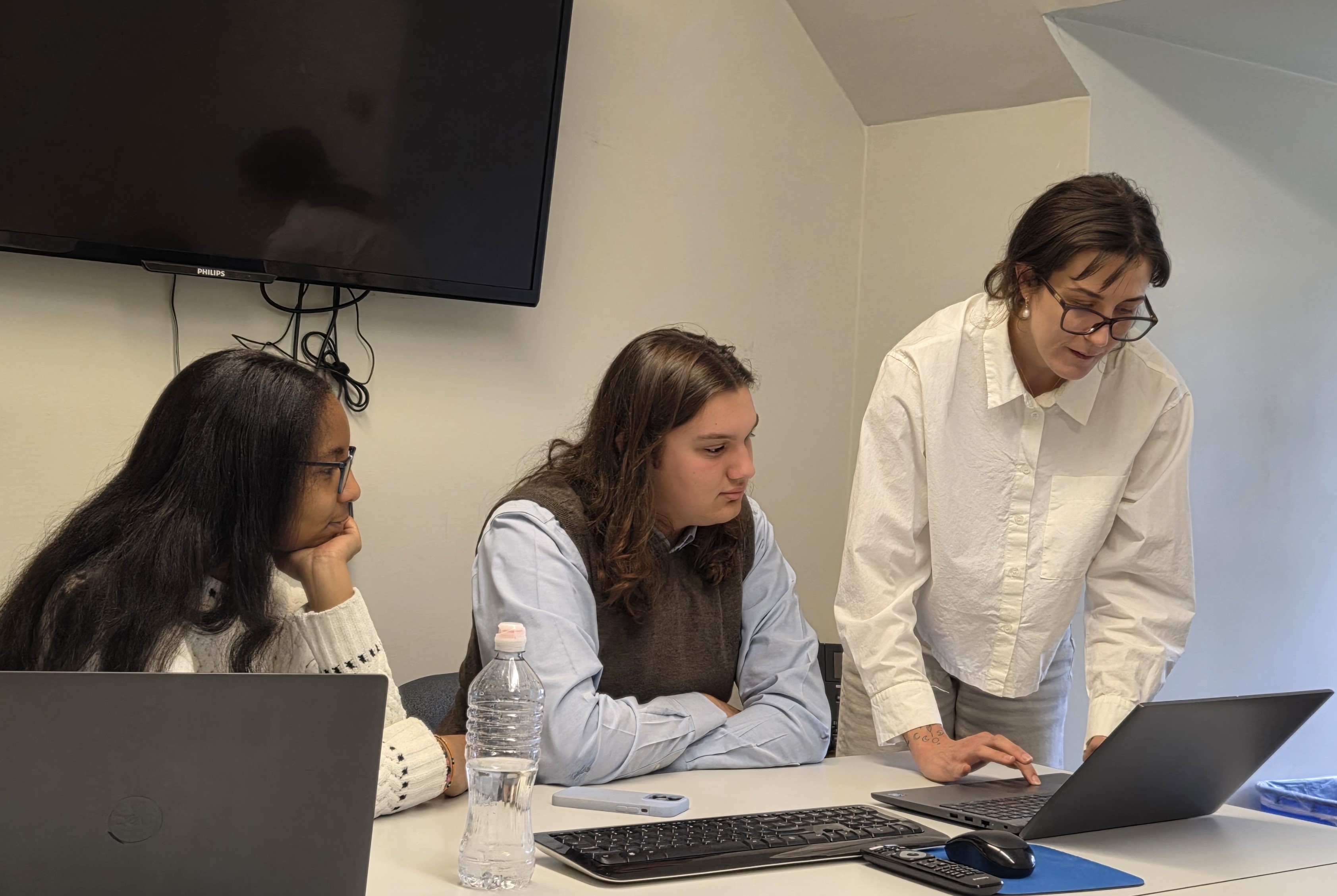
Even interns have meetings, Kamilah and I sat in on one of the Center’s weekly staff meetings. Photography by Kevin Adkisson.
On my last day, I had the privilege of working with Jess Webster, Development Coordinator, who also helps run the Center’s social media. With Kamilah, I researched, drafted, workshopped, and delivered a script for an Instagram Reel commemorating the 150th birthday of Carl Milles., During my time working out ideas for the video (and even this blog), I gained a new appreciation for the way in which Cranbrook is viewed from the outside.
Kamilah and I workshopping our reel for Carl Milles’s 150th birthday with Jess, May 2025. Photography by Leslie Mio.
For me, as a student at Cranbrook, my view is that of someone on the inside, who has the privilege to walk by art on campus each and every day (admittedly at times without a second thought). But getting to see the behind-the-scenes of Cranbrook’s beautiful historic campus has given me an appreciation that feels wholly unique amongst my peers.
If you’ve read this blog, I urge you to take a moment to appreciate all that goes on caring for a 100-plus-year-old campus to live on to this day and serve its many students and visitors. From calls, texts, emails, and meetings, the Center is busy planning, filing, caring, and protecting the legacy of Cranbrook. The work is never done.
Yet despite the challenges, the Center rises to the task, willing to give their all to something they passionately care for. It would be hard not to be inspired.
Kamilah and I make a video for Carl Milles’s 150th birthday, May 2025. Photography by Jessica Webster.
This internship has truly been a dream-come-true, and I am grateful to Mariam, Leslie, and Kevin for their warm welcome and tutelage.
– Joel Kwiatkowski, Cranbrook Kingswood Upper School Class of 2025 and Cranbrook Center for Collections and Research 2025 Senior May
Editor’s Note: The Senior May Project is a school-sponsored activity that encourages Cranbrook Kingswood Upper School seniors to acquire work experience in a field they are considering as a college major, a potential profession, and/or as a personal interest.
Joel Kwiatkowski graduated from Cranbrook in June 2025 and will be attending the University of California San Diego in the fall to pursue a degree in Molecular and Cellular Biology. Joel first came to Cranbrook Schools in sixth grade, and has since gained a passion for the institution’s rich history of influential artists and personalities.
In addition to Varity and Junior Varsity sports, students at Cranbrook School for Boys also participated in Club Athletics.
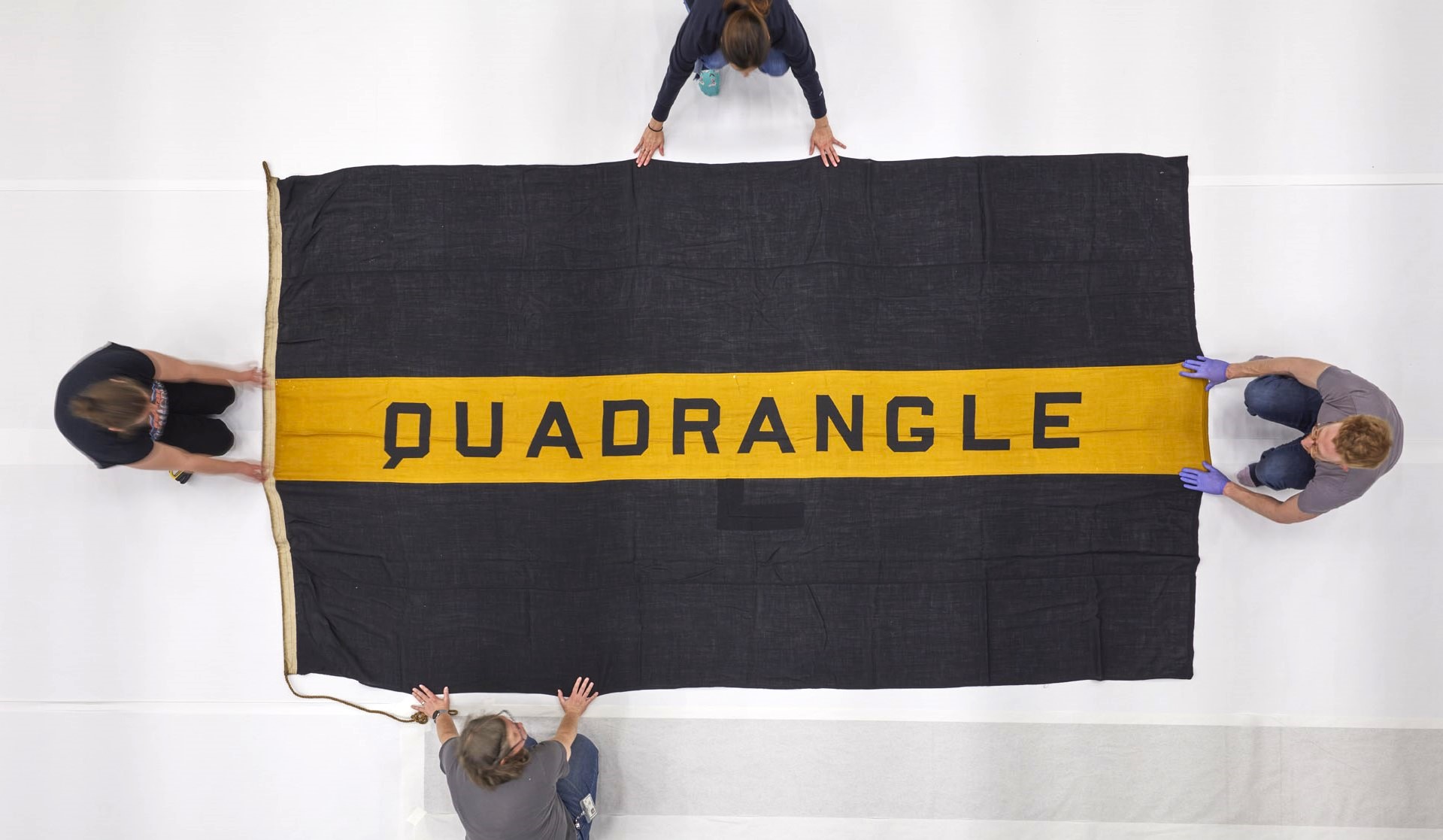
Nina Blomfield (left), Jessica Majeske (top), Kevin Adkisson (right), and Leslie Mio (bottom) setting the flag in place for photography in the Cranbrook Collections Wing, March 10, 2023. Photograph by James Haefner, Cranbrook Center for Collections and Research.
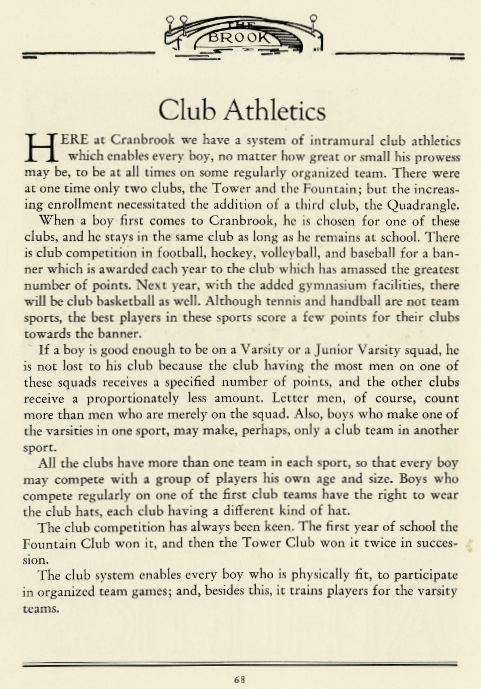
In the 1932 The Brook(the school’s yearbook), it states: “The fact that inevitably there has to be a large proportion of the student body left over from varsity teams has fostered the club system. By dividing the whole school up into the three factions of Fountains, Towers, and Quadrangles . . . every student is able to take an active part in athletics and thus enjoy competitive games.”
Page on Club Athletics from The Brook, 1931. Courtesy Cranbrook Archives.
And, each of the three factions had a flag! Here are the flags of the clubs, stored alongside other Cranbrook School Cultural Properties.
The flags are very large, over 13 feet long and 7½ feet high. Pretty heavy to wave around! These wonderful photographs were made by James Haefner when we photographed all our Studio Loja Saarinen rugs.
The club system did not last very long at Cranbrook School for Boys. Looking at the copies of The Brook, it seems to have been gone by the 1940s. Perhaps some spirited students from Cranbrook Kingswood Upper School might revive the faction system? If so, we are ready to help with your flags!
– Leslie Mio, Associate Registrar, Cranbrook Center for Collections and Research
Friday, September 27, 2024, is Homecoming at Cranbrook Kingswood Upper School. The game will be held in the Thompson Oval, to the east of The Football Game by David Evans.
The Football Game by David Evans. Thompson Oval, Cranbrook Kingswood Upper School – Cranbrook Campus.
Sculptor David Evans (1895-1959) was hired by the Cranbrook Foundation (through George Booth) as Professor of Sculpture and Life Drawing at the Academy of Art for 1929-1930. During that time, Booth commissioned him to create this bas relief for the football field at Cranbrook School for Boys. It is not just a bunch of nameless faces on the relief; it actually features members of the first football squad at Cranbrook School for Boys.
The 1930 Football Team, from The Brook, 1931 (Cranbrook School’s yearbook). Courtesy Cranbrook Archives.
Cranbrook School Football Sweater, circa 1930. Photographed by P.D. Rearick, 2019. Cranbrook Center for Collections and Research | Cultural Properties Collection, Archives.
During the 1930 football season, thirteen boys posed for Evans.
Members of the 1930 Cranbrook Football Team featured on The Football Game. Photos taken from 1931 and 1932 copies of The Brook. Courtesy Cranbrook Archives
The bas relief is in its original location – mounted above the steps leading to Alumni Court and overlooking Thompson Oval. If you are on campus for Homecoming, pose for a photo in your CKU green and blue with the 1930 football squad.
– Leslie Mio, Associate Registrar, Cranbrook Center for Collections and Research
Ed. Note: The Football Game was recently cleaned and waxed by our friends at McKay Lodge Conservation Laboratory. They also touched up other Upper School favorites: Hermes, Discus Thrower, The Wrestlers, Running Dogs, Masque Art, Diana, Dancing Girls, and Aim High.
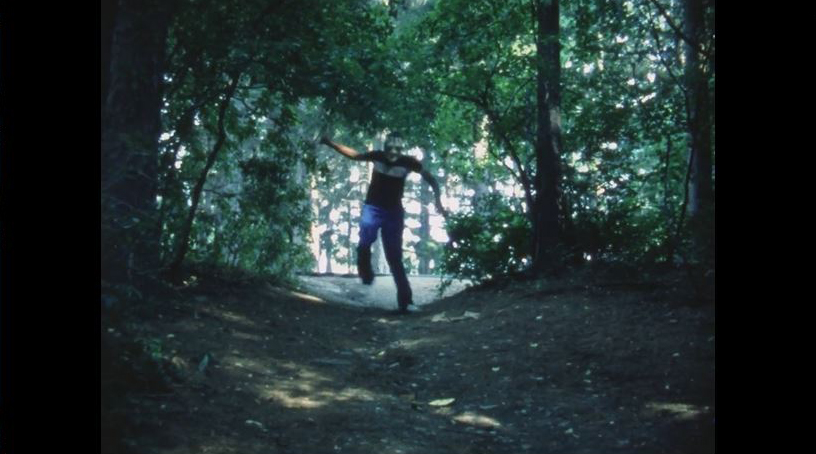
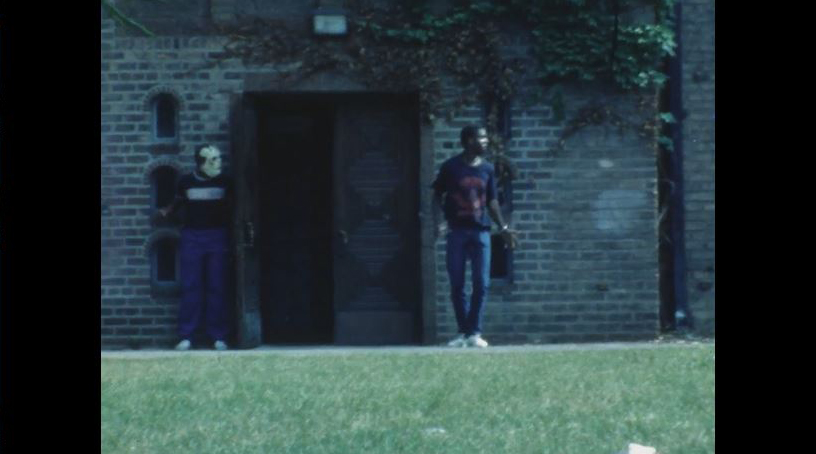
Films titles like Farewell My Summer Love, The Nightmare, and Dormitory of the Dead were recently rediscovered while working on the Horizons-Upward Bound (HUB) digitization project. The 8mm film reels were unmarked, but cross-referencing with film festival entry packets and faculty reports in the HUB Records, along with viewing the first few frames of each reel, revealed their origin.
Produced in 1984 by HUB summer students in John Prusak’s class, these films had been submitted to The Michigan Student Film and Video Festival, held at Friends Auditorium, Detroit, MI in 1985.
Opening scene from The Nightmare, 1984. Courtesy of Cranbrook Archives.
Top section of film evaluation sheet for the Michigan Student Film and Video Festival, 1985. Courtesy of Cranbrook Archives.
Digitizing film for today
When applying for the grant that is allowing digitization of the HUB Records only one student film, The Great Dictator, from William H. Moran’s 1969 summer class, had been labeled and identified. So it was indeed a nice surprise to find that there were more! Along with the 1969 film and a fifth film, Together, produced in John Geoghegan’s Advanced Film Class 1972 summer class, the 1984 films were sent to a lab for digitization.
Title Title screen and scenes from Dormitory of the Dead, 1984. Courtesy of Cranbrook Archives.
Scene from Farewell My Summer Love, 1984. Courtesy of Cranbrook Archives.
Viewing the digitized films helped further identify the students involved and corroborate the information listed on the entry forms. With this information in hand, we have eagerly begun sharing this newly accessible resource with the HUB community.
Head archivist, Deborah Rice, screens two films during Cranbrook Schools Reunion Weekend June 2024. Courtesy of Cranbrook Archives.
Future Discoveries
The summer film elective class was offered sporadically throughout HUB’s history beginning in 1969. It is yet unknown how many films have been produced over the years. Other titles listed in the 1985 festival entries alone include six films: Money, Spectrum, Street People, That’s Life Kid (It’s Gonna Be Lonely II), The Mix, and Class of 86 – Memories. Together, the films are invaluable documentation of the student perspective.
Please reach out to archives@cranbrook.edu with any information about the films mentioned above or other HUB student films. We’d love to know more!
—Courtney Richardson, Project Archivist and Deborah Rice, Head Archivist, Cranbrook Center for Collections and Research
HUB digitization is funded by a NHPRC Archival Projects Grant for projects that ensure online public discovery and use of historical records collections. The NHPRC was established by Congress in 1934 as a statutory body affiliated with the National Archives and Records Administration and chaired by the Archivist of the United States.
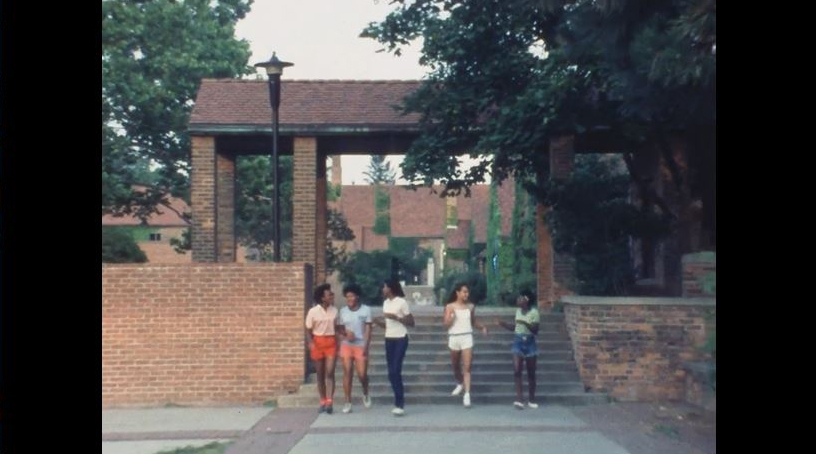
Cranbrook Archives is excited to announce the launch of a historical digitization project, made possible by a generous two-year grant from the National Historical Publications & Records Commissions (NHPRC). The Archival Projects grant “supports projects that promote access to America’s historical records to encourage understanding of our democracy, history, and culture.” One of 21 awardees in 2023, alongside the Amistad Research Center, NYU, and others, we have begun full digitization of Cranbrook Schools’ Horizons-Upward Bound Program (HUB) records in an effort to facilitate discovery and use of material that documents one of the nation’s oldest and largest college access programs. The new online collection promises to elevate the visibility of HUB’s important story, and by extension, experiences of under-represented youth, primarily African American, in the U.S. educational system.
Cover of Horizons-Upward Bound’s first annual report, 1965. Courtesy of Cranbrook Archives.
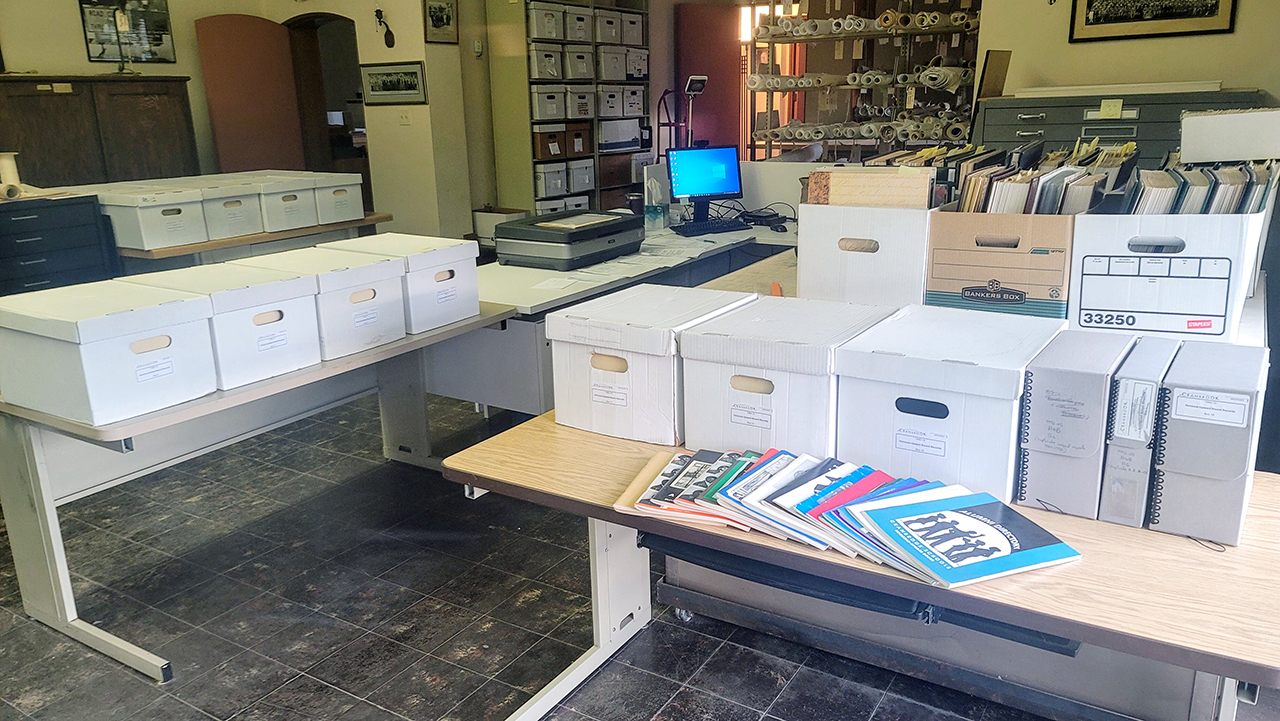
HUB historical materials include approximately 18 boxes (20.4 linear feet) of material relaying HUB’s history from its founding in 1965 through the year 2000. Material includes paper, news, photo, and film media primarily generated by HUB administration and HUB students. During the first year of the grant we are focused on digitizing all paper material. The second year will be devoted to digitizing photography and film, including images taken by local photographer Jack Kausch.
Digitization workstation where paper records are currently being scanned.
What we’ve done so far…
Digitization began in-house at the Archives in Summer 2023, with two HUB student volunteers who scanned a selection of newsletters and annual reports and drafted initial keyword/descriptions of the material. Later that Fall, I was hired to dedicate full-time attention to the project for the duration of the grant period. I continued the students’ work by first conducting quality control of the scanned material and digitizing the remaining publications in the collection. So far, I have digitized and quality checked over 7,500 pages of paper material. Currently, I am writing descriptions and creating keywords for these items and transferring the digital files to our online collections website, where they will be made public at the end of the project.
Selection of Horizons-Upward Bound publications spanning from the 1960s to 1990s, including annual reports, literary magazines, brochures, and newsletters. Courtesy of Cranbrook Archives.
More to come!
In honor of HUB’s founder and first director, Ben Snyder (1965-1989), we hope for this digitization project to help realize the desire he expressed for HUB’s records in his 1977-1978 Annual Report:
Annual Report cover, featuring HUB’s first cohort to include young women, 1977-1978. Courtesy of Cranbrook Archives.
“One hopes that these annual entries will, at some point in the future, be useful to the educational historian or, in a narrower sense, to someone reviewing the Cranbrook scene as it relates to community involvement. Should that time come in say the next century, the task would be far happier if the nation had in the meantime eliminated the need for compensatory education.”
–Ben Snyder (pg. 34)
Initially self-described as “An Experimental Enrichment Program,” in conjunction with representatives from Detroit Public Schools and Oakland County Schools, HUB was the only program of its kind at its inception. The artifacts and stories found within its historical collection have great potential to inform and inspire continued community-building and educational programming that span across metro Detroit and the nation. We hope you will share in our excitement about this project and we look forward to sharing more updates about the Horizons-Upward Bound collection!
– Courtney Richardson, Project Archivist, Cranbrook Center for Collections and Research
Editor’s Note: The NHPRC was established by Congress in 1934 as a statutory body affiliated with the National Archives and Records Administration. Chaired by the Archivist of the United States, it is composed of representatives of the three branches of the Federal Government and professional associations of archivists, historians, documentary editors, and records administrators.
Each year, the Center staff does spring cleaning around the Cranbrook Community’s campus.
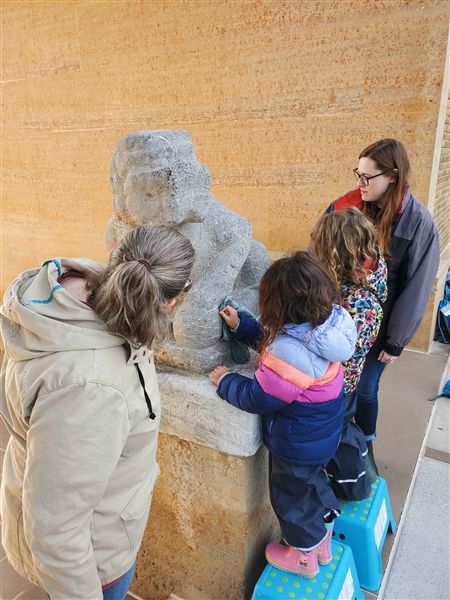
To kick off our spring cleaning this year, in collaboration with Meghan Morrow from Cranbrook Art Museum, Brookside’s Vlasic Early Childhood Center Pre K, JK, and multi-age classes helped us “awaken” the outdoor sculptures, covered for the winter, with a good-morning song. They helped remove the covers, check for any new cracks, and wipe and polish the sculptures.
Friends from the ECC help polish Marshall M. Fredericks’ TheThinker . . .
. . . and the ChineseLion at Cranbrook Art Museum. Both images are courtesy Cranbrook Schools.
We then needed to get the fountains and sculptures ready for our House Party fundraiser on May 20 (sorry, already sold out). Utilizing Graffiti Solutions’ “Elephant Snot,” we worked with Cranbrook House and Gardens Auxiliary volunteers to clean the Fountain on West Terrace and Mario Korbel’s Harmony.
Cranbrook House and Gardens Auxiliary volunteers Helen Maiman, Bruce Kasl, Cheryl Becker, and Joyce Harding assist me in cleaning the Fountain on West Terrace at Cranbrook House. Auxiliary volunteer Nancy Kulish, photographer.
Joyce and I giving Harmony her spring mani-pedi. Nina Blomfield, photographer.
Nina gives Harmony a quick rinse. Leslie Mio, photographer.
Below are the results. This was just one day after the cleaning, and, typically, the sculptures look better and better as the weeks go on.
Look for an upcoming post about our ECC friends working with the Elephant Snot to clean more stonework in the garden!
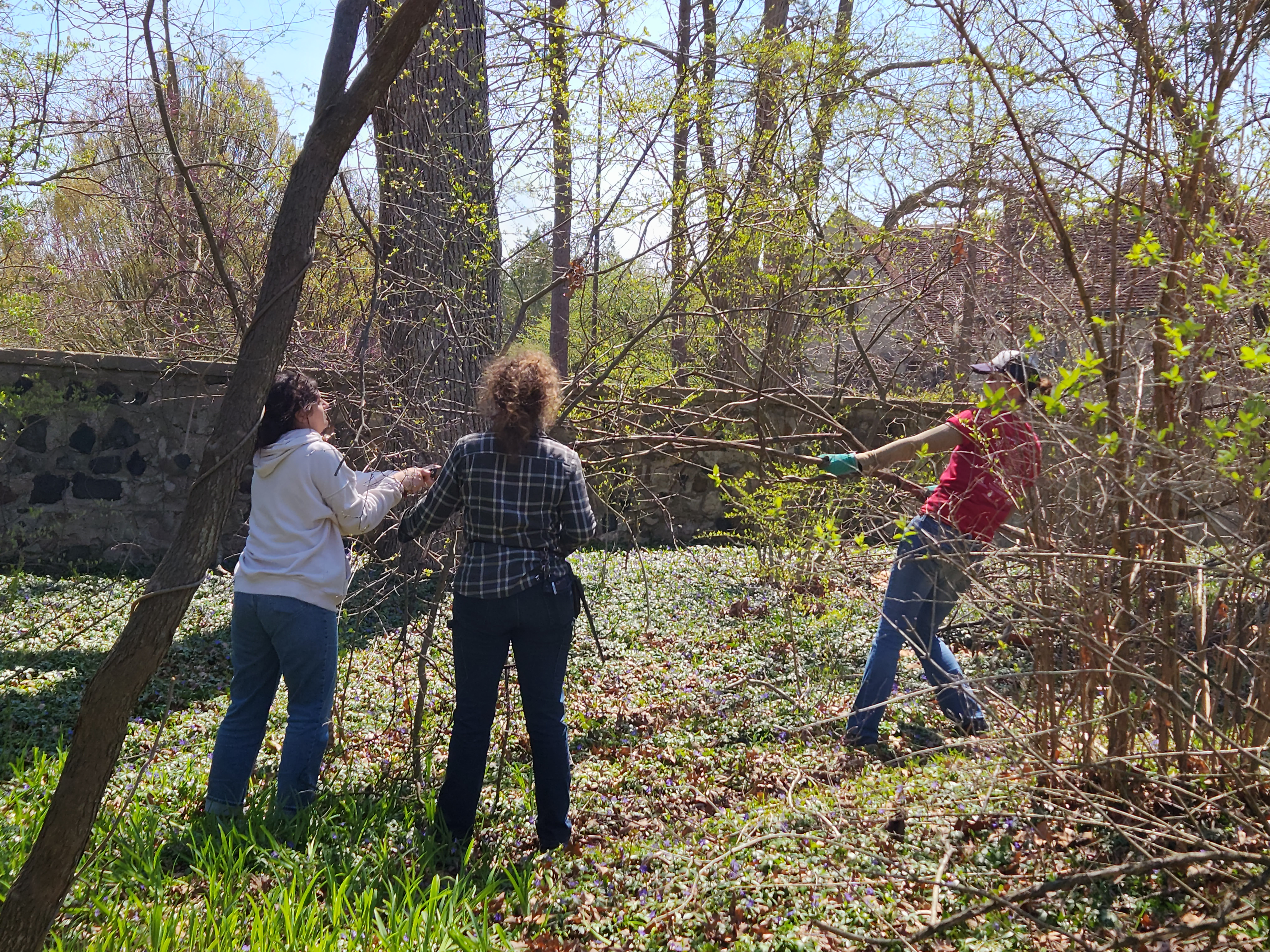
The spring also means a new season of work in the Japanese Garden. Pulling vines, before the poison ivy blooms, was a fun, end-of-the-day task for our volunteers this week.
Volunteers Lindsay Shimon and Melinda Krajniak assist Master Gardener Emily Fronckowiak with invasive vines around the Japanese Garden. Leslie Mio, photographer.
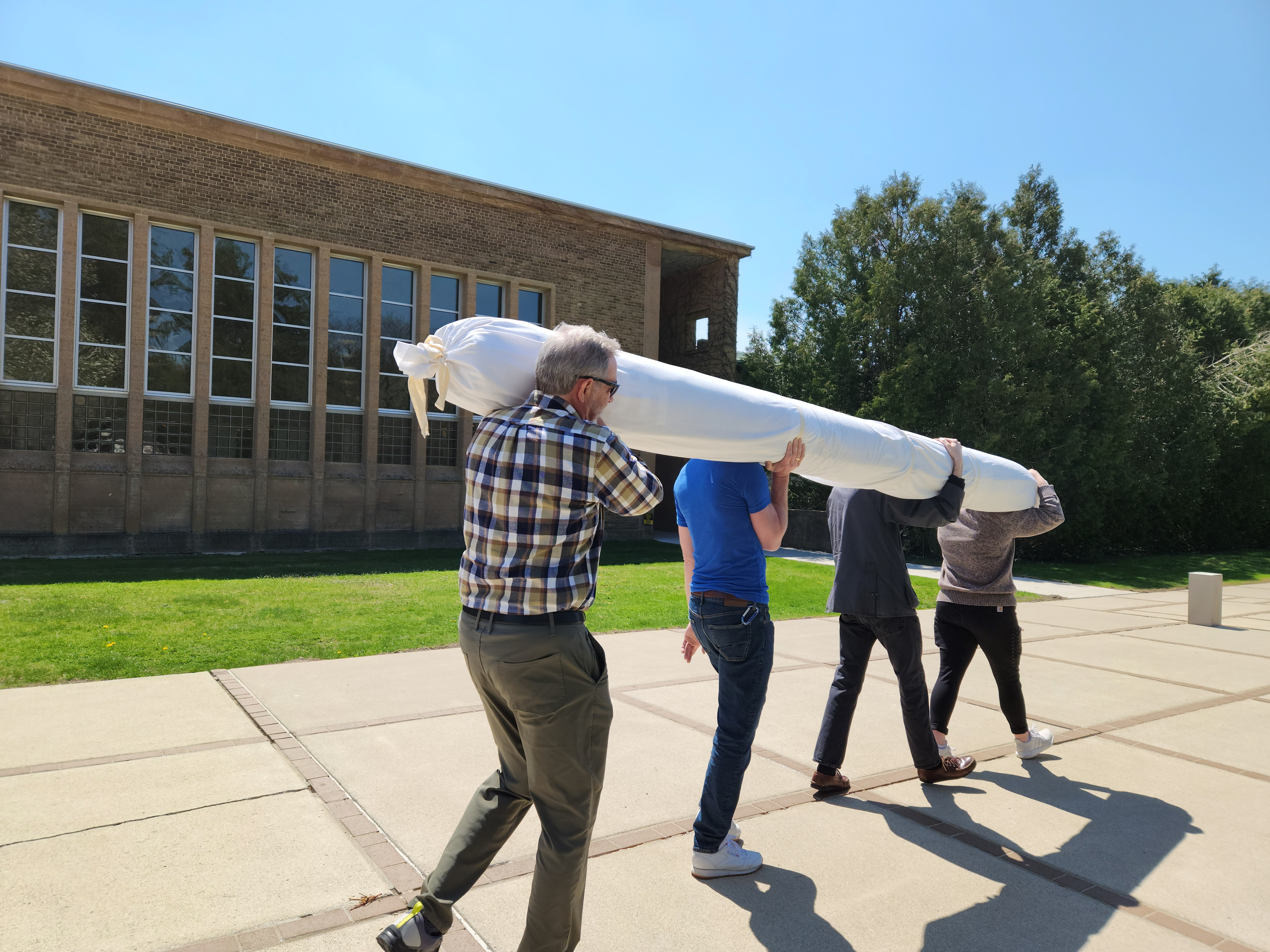
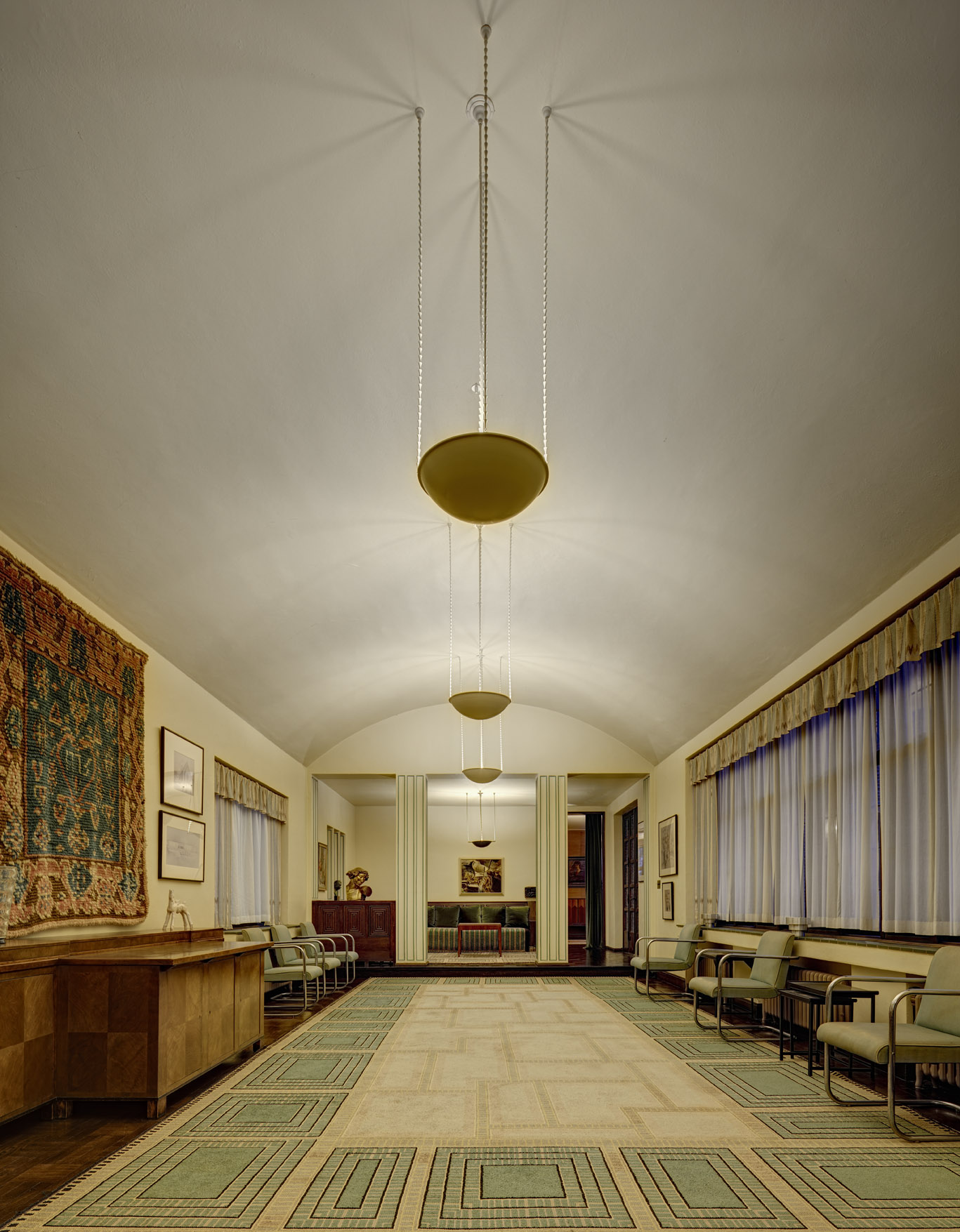
Not to be outdone, Saarinen House wanted to be part of spring cleaning as well. On location in the Art Museum vault for a photoshoot this past winter, the Saarinen House Studio rug was carried back to the house and reinstalled. As Greg Wittkopp, Center Director, said, “The room does look less Gesamtkunstwerk-ish without it.”
“I’m ready for my close-up, Mr. [Haefner].” The Saarinen House Studio rug gets the star treatment from photographer James Haefner as Center volunteer Jessica Majeski looks on. Kevin Adkisson, photographer.
Center staff and volunteers move the Studio rug back to Saarinen House. Leslie Mio, photographer.
Gesamtkunstwerk! James Haefner, photographer.
The best part about our spring cleaning is showing off the results. Come see Harmony in the Cranbrook House gardens on a warm day.
The Center’s 2023 Tour season is also beginning. In addition to our Saarinen House and Smith House tours, new tours have been added:
Japanese Garden Tours – Center staff-guided tours of the Japanese Garden have been added to the public tour calendar on one Sunday a month at 1:30pm, May through October.
Three Visions of Home tours – Join Cranbrook Center for Collections and Research as we take you inside three remarkable homes from across the twentieth century. There’s no tour quite like it, with a look into the distinct visions for American life from three internationally significant architects: Albert Kahn, Eliel Saarinen, and Frank Lloyd Wright. Your expert guide will take you through the architecture and innovations of each home, while also sharing the stories of the families who built and lived in these special places.
We hope to see you on campus this season!
– Leslie Mio, Associate Registrar, Cranbrook Center for Collections and Resarch
Cranbrook Archives is pleased to announce that the Carl and Annetta Wonnberger Papers are open for research. The collection contains biographical materials documenting their early life and education, a large series of personal correspondence between Carl and Annetta during their courtship, materials relating to Carl’s tenure as teacher and administrator at Cranbrook School, their involvement in establishing and directing the Cranbrook Theater School, as well as Carl’s involvement in outside organizations.
Performance Poster, 1950. Courtesy of Cranbrook Archives.
Carl and Annetta Wonnberger were fixtures at Cranbrook for well over half a century, raising two daughters on campus (Jo Anne and Nancy, Kingswood ’48 and ’53 respectively) and making significant contributions to Cranbrook School (Carl even wrote their fight song!) and community theater arts. They both received Cranbrook’s highest honor, the Founders’ Award, and Annetta had a day (July 17) named after her by the City of Bloomfield Hills.
They arrived at Cranbrook in September 1929 when Carl took the position of English teacher at Cranbrook School. The following year, Carl became the Head of the English Department, a position which he held until 1967 when he retired from Cranbrook and became Professor of English Language and Literature at Eastern Michigan University.
Carl and Annetta Wonnberger with Eva Le Gallienne and Joe Schildkraut. 1945. Harvey Croze, photographer.
Annetta helped Carl start Ergasterion (Cranbrook School’s drama club) in 1931. She created costumes, built and painted sets, applied make up, and played female roles in all boys’ productions. Annetta was also one of the founders, with Henry Scripps Booth and Brookside Schools Headmistress Jessie Winter, of St. Dunstan’s Theatre in 1932.
Carl and Annetta Wonnberger Papers (1991-14), Box 45, Folder 1. Courtesy of Cranbrook Archives.
Together they founded Cranbrook Theatre School (CTS) in 1942 with the first season held in the Greek Theater. The mission of the school was to provide a full liberal education through theater training including voice and diction, phonetics and language, development and control of the body, literature, history, philosophy, design, and technical science. Carl and Annetta taught theatrical training so as to provide experience in teamwork, good sportsmanship, and dialog. They celebrated theatrical training as a wonderful developer of personality.
Carl and Annetta Wonnberger Papers (1991-14). Box 19 Folder 10. Courtesy of Cranbrook Archives.
The bulk of the Wonnberger Papers relates to their involvement with Cranbrook Theatre School, comprising administrative materials as well as many scripts, announcements, and performance programs.
Alice Shaw, head director, discusses a staging problem with Carl Wonnberger. July 24, 1953. Harvey Croze, photographer. Courtesy of Cranbrook Archives.
Theater performances, themselves, are well documented by audio-visual formats including photographs, slides, and motion picture film. This collection provides a rich study of a fascinating facet of Cranbrook’s performing arts legacy, and a theater program that is still going strong today.
–Laura MacNewman, Associate Archivist, Cranbrook Center for Collections and Research
I have mentioned in the blog before that I am working with Center Director Gregory Wittkopp and Center Curator Kevin Adkisson on reviewing all fourteen of our cultural properties collections (over 9,000 objects), reviewing the data already on file and adding as much additional information about each object as we can.
The most recent collection I have been working on is Cranbrook Kingswood Upper School – Cranbrook Campus (f.k.a. Cranbrook School for Boys). The current campus buildings, classrooms, and staff offices, all had the potential to contain cultural properties (historic objects). And many that we visited did!
When I researched the Cranbrook Kingswood Upper School – Kingswood Campus (f.k.a. Kingswood School for Girls), I was fortunate to have the “Kingswood School Cranbrook Inventory of Equipment and Supplies.” It recorded the purchases and payments made from 1930-1938 for the outfitting of the school. It proved invaluable in locating quantities and makers of objects.
There had to be an equivalent for Cranbrook Campus?! Unfortunately, not that I had yet seen.
I only had a 1952 Inventory which listed fixed items, like light fixtures; and “movable” furniture and fixtures, like chairs, tables, desks, artwork. This was a great resource, but it did not always give me the makers or artists. Undeterred, I started searching in Cranbrook Archives, the “little gem” at Cranbrook, to borrow a phrase from Frank Lloyd Wright.
In Box 43, Folder 11 of the Cranbrook Foundation Office Records were the “Building Costs for Cranbrook School from 1926-1946.” And then, I saw it. A small black book labeled “Cranbrook School Book.” Could it be what I was looking for?
“Cranbrook School Book.” Cranbrook Foundation Office Records, 1981-05. Cranbrook Archives, Cranbrook Center for Collections and Research.
Inside were listed payments made to the builder Wermuth & Son and to the W. J. Sloane Company for furniture. It listed the artists who painted, carved, and outfitted the school, as well as contractors who installed various materials in the buildings.
Pages 20 and 21 “Cranbrook School Book” lists payments to Parducci Studio, J.L. Hudson’s, W.J. Sloane, as well as Pipsan Saarinen Swanson..
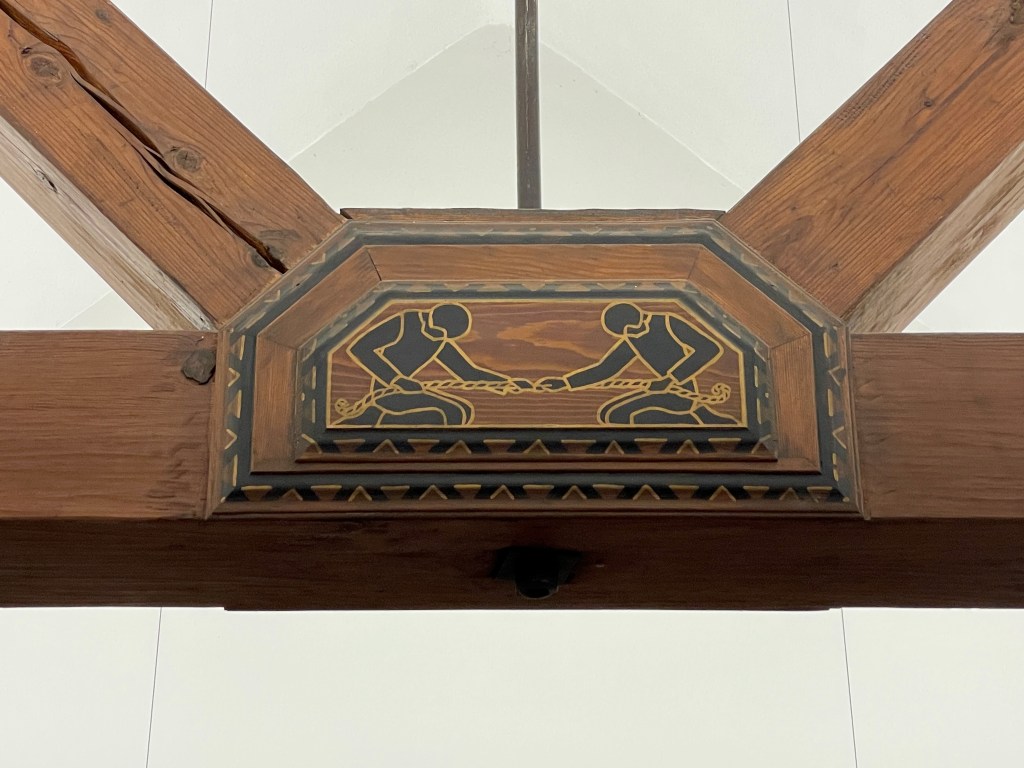
Detail of page 20 of “Cranbrook School Book.” On March 2, 1928, Pipsan was paid for “Decorating truss plaques for Study Hall.”
One of Pipsan’s ten truss plaques in the Cranbrook Campus Library Study Hall, 2022.
These entries were great, but what else would it lead to? The answer: the “Cranbrook Schools” series in the Cranbrook Architectural Office Records.
Many of the folders were labeled “Cranbrook School correspondence, Wermuth & Son” with dates. The “Cranbrook School Book” had given me an idea of what to look for. Who Wermuth and the Cranbrook Architectural office (and sometimes George G. Booth himself) were corresponding with was the key. Inside were letters from vendors of tiles, furniture, stained glass, stonework, mirrors, mattresses, windows, everything needed to build a well-appointed school.
Here are just a few examples:
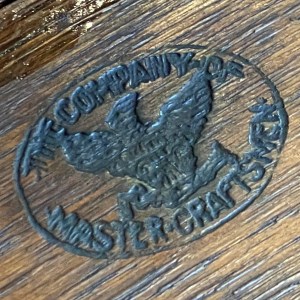
Copies of blueprints for furniture made by W. J. Sloane Company’s “Company of Master Craftsmen,” many of which were selected for Cranbrook.
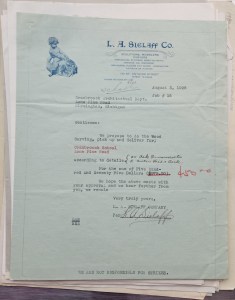
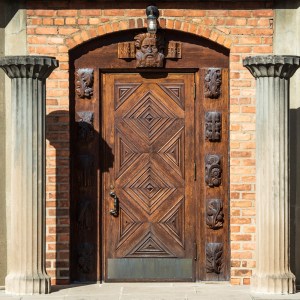
A letter from L.A. Sielaff & Co. indicating it was contracted to carve the wood ornaments on the Geza Maroti-designed doorcases outside the Library
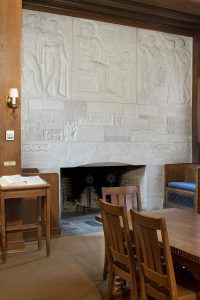
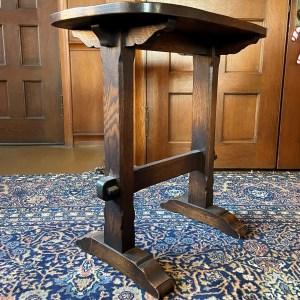
Letter from L. A. Sielaff & Co., dated August 3, 1928.Cranbrook School Study Hall Door, also called the “Door of Knowledge.” Photographer James Haefner.Letter from Cranbrook Architectural Office, dated August 8, 1928.Cranbrook School Library Reading Room “Gift of Knowledge” Overmantel. Photographer P.D. Rearick.Letter from George G. Booth to Swedish Arts & Crafts Company, dated June 4, 1928. Booth’s sketch is at right.Cranbrook School Dining Hall hanging fixtures.Blueprint for table #41919 by W. J. Sloane Company’s “Company of Master Craftsmen.”Table #41919 in use in a Cranbrook Campus office.Maker’s mark for “Company of Master Craftsmen” on the underside of many pieces of furniture on the campus.
Next up, Cranbrook Campus’ custom light fixtures! I can already hear Kevin’s words in my head . . .
. . . Cranbrook light fixtures are all around campus. There are multiple types of the light fixtures. These were designed by architect and former Head of the Architecture Department Dan Hoffman. He was the architect-in-residence who probably did more to revive the tradition at Cranbrook that was so such a passion project of George Booth and Eliel Saarinen . . .
– Leslie S. Mio, Associate Registrar, Cranbrook Center for Collections and Research
p.s. For more on Cranbrook Campus, check out these videos by Center Curator Kevin Adkisson:






























 Cranbrook Kitchen Sink