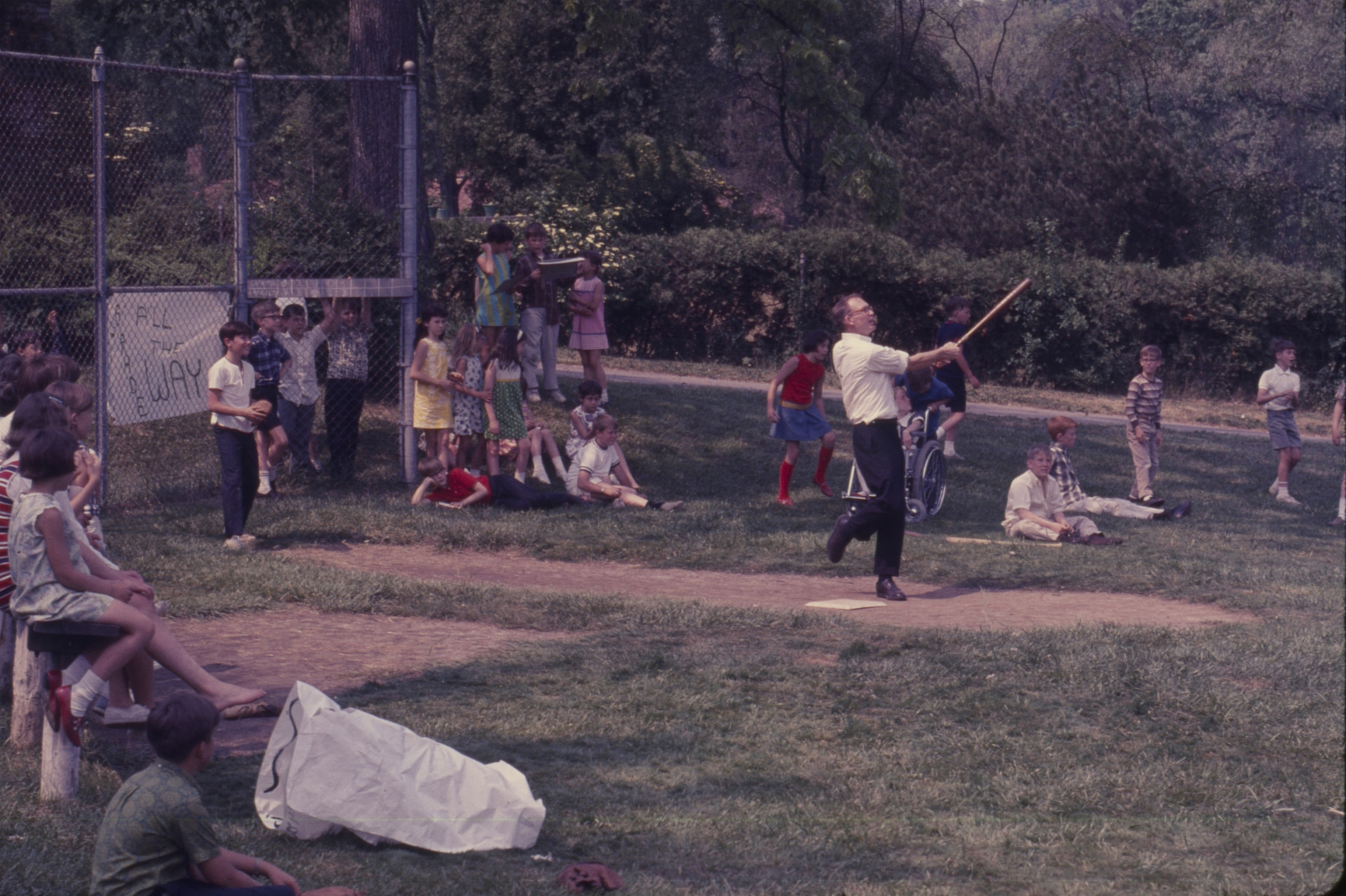
For many years, one of Brookside School’s highly anticipated end-of-year traditions was the Faculty/Sixth Grade Softball game. Every June, faculty and sixth graders would meet on the sandlot at Hedgegate, the faculty residence, to play against each other in friendly rivalry. It was a special day when students could play their favorite pastime with their teachers.
Brookside School Headmaster, Jock Denio, at bat, June 1967. Courtesy of Cranbrook Archives
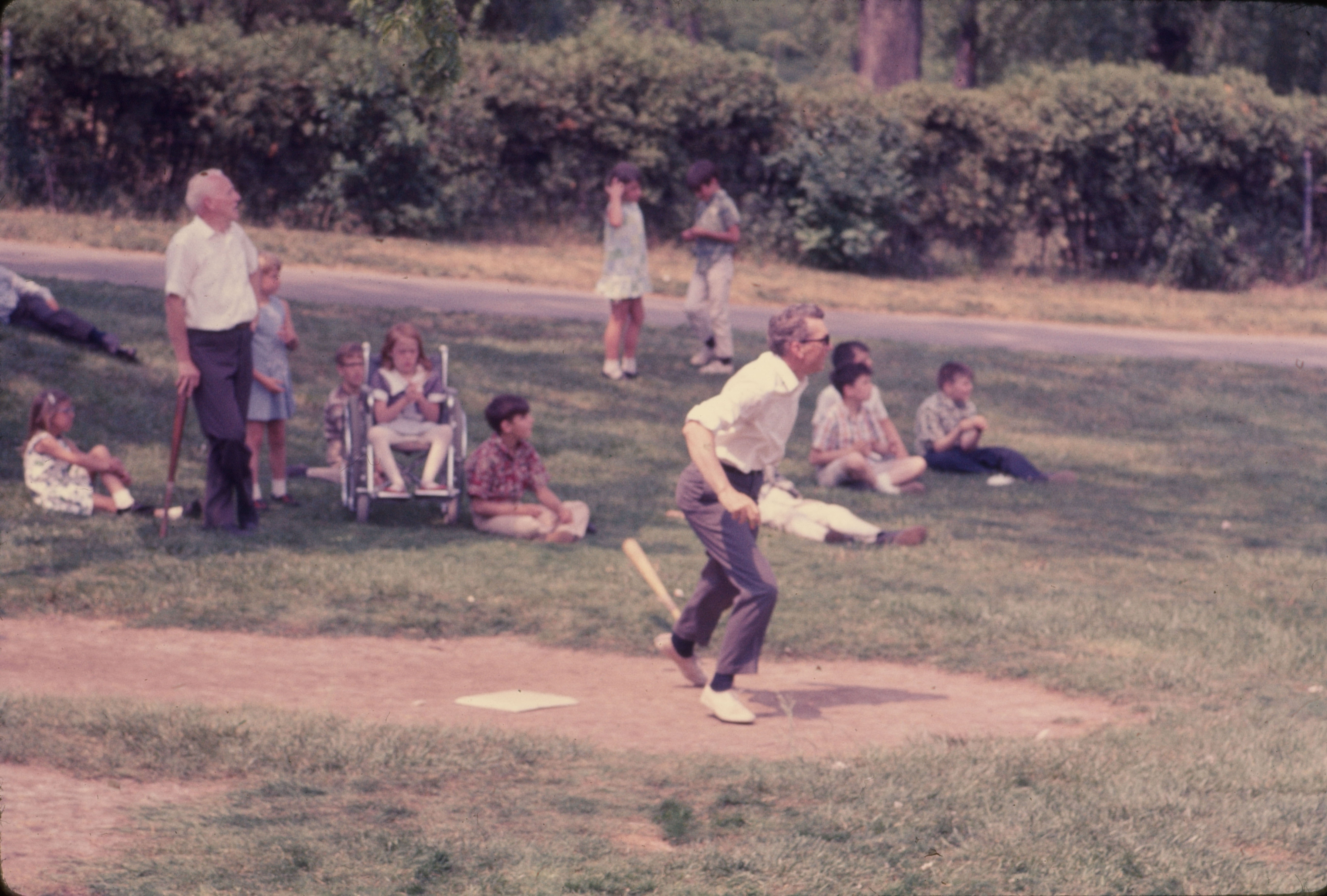
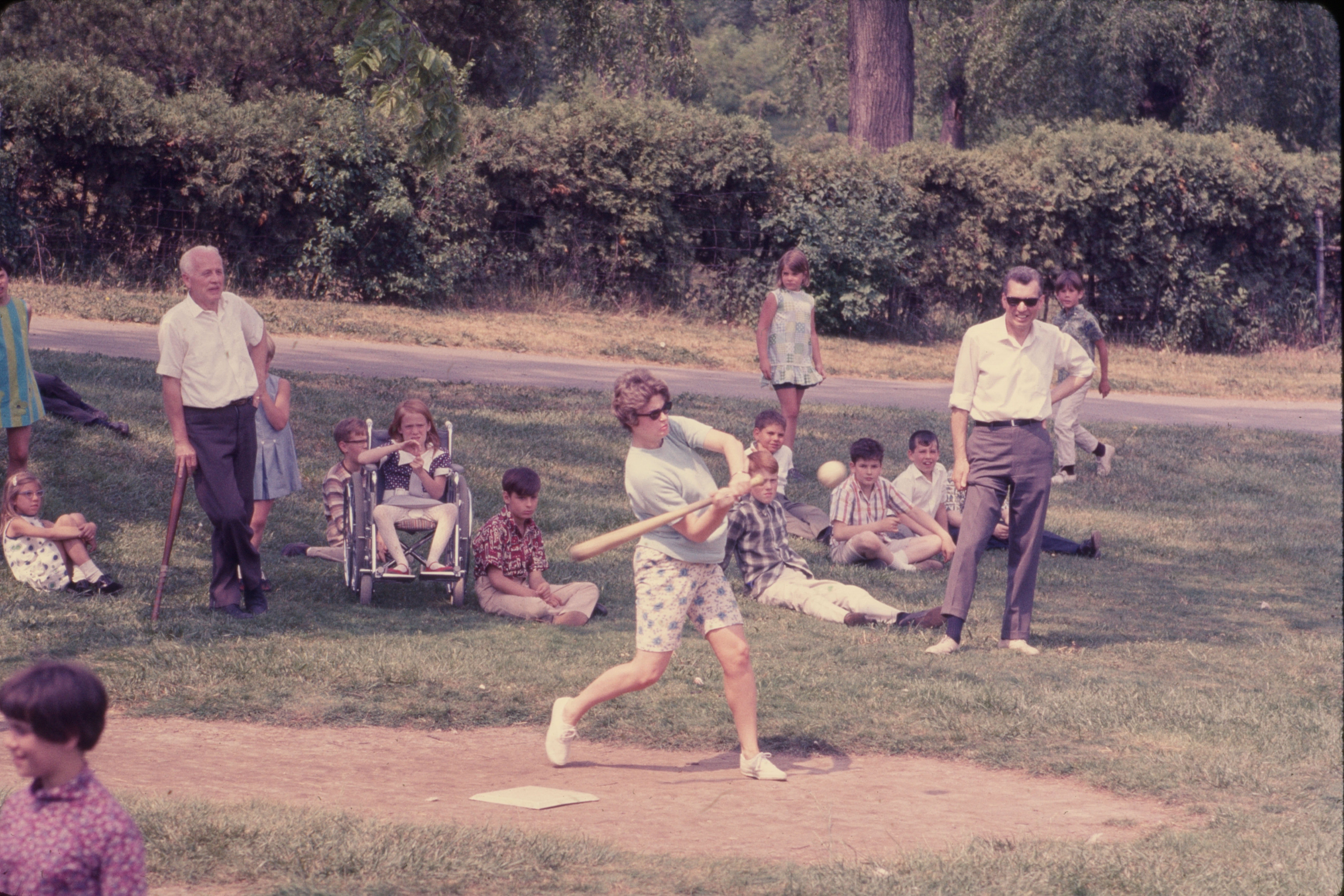
We recently received an addition to the James Carmel Papers from his son, which includes slides capturing the June 1967 softball game. The colorful images convey the camaraderie and joy of the event, with both faculty and students enthralled by the gameplay.
Brookside School students watch the softball game, June 1967Carolyn Tower and Paul Gerhardt, June 1967Louis Beer, June 1967Carolyn Tower at bat, with Paul Gerhardt, Louis Beer, and Brookside students looking on, June 1967. All images Courtesy of Cranbrook Archives
The sixth graders were up against Jock Denio, Brookside’s long-serving Headmaster; Carolyn Tower, music teacher; Louis Beer, third-grade teacher; and Paul Gerhardt, social studies teacher and director of testing and records.
In my work “fielding” research inquiries, I find that there is always a heartfelt nostalgia and tenderness in the memories and stories evoked by Brookside, a Cranbrook institution so deeply cherished by its alumni and former staff.
— Laura MacNewman, Associate Archivist Cranbrook Center for Collections and Research
July 5th, 2025, marks one hundred years since the groundbreaking for Christ Church Cranbrook. As we mark this milestone in Cranbrook’s history, I believe it is important to reflect on George Gough Booth’s long discernment of this generous gift to the community.
From the beginning, there were always places of worship at Cranbrook. The story that leads us through these spaces to the establishment of Christ Church Cranbrook is especially meaningful to me.
Rev. Dr. S. S. Marquis, D.D. with the first spade of earth, July 5, 1925. Courtesy of Cranbrook Archives, Cranbrook Center for Collections and Research.
After George and Ellen Booth purchased ‘The Farm’ in January 1904, his father, Henry Wood Booth, was the first family member to live on the country estate. The elder Booth stayed for the month of May with Frank Brose, the farmer, and his family. On May 15, 1904, the first worship service at Cranbrook took place under a tent, on the site upon which the Altar of Atonement now sits, with Henry as lay preacher. He continued in this ministry, also offering Sunday School, at the same spot until 1909. This was the first act of service offered to the Bloomfield Hills community at Cranbrook.
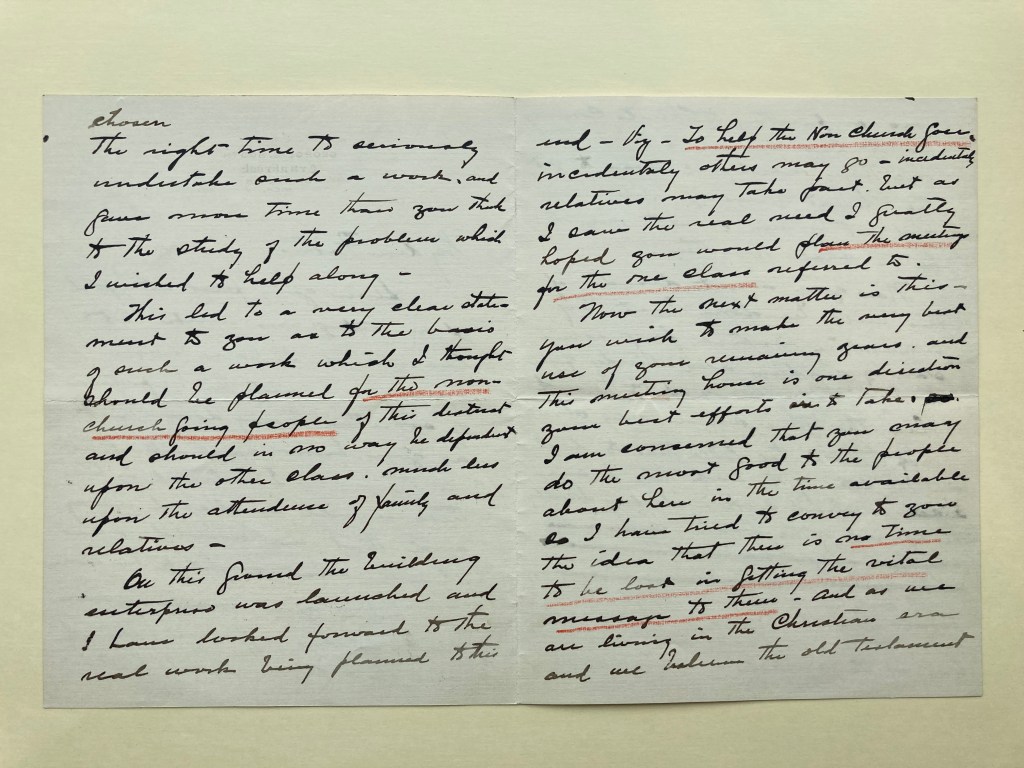
Letter from George Gough Booth to Henry Wood Booth, August 24, 1918. Courtesy of Cranbrook Archives, Cranbrook Center for Collections and Research.
In 1914, George and Ellen considered building a chapel at the site on which the Kingswood flagpole now sits, but the project was rejected, most likely due to the outbreak of World War I. As the war ended, a permanent place of worship and Sunday School was established with the building of the Meeting House.
The letter, above, preserves the dignity with which George writes of the Meeting House “building enterprise” to honor and give freedom to his father’s calling to share the Christ message with the non-church goers in the district. From this letter, we can learn and understand why George built the Meeting House for worship and Bible study through his father’s ministry.
Decoration of the Meeting House by Katherine McEwen, 1918. Laura MacNewman, photographer.
In the letter from George to his father, we also learn that he is prudent in observing the religious character of Bloomfield residents. During the years in which the Meeting House was used for religious services (1918-1926), Mr. Booth would reflect on the visiting clergy and service attendees (both of which came from diverse denominations), from which he would eventually discern the denomination of “Cranbrook church.”
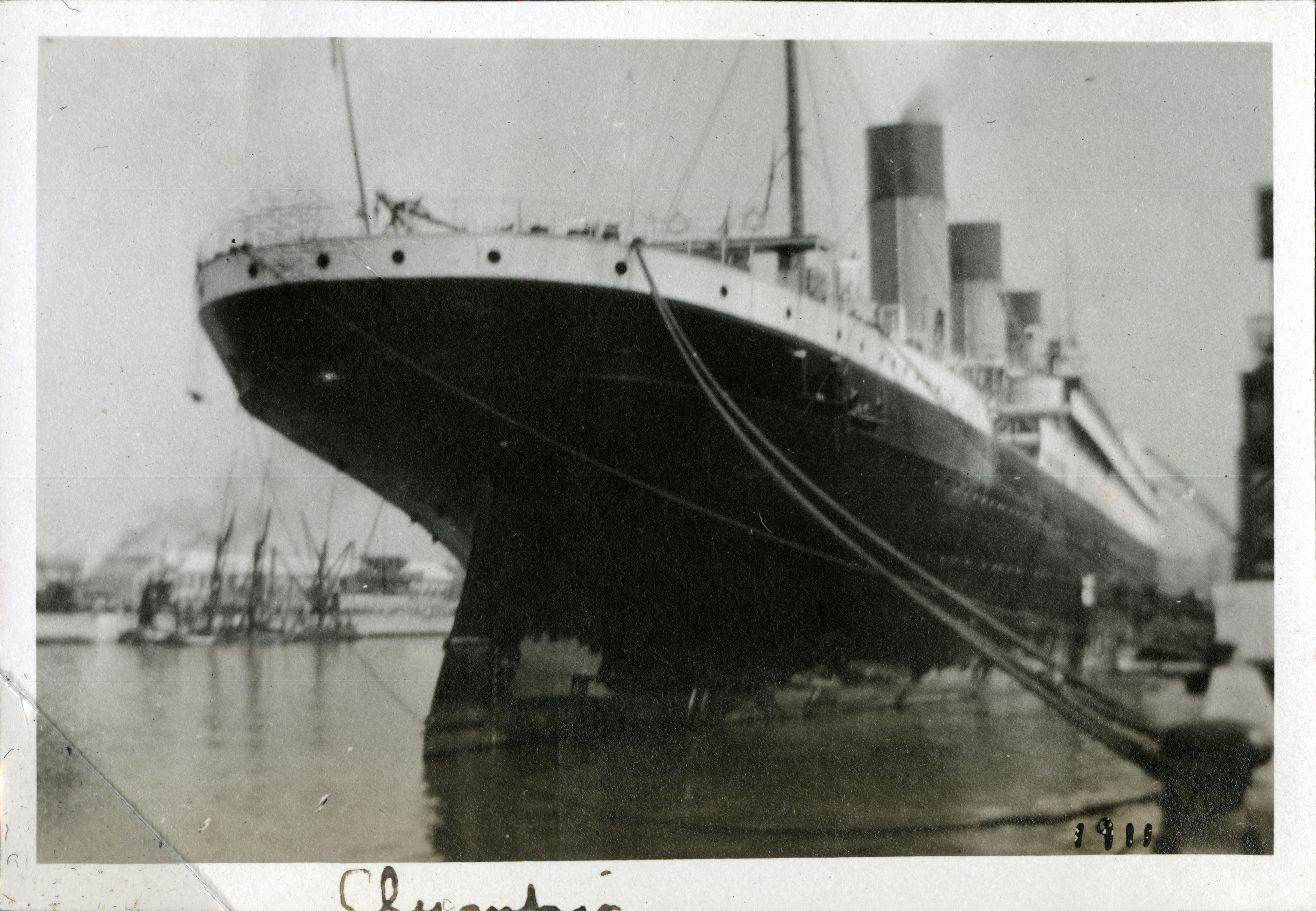
Some years ago, former Cranbrook Archivist, Robbie Terman, posted a short blog post on one of the Titanic’s sister ships, RMS Olympic. In recent years, Cranbrook Archives has responded to numerous requests for images of the Olympic which are preserved in the first volume of Harry Scripps Booth’s Pleasures of Life albums.
View of RMS Olympic before its first eastward crossing, June 28, 1911. [POL1.14.5]. Courtesy of Cranbrook Archives, Cranbrook Center for Collections and Research.
On June 28, 1911, the Booth family took the first eastward crossing of RMS Olympic from New York to Southampton, England. The family at that time was George and Ellen Booth; James Scripps and Jean McLaughlin Booth who had married the previous year; Grace, Warren, Henry, and Florence. They were joined by their Grand Rapids cousin, Esther Booth.
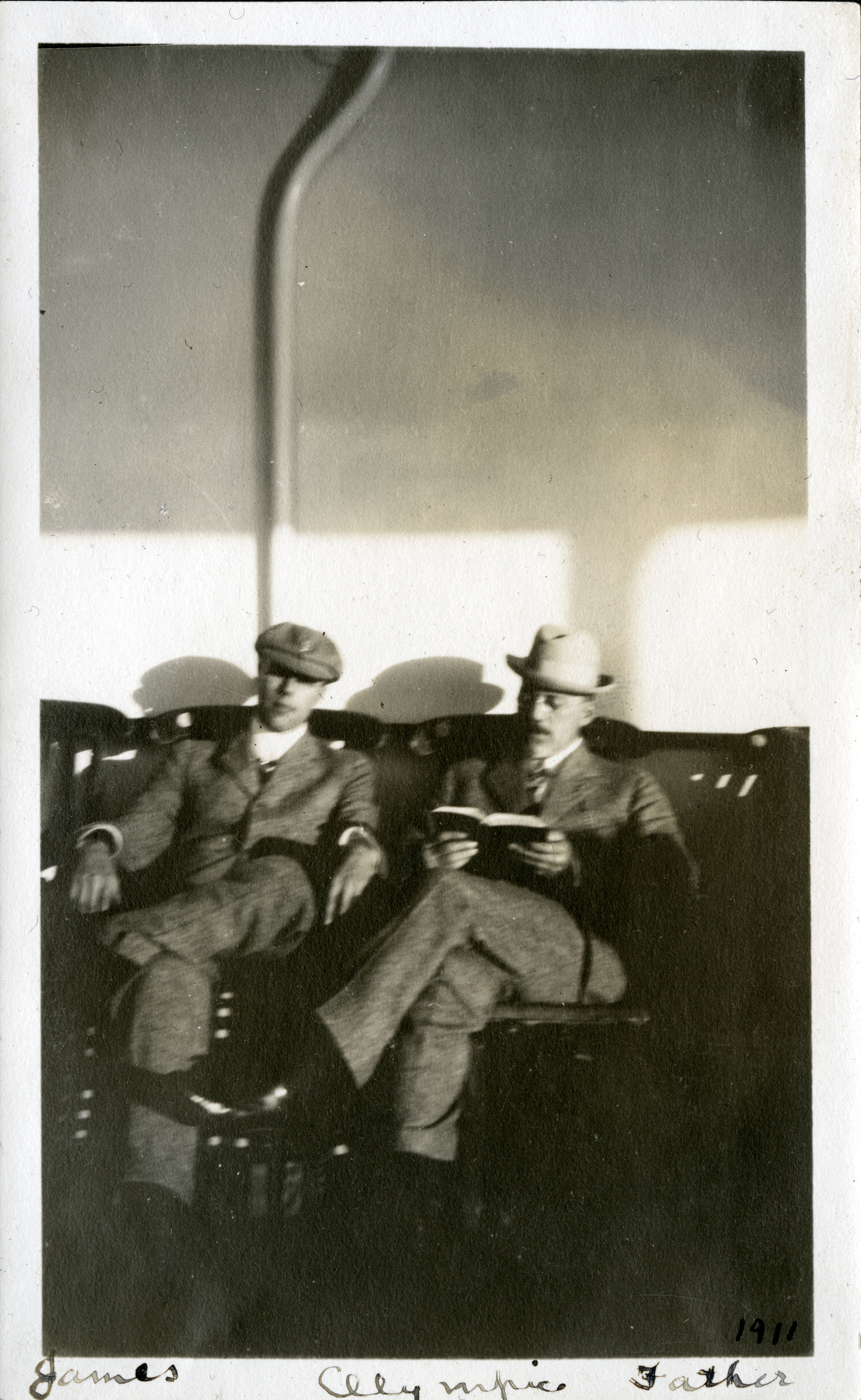
As I come from a maritime nation, these requests are particularly intriguing to me. I have wondered what other archives we have at Cranbrook to tell the story of transatlantic crossing and explain some of the images. George Gough Booth kept a record of the expenses in planning for the trip. These records tell us that he booked the steamship tickets with the Christian Leidich Travel Bureau in Detroit and he purchased Motor Union badges for himself and James.
James Scripps Booth and George Gough Booth on the RMS Olympic, July 1911.[POL1.10.2] Courtesy of Cranbrook Archives, Cranbrook Center for Collections and Research.
As Henry recalls in his memoir after listing the family members who sailed,
“That wasn’t enough. Parks, the chauffeur, went; also The Pierce-Arrow, a 7-passenger touring car, and a Lozier Briarcliff, which accommodated four plus one in an airy seat on the left running board, designed for the chauffeur when the “master” took the wheel. That seat was a thrill for the young at heart.”
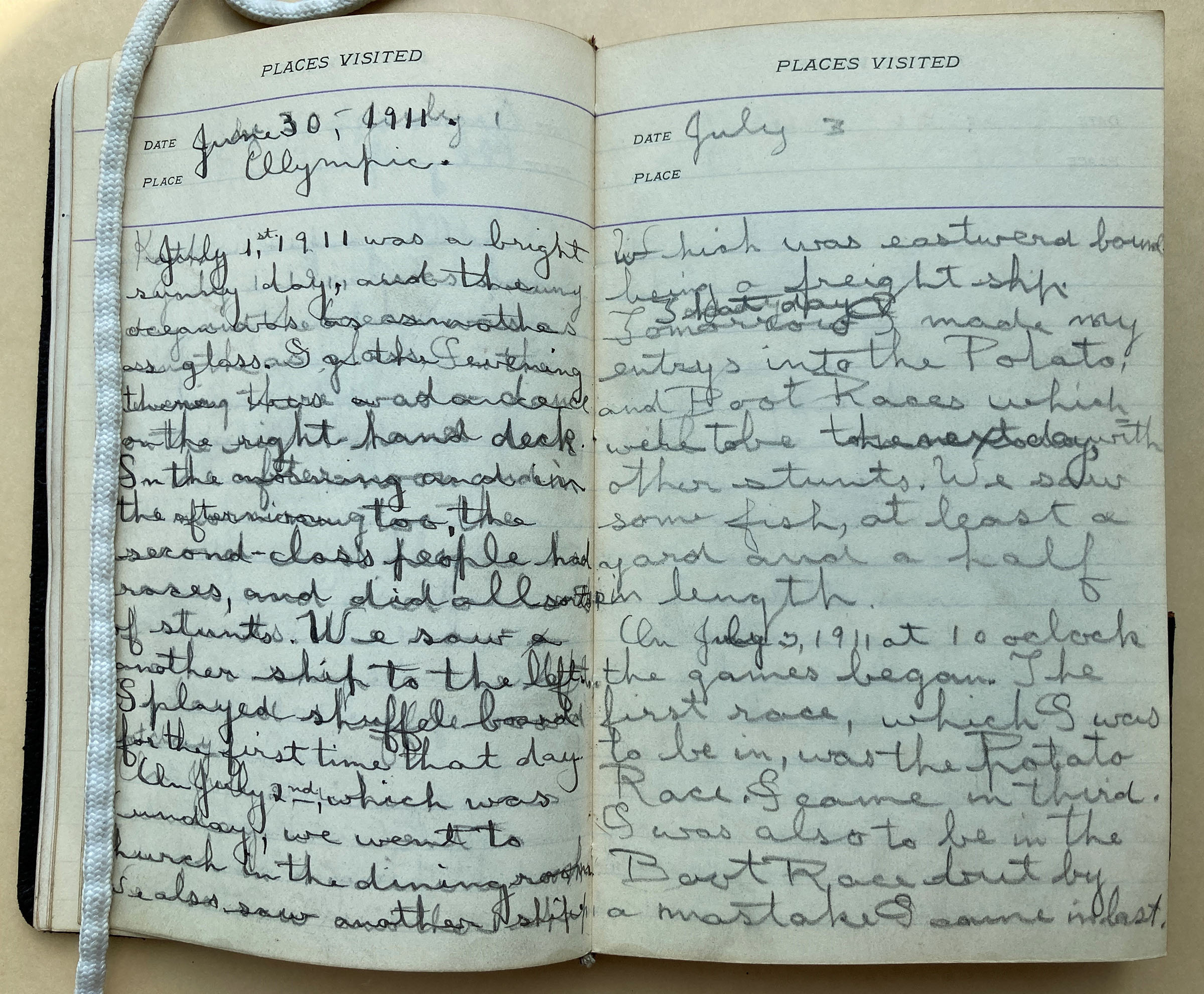
Then I came upon something quite wonderful—Henry’s journal of the sea crossing! He began the trip when he was just 14 years old, celebrating his 15th birthday in August during the vacation. As I read the entries, the images in the Pleasures of Life came alive. Here follows some moments from the journey in Henry’s words.
“Stayed at the Plaza. Esther’s trunk was lost. We found it later. On June 28, we went abord [sic] the great ship, “Olympic.” Henry Scripps Booth, June 27, 1911
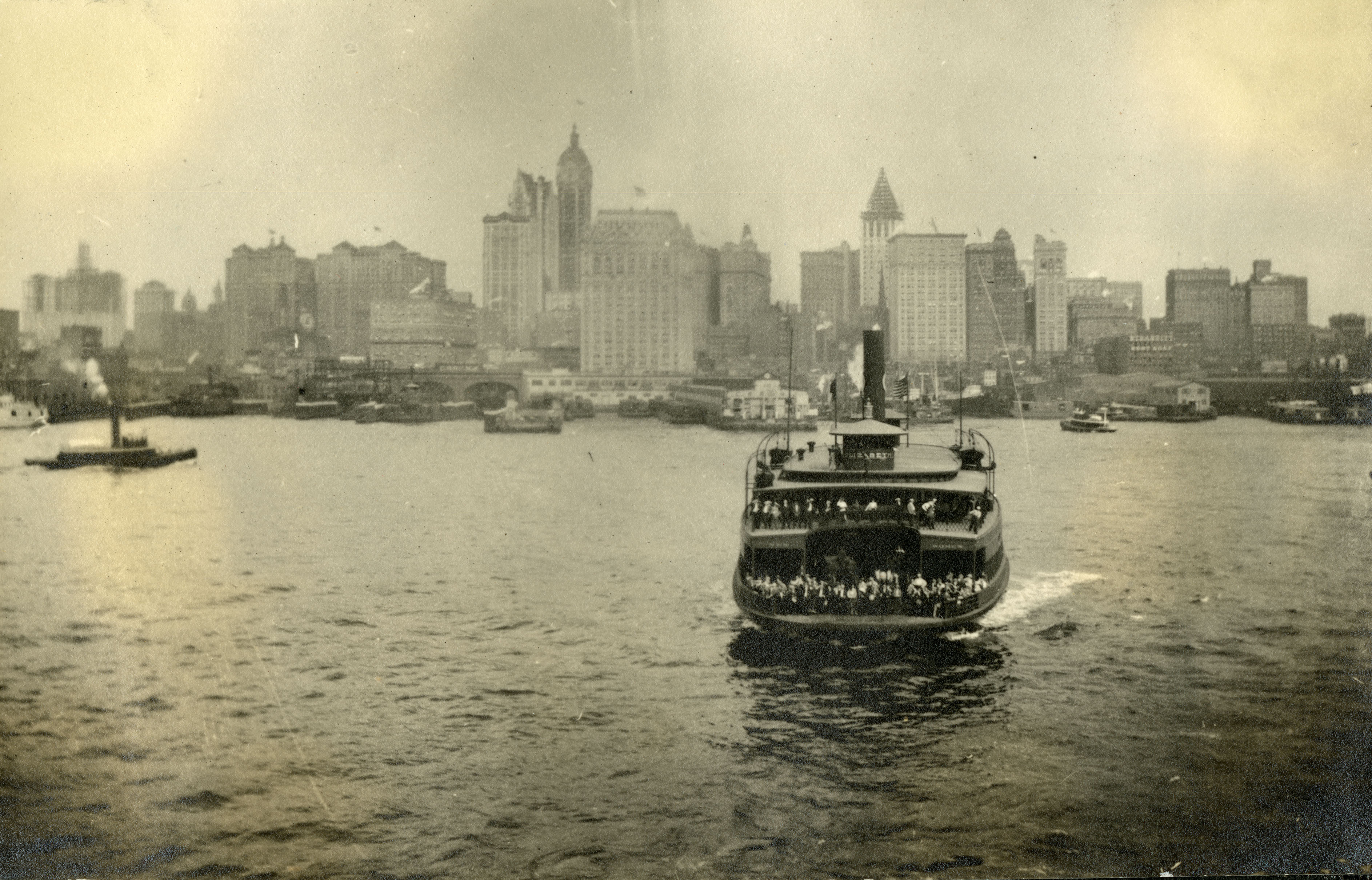
Leaving New York, June 28, 1911. Courtesy of Cranbrook Archives, Cranbrook Center for Collections and Research.
“On June 28, we went abord [sic] the great ship, “Olympic”. The Olympic is a fine ship. Florence was sick first night and day. It was somewhat rough on June 29th. I met a new friend but did not remember his name. In the morning, I could hardly stand, because of the new sensation. I was somewhat sick, but ate lots and I felt fine.” Henry Scripps Booth, June 28, 1911
“On June 30th the Campania was in view. I got acquainted with two girls, Constance Peabody and Katherine somebody.” Henry Scripps Booth, June 30th, 1911
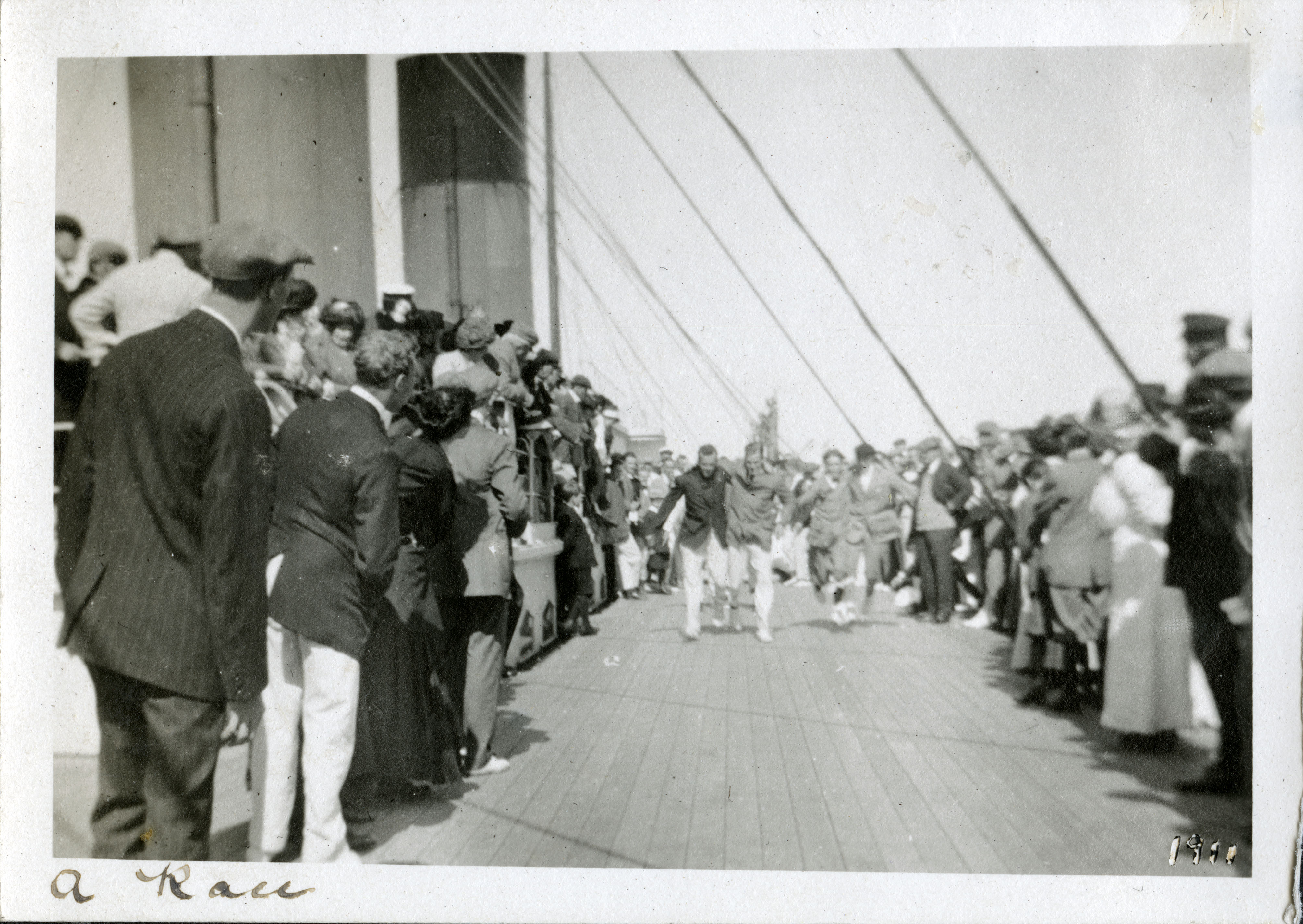
A race aboard the RMS Olympic on its first eastward crossing from New York to Southampton, July 1911. [POL1.11.4]. Courtesy of Cranbrook Archives, Cranbrook Center for Collections and Research.
“July 1st, 1911, was a bright sunny day, and the ocean was as smooth as glass. In the evening, there was a dance on the right hand deck. In the morning and in the afternoon too, the second-class people had races, and did all sorts of stunts. We saw another ship to the left. I played shuffleboard for the first time that day. On July 2nd, which was Sunday, we went to church in the dining room. We also saw another ship [July 3] which was eastwerd [sic] bound being a freight ship.” Henry Scripps Booth, July 1, 1911
A race aboard the RMS Olympic on its first eastward crossing from New York to Southampton, July 1911. [POL1.12.5]. Courtesy of Cranbrook Archives, Cranbrook Center for Collections and Research.
“Tomorrow That day, I made my entrys [sic] into the Potato and Boot Races which were to be the next day with other stunts. We saw some fish, at least a yard and a half in length.
On July 3, 1911, at 10 o’clock the games began. The first race, which I was to be in, was the Potato Race. I came in third. I was also to be in the Boot Race but by a mistake, I came in last.
After other races came the Standing Broad Jump in which James sliped [sic].” Henry Scripps Booth, July 3, 1911
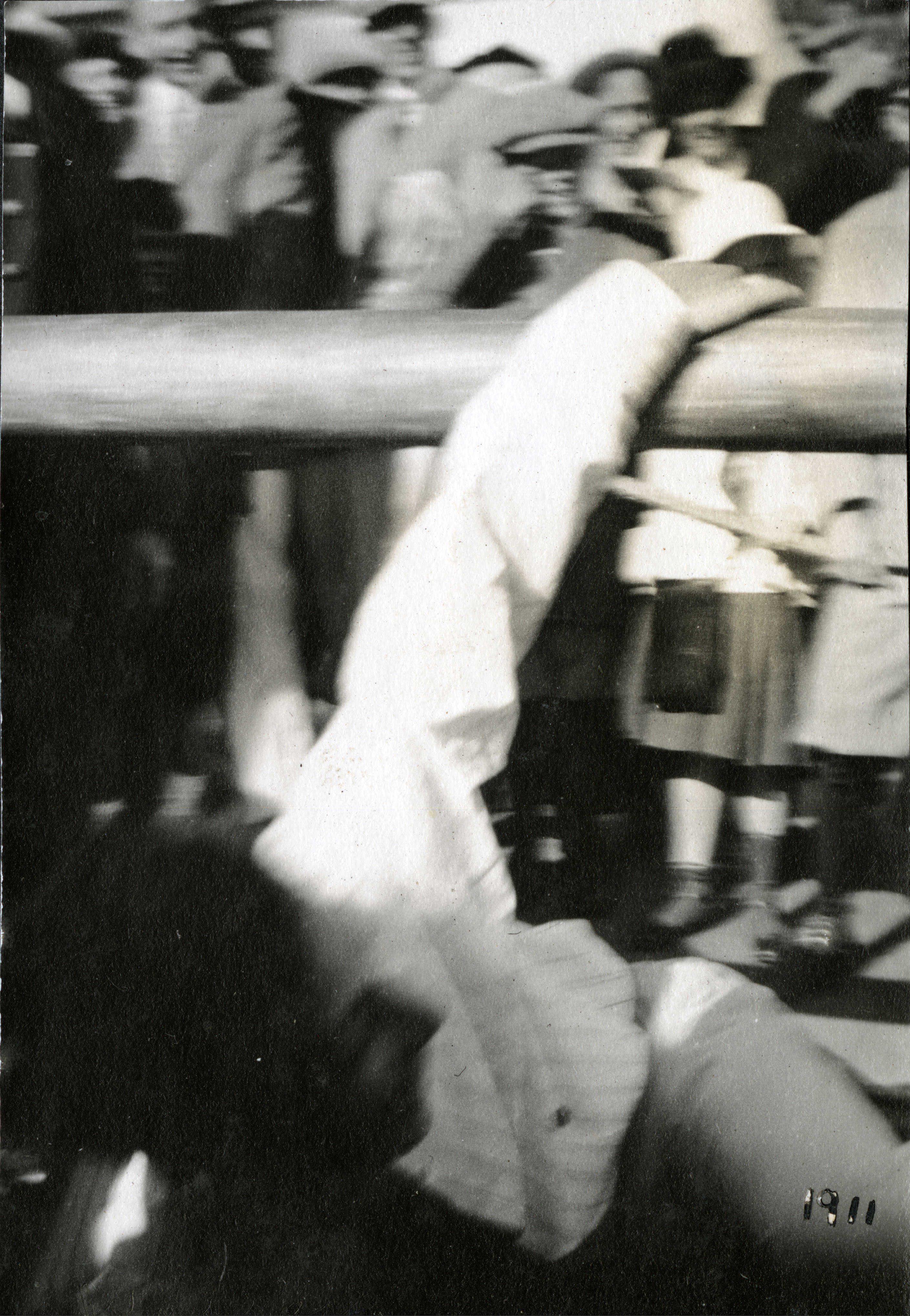
Warren Scripps Booth during a Spar Pillow Fight aboard the Steamship RMS Olympic, July 1911. [POL1.12.4]. Courtesy of Cranbrook Archives, Cranbrook Center for Collections and Research.
“James and Warren were both in the Spar Pillow Fight. In Warren’s case both fell off the bar at first but Warren was nocked [sic] off a second time. Warren did not win. James stayed on a number of times but was forced to give up. After dinner in the Reception Room the prizes were awarded. Also a dance on deck was given.” Henry Scripps Booth, July 3, 1911
Disembarking the RMS Olympic, July 5, 1911. [POL1.14.1]. Courtesy of Cranbrook Archives, Cranbrook Center for Collections and Research.
“Breakfast was served in the usual manner. After breakfast in the hall on the Sun Deck the band played the national cirs. Every body stood up. In the afternoon, at 4 o’clock we entered Plymouth Harbor. The mailtender got the mail and other boats got passengers off to land. We then started across the channel.” Henry Scripps Booth, July 4, 1911
“After getting off the steamer and having the officers make sure that we had no cigars or liquors with us, we took a cab to the hotel.” Henry Scripps Booth, July 5, 1911
Unloading the cars in France, August 1911. Courtesy of Cranbrook Archives, Cranbrook Center for Collections and Research.
As always, it is a great delight to share with scholars, colleagues, and those who are simply curious, these stories from the Archives. What is preserved in Cranbrook Archives help us to understand and enjoy not just Cranbrook, but any number of historic events from new perspectives.
There are more stories to tell about the family’s sojourn through England and France in 1911, which are both heartwarming and educational. But those tales must wait for another blog post–or for you to schedule a visit and come into the Archives Reading Room!
— Laura MacNewman, Associate Archivist, Cranbrook Archives, Cranbrook Center for Collections and Research
Classical music, wandering musicians, ballet, cabaret, white paper lanterns, illuminated boats on the lake, Hawaiian torches, Italian tree lights, champagne, dinner, and dancing on a night with a fair-sized moon—these were some of the possibilities that Henry Scripps Booth recorded in December 1964 notes for a music gala called Night of Delight, a fundraiser for the Cranbrook Music Guild of which he was a founding member.
Patrons in line to attend Cranbrook Music Guild concert and ballet performance, July 10, 1960. Harvey Croze, photographer. Courtesy of Cranbrook Archives.
The Guild is one of the most eminent accomplishments in Cranbrook’s legacy of music and it endures to this day (the Archives holds records for the organization through 2007). Born of the inspiration of Christ Church Cranbrook Music Director, Maurice Garabrandt, and Betty (Mrs. Benjamin) Brewster, the Guild was established in 1951 to utilize Cranbrook’s setting as a wonderful place to appreciate music.
During the first decade alone, the Guild sponsored performances by distinguished artists, including violinists Zino Francescatti and Mischa Mischakoff, pianists such as Mischa Kottler, Phillipe Entremont, Jean Casadesus, and Leon Fleischer, cellist George Miquelle, the Severo ballet, jazz musicians such as Dave Brubeck and Don Shirley, classical guitarist Richard Dyer-Bennet, and soprano Eileen Farrell.
Program for Jean Casadesus performance, November 16, 1960. Courtesy of Cranbrook Archives.
The objectives of the Guild were not only to provide high quality programming, support the creation of new music, and the development of high caliber performers, but also to share knowledge about the appreciation of music through lectures, demonstrations, recitals, and exhibitions. The programs for the concerts thus shared brief contextual comments on the history of the piece and the composer.
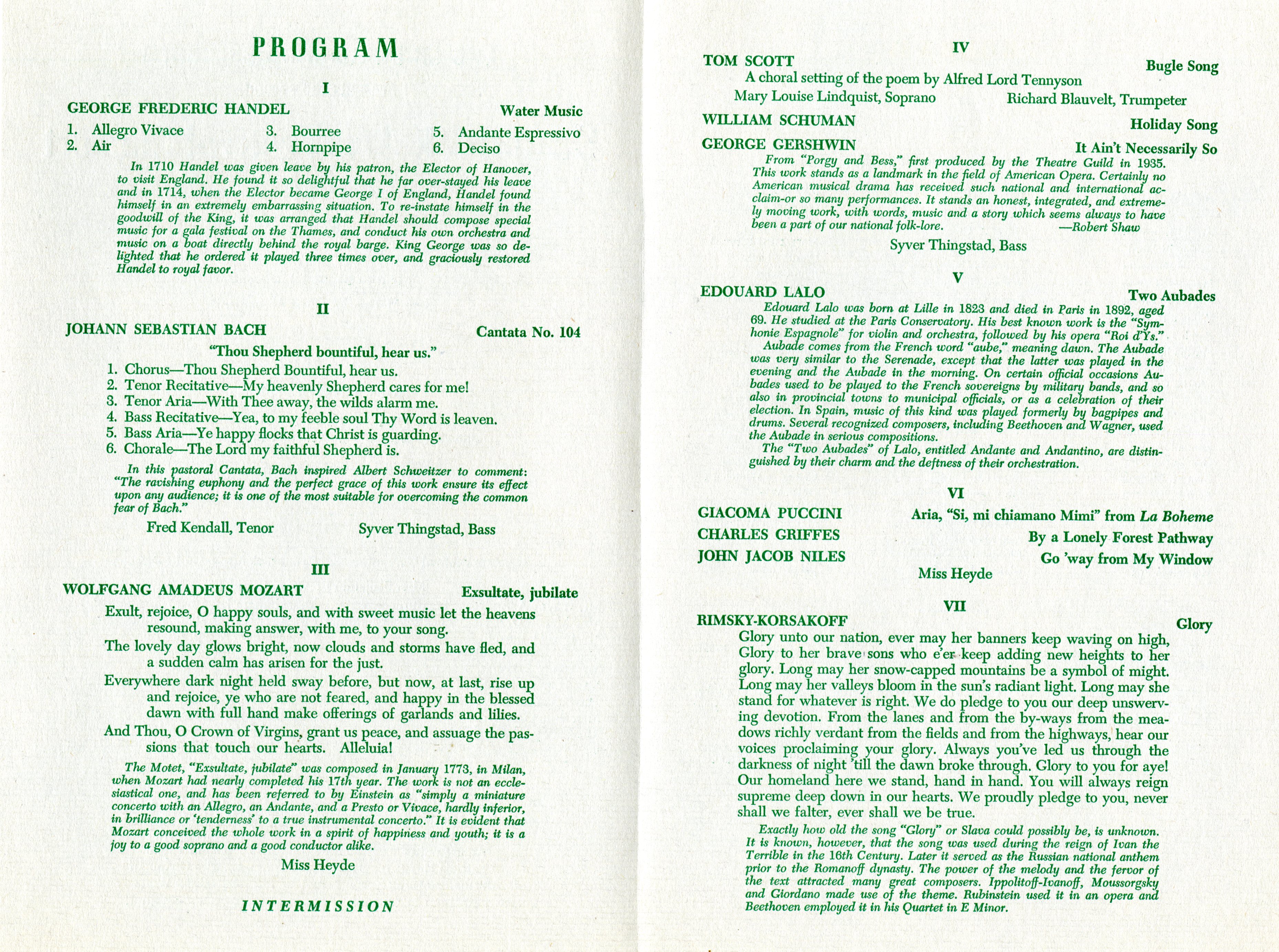
In the program for the Second Cranbrook Arts Festival Concert, which was performed at the Greek Theatre on June 1, 1952, I noticed a comment that is playfully instructive but also particularly salient to later developments in the Guild programming. The second concert program included Johann Sebastian Bach’s Cantata 104, “Thou Bountiful Shepherd, Hear Us,” and it was noted that it had inspired Albert Schweitzer to comment:
“The ravishing euphony and the perfect grace of this work ensure its effect upon any audience; it is one of the most suitable for overcoming the common fear of Bach.”
Program for Second Cranbrook Arts Festival Concert, June 1, 1952. Courtesy of Cranbrook Archives.
The Cantata must have worked its magic, because in 1966, the idea of a Bach at Cranbrook festival was introduced. It would be a satellite festival chaired by James L. Schneider and hosted by Christ Church Cranbrook with the aim to perform Bach’s music as he intended—with a small chorus and orchestra in a church setting. At a special meeting on February 23, 1966, the Cranbrook Music Guild agreed to sponsor the Bach at Cranbrook festival.
At a regular meeting a few days later, Henry expressed concern regarding the conflict of dates. The Bach festival was set for May 14 and his Night of Delight was being planned for the 21st. The Board responded that it was impossible to sponsor two big events that would appeal to same group of people, and that there was no choice but to sponsor the Bach festival, to which they had already committed, and postpone the gala to another year.
Program cover from the first Bach at Cranbrook festival, May 14, 1966. Courtesy of Cranbrook Archives.
Thus, the first Bach at Cranbrook festival took place on May 14, 1966 at Christ Church with 25 members of the Detroit Symphony Orchestra and the 40-voice Kenneth Jewell Chorale. It was a stellar success with an audience of over 1,200 people. The following year, the festival grew into a two-day, three-day concert event. After being renamed the Cranbrook Festival with a broader scope of classical and baroque composers, the festival was dissolved in 1979.
A scene from the Bach at Cranbrook festival, May 14, 1966. Harvey Croze, photographer. Courtesy of Cranbrook Archives.
The gala, Night of Delight, would never take place beyond Henry’s musings. For those with a romantic imagination, his words invite one to feel the warm summer evening, the fragrance of fresh flowers, strains of music across the courtyard filled with joyful chatter, elegance, and conviviality beneath the light of the moon. If your senses require something more tangible, fear not, for the Center for Collections and Research is celebrating the legacy of music at Cranbrook at our House Party on May 18th. Join us for live music, dinner, dancing, paper lanterns, and even a fair-sized moon! It will truly be a Night of Delight!
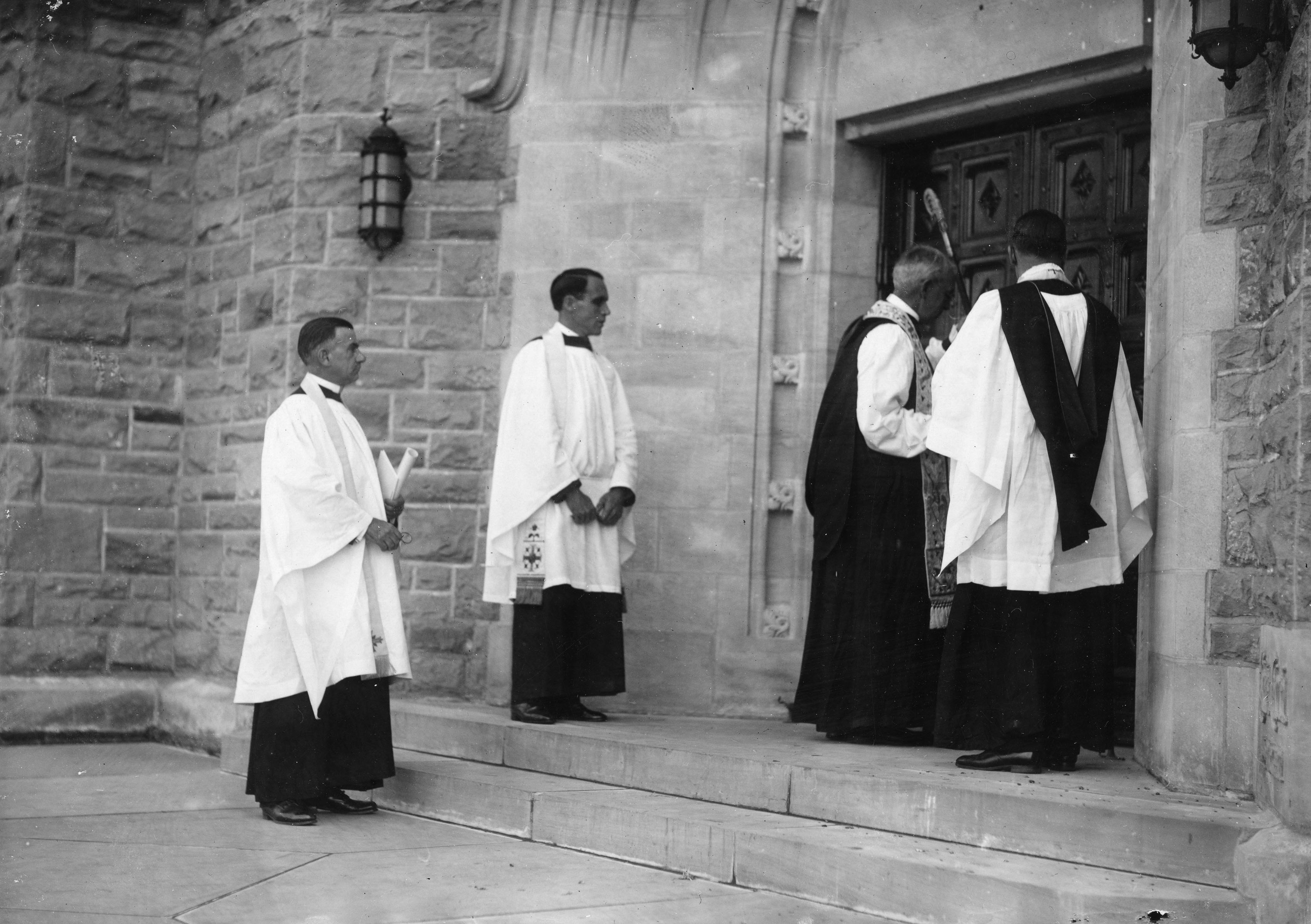
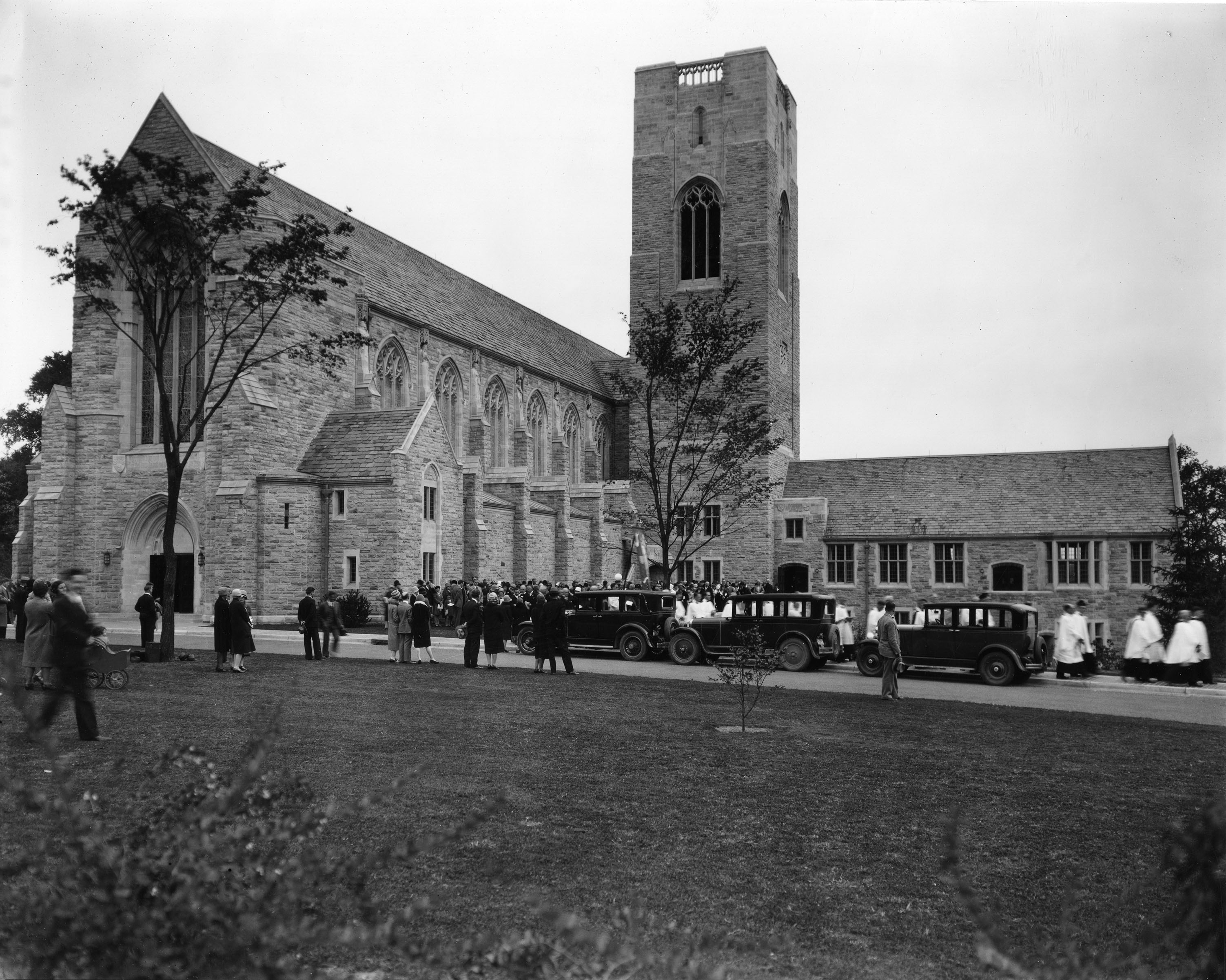
Consecration of Christ Church Cranbrook, September 29, 1928. Archdeacon Ramsey knocks on the door of the church, accompanied by Mr. Kinder, Bishop Page, Mr. Forsyth.
Today marks ninety-five years since the consecration of Christ Church Cranbrook!
Consecration Service Program for Consecration of Christ Church Cranbrook, September 29, 1928.
Planning for the church began in earnest in 1923, with the cornerstone being laid in 1925. After three years of construction, and countless hours of labor from masons, artisans, and clergy, the church was ready to be consecrated.
Christ Church Cranbrook Consecration–Parish House Recessional, September 29, 1928.
The consecration was led by Charles L. Ramsay, Archdeacon of the Episcopal Diocese of Michigan, declared the church sacred and ready for services. While the architecture was complete in 1928, it would be several more years before the last pieces of art were installed.
Consecration of Christ Church Cranbrook Recessional, September 29, 1928.
—Kevin Adkisson, Curator, and Laura MacNewman, Associate Archivist, Cranbrook Center for Collections and Research
In addition to working as an Associate Archivist at Cranbrook, I am also a fledgling volunteer docent at Christ Church Cranbrook. Recently, I gave a tour of the Chancel to test my skills with my teachers. As I prepared, I found there was very little written about the history of the pipe organ at the church. So, where to turn for more information? Cranbrook Archives, of course.
In August of 1925, George Booth and Oscar Murray (of Bertram G. Goodhue Associates, the church architect), started in earnest to finalize their thoughts and feelings about the choice of organ for the church. While the organ itself was installed in January 1928, plans for its ducts and conduits had to be decided early, before the concrete floors were poured.
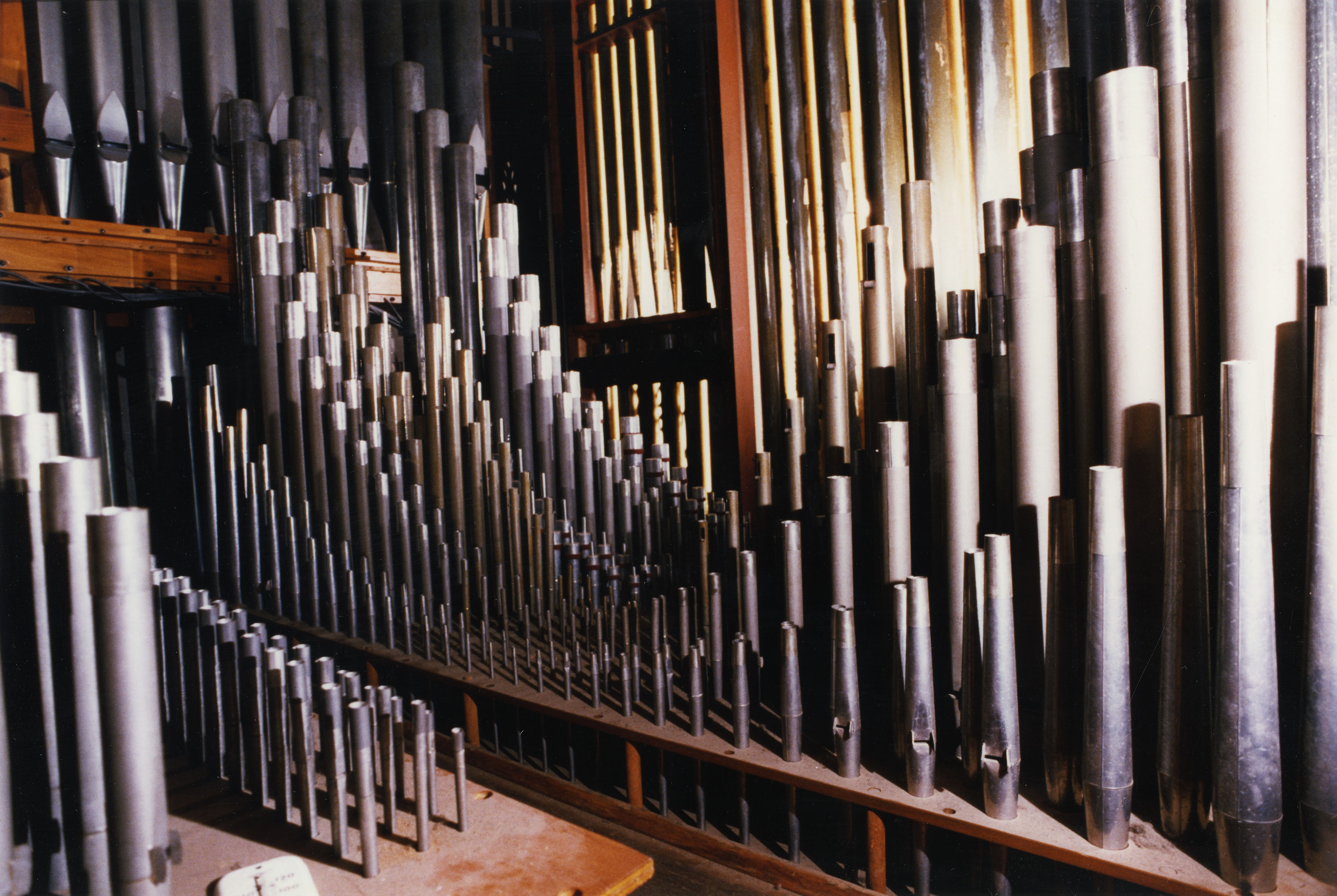
Christ Church Cranbrook organ pipes prior to the 1997 restoration. Jack Kausch, photographer. Courtesy of Cranbrook Archives.
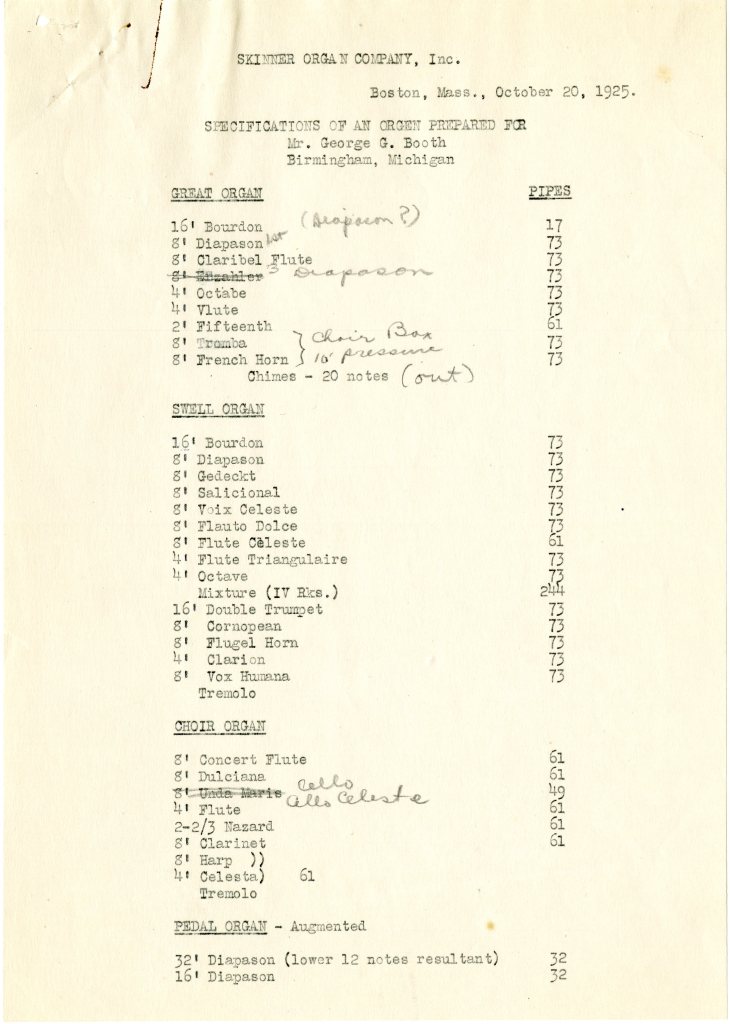
The correspondence suggests that the E.M. Skinner Organ Company was the only company considered. The Boston-based firm was considered America’s finest and most technologically advanced organ builder. Skinner’s specifications for the organ, console, and bench were submitted in October 1925.
George Booth inquired of his colleague Cyril Player to provide comments on the specifications, and Player begins his commentary saying,
“I think I would emphasize gently to them that you want gravity, dignity and softness—the three prime essentials of any church organ, large or small… [gravity] is secured by an adequate and properly-balanced pedal department; dignity by volume of foundation tone in the basic divisions of the instrument; and softness and refinement by skillful voicing with a copious wind stream at a moderate pressure.”
Cyril Player to George G. Booth, November 1925
In passing along the comments to Murray, Booth remarks that, “the desired qualities, viz; gravity, dignity and softness; seems to me peculiarly to express my own feelings and desire.”
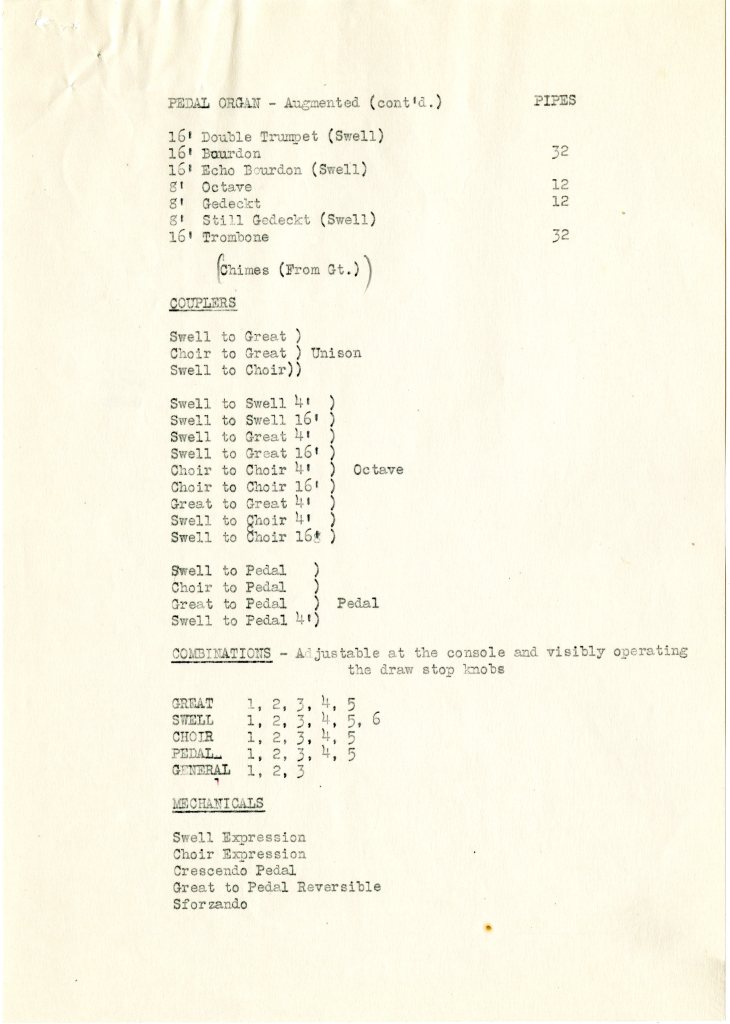
Skinner Organ Company Specifications for Christ Church Cranbrook Organ, October 1925. Courtesy of Cranbrook Archives.
William Zeuch of Skinner Organ Company revised the specifications following some of Player’s suggestions, while some revisions were the suggestion of Henry Willis, the great English organ builder who was a consultant to the firm. The contract for the organ (including the Great, Swell, Choir, and Pedal pipe divisions) was duly signed in December 1925 and work proceeded.
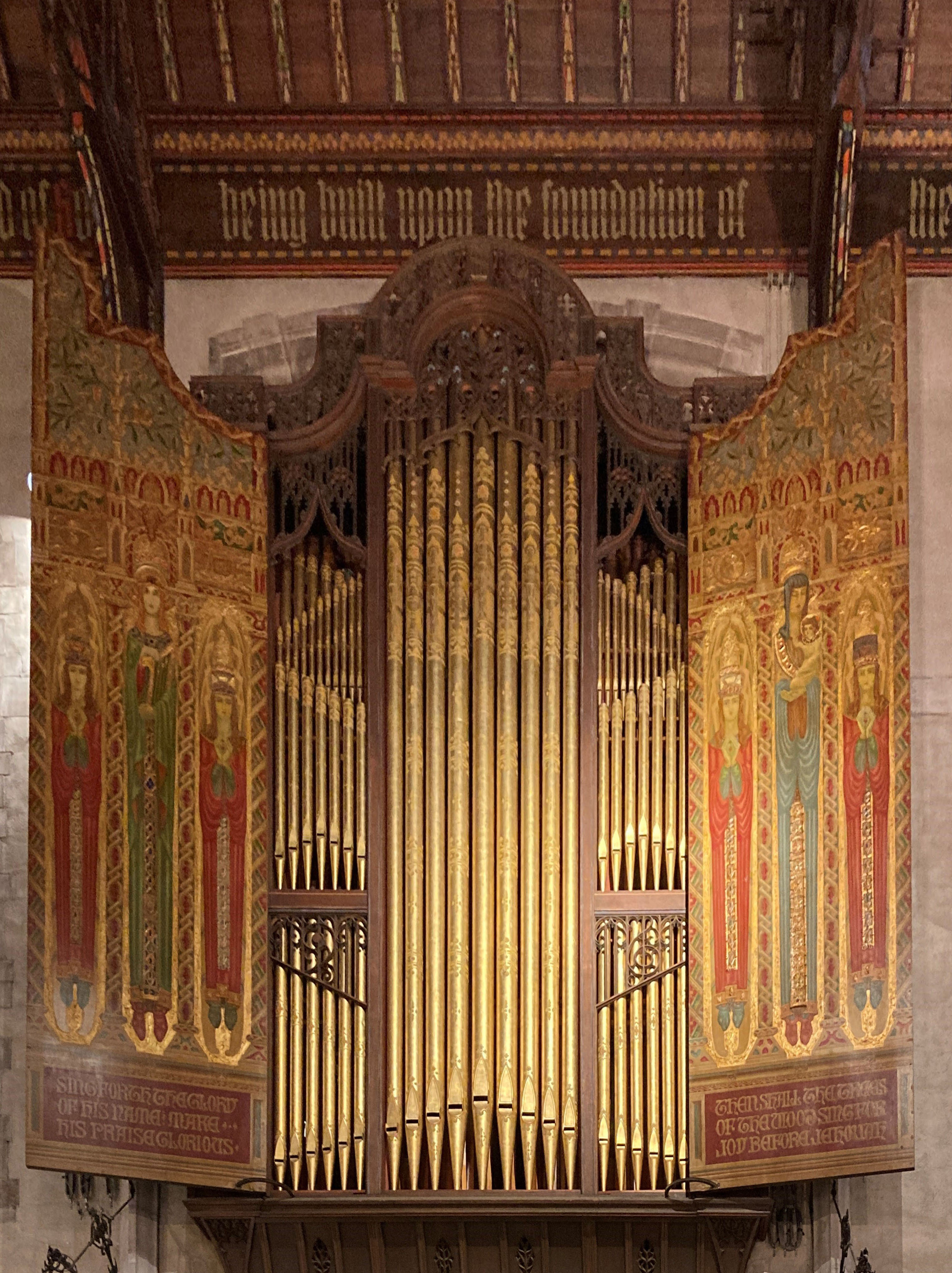
At the same time, a separate contract was made with Alfred Floegel to decorate the organ case doors. Booth wished to confine the oak finish to the exterior of the doors while having the rest richly decorated with color. Booth imagined the opening of the organ doors to represent the opening of the mind. He also envisioned the organ case to read as a triptych (a picture or altarpiece on three hinged panels) when open.
Organ case doors, woodwork by Irving and Casson, decoration by Alfred Floegel. Gift of James Scripps Booth. Laura MacNewman, photographer.
In July 1927, work on the organ console began. The console is where the organist sits to play the instrument, distinguished by its multiple hand keyboards (called manuals), pedalboard, and other controls. Rev. Dr. Marquis requested a change from a 3-manual (Great, Swell, and Choir pipe divisions) to a 4-manual, by adding the Solo division. Zeuch responded positively as it was not too late to build a 4-manual console; however, having already instructed the architect to reduce the dimensions of the organ chamber, which had been too large and would have interfered with the proper effect of the sound in the church, the architect would now need to find space for the Solo division. Room was found above the Sacristy.
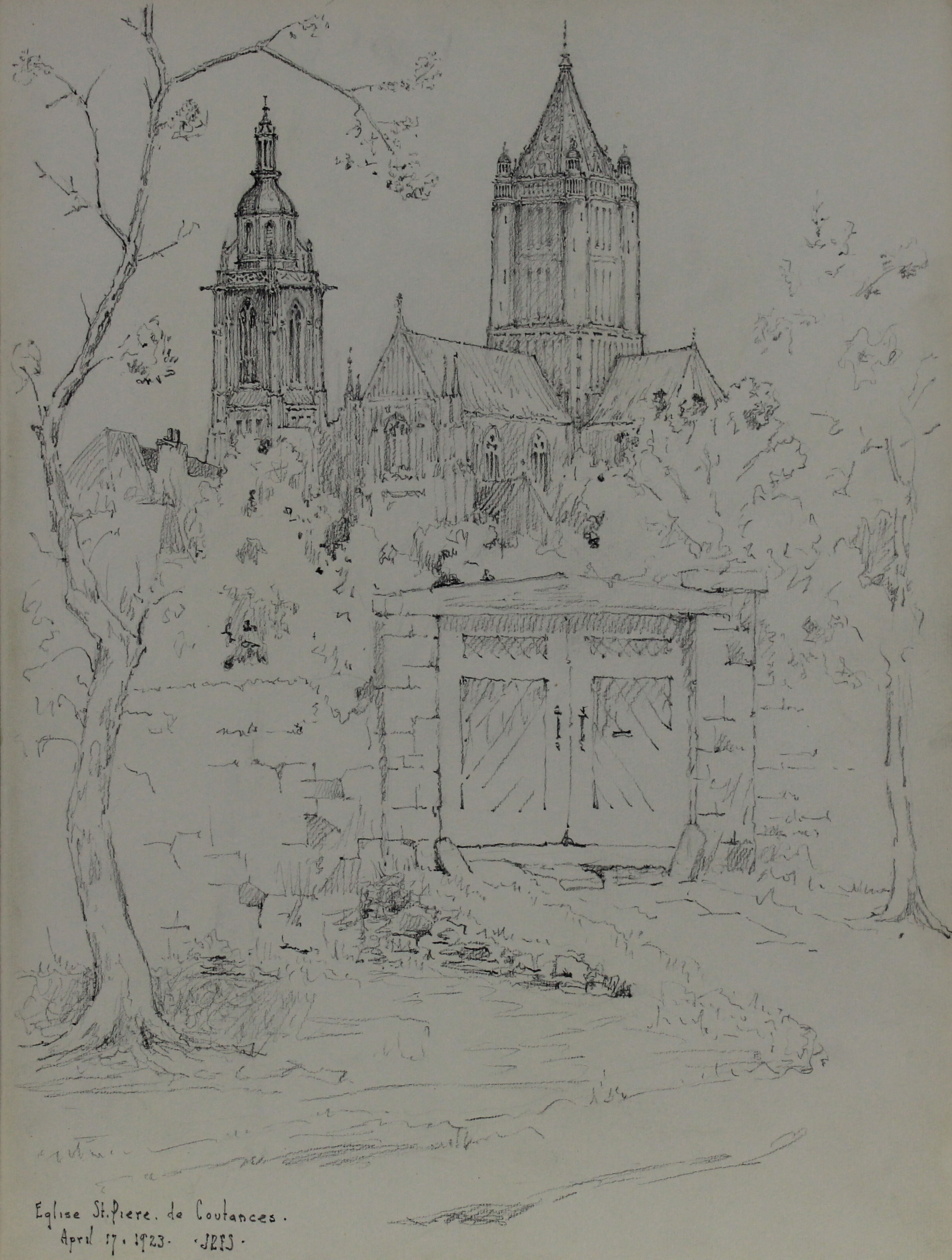
May 30, 2023, marks one hundred years since Henry S. Booth and J. Robert F. Swanson returned home from ten months of travel in Europe. Midway through their architecture studies at the University of Michigan, the friends and classmates set off on August 1, 1922 for a “Grand Tour” through Norway, Finland, Sweden, Denmark, Germany, Tunisia, Italy, France, and England to study and sketch European architecture.
In today’s post, I want to share moments from their journey through France, which is so beautifully documented by Henry’s letters and photographs, and by both of their sketches.
Eglise St. Pierre de Coutances, April 29, 1923, J. Robert F. Swanson. Courtesy of Cranbrook Art Museum.
Arriving in France in March 1923, Harry and Bob journeyed through Nice to Cannes, then through Lyon to the city of Bourges. Henry describes the scenery en route:
“…mountains on the right and the “Cote d’Azure” on the other, flowers overhanging balustraded walls, old olives and tall but easily climbed palms, rocks and breaking waves, and then always the bluest of skies and sea to match, and dazzling sunlight–quite warm and ‘drowsy’.“
At Bourges, they headed for the Cathedral, which they visited several times: at night by the light of gas lamps; in the afternoon sunlight; at dusk with a handful of worshippers on their knees; and then later that evening filled with the faithful.
Cathédrale St. Etiénne de Bourges, March 1923. Henry Scripps Booth, photographer. Courtesy of Cranbrook Archives.
“It was an inspiring sight—the nave packed, and both the inner and outer aisles (for there are two) on the north side filled also, and not a few on the other side of the church. The light was dim all during the sermon, and when that was over, a quantity of candles were lighted almost instantaneously about the “Host,” and all the electric candles down the nave came on, so that suddenly this great cathedral was changed from a imaginative forrest in the night, to a great cathedral church ablaze with the lights associated with a feast.
“But I thought more of other things than of the architecture that night. The preacher talked too fast for me to understand his French, but I knew what he should have been saying even if he wasn’t…, I looked at the great number of long black vails [sic] everywhere, noticed the lack of men of middle age, and saw many young fellows who are now “heads” of their father’s family standing by their veiled mother’s side.”
They stopped in Tours before taking in the Chateaux of the Loire: from Loche to Langais, Ussé, Villandry and Azey.
We recently reorganized materials in the Archives Reading Room to provide easier access to Cranbrook Publications and encourage greater use of these informative resources. The first series available for ready reference are the Cranbrook Institute of Science (CIS) Bulletins, which are arranged in the full series of 64 issues. The Bulletins are periodically published works of original scientific research, which was part of the mission of the early Institute.
Newly shelved Cranbrook Institute of Science Bulletins. Photograpy by Laura MacNewman.
Initially established in 1930, the Institute’s stated purpose was, “to add to and strengthen the educational and cultural facilities within the State of Michigan.” It was established as a separate Cranbrook institution on February 10, 1932. An aim set for the staff was not only to supplement the facilities of the several Cranbrook Schools, but to engage in original research and publication, “to add to the sum total of human knowledge.” The CIS originally comprised nine divisions of scientific fields and administration: Astronomy, Geology, Botany, Entomology, Aquatic Biology, Mammology, Anthropology, Education, and Preparation, and the Bulletins reflect these fields of inquiry.
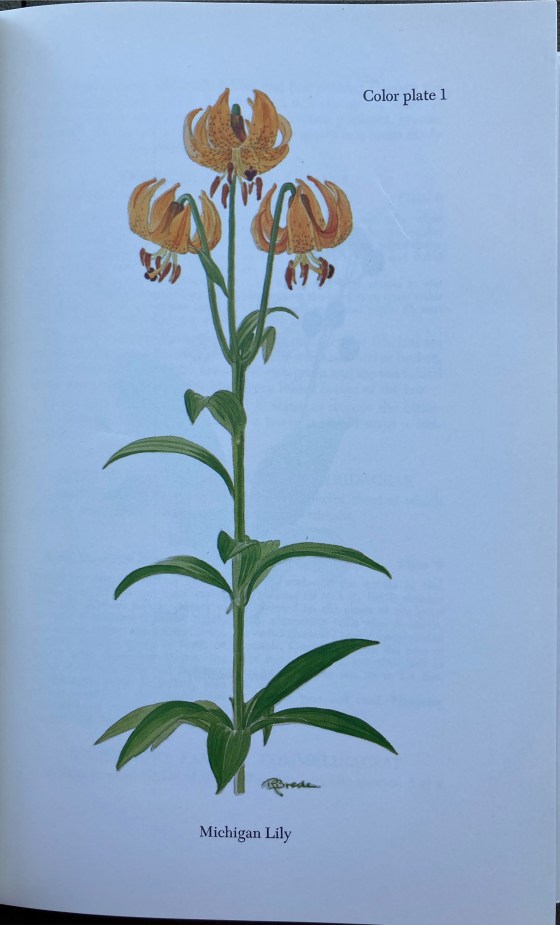
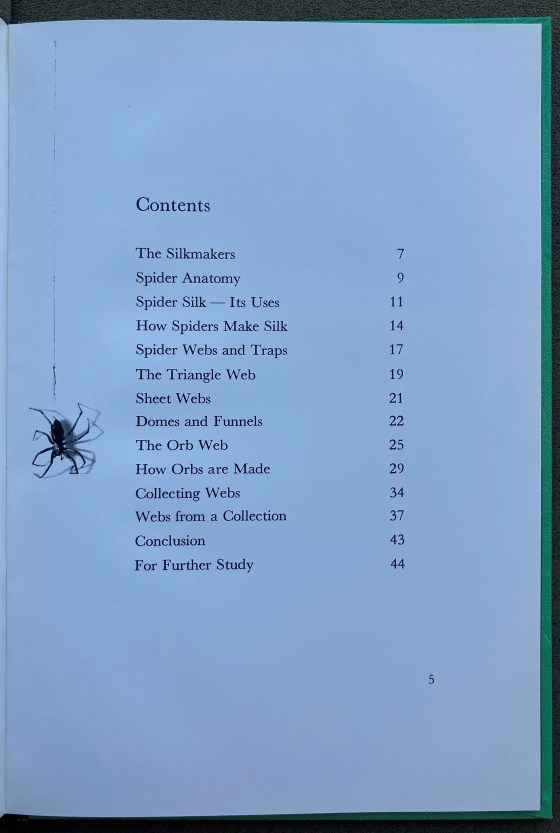
The Bulletins range in size, from pamphlets to hard cover books, and are published ad hoc according to the completion of research projects. The incredible diversity and particularity of topics make it exceedingly difficult to select which to highlight for your interest. Thus, I have tried to pick across the divisions of research to deliver to you an array of examples, not only works of scientific distinction but of artistic beauty and thoughtfulness in their presentation.
This series of periodicals, published between 1931 and 1999, focus predominantly on Michigan with some studies further afield. They are of unequivocal research value to students and scientists with an interest in the natural world, including its flora and fauna, lakes and fish, archaeological history, and geological development, as well as human geography and cultural history.
The CIS Bulletins are available for research in our public Reading Room. If you are curious to learn more and to explore their contributions to scientific knowledge, come and see! All are welcome to explore and study our collections by appointment Monday to Friday, 9am to 4 pm.
–Laura MacNewman, Associate Archivist, Cranbrook Center for Collections and Research
When I was asked to gather archival materials related to Cranbrook in Kent, England, a short series of correspondence in the Henry Scripps and Carolyn Farr Booth Papers particularly caught my notice. Written to Henry Scripps Booth, the letters discuss a stone from St. Dunstan’s Church in Cranbrook, Kent, and its overseas delivery to Christ Church Cranbrook. I became quite curious about it.
Carved coign from St. Dunstan’s Church, Cranbrook, Kent, at Christ Church Cranbrook. Laura MacNewman, photographer. Courtesy of Cranbrook Archives.
One handwritten letter in the correspondence was rather difficult to decipher, but once I got the pattern of it, it helped me begin to comprehend the story.
In July 1930, St. Dunstan’s Vicar, Rev. Swingler, acknowledged a request from Booth for a fragment of the church which could be placed in the chapel of the same name at Christ Church Cranbrook.
It was July 1931 before Rev. Swingler wrote again to inform Booth that the stone was ready for dispatch. He explained that the Church Council had welcomed the idea and directed the Fabric Committee to select a stone, which they had, but that the Secretary had forgotten to inform Booth until then, a year later, and it was already on its way!
Letter from Rev. Swingler to Henry Scripps Booth, July 22, 1931. Courtesy of Cranbrook Archives.Letter from Rev. Swingler to Henry Scripps Booth, July 22, 1931. Courtesy of Cranbrook Archives.Letter from Rev. Swingler to Henry Scripps Booth, July 22, 1931. Courtesy of Cranbrook Archives.
The forgetfulness of the Secretary and finding appropriate shipping arrangements for such an unusual commodity had caused quite a delay, to which Rev. Swingler writes,
“I am sorry that the matter has not been dealt with more speedily but old Cranbrook has hardly yet learned modern methods of business, as perhaps you know.”
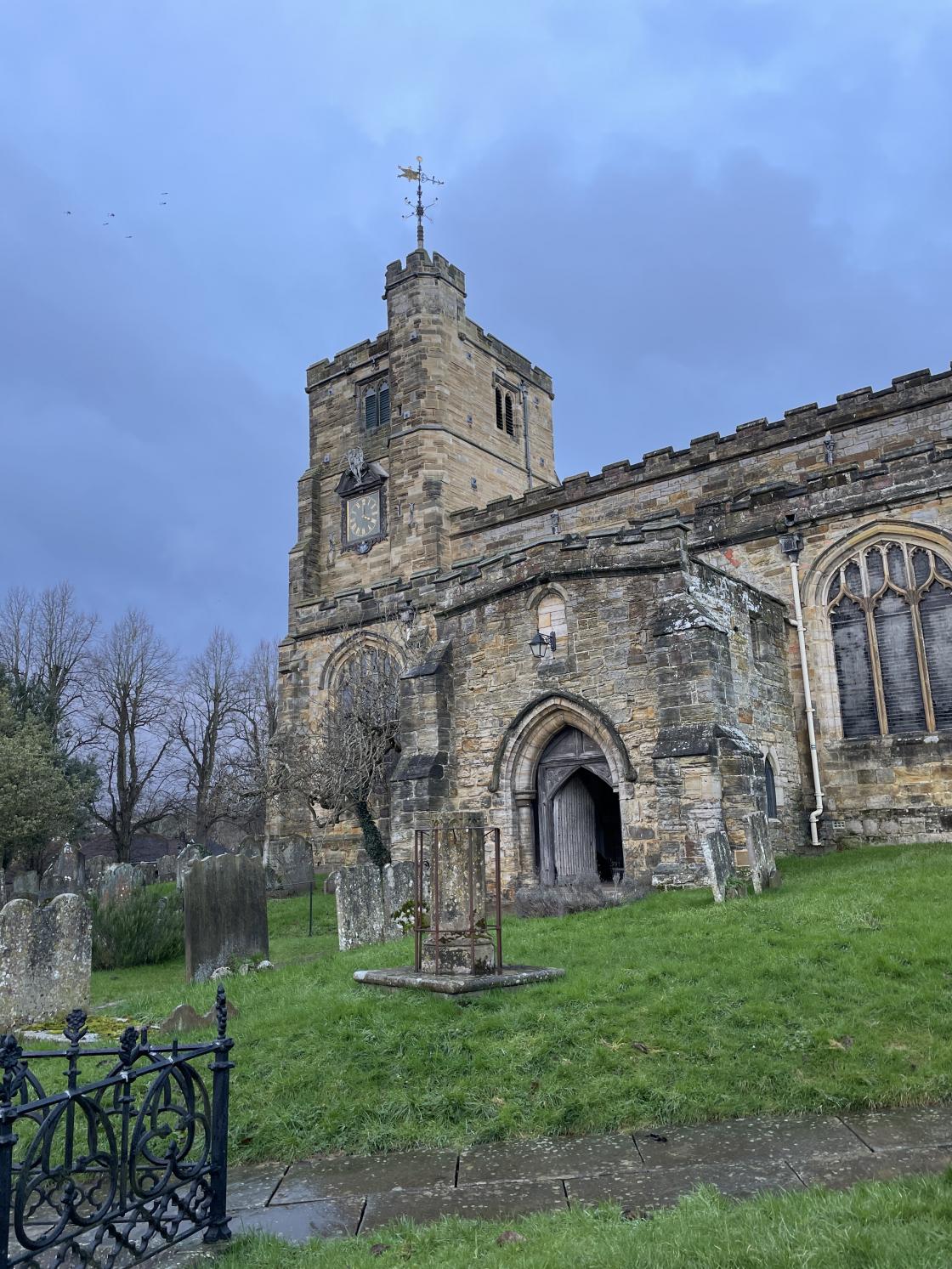
St. Dunstan’s Church, Cranbrook, Kent. Kevin Adkisson, photographer. Courtesy of the Center for Collections and Research.
He goes on to describe the provenance of the stone, at least as far as he could tell. A fifteenth century carved coign (an architectural term for a “projected corner”), it once formed part of the string course (a projected band of stone) which runs at the base of the battlements of the church nave. The course includes a series of grotesque heads, some of which were pierced for waterspouts. A grotesque, common in medieval church architecture, is a decoratively carved stone used to ward off evil spirits and to signify the sanctuary and safety of the church. On inspecting an historic photograph of the church, I could identify similar stones at the top of the drainpipes and around the tower battlements.
St. Dunstan’s Church, Cranbrook, Kent, July 1901, with grotesques in situ. Courtesy of Cranbrook Archives.
Rev. Swingler had first seen it laying in the churchyard and surmised that it had not been replaced during past repairs. He doesn’t mention why they selected that particular stone, but one could conjecture that it was because it was no longer part of the fabric of the church building and hence was available to be gifted to Christ Church. He notes that it is probably of Hartley stone, which was quarried in the Parish.
Henry Scripps Booth contributed great efforts to building relationships between the old and new Cranbrooks by establishing and maintaining connections between the two churches. The grotesque that arrived at Christ Church more than 90 years ago is an artifact that tells just one story of his efforts. From St. Dunstan’s of old Cranbrook, known as the “Cathedral of the Weald,” to St. Dunstan’s of Christ Church Cranbrook, the carved coign continues to herald sanctuary and give confidence to those who enter.
–Laura MacNewman Associate Archivist, Cranbrook Center for Collections and Research
This year the Center is celebrating the life and work of Loja Saarinen for our House Party fundraiser. Lynette Mayman’s post on 1930s fashion offered an excellent guide to dressing à la mode for this historically themed evening event, while highlighting Loja’s freedom and creativity in celebrating her own authentic style. Being curious about the events to which such attire might be worn, I looked to the Kingswood School records to explore its history of music and dance events during that era.
Kingswood School Annual Dance Book, 1932. Courtesy of Cranbrook Archives.
From the abundance of programs and ephemera, it was clear that music and dance were a valued part of the curriculum and school life, and its purpose was elucidated by the educational philosophy in the school catalogs for the 1930s:
“Music and Dance, two of the greatest social forces, and most closely related in essential nature, are organized in the curriculum under the direction of one department for concurrent purposes… The program of work is such as to encourage the fullest and freest development of individual personality which is the basis for true dramatic and musical expression.”
Kingswood School Catalogs, Kingswood School Records (1980-01)
Formal classes in music theory and social dancing (taught in physical education classes under the direction of Luella Hauser) were augmented by extracurricular activities. These included the Glee Club and various kinds of themed and annual dances, which offered students a variety of ways in which they could learn through participation, as well as recitals by visiting performers, which offered learning through observation and listening.
Program for the Mothers’ Day Tea, May 1937. Courtesy of Cranbrook Archives.
The Glee Club for girls was formed in 1932 for those interested in singing. They performed one concert per year, the first being held on March 11, 1932. The Club would also perform at other events throughout the year, such as the Mothers’ Day Tea and the ‘Carnival,’ which was an informal jamboree of themed gaiety and fun. The first Carnival, on December 10, 1932, was described as one of “grand vaudeville,” including a fashion show that embraced lovely old fashions and lively modern ones.
The 1937 Carnival was a Masque that traced the development of dance from the fourteenth century to the present time, including the Carole, Pavane, Sarabande, Minuet, Gavotte, Waltz, Schottische, Tango, and Fox Trot. The Glee Club sang songs typical of each period, while three jolly spirits, Dance, Play, and Song, presented the dancers.
Invitation to the Ypsilanti Madrigal Club performance, December 1931. Courtesy of Cranbrook Archives.
The first visiting performance was held on December 11, 1931, when the Madrigal Club, a choir of men and women from State Normal College, Ypsilanti, under the direction of Mr. Frederic Alexander, performed as a Christmas gift from Mr. Alexander to Mr. George Booth. The concert of unaccompanied songs and compositions on harpsichord was described as “unusual in character and delightful in content,” and became an annual event at the school.
Other annual visitors included Mildred Dilling, the internationally known harpist, and Cameron McLean, the Canadian baritone who was accompanied by various local pianists, including Detroiter Gizi Szanto. There were also one-time visits by performers such as pianists Stanley Fletcher and Samuel Sorin, singer Marion Anderson, baritone Earle Spicer, and opera singer Alexander Kipnis.
Program of Music printed by Cranbrook Press, April 1932.
Kingswood School Records. Courtesy of Cranbrook Archives.
Celebrated teachers of modern dance were invited to give dance recitals including Ted Shawn, Ronny Johansson, and Martha Graham. Visiting in March 1936, Graham gave a comprehensive recital of her work, leaving us with an autographed program—an archival treasure!
Program for Dance Recital autographed by Martha Graham, March 1936. Courtesy of Cranbrook Archives.
While Graham’s dance was reported in the Kingswood Newssheet as casting aside, “all old standards of beauty and grace,” through her use of angles and quick movements rather than the legato rhythm of conventional dancing, her philosophy of the dancer speaks poetically to the purpose of the 1930s Kingswood curriculum for music and dance—drawing out the essence of the individual through social artforms:
“You traverse, you come to the light, you work, you make it right… you embody within yourself as much curiosity, use that curiosity and avidity for life … and the body becomes a sacred garment – it’s your first and your last garment, and as such it should be treated with honor, and with joy, and with fear too, but always with blessing.”
As we celebrate the life and work of Loja Saarinen this year, we celebrate her as immigrant, entrepreneur, designer, and fashionista. Please join us for the Virtual Film Premiere as we support and acknowledge the work of the Center at our House Party, May 21, 2022.
– Laura MacNewman, Associate Archivist, Center for Collections and Research


























 Cranbrook Kitchen Sink