Out From the Shadows #2: Colonel Edwin S. George

Many years ago, when I worked at the Oakland County Pioneer and Historical Society, I came across a man named Edwin S. George in reference to his home, “Cedarholm,” which he built in 1923 in Bloomfield Hills, and is now a part of Kirk in the Hills Presbyterian Church.

What many people do not realize is the colonel’s long-standing connection to Cranbrook. Recently, while searching for photographs for a researcher, I stumbled upon the negative of a stocky, kind-looking man standing by a grove of trees. Fortunately, early Cranbrook photographers kept great records and I was able to look up the subject on the index of negatives in the archives, and it is indeed a photo of Colonel George.
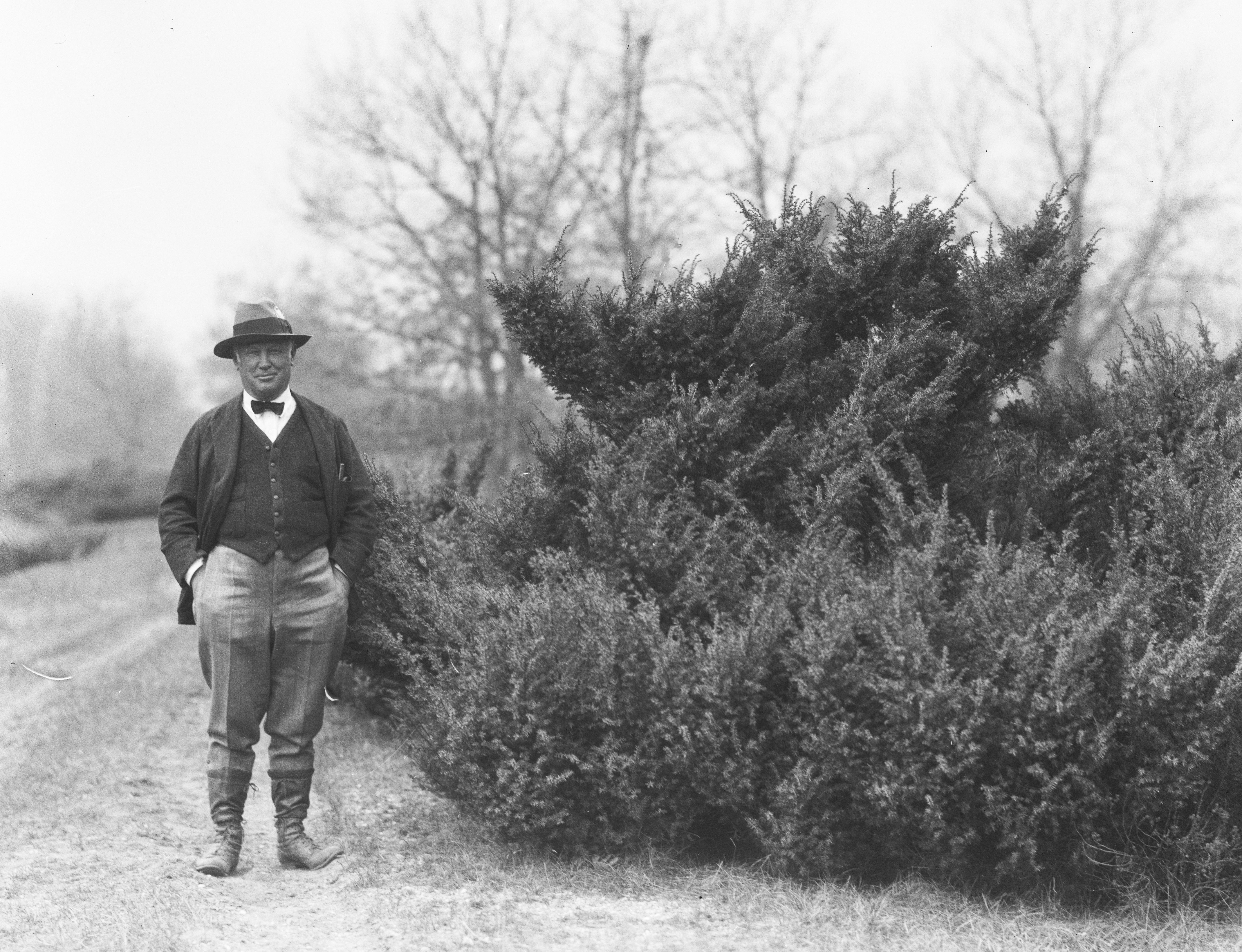
Colonel Edwin S. George, Apr 1930. W. Bryant Tyrell, photographer.

Colonel Edwin S. George, Apr 1930. W. Bryant Tyrell, photographer.

Much can be read about the Colonel’s acumen as an influential Detroit businessman and philanthropist, and there is no doubt that he and George Booth knew one another in Detroit. However, once they both moved to Bloomfield Hills, the relationship grew. The colonel organized the Bloomfield Hills Country Club of which Booth was a founding member, and both men were members of the Bloomfield Open Hunt Club. In 1912, Colonel George became one of the stockholders in the Bloomfield Hills Seminary (the pre-cursor to Brookside School) established by George Booth, and in 1926, the two men worked together to bring a post-office to the then Village of Bloomfield Hills.

Cranbrook School students with Colonel George (seated), The Edwin George Reserve, Sep 1930. W. Bryant Tyrell, photographer.

Cranbrook School students with Colonel George (seated), The Edwin George Reserve, Sep 1930. W. Bryant Tyrell, photographer.

But certainly the most important contribution Colonel George made to Cranbrook was through the Institute of Science. In 1930, the colonel became a member of the Institute’s first Board of Trustees, a position he held until just before his death in 1950. That same year, he donated 1,250 acres of land near Pinckney, Michigan to the University of Michigan to be used not as a public park, but as an educational resource for University of Michigan students, scout troops, and Cranbrook School students. Known as “The Edwin George Reserve,” it featured hiking trails, streams and a small lake, stables, outbuildings, a gate lodge, and even an airstrip. Colonel George also stocked the reserve with wildlife including deer brought from Michigan’s Upper Peninsula and antelope from Alberta, Canada. The colonel wanted the boys to have “an appreciation of the truer values of life as expressed by the truth in Nature,” and provided a place for them to do so.

So, while we have no direct proof that Booth and the colonel discussed the virtues of nature as education, it sure seems to me that they had a lot more in common than we previously thought!

Leslie S. Edwards, Head Archivist
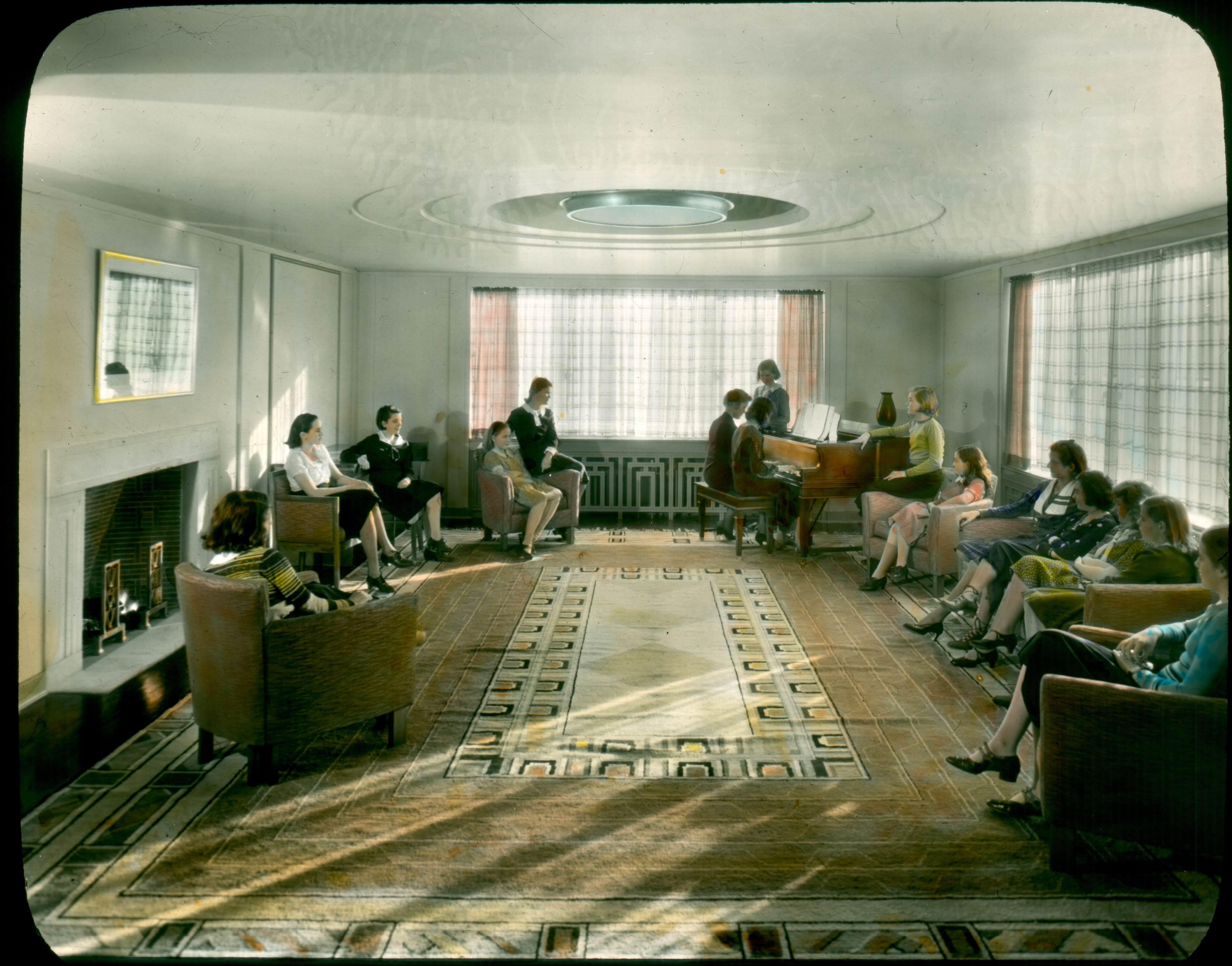
Photo Friday: Coming to Light

The Institute of Science photograph collection (1929-1995) is a treasure trove of fascinating images, taken by various Institute of Science staff during the course of their field research. Many of them document places that have become popular northern Michigan summer vacation destinations.

Thunder Bay Island Lighthouse, Jul 1929. W. Bryant Tyrrell, photographer. Courtesy Cranbrook Archives.

Thunder Bay Island Lighthouse, Jul 1929. W. Bryant Tyrrell, photographer. Courtesy Cranbrook Archives.

This photo was taken by naturalist W. Bryant Tyrrell who was employed by the Cranbrook Foundation in 1929 as the director of the first natural history museum, then housed in what is now known as the Academy of Art Administration building. Tyrrell worked with Brookside School students, taking them on nature walks around campus and teaching them how to build bird houses. He also taught general nature study to Cranbrook School students. Tyrrell’s field work, primarily in Michigan, led to the formation of several Institute of Science collections from which he was able to prepare exhibitions.

The W. Bryant Tyrrell Photograph Collection can be found at the Washington D.C. Community Archives. For a history of the Thunder Bay Lighthouse, see: http://www.terrypepper.com/lights/huron/thunder/

Leslie S. Edwards, Head Archivist

Out From the Shadows #1: Myrtle Hall

While most everyone equates the names Saarinen, Knoll, and Eames with Cranbrook, there are hundreds, if not thousands, of people who have contributed to the community whose stories have never been told. We archivists thought it would be interesting to tell some of their stories here.

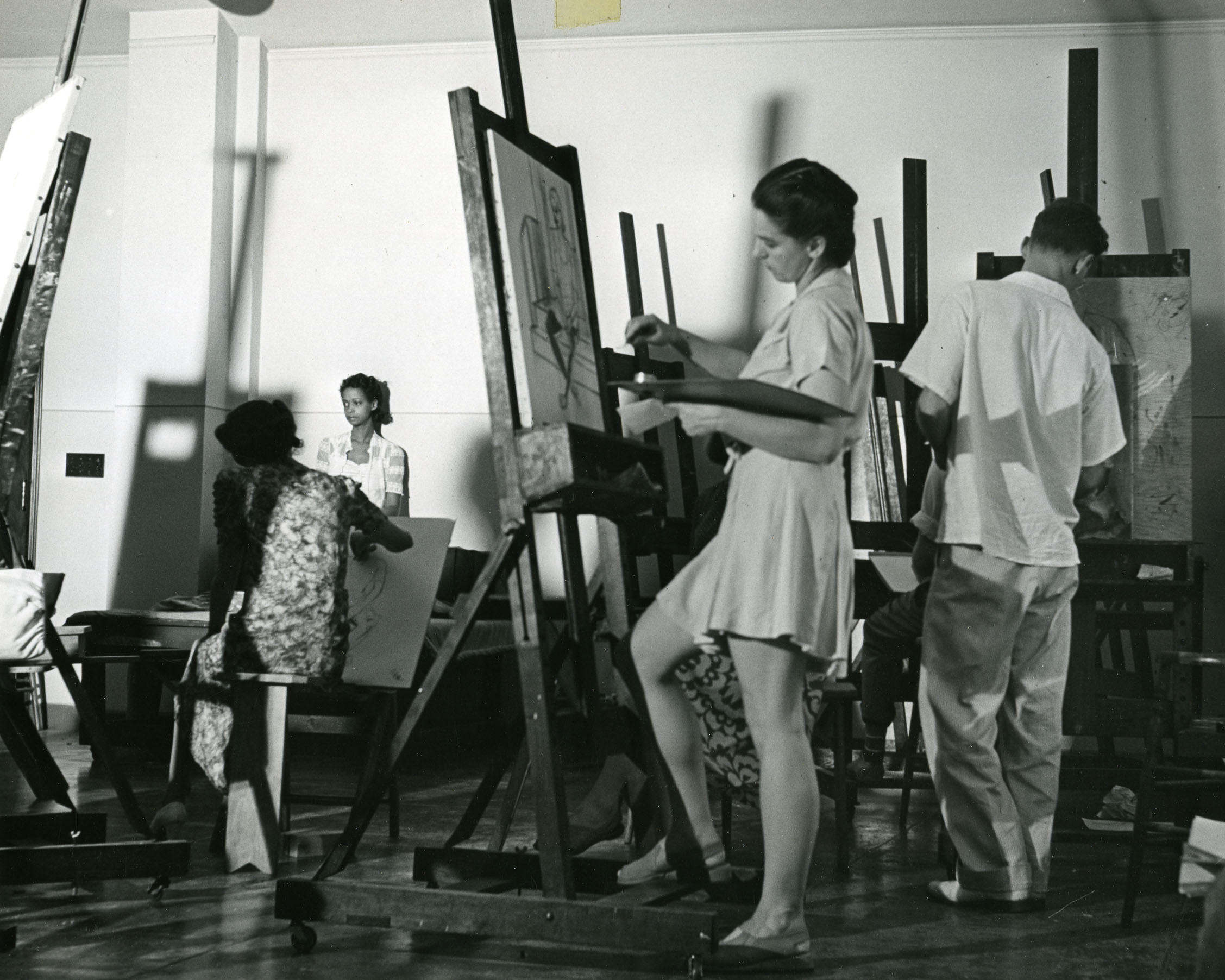
The first is Myrtle Hall. She was not an alumna, faculty, or staff at any of the Cranbrook institutions, however, she did work at the Academy of Art as a model for drawing and painting students in the late 1930s and early 1940s. Not much is known about the models – there are no employee files for them, and their names are not listed in reports or meeting minutes. Fortunately however, I did uncover evidence that a line-item, established in the budget for the Academy of Art’s 1934-1935 academic year, specifically provided funding for the life models for the drawing and painting classes (taught by Wally Mitchell.) Models worked twenty-one hours per week.

Painting and drawing class, summer 1940.

Painting and drawing class, summer 1940.

By her own admission, Myrtle was the “first black model at Cranbrook” and for that matter, the first black model in the Detroit area including at the Meinzinger School of Art. In addition to modeling, Myrtle was also an artist herself and a member of Detroit’s Pen and Palette Club, which was formed in 1925 by the Detroit Urban League to help young artists exhibit their works. In 1935, Myrtle received an award for one of her paintings at the club’s Ninth Annual Exhibition. She also studied for a time at the Society of Arts and Crafts, exhibited at the Detroit Artists Market, and was one of the founding members of the Extended Arts Gallery (1958). During the 1940s, Myrtle abandoned painting and became an accomplished ceramicist. She had her own pottery studio (which she designed herself) on Erskine Street in Detroit. The studio was filled with antiques, paintings and sculpture by Michigan artists, as well as her own ceramics and of course her kiln and glazes. In a 1963 interview, she stated “I can’t stand things that are useless” and her oven-to-table casseroles, salad bowls, drinking mugs, and lamp bases reflected just that.

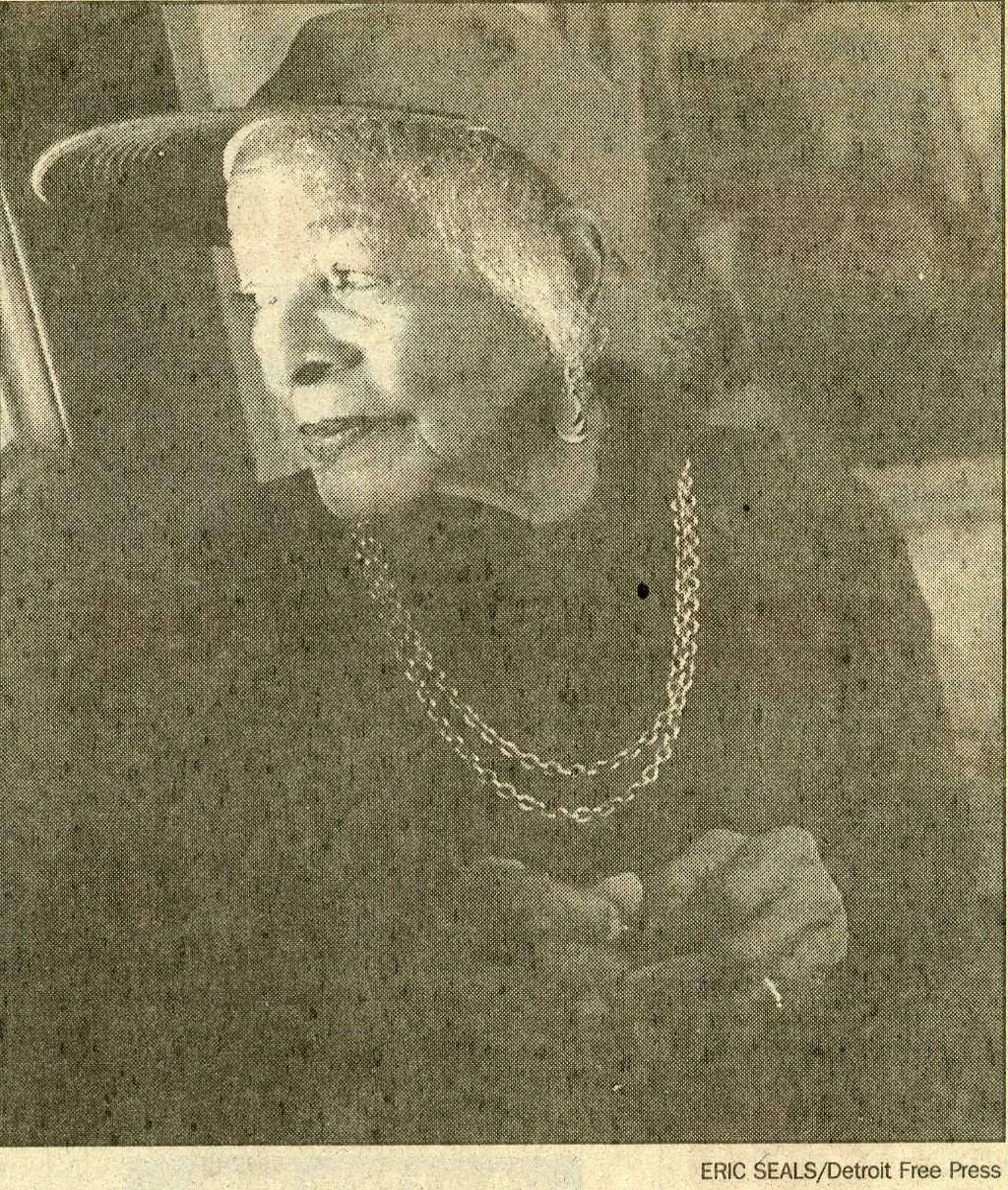
Myrtle Hall, Detroit Free Press, Mar 1994.

Myrtle Hall, Detroit Free Press, Mar 1994.

A 1994 article in the Detroit Free Press also tells the story of Myrtle Hall as a quiet but effective activist. She stood up for civil rights when she saw injustice, and was instrumental in affecting a change in Meinzinger Art School’s discrimination of African American students after World War II. Myrtle Hall is quoted as saying “I didn’t just model, I noticed things.”

Leslie S. Edwards, Head Archivist

Editor’s Note: We do not have any biographical information on Myrtle, but if you know anything about her, please let us know!

Transcontinental Threads: Maja Andersson Wirde

One of my favorite parts of my job as an archivist is assisting researchers with locating materials in our collections. Often times a scholar will visit here with a set plan for their research project, and pre-conceived ideas about what they might find here or how the materials in our collections will support their thinking. One of my personal pleasures is when the researcher finds something new or surprising in our collections that changes their course of action. This is exciting on many levels – for them as well as for me!

In August 2015, Swedish author Marie Andersson visited Cranbrook to study the work of the Swedish weaver Maja Andersson Wirde (no relation) in preparation for a monograph on the life and work of Wirde at the request of Wirde’s family. Wirde (1873-1952), an accomplished weaver and textile designer, was asked by Loja Saarinen to come to Cranbrook in 1929 and oversee the operation of Studio Loja Saarinen which was established to design and produce all of the textiles for Kingswood School Cranbrook. As many researchers before her, Marie Andersson found her visit to Cranbrook Archives to be a revelation, and she recently wrote to me that “the Cranbrook chapter became an important part of the book, much more than I thought before I visited you.”

Maja Andersson Wirde (standing) with Loja Saarinen, Studio Loja Saarinen, ca 1930. Detroit News photograph, Courtesy Cranbrook Archives.

Maja Andersson Wirde (standing) with Loja Saarinen, Studio Loja Saarinen, ca 1930. Detroit News photograph, Courtesy Cranbrook Archives.

Prior to coming to Cranbrook, Maja Andersson Wirde had been employed by Handarbetes Vänner (The Friends of Handicraft) in Stockholm from 1907-1929. Her textile designs were represented in international exhibitions including Stockholm (1909 and 1930), Malmo (1914), Gothenburg (1923), and Paris (1925). However, according to Marie Andersson, Wirde’s “time spent at Cranbrook must be looked upon as the most important period” in Wirde’s life as an artist, and she created some of her most significant work while here.

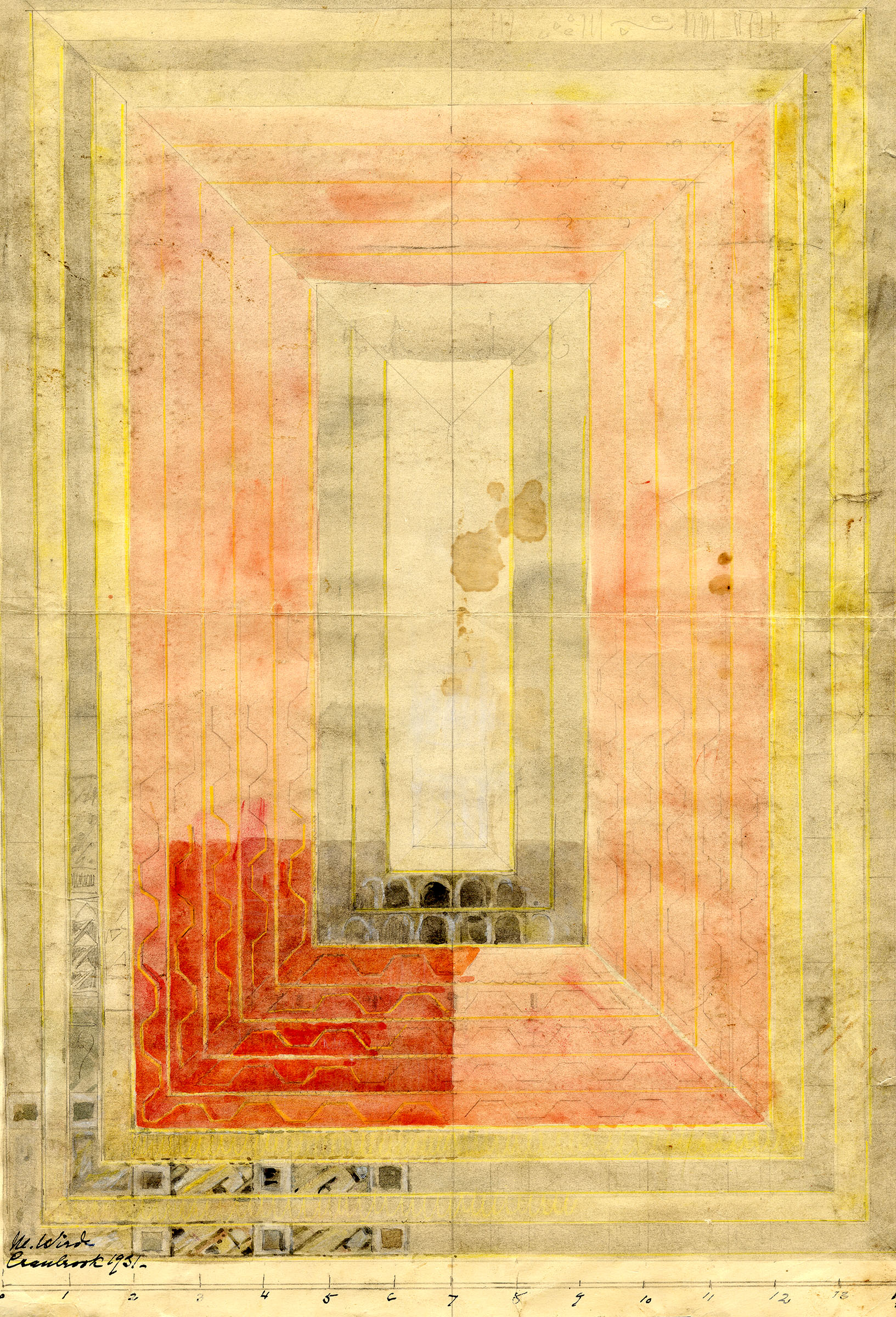
So, what did Marie discover at Cranbrook Archives? Comparing photographs and documents from our collections with images of watercolor sketches from museums and archives in Sweden, Marie and I spent two days of “fantastic co-operation” in order to uncover the extent of Wirde’s contribution to the history of textiles at Cranbrook, particularly Kingswood School.

Watercolour sketch by Maja Wirde (1873-1952), Collection of Smålands Museum, Växjö, Sweden.

Watercolour sketch by Maja Wirde (1873-1952), Collection of Smålands Museum, Växjö, Sweden.

The rug for Reception Room III (Rose Lounge) in situ, Kingswood School, 1932. George Hance, photographer, Courtesy Cranbrook Archives.

The rug for Reception Room III (Rose Lounge) in situ, Kingswood School, 1932. George Hance, photographer, Courtesy Cranbrook Archives.

Prior to Marie’s visit, Wirde was known for her work as the shop supervisor at Studio Loja Saarinen, the weaving instructor at Kingswood School, and for her designs for several rugs and textiles for Kingswood School, including the fabric for the dining hall chairs and most notably, the large rug for the Green Lobby. However, Loja Saarinen was given credit for the rest. Now, Cranbrook can tell a more inclusive story – for we discovered that it was Maja Andersson Wirde who designed the majority of the textiles for Kingswood School – eleven rugs for lobby/reception halls, all of the curtains and rugs for the dormitory rooms, as well as curtains for the dining hall, study hall, and library! In addition, she designed rugs for the Academy of Art, Saarinen House, and George Booth’s Cranbrook Foundation Office.

While the book, “Trådar ur ett liv: textilkonstnären Maja Andersson Wirde” was published pirmarily in Swedish, there is a translation of the chapter on Cranbrook in the back, and the book features numerous images from Cranbrook Archives. We are so excited to be able to tell a more comprehensive story not only about the objects in our care, but also a key individual in our rich history.

Leslie S. Edwards, Head Archivist


Eat, Greek, and Be Merry: the Greek Theatre Turns 100!

Drama and arts and crafts have been intertwined in Detroit history for more than 100 years. Under the auspices of the Detroit Society of Arts and Crafts (DSAC), on January 19th 1910, May Morris (daughter of William Morris) captivated a capacity crowd at the Detroit Museum of Art with her illustrated lecture “Pageantry and the Mask.” Morris’s presentation helped mark a turning point in propelling Detroit onto the national stage as an arts and crafts center. Almost immediately after May Morris left Detroit, Alexandrine McEwen, a bookplate artist and founding member of the DSAC, penned what was termed a “modern immorality play” called Everywoman with characters named “Suffrage” and “Art.” Less than a month later, she wrote The Masque of Arcadia, another outdoor play held on the grounds of Clairview, J.L. Hudson’s Grosse Pointe estate. These performances led to the DSAC being the first to foster a little theatre as part of their program.

By 1914, George Booth (the first president of the DSAC) already had plans in mind for a bathing pavilion and a theatre on the hill overlooking Cranbrook House. (My own suspicion is that he did not like the fact that the DSAC performances were not held on HIS estate!) In early 1915, Booth commissioned Canadian architect Marcus Burrowes to draw up the plans for an outdoor Greek Theatre. The open-air amphitheater, constructed of stone, seats nearly 300 people and was described in contemporary news articles as a “gem of architecture” and a “temple of art.” By May 1916, landscaping was underway and red tulips graced the front of the bathing pavilion.

Invitation Card, The Cranbrook Masque, June 1916. George Gough Booth Papers.

Invitation Card, The Cranbrook Masque, June 1916. George Gough Booth Papers.

Meanwhile, the DSAC was planning the production of The Cranbrook Masque which would also serve as the public dedication for the new Greek Theatre. The play showed the development of drama from ancient to modern times in five episodes, emulating May Morris’s lecture theme from 1910. For more on the play, see an earlier blog post.

Greek Theater masque, 1916

The Cranbrook Masque at the Greek Theatre, 1916. Hand-tinted glass slide.

Fast forward to 1991 and the 75th anniversary of the Greek Theatre. A team of dedicated Cranbrook staff, historians, and theater enthusiasts initiated the restoration of the Greek Theatre and a contemporary production, using the script from the original Masque, this time with cast members from St. Dunstan’s Guild and dancers from Jessie Sinclair’s Cranbrook Kingswood Dancers.

E465

Cranbrook House sunken garden (originally called the kitchen garden) with staked tomato plants, ca 1915.

This year marks the 100th anniversary of the Greek Theatre and a long-standing tradition of theater programs at Cranbrook. In honor of this memorable event, the Cranbrook Center for Collections and Research will be presenting “Edible Landscapes: A Midsummer Night’s Dinner.”

Leslie S. Edwards, Head Archivist

Three Women and a Conservator

One of the interesting components of our jobs as collections managers, registrars, and archivists is that we get to interact and learn from conservators in our fields. On Friday, three of us went down to Detroit and met with Giogio Ginkas of Venus Bronze Works. A non-descript warehouse building sported a gray metal door which led us into the lobby gallery where Giorgio has displayed art from his personal collection of metro-Detroit artists, including Cranbrook’s Gary Griffin. Then we walked into the “shop” where his tools and equipment are interspersed with numerous sculptures (primarily metal) in various stages of repair, restoration, and conservation.

Giorgio Ginkas explaining the conservation process for the Wishing Well. Courtesy Cranbrook Archives.

Giorgio Ginkas explaining the conservation process for the Wishing Well. Courtesy Cranbrook Archives.

Currently, Venus Bronze Works has three of Cranbrook’s works in his shop – two are awaiting reinstallation on the grounds, while the metal “arch” from the Wishing Well at Cranbrook House is just undergoing restoration.

Parts of the Wishing Well “arch” removed for restoration. One element was missing so a replacement piece had to be fabricated. Courtesy Cranbrook Archives.

Parts of the Wishing Well “arch” removed for restoration. One element was missing so a replacement piece had to be fabricated. Courtesy Cranbrook Archives.

Orpheus figure, restored and waiting to be reinstalled at Cranbrook Academy of Art (CAM 1931.9). Courtesy Cranbrook Archives.

Orpheus figure, restored and waiting to be reinstalled at Cranbrook Academy of Art (CAM 1931.9). Courtesy Cranbrook Archives.

For more on Venus Bronze Works, including Detroit’s own RoboCop statue, see: http://www.dailydetroit.com/2015/08/24/remember-robo-cop-statue/

Leslie S. Edwards, Head Archivist

Forays in Metalwork: Cranbrook and Fairhope, AL

Women’s History month always gives us a good excuse (not that we need one!) to spotlight the accomplishments of some of Cranbrook’s lesser-known but equally important women. They may not have been famous artists or designers, but rather women who educated scores of students, worked tirelessly behind the scenes to catalog thousands of scientific specimens, or played a role in documenting the history and heritage of the Cranbrook community. So this month we have chosen to make each post about a Cranbrook woman – the work she accomplished, an artwork she created, or some other notable fact that we find interesting.

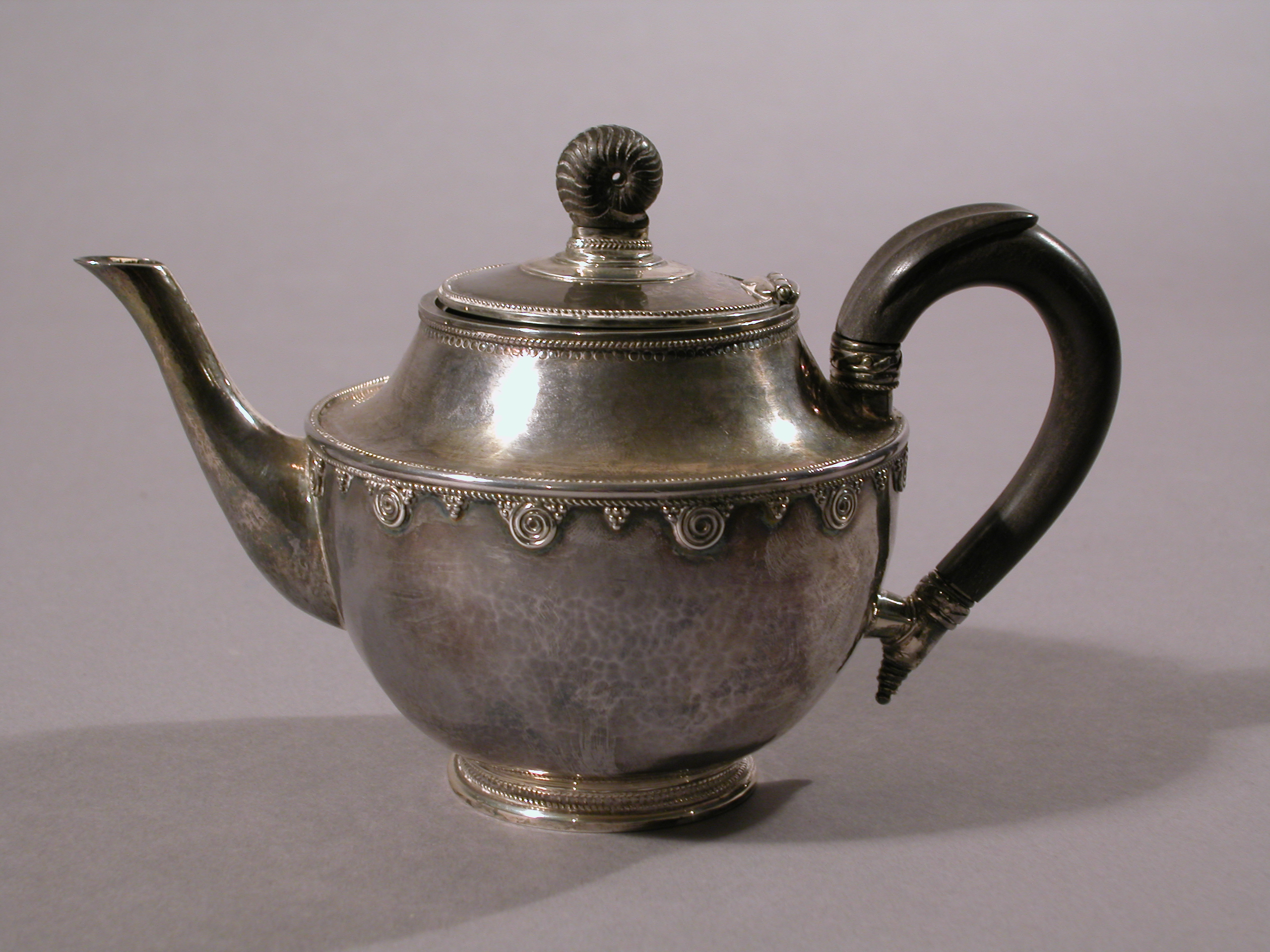
Margaret Elleanor Biggar (1906-1992) was born in Detroit, and became interested in silverwork when she attended spent her senior year in high school at Marietta Johnson’s experimental School of Organic Education in Fairhope, Alabama. After graduation, Biggar returned home to Detroit, where she attended the Detroit Society of Arts and Crafts school. In November 1929, renowned British silversmith Arthur Nevill Kirk (who headed the silver department at Cranbrook), called Biggar and asked if she would like to come and be his student apprentice. She worked for Kirk in the Arts and Crafts Studio until 1931, where she made thirty cents an hour executing and polishing Kirk’s designs.

Silver Teapot, 1929. Designed and executed by Margaret Biggar. Image Courtesy Cranbrook Art Museum (CAM 1933.45).

Silver Teapot, 1929. Designed and executed by Margaret Biggar. Image Courtesy Cranbrook Art Museum (CAM 1933.45).

In 1931, Biggar returned to Fairhope, Alabama in where she taught metals at the Marietta Johnson School of Organic Education and formed a lasting relationship with Elise Hooker (1895-1977), who was head of the school’s craft department. In 1938, the two women left the school to open their own studio where they taught metalcraft classes in silver, copper, and brass. Generous and hard-working, their primary objective was not to make money but rather to teach others the craft they loved. In 1946, they only charged fifty cents for a two-hour lesson!

Biggar and Hooker’s home on Magnolia Avenue, Fairhope, AL. The studio was called “Metalcraft Studio.” Photo courtesy Margaret Elleanor Biggar Scrapbook, Cranbrook Archives.

Biggar and Hooker’s home on Magnolia Avenue, Fairhope, AL. The studio was called “Metalcraft Studio.” Photo courtesy Cranbrook Archives, Margaret Elleanor Biggar Scrapbook.

The studio was successful and works of their students were shown in local exhibitions. People came from around the country to take classes, and the studio became a part of local crafts tours in Fairhope.

Hooker (left) and Biggar at an exhibition in Pensacola, Florida. Photo courtesy Cranbrook Archives, Margaret Elleanor Biggar Scrapbook, U.S. Navy photographer.

Hooker (left) and Biggar at an exhibition in Pensacola, Florida. Photo courtesy Cranbrook Archives, Margaret Elleanor Biggar Scrapbook, U.S. Navy photographer.

Metalwork was not Biggar’s only interest. In 1943, she spearheaded the “War Dog Fund” effort in Fairhope. This was a project organized to enlist the help of dogs on the “home front” to secure funds through the donations of their owners. Dogs could be enrolled as a Sergeant ($1) or Lieutenant ($5) all the way up to General ($100). The funds were then used to help feed and care for the dogs in WWII combat zones.

Leslie S. Edwards, Head Archivist

Photo Monday: Oops!

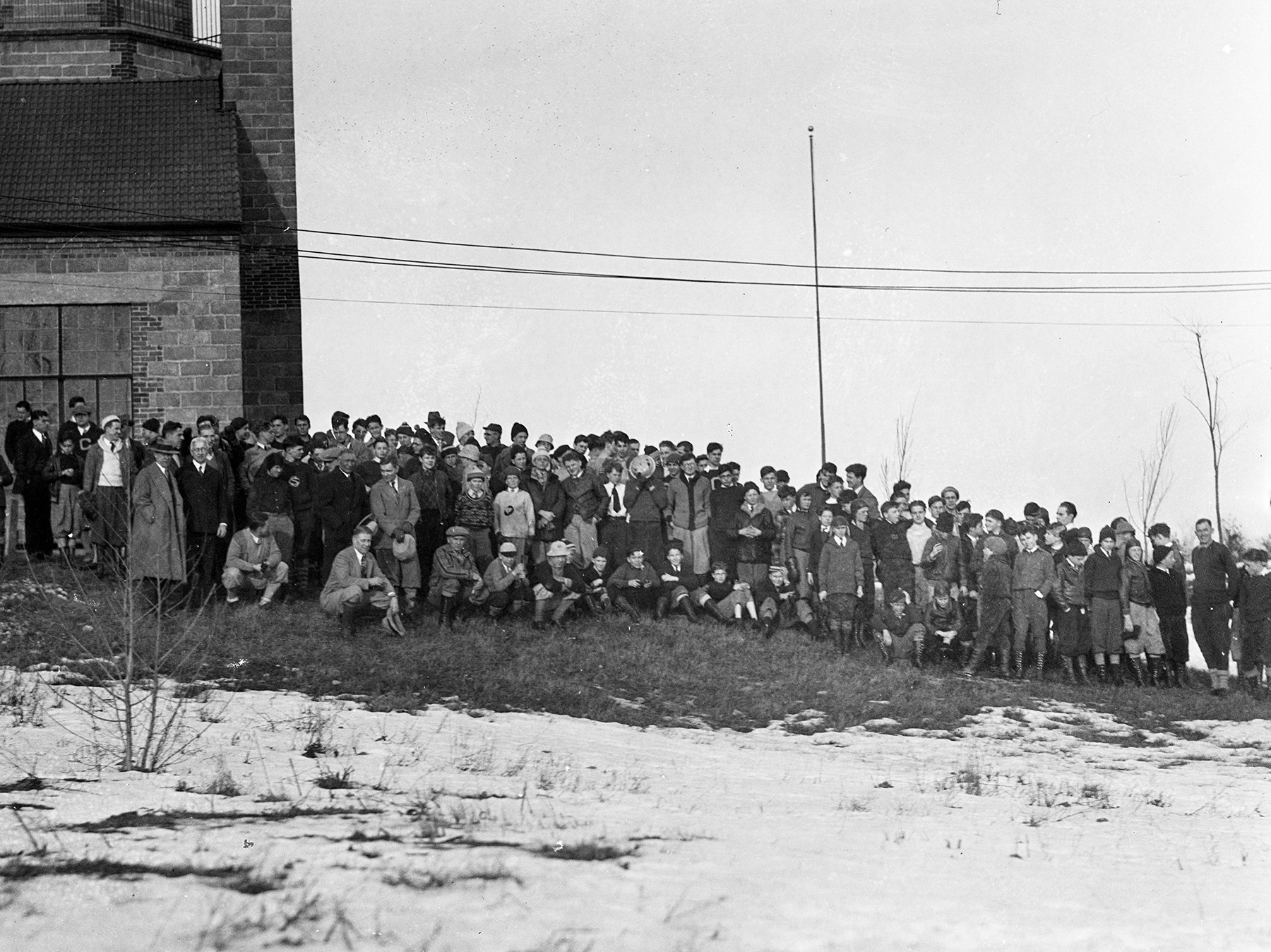
Photo Friday ran away with us last week, so here it is Monday already. Today’s post is about Camp Brady on Green Lake, Independence Township, Michigan. You are probably wondering how this camp relates to Cranbrook? The photo below shows a group photo of Cranbrook School boys, taken at Camp Brady in the winter 1930.

Cranbrook School boys at Camp Brady, Feb 1930. W. Bryant Tyrrell, photographer. Courtesy Cranbrook Archives.

Cranbrook School boys at Camp Brady, Feb 1930. W. Bryant Tyrrell, photographer. Courtesy Cranbrook Archives.

Camp Brady was established in 1921 in honor of George Nexsen Brady (1837-1920). Brady, born and raised in Detroit, became a businessman and philanthropist always interested in the welfare of children. He was a big supporter of the Boy Scouts of America and allowed the Detroit chapter to use his forty-acre parcel on Green Lake as a summer camp. After he passed away (and donated his land to the Scouts), it was known as Camp Brady until it was sold in 1946.

What does Brady have to do with Cranbrook? After he retired, Brady moved to Bloomfield Hills and was a member of the Bloomfield Hills Country Club. He purchased 45 acres along Cranbrook Road, across the street from Cranbrook. Thornlea Studio (the old archives building) is located on his property, on what is known as Brady Lane!

Leslie S. Edwards, Head Archivist
Phenomenologically Speaking

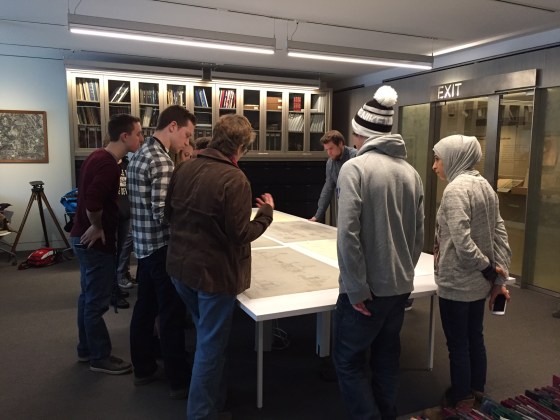
Ok, so I have to admit, I had no idea what the term “phenomenological” meant until yesterday when the Archives was host to a group of architecture students from Lawrence Technological Institute. Phenomenology was defined by the German philosopher Edmund Husserl as the philosophical study of the structures of experience and consciousness. So how does this fit in with architecture? Well, the idea that we experience architecture with all of our senses does seem perfectly logical and of course Cranbrook is a perfect example of that.

The two buildings the students focused on were the Cranbrook School Dining Hall and the Natatorium. If you have ever walked into either of those spaces, you can absolutely understand the phenomenological experience – the dining hall with its’ high vaulted ceilings, the Orrefors glass pendant light fixtures, and the 12 foot leaded glass windows that line the walls and throw patterns of light across the room – all of these contribute to both our visual and non-visual senses as we experience the space.

image2

Head Archivist, Leslie Edwards, discusses drawings with LTU students.

The Natatorium illustrates this concept even more dynamically. The complex use of materials – glazed exterior and interior brick, concrete block interior walls, the gray stone pool deck, the hand-glazed tiles in the locker rooms, and the use of mahogany for the walls, railing, and vertical louver panels – all contribute to the total sensation of the space. Add to that the windows that look out to the woods and the ceiling oculi that open up to the sky and you definitely experience phenomenology.

So thanks LTU students for teaching me something new when you came to the Archives to look at the architectural drawings. Days like this are another one of the perks of being a Cranbrook archivist.

Leslie S. Edwards, Head Archivist

“The Last Minstrel” at Cranbrook

Richard Dyer-Bennet poster

Troubadour, poet, and composer Richard Dyer-Bennet (1913–1991) was among the best known and most respected folk singers in America during the 1940s and 1950s. He became the first solo folk musician to appear in Carnegie Hall and on December 7, 1941, NBC radio broadcast Richard Dyer-Bennet singing “The Ploughboy” when the broadcast was interrupted with the announcement of the attack on Pearl Harbor.

Richard Dyer-Bennet performs at Cranbrook, Feb 1954. Harvey Croze, photographer.

Richard Dyer-Bennet performs at Cranbrook, Feb 1954. Harvey Croze, photographer.

Brought to Cranbrook by the Cranbrook Music Guild in February 1954, Dyer-Bennet presented “The Voice of Minstrelsy,” a program of traditional folk songs which spanned six centuries and included old-world European songs as well as American folk ballads.  A year later, Dyer-Bennet founded his own record label in order to maintain artistic control over the sound quality, repertory, and style of his performances.

To see the poster featured in this blog, as well as numerous others from our collection, visit the Archives’ exhibition Designs of the Times: 100 Years of Posters at Cranbrook.

Leslie S. Edwards, Head Archivist
Create a website or blog at WordPress.com