Operation Mercy and an Academy of Art Sculptor

In January 1957, members of the Academy of Art’s Student Council came across an article in Newsweek magazine about the plight of Hungarian refugees to the United States following the 1956 Hungarian revolt against Soviet domination. Moved by the story of the artist featured in the article, the students decided to act and conceived and executed a plan to finance a semester of study at the Academy for one of the artist refugees. During the weekend of January 19-20th, Academy students held a sale of their own artwork, and supplemented by their own meager cash funds, raised $2,600 for a fund administered entirely by the Student Council. The Academy of Art added enough funds to present an artist with a scholarship for one year of study.

Members of the student council wrote to various organizations including the American Hungarian Federation and the Central Department of Church World Service in order to identify an artist who might qualify for the scholarship. Under the provisions of the 1953 Refugee Relief Act, from November 1956-June 1957, the U.S. government processed over 31,000 refugees at Camp Kilmer in New Jersey through a program called “Operation Mercy.” Most refugees stayed an average of twelve days before a resettlement location was found for them.
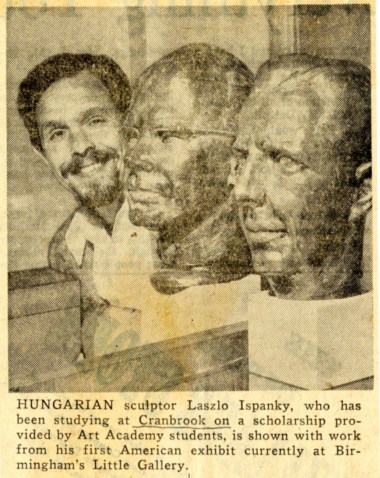
detnews1955046

Detroit News, 18 May 1958, Courtesy Cranbrook Archives

The artist sent to Cranbrook was Laszlo Ispanky (1919-2010), a 38-year old sculptor whose interest in art started at a young age. His father owned a restaurant in Budapest near a large sand mine, which soon became Ispanky’s canvas. His sand art was recognized by a man who suggested that he become a sculptor, so Ispanky eventually graduated from the Hungarian Fine Art Academy. In November 1956, during the Hungarian revolt, Ispanky and a friend escaped to Vienna where they sought asylum in the United States.


CAM1984_45

“Two Sisters,” Laszlo Ispanky, c. 1958, bronze, 17 1/2 x 9 x 6 inches, CAM 1984.45, Gift of Peggy de Salle. Image courtesy Cranbrook Art Museum.

Ispanky had been unable to work creatively under Communist rule. He once commented “In a Communist country, you have to be a Communist to be supported as an artist.” Described as a “romantic European,” Ispanky was grateful for the total freedom he was allowed at Cranbrook – “the most fantastic thing . . . a huge studio, and you do whatever you want.” While at Cranbrook, Ispanky sculpted over 32 works in terra cotta, bronze and plaster and was given the nickname “Speedy Gonzalez” by his fellow students.


Lazlo Letter001

Correspondence from Ispanky to Cranbrook Academy of Art, 1957. Courtesy Cranbrook Archives.

While he did not receive a degree at Cranbrook, Ispanky was eternally grateful for the chance to study here. In his letter, he expresses his heartfelt sentiments and poetic nature. “My thanks to you for reaching out to me with something that is inherent in the sacred name of freedom and for lending me hope. It feels good! I have waited with anxiety to hold the clay with which to give birth to the flowers blooming in my heart – to the hidden music which lives within me; to turn the material into form and into a million statements.”

After Cranbrook, Ispanky moved to New Jersey where he lived his life as a successful sculptor, specializing in the portraiture that he developed while at Cranbrook.

– Leslie S. Edwards, Head Archivist
A Model and a Memory

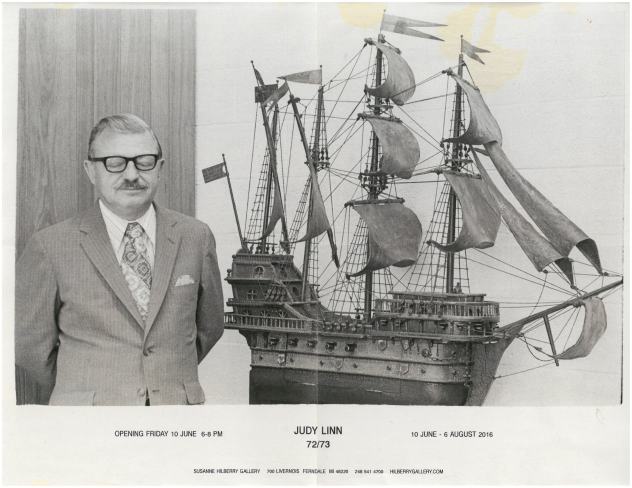
Earlier this year, my boss dropped an interesting flier on my desk for me to investigate. It was advertising a show of the celebrated Detroit born, New York based photographer Judy Linn at the Susanne Hilberry Gallery in Ferndale, Michigan. The flier featured Linn’s photograph, “Man and Boat, July 12, 1972.”

judy-linn-ad-hilberry-gallery

Flier for Judy Linn’s show at the Hilberry Gallery featuring her photograph, “Man and Boat, July 12, 1972.”

Here on the first floor of Cranbrook House we have a remarkably similar model that belonged to the Booths. Model ship building was certainly a popular hobby throughout the twentieth century, but perhaps there was a Cranbrook connection between our ship and the one in the picture?

cec-1918-1-ship-from-cranbrook-house

Cranbrook’s Ship: Ye Triumphe Ship, Henry Brundage Culver, 1918. CEC1918.1


I reached out to Linn to find out more about her picture, and to see if she remembered anything about the man or the boat. Linn, who is perhaps best known for her photographs documenting New York’s music and art scene in the 1970s, informed me that from July 1972 to February 1973, she photographed for a small newspaper in southern Macomb County. It was part of the Detroit Area Weekly News (known colloquially as DAWN), and she took this picture at a local city hall where someone had just donated the ship.

I followed up with the city halls and libraries Ms. Linn thought it could have been (Warren, Roseville, or St. Clair Shores), but no one still has this ship hanging around. I was surprised at the amount of people who knew that there were ships “in the basement, somewhere” and I appreciated them taking time to go check and see if they were the boat in question (it was never a match).

Although I can’t make a connection between the boat in Linn’s photo and the one in Cranbrook House, the best part of this journey into the weeds was hearing Ms. Linn’s reflections of her time at Cranbrook. She shared with me this wonderful recollection, and agreed let me post it here:

“I was happy to get your email. I am very very fond of Cranbrook. When I was ten my mother got a Master’s degree in weaving form the Art Academy. I thought her fellow art students were the most extraordinary people on earth. I even copied their clothes for my paper dolls. If possible I wanted to be just like them. Later I realized it wasn’t just the art students. It was the submersion in a totally designed environment, complete down to the Saarinen designed fork in the Kingswood dining room. I loved it and I still love it.”

If you are in New York, check out Linn’s current show at the Sikkema Jenkins & Co. Gallery, up through this weekend, and if you want to know more about Cranbrook’s boat, check out former Center Collections Fellow Stefanie Kae Dlugosz-Acton’s fascinating post!

-Kevin Adkisson, Center Collections Fellow

Automobiles and Art?

Did you know that Ford Motor Company supported and encouraged the artistic activities of its employees, sponsored traveling art exhibitions, and published contemporary American art in its company magazines? I had no idea until I found a couple of copies of Ford Times magazine and a Lincoln-Mercury Times in one of our collections.

“Fish,” Big Spring, Michigan. Lincoln-Mercury Times, May-June 1956. Painting by Bill Moss. Moss was a graduate of the Academy of Art and painted over 300 works for Ford Times from 1949-1958.

“Fish,” Big Spring, Michigan. Lincoln-Mercury Times, May-June 1956. Painting by Bill Moss. Moss was a graduate of the Academy of Art and painted over 300 works for Ford Times from 1949-1958.

Much of the auto company’s support and use of artworks began under Arthur Townsend Lougee, who served as the Executive Editor and Art Director of Ford Times magazine, as well as the Lincoln-Mercury Times, from 1946-1961. During his tenure, Lougee commissioned thousands of articles on America and Americana, which were illustrated with watercolors by regional Ford artists who, for the most part, painted local motifs. Ford’s policy was to leave the subject matter up to the discretion of the artist.

steele-ban

“Lake Superior’s Eastern Shore.” Lincoln-Mercury Times, May-June 1956. Painting by Robert Bannister

A small company magazine at 4 x 6 inches, each issue of the monthly Ford Times consisted of several stories about vacation destination spots and those of historical interest, as well as promotional information about contemporary Ford products. Watercolor paintings first appeared as cover art in the June 1946 issue, and on the interior in September 1947.

steele-snw

“Fruita,” Bryce Canyon National Park. Ford Times, Sep 1959. Painting by V. Douglas Snow.

Lougee also assembled the Ford Times Collection of American Art, a collection of over 7,000 of the paintings commissioned for the Ford publications. Nearly 700 American painters were represented in the collection. The Ford Times art exhibition program was established in 1954 and made available to schools and universities, libraries, and art organizations across the country. Exhibitions included American Byways (1953), Artists and Fishermen (1955), Faculty Artists (1962), Variety No. 8 (1962), and Travel in Mexico (1969). Under the auspices of the United States Information Agency, international exhibitions traveled to countries in Asia, Africa, Europe, and the Middle East as a way of promoting good will and friendship among nations.

steele

Lincoln-Mercury Times, May-June 1956

Thanks to the collection of Jack Keijo Steele, a Cranbrook Academy of Art alum, clay modeler in the Ford Styling Office, and lifelong painter, we are able to tell this interesting story of Ford’s contributions to art in this country.

Leslie S. Edwards, Head Archivist
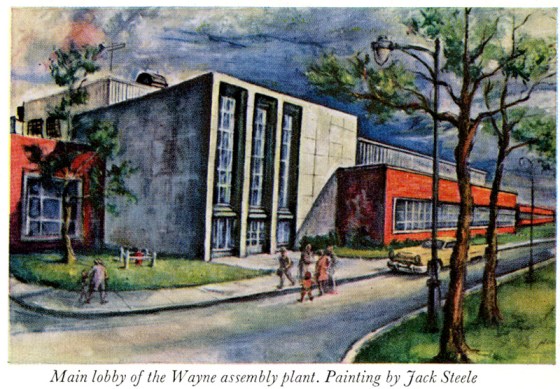


Photo Friday: “Things Architectural”

In November 1932, Cranbrook Academy of Art’s Executive Secretary, Richard Raseman, invited architects from the Detroit area to come to Cranbrook for “dinner and discussion of things Architectural.” The following Cranbrook School news article describes the evening.


Architectural

“Architects Gather Here for Forum,” The Crane, 20 Dec 1932

In addition to Raseman, Eliel Saarinen, Albert Kahn, and Emil Lorch, attendees included former Kahn associate Ernest Wilby and Ralph Hammett.

Leslie S. Edwards, Head Archivist


Forays in Metalwork: Cranbrook and Fairhope, AL

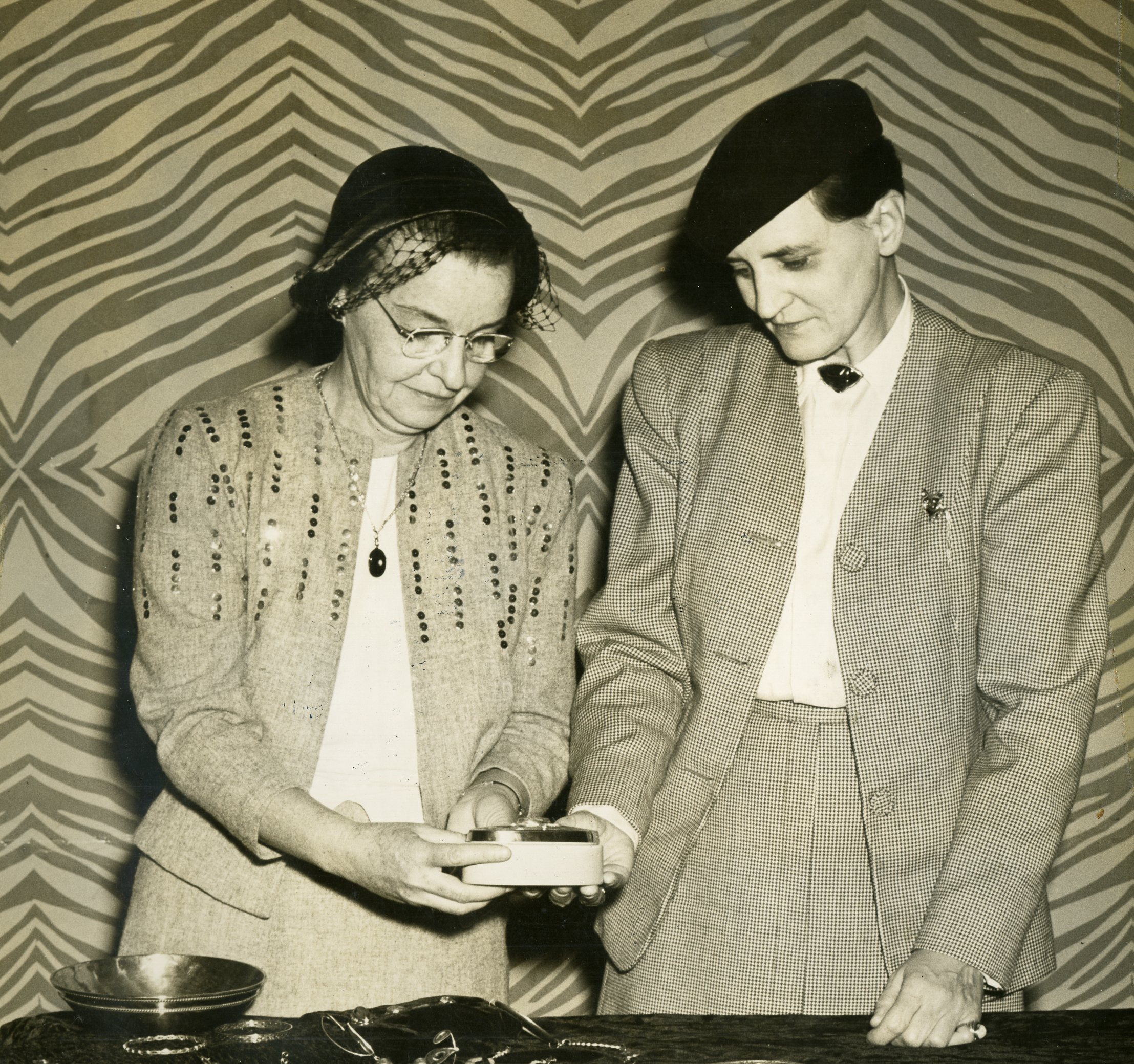
Women’s History month always gives us a good excuse (not that we need one!) to spotlight the accomplishments of some of Cranbrook’s lesser-known but equally important women. They may not have been famous artists or designers, but rather women who educated scores of students, worked tirelessly behind the scenes to catalog thousands of scientific specimens, or played a role in documenting the history and heritage of the Cranbrook community. So this month we have chosen to make each post about a Cranbrook woman – the work she accomplished, an artwork she created, or some other notable fact that we find interesting.

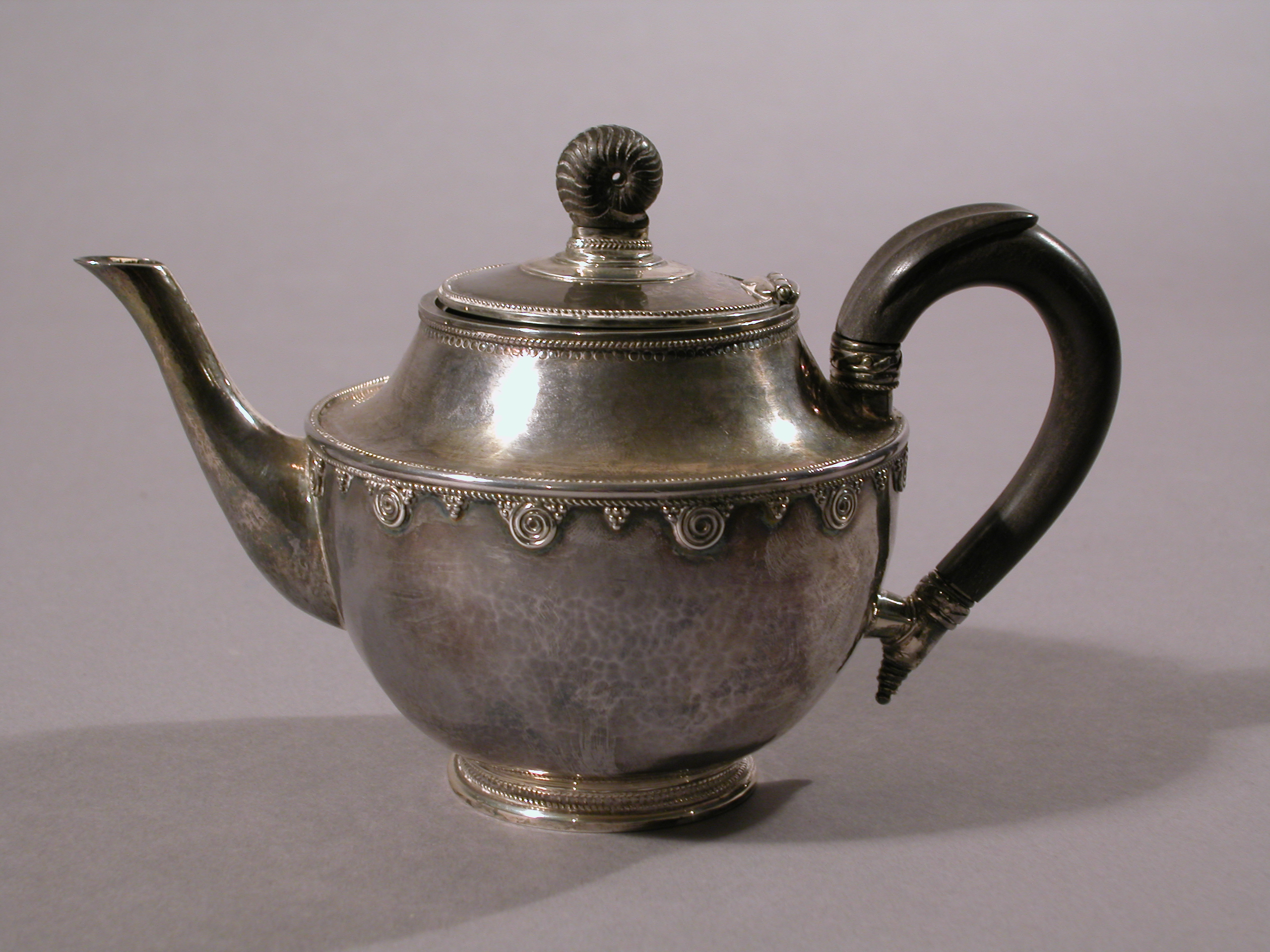
Margaret Elleanor Biggar (1906-1992) was born in Detroit, and became interested in silverwork when she attended spent her senior year in high school at Marietta Johnson’s experimental School of Organic Education in Fairhope, Alabama. After graduation, Biggar returned home to Detroit, where she attended the Detroit Society of Arts and Crafts school. In November 1929, renowned British silversmith Arthur Nevill Kirk (who headed the silver department at Cranbrook), called Biggar and asked if she would like to come and be his student apprentice. She worked for Kirk in the Arts and Crafts Studio until 1931, where she made thirty cents an hour executing and polishing Kirk’s designs.

Silver Teapot, 1929. Designed and executed by Margaret Biggar. Image Courtesy Cranbrook Art Museum (CAM 1933.45).

Silver Teapot, 1929. Designed and executed by Margaret Biggar. Image Courtesy Cranbrook Art Museum (CAM 1933.45).

In 1931, Biggar returned to Fairhope, Alabama in where she taught metals at the Marietta Johnson School of Organic Education and formed a lasting relationship with Elise Hooker (1895-1977), who was head of the school’s craft department. In 1938, the two women left the school to open their own studio where they taught metalcraft classes in silver, copper, and brass. Generous and hard-working, their primary objective was not to make money but rather to teach others the craft they loved. In 1946, they only charged fifty cents for a two-hour lesson!

Biggar and Hooker’s home on Magnolia Avenue, Fairhope, AL. The studio was called “Metalcraft Studio.” Photo courtesy Margaret Elleanor Biggar Scrapbook, Cranbrook Archives.

Biggar and Hooker’s home on Magnolia Avenue, Fairhope, AL. The studio was called “Metalcraft Studio.” Photo courtesy Cranbrook Archives, Margaret Elleanor Biggar Scrapbook.

The studio was successful and works of their students were shown in local exhibitions. People came from around the country to take classes, and the studio became a part of local crafts tours in Fairhope.

Hooker (left) and Biggar at an exhibition in Pensacola, Florida. Photo courtesy Cranbrook Archives, Margaret Elleanor Biggar Scrapbook, U.S. Navy photographer.

Hooker (left) and Biggar at an exhibition in Pensacola, Florida. Photo courtesy Cranbrook Archives, Margaret Elleanor Biggar Scrapbook, U.S. Navy photographer.

Metalwork was not Biggar’s only interest. In 1943, she spearheaded the “War Dog Fund” effort in Fairhope. This was a project organized to enlist the help of dogs on the “home front” to secure funds through the donations of their owners. Dogs could be enrolled as a Sergeant ($1) or Lieutenant ($5) all the way up to General ($100). The funds were then used to help feed and care for the dogs in WWII combat zones.

Leslie S. Edwards, Head Archivist
Happy Holidays!

With the end of December quickly approaching, we’ve received several holiday image requests. While looking through different collections, I came across these amazing holiday cards that were made by Cranbrook Academy of Art students and sent to Margueritte Kimball (1906-1995).

Margueritte visited Cranbrook for the first time in 1941. She was introduced to Wallace Mitchell, head of the Painting Department, who examined a few of her drawings, and eventually accepted her as a student to the Academy.  She began attending classes in the summer of 1942 and, at the same time began her career as the Academy’s financial secretary — a position she held for twenty-six years.

Known by many in the Cranbrook community, Margueritte became close with students and faculty at the Academy and collected correspondence and student materials from art exhibitions throughout the years. Although she never graduated from the Academy, she did receive an honorary degree late in her life. I hope you will enjoy some of the holiday samples from her collection. Happy holidays!

Kathryn Keillor (Painting '46)

Kathryn Keillor (Painting ’46)

John Edgar Barthel (Architecture '50)

John Edgar Barthel (Architecture ’50)

Grace Smith (attended Summer courses, 1951)

Grace Smith (attended Summer courses, 1951)

Edward Novak (Design '58)

Edward Novak (Design ’58)


Gina Tecos, Archivist

Think Snow!

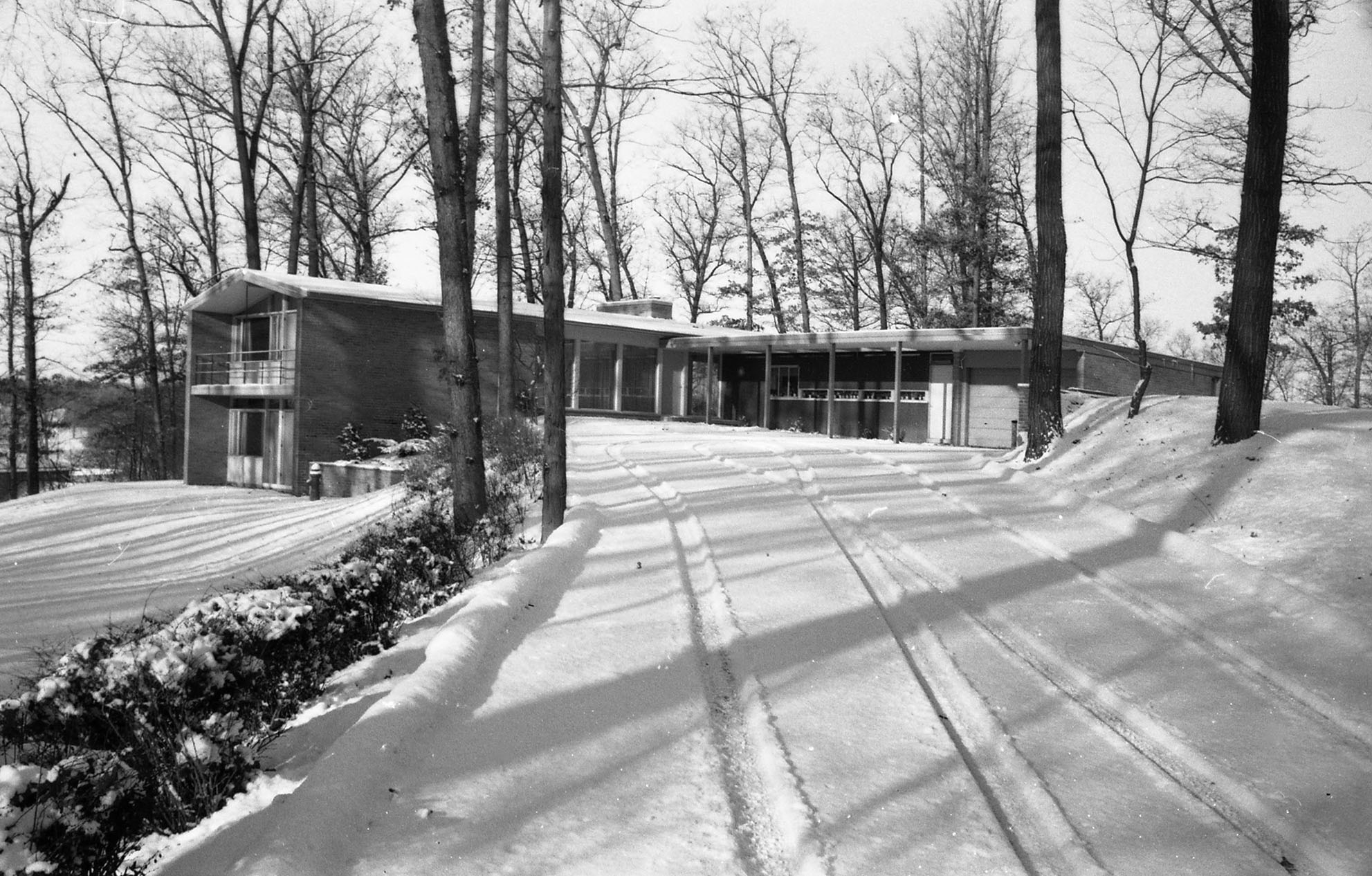
Kingswood School Headmistress residence, 1955.

Kingswood School Headmistress residence, 1955.

Boys from Cranbrook School playing hockey outdoors, 1928.

Boys from Cranbrook School playing hockey outdoors, 1928.

Brookside children ice skating, 1928.

Brookside children ice skating, 1928.

Academy of Art students, Florence Chang and Margueritte Kimball cross-country skiing at Cranbrook, 1944.

Academy of Art students Florence Chang and Margueritte Kimball cross-country skiing at Cranbrook, 1944.

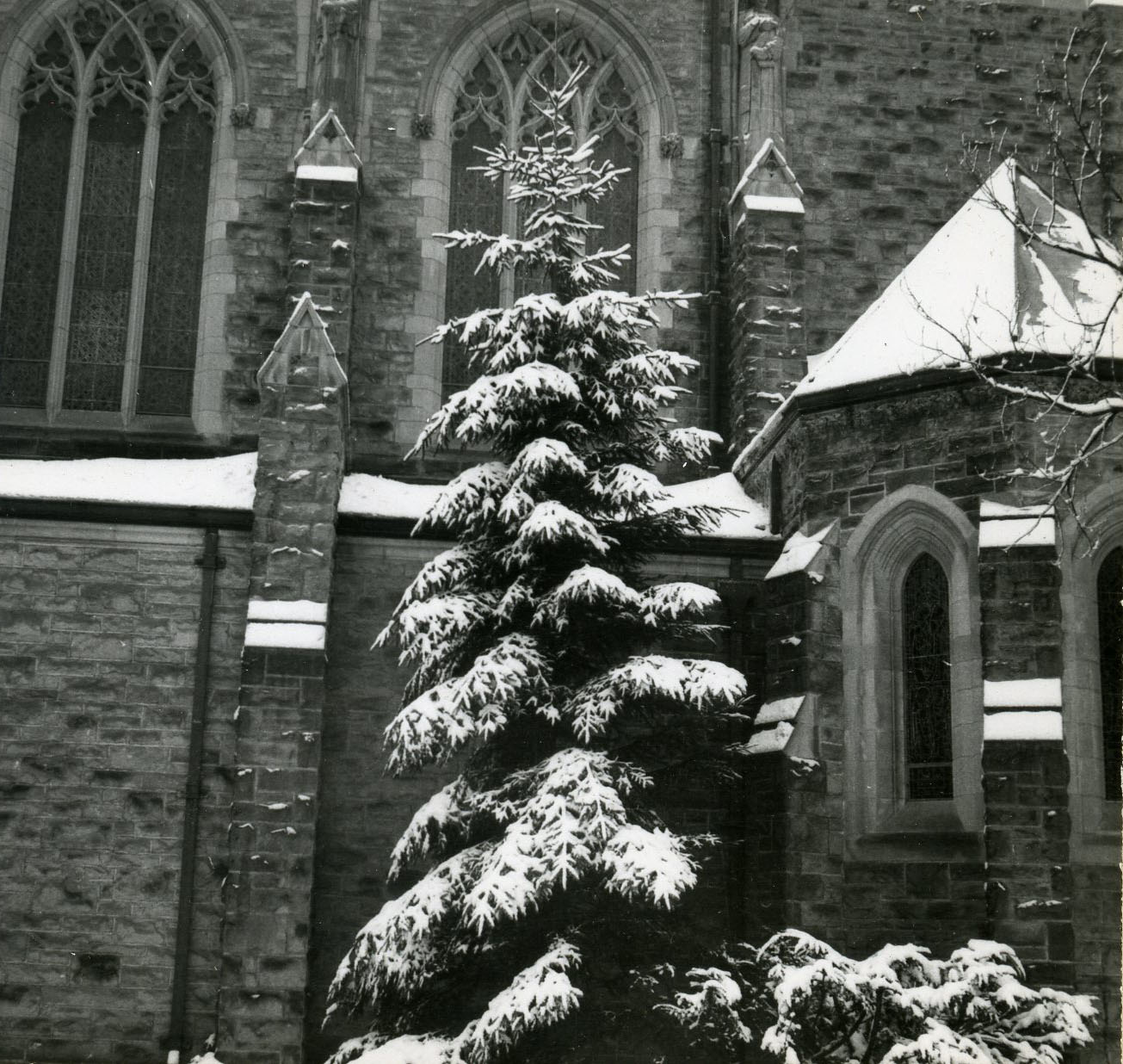
Christ Church Cranbrook, ca 1938.

Christ Church Cranbrook, ca 1938.

Photo Friday: Posters Tell a Story

The Cranbrook Archives exhibition, Designs of the Times: 100 Years of Posters at Cranbrook, opens this weekend. The exhibition documents events and performances that have enhanced and enriched the Cranbrook community for more than a century. The image below is just one of many that will be on display through March 20th, 2016.

yeoman

Performing Arts poster, 1955

This poster, signed “M.W.” was  designed by Michael Justin Wentworth (Cranbrook School ’56). In addition to designing posters, Wentworth was the art editor for both the Brook and the Crane, and designed the sets for the Ergasterion productions and the scenery for the bi-annual Operettas. He received his MA and MFA from University of Michigan, and his PhD from Harvard where he wrote his dissertation on the artist James Tissot, a lifelong interest.

The posters in the exhibition represent all areas of campus – we hope you come check it out!

Gina Tecos, Archivist

To Sit or Not to Sit

Chair design at Cranbrook has always had its own special niche and fascination among artists and patrons alike. George Booth altered chair designs for his own use at Cranbrook House. Eliel Saarinen designed unique chairs for Cranbrook School and Saarinen House. Ralph Rapson conceived of his chair design for what became known as the Rapson Rocker while a student here. Most of us are familiar with the famous chair designers, but what about projects by less famous designers?

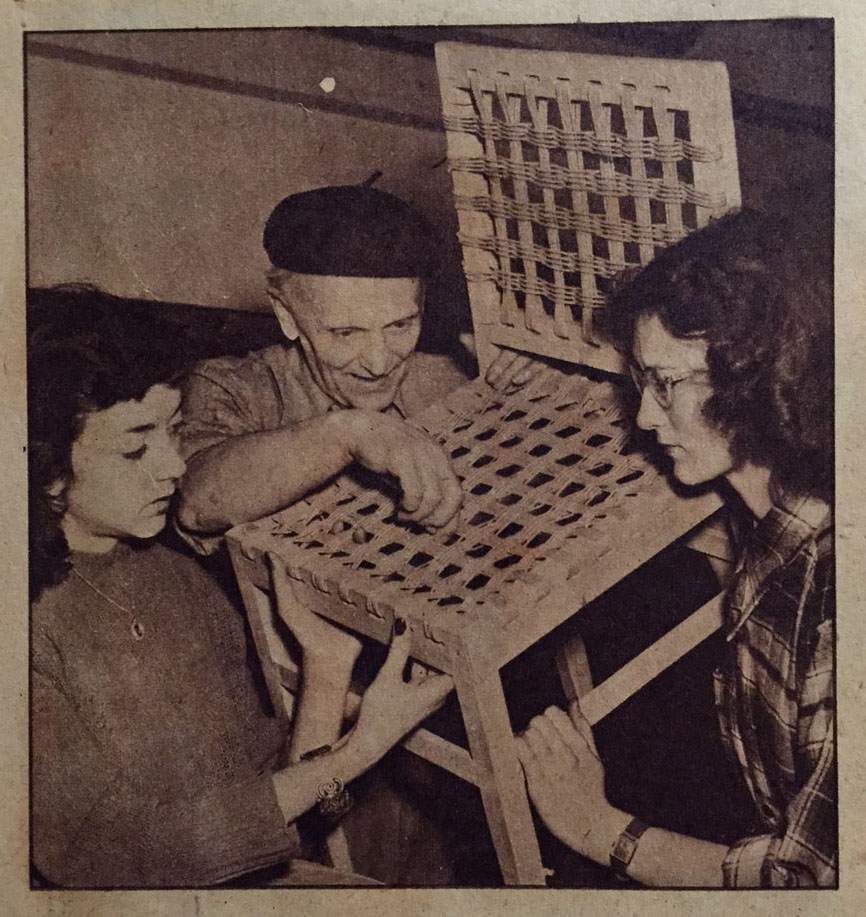
During the war years, Academy of Art students were encouraged to experiment with modern design and new and unusual materials. In 1944, Academy students Gloria Bucerzan and Jean Roberts designed and constructed a chair born of war shortages, by eliminating the use of springs and creating webbing using “non-critical” materials.

Gloria (left) and Jean with woodworking instructor Svend Steen, 1944. Copyright Cranbrook Archives.

Unknown student setting up work for Student Show, 1958. Copyright Cranbrook Archives.

Unknown student setting up work for Student Show, 1958. Copyright Cranbrook Archives.

Art Room, Early Childhood Center at Brookside School, 1997. Chairs designed by Dan Hoffman, Cranbrook Architecture Office. Photograph copyright Christina Capetillo.

Art Room, Early Childhood Center at Brookside School, 1997. Chairs designed by Dan Hoffman, Cranbrook Architecture Office. Photograph copyright Christina Capetillo.

For more on chair design in general, check out the 2012 Year of No-Chair-Design and the Guide to Great Chair Design which features links to chair blogs, the history of chair design, museums, galleries, and books that all feature what else? Chairs!

Leslie S. Edwards, Head Archivist

Logical Design: Using Primary Sources

As summer camps are winding down, we wanted to share how campers used the collections in the Archives this week. Earlier in the week, my daughter, who is attending Cranbrook Art Museum’s camp session “Problem Solving by Design,” told me of the industrial design concepts they were learning. I immediately thought of the collection of Design Logic, Inc. Records that we have in the Archives, which contain beautiful color transparencies of 3D projects designed in the 1980s by David Gresham and Martin Thayer. (See Cheri Gay’s post.)

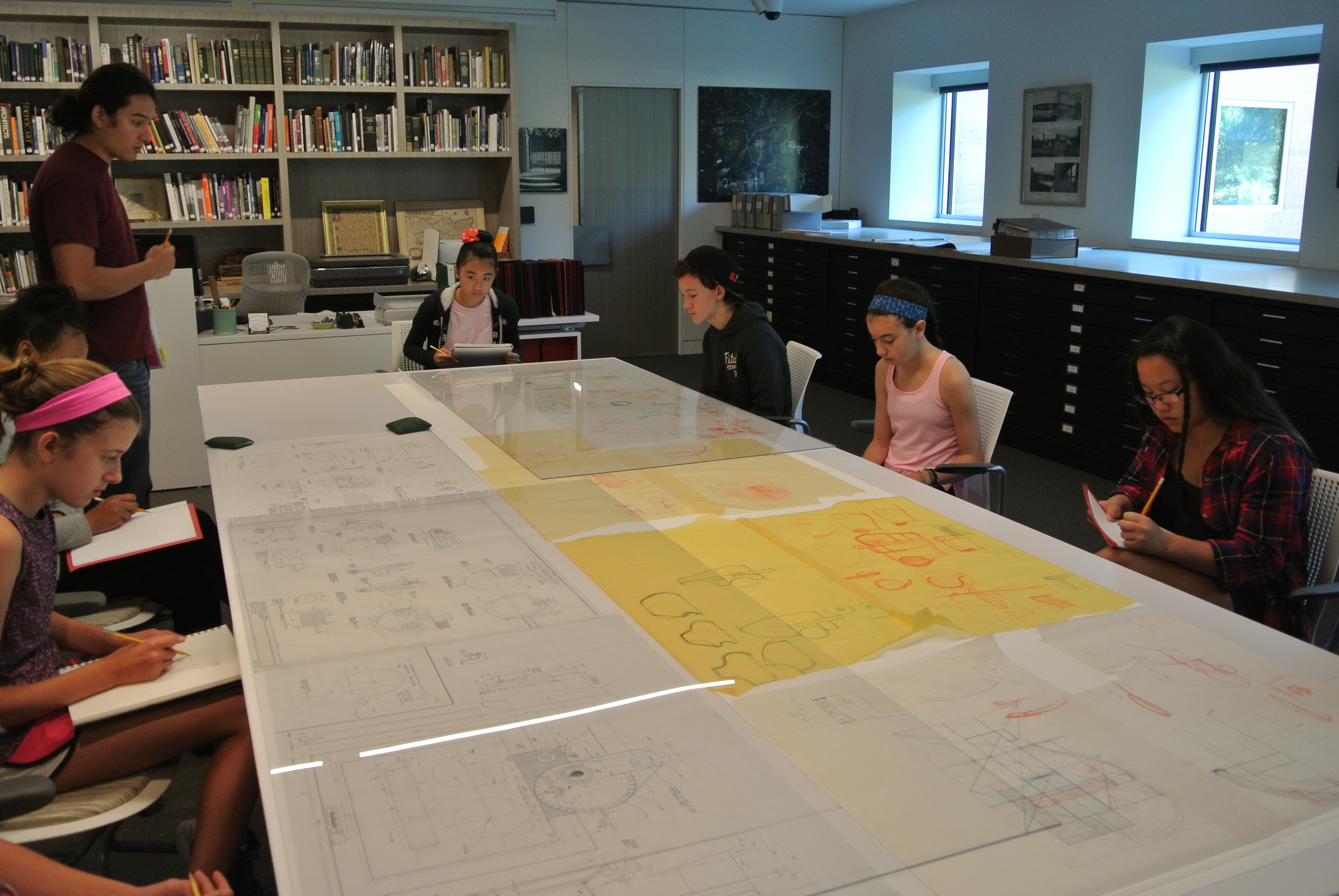
Studying the design drawings for the View Master and the Projector, Aug 2015.

Studying the design drawings for the View Master and the Projector, Aug 2015.

The next morning, I spoke with Kanoa, the camp instructor and a 2015 grad of the Academy of Art, and he agreed the photos would be great to show the kids. We coupled them with a copy of the exhibition catalog Cranbrook Design: The New Discourse, which featured several prototypes by Design Logic, as well as by other designers, many of whom studied under Kathy and Michael McCoy here at Cranbrook in the 1980s. The following day, I took the kids to the Art Museum vault to actually look at some of the objects. Kanoa had them do several sketches from different angles, all the while talking about various design concepts. Then the following day of course I had to show them some of Gresham and Thayer’s own design drawings which are also a part of the collection in the Archives. The kids were able to view conceptual sketches through finished drawings that were then sent to the manufacturer.

Sketching objects in the Cranbrook Art Museum vault, Aug 2015.

Sketching objects in the Cranbrook Art Museum vault, Aug 2015.

All in all, I hope it was a great experience for the kids. It certainly was fun for me to be able to enrich their camp experience with primary source materials from Cranbrook Archives.

Leslie S. Edwards, Head Archivist
Create a website or blog at WordPress.com