July 5th, 2025, marks one hundred years since the groundbreaking for Christ Church Cranbrook. As we mark this milestone in Cranbrook’s history, I believe it is important to reflect on George Gough Booth’s long discernment of this generous gift to the community.
From the beginning, there were always places of worship at Cranbrook. The story that leads us through these spaces to the establishment of Christ Church Cranbrook is especially meaningful to me.
Rev. Dr. S. S. Marquis, D.D. with the first spade of earth, July 5, 1925. Courtesy of Cranbrook Archives, Cranbrook Center for Collections and Research.
After George and Ellen Booth purchased ‘The Farm’ in January 1904, his father, Henry Wood Booth, was the first family member to live on the country estate. The elder Booth stayed for the month of May with Frank Brose, the farmer, and his family. On May 15, 1904, the first worship service at Cranbrook took place under a tent, on the site upon which the Altar of Atonement now sits, with Henry as lay preacher. He continued in this ministry, also offering Sunday School, at the same spot until 1909. This was the first act of service offered to the Bloomfield Hills community at Cranbrook.
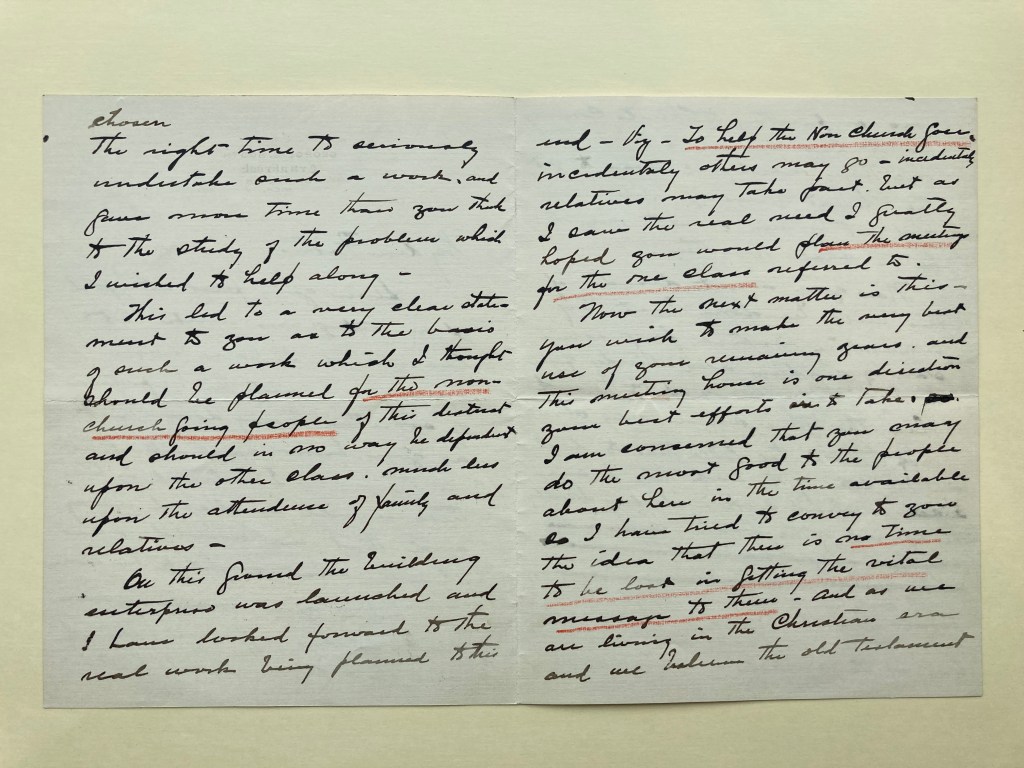
Letter from George Gough Booth to Henry Wood Booth, August 24, 1918. Courtesy of Cranbrook Archives, Cranbrook Center for Collections and Research.
In 1914, George and Ellen considered building a chapel at the site on which the Kingswood flagpole now sits, but the project was rejected, most likely due to the outbreak of World War I. As the war ended, a permanent place of worship and Sunday School was established with the building of the Meeting House.
The letter, above, preserves the dignity with which George writes of the Meeting House “building enterprise” to honor and give freedom to his father’s calling to share the Christ message with the non-church goers in the district. From this letter, we can learn and understand why George built the Meeting House for worship and Bible study through his father’s ministry.
Decoration of the Meeting House by Katherine McEwen, 1918. Laura MacNewman, photographer.
In the letter from George to his father, we also learn that he is prudent in observing the religious character of Bloomfield residents. During the years in which the Meeting House was used for religious services (1918-1926), Mr. Booth would reflect on the visiting clergy and service attendees (both of which came from diverse denominations), from which he would eventually discern the denomination of “Cranbrook church.”
I recently found myself at Joann Fabrics five minutes before the store closed, desperately selecting supplies for a project that was, of course, best completed that night. My delay was self-inflicted, but it got me thinking about times when much larger projects have been strained by access to supplies.
Specifically, both Eliel Saarinen and Frank Lloyd Wright created buildings with strong creative vision. Their architecture demanded specific, and sometimes hard to source, materials. Let’s look at two examples and decide if the headaches my favorite architects caused their suppliers and contractors/builders were worth the final product!
Example 1: Eliel Saarinen and Pewabic Pottery Tiles
Eliel Saarinen, Kingswood School for Girls Main Entrance Lobby (Green Lobby) plan, section, elevation, and reflected ceiling plan, c. 1930-1931. Ink, colored pencil, and pencil on tracing paper. Approx. 28½ inches x53 inches. Cranbrook Art Museum 1982.35. Photography by P.D. Rearick, Courtesy Cranbrook Center for Collections and Research.
When Eliel Saarinen specified thousands of hand-molded, hand-glazed, and hand-fired Pewabic Pottery tiles for use at Kingswood School for Girls, his contractor pushed back. Pewabic was less a tile factory than an artists’ workshop. As supplier of Kingswood’s industrially produced tile for bathrooms and basements, a concerned Mr. Burt of the Detroit Mantel and Tile Company wrote to the contractor, Charles Wermuth & Son:
We are doubtful as to [Pewabic Pottery] being able to manufacture the amount of tile as selected for this job. We raised this question during the course of selections but [Pewabic cofounder and artist] Mrs. Stratton advises that she will be able to produce this tile without any hold-up. We have advised her that any hold-up or delays caused from her material will be charged back to her.
We are writing you this letter merely as a protection against delays beyond our control.
Saarinen wasn’t wrong to select Pewabic Pottery for Kingswood—it’s stunning and perfect in every way—but Burt wasn’t wrong about issues of production. It does appear that delays in the tile making caused delays in construction, raising blood pressure on both ends of Woodward Avenue.
As the first day of classes at Kingswood drew nearer, truck drivers from Cranbrook made near-daily trips to the pottery for small batches of tiles. I imagine the kiln-fresh mini-masterpieces still warm to the touch!
Did the delay in tile delivery keep Kingswood from opening on time? No. An outbreak of polio in metro Detroit meant all schools were closed by state health officials. But Wermuth used the extra time to finish the building—all Pewabic tiles were well-set and grouted for classes to begin September 21, 1931.
Eliel Saarinen and Mary Chase Perry Stratton’s 1931 masterpiece, the Green Lobby Stair. The headache of contractor Charles Wermuth and Son was worth the stress. Photography by James Haefner, 2018. Courtesy Cranbrook Center for Collections and Research.
Example 2: Frank Lloyd Wright and “The Wood Eternal”
In February 1949, Melvyn Maxwell Smith was ready to start building his long-awaited dream: a wood and brick Usonian house designed by Frank Lloyd Wright. With enough money squirreled away to begin construction, Smithy was ready to order materials. Including 14,000 linear feet of clear, old-growth, 16’ x 1’ x 2” boards of Tidewater Red Cypress wood.
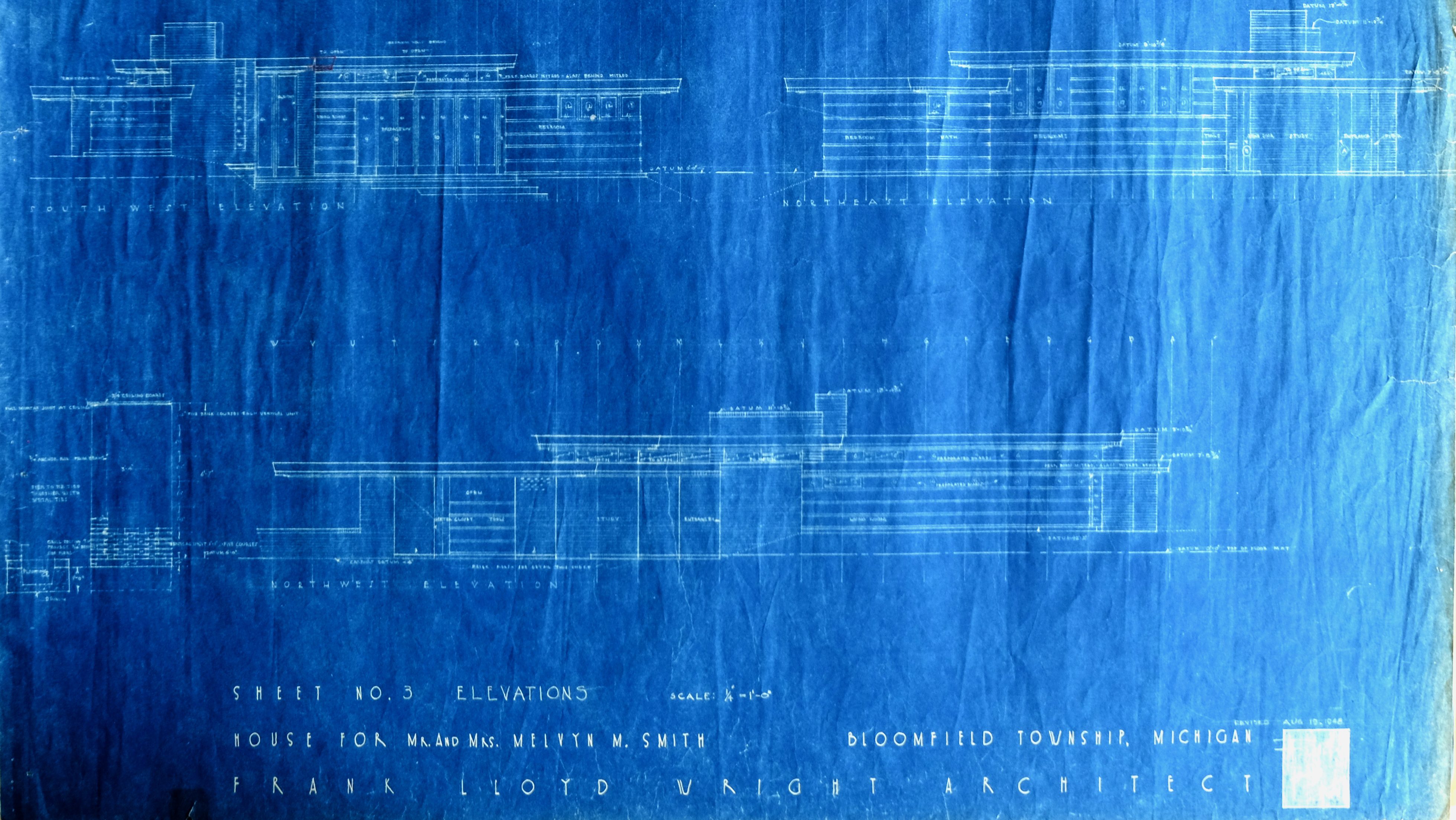
Frank Lloyd Wright, detail of House for Mr. and Mrs. Melvyn M. Smith elevation, August 1948. Blueprint. Courtesy Cranbrook Archives.
Wright had built in Cypress since at least 1914, with his first all-Cypress design, the Wiley House, coming off the drafting board in 1932. The iconic Usonian houses of the 30s and 40s are mostly built of this swamp-grown, super strong, rot-resistant golden wood.
Cypress proved to be perfect for Wright’s organic architecture. And by 1949, Cypress was incredibly hard to find.
Smithy wrote to many different lumberyards with his needed material list. Those closest to the swamps where Cypress grows—lumberyards in South Carolina and Louisiana—were unable to furnish the volume of wood needed. Lumber yards in the Midwest simply stated they did not carry Cypress. Chicago-based Hilgard Lumber Company wrote, “We duly received your inquiry…on a carload of Tidewater Red Cypress (clear grade) but clear grade in this species is extremely scarce.”
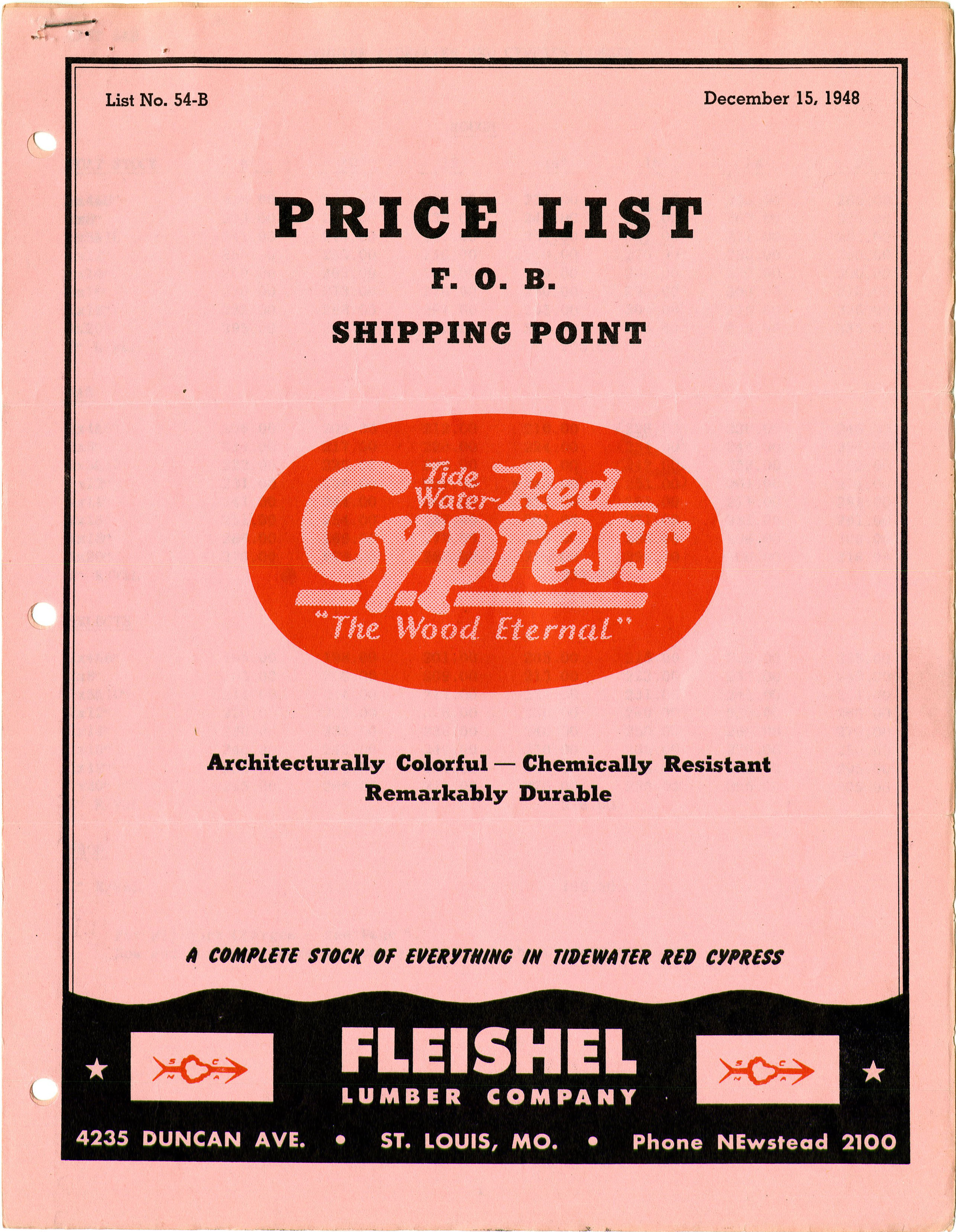
In February 1949, Fleishel Lumber Company of St. Louis (who had been forwarded Smithy’s large request) agreed to fulfill the order. Smithy simply needed to let the yard know when he wanted the wood delivered. Or at least, that was the idea.
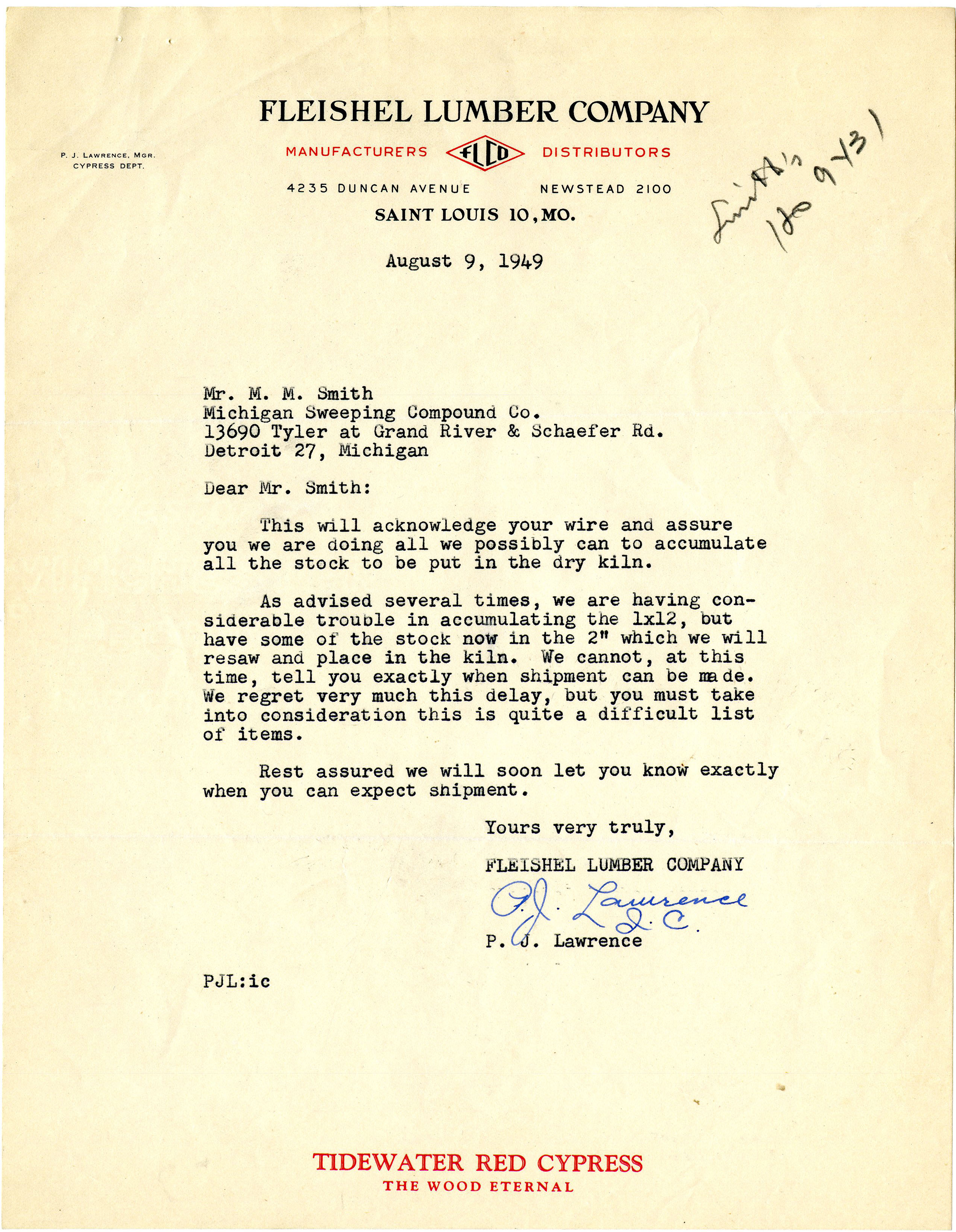
The initial price list for “Tidewater Red Cypress ‘The Wood Eternal'” from Fleishel Lumber Company, sent to Melvyn Maxwell Smith on February 21, 1949, followed by an August disappointment, and then, the packing list of the Cypress shipment sent on September 23, 1949. Cranbrook Archives. Smith Papers, 2017-10, Box 11, Folder 11.
Every month, Smith wrote, called, or telegrammed Fleishel, asking for his order. And every month, the lumber yard replied: we don’t have it all, but we have some. As time ticked by and Smithy’s house waited to take shape, Fleishel offered up concessions. Instead of kiln dried, would Smithy accept natural dried Cypress? No. Recycled or swamp-preserved? No. Smaller boards, but more boards? No.
Smithy needed what Wright specified: long, wide boards. By August 9, 1949, things were looking up, even if Fleishel’s salesman sounds a bit annoyed:
…We are doing all we possibly can to accumulate all the stock to be put in the dry kiln.
As advised several times, we are having considerable trouble in accumulating the 1×12…We cannot, at this time, tell you exactly when shipment can be made. We regret very much this delay, but you must take into consideration this is quite a difficult list of items.
Smithy’s goal of having the lumber on hand during the Summer holiday, when he could be on-site every day, did not happen. His first day teaching his Cody High English class that year? September 5.
Finally, on September 23, 1949, Fleishel Lumber packed a railroad car full of 14,000 linear feet of clear, kiln-dried Cypress and sent it toward Bloomfield Hills. Just seven months and a few days after it was ordered.
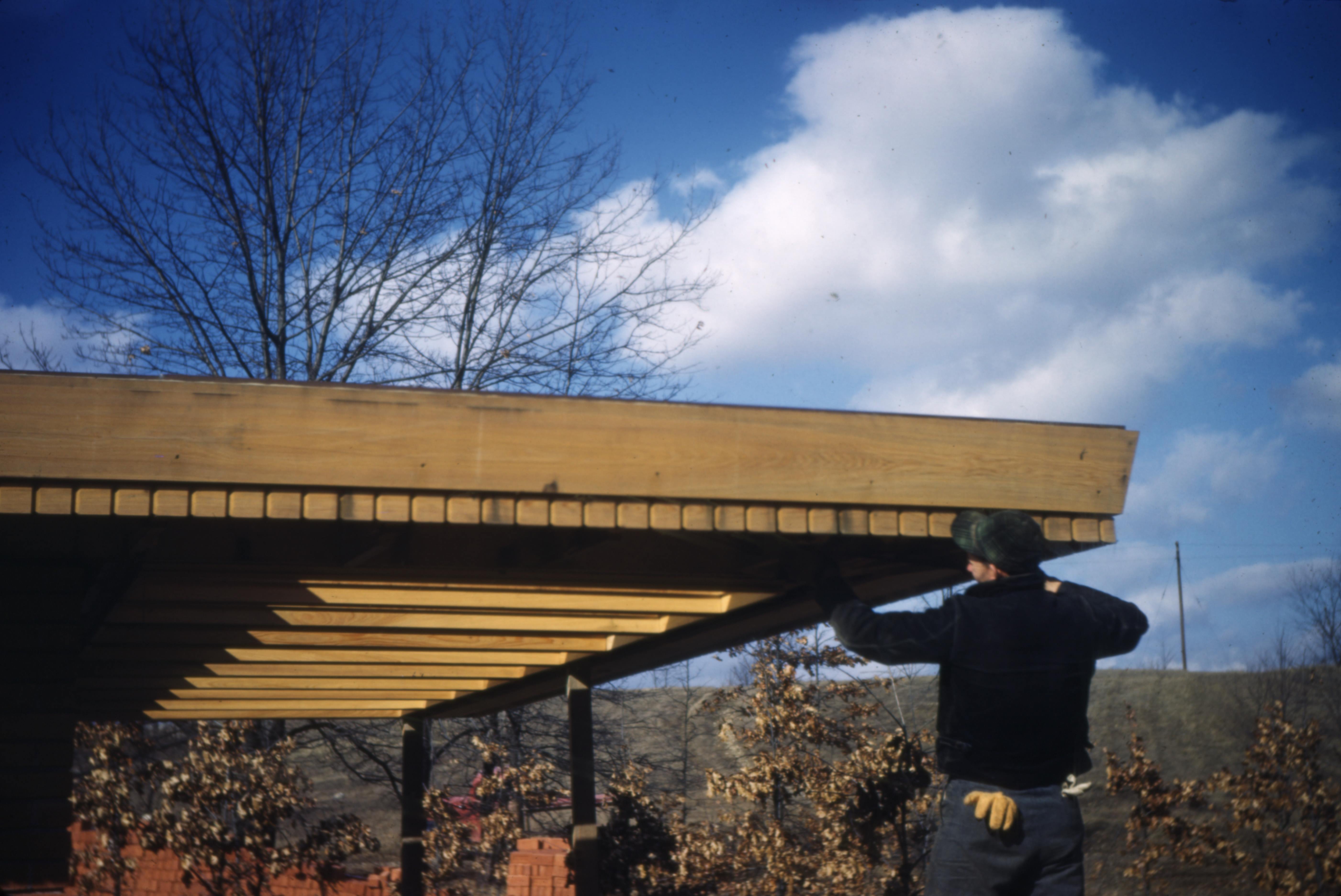
Work continues on Cypress boards of Smith House, winter 1949-1950. Courtesy Cranbrook Archives.
About seven months later, Melvyn and Sara Smith had a Cypress house! When it was completed in May 1950, the Smith House became Frank Lloyd Wright’s last entirely Cypress-built project.
Tidewater Red Cypress with Detroit Common Brick defines the Frank Lloyd Wright-designed Smith House, 1950. Courtesy Cranbrook Archives.
So, did being particular about materials pay off for Mr. Wright and Mr. Saarinen? I think the Smiths and thousands of Cranbrook students would agree: absolutely.
—Kevin Adkisson, Curator, Cranbrook Center for Collections and Research
Note: Oh, and if you want old-growth Cypress today? The current owner of the Frank Lloyd Wright Willey House, Steve Sikora, described the purchasing of Cypress wood in the 2010s as operating among “an assortment of hucksters, charlatans, and petty criminals, or in industry parlance, ‘wood brokers.’” Head on over to The Whirling Arrowblog to read a lot more about Cypress and Wright!
Some years ago, former Cranbrook Archivist, Robbie Terman, posted a short blog post on one of the Titanic’s sister ships, RMS Olympic. In recent years, Cranbrook Archives has responded to numerous requests for images of the Olympic which are preserved in the first volume of Harry Scripps Booth’s Pleasures of Life albums.
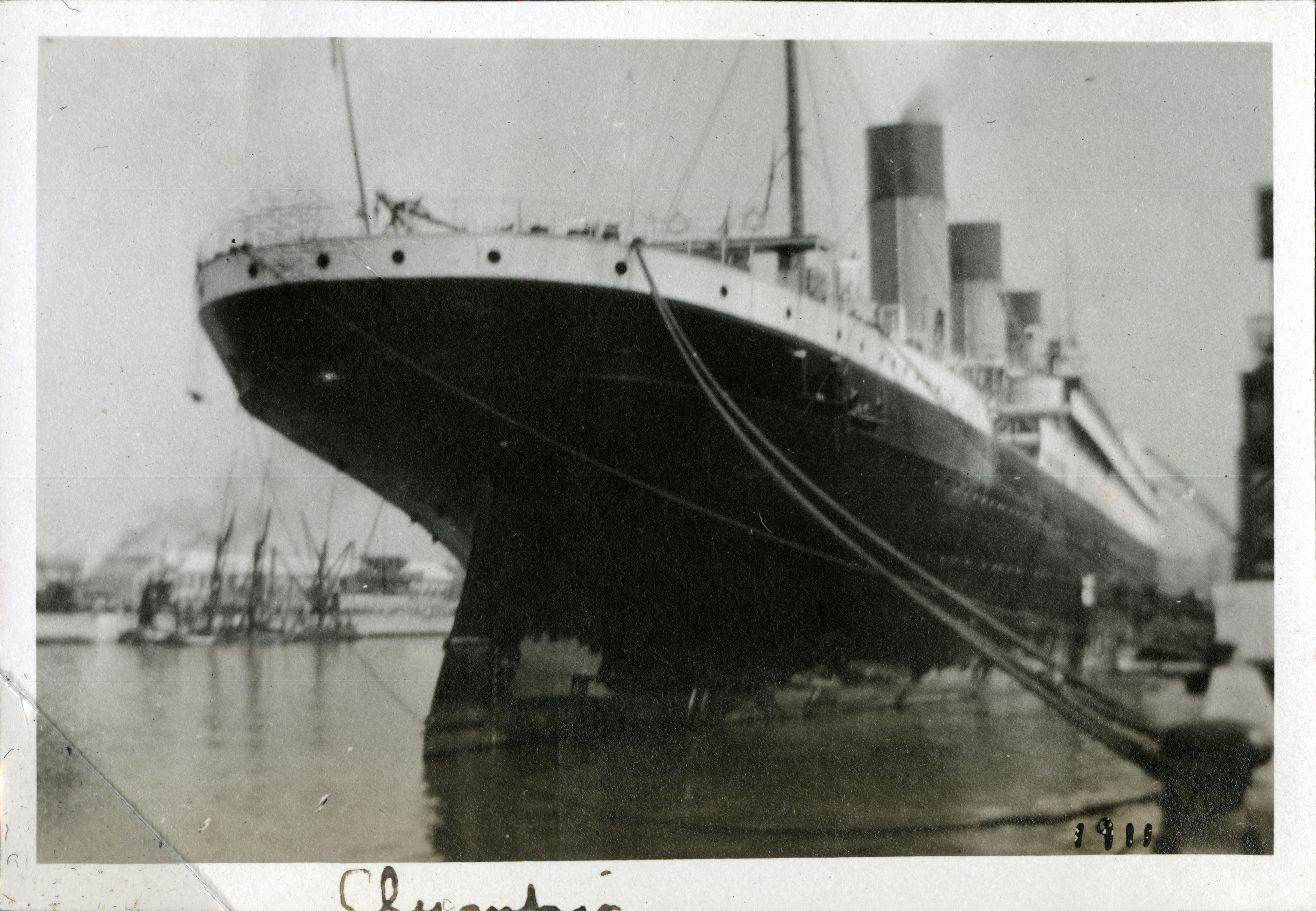
View of RMS Olympic before its first eastward crossing, June 28, 1911. [POL1.14.5]. Courtesy of Cranbrook Archives, Cranbrook Center for Collections and Research.
On June 28, 1911, the Booth family took the first eastward crossing of RMS Olympic from New York to Southampton, England. The family at that time was George and Ellen Booth; James Scripps and Jean McLaughlin Booth who had married the previous year; Grace, Warren, Henry, and Florence. They were joined by their Grand Rapids cousin, Esther Booth.
As I come from a maritime nation, these requests are particularly intriguing to me. I have wondered what other archives we have at Cranbrook to tell the story of transatlantic crossing and explain some of the images. George Gough Booth kept a record of the expenses in planning for the trip. These records tell us that he booked the steamship tickets with the Christian Leidich Travel Bureau in Detroit and he purchased Motor Union badges for himself and James.
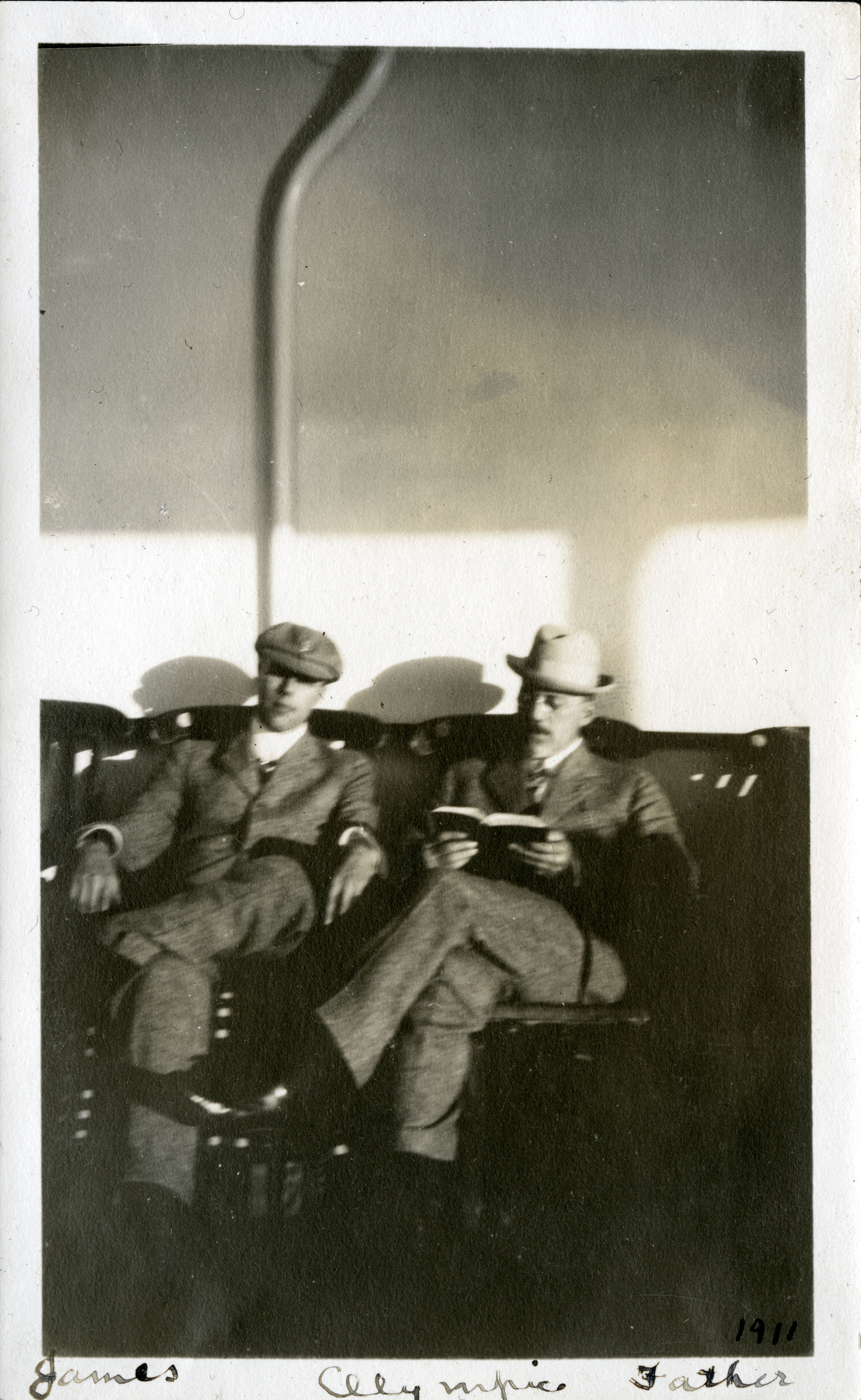
James Scripps Booth and George Gough Booth on the RMS Olympic, July 1911.[POL1.10.2] Courtesy of Cranbrook Archives, Cranbrook Center for Collections and Research.
As Henry recalls in his memoir after listing the family members who sailed,
“That wasn’t enough. Parks, the chauffeur, went; also The Pierce-Arrow, a 7-passenger touring car, and a Lozier Briarcliff, which accommodated four plus one in an airy seat on the left running board, designed for the chauffeur when the “master” took the wheel. That seat was a thrill for the young at heart.”
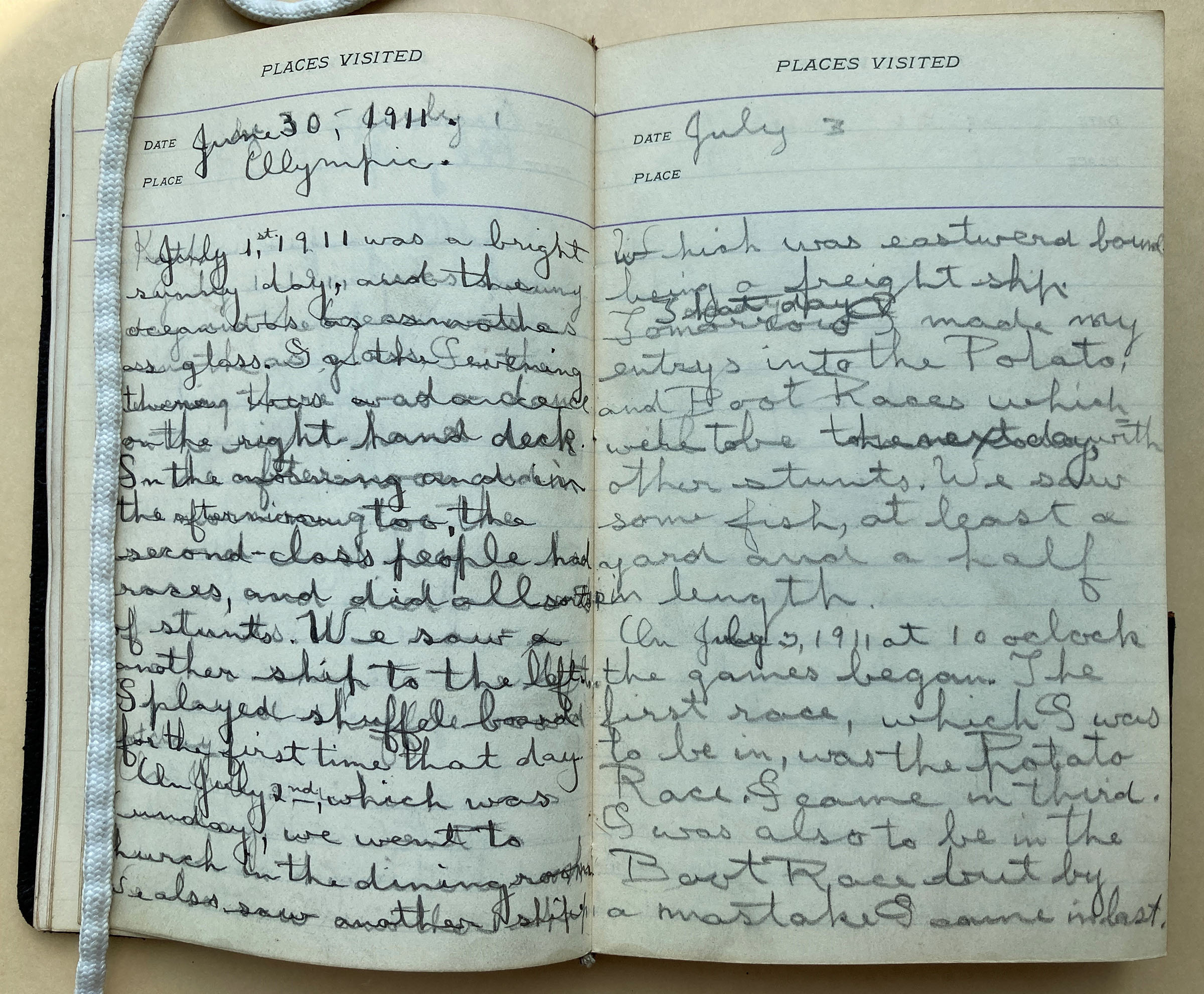
Then I came upon something quite wonderful—Henry’s journal of the sea crossing! He began the trip when he was just 14 years old, celebrating his 15th birthday in August during the vacation. As I read the entries, the images in the Pleasures of Life came alive. Here follows some moments from the journey in Henry’s words.
“Stayed at the Plaza. Esther’s trunk was lost. We found it later. On June 28, we went abord [sic] the great ship, “Olympic.” Henry Scripps Booth, June 27, 1911
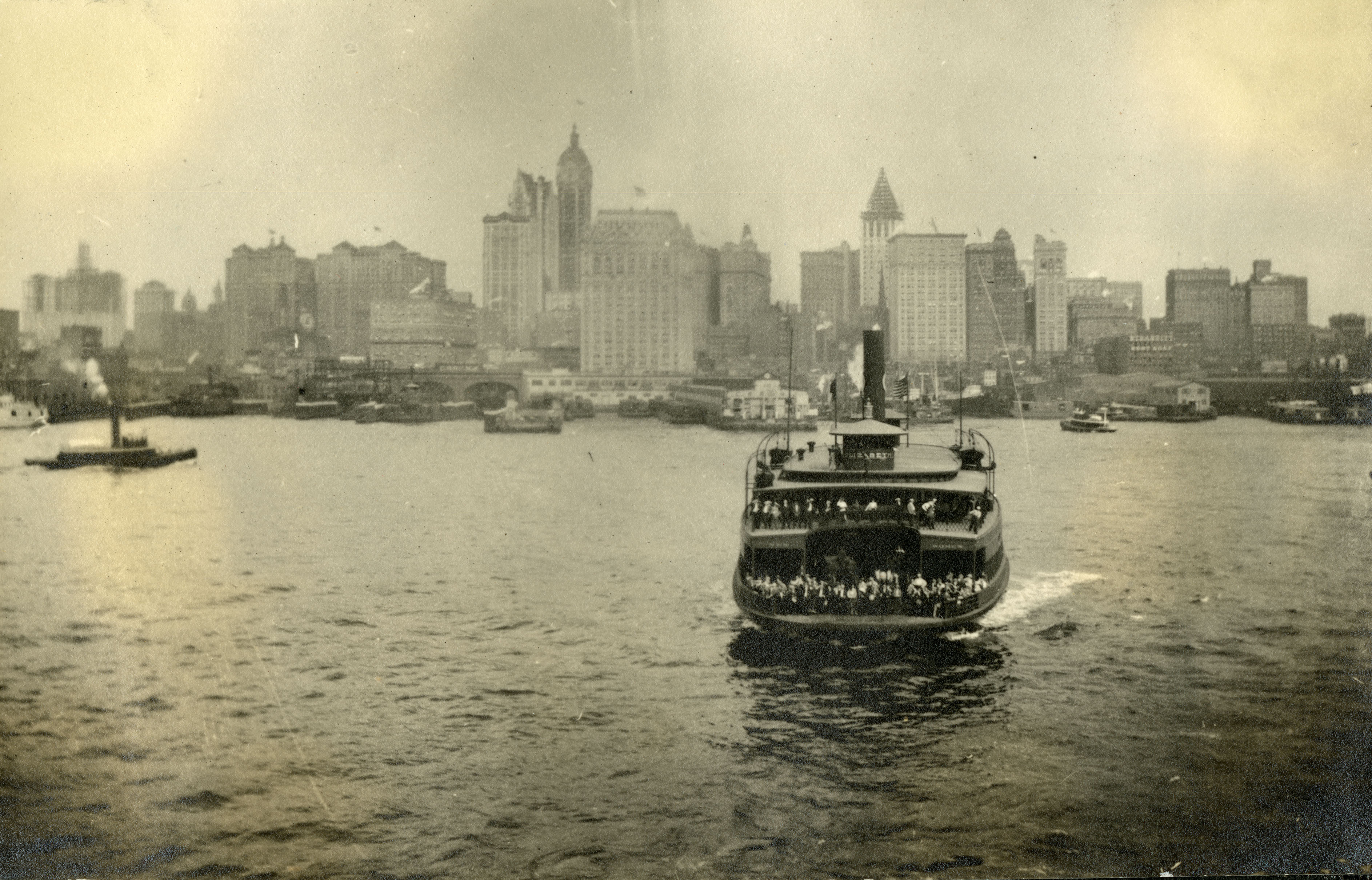
Leaving New York, June 28, 1911. Courtesy of Cranbrook Archives, Cranbrook Center for Collections and Research.
“On June 28, we went abord [sic] the great ship, “Olympic”. The Olympic is a fine ship. Florence was sick first night and day. It was somewhat rough on June 29th. I met a new friend but did not remember his name. In the morning, I could hardly stand, because of the new sensation. I was somewhat sick, but ate lots and I felt fine.” Henry Scripps Booth, June 28, 1911
“On June 30th the Campania was in view. I got acquainted with two girls, Constance Peabody and Katherine somebody.” Henry Scripps Booth, June 30th, 1911
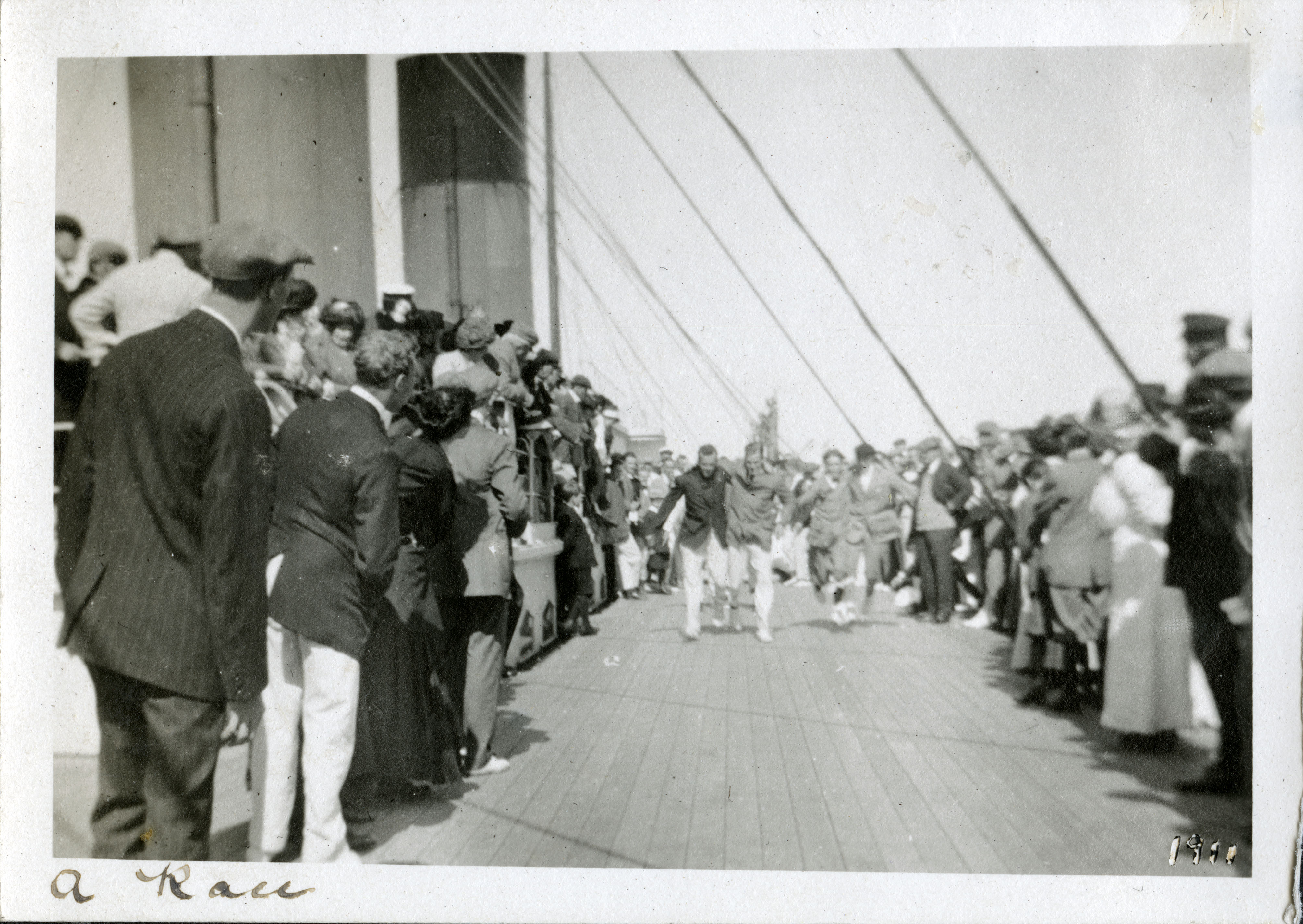
A race aboard the RMS Olympic on its first eastward crossing from New York to Southampton, July 1911. [POL1.11.4]. Courtesy of Cranbrook Archives, Cranbrook Center for Collections and Research.
“July 1st, 1911, was a bright sunny day, and the ocean was as smooth as glass. In the evening, there was a dance on the right hand deck. In the morning and in the afternoon too, the second-class people had races, and did all sorts of stunts. We saw another ship to the left. I played shuffleboard for the first time that day. On July 2nd, which was Sunday, we went to church in the dining room. We also saw another ship [July 3] which was eastwerd [sic] bound being a freight ship.” Henry Scripps Booth, July 1, 1911
A race aboard the RMS Olympic on its first eastward crossing from New York to Southampton, July 1911. [POL1.12.5]. Courtesy of Cranbrook Archives, Cranbrook Center for Collections and Research.
“Tomorrow That day, I made my entrys [sic] into the Potato and Boot Races which were to be the next day with other stunts. We saw some fish, at least a yard and a half in length.
On July 3, 1911, at 10 o’clock the games began. The first race, which I was to be in, was the Potato Race. I came in third. I was also to be in the Boot Race but by a mistake, I came in last.
After other races came the Standing Broad Jump in which James sliped [sic].” Henry Scripps Booth, July 3, 1911
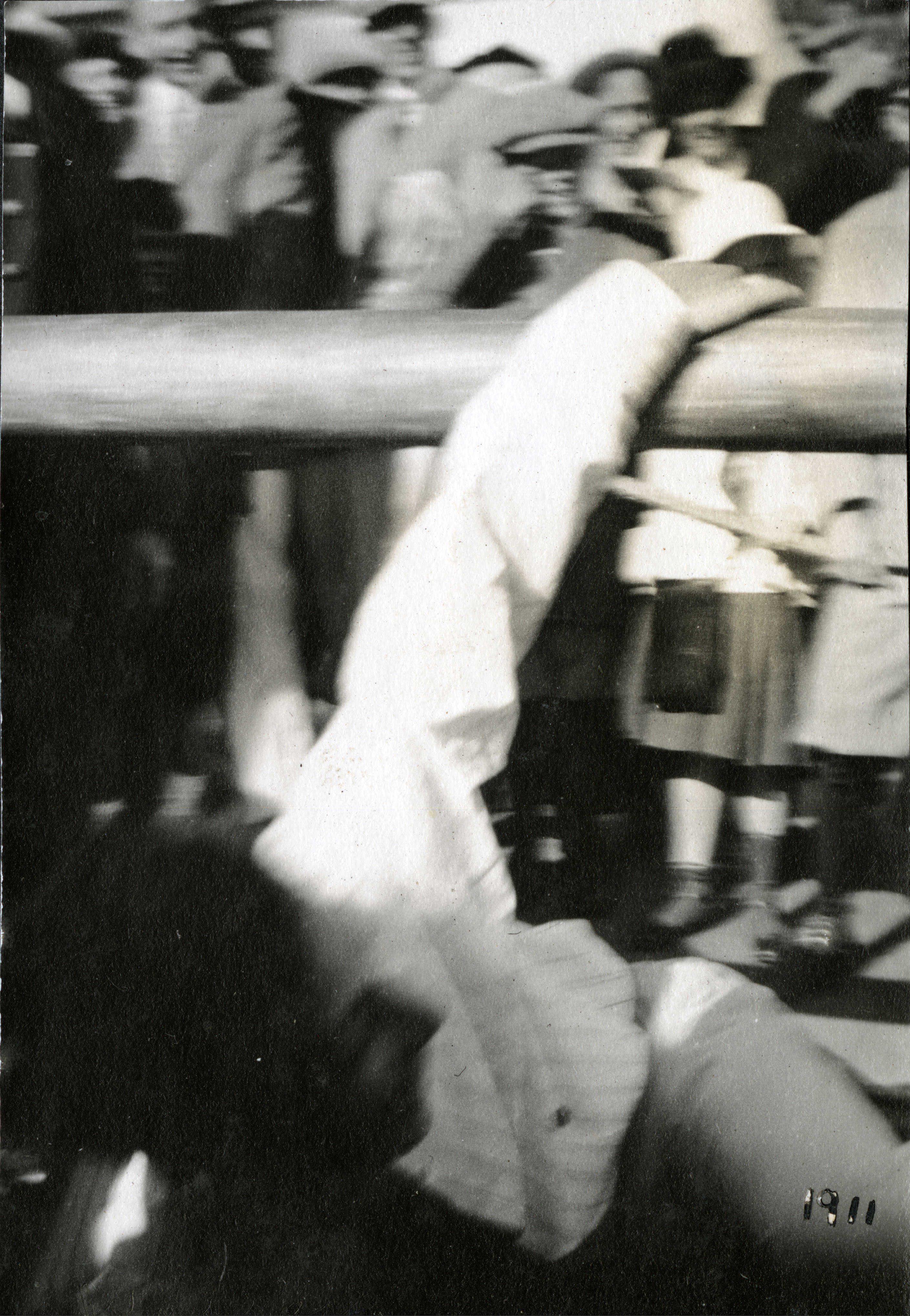
Warren Scripps Booth during a Spar Pillow Fight aboard the Steamship RMS Olympic, July 1911. [POL1.12.4]. Courtesy of Cranbrook Archives, Cranbrook Center for Collections and Research.
“James and Warren were both in the Spar Pillow Fight. In Warren’s case both fell off the bar at first but Warren was nocked [sic] off a second time. Warren did not win. James stayed on a number of times but was forced to give up. After dinner in the Reception Room the prizes were awarded. Also a dance on deck was given.” Henry Scripps Booth, July 3, 1911
Disembarking the RMS Olympic, July 5, 1911. [POL1.14.1]. Courtesy of Cranbrook Archives, Cranbrook Center for Collections and Research.
“Breakfast was served in the usual manner. After breakfast in the hall on the Sun Deck the band played the national cirs. Every body stood up. In the afternoon, at 4 o’clock we entered Plymouth Harbor. The mailtender got the mail and other boats got passengers off to land. We then started across the channel.” Henry Scripps Booth, July 4, 1911
“After getting off the steamer and having the officers make sure that we had no cigars or liquors with us, we took a cab to the hotel.” Henry Scripps Booth, July 5, 1911
Unloading the cars in France, August 1911. Courtesy of Cranbrook Archives, Cranbrook Center for Collections and Research.
As always, it is a great delight to share with scholars, colleagues, and those who are simply curious, these stories from the Archives. What is preserved in Cranbrook Archives help us to understand and enjoy not just Cranbrook, but any number of historic events from new perspectives.
There are more stories to tell about the family’s sojourn through England and France in 1911, which are both heartwarming and educational. But those tales must wait for another blog post–or for you to schedule a visit and come into the Archives Reading Room!
— Laura MacNewman, Associate Archivist, Cranbrook Archives, Cranbrook Center for Collections and Research
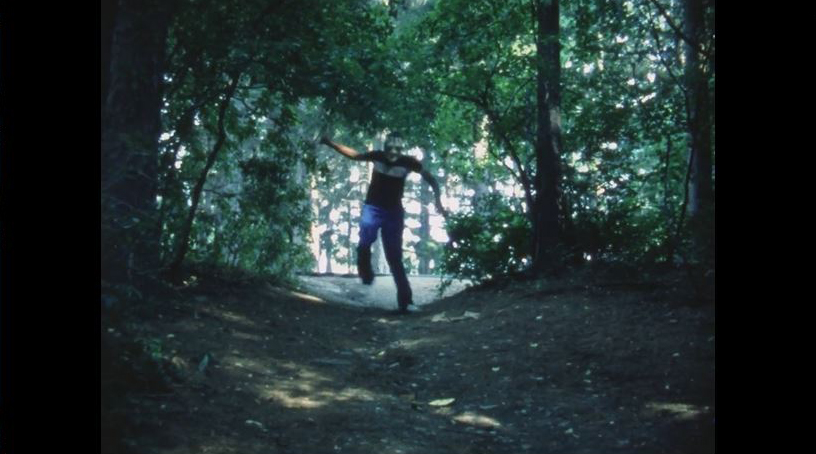
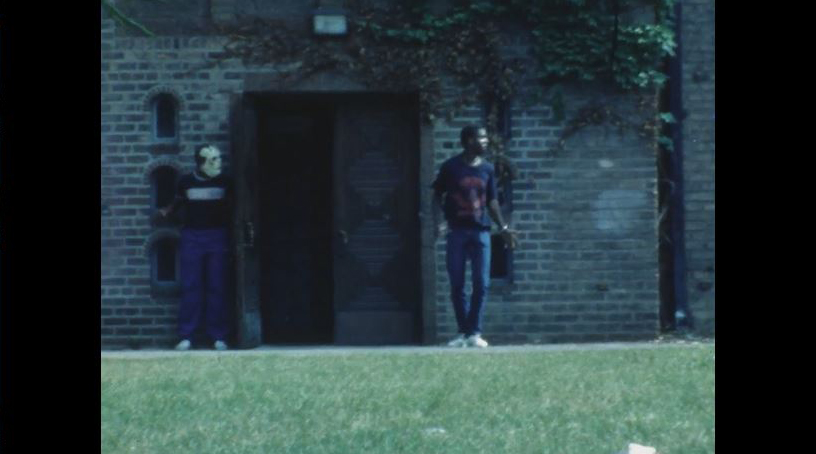
Films titles like Farewell My Summer Love, The Nightmare, and Dormitory of the Dead were recently rediscovered while working on the Horizons-Upward Bound (HUB) digitization project. The 8mm film reels were unmarked, but cross-referencing with film festival entry packets and faculty reports in the HUB Records, along with viewing the first few frames of each reel, revealed their origin.
Produced in 1984 by HUB summer students in John Prusak’s class, these films had been submitted to The Michigan Student Film and Video Festival, held at Friends Auditorium, Detroit, MI in 1985.
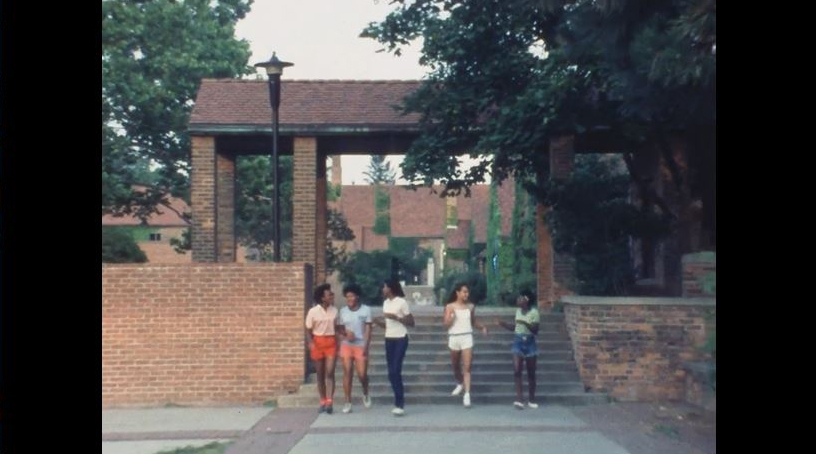
Opening scene from The Nightmare, 1984. Courtesy of Cranbrook Archives.
Top section of film evaluation sheet for the Michigan Student Film and Video Festival, 1985. Courtesy of Cranbrook Archives.
Digitizing film for today
When applying for the grant that is allowing digitization of the HUB Records only one student film, The Great Dictator, from William H. Moran’s 1969 summer class, had been labeled and identified. So it was indeed a nice surprise to find that there were more! Along with the 1969 film and a fifth film, Together, produced in John Geoghegan’s Advanced Film Class 1972 summer class, the 1984 films were sent to a lab for digitization.
Title Title screen and scenes from Dormitory of the Dead, 1984. Courtesy of Cranbrook Archives.
Scene from Farewell My Summer Love, 1984. Courtesy of Cranbrook Archives.
Viewing the digitized films helped further identify the students involved and corroborate the information listed on the entry forms. With this information in hand, we have eagerly begun sharing this newly accessible resource with the HUB community.
Head archivist, Deborah Rice, screens two films during Cranbrook Schools Reunion Weekend June 2024. Courtesy of Cranbrook Archives.
Future Discoveries
The summer film elective class was offered sporadically throughout HUB’s history beginning in 1969. It is yet unknown how many films have been produced over the years. Other titles listed in the 1985 festival entries alone include six films: Money, Spectrum, Street People, That’s Life Kid (It’s Gonna Be Lonely II), The Mix, and Class of 86 – Memories. Together, the films are invaluable documentation of the student perspective.
Please reach out to archives@cranbrook.edu with any information about the films mentioned above or other HUB student films. We’d love to know more!
—Courtney Richardson, Project Archivist and Deborah Rice, Head Archivist, Cranbrook Center for Collections and Research
HUB digitization is funded by a NHPRC Archival Projects Grant for projects that ensure online public discovery and use of historical records collections. The NHPRC was established by Congress in 1934 as a statutory body affiliated with the National Archives and Records Administration and chaired by the Archivist of the United States.
Cranbrook Archives is excited to announce the launch of a historical digitization project, made possible by a generous two-year grant from the National Historical Publications & Records Commissions (NHPRC). The Archival Projects grant “supports projects that promote access to America’s historical records to encourage understanding of our democracy, history, and culture.” One of 21 awardees in 2023, alongside the Amistad Research Center, NYU, and others, we have begun full digitization of Cranbrook Schools’ Horizons-Upward Bound Program (HUB) records in an effort to facilitate discovery and use of material that documents one of the nation’s oldest and largest college access programs. The new online collection promises to elevate the visibility of HUB’s important story, and by extension, experiences of under-represented youth, primarily African American, in the U.S. educational system.
Cover of Horizons-Upward Bound’s first annual report, 1965. Courtesy of Cranbrook Archives.
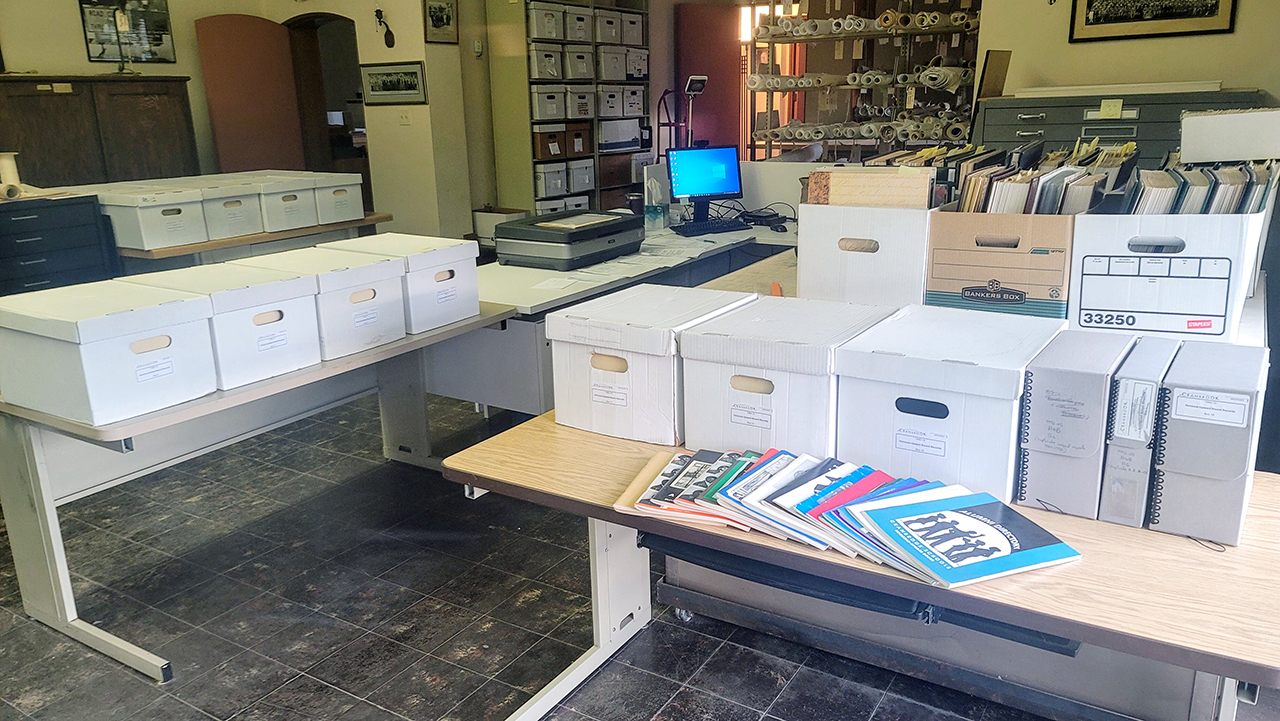
HUB historical materials include approximately 18 boxes (20.4 linear feet) of material relaying HUB’s history from its founding in 1965 through the year 2000. Material includes paper, news, photo, and film media primarily generated by HUB administration and HUB students. During the first year of the grant we are focused on digitizing all paper material. The second year will be devoted to digitizing photography and film, including images taken by local photographer Jack Kausch.
Digitization workstation where paper records are currently being scanned.
What we’ve done so far…
Digitization began in-house at the Archives in Summer 2023, with two HUB student volunteers who scanned a selection of newsletters and annual reports and drafted initial keyword/descriptions of the material. Later that Fall, I was hired to dedicate full-time attention to the project for the duration of the grant period. I continued the students’ work by first conducting quality control of the scanned material and digitizing the remaining publications in the collection. So far, I have digitized and quality checked over 7,500 pages of paper material. Currently, I am writing descriptions and creating keywords for these items and transferring the digital files to our online collections website, where they will be made public at the end of the project.
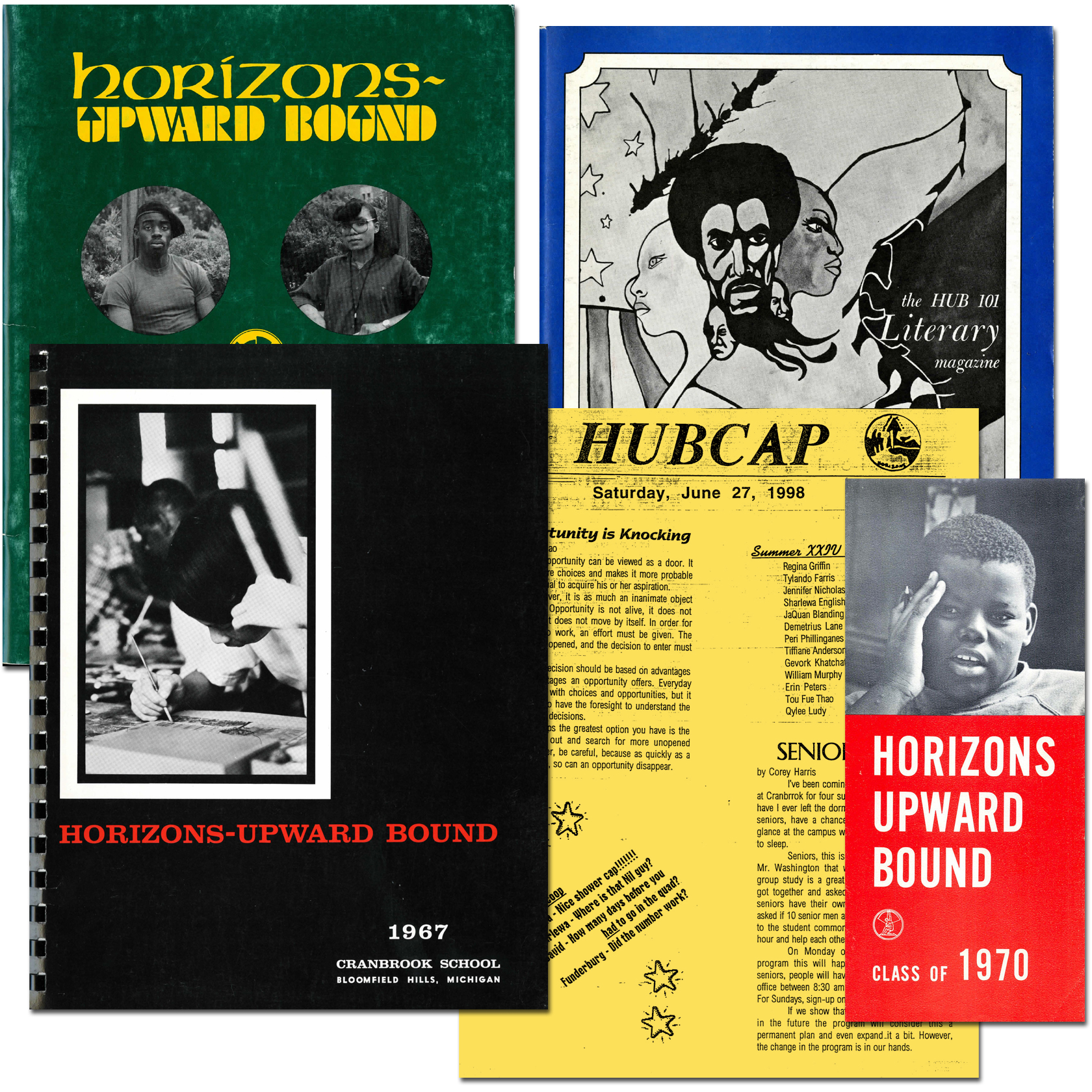
Selection of Horizons-Upward Bound publications spanning from the 1960s to 1990s, including annual reports, literary magazines, brochures, and newsletters. Courtesy of Cranbrook Archives.
More to come!
In honor of HUB’s founder and first director, Ben Snyder (1965-1989), we hope for this digitization project to help realize the desire he expressed for HUB’s records in his 1977-1978 Annual Report:
Annual Report cover, featuring HUB’s first cohort to include young women, 1977-1978. Courtesy of Cranbrook Archives.
“One hopes that these annual entries will, at some point in the future, be useful to the educational historian or, in a narrower sense, to someone reviewing the Cranbrook scene as it relates to community involvement. Should that time come in say the next century, the task would be far happier if the nation had in the meantime eliminated the need for compensatory education.”
–Ben Snyder (pg. 34)
Initially self-described as “An Experimental Enrichment Program,” in conjunction with representatives from Detroit Public Schools and Oakland County Schools, HUB was the only program of its kind at its inception. The artifacts and stories found within its historical collection have great potential to inform and inspire continued community-building and educational programming that span across metro Detroit and the nation. We hope you will share in our excitement about this project and we look forward to sharing more updates about the Horizons-Upward Bound collection!
– Courtney Richardson, Project Archivist, Cranbrook Center for Collections and Research
Editor’s Note: The NHPRC was established by Congress in 1934 as a statutory body affiliated with the National Archives and Records Administration. Chaired by the Archivist of the United States, it is composed of representatives of the three branches of the Federal Government and professional associations of archivists, historians, documentary editors, and records administrators.
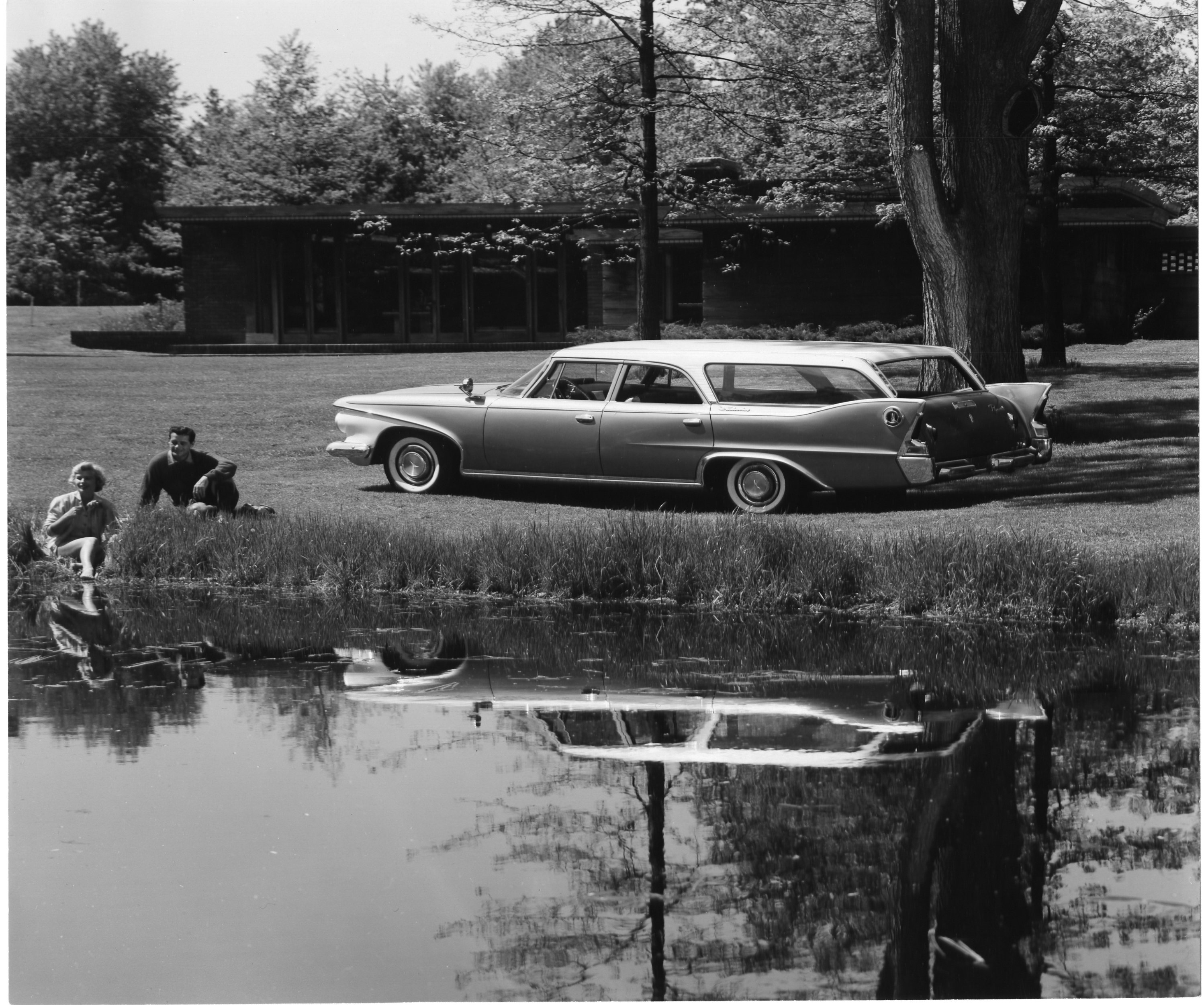
Oakland County is decked out in checkered flags this Friday for the annual Woodward Dream Cruise. As the crowds gather in their folding chairs and thousands of classic cars roar past my windows, I’m reminded of a much more serene image from automotive history: the 1960 Plymouth Suburban stretched out on the manicured lawn of the Frank Lloyd Wright Smith House.
1960 Plymouth Suburban, on location at the Frank Lloyd Wright Smith House. Smith Papers, Cranbrook Archives.
In 1959, Chrysler was developing promotional materials for the 1960 Plymouth. Seeking a sleek, modern backdrop for the long lines of the Suburban station wagon, Chrysler’s Public Relations Department contacted Melvyn and Sara Smith about staging a photoshoot at their Frank Lloyd Wright-designed home in Bloomfield Hills. The resulting photographs show the 18-ft long Suburban, not parked in the pea-gravel driveway or the distinctive cantilevered carport, but pulled to the back of the house where it could be reflected in the natural setting of the Smith’s newly expanded pond.
1960 Plymouth Suburban, on location at the Frank Lloyd Wright Smith House. Smith Papers, Cranbrook Archives.
The long, low horizon line of Frank Lloyd Wright’s Usonian architecture, with its stacking roof planes, seems a great fit for the station wagon’s extended style lines and characteristic fins. In a second image, two casually-dressed models (check out those long socks and walking shorts!) lounge in rattan Tropi-Cal armchairs on the living room patio. Designed by Danny Ho Fong, the Tropi-Cal armchairs were recently identified through the diligent research of the Center’s Summer intern Clare Catallo.
The Center has made a new film! As part of our recent gala fundraiser, A House Party at Two Cranbrooks, we worked with Elkhorn Entertainment & Media to produce a short documentary about the Booth family’s connections between England and Michigan. Today, we are excited to share the film with the wider world! Watch the film below, or here.
A Tale of Two Cranbrooks
Now that you’ve seen the new documentary, I thought I’d invite you “behind-the-scenes” into how A Tale of Two Cranbrooks came together.
Cinematographer Josh Samson and producer Vince Chavez film the Booth-made tea kettle in Cranbrook House. April 6, 2023. Photograph by Nina Blomfield.
As with all Center projects, I started work on the film in Cranbrook Archives. The Booth family records are extensive, and with our archivists Deborah Rice and Laura MacNewman, I spent several afternoons consulting documents (letters, photographs, manuscripts, scrapbooks, etc.) assembled by many generations of Booths to learn the family story. Henry Wood Booth’s handwritten The Annals of Cranbrook were especially helpful.
Detail of a postcard of Cranbrook, Kent with handwritten notes by Henry Wood Booth, from The Annals of Cranbrook manuscript, 1914. Cranbrook Archives.
Then, through the support of Bobbi and Stephen Polk and Ryan Polk, I travelled to England! I visited Cranbrook, Kent, spending time at Cranbrook Museum and Archives and at Cranbrook School. (You can watch a walking history tour I did in Cranbrook, Kent, here and learn more about the Booth family and my trip to England in my virtual lecture, Uncovering Cranbrook: Two Pilgrimages to Kentish Cranbrook.)
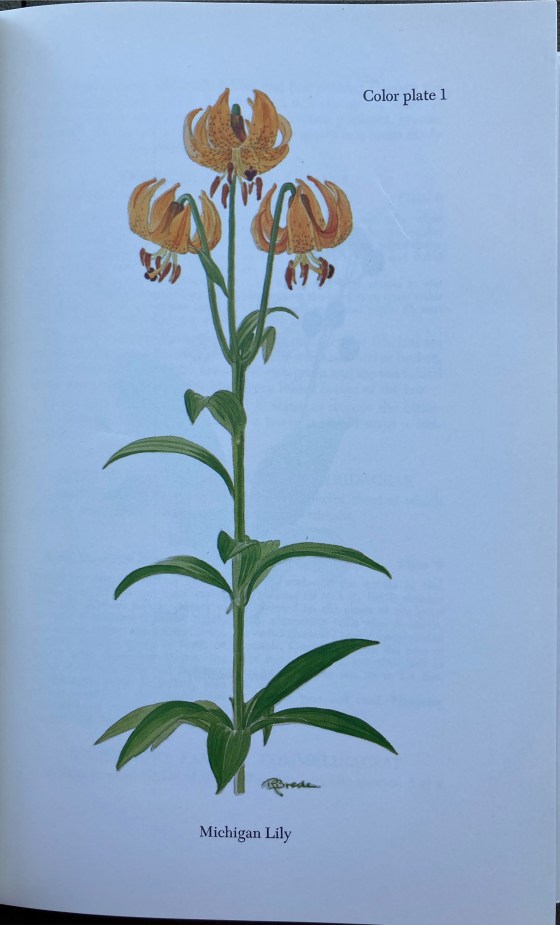
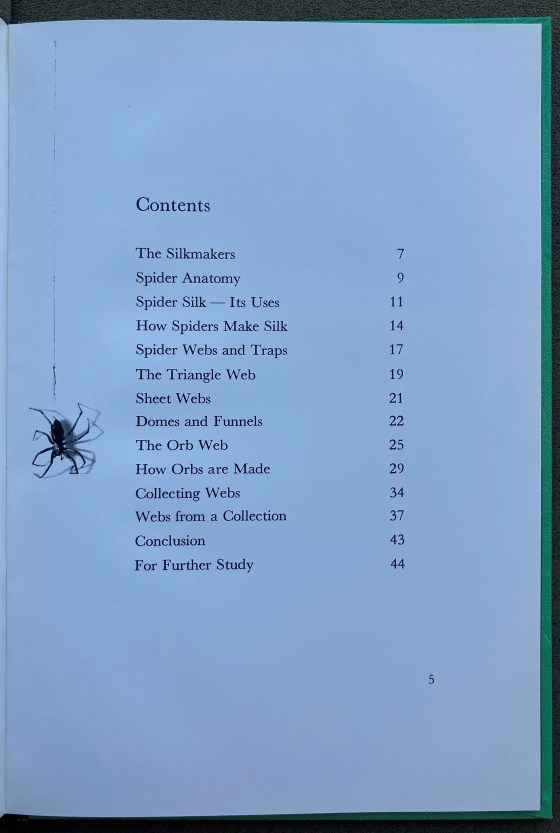
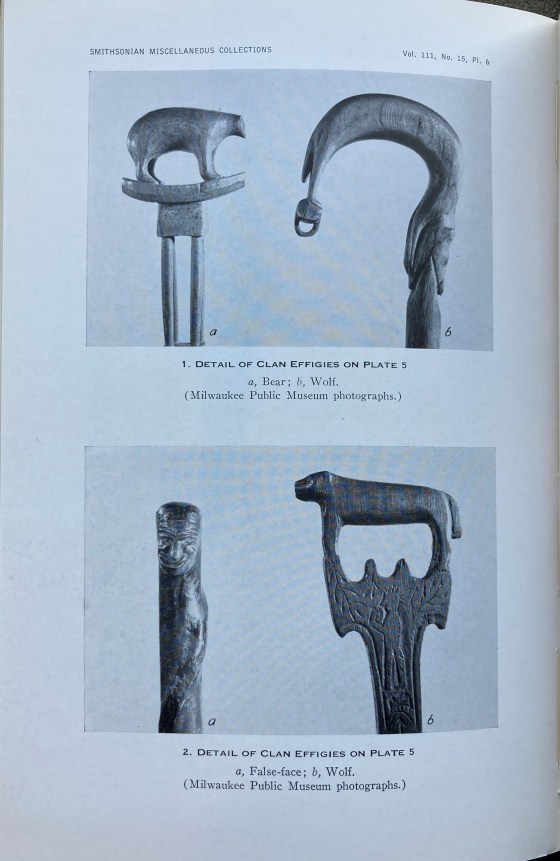
We recently reorganized materials in the Archives Reading Room to provide easier access to Cranbrook Publications and encourage greater use of these informative resources. The first series available for ready reference are the Cranbrook Institute of Science (CIS) Bulletins, which are arranged in the full series of 64 issues. The Bulletins are periodically published works of original scientific research, which was part of the mission of the early Institute.
Newly shelved Cranbrook Institute of Science Bulletins. Photograpy by Laura MacNewman.
Initially established in 1930, the Institute’s stated purpose was, “to add to and strengthen the educational and cultural facilities within the State of Michigan.” It was established as a separate Cranbrook institution on February 10, 1932. An aim set for the staff was not only to supplement the facilities of the several Cranbrook Schools, but to engage in original research and publication, “to add to the sum total of human knowledge.” The CIS originally comprised nine divisions of scientific fields and administration: Astronomy, Geology, Botany, Entomology, Aquatic Biology, Mammology, Anthropology, Education, and Preparation, and the Bulletins reflect these fields of inquiry.
The Bulletins range in size, from pamphlets to hard cover books, and are published ad hoc according to the completion of research projects. The incredible diversity and particularity of topics make it exceedingly difficult to select which to highlight for your interest. Thus, I have tried to pick across the divisions of research to deliver to you an array of examples, not only works of scientific distinction but of artistic beauty and thoughtfulness in their presentation.
This series of periodicals, published between 1931 and 1999, focus predominantly on Michigan with some studies further afield. They are of unequivocal research value to students and scientists with an interest in the natural world, including its flora and fauna, lakes and fish, archaeological history, and geological development, as well as human geography and cultural history.
The CIS Bulletins are available for research in our public Reading Room. If you are curious to learn more and to explore their contributions to scientific knowledge, come and see! All are welcome to explore and study our collections by appointment Monday to Friday, 9am to 4 pm.
–Laura MacNewman, Associate Archivist, Cranbrook Center for Collections and Research
When I was asked to gather archival materials related to Cranbrook in Kent, England, a short series of correspondence in the Henry Scripps and Carolyn Farr Booth Papers particularly caught my notice. Written to Henry Scripps Booth, the letters discuss a stone from St. Dunstan’s Church in Cranbrook, Kent, and its overseas delivery to Christ Church Cranbrook. I became quite curious about it.
Carved coign from St. Dunstan’s Church, Cranbrook, Kent, at Christ Church Cranbrook. Laura MacNewman, photographer. Courtesy of Cranbrook Archives.
One handwritten letter in the correspondence was rather difficult to decipher, but once I got the pattern of it, it helped me begin to comprehend the story.
In July 1930, St. Dunstan’s Vicar, Rev. Swingler, acknowledged a request from Booth for a fragment of the church which could be placed in the chapel of the same name at Christ Church Cranbrook.
It was July 1931 before Rev. Swingler wrote again to inform Booth that the stone was ready for dispatch. He explained that the Church Council had welcomed the idea and directed the Fabric Committee to select a stone, which they had, but that the Secretary had forgotten to inform Booth until then, a year later, and it was already on its way!
Letter from Rev. Swingler to Henry Scripps Booth, July 22, 1931. Courtesy of Cranbrook Archives.Letter from Rev. Swingler to Henry Scripps Booth, July 22, 1931. Courtesy of Cranbrook Archives.Letter from Rev. Swingler to Henry Scripps Booth, July 22, 1931. Courtesy of Cranbrook Archives.
The forgetfulness of the Secretary and finding appropriate shipping arrangements for such an unusual commodity had caused quite a delay, to which Rev. Swingler writes,
“I am sorry that the matter has not been dealt with more speedily but old Cranbrook has hardly yet learned modern methods of business, as perhaps you know.”
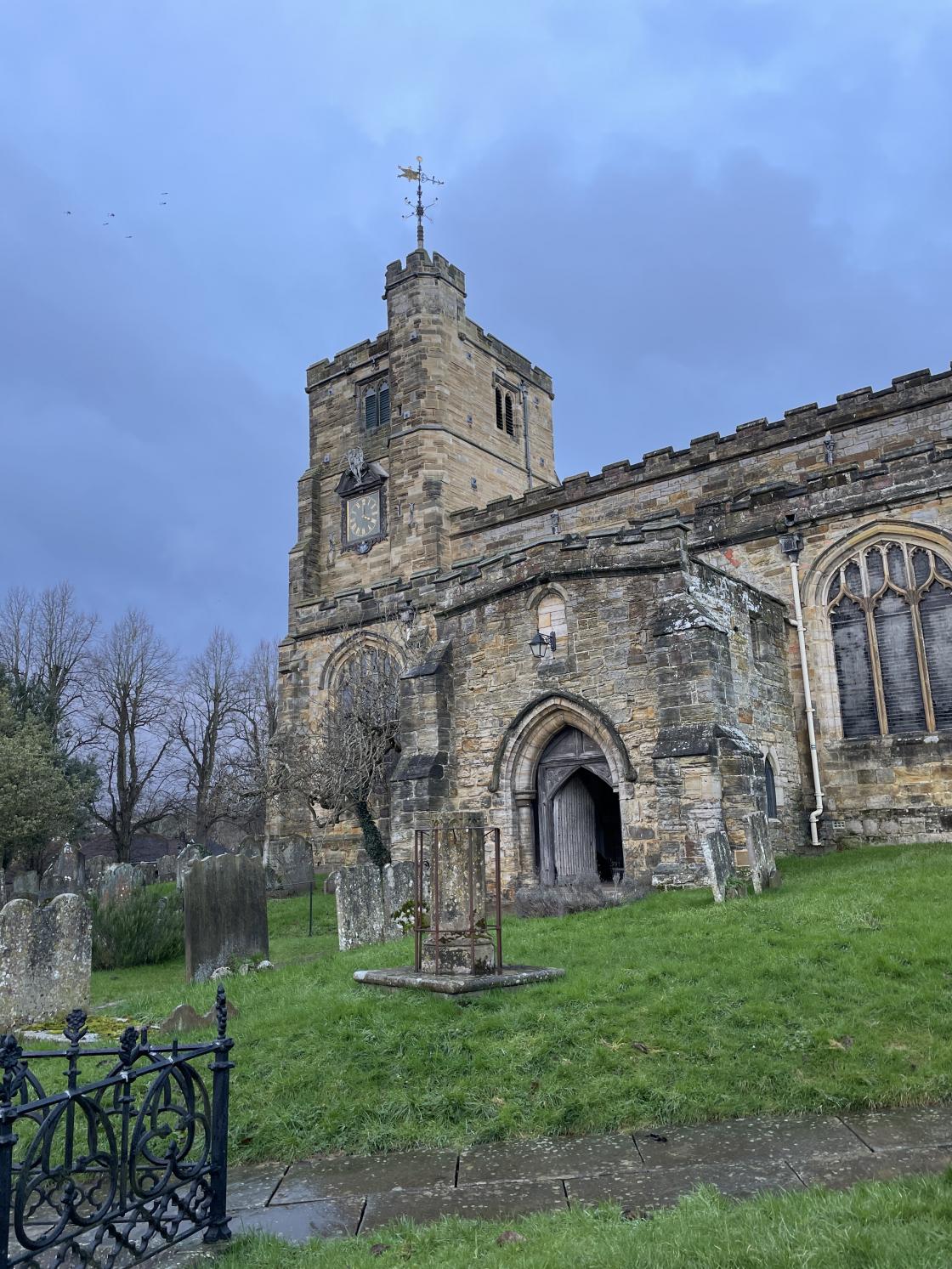
St. Dunstan’s Church, Cranbrook, Kent. Kevin Adkisson, photographer. Courtesy of the Center for Collections and Research.
He goes on to describe the provenance of the stone, at least as far as he could tell. A fifteenth century carved coign (an architectural term for a “projected corner”), it once formed part of the string course (a projected band of stone) which runs at the base of the battlements of the church nave. The course includes a series of grotesque heads, some of which were pierced for waterspouts. A grotesque, common in medieval church architecture, is a decoratively carved stone used to ward off evil spirits and to signify the sanctuary and safety of the church. On inspecting an historic photograph of the church, I could identify similar stones at the top of the drainpipes and around the tower battlements.
St. Dunstan’s Church, Cranbrook, Kent, July 1901, with grotesques in situ. Courtesy of Cranbrook Archives.
Rev. Swingler had first seen it laying in the churchyard and surmised that it had not been replaced during past repairs. He doesn’t mention why they selected that particular stone, but one could conjecture that it was because it was no longer part of the fabric of the church building and hence was available to be gifted to Christ Church. He notes that it is probably of Hartley stone, which was quarried in the Parish.
Henry Scripps Booth contributed great efforts to building relationships between the old and new Cranbrooks by establishing and maintaining connections between the two churches. The grotesque that arrived at Christ Church more than 90 years ago is an artifact that tells just one story of his efforts. From St. Dunstan’s of old Cranbrook, known as the “Cathedral of the Weald,” to St. Dunstan’s of Christ Church Cranbrook, the carved coign continues to herald sanctuary and give confidence to those who enter.
–Laura MacNewman Associate Archivist, Cranbrook Center for Collections and Research
I have mentioned in the blog before that I am working with Center Director Gregory Wittkopp and Center Curator Kevin Adkisson on reviewing all fourteen of our cultural properties collections (over 9,000 objects), reviewing the data already on file and adding as much additional information about each object as we can.
The most recent collection I have been working on is Cranbrook Kingswood Upper School – Cranbrook Campus (f.k.a. Cranbrook School for Boys). The current campus buildings, classrooms, and staff offices, all had the potential to contain cultural properties (historic objects). And many that we visited did!
When I researched the Cranbrook Kingswood Upper School – Kingswood Campus (f.k.a. Kingswood School for Girls), I was fortunate to have the “Kingswood School Cranbrook Inventory of Equipment and Supplies.” It recorded the purchases and payments made from 1930-1938 for the outfitting of the school. It proved invaluable in locating quantities and makers of objects.
There had to be an equivalent for Cranbrook Campus?! Unfortunately, not that I had yet seen.
I only had a 1952 Inventory which listed fixed items, like light fixtures; and “movable” furniture and fixtures, like chairs, tables, desks, artwork. This was a great resource, but it did not always give me the makers or artists. Undeterred, I started searching in Cranbrook Archives, the “little gem” at Cranbrook, to borrow a phrase from Frank Lloyd Wright.
In Box 43, Folder 11 of the Cranbrook Foundation Office Records were the “Building Costs for Cranbrook School from 1926-1946.” And then, I saw it. A small black book labeled “Cranbrook School Book.” Could it be what I was looking for?
“Cranbrook School Book.” Cranbrook Foundation Office Records, 1981-05. Cranbrook Archives, Cranbrook Center for Collections and Research.
Inside were listed payments made to the builder Wermuth & Son and to the W. J. Sloane Company for furniture. It listed the artists who painted, carved, and outfitted the school, as well as contractors who installed various materials in the buildings.
Pages 20 and 21 “Cranbrook School Book” lists payments to Parducci Studio, J.L. Hudson’s, W.J. Sloane, as well as Pipsan Saarinen Swanson..
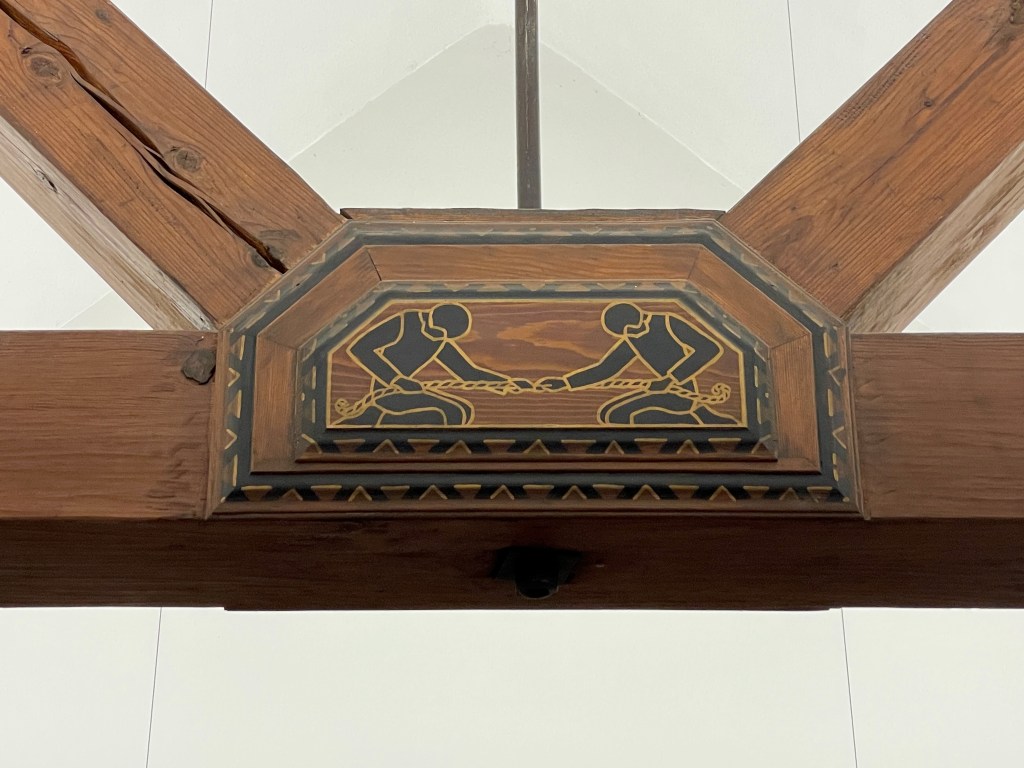
Detail of page 20 of “Cranbrook School Book.” On March 2, 1928, Pipsan was paid for “Decorating truss plaques for Study Hall.”
One of Pipsan’s ten truss plaques in the Cranbrook Campus Library Study Hall, 2022.
These entries were great, but what else would it lead to? The answer: the “Cranbrook Schools” series in the Cranbrook Architectural Office Records.
Many of the folders were labeled “Cranbrook School correspondence, Wermuth & Son” with dates. The “Cranbrook School Book” had given me an idea of what to look for. Who Wermuth and the Cranbrook Architectural office (and sometimes George G. Booth himself) were corresponding with was the key. Inside were letters from vendors of tiles, furniture, stained glass, stonework, mirrors, mattresses, windows, everything needed to build a well-appointed school.
Here are just a few examples:
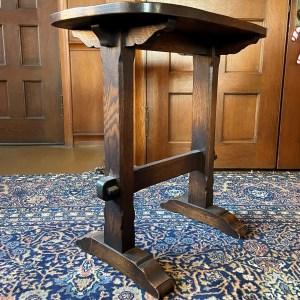
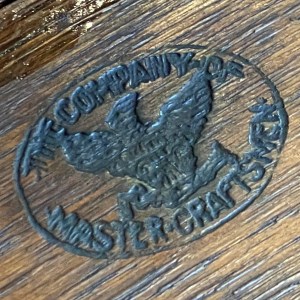
Copies of blueprints for furniture made by W. J. Sloane Company’s “Company of Master Craftsmen,” many of which were selected for Cranbrook.
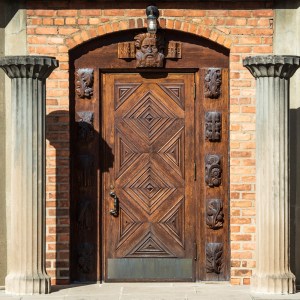
A letter from L.A. Sielaff & Co. indicating it was contracted to carve the wood ornaments on the Geza Maroti-designed doorcases outside the Library
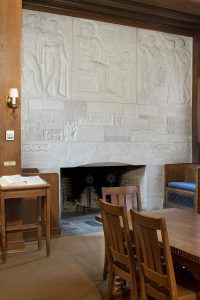
Letter from L. A. Sielaff & Co., dated August 3, 1928.Cranbrook School Study Hall Door, also called the “Door of Knowledge.” Photographer James Haefner.Letter from Cranbrook Architectural Office, dated August 8, 1928.Cranbrook School Library Reading Room “Gift of Knowledge” Overmantel. Photographer P.D. Rearick.Letter from George G. Booth to Swedish Arts & Crafts Company, dated June 4, 1928. Booth’s sketch is at right.Cranbrook School Dining Hall hanging fixtures.Blueprint for table #41919 by W. J. Sloane Company’s “Company of Master Craftsmen.”Table #41919 in use in a Cranbrook Campus office.Maker’s mark for “Company of Master Craftsmen” on the underside of many pieces of furniture on the campus.
Next up, Cranbrook Campus’ custom light fixtures! I can already hear Kevin’s words in my head . . .
. . . Cranbrook light fixtures are all around campus. There are multiple types of the light fixtures. These were designed by architect and former Head of the Architecture Department Dan Hoffman. He was the architect-in-residence who probably did more to revive the tradition at Cranbrook that was so such a passion project of George Booth and Eliel Saarinen . . .
– Leslie S. Mio, Associate Registrar, Cranbrook Center for Collections and Research
p.s. For more on Cranbrook Campus, check out these videos by Center Curator Kevin Adkisson:






























 Cranbrook Kitchen Sink