The Name Game

From the beginning of Cranbrook’s history in 1904, place names at Cranbrook have evolved and changed. Once the Booths turned the original mill pond into a lake, they named it first Glassenbury Lake (after Glassenbury, England), then it was known as Cranbrook Lake for a very short time, and ultimately Kingswood Lake. The man-made Jonah Lake (or Lake Jonah as it is also known) was originally called Lake Manitou. Brookside School was originally called Bloomfield Hills School and Cranbrook School was Cranbrook School for Boys. Although Brookside School retains its name, since 1985 when the boys and girls schools merged, they are jointly known as Cranbrook Kingswood Schools.

Building names have also changed, often due to an alteration in use or sometimes because they were dedicated to an influential or long-time faculty member.  The Garden House became the Cranbrook Pavilion and is now St. Dunstan’s Playhouse. The Cranbrook School academic building became Hoey Hall after former Headmaster Harry Hoey and what was originally called the “Arcade” is now known as the Peristyle at the Cranbrook Art Museum. Lyon House was first called Stonelea (after its owner Ralph Stone, a long-time friend of George Booth), then Belwood, then the Kyes House before being acquired by Cranbrook.

And even Cranbrook Educational Community is not our first name. In 1927, the Booths established The Cranbrook Foundation as the legal and financial entity that oversaw the then six institutions: Brookside School, Christ Church Cranbrook, Cranbrook Academy of Art, Cranbrook Institute of Science, Cranbrook School, and Kingswood School.

So, what is really in a name? How do we name our campus buildings and landmarks going forward and what legacy will we be imparting with them?

That said, I wish you all a Happy New Year! Or should I say Bonne année? Feliz Año Nuevo? Or maybe Xin nian kuai le?

(And thank you Stefanie Dlugosz-Acton for getting me thinking about names at Cranbrook!)

From the Virginia Kingswood Booth Vogel Papers.

From the Virginia Kingswood Booth Vogel Papers.

Leslie S. Edwards, Head Archivist

Think Snow!

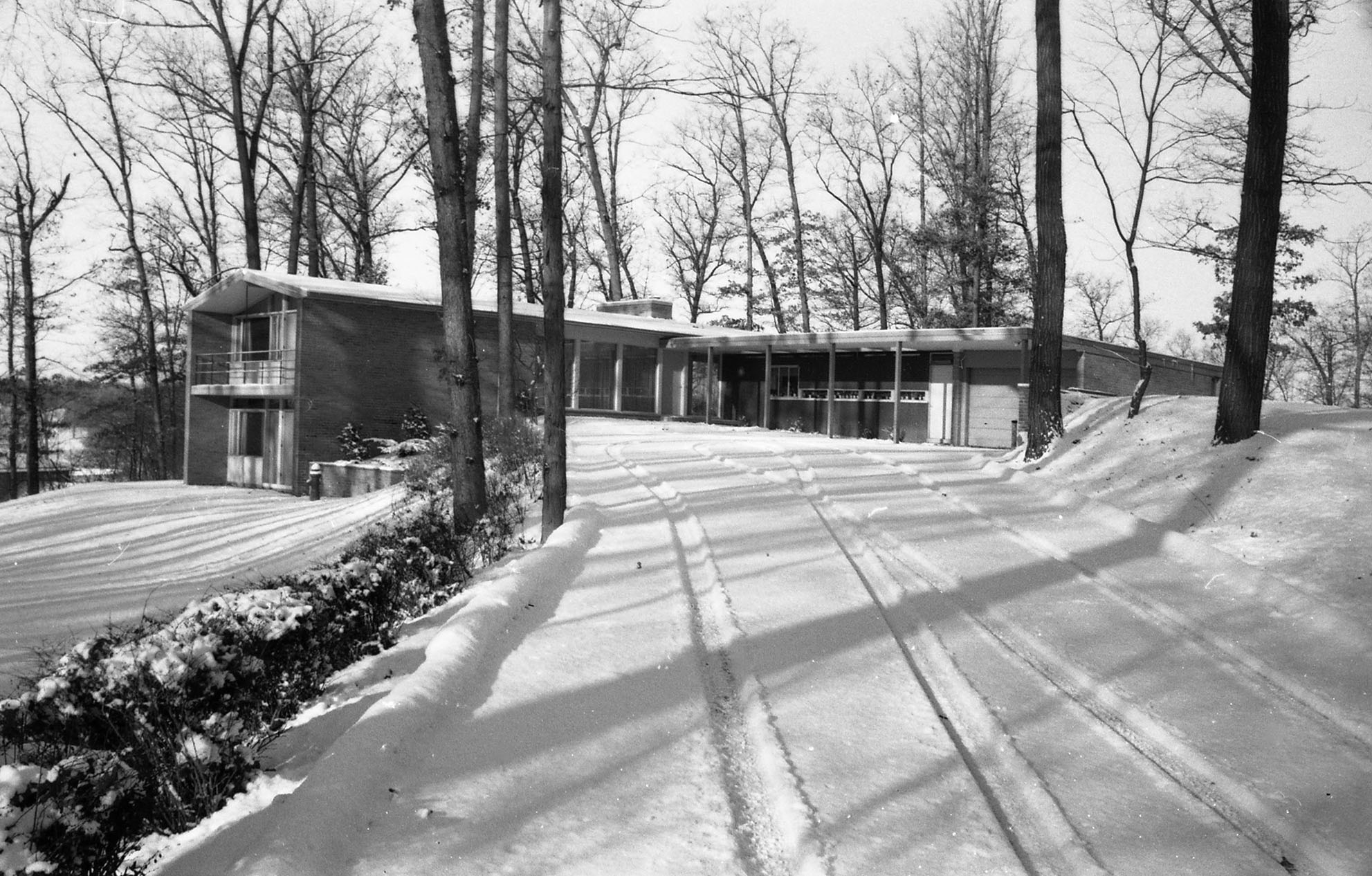
Kingswood School Headmistress residence, 1955.

Kingswood School Headmistress residence, 1955.

Boys from Cranbrook School playing hockey outdoors, 1928.

Boys from Cranbrook School playing hockey outdoors, 1928.

Brookside children ice skating, 1928.

Brookside children ice skating, 1928.

Academy of Art students, Florence Chang and Margueritte Kimball cross-country skiing at Cranbrook, 1944.

Academy of Art students Florence Chang and Margueritte Kimball cross-country skiing at Cranbrook, 1944.

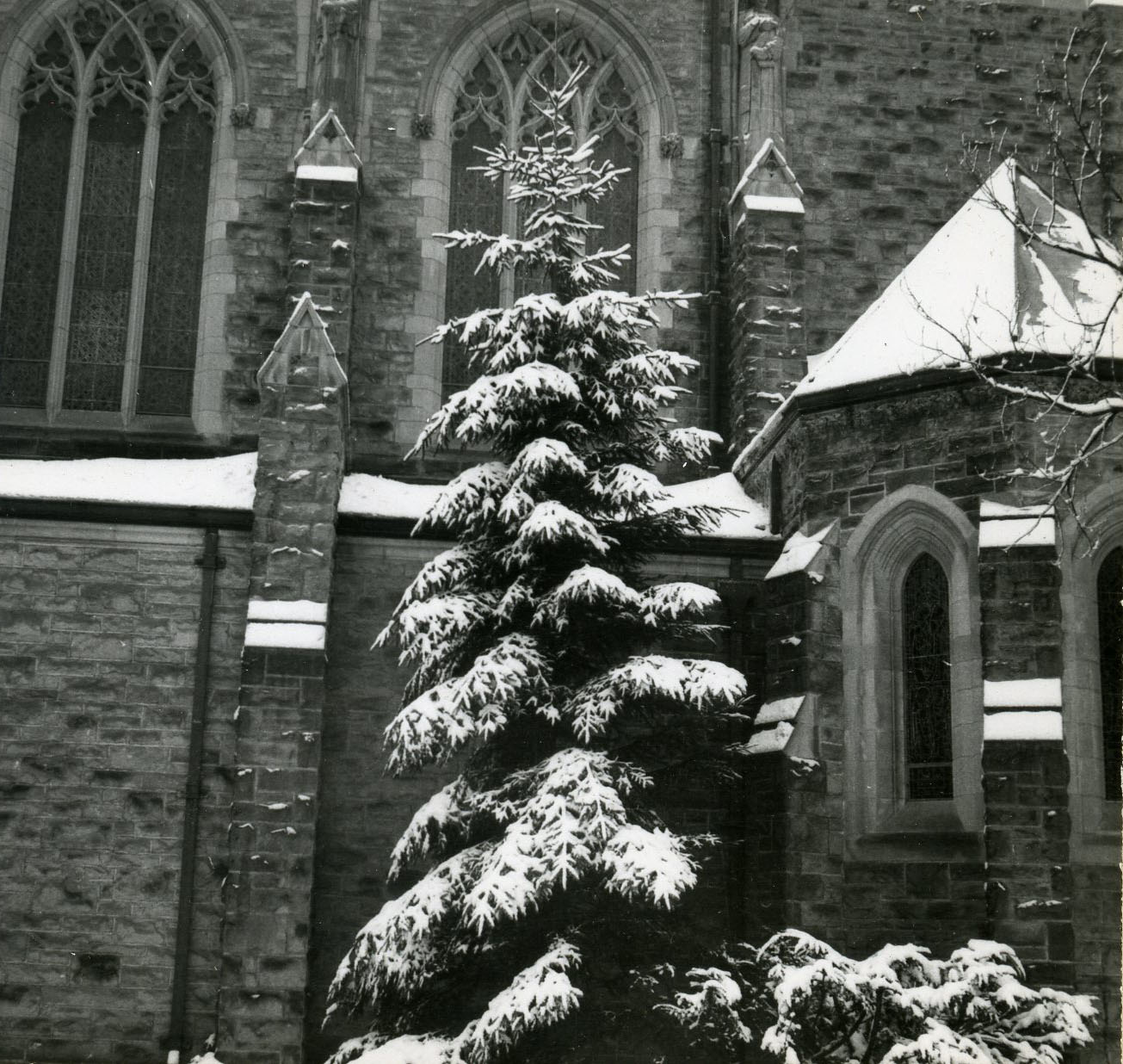
Christ Church Cranbrook, ca 1938.

Christ Church Cranbrook, ca 1938.

Photo Friday: Posters Tell a Story

The Cranbrook Archives exhibition, Designs of the Times: 100 Years of Posters at Cranbrook, opens this weekend. The exhibition documents events and performances that have enhanced and enriched the Cranbrook community for more than a century. The image below is just one of many that will be on display through March 20th, 2016.

yeoman

Performing Arts poster, 1955

This poster, signed “M.W.” was  designed by Michael Justin Wentworth (Cranbrook School ’56). In addition to designing posters, Wentworth was the art editor for both the Brook and the Crane, and designed the sets for the Ergasterion productions and the scenery for the bi-annual Operettas. He received his MA and MFA from University of Michigan, and his PhD from Harvard where he wrote his dissertation on the artist James Tissot, a lifelong interest.

The posters in the exhibition represent all areas of campus – we hope you come check it out!

Gina Tecos, Archivist

The Fascinating Notebooks of John Buckberrough

John H. Buckberrough (1874-1955), an immigrant from Ontario, Canada, was a civil engineer for the Cranbrook Foundation from 1927 until he retired in 1955. As described by Henry Scripps Booth:

Buckberrough, a slight man of medium height, started working for Swanson and Booth as that firm’s sole employee two years before Cranbrook officially employed him. That was in the firm’s tiny architectural office located in the below-road-level room of the Ram House section of Brookside’s buildings. … He became one of the first employees of what was known as the Cranbrook Architectural Office in January 1927. … Over the years he was chief surveyor, planned most of the pump rooms, transformer vaults and underground systems, kept copious notes and made detailed plans regarding changes which not only proved increasingly valuable in solving complicated problems but put to shame those who were later supposed to fill his shoes.

In addition to numerous architectural drawings that bear his signature, Buckberrough’s legacy in the Cranbrook Archives is 10 calfskin engineers’ field books, chock full of drawings and notations, covering 1926-1955.

Courtesy Cranbrook Archives

Courtesy Cranbrook Archives

Descriptions and diagrams of Cranbrook property, heating and plumbing data for Cranbrook buildings, data on Cranbrook roads and lakes, drawings of pump houses, sidewalks, lighting layouts and water lines can be found in the notebooks. Here are some examples:

Design of a bridge.

Bridge at Kingswood Lake, 1938.

Column design for fireplace in Cranbrook House living room.

Column design for fireplace in Cranbrook House living room.

The Archives’ staff often finds valuable information in the notebooks, which is used for campus restoration and renovation projects including the recent restoration of Cranbrook School Quad. Little did Buckberrough know how valuable his meticulous note-taking would prove to be. Though a search for information requires a careful page-by-page hunt, it’s a pleasant change from the impersonality of electronic resources.

Cheri Y. Gay, Archivist

To Sit or Not to Sit

Chair design at Cranbrook has always had its own special niche and fascination among artists and patrons alike. George Booth altered chair designs for his own use at Cranbrook House. Eliel Saarinen designed unique chairs for Cranbrook School and Saarinen House. Ralph Rapson conceived of his chair design for what became known as the Rapson Rocker while a student here. Most of us are familiar with the famous chair designers, but what about projects by less famous designers?

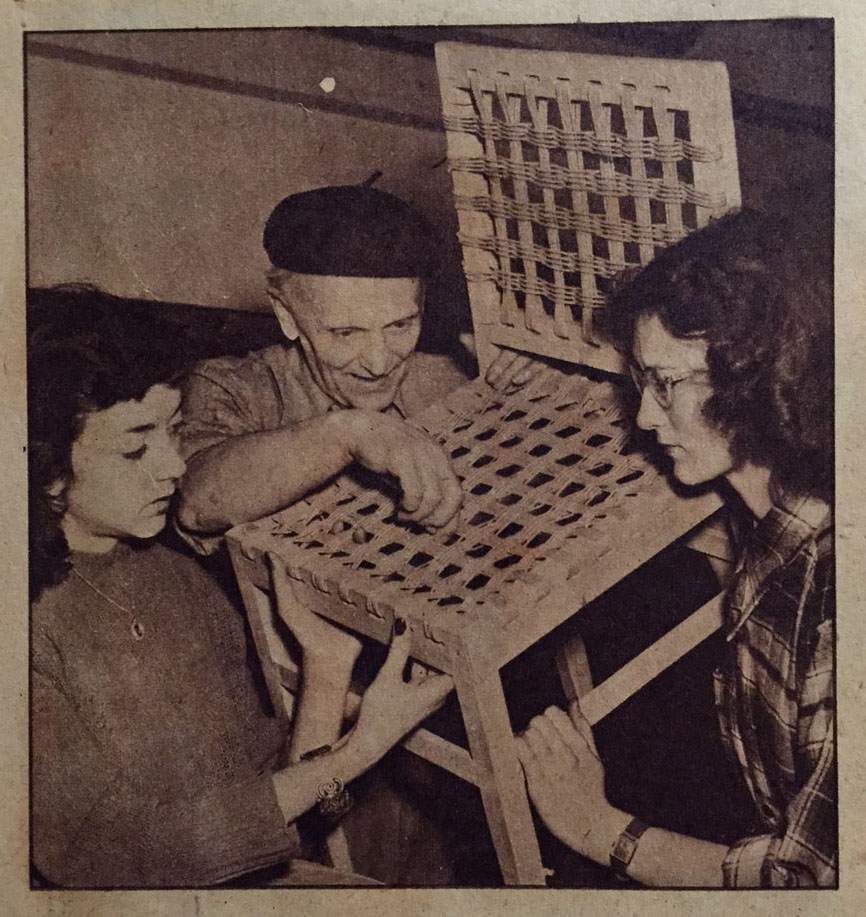
During the war years, Academy of Art students were encouraged to experiment with modern design and new and unusual materials. In 1944, Academy students Gloria Bucerzan and Jean Roberts designed and constructed a chair born of war shortages, by eliminating the use of springs and creating webbing using “non-critical” materials.

Gloria (left) and Jean with woodworking instructor Svend Steen, 1944. Copyright Cranbrook Archives.

Unknown student setting up work for Student Show, 1958. Copyright Cranbrook Archives.

Unknown student setting up work for Student Show, 1958. Copyright Cranbrook Archives.

Art Room, Early Childhood Center at Brookside School, 1997. Chairs designed by Dan Hoffman, Cranbrook Architecture Office. Photograph copyright Christina Capetillo.

Art Room, Early Childhood Center at Brookside School, 1997. Chairs designed by Dan Hoffman, Cranbrook Architecture Office. Photograph copyright Christina Capetillo.

For more on chair design in general, check out the 2012 Year of No-Chair-Design and the Guide to Great Chair Design which features links to chair blogs, the history of chair design, museums, galleries, and books that all feature what else? Chairs!

Leslie S. Edwards, Head Archivist
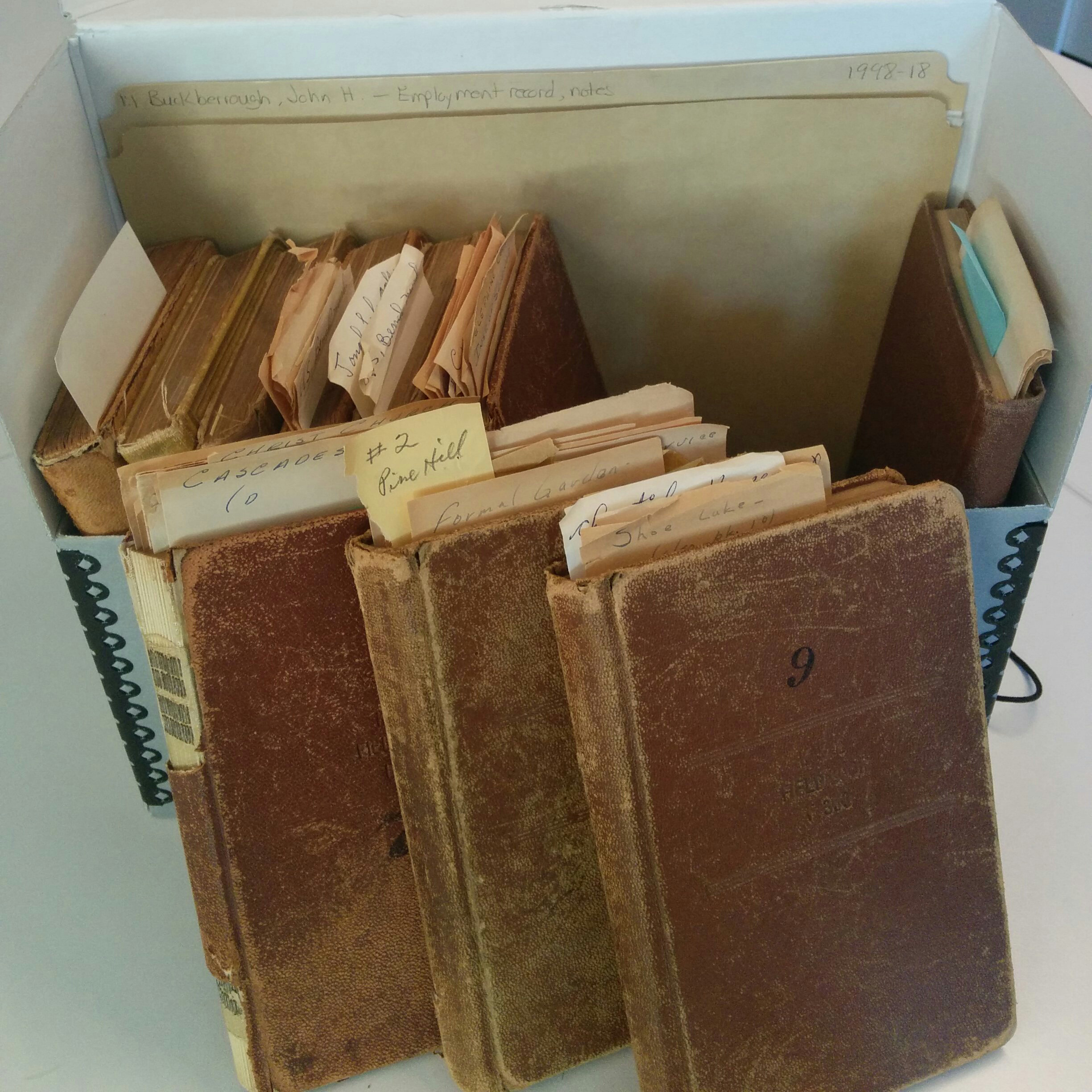
Photo Friday: Autumn Traditions

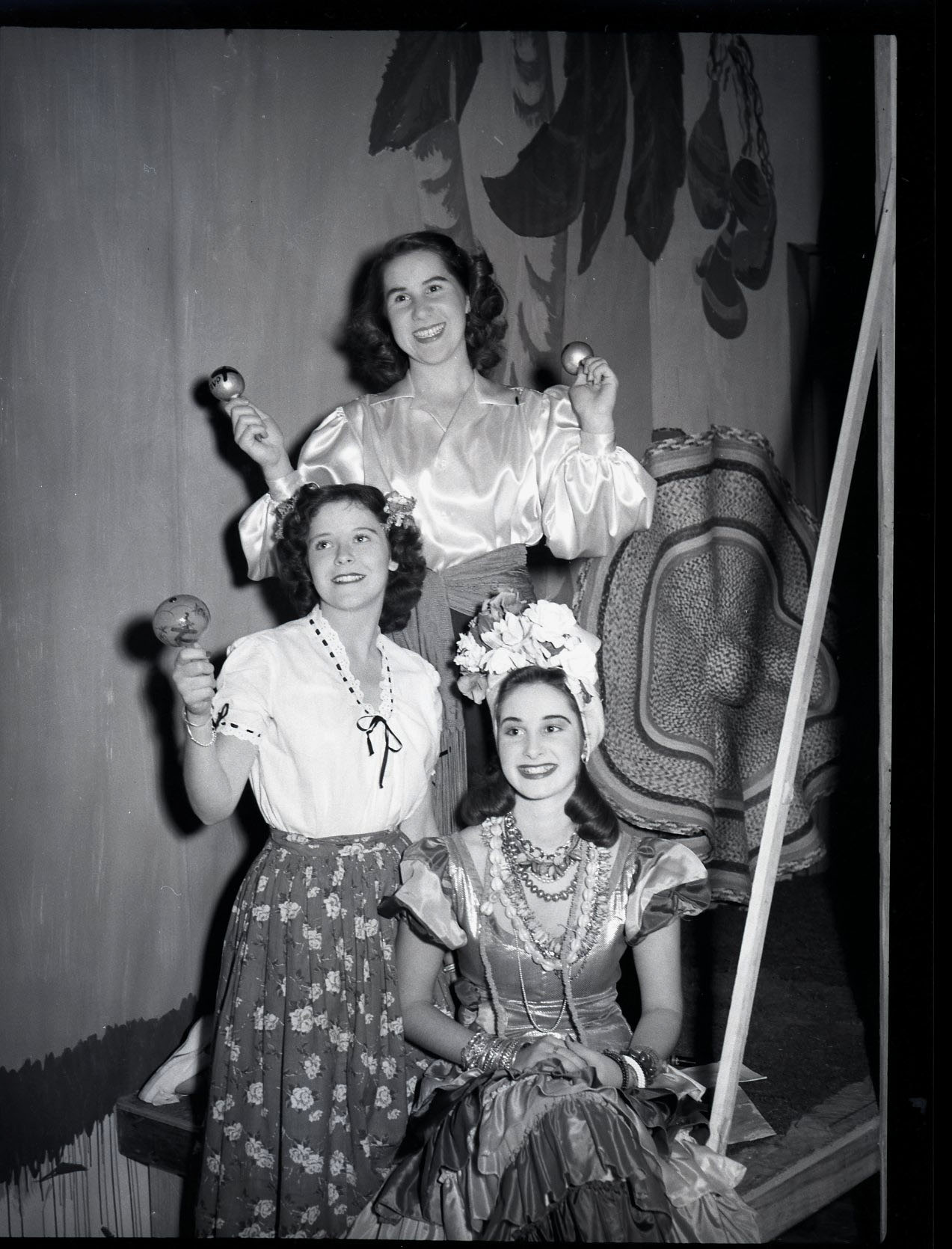
With foliage nearing its peak color, there are many reminders of fall here on campus. The image below is yet another tribute to the season—the Kingswood School Autumn Festival. The first Athletic Association Carnival was held in December, 1932, and was the precursor to the Autumn Festival. By 1934 the annual event had been renamed by Headmistress Margaret Augur.

Themes varied, for example, the 1936 festival was fashioned after “modern” America and included an Apache dance and a skyscraper dance by the juniors with the sidewalks of New York as the background set. The 1939 theme was the Old South and ended with a rousing version of “Dixie” as the grand finale. The November 1939 Clarion reports, “Cranbrook as usual was well represented. After their hectic day of soccer, football, tea-dance, etc., we managed to wear them out, so that it was finally decided that bed at eleven was necessary for all. Thus ended the autumn festival.”

Autumn Festival, Oct 1944.

Autumn Festival, Oct 1944.

The 1944 theme (as shown above) simulated South America. Entertainment included costumed students singing “Down Argentina Way” and “Besame Mucho.” In addition to rumba and samba dancing, the night ended with a lively conga to “Cui Cui .” Wouldn’t it be fun if we could revive this tradition?

Gina Tecos, Archivist

The Story of a Sweater: 1930-1953

As fall fast approaches and the nights are cooler, all Michiganders are pulling out their jackets and sweaters. Cranbrook School for Boys (as it was once known) had, over the years a variety of sweaters made for the boys to wear, particularly if they were involved in athletics. Although Cranbrook Archives primary collects manuscript collections and institutional records, sometimes we are lucky enough to acquire objects that relate to our past, particularly that of the schools. The Cranbrook Sweater is one such object.

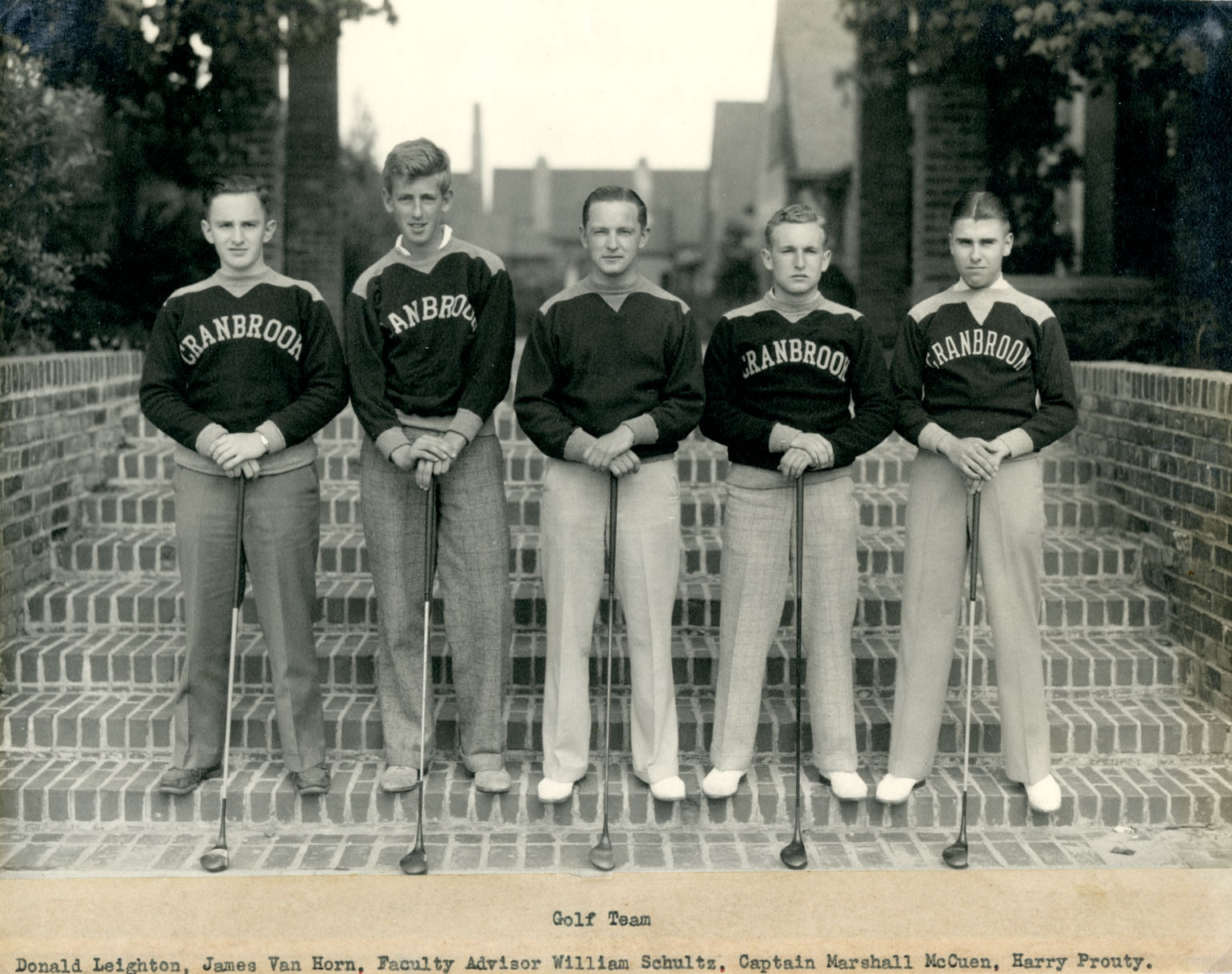
First featured in a team photo for the 1930-31 basketball team, it was a signature uniform for the basketball team photo for the next 22 years. Throughout Cranbrook School’s sports history, athletes on the basketball team, golf team, wrestling team, hockey team, football team, and baseball team all wore the sweater.  Beginning in the 1934-35 season, members of the golf team wore the sweater.

As time passed, the sweater gained increasing momentum in its popularity and peaked among the athletes in the 1940s. However, aside from the basketball team and golf team photos (where the sweater was worn by the entire team), most of the other team photos show only one or two members wearing the sweater for the team photo.  This could be due to the fact that the sweater is made of 100% wool!

Gradually, the sweater lost popularity and by the end of the 1953 school year, it faded out altogether. We are lucky to be caretakers of such a great piece of history, and the type of object that current school students love to see on their visits to the Archives.

Donald Leighton (far left in the photo below) is shown wearing the sweater in our collection.

Golf team 1935-36.

Golf team 1935-36.

Leslie S. Edwards, Head Archivist

Alphabet Soup

This morning I was looking for an image from our collection to relate to the Cranbrook Art Museum’s newest exhibition “Read Image, See Text” to post on our Facebook page. I would hazard a guess to say that most, if not all, archivists love books almost as much as historic documents.  Though archives usually do not seek to collect books, and certainly are not lending libraries, books can often comprise part of a collection. So my search for a single image led me to think about the range of books we have in our collection.

The first was written by William O. Stevens, nearly 25 years before he became the first headmaster of Cranbrook School.  After receiving his doctorate at Yale, Stevens taught English at the U.S. Naval Academy for 21 years. The book, which satirized early 20th century Annapolis using twenty-six limericks and illustrations, became an instant success. Find out why it also became controversial.

William O. Stevens, An Annapolis Alphabet: Pictures and Limericks (Baltimore: The Lord Baltimore Press, 1906).

William O. Stevens, An Annapolis Alphabet: Pictures and Limericks (Baltimore: The Lord Baltimore Press, 1906).

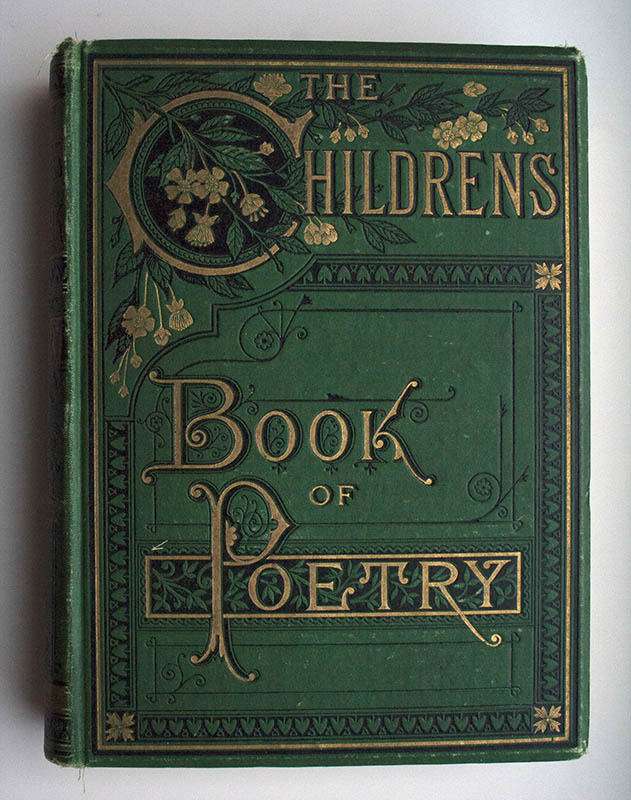
The first edition poetry book below illustrates beautiful text and the tooled binding of the times. It is inscribed: “Ellen W. Scripps, a Christmas present from her Father [James E. Scripps], Detroit 1879.” The editor of the compilation, Henry T. Coates joined the publishing firm of Davis & Porter in 1966; Davis retired the following year and the company became Porter & Coates which became famous for creating Home and Garden magazine and publishing the Horatio Alger Junior titles.

Henry T. Coates (ed.), The Children’s Book of Poetry: carefully selected from the works of the best and most popular writers for children. (Philadelphia: Porter & Coates, 1879).

Henry T. Coates (ed.), The Children’s Book of Poetry: carefully selected from the works of the best and most popular writers for children. (Philadelphia: Porter & Coates, 1879).

Gustaf Strengell, the father of Cranbrook’s textile designer Marianne Strengell, composed and designed this handwritten analysis of the Swedish poet’s writings as part of his graduate thesis. Franz Michael Franzén’s (1772-1847) work expressed the romantic conception of nature as both idyllic and divine, and was influential in the development of Finnish poetry.

Gustaf Strengell., Franzén. (Helsinki, unpublished, 1898)

Gustaf Strengell, Franzén. (Helsinki, unpublished, 1898)

For a really great blog post about related collections, see: Graphic Arts Collection, Rare Books and Special Collections, Princeton University.

Leslie S. Edwards, Head Archivist
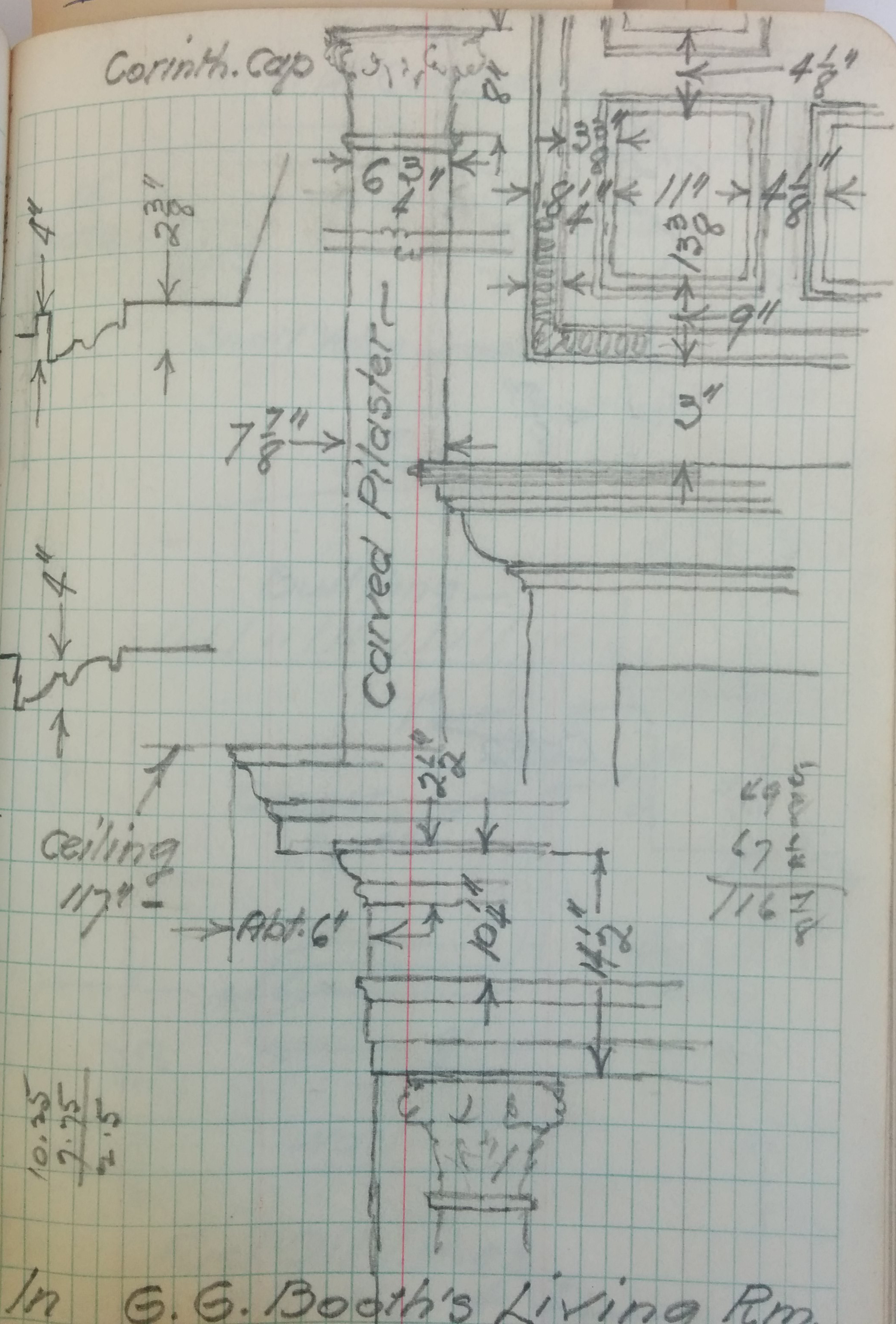
Photo Friday: Reporting the News in Style

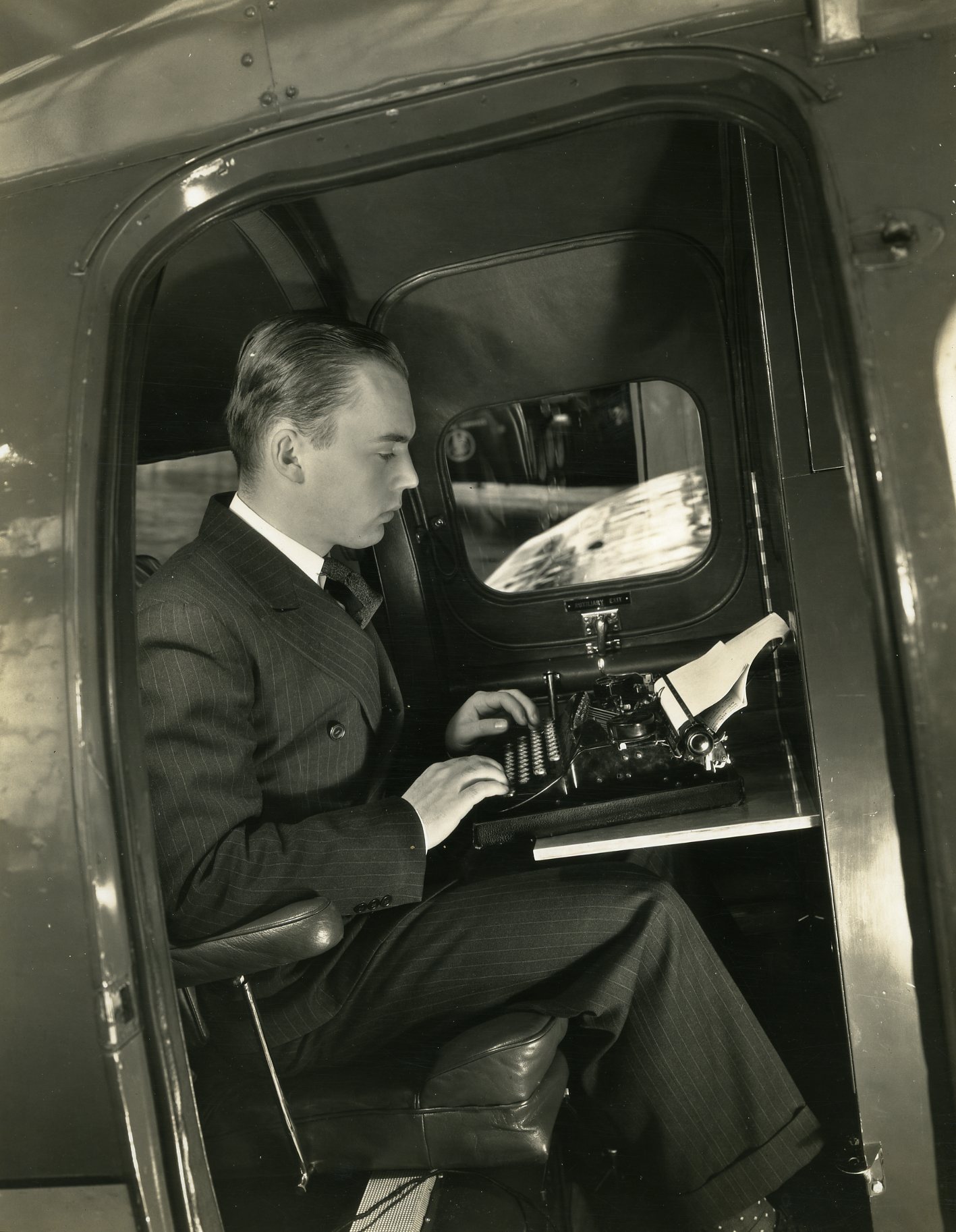
Archivists never know what we might run across during the course of our daily work, which is, of course, part of the allure of the job! Today it was a photo of W Stoddard White (1913-1972) from the Lee A White Papers. (No typo – neither man used a period after his initial!)  Lee White (Stoddard’s father) was a personal friend and confidante of George Booth’s from the Detroit News. White followed Booth to Cranbrook once Cranbrook School was opened and was on the Board of Directors, later becoming head of the public relations department for the community. Clearly Stoddard followed in his father’s footsteps, becoming a news reporter after his graduation from UM in 1935. (Interestingly, while at UM, he was in Sigma Chi along with Edgar Guest Jr.)

Stoddard White, Detroit News Employee, Oct 1935. Courtesy Cranbrook Archives, Lee A White Papers.

Stoddard White, Detroit News Employee, Oct 1935. Courtesy Cranbrook Archives, Lee A White Papers.

This photo caught my attention because of the content – what a great image of young Stoddard, as a Detroit News reporter, seated at his typewriter in what was likely the Detroit News Lockheed Vega airplane. Just one more reason I love my job!

Leslie S. Edwards, Head Archivist
Bouquets of Sharpened Pencils

It’s that magical time of year again, daylight is a little bit shorter and parents begin to try and return their kids to a bedtime schedule –it’s back to school time. For some, this is a glorious time of year – a new beginning, the changing leaves as Fall ushers in. September always reminds me of a line from the movie, “You’ve Got Mail.” Joe Fox says to Kathleen Kelly in a chat room, “Don’t you love New York in the Fall? It makes me want to buy school supplies. I would send you a bouquet of newly-sharpened pencils if I knew your name and address.”

Here at The Archives we often receive email and calls from alumni. I recently received an inquiry from a Kingswood alum who shared some amazing stories with me and also piqued my interest in student organizations here at Cranbrook.

From the first days at Cranbrook and Kingswood schools, clubs and organizations were an integral part of student life. In addition to student newspapers, literary publications, and government—students participated in riding clubs, glee club, bridge club, and the stamp club. In 1938, the Areopagus club saw its membership swell. According to The Brook, students could be found “arguing over some minor question that momentarily assumed importance.”

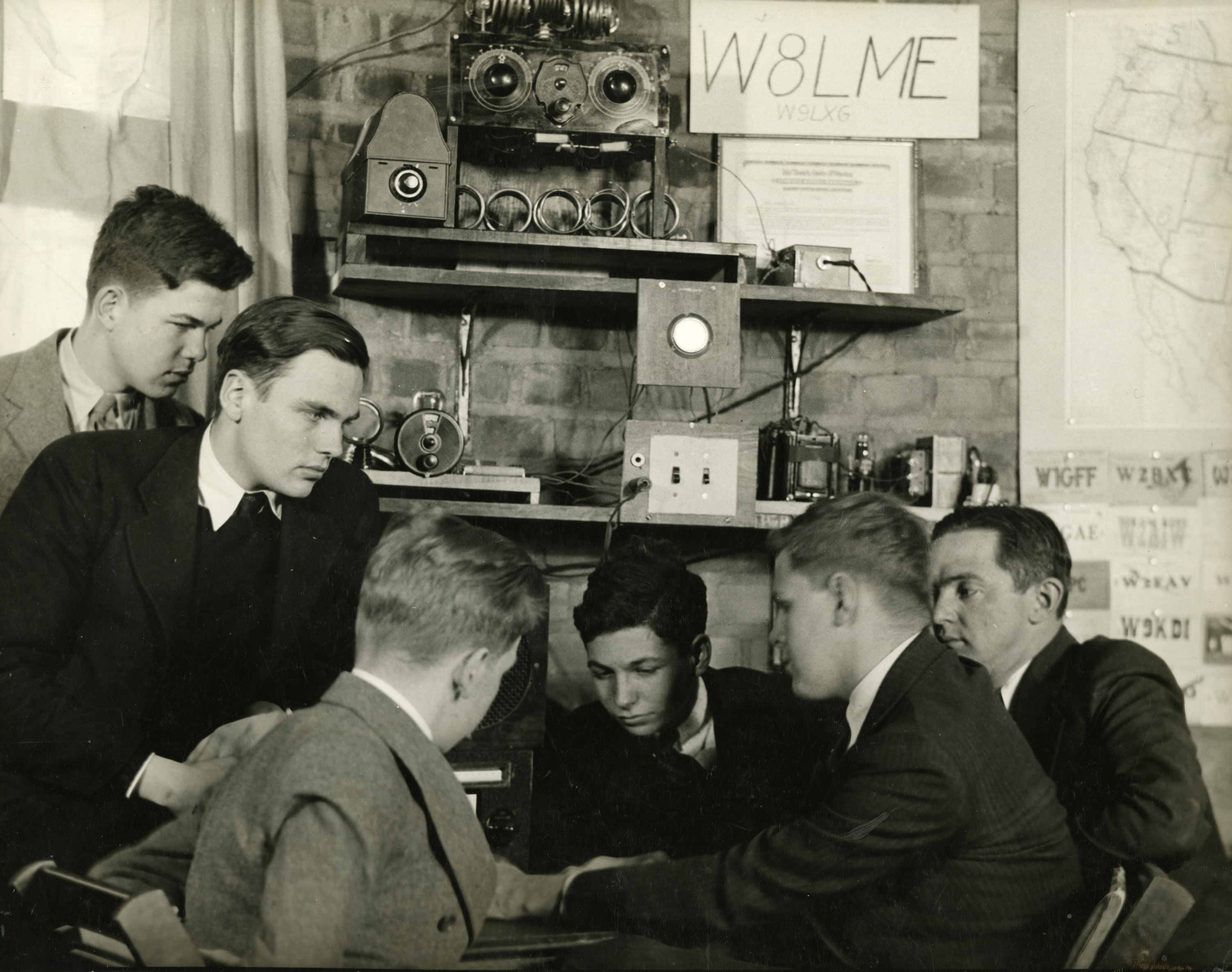
Cranbrook School Radio Club, 1935. Photographer, Richard G. Askew.

Cranbrook School Radio Club, 1935. Photographer, Richard G. Askew.

Several of the earliest clubs and organizations still exist at Cranbrook schools today, including the Radio Club and Ergasterion—an organization representing theatre productions. Other clubs continue to unite alumni, such as “The Trifling Monographs of Birmingham, Michigan,” which had its first meeting in September 1971. The five founding members were Susan Rice (a 5th grade teacher at Brookside School); Lucy Chase Williams, then a Kingswood junior; John Gerard, then a Cranbrook junior; and Michael A. Cooper and Dion Kerr, Cranbrook sophomores.

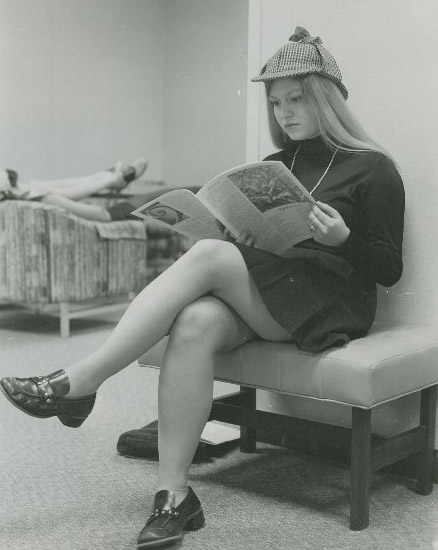
The club was a scion of the Baker Street Irregulars (BSI)—an organization of Sherlock Holmes enthusiasts founded in New York in 1932. The BSI is considered the preeminent Sherlockian group in the U.S. and has published the Baker Street Journal since 1946. A local member of the BSI was a mentor to The Trifling Monographs (TTM) and regularly quizzed the members. The group took several field trips and in 1972 traveled to Canada to see the Windsor Light Opera production of the musical, “Baker Street.” In 1973, when Williams matriculated to Yale, the TTM became a corresponding scion, and remains so to this day.

KS student Lucy Chase Williams, head of the TTM, reads an issue of the Clarion in the Kingswood School Common Room, 1973. Photograph courtesy of Lucy Chase Williams.

KS student Lucy Chase Williams, head of the TTM, reads an issue of The Clarion in the Kingswood School Common Room, 1973. Photograph courtesy of Lucy Chase Williams.

As students head back to school after the Labor Day weekend, they will have much to look forward to above and beyond their studies. Today the upper school boasts nearly 40 clubs and organizations, including Anime, Beekeeping, Wilderness Expedition, Chamber Music, and Random Acts of Kindness.

Gina Tecos, Archivist

Create a website or blog at WordPress.com