Craft in Time: Oscar Bach and the Cranbrook School Dining Hall Clock

For nearly ninety years, diners in the Cranbrook School dining hall have marveled at the clock that hangs high above the fireplace. Designed and fabricated by New York metalsmith Oscar Bruno Bach, the clock is a tribute to George Booth’s beloved Arts and Crafts Movement. Each hour is represented by an art or craft, ranging from metalworkers to woodworkers.

Cranbrook School Dining Hall, 1928. Peter A. Nyholm, photographer.

Cranbrook School Dining Hall, 1928. Peter A. Nyholm, photographer.

Oscar Bruno Bach (1884-1957), who was born in Germany, came to the United States in 1913 and established a metal design studio with his brother in New York City. As they built up their reputation and the business grew, Bach exhibited his work through The Architectural League of New York and at the Metropolitan Museum of Art, among others. His work graces numerous churches, industrial buildings, and residences primarily in New York but also in the Midwest. His first known work in Michigan was ornamental metalwork for the Blessed Sacrament Cathedral in Detroit (1915).

Bach was known for incorporating a variety of metals and metal techniques in his work. Cranbrook’s clock (1926) is made of four concentric iron rings with a center element (two male figures at an anvil) of repoussé brass surrounded by three brass “flame” rings. Each of the twelve figures representing arts, crafts, and trades are also made of brass, surrounded by floral elements made of iron. Copper was used for the rivets and for the small fleur-de-lis elements on the outer rim. Finally, the hour and minute hands are made of aluminum with brass rivets.

Detail of the center panel, 2001. The clock was restored courtesy Cranbrook Class of 2000.

Detail of the center panel, 2001. The clock was restored courtesy Cranbrook Class of 2000.

The clock however was not Bach’s first contribution to Cranbrook. In 1919, he fabricated lead “conductors” for the exterior of the east and west wings of Cranbrook House. George Booth also acquired a smoking stand (1922) and two table lamps (1929) for Cranbrook House, and commissioned Bach to fabricate Cranbrook School’s Peacock Gates (after Eliel Saarinen’s drawings) and the Treasury Door (1928) at Christ Church Cranbrook. Other local commissions include The Detroit Players Club (1925), Moulton Manor (1926), the estate of William Scripps (Ellen Booth’s brother) in Lake Orion, and the First National Bank (1927) in Ann Arbor.

One of the four Oscar Bach “conductors” at Cranbrook House, 2004. Mira Burack, photographer.

One of the four Oscar Bach “conductors” at Cranbrook House, 2004. Mira Burack, photographer.

One of the most interesting discoveries I made in writing this post was that the clock used similar elements as doors Bach designed for the new wing of the Toledo Art Museum (1925). They both feature arts and crafts figures – a potter, sculptor, glassblower, draughtsman, metal worker, and bookbinder. In January 1926, Bach received the “Medal of Honor in Design and Craftsmanship in Native Industrial Art” from the Architectural League for his design for the doors so it’s no wonder that he incorporated some of the same elements in the Cranbrook School dining hall clock. I may be a bit partial, but I think our clock is even more magnificent than the doors and I imagine you will too!

Leslie S. Edwards, Head Archivist


A New Identity

In May 1930, the Cranbrook Foundation voted to appoint a board to oversee the development of the Cranbrook Institute of Science (CIS) and to design a building for the Institute’s programs. Initially, CIS was a department within the Foundation, but by Dec 1931, George Gough Booth concluded that it had proven itself such an important unit in the Cranbrook educational group, that it should no longer be an activity of the Foundation. It became a separately organized trust which held title to the land and buildings and operated its programs independently.

In Dec 1935, then-CIS Director, Robert T. Hatt, wrote to well-known painter and illustrator, Rockwell Kent. Hatt had been drawn to a volume of Kent’s bookplates that he had in his collection, and asked him if he would create a new seal for the Institute. By Feb 1936 Kent submitted his final design to Hatt, stating, “it is entirely unlike both what you originally suggested and the sketch that I submitted.”

Rockwell Kent's final design for the CIS emblem, 1936.

Rockwell Kent’s final design for the CIS emblem, 1936.

In the CIS sixth annual report, Hatt described the new seal: “the triangle is the basic geometrical figure. The two figures looking respectively upwards at the stars and downwards at the earth represent the field of Science as both extensive and intensive.”

Rockwell Kent created bookplates for the Rochester (NY) Public Library, Joseph Kennedy, the Library of Congress, and many others. Kent was also a prolific illustrator. His work includes well-known editions of Moby Dick, Candide, Leaves of Grass, the Canterbury Tales, and Beowulf (among others). In addition to Kent’s enduring design legacy at CIS, his gift of archaeological relics from Greenland in 1937 was the first material from that area to be accessioned into the Institute’s collection.

Gina Tecos, Archivist


From the Outside Looking In

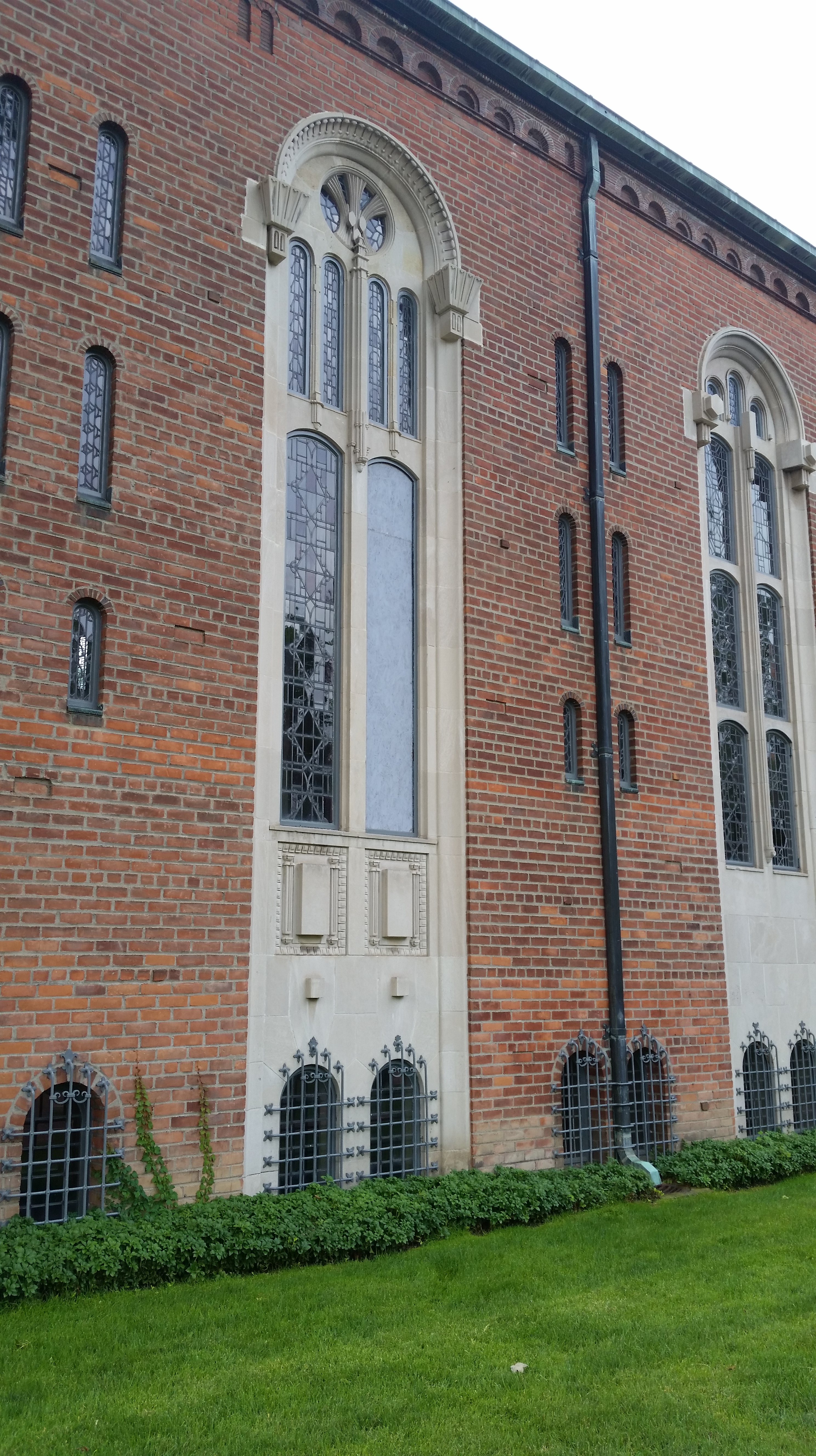
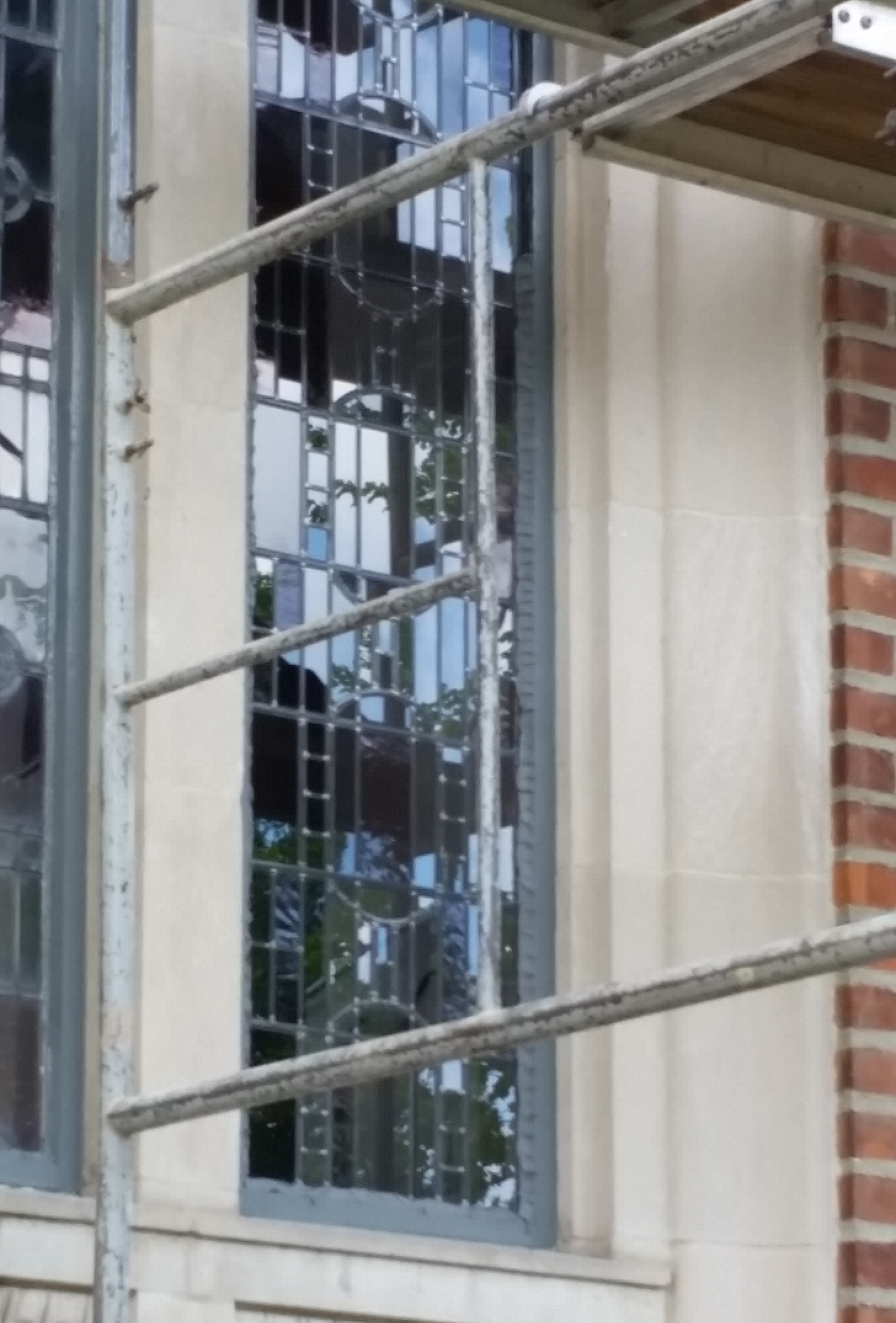
In the fall of 2015, one of the leaded glass windows in the Cranbrook Dining Hall was damaged. The window, one of many designed by Eliel Saarinen in 1927, is known as a lancet – a tall, narrow window, usually with a point at the top. The extent of the damage required that the window be removed and restored offsite by Thompson Art Glass in Brighton, Michigan. Yesterday, the window was returned and reinstalled.

The window, ready for reinstallation.

The window, ready for reinstallation.

Glaziers from Thompson Art Glass reinstalling the window.

Glaziers from Thompson Art Glass reinstalling the window.

An interior view of Charlie from Thompson Art Glass puttying the window. Photo by Giuliano N. Stefanutti, CKU '15.

An interior view of Charlie from Thompson Art Glass putting in the window. Photo by Giuliano N. Stefanutti, CKU ’15.

A putty knife and a steady hand completed the finish work.

A putty knife and a steady hand completed the finish work.

Watching Matt and Charlie from Thompson Art Glass work on the glazing made me think of all the craftspeople, artisans, and contractors who worked hard to create Cranbrook. You can find some of their stories archived on The Kitchen Sink.

Leslie Mio, Assistant Registrar

Transcontinental Threads: Maja Andersson Wirde

One of my favorite parts of my job as an archivist is assisting researchers with locating materials in our collections. Often times a scholar will visit here with a set plan for their research project, and pre-conceived ideas about what they might find here or how the materials in our collections will support their thinking. One of my personal pleasures is when the researcher finds something new or surprising in our collections that changes their course of action. This is exciting on many levels – for them as well as for me!

In August 2015, Swedish author Marie Andersson visited Cranbrook to study the work of the Swedish weaver Maja Andersson Wirde (no relation) in preparation for a monograph on the life and work of Wirde at the request of Wirde’s family. Wirde (1873-1952), an accomplished weaver and textile designer, was asked by Loja Saarinen to come to Cranbrook in 1929 and oversee the operation of Studio Loja Saarinen which was established to design and produce all of the textiles for Kingswood School Cranbrook. As many researchers before her, Marie Andersson found her visit to Cranbrook Archives to be a revelation, and she recently wrote to me that “the Cranbrook chapter became an important part of the book, much more than I thought before I visited you.”

Maja Andersson Wirde (standing) with Loja Saarinen, Studio Loja Saarinen, ca 1930. Detroit News photograph, Courtesy Cranbrook Archives.

Maja Andersson Wirde (standing) with Loja Saarinen, Studio Loja Saarinen, ca 1930. Detroit News photograph, Courtesy Cranbrook Archives.

Prior to coming to Cranbrook, Maja Andersson Wirde had been employed by Handarbetes Vänner (The Friends of Handicraft) in Stockholm from 1907-1929. Her textile designs were represented in international exhibitions including Stockholm (1909 and 1930), Malmo (1914), Gothenburg (1923), and Paris (1925). However, according to Marie Andersson, Wirde’s “time spent at Cranbrook must be looked upon as the most important period” in Wirde’s life as an artist, and she created some of her most significant work while here.

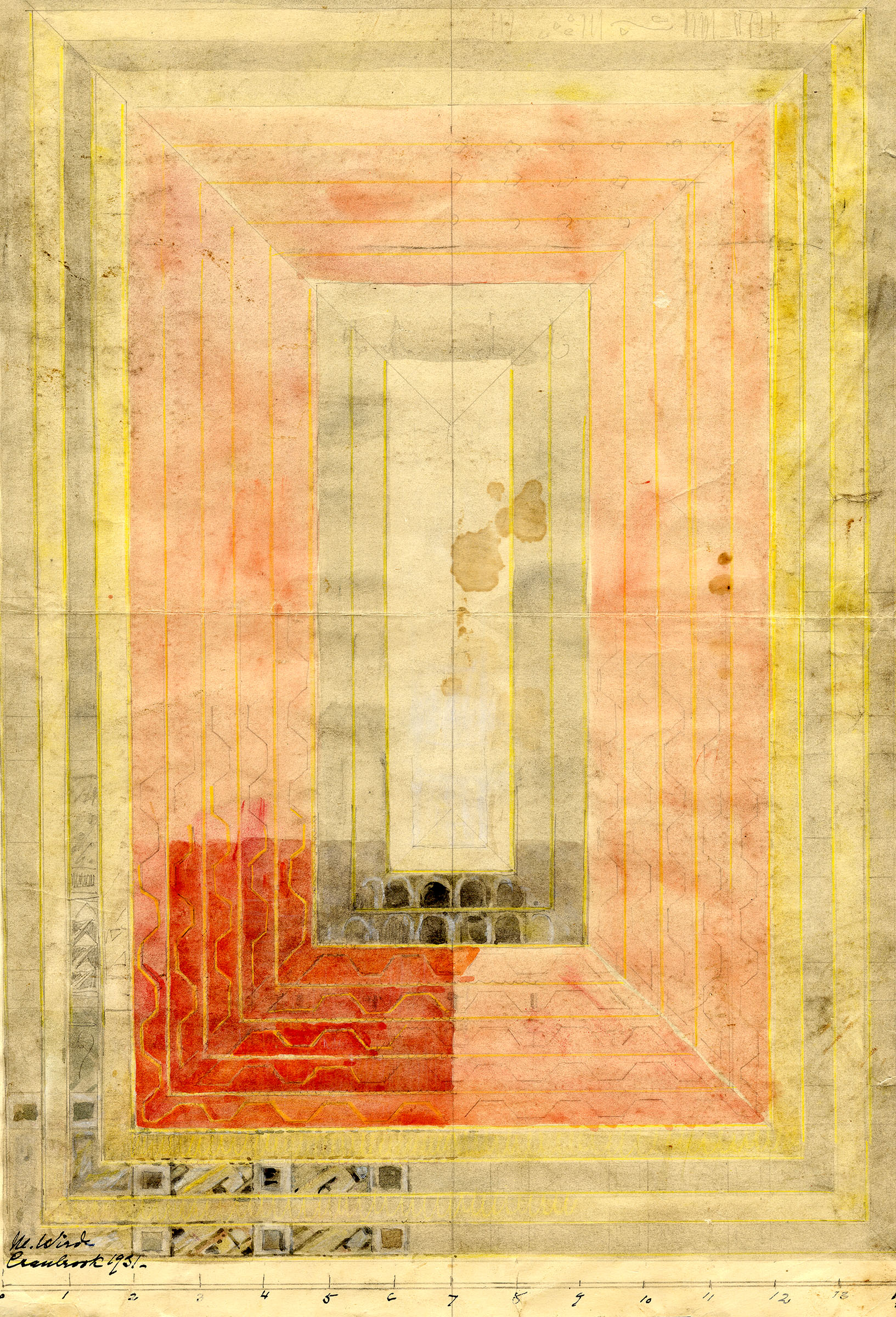
So, what did Marie discover at Cranbrook Archives? Comparing photographs and documents from our collections with images of watercolor sketches from museums and archives in Sweden, Marie and I spent two days of “fantastic co-operation” in order to uncover the extent of Wirde’s contribution to the history of textiles at Cranbrook, particularly Kingswood School.

Watercolour sketch by Maja Wirde (1873-1952), Collection of Smålands Museum, Växjö, Sweden.

Watercolour sketch by Maja Wirde (1873-1952), Collection of Smålands Museum, Växjö, Sweden.

The rug for Reception Room III (Rose Lounge) in situ, Kingswood School, 1932. George Hance, photographer, Courtesy Cranbrook Archives.

The rug for Reception Room III (Rose Lounge) in situ, Kingswood School, 1932. George Hance, photographer, Courtesy Cranbrook Archives.

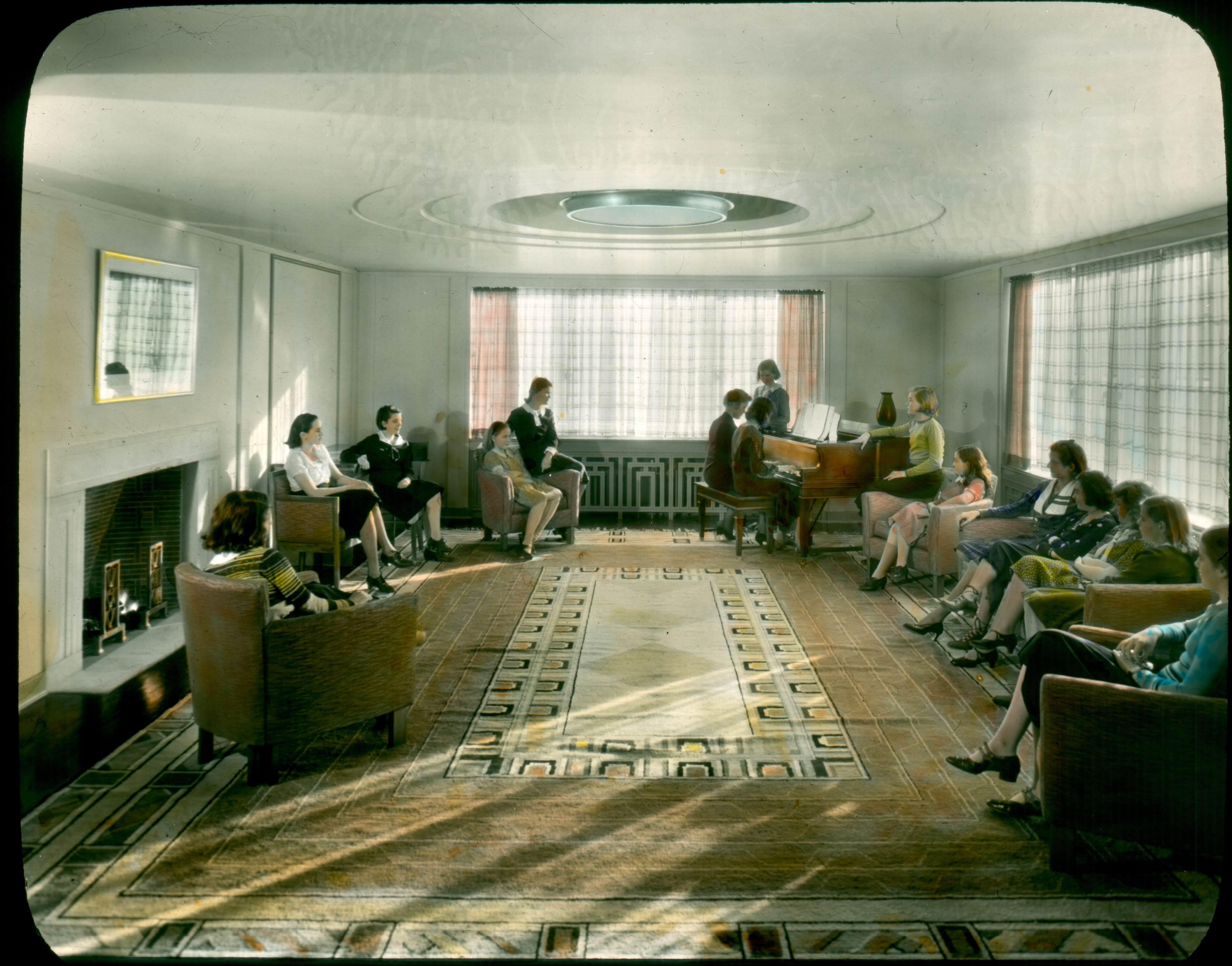
Prior to Marie’s visit, Wirde was known for her work as the shop supervisor at Studio Loja Saarinen, the weaving instructor at Kingswood School, and for her designs for several rugs and textiles for Kingswood School, including the fabric for the dining hall chairs and most notably, the large rug for the Green Lobby. However, Loja Saarinen was given credit for the rest. Now, Cranbrook can tell a more inclusive story – for we discovered that it was Maja Andersson Wirde who designed the majority of the textiles for Kingswood School – eleven rugs for lobby/reception halls, all of the curtains and rugs for the dormitory rooms, as well as curtains for the dining hall, study hall, and library! In addition, she designed rugs for the Academy of Art, Saarinen House, and George Booth’s Cranbrook Foundation Office.

While the book, “Trådar ur ett liv: textilkonstnären Maja Andersson Wirde” was published pirmarily in Swedish, there is a translation of the chapter on Cranbrook in the back, and the book features numerous images from Cranbrook Archives. We are so excited to be able to tell a more comprehensive story not only about the objects in our care, but also a key individual in our rich history.

Leslie S. Edwards, Head Archivist
 

Skridskoprinsessan at Cranbrook

Archives staff works very closely with the Capital Projects department here on campus and we recently received an email from Project Manager, Craig Hoernschemeyer, about a possible Cranbrook connection with a poster he came across. The poster is of Norwegian Olympic ice skating champion, Sonja Henie, who won the gold medal in 1928, 1932 and 1936 and was also a film star in the late 1930s-1940s. Craig wondered if perhaps Henie could have been sculptor Carl Milles’ muse for the “Ice Princess”.

Film poster featuring Sonja Henie. Skriskoprinsessan is the Norwegian word for Ice Princess.

Film poster featuring Sonja Henie. Skridskoprinsessan is the Swedish word for Ice Princess.

The first Ice Princess bronze was cast in 1949, making it a relatively late Milles sculpture. Stockholm’s Millesgarden attributes the design to a 1948 visit to Rockefeller Center in New York City. As the story goes, Milles was so fascinated with the skaters he saw at the Rockefeller ice rink, he designed the Ice Princess to match their fluidity and movement.

The Ice Princess in the Fisher Cummings Courtyard at the Girl's Middle School. Photographer, Hoernschemeyer.

The Ice Princess in the Fisher Cummings Courtyard at the Cranbrook Kingswood Girl’s Middle School. Photographer, Craig Hoernschemeyer.

There are more than 100 Milles sculptures across Cranbrook Educational Community’s campus. The Ice Princess was cast at the Herman Bergman AB foundry in 2012 and was installed in 2013 in the Fisher Cummings Courtyard at the Cranbrook Kingswood Girl’s Middle School.

Rockefeller Center? Sonja Henie? What do you think?

Gina Tecos, Archivist


Eat, Greek, and Be Merry: the Greek Theatre Turns 100!

Drama and arts and crafts have been intertwined in Detroit history for more than 100 years. Under the auspices of the Detroit Society of Arts and Crafts (DSAC), on January 19th 1910, May Morris (daughter of William Morris) captivated a capacity crowd at the Detroit Museum of Art with her illustrated lecture “Pageantry and the Mask.” Morris’s presentation helped mark a turning point in propelling Detroit onto the national stage as an arts and crafts center. Almost immediately after May Morris left Detroit, Alexandrine McEwen, a bookplate artist and founding member of the DSAC, penned what was termed a “modern immorality play” called Everywoman with characters named “Suffrage” and “Art.” Less than a month later, she wrote The Masque of Arcadia, another outdoor play held on the grounds of Clairview, J.L. Hudson’s Grosse Pointe estate. These performances led to the DSAC being the first to foster a little theatre as part of their program.

By 1914, George Booth (the first president of the DSAC) already had plans in mind for a bathing pavilion and a theatre on the hill overlooking Cranbrook House. (My own suspicion is that he did not like the fact that the DSAC performances were not held on HIS estate!) In early 1915, Booth commissioned Canadian architect Marcus Burrowes to draw up the plans for an outdoor Greek Theatre. The open-air amphitheater, constructed of stone, seats nearly 300 people and was described in contemporary news articles as a “gem of architecture” and a “temple of art.” By May 1916, landscaping was underway and red tulips graced the front of the bathing pavilion.

Invitation Card, The Cranbrook Masque, June 1916. George Gough Booth Papers.

Invitation Card, The Cranbrook Masque, June 1916. George Gough Booth Papers.

Meanwhile, the DSAC was planning the production of The Cranbrook Masque which would also serve as the public dedication for the new Greek Theatre. The play showed the development of drama from ancient to modern times in five episodes, emulating May Morris’s lecture theme from 1910. For more on the play, see an earlier blog post.

Greek Theater masque, 1916

The Cranbrook Masque at the Greek Theatre, 1916. Hand-tinted glass slide.

Fast forward to 1991 and the 75th anniversary of the Greek Theatre. A team of dedicated Cranbrook staff, historians, and theater enthusiasts initiated the restoration of the Greek Theatre and a contemporary production, using the script from the original Masque, this time with cast members from St. Dunstan’s Guild and dancers from Jessie Sinclair’s Cranbrook Kingswood Dancers.

E465

Cranbrook House sunken garden (originally called the kitchen garden) with staked tomato plants, ca 1915.

This year marks the 100th anniversary of the Greek Theatre and a long-standing tradition of theater programs at Cranbrook. In honor of this memorable event, the Cranbrook Center for Collections and Research will be presenting “Edible Landscapes: A Midsummer Night’s Dinner.”

Leslie S. Edwards, Head Archivist
New Center Logo & A Fond Farewell

The Cranbrook Center for Collections and Research has officially launched our new logo! What follows is a description of where each of the letters comes from in the history of Cranbrook or the location on the campus!

The (first) C in Cranbrook is from the logo George Gough Booth created for the Cranbrook Press in 1901, three years before he and his wife Ellen established their estate in Bloomfield Hills.

IMG_0361

The Cranbrook Press (1900-1902) was founded by George Booth in the attic of the Detroit Evening News Building.  Booth emulated the work of William Morris and his Kelmscott Press, not just in design but also in the level of hand-craftsmanship.

Continue reading

First Impressions; or Pride and Appreciation

As the newest staff member at the Cranbrook Center for Collections and Research, I am on a HUGE learning curve.  I knew, taking this position, that Cranbrook had a deep and rich history, and a long association with famous artists, designers, and architects.  However, my first days here were spent touring campus, witnessing just what those associations created.

My first impressions of the cultural properties I will be working with are “Wow! What?! Cool.”  I hope in the coming months to be able to share some of those moments on the Kitchen Sink, but here are my first three:

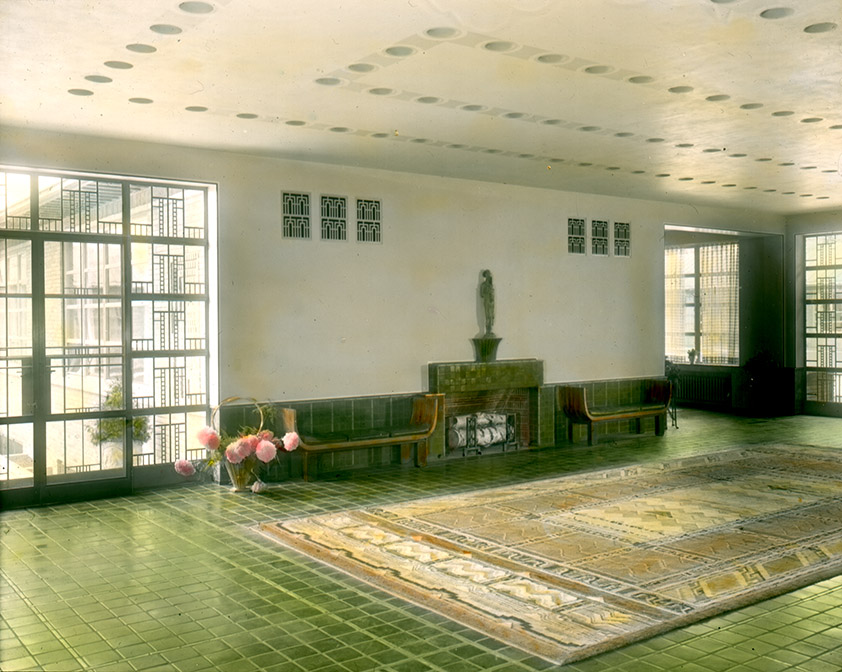
Wow: Green Lobby, Kingswood School.

Kingswood School Green Lobby, photographer George W. Hance, 1932. Cranbrook Archives.

Kingswood School Green Lobby, photographer George W. Hance, 1932. Cranbrook Archives.

What: The 319-acre campus was designated a National Historic Landmark on June 29, 1989 for its significant architecture and design – 319-acres full of cultural properties!

Cool: Thornlea – and I get to explore all the rooms.

Leslie S. Mio, Assistant Registrar, Cranbrook Center for Collections and Research

Confessions of a Book Nerd

I have a confession to make. The smell of library books, an afternoon at an independent book store, re-reading a favorite novel – these are my ultimate indulgences. I could spend hours reading book blogs, listening to author interviews, or pouring over book-related tchotchkes on Etsy. I am a book nerd. My (nearly) one year as an Archivist at Cranbrook has been heaven. I discover something new every time I have the opportunity to walk into George Booth’s personal library at Cranbrook House. I find profound satisfaction in creating a catalog record for a new book or discussing MARC records with colleagues.

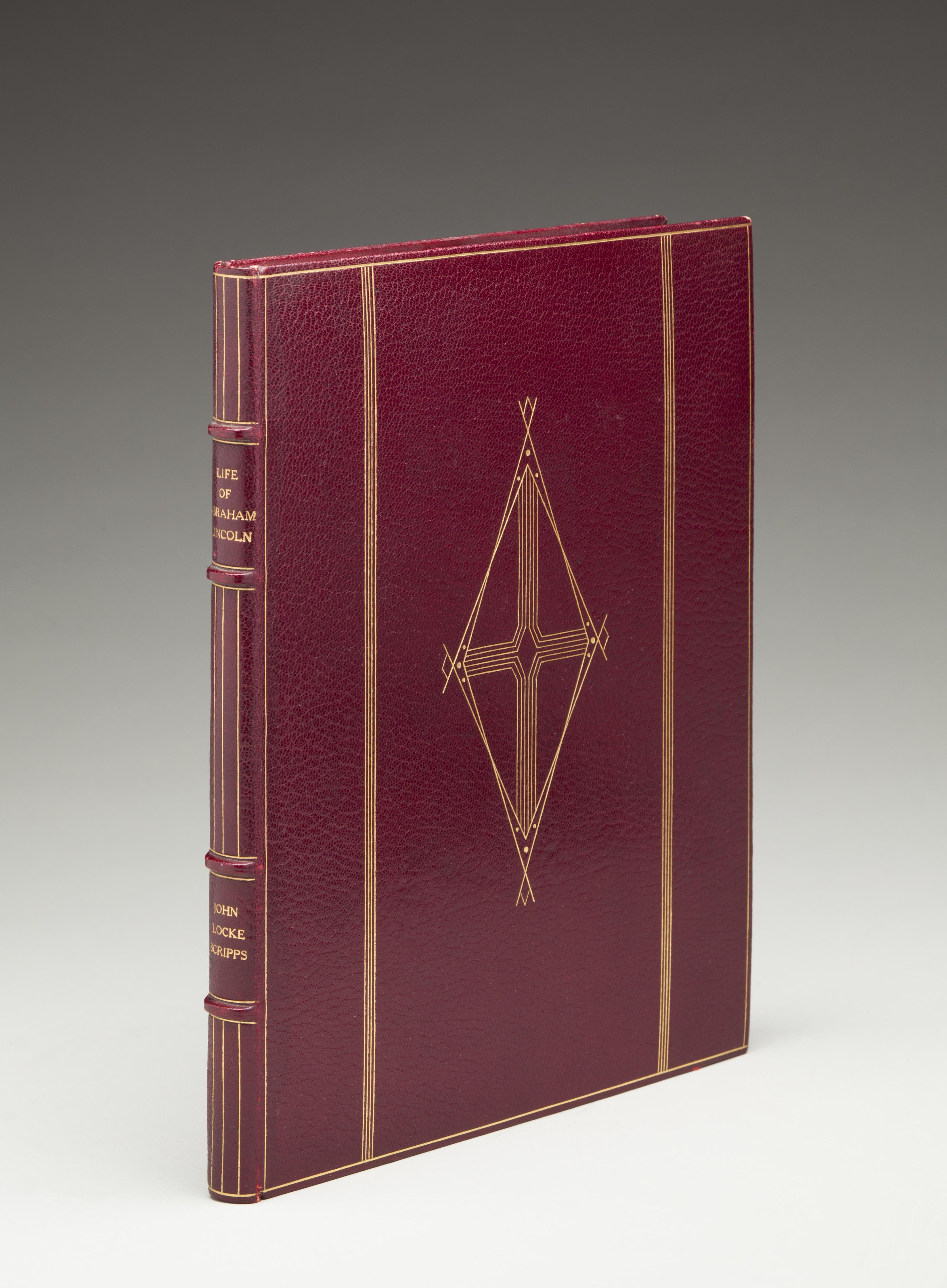
One of my favorite collections at Cranbrook is the Cranbrook Press and Photo Department Records. While working on a Cranbrook Press request recently, I came across the work of the bookbinder, Jean Eschmann (1896-1961), hired by George Booth in 1929. Eschmann was hired to set up the bookbinding workshop in the Arts and Crafts Studios at Cranbrook, where he remained until 1933 when desperate financial times forced the closure of the studio.

Jean Eschmann binding, Cranbrook Archives

English Fairy Tales, tooled leather. ca 1931. Cranbrook Archives.

Educated in Zurich, Eschmann traveled and studied in Austria, France and Switzerland. He came to the United States with his family in 1919. He was a member of the Society of Arts and Crafts in Boston and studied with Mary C. Sears. In 1929 George Booth hired Eschmann to create handmade bindings for the Art library and for his own personal library. Eschmann also taught bookbinding and hand-tooling classes to the community.

211044-145

The First Published Life of Abraham Lincoln, tooled leather. ca 1931. Cranbrook Archives.

Eschmann’s work has been exhibited at various museums in the United States, as well as at the Book Workers Guild in New York. His bindings were included at the World Fair in Paris in 1937 and at the Golden Gate Exposition in San Francisco in 1939. In 1945 Eschmann received the emblem for Meritorious Service from the Civilian Awards Committee of the Surgeon General’s Office for his work in restoring thousands of rare books at the Army Medical Library during World War II.

Evidence of Eschmann’s beautiful leather and tooling work can be seen in several examples in the rare book collections here in the Archives, and also in the Academy of Art library. I hope you enjoy the examples in this post. They definitely make this book nerd swoon!

Gina Tecos, Archivist

Photo Friday: A Labor of Love

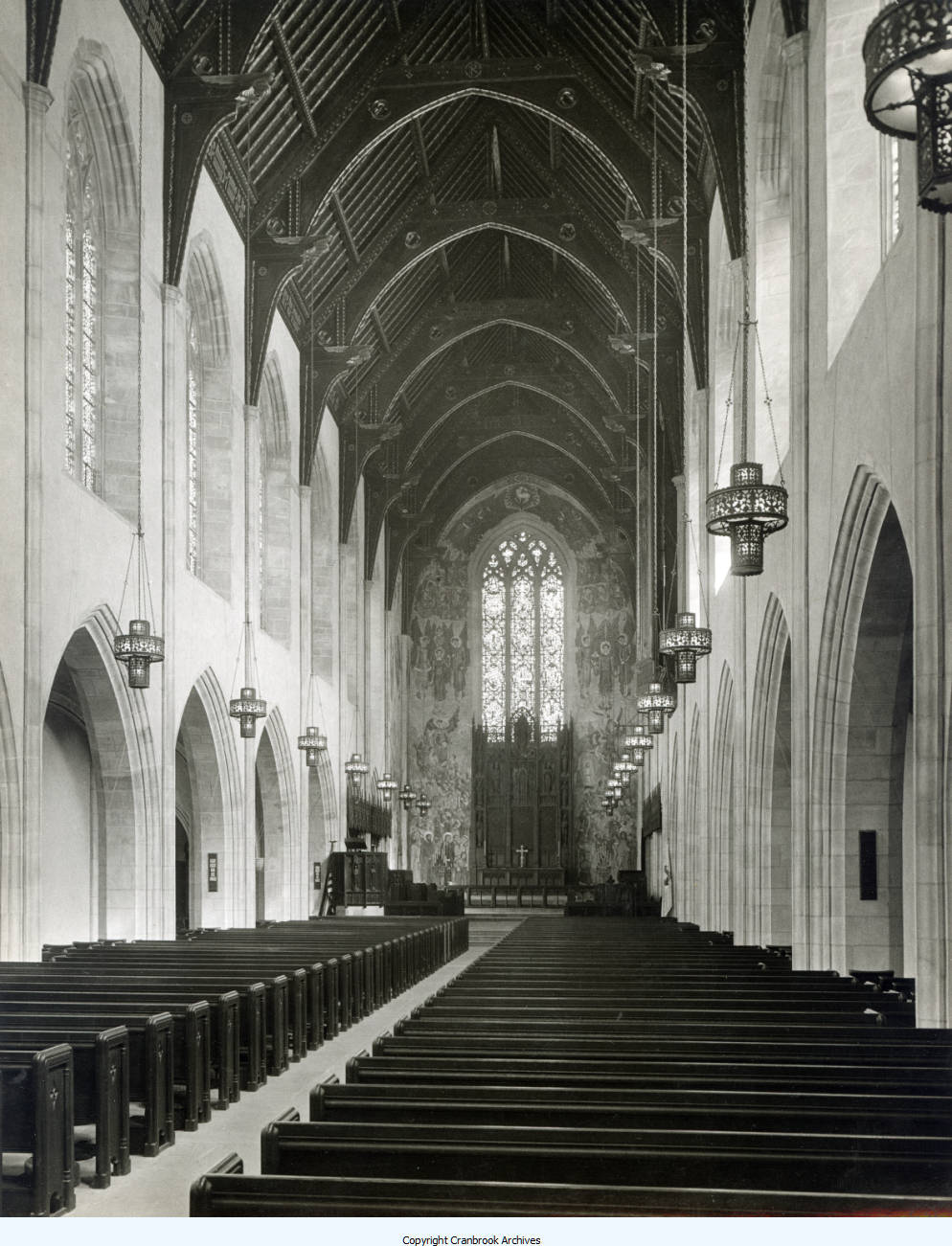
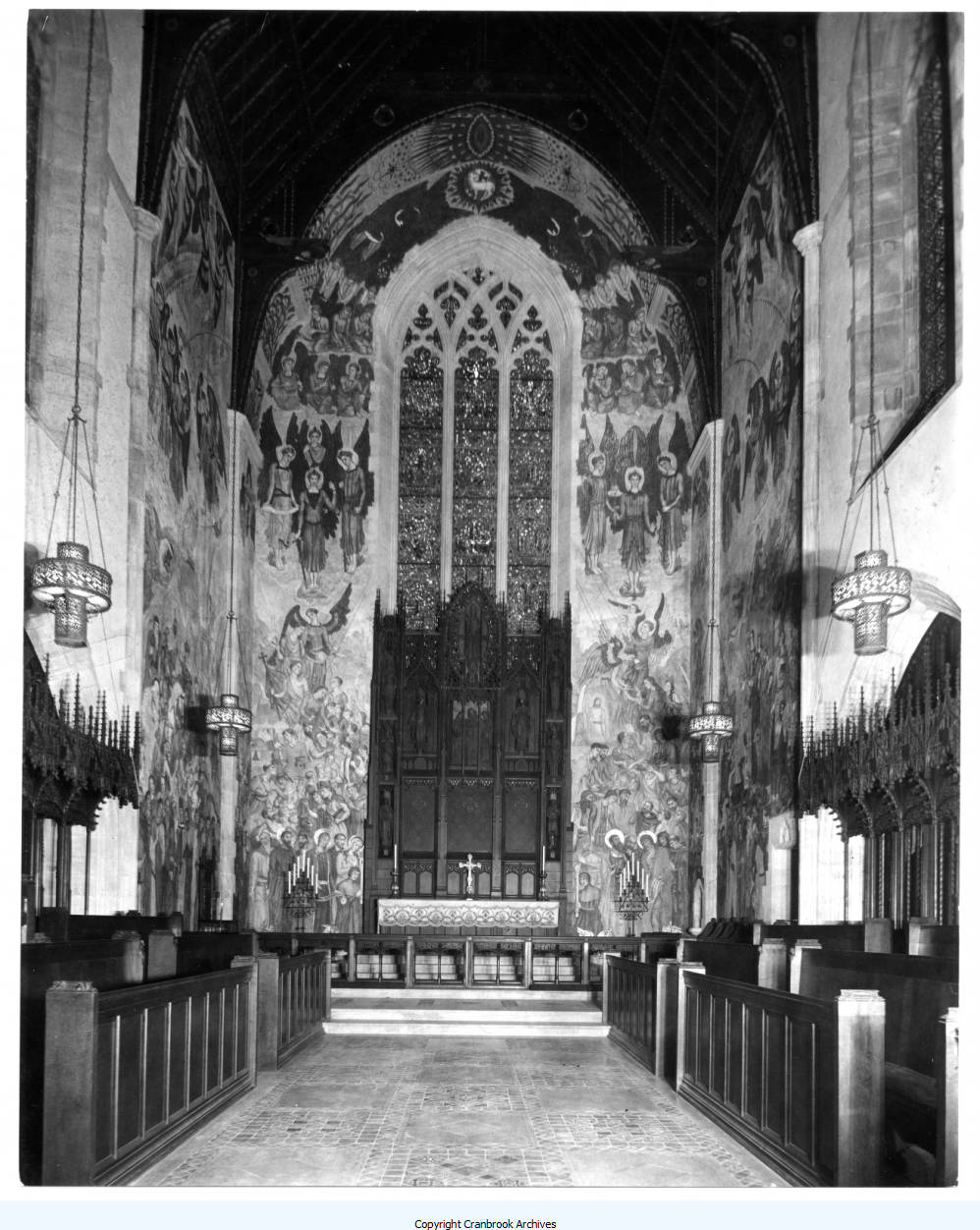
Christ Church Cranbrook Interior. Cranbrook Historic Photograph Collection, Cranbrook Archives.

CCCnave

Christ Church Cranbrook Nave. Cranbrook Historic Photograph Collection, Cranbrook Archives.

After a visit to Christ Church Cranbrook earlier this week, I knew it needed to be highlighted as today’s Photo Friday! George G. Booth conceived Christ Church to be the moral center of the new community which he was building at Cranbrook. The photos show a great overview of the expansiveness of the church and shed some light on the magnitude of the work involved in its design. Each of these elements adds to the overwhelming detail of George Booth’s vision and the care in the design of Christ Church Cranbrook.

The church is Booth’s testament to the Arts and Crafts movement. He carefully acquired and commissioned each work of art to add to the overall wonderment of the church and to pay tribute to those who have devoted their lives toward artistic and altruistic pursuits.  The works of art range from the sterling altar plate to stained glass windows, altar frontals, tilework, woodcarvings, paintings, sculptures, and metalwork, most from noted Arts and Crafts men and women.

These photographs, taken five years after the 1928 dedication of Christ Church Cranbrook show the interior of the church sanctuary and a detail view of the nave of the church. The large fresco flanking the high altar was designed and executed by Katherine McEwen, an old friend of Booth’s, and one of the founding members of the Detroit Society of Arts and Crafts.  From the work of Katherine McEwen to Oscar Bach, Samuel Yellin, and Hildreth Meire, to name a few, Christ Church Cranbrook is an architectural gem which should be experienced in person!

Stefanie Dlugosz, Center for Collections and Research, Collections Fellow


Create a website or blog at WordPress.com