Finding Olmsted at Cranbrook

George G. Booth didn’t just commission renowned architects in building Cranbrook, he also engaged well-respected landscape designers. Architecture and nature were equally considered. Booth’s own 1904 topographical map demonstrates his grandiose vision for reshaping what was then farmland. It is not surprising, therefore, that Cranbrook has a connection to the American “father of landscape architecture,” Frederick Law Olmsted.

Leading up to and following the Center’s most recent Bauder lectureExperiencing Olmsted: The Enduring Legacy of Frederick Law Olmsted’s North American Landscapes, Olmsted-related materials in the Archives were revisited and new associations were made.

It was Frederick Law Olmsted’s successor firm, the Olmsted Brothers, led by his sons, that worked on the landscape of Christ Church Cranbrook from 1926-1928. Simultaneous to the construction of the church by the architecture firm Bertram G. Goodhue Associates, the Olmsteds created plans for the surrounding land between Lone Pine, Cranbrook, and Church Roads.

Artistic rendering of Christ Church Cranbrook Rectory, 1924. Bertram G. Goodhue Associates. Courtesy of Cranbrook Archives.

A few pieces of correspondence in the George Gough Booth Papers shed light on the close relationship between Booth, the chief architect Oscar H. Murray, and the Olmsted Brothers. But there are many more letters from Job 7754 (aka Christ Church Cranbrook)  in the Frederick Law Olmsted Papers and Olmsted Associates Records held by the Manuscript Division of the Library of Congress in Washington, D.C., all of which can be read online.

Letter from Oscar H. Murray to George G. Booth relating a response from Olmsted Brothers, December 7, 1927. Courtesy of Cranbrook Archives.

The Archives also holds two reproductions of Olmsted Brothers plans: the second and the tenth drawing revisions submitted in 1927 and 1928, respectively. In these, plants are clearly numbered, but the Archives does not hold the accompanying keys. At the suggestion of Bauder lecturer, Charles Birnbaum, President, CEO, and Founder of The Cultural Landscape Foundation in Washington, D.C., I reached out to the Frederick Law Olmsted National Historic Site in Brookline, Massachusetts. They graciously shared scanned copies of both planting plans, for our reference.

Christ Church Cranbrook Planting Plan, March 11, 1927, revised October 1927. Blueprint for Revised Plan Number 2. Olmsted Brothers. Courtesy of Cranbrook Archives.

We now know, for example, that the large evergreens that George Booth mentions in a letter to Oscar Murray likely refer to the Austrian Pine (10 and 82), Douglas Fir (83), and White Pine (90) enumerated in a November 4, 1927 plant list for Plan No. 2. And, we can see where on the blueprint those trees were proposed to be planted!

Excerpt from page two of George Booth’s letter to Oscar Murray, November 23, 1927. Courtesy of Cranbrook Archives.

Many more discoveries are sure to come, now that we have a more complete picture of the original landscape design for Christ Church Cranbrook. I know that next time I drive or walk by the church, I will be taking a closer look at the vegetation.

Deborah Rice, Head Archivist, Cranbrook Center for Collections and Research

Editor’s note: To view the five drawings in the Olmsted Archives at Brookline, including originals of  the Cranbrook copies, and eight scrapbook pages that include Goodhue Associates renderings, visit their Flickr albums.

From Birdhouses to Wildflowers: Cranbrook Institute of Science Bulletins

We recently reorganized materials in the Archives Reading Room to provide easier access to Cranbrook Publications and encourage greater use of these informative resources. The first series available for ready reference are the Cranbrook Institute of Science (CIS) Bulletins, which are arranged in the full series of 64 issues. The Bulletins are periodically published works of original scientific research, which was part of the mission of the early Institute.

Newly shelved Cranbrook Institute of Science Bulletins. Photograpy by Laura MacNewman.

Initially established in 1930, the Institute’s stated purpose was, “to add to and strengthen the educational and cultural facilities within the State of Michigan.” It was established as a separate Cranbrook institution on February 10, 1932. An aim set for the staff was not only to supplement the facilities of the several Cranbrook Schools, but to engage in original research and publication, “to add to the sum total of human knowledge.” The CIS originally comprised nine divisions of scientific fields and administration: Astronomy, Geology, Botany, Entomology, Aquatic Biology, Mammology, Anthropology, Education, and Preparation, and the Bulletins reflect these fields of inquiry.

The Bulletins range in size, from pamphlets to hard cover books, and are published ad hoc according to the completion of research projects. The incredible diversity and particularity of topics make it exceedingly difficult to select which to highlight for your interest. Thus, I have tried to pick across the divisions of research to deliver to you an array of examples, not only works of scientific distinction but of artistic beauty and thoughtfulness in their presentation.

This series of periodicals, published between 1931 and 1999, focus predominantly on Michigan with some studies further afield. They are of unequivocal research value to students and scientists with an interest in the natural world, including its flora and fauna, lakes and fish, archaeological history, and geological development, as well as human geography and cultural history.

The CIS Bulletins are available for research in our public Reading Room. If you are curious to learn more and to explore their contributions to scientific knowledge, come and see! All are welcome to explore and study our collections by appointment Monday to Friday, 9am to 4 pm.

Laura MacNewman, Associate Archivist, Cranbrook Center for Collections and Research

Cranbrook Institute of Science Films Digitized

Cranbrook Archives is pleased to announce the preservation and digitization of eight Institute of Science early education films. Made possible through generous funding by the National Film Preservation Foundation (NFPF), these silent films were sent to a professional film lab where they were inspected and expertly cleaned, repaired, copied onto archival safe film stock, and scanned. Previously inaccessible to users due to their fragility, a combined ninety-four minutes (2,450 feet) of footage can now be viewed digitally.
Opening credits from Emergence of the Periodical Cicada at Cranbrook, 1936. Courtesy of Cranbrook Archives.

In a post exactly one year ago, I first mentioned the Institute’s early forays into the burgeoning educational film market of the 1930s. Using 16mm film technology (the amateur version of Hollywood motion picture film), Institute staff documented scientific field research, captured the work of exhibition preparators, and recorded educational programs. Many of these films were shown regularly to museum patrons and were often accompanied by lectures.
With the exception of one 1955 film, the NFPF grant films were all created between 1935 and 1938. Six of the films collectively display a range of astronomical, botanical, zoological, ornithological, and marine ecological research efforts. In addition to Emergence of the Periodical Cicada at Cranbrook, finished titles include Solar Prominences, featuring telescopic footage of solar flares, and Birds in Summer, which tells the story of newly born birds. Untitled films show the behavior of adult birds, deer, and coral reef life.

Birds in Summer, 1935. An Institute scientist can be seen banding a young blue heron. Courtesy of Cranbrook Archives.

While these snapshots in time may no longer be useful as originally intended – to educate the public on their present natural world – they do have the potential to inform current and future research on conservation or climate change. For example, a film on coral reef life, with its unique early underwater footage, offers the opportunity for comparing current conditions with those documented by Institute scientists three generations ago.

Untitled film with underwater footage of a coral reef, circa 1955. Courtesy of Cranbrook Archives.

The remaining two films demonstrate curatorial and membership activities. In one, staff are seen in the Institute library; painting scenes for exhibit backdrops and gathering botanical specimens in a forested setting; and making plaster molds of specimens in an Institute workroom. In another, Institute Junior Members and staff take a field trip to a local quarry to collect rocks and minerals.

Untitled film showing exhibition preparator, Dudley Blakely, painting a display case backdrop, 1936. Courtesy of Cranbrook Archives.

The Institute of Science film project marks the beginning of a concerted effort to digitize the Archives’ audiovisual collections. Due to their age, complex chemical/mechanical makeup, and obsolescent playback equipment (who still owns a VCR?), audio and video recordings capturing the sights and sounds of Cranbrook’s past are some of our most at-risk materials. I hope to share more stories of success in the near future!

Deborah Rice, Head Archivist, Cranbrook Center for Collections and Research

The Gothic Grotesque: Have Confidence, Enter the Sanctuary

When I was asked to gather archival materials related to Cranbrook in Kent, England, a short series of correspondence in the Henry Scripps and Carolyn Farr Booth Papers particularly caught my notice. Written to Henry Scripps Booth, the letters discuss a stone from St. Dunstan’s Church in Cranbrook, Kent, and its overseas delivery to Christ Church Cranbrook. I became quite curious about it.

Carved coign from St. Dunstan’s Church, Cranbrook, Kent, at Christ Church Cranbrook. Laura MacNewman, photographer. Courtesy of Cranbrook Archives.

One handwritten letter in the correspondence was rather difficult to decipher, but once I got the pattern of it, it helped me begin to comprehend the story.

In July 1930, St. Dunstan’s Vicar, Rev. Swingler, acknowledged a request from Booth for a fragment of the church which could be placed in the chapel of the same name at Christ Church Cranbrook.

It was July 1931 before Rev. Swingler wrote again to inform Booth that the stone was ready for dispatch. He explained that the Church Council had welcomed the idea and directed the Fabric Committee to select a stone, which they had, but that the Secretary had forgotten to inform Booth until then, a year later, and it was already on its way!

The forgetfulness of the Secretary and finding appropriate shipping arrangements for such an unusual commodity had caused quite a delay, to which Rev. Swingler writes,

“I am sorry that the matter has not been dealt with more speedily but old Cranbrook has hardly yet learned modern methods of business, as perhaps you know.”

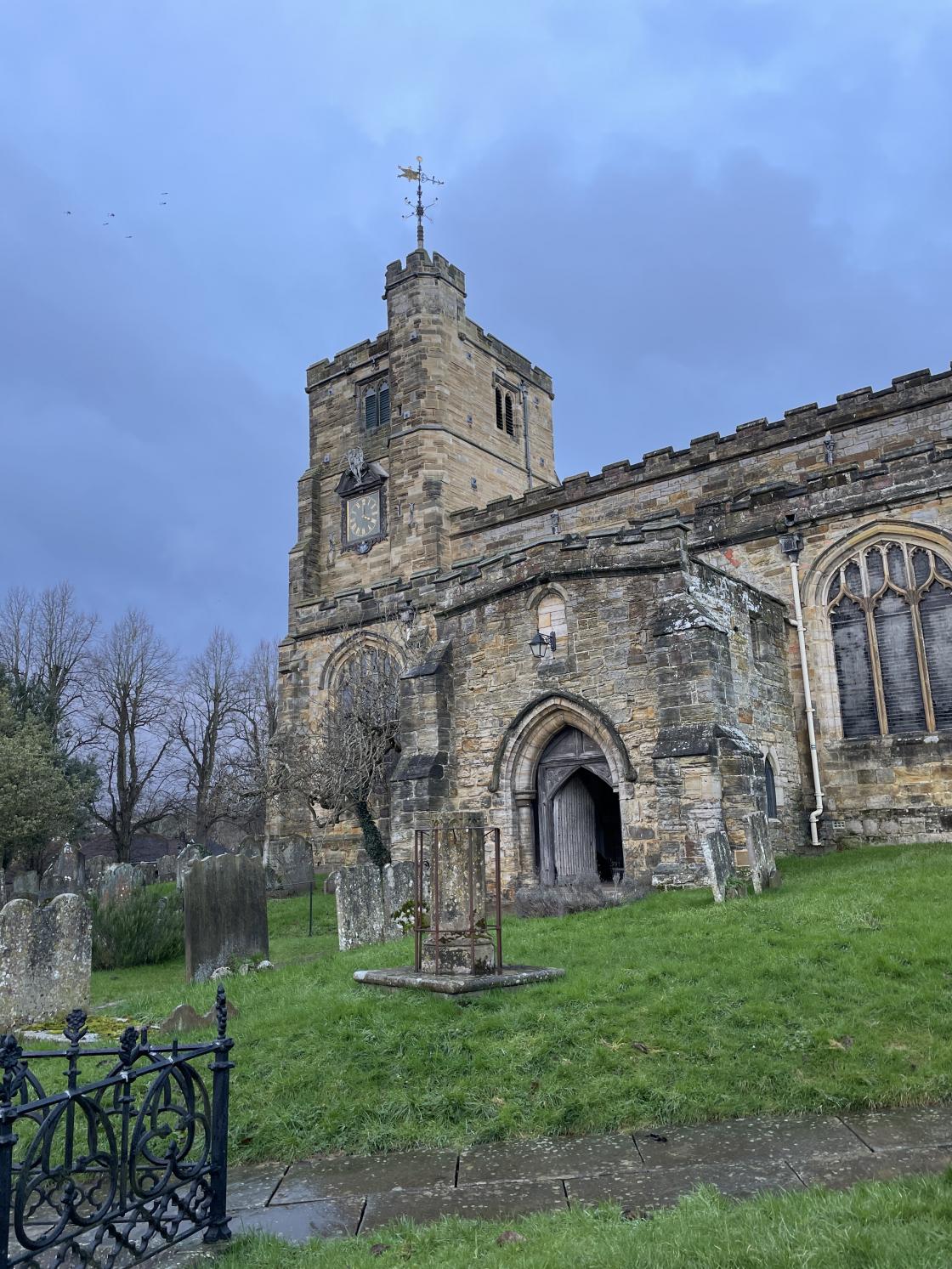
St. Dunstan’s Church, Cranbrook, Kent. Kevin Adkisson, photographer. Courtesy of the Center for Collections and Research.

He goes on to describe the provenance of the stone, at least as far as he could tell. A fifteenth century carved coign (an architectural term for a “projected corner”), it once formed part of the string course (a projected band of stone) which runs at the base of the battlements of the church nave. The course includes a series of grotesque heads, some of which were pierced for waterspouts. A grotesque, common in medieval church architecture, is a decoratively carved stone used to ward off evil spirits and to signify the sanctuary and safety of the church. On inspecting an historic photograph of the church, I could identify similar stones at the top of the drainpipes and around the tower battlements.

St. Dunstan’s Church, Cranbrook, Kent, July 1901, with grotesques in situ. Courtesy of Cranbrook Archives.

Rev. Swingler had first seen it laying in the churchyard and surmised that it had not been replaced during past repairs. He doesn’t mention why they selected that particular stone, but one could conjecture that it was because it was no longer part of the fabric of the church building and hence was available to be gifted to Christ Church. He notes that it is probably of Hartley stone, which was quarried in the Parish.

Henry Scripps Booth contributed great efforts to building relationships between the old and new Cranbrooks by establishing and maintaining connections between the two churches. The grotesque that arrived at Christ Church more than 90 years ago is an artifact that tells just one story of his efforts. From St. Dunstan’s of old Cranbrook, known as the “Cathedral of the Weald,” to St. Dunstan’s of Christ Church Cranbrook, the carved coign continues to herald sanctuary and give confidence to those who enter.

Laura MacNewman
Associate Archivist, Cranbrook Center for Collections and Research

Editor’s Note:
To learn more about Cranbrook in Kent and its part in the history of Cranbrook, Bloomfield Hills, register for Kevin Adkisson’s upcoming lecture, Uncovering Cranbrook: Two Pilgrimages to Kentish Cranbrook and join us for this year’s fundraiser: A House Party at Two Cranbrooks.

A New Collection: The Carl and Annetta Wonnberger Papers

Cranbrook Archives is pleased to announce that the Carl and Annetta Wonnberger Papers are open for research. The collection contains biographical materials documenting their early life and education, a large series of personal correspondence between Carl and Annetta during their courtship, materials relating to Carl’s tenure as teacher and administrator at Cranbrook School, their involvement in establishing and directing the Cranbrook Theater School, as well as Carl’s involvement in outside organizations.

Performance Poster, 1950. Courtesy of Cranbrook Archives.

Carl and Annetta Wonnberger were fixtures at Cranbrook for well over half a century, raising two daughters on campus (Jo Anne and Nancy, Kingswood ’48 and ’53 respectively) and making significant contributions to Cranbrook School (Carl even wrote their fight song!) and community theater arts. They both received Cranbrook’s highest honor, the Founders’ Award, and Annetta had a day (July 17) named after her by the City of Bloomfield Hills.

They arrived at Cranbrook in September 1929 when Carl took the position of English teacher at Cranbrook School. The following year, Carl became the Head of the English Department, a position which he held until 1967 when he retired from Cranbrook and became Professor of English Language and Literature at Eastern Michigan University.

Carl and Annetta Wonnberger with Eva Le Gallienne and Joe Schildkraut. 1945. Harvey Croze, photographer.

Annetta helped Carl start Ergasterion (Cranbrook School’s drama club) in 1931. She created costumes, built and painted sets, applied make up, and played female roles in all boys’ productions. Annetta was also one of the founders, with Henry Scripps Booth and Brookside Schools Headmistress Jessie Winter, of St. Dunstan’s Theatre in 1932.

Together they founded Cranbrook Theatre School (CTS) in 1942 with the first season held in the Greek Theater. The mission of the school was to provide a full liberal education through theater training including voice and diction, phonetics and language, development and control of the body, literature, history, philosophy, design, and technical science. Carl and Annetta taught theatrical training so as to provide experience in teamwork, good sportsmanship, and dialog. They celebrated theatrical training as a wonderful developer of personality.

Carl and Annetta Wonnberger Papers (1991-14). Box 19 Folder 10. Courtesy of Cranbrook Archives.

The bulk of the Wonnberger Papers relates to their involvement with Cranbrook Theatre School, comprising administrative materials as well as many scripts, announcements, and performance programs.

Alice Shaw, head director, discusses a staging problem with Carl Wonnberger. July 24, 1953. Harvey Croze, photographer. Courtesy of Cranbrook Archives.

Theater performances, themselves, are well documented by audio-visual formats including photographs, slides, and motion picture film. This collection provides a rich study of a fascinating facet of Cranbrook’s performing arts legacy, and a theater program that is still going strong today.

Laura MacNewman, Associate Archivist, Cranbrook Center for Collections and Research

Documenting Art and Architecture (and Appointments) at Cranbrook Campus

I have mentioned in the blog before that I am working with Center Director Gregory Wittkopp and Center Curator Kevin Adkisson on reviewing all fourteen of our cultural properties collections (over 9,000 objects), reviewing the data already on file and adding as much additional information about each object as we can.

The most recent collection I have been working on is Cranbrook Kingswood Upper School – Cranbrook Campus (f.k.a. Cranbrook School for Boys). The current campus buildings, classrooms, and staff offices, all had the potential to contain cultural properties (historic objects). And many that we visited did!

When I researched the Cranbrook Kingswood Upper School – Kingswood Campus (f.k.a. Kingswood School for Girls), I was fortunate to have the “Kingswood School Cranbrook Inventory of Equipment and Supplies.” It recorded the purchases and payments made from 1930-1938 for the outfitting of the school. It proved invaluable in locating quantities and makers of objects.

There had to be an equivalent for Cranbrook Campus?! Unfortunately, not that I had yet seen.

I only had a 1952 Inventory which listed fixed items, like light fixtures; and “movable” furniture and fixtures, like chairs, tables, desks, artwork. This was a great resource, but it did not always give me the makers or artists. Undeterred, I started searching in Cranbrook Archives, the “little gem” at Cranbrook, to borrow a phrase from Frank Lloyd Wright.

In Box 43, Folder 11 of the Cranbrook Foundation Office Records were the “Building Costs for Cranbrook School from 1926-1946.” And then, I saw it. A small black book labeled “Cranbrook School Book.” Could it be what I was looking for?

“Cranbrook School Book.” Cranbrook Foundation Office Records, 1981-05. Cranbrook Archives, Cranbrook Center for Collections and Research.

Inside were listed payments made to the builder Wermuth & Son and to the W. J. Sloane Company for furniture. It listed the artists who painted, carved, and outfitted the school, as well as contractors who installed various materials in the buildings.

These entries were great, but what else would it lead to? The answer: the “Cranbrook Schools” series in the Cranbrook Architectural Office Records.

Many of the folders were labeled “Cranbrook School correspondence, Wermuth & Son” with dates. The “Cranbrook School Book” had given me an idea of what to look for. Who Wermuth and the Cranbrook Architectural office (and sometimes George G. Booth himself) were corresponding with was the key. Inside were letters from vendors of tiles, furniture, stained glass, stonework, mirrors, mattresses, windows, everything needed to build a well-appointed school.

Here are just a few examples:

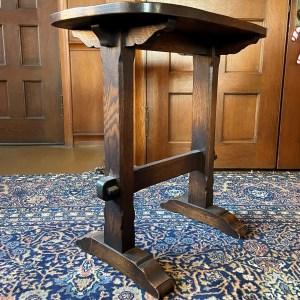
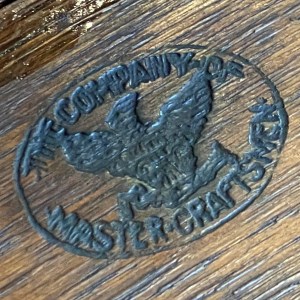
  • Copies of blueprints for furniture made by W. J. Sloane Company’s “Company of Master Craftsmen,” many of which were selected for Cranbrook.
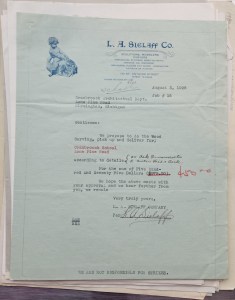
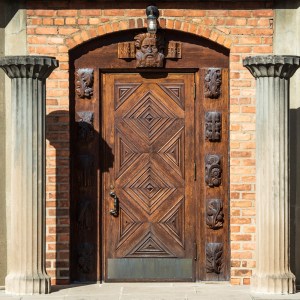
  • A letter from L.A. Sielaff & Co. indicating it was contracted to carve the wood ornaments on the Geza Maroti-designed doorcases outside the Library
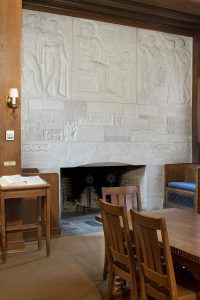
  • A letter from the Cranbrook Architectural Office to Wolverine Stone Company, awarding them the contract to carve the Maroti-designed overmantel in the Library
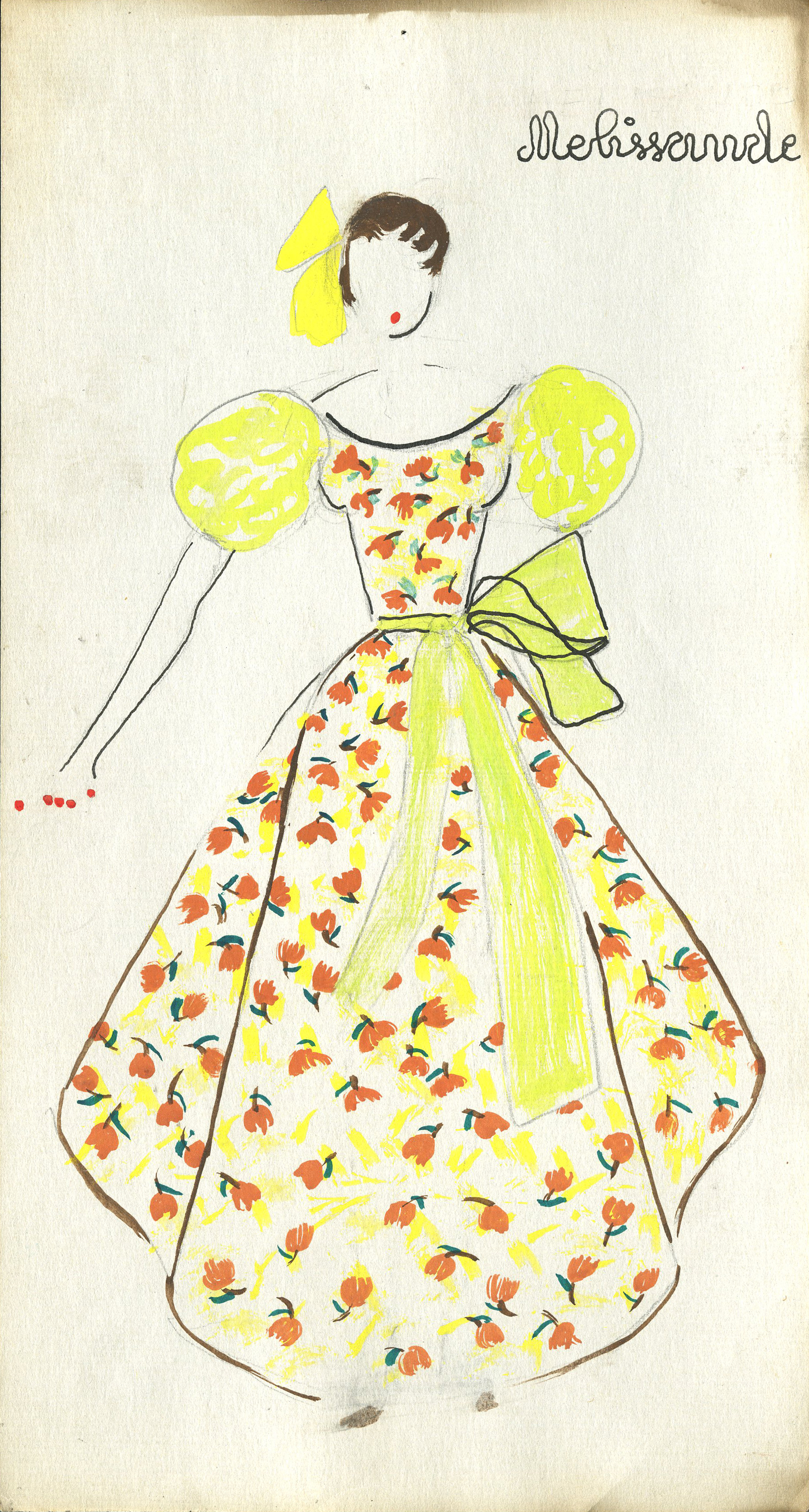
  • Letters, and a hand drawing to the Swedish Arts & Crafts Company, the American representatives of Orrefors, makers of the Dining Hall light fixtures
  • A note comparing costs for tiles from Pewabic Pottery verses Nemadji Tile & Pottery Co. (a new maker name for me)

Next up, Cranbrook Campus’ custom light fixtures! I can already hear Kevin’s words in my head . . .

. . . Cranbrook light fixtures are all around campus. There are multiple types of the light fixtures. These were designed by architect and former Head of the Architecture Department Dan Hoffman. He was the architect-in-residence who probably did more to revive the tradition at Cranbrook that was so such a passion project of George Booth and Eliel Saarinen . . .

Leslie S. Mio, Associate Registrar, Cranbrook Center for Collections and Research

p.s. For more on Cranbrook Campus, check out these videos by Center Curator Kevin Adkisson:

Cranbrook Behind the Scenes: My Senior May Experience

Ms. Rice warned me that the first week of my Senior May Project would be hectic and slightly crazy, and it definitely was, but in the best possible way! Being a lifer at Cranbrook, I have learned a lot about our amazing campus over the years, but nothing could have prepared me for the intensely interesting and extremely entertaining Senior May opportunity I have encountered at the Center for Collections and Research.

Riya Batra on set in Saarinen House for the Susan Saarinen interview. Photo by Nina Blomfield.

I joined the department in the week prior to A House Party, the Center’s annual fundraiser, this year honoring Loja Saarinen. Within minutes I was fully immersed into the event preparation. From unboxing the beautifully printed mugs to sitting in on engaging interviews, I was able to experience and assist in a variety of tasks that made me feel like I was actually contributing, even though my contribution was likely quite small in the grand scheme of things.

Riya as Susan Saarinen’s camera stand-in. Photo by Nina Blomfield.

One moment I will never forget was driving Susan Saarinen back to her hotel, after her interview for the film, and seeing an actual dress created by her cherished grandmother Loja. Where else in the world would I ever get to experience something like this?

Leslie Mio packs up the dress by Loja Saarinen. Photo by Riya Batra.
Continue reading

Traditions from the Weavers

Does your family have a certain pose that they always do for a family picture? My cousins and I always had to stand or sit by the same log at our cottage each summer to get a group picture. Even when the log had disintegrated, and we were all adults, we still stood in the same spot to take the picture.

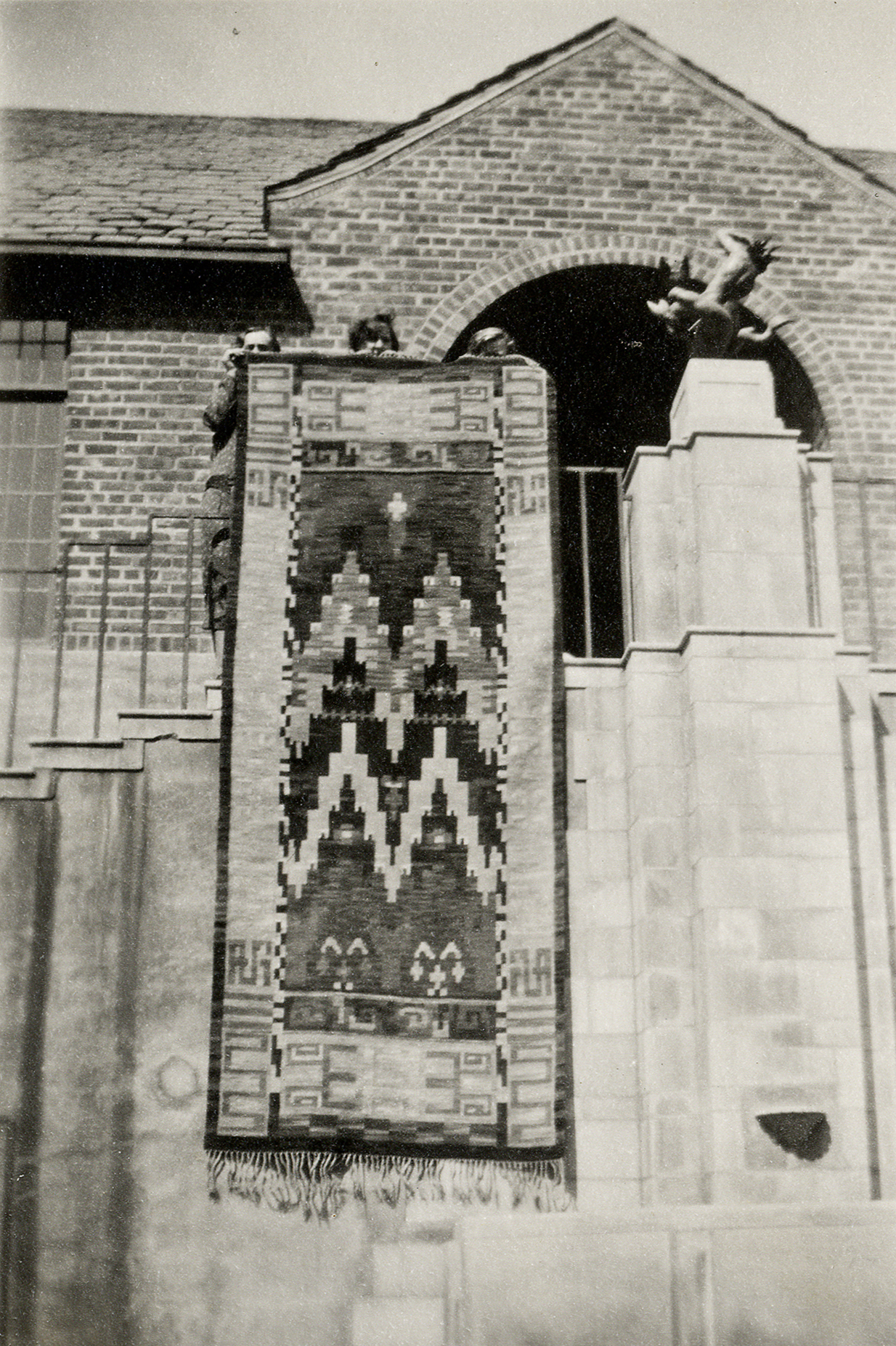
The Swedish weavers of Studio Loja Saarinen were the same way. After every rug was completed, they would unroll it behind the studio, lay it on the lawn, and pose at the end. This not only documented their work, but also served as a record of who worked on each piece. In Cranbrook Archives, we have a few examples of these images.

Cranbrook Academy of Art Rug No. 14

This rug lay in the center of the Studio Loja Saarinen Weaving Room. A flatwoven rug with stylized meanders in the border, and an elegant color scheme of dark browns, blues, and beiges, in form, structure, color, and design it shows the contemporary style of Swedish weaving that would become the foundation of Studio Loja Saarinen’s work.

Cranbrook Academy of Art Rug No. 14, designed by Maja Andersson Wirde and woven by Lillian Holm for Studio Loja Saarinen, 1930. CAM 1955.2. Photographer James Haefner.

This was one of the first rugs executed under the “Design and Supervision” of Maja Andersson Wirde, who was Loja’s right-hand-woman from 1930 to 1933. The rug is actually a variation of a design Wirde made for the 1925 International Exhibition of Modern Decorative and Industrial Arts in Paris (the “Art Deco” World’s Fair).

When Wirde wrote to Cranbrook’s secretary from Sweden before immigrating, she said she would bring along prepared designs and wool and linen yarns to be able to get started right away. She certainly did! Below, you can see Wirde and possibly Lillian Holm and Ruth Ingvarsson holding up the rug behind Studio Loja Saarinen just months after their arrival to Cranbrook.

Studio Loja Saarinen weavers with Rug No. 14 behind the Cranbrook Arts and Crafts Studios, 1930. Courtesy Smålands Museum, Sweden.
Continue reading

Cranbrook’s Great Books (Part II)

In Part I of this post, we explored Cranbrook’s love of the book, from its origins with founders George and Ellen Booth, to the existing special collections at the Archives and Academy of Art. I invite you now to learn of the many rare, valuable, and historical tomes whose existence may be unknown to most or simply overlooked in collections at the Schools, Institute of Science, and two historic homes cared for by the Center for Collections and Research: Saarinen House and Smith House.

Hoey Patch Collection at the Cranbrook School Library. Courtesy of Kate Covintree, Cranbrook Kingswood Upper Schools.

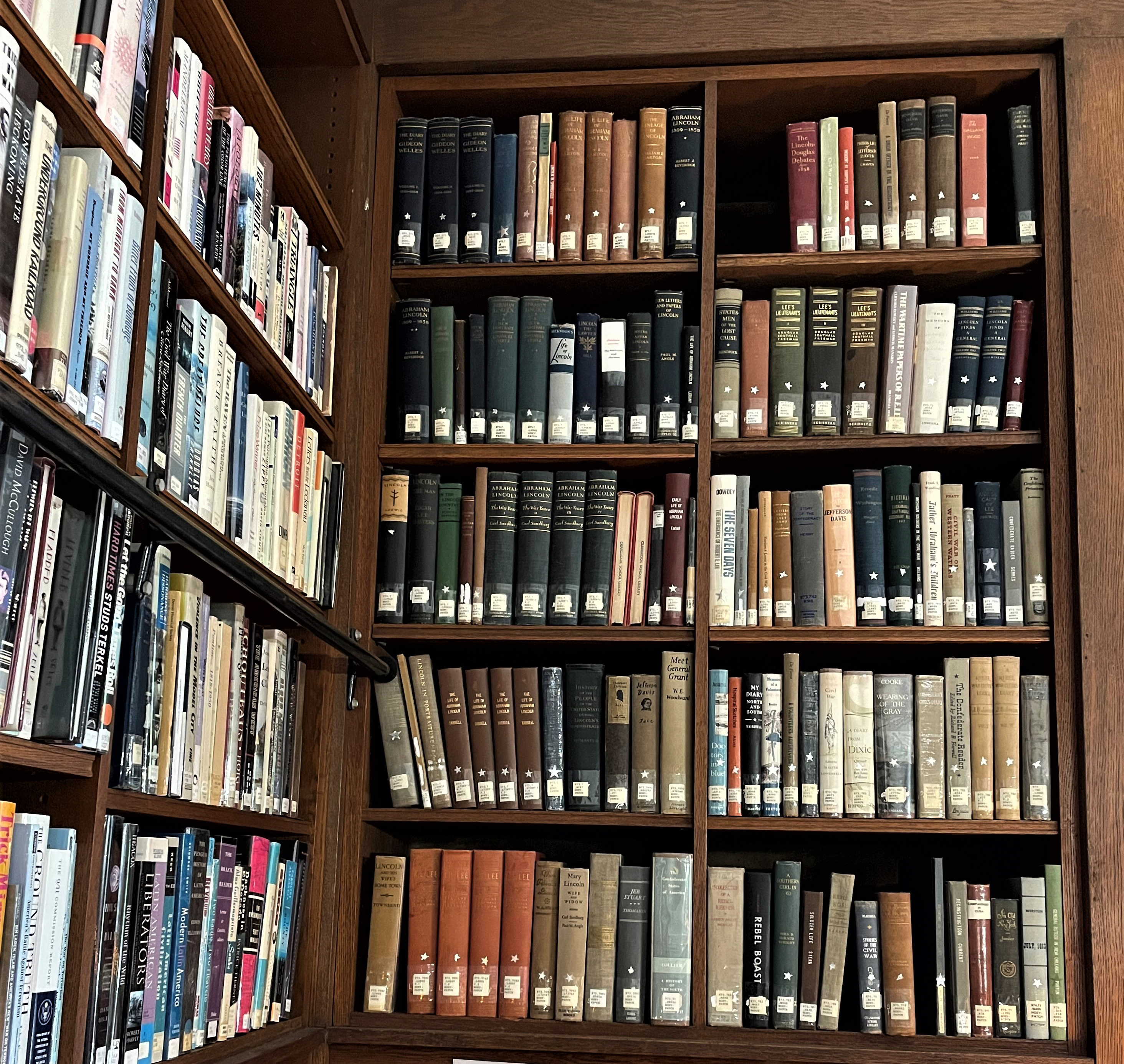
Like the Academy of Art, although not at all on the same scale, books from George and Ellen’s Cranbrook House Library were dispersed to the Cranbrook Schools Libraries, now comprised of five separate spaces. Following the Booth’s example, Cranbrook School Headmaster Harry D. Hoey (1950-1964) and Latin teacher George Patch (1928-1944, Emeritus 1944-1950) donated 120 books from their personal libraries to the School’s library in the 1950s, forming one of several special collections. Known as the Hoey Patch Collection, all of the volumes focus on an aspect of Abraham Lincoln or the American Civil War.

He Knew Lincoln, a fictionalized account written by Ida Tarbell, a progressive journalist, and published in 1907. The book’s custodial history is documented with correspondence from the author, written directly on the inside of the book. Courtesy of Kate Covintree, Cranbrook Kingswood Upper Schools.

Highlights include a First edition of The Life of Abraham Lincoln, the first full-scale biography of the President. Written by newspaper editor J.G. Holland, it was published shortly after Lincoln’s assassination in 1865. Also included is a first edition, two-volume set of the Personal Memoirs of U.S. Grant. Ulysses S. Grant penned his autobiography shortly before his death in 1885 as a means of financial support for his family. It was published with the support of his friend Mark Twain by the Charles L. Webster Company (owned by Twain’s nephew).

Continue reading

Clothed in Light: The Love Letters of Carl and Annetta Wonnberger

My darling, You are wonderful! I start with that because now again you have covered yourself with a light that sets you off from every other person I have ever known!” (Carl to Annetta, August 25, 1928).

The love letters of Carl and Annetta Wonnberger are among the most beautiful expressions of love, longing, and devotion I have ever read. With Valentine’s Day coming soon, it’s a perfect time to share with you some of their words that convey something of life’s highest mystery as it can manifest between two people.

Carl and Annetta Wonnberger. September 7, 1929. Courtesy of Cranbrook Archives.

Carl George Wonnberger (1901-1980) and Annetta Bouton Wonnberger (1909-1997) arrived at Cranbrook in 1929. Carl taught English at Cranbrook School until 1967, and they both founded the Cranbrook Theatre School in 1942. Their life is a love story of manifold paths. Their letters provide us with an intimate glimpse into the couple’s hearts in the two years preceding their marriage and the beginning of their life together at Cranbrook.

Annetta first met Carl in the Spring of 1926, when she visited the Storm King School, New York, to take the college entrance exam, which she failed. Carl, a teacher there, was the administrator. Annetta attended Drew Seminary as a post-graduate student and retook the exam in the spring of 1927, and that is when they connected. If sparks didn’t fly at their first meeting, they did at the second, as shortly after, on June 23rd, Carl asked Annetta to marry him.

Writing in July 1927, Annetta recalled that early evening in June—their walk in the woods, the perfect quiet except for the frogs and locusts around Black Rock, the ride back and the thunder shower. Annetta’s candid style of writing offers us quite a vivid sense of her character as well as a discernible process of maturation over the two years:

Carl, ever since I was a small child I have lived in a sort of fairyland of dreams and ideals. It was only natural, of course, that the people whom I met in real life differed from the creatures of star-dust and moon-mist fashioned by my fancy. And it has always been hard to realize the truth. But you, dear, there is no disillusionment about you. You are all I have ever dreamed the man I would love would be – and more. I only hope that I may be able to follow the road you’ve shown me, and reach the goal you’ve set.”

Letter from Annetta to Carl, November 30, 1927.

From 1927-1929, Annetta attended Smith College in Massachusetts, while Carl remained a teacher at Storm King in New York. They would meet up periodically, but the rest of the time was spent in yearning, which is recorded in their letters (sometimes more than one a day!).

Letter from Annetta Bouton to Carl Wonnberger, January 7, 1928. Courtesy of Cranbrook Archives
Continue reading

Create a website or blog at WordPress.com