Clifford West Papers Come to Cranbrook

Cranbrook Archives is excited to announce the acquisition of the Clifford B. West and Joy Griffin West Papers. Since the boxes arrived this past summer, I have been inventorying their contents in preparation for making them accessible to the public for research. Completing this work involves continually unravelling the many interesting facets of Clifford and Joy’s stories to be brought to light through the collection. Among many other things, are their experiences at Cranbrook in the mid-twentieth century.

Joy Griffin and Clifford West in front of Carl Milles’ sculpture on the north wall of the Academy of Art library, 1941. Harvey Croze, photographer. Courtesy of Cranbrook Archives.

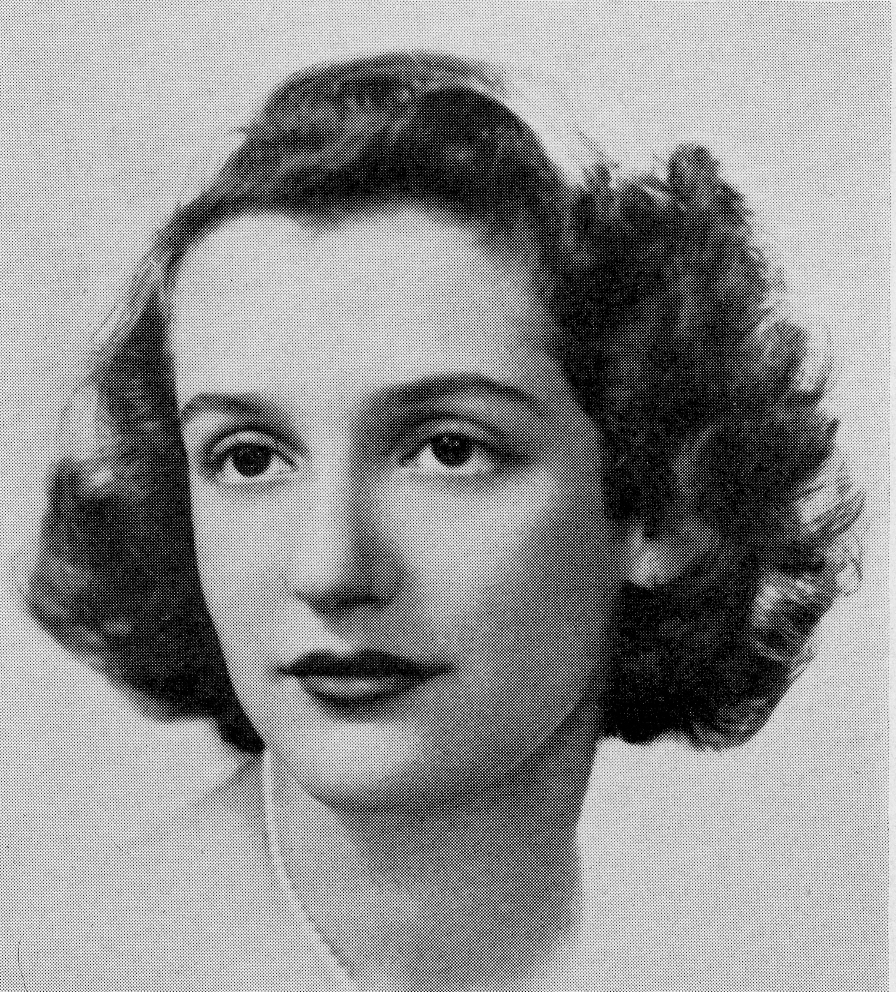
Clifford and Joy attended the Academy of Art at the tail end of its golden age, meeting and marrying in 1941. At that time, Carl Milles, Eliel Saarinen, Loja Saarinen, and Eero Saarinen taught and worked on campus. Clifford earned his MFA in painting under Zoltan Sepeshy and Joy took ceramics classes from Maija Grotell. Fellow students included Lily Swann Saarinen and Harry Bertoia, among others.

Bertoia and West: Three Decades

It was with Harry Bertoia, sculptor and designer, that Clifford enjoyed a lifelong friendship, serving as best man at his 1943 wedding to Brigitta Valentiner (fellow Academy student and daughter of Wilhelm Valentiner, Director of the Detroit Institute of Arts). While living in different parts of the country after graduation (or different countries all together), the two artists maintained close ties, both personally and professionally, evidenced by correspondence and other materials found in the Wests’ papers. Of particular note is the original 16mm film Clifford made in 1965, titled Harry Bertoia’s Sculpture, featuring a soundtrack by Bertoia.

Harry Bertoia in his studio, circa 1976. Clifford West, photographer. Courtesy of Cranbrook Archives.

Another fascinating connection is Clifford’s involvement with a few 1976-1977 exhibitions of Bertoia’s sculptures in Norway. Bertoia’s work, including his sound sculptures, had been introduced to the Norwegian art scene in the late 1960s through Bente Torjusen, an educator at the Munch Museum who assisted Clifford on his 1968 film about artist Edvard Munch and later became his third wife. An accomplished filmmaker and photographer by the late 1970s, Clifford photographed the Bertoia exhibitions and designed the accompanying catalogs. In true Cranbrook fashion, Clifford’s artistic talents were not limited to just one medium.

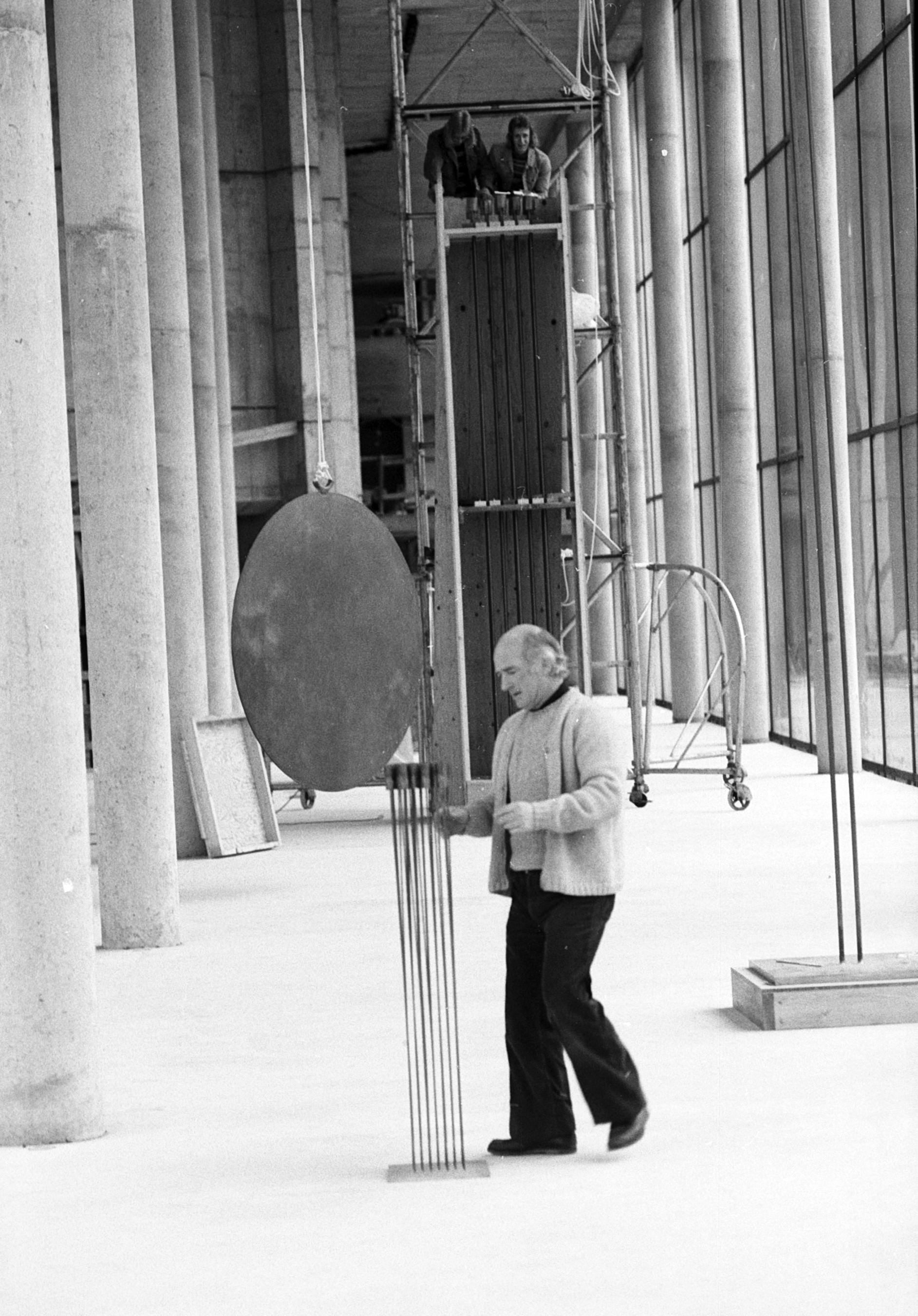
Poster for The Sculpture of Harry Bertoia exhibition at the Grieg Music Festival, Bergen, Norway, 1976. Clifford West, photographer and designer. Courtesy of Cranbrook Archives.

The exhibitions would be the last collaborations between Clifford West and Harry Bertoia, as Bertoia would succumb to lung cancer one year later. Fifty years on, Cranbrook Art Museum will celebrate Harry Bertoia in an upcoming exhibition, opening summer of 2027. Bertoia’s work was last featured at Cranbrook in the 2015 exhibition, Bent, Cast, and Forged: The Jewelry of Harry Bertoia, which marked the centennial of his birth and the first exhibition devoted to his jewelry designs (see the full catalog here).

I look forward to uncovering and sharing more about Clifford and Joy’s remarkable lives. Stay tuned!

Deborah Rice, Head Archivist, Cranbrook Center for Collections and Research

Related announcement from the Harry Bertoia Foundation:

The Harry Bertoia Catalogue Raisonné is announcing a call for works from the Cranbrook community to more fully develop the publication’s coverage of the artist’s early jewelry practice, a currently under-described area of the artist’s oeuvre.

Present owners of jewelry believed to be by Bertoia are invited to contact the Harry Bertoia Foundation and Harry Bertoia Catalogue Raisonné by sending an email to: catalogue@harrybertoia.org, and submitting an owner questionnaire, available on our website. Museums, art galleries, and other institutions that are in possession of works by the artist are also invited to submit relevant data and photographic documentation. All information will be treated with discretion and held in strictest confidence.

Happy Birthday Milles!

Any chance you have a trip planned to Europe this summer? If so, your itinerary really must include Stockholm. Not only is it a beautiful city—one of my favorites—but it also was home to one of Cranbrook’s most celebrated artists, Carl Milles. Long before he took up residence at Cranbrook, the Swedish sculptor started to plan and build his home and studio, Millesgården. Built high on a cliff overlooking Stockholm’s harbor, Millesgården now is a magical museum and sculpture park and the site of this year’s summer-long birthday party, The Sculptor Carl Milles at 150. Yes, if Carl Milles had lived to be the world’s oldest man, he would have turned 150 this Monday, June 23.

Carl Milles working in his Cranbrook Academy of Art studio, circa 1950. Margueritte Kimball, photographer. Courtesy of Cranbrook Archives.

While anyone taking the time to read this blog no doubt has an image in mind of one of Milles’s works at Cranbrook (there are no fewer than 45 outdoors on our campus and another 52 in the Art Museum or other buildings), my guess is that the story of the twenty years he spent working in America are a little foggy (unless, of course, you attended our 2021 virtual fundraiser, A Global House Party at Cranbrook and Millesgården, and watched the film, Carl Milles: Beauty in Bronze, we produced for the occasion). As a refresher course, or even a primer, I thought I would take you on a journey, one that starts in America and ends, twenty-two years later, back in Sweden (and Italy, as the case may be).

Milles arrived in the United States for the first time in October 1929. With the stated purpose of attending the opening of his second group exhibition in New York City, he took advantage of the trip to sell work to collectors, negotiate a commission in Chicago for his Diana Fountain, present the concept for the monumental doors he would create for the Pennsylvania State Capitol, and meet with Tage Palm, the President of the Chicago-based Swedish Arts and Crafts Company who would become his business manager. Most important for this next chapter of his career, he also traveled by train to Michigan where he met with George Booth who asked him to teach at the art school he was building north of Detroit, Cranbrook Academy of Art.

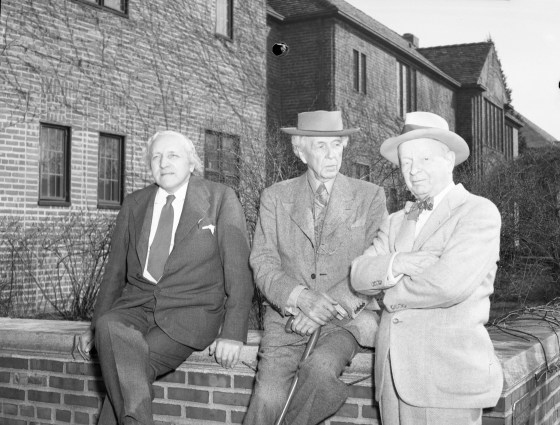
Carl Milles, Frank Lloyd Wright, and Eliel Saarinen (l to r) outside Saarinen House, March 1945. Harvey Croze, photographer. Courtesy of Cranbrook Archives.

George Booth and his wife Ellen Scripps Booth, as most Cranbrook Kitchen Sink blog readers know, were wealthy newspaper publishers and philanthropists. Although their flagship paper, the Detroit News, was based in Detroit, their home was in the countryside of Bloomfield Hills. By the late 1920s, they had begun to work with the Finnish architect Eliel Saarinen to transform their private estate into an educational community that eventually included an Episcopal church, boys and girls schools, an art academy and museum, and an institute of science (and, even later, a center for collections and research). Although the archival record is a little murky, Saarinen and Milles were at least acquaintances long before the sculptor met with his future patron at Cranbrook.

As Milles contemplated moving to Cranbrook to direct the Academy’s Sculpture Department, there was one small problem: he had no desire to teach. Two years and many conversations later, Booth and Milles came to an agreement: the sculptor would not need to “teach” but simply “mentor” students in his studio. (Not a bad deal!)

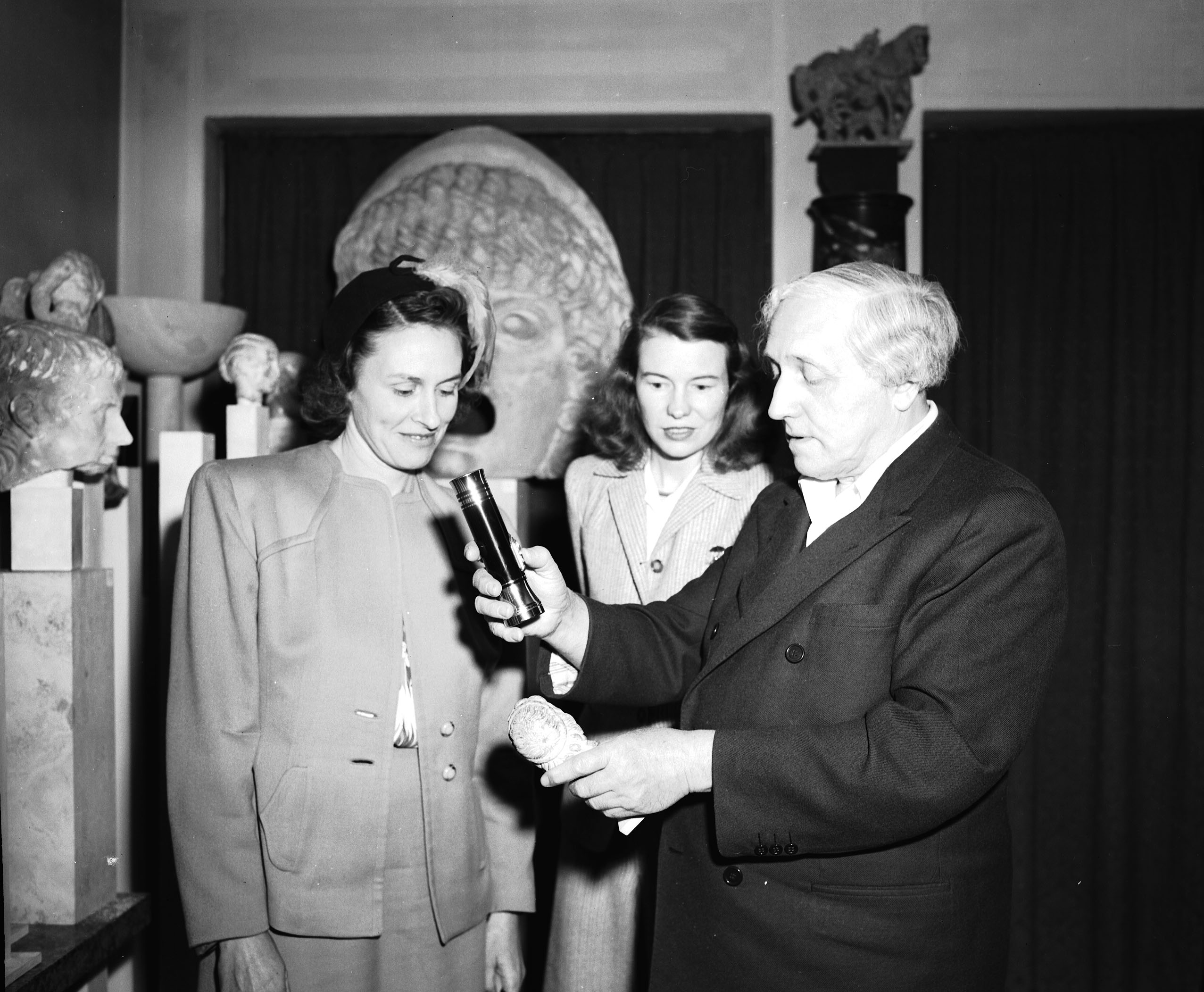
Carl Milles discusses details of a sculpture during an open house, 10 May 1947. Courtesy of Cranbrook Archives.


In January 1931, Carl and his wife Olga Milles arrived at Cranbrook where they lived for the next twenty years. Their home, where they displayed Milles’s collection of ancient sculpture, was designed by Saarinen, as were his three studios—including the grand thirty-foot-tall studio Milles used for his largest commissions such as the Orpheus Fountain for the National Concert Hall in Stockholm.

Carl Milles in his studio at Cranbrook Academy of Art, sculpting the figure of Orpheus for the Orpheus Fountain, 1934. Richard G. Askew, photographer. Courtesy of Cranbrook Archives.

But Milles was not satisfied. He wanted to be surrounded by his sculpture just as he was at Millesgården. The four works Booth had acquired—including the only work Milles made at Cranbrook for Cranbrook, the playful Jonah Fountain—were not enough. In 1934, in the middle of the Great Depression, Booth agreed to pay Milles a princely sum—$120,000 and change—for sixty-three of his sculptures. This purchase not only included most of the works that had been part of a traveling exhibition that opened in St. Louis in 1931, but also casts of the eight figures from the Orpheus Fountain and his monumental Europa and the Bull from the fountain in Halmstad.

Milles’s Triton Pools, looking north towards Europa and the Bull, and beyond that, the future site of Cranbrook Art Museum, circa 1934. Richard G. Askew, photographer. Courtesy of Cranbrook Archives.

The decision, one that would come to define Cranbrook’s campus, was supported by Milles’s fellow Scandinavian and friend Eliel Saarinen, who Booth had named the President of Cranbrook Academy of Art in 1932. Indeed, there was a feeling of mutual respect between the architect and the sculptor, with Saarinen realizing that Milles’s work would enhance the buildings and Milles realizing that Saarinen’s architecture provided the perfect context.

Continue reading

Photo Friday: The Football Game

Friday, September 27, 2024, is Homecoming at Cranbrook Kingswood Upper School. The game will be held in the Thompson Oval, to the east of The Football Game by David Evans.

The Football Game by David Evans. Thompson Oval, Cranbrook Kingswood Upper School – Cranbrook Campus.

Sculptor David Evans (1895-1959) was hired by the Cranbrook Foundation (through George Booth) as Professor of Sculpture and Life Drawing at the Academy of Art for 1929-1930. During that time, Booth commissioned him to create this bas relief for the football field at Cranbrook School for Boys. It is not just a bunch of nameless faces on the relief; it actually features members of the first football squad at Cranbrook School for Boys.

The 1930 Football Team, from The Brook, 1931 (Cranbrook School’s yearbook). Courtesy Cranbrook Archives.
Cranbrook School Football Sweater, circa 1930. Photographed by P.D. Rearick, 2019. Cranbrook Center for Collections and Research | Cultural Properties Collection, Archives.

During the 1930 football season, thirteen boys posed for Evans.

Members of the 1930 Cranbrook Football Team featured on The Football Game. Photos taken from 1931 and 1932 copies of The Brook. Courtesy Cranbrook Archives

The bas relief is in its original location – mounted above the steps leading to Alumni Court and overlooking Thompson Oval. If you are on campus for Homecoming, pose for a photo in your CKU green and blue with the 1930 football squad.

Leslie Mio, Associate Registrar, Cranbrook Center for Collections and Research

Ed. Note: The Football Game was recently cleaned and waxed by our friends at McKay Lodge Conservation Laboratory. They also touched up other Upper School favorites: Hermes, Discus Thrower, The Wrestlers, Running Dogs, Masque Art, Diana, Dancing Girls, and Aim High.

Collection Highlight: Walter Hickey Papers

Cranbrook Archives is pleased to announce a new collection available for research. An intriguing collection, it comprises the personal and professional papers, photographs, realia, and architectural drawings of Walter Preston Hickey, a student of Eliel Saarinen. Yet, while traces of key life events and relationships—birth, parentage, education, marriage, friends, and employers—can be found in the collection, Hickey’s life after Cranbrook remains largely a mystery.

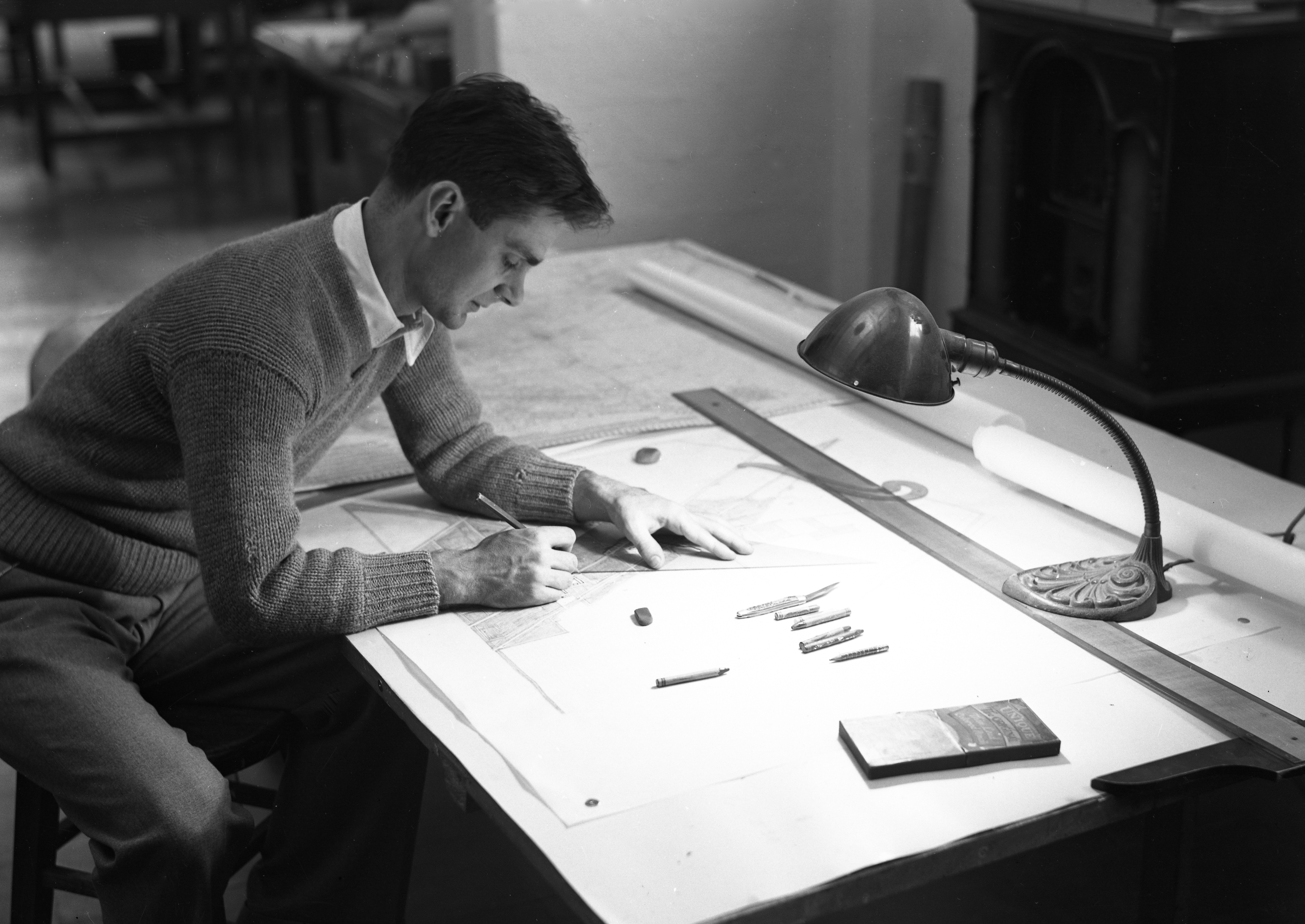
Walter Hickey working in the Architecture Studio, 1935. Courtesy of Cranbrook Archives, Cranbrook Center for Collections and Research.

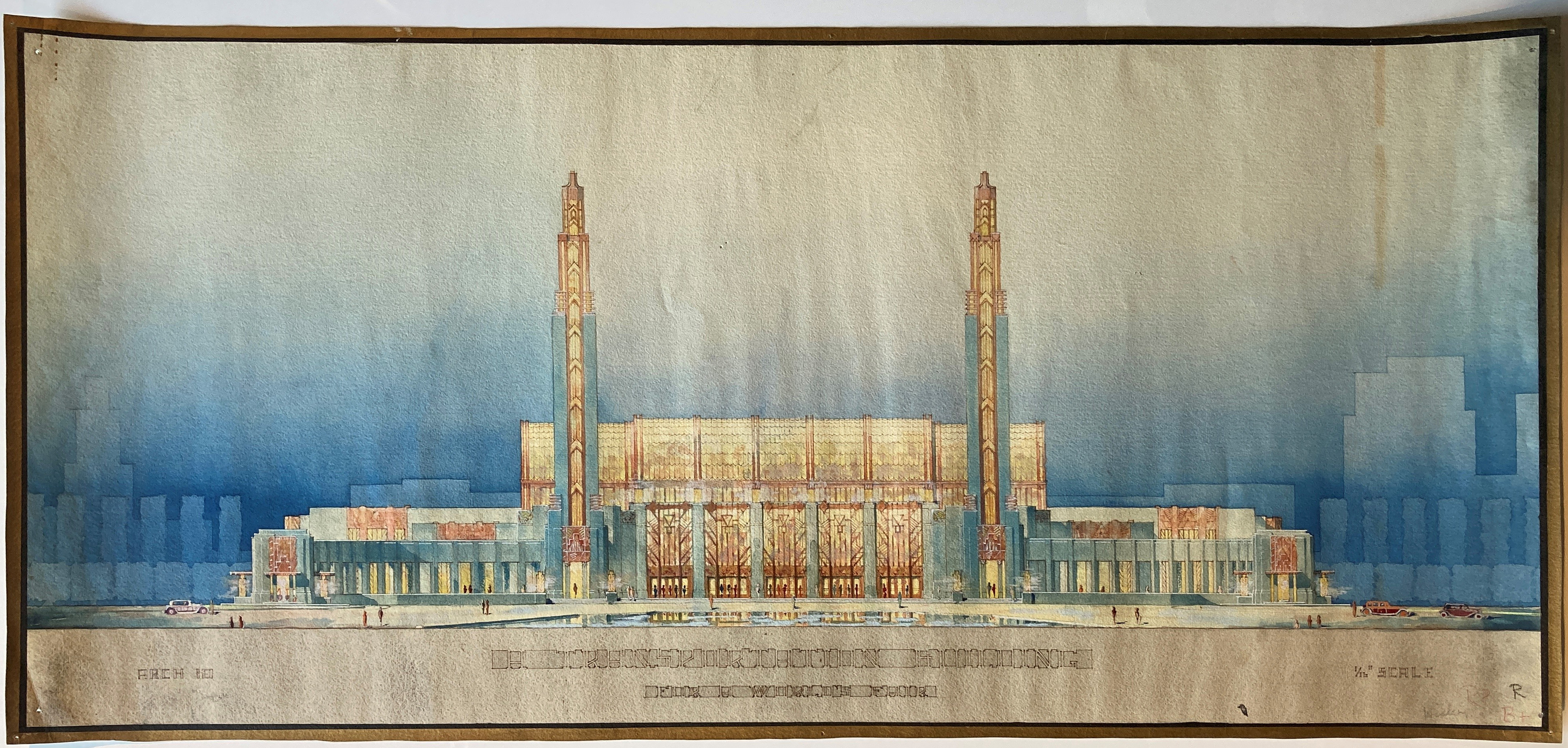
A native of Detroit, Hickey attended the University of Michigan School of Architecture (1926-1930), during which time he worked with architects Albert Kahn (1928) and Thomas Tanner, as well as being one of the first staff members of the Cranbrook Architectural Office.

A Transportation Building for a World’s Fair, circa 1926-1930. A University of Michigan Class Project by Walter Hickey. Courtesy of Cranbrook Archives, Cranbrook Center for Collections and Research.

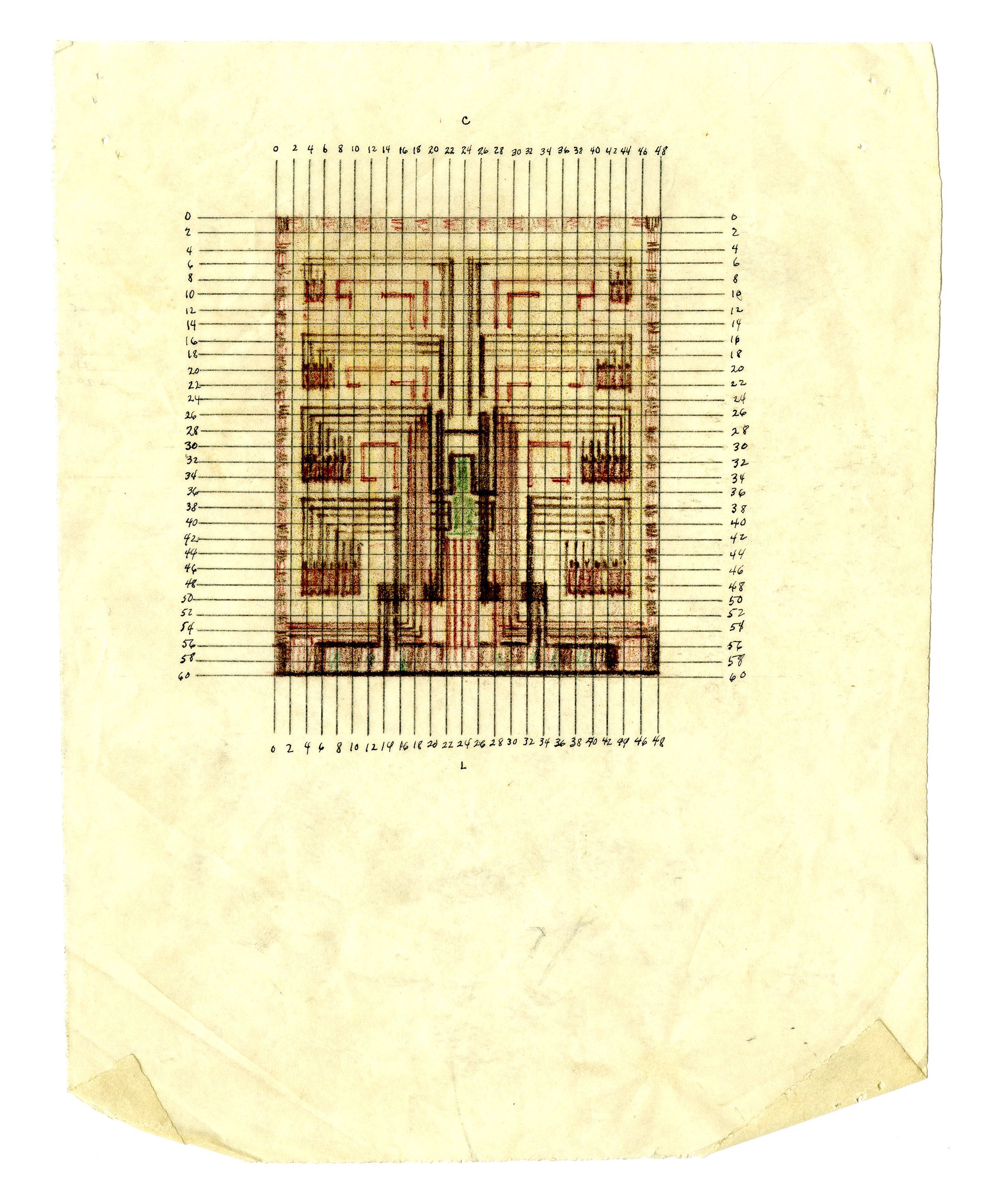
He applied to study architectural design with instruction in city planning at Cranbrook Academy of Art, starting in September of 1932. He became especially interested in highway traffic control, which formed the topic of his 1935 thesis on the Waterfront Development for the City of Detroit. Hickey submitted designs to various Academy competitions and won a $10 prize from Loja Saarinen for design No. 13 in the Cranbrook Academy of Art Rug Competition in 1934.

Drawing by Walter Hickey, undated. Courtesy of Cranbrook Archives, Cranbrook Center for Collections and Research.

After leaving Cranbrook, Hickey worked for various architecture firms, including Smith, Hinchman, and Grylls, and Clair W. Ditchy. After a short time with the Federal Housing Administration, he returned to work with Eliel and Eero Saarinen on the Kleinhans Music Hall project. He also completed private architectural designs for residences, including work on Ralph Rapson’s Hoey vacation home, Longshadows, in Metamora, MI. Around this time, he went to work at the General Motors Technical Center and continued to live in Birmingham, Michigan. And here is where his story ends in the collection.

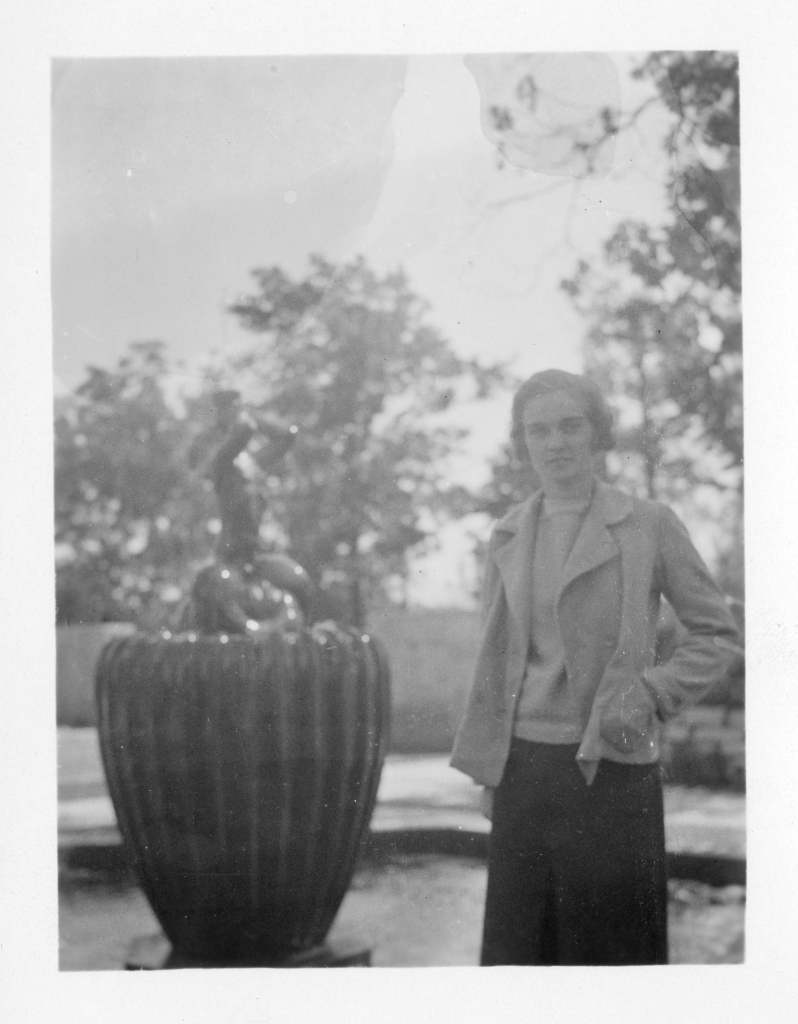
Jane Viola Shepherd. Courtesy of Cranbrook Archives, Cranbrook Center for Collections and Research.

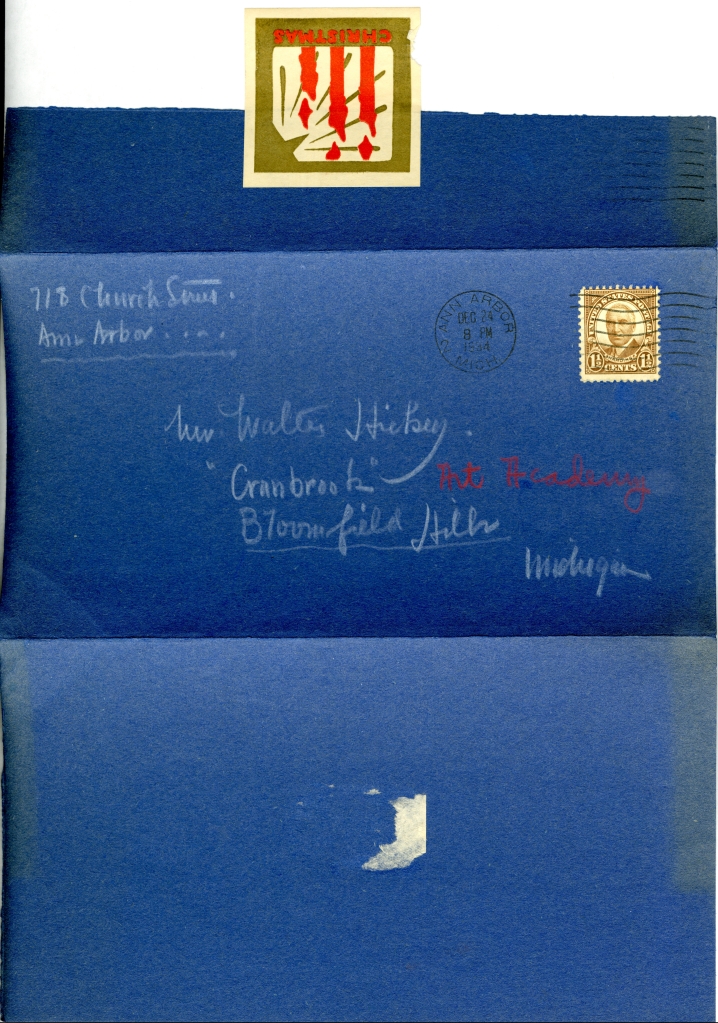
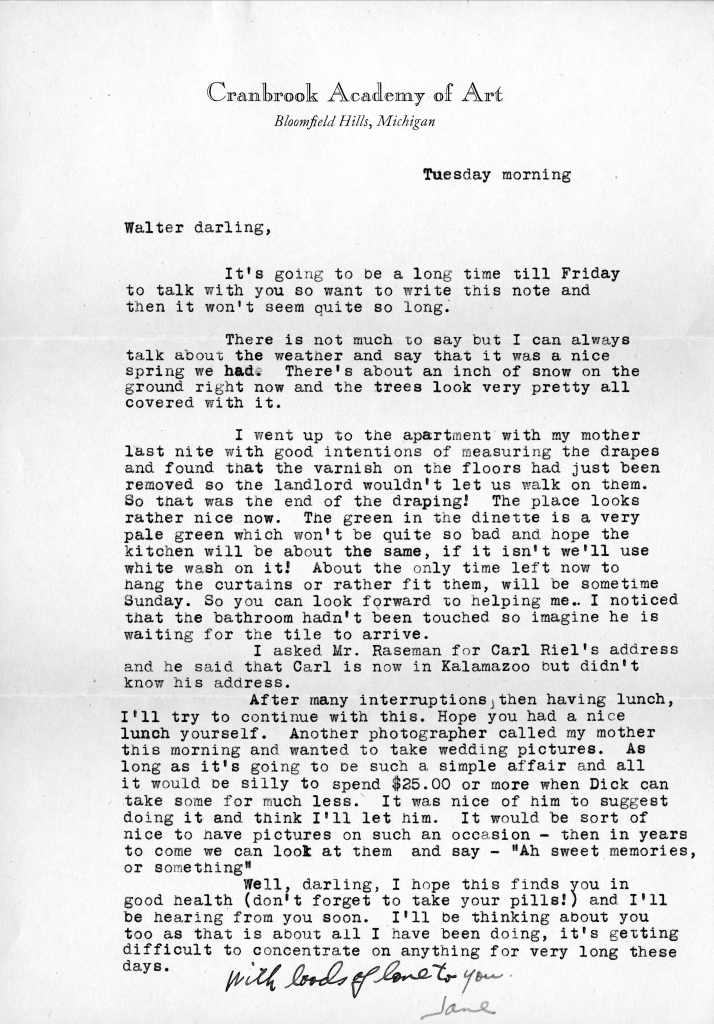
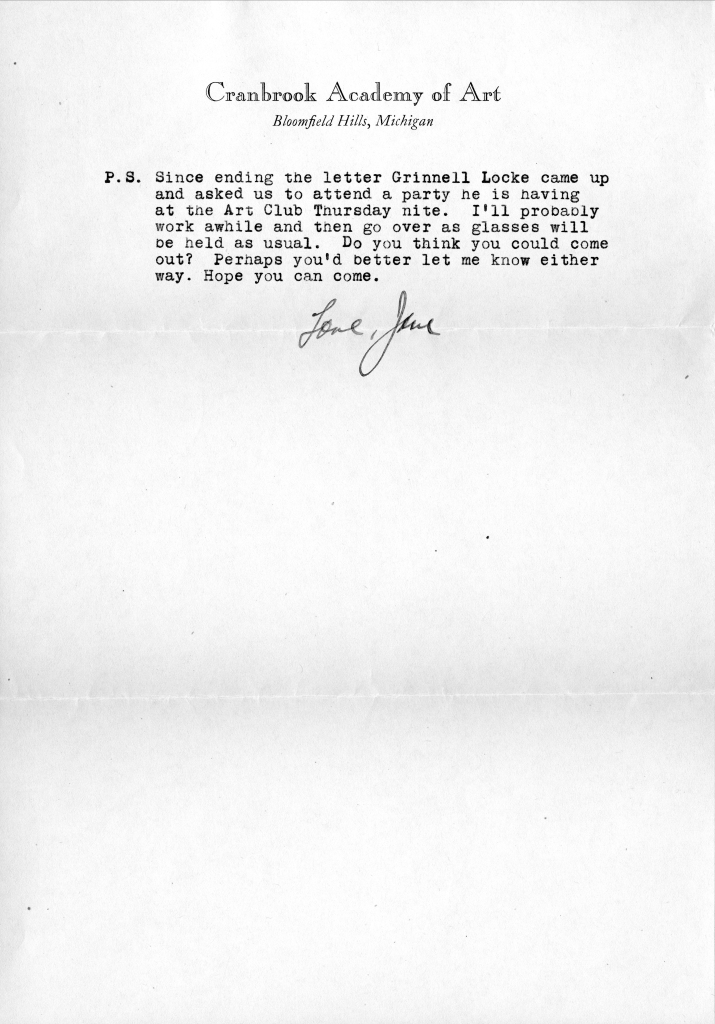
Although this is a very small collection, the diversity of content is rewarding for its ability to convey snapshots of his life in individual and unique items. It includes Christmas cards, such as one from “the Lorches” (Emil Lorch was the President of the University of Michigan Architecture School), a few letters from friends, and something of a typed love letter (on Cranbrook Academy of Art letterhead!) from Zoltan Sepeshy’s Secretary Jane Viola Shepherd to whom he was married on April 22, 1937.

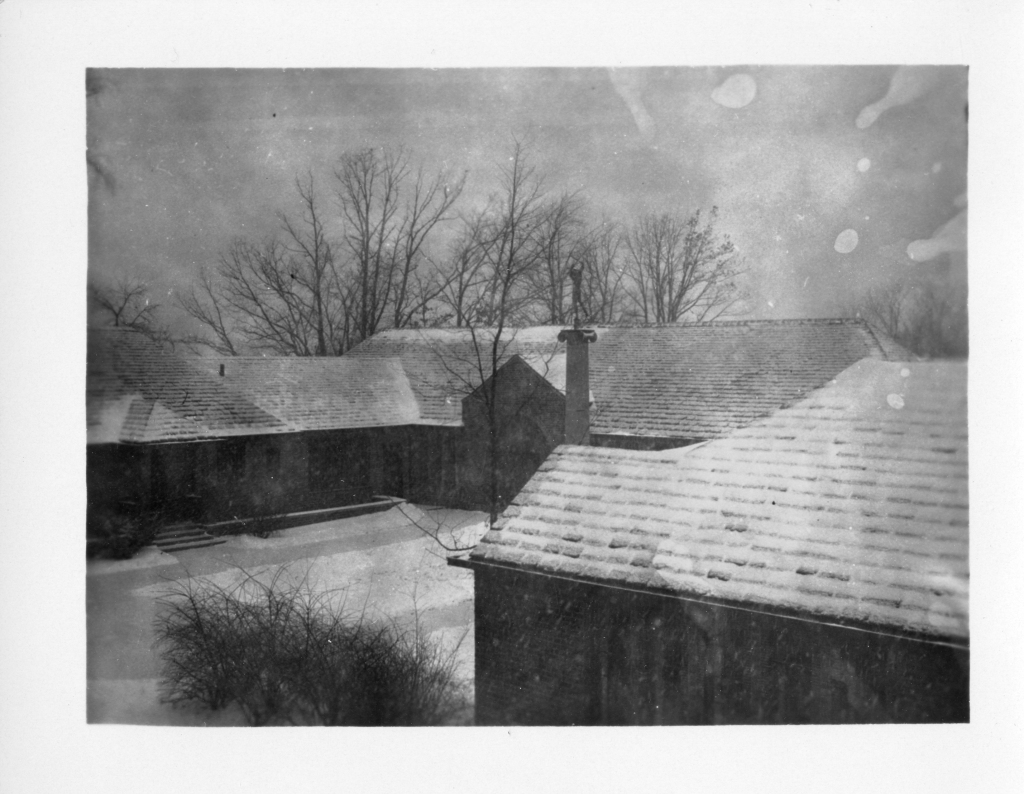
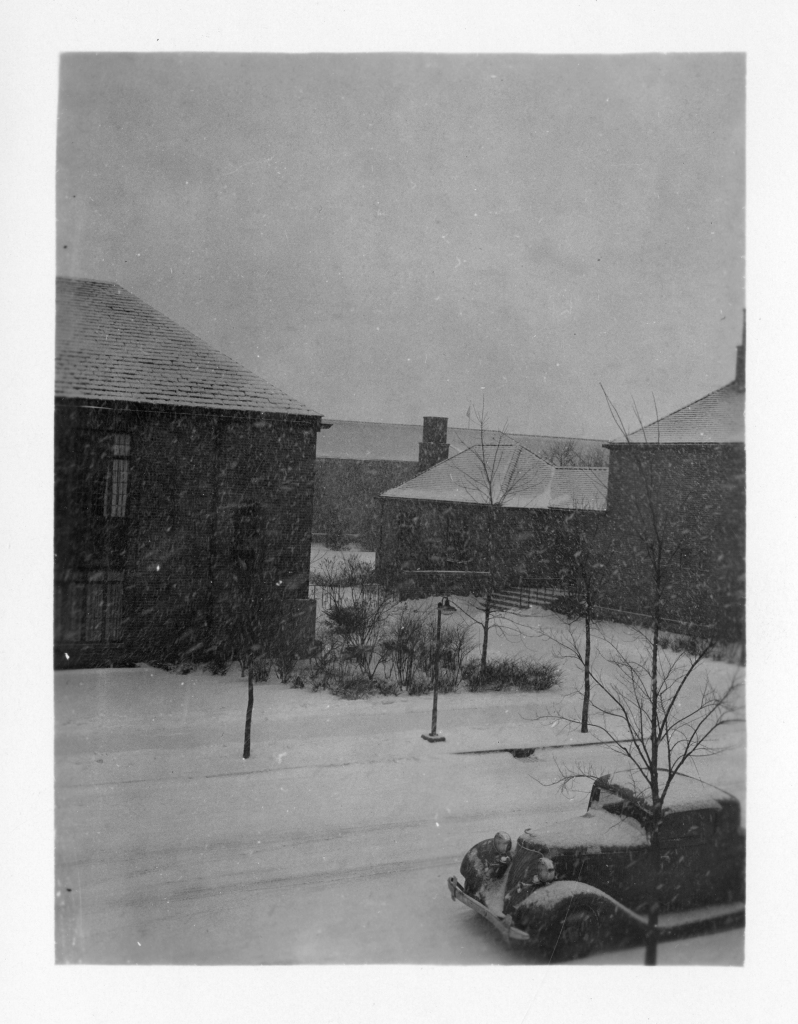
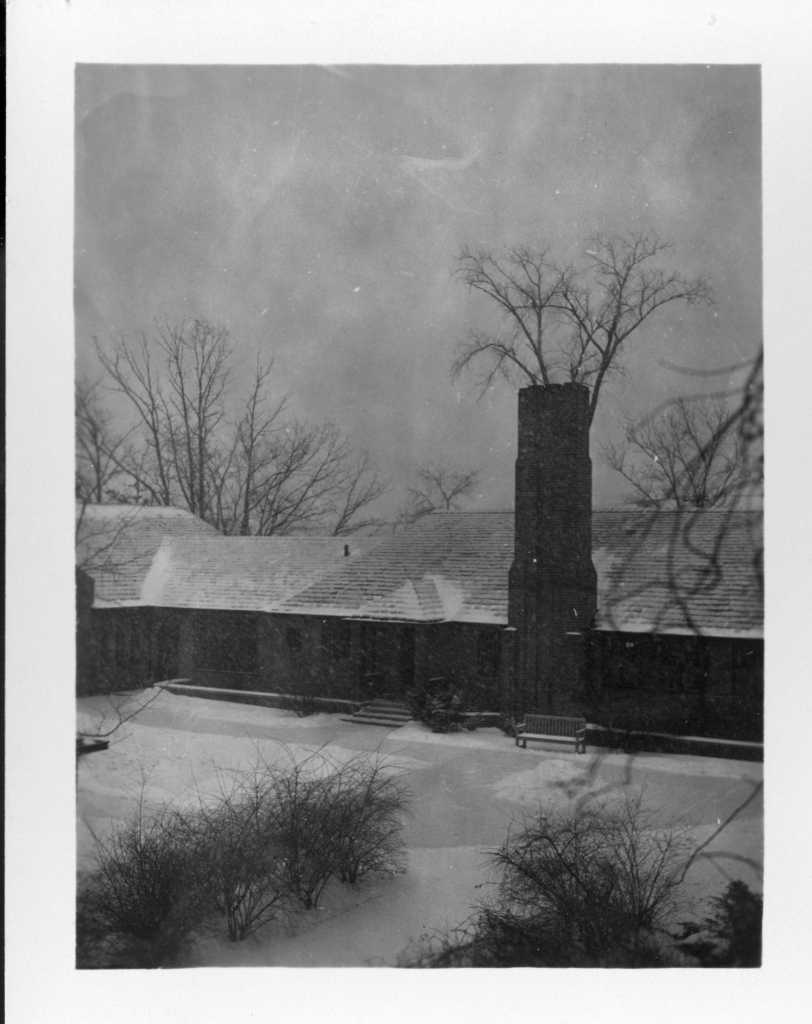
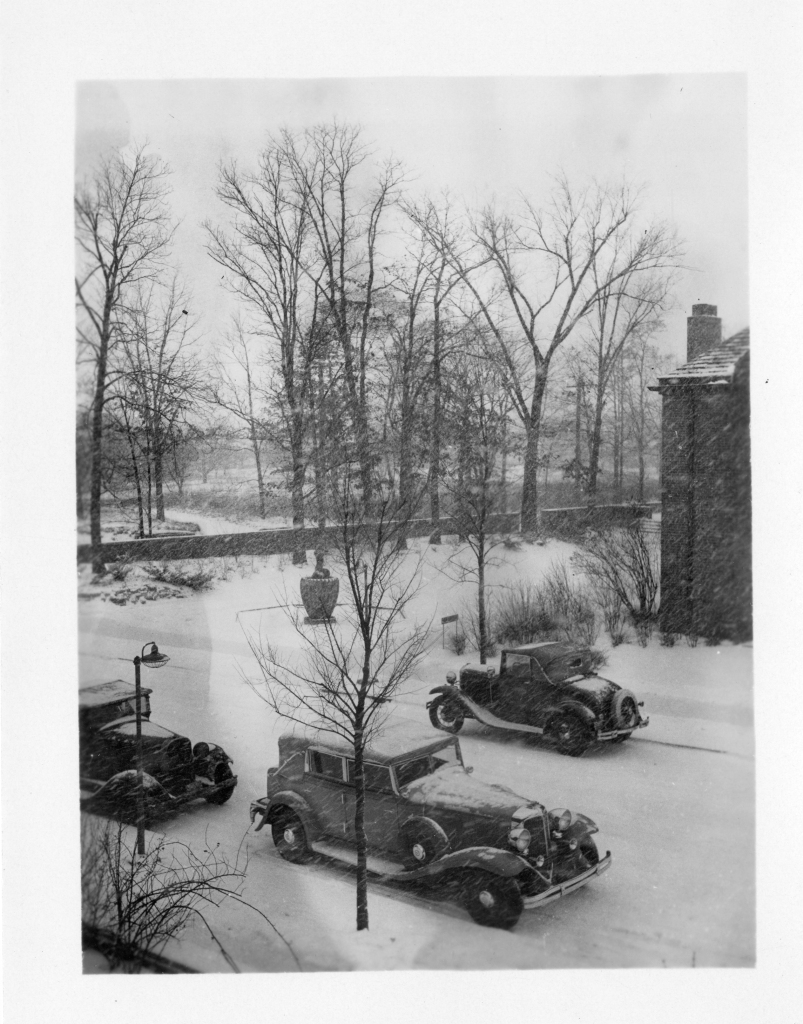
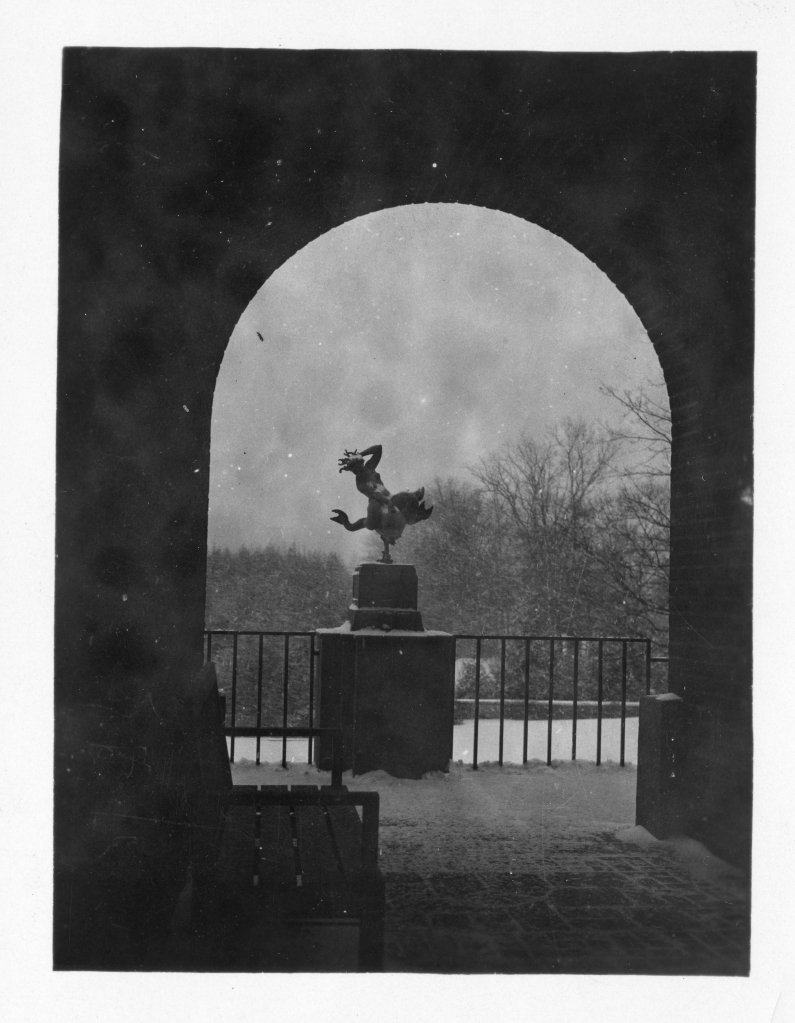
A small series of photographs hold moments of his life and some of the people with whom he shared it, including his father, eminent roentgenologist (radiography) Dr. Preston Hickey; his wife, Jane; his teacher, Eliel; and his fellow Academy students. A series of snowy scenes of Cranbrook campus beautifully capture the quietness of falling snow with hints of sunlight upon the architecture and sculptures that were then in their infancy and are now historic.

The Walter Hickey Papers give insight into a short period in Hickey’s life and the Cranbrook of his time. It also gives us a lovely look into a life that was surely shaped by his experience at Cranbrook, but one that remains yet to be fully discovered.

Laura MacNewman, Associate Archivist, Cranbrook Center for Collections and Research

Taste, Grace, and Elegance: The Cannon Returns

Today, Cranbrook Art Museum opens its newest show, With Eyes Opened: Cranbrook Academy of Art Since 1932, surveying the history of the Academy since its founding. For the exhibition, the Center for Collections and Research worked closely with the Museum, researching in the Archives, contributing essays for the 600-plus page publication that chronicles the history of this storied institution, and coordinating the restoration and reinstallation of the Academy’s cannon.

Yes, I said cannon.

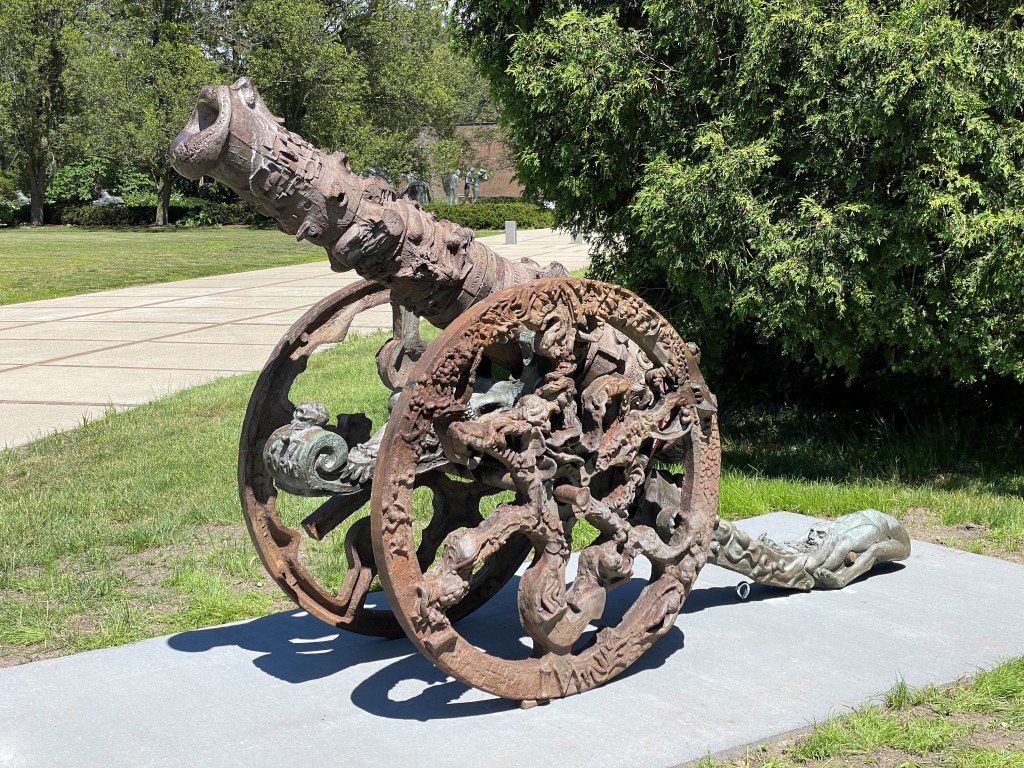
From 1966 to 1971, Julius Schmidt, Artist-in-Residence of the Sculpture Department (1964-1970), and his students, designed, sculpted, and cast a working cannon. Before Schmidt arrived at Cranbrook, there had not been a forge on campus for students to use. It was constructed in 1964, in the open space east of Carl Milles’s large studio. (You can read more about the forge in a previous Kitchen Sink blog: Photo Friday: Iron Pour.)

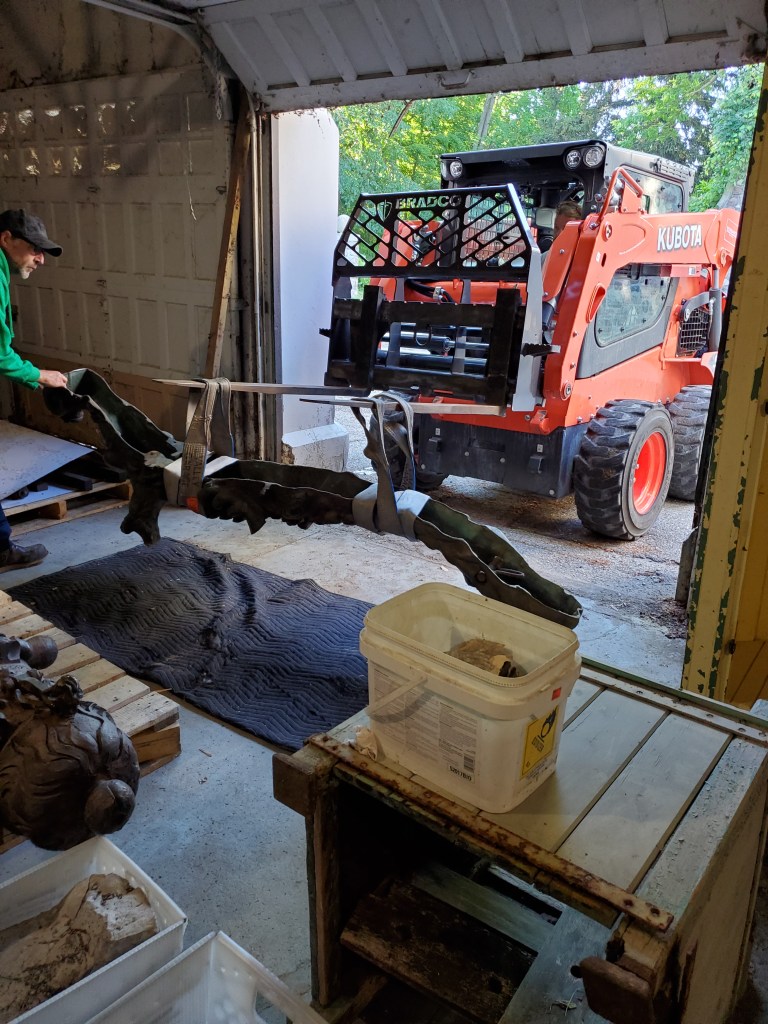
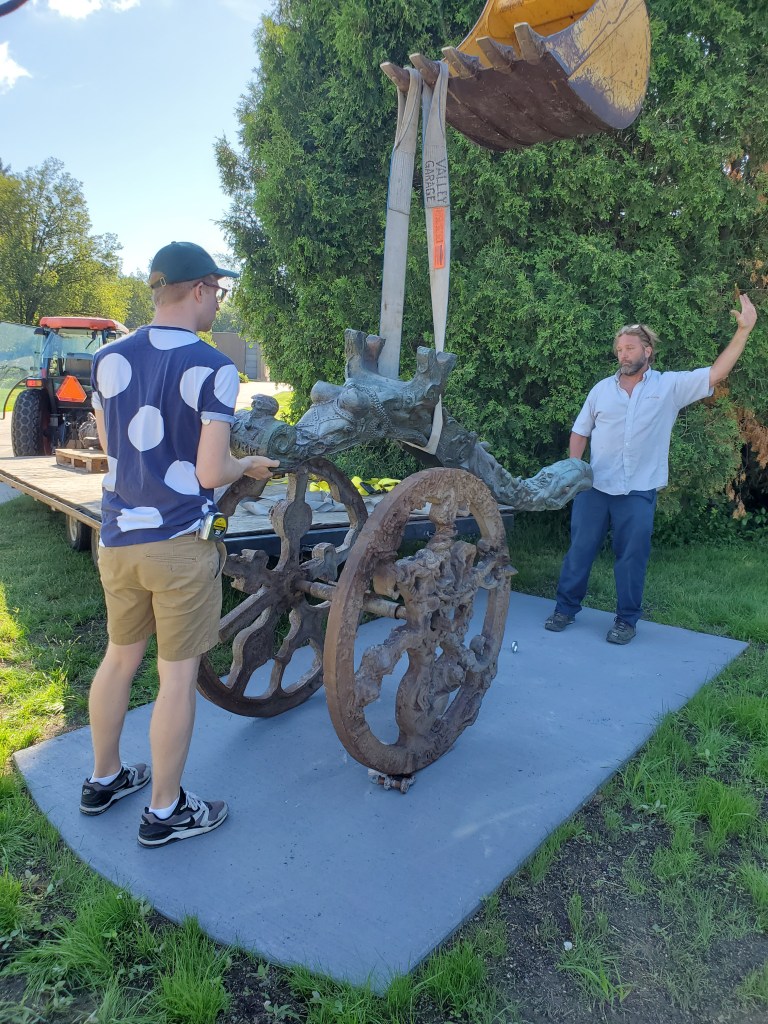
How do you move a cannon? Very carefully–and with a lot of assistance from a hydraulic arm! Steve Kerchoff, the Cranbrook Mechanic, hooks the cannon to the backhoe for placement. June 15, 2021. Photograph by Kevin Adkisson, Cranbrook Center for Collections and Research.

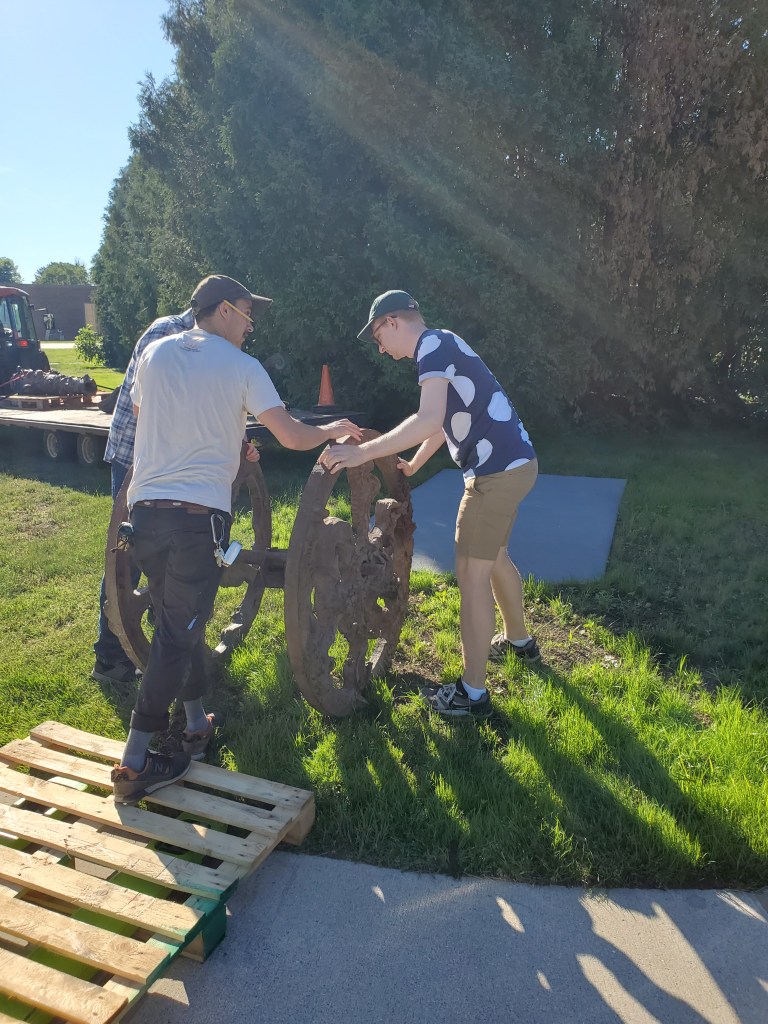
Titled simply Cannon, it is composed of a cast iron wheels, cast iron cannon body, and bronze field carriage. I should say, an extremely heavy carriage, cannon body, and wheels. It took a number of people to get Cannon reinstalled, including artist Scott Berels who restored the wheels with funds from Cranbrook Art Museum, Cranbrook Facilities, who helped move and install the piece, the Center’s Associate Curator Kevin Adkisson, and the Art Museum’s Head Preparator Jon Geiger and Registrar Corey Gross. Vital to the reinstallation was the heavy equipment and sturdy straps of the Facilities team—it isn’t often we use a John Deere backhoe to move art!

We are excited to have Cannon back on campus in time to celebrate the history of the Academy in the Art Museum exhibition. Associate Curator Kevin Adkisson marked the cannon’s its return in his most recent Live at Five presentation on Facebook:

Associate Curator Kevin Adkisson takes you on a tour of Cannon on June 16, 2021. Courtesy Cranbrook Center for Collections and Research.

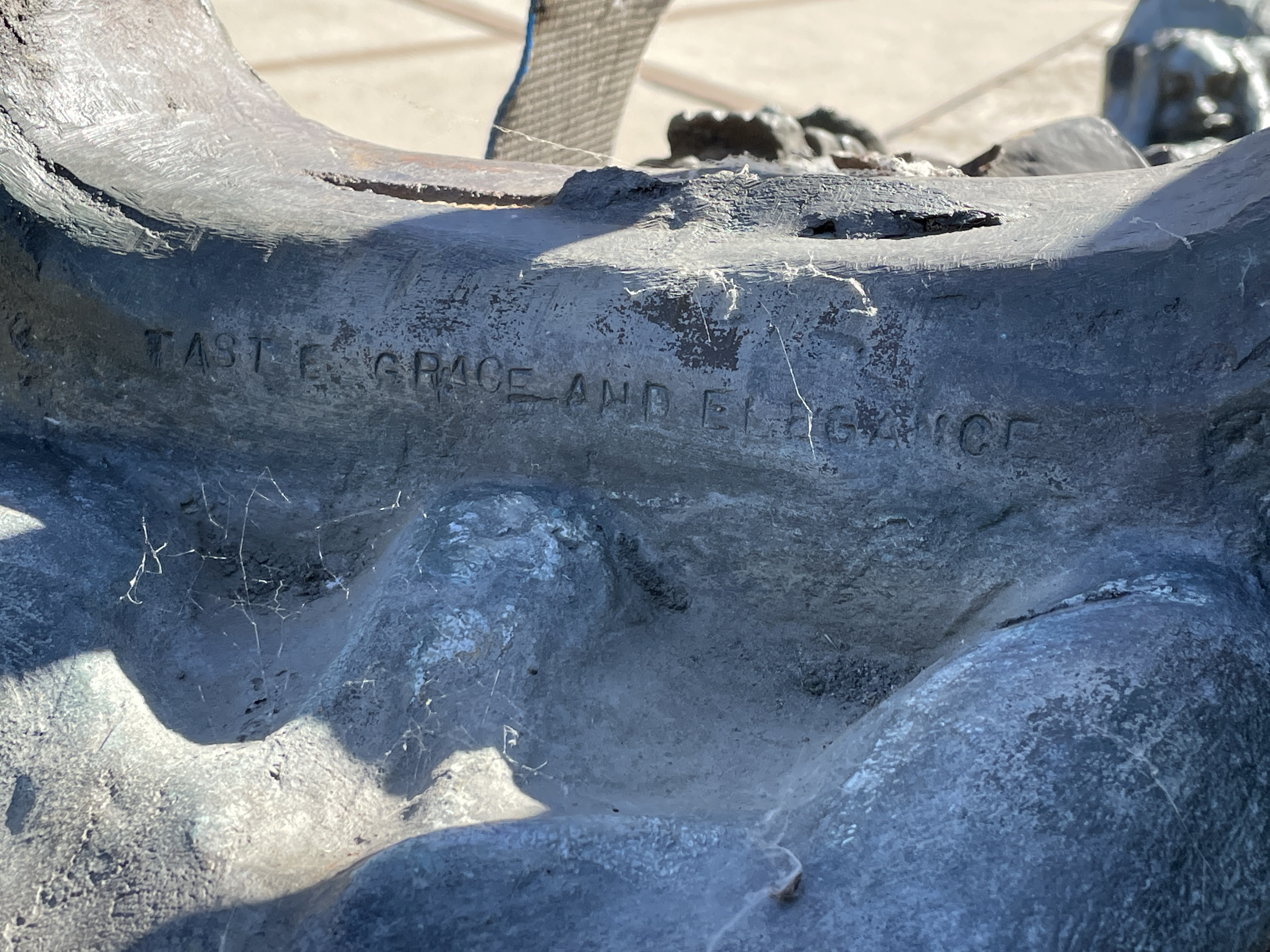
Cannon features a lot of imagery, including a number of protest-related images, which is in keeping with the times in which it was forged. One line I especially like: beneath the cannon’s trunnions (where it connects to the carriage) is the (perhaps ironic) inscription: “TASTE GRACE AND ELEGANCE.” Indeed!

Inscription on the interior of the cannon carriage.

There is still so much to learn about Cannon. We are excited to look into the iconography on the piece, and research the many student artists whose names are seen on the cannon. If you have a cannon-related story, or were involved in its construction or casting, please let us know! Look for more blogs in the future about this heavy, heavy part of the Cranbrook campus.

Congratulations to the team at Cranbrook Art Museum on the opening of the new exhibition. Book your tickets today on the Museum’s website, and don’t forget to walk over to experience Cannon while you’re here!

Leslie S. Mio, Associate Registrar, Cranbrook Center for Collection and Research

Carl Milles Gems from the Cutting Room Floor

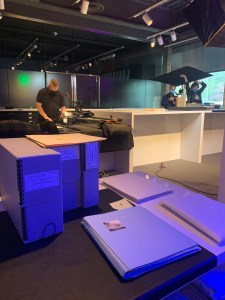
Cameras started rolling Monday for the Center’s new film celebrating Swedish American sculptor Carl Milles, premiering May 22nd at A Global House Party at Cranbrook and Millesgården. Centering on materials in the Archives, the day’s shoot featured handwritten correspondence, photographs, sketches, scrapbooks, and oral history recordings that help illuminate the story of the man behind the many iconic sculptures dotting Cranbrook’s campus.

The film production crew captures closeups of materials featured in the film.

In preparation for the day, I mined several collections in the Archives that document Milles’ twenty years as artist-in-residence at Cranbrook and his work in America during that time. In the process, I made a few delightful discoveries. While most of these treasures were expertly captured by the film production crew (Elkhorn Entertainment), there were a few that just could not be accommodated in Associate Curator Kevin Adkisson’s masterful, but already dense script.

One of these items is a notebook from the Nancy Leitch Papers. A student of Milles’ in the early 1940s, Leitch, like many of Milles’ students, became friends with both him and his wife Olga while at Cranbrook. The brief diary-like entries in Leitch’s pocket-sized book date from 1945, and are an intimate glimpse of daily activities, remembrances, and artist philosophies recounted from shared experiences and conversations with Carl and Olga. A loose paper tucked inside and titled “Carl” is a bonus, containing hasty notes recording his birthday, recommendations of where to visit in Italy (Café Greco in Rome, the cathedral in Orvieto), and words of wisdom, such as, “It is better to be an artist even though you are poor.”

Part of an entry made by Nancy Leitch in her notebook. Courtesy of Cranbrook Archives.
Continue reading

Swedish Sculptors-in-Arms: Soderlind and Milles

The Nona Bymark Soderlind archival collection consists solely of one scrapbook, yet its contents provide an intriguing glimpse of the woman to which it is dedicated. In doing so, it also illuminates a brief but prolific period in the history of the Academy of Art and reveals a personal side to one of Cranbrook’s most celebrated Artists-in-Residence, the sculptor Carl Milles.

Nona Bymark Soderlind, circa February 1936. Courtesy of Cranbrook Archives.

Born Eleanora Maria Bymark on July 16, 1900 in a small Swedish immigrant community just outside of Minneapolis, Minnesota, Nona attended the Minneapolis School of Art (1920-1922) on a full scholarship, where she studied sculpture under Charles S. Wells. She later attended the University of Minnesota where she studied under the painter Samuel Chatwood Burton. In 1927 Nona returned for a semester at the School of Art, around the time she had her first child with husband Dr. Ragnar Soderlind. The Soderlinds had three young boys (two, eight, and nine years of age) when in 1936 Nona boarded a train to Detroit to study under Carl Milles.

Nona Bymark Soderlind works on a sculpture in Carl Milles Studio, 1936. Courtesy of Cranbrook Archives.

A February 13th letter from Richard Raseman, Academy of Art Executive Secretary, confirms Soderlind’s visit to campus and includes details of associated tuition and living costs required for the minimum period of study with Milles. Cross-referenced with items in her Academy student file, it is evident she had been invited by Milles to study for a month and arrived on the 18th. Perhaps it was Milles’ 1936 commission for Vision of Peace, in St. Paul, Minnesota that had first brought them in touch with each other?

Continue reading

A Tale of Two Harriets

One was from Detroit; one was from Pittsburgh. One attended Kingswood School; the other attended the Academy of Art. One was a writer and women’s rights activist; the other was a sculptor, photographer, and social worker. Both were named Harriet Cooper. Both were on Cranbrook’s campus in 1940.

This was the unusual story I uncovered working recently with the Archives’ digital collections. While tagging images with the names of Cranbrook’s staff photographers, who were responsible for the majority of photographs taken at Cranbrook between the years 1931-1970, I came across the name Harriet Cooper. As one of only two female photographers, I attempted to find out more, and in the process discovered a second Harriet Cooper who was also at Cranbrook around the same time.

What were the odds? And more importantly, which was my Harriet? I had to find out, not only for the sake of photographic description, but to satisfy intellectual curiosity about the lives of two seemingly individual Cranbrook women, who shared the same name and once lived in close proximity (temporal and geographic) to each other.

Senior picture of Harriet Cooper in the 1940 yearbook Woodwinds. Courtesy of Cranbrook Archives, Cranbrook Center for Collections and Research

Harriet Cooper Alpern was born in 1923. A Detroit native, she grew up on Chicago Boulevard in the Boston-Edison District. Attending Kingswood School (her twin brother attended Cranbrook School), she was active in theater and served as a reporter for The Clarion, graduating in 1940.  According to the yearbook, Woodwinds, she was the senior voted for having the perfect speaking voice and known for splitting sides with her “unconscious humor.” After Kingswood, Harriet attended the University of Michigan, where her future husband E. Bryce Alpern also attended.

Poem appearing in the 1940 yearbook Woodwinds. Courtesy of Cranbrook Archives, Cranbrook Center for Collections and Research.

Aptly quoted in the Kingswood yearbook sighing, “Women’s work is never done,” Harriet spent a lifetime of active involvement in feminist social, economic, and political issues. Among her many accomplishments, she co-founded the Detroit chapter of the National Organization of Women (NOW) in 1969. A freelance writer throughout her life, Harriet used those skills to establish her own media company promoting the women’s movement.

She was not, however, a photographer.

Harriet “Betty” Cooper, 1938. Courtesy of Cranbrook Archives, Cranbrook Center for Collections and Research.

Harriet Elizabeth (Betty) Cooper Lundquist was born in Valencia, Pennsylvania in 1916. She grew up in Pittsburgh, daughter of social workers and directors of Kingsley House, a settlement house. Betty attended both Antioch College and Yale University School of Fine Arts before coming to Cranbrook Academy of Art to study sculpture under Carl Milles from 1940 to 1942. While here, she also took classes in metalcraft, modeling, and design.

Untitled entry by CAA student Betty Cooper for the War Department Sculpture Competition, May 1, 1941. Courtesy of Cranbrook Archives, Cranbrook Center for Collections and Research.

And, she also took a job with Cranbrook Foundation as a photographer!

Although unknown whether she’d had any previous experience, Betty kept the Photography Department afloat on her own for several weeks during February and March 1942, and then stayed on for another seven months as assistant photographer. After graduation, Betty continued to work as a photographer for the Farm Security Administration in Washington, D.C., where she met and married Oliver Lundquist.

Unattributed, this photograph of the interior of Milles House featuring Carl Milles’ sculpture collection was likely taken by Betty Cooper in February 1942. Courtesy of Cranbrook Archives, Cranbrook Center for Collections and Research.

While raising three children during the 1950s and 1960s, Betty was active in civil rights causes, including being a founding member of Women Strike for Peace in 1961. In the early 1970s, she went back to school and earned a graduate degree in social work, practicing her parents’ profession for the next thirty years until retirement.

It just goes to show that even while performing routine (but necessary!) archival tasks, fascinating stories reveal themselves, which provide new depth and understanding of Cranbrook’s people.

– Deborah Rice, Head Archivist, Cranbrook Center for Collections and Research

Milles: “Please do not knock”

A research request put me in search of Carl Milles this week. In the process of research, I noticed again a short letter written by Milles to Richard Raseman, Executive Secretary and Vice President of the Cranbrook Academy of Art from 1932-1943, which demonstrates a wonderful sense of humor:

Milles letter 1981-05 24-23

Letter from Carl Milles to Richard Rasemen, September 12, 1938: “Richard, Please Print in your shop following, [Please do not enter without knocking/please do not knock]. Big letter, thick bristol paper. I need 6 such prints. Carl.” Cranbrook Foundation Records, Copyright Cranbrook Archives.


While Cranbrook Archives does not have a discrete collection of Milles’ papers, there are many letters written by him to his friends and colleagues within several collections. For those minds that become curious to know more about Milles (who served as Head of the Department of Sculpture from 1931 to 1951), we have a subject guide to help in finding his handwritten treasures hiding within our collections. Milles’ letters show a great sensitivity to the recipient of his writing and his descriptions of the ups and downs of circumstance reveal a man of great warmth and fortitude.

COM3286-1

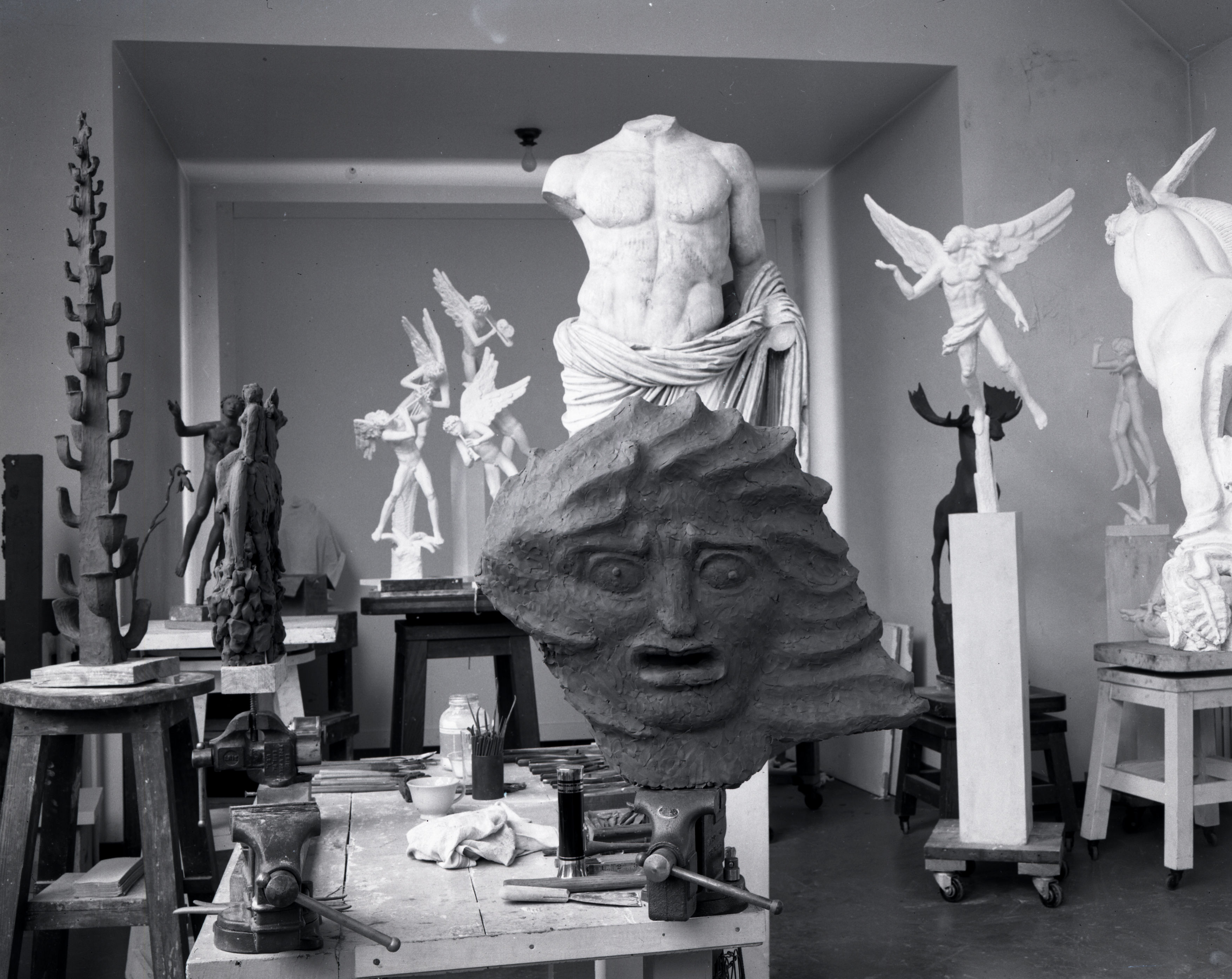
View of various sculptures in side Carl Milles’ studio at Cranbrook Academy of Art, c. 1940. Harvey Croze, photographer. Copyright Cranbrook Archives.

I am often inclined to read the letters of an artist or historical figure alongside a study of their work in the world–what a person writes and how they write it provides a wonderful glimpse into a person, and enhances an understanding of the context of their work and deeds.

Cranbrook has many offerings for things to do this summer–through the Center for Collections and Research, Cranbrook House and Gardens, Cranbrook Art Museum, and the Institute of Science. There is something for everyone, and while you are here you can use this guide to walk and view the Milles sculptures on the Academy’s campus.

– Laura MacNewman, Associate Archivist

Creativity and Experimentation: A Snapshot of the CKU Dance Department

A new collection that documents two decades of the Cranbrook Kingswood Upper School Dance Department is now open for research. The materials were donated to the Archives by the former Director of the Dance Department, Jessica Sinclair, and photographer Fred Olds.

Sinclair started teaching modern dance as part of Kingswood School’s physical education program in 1963. During her tenure, the program flourished, and Dance became its own department. Students performed throughout the year at the Performing Arts Winter Festival, the annual Evening of Dance concerts, and at events such as the Guy Fawkes Ball at Cranbrook Academy of Art (CAA).

Alexandra Ohanian in studio, ca 2000. Copyright Fred Olds/Courtesy Cranbrook Archives.

In 1982, Sinclair invited Fred Olds to photograph her dancers in collaboration with a fiber installation by Gerhardt Knodel, who was Head of the Fiber Department at CAA at that time. This event led to a twenty-year collaboration between Olds and Sinclair. Olds photographed students in performance, in the studio, and at local and international events.
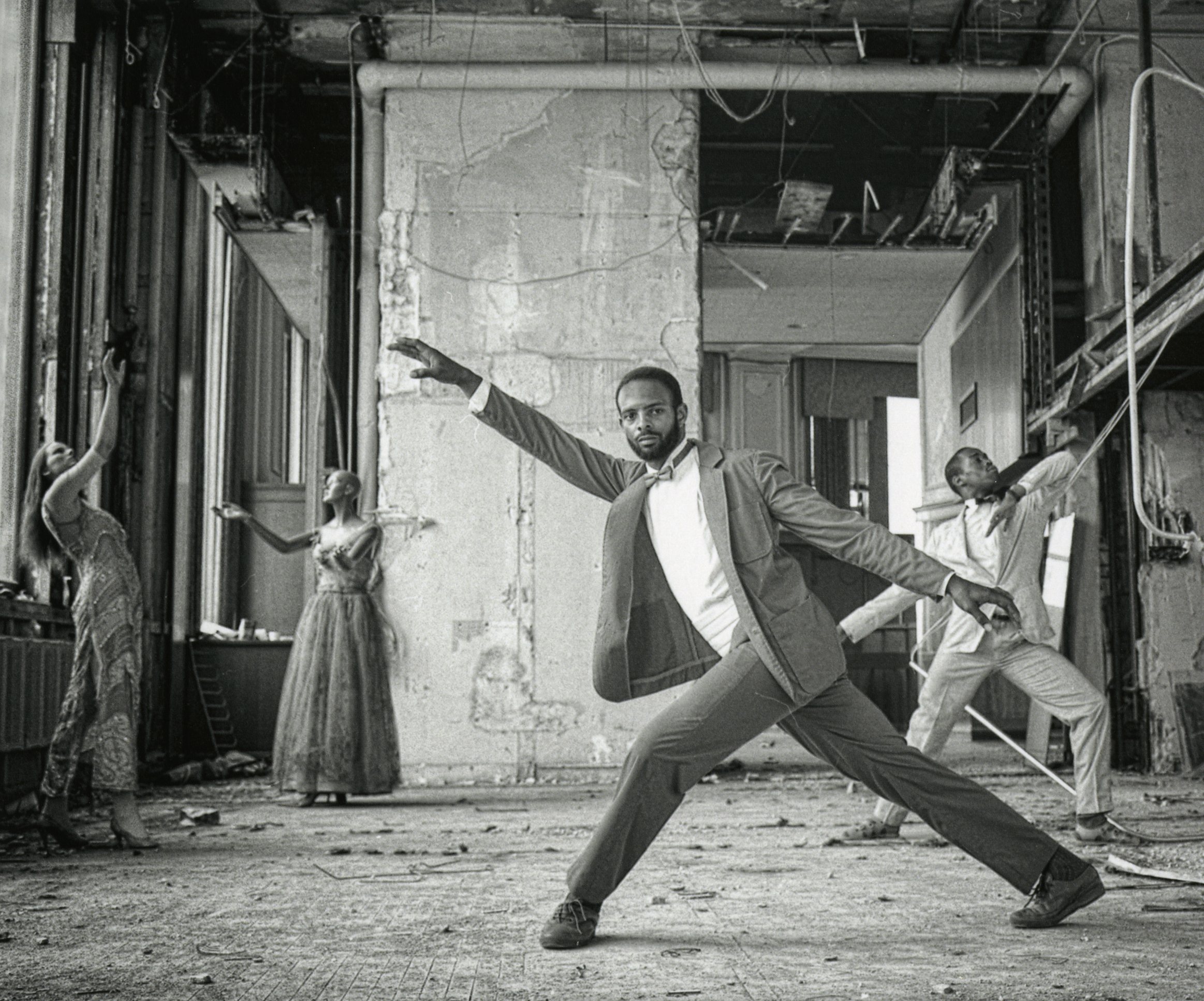
Dancers perform at the David Whitney Building in Detroit, 1985. Copyright Fred Olds/Courtesy Cranbrook Archives.

Between 1982 and 2002, the Dance department performed in Chicago, Toronto, and at the David Whitney Building in Detroit, where Sinclair choreographed “Dance in 4 Spaces,” with a grant awarded by the Michigan Council for the Arts. In 1989, Olds traveled with Sinclair and her dancers to the former Soviet Union to perform at the Children’s Palace in Moscow, the Choreographic Institute in Tblisi, and at the Rimsky-Korsakov Conservatory State Theatre in St. Petersburg. Olds remembers that the peak of applause at this concert came for a dancer in a 16-foot-tall dress designed by artist, Nick Cave (CAA ’89).

Susan Loveland in a costume designed by Nick Cave, 1989. Copyright Fred Olds/Courtesy Cranbrook Archives.

Throughout the years, Sinclair collaborated with a diverse group of fiber artists, sculptors, and architects to infuse creativity and experimentation into her work. The archival collection reflects this process in photographs, ephemera, and video.

– Gina Tecos, Archivist

Create a website or blog at WordPress.com