Tool of the Trade

Light, temperature, and humidity can all harm a museum’s objects and artifacts. In a previous blog, I talked about what damage light can do and how we are combating that at the Frank Lloyd Wright Smith House. The battle for consistent temperature and humidity in the house is another issue.

Frank Lloyd Wright Smith House, 2012. Photo by James Haefner.

In October 2018, we had a Conservation Assessment done at Smith House by ICA – Art Conservation. According to ICA,

Temperature can affect a collection in . . . significant ways. Elevated temperatures have the capacity to increase the rate of deterioration . . . [and] temperature affects relative humidity.

Relative humidity is the ratio of the amount of water vapor in a particular volume of air relative to the maximum amount of water vapor this same volume of air can hold at the same temperature.

As relative humidity fluctuates, the environment and the materials within it will seek equilibrium with one another . . . Within a museum or historic structure, the collection objects and building materials will act like a sponge to these fluctuations, which can cause irreversible mechanical damage.

In the museum community, it is recommended that the relative humidity be kept as stable as possible and the temperature as low as practicable. A relative humidity (RH) range between 55% to 35% is thought to be best for general conditions. However, it is the stability of the relative humidity that is more significant than the actual value. Temperatures below 72˚F and above 32˚F are considered acceptable when the relative humidity is controlled.

So, what was the Center to do? Equipment for monitoring (data loggers) was purchased. We started regular environmental monitoring throughout Smith House. Logs were created to record the environment ranges for temperature and relative humidity for the spaces.

Data loggers are devices equipped with sensors and a microprocessor to monitor and record data such as temperature and relative humidity. We chose Lascar’s EL-USB-2. This standalone data logger measures more than 16,000 readings and features a USB drive so data can be downloaded directly to a computer.

Data logger used to monitor temperature and humidity in Smith House.

However, it is not always practical to carry a laptop around Smith House to download the data or remove the data loggers to download on my office PC. Instead, I use the EL-DataPad. It allows the configuration and download of temperature and humidity data loggers on the spot.

Data pad with attached data logger.

In the Smith House, the temperature and humidity is recorded every 30 minutes. I log this data and graph it, to see trends or issues in the house.

Graph of Smith House Living Room temperature and humidity readings from March to September 2020.

How will this documentation help conservation of objects in Smith House? The data will be useful for establishing achievable set points and ranges for the house environment. It will also be helpful for writing grants to help fund equipment or materials for further environmental management.

Leslie S. Mio, Associate Registrar, Cranbrook Center for Collections and Research

The Monreale Fountain in the Quadrangle

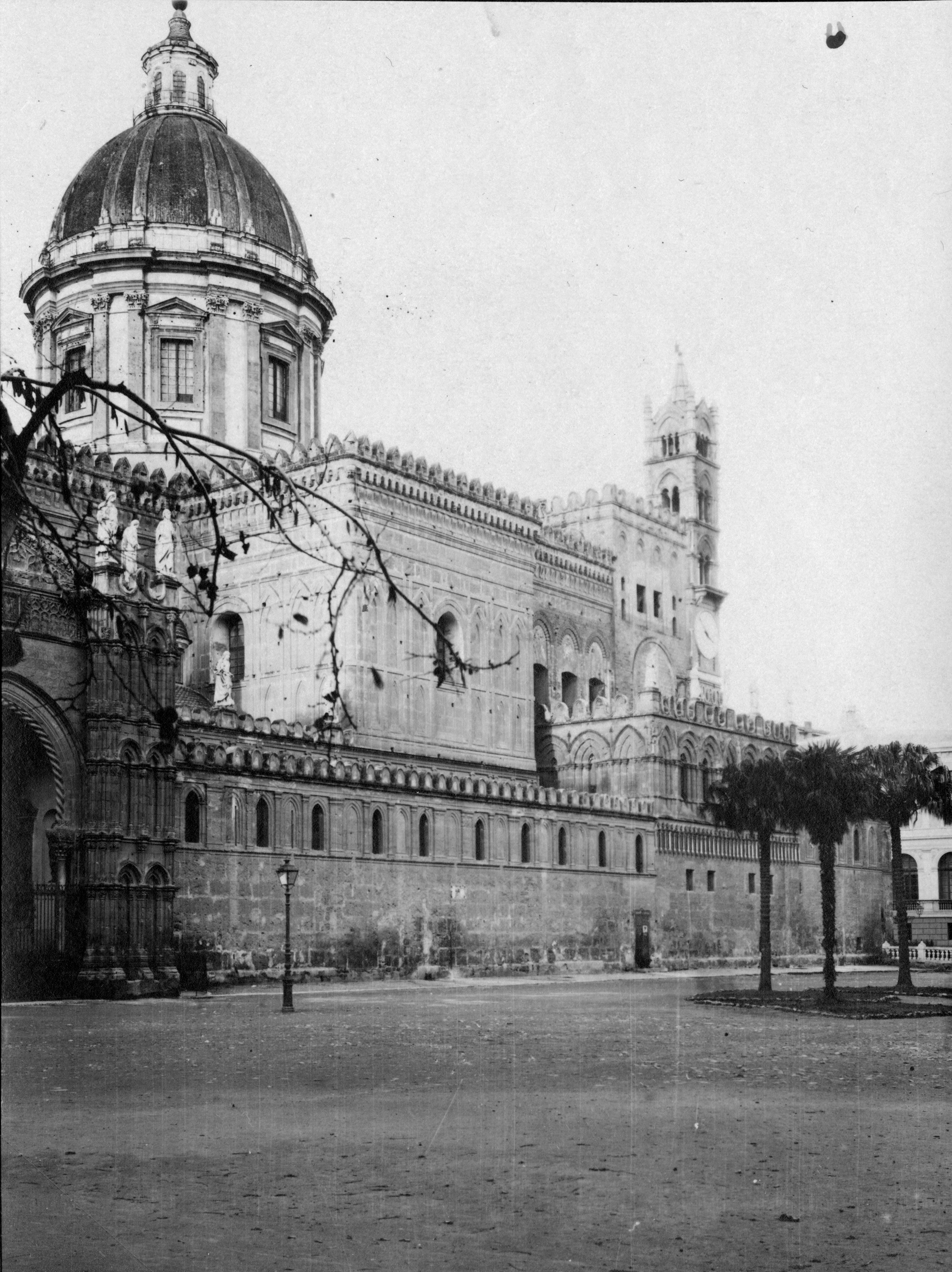
In the center of the Quadrangle at Cranbrook School is a replica of a fountain which stands in the southwestern corner of the cloister of Duomo Monreale in Palermo, Sicily. Completed in 1182, the cathedral unites Arabic, Byzantine, and Norman architectural and cultural influences and is famed for its mosaics.

The inspiration for the fountain’s long-treasured presence on the Cranbrook campus dates back to 1922, when Henry Scripps Booth first saw the original in the cathedral cloister. This was a site that Henry seems to have particularly wanted to see while on a ten-month architectural study tour of Scandinavia, Germany, Switzerland, Italy, Great Britain, and France, with his friend, J. Robert F. Swanson.

View of the Duomo Monreale, December 1922. Henry Scripps Booth, photographer. Cranbrook Archives.

Writing to his father, Cranbrook founder George G. Booth, on December 26, 1922, he describes the cathedral thus:

“Mosaic everywhere — luminous gold, and dull colors — with intricate geometric patterns in abundance and fine but rather arcaic [sic] representations of Biblical stories roofed over with a richly decorated trussed ceiling. The cloister in the cathedral’s shade is that delightful one with such delicate columns in pairs, decorated by mosaics, that is illustrated so frequently.”

View of the Duomo Monreale, December 1922. Henry Scripps Booth, photographer. Cranbrook Archives.

Henry laments that there isn’t time enough to study the monuments as closely as he would like, to measure them and draw them up, for if they did, they would end up knowing only one thing well but miss out on so many others. His letter includes this sketch of the fountain:

Letter from Henry Scripps Booth to George Gough Booth, December 24-26, 1922. Cranbrook Archives.

Several years later, George is in Naples, Italy, at one of his favored workshops, the Chiurazzi Foundry. On March 2, 1927, George wrote to Henry to tell him of numerous purchases he made at the foundry, all to be gifts to the new Cranbrook School for Boys. While the specific uses of the items might be determined later, as was characteristic of George he had a tentative plan for all of them. The most important was the replica of the Monreale fountain. Here, we can see George’s sketch of the replica fountain, showing its dimensions:

Continue reading

A Tale of Two Chairs

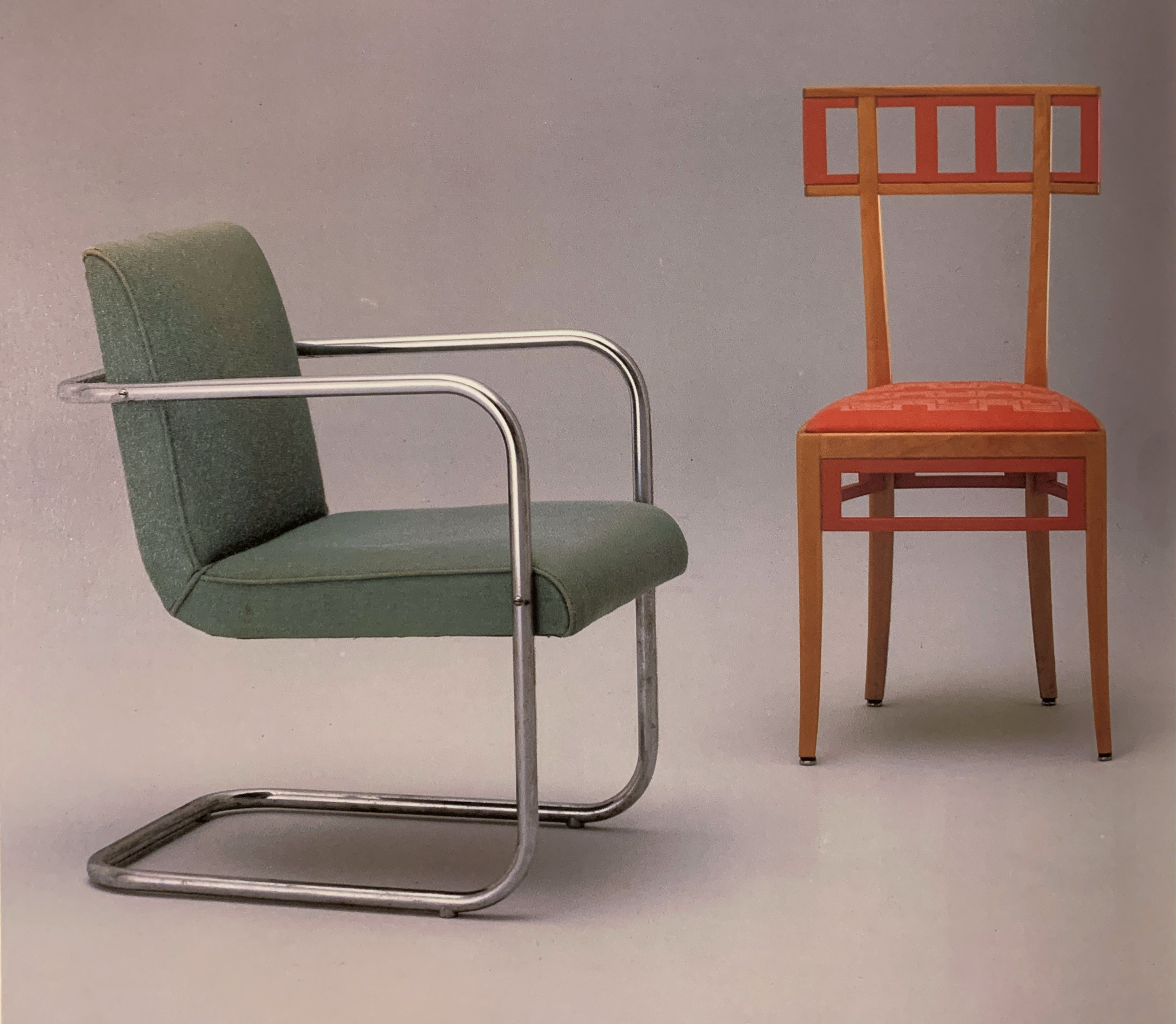
When asked, late in life, about the furniture he designed for Kingswood School for Girls, Eero Saarinen referred to himself as “a child of my period.” Two chairs in particular show how the young, precocious designer was able to work in both traditional and modern modes. As designers in the 1920s and 1930s debated the merits of traditional and modern design, Eero worked with both.

Auditorium and Dining Hall chairs for Kingswood School for Girls by Eero Saarinen, 1929-1931. Cranbrook Art Museum.

He was just 18 years old when he began sketching designs for Kingswood in 1929.  Later that year, he departed for Paris to study sculpture for eight months. These two Kingswood chairs show an understanding of two major European designs trends of the era: the evolutionary Art Deco, with its roots in neoclassical design, and the revolutionary Modern movement, emerging most forcefully out of the German Bauhaus.

First, the Kingswood Dining Hall chairs. These birch wood chairs with painted coral-colored elements and linen damask upholstery are delicate adaptations of the ancient Greek klismos chair. The klismos form, which features curving splayed legs and a concave crest rail, became popular in late-18th-century Europe and America as part of the Greek Revival and the neoclassical style. The form again became a favorite among designers in the 1920s, when its clean lines and soft curves were used throughout Art Deco interiors. Kilsmos chairs were especially fashionable in Scandinavian modern design, with architects and designers like Aino and Alvar Aalto, Gunnar Asplund, Erik Bryggman, and Carl Malmsten producing versions of the chair. In fact, Carl Milles had a set of Malmsten-designed klismos chairs in his Cranbrook dining room. Eero Saarinen’s klismos chairs for Kingswood fit perfectly within the clean lines, rich materials, and Swedish Grace-styling of the light-filled dining hall.

Left: Klismos-stlye chair from Carl Milles House at Cranbrook Academy of Art by Carl Malmsten, manufactured by Firma David Blomberg, designed 1926. Right: Chair for Kingswood Dining Hall by Eero Saarinen, manufactured by Stickley Brothers Furniture Company, designed 1929-1931. Courtesy Cranbrook Art Museum.

Second, a chair that eschews historic forms for the avant-garde: the chrome plated, tubular steel Kingswood Auditorium armchair. Eero Saarinen’s cantilevered design recalls the furniture coming out of Germany in the 1920s, particularly the work of Marcel Breuer at the Bauhaus. Breuer was a twenty-three-year-old student at the revolutionary German design school when, inspired by bicycle handlebars, he ordered tubular steel from the bicycle manufacturer Adler and built the world’s first tubular steel chair in 1925. Architect and president of the Bauhaus Walter Gropius was so taken with the initial tubular steel chair he invited Breuer to design most of the furnishings for the school’s new modern buildings in Dessau.

Continue reading

The Smiths and World War II

World War II caused global upheaval and change. Closer to home, two schoolteachers from Detroit—Melvyn and Sara Smith—and their dream of building a home designed by Frank Lloyd Wright would have to wait for war.

On December 7, 1941, the Japanese bombed Pearl Harbor. Sara Smith recalled her husband’s concern: “One day he confessed to [me] that in addition to his worries about the catastrophe the country was facing, he felt if there was a war, that also would be the end of his Frank Lloyd Wright house.”

Melvyn Maxwell Smith’s draft card, 1942. Source: Ancestry.com. U.S. WWII Draft Cards Young Men, 1940-1947 [database on-line]. Lehi, UT, USA: Ancestry.com Operations, Inc., 2011.

In February 1942, Melvyn Maxwell Smith was drafted into the U.S. Armed Forces. “Smithy thought about being a conscientious objector because he didn’t believe in wars,” recalled Sara, “but the more he thought about it, the more he decided he would have to go. ‘We want peace and I’m going to do what I can to help,’ he told me.” The thought of Smithy going off to war weighed heavily on Sara. They had only been married a short time, and now they were being separated.

Smithy was sent off to training, first at Fort Custer near Battle Creek, Michigan, then Sheppard Field in Wichita Falls, Texas, and finally Atlantic City, New Jersey. The Smiths could only see each other during school vacations (Sara was still teaching) or holidays, provided Smithy was not shipped off to the front.

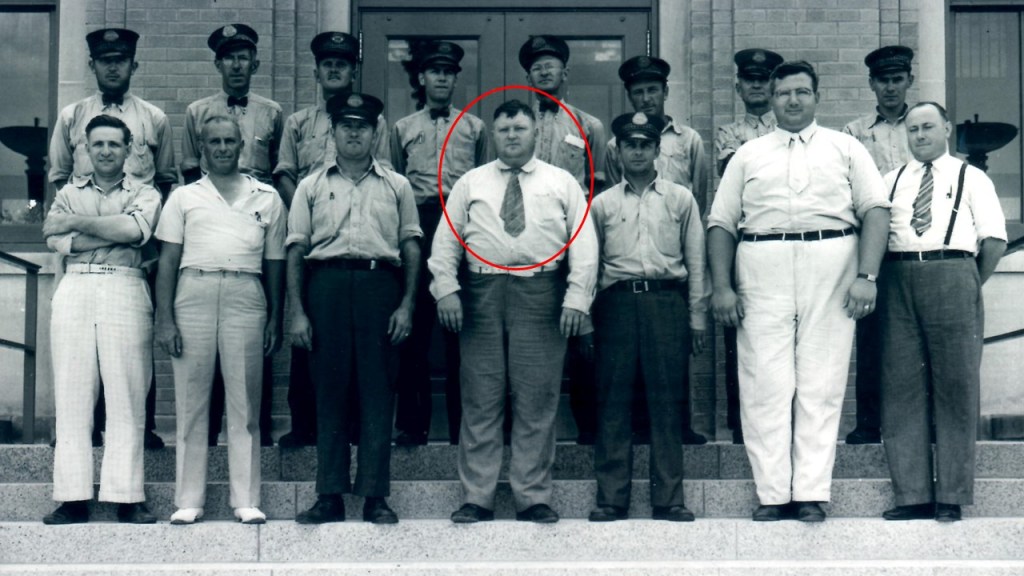
Melvyn (circled in back row) and other officers, circa 1943. Courtney of Smith Family Papers, Cranbrook Archives.

In Atlantic City, Smithy was offered the opportunity to train as a Warrant Officer in the Army Air Corps. He would be sticking around Atlantic City for a while and, with an officer’s salary, Sara could finally join him. At Christmas 1942, “[Sara] boarded the night train to Atlantic City and her new life.”

Sara and Melvyn Smith in Atlantic City, 1942. Courtney of Smith Family Papers, Cranbrook Archives.

After Atlantic City, the Smiths were relocated to Goldsborough, North Carolina. Sara and Smithy lived in a studio apartment in an Army project. Sara enjoyed living there, commiserating with all the other Army wives. Since they were all typically newly married and removed from their families, the wives helped each other. “The women, on their own during the days, supported each other by sharing supplies and tips and small and large acts of kindness.”

Warrant Officer Melvyn Maxwell Smith. Courtney of Smith Family Papers, Cranbrook Archives.

It was in Goldsborough that Sara became pregnant with her son Bobby. When she was seven months pregnant, Smithy was transferred to Gulfport, Mississippi. Sara was sure this would mean Smithy would be shipped to the front. Smithy worried too, so he asked Sara to return to Detroit and her family for the birth of their baby, instead of following him to Mississippi. While Sara was in Detroit awaiting the birth of Bobby, Smithy was again transferred, this time to Biloxi, Mississippi, for which the Smiths were happy. It meant not being overseas.

Continue reading

Mail Matters: Another Michigan Mural

On the eve of World War II, while Americans continued to suffer from the economic fallout of the Great Depression, the United States Treasury Department’s “Section of Fine Arts” commissioned Zoltan Sepeshy, the Head of the Painting Department at Cranbrook Academy of Art, to paint a mural for a new post office in downtown Caro. At the same time, one of his star students, David Fredenthal, was commissioned to paint a mural for the new post office in Lincoln Park. (Having trouble placing Caro, if not also Lincoln Park, on a map of Michigan? For your first geography lesson, place your right hand, palm side up, next to you. Caro is located in the middle of your thumb, while Lincoln Park is closer to your wrist.)

Separate and distinct from the more extensive and influential WPA or Works Progress Administration’s “Federal Arts Project,” which essentially was a work-relief program for artists, the purpose of the Treasury Department’s “Section” program, as it came to be known, was “to secure for the Government the best art which this country is capable of producing, with merit as the only test.” Sepeshy and Fredenthal, with their recently minted Cranbrook credentials, fit the bill. Fredenthal even had some mural experience, having recently painted an octopus mural for the Academy’s now infamous Crandemonium Ball in 1936.

Octopus mural by David Fredenthal for Crandemonium Ball, March 1936. Cranbrook Archives.

Meanwhile, Jimmy Southers, Lincoln Park’s postal superintendent, was more than a little perplexed and worried about the mural David Fredenthal was to paint for his post office. The week of September 25, 1939, Southers received a letter from Washington notifying him that Fredenthal, who the government described as a “sensational young artist” from Cranbrook Academy of Art, had been named to paint the mural—a fresco no less. Southers, who more than likely had not paid a visit to the seven-year-old Academy in Bloomfield Hills, not only had no idea what a fresco painting was but was intimidated by the government’s suggestion that he was to confer with the artist about the subject matter. His big idea? He thought a mural showing all of Lincoln Park’s postal superintendents (no doubt with him in a position of prominence) would do just fine.

Fortunately for Southers, geography intervened. Pulling out his own map of Michigan, Sepeshy did some calculations (which I just repeated using Google Maps). Realizing that Caro was some seventy-two miles from his studio in Bloomfield Hills while Lincoln Park was just twenty-six, the Hungarian painter decided to pull rank. He had the commissions switched and assigned the Caro project to his student while he decided to paint the mural in Lincoln Park, a few miles south of Dearborn.

Continue reading

Collection in Focus: Ellen Warren Scripps Booth Papers

One of the things I love about my work is that I never know what I will discover next. I go in search of one thing and find much more and, sometimes, the unexpected. This happened recently when I ventured into the Ellen Warren Scripps Booth Papers.

Ellen’s papers primarily record her personal life from the 1870s through 1948, with a preponderance on the years 1880-1910. They include drawings, maps, an autograph book from her school days, leaflets from the Epiphany Reformed Church and its reconstitution as Trinity Episcopal Church, letters from her mother, Harriet J. Scripps (letters written 1901-1927), and photographs.

Drawing by Ellen Warren Scripps, age 10, 1873. Cranbrook Archives.

But, the bulk of the collection are her diaries which cover 1880-1944, though the coverage is spotty after 1910. The research value of a diary is variable, depending much upon the focus and meticulousness of the author, and its intersection with the researcher’s interest.  The dates in Ellen’s diaries are unquestionably reliable, as other documents in the archives verify their accuracy. Frequently recorded topics include the weather, who preached at church/other churches attended, what she was reading, her music and singing lessons, unwell family members, and who came for tea or dinner.

Her diaries not only tell her story, but also describe the life of the Scripps family and the appearance of the Booth family, particularly Alice and George, in the early 1880s. We can also see glimpses of Detroit history, such as Governor Pingree’s funeral in July 1901, and her visit to Barnum Wire Works with George in January 1887. On February 15, 1882, Ellen writes:

“Walked to and from school today. Went to social at Mr. Woolfenden’s with Theodore. Had a splendid time. Theodore asked me to go to hear Oscar Wilde Friday evening but I concluded not to go. I began reading Old Curiosity Shop this afternoon.”

Oscar Wilde! She notes in her Friday entry, that Theodore went to hear Wilde with Mr. Woolfenden instead. There are many mentions of “Mr. Woolfenden,” who otherwise has only been found mentioned in George Booth’s Memories (pp.53-55).

Ellen Warren Scripps’ Diary, 1886. Cranbrook Archives.

Frederick W. Woolfenden is one of two people that Henry Wood Booth met during his first visit to Detroit in 1880, the other being James E. Scripps. This story is quite widely known and the information about it, published in Arthur Pound’s book about George Booth, The Only Thing Worth Finding (pp.63-68), comes from George’s writings. Woolfenden had taken interest in Henry Wood Booth’s Ka-o-ka idea, and, after visiting him in St. Thomas, Ontario, convinced him to move to Detroit in 1881. Woolfenden was Assistant Postmaster of Detroit and a co-founder of the Dime Savings Bank, but he was also a Pastor at the Epiphany Church where Henry Wood Booth had first met him.

Ellen’s diaries record his deep involvement with the family as a friend and pastor who conducted the christenings, confirmations, funerals, and weddings of both families. It was Woolfenden who married George and Ellen in 1887.

Ellen’s diaries provide a complete record of her life until 1910 and so the earliest memories of Cranbrook are recorded. The story that we know and love so well, of George and Ellen purchasing the old farm from Samuel Alexander is captured in her hand and it was lovely to read as she describes, albeit briefly, the snow drifts as they visit the farm:

Ellen Warren Scripps Booth’s Diary, 1904. Cranbrook Archives.

A few days later, on January 18, 1904, she writes, “Went down town to sign the mortgage for the farm. It is ours now, and we are all so glad.” All these years later, I am so glad too.

Laura MacNewman, Associate Archivist, Cranbrook Center for Collections and Research
Weaving Lessons: Ruth Ingvarsson’s Manuscripts

Among the treasures in Cranbrook Archives is a manuscript that, although I can’t read anything written inside, is one of my favorite things at Cranbrook. Bound in handwoven cloth by the author herself, the cover hints at what’s inside. This is Ruth Ingvarsson’s weaving book.

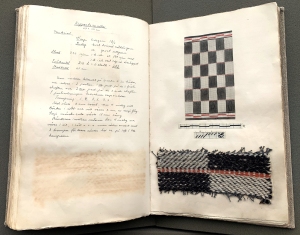
Ruth Ingvarsson’s weaving manuscript, hand-bound in a cloth cover of her own design and execution, ca. 1932-1935. Rigid Swedish-style counterbalanced loom depicted on the front, “R I” on reverse. Copyright Cranbrook Archives.

One of two manuscripts written in Swedish and assembled by Ingvarsson between 1932 and 1935, each of the more than 100 pages discuss different weave structures, materials, patterns, and techniques. Who was Ingvarsson, and how did these treasures end up at Cranbrook?

Rut “Ruth” Elisabeth Ingvarsson was born on October 1, 1897 in Glemminge, Skäne, Sweden. Like many Scandinavian girls, she learned weaving first from her mother and then at school, graduating from the Glemminge Folkskola in 1918. In 1922, Ingvarsson began studies at the celebrated weaving studio of Märta Måås-Fjetterström in Båstad, Sweden.

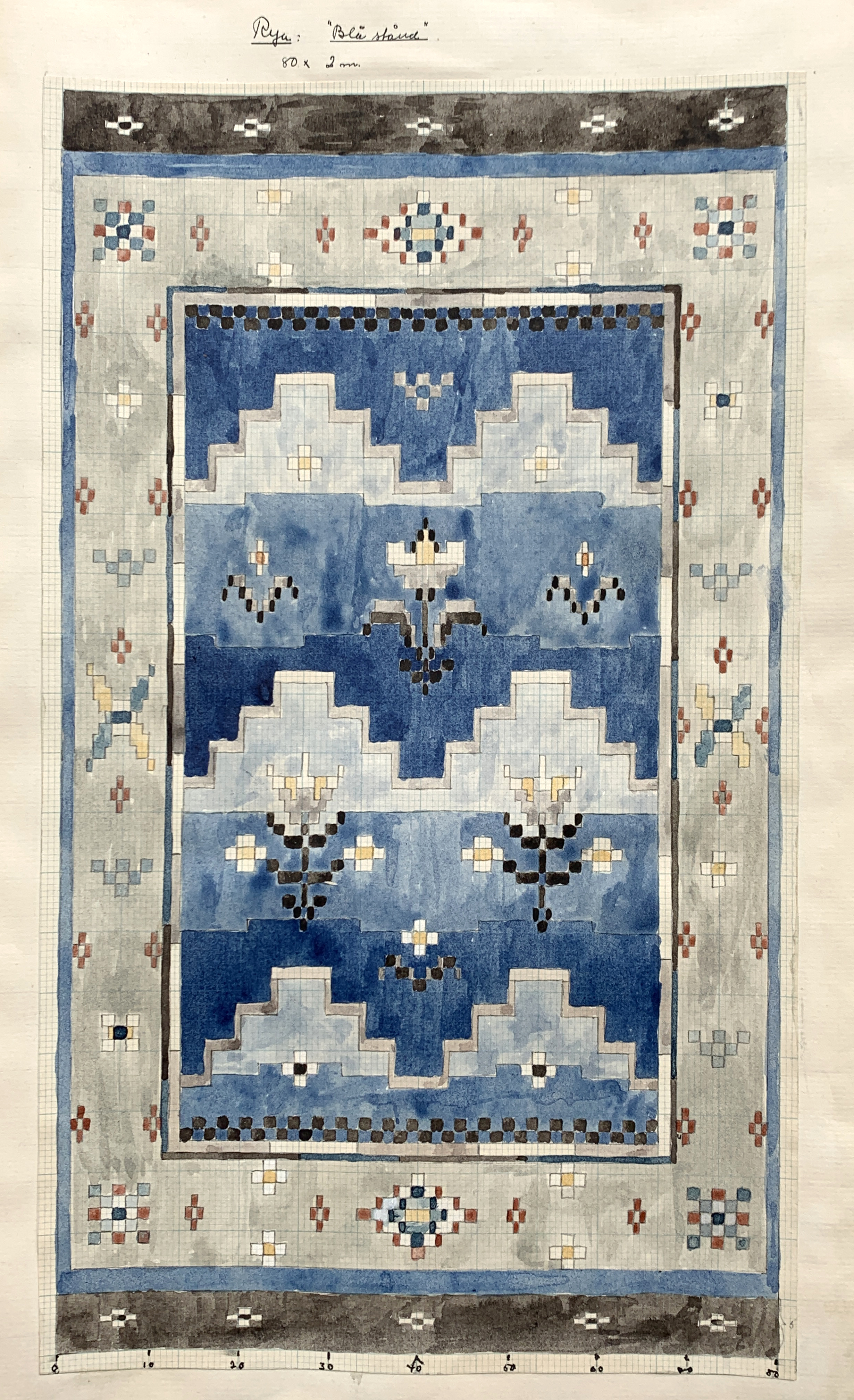
Ingvarsson continued working for Måås-Fjetterström until 1928, learning technical skills including knotted pile rya or flossa weaves, rölakan flatweave, and a discontinuous (or supplemental) weft style of tapestry weaving known as the MMF technique. Under Måås-Fjetterström, Ingvarsson developed great skill painting watercolor sketches on graph paper in the popular “Swedish Grace” (or “Swedish Modern”) style. She also befriended another young weaver, Lillian Holm, who entered into the Måås-Fjetterström studio in 1926.

Watercolor of a rug design in the “Swedish Grace” style by Ruth Ingvarsson in her untitled manuscript on weaving, ca. 1932-1935. Copyright Cranbrook Archives.

In late 1929, Ruth Ingvarsson and Lillian Holm immigrated to America to start work that December at Studio Loja Saarinen, Cranbrook’s weaving workshop. Here, Ingvarsson executed designs from Loja herself and other members of the Saarinen family, as well as designs by the Studio’s shop supervisor and prominent Swedish weaving expert Maja Andersson Wirde.

Continue reading

A Tale of Two Harriets

One was from Detroit; one was from Pittsburgh. One attended Kingswood School; the other attended the Academy of Art. One was a writer and women’s rights activist; the other was a sculptor, photographer, and social worker. Both were named Harriet Cooper. Both were on Cranbrook’s campus in 1940.

This was the unusual story I uncovered working recently with the Archives’ digital collections. While tagging images with the names of Cranbrook’s staff photographers, who were responsible for the majority of photographs taken at Cranbrook between the years 1931-1970, I came across the name Harriet Cooper. As one of only two female photographers, I attempted to find out more, and in the process discovered a second Harriet Cooper who was also at Cranbrook around the same time.

What were the odds? And more importantly, which was my Harriet? I had to find out, not only for the sake of photographic description, but to satisfy intellectual curiosity about the lives of two seemingly individual Cranbrook women, who shared the same name and once lived in close proximity (temporal and geographic) to each other.

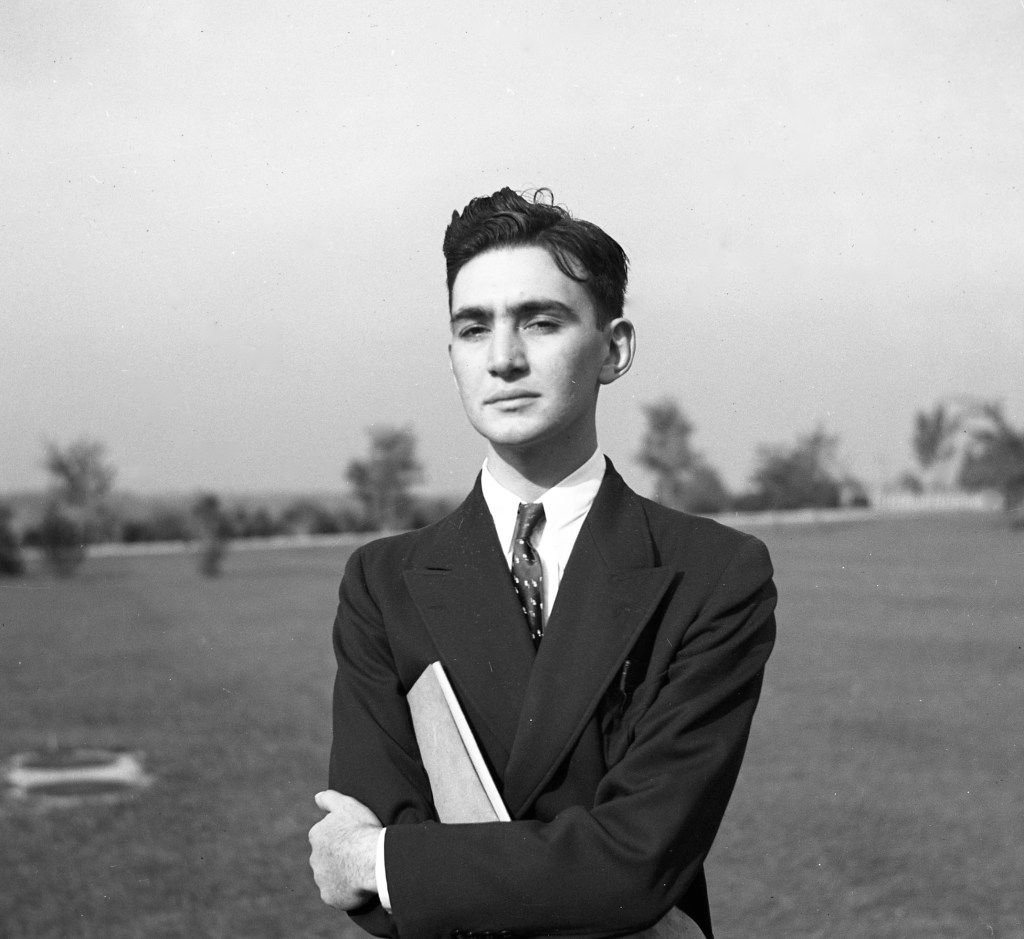
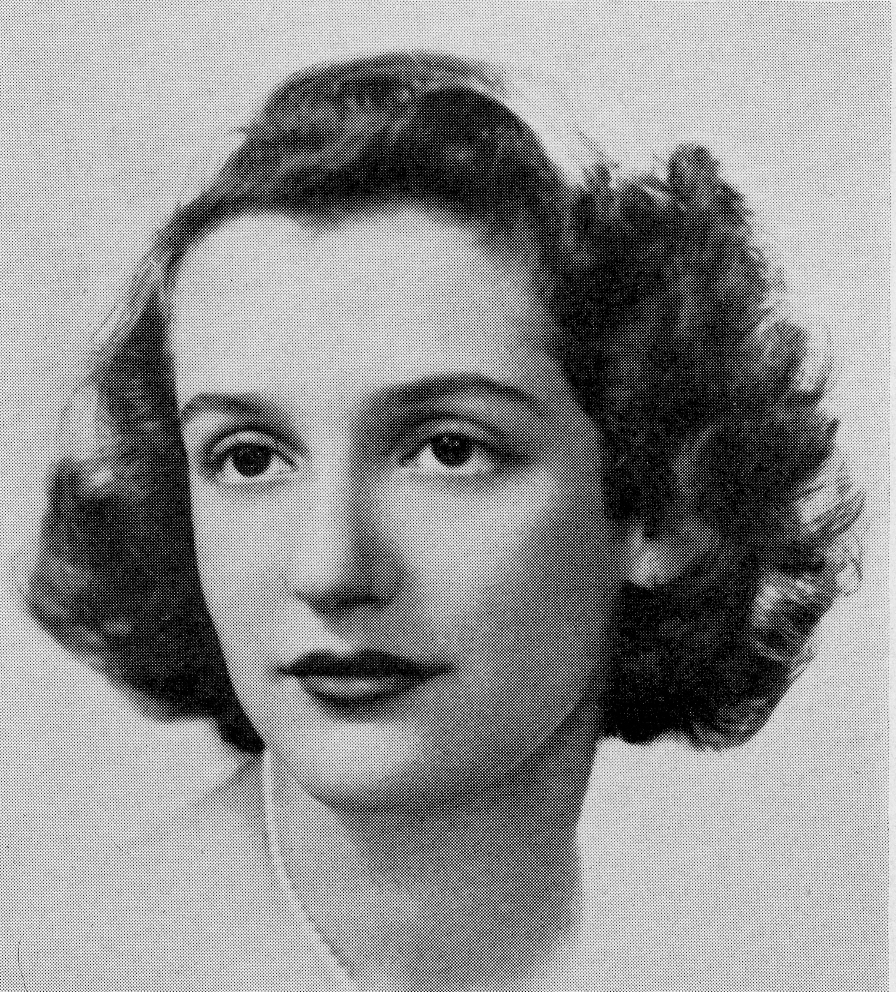
Senior picture of Harriet Cooper in the 1940 yearbook Woodwinds. Courtesy of Cranbrook Archives, Cranbrook Center for Collections and Research

Harriet Cooper Alpern was born in 1923. A Detroit native, she grew up on Chicago Boulevard in the Boston-Edison District. Attending Kingswood School (her twin brother attended Cranbrook School), she was active in theater and served as a reporter for The Clarion, graduating in 1940.  According to the yearbook, Woodwinds, she was the senior voted for having the perfect speaking voice and known for splitting sides with her “unconscious humor.” After Kingswood, Harriet attended the University of Michigan, where her future husband E. Bryce Alpern also attended.

Poem appearing in the 1940 yearbook Woodwinds. Courtesy of Cranbrook Archives, Cranbrook Center for Collections and Research.

Aptly quoted in the Kingswood yearbook sighing, “Women’s work is never done,” Harriet spent a lifetime of active involvement in feminist social, economic, and political issues. Among her many accomplishments, she co-founded the Detroit chapter of the National Organization of Women (NOW) in 1969. A freelance writer throughout her life, Harriet used those skills to establish her own media company promoting the women’s movement.

She was not, however, a photographer.

Harriet “Betty” Cooper, 1938. Courtesy of Cranbrook Archives, Cranbrook Center for Collections and Research.

Harriet Elizabeth (Betty) Cooper Lundquist was born in Valencia, Pennsylvania in 1916. She grew up in Pittsburgh, daughter of social workers and directors of Kingsley House, a settlement house. Betty attended both Antioch College and Yale University School of Fine Arts before coming to Cranbrook Academy of Art to study sculpture under Carl Milles from 1940 to 1942. While here, she also took classes in metalcraft, modeling, and design.

Untitled entry by CAA student Betty Cooper for the War Department Sculpture Competition, May 1, 1941. Courtesy of Cranbrook Archives, Cranbrook Center for Collections and Research.

And, she also took a job with Cranbrook Foundation as a photographer!

Although unknown whether she’d had any previous experience, Betty kept the Photography Department afloat on her own for several weeks during February and March 1942, and then stayed on for another seven months as assistant photographer. After graduation, Betty continued to work as a photographer for the Farm Security Administration in Washington, D.C., where she met and married Oliver Lundquist.

Unattributed, this photograph of the interior of Milles House featuring Carl Milles’ sculpture collection was likely taken by Betty Cooper in February 1942. Courtesy of Cranbrook Archives, Cranbrook Center for Collections and Research.

While raising three children during the 1950s and 1960s, Betty was active in civil rights causes, including being a founding member of Women Strike for Peace in 1961. In the early 1970s, she went back to school and earned a graduate degree in social work, practicing her parents’ profession for the next thirty years until retirement.

It just goes to show that even while performing routine (but necessary!) archival tasks, fascinating stories reveal themselves, which provide new depth and understanding of Cranbrook’s people.

– Deborah Rice, Head Archivist, Cranbrook Center for Collections and Research
I Heard the Bells

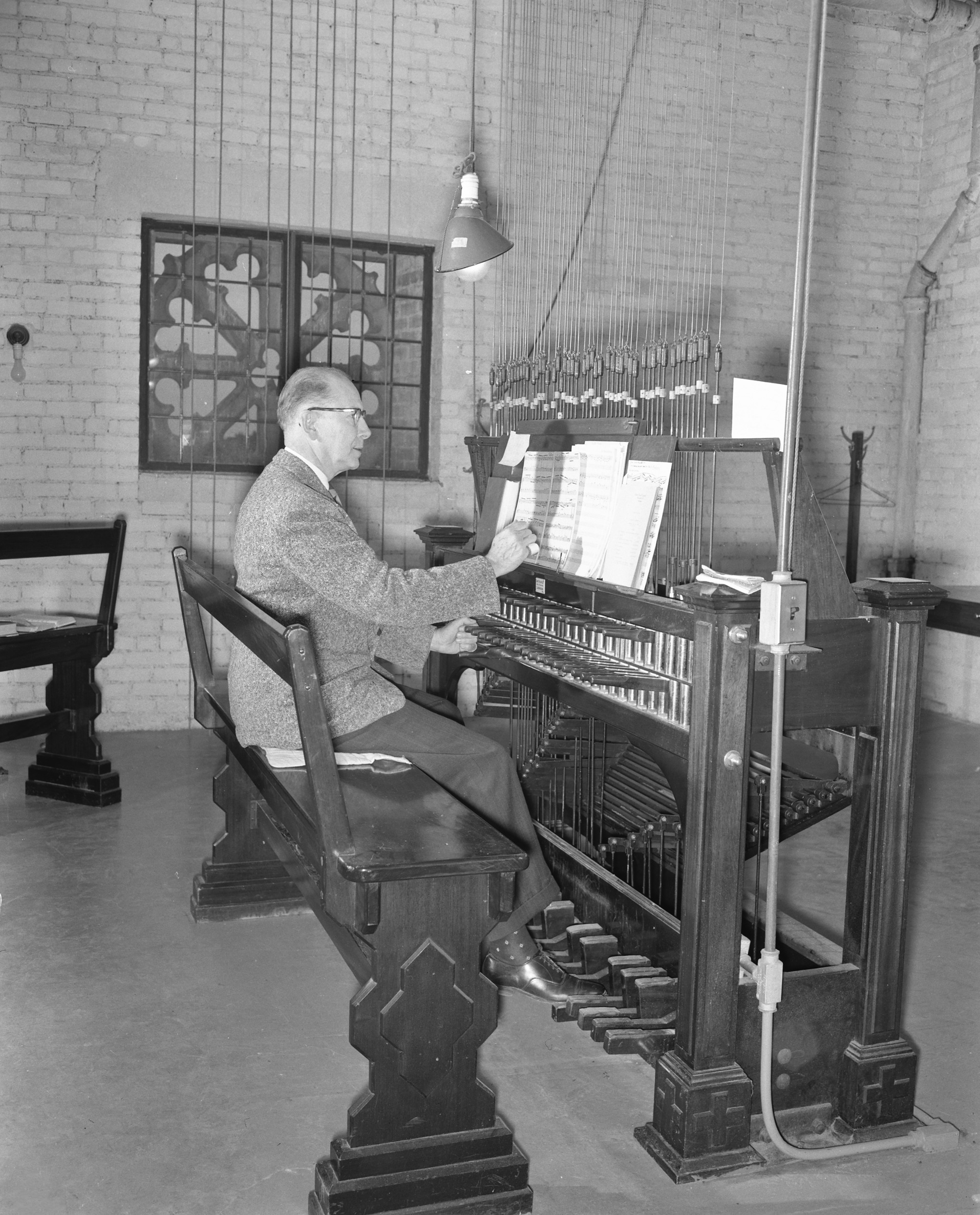
What you might think at first look is simply a bell tower at Christ Church Cranbrook is actually much, much more. The tower holds a carillon, a musical instrument consisting of cast bronze bells in fixed suspension, tuned in half steps (chromatic order). It is played from a clavier (keyboard) containing wooden leavers and pedals wired to clappers.

South view of Christ Church Cranbrook, 1932. Photo by Max Habrecht. Courtesy of Cranbrook Archives, Cranbrook Center for Collections and Research.

The Christ Church Cranbrook carillon is known as the “Booth-Wallace Carillon” as the instrument was a gift to the church from Grace Booth Wallace, her husband Harold Lindsey Wallace, and their five children, Elizabeth, Ellen, Richard, Shirley, and Catherine. It originally consisted of forty-six bells made by the Taylor Bell Foundry in Loughborough, England.

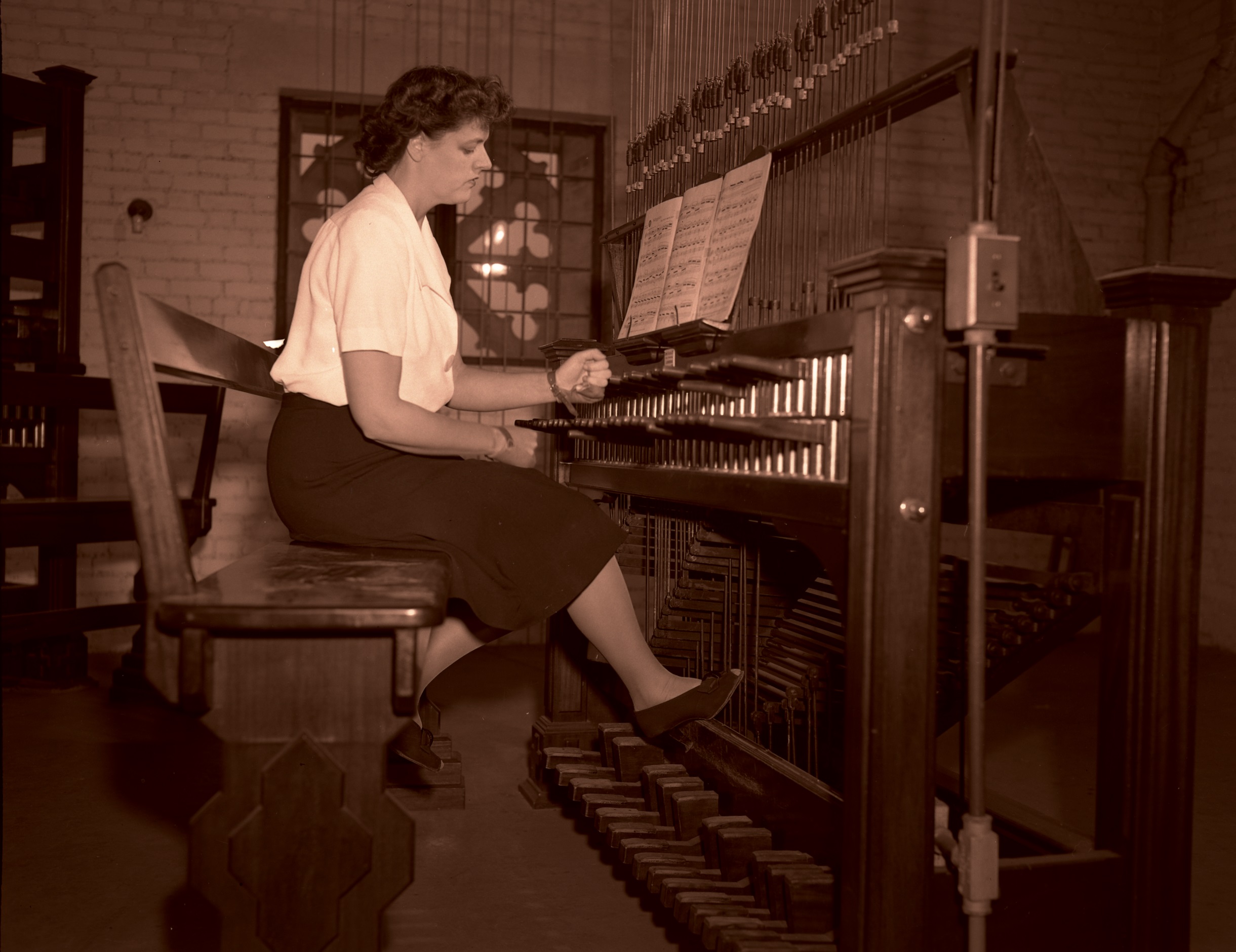
The largest bell (bourdon) is 6,700 pounds, five-feet eight-inches in diameter, and rings a low B-flat. The carillon was later expanded in 1978 with smaller treble bells to its current total of fifty bells, or four complete octaves. The carillon is in concert pitch, meaning it sounds the notes implied by the keyboard arrangement. To play the large instrument, the clavier is struck with fists and feet. The carillon requires physical exertion as the clappers can weigh several hundred pounds–however, the instrument is balanced for ease of use.

Nellie Beveridge at the clavier of the Booth-Wallace Carillon in May 1946. Note the use of her fists to play the instrument. Beveridge also served as nurse and companion to George and Ellen Booth. Courtesy of Cranbrook Archives, Cranbrook Center for Collections and Research.

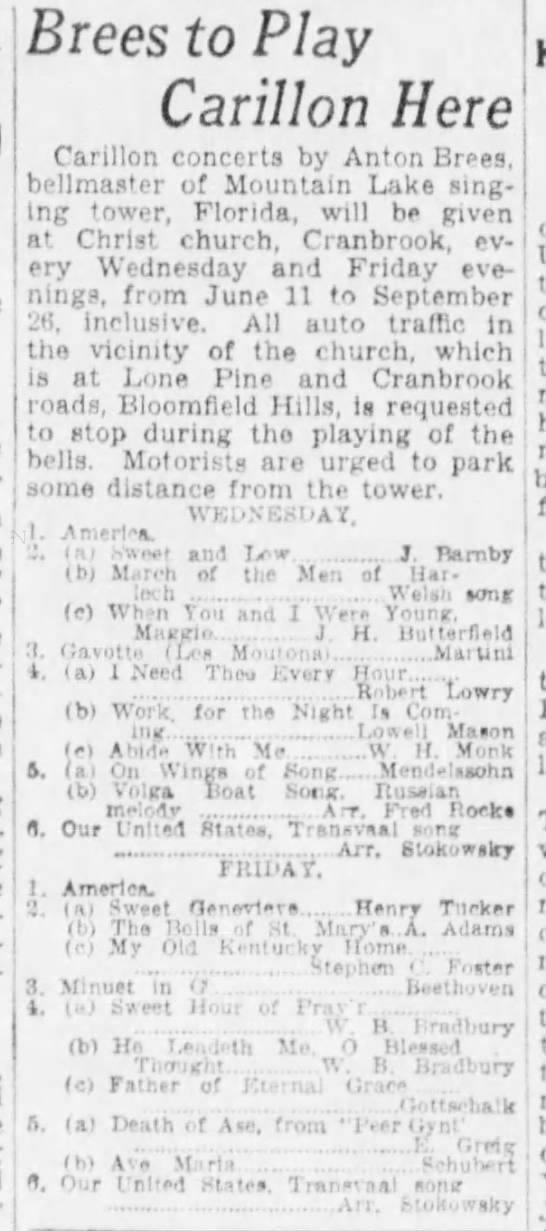
The Booth-Wallace Carillon was dedicated on Sunday, September 30, 1928. The first carillonneur to play the instrument was Anton Brees, at the time one of the world’s leading carillonneurs and famously the carillonneur of the Singing Tower at Bok Tower Gardens in Lake Wales, Florida. He would return to Christ Church for several summers to play, beginning what is now called the Summer Carillon Series.

Article from the June 8, 1930 the Detroit Free Press regarding Brees and the Christ Church Summer Carillon Series.

The 2020 Summer Carillon Series at Christ Church Cranbrook has already begun. You can listen to the July 5th concert below and go to the church’s Facebook page to learn more about future concerts.

Christ Church Cranbrook has had a number of carillonneurs or carillonists throughout its history.

Carillonist Beverly Buchanan preparing the instrument to play, February 1970. Courtesy of Cranbrook Archives, Cranbrook Center for Collections and Research.

Beverley B. Buchanan played the carillon at Christ Church from 1964-1988. Beverly was a graduate of the University of Michigan, School of Music where she majored in organ and carillon. She was a long time member of the American Guild of Organists and the Guild of Carillonneurs in North America. She concertized on the carillon throughout North America, Europe, and Australia.

Dr. Maurice Garabrant playing the carillon, September 1956. Courtesy of Cranbrook Archives, Cranbrook Center for Collections and Research.

Other carillonneurs of Christ Church include Dr. Maurice Garabrant (1949-1959), Dr. Don Cook (1988-1991), and Dr. Phillip Burgess (1991-mid 1990s). The current carillonist at Christ Church is Jenny L. King, who has been at Christ Church since the mid-1990s..

We hope that you will be able to enjoy more of the Christ Church Cranbrook Booth-Wallace Carillon this summer, whether in person or online. I think sitting on the wide lawn in front of the church enjoying a concert sounds like the perfect socially distant activity! For the complete program for the Summer Carillon Series, click here.

Leslie S. Mio, Associate Registrar, Cranbrook Center for Collections and Research

Photo Friday: Happy Fourth of July!

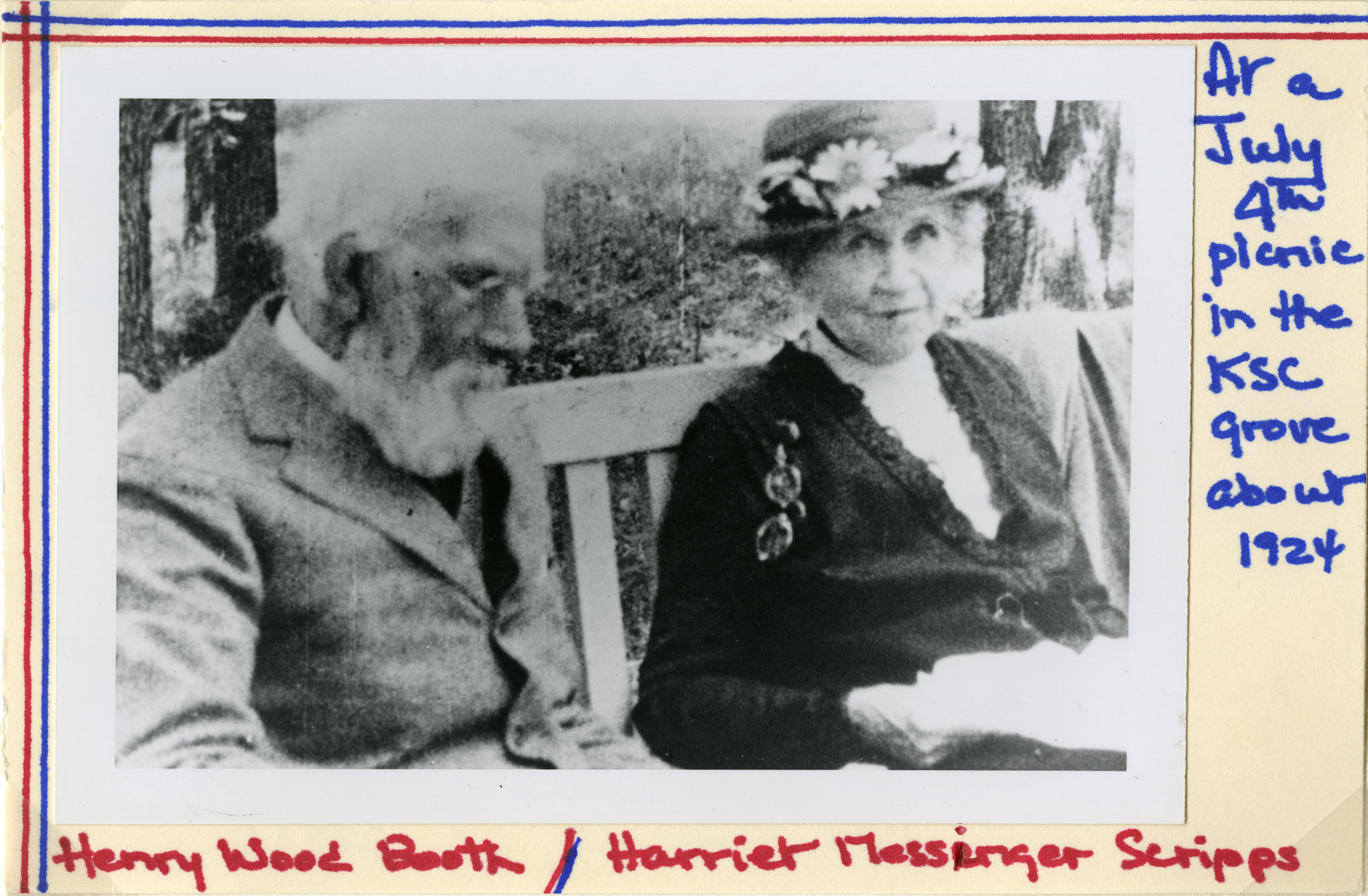
Henry Wood Booth and Harriet Messinger Scripps at a Fourth of July picnic on Kingswood School Grove, 1924. Cranbrook Archives.

In the earliest days of Cranbrook, Fourth of July picnics were held in the shade of a big oak tree on the site of the present Japanese Garden near Kingswood School. In his history, Henry Wood Booth reports that in 1910, George decided a well was needed so that drinking water would not need to be carried down from the house. After much digging, there was no water, and the new well remained dry. The family would need to come back to the project another day.

Later the same evening, Cranbrook Road was flooded with mud and water. The well, having burst through the last layer of mud, was shooting eight feet into the air! A fountain was placed there a few months later and it flowed for fifty or more years until the screen was clogged. In 1963, a new well was drilled nearby.

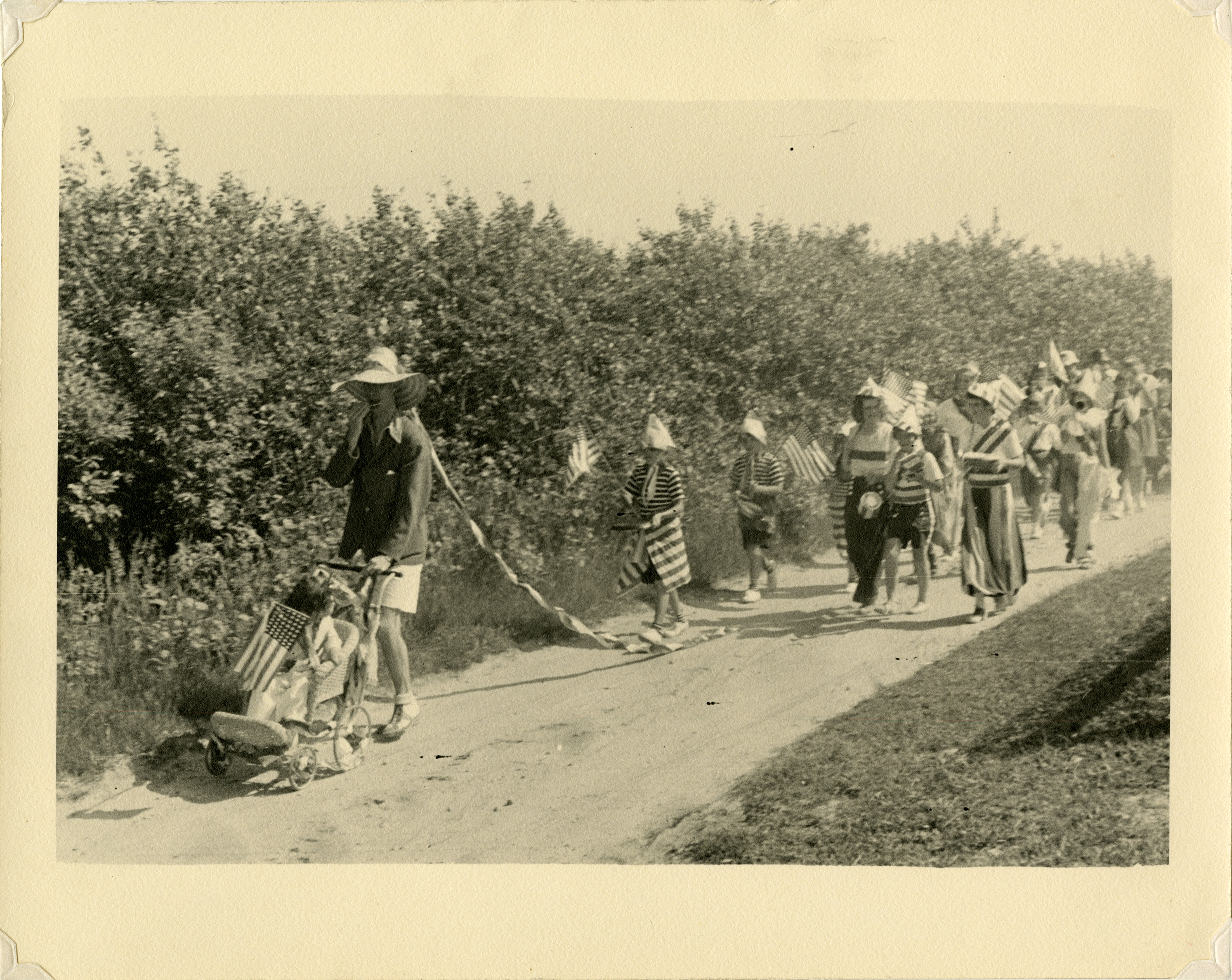
A Fourth of July Parade, Cuttyhunk Island, Massachusetts, 1935. Cranbrook Archives.

The family didn’t always celebrate the Fourth so close to home. Here’s a parade planned by Henry Scripps Booth in 1935 while vacationing on Cuttyhunk Island, south of New Bedford, Massachusetts, on Buzzard’s Bay. Daughter Cynthia Booth is in the carriage pushed by Henry, and sons Stephen and David are in the parade.

Happy Fourth of July, everyone!

Laura MacNewman, Associate Archivist, Cranbrook Center for Collections and Research

Create a website or blog at WordPress.com