Photo Friday: Diogenes’ Search for an Honest Man

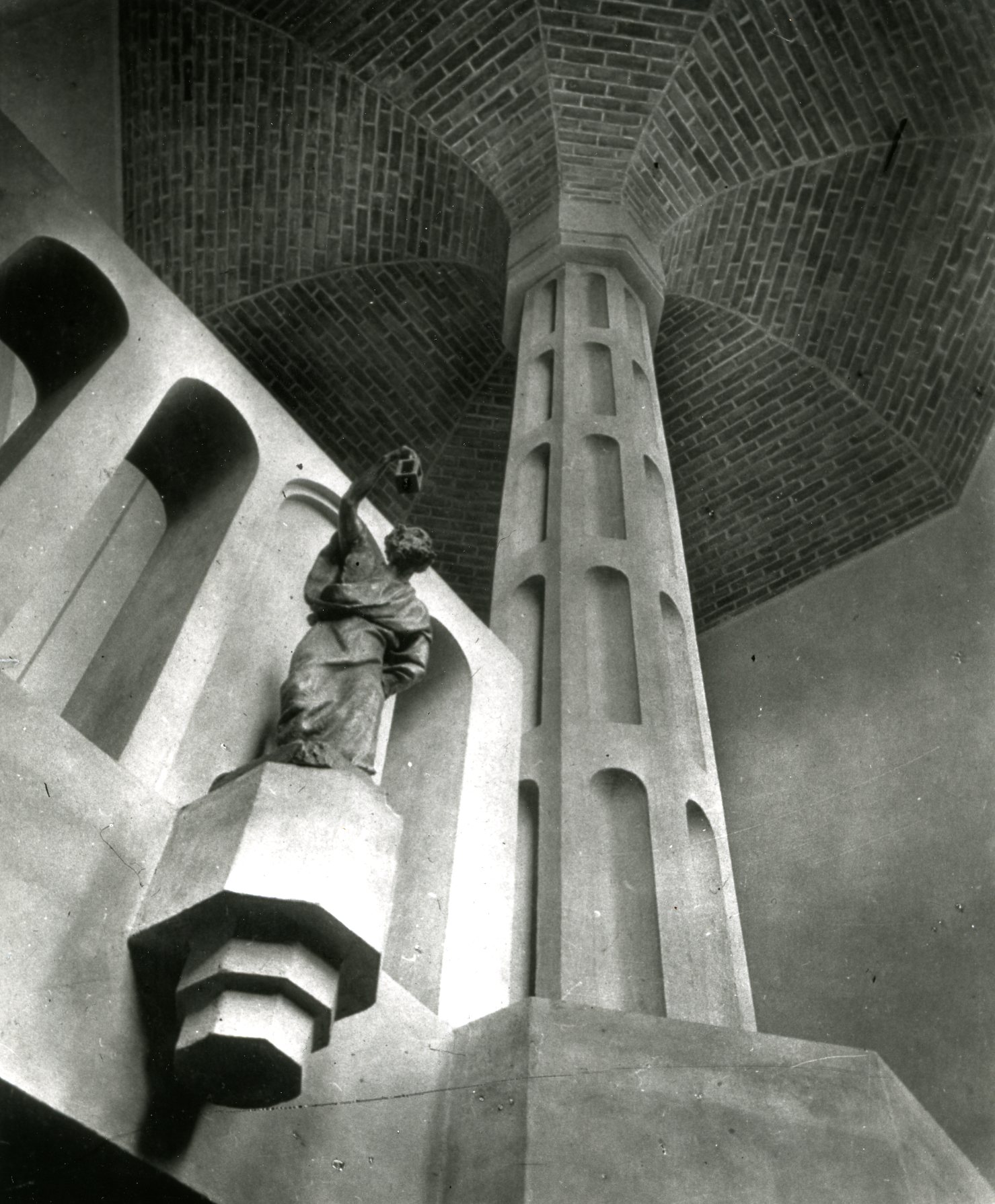
A view of Diogenes. Photographer, Harvey Croze, 1961.

A view of Diogenes. Photographer, Harvey Croze, 1961.

You might not immediately notice the small bronze statue that sits at the top of Hoey Tower’s stairwell at Cranbrook School. The statue is Diogenes – a Greek philosopher best known for holding a lantern and claiming to be on a quest for an honest man. Diogenes is considered to be one of the founders of Cynicism – a doctrine that supports a life in accordance with nature and rejects convention.

George Booth originally purchased Diogenes for Cranbrook House from the Gorham Silver Company in May 1914. One of the many statues he purchased during his lifetime, he bequeathed it to Cranbrook School upon his death.

Diogenes has been depicted throughout the centuries in paintings, drawings, and sculpture. Our sculpture was created by George Edwin Bissell (1839-1920) in 1906. Bissell, who was born in Connecticut, studied in Paris at the Academie Julian, the Academie Colarossi, the Ecole des Arts Decoratifs, and the Ecole des Beaux Arts. In 1876, he studied at the American Academy in Rome. He also served in the Civil War as a private in the 23rd Connecticut (1862-1863) and as assistant Postmaster for the U.S. Navy (1863, 1865).

Gina Tecos, Archivist

Photo Friday: “Things Architectural”

In November 1932, Cranbrook Academy of Art’s Executive Secretary, Richard Raseman, invited architects from the Detroit area to come to Cranbrook for “dinner and discussion of things Architectural.” The following Cranbrook School news article describes the evening.


Architectural

“Architects Gather Here for Forum,” The Crane, 20 Dec 1932

In addition to Raseman, Eliel Saarinen, Albert Kahn, and Emil Lorch, attendees included former Kahn associate Ernest Wilby and Ralph Hammett.

Leslie S. Edwards, Head Archivist


Photo Friday: Underlying Principles of Beauty

St. Paul Chapel reredos. Courtesy Cranbrook Archives.

St. Paul Chapel reredos. Courtesy Cranbrook Archives.

In a letter to George G. Booth ca 1931, Detroit News Art Critic Florence Davies, writes of artist Hildreth Meiere, “All over the place she discovered these refinements of line, these essential underlying principles of beauty. I have taken many people to Cranbrook, never anyone who saw it with so much understanding.”

Meiere (1892-1961) was a distinguished Art Deco muralist, painter, and decorative artist. Her commissions range from the medallions on the exterior of Radio City Music Hall to the dome in the National Academy of Sciences in Washington D.C. to the reredos panels in St. Paul’s Chapel in Christ Church Cranbrook. Educated at Manhattanville, the Art Students League, the California School of Fine Arts, the School of the Art Institute of Chicago, and in Florence, Italy, Meiere was a renowned muralist, as well as an important figure in the history of American Liturgical Art, and a preeminent mosaicist.

“It drives me wild to be spoken of as ‘one of the best women artists,” Meiere wrote to a friend in 1936, “I’ve worked as an equal with men and my rating as an equal is all that I value.” In 1956, she was the first woman honored with The Fine Arts Medal of the American Institute of Architects. Although it has taken years for her work to be discovered and viewed in its rich cultural context, we are grateful for her artistry here at Cranbrook.

Note: You can view more information and images of Hildreth Meiere’s work here.

Gina Tecos, Archivist

“A ship is safe in harbor, but that’s not what ships are built for.” — John A. Shedd

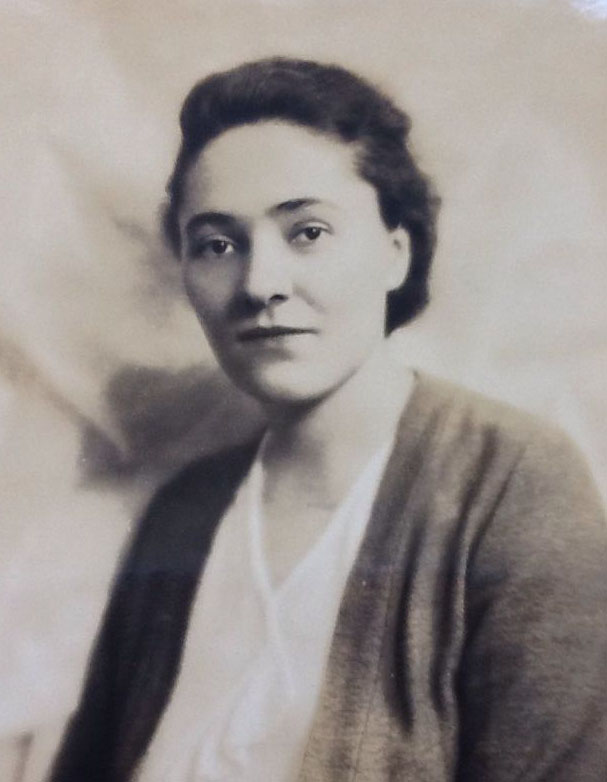
Marthe Le Loupp, 1930. Courtesy Cranbrook Archives.

Marthe Le Loupp, 1930. Courtesy Cranbrook Archives.

As the newest Cranbrook archivist it is my privilege to support our researcher’s investigations into the Cranbrook archival collections. On any given day we might review school yearbooks, catalog historic photographs, or learn about one of Cranbrook’s earliest scandals. After only two weeks, my husband has taken to assigning all credit for my cheerful and inquisitive demeanor to the adventuresome interactions I engage in at the archive. “You’re welcome!” is often my knee-jerk response.

Paths are a funny sort of thing—laid out to direct us, guide us, and ensure we don’t run astray. Life’s paths (kind of like research in an archives) often lead us to places we never imagined. This was the scenario in which Mademoiselle Marthe Le Loupp (1898-1987) found herself when she embarked on her return to Cranbrook from her annual trip back home (Plogoff, France) in 1939.

Marthe Le Loupp taught French language at Kingswood School Cranbrook from 1930-1956. As one of the original seven faculty members (classes were actually taught the first year in Brookside School), Le Loupp came to Cranbrook after completing three quarters of graduate study in French at the University of Chicago. A stern but well-liked teacher, Le Loupp led many Kingswood girls to excellence awards from the Michigan Chapter of the American Association of Teachers of French.

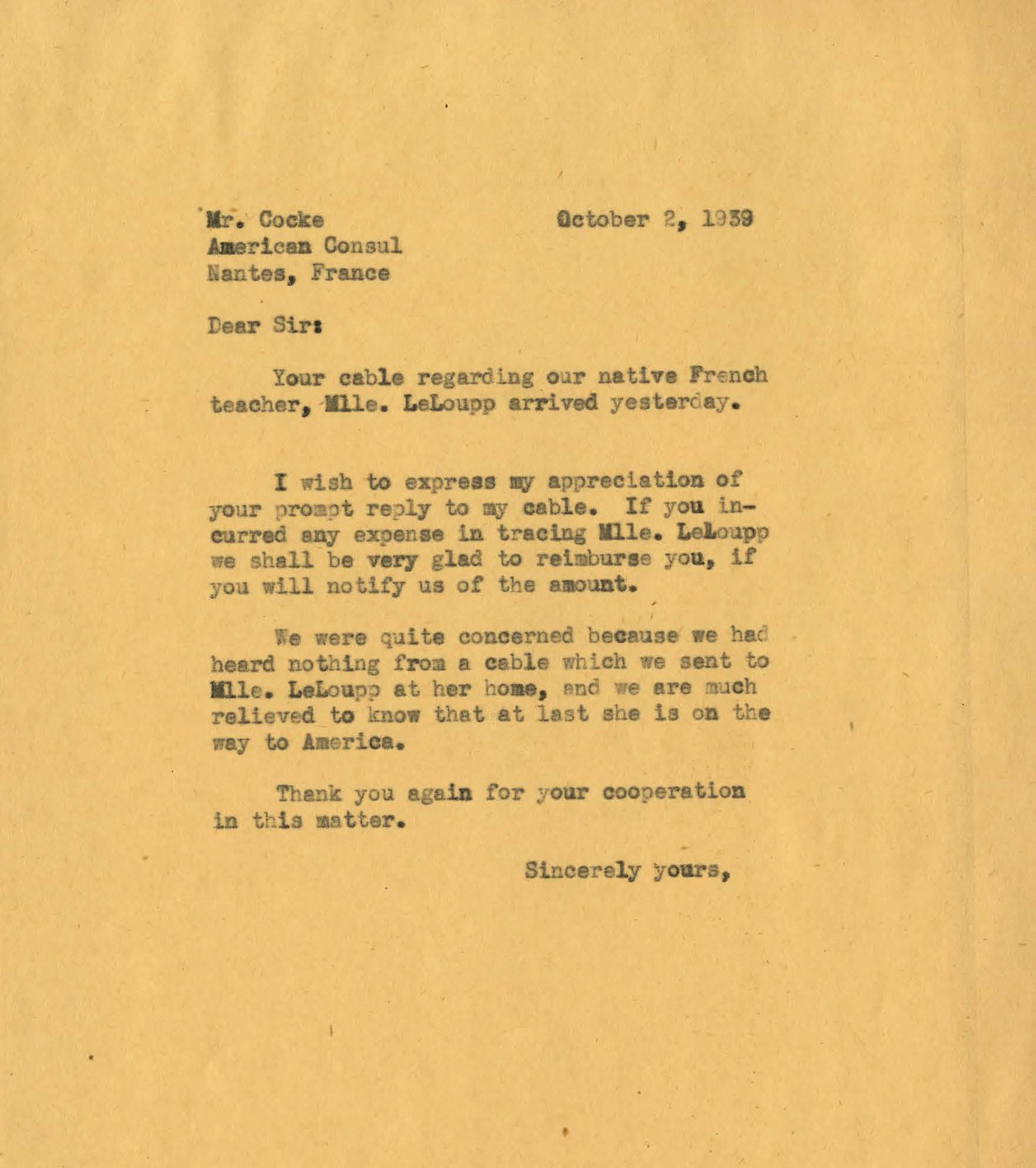
Le Loupp remained close with her family while living abroad and returned to France every summer. In 1939, Le Loupp’s return vessel, the SS Normandie, was reassigned under the WWII war effort and she was unable to return to Cranbrook for the start of the fall semester. Ultimately, she was able to secure passage via alternative methods.

Correspondence from Kingswood School to the American Consul, 1939. Courtesy Cranbrook Archives.

Correspondence from Kingswood School to the American Consul, 1939. Courtesy Cranbrook Archives.

When people think about WWII they don’t usually think about a French schoolteacher in Bloomfield Hills, Michigan, but in reality, maybe we all should think about the effects that war has on common folk. Our daily lives may seem unaffected, but this is not the truth now, as it was not the truth for Mlle Le Loupp and countless other teachers and staff at Cranbrook.

Le Loupp retired from Cranbrook in 1956 due to poor health. She lived the remainder of her years in Bénode, Finistère, France until her passing in 1987.

The opportunity to rediscover countless histories, such as this, is among the many honors of working in the archive here at Cranbrook. An honor I look forward to sharing with students and scholars in my daily work.

Belinda Krencicki, Associate Archivist
A Rugged Individualist: Luella Schroeder

One of the best things about being an archivist here is learning about the amazing people connected to Cranbrook’s history. Part II of our posts for Women’s History month focuses on Luella C. Schroeder (1918-2004). In 1946, Schroeder was hired as an Assistant Preparator at Cranbrook Institute of Science. A woman of many talents, she worked at a book binding studio in Delaware and as a draftsman during World War II for Chrysler before taking the position at CIS.

Schroeder’s college studies were divided between the natural sciences and art. She later studied photography – a skill she relied on heavily at CIS – as the photographer of the Institute’s collections and exhibitions. A member of the Photographic Guild of Detroit, she was one of 100 photographers to be awarded a prize in Popular Photography magazine’s 1957 photo contest.

CISB4970

Schroeder preparing an exhibition, 1956. Courtesy Cranbrook Archives.

In addition to her photography work, Schroeder created dioramas and models for exhibits and taught lapidary classes. Her love of nature was evident in her creations for the Institute – from plant life to insects to bee hives. In 1954, she built an elaborate hive illustrating the lifecycle and production cycle of bees. Her work was admired and praised by her colleagues and visitors alike.

IS380

Bee Hive exhibition, 1954. Courtesy Cranbrook Archives.

After working at CIS for 12 years, Schroeder left her position in 1958 to pursue her hobby of silver jewelry making. She fell in love with Vermont, and moved there to devote herself to her craft. In a 1961, Times-Argus article she was quoted, “I wish I could tell you why I love Vermont, maybe it’s because it is the last stand of the rugged individualists – the one place where people still really make their lives for themselves.”

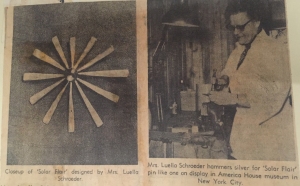
Schroeder’s hobby became her life-work. She credited the Institute in making her jewelry more creative (due to her ability to cut gems which she learned while at CIS). Her work was on display at several museums nationally and abroad, and was exhibited at the 1964 World’s Fair. In 1965 she created a pin she titled, “Forged Sunburst.” America House re-named the pin “Solar Flair” in an advertisement in New Yorker magazine and Schroeder was deluged with orders.

schroederpin

Burlington Free Press, 13 May 1965. Courtesy Cranbrook Archives.

Several pieces of Schroeder’s work were selected by the American House retail store in New York, which is sponsored by the American Craftsman Council. Her jewelry was also marketed by the Detroit Artist’s Market and the Boston Society of Arts and Crafts. In 1985, the Vermont Handcrafters bestowed a Lifetime Membership to Schroeder for her dedication to Vermont Crafts. Clearly her work and dedication made an impression on many – including the Cranbrook community.

Gina Tecos, Archivist


Three Women and a Conservator

One of the interesting components of our jobs as collections managers, registrars, and archivists is that we get to interact and learn from conservators in our fields. On Friday, three of us went down to Detroit and met with Giogio Ginkas of Venus Bronze Works. A non-descript warehouse building sported a gray metal door which led us into the lobby gallery where Giorgio has displayed art from his personal collection of metro-Detroit artists, including Cranbrook’s Gary Griffin. Then we walked into the “shop” where his tools and equipment are interspersed with numerous sculptures (primarily metal) in various stages of repair, restoration, and conservation.

Giorgio Ginkas explaining the conservation process for the Wishing Well. Courtesy Cranbrook Archives.

Giorgio Ginkas explaining the conservation process for the Wishing Well. Courtesy Cranbrook Archives.

Currently, Venus Bronze Works has three of Cranbrook’s works in his shop – two are awaiting reinstallation on the grounds, while the metal “arch” from the Wishing Well at Cranbrook House is just undergoing restoration.

Parts of the Wishing Well “arch” removed for restoration. One element was missing so a replacement piece had to be fabricated. Courtesy Cranbrook Archives.

Parts of the Wishing Well “arch” removed for restoration. One element was missing so a replacement piece had to be fabricated. Courtesy Cranbrook Archives.

Orpheus figure, restored and waiting to be reinstalled at Cranbrook Academy of Art (CAM 1931.9). Courtesy Cranbrook Archives.

Orpheus figure, restored and waiting to be reinstalled at Cranbrook Academy of Art (CAM 1931.9). Courtesy Cranbrook Archives.

For more on Venus Bronze Works, including Detroit’s own RoboCop statue, see: http://www.dailydetroit.com/2015/08/24/remember-robo-cop-statue/

Leslie S. Edwards, Head Archivist

Forays in Metalwork: Cranbrook and Fairhope, AL

Women’s History month always gives us a good excuse (not that we need one!) to spotlight the accomplishments of some of Cranbrook’s lesser-known but equally important women. They may not have been famous artists or designers, but rather women who educated scores of students, worked tirelessly behind the scenes to catalog thousands of scientific specimens, or played a role in documenting the history and heritage of the Cranbrook community. So this month we have chosen to make each post about a Cranbrook woman – the work she accomplished, an artwork she created, or some other notable fact that we find interesting.

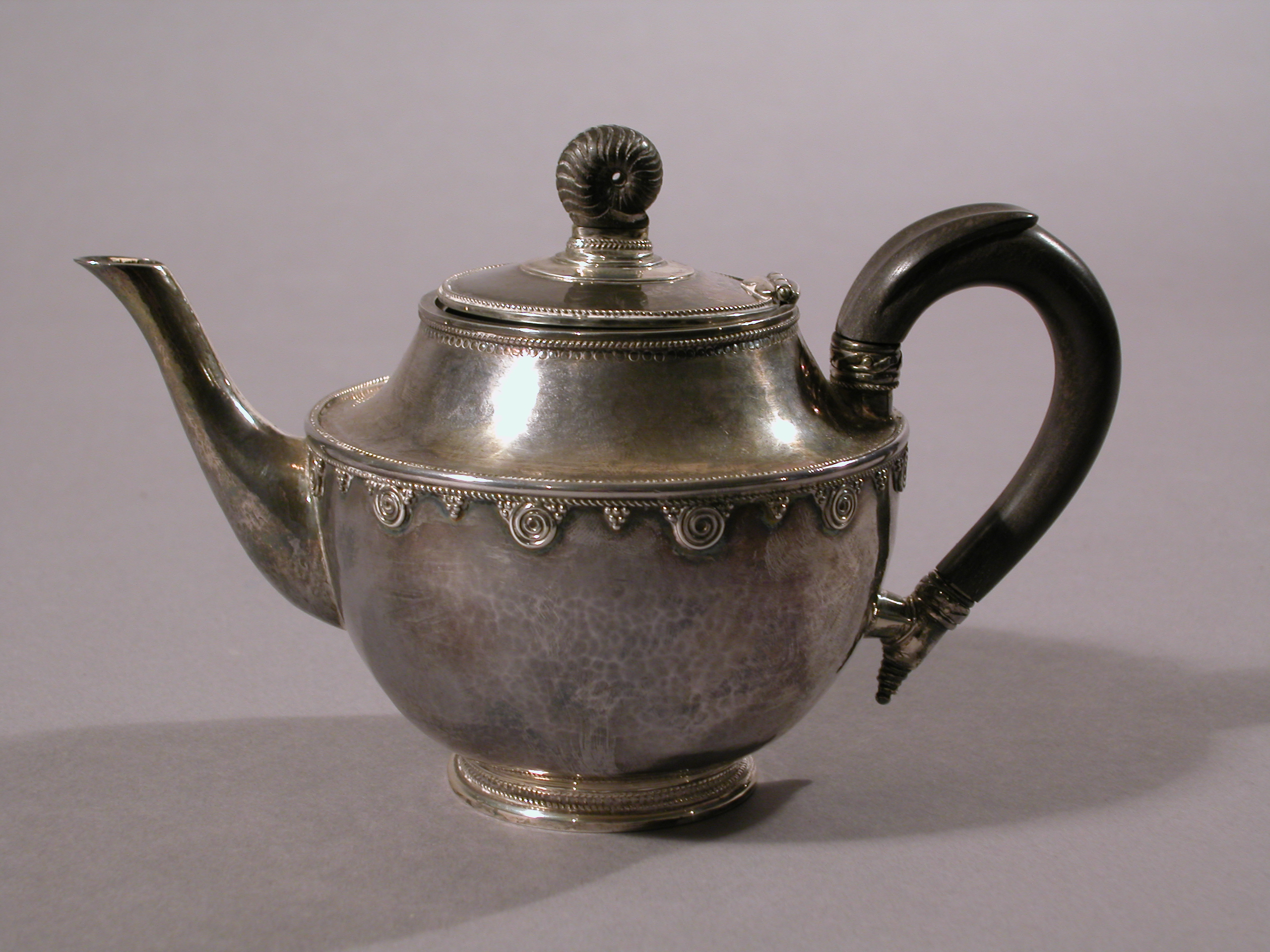
Margaret Elleanor Biggar (1906-1992) was born in Detroit, and became interested in silverwork when she attended spent her senior year in high school at Marietta Johnson’s experimental School of Organic Education in Fairhope, Alabama. After graduation, Biggar returned home to Detroit, where she attended the Detroit Society of Arts and Crafts school. In November 1929, renowned British silversmith Arthur Nevill Kirk (who headed the silver department at Cranbrook), called Biggar and asked if she would like to come and be his student apprentice. She worked for Kirk in the Arts and Crafts Studio until 1931, where she made thirty cents an hour executing and polishing Kirk’s designs.

Silver Teapot, 1929. Designed and executed by Margaret Biggar. Image Courtesy Cranbrook Art Museum (CAM 1933.45).

Silver Teapot, 1929. Designed and executed by Margaret Biggar. Image Courtesy Cranbrook Art Museum (CAM 1933.45).

In 1931, Biggar returned to Fairhope, Alabama in where she taught metals at the Marietta Johnson School of Organic Education and formed a lasting relationship with Elise Hooker (1895-1977), who was head of the school’s craft department. In 1938, the two women left the school to open their own studio where they taught metalcraft classes in silver, copper, and brass. Generous and hard-working, their primary objective was not to make money but rather to teach others the craft they loved. In 1946, they only charged fifty cents for a two-hour lesson!

Biggar and Hooker’s home on Magnolia Avenue, Fairhope, AL. The studio was called “Metalcraft Studio.” Photo courtesy Margaret Elleanor Biggar Scrapbook, Cranbrook Archives.

Biggar and Hooker’s home on Magnolia Avenue, Fairhope, AL. The studio was called “Metalcraft Studio.” Photo courtesy Cranbrook Archives, Margaret Elleanor Biggar Scrapbook.

The studio was successful and works of their students were shown in local exhibitions. People came from around the country to take classes, and the studio became a part of local crafts tours in Fairhope.

Hooker (left) and Biggar at an exhibition in Pensacola, Florida. Photo courtesy Cranbrook Archives, Margaret Elleanor Biggar Scrapbook, U.S. Navy photographer.

Hooker (left) and Biggar at an exhibition in Pensacola, Florida. Photo courtesy Cranbrook Archives, Margaret Elleanor Biggar Scrapbook, U.S. Navy photographer.

Metalwork was not Biggar’s only interest. In 1943, she spearheaded the “War Dog Fund” effort in Fairhope. This was a project organized to enlist the help of dogs on the “home front” to secure funds through the donations of their owners. Dogs could be enrolled as a Sergeant ($1) or Lieutenant ($5) all the way up to General ($100). The funds were then used to help feed and care for the dogs in WWII combat zones.

Leslie S. Edwards, Head Archivist

The Green Lobby: A Cranbrook Gem

Cranbrook’s largest installation of Pewabic Pottery tile is at Kingswood School, boasting several fireplaces, and all of the dormitory bathrooms (forty-nine total), and most notably the infamous Green Lobby. Pewabic was not, nor was it ever intended to be a commercial manufacturer. And although the pottery was incredibly prolific, it was envisioned as an Arts & Crafts pottery, where each piece of tile was hand-molded.

As a result of its high quality craftsmanship, Pewabic had issues producing the amount of tile needed in the timeframe for the installation and completion of Kingswood School. The contractors responsible for installing the tile were forced to travel to Detroit twenty-six times for small batches of tile; in other words, as the pottery produced the tile batch by batch, the contractor would pick them up in an effort to maintain their scheduled completion date! Unfortunately this caused financial issues between Pewabic and the contractor due to the delayed production and inevitable delayed installation, not to mention the extra time and travel needed to obtain the batches which hindered the completion of the building.

Kingswood School Green Lobby, photographer PD Rearick, 2015

Kingswood School Green Lobby, photographer PD Rearick, 2015.

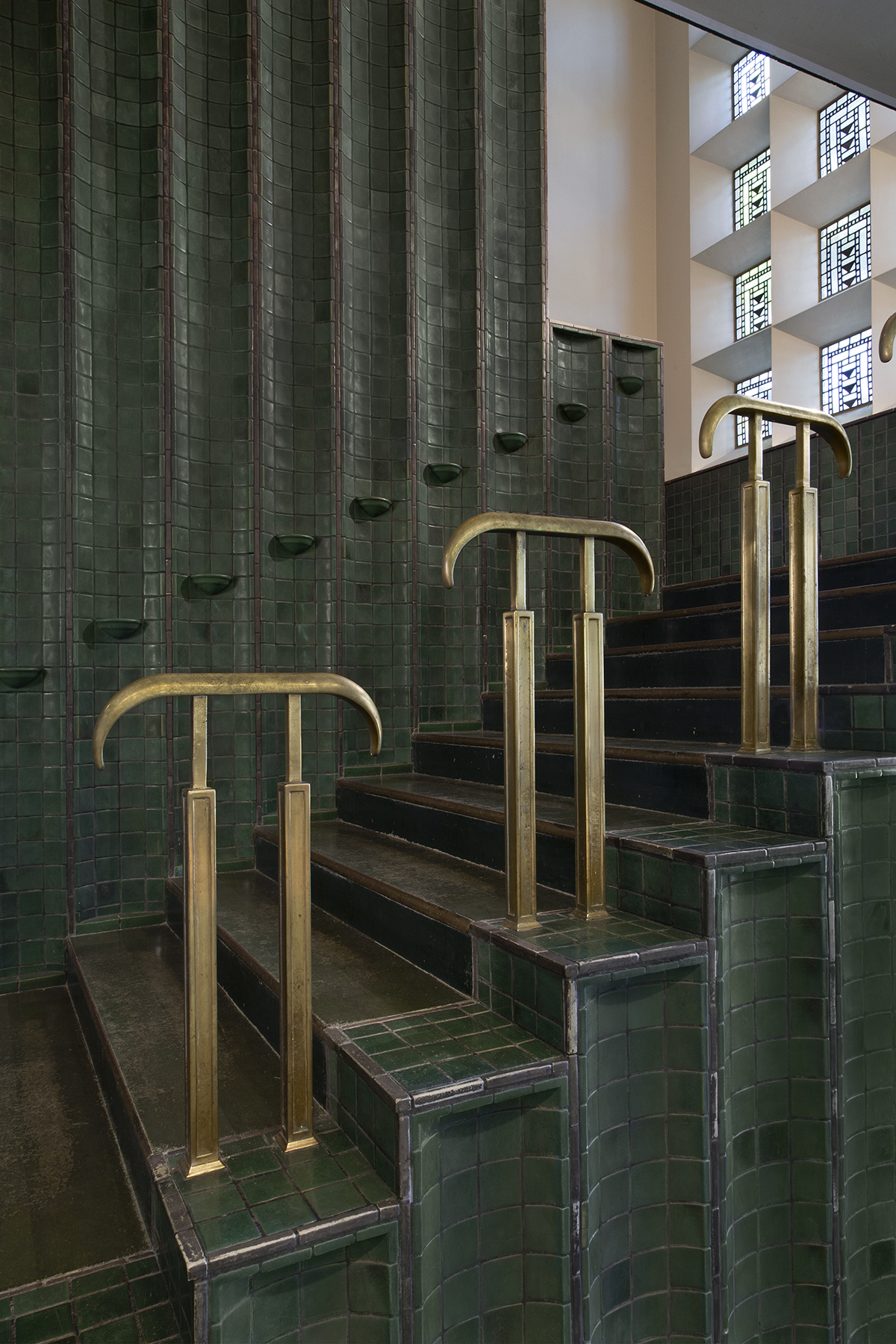
Despite these issues, the Green Lobby remains today as one of the gems of Cranbrook’s campus and is a favorite of students, faculty, and visitors alike. In 1931, the lobby featured a Pewabic fireplace, wainscoting, and flooring, as well as the staircase and railing to the second floor. However, when the lobby was restored in 1997, new floor tiles needed to be installed. Unfortunately, the floor tiles we see today are reproduction, not Pewabic though the original fireplace, wainscoting, and stairwell remain.

Green Lobby stairwell leading to the second floor, photographer PD Rearick, 2015.

Green Lobby stairwell leading to the second floor, photographer PD Rearick, 2015.

Stefanie Dlugosz-Acton, Collections Fellow, Center for Collections and Research


Photo Friday: Field Trip!

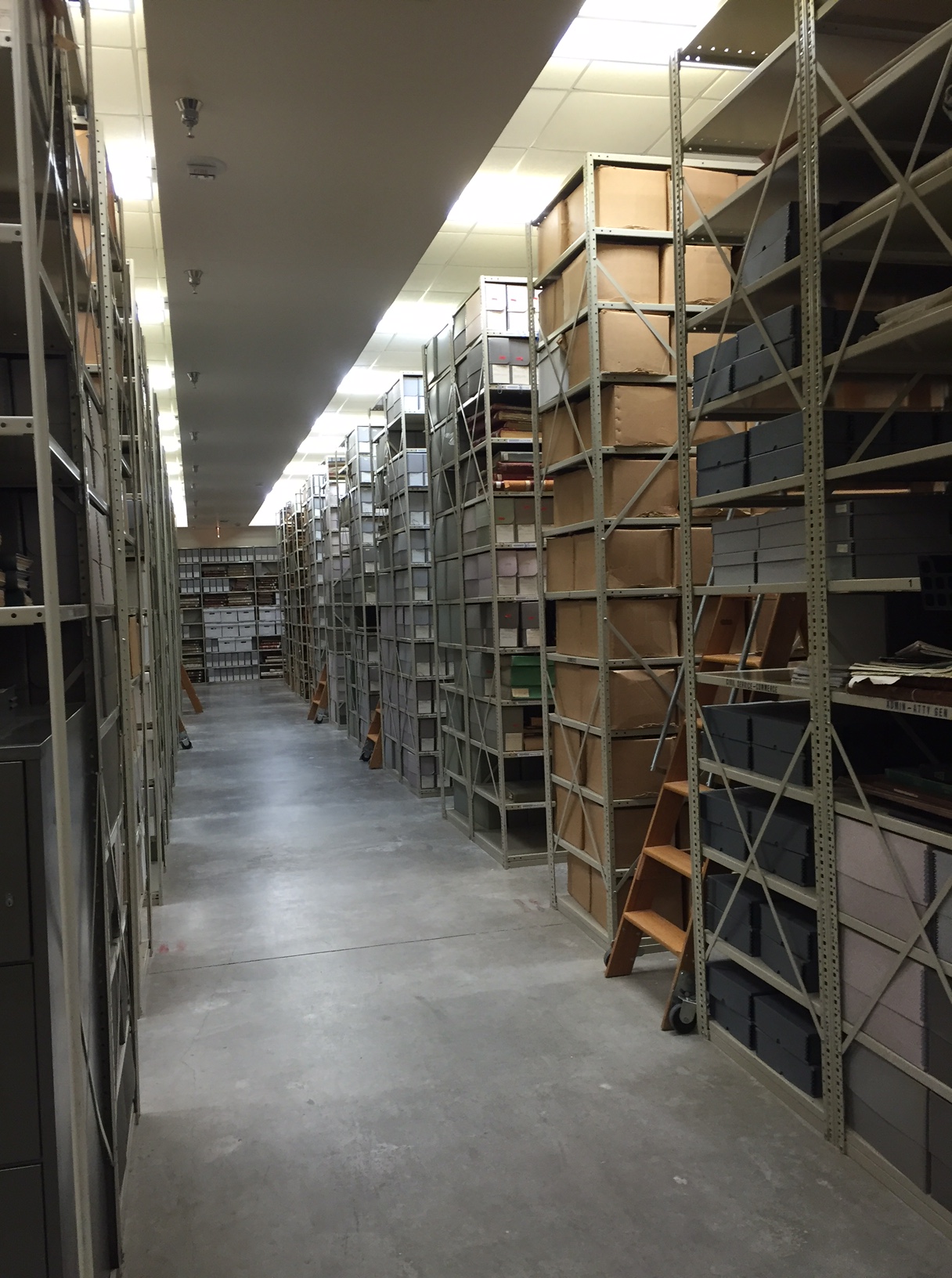
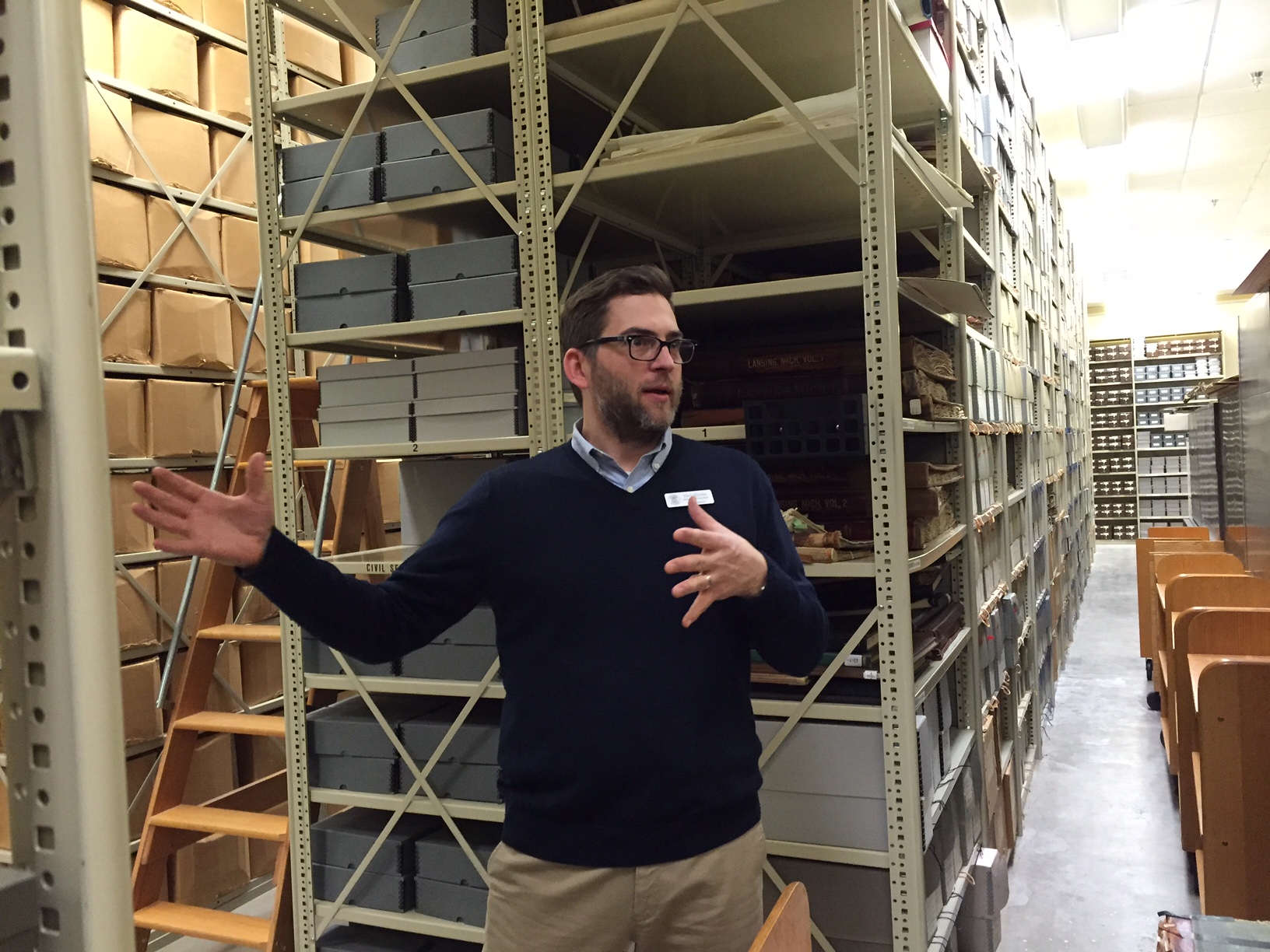
Today the staff from the Center for Collections and Research hopped into a fancy van and headed off to Lansing to take a behind-the-scenes tour of the Archives of Michigan. We really enjoyed our visit with State Archivist, Mark Harvey, and his staff. Here are few photos from our day away.

A view of just one of the storage areas at the Archives of Michigan.

A view of just one of the storage areas at the Archives of Michigan. Photographs courtesy of Leslie Edwards.

State Archivist, Mark Harvey, talks with our staff about processes at the Archives of Michigan.

State Archivist, Mark Harvey, talks with our staff about processes at the Archives of Michigan.

The Archives of Michigan is responsible for preserving the records of Michigan government and other public institutions. One example is the prison record of the notorious "Gypsy Bob."

The Archives of Michigan is responsible for preserving the records of Michigan government and other public institutions. One example is the prison record of the notorious “Gypsy Bob.”

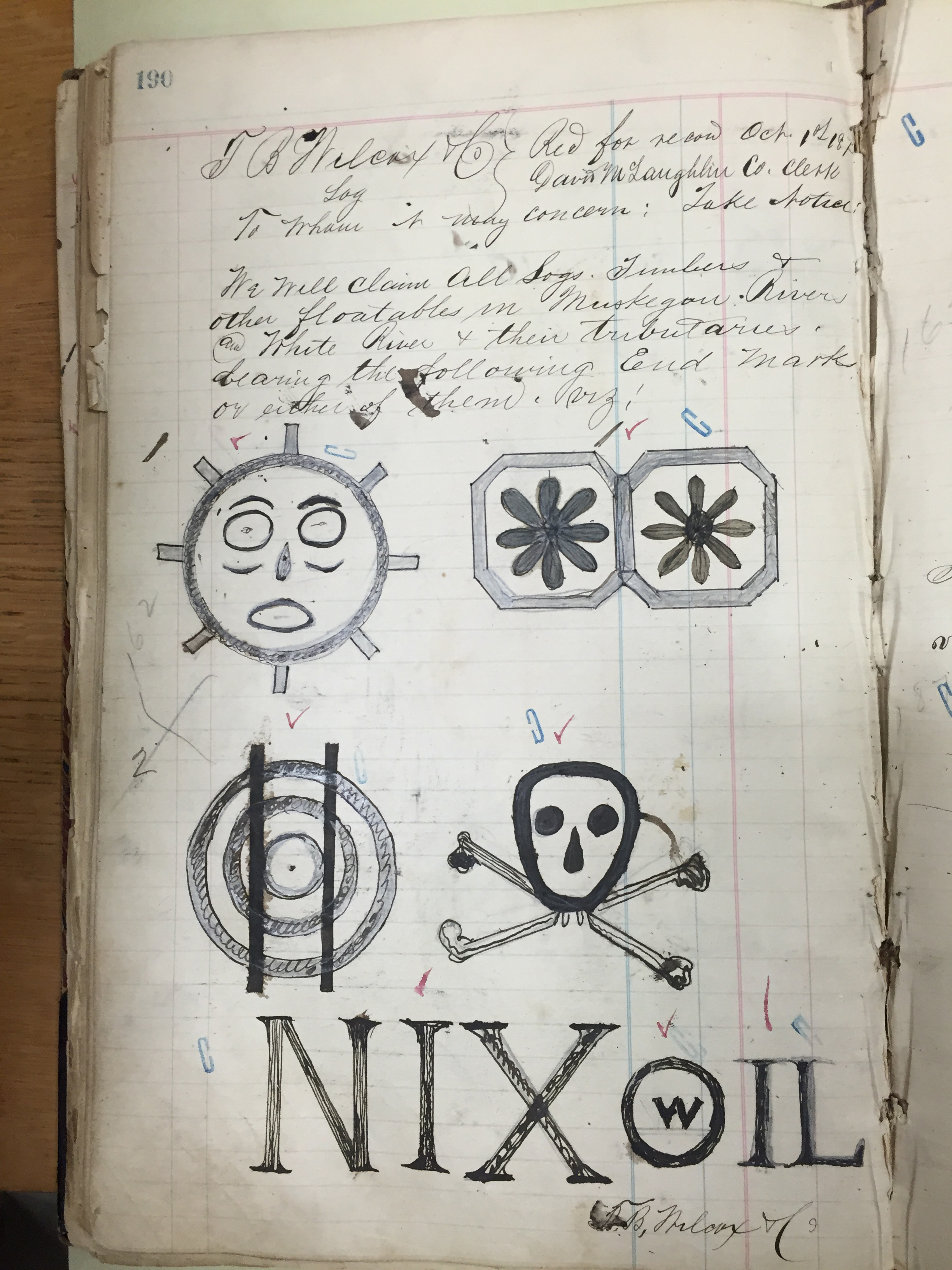
Captivating "log marks" from early logging days in Michigan.

Captivating “log marks” from early logging days in Michigan.

Gina Tecos, Archivist


Photo Monday: Oops!

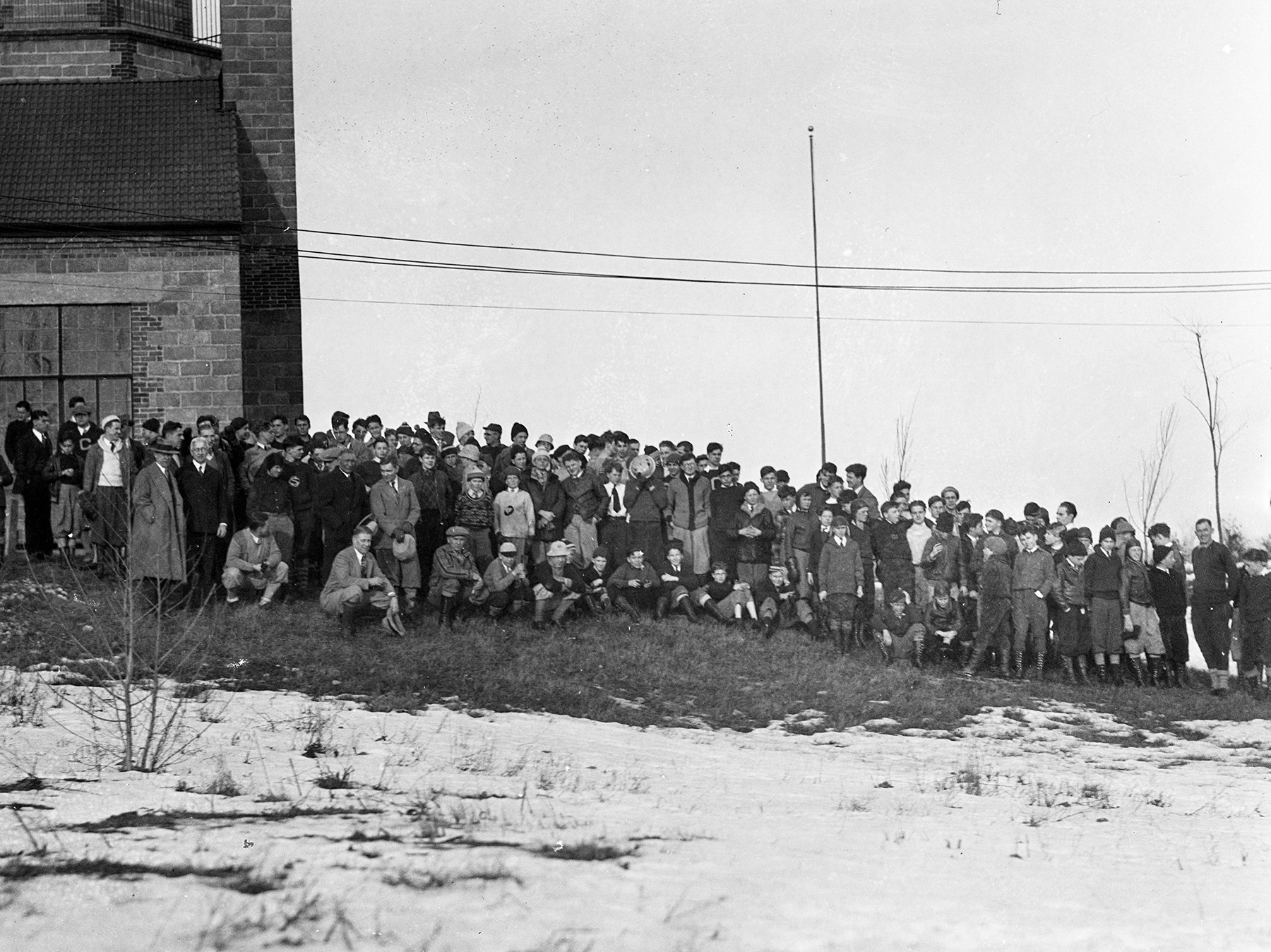
Photo Friday ran away with us last week, so here it is Monday already. Today’s post is about Camp Brady on Green Lake, Independence Township, Michigan. You are probably wondering how this camp relates to Cranbrook? The photo below shows a group photo of Cranbrook School boys, taken at Camp Brady in the winter 1930.

Cranbrook School boys at Camp Brady, Feb 1930. W. Bryant Tyrrell, photographer. Courtesy Cranbrook Archives.

Cranbrook School boys at Camp Brady, Feb 1930. W. Bryant Tyrrell, photographer. Courtesy Cranbrook Archives.

Camp Brady was established in 1921 in honor of George Nexsen Brady (1837-1920). Brady, born and raised in Detroit, became a businessman and philanthropist always interested in the welfare of children. He was a big supporter of the Boy Scouts of America and allowed the Detroit chapter to use his forty-acre parcel on Green Lake as a summer camp. After he passed away (and donated his land to the Scouts), it was known as Camp Brady until it was sold in 1946.

What does Brady have to do with Cranbrook? After he retired, Brady moved to Bloomfield Hills and was a member of the Bloomfield Hills Country Club. He purchased 45 acres along Cranbrook Road, across the street from Cranbrook. Thornlea Studio (the old archives building) is located on his property, on what is known as Brady Lane!

Leslie S. Edwards, Head Archivist

Create a website or blog at WordPress.com