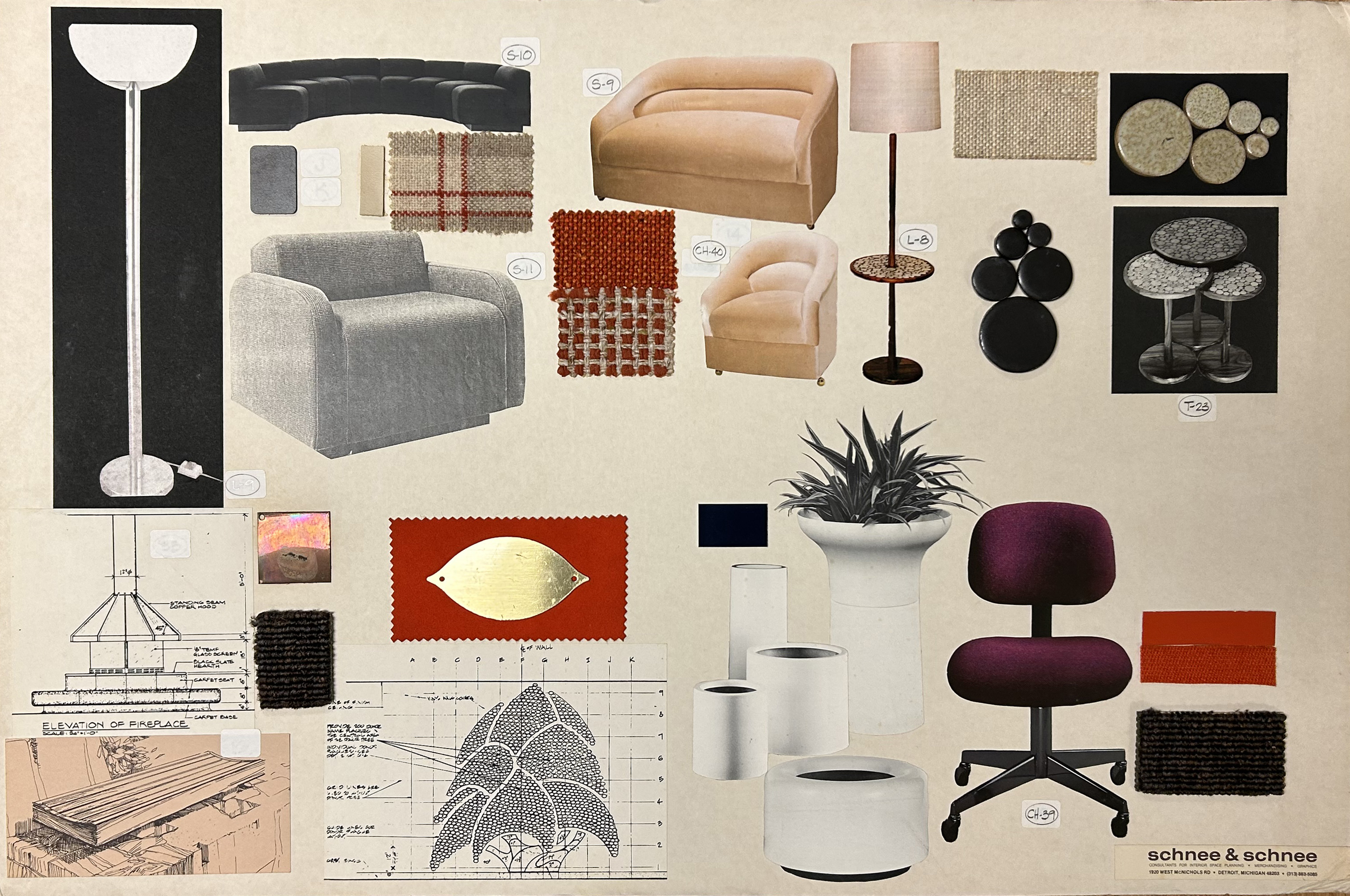
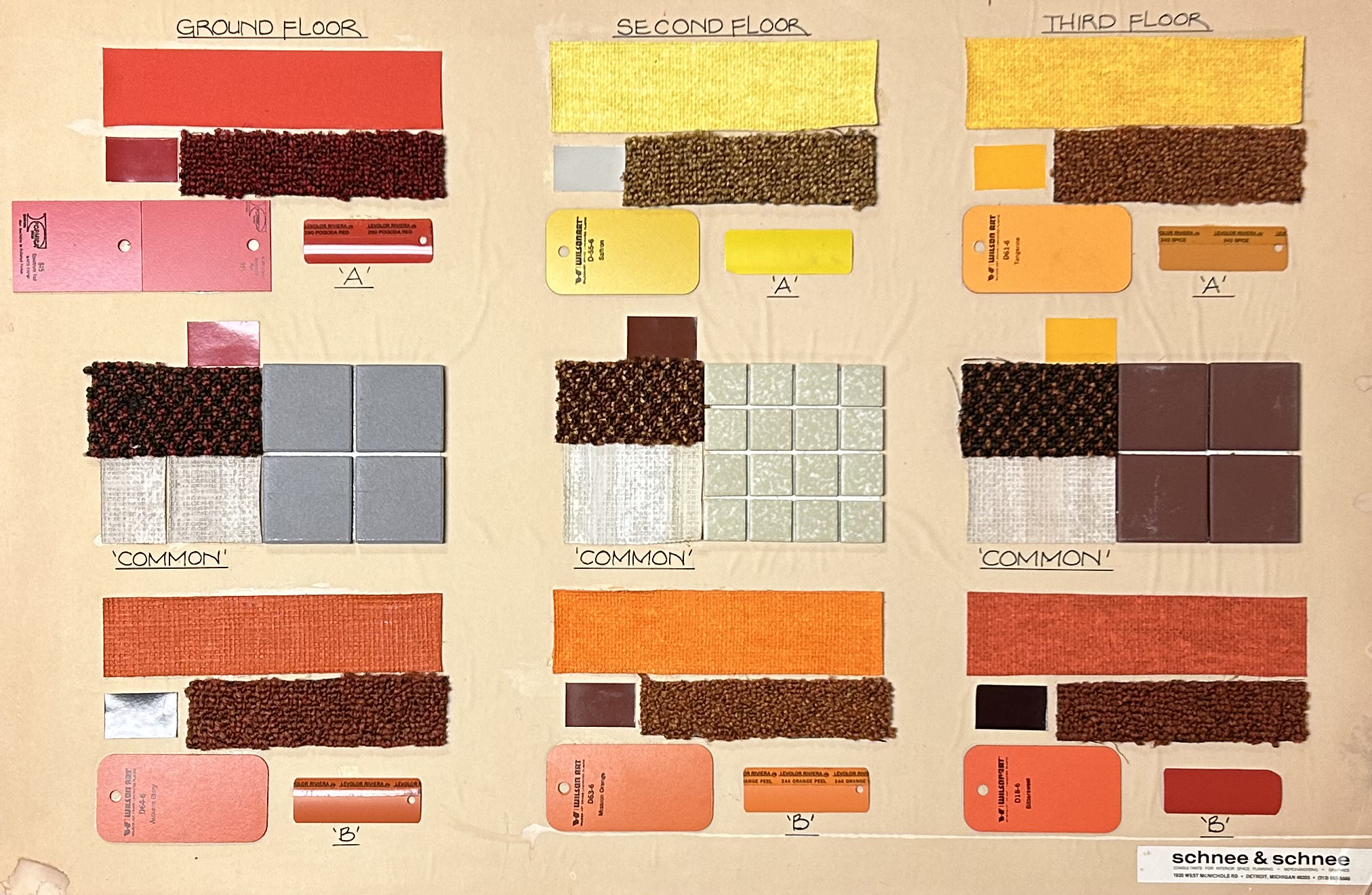
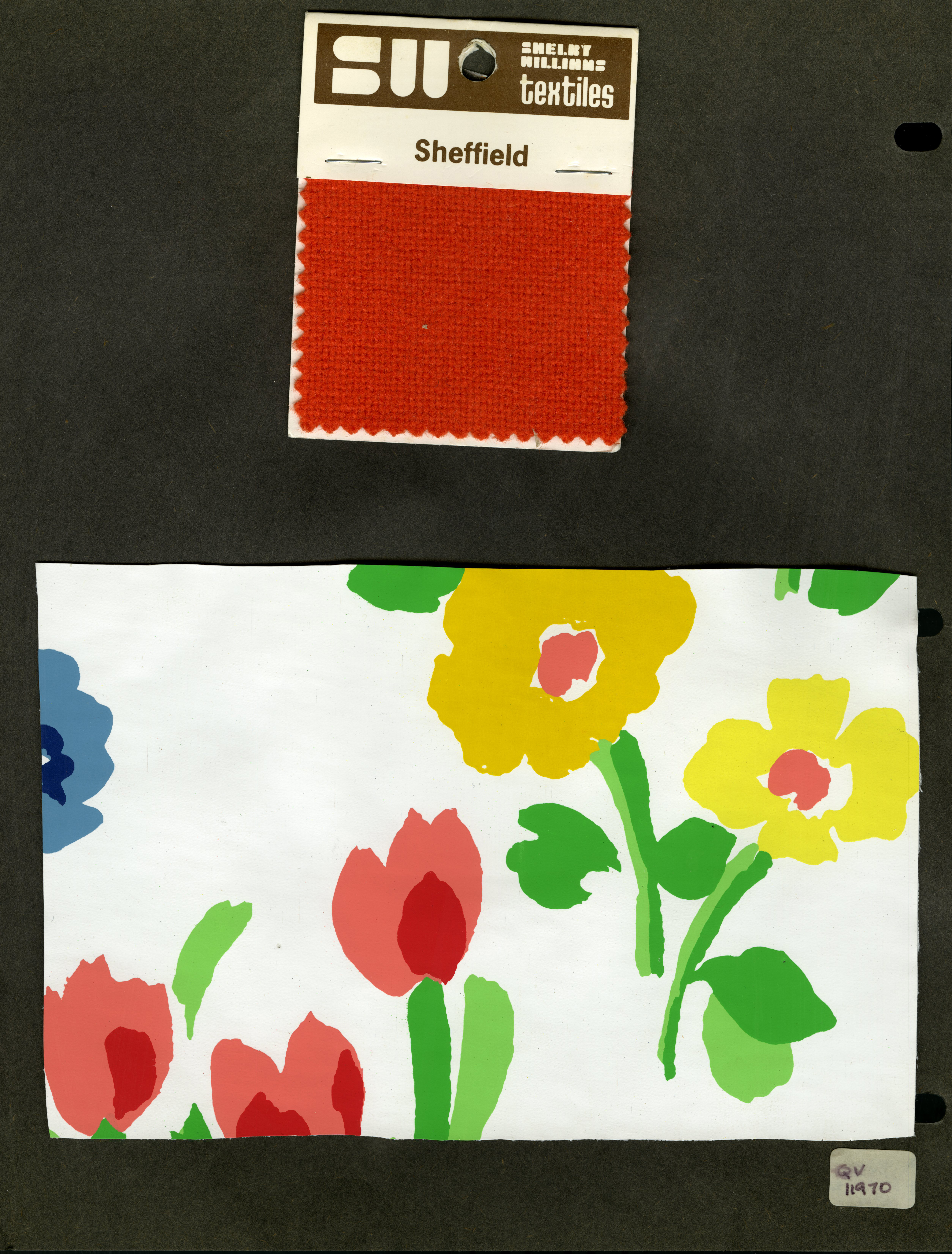
Clifford West Papers Come to Cranbrook

Cranbrook Archives is excited to announce the acquisition of the Clifford B. West and Joy Griffin West Papers. Since the boxes arrived this past summer, I have been inventorying their contents in preparation for making them accessible to the public for research. Completing this work involves continually unravelling the many interesting facets of Clifford and Joy’s stories to be brought to light through the collection. Among many other things, are their experiences at Cranbrook in the mid-twentieth century.

Joy Griffin and Clifford West in front of Carl Milles’ sculpture on the north wall of the Academy of Art library, 1941. Harvey Croze, photographer. Courtesy of Cranbrook Archives.

Clifford and Joy attended the Academy of Art at the tail end of its golden age, meeting and marrying in 1941. At that time, Carl Milles, Eliel Saarinen, Loja Saarinen, and Eero Saarinen taught and worked on campus. Clifford earned his MFA in painting under Zoltan Sepeshy and Joy took ceramics classes from Maija Grotell. Fellow students included Lily Swann Saarinen and Harry Bertoia, among others.

Bertoia and West: Three Decades

It was with Harry Bertoia, sculptor and designer, that Clifford enjoyed a lifelong friendship, serving as best man at his 1943 wedding to Brigitta Valentiner (fellow Academy student and daughter of Wilhelm Valentiner, Director of the Detroit Institute of Arts). While living in different parts of the country after graduation (or different countries all together), the two artists maintained close ties, both personally and professionally, evidenced by correspondence and other materials found in the Wests’ papers. Of particular note is the original 16mm film Clifford made in 1965, titled Harry Bertoia’s Sculpture, featuring a soundtrack by Bertoia.

Harry Bertoia in his studio, circa 1976. Clifford West, photographer. Courtesy of Cranbrook Archives.

Another fascinating connection is Clifford’s involvement with a few 1976-1977 exhibitions of Bertoia’s sculptures in Norway. Bertoia’s work, including his sound sculptures, had been introduced to the Norwegian art scene in the late 1960s through Bente Torjusen, an educator at the Munch Museum who assisted Clifford on his 1968 film about artist Edvard Munch and later became his third wife. An accomplished filmmaker and photographer by the late 1970s, Clifford photographed the Bertoia exhibitions and designed the accompanying catalogs. In true Cranbrook fashion, Clifford’s artistic talents were not limited to just one medium.

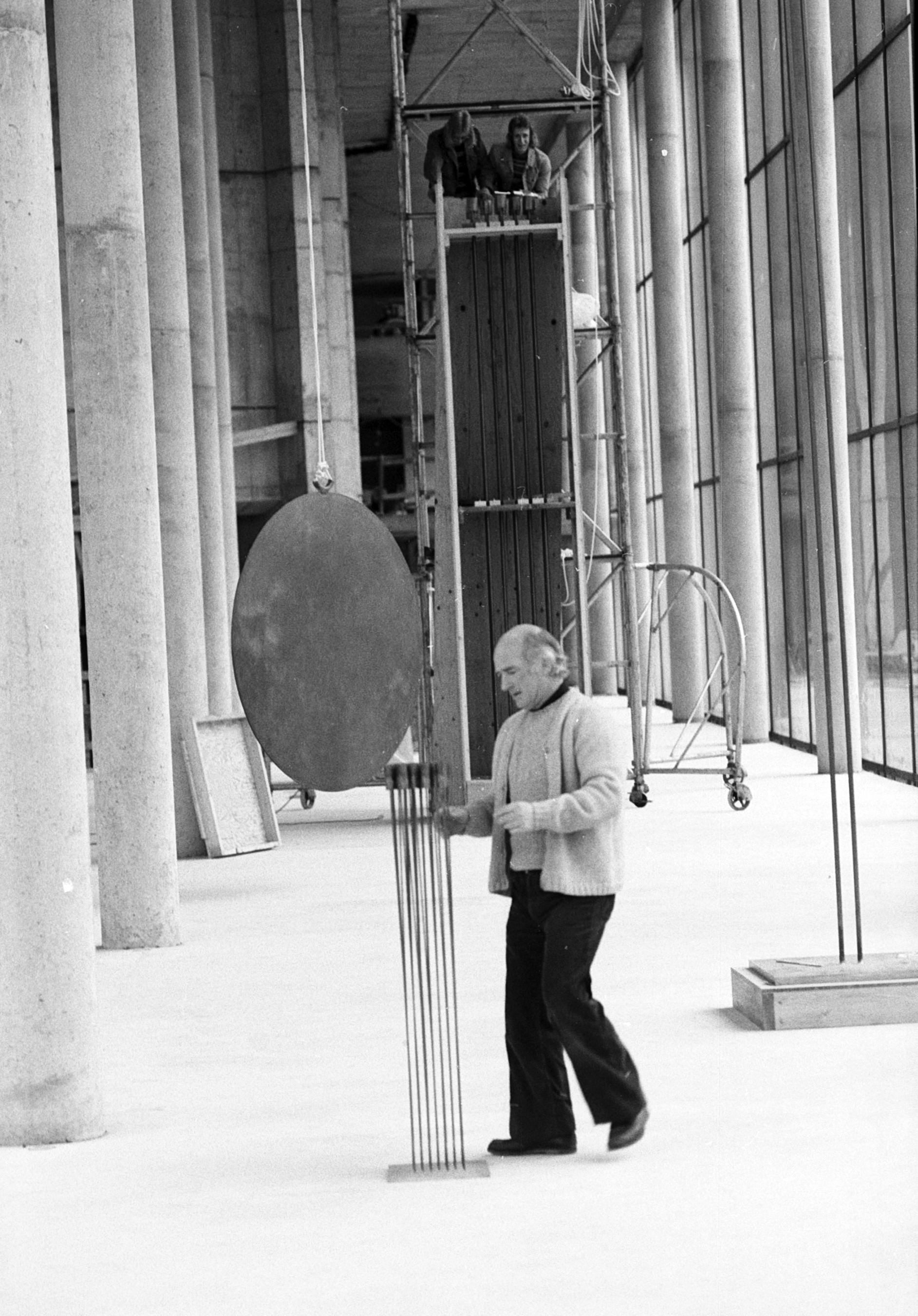
Poster for The Sculpture of Harry Bertoia exhibition at the Grieg Music Festival, Bergen, Norway, 1976. Clifford West, photographer and designer. Courtesy of Cranbrook Archives.

The exhibitions would be the last collaborations between Clifford West and Harry Bertoia, as Bertoia would succumb to lung cancer one year later. Fifty years on, Cranbrook Art Museum will celebrate Harry Bertoia in an upcoming exhibition, opening summer of 2027. Bertoia’s work was last featured at Cranbrook in the 2015 exhibition, Bent, Cast, and Forged: The Jewelry of Harry Bertoia, which marked the centennial of his birth and the first exhibition devoted to his jewelry designs (see the full catalog here).

I look forward to uncovering and sharing more about Clifford and Joy’s remarkable lives. Stay tuned!

Deborah Rice, Head Archivist, Cranbrook Center for Collections and Research

Related announcement from the Harry Bertoia Foundation:

The Harry Bertoia Catalogue Raisonné is announcing a call for works from the Cranbrook community to more fully develop the publication’s coverage of the artist’s early jewelry practice, a currently under-described area of the artist’s oeuvre.

Present owners of jewelry believed to be by Bertoia are invited to contact the Harry Bertoia Foundation and Harry Bertoia Catalogue Raisonné by sending an email to: catalogue@harrybertoia.org, and submitting an owner questionnaire, available on our website. Museums, art galleries, and other institutions that are in possession of works by the artist are also invited to submit relevant data and photographic documentation. All information will be treated with discretion and held in strictest confidence.

The Little Brown House

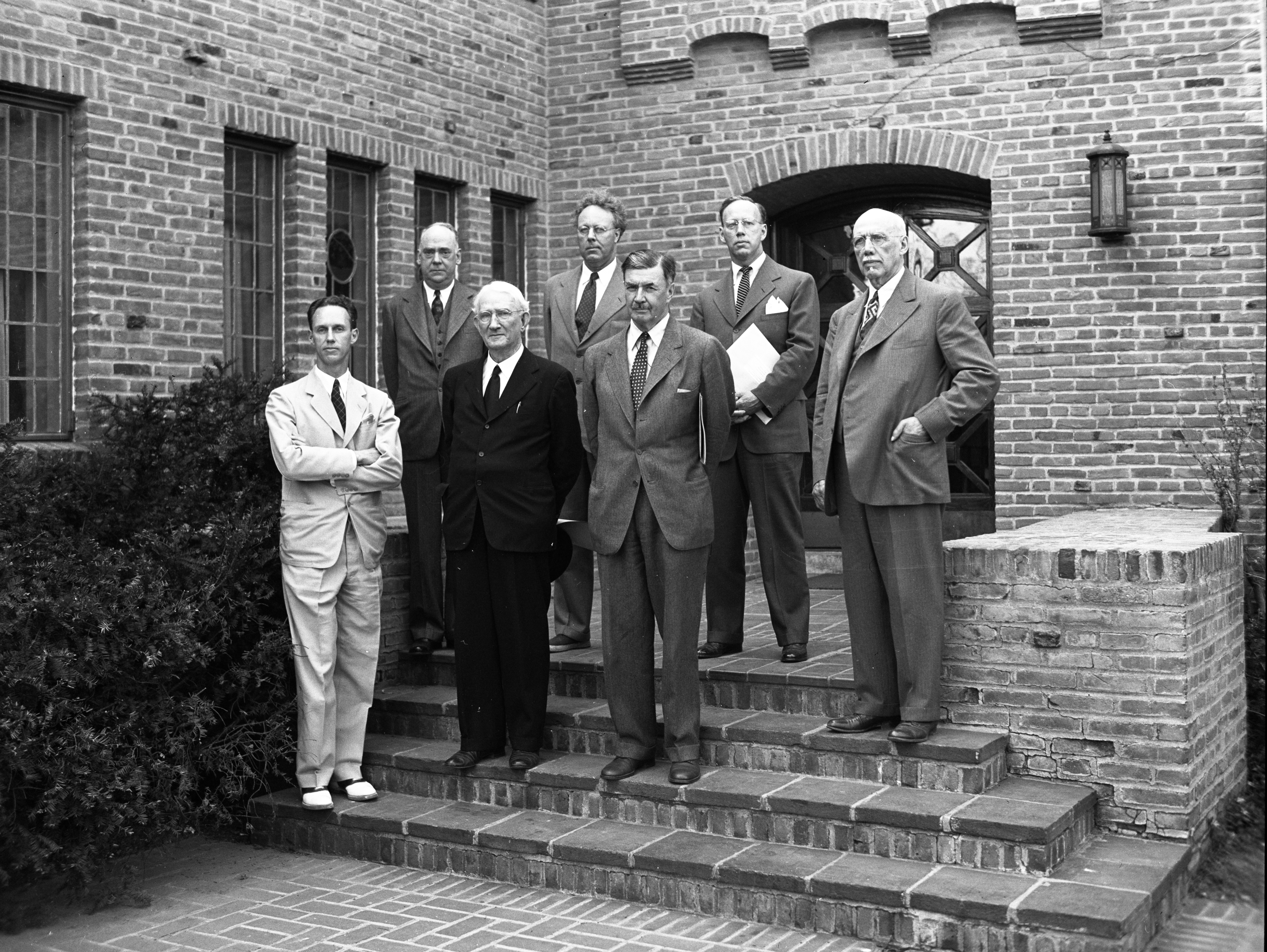
Twenty-five miles northeast of Cranbrook lies Lakeville Lake, which was once the site of Cranbrook Institute of Science Botanist, Cecil Billington’s summer cottage, the Little Brown House. Documented in Billington’s Papers, which were recently donated to the Archives, the story of the house provides a fascinating glimpse of one of Cranbrook’s earliest supporters and staff members.

Detail of a Cecil Billington’s property on Lakeville Lake, Oakland County, Michigan. Courtesy of Cranbrook Archives

Cecil Billington was an integral part of early Cranbrook history, serving on almost all the founding institutions’ governing boards, as well as the Cranbrook Foundation Board of Trustees (now Cranbrook Educational Community Board of Trustees). He was also a long-time business associate of Cranbrook Founder, George G. Booth, working for him at the Detroit News from 1897-1947 and serving as Secretary of the Evening News Association for twenty-eight years.

Cranbrook Foundation Board of Trustees, May 1942. Cecil Billington second from left. Courtesy of Cranbrook Archives.

Most affiliated with the Institute of Science, in both an administrative and scientific capacity, Cecil Billington headed up the Institute’s first department of botany. As an amateur botanist, he focused particularly on Oakland County, including his Lakeville property. The Institute published both of his books, Ferns of Michigan and Shrubs of Michigan, and was also the recipient of Billington’s principal collection of plant specimens.

Similar to the papers of Institute Director, Robert T. Hatt, Billington’s papers include field notebooks and other items used in gathering specimens and conducting research that are invaluable for understanding the focus of the Institute in its earliest decades. But it is one book in particular that illuminates the man behind the research and particularly captures my attention and imagination.

West view of the Little Brown House, circa 1930s. Courtesy of Cranbrook Archives.

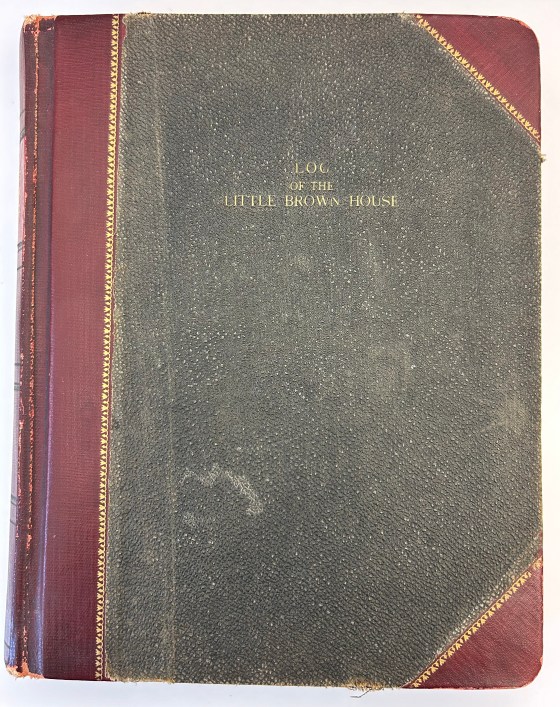
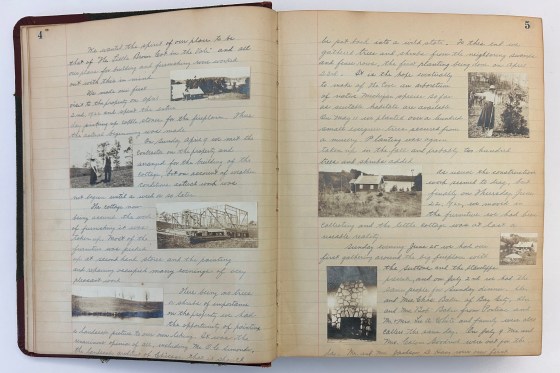
Log of the Little Brown House is part diary and part guest book, documenting sixteen years at The Cove, Cecil and wife Nina’s Lakeville property where they built their cottage. In it, Cecil records reminiscences of each year from 1922, the first year of ownership, to 1938 when the property was sold. His entries document land development and use, scientific study, and leisure activity. Interspersed with the diary entries are the signatures of the couple’s many visitors. Not surprisingly, quite a few of these are Cranbrook names: Lee A. White, Sanford Allen, Carl and Olga Milles, Robert and Marcelle Hatt, and various members of the Booth family, among others.

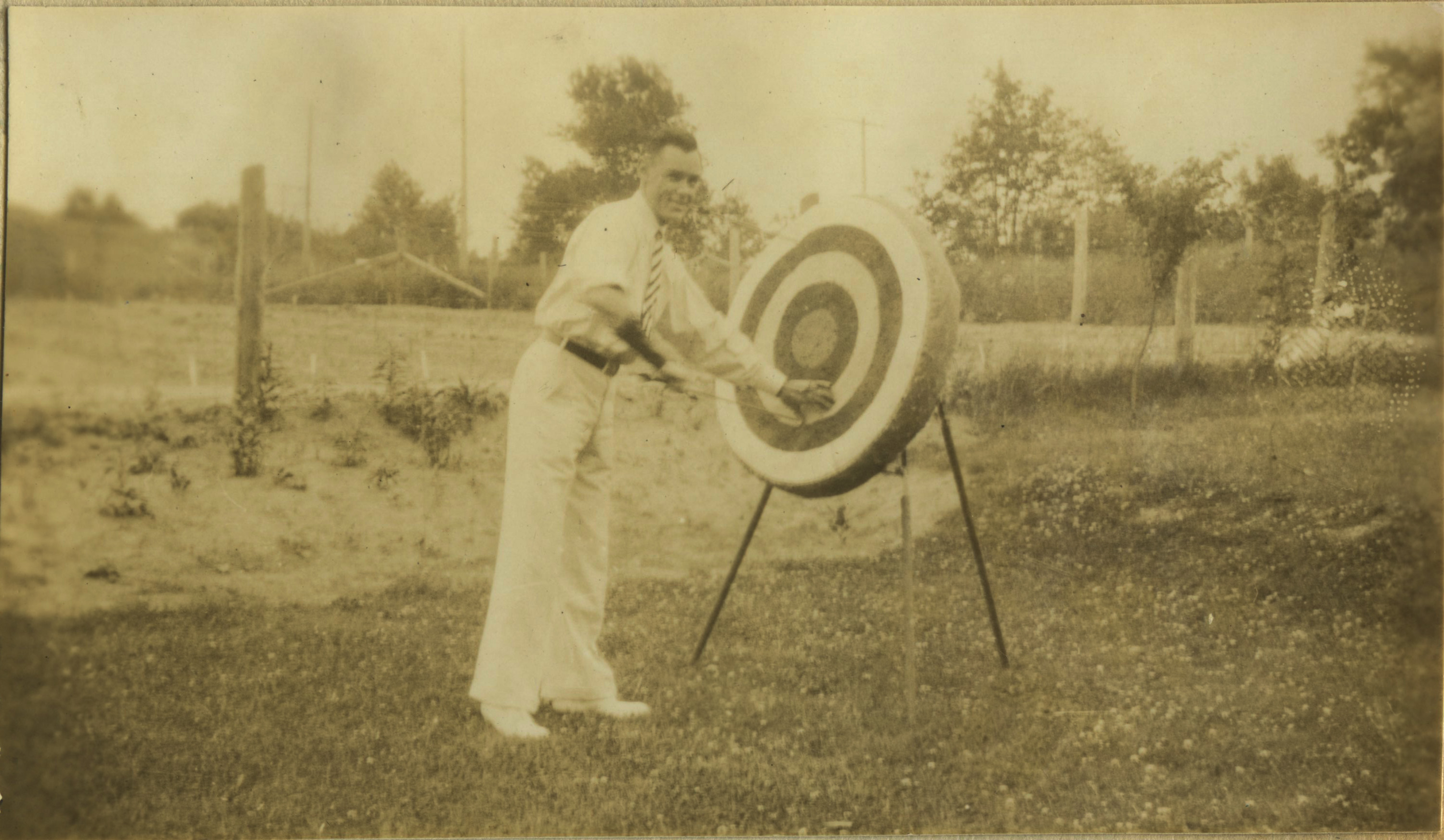
Little Brown House guest using the archery field. Courtesy of Cranbrook Archives.

The Billington’s desire to create a lake idyll that they could freely share with family and friends is recorded in the first pages of the logbook. In addition to building the cottage, over the years they created playfields consisting of archery, bowling on the green, croquet, horseshoes, an outdoor dining room, and a golf course! An entry by Lee A. White in October 1923 hints at the playfulness and freedom enjoyed by visitors: ““They that live by the sword shall perish by the sword.” In memory of the grievous wounding of our host in competition at archery.”  

The written entries are illustrated throughout with photographs of the people, place, and things at the Little Brown House: a presentation of a trophy to the 1928 golf champion; the sunflowers planted for the chickadees and other birds; the building of an addition on the cottage.  Framing them all at the front and back of the book are several musings on the Little Brown House, published in the Detroit News and written by columnist Mrs. J. E. Leslie. It seems fitting to end this post with one such entry that may particularly resonate at this time of year:

Crimson woodbine along the line fence; woods brown and green burning with splashes of scarlet and yellow; farm gardens dry and bare—autumn and a drive to Little Brown House. Reaching out to enfold those of its world, is the great, lovely spirit of hospitality and friendship and sincerity that reaches the hearts of those who enter its door. That is the Little Brown House that is reached by a drive through the golden, mellow loveliness of an early autumn day.

Deborah Rice, Head Archivist, Cranbrook Center for Collections and Research

Photo Friday: Academy Student Life

These days, Instagram accounts are often used to curate and share our photographic memories. In a not-too-distant past, photographic albums were the medium of choice. One such album, created by a 1950 Academy of Art graduate, was recently donated to the Archives and gives us a rare student perspective of the Academy experience. As we welcome students back to campus, full of the promise of future opportunities, let’s take just a moment to look back at what that looked like for one student who attended seventy-five years ago.

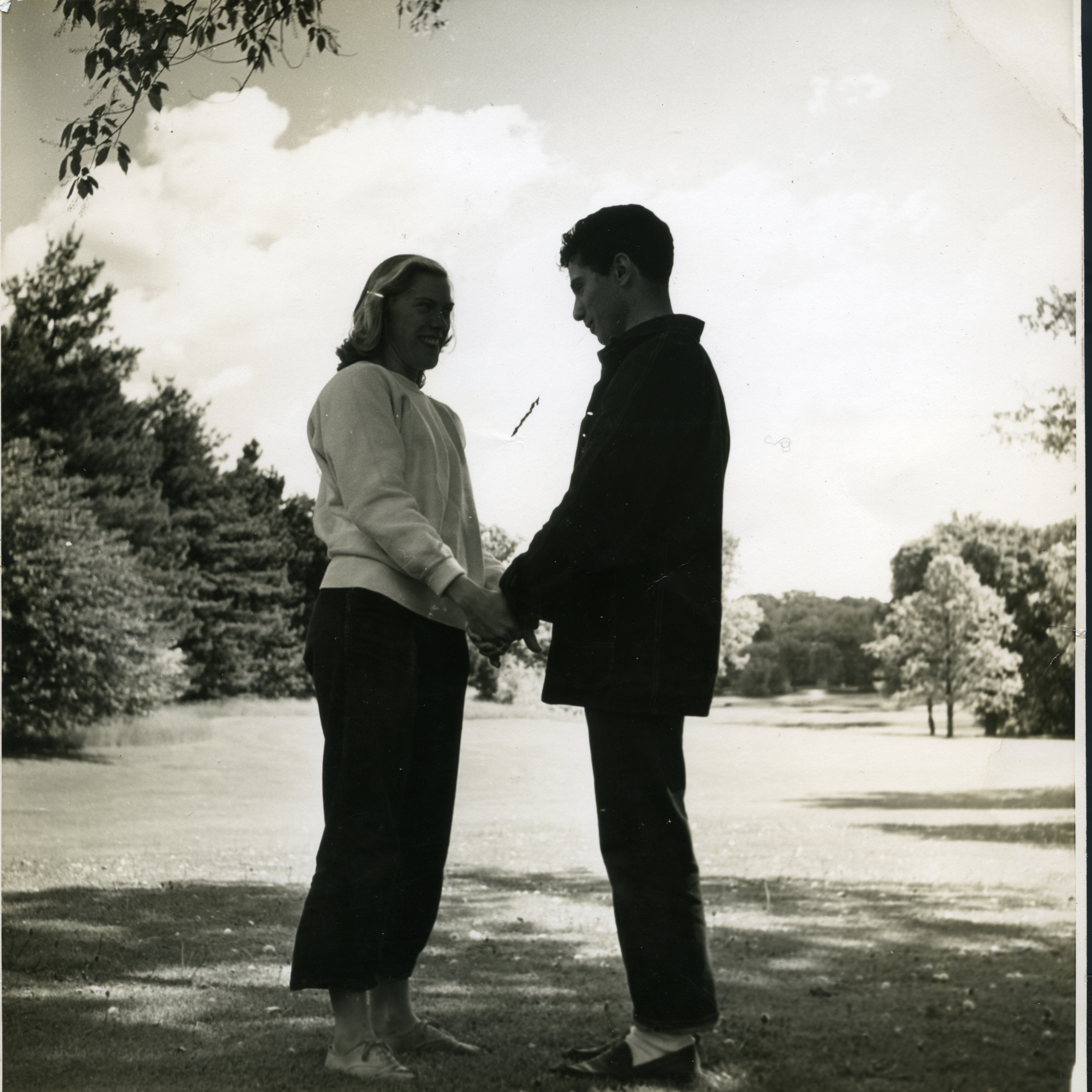
Eleanor Ann Middleton (Painting,1950) and Angelo Caravaglia (Sculpture, 1950) on Cranbrook grounds, circa 1950. Courtesy of Cranbrook Archives.

Eleanor Ann Middleton (Annie) received her BFA and MFA in Painting from Cranbrook Academy of Art in 1949 and 1950, respectfully. Her photo album, assembled at least in part post-graduation, contains photographs from Cranbrook staff photographer, Harvey Croze, who also managed the studio and darkroom in the basement of the Academy Administration Building. These images—class photos on the Art Museum peristyle or familiar shots of the Triton Pools— are copies of those already in the Cranbrook Photograph Collection. But the bulk of the album contains snapshots that are unique to the Archives.

Jack Kearney (Painting 1948) creates al fresco, circa 1947-1948. Courtesy of Cranbrook Archives.

While Middleton was herself a photographer, she appears in many of the images, so the snapshots are likely a mix of her work, fellow Academy students, and perhaps even Croze, in an unofficial capacity. While not Academy staff or student, Croze was a practicing artist (painting and photography) and was known to spend much of his free time with Academy students. Whatever the case, the result is an intimate glimpse into student life.

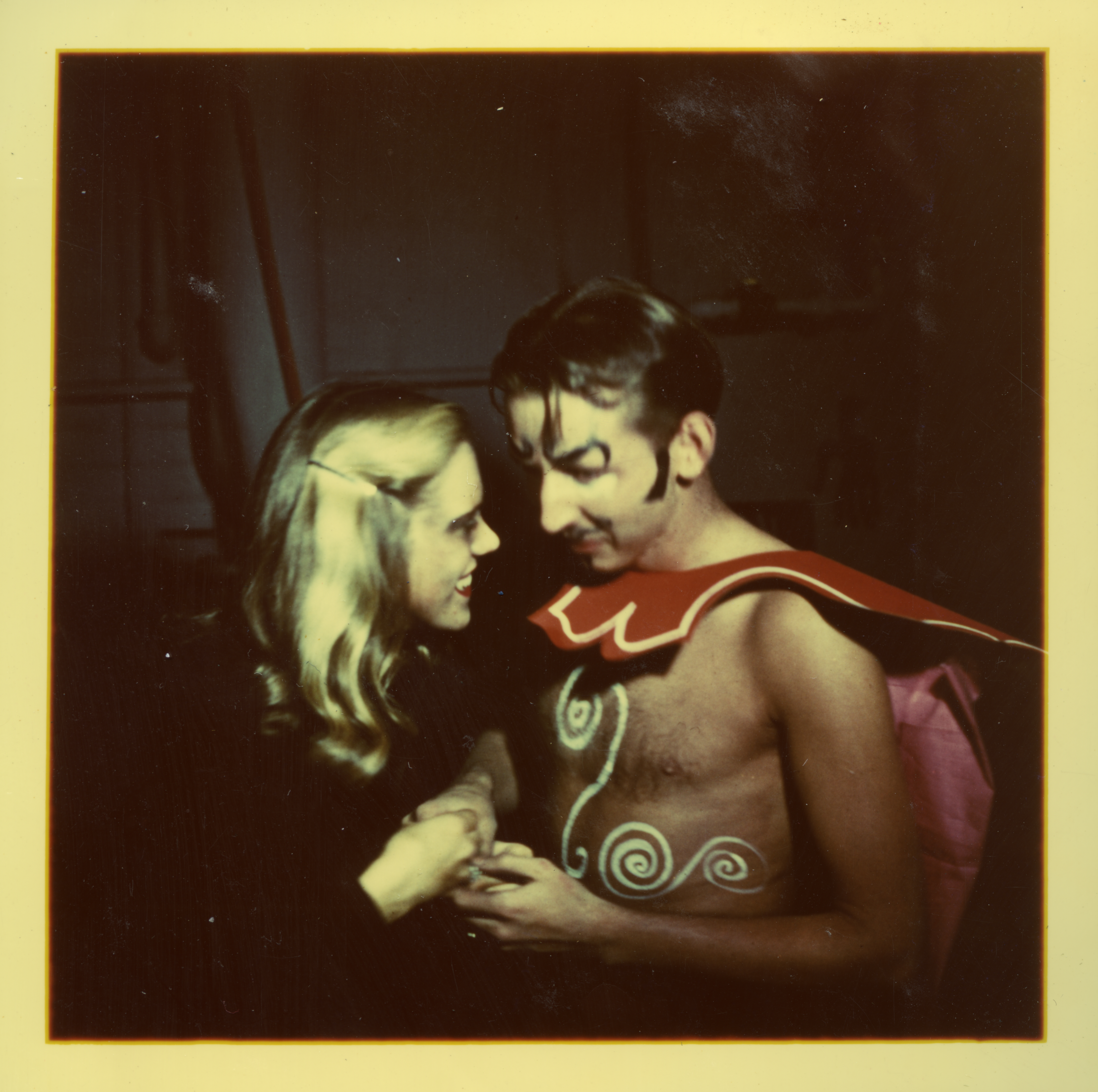
Annie Middleton and a fellow student at one of many costume parties featured in the album, circa 1947-1950. Courtesy of Cranbrook Archives.

The Center wishes all students at the Academy and Cranbrook Kingswood Schools a wonderful 2024-25 academic year!

Deborah Rice, Head Archivist, Cranbrook Center for Collections and Research

Neighborly Relations: Cranbrook and Stonelea

In recent years, new residential development along the small strip of Cranbrook Road between Lone Pine Road and Woodward Avenue has given Cranbrook a few new neighbors. One of Cranbrook’s first neighbors on the street, however, dates back one hundred years!

As George and Ellen Booth began developing their country estate in the mid-1920s into what we know today as Cranbrook Educational Community, a new house was completed just north of what would soon become Kingswood School for Girls.

Picture of Stonelea from an ad in Afterglow: A Country Life Magazine, August-September 1925.

Ralph Stone, president of the Detroit Trust Company, with which George Booth did business, purchased this land around 1923. He quickly commissioned Albert Kahn to design a country residence for the site, which Stone named “Stonelea.” This was just a few years after Kahn had completed additions to Cranbrook House.

Residence for Mr. Ralph Stone. Albert Kahn Architect. November 17, 1923. Courtesy of Cranbrook Archives.

The close neighbors shared some correspondence regarding their properties that provides a glimpse of both men’s personalities, and highlights their shared affability and elegance of prose. Their letters, part of the George Gough Booth Papers, begin a year before Ralph Stone and his wife Mary would finalize construction of their home in 1925. It seems they could not wait to spend a summer of leisure in Bloomfield Hills, away from the hustle and bustle of Detroit. The Stones sought to rent the Booth’s Brookside Cottage–an impossibility due to occupancy by Booth family members.

But perhaps the most interesting exchange takes place in 1926 when Ralph writes regarding the shocking lack of water needed to preserve his lawn and garden in a green state in the middle of July (not a problem in 2024!). He proposes to pump water from Cranbrook, but George’s reply a week later masterfully circumnavigates the issue:

Opening lines of the George Booth letter, August 2, 1926. Courtesy of Cranbrook Archives.

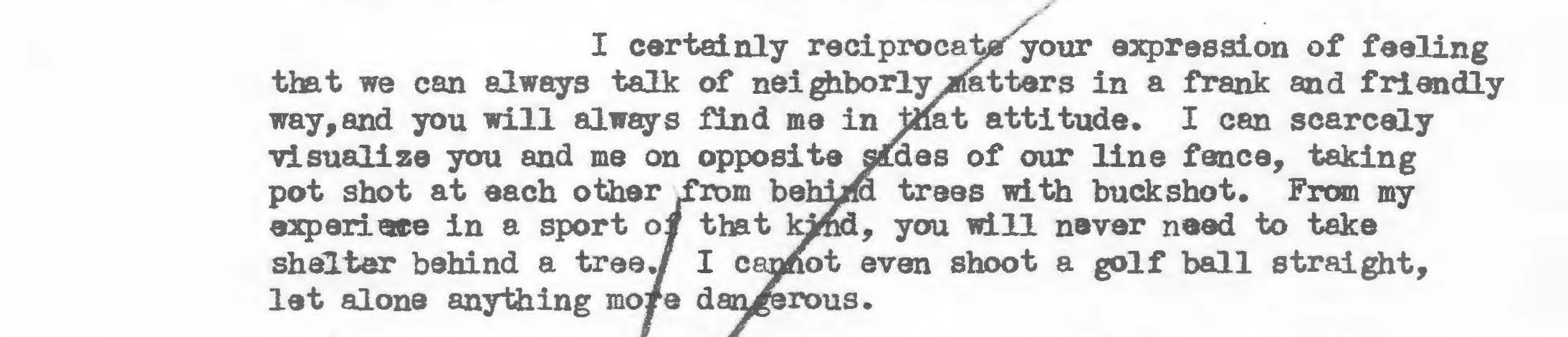
In Ralph’s reply he acquiesces with good humor:

Second paragraph of the Ralph Stone letter, August 3, 1926. Courtesy of Cranbrook Archives.

The sentiments expressed in these letters appear genuine as their families remained on neighborly terms. George and Ellen were occasional guests at Stonelea for dinner parties until the Stones sold their property in 1931.

In fact, Ralph Stone proved to be much more than just a friendly neighbor of George Booth, continuing his connection to Cranbrook long after he had moved from the area. He was an early and steadfast supporter of Cranbrook, serving on various boards for over twenty-five years as a Cranbrook School Trustee (1928-1951), Kingswood School Trustee (1930-1951), Brookside School Trustee (1945-1951), Academy of Art Trustee (1941-1946), and Foundation Trustee (1940-1952).

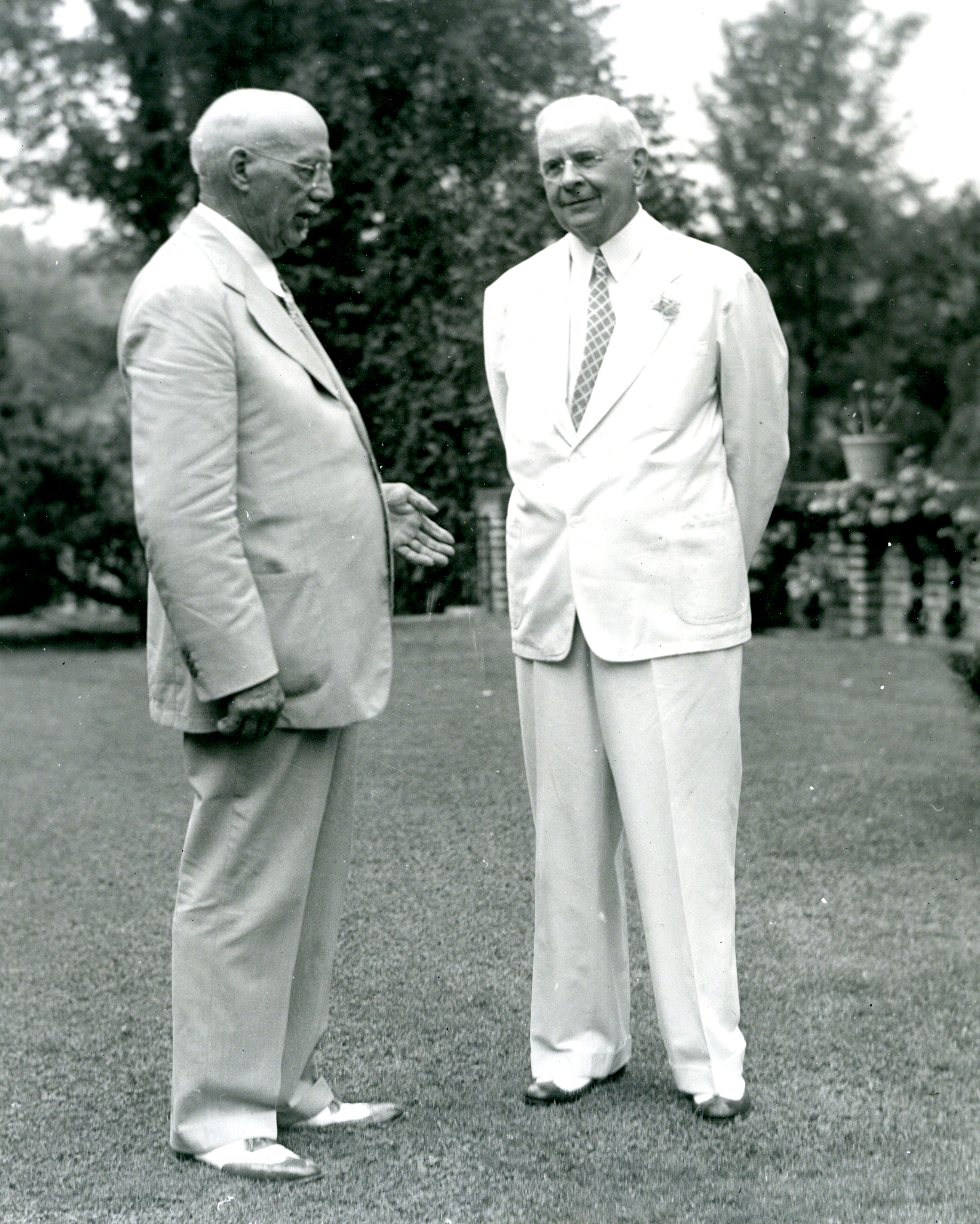
George Gough Booth and Ralph Stone attend the 80th birthday party of Ellen Scripps Booth at Cranbrook House, 1943. Courtesy of Cranbrook Archives.

Today, Stonelea is no longer just a neighbor: the property was acquired by Cranbrook Educational Community in 2003. In the coming years, Stonelea will become the future home of Cranbrook Center for Collections and Research!

Read the Ralph Stone letters in their entirety in the Archives’ Digital Collections, or, learn about a famous occupant of Stonelea: Anne Morrow Lindbergh: The Cranbrook Connection.

Deborah Rice, Head Archivist, Cranbrook Center for Collections and Research

HUB Student Films

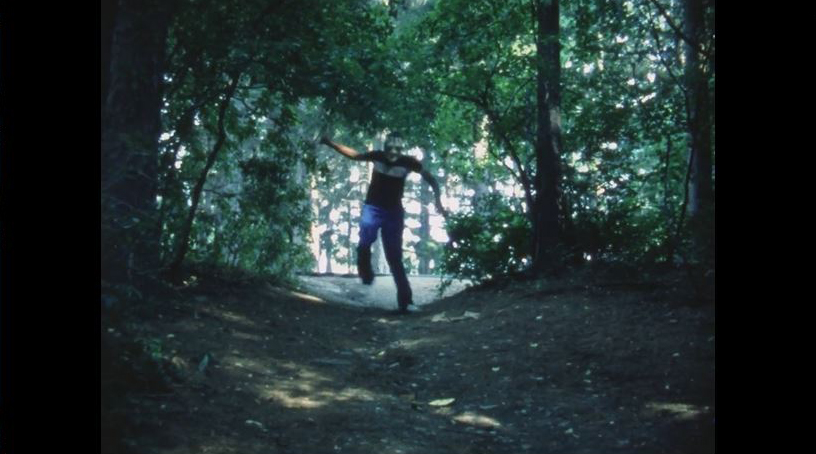
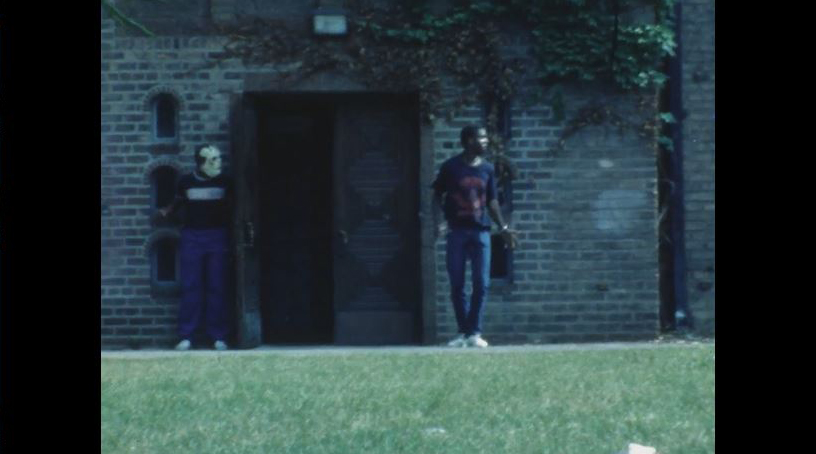
Films titles like Farewell My Summer Love, The Nightmare, and Dormitory of the Dead were recently rediscovered while working on the Horizons-Upward Bound (HUB) digitization project. The 8mm film reels were unmarked, but cross-referencing with film festival entry packets and faculty reports in the HUB Records, along with viewing the first few frames of each reel, revealed their origin.

Produced in 1984 by HUB summer students in John Prusak’s class, these films had been submitted to The Michigan Student Film and Video Festival, held at Friends Auditorium, Detroit, MI in 1985.

Opening scene from The Nightmare, 1984.
Courtesy of Cranbrook Archives.

Top section of film evaluation sheet for the Michigan Student Film and Video Festival, 1985. Courtesy of Cranbrook Archives.

Digitizing film for today

When applying for the grant that is allowing digitization of the HUB Records only one student film, The Great Dictator, from William H. Moran’s 1969 summer class, had been labeled and identified. So it was indeed a nice surprise to find that there were more! Along with the 1969 film and a fifth film, Together, produced in John Geoghegan’s Advanced Film Class 1972 summer class, the 1984 films were sent to a lab for digitization.

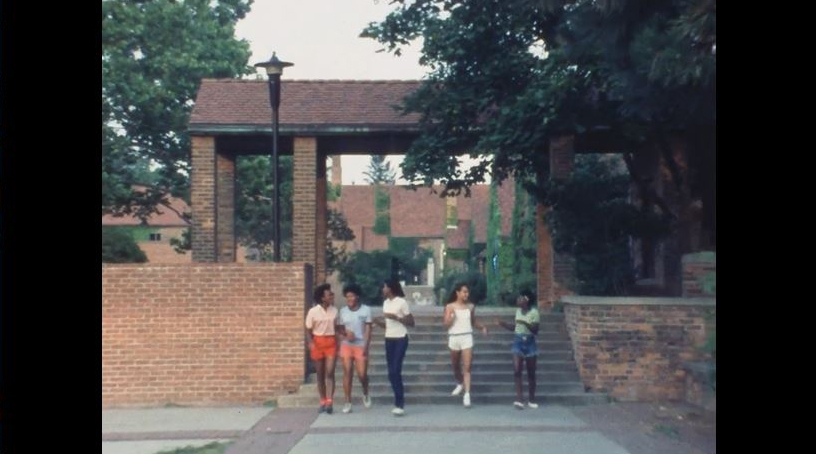
Scene from Farewell My Summer Love, 1984. Courtesy of Cranbrook Archives.

Viewing the digitized films helped further identify the students involved and corroborate the information listed on the entry forms. With this information in hand, we have eagerly begun sharing this newly accessible resource with the HUB community.

Head archivist, Deborah Rice, screens two films during Cranbrook Schools Reunion Weekend June 2024. Courtesy of Cranbrook Archives.

Future Discoveries

The summer film elective class was offered sporadically throughout HUB’s history beginning in 1969. It is yet unknown how many films have been produced over the years. Other titles listed in the 1985 festival entries alone include six films: Money, Spectrum, Street People, That’s Life Kid (It’s Gonna Be Lonely II), The Mix, and Class of 86 – Memories. Together, the films are invaluable documentation of the student perspective.

Please reach out to archives@cranbrook.edu with any information about the films mentioned above or other HUB student films. We’d love to know more!

Courtney Richardson, Project Archivist and Deborah Rice, Head Archivist, Cranbrook Center for Collections and Research

HUB digitization is funded by a NHPRC Archival Projects Grant for projects that ensure online public discovery and use of historical records collections. The NHPRC was established by Congress in 1934 as a statutory body affiliated with the National Archives and Records Administration and chaired by the Archivist of the United States.

Harry Belafonte Visits Cranbrook

Following on the heels of Leonard Bernstein, Don Shirley, and Dave Brubeck, yet another famous musician came to Cranbrook: Harry Belafonte. While his trip to campus, unfortunately, did not involve a performance, it is well-recorded in the Archives: in news items, photographs, and a Society page headline in the Wednesday, November 23, 1960, Birmingham Eccentric.

Being a relatively new recording star on the RCA record label, the 1960 visit included Belafonte’s third Detroit performance. After his debut in 1956 in a show called “Sing, Man, Sing!” Belefonte played the newly converted live venue, the Grand Riviera Theater the following year in support of his record album, “An Evening With Belafonte.”

Portrait of Harry Belafonte, singer and actor. Courtesy of E. Azalia Hackley Collection, Detroit Public Library.

At this point, the actor and singer was pretty much a household name, having starred in the 1954 film Carmen Jones, and riding the wave of his 1956 breakthrough hit album, Calypso, the first million-selling LP by a single artist. Who doesn’t know the song “Day-O (The Banana Boat Song)?”

When Belafonte returned to the Riviera in 1960, his show was again billed as “An Evening With Belafonte” but now featuring an opening performance by South African singer Miriam Makeba, sponsored by the Junior Women’s Association for the Detroit Symphony Orchestra. And this time, in the audience were Henry Scripps Booth (son of Cranbrook founders George and Ellen Booth), his wife Carolyn, and their son Stephen with his wife Betty.

It’s not surprising that Henry (known to family and friends as Harry) was in attendance. An avid music aficionado, he was a charter member of the Cranbrook Music Guild, founded in 1951, and had been floating the idea of a creative music center on Cranbrook campus for at least that long. In fact, earlier in 1960, he had even proposed in a letter to Eero Saarinen the building of a music shell on the west lawn of Cranbrook House. Alas, the music center (and Saarinen music shell) never came to be.

In any case, Henry must have been visibly enjoying Belafonte’s concert. According to another Eccentric columnist, “Cheers went up at Harry Booth’s impromptu performance. Mr. Belafonte took his mike down to Mr. Booth’s ringside seat and induced him to give forth on a chorus of ‘Matilda‘ (it was all unrehearsed – we checked).”

A few days later, Belafonte made the trip from Detroit, at Henry’s invitation, to dine at the Booth’s home, Thornlea, with the family. Afterwards, he was given a brief tour of Cranbrook where he stopped at the Academy of Art to meet students and view work in their studios.

Join the Center on May 18 to help us celebrate the legacy of music at Cranbrook—dine at Thornlea and enjoy musical stylings from the era of Harry Belafonte’s visit. Head to our website to learn more and purchase your tickets to A House Party at Cranbrook!

Deborah Rice, Head Archivist, Cranbrook Center for Collections and Research

Photo Friday: Cranbrook School Senior Cabin

A headline in the January 19, 1928 Birmingham Eccentric newspaper declared “Pavilion Opens at Cranbrook.” An odd choice of words, perhaps, since what the article describes was actually a rustic cabin. Built in December 1927, it was a gift from George G. Booth to Cranbrook School in its first year of operation, which, as Headmaster William O. Stevens wrote in the school bulletin, “provided for the happiness of School life.”

Cranbrook School Cabin, later known as the Senior Cabin, circa 1928. Courtesy of Cranbrook Archives.

One of the coldest months of the year may seem like an odd time for an opening, but the cabin was purposefully built to serve students year-round for Saturday overnight camping excursions. Equipped with both a huge fireplace on one end and a wood stove on the other, the main gallery offered ample room for cots.

View of “Campfire Island”, May 1955. Harvey Croze, photographer. Courtesy of Cranbrook Archives.

Opening festivities included a campfire and games for Cranbrook School students, complete with light refreshments. In a school editorial written shortly after, a student thanks George Booth on behalf of his fellow students, ” We wish to express our gratefulness for this unique feature, which we are sure is no part of any other school.” Indeed!

Students paddle canoes under the bridge by the Senior Cabin, circa 1930s. Courtesy of Cranbrook Archives.

Built on the main island in the lagoon north of Cranbrook School campus, the cabin included a bridge and a canoe dock. By 1939, at least, it was referred to as the Senior Cabin. In 1941, a similar Senior Cabin was built for the students at Kingswood School.

Deborah Rice, Head Archivist, Cranbrook Center for Collections and Research

Finding Olmsted at Cranbrook

George G. Booth didn’t just commission renowned architects in building Cranbrook, he also engaged well-respected landscape designers. Architecture and nature were equally considered. Booth’s own 1904 topographical map demonstrates his grandiose vision for reshaping what was then farmland. It is not surprising, therefore, that Cranbrook has a connection to the American “father of landscape architecture,” Frederick Law Olmsted.

Leading up to and following the Center’s most recent Bauder lectureExperiencing Olmsted: The Enduring Legacy of Frederick Law Olmsted’s North American Landscapes, Olmsted-related materials in the Archives were revisited and new associations were made.

It was Frederick Law Olmsted’s successor firm, the Olmsted Brothers, led by his sons, that worked on the landscape of Christ Church Cranbrook from 1926-1928. Simultaneous to the construction of the church by the architecture firm Bertram G. Goodhue Associates, the Olmsteds created plans for the surrounding land between Lone Pine, Cranbrook, and Church Roads.

Artistic rendering of Christ Church Cranbrook Rectory, 1924. Bertram G. Goodhue Associates. Courtesy of Cranbrook Archives.

A few pieces of correspondence in the George Gough Booth Papers shed light on the close relationship between Booth, the chief architect Oscar H. Murray, and the Olmsted Brothers. But there are many more letters from Job 7754 (aka Christ Church Cranbrook)  in the Frederick Law Olmsted Papers and Olmsted Associates Records held by the Manuscript Division of the Library of Congress in Washington, D.C., all of which can be read online.

Letter from Oscar H. Murray to George G. Booth relating a response from Olmsted Brothers, December 7, 1927. Courtesy of Cranbrook Archives.

The Archives also holds two reproductions of Olmsted Brothers plans: the second and the tenth drawing revisions submitted in 1927 and 1928, respectively. In these, plants are clearly numbered, but the Archives does not hold the accompanying keys. At the suggestion of Bauder lecturer, Charles Birnbaum, President, CEO, and Founder of The Cultural Landscape Foundation in Washington, D.C., I reached out to the Frederick Law Olmsted National Historic Site in Brookline, Massachusetts. They graciously shared scanned copies of both planting plans, for our reference.

Christ Church Cranbrook Planting Plan, March 11, 1927, revised October 1927. Blueprint for Revised Plan Number 2. Olmsted Brothers. Courtesy of Cranbrook Archives.

We now know, for example, that the large evergreens that George Booth mentions in a letter to Oscar Murray likely refer to the Austrian Pine (10 and 82), Douglas Fir (83), and White Pine (90) enumerated in a November 4, 1927 plant list for Plan No. 2. And, we can see where on the blueprint those trees were proposed to be planted!

Excerpt from page two of George Booth’s letter to Oscar Murray, November 23, 1927. Courtesy of Cranbrook Archives.

Many more discoveries are sure to come, now that we have a more complete picture of the original landscape design for Christ Church Cranbrook. I know that next time I drive or walk by the church, I will be taking a closer look at the vegetation.

Deborah Rice, Head Archivist, Cranbrook Center for Collections and Research

Editor’s note: To view the five drawings in the Olmsted Archives at Brookline, including originals of  the Cranbrook copies, and eight scrapbook pages that include Goodhue Associates renderings, visit their Flickr albums.

Cranbrook Institute of Science Films Digitized

Cranbrook Archives is pleased to announce the preservation and digitization of eight Institute of Science early education films. Made possible through generous funding by the National Film Preservation Foundation (NFPF), these silent films were sent to a professional film lab where they were inspected and expertly cleaned, repaired, copied onto archival safe film stock, and scanned. Previously inaccessible to users due to their fragility, a combined ninety-four minutes (2,450 feet) of footage can now be viewed digitally.

Opening credits from Emergence of the Periodical Cicada at Cranbrook, 1936. Courtesy of Cranbrook Archives.

In a post exactly one year ago, I first mentioned the Institute’s early forays into the burgeoning educational film market of the 1930s. Using 16mm film technology (the amateur version of Hollywood motion picture film), Institute staff documented scientific field research, captured the work of exhibition preparators, and recorded educational programs. Many of these films were shown regularly to museum patrons and were often accompanied by lectures.

With the exception of one 1955 film, the NFPF grant films were all created between 1935 and 1938. Six of the films collectively display a range of astronomical, botanical, zoological, ornithological, and marine ecological research efforts. In addition to Emergence of the Periodical Cicada at Cranbrook, finished titles include Solar Prominences, featuring telescopic footage of solar flares, and Birds in Summer, which tells the story of newly born birds. Untitled films show the behavior of adult birds, deer, and coral reef life.

Birds in Summer, 1935. An Institute scientist can be seen banding a young blue heron. Courtesy of Cranbrook Archives.

While these snapshots in time may no longer be useful as originally intended – to educate the public on their present natural world – they do have the potential to inform current and future research on conservation or climate change. For example, a film on coral reef life, with its unique early underwater footage, offers the opportunity for comparing current conditions with those documented by Institute scientists three generations ago.

Untitled film with underwater footage of a coral reef, circa 1955. Courtesy of Cranbrook Archives.

The remaining two films demonstrate curatorial and membership activities. In one, staff are seen in the Institute library; painting scenes for exhibit backdrops and gathering botanical specimens in a forested setting; and making plaster molds of specimens in an Institute workroom. In another, Institute Junior Members and staff take a field trip to a local quarry to collect rocks and minerals.

Untitled film showing exhibition preparator, Dudley Blakely, painting a display case backdrop, 1936. Courtesy of Cranbrook Archives.

The Institute of Science film project marks the beginning of a concerted effort to digitize the Archives’ audiovisual collections. Due to their age, complex chemical/mechanical makeup, and obsolescent playback equipment (who still owns a VCR?), audio and video recordings capturing the sights and sounds of Cranbrook’s past are some of our most at-risk materials. I hope to share more stories of success in the near future!

Deborah Rice, Head Archivist, Cranbrook Center for Collections and Research

Ruth Adler Schnee’s Interior Design Legacy

Cranbrook Archives was saddened at the passing of design icon Ruth Adler Schnee last month. As proud custodians of the Edward and Ruth Adler Schnee Papers we know that her legacy lives on in the many documents, photographs, drawings, and textile samples available to researchers. With a long and varied career in textile design and interior design, there are a plethora of materials to inform and admire, adding nuance and context to her catalog of accomplishments seen in current textile production, museum collections worldwide, and public, commercial, and residential buildings throughout the Detroit area.

Ruth and Edward Schnee, circa 1990. Courtesy of Cranbrook Archives.

Her personal and professional story is inspiring in so many ways, not the least of which were the interior design projects completed for Schnee & Schnee Consultants, a company that Ruth owned with her husband Edward Schnee from 1977-1985. She designed, and he ran the business, much like their other design consulting partnerships, the earlier Adler-Schnee Associates, and the later Schnee and Schnee Inc.

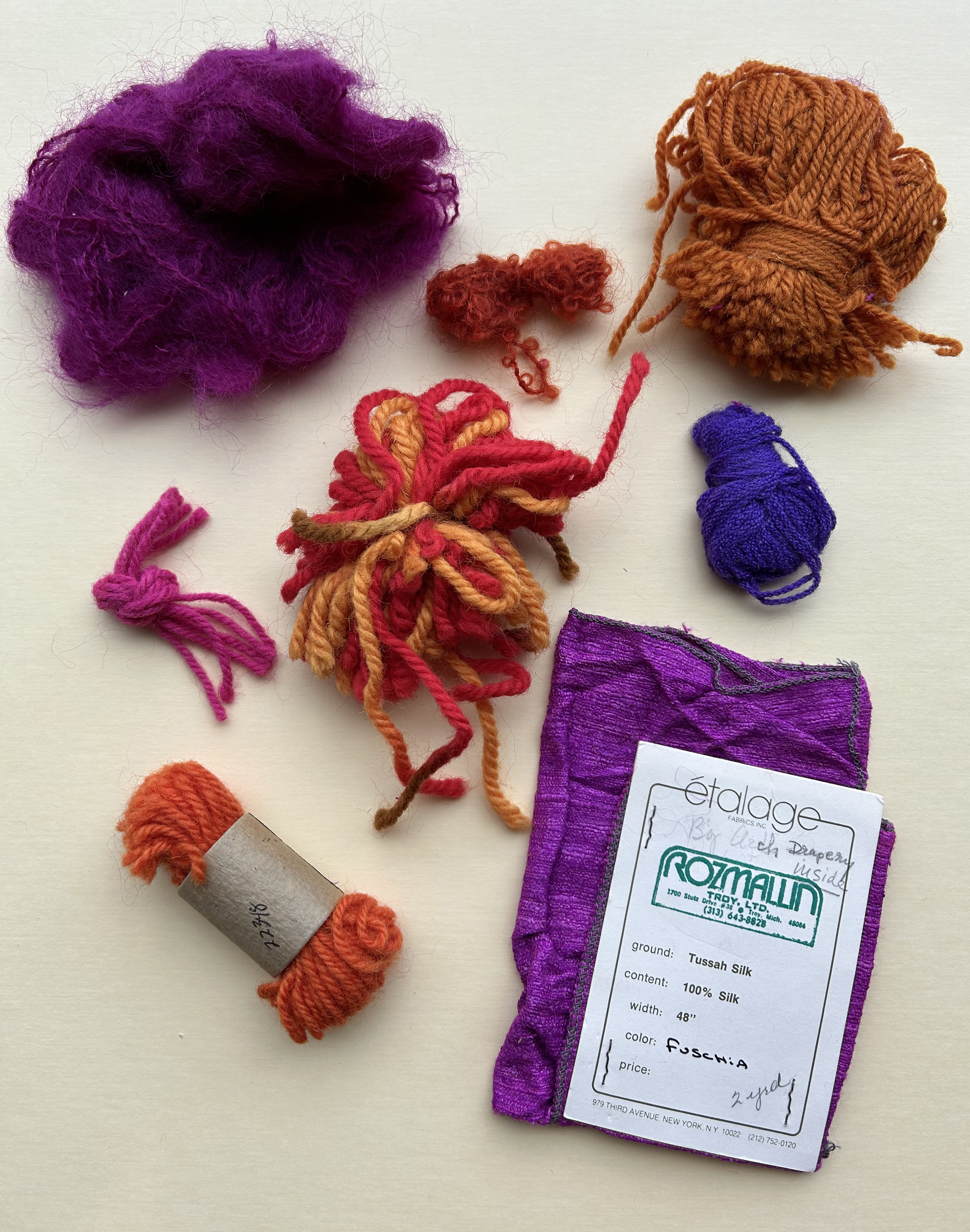
One of their major commissions, and particularly well-documented in their papers, was the Jewish Community Center’s Edward and Freda Fleischman Residence/Blumberg Plaza in West Bloomfield, a three-year project spanning 1982-1985. One does not automatically think of innovative design when considering assisted living facilities, so it is particularly a delight to view Ruth’s colorful palette at work in her project sketches and product choices, both of which evoke her affinity for vibrant textiles.

The Schnees’ thoughtful work in addressing the needs of the residents is evident in the detailed project records and numerous oversized room design presentation boards. In comments about the project Ruth stated, “every design decision became an important element in providing a warm and protective environment.” The residence quickly became a model for similar projects across the country as the modern idea of assisted living facilities, versus the institutional nursing home model, grew in popularity.

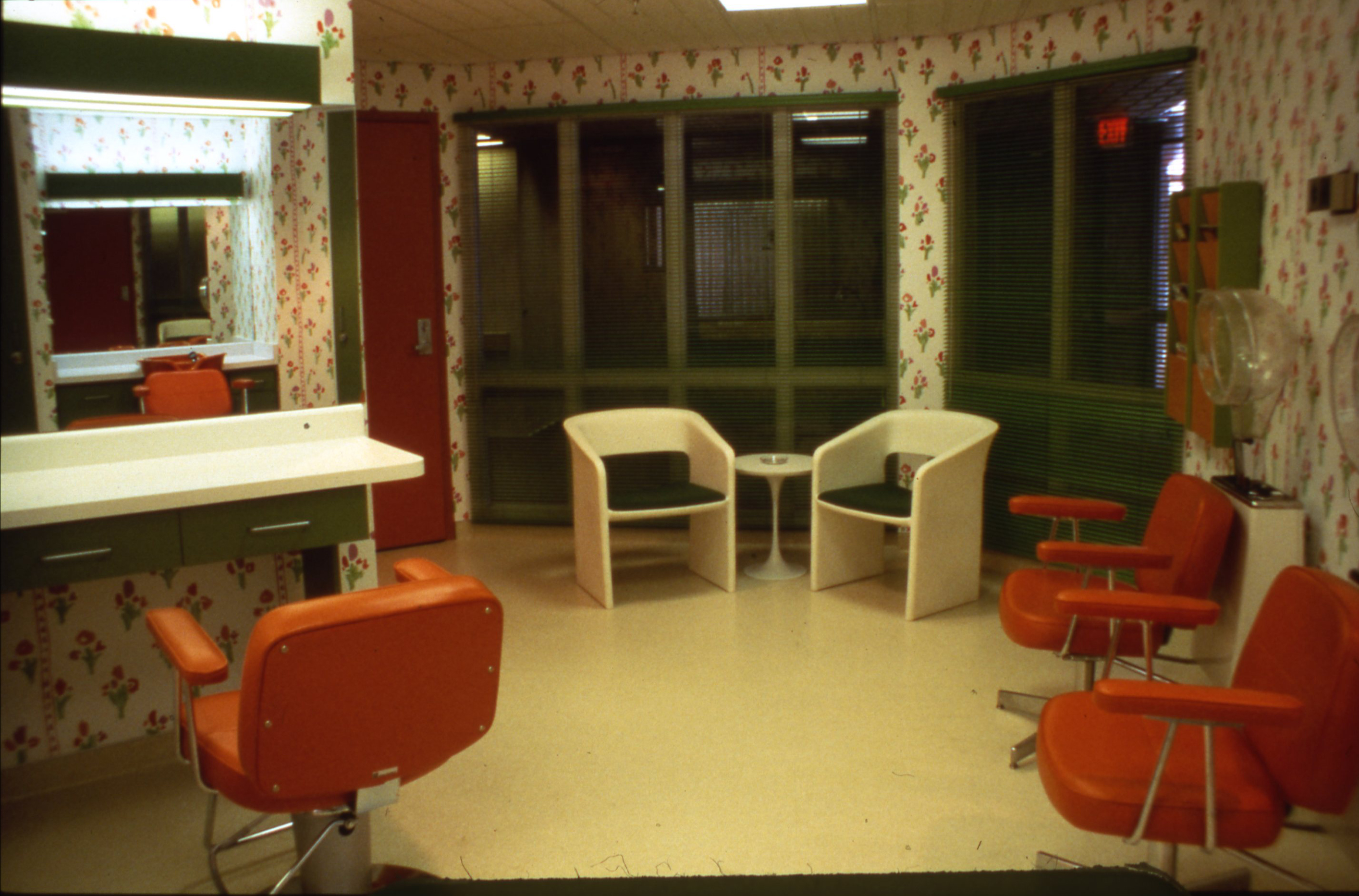
Immediately following their success with the Fleischman Residence, Schnee & Schnee consulted on a similar project just north of Cranbrook Educational Community, St. Elizabeth Briarbank. Collaborating with the architectural firm John Stevens Associates Inc. (Ruth was their Director of Interior Design from 1977-1979), Ruth designed the interiors for an addition to the Catholic assisted living community for women, drawing on her research and application at the Fleischman Residence. From the red and orange beauty parlor, featuring the same John Yellen chairs, to the softer wall murals in common rooms, to the light-hearted wallpaper in the communal kitchen, Ruth’s touch is irrefutable.

The Fleischman and Briarbank projects are just two of the eight senior residential complexes (four with architect John Stevens) that Ruth “transformed” with her sensitivity and playfulness, demonstrating yet another intriguing facet of Ruth Adler Schnee’s career.
Deborah Rice, Head Archivist, Cranbrook Center for Collections and Research

Editor’s Note: Find out more about Ruth’s early design pursuits and her retail business venture with husband Eddie in previous Cranbrook Kitchen Sink posts. Browse additional images from the Edward and Ruth Adler Schnee Papers here.

Create a website or blog at WordPress.com