Experimental Jazz at Cranbrook

Last week’s post about jazz legend, Dave Brubeck, led to water cooler discussions and Facebook murmurings about additional jazz collaborations here at Cranbrook. Thanks to an inquiry on Facebook I discovered the great story of Yusef Lateef’s Cranbrook connection.

Lateef was born in Chattanooga, Tennessee in 1920, but grew up in Detroit. After graduating from high school he began playing professionally in swing bands at the age of 18. In 1949, he was invited to tour with Dizzy Gillespie and his orchestra. A year later, he returned to Detroit to begin his studies in composition and flute at Wayne State University. He eventually received his undergraduate and graduate degrees from the Manhattan School of Music and his Ph.D. in Music Education at the University of Massachusetts at Amherst. Lateef’s main instruments were the tenor sax and flute, though he played many other traditional and non-traditional instruments.

In the late 1950s, Lateef was invited to perform at Cranbrook by members of the Academy of Art Student Council. The Council thought it would be worthwhile for art students to learn something about another form of artistic expression – in this case, jazz. In April 1958, Lateef performed in the galleries at the Academy of Art. Seating  capacity was limited and patrons sat on pillows on the floor.

Promotional material for the jazz concert, April 9, 1958. Courtesy Cranbrook Archives.

Promotional material for the jazz concert, April 9, 1958. Courtesy Cranbrook Archives.

It turned out the students and Lateef were of one mind about the value of exchange between the arts, and agreed that the concerts should be held in the galleries, rather than an auditorium. Lateef had a reputation for experimental sounds, and the audience was treated to a concert that included non-traditional instruments, such as an inflated balloon and a 7-Up bottle.
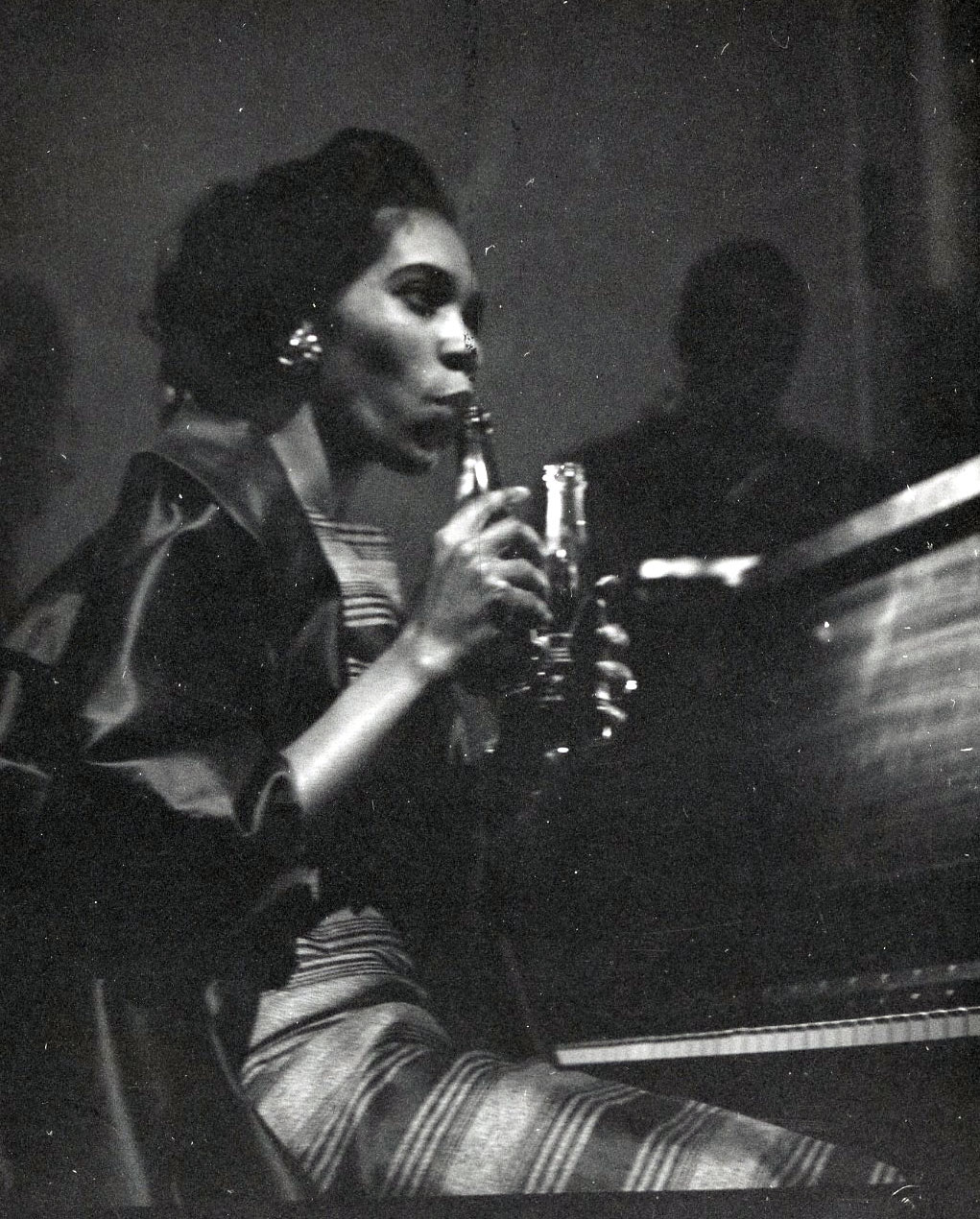
Pianist, Terry Pollard, plays the 7-Up bottle. Harvey Croze, photographer. Courtesy Cranbrook Archives.

Pianist, Terry Pollard, plays the 7-Up bottle. Harvey Croze, photographer. Courtesy Cranbrook Archives.

One of the great treats of this collaboration was a recording from that night! The LP, “Yusef Lateef at Cranbrook,” includes the following pieces: Morning, Brazil, Let Every Soul Say Amen, and Woody ‘N’ You. In 1988 Lateef received a Grammy award for Best New Age album and in 2010, he received the Jazz Master Fellow award from the National Endowment of the Arts. When Lateef passed away in 2013, he had recorded more than 75 albums.

Yusef Lateef and his band perform in the CAA galleries. Harvey Croze, photographer. Courtesy Cranbrook Archives.

Yusef Lateef and his band perform in the CAA galleries. Harvey Croze, photographer. Courtesy Cranbrook Archives.

Gina Tecos, Archivist



Balthazar Korab and his Island of Serenity

A great portion of the time I’ve spent as an archivist at Cranbrook has focused on our photo collections. It would be impossible for me to choose a favorite photo, but I definitely find that one photographer in particular always comes to mind when I get a photo request or when I conjure up an image of campus.

Born in Budapest, Hungary, architect and photographer Balthazar Korab (1926-2013) documented life and work here at Cranbrook for several decades. His iconic images continue to be some of our most requested.

Korab at work at Eero Saarinen and Associates, 1957. Courtesy Cranbrook Archives.

Korab at work at Eero Saarinen and Associates, 1957. Courtesy Cranbrook Archives.

Korab studied architecture at the Polytechnicum Jozsef Nador in Budapest until he felt the necessity to escape his country’s communist regime in 1949. He opted for France, where he continued his education at the École des Beaux Arts in Paris, and received his degree in architecture there in 1954. During this time, Korab worked throughout Europe as a journeyman with notable architects, including Le Corbusier.

In 1955 he came to the United States and was hired by Eero Saarinen to work at Eero Saarinen and Associates (ESA). While Korab was worked there, he saw how Saarinen built models of his designs. Korab volunteered to use his knowledge of photography to develop techniques for dramatic photos of the models. This took him off the drawing board and he soon began to get assignments from other architects. What followed was an illustrious career photographing the works of many of the most significant architects world-wide, including: Ludwig Mies van der Rohe, Gunner Birkerts, Minoru Yamasaki, Frank Lloyd Wright, and many others.

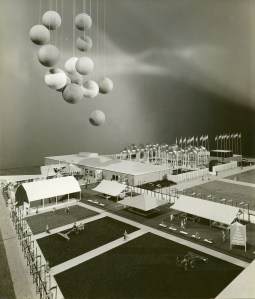
Yamasaki's model of the U.S. Pavilion at the World Agricultural Fair, India. Photograph by Balthazar Korab, ca 1959.

Yamasaki’s model of the U.S. Pavilion at the World Agricultural Fair, India. Photograph by Balthazar Korab, ca 1959.

Korab was introduced to Cranbrook during his time at ESA. In an interview for the Observer and Eccentric in June 1995, he said: “Arriving from a war-torn Europe, I soon was involved with Eero Saarinen’s GM Tech Center, a marvel of the dynamic, brash, wining face of America. It left me in awe and admiration. But my love went for the other Saarinen marvel, a then-middle-aged beauty, Cranbrook. It became a place of refuge and comfort, a source of nutrients for my severed roots to take hold in this strange soil. Its radiant aura was my inspiration.”

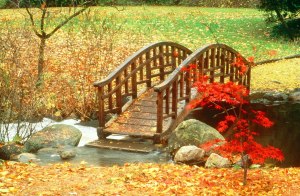
Oriental Garden bridge, Fall 1980. Copyright Balthazar Korab/Cranbrook Archives.

“Oriental Garden” bridge, Fall 1980. Copyright Balthazar Korab/Cranbrook Archives.

In the early 1980’s Korab was hired as one of several contract photographers here at Cranbrook. Over the next three decades, his images provided breath-taking panoramas, as well as minute details of the grounds, art, and architecture of this campus. The beauty of his work cannot be over-stated.

Gina Tecos, Archivist

Editor’s Note: In an July 1998 article in ambassador magazine, Korab referred to Cranbrook Educational Community as his “island of serenity.”

A New Identity

In May 1930, the Cranbrook Foundation voted to appoint a board to oversee the development of the Cranbrook Institute of Science (CIS) and to design a building for the Institute’s programs. Initially, CIS was a department within the Foundation, but by Dec 1931, George Gough Booth concluded that it had proven itself such an important unit in the Cranbrook educational group, that it should no longer be an activity of the Foundation. It became a separately organized trust which held title to the land and buildings and operated its programs independently.

In Dec 1935, then-CIS Director, Robert T. Hatt, wrote to well-known painter and illustrator, Rockwell Kent. Hatt had been drawn to a volume of Kent’s bookplates that he had in his collection, and asked him if he would create a new seal for the Institute. By Feb 1936 Kent submitted his final design to Hatt, stating, “it is entirely unlike both what you originally suggested and the sketch that I submitted.”

Rockwell Kent's final design for the CIS emblem, 1936.

Rockwell Kent’s final design for the CIS emblem, 1936.

In the CIS sixth annual report, Hatt described the new seal: “the triangle is the basic geometrical figure. The two figures looking respectively upwards at the stars and downwards at the earth represent the field of Science as both extensive and intensive.”

Rockwell Kent created bookplates for the Rochester (NY) Public Library, Joseph Kennedy, the Library of Congress, and many others. Kent was also a prolific illustrator. His work includes well-known editions of Moby Dick, Candide, Leaves of Grass, the Canterbury Tales, and Beowulf (among others). In addition to Kent’s enduring design legacy at CIS, his gift of archaeological relics from Greenland in 1937 was the first material from that area to be accessioned into the Institute’s collection.

Gina Tecos, Archivist


Photo Friday: Keeping Cool

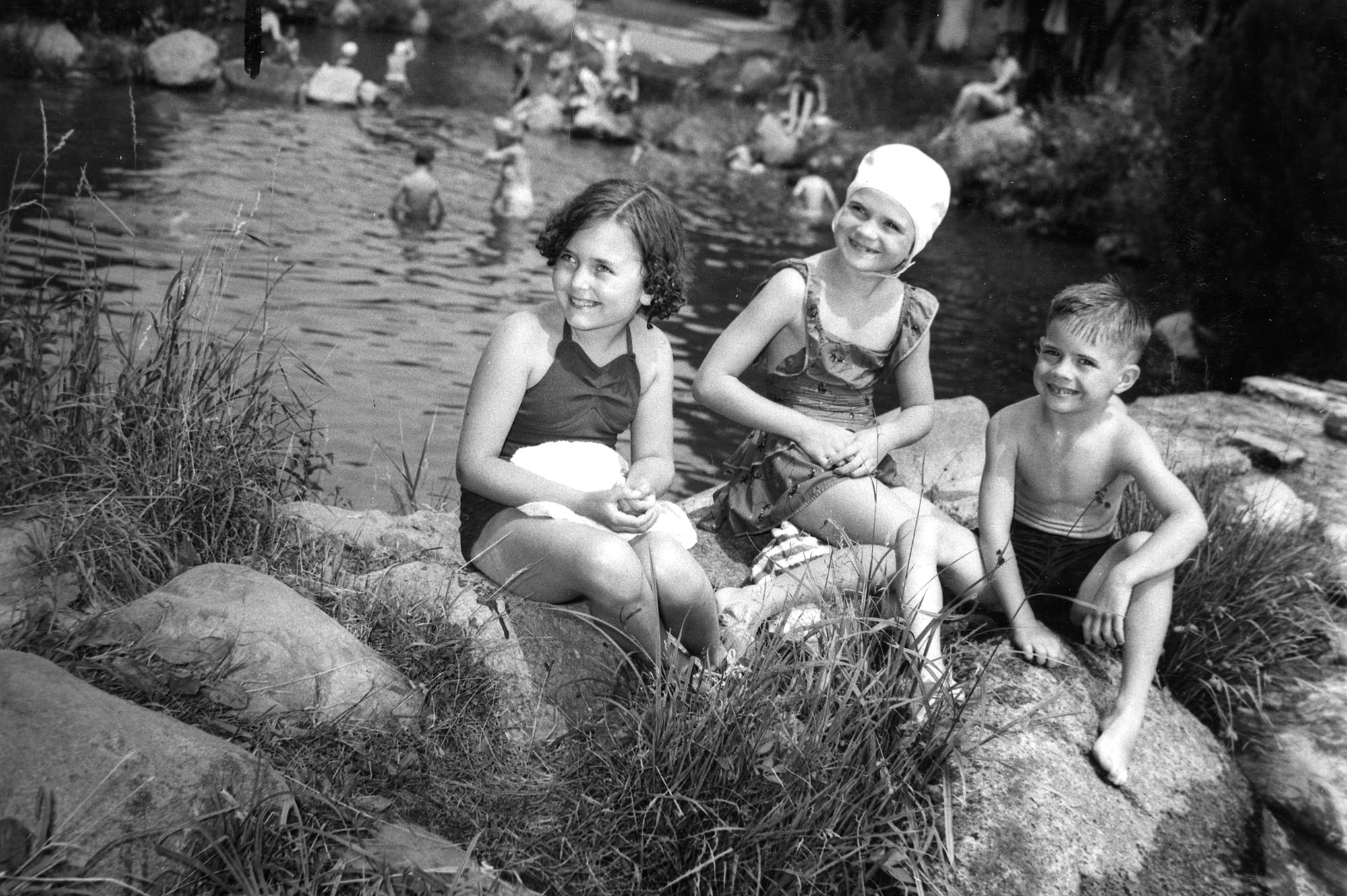
The temps have been high this July! We hope you are keeping cool. The smiling faces in today’s Photo Friday are from the 1953 session of the Kingswood-Cranbrook Summer Day Camp. The program was a precursor to the summer camps offered today on the Brookside, Kingswood, and Cranbrook school campuses.

The first summer “camp” at Cranbrook was a war-inspired program for girls ages 14 and older– the Summer Institute of Kingswood-Cranbrook School. The curriculum provided courses that were helpful to the war effort. The Summer Institute of Kingswood-Cranbrook School continued through 1944 when it evolved into the Kingswood Summer Day Camp. In 1947, Cranbrook initiated the Cranbrook Summer Institute, offering “programs and recreation for the entire family.” Summer Institute provided courses in weaving, ceramics, lapidary techniques, music, theatre — and of course, the opportunity to cool off in Lake Jonah!

Children sitting on the rocks at Lake Jonah/Jonah Pools. Harvey Croze, photographer, Jul 1953.

Children sitting on the rocks at Lake Jonah. Harvey Croze, photographer, Jul 1953.

Gina Tecos, Archivist

Nunsense

Over the past few years, I have listened to researchers in the Archives and visitors to the museum describe works of art as divine or heavenly, but I don’t remember those words used to describe the artist. Until now. Did you know that during the 1950s-1960s there were several artists who studied at the Academy of Art who were also members of a divine order? Admittedly, I have not had much interaction with nuns in my lifetime, but I have a keen fascination (cue: “The hills are alive with the sound of music..”).

Sister Mary James Ann Walsh, BVM (Order of the Blessed Virgin Mary) was one of several nuns to study at the Academy where she received her MFA in painting in 1955. In 1953, Sister Mary was the First Prize Winner of the 9th Annual Iowa Water Color Show for her piece, “Ecce Homo.” That painting is now part of the Sioux City Art Center’s permanent collection. In addition to her Cranbrook degree, Sister Mary studied at the State University of Iowa and the University of Colorado. In 1959 she became head of the Clark College department of Art in Dubuque, Iowa.

Sisters at work in the metal shop, 1954. Courtesy Cranbrook Archives.

Sisters at work in the metal shop, 1954. Courtesy Cranbrook Archives.

The photo above shows Sister Mary Grace Esther Mehren, BVM, and Sister Mary Barbara Cerny at work in the metal shop in 1954. We are still looking for information about Sister Mary Barbara, but according to the Chicago Tribune (15 Jun 1958), Sister Mary Grace Esther was appointed to oversee construction of an eleven-story Scholasticate on the campus of Mundelein College. The building houses lecture halls, classrooms, a dining hall, and a chapel.

Another CAA alum (Metalsmithing ’49), Sister Helene O’Connor, O.P. (Dominican Order of Preachers), founded Studio Angelico in 1935, at Siena Heights University in Adrian, Michigan. Studio Angelico, the art department at Siena Heights, was named for the 15th century Dominican painter, Fra Angelico. Sister Helene chaired the art department, taught classes, and directed community workshops. An accomplished sculptor, ceramicist, weaver, and muralist – her work has been exhibited at the Portland Museum of Art, the Detroit Institute of Arts and the Metropolitan Museum of Art.

Sister Marie Gertrude's, "Mother Hen," Bay City Times, 27 Sep 1964.

Sister Marie Gertrude’s, “Mother Hen,” Bay City Times, 27 Sep 1964.

Also of the Dominican order, Sister Marie Gertrude Lohman, O.P., received her MFA in Sculpture from the Academy in 1966. Several of Sister Marie Gertrude’s sculptures display in Illinois, including a statue of St. Catherine of Siena at the Queen of Heaven Cemetery in Chicago and a statue of St. Albert the Great in the student courtyard at St. Rose Priory. Sister Marie Gertrude studied in Schifanoia, Italy, and her work has been exhibited in Chicago and Dubuque. In 1964, her work, “Mother Hen,” was displayed at the Studio 23 space at the Arts Center in Bay City, MI.

This research has only deepened my fascination of the divine sisterhood. I wonder what drew the sisters to Cranbrook? There were several other nun-students at CAA – I look forward to learning more about their contributions to Cranbrook and the art world.

Gina Tecos, Archivist

Photo Friday: Archival Preservation

Since it is Preservation Week, today’s Photo Friday features an image from one of the collections we have been working to stabilize. For the past few weeks my colleague, Belinda Krencicki, and I have photographed and captured metadata for the watercolor paintings, pen and pencil drawings, and pastels in the James Scripps Booth and John McLaughlin Booth Papers. This information will be used to catalog the items in our Collections Management system. In addition to documenting the works, we re-housed all of the items–placing them in archival folders and interleaving each work to protect it.

Pencil and pastel sketch of the exterior of the Detroit News building, James Scripps Booth, 1917.

Pencil and pastel sketch of the exterior of the Detroit News building, James Scripps Booth, 1917.

The artwork ranges from pastel landscapes, to portrait studies, to automobile racing. The image above is one of my favorites – a sketch of the Detroit News building. I hope you enjoy it too!

Gina Tecos, Archivist

Photo Friday: Underlying Principles of Beauty

St. Paul Chapel reredos. Courtesy Cranbrook Archives.

St. Paul Chapel reredos. Courtesy Cranbrook Archives.

In a letter to George G. Booth ca 1931, Detroit News Art Critic Florence Davies, writes of artist Hildreth Meiere, “All over the place she discovered these refinements of line, these essential underlying principles of beauty. I have taken many people to Cranbrook, never anyone who saw it with so much understanding.”

Meiere (1892-1961) was a distinguished Art Deco muralist, painter, and decorative artist. Her commissions range from the medallions on the exterior of Radio City Music Hall to the dome in the National Academy of Sciences in Washington D.C. to the reredos panels in St. Paul’s Chapel in Christ Church Cranbrook. Educated at Manhattanville, the Art Students League, the California School of Fine Arts, the School of the Art Institute of Chicago, and in Florence, Italy, Meiere was a renowned muralist, as well as an important figure in the history of American Liturgical Art, and a preeminent mosaicist.

“It drives me wild to be spoken of as ‘one of the best women artists,” Meiere wrote to a friend in 1936, “I’ve worked as an equal with men and my rating as an equal is all that I value.” In 1956, she was the first woman honored with The Fine Arts Medal of the American Institute of Architects. Although it has taken years for her work to be discovered and viewed in its rich cultural context, we are grateful for her artistry here at Cranbrook.

Note: You can view more information and images of Hildreth Meiere’s work here.

Gina Tecos, Archivist

A Rugged Individualist: Luella Schroeder

One of the best things about being an archivist here is learning about the amazing people connected to Cranbrook’s history. Part II of our posts for Women’s History month focuses on Luella C. Schroeder (1918-2004). In 1946, Schroeder was hired as an Assistant Preparator at Cranbrook Institute of Science. A woman of many talents, she worked at a book binding studio in Delaware and as a draftsman during World War II for Chrysler before taking the position at CIS.

Schroeder’s college studies were divided between the natural sciences and art. She later studied photography – a skill she relied on heavily at CIS – as the photographer of the Institute’s collections and exhibitions. A member of the Photographic Guild of Detroit, she was one of 100 photographers to be awarded a prize in Popular Photography magazine’s 1957 photo contest.

CISB4970

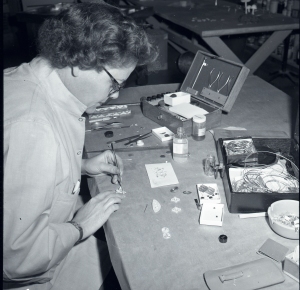
Schroeder preparing an exhibition, 1956. Courtesy Cranbrook Archives.

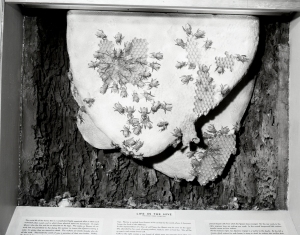
In addition to her photography work, Schroeder created dioramas and models for exhibits and taught lapidary classes. Her love of nature was evident in her creations for the Institute – from plant life to insects to bee hives. In 1954, she built an elaborate hive illustrating the lifecycle and production cycle of bees. Her work was admired and praised by her colleagues and visitors alike.

IS380

Bee Hive exhibition, 1954. Courtesy Cranbrook Archives.

After working at CIS for 12 years, Schroeder left her position in 1958 to pursue her hobby of silver jewelry making. She fell in love with Vermont, and moved there to devote herself to her craft. In a 1961, Times-Argus article she was quoted, “I wish I could tell you why I love Vermont, maybe it’s because it is the last stand of the rugged individualists – the one place where people still really make their lives for themselves.”

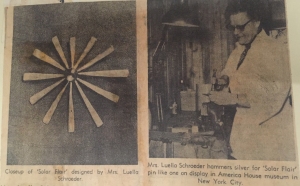
Schroeder’s hobby became her life-work. She credited the Institute in making her jewelry more creative (due to her ability to cut gems which she learned while at CIS). Her work was on display at several museums nationally and abroad, and was exhibited at the 1964 World’s Fair. In 1965 she created a pin she titled, “Forged Sunburst.” America House re-named the pin “Solar Flair” in an advertisement in New Yorker magazine and Schroeder was deluged with orders.

schroederpin

Burlington Free Press, 13 May 1965. Courtesy Cranbrook Archives.

Several pieces of Schroeder’s work were selected by the American House retail store in New York, which is sponsored by the American Craftsman Council. Her jewelry was also marketed by the Detroit Artist’s Market and the Boston Society of Arts and Crafts. In 1985, the Vermont Handcrafters bestowed a Lifetime Membership to Schroeder for her dedication to Vermont Crafts. Clearly her work and dedication made an impression on many – including the Cranbrook community.

Gina Tecos, Archivist


Photo Friday: Field Trip!

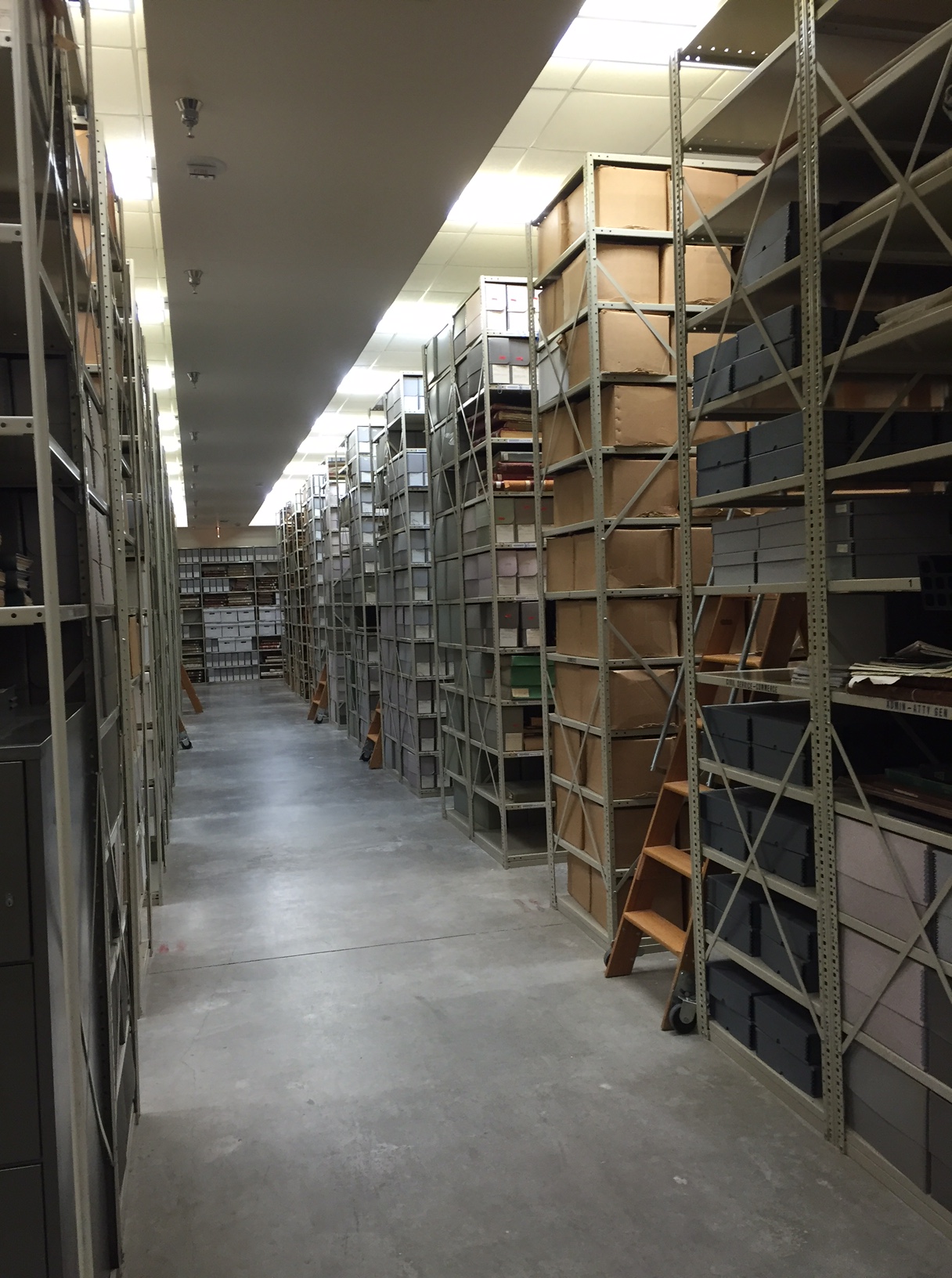
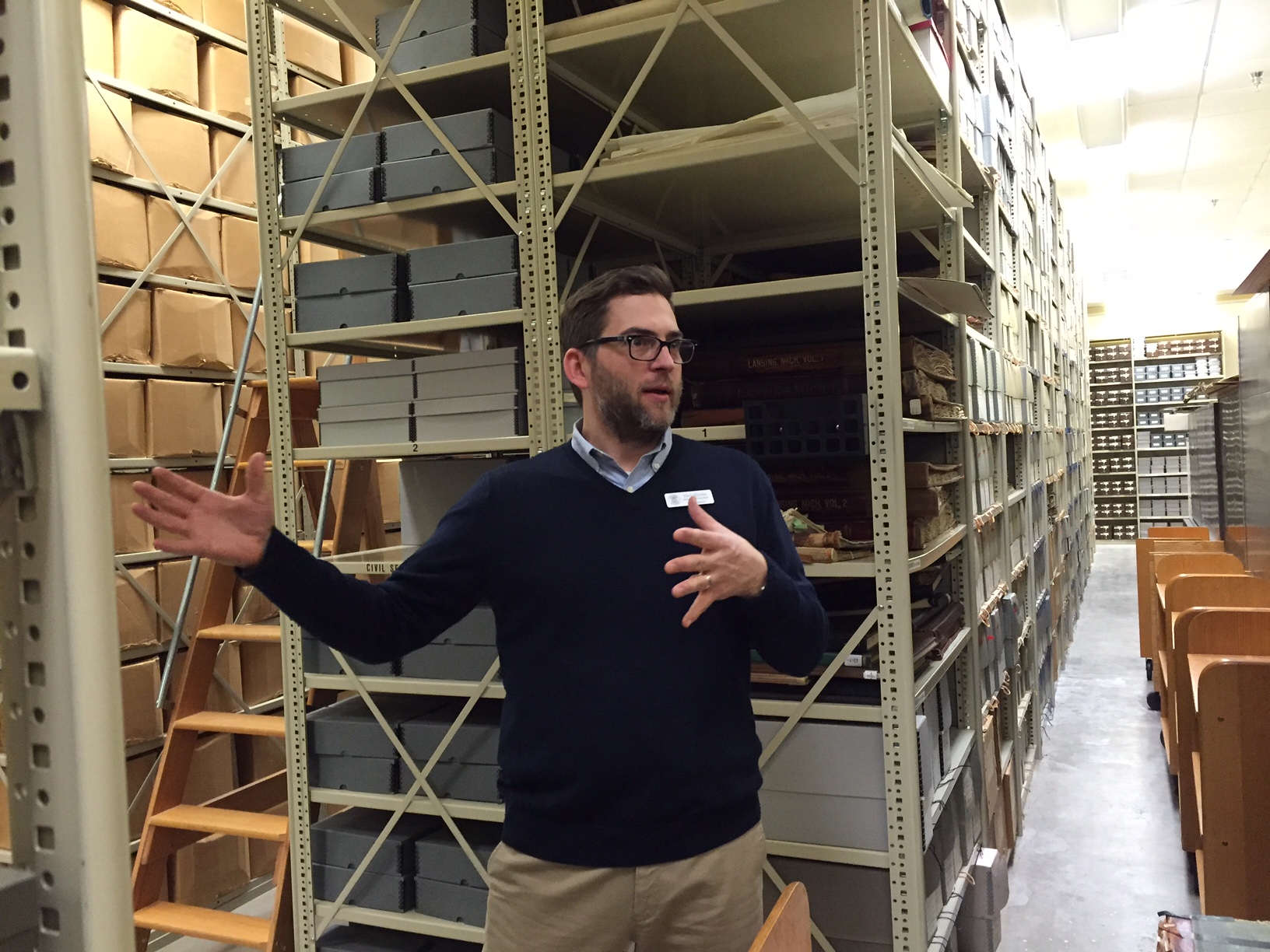
Today the staff from the Center for Collections and Research hopped into a fancy van and headed off to Lansing to take a behind-the-scenes tour of the Archives of Michigan. We really enjoyed our visit with State Archivist, Mark Harvey, and his staff. Here are few photos from our day away.

A view of just one of the storage areas at the Archives of Michigan.

A view of just one of the storage areas at the Archives of Michigan. Photographs courtesy of Leslie Edwards.

State Archivist, Mark Harvey, talks with our staff about processes at the Archives of Michigan.

State Archivist, Mark Harvey, talks with our staff about processes at the Archives of Michigan.

The Archives of Michigan is responsible for preserving the records of Michigan government and other public institutions. One example is the prison record of the notorious "Gypsy Bob."

The Archives of Michigan is responsible for preserving the records of Michigan government and other public institutions. One example is the prison record of the notorious “Gypsy Bob.”

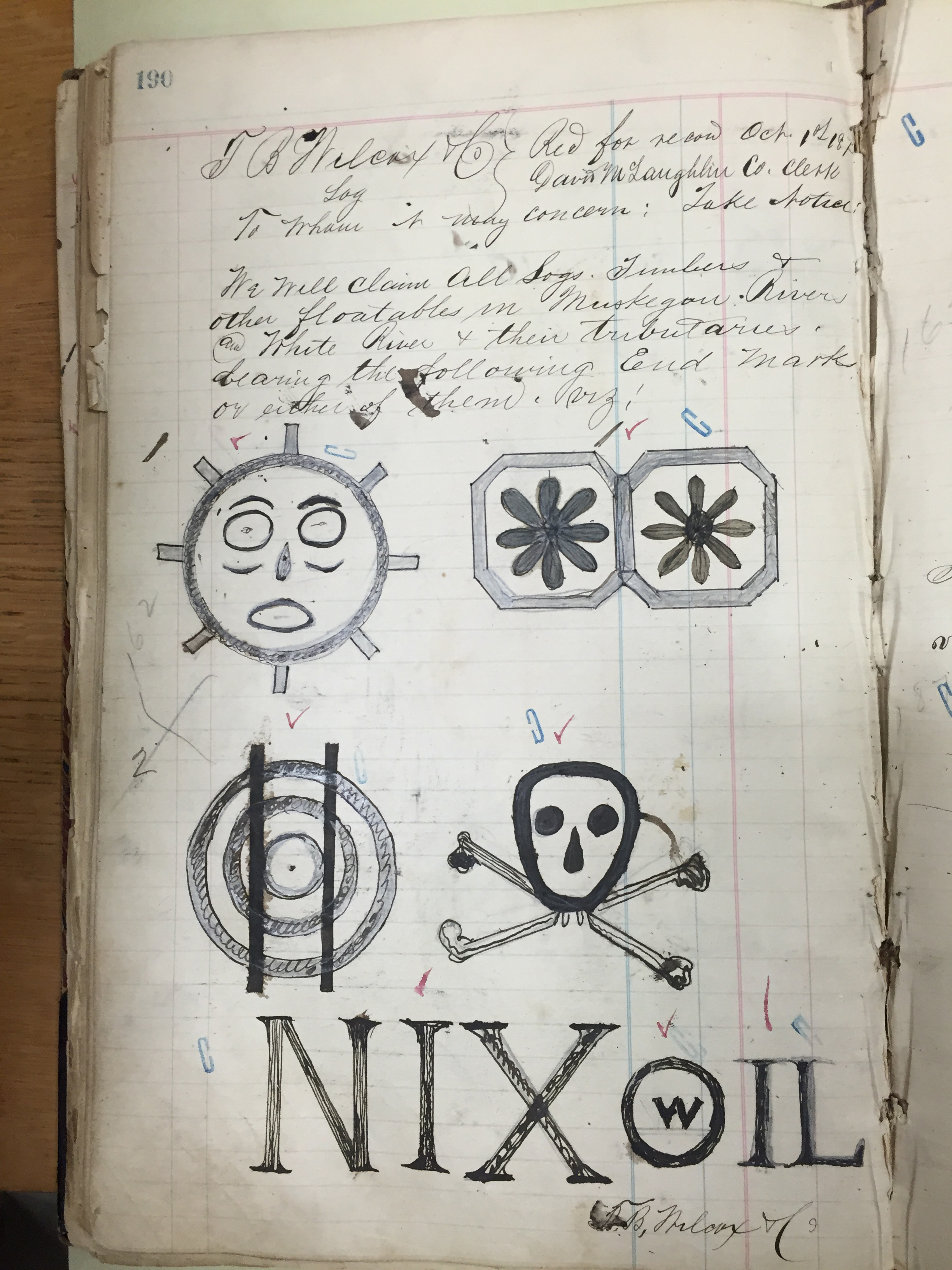
Captivating "log marks" from early logging days in Michigan.

Captivating “log marks” from early logging days in Michigan.

Gina Tecos, Archivist


Happy Holidays!

With the end of December quickly approaching, we’ve received several holiday image requests. While looking through different collections, I came across these amazing holiday cards that were made by Cranbrook Academy of Art students and sent to Margueritte Kimball (1906-1995).

Margueritte visited Cranbrook for the first time in 1941. She was introduced to Wallace Mitchell, head of the Painting Department, who examined a few of her drawings, and eventually accepted her as a student to the Academy.  She began attending classes in the summer of 1942 and, at the same time began her career as the Academy’s financial secretary — a position she held for twenty-six years.

Known by many in the Cranbrook community, Margueritte became close with students and faculty at the Academy and collected correspondence and student materials from art exhibitions throughout the years. Although she never graduated from the Academy, she did receive an honorary degree late in her life. I hope you will enjoy some of the holiday samples from her collection. Happy holidays!

Kathryn Keillor (Painting '46)

Kathryn Keillor (Painting ’46)

John Edgar Barthel (Architecture '50)

John Edgar Barthel (Architecture ’50)

Grace Smith (attended Summer courses, 1951)

Grace Smith (attended Summer courses, 1951)

Edward Novak (Design '58)

Edward Novak (Design ’58)


Gina Tecos, Archivist

Create a website or blog at WordPress.com