The Heartbeat of the Nation

In August 1989, Cranbrook became a National Historic Landmark. America’s highest designation for a place of outstanding historical significance, it was no small feat for Cranbrook to become Michigan’s twenty-second National Historic Landmark (there are only forty-two today). So, what exactly is a National Historic Landmark, and how did we become one?

National Register of Historic Places plaque on the Kingswood Campus. Photographs by Kevin Adkisson, Cranbrook Center for Collections and Research.

Statutory provision for historic preservation began in America in 1906 with the Antiquities Act, which was further developed by the Historic Sites Act of 1935. Administered by the Department of the Interior, this Act was enacted to document and protect sites of national significance. In 1960, the National Park Service began administering the survey data from the Historic Sites Act, and the National Historic Landmark designation was introduced.

The National Historic Preservation Act of 1966 expanded the 1935 Act to local and state sites. This created the National Register of Historic Places, which began to identify, evaluate, and protect America’s historic resources. Many thousands of buildings have since been added to the National Register. In June of 1972, Cranbrook’s application was prepared by an Assistant Historian at the Michigan Department of State in Lansing, and the nomination was based on Cranbrook’s significance as a complete district of educational and architectural structures.

National Register of Historic Places plaque at Brookside.

To be eligible for designation on the National Register (a step below the National Historic Landmark status), the nominated site must have in its architecture, archeology, engineering, or culture integrity of location, design, setting, materials, workmanship, feeling, and association.
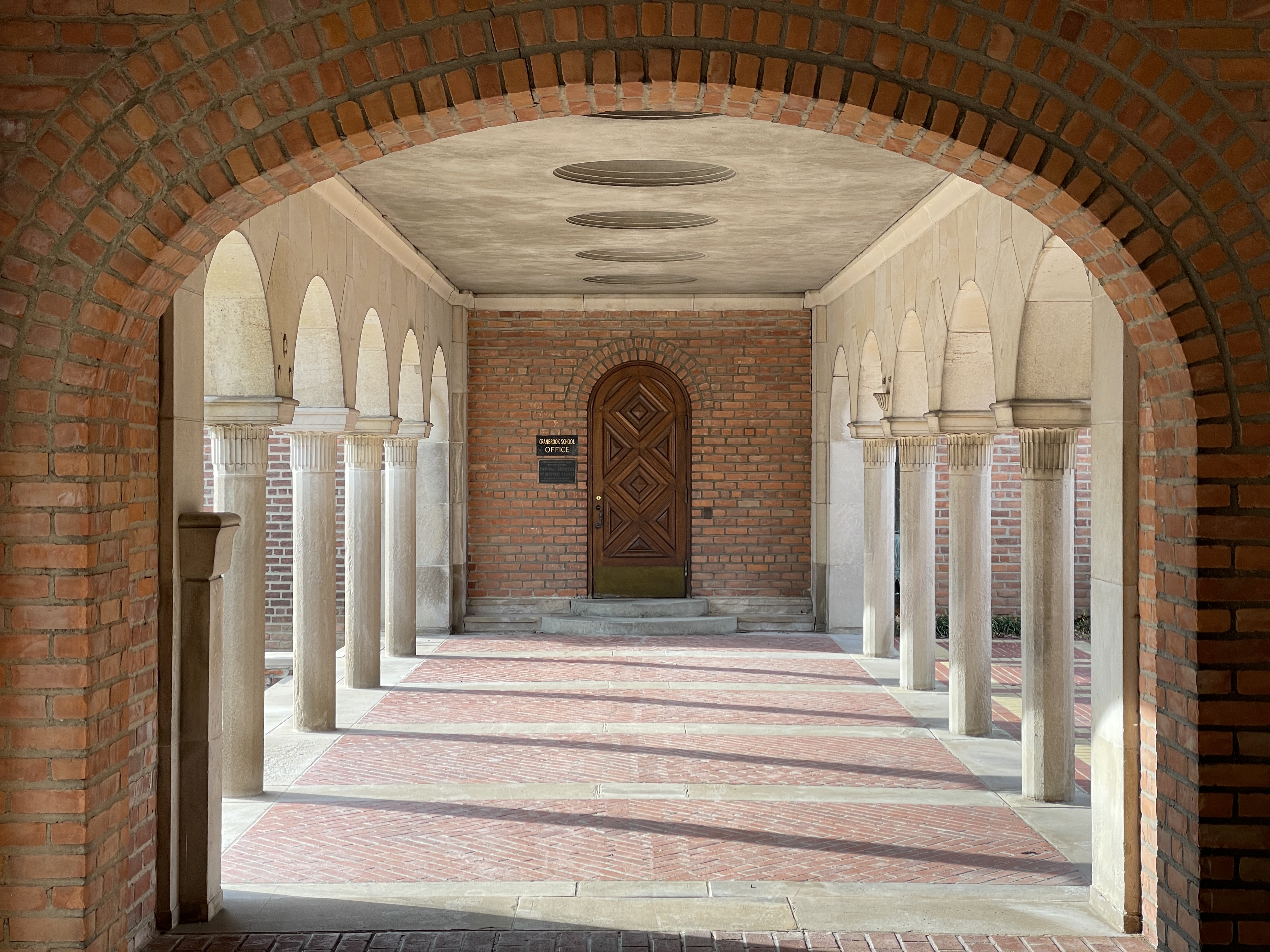
National Register of Historic Places plaque at Cranbrook School.

In addition, sites on the National Register must meet one of four criteria: be associated with events in the lives of significant persons; embody distinctive characteristics of a type, period, or method of construction; represent work of a master and high artistic values; or have or be likely to yield information important to prehistory or history. Once these criteria are evaluated and met, the site may be listed.

National Register of Historic Places plaque at Cranbrook Institute of Science.

Cranbrook was added to the National Register in March 1973, and it was at this point seven National Historic Landmark signs were ordered to be placed at each of the original Cranbrook Institutions and on Cranbrook House. (Christ Church Cranbrook was included in the designation, even though it would formally split off as a separate entity later in 1973 with the formation of Cranbrook Educational Community.) In writing to inform us of the designation, Samuel Milstein at the Department of Natural Resources eloquently wrote that:

“The State of Michigan is very proud of the fact that the property is qualified for this designation. The National Register records the story of the Nation, and is a list of distinction identifying those properties by which present and future generations can sense the heartbeat of the United States.”

Letter from Samuel A. Milstein to Cranbrook Institutions, March 30, 1973. National Register for Historic Places Records.
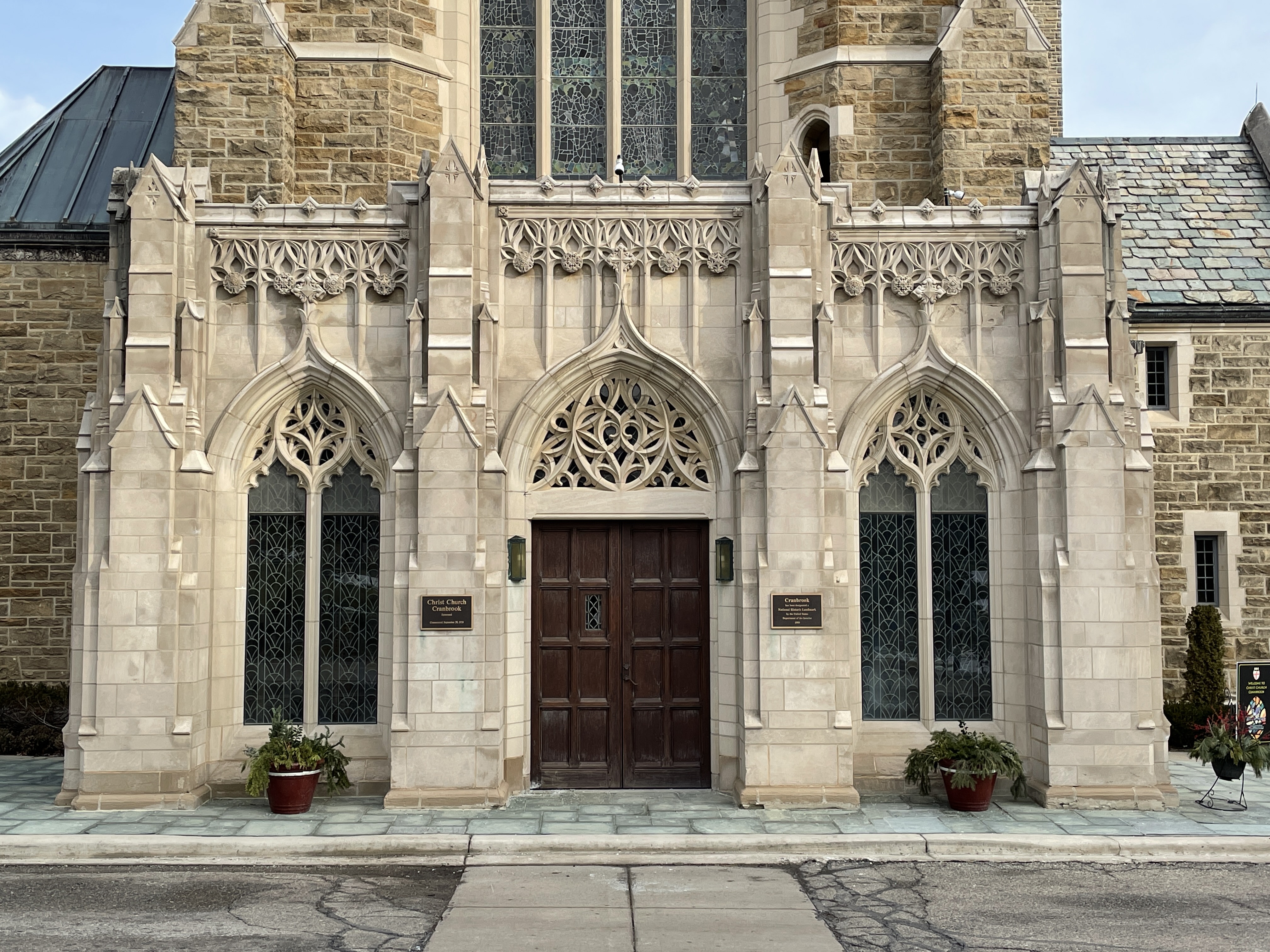
Non-official National Historic Landmark plaque at Christ Church Cranbrook, on right. The official plaque was changed at some point.

This language echoes that of George Booth in speaking to Cranbrook School in 1928, in which he emphasizes the importance of finding the treasure at your feet, the building up of an ethos of service from the local to the national to the global:

“If we feel our first loyalty to our State and are determined in every way we can to enrich it; if we never fail to see that we must give; if we are resolved to strive only for that which is worth while, then will our State have a place in the Nation, of which we will all be proud. The stronger and more glorious each of the States may be, the stronger and more glorious the Nation; and hence, the better and finer our opportunity for service to the world.”

Address by George Booth given on “Founders’ Day” at Cranbrook School for Boys, October 26, 1928. Cranbrook Archives.

But of course, our story doesn’t end with the National Register. In June 1987, the Chief Historian of the National Park Service (NPS) wrote to Cranbrook’s president, Dr. Lillian Bauder, to inform her that they were studying the property to determine its potential as a National Historic Landmark. Only 3% of sites on the National Register of Historic Places receive the higher honor of becoming National Historic Landmarks.

National Register of Historic Places plaque at Cranbrook Academy of Art.

The designation process follows three steps: study, including a visit to the property; review by the NPS Advisory Board; and a decision of designation by the Secretary of the Interior. The study was completed in February 1989 and the Advisory Board made its recommendation to Secretary Manuel Lujan in May. Cranbrook was designated a National Historic Landmark in August 1989.

The Cranbrook House sign was swapped from a National Register of Historic Places sign to a National Historic Landmark sign, encompassing all of the Cranbrook district.
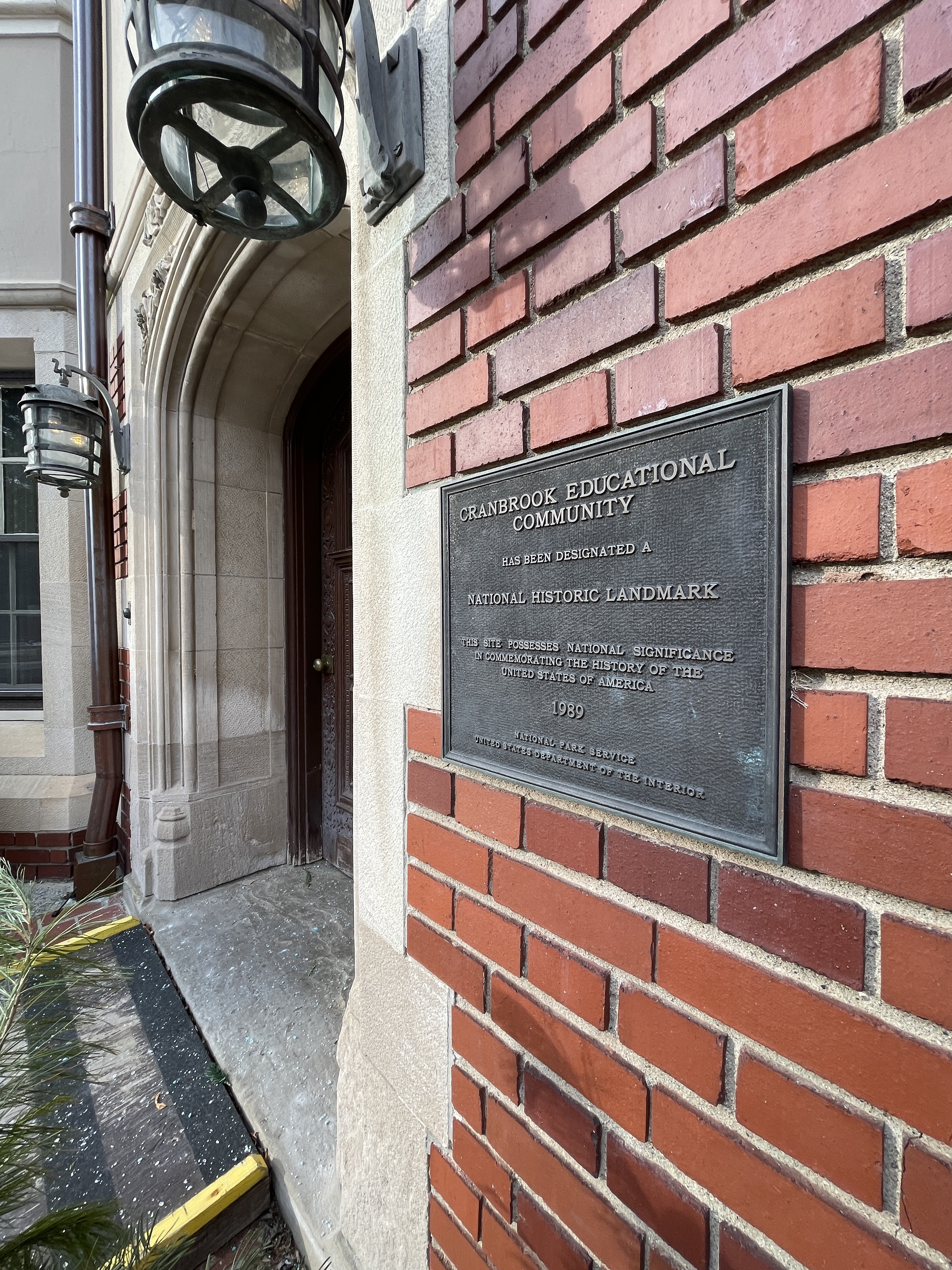
National Historic Landmark plaque for the entire Cranbrook Educational Community next to the front door of Cranbrook House.

The work of the Center for Collections and Research is embedded in the obligations of historic preservation in caring for and maintaining the community’s history, but also in articulating its meaning and value. Our mission nicely parallels the goals of the National Historic Landmark program. Even without such recognition, all who visit Cranbrook know it is a special place—but sometimes it is nice to have a plaque say so, too.

Laura MacNewman, Associate Archivist, Cranbrook Center for Collections and Research

Collection Highlight: Robert Hall Merrill Papers

With the new year approaching and the impending conjunction of Saturn and Jupiter, it seemed timely to take a look at the collection of Robert Hall Merrill Papers, which were opened to researchers in 2017.

Merrill was an engineer who developed an interest in archaeology, becoming an authority on the Maya calendar, particularly focusing on time measurement. Merrill was associated with the Institute of Science in the 1940s and 1950s, but the Merrill Papers in Cranbrook Archives document over fifty years of his research, graphs, findings, and conclusions.

Merrill’s graph of Venus phases. Courtesy of Cranbrook Archives.

The Maya were an agricultural civilization and used observations of the sun, moon, and Venus to determine ideal dates for planting and harvest. The calendar, which is comparable in its exactitude to the Western system of time measurement, is based on the movement of the sun. Archaeologists access and interpret this knowledge through writing, represented by characters or pictures, and astronomical markers which have been uncovered by geologists.

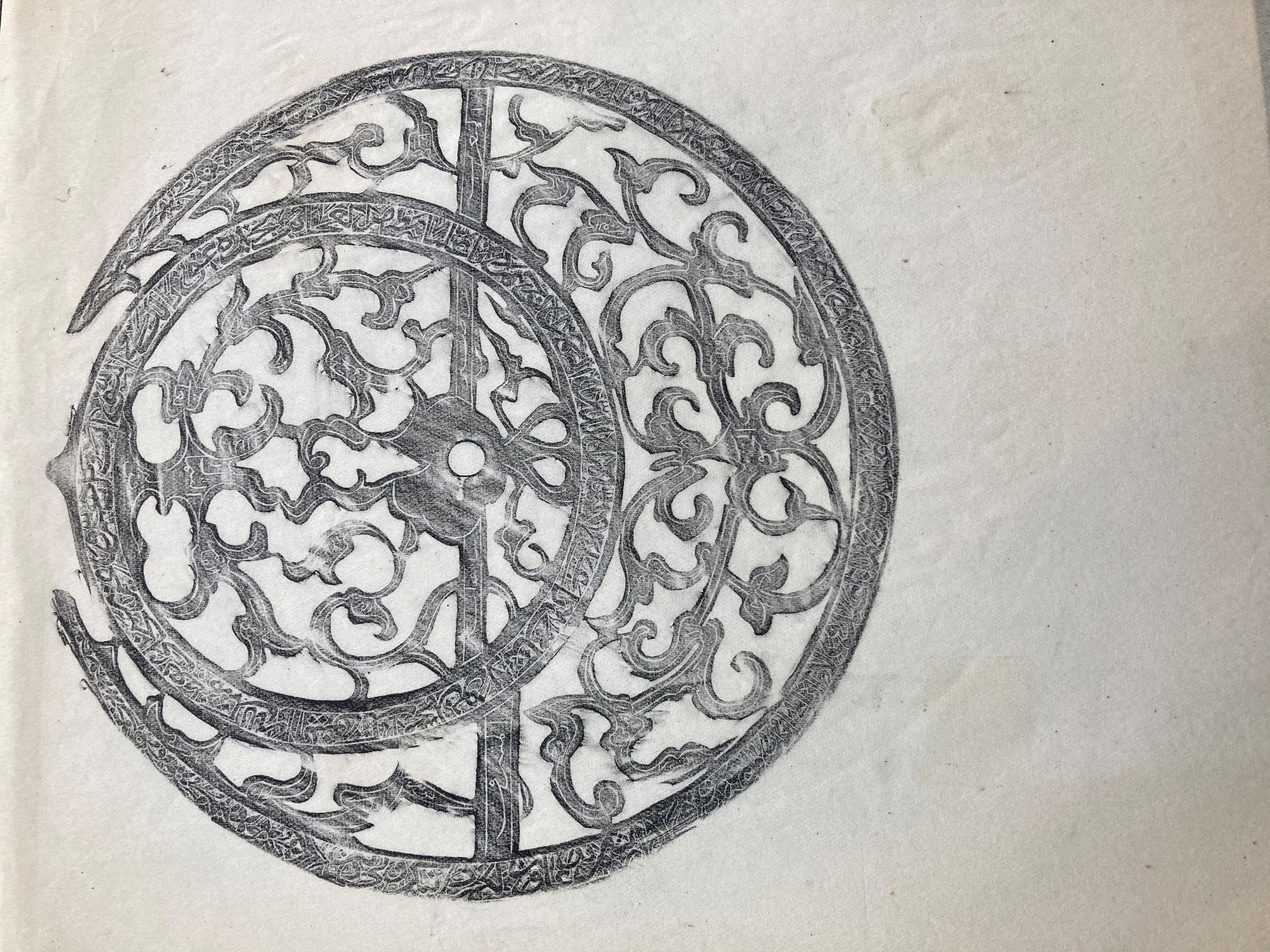
Astrolabe Rubbing. Courtesy of Cranbrook Archives.

Merrill graphed the phases of the sun, moon, and the planets to decipher the calendar. By applying engineering methods to archaeological studies, Merrill developed a device for photo-surveying in 1941. The device enabled vertical photographs of large areas of artifacts, which facilitated documentation of the excavation process which had previously been recorded by sketching.

Maya Sun Calendar Cycles Chart. Courtesy of Cranbrook Archives.

The correspondence and publications in the collection document his work with numerous scholars around the world, including the Maya archaeologist J. Eric S. Thompson, who was a visiting scholar to Cranbrook Institute of Science between January and April 1967.

Continue reading

One Competition, Many Designs: Ralph Rapson and the Jefferson National Expansion Memorial

Of the 5,000 plus architectural drawings in Cranbrook Archives, one of my favorite series is the work of Ralph Rapson. His drawings convey a seemingly endless stream of unique inspiration, and his letters to his friends and colleagues are always wonderfully lively and convivial. Rapson’s work covers diverse projects including residences, embassies, businesses, and competitions.

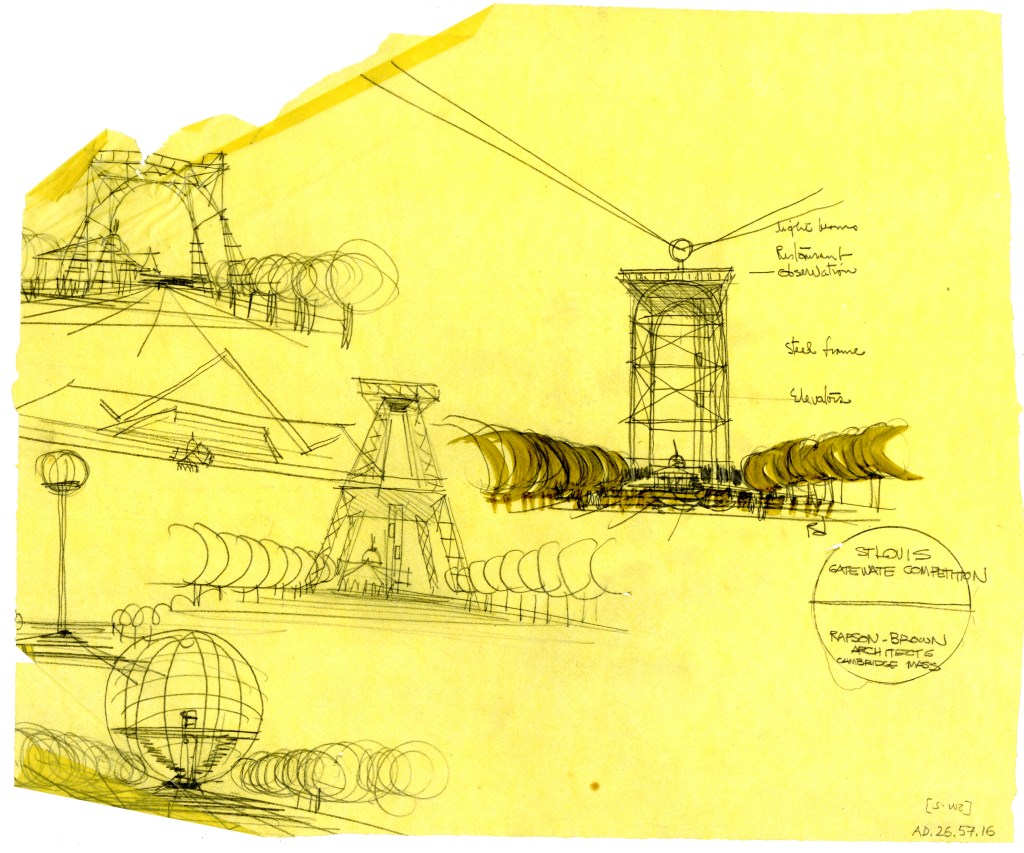
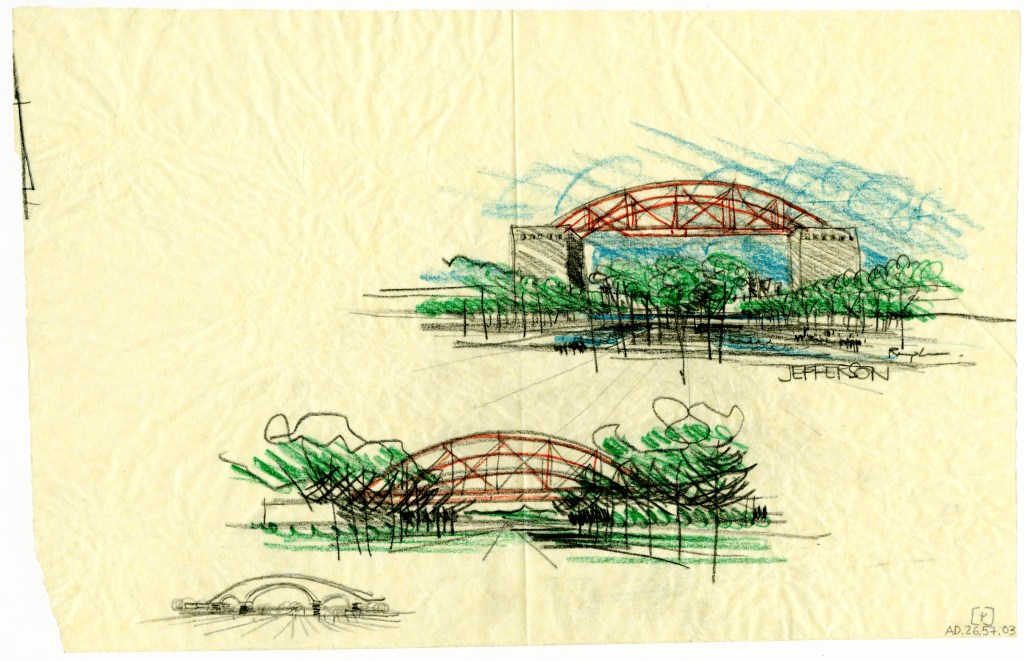
Today, I want to share some examples from just one architectural competition to showcase this creativity: Rapson’s studies for his entry into the Jefferson National Expansion Memorial competition.

Ralph Rapson’s preliminary study for a submission to the Jefferson National Expansion Memorial competition in 1948. This is very similar to his final submission.

A decade before the Memorial competition, Rapson had been invited to study architecture and urban planning at Cranbrook Academy of Art by Eliel Saarinen. Saarinen had been much impressed by Rapson’s submission to the George G. Booth Traveling Fellowship at the University of Michigan in 1938. After studying at the Academy between 1938 and 1940, Rapson collaborated on various projects with Saarinen and his associates before moving to teaching positions in Chicago during the early 1940s and at MIT in 1946.

Ralph Rapson, January 1943. Cranbrook Archives

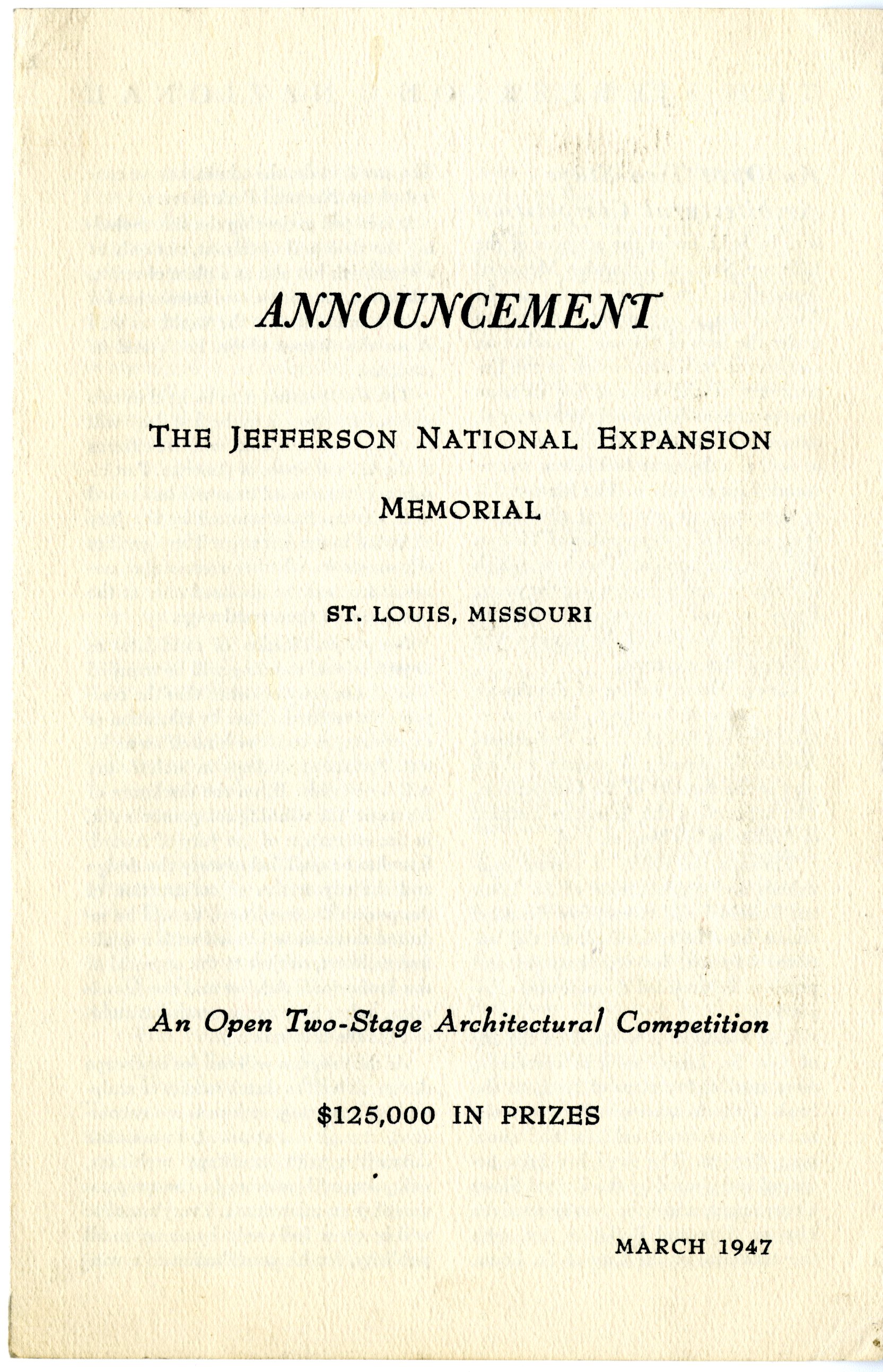
In March 1947, the Jefferson National Expansion Memorial Association announced an ‘Open Two-Stage Competition’ to design and execute a memorial located in St. Louis, Missouri. The first stage of the competition was open to all architects who were citizens of the United States and the second stage was limited to five competitors as selected by the jury in the first stage.

The competition brief was distributed to some 1,100 architects and students around the country. 172 entries were received by the September 1, 1947 deadline. Cranbrook Archives.

In the architectural drawing set for Rapson’s submission, there are nineteen conceptual studies. These have recently been digitized and added to the Ralph Rapson Projects in our Digital Collections online. Below is a selection of his studies that show the diversity and breadth of Rapson’s creative vision:

It is interesting to see Rapson work out his ideas in ink and colored pencil about what shape, materials, and structure might best serve as a memorial to Jefferson’s Louisiana Purchase and America’s westward expansion.

In addition to Rapson, Cranbrook alumni and faculty including Charles and Ray Eames, Harry Weese, Gyo Obata, and both Eliel and Eero Saarinen submitted designs. Of course, it was Eero’s monumental stainless steel arch that won the competition and remains an iconic landmark to this day.

There is much to see and learn from Rapson’s drawings for just this one project. As we hold sets of drawings for another 87 of his projects, stay tuned to the Kitchen Sink—there is so much more to see and say about Ralph Rapson.

Laura MacNewmanAssociate Archivist, Cranbrook Center for Collections and Research
Eds. Note: On Tuesday, October 27, 2020, Associate Curator Kevin Adkisson will deliver our next Uncovering Cranbrook virtual lecture. This month’s lecture, Eero Saarinen and Yale University: Education and Architecture, will examine the younger Saarinen’s time at Yale as both a student of architecture and designer of three important campus buildings. Tickets are available now for the 10:00am and 7:00pm EDT lectures.

All’s well that ends well

This is a story about a wonderful discovery and a trial of patience. A few years ago, I processed the F. Shirley Prouty Collection on Johannes Kirchmayer, which documents the life and work of her great uncle and contains many years of meticulous research. It was a wonderful collection to work with, and a trove of information on architects and craftsmen of the American gothic revival.

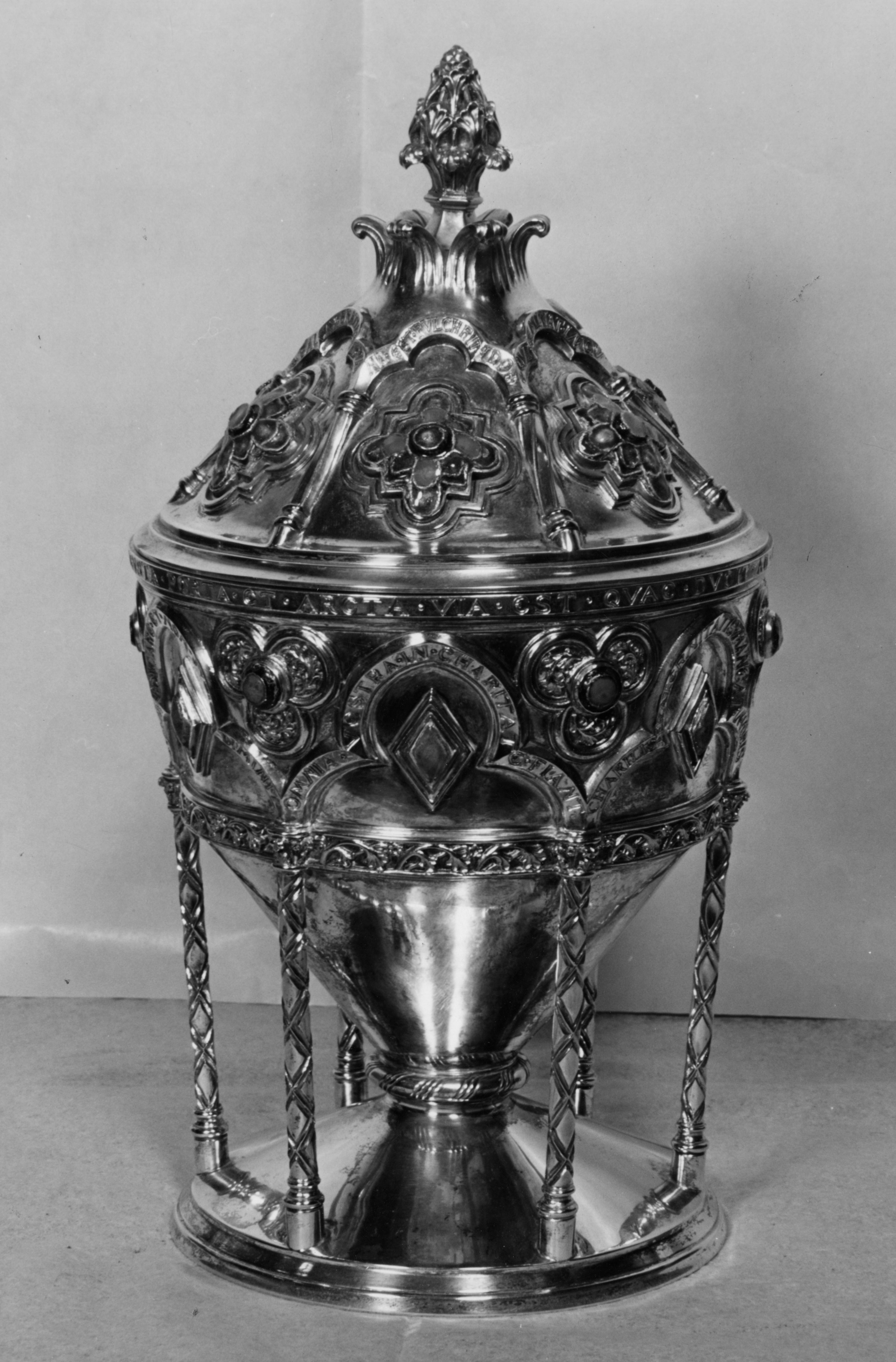
Two of the most outstanding of these are architect Ralph Adams Cram and woodcarver Johannes Kirchmayer, who worked together on many projects. This week I made a wonderful new discovery of another product of their hearts, minds, and hands: a silver and gilt portable font initially commissioned as a gift for the Detroit Museum of Art (now the Detroit Institute of Arts) by George Booth. Cram designed it and Kirchmayer created the sculpture models and chasings for it; then, the piece was executed by silversmith James T. Woolley and decorated by enamellist Elizabeth Copeland.

Silver gilt font completed in 1920 for Detroit Museum of Art. Ralph Adams Cram, Johannes Kirchmayer, James T. Woolley, and Elizabeth Copeland. Cranbrook Archives.

In February 1918, Cram designed the font, which George Booth hoped to have ready for display at the General Convention of the Episcopal Church, to be held in Detroit for the first time in October of 1919.

The making of the font did not follow the anticipated timeline, but rather than a story of delay and disappointment, it becomes a story of patience and its reward.

During the spring, Booth visited Boston and left the Cram blueprint with Woolley. On May 1st, he enquired to know Woolley’s interest in executing the design and an estimate of cost, to which Woolley replied positively, quoting $450 excluding the enamel parts. Giving the commission to Woolley, Booth advised him to confer with Cram or his assistant, Mr. Cleveland, and that Copeland will complete the enameling work.

Continue reading

Collection in Focus: Ellen Warren Scripps Booth Papers

One of the things I love about my work is that I never know what I will discover next. I go in search of one thing and find much more and, sometimes, the unexpected. This happened recently when I ventured into the Ellen Warren Scripps Booth Papers.

Ellen’s papers primarily record her personal life from the 1870s through 1948, with a preponderance on the years 1880-1910. They include drawings, maps, an autograph book from her school days, leaflets from the Epiphany Reformed Church and its reconstitution as Trinity Episcopal Church, letters from her mother, Harriet J. Scripps (letters written 1901-1927), and photographs.

Drawing by Ellen Warren Scripps, age 10, 1873. Cranbrook Archives.

But, the bulk of the collection are her diaries which cover 1880-1944, though the coverage is spotty after 1910. The research value of a diary is variable, depending much upon the focus and meticulousness of the author, and its intersection with the researcher’s interest.  The dates in Ellen’s diaries are unquestionably reliable, as other documents in the archives verify their accuracy. Frequently recorded topics include the weather, who preached at church/other churches attended, what she was reading, her music and singing lessons, unwell family members, and who came for tea or dinner.

Her diaries not only tell her story, but also describe the life of the Scripps family and the appearance of the Booth family, particularly Alice and George, in the early 1880s. We can also see glimpses of Detroit history, such as Governor Pingree’s funeral in July 1901, and her visit to Barnum Wire Works with George in January 1887. On February 15, 1882, Ellen writes:

“Walked to and from school today. Went to social at Mr. Woolfenden’s with Theodore. Had a splendid time. Theodore asked me to go to hear Oscar Wilde Friday evening but I concluded not to go. I began reading Old Curiosity Shop this afternoon.”

Oscar Wilde! She notes in her Friday entry, that Theodore went to hear Wilde with Mr. Woolfenden instead. There are many mentions of “Mr. Woolfenden,” who otherwise has only been found mentioned in George Booth’s Memories (pp.53-55).

Ellen Warren Scripps’ Diary, 1886. Cranbrook Archives.

Frederick W. Woolfenden is one of two people that Henry Wood Booth met during his first visit to Detroit in 1880, the other being James E. Scripps. This story is quite widely known and the information about it, published in Arthur Pound’s book about George Booth, The Only Thing Worth Finding (pp.63-68), comes from George’s writings. Woolfenden had taken interest in Henry Wood Booth’s Ka-o-ka idea, and, after visiting him in St. Thomas, Ontario, convinced him to move to Detroit in 1881. Woolfenden was Assistant Postmaster of Detroit and a co-founder of the Dime Savings Bank, but he was also a Pastor at the Epiphany Church where Henry Wood Booth had first met him.

Ellen’s diaries record his deep involvement with the family as a friend and pastor who conducted the christenings, confirmations, funerals, and weddings of both families. It was Woolfenden who married George and Ellen in 1887.

Ellen’s diaries provide a complete record of her life until 1910 and so the earliest memories of Cranbrook are recorded. The story that we know and love so well, of George and Ellen purchasing the old farm from Samuel Alexander is captured in her hand and it was lovely to read as she describes, albeit briefly, the snow drifts as they visit the farm:

Ellen Warren Scripps Booth’s Diary, 1904. Cranbrook Archives.

A few days later, on January 18, 1904, she writes, “Went down town to sign the mortgage for the farm. It is ours now, and we are all so glad.” All these years later, I am so glad too.

Laura MacNewman, Associate Archivist, Cranbrook Center for Collections and Research

Ted Luderowski: Head of Design, 1949-1957

When I was asked, last summer, to make an impromptu display about Theodore (Ted) Luderowski, I found an inspiring story that begins in Hell’s Kitchen in New York City and continues with a lasting contribution to the landscape at Cranbrook and its educational, artistic, and cultural ethos.

Luderowski first arrived at Cranbrook as a student in 1939 after being awarded a competitive scholarship to study architecture under Eliel Saarinen while also “delving into the problems of metalwork and ceramics.” Born and raised in New York City, Luderowski left high school in 1927 at the age of 17, later graduating in 1932 after taking evening classes. He continued to take evening classes at Columbia University, where he studied design, shades and shadows, and perspective. He also studied for three years at the Mechanics Institute (General Society of Mechanics and Tradesmen of the City of New York), which was founded in 1785, where he was awarded the John E. Hoe Prize.

His initial instruction in architecture was through on-the-job training at firms, including the office of James Gamble Rogers. Luderowski was involved in designing schools, office buildings, residences, and institutional buildings, and in the planning of the 1939-1940 New York World’s Fair.

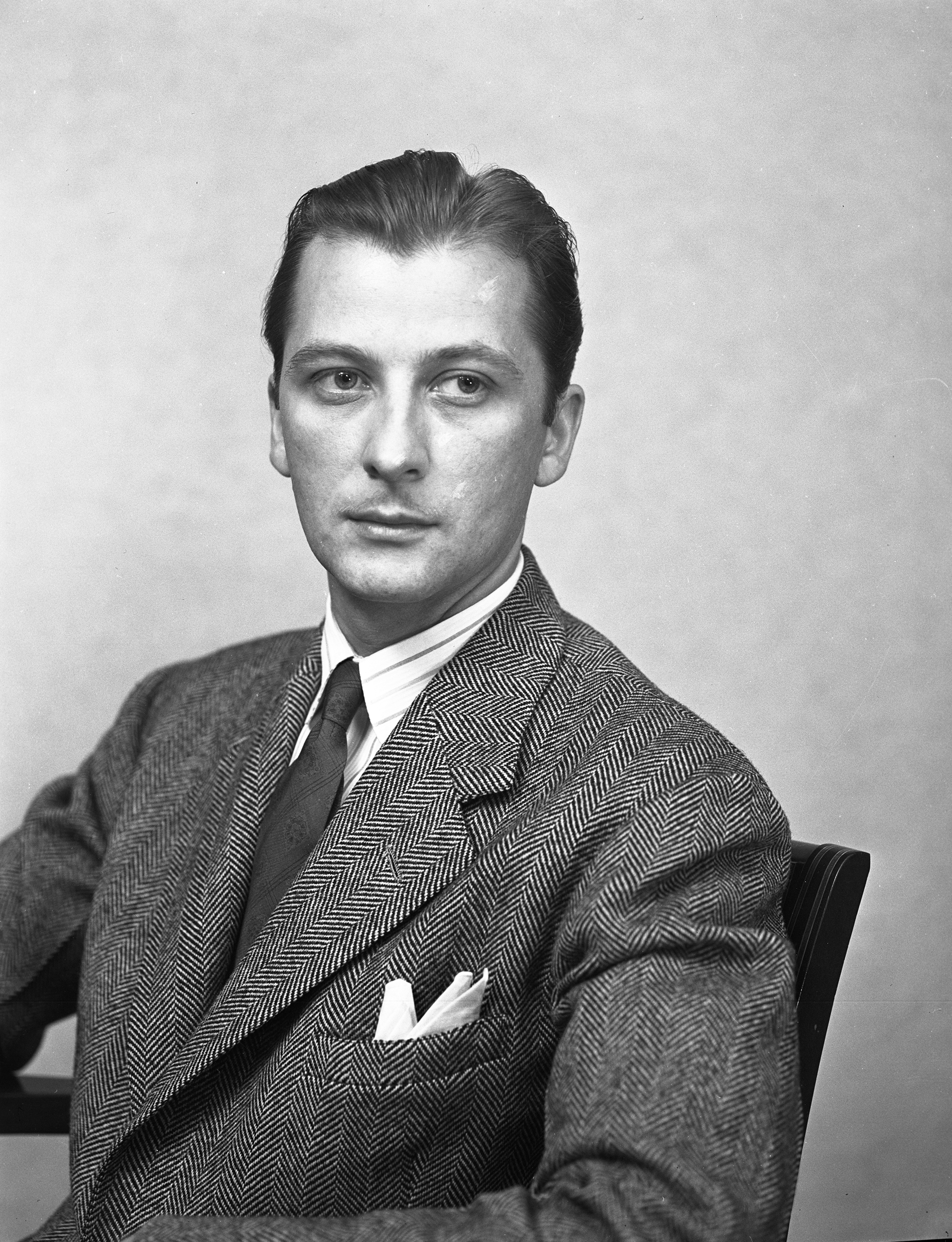
Theodore Luderowski, November 1950. Cranbrook Archives.

Arriving in 1939, Luderowski entered many external design competitions during his studentship at the Academy. The documents around these competitions are always a rich resource for researching and understanding the relationships between student artists, their peers, and mentors. The documents held at Cranbrook Archives that outline the problem of the competition, who entered and with whom, the photographs of the submissions and participants, as well as personal letters, reveal the camaraderie between the participants—whether they were competing against each other or working on a submission together.

The competitions Luderowski participated in include the Radio Cabinet Competition (Fall 1939) with Edward Elliott and Vito Girone, in which Florence Schust and Christopher Chamales won 2nd prize; the Insulux Glass Brick Competition no. 4: A Newspaper Plant (with Elliott) (March 1939); and Insulux no. 3: A Dairy (August 1939), in which Ralph Rapson won 5th prize.

Aerial view of model for “A People’s Forum in Washington, D.C dedicated to the Bill of Rights.” February 1940. The team included Edward Elliott (architect), Theodore Luderowski (Landscape Architect), Tex Schiwetz (sculptor), and Margaret Garceau (Painter). This team won a second prize of $100. Richard G. Askew, photographer. Copyright Cranbrook Archives.

More notably, Luderowski, with Edward Elliott, Ted Schiwetz, and Margaret Garceau, won Second Prize in the 14th Annual Rome Collaborative Competition of Spring 1940 (Jan 6 to Feb 10). The competition for students of architecture, landscape architecture, painting, and sculpture presented the problem of ‘A People’s Forum dedicated to the Bill of Rights’. It was hosted by the Association of the Alumni of the American Academy in Rome and the President was Paul Manship, whose work can be seen in the Quad at Cranbrook School, and the Secondary Vice President was Francis Scott Bradford, whose work can be seen at Christ Church Cranbrook.

After his studies, Luderowski worked as designer in the architectural offices of Eliel and Eero Saarinen before a period of service in the U.S. Navy as a Chief Petty Officer stationed in New York. He was stationed there with his wife, Ulla Ugglas, who had entered the Academy as a weaving student in 1940. Ulla, the daughter of Baron Gustaf Ugglas of Sweden, studied with Marianne Strengell and won first prize in rug design at the Fairchild Publications Weaving Competition in January 1941.

The newlyweds traveled in Scandinavia, Belgium, France, and England, where Luderowski studied architecture and design production methods, before returning to Cranbrook to work in the Saarinen offices again.

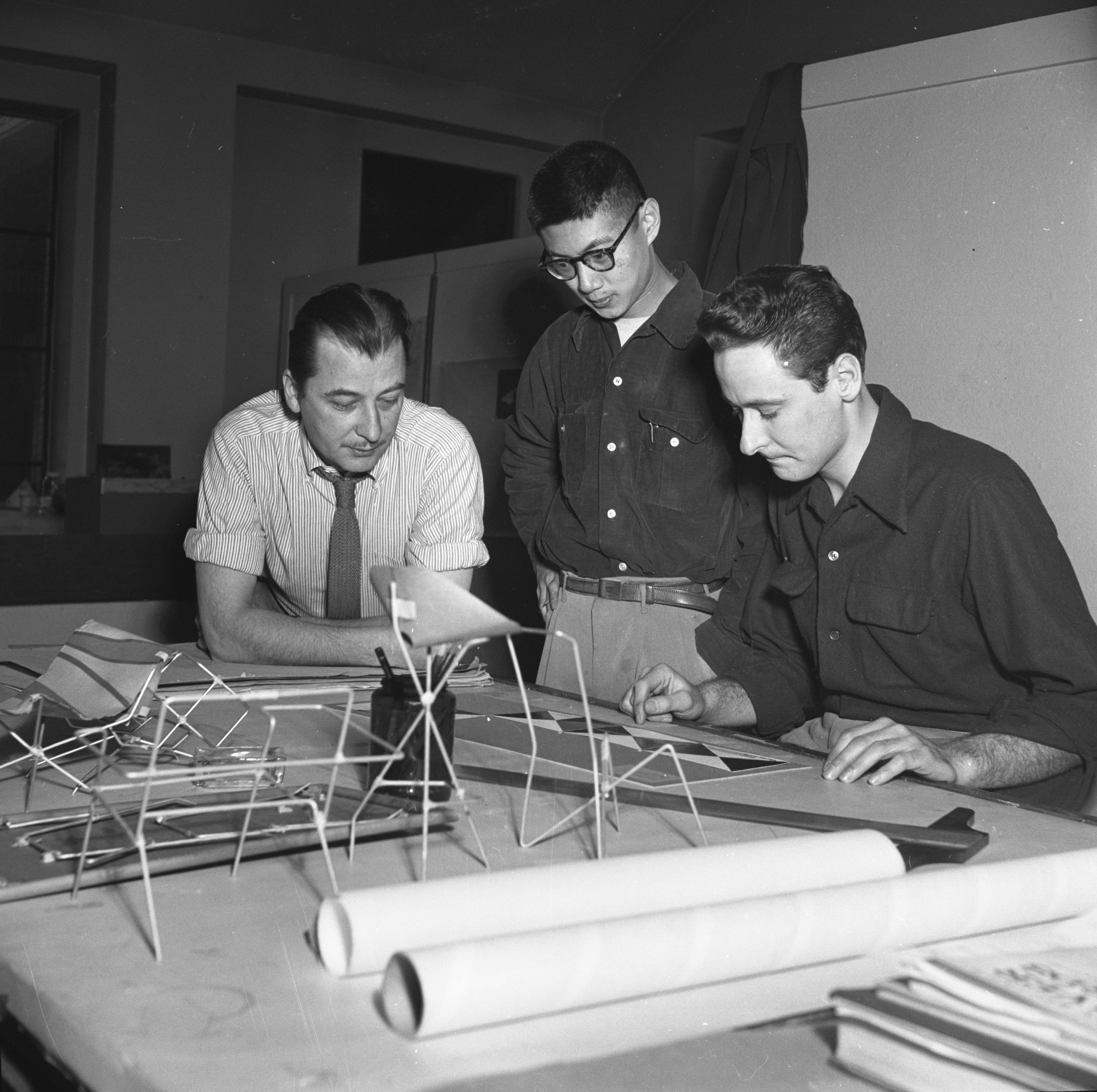
Ted Luderowski, left, with students in the design studio, February 1952. Cranbrook Archives.

In 1949, he became Head of the Department of Design at the Academy, which had been established in 1936 with instructor William W. Comstock under the supervision of Saarinen. While the initial emphasis was placed on design of interiors and their furnishings, after 1939, when Charles Eames was instructor, the courses became focused on “preliminary training in design for all branches of work.”

As an architect and furniture designer, a painter, and an exhibition designer, Luderowski brought a breadth of interests to the department which allowed the cultivation of a diversity of design problems, including his supervision of fifteen students in the redesign and mural decoration of the Academy recreation room.

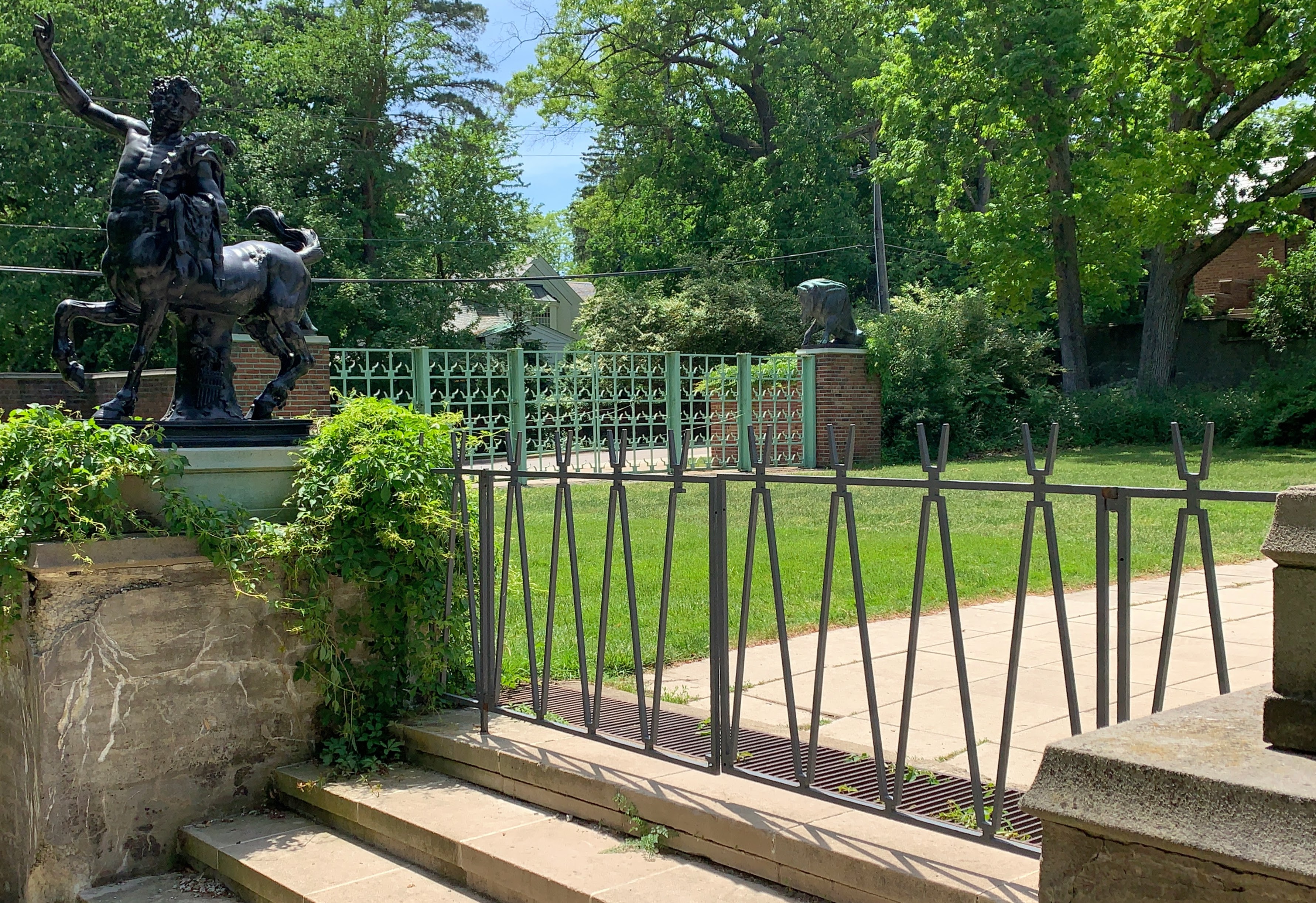
Gate designed by Ted Luderowski, 1952, with Eliel Saarinen’s Nichols Gate, 1941, behind. Kevin Adkisson, Courtesy Cranbrook Center for Collections and Research.

In 1952, he was asked to design and create wrought iron gates to be placed on the steps leading to Shoe Falls, which are at the far end of Triton Pools opposite the Arts and Crafts Courtyard. In a letter dated January 3, 1952, Henry Scripps Booth suggests that the design should, “be thoroughly practical and discourage youngsters from climbing over the gates, we should also make use of the opportunity to embellish the grounds with an interesting piece of iron work.” Luderowski’s design for the gates is held in our architectural drawing collection and the gates remain in situ on campus providing a wonderful continuance of the founding principle of beautiful and useful.

While within Cranbrook Archives we do not have a discrete collection for Luderowski, who passed away in 1967, he is heavily documented through photographic materials and with supporting information in the Cranbrook Academy of Art Records and Publications. It turned out the impromptu display I was asked to make about Theodore Luderowki last summer was for his son, who lived along Academy Way with his parents as a child and had returned, decades later, as part of a group tour.

—Laura MacNewman, Associate Archivist, Cranbrook Center for Collections and Research

[Editor’s Note: This post has been edited to add information on Luderowski’s study at the Mechanics Institute.]

Cranbrook, Kent: Then and Now

When George and Ellen Booth moved from Detroit to Bloomfield in 1904, they named their estate ‘Cranbrook’ after George’s ancestral home of Cranbrook, Kent, England. As the institutions and landscape developed, many of them were also named after places in and around the ancestral Cranbrook. George’s father, Henry Wood Booth, was born there in 1837, where his father, Henry Gough Booth, and grandfather, George Booth, were coppersmiths.

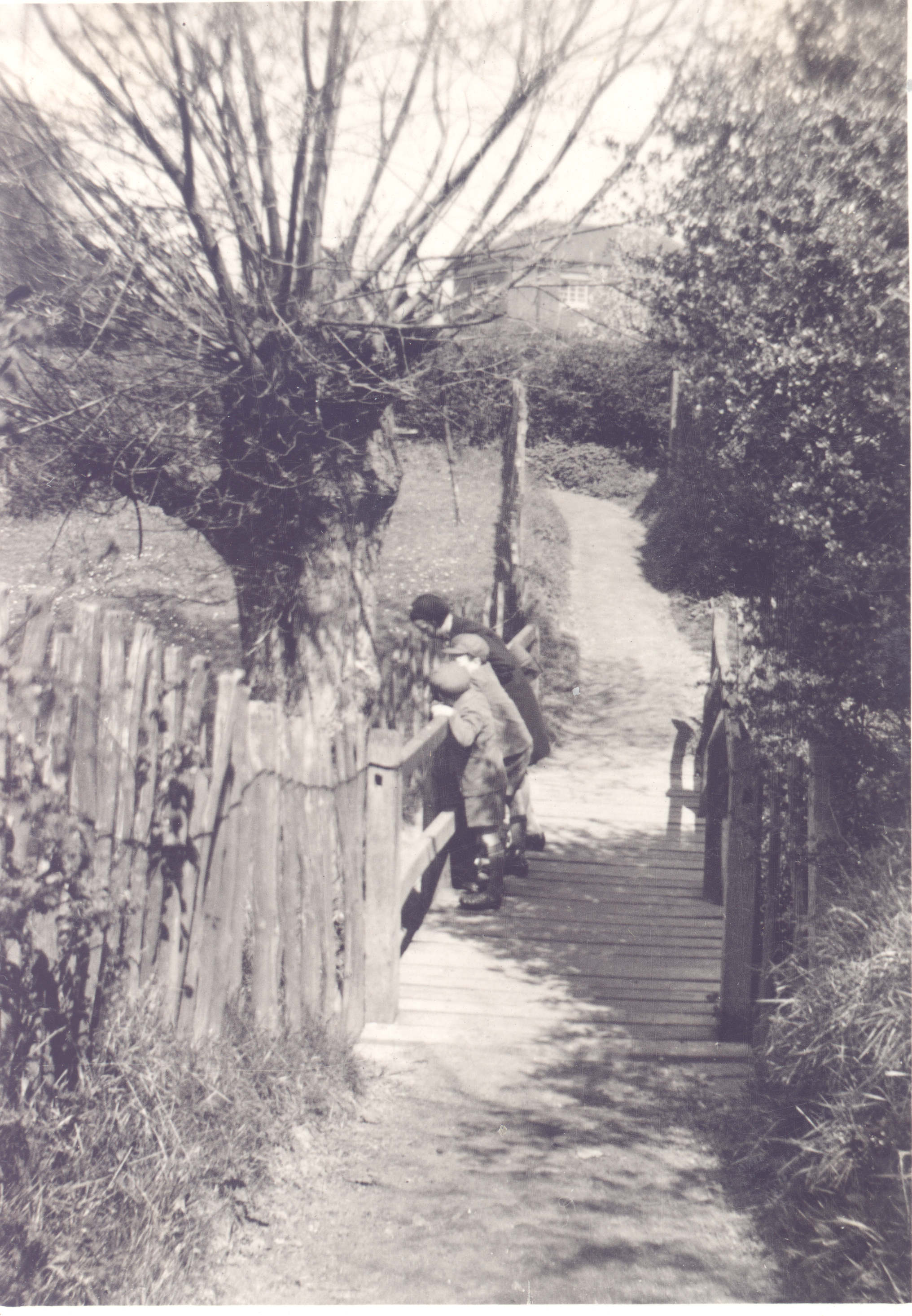
In 1901, Henry Wood Booth along with George and Ellen took a trip to England, and the photographs from this trip are held in the Henry Wood Booth Papers in Cranbrook Archives. I invite you on a virtual “walking” tour of Cranbrook, Kent, using these historical images alongside the same places in the present day.

Cranbrook is a small town situated on the River Crane with an industrial history in iron-making, that goes back to Roman times, and cloth-making, stimulated by the settlement of Flemish weavers in 1331. Cranbrook belongs to a group of towns known as the Weald, which comes from a West Saxon word for “forest”. During the middle ages, Kent was divided into seven “lathes” (an administrative unit peculiar to Kent), and Cranbrook was one of seven “hundreds” (the smallest administrative unit about the same size as a parish) belonging to the lathe of Scray.

The map below pinpoints the places that we will visit so that you can follow the route as we tour the town.

Map_of_walk

Walking tour directions. Google, 2020.

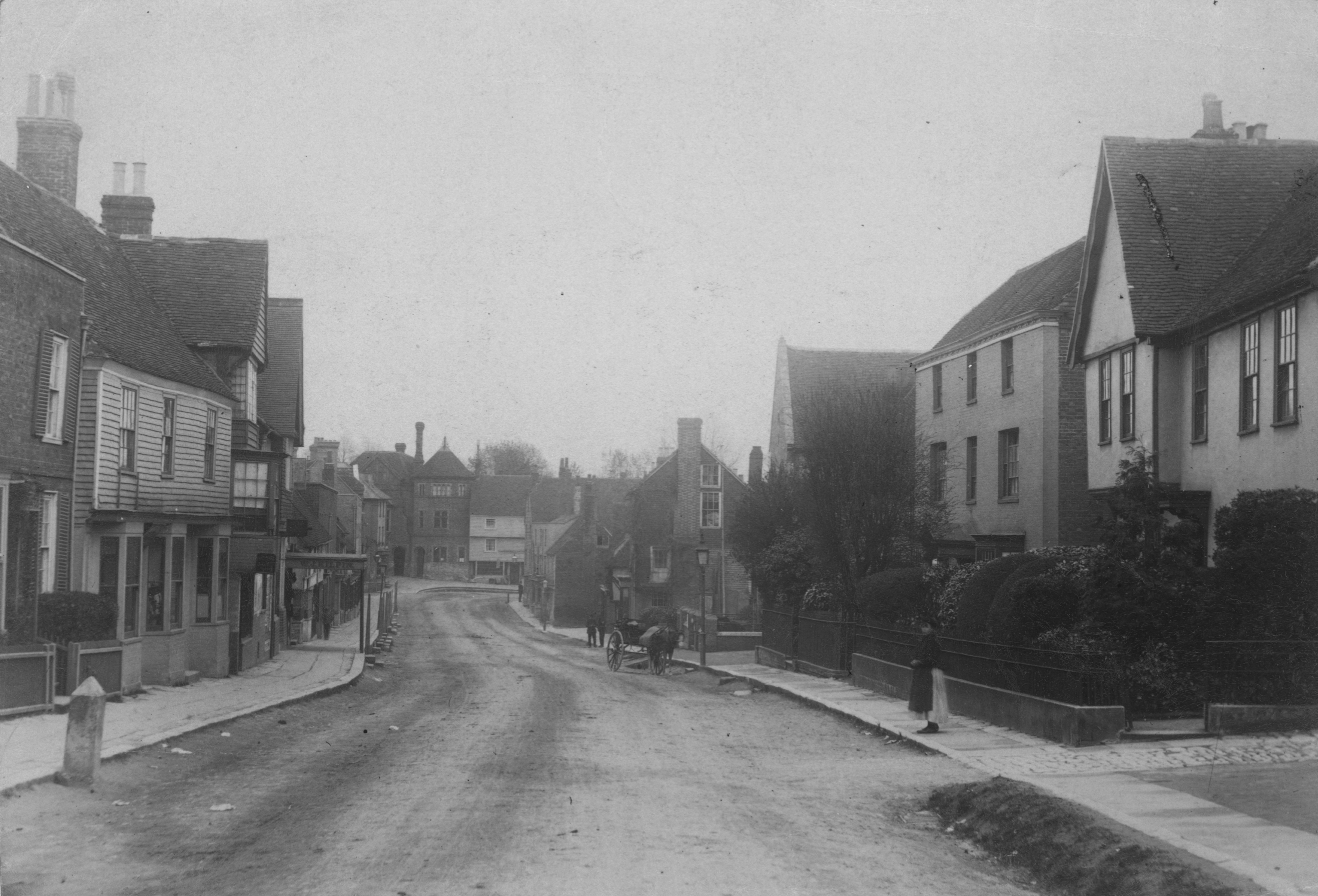
1. View down High Street towards Town Hall

Cranbrook is comprised of one main road, the High Street, which intersects with another smaller road, Stone Street. Most English towns have a “High Street,” just like “Main Street” in the US, and we will begin our tour on the High Street that leads into the town center.

Cranbrook_15

View of the High Street looking down to the Town Hall, 1901. Cranbrook Archives.

Cranbrook_Kent_High_ Street

View of Cranbrook High Street. May 2019. Google.

2. Crane Lane

At the end of the High Street, there is a small lane called Crane Lane. The Booth family lived on the High Street nearby this lane. The symbolism of the Crane is well known on the Cranbrook campus and you can see its history rooted in the etymology of the ancestral Cranbrook, which is named for the gathering of cranes at the brook.

Cranbrook_3

View of Crane Lane, 1901. Cranbrook Archives.

This is a bird’s eye view of Crane Lane showing the brook. If you click and zoom out on the map you can see that it leads to a small unbuilt area and eventually to a road named “Brookside”.

Crane_Lane

Satellite map showing Crane Brook and Crane Lane. 2020. Google.

3. Turning right onto Stone Street – you can see the George Hotel on the right:

Cranbrook_9

View of Stone Street with the George Hotel on the right, 1901. Cranbrook Archives.

The George Hotel is still there today:

Stone Street

View of Stone Street. May 2019. Google.

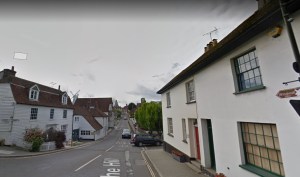
4. At the intersection of Stone Street and Hill Road, which leads to the Union Mill, there was a blacksmith’s shop on the corner. Henry Wood Booth’s birthplace is on the left on Hill Road:

Cranbrook_16

View of Hill Road leading to Union Mill, 1901. Cranbrook Archives.

The view today is quite similar:

The_Hill_to_Mill

View of Hill Road. May 2019. Google.

Union Mill is the last remaining of four smock mills in Cranbrook. It is still used to grind flour which you can see here.

5. Heading back to the center of town, you can see St. Dunstan’s in the distance:

Cranbrook_8

This is the view today:

Mill_to_St_Dunstans

View looking down Hill Road from the site of the mill. May 2019. Google.

7. St. Dunstan’s Church

You may be familiar with this name from St. Dunstan’s Theatre and St. Dunstan’s Chapel. St. Dunstan’s Church is the parish church of Cranbrook in the Diocese of Canterbury. It is known as the Cathedral in the Weald and, while records show that a church was there almost 1000 years ago, the present building is over 500 years old. St. Dunstan himself is the patron saint of metalsmiths.

Cranbrook_29

St. Dunstan’s Church, 1901. Cranbrook Archives.

In the surrounding area, there are other sites with names that you will recognize from Cranbrook campus, namely Angley Wood and Glassenbury Manor (Kingswood Lake was once called Glassenbury Lake).

I hope you have enjoyed the trip and discovered something new about Cranbrook past and present.

–Laura MacNewman, Associate Archivist

Of Provenance and Harmony

This is a story about the mistaken attribution of a quote, as told through the lens of archival provenance, that further deepened my own understanding and appreciation of the Cranbrook story. A researcher, referring to Cranbrook’s founder George Booth, once asked, “How did he do it? All of this! How do you motivate the finest artisans and craftsmen to come and help build a center for art and education?” It is a marvelous question, and surely one in which each inquirer may draw a different conclusion. When I get similar questions about how Cranbrook came to be, I always turn first to the words of George G. Booth himself, whether they be formalized in a trust document or business letter, crafted for a speech, or in the informal fluidity of a personal letter. Booth always acknowledged, in both his words and artistic compositions, the contributions of many, both contemporaneous and historic, in the building of Cranbrook . The image below shows a document included in the folders containing ‘Talks, 1902-1942’ in the Biographical series of the George G. Booth Papers. At some point during their administrative or archival custody, the talks were enumerated and this one is identified as number 21 with a circa date of 1936. Naturally, I have wondered exactly when and where he gave this talk.

1981-01 1-20 001

The Laying of a New Foundation for Cranbrook Institutions, a document included among the talks of George Gough Booth. Cranbrook Archives.

In my work at Cranbrook Archives, I have observed many times that the answers we find depend upon the phrasing or precision of the questions we ask. I have also learned to remain attentive to questions when I think I have exhausted the search, as oftentimes I have found an answer when I am no longer looking for it. I recently quoted from this talk to emphasize the trajectory from vision and ideal, through words, drawings, and activity to a tangible object or building:

“… the Cranbrook Foundation, dealing with things material and visible, rests in turn upon another foundation made up of things invisible – that is, of thought, vision, and ideals… No product of human hands exists which was not a thought before it became a thing.”

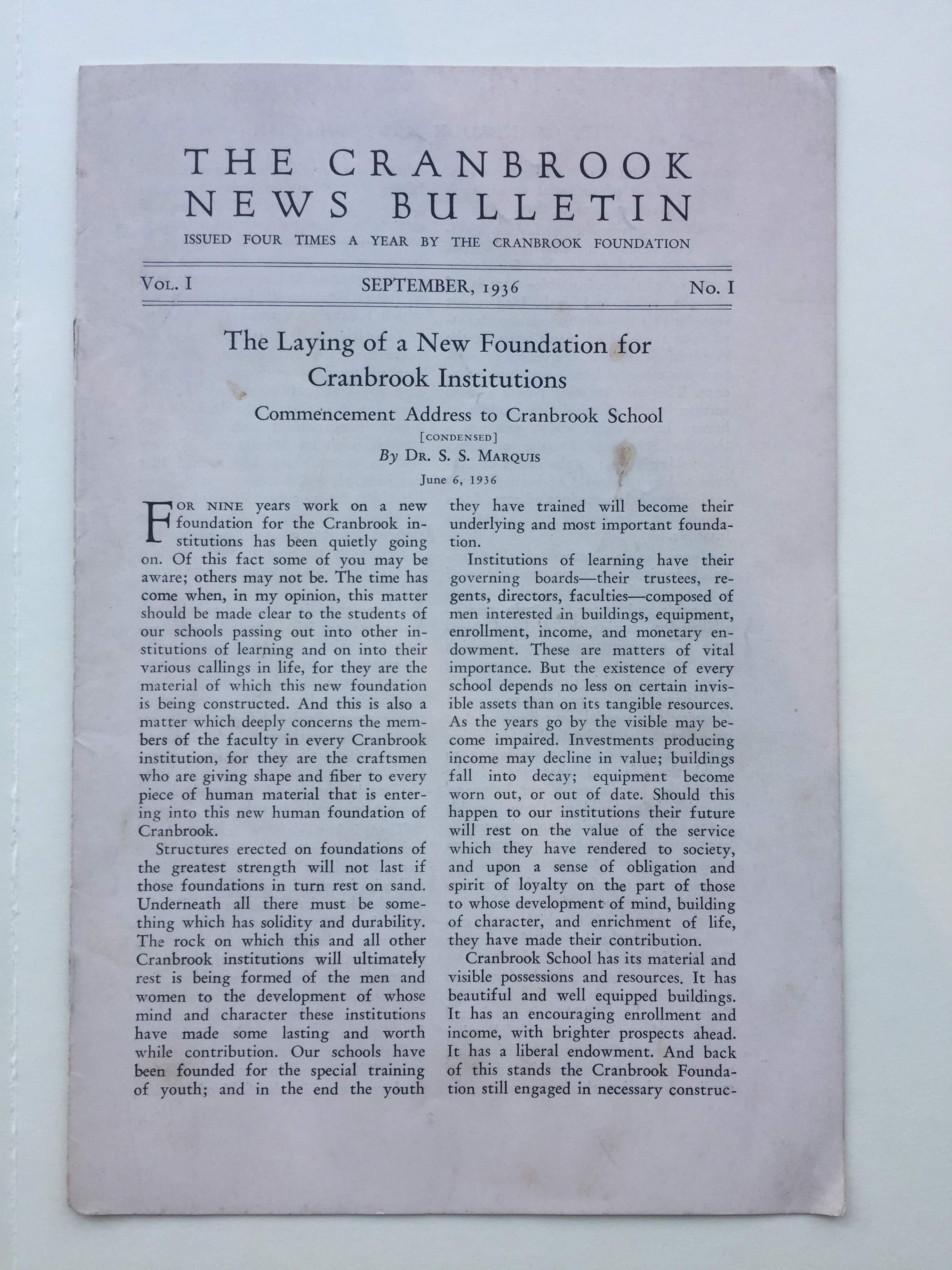
Shortly thereafter, I was researching two reference requests that took me into the Cranbrook series of the Samuel Simpson Marquis Papers, wherein I discovered the original version of the talk with pencil edits to truncate it for publication in The Cranbrook News Bulletin, September 1936. It was identified as a Commencement Address to Cranbrook School by Dr. S. S. Marquis on June 6, 1936. Along with it was a typescript version, the same as the one in Booth’s papers, and a letter from the Executive Secretary of the Cranbrook Foundation, William A. Frayer, which tells us that Marquis had encouraged Frayer to digest the talk for its publication.

1983-07 2-13 004

The Cranbrook News Bulletin, Vol. I, No. I, September 1936. Cranbrook Archives.

Although I had found my quote in a talk among those of George Booth, given to the Archives as part of his papers, here was definitive proof that it was actually part of an address given by Marquis! This discovery highlights the important, but sometimes misleading, concept of provenance of an archival collection, and how archivists continually refine understanding of their collections, even long after they are opened to researchers. In an archival setting, provenance relates to the administrative origin of a collection and ensures that the collection remains intact so that the records accumulated by one person or office are not intermingled with those of another. From an archival standpoint, the talk still belongs in Booth’s Papers, but will now be understood as something he collected rather than created. The principle of provenance dictates that it shall remain there, albeit with a note to advise future archivists and researchers of its authorship. We cannot know for certain how and when and by whose hand it came to be in his papers, but this new knowledge simply adds another layer to the relationship between Booth and Marquis, and the harmony of their thinking.

#1983-07.31

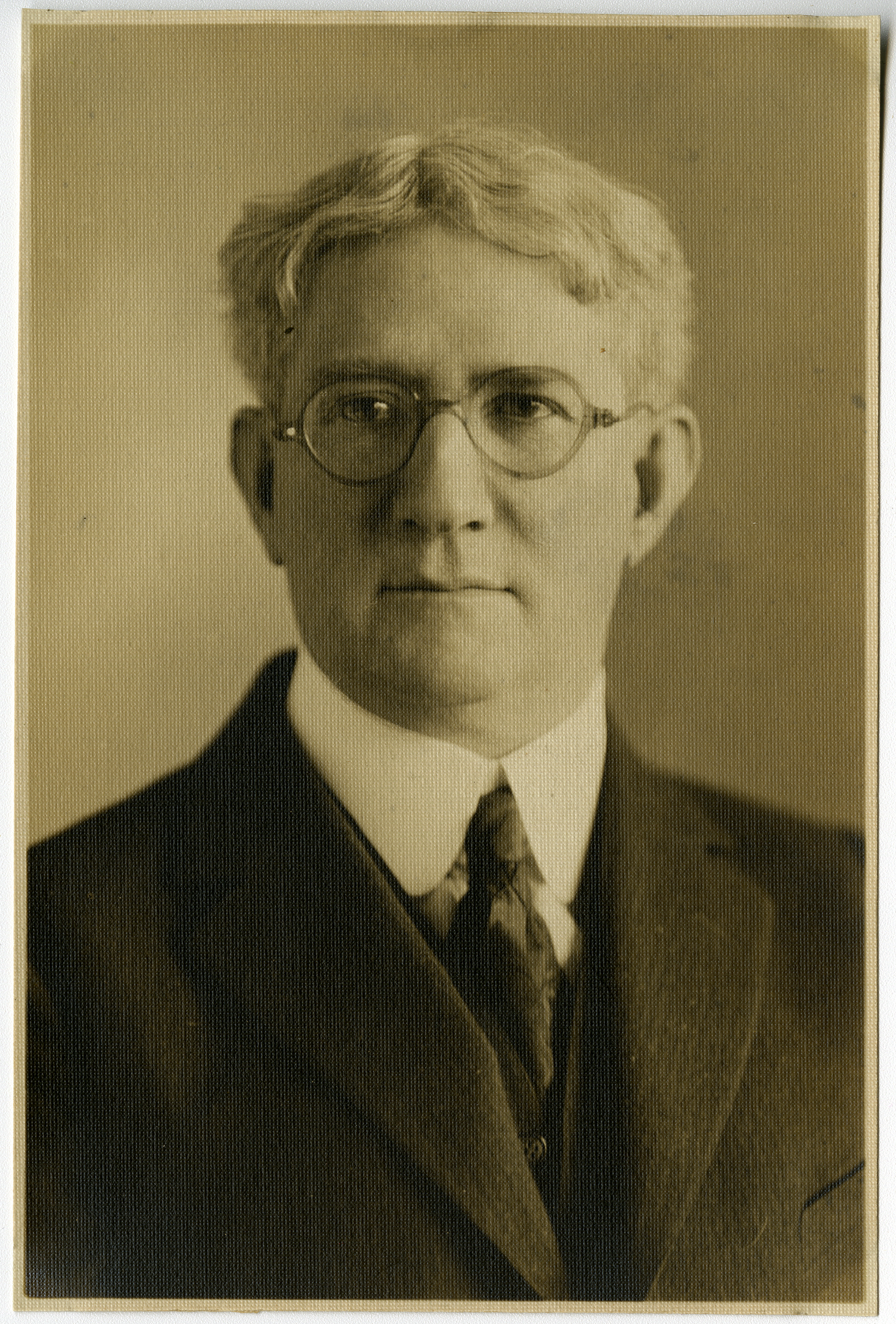
Rev. Dr. Samuel Simpson Marquis, circa 1906-1915. Cranbrook Archives.

Booth had first met Marquis as the Dean of St. Paul’s Cathedral and subsequently as visiting clergy when missionary services were conducted by Henry Wood Booth in the Meeting House (1918-1923). In October 1923, when the Meeting House began to be used for Bloomfield Hills School (later Brookside School Cranbrook), it was to Marquis that Booth turned with the idea of building a church and school. Moving to Bloomfield Hills the following year, Marquis remained part of the Cranbrook story as rector, teacher, trustee, and friend until his death in 1948.

Laura MacNewman, Associate Archivist


Marthe Julia LeLoupp

Marthe Julia LeLoupp, born October 10, 1898, in Plogoff, Finistere, France, was an original faculty member of Kingswood School, where she taught French from 1930-1956. Having completed the Diplȏme de fin d’études at the Lysée Brizeaux, Quimper, Finistere, France in 1917, LeLoupp then completed her BA at Macalester College, St. Paul, Minnesota in 1920. She later completed graduate work at the University of Chicago (1929-1931) where she worked on an MA Thesis: Influence du Breton sur le français régional en Bretagne. With teaching experience in schools and colleges in Minnesota, South Dakota, New York, New Jersey, and Indiana, LeLoupp arrived at Cranbrook in 1930.

P1098

Marthe LeLoupp, 19 Feb 1952. Photographer, Harvey Croze. Cranbrook Archives.

Correspondence with LeLoupp in the Kingswood School Records is limited but suggests that she would return to France each summer. A letter from LeLoupp, written in Paris on September 17, 1939, tells how she left America in June with ticket safely tucked in her purse for a return September 6th on the Normandie. But, the declaration of war had made this impossible and her ticket had been passed, initially to the DeGrasse to sail on the 13th and then to the Shawnee, due to depart Bordeaux on the 22nd. The Shawnee, she explains, had been, “sent to the rescue of a few hundred thousand American citizens, who are anxiously waiting for transportation westward.”  On arriving to Bordeaux on September 22, 1939, Le Loupp writes that they were told, to their great dismay, that the Shawnee would not sail until the 26th. While LeLoupp’s letters were on their way to Cranbrook, Ms. Augur [Kingswood School Headmistress, 1934-1950] was searching for LeLoupp, first sending a telegram and then consulting the American Consul. LeLoupp’s mother returns Ms. Augur’s telegram with a letter explaining her daughter’s situation. Discovering this story recently, I wondered at the extraordinary resonance with current concerns for travelers, and for those unable to complete their journeys.

1980-01 9-14 (1)

Telegram, Ms. Augur to Mlle. LeLoupp, September 23, 1939. Cranbrook Archives.

Despite the harrowing circumstances, LeLoupp did eventually make it across the Atlantic. She continued to teach French at Kingswood School until July 1956, when she writes from Bénodet in France to request to be released from her 1956-57 contract due to poor health, ending the letter, “I find it impossible to express my regret in words.” Not much else is known about LeLoupp’s time at Cranbrook, except that she lived for twelve of her years at Cranbrook in the apartments above Kingswood School, which were converted in 1945 from the ballroom known as Heaven. In the KBC [Kingswood Brookside Cranbrook] Quarterly of May 1973, LeLoupp was remembered thus,

“a “beautiful person” with a “super smile”. She was “sweet and kind” and always beautifully dressed in classic tweeds. Peering over her bi-focals at her students and reciting in her strong French accent the terrible weekly dictes that no one could understand, she was one of those who inspired her girls to excellence or accomplishment in French that is still one of Kingswood’s greatest assets”.

Laura MacNewman — Associate Archivist


Birds of a Feather …

“… the Cranbrook Foundation, dealing with things material and visible, rests in turn upon another foundation made up of things invisible – that is, of thought, vision, and ideals… No product of human hands exists which was not a thought before it became a thing.”
Rev. Dr. Samuel Simpson Marquis, “The Laying of a New Foundation for Cranbrook Institutions,” Commencement Address to Cranbrook School, June 6, 1936

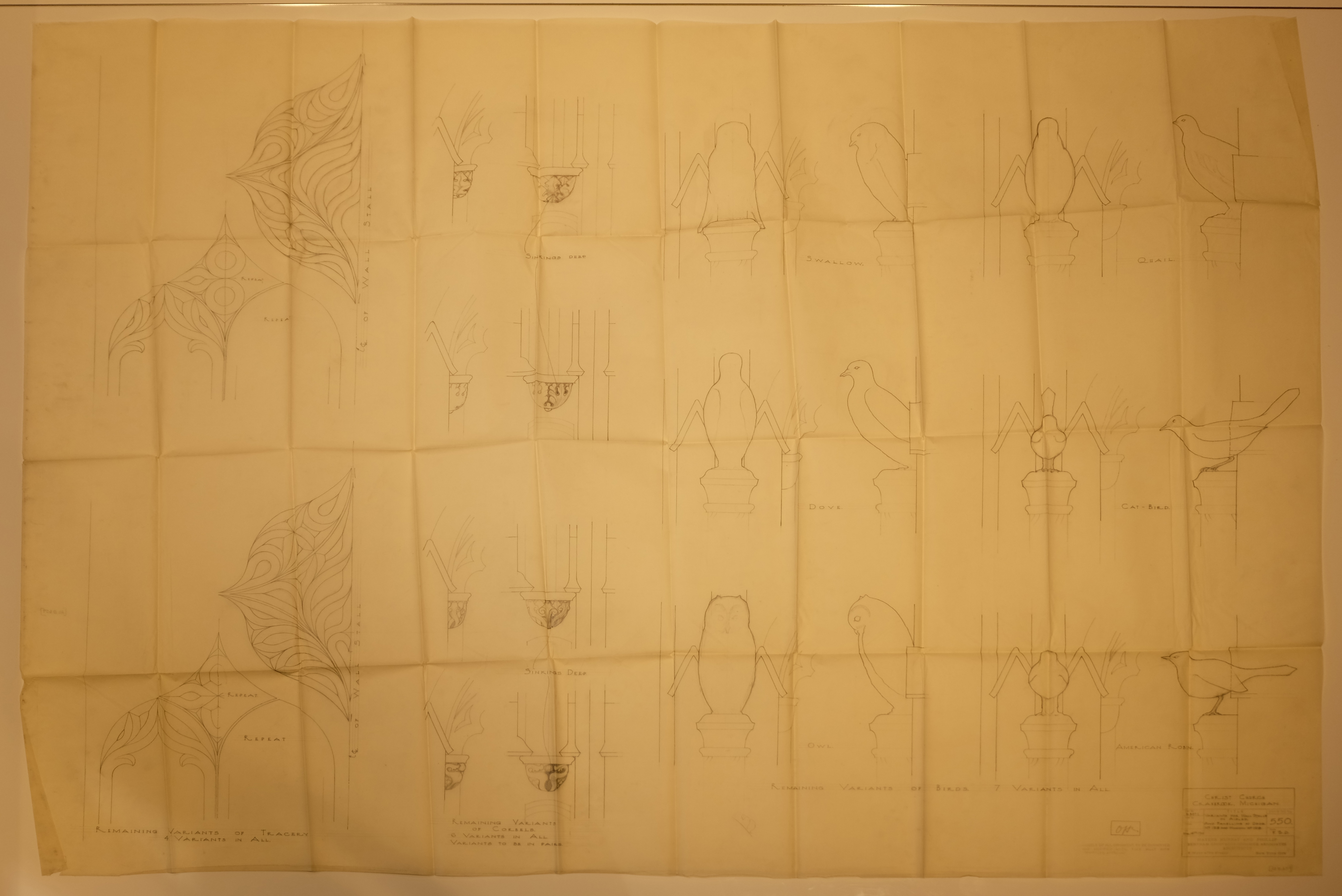
The thought, vision, and ideals of George and Ellen Booth endure in the cultural community and architectural landscape that we enjoy today. One of the great joys of working in the Archives is witnessing the documentary heritage which traces the stories of the people, places, and things that contribute to Cranbrook’s history. All record types — from correspondence, financial records, and reports to written and oral memories and reflections — provide a different insight into the process of making an idea a reality.  I am particularly fond of architectural records, because it is possible to see the built campus in its earliest form. Cranbrook Archives holds a large collection of architectural drawings for the entire Cranbrook Educational Community, as well as for  projects of Cranbrook affiliated firms and architects. The drawings are arranged by division or creator and housed according to their format. One format that is housed separately are detail drawings, which include millwork details and decorative designs. They are pencil on tissue drawings preserved folded in their original envelopes, many for almost a century. I would like to share with you an example of this type of drawing, one that documents the birds sitting atop of the columns of the aisle wall stalls at Christ Church Cranbrook.

CCC birds

View of the aisle wall stalls at Christ Church Cranbrook. Center for Collections and Research.

Finding sources in an archives depends upon the arrangement and description of the collections. Because of their very nature, sometimes a fair amount of detective work is required when the material being described is a visual format. Architectural drawings that have been catalogued are searchable using the Cranbrook Academy of Art library catalog, so the search most often begins there. In my case, a search for the wall stalls at the church returned seven results, none of which refer to the birds specifically. Yet, one of the descriptions suggested that there was great potential that it would include a drawing of the birds and, indeed, that is what I discovered.

AD-10-659_001

Architectural drawing (AD.10.659) Variants for Wall Stalls in Aisles and Paneling at Door #128 and Window #128, March 1930. Cranbrook Archives.

AD-10-659_003

Architectural drawing (AD.10.659), detail of the owl. Cranbrook Archives.

AD-10-659_004

Architectural drawing (AD.10.659), detail of the American robin. Cranbrook Archives.

The discussion between George Booth and Oscar Murray about the design and contract for the stalls began in early December 1929 and the stalls, carved by Irving and Casson, arrived for installation in August 1930. Booth left it to Murray’s judgment as to whether to have a continuous row of the same model for the columns or whether to include the variation. As you can see, this drawing includes two variants of tracery, four variants of corbels, and six of seven variants of birds, including the swallow, quail, dove, cat-bird, owl, and American robin. The seventh bird yet remains a mystery, leaving us something to discover in the future. Discoveries like these, and helping others achieve similar ones, make the job of a Cranbrook Archivist both enjoyable and rewarding.

– Laura MacNewman, Associate Archivist

[Editor’s Note: When this post was first published, the quote was attributed to George Gough Booth. Subsequent research has revealed that it is from an address by the Rev. Dr. Samuel S. Marquis.]
Create a website or blog at WordPress.com