Election Day: Mayor Vettraino

Dominick Vettraino at the wheel of Cranbrook's Fire Truck, ca. 1936. Vettraino Family Papers, Cranbrook Archives.

Dominick Vettraino at the wheel of Cranbrook’s Fire Truck, ca. 1936. Vettraino Family Papers, Cranbrook Archives.

In honor of Election Day I wanted to feature Cranbrook and the polls! In 1958, Cranbrook’s Dominick Vettraino was elected as mayor of Bloomfield Hills, the first native born Bloomfield Hills resident to hold the position!

Dominick Vettraino was the eldest son of Michael and Michaela Vettraino.  Mike was grounds superintendent for Cranbrook from 1905-1955 and all of his children except Dominick were born at Cranbrook. Dominick started working with his father on the grounds when he was 16 years old, and after Mike’s retirement, took over the position of superintendent.  In addition, he contributed substantially to the surrounding community.   After studying at the University of Michigan’s Fire School he was named chief of the Cranbrook Fire Department. He and his brother John Vettraino converted a Ford chassis into Cranbrook’s first fire truck, and eventually Dominick served as the head of Cranbrook’s Police Department.

After his many Cranbrook achievements he went on to serve the larger community of Bloomfield Hills.

Stefanie Dlugosz, Collections Fellow, Center for Collections and Research

Lost and Found in a Sea of Cranbrook History

Ye Triumphe Ship

Ye Triumphe Ship, CEC 1918.1

Every day at the Center for Collections and Research brings new adventures and discoveries. During a visit to one of the storage spaces on Cranbrook’s campus, I stumbled upon a curious object, which inspired me to research it and its past. Like most things around here, the object has a great lineage throughout the campus with connections to George Booth, the Detroit Society of Arts and Crafts, and Cranbrook School.

The Ye Triumphe model ship was crafted by Henry Brundage Culver (1869-1946), and although it is a model, it is a large one: about 40 inches long and 32 inches high. George Gough Booth purchased the Ye Triumphe in September 1918 from the Detroit Society of Arts and Crafts. The model, which was advertised in the Detroit Sunday News, had been on display in the window of the Detroit Society of Arts and Crafts shop during that same year.

Henry Brundage Culver worked as an attorney and also served as secretary for The Ship Model Society in New York. He participated in building ship models, and contributed to scholarship on the art of model-making. He produced several publications including Contemporary Scale Models of Vessels of the Seventeenth Century (1926) and The Book of Old Ships: Something of their Evolution and Romance (1924). In the introduction to Contemporary Scale Models Culver compares the art of ship-model building to that of painting.

The finest examples of these miniature vessels are, in the eyes of those best fitted to judge productions of the highest artistic quality, appealing in general composition, line, mass and technical execution, to the aesthetic susceptibilities of those, who have eyes to see, in a no less degree than do the best examples of pictorial art.”

­—Henry B. Culver, Contemporary Scale Models of Vessels of the Seventeenth Century, New York: Payson and Clarke Ltd.1926, pg.ix.

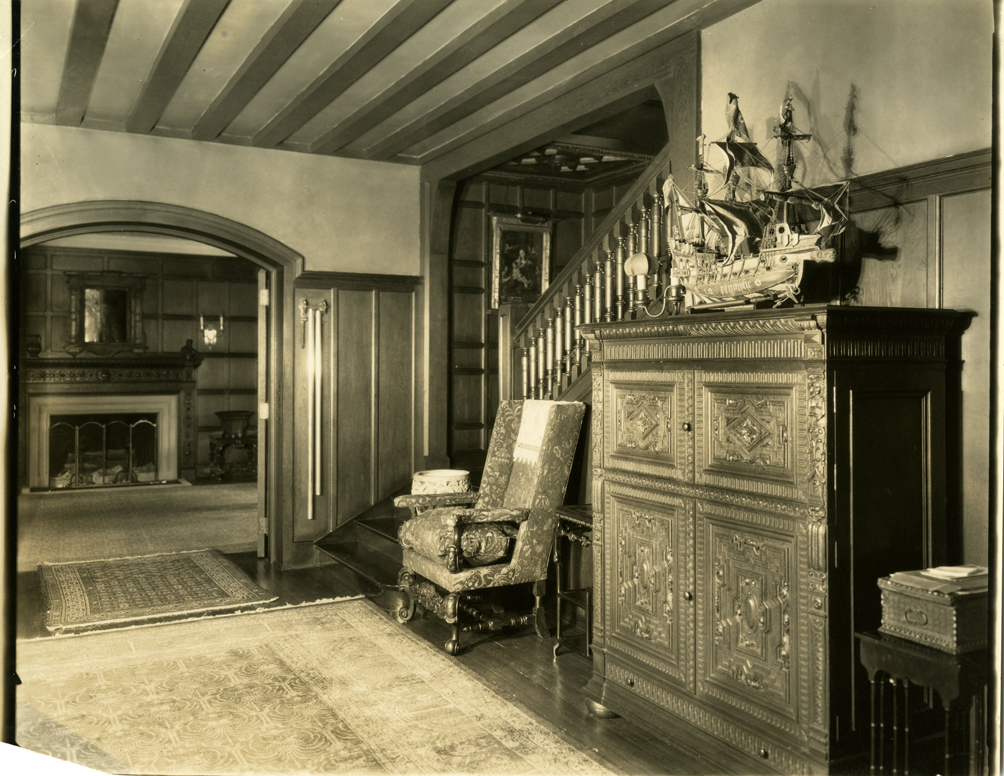
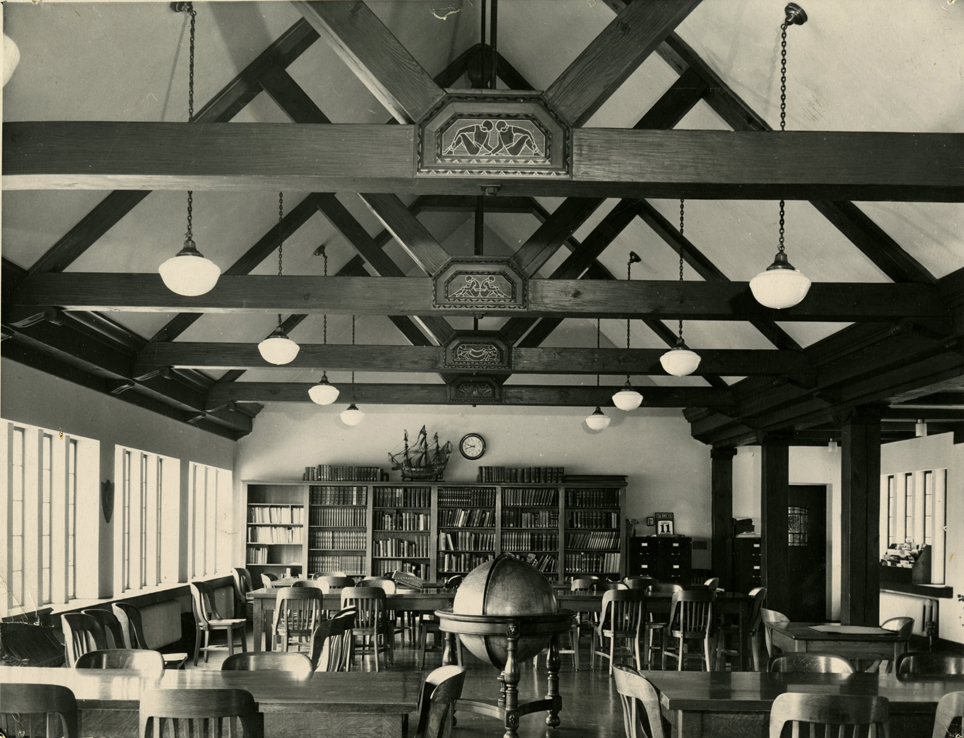
Originally, the ship was placed in the reception hall of Cranbrook House, and was later loaned by Booth for display in the library at Cranbrook School for Boys. Each of the photographs show the ship on display and its presence throughout Cranbrook.
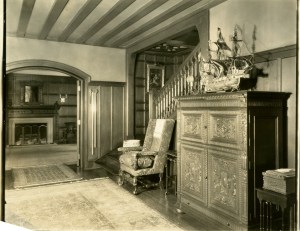
CH_entrance hall_Ship_Blogpost

Cranbrook House reception hall, ca. 1920. Cranbrook Archives

CS_Library_Ship_Blogpost

Cranbrook School for Boys, Library interior, ca. 1945. Cranbrook Archives.

The Ye Triumphe will be returning to view at the Cranbrook Art Museum’s upcoming exhibition The Cranbrook Hall of Wonders: Artworks, Objects, and Natural Curiosities opening November 23rd, 2014. Come and check out the Ye Triumphe and many other fabulous objects from across the Cranbrook campus including works from the Center for Collections and Research, Cranbrook Art Museum, and the Cranbrook Institute of Science!

—Stefanie Kae Dlugosz, Center for Collections and Research, Collections Fellow

Photo Friday: A Labor of Love

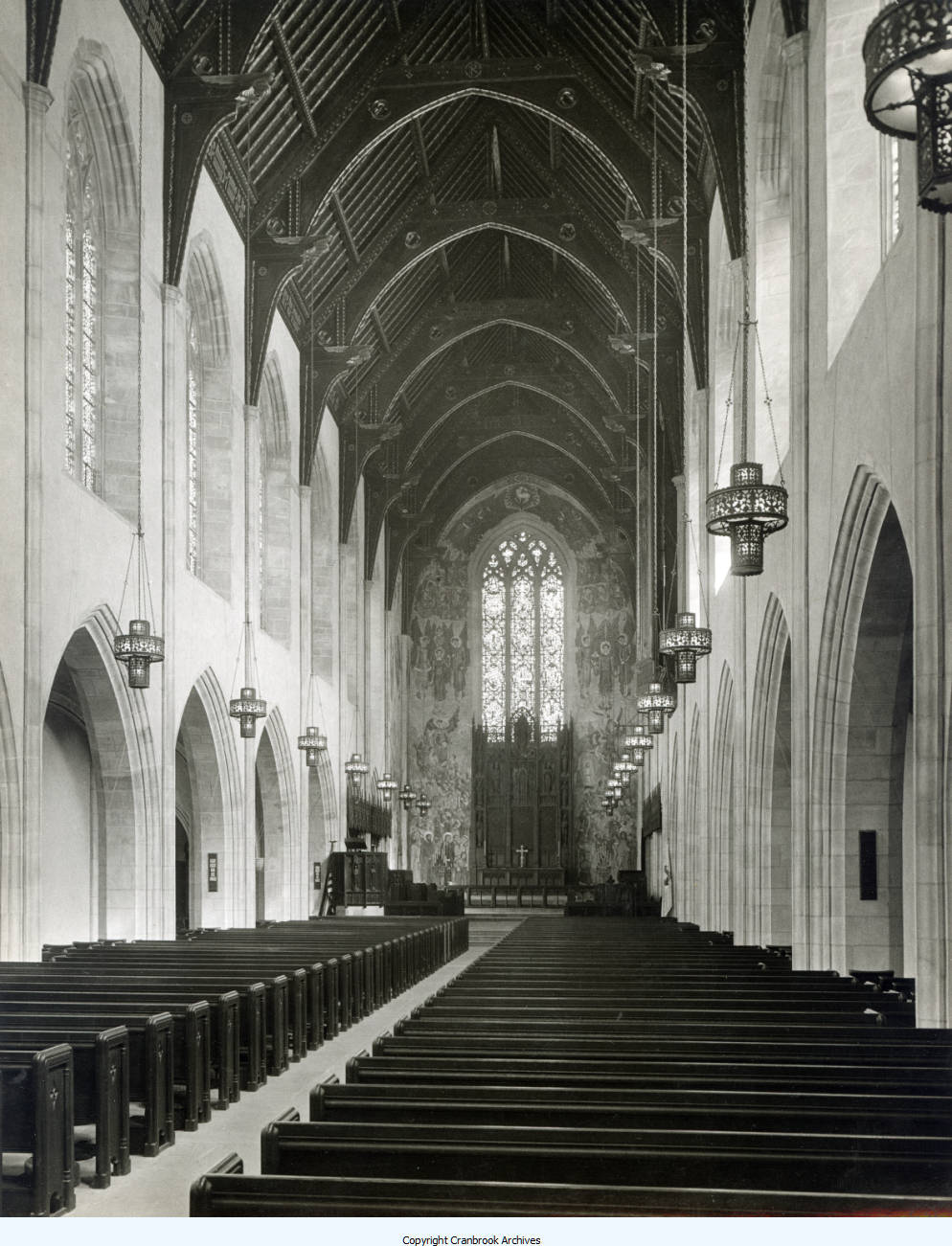
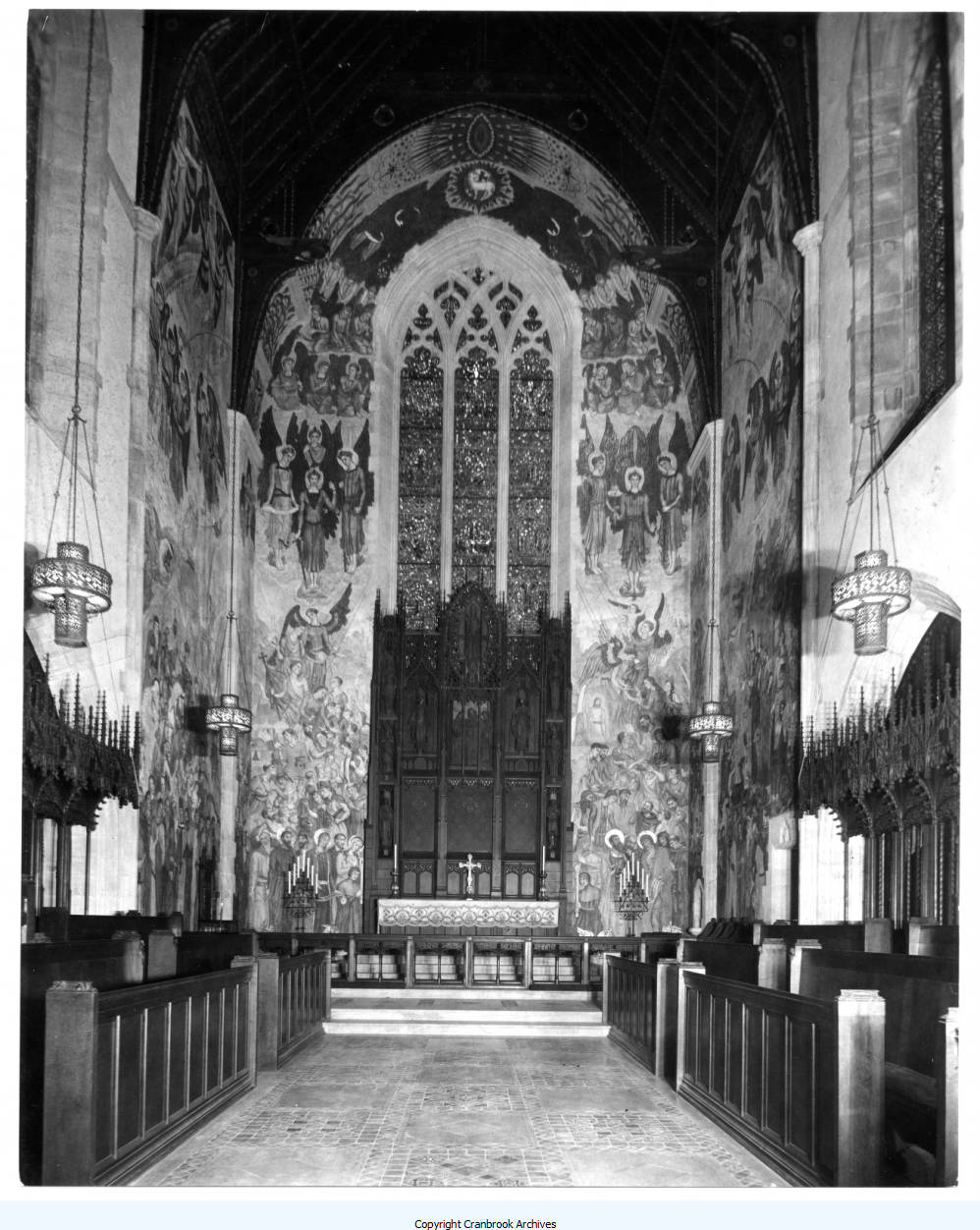
Christ Church Cranbrook Interior. Cranbrook Historic Photograph Collection, Cranbrook Archives.

CCCnave

Christ Church Cranbrook Nave. Cranbrook Historic Photograph Collection, Cranbrook Archives.

After a visit to Christ Church Cranbrook earlier this week, I knew it needed to be highlighted as today’s Photo Friday! George G. Booth conceived Christ Church to be the moral center of the new community which he was building at Cranbrook. The photos show a great overview of the expansiveness of the church and shed some light on the magnitude of the work involved in its design. Each of these elements adds to the overwhelming detail of George Booth’s vision and the care in the design of Christ Church Cranbrook.

The church is Booth’s testament to the Arts and Crafts movement. He carefully acquired and commissioned each work of art to add to the overall wonderment of the church and to pay tribute to those who have devoted their lives toward artistic and altruistic pursuits.  The works of art range from the sterling altar plate to stained glass windows, altar frontals, tilework, woodcarvings, paintings, sculptures, and metalwork, most from noted Arts and Crafts men and women.

These photographs, taken five years after the 1928 dedication of Christ Church Cranbrook show the interior of the church sanctuary and a detail view of the nave of the church. The large fresco flanking the high altar was designed and executed by Katherine McEwen, an old friend of Booth’s, and one of the founding members of the Detroit Society of Arts and Crafts.  From the work of Katherine McEwen to Oscar Bach, Samuel Yellin, and Hildreth Meire, to name a few, Christ Church Cranbrook is an architectural gem which should be experienced in person!

Stefanie Dlugosz, Center for Collections and Research, Collections Fellow


Object in Focus: Travel with Saarinen

Full Trunk

Trunks in storage. Photographer, Gretchen Sawatzki.

While organizing and re-arranging some of the cultural properties late last week, Associate Registrar Gretchen Sawatzki and I came across an exciting surprise. Tucked away in a corner of one of the many storage areas across the Cranbrook Campus, we found a pair of steamer trunks. (Steamer trunks are traveling trunks that were used when steamships and ocean liners were the best way to travel overseas.) Upon further inspection we realized that they had many stickers bearing international hotels and transatlantic ocean liners. Painted on one of the trunks we found the initials ES.

E.S. Initials. Photographer, Gretchen Sawatzki.

E.S. Initials. Photographer, Gretchen Sawatzki.

Trunk interior. Photographer, Gretchen Sawatzki.

With a bit more digging and some research we found that these trunks were purchased by Eliel Saarinen from The J.L. Hudson Company in Detroit shortly after his arrival to Michigan in 1923. These trunks traveled with the Saarinens back to Finland, and to other European and international destinations. Check out the inside of the trunks. This is a wardrobe trunk, which you can see from the drawers and hanging section with hangers still inside! Although I don’t think it is practical for travel today, I imagine all the exciting places it voyaged while accompanying Eliel Saarinen on his journeys.

Stefanie Kae Dlugosz, Collections Fellow, Center for Collections and Research

Photo Friday: A Splash of Color

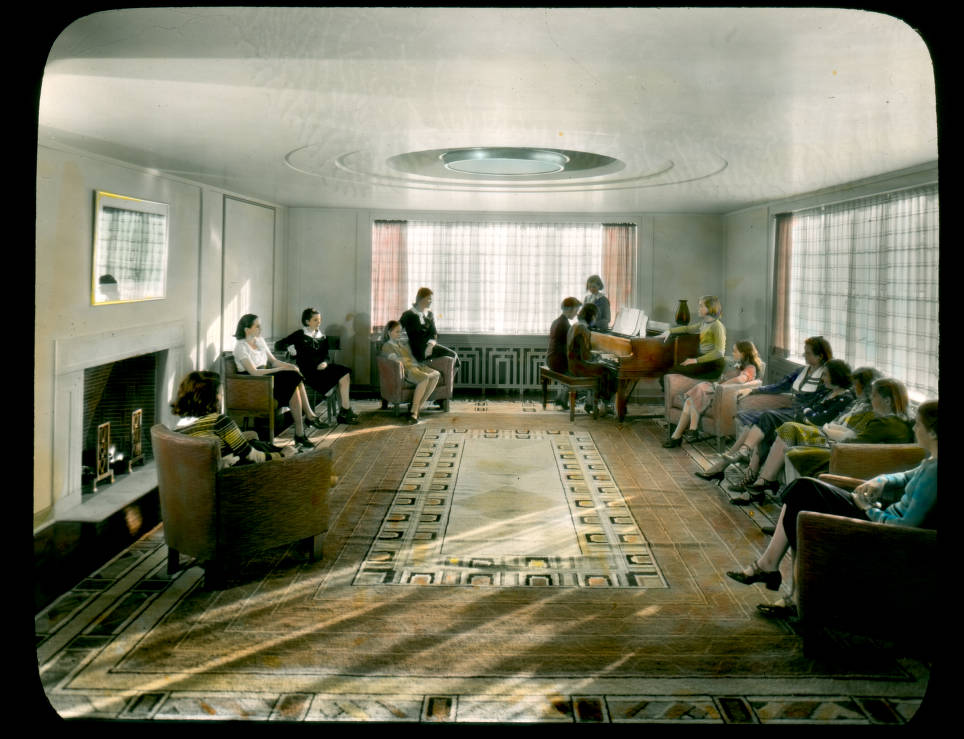
Kingswood School Rose Lounge. Cranbrook Archives

Kingswood School Rose Lounge, The Cranbrook Hand-Colored Lantern Slide Collection. Cranbrook Archives

As the weather here at Cranbrook is more than a little dreary, today’s photo provides a look into a bright and cozy atmosphere perfect for reading, relaxing and being inside. Taken around 1932, it shows a group of students gathered in the lounge of the Kingswood School dormitory (originally known as Reception Room III) listening to two of their peers play the piano. The photograph comes from Cranbrook Archives’ Hand-Colored Lantern Slide Collection. The photographs in this collection were originally black-and-white and were painted with watercolor years later, and not by the original photographer. This jump in time explains the vibrant color choices in the photograph as the painter was not present when the image was originally captured.

The Cranbrook Hand-Colored Lantern Slide Collection contains over 30 images of Cranbrook institutions taken primarily during the 1920s and 1930s. Several of the original black and white images were taken by architectural photographers for inclusion in publications.

Today’s photo was taken by George W. Hance, Cranbrook’s first paid staff photographer (1931-1932). Hance had been commissioned by George Booth as early as 1916 to photograph his art collection and later photographed Cranbrook’s campus and grounds including Kingswood, Cranbrook House (home to George and Ellen Booth) and Thornlea (home to Henry Scripps Booth). Explore more photographs like these on our digital image database or in person at the Archives!

Stefanie Dlugosz, Collections Fellow, Cranbrook Center for Collections and Research


Photo Friday: Plans Set Sail!

The Alura II from the James Scripps Booth and John McLaughlin Booth Papers. Cranbrook Archives

The Alura II from the James Scripps Booth and John McLaughlin Booth Papers. Cranbrook Archives

As the new Collections Fellow for the Cranbrook Center for Collections and Research, I was charged with coming up with a theme and writing today’s Photo Friday blog, a daunting task as it is only my first week. Lucky for me, a few of our archivists were working in our reading room pulling documents and photographs for a display this weekend for Cranbrook Art Museum’s PNC Bank Family Day and a few of them jumped out at me.

In 1928 James Scripps Booth, eldest son of Cranbrook’s founders George and Ellen Booth, designed a plan for a boat called the Alura II. Today’s photo includes a Booth’s original design for the bureau-book cases, mirror and window to the cockpit and a photograph of the “screened door companion-way from enclosed bridge area.” Although some of the plans were changed during manufacture, you can see the resemblance to Booth’s original design especially in the drawers and shape of the window shape. The Alura II was a fifty four foot long motor cruiser, with two 275 horsepower engines, so it could go as fast as 16 mph on the water! The boat included electric lights and toilet facilities, a four burner gas stove, and a gas water heater, as well as a Fridgeair ice box. The Alura II was completed in 1929. James and his wife Jean cruised in the boat for most of the summer that year, closing their home to take to the water.

Today’s photo is a sneak peak at some objects you can see on display in the Cranbrook Archives during PNC Bank Family Day this coming Sunday September 28th from 11am to 5pm. Many documents and photographs like today’s Photo Friday will be available to view and learn more about Cranbrook, the Booths, and boats! Learn more about the day’s nautical themed activities, tours, and lecture on the Cranbrook Art Museum’s website.

– Stefanie Dlugosz, Collections Fellow, Cranbrook Center for Collections and Research


Create a website or blog at WordPress.com