Christ Church Cranbrook Groundbreaking Centennial

July 5th, 2025, marks one hundred years since the groundbreaking for Christ Church Cranbrook. As we mark this milestone in Cranbrook’s history, I believe it is important to reflect on George Gough Booth’s long discernment of this generous gift to the community.

From the beginning, there were always places of worship at Cranbrook. The story that leads us through these spaces to the establishment of Christ Church Cranbrook is especially meaningful to me.

Rev. Dr. S. S. Marquis, D.D. with the first spade of earth, July 5, 1925. Courtesy of Cranbrook Archives, Cranbrook Center for Collections and Research.

After George and Ellen Booth purchased ‘The Farm’ in January 1904, his father, Henry Wood Booth, was the first family member to live on the country estate. The elder Booth stayed for the month of May with Frank Brose, the farmer, and his family. On May 15, 1904, the first worship service at Cranbrook took place under a tent, on the site upon which the Altar of Atonement now sits, with Henry as lay preacher. He continued in this ministry, also offering Sunday School, at the same spot until 1909. This was the first act of service offered to the Bloomfield Hills community at Cranbrook.

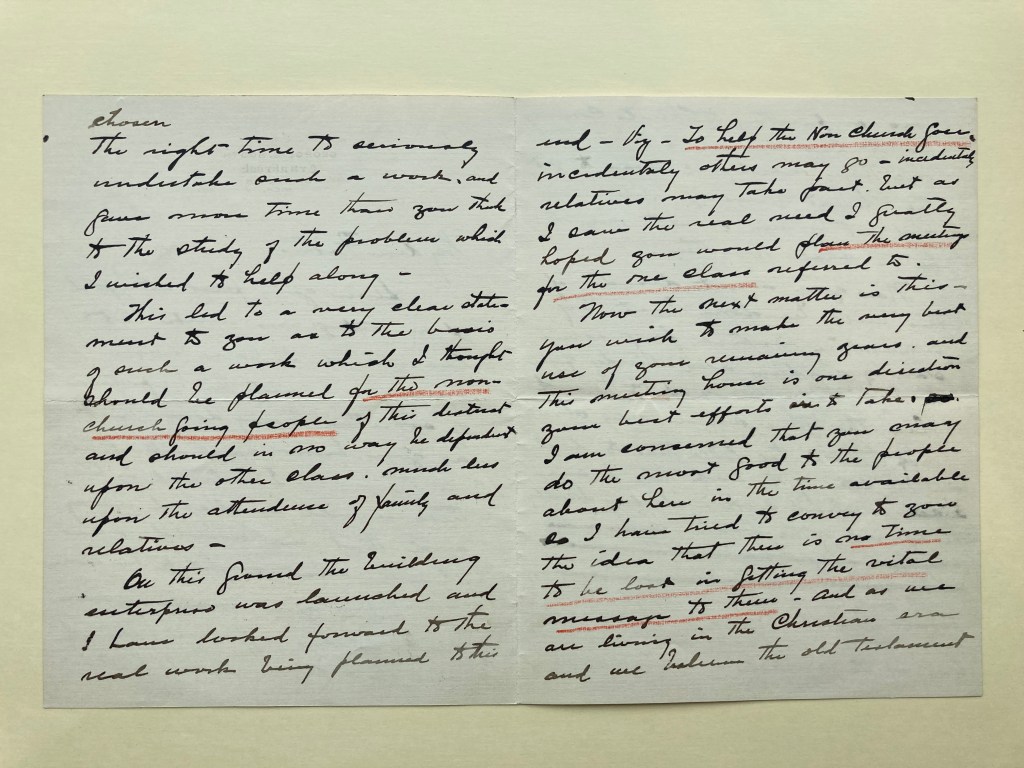
Letter from George Gough Booth to Henry Wood Booth, August 24, 1918. Courtesy of Cranbrook Archives, Cranbrook Center for Collections and Research.

In 1914, George and Ellen considered building a chapel at the site on which the Kingswood flagpole now sits, but the project was rejected, most likely due to the outbreak of World War I. As the war ended, a permanent place of worship and Sunday School was established with the building of the Meeting House.

The letter, above, preserves the dignity with which George writes of the Meeting House “building enterprise” to honor and give freedom to his father’s calling to share the Christ message with the non-church goers in the district. From this letter, we can learn and understand why George built the Meeting House for worship and Bible study through his father’s ministry.

Decoration of the Meeting House by Katherine McEwen, 1918. Laura MacNewman, photographer.

In the letter from George to his father, we also learn that he is prudent in observing the religious character of Bloomfield residents. During the years in which the Meeting House was used for religious services (1918-1926), Mr. Booth would reflect on the visiting clergy and service attendees (both of which came from diverse denominations), from which he would eventually discern the denomination of “Cranbrook church.”

Continue reading

Leap Day

Every four years, we add an extra day to the calendar to catch up to Earth’s revolutions around the Sun. For most of us, it is just February 29th, an extra day in the week. For leaplings, it is a day to celebrate their true birthday.

Different cultures have different customs associated with February 29th, known as Leap Day. In some cultures, it is also known as Bachelor’s Day or Ladies’ Privilege, because that is the day that women can propose to men.

In Finland, leap-year day proposals are considered good luck. If, however, the gentleman says “no,” he is required to give the woman enough fabric to make a skirt.

According to Medium.com, “The tradition reflects the Finnish spirit of equality and a shared sense of humor within romantic relationships. It challenges gender norms in a playful manner, encouraging women to take the lead in expressing their feelings and creating a shared memory that will be cherished for years to come.”

“While leap-year day may be just one day every four years, the tradition of women proposing adds a touch of magic and unpredictability to Finnish love stories. It’s a celebration of love, luck, and the joy of shared laughter, reminding couples that romance can be both traditional and delightfully unexpected in the heart of Finland.”

Something else unexpected is an elopement, a sudden and secret ceremony involving a flight from home without parental approval. One of Cranbrook’s “Finnish love stories” involved one such elopement.

Shortly after she turned 21, Eva-Lisa “Pipsan” Saarinen eloped to Toledo, Ohio with Jons Robert Ferdinand “Bob” Swanson, one of Eliel’s architecture students. They were married on May 8, 1926. According to Pipsan Saarinen researcher Alison Kowalski, “The young couple eloped because Eliel and/or Loja objected to the match, probably in part because Bob was of a lower socio-economic status than the Saarinens. According to Henry Scripps Booth, a close friend of Bob and Pipsan, Loja felt Bob was using Pipsan to get close to Eliel.”

Eliel, Bob, Bobby, and Pipsan aboard the MS Gripsholm, 1929. Courtesy Cranbrook Archives.

Bob struggled to support himself and Pipsan at the beginning of their marriage. Perhaps she proposed, and he didn’t have enough money to cover the cost of skirt fabric for such a fashionable lady.

Watercolor dress design by Pipsan Saarinen Swanson, circa 1933. Collection Cranbrook Art Museum.

More likely, they were truly in love. They were married from 1926 until Pipsan passed away in 1979.

—Leslie Mio, Associate Registrar, Cranbrook Center for Collections and Research

A Century Ago: Travel to France with Messrs. Booth and Swanson

May 30, 2023, marks one hundred years since Henry S. Booth and J. Robert F. Swanson returned home from ten months of travel in Europe. Midway through their architecture studies at the University of Michigan, the friends and classmates set off on August 1, 1922 for a “Grand Tour” through Norway, Finland, Sweden, Denmark, Germany, Tunisia, Italy, France, and England to study and sketch European architecture.

In today’s post, I want to share moments from their journey through France, which is so beautifully documented by Henry’s letters and photographs, and by both of their sketches.

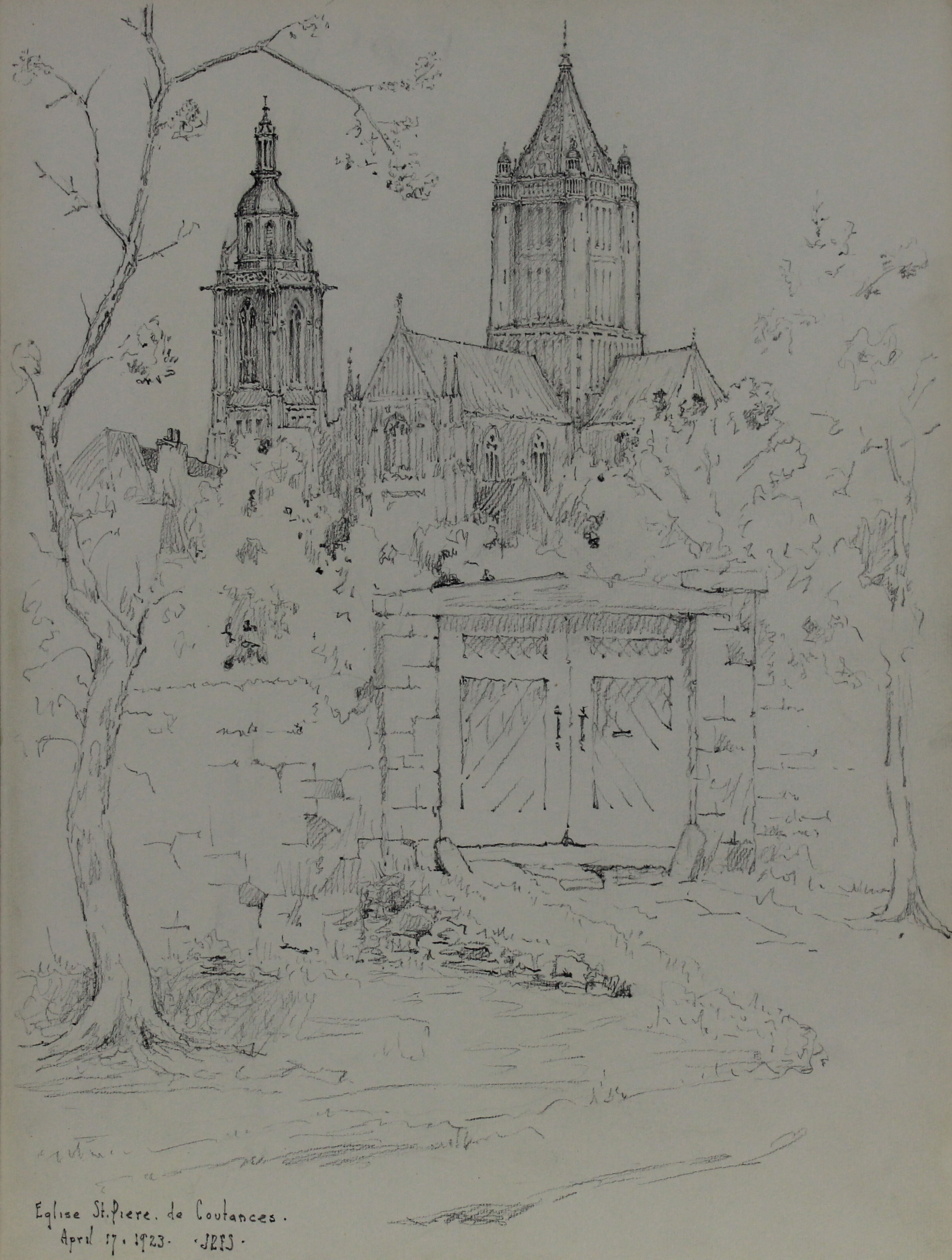
Eglise St. Pierre de Coutances, April 29, 1923, J. Robert F. Swanson. Courtesy of Cranbrook Art Museum.

Arriving in France in March 1923, Harry and Bob journeyed through Nice to Cannes, then through Lyon to the city of Bourges. Henry describes the scenery en route:

…mountains on the right and the “Cote d’Azure” on the other, flowers overhanging balustraded walls, old olives and tall but easily climbed palms, rocks and breaking waves, and then always the bluest of skies and sea to match, and dazzling sunlight–quite warm and ‘drowsy’.

At Bourges, they headed for the Cathedral, which they visited several times: at night by the light of gas lamps; in the afternoon sunlight; at dusk with a handful of worshippers on their knees; and then later that evening filled with the faithful.

Cathédrale St. Etiénne de Bourges, March 1923. Henry Scripps Booth, photographer. Courtesy of Cranbrook Archives.

It was an inspiring sight—the nave packed, and both the inner and outer aisles (for there are two) on the north side filled also, and not a few on the other side of the church. The light was dim all during the sermon, and when that was over, a quantity of candles were lighted almost instantaneously about the “Host,” and all the electric candles down the nave came on, so that suddenly this great cathedral was changed from a imaginative forrest in the night, to a great cathedral church ablaze with the lights associated with a feast.

But I thought more of other things than of the architecture that night. The preacher talked too fast for me to understand his French, but I knew what he should have been saying even if he wasn’t…, I looked at the great number of long black vails [sic] everywhere, noticed the lack of men of middle age, and saw many young fellows who are now “heads” of their father’s family standing by their veiled mother’s side.”

They stopped in Tours before taking in the Chateaux of the Loire: from Loche to Langais, Ussé, Villandry and Azey.

Continue reading

Out of the Ordinary: Cranbrook and the Chair

Last week, I was happy to welcome a small group tour into the reading room to view archival materials about chairs. After the tour request appeared in my inbox, I learned a lot about chairs in a short time and found a new appreciation for this commonplace object. 

As I searched and gathered materials for the display, I began to see how imagination and inspiration can transform an ordinary thing from complete obscurity to one of curiosity and sometimes great celebrity.  

Florence Knoll in Eero Saarinen’s Grasshopper Chair in the Dallas Original Showroom, 1950. Courtesy of Cranbrook Archives

The chair has been creatively reinvented time and again according to the social context of its use, the cultural meaning imbued in it, or the inspiration from which its design sprang. Just think throne, pew, sofa, deck chair, chaise-lounge, and so on. 

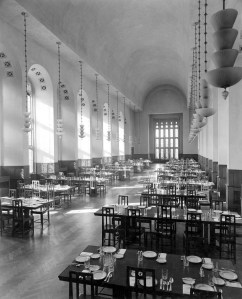
Take one of Cranbrook’s most iconic chairs – Eliel Saarinen Cranbrook School dining hall chair. Designed to withstand use by teenage boys, it combines durability with sophistication and has stood the test of time as they are still in use after 94 years. At the back of each chair is a bronze crane insert, a symbol that subtly gives identity to the community using the chair.

Cranbrook School Dining Hall, October 1936. Courtesy of Cranbrook Archives.

The 1940s and 1950s saw a flourishing of chair design from Academy of Art graduates, including Florence Schust Knoll BassettRalph Rapson (the first Cranbrook-trained designer to work for Knoll), Charles Eames, Benjamin Baldwin, Harry Weese, and Ruth Adler Schnee. The Organic Design in Home Furnishings competition at the Museum of Modern Art in 1941 generated many of these designs, including collaborative entries from Baldwin and Weese, as well as Eames and Eero Saarinen. 

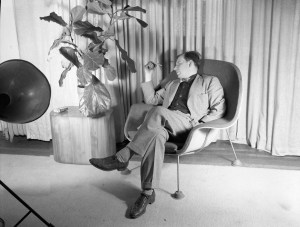
Interestingly, Eero’s later chair designs are all much inspired by nature—the Grasshopper chair, the Womb chair, and the Tulip Chair.  

Eero Saarinen sitting in the prototype of his Womb Chair at his Vaughn Road home. 18 June 1947. Photographer: Harvey Croze. Courtesy of Cranbrook Archives.

Inspired by nature in a different way, Finnish architect and furniture designer Olav Hammarstrom has a variety of designs that are born of the possibilities to which natural materials lend themselves. Hammarstrom worked with Alvar Aalto and Eero Saarinen and Associates, working on projects such as the Baker House dormitory at MIT and the furnishings at the GM Tech Center. Married to Head of the Weaving Department Marianne Strengell, he designed their house in Wellfleet on Cape Cod, as well as houses for friends and colleagues, along with chairs to go in them.

Bamboo Experimental “Basketchair” by Olav Hammarstrom. 10 February 1956. Courtesy of Cranbrook Archives.

Furniture design was also the focus of another Academy affiliated designer, Pipsan Saarinen Swanson. Working in partnership with her husband, architect J. Robert F. Swanson, Pipsan typically designed the interiors while he designed the structure and exterior.

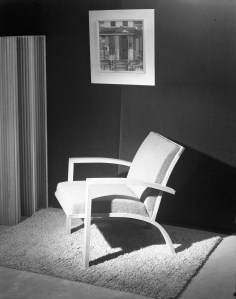
Chair designed by Pipsan Saarinen Swanson. December 8, 1945. Photographer: Harvey Croze. Courtesy of Cranbrook Archives.

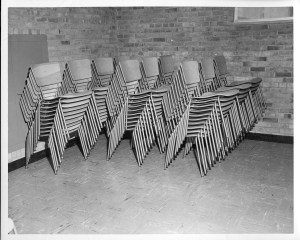
But Robert Swanson also designed furniture. Perhaps the most surprising thing I learned was that Swanson invented a ‘Stackable Chair,’ patented in 1957. A form we take for granted nowadays, these chairs can still be found in many buildings and classrooms on Cranbrook’s campus.

The “Stackable Chair” by J. Robert F. Swanson, 1957. Courtesy of Cranbrook Archives.

It was a great pleasure to share these archival stories with our guests and to explore Cranbrook’s part in the story of the chair. In the process I learned to see an everyday thing in a new light and how creativity can transform the ordinary into the extraordinary. 

Laura MacNewman, Associate Archivist, Cranbrook Center for Collections and Research

Flora Leslie, Brookside’s Dietician and Food Director

With the Thanksgiving holiday almost upon us, it is time to begin planning and preparing one of the essential parts of any celebration: food. It seems timely, then, to highlight Flora Leslie, Brookside’s long-serving dietician and food director. I would like to introduce her to you in her own voice, recalling a memory of some precarious pumpkin pies:

Floral Leslie interview with Mark Coir, Archivist (OH1990.09.28), November 5, 1987.
Courtesy of Cranbrook Archives.

Hearing this story in Flora’s voice brings the memory to life in a different way than simply reading it in written form. Cranbrook Archives’ Oral History Collection holds recordings of many voices that add dynamism and richness to their stories. Flora Leslie’s interview describes her life at Cranbrook and her experience of its people and places in the mid-twentieth century.

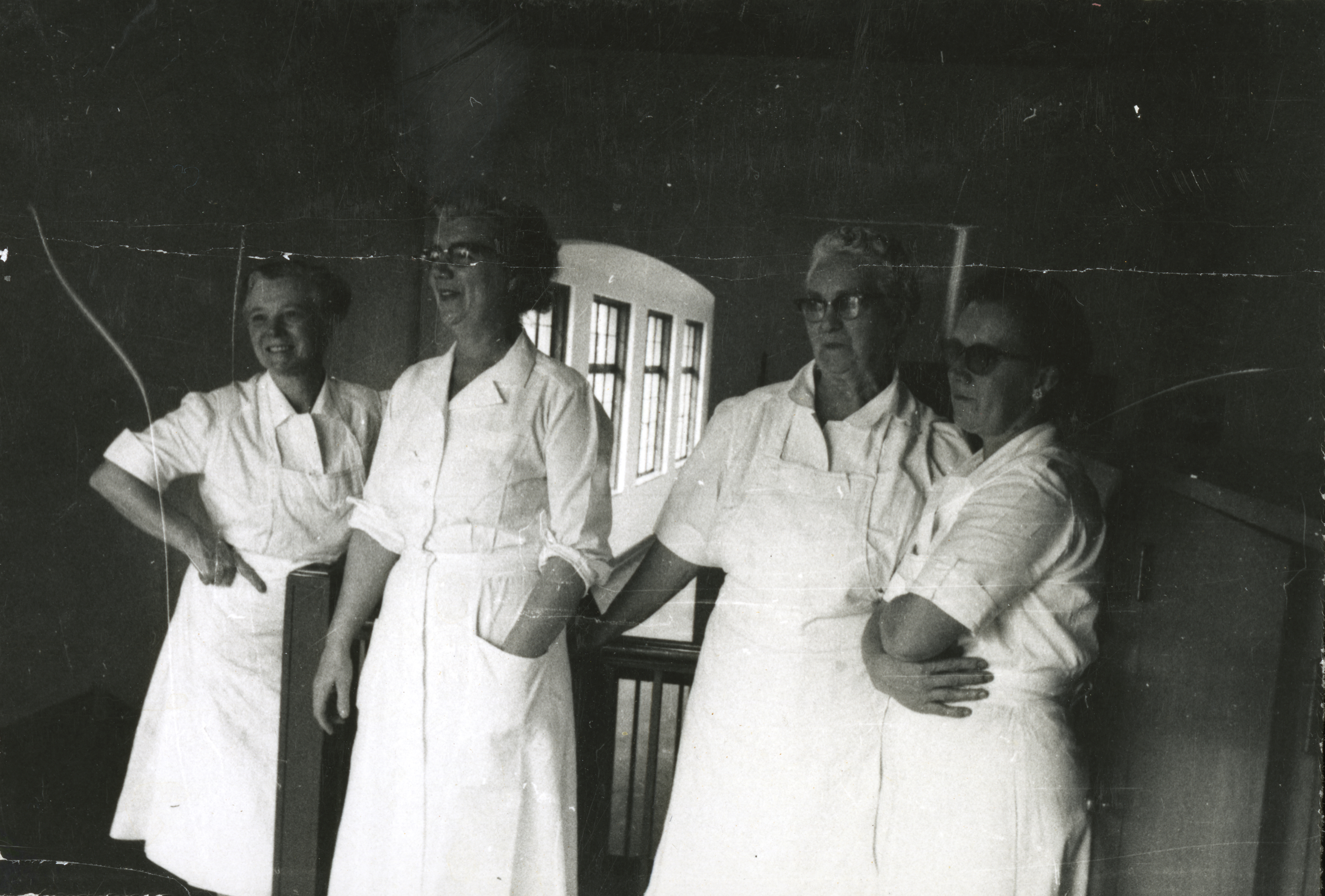
Flora Leslie (second from left) with cooking staff at Brookside School. Courtesy of Cranbrook Archives.

Born Flora MacFarlane in Alexandria, Scotland, in 1906, she made her way to the United States alone in December 1930. Journeying by ship on a very stormy sea, the passengers were required to stay below deck where they got to know each other more than they would have had they been able to wander on deck. Having worked in a photographer’s office in Scotland, Flora initially sought the same occupation in America.

But a fellow passenger Flora met aboard the ship told her that if she had no luck finding work, to contact her for employment. It is thus that Flora began to work for the Ward family in Pontiac, a family whose children were students at Cranbrook.

In 1932, Flora started working at Cranbrook, initially at Kingswood School. Flora married George Leslie in 1934, a landscaper and gardener, and later a superintendent of buildings at Cranbrook.

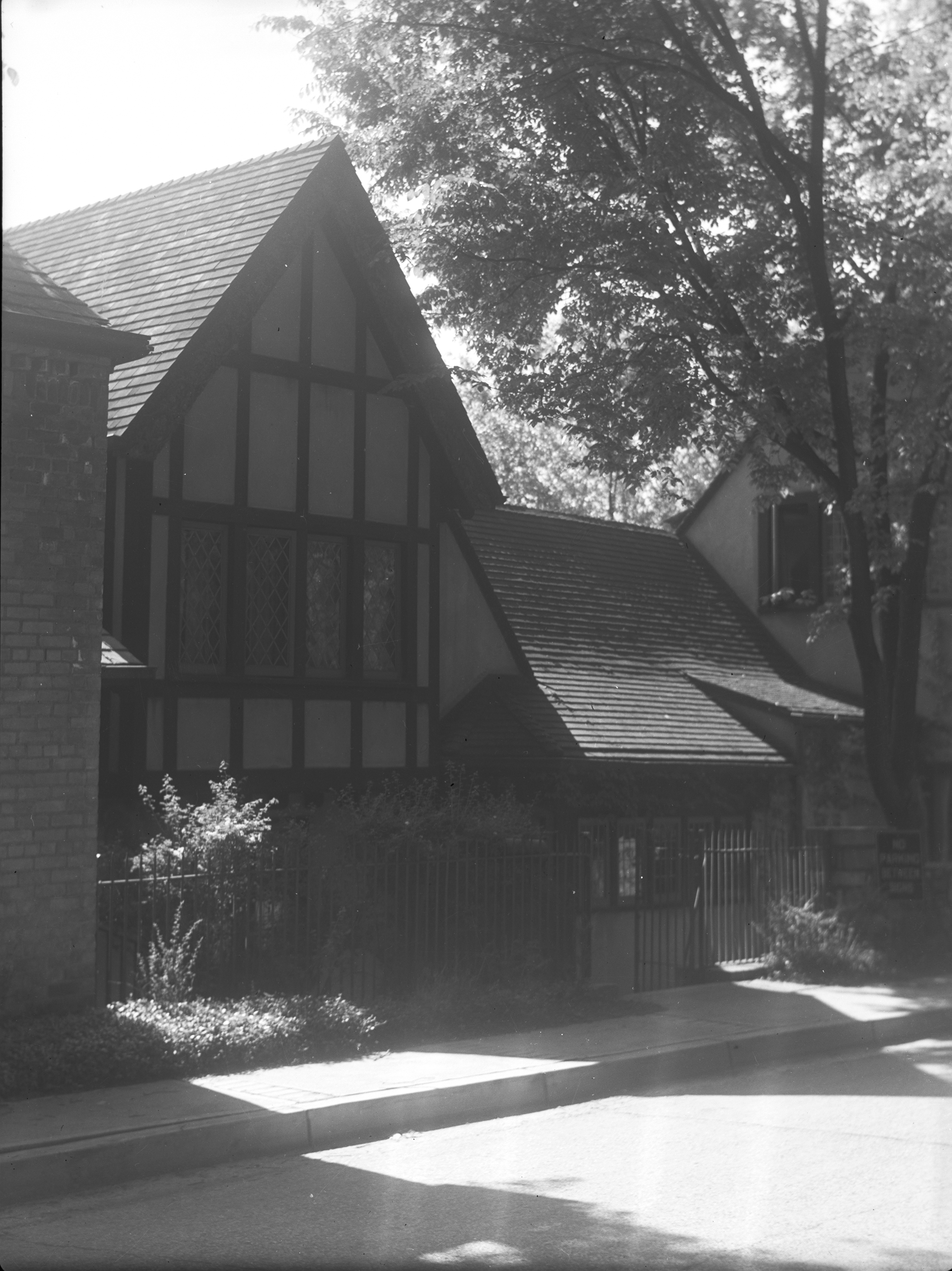
After several invitations from Jessie Winter, Headmistress of Brookside School, Flora became the dietician and food director at Brookside School, a position she held from 1934-1975. The position came with an apartment, and though at first Flora preferred to stay at Kingswood, which she describes as “light and bright and lovely,” Winter asked Flora and George back to Brookside one further time and had arranged the apartment beautifully. Most importantly, there was a brand-new Frigidaire refrigerator, a novelty in those days. As Flora recalled, seeing this small luxury she told the headmistress, “We’ll come!” The apartment was in the part of Brookside known as the ‘Ram’s House’ and had previously been occupied by Jessie Winter and by J. Robert F. Swanson.

View of the front of George and Flora Leslie’s apartment, known as the Ram’s House, circa 1935-1938. Courtesy of Cranbrook Archives.

During the war years, when food was in short supply, George and Flora Leslie kept Brookside stocked with vegetables—he grew them and she canned them.

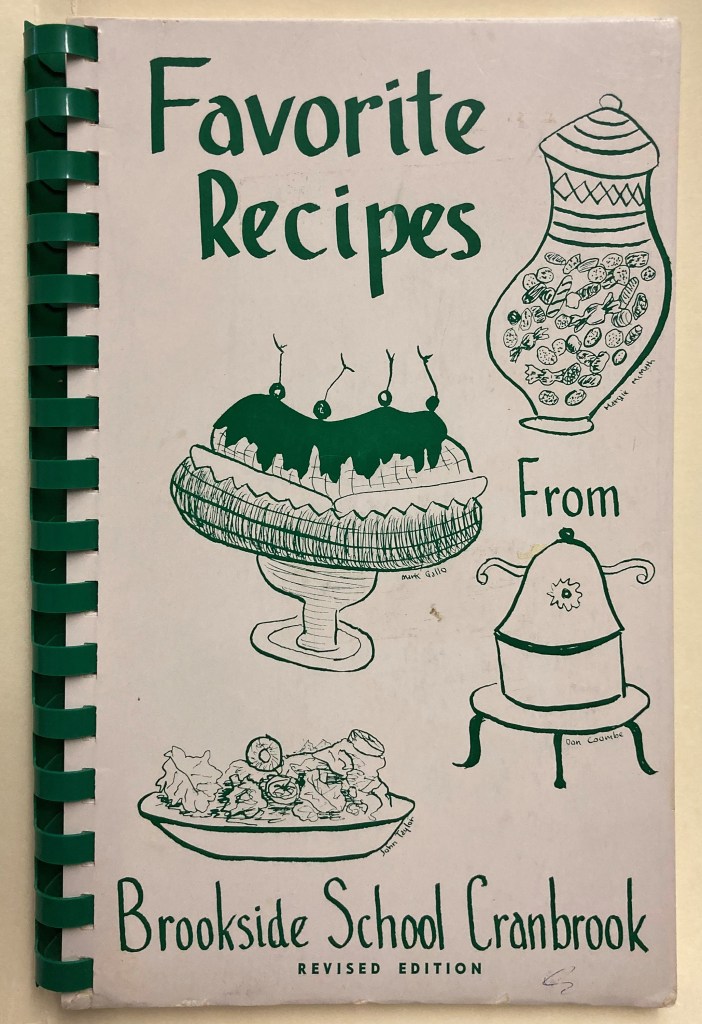
After feeding generations of students, Flora published many of her favorite and original recipes in the Brookside cookbook, Favorite Recipes, which are still enjoyed by alumni far and wide. Perhaps you might like to try one of Flora’s original recipes this Thanksgiving, or a dessert recipe from one of the faculty families?

Laura MacNewman, Associate Archivist, Cranbrook Center for Collections and Research

Discovering the University of Michigan in the collections of Cranbrook Archives

In October, the University of Michigan Osher Lifelong Learning group visited Cranbrook for a lecture, luncheon, and tours of our historic houses, the Art Museum, and Cranbrook Archives. In gathering materials related to the university, I found that my growing archival display began to tell a wonderful story of the early relationship between the Booth family and the University of Michigan, predominantly between 1918 and 1924. The story begins with the friendship of George Booth and Emil Lorch.

Born in Detroit in 1870, Lorch had studied at MIT and Paris, before graduating Master of Arts at Harvard in 1903. In 1906, he arrived at the University of Michigan to establish the School of Architecture, which remained a unit of the School of Engineering until 1931. The correspondence between Booth and Lorch covers a manifold of topics over many years.


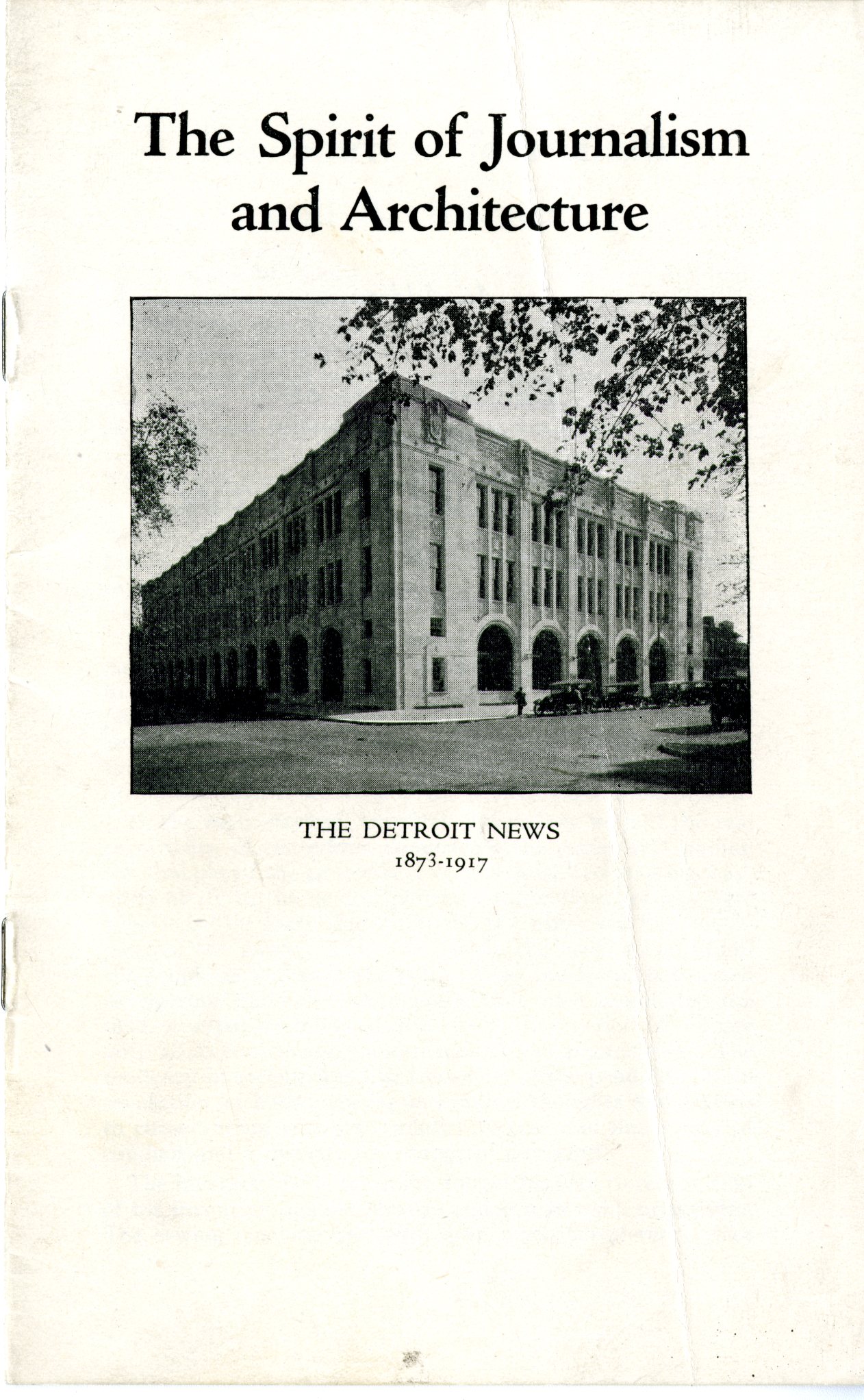
On January 11, 1918, George Booth gave an address to the students of the departments of Journalism and Architecture at the university, entitled The Spirit of Journalism and Architecture which focused on the development of the Detroit News business and the new News building, which had been recently completed.

1981-01 1-19

Program for an address, The Spirit of Journalism and Architecture, delivered by George Booth at the University of Michigan, January 11, 1918. Copyright Cranbrook Archives.

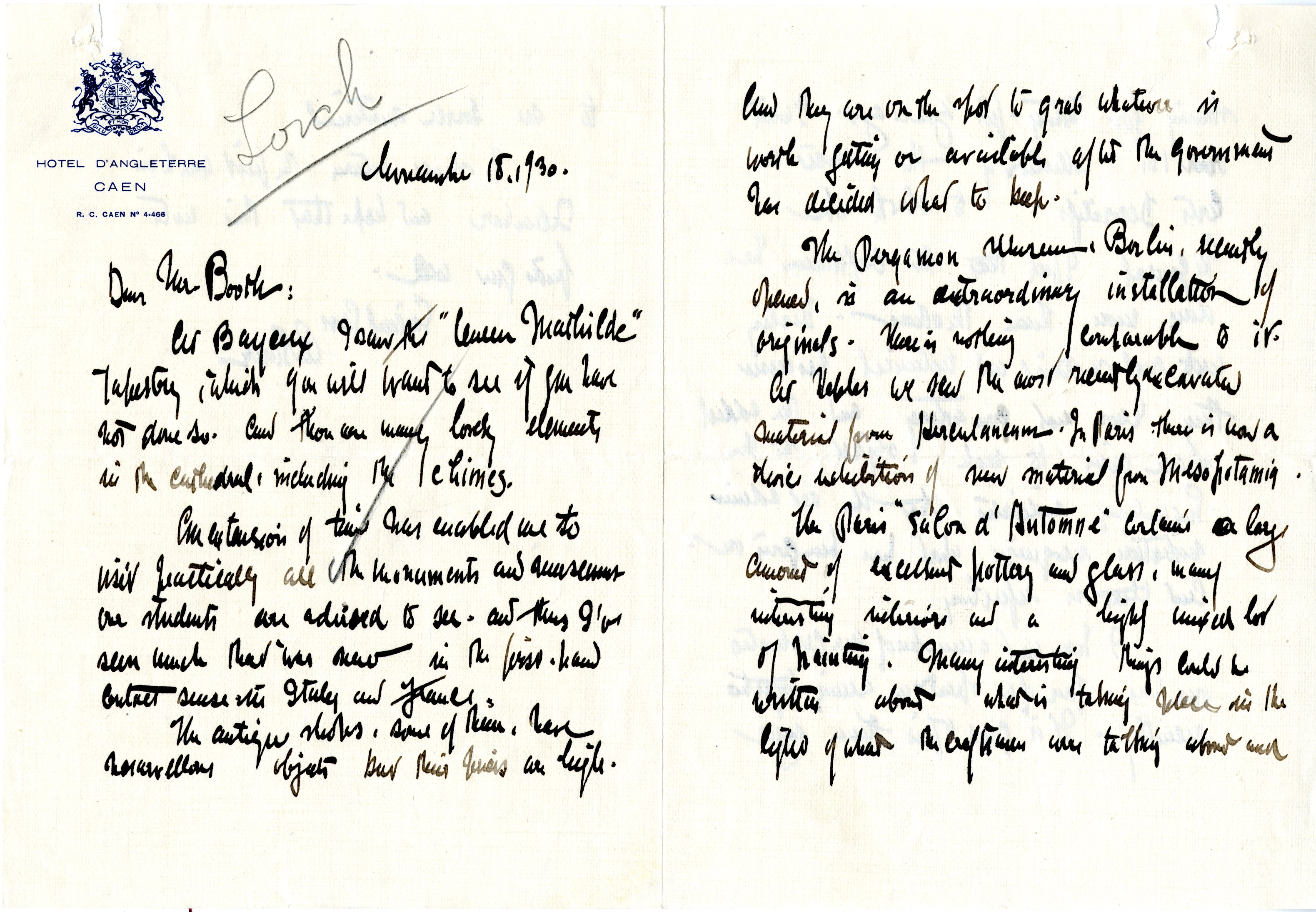
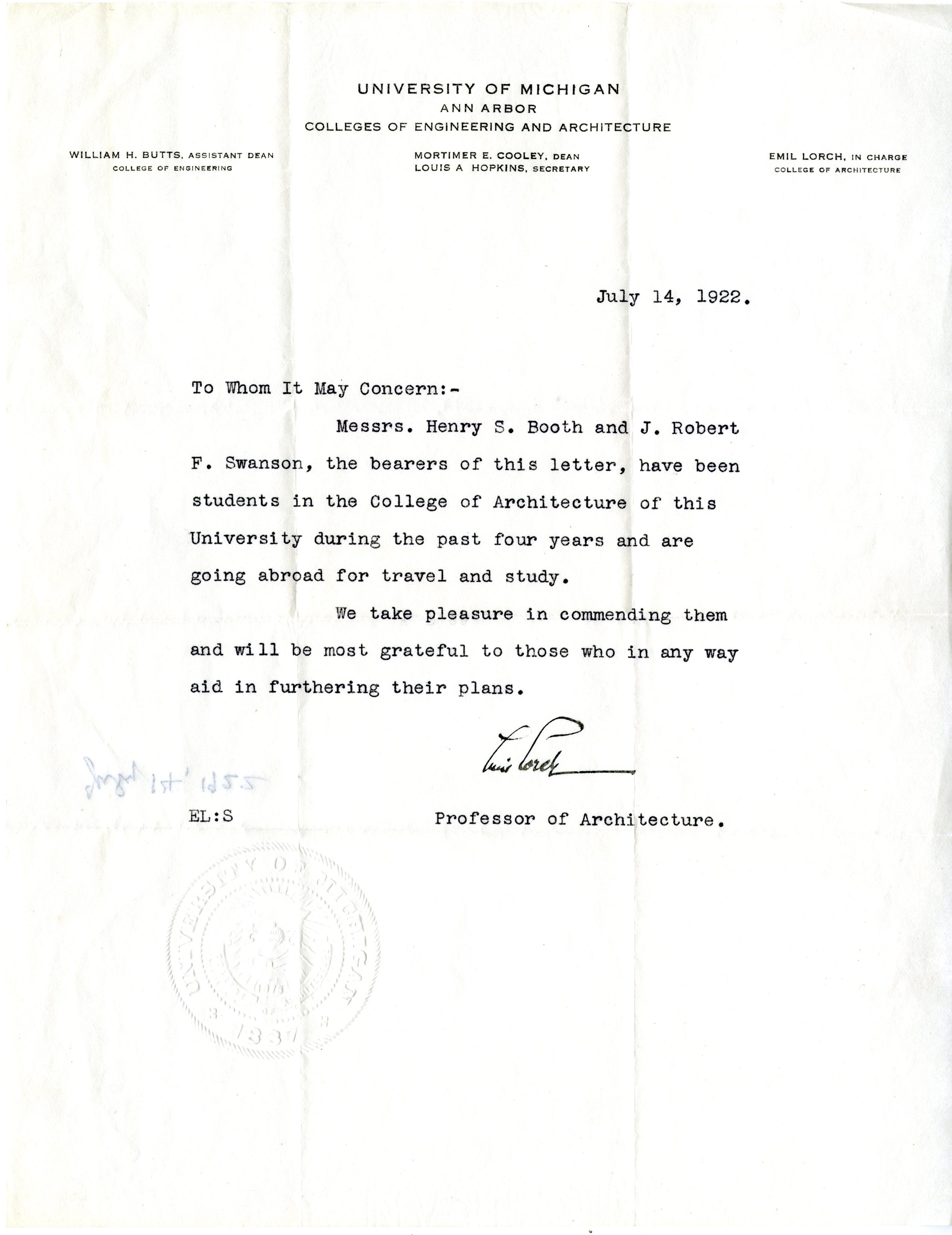
Later that year, in October, George’s son, Henry Scripps Booth began his studies in architecture at the university. It was there that he met J. Robert F. Swanson, with whom he traveled Europe for ten months beginning in June 1922, and later established the architectural practice Swanson and Booth between 1924 and 1926. Henry took with him letters of endorsement to help facilitate access to architectural treasures on their journey, including one from Professor Lorch:

1982-05 5-7 EL

Letter of introduction for Henry Booth from Emil Lorch, July 17, 1922. Courtesy Cranbrook Archives.

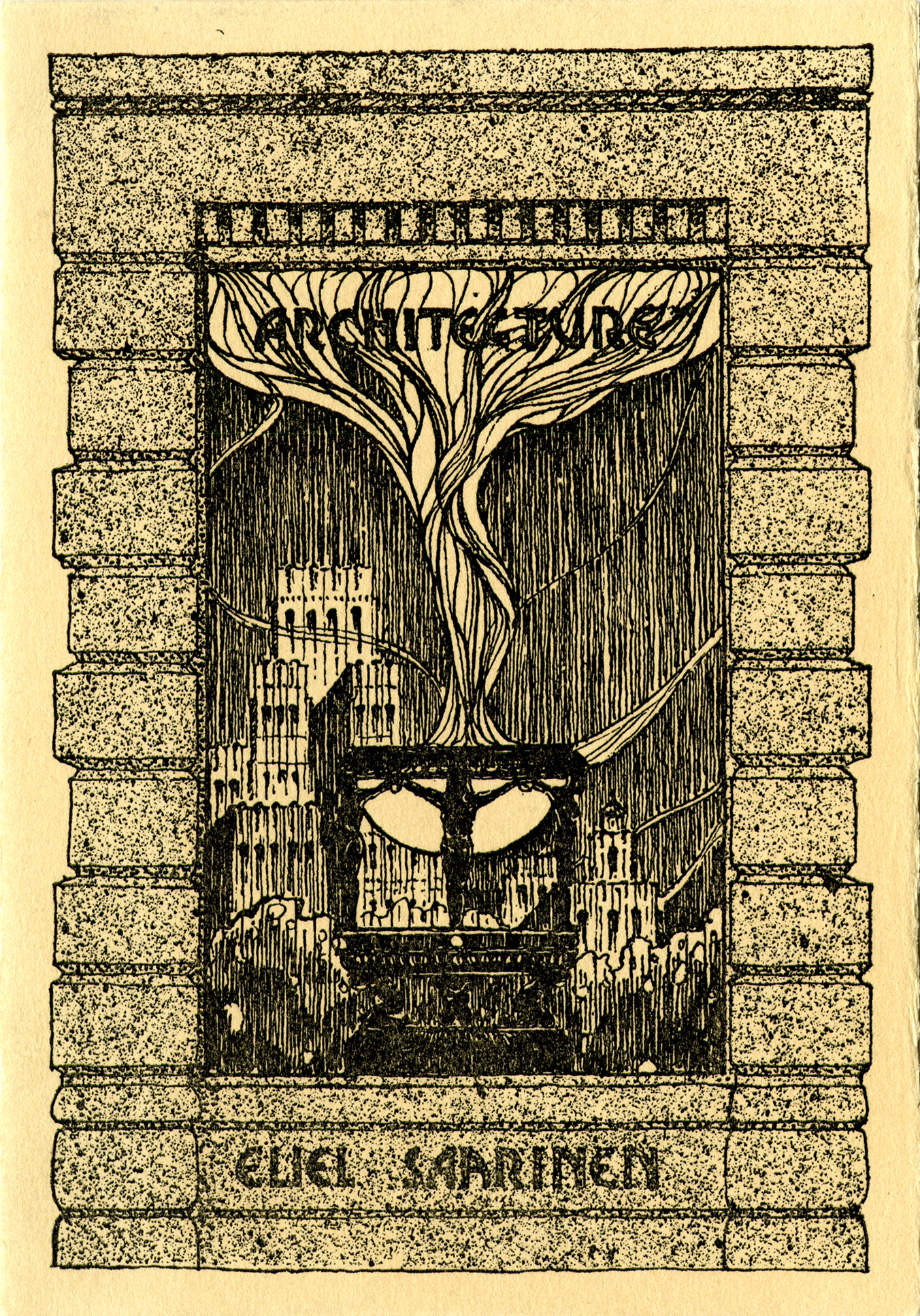
Eliel Saarinen arrived at the University of Michigan as a Visiting Professor at the invitation of Emil Lorch the next year, staying from September 1923 through 1925. To extend a warm welcome, Henry wrote, costumed, and performed in a pageant in honor of Saarinen. Many of Henry’s classmates performed in the pageant, including Ralph Calder and J. Robert F. Swanson, who also designed the program. The event took place on December 8, 1923, in the Michigan Union ballroom. Many of the members of the Michigan Society of Architects and the Michigan branch of the American Institute of Architects were present. During the dinner, George G. Booth made the principal address of welcome to Eliel.

1990-08 1-14 cover

Program for A Pageant of Arts and Crafts, a Reception for Eliel Saarinen, program design by J. Robert F. Swanson, December 1923. Courtesy Cranbrook Archives.

1990-08 1-14 p2

Interior of the program. Courtesy Cranbrook Archives.

Henry and Robert graduated from the University of Michigan in 1924. Graduating with them was Ralph Calder, who was also one of the first two students to win the George G. Booth Traveling Fellowship, with which he traveled to England, France, and Italy. The fellowship continues to this day. Calder was among the original staff of the Cranbrook Architectural Office, working on Cranbrook School and Thornlea House. He later went on to design many buildings for colleges and universities in Michigan, including Michigan State University, Western Michigan University, Wayne State University, Hope College, and Hillsdale College.

1981-01 13-20 p1

Letter concerning the Booth Traveling Fellowship from the first recipient Ralph Calder to George G. Booth, June 12, 1924. Notice the Michigan logo on the letterhead. Courtesy Cranbrook Archives.

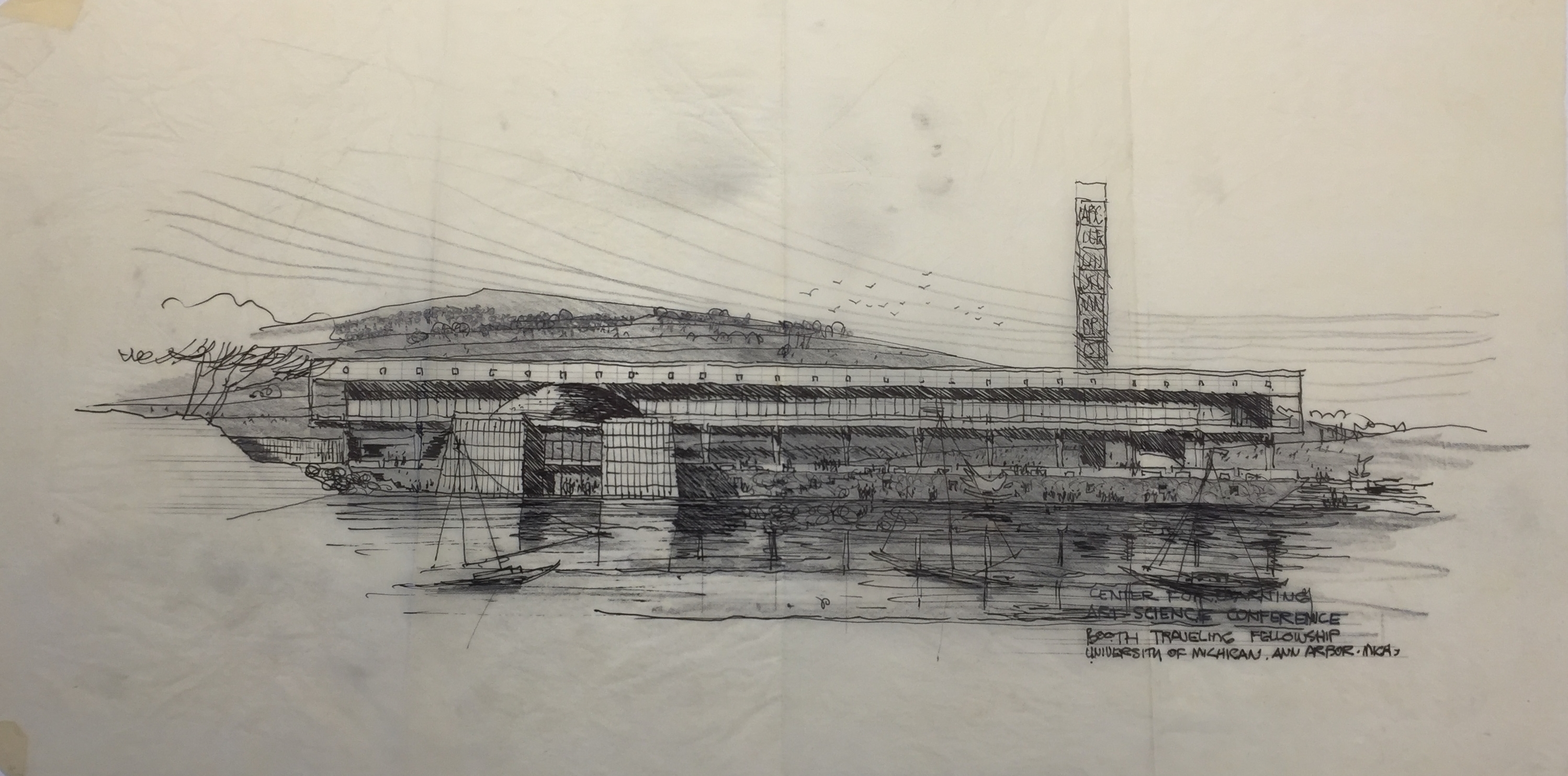
In another Cranbrook connection, Ralph Rapson submitted a Fellowship entry in 1938, and, while he didn’t win, his submission impressed Eliel Saarinen so much that Rapson was given a scholarship to the Art Academy.

AD.26.01.03

Ralph Rapson’s submission to the George G. Booth Traveling Fellowship, AD.26.01.03. Ralph Rapson Architectural Drawing Collection, Cranbrook Archives. Gift of Rip Rapson.

There is much more in our collections about the University of Michigan; this post has selected items covering only the early years. In preparing for the Osher tour, I realized that, while the contents of processed archival collections remain the same, what we find in them depends on the question being asked. The collections of George G. Booth, Henry S. Booth, the Cranbrook Foundation, Swanson Associates, Inc. are among the most highly used and yet there is always something new to learn, something wonderful to discover.

— Laura MacNewman, Associate Archivist

Might Willy not carve something for you?

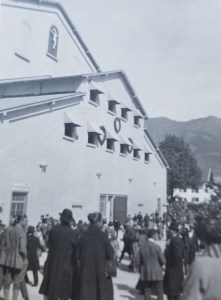
Oberammergau, a small Catholic village in Bavaria, Germany, is known for its woodcarvers and for its almost 400-year tradition of mounting an elaborate Passion Play.

20181130_134047

The Village of Oberammergau, 1922. Courtesy of Cranbrook Archives.

The Passion Play is performed in years ending with a zero. Due to economic instability, however, the 1920 performance of the Passion Play was postponed to 1922.

20181130_134027

Oberammergau Passion Play Theater, 1922. Courtesy of Cranbrook Archives.

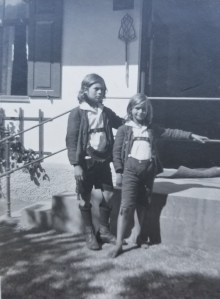
That year, Henry Scripps Booth and his friend J. Robert F. Swanson were traveling on a ten-month-long European tour and decided to see the rescheduled Passion Play. Henry and Bob stayed at Max Spegel’s pension in Oberammergau, Germany. It was there Henry met Herr and Frau Spegel, their sons Wilhelm and Max, and their daughter Sophie. After the trip, Henry corresponded with Frau Spegel and her son Wilhelm, until about 1937.

20181130_134144

Wilhelm and Max Spegel at their father’s Pension, 1922. Courtesy of Cranbrook Archives.

20181130_134227

Henry Booth with Wilhelm and Max Spegel at their father’s Pension, 1922. Courtesy of Cranbrook Archives.

In January 1924, Frau Spegel suggested, because some items Henry had ordered in Oberammergau had never arrived, “Dear Friend, might Willy [Wilhelm] not carve something for you?” From then on, Henry was agreeable to having the Spegel family carve wood panels, gates, doors, and ceilings for his new home, Thornlea.

20181130_134219

Wilhelm Spegel, 1922. Courtesy of Cranbrook Archives.

Carvings by the Spegels can be found throughout Thornlea:

Warming Doors

Warming Oven Doors in Thornlea Dining Room, 1926.

Wilhelm writes, in 1926, “I am sending you with this letter a pascel (sic) containing the two doors for the plate warmers . . . I myself have done all the carving and it took me about 55 hours . . . there is not much work for the wood carvers people have no mony (sic)

sideboard

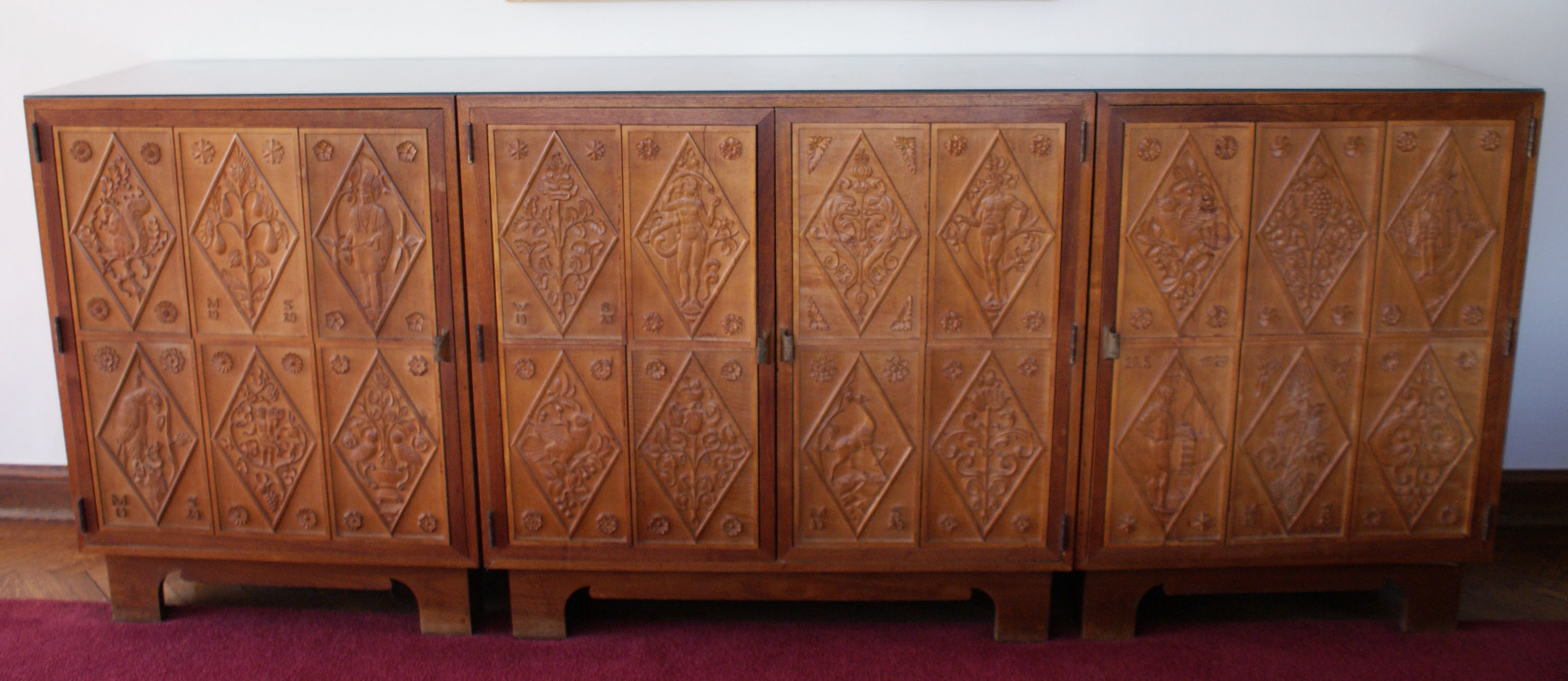
In the Thornlea Dining Room is a Three-section Sideboard with Carved Panels, 1926-1929, incised with geometric, floral, figural, and animal decorations. Wood panels depict figures such as Adam & Eve, Lindberg, Chief Pontiac, and Columbus.

In order to help his friends, Henry designed a three-section sideboard, into which he inset carved panels done by Wilhelm and Max Spegel — the original idea was to have the panels used as a frieze around a room, but that never materialized. Henry paid the Spegels $8 per panel and let them have creative input into the design and subject matter.

Oratory ceiling

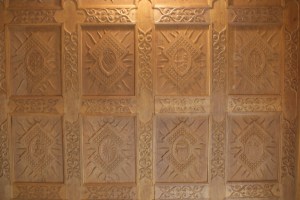
The ceiling of Thornlea Oratory, circa 1926.

The Spegels next created an elaborate set of ceiling panels for use in Thornlea’s Oratory. In a letter to Wilhelm in October of 1928, Henry writes, “The ceiling looks exceptionally well and we are thoroughly pleased with it. Everyone who sees your work certainly is complimentary towards it.

In 1929, Wilhelm had the idea to come to America, as jobs for woodcarvers were scarce at the time. He had asked Henry to “write a letter to the American Consulate in Stuttgart . . . so that they know who I am and that you have known me for many years.” There is no mention of the said letter in any of Henry’s replies but later letters indicate the move to America did not happen.

Henry and Carolyn Farr Booth visited the Spegels in Oberammergau in 1930, likely to see that year’s Passion Play. In the play, Herr Spegel was Rabbi Jakob, as he had been in 1922; Wilhelm was one of the man-servants of Pilate; and Max “will figure amongst the people.”

20181130_134803

Wilhelm Spegel, Carolyn Farr Booth, and Max Spegel in Oberammergau in 1930. Courtesy of Cranbrook Archives.

Letters from the Spegels stop in 1937. We do not know what happened to Wilhelm Spegel after 1937 except that he was married on April 17 of that year and died in 1951, at the age of 43. We do know that Max Spegel (the younger) served in the German Infantry during World War II and died in service in 1942 at the age of 30. His name appears on the war memorial in Oberammergau.

One item of note, and a fact that Henry S. Booth himself pointed out in a letter to his sister: George G. Booth’s favorite woodcarvers John Kirchmayer and Alois Lang were from Oberammergau, Germany. Henry seemed happy to have found his own carvers in the same city.

Leslie S. Mio, Associate Registrar

Three C’s: China, Cranbrook, and the Crane

It is generally known that our founder, George Booth, named our community “Cranbrook” after the Booth’s ancestral home in Kent, England. Even the portion of the Rouge River which flows through the property was called the “Crane” by the Booth family. I’m certain that Booth must have been aware of the derivation of the Cranbrook name, which began with the Old English words “cran broc” which means “crane marsh.” The spelling, which evolved over time from Cranebroca to Cranebroc then Cranebrok, eventually became Cranbrooke.

On a recent trip to China, I was surprised when I saw large bronze cranes at the Teng Wang Pavilion in Jiangxi province’s capital city of Nanchang. They reminded me of the crane iconography at Cranbrook. While I had previously noticed the use of cranes as a subject in Chinese paintings, I never really thought about their meaning. The Chinese have a symbol for everything including life, death, and immortality. Our guide informed us that the crane symbolizes good health, longevity, and auspiciousness to the Chinese people.

Photo taken at Teng Wang Pavilion, Nanchang, China, Jun 2017. Courtesy of the author.

A crane can also represent happiness and a soaring spirit. A crane that is shown outstretched wings and one leg raised stands for longevity while one shown flying towards the sun is illustrative of a wish or hope for social advancement. There is even a form of martial arts called the “White Crane Style” originated by the female martial artist Fang Qi Niang during the Qing Dynasty.

Back to Cranbrook! References to cranes have been widely used over the past 100 years, many in relation to Cranbrook School. Perhaps the most obvious is the use of The Crane as the title for the Cranbrook School for Boys school newspaper, which won by popular vote at the first meeting of the School League in 1928. (Today the paper is known as The Crane-Clarion since the merger with Kingswood School in 1985.) Below are block prints by Cranbrook School students found on the covers of the 1928 papers. In mid-March 1930, The Crane switched to a new format and instead of being mimeographed, was printed by The Cranbrook Press at the Academy of Art. To go along with this new format, a logo for the paper was designed, likely by art editor Alfred Davock.

The bronze crane inserts for the dining hall chairs for Cranbrook School (designed by Eero Saarinen) are still in use today. Henry Scripps Booth used the symbol of the crane as a directional marker on his architectural drawings. The Academy of Art Administration Building (designed by Swanson and Booth) features a crane brick pattern on the south façade of the building, and Eliel Saarinen designed two “bird motifs” for the bottom of the stairs at the First Arts and Crafts building. The drawings, in the collection of Cranbrook Archives, show Saarinen’s plan to use light and dark bluestone to delineate the body of the cranes with red slate for the eyes and black slate for the beaks. As recently as 1994, Katherine McCoy, co-chair of the Academy’s design department, developed the current Cranbrook community logo which features a contemporary symbol of the crane rising out of a large “C” for Cranbrook. It is shown below, alongside a humorous 1930 illustration for a column heading in The Crane.

While Cranbrook’s history with the crane may not be as long-standing as that of the Chinese, one might argue that we, too, have incorporated the crane into our community’s culture as a symbol not only of longevity, but one of respect for the legacy of our founders and our community’s heritage.

Leslie S. Edwards, Head Archivist

A Delightful Trip in a White Swedish Ship

Between 1925 and 1939, the Saarinen family made annual trips to Europe, always stopping for a time in Finland. They travelled by sea, usually departing from New York and arriving in Southampton, England or Gothenburg, Sweden. When they sailed directly to Scandinavia, they were abaord the MS Gripsholm.
MS Gripsholm 1951 mailed

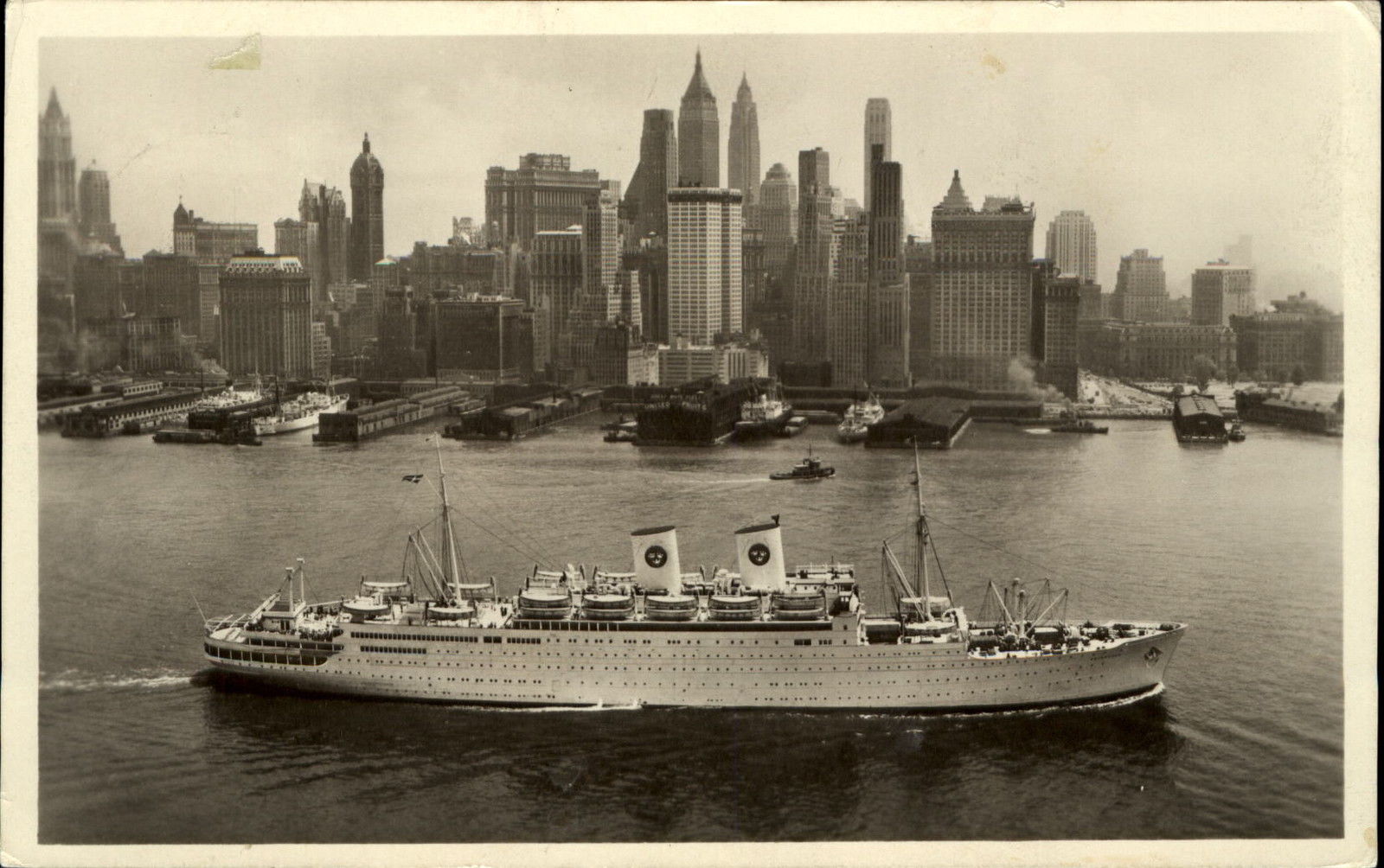
The MS Gripsholm in New York City, c. 1951. Courtesy of the Museum of the City of New York.

The Gripsholm was built in Newcastle-upon-Tyne, England, in 1924 for the Svenska Amerika Linien/Swedish American Line (SAL). The SAL was founded in 1914 as a direct Swedish-North American cargo and passenger shipping line, and the Gripsholm was the company’s first luxury liner. She was also the first diesel-engine transatlantic passenger liner, which is why she is the MS (or Motor Ship) Gripsholm. After 1929, all the SAL fleet was painted white, giving rise to the moniker “A delightful trip in a white Swedish ship.”

Aboard the MS Gripsholm, first class passengers enjoyed all the traditional features of luxury transatlantic liners (libraries, writing rooms, gyms, a pool, garden rooms, smoking parlors, bars, etc.), along with distinctly Nordic options, like folk dancing, Swedish foods, and a fully Swedish crew.

Along with the port of Gothenburg’s closer proximity to Helsinki, it was perhaps these northern-European comforts that led the Saarinens, who were Swedish-speaking Finns, to repeatedly choose the Gripsholm for their summer journeys. Aboard the Gripsholm in 1929, this photo was snapped on deck showing Eliel, his son-in-law J. Robert F. Swanson, months-old Bob Swanson, and Eliel’s daughter Pipsan Saarinen Swanson. The family captioned the photo “Last Dash Before the Crash.”

Eliel Bob Bobby Pipsan on the Gripsholm 1929

Eliel, Bob, Bobby, and Pipsan aboard the MS Gripsholm, 1929. Courtesy Cranbrook Archives.

In 1934, Eliel, Loja, Pipsan, Bob, and their now five-year-old son Bobby were again aboard the Gripsholm. On the SAL stationery, Loja wrote a letter back to George and Ellen Booth at Cranbrook. She writes, “I wanted tell you again how happy Eliel and I have been at Cranbrook and how thankful we are to you because you want us there.” She continues:

“So far we are well off although neither Pipsan nor I knew what we took over us in taking Bobbi along. He is like a firework. He is nowhere and everywhere. He hasn’t climbed up the smoke stack yet neither has he ridden on a whale’s back, but he has done other things enough to worry us.”Letter from Loja Saarinen to George Booth_GGB Papers 19-4

On this same trip, a photograph of Pipsan and little firework Bobby was sent back stateside and ran in the local papers here in Oakland County. Pipsan is shown in a fashionable dress and hat, quite possibly of her own design, as at the time she was head of the Academy of Art’s short lived Fashion Department. Pipsan, like her mother, made many of her own clothes throughout her life.IMG_3206

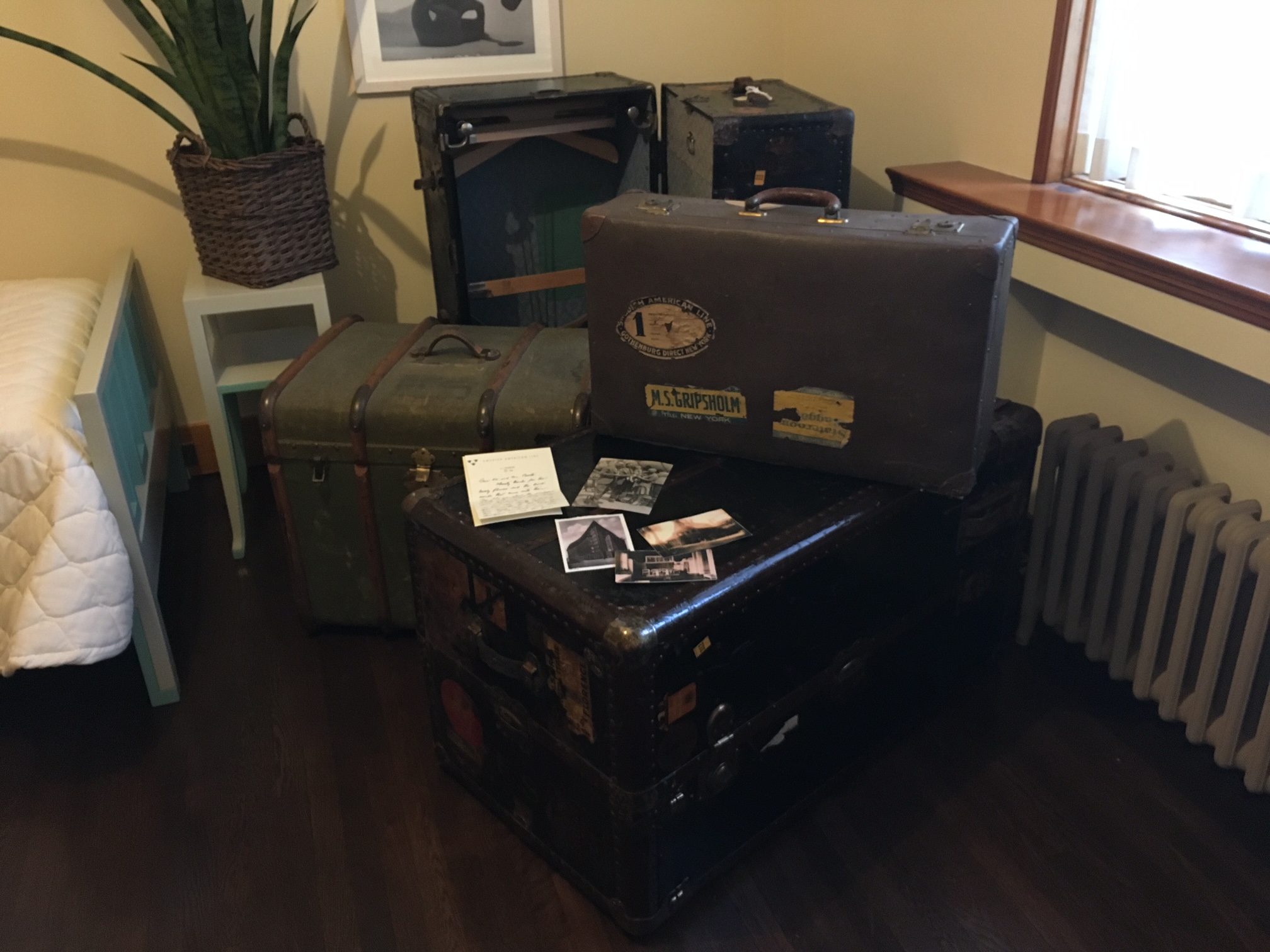
In the Cranbrook Cultural Properties collection, we have the Saarinen’s steamer trunks and suitcases that they used aboard the Gripsholm and other ships. One of the suitcases has its stickers from the MS Gripsholm, still prominently called out in the Swedish pale blue and yellow.
IMG_0516

The Saarinen’s steamer trunks and suitcases. On view now in “Saarinen Home: Living and Working with Cranbrook’s First Family of Design”

During World War II, when the Saarinen’s remained in the States aiding the U.S. war effort and organizing the Finnish Relief Fund, the Gripsholm was charted by the U.S. as a repatriation ship. It carried German and Japanese citizens to exchange points for U.S. and Canadian citizens. Gripsholm (and her neutral Swedish crew) made these exchanges at neutral ports, including Stockholm, Lisbon, Portuguese Goa, and Lourenço Marques. Over 12,000 Americans who had been in enemy territory at the outbreak of war or were prisoners of war returned home aboard the Gripsholm in this diplomatic capacity.

In 1954, SAL sold the Gripsholm to a German company. She was rechristened the MS Berlin and entered into service as a Canadian immigration ship, sailing from points in Europe to Pier 21 in Halifax (the Ellis Island of Canada). The ship was retired and scrapped in 1966, but an image of the Gripsholm (in her Berlin livery) lives on in the Canadian passport!

Copies of the Saarinen’s letters sent from the Gripsholm, photographs of the family about the ship, and the trunks and suitcases used by the family are all currently on view in “Saarinen Home: Living and Working with Cranbrook’s First Family of Design” in Saaarinen House, open for tours Friday and Saturdays at 1pm and Sundays at 1 & 3pm through the end of July. Tonight is our last Finnish Friday, where there is an open house at Saarinen House and games and cake in its courtyard, also, the Cranbrook Art Museum will be open; there are Finnish-related treasures out in the Archives Reading Room; and a cash bar on the Peristyle. Come on by for our last Finnish Friday!

Kevin Adkisson, Collections Fellow, Cranbrook Center for Collections and Research

Upcoming Day Away: Albert Kahn and the University of Michigan

Henry Scripps Booth, photographer. Pleasures of Life, Vol. IV. Courtesy Cranbrook Archives.

Henry Scripps Booth, photographer. Pleasures of Life, Vol. IV. Courtesy Cranbrook Archives.

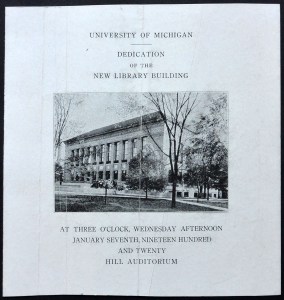
In this 1919 photo taken by Henry Scripps Booth of his two friends and architecture classmates Fred Morse and Martin Lexen, they’re all hanging out (and almost off of!) the roof of the University of Michigan’s brand new General Library by architect Albert Kahn. I found this snapshot in volume four of Booth’s Pleasures of Life series, which has lots of great images of the Booths at Cranbrook and of his friends at the university (where Henry studied from 1918- 1924). The building they’re sitting on here, known as the Harlan Hatcher Graduate Library since 1971, figures prominently in the Center for Collections and Research’s next Day Away trip on October 28!

Henry Scripps Booth’s Scrapbook Album, Courtesy Cranbrook Archives.

Dedication of the new (Hatcher) library building, 1920. Henry Scripps Booth’s Scrapbook Album, Courtesy Cranbrook Archives.

While we won’t be quite so daring as to dangle our feet off the roof, you are invited to join the Center as we explore Albert Kahn’s architecture at University of Michigan. Best known for his industrial architecture in and around Detroit (and of course Cranbrook House), this tour will introduce you to his academic buildings. The day includes morning lectures followed by in-depth tours of five Kahn structures (including rarely accessible spaces like the carillon in Burton Memorial Tower), all interspersed with narrated walks and drives.

I should mention, though, that the Day Away won’t just be about touring. We’ll stop for a delicious lunch at Taste Kitchen, an acclaimed new restaurant by owner and chef Danny Van. It came highly recommended by friends of the Center, and we’re very happy Van has designed a three course meal, with optional drink pairings, just for us.

Henry Scripps Booth, photographer. Pleasures of Life, Vol. IV. Courtesy Cranbrook Archives.

Henry Scripps Booth, photographer. Pleasures of Life, Vol. IV. Courtesy Cranbrook Archives.

In this photo, we see Booth’s friend Fred’s “long, lankey and lean” body around a street sign—with assistance from the bottom-half of another Cranbrook luminary and friend of Henry, J. Robert F. Swanson.* The photo shows the two goofing around on a road outside of Ann Arbor. For this post’s purposes, I’ll imagine they’re on the very route we’ll be taking from Cranbrook to Ann Arbor on October 28! There shouldn’t be any dangerous curves on our trip, though it’s guaranteed to be informative, delicious, and fun. Call and get your tickets today!

*Did you know Booth and Swanson met studying architecture at U of M, where they also encountered a certain visiting professor, Eliel Saarinen?

-Kevin Adkisson, Collections Fellow, Cranbrook Center for Collections and Research

Create a website or blog at WordPress.com