Marthe Julia LeLoupp

Marthe Julia LeLoupp, born October 10, 1898, in Plogoff, Finistere, France, was an original faculty member of Kingswood School, where she taught French from 1930-1956. Having completed the Diplȏme de fin d’études at the Lysée Brizeaux, Quimper, Finistere, France in 1917, LeLoupp then completed her BA at Macalester College, St. Paul, Minnesota in 1920. She later completed graduate work at the University of Chicago (1929-1931) where she worked on an MA Thesis: Influence du Breton sur le français régional en Bretagne. With teaching experience in schools and colleges in Minnesota, South Dakota, New York, New Jersey, and Indiana, LeLoupp arrived at Cranbrook in 1930.

P1098

Marthe LeLoupp, 19 Feb 1952. Photographer, Harvey Croze. Cranbrook Archives.

Correspondence with LeLoupp in the Kingswood School Records is limited but suggests that she would return to France each summer. A letter from LeLoupp, written in Paris on September 17, 1939, tells how she left America in June with ticket safely tucked in her purse for a return September 6th on the Normandie. But, the declaration of war had made this impossible and her ticket had been passed, initially to the DeGrasse to sail on the 13th and then to the Shawnee, due to depart Bordeaux on the 22nd. The Shawnee, she explains, had been, “sent to the rescue of a few hundred thousand American citizens, who are anxiously waiting for transportation westward.”  On arriving to Bordeaux on September 22, 1939, Le Loupp writes that they were told, to their great dismay, that the Shawnee would not sail until the 26th. While LeLoupp’s letters were on their way to Cranbrook, Ms. Augur [Kingswood School Headmistress, 1934-1950] was searching for LeLoupp, first sending a telegram and then consulting the American Consul. LeLoupp’s mother returns Ms. Augur’s telegram with a letter explaining her daughter’s situation. Discovering this story recently, I wondered at the extraordinary resonance with current concerns for travelers, and for those unable to complete their journeys.

1980-01 9-14 (1)

Telegram, Ms. Augur to Mlle. LeLoupp, September 23, 1939. Cranbrook Archives.

Despite the harrowing circumstances, LeLoupp did eventually make it across the Atlantic. She continued to teach French at Kingswood School until July 1956, when she writes from Bénodet in France to request to be released from her 1956-57 contract due to poor health, ending the letter, “I find it impossible to express my regret in words.” Not much else is known about LeLoupp’s time at Cranbrook, except that she lived for twelve of her years at Cranbrook in the apartments above Kingswood School, which were converted in 1945 from the ballroom known as Heaven. In the KBC [Kingswood Brookside Cranbrook] Quarterly of May 1973, LeLoupp was remembered thus,

“a “beautiful person” with a “super smile”. She was “sweet and kind” and always beautifully dressed in classic tweeds. Peering over her bi-focals at her students and reciting in her strong French accent the terrible weekly dictes that no one could understand, she was one of those who inspired her girls to excellence or accomplishment in French that is still one of Kingswood’s greatest assets”.

Laura MacNewman — Associate Archivist
 

Cranbrook-LIFE

2020 marks ninety years of temporary traveling exhibitions at Cranbrook Art Museum. Perhaps one of the best examples that brings to life this aspect of the Museum’s programs is Cranbrook’s brief but wildly successful partnership with LIFE Magazine.

The Cranbrook-LIFE Exhibition of Contemporary American Painting opened in 1940, ten years after Cranbrook Art Museum hosted its first traveling exhibition, organized by the American Union of Decorative Artists and featuring contemporary interior design. The idea of temporary traveling exhibits at Cranbrook began the same year as the permanent collection was established by founder George G. Booth. It furthered Booth’s commitment to presenting contemporary art as foremost a learning tool for Academy of Art students. It was intended “to remind our students that art is a living thing and that the record of our times is being created from day to day by the artists of this age, and in so doing perhaps to stimulate the creative spirit among those who work here.”

LIFE_judging

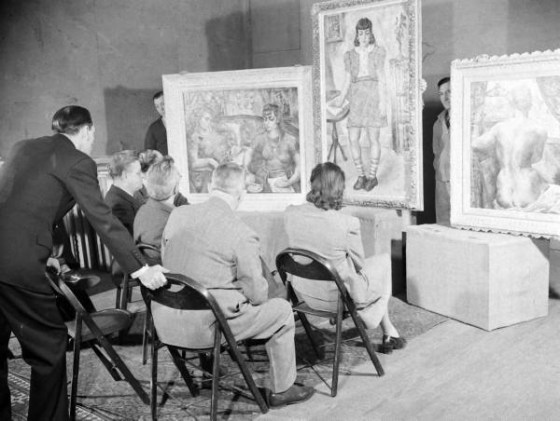
Judges examine paintings in New York, April 1940. Hansel Meith, photographer. Copyright Time Inc.

Cranbrook-LIFE was a celebration of contemporary U.S. art meant to symbolize “America’s increasing responsibility as a democratic world art center.” (Life, May 27, 1940) As such, LIFE invited sixty painters, living and working in America, to submit three paintings to be voted on by a jury of six. The painters included Edward Hopper, Charles Sheeler, and Cranbrook’s own Zoltan Sepeshy. The jury, comprised of Sepeshy, two leading art museum directors, an editor at LIFE Magazine, a representative from the Federal Works Agency Section of Fine Arts, and a well-respected American painter and educator, convened in a New York City warehouse where they spent four hours whittling down 180 submissions to the final sixty paintings shipped to Cranbrook for the show. One of these was Grant Wood’s American Gothic! Loaned by the Art Institute of Chicago, the already famous painting appears to be the only piece in the exhibition to come from another art museum.

5523-5

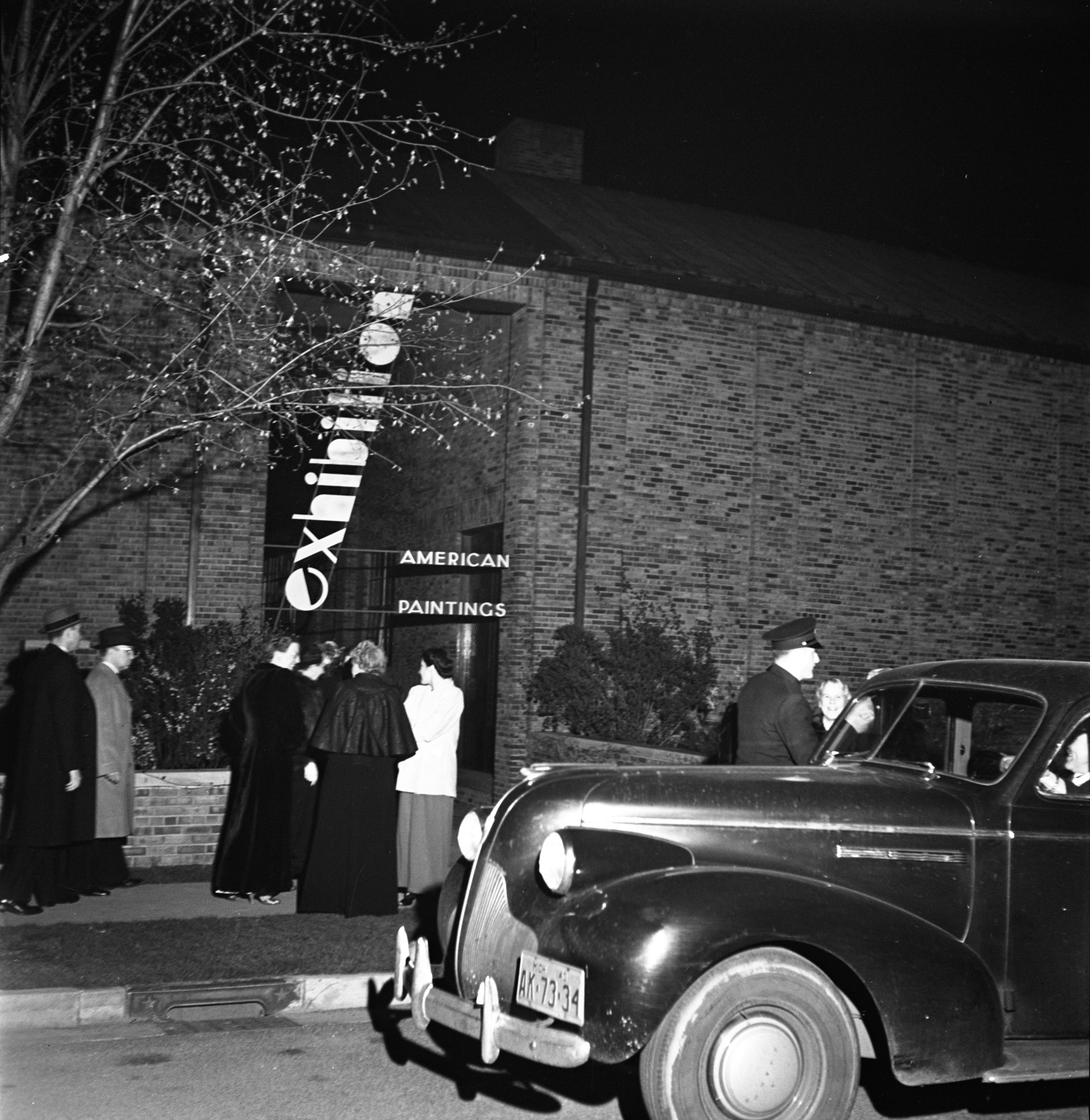
Opening night attendees arrive. Courtesy Cranbrook Archives.

If you’re at all familiar with LIFE, you may be asking yourself why a popular weekly magazine, known for its photographic general-interest stories, would make a foray like this into the art world? According to a 1940 TIME Magazine article, in the previous three years,  “the No. 1 U.S. source of popular knowledge of U.S. art has been LIFE, which has reproduced for the man-in-the-street’s weekly dime some 452 paintings (usually in full color) by U.S. artists.” Your next question might be why it was held at Cranbrook, as opposed to, say, the newly constructed Museum of Modern Art building in New York City? Florence Davies of the Detroit News may have answered that, when she wrote at the time: “Life Magazine picked Cranbrook not only because of the enchanting setting of the place as a whole, but more particularly because it found there ‘work in progress—an atmosphere of creative activity.’”

5523-11

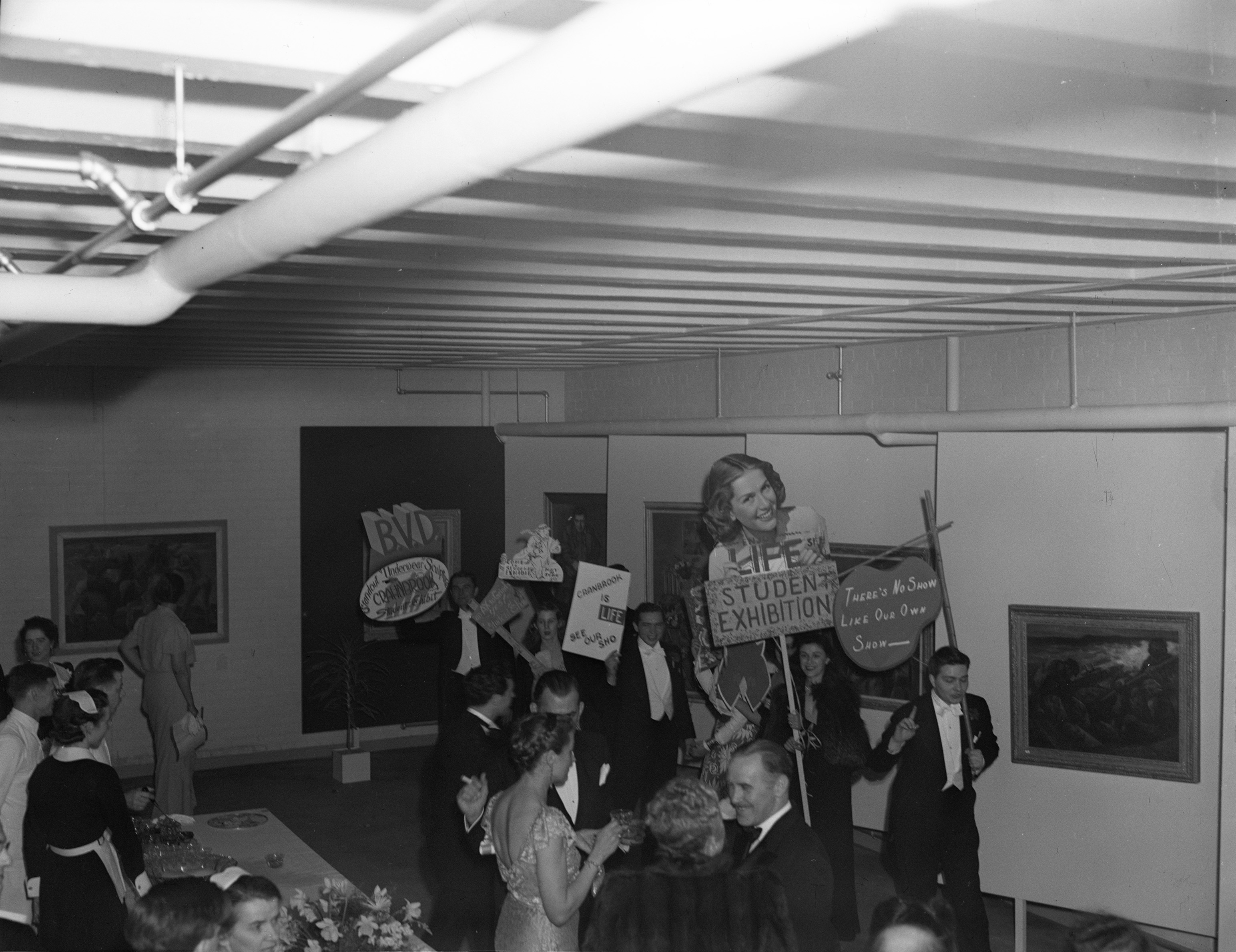
Academy of Art students parade through the opening night gala reminding attendees of the student exhibition simultaneously on display at the Cranbrook Pavilion. Courtesy Cranbrook Archives.

The exhibition drew an estimated 2,500 national and international visitors in the short two weeks it was on display from May 17-June 2, 1940. Because of the size of the show, it could not be held in the current museum building on Lone Pine Road and Academy Way (Eliel Saarinen’s museum building began construction during the exhibition). And, as the Academy student exhibition was currently occupying the Cranbrook Pavilion, the decision was made to utilize the Academy’s Painting Department Studios. Opening night was a festive gala. Attendees, including George and Ellen Booth, Loja and Eliel Saarinen, Edsel B. Ford, Albert Kahn, and “1,000 Detroit socialites braved wintry winds” in formal attire. (Time, June 3, 1940)

5533-1

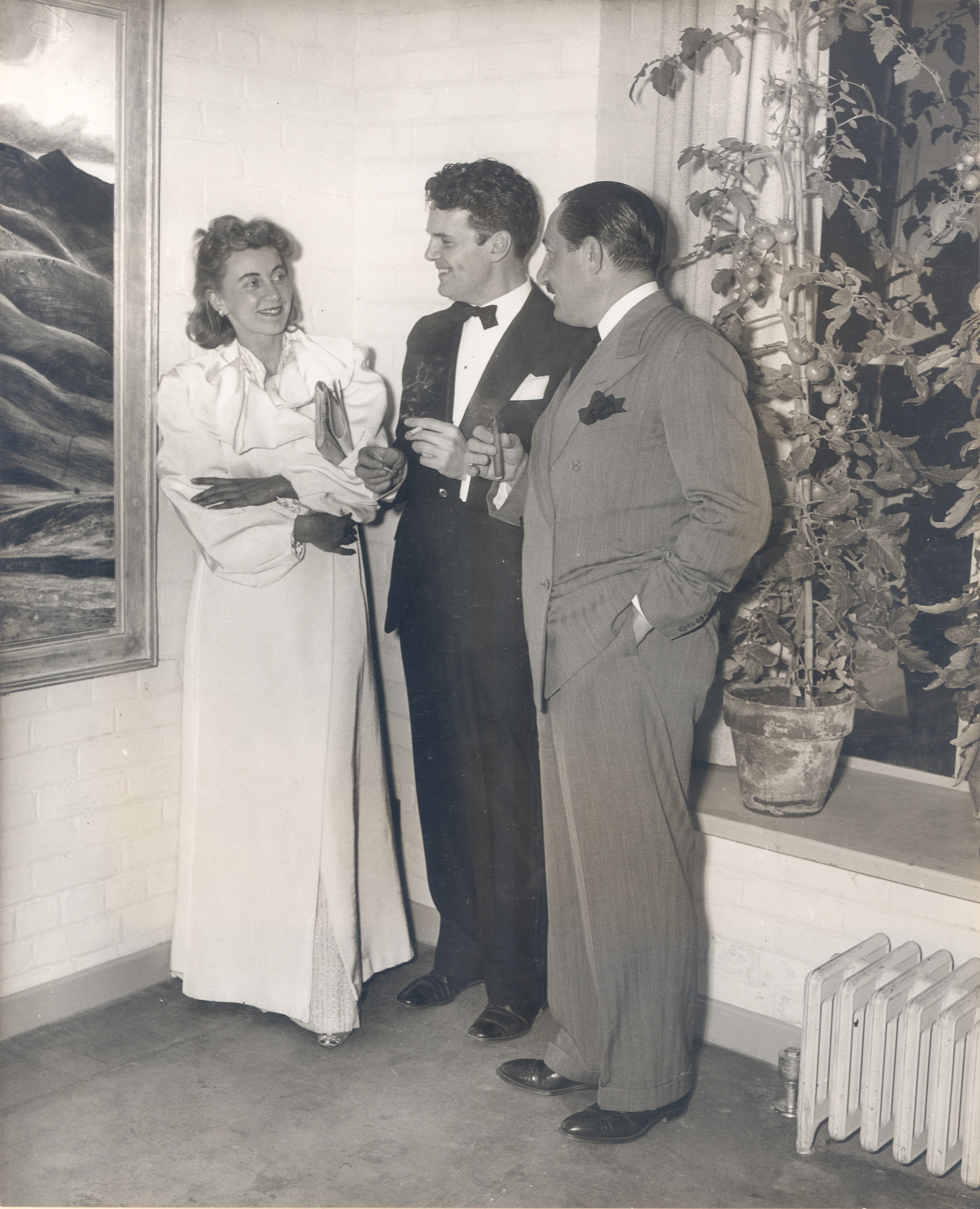
Marianne Strengell, Charles Eames, and Richard Reinhardt. Richard A. Askew, photographer. Courtesy Cranbrook Archives.

Coming on the heels of the Great Depression and during the beginning months of the War in Europe, pro-American sentiment was high, as evidenced by the placement of potted American-grown tomatoes in windowsills as decoration. According to TIME Magazine, the music for the evening was by U.S. composers and refreshments included “Rhine wine flavored to taste like U.S. new-mown hay.” (!?)

Cranbrook-LIFE marks the beginning of the Cranbrook Art Museum Exhibition Records, which illuminate thirty-six years of temporary traveling exhibits, and are rife with names of renowned artists that have exhibited at Cranbrook throughout its history.

It’s not all in the past, though! Don’t miss Cranbrook Art Museum’s current traveling exhibition,  In the Vanguard: Haystack Mountain School of Crafts, 1950-1969, on view until March 8, 2020.

Deborah Rice, Head Archivist

Oliver LaGrone: Sculptor, Poet, Educator, and Humanitarian

Oliver LaGrone (1906 – 1995), was a sculptor, poet, educator, and humanitarian; he was also the first African-American student at Cranbrook Academy of Art.

Oliver LaGrone circa 1941. Courtesy Cranbrook Archives.

Oliver LaGrone circa 1941. Courtesy Cranbrook Archives.

Clarence Oliver LaGrone was born December 9, 1906, in McAlester, Oklahoma Territory, to Lula Evelyn Cochran and William Lee LaGrone. William was a minister at the African Methodist Episcopal Zion Church, and an avid writer. He raised Oliver to appreciate education and his African-American heritage. As Oliver later told a reporter from the Albuquerque Journal (Cranbrook Archives):

My father was a gifted writer, and also a builder, and extremely creative. He regaled us with his poems. I was brought up in an environment like that.

In 1928, Oliver attended Howard University in Washington, D.C., where he studied English and economics, planning on becoming a lawyer. He left school in the summer of 1929 to help his family with their move to Albuquerque, New Mexico. After his father passed away in 1930, he chose not to return to Howard, and in 1934 he began to attend the University of New Mexico. He worked as a teaching assistant to architect-sculptor, William Emmet Burk, Jr.

Oliver graduated from the University of New Mexico in 1938 with a Bachelor’s Degree in sociology and fine arts. He was among the artists employed by the Federal Works Progress Administration (WPA). In 1937, he created his sculpture Mercy for the Carrie Tingley Children’s Hospital.

It was in Albuquerque that he met and married Irmah Cooke, September 21, 1938. During the 1940 census, Oliver, Irmah, and newborn baby Lotus Joy were still living in Albuquerque, where Oliver was working as a mail carrier. However, later in 1940, the family moved to Michigan.

In the fall of 1941, at his wife’s encouragement, Oliver began studying with sculptor Carl Milles at Cranbrook Academy of Art. His tuition was covered by a scholarship from the Student Aid Foundation of Michigan. In March 1942, Oliver won a McGregor Fund scholarship for advanced study in sculpture.

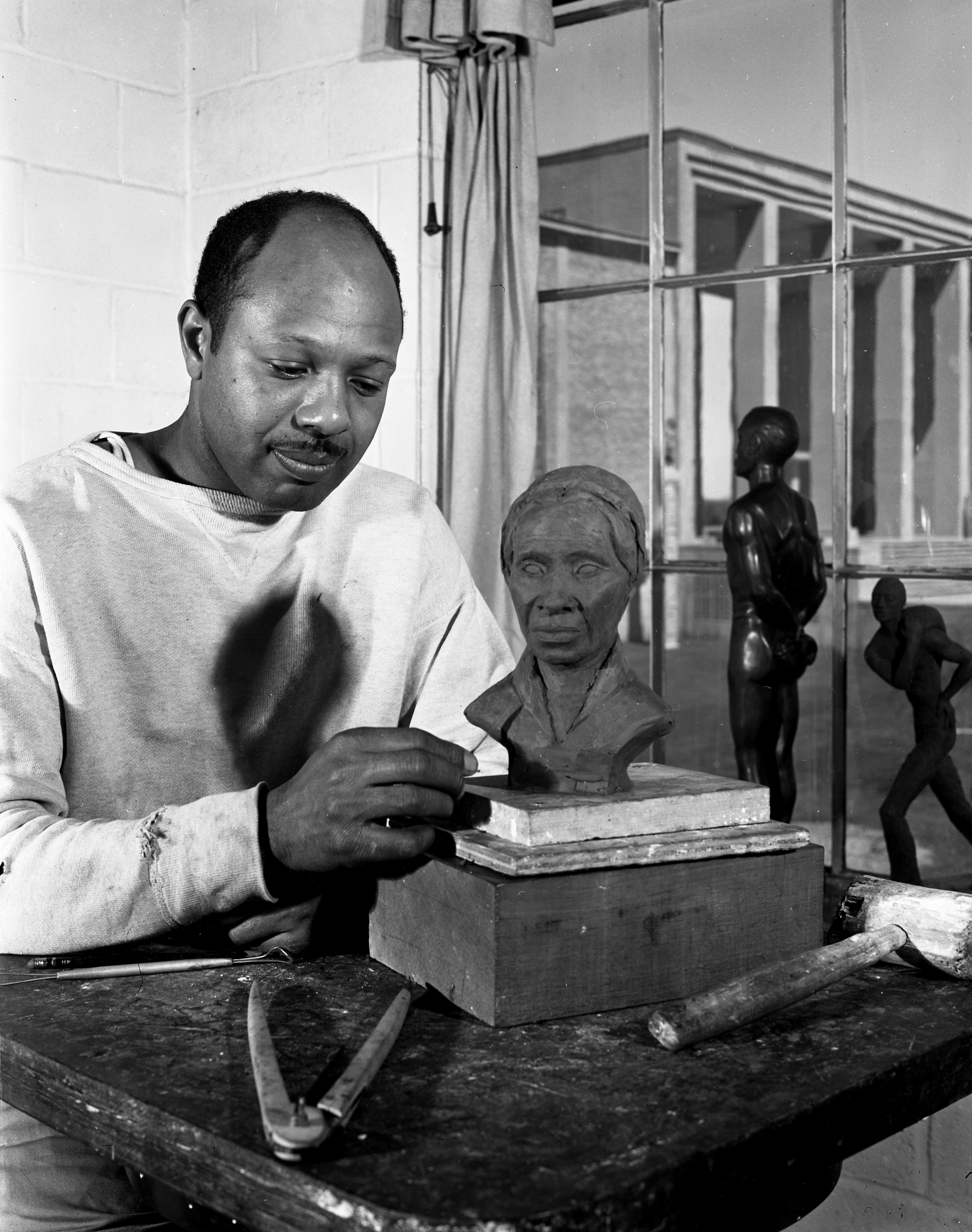
Oliver LaGrone in his studio at Cranbrook Academy of Art circa 1942 with a model of his bust of Harriet Tubman. Courtesy Cranbrook Archives.

Oliver LaGrone in his studio at Cranbrook Academy of Art circa 1942 with a model of his bust of Sojourner Truth. Courtesy Cranbrook Archives.

Upon completing his studies at Cranbrook, Oliver worked a variety of jobs in order to support his family. Because of an old injury, he was not able to enlist in the Army during World War II, but in the 1940s, he worked for Ford at the Detroit Rouge Plant. It was there he came into contact with the United Auto Workers, whom he worked for from 1943 to 1948.

Oliver participated in the renaissance of black artists in Detroit. During this time he wrote his first poetry, gathering them into a collection, Footfalls (1949).

Footfalls: Poetry from America's Becoming by Oliver LaGrone. Courtesy Between the Covers.

Footfalls: Poetry from America’s Becoming by Oliver LaGrone. Courtesy Between the Covers.

During the McCarthy-era Red Scare, Oliver was asked by the Detroit Loyalty Committee to act as an informant and provide “communist” information on his contacts in the art world, particularly Paul Robeson. Oliver refused, lost his UAW job as a result, and had to sell pots and pans door-to-door to make ends meet.

He returned to school, attending Wayne State University from 1956-1960 and received the equivalent of a Master of Arts in Special Education. Oliver worked in Detroit Public schools teaching arts and crafts and special education.

Oliver LaGrone in his studio at Cranbrook Academy of Art circa 1942 with some of his works. Courtesy Cranbrook Archives.

Oliver LaGrone in his studio at Cranbrook Academy of Art circa 1942 with some of his works. Courtesy Cranbrook Archives.

Oliver was always part artist, part activist. He served for two years, 1968-1970, on the Michigan Council on the Arts. He served on the African Art Gallery Fund Committee of the Detroit Institute of Arts. From 1964 on, he was a life member of the National Association for the Advancement of Colored People.

It occurred to me early on that you’re not going to be satisfied until you find a way to combine your art with social commentary.

In 1970, Oliver was invited to lecture in art education and Afro-American history at Pennsylvania State University. In 1972, he was appointed Special Assistant to the Vice President of undergraduate education, and in 1975, became artist-in-residence for all 21 branches of the university system. He then served as artist-in-residence at the Hershey Foundation and the Boas Arts Magnet Center for Learning in Harrisburg, Pennsylvania.

Oliver did not limit his creativity to teaching art and creating sculptures. He also wrote and had several poems and reviews published in Negro Digest and the New York Times Sunday Book Review.

Oliver was a longtime Unitarian Universalist and significantly impacted the church and the Harrisburg community by establishing the Oliver LaGrone Scholarship Fund in 1974. Proceeds from the sale of Oliver’s “The Dancer” was an early contribution to the fund.

Oliver LaGrone at work in his studio at Cranbrook Academy of Art circa 1942. Courtesy Cranbrook Archives.

Oliver LaGrone at work in his studio at Cranbrook Academy of Art circa 1942. Courtesy Cranbrook Archives.

“Oliver LaGrone Day” was proclaimed by the mayors of Harrisburg on February 3, 1980, and again in 1993, in respect for his community contributions.

In the mid-1990s, Oliver returned to Detroit to live near his daughter and her family. Still sculpting and writing poetry, he died in October 1995 at the age of 89. There are two collections related to LaGrone in Cranbrook Archives, one donated by his daughter Lotus Johnson and the other from the Unitarian Church of Harrisburg Scholarship Committee.

Leslie Mio, Associate Registrar

Birds of a Feather …

“… the Cranbrook Foundation, dealing with things material and visible, rests in turn upon another foundation made up of things invisible – that is, of thought, vision, and ideals… No product of human hands exists which was not a thought before it became a thing.”
Rev. Dr. Samuel Simpson Marquis, “The Laying of a New Foundation for Cranbrook Institutions,” Commencement Address to Cranbrook School, June 6, 1936

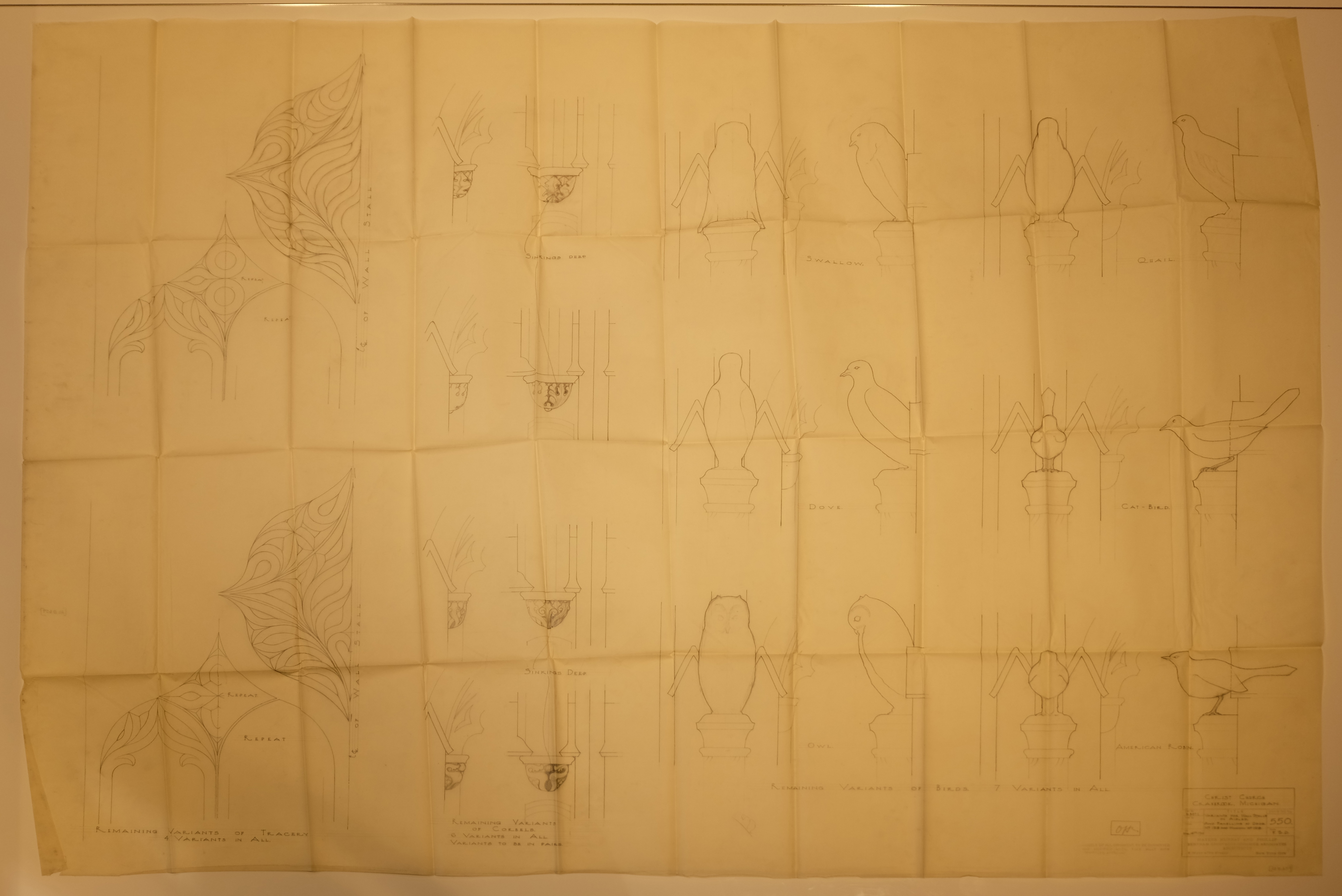
The thought, vision, and ideals of George and Ellen Booth endure in the cultural community and architectural landscape that we enjoy today. One of the great joys of working in the Archives is witnessing the documentary heritage which traces the stories of the people, places, and things that contribute to Cranbrook’s history. All record types — from correspondence, financial records, and reports to written and oral memories and reflections — provide a different insight into the process of making an idea a reality.  I am particularly fond of architectural records, because it is possible to see the built campus in its earliest form. Cranbrook Archives holds a large collection of architectural drawings for the entire Cranbrook Educational Community, as well as for  projects of Cranbrook affiliated firms and architects. The drawings are arranged by division or creator and housed according to their format. One format that is housed separately are detail drawings, which include millwork details and decorative designs. They are pencil on tissue drawings preserved folded in their original envelopes, many for almost a century. I would like to share with you an example of this type of drawing, one that documents the birds sitting atop of the columns of the aisle wall stalls at Christ Church Cranbrook.

CCC birds

View of the aisle wall stalls at Christ Church Cranbrook. Center for Collections and Research.

Finding sources in an archives depends upon the arrangement and description of the collections. Because of their very nature, sometimes a fair amount of detective work is required when the material being described is a visual format. Architectural drawings that have been catalogued are searchable using the Cranbrook Academy of Art library catalog, so the search most often begins there. In my case, a search for the wall stalls at the church returned seven results, none of which refer to the birds specifically. Yet, one of the descriptions suggested that there was great potential that it would include a drawing of the birds and, indeed, that is what I discovered.

AD-10-659_001

Architectural drawing (AD.10.659) Variants for Wall Stalls in Aisles and Paneling at Door #128 and Window #128, March 1930. Cranbrook Archives.

AD-10-659_003

Architectural drawing (AD.10.659), detail of the owl. Cranbrook Archives.

AD-10-659_004

Architectural drawing (AD.10.659), detail of the American robin. Cranbrook Archives.

The discussion between George Booth and Oscar Murray about the design and contract for the stalls began in early December 1929 and the stalls, carved by Irving and Casson, arrived for installation in August 1930. Booth left it to Murray’s judgment as to whether to have a continuous row of the same model for the columns or whether to include the variation. As you can see, this drawing includes two variants of tracery, four variants of corbels, and six of seven variants of birds, including the swallow, quail, dove, cat-bird, owl, and American robin. The seventh bird yet remains a mystery, leaving us something to discover in the future. Discoveries like these, and helping others achieve similar ones, make the job of a Cranbrook Archivist both enjoyable and rewarding.

– Laura MacNewman, Associate Archivist

[Editor’s Note: When this post was first published, the quote was attributed to George Gough Booth. Subsequent research has revealed that it is from an address by the Rev. Dr. Samuel S. Marquis.]

The Skyline is a Promise

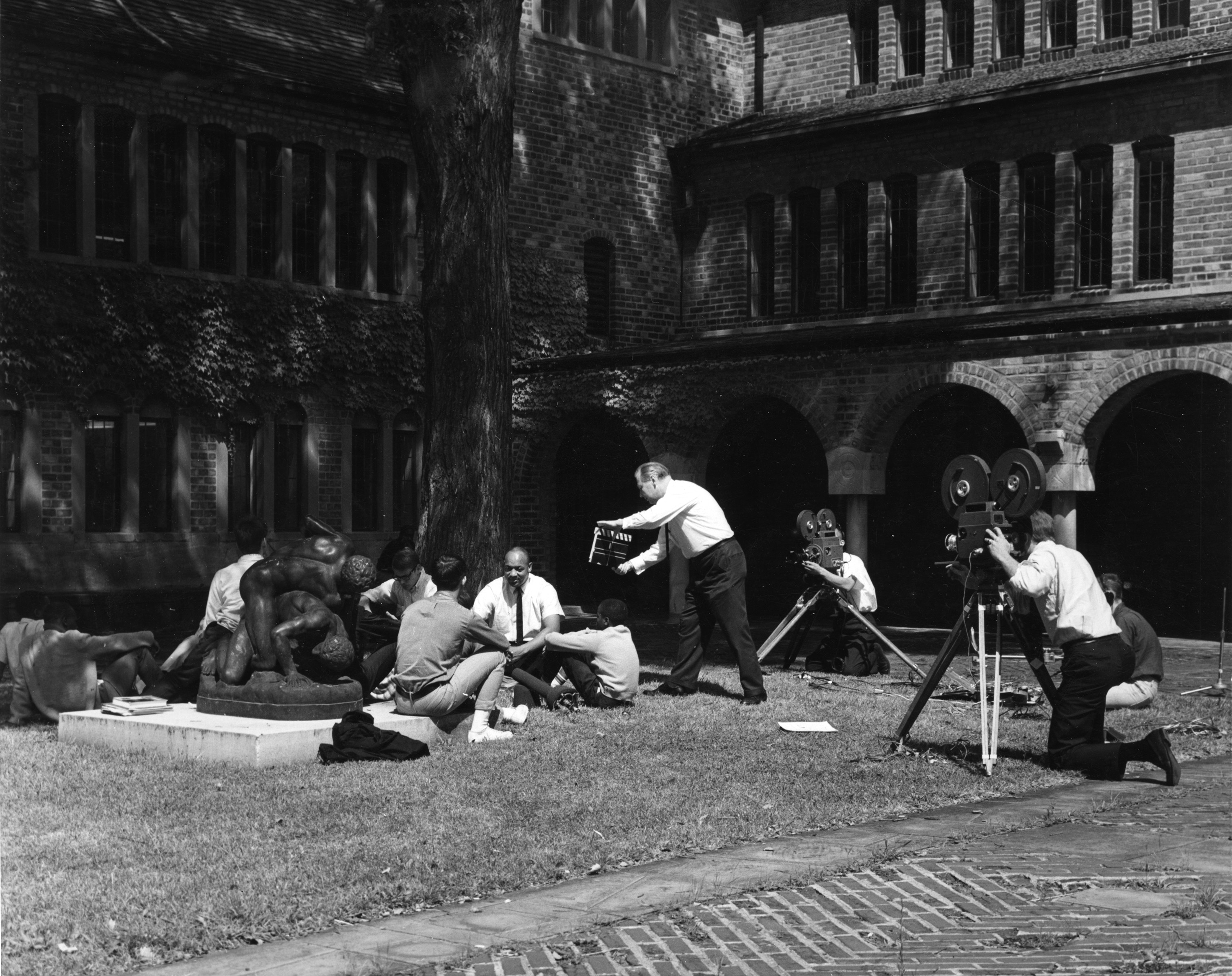
Cranbrook Archives houses an impressive collection of motion picture films, many of which offer depictions of student life at Cranbrook Schools. These films uniquely capture what it was actually ‘like’ to be on campus at a given moment in time, and potentially present perspectives not captured in official written documentation. One such film, The Skyline is a Promise, from the Horizons-Upward Bound Records, is an excellent example.

1992-15002

Filming on Cranbrook School campus, 1966. Copyright Cranbrook Archives.

The Horizons-Upward Bound (HUB) program, then in its 2nd year, was self-described as “An Experimental Enrichment Program.” In conjunction with representatives from Detroit Public Schools and Oakland County Schools, the program’s objective was to provide low-income Detroit area high school students with opportunities for future success in academics and in life. The creation of Cranbrook School teacher, Ben Snyder, who served as its director for twenty-four years, HUB was the only program of its kind at that time.

Skyline was produced, directed, and filmed by Wayne State University Audio-Visual Productions during the summer of 1966, and was intended both as a promotional piece and an educational aid. The 16-minute short film captured every aspect of the program. Raymond Maloney, a HUB English instructor from Cranbrook School, wrote of the experience in the 1966 Annual Report: “At times, the dining hall, classrooms or dormitories took on all the aspects of a movie set complete with eighty-eight willing actors.” Students not only were eager participants in front of the camera but also learned about what was involved behind the camera, thanks to one of the film’s producers.

1992-15001

Wayne State University film crew, 1966. Copyright Cranbrook Archives.

Funding for the film was provided by an anonymous donor, supplemented by funds from the program’s Ford Foundation grant. According to a May 25, 1966 letter, the script was written by George H. Bouwman, Director of Development, Horace Mann School, Bronx, NY. The soundtrack was a mix of guitar music, sound effects, and voice-overs from both the narrator and student interviews, also conducted by the film crew. The film’s title was taken from The Wanderer of Liverpool by John Masefield, Poet Laureate of the United Kingdom (1930-1967):

Go forth to seek: the quarry never found

Is still a fever to the questing hound

The skyline is a promise, not a bound.

Beginning in the Summer of 1967, the film was circulated for a $5 rental fee throughout the U.S. (with accompanying report) to other independent schools considering establishing a similar program. Made at the suggestion of the National Association of Independent Schools, it was shown in its first year at 36 member schools in 18 states, 6 school conferences across the country, and 14 other organizations including the Education Departments of Wayne State University and the University of Michigan.

That same summer saw a watershed moment in Detroit history: civil unrest with profound ramifications for the city’s inhabitants, which included sixty Horizon students and their families. A full page in HUB’s 1967 Annual Report expresses appreciation to those who particularly helped navigate the complexities of the situation, including Detroit educators, clergy, business leaders, and local figures, such as Detroit Tigers player Al Kaline. Cranbrook would continue to have ties to Detroit institutions through its HUB program, like the relationship it formed with New Detroit in 1968. This summer, HUB will celebrate its 55th anniversary, remaining an important link between Cranbrook and its Metro Detroit neighbors.

Fifty-four years later, Skyline transcends its original intent and gives us a window into the experiences of a specific group of students at Cranbrook during a tumultuous time in our region’s history. The film, like many others in the Archives, is currently undergoing review for reformatting to digital media for access and preservation of the originals, so that their stories are not lost to future generations.

Deborah Rice, Head Archivist

A New Cranbrook House

January has been busy with research for my upcoming History of American Architecture: Cranbrook in Context lecture series. In preparing for the first lecture, which examines Cranbrook House and the larger Arts and Crafts movement, I found myself deep in the Archives looking through the architectural sketches of George Booth.

Around 1932, George Booth considered converting Cranbrook House into a home for both the Art Museum and the Institute of Science. With this proposal, the Booths would need a new “Cranbrook House.”

Mr. Booth sketched two plans for building south of the existing manor home, in the meadow along Lone Pine Road.

IMG_4684

Caption written by George Gough Booth in pencil at a later date: “Scheme for a moderate sized residence for G.G.B. & E.S.B. on lawn directly south of Cranbrook House facing Lone Pine Road, by G.G.B. 1932 & considered in connection with plan to turn Large Residence over to Foundation for Educational Purposes. Museum—Library—School of Music, etc. etc.” Cranbrook Archives.

The simple, rectangular house is strikingly similar to the original plan of Cranbrook House from 1908 (before its 1918 and 1922 expansions), rotated 180 degrees. A front vestibule opens into a cross gallery, centered on a fireplace. Beyond is a long, 18 by 32 foot living room. A library and large dining room flank either side, with the only other public room being a reception hall.

A stairway surrounding an elevator shaft connects to a second floor with two bedrooms (one for George and one for Ellen) joined by a sitting room, again mirroring the original configuration of rooms at Cranbrook House. Even the double bay windows of the bedrooms match the double bay windows on the northern plan of Cranbrook House.

The problem of symmetrical houses is that not everything generally fits in a pleasingly symmetrical way. George’s solution to this problem, like many architects before and since, is to add a service wing for the kitchen, maids’ rooms, and storage.

IMG_4689

Caption written by George Gough Booth in pencil at a later date: “Suggestion for personal house (?) South of homestead.” c. 1932. Cranbrook Archives.

In what I presume to be a later sketch, the plan is further refined. Here, the vestibule sits more comfortably under the stairway, leading guests directly into the long gallery and living room beyond–one would see directly from the front door out of the living room window. The proportions of this proposed house are smaller, and the service wing substantially smaller (and even appears added on by Booth as a later sketch). The entire house is more symmetrical and regular, and there are fewer service spaces.

Had the Booths moved out of Cranbrook House, what did George envision happening with the space? Well, Booth sketched ideas of how Cranbrook House would be converted into an educational facility.

full plan cranbrook house addition2

Proposed modifications and additions to Cranbrook House, for its conversion to use by the Institute of Science and Art Museum, by George Gough Booth, c. 1932. Cranbrook Archives.

The first floor of the house remained largely intact (though another plan shows subdividing the reception hall for offices). The kitchens were to be removed and converted to galleries, and the living room and sunset porch converted to a conference room and lounge. West of the 1918 Library wing offices was to be a large room for the Cranbrook Foundation and then a very large building of smaller rooms, including a library and assembly room. It is unclear what the smaller rooms are, but in one plan, they are drawn identically to Booth’s sketches for the Institute of Science’s research wing.

detail of ggb forum2

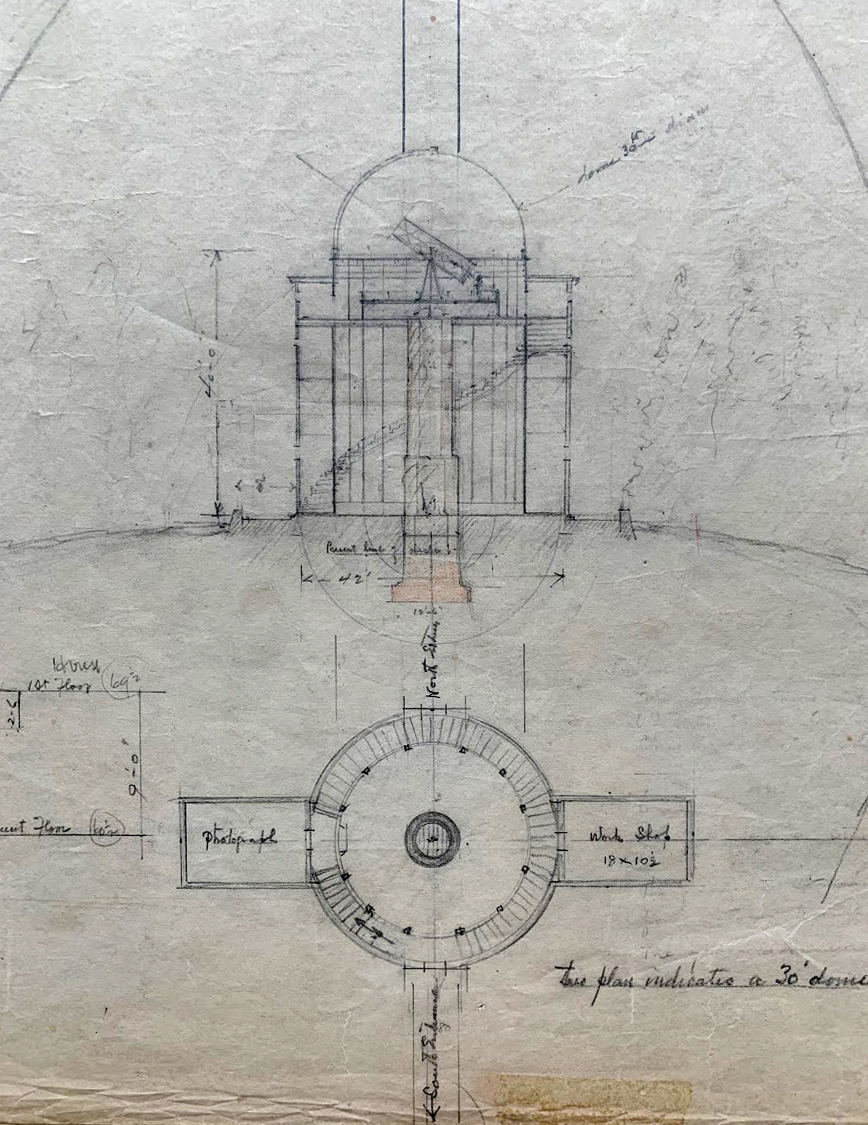
Proposed “Forum” (Observatory) on the “Mountain” south of Cranbrook House, sketch by George Gough Booth. Detail from the above plan. Cranbrook Archives.

The idea that Booth intended portions of the house to be dedicated to the Institute is further supported by what might be my favorite of George Booth’s unrealized plans for Cranbrook House: the transformation of the reproduction Fountain of the Tritons atop the “Mountain” south of the auto court into an observatory!

new second floor

Proposed modifications to the second floor of Cranbrook House for its use as gallery space, by George Gough Booth, c. 1925-1935. Cranbrook Archives.

On the second floor, the series of family bedrooms and bathrooms, as well as the warren of service spaces, would have been cleared out, windows boarded up, and a series of interconnected galleries created. The bedrooms (not bathrooms) of George and Ellen were to remain intact as offices–previews to their use now as Cranbrook’s President’s suite of offices.

While the Booths did eventually leave Cranbrook House and its contents to the Cranbrook Foundation, they remained living in the house until their deaths in 1948 and 1949. The area where George proposed building their new residence is today the location of the Cranbrook House Parking Lot.

You never know what you’ll find in Cranbrook Archives!

Kevin Adkisson, Curatorial Associate

Alger Munt: Cranbrook’s English Gardener

When sifting through images to post on the Center’s Facebook page, I often come across an image of someone and wonder, “How did this person end up at Cranbrook?” This week, that “someone” is Alger Munt.

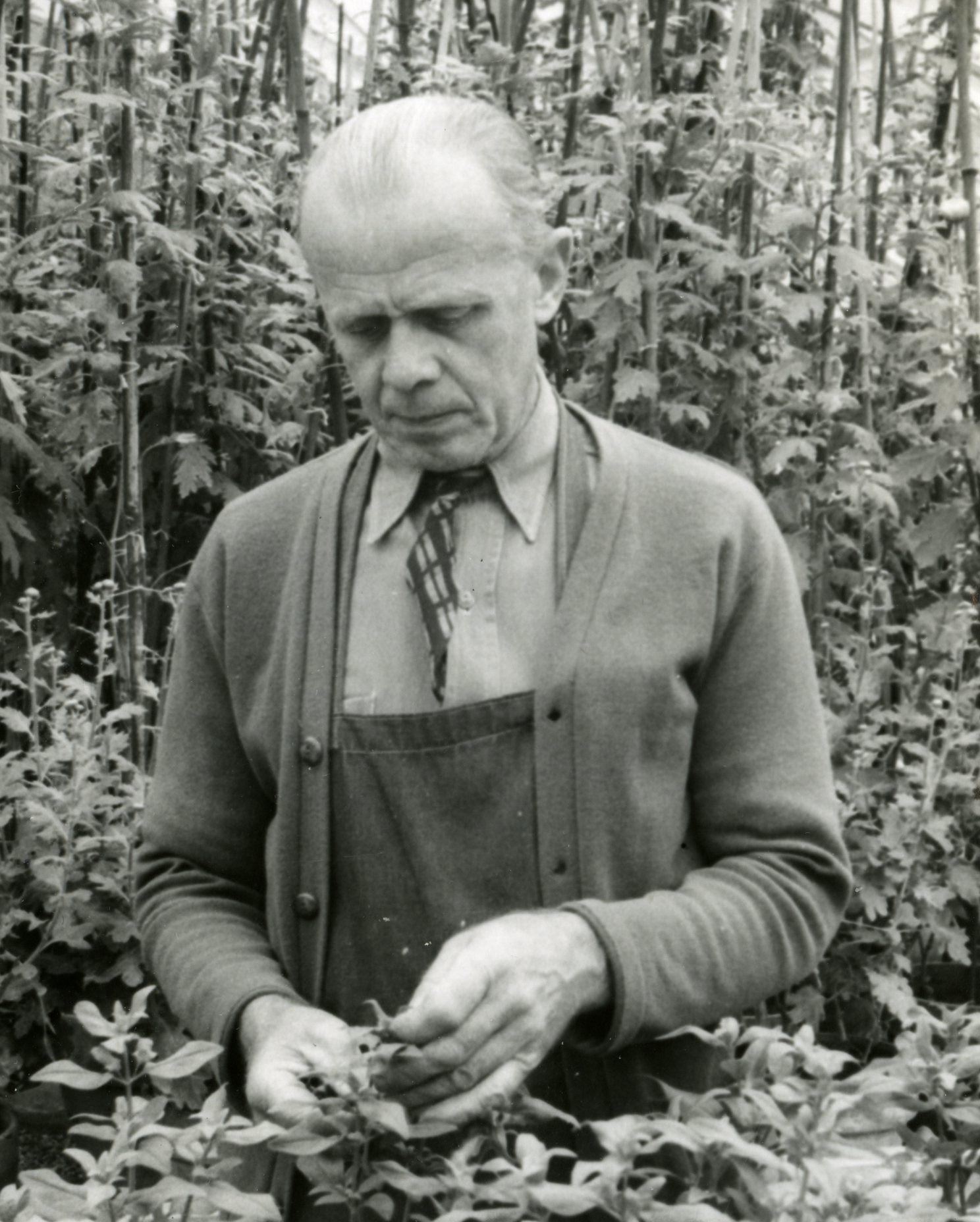
Alger Munt working in the greenhouse at Cranbrook, October 1950.

Alger Munt working in the greenhouse at Cranbrook, October 1950. Photo by Harvey Croze. Courtesy Cranbrook Archives.

Algernon George Munt (“Alger”) was born in St. Albans, Hertfordshire, England in 1894. From the age of 14, he worked as a gardener on estates near his hometown. When he was 18, he started work manufacturing straw hats in one of the area factories. Soon, his country called and he joined the army, serving in the Royal Field Artillery during World War I. After the war, he did not return to the factory but resumed gardening instead.

Munt came to America in 1921 to work for his uncle William Munt in St. Clair, Michigan, in the commercial greenhouse business. He would work for his uncle for eight years. In 1926, Munt briefly returned to England to marry Grace Barker Skinner (1898-1981) of Ware, Southampton, Hampshire, England.

Munt soon tired of the greenhouse business and came to the Birmingham-Bloomfield area to become a gardener on a private estate. Based on census information and Munt’s oral history account in Cranbrook Archives, the “private estate” was Strandcrest, the estate of lumberman Carl A. Strand, which boasted 14.3 acres, fruit trees, and a caretaker’s residence.

It was in 1936 that Munt came to work at Cranbrook. He was a gardener at Cranbrook from 1936 to 1941. From October 1941 to December 1942, Munt worked at Spindletop Hall in Lexington, Kentucky.

George G. Booth had told Munt in 1941 that he didn’t want him to go but that anytime he wanted to make a change—if things did not work out in Kentucky—get in contact with him. When Spindletop Hall had to switch to economy/war-mode in 1942, Munt took Mr. Booth up on his offer and returned to Cranbrook as a gardener and part-time chauffeur. His wife Grace worked as a laundress for the Booths.

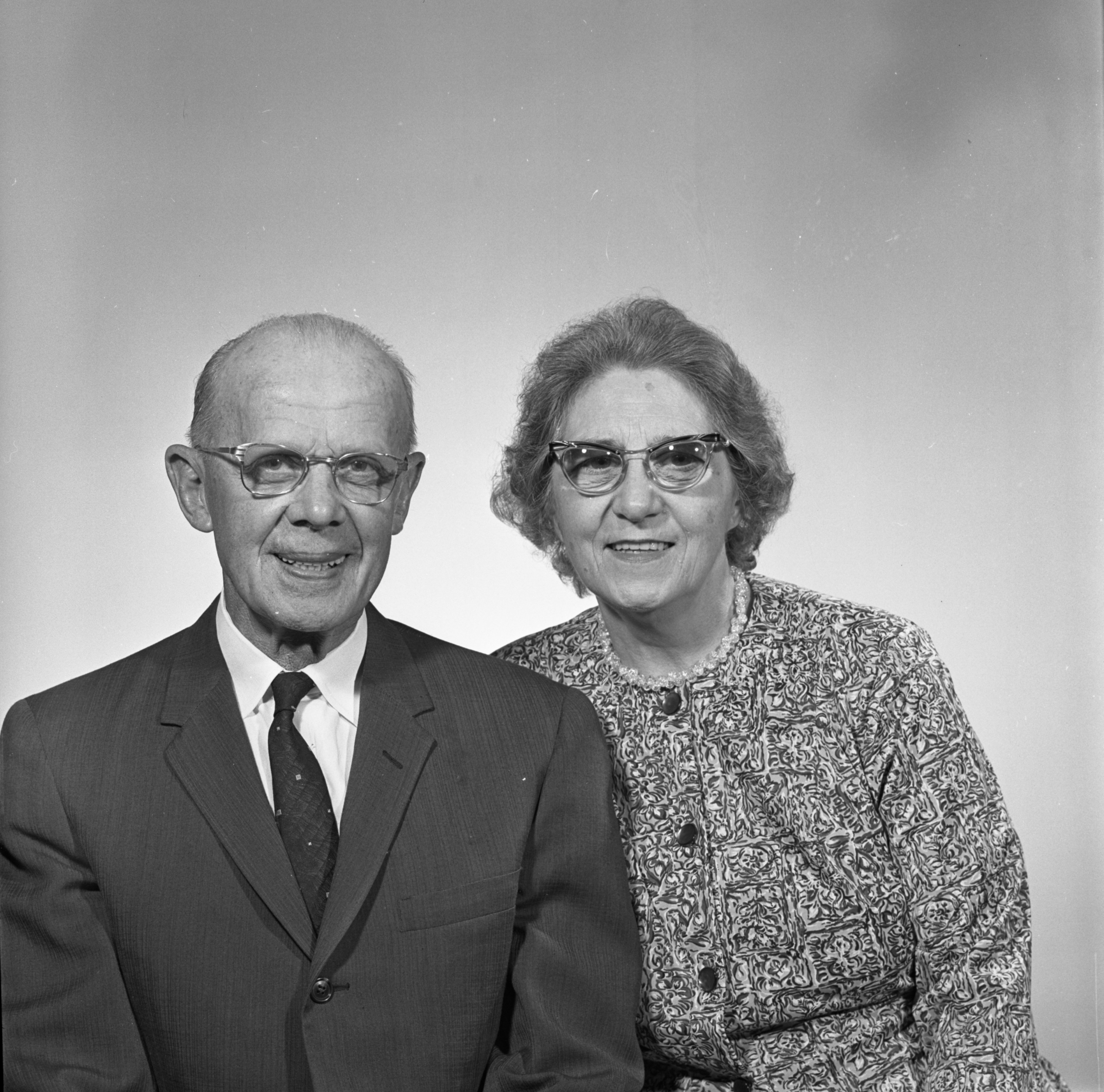
Alger and Grace Munt

Alger and Grace Munt, circa 1965. Courtesy Cranbrook Archives.

By the 1950s, Munt was the Superintendent of the Greenhouse and Grounds at Cranbrook, and his wife was working as a maid in the dormitories at Cranbrook Academy of Art.

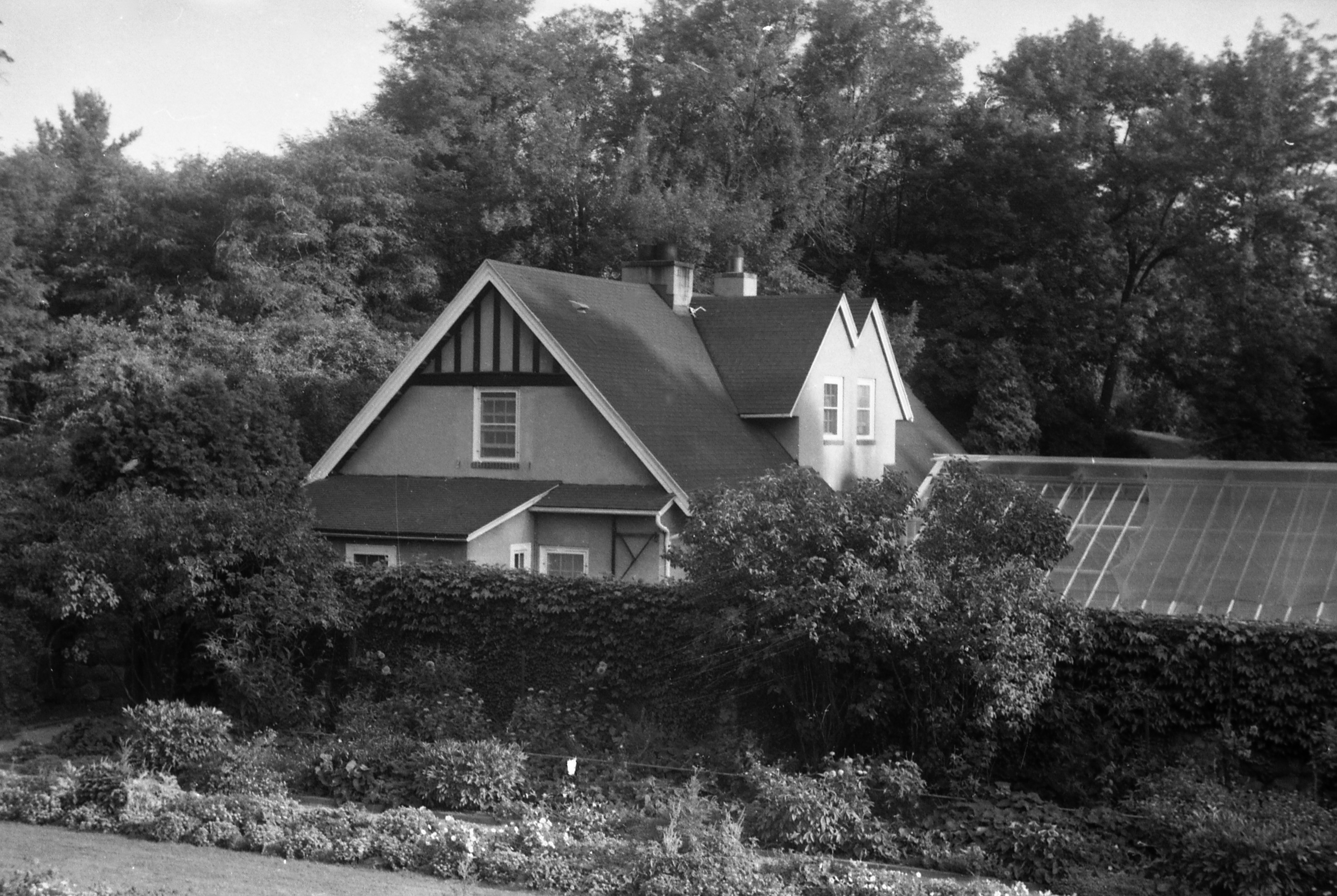
Twin Cottage on the estate

The Munts lived in Twin Cottage on the estate, pictured here in 1957, when they returned to Cranbrook in 1942 until their retirement in 1966. Photo by Harvey Croze. Courtesy Cranbrook Archives.

The Munts retired from Cranbrook in August 1966 and they moved back to England, intending to settle in Cornwall. Unfortunately, Munt died suddenly in November 1966, just short of his 72nd birthday.

Leslie S. Mio, Associate Registrar


New Archival Collection: the Melvyn Maxwell and Sara Evelyn Smith Papers

Cranbrook Archives is delighted to announce that the Melvyn Maxwell and Sara Evelyn Smith Papers are now open for research. This archival collection was acquired as part of the Frank Lloyd Wright Smith House, which was donated to Cranbrook in 2017 by the Towbes Foundation with assistance from Anne Smith Towbes. Melvyn and Sara were schoolteachers who dreamed of building a Frank Lloyd Wright designed home – a dream that was realized in 1950. They cherished their dream home and adorned it with art objects which they bought from local artists, including Cranbrook Art Academy students and artists-in-residence. Over the years they welcomed many visitors, students, and guests into their home, including Frank Lloyd Wright himself and the landscape architect, Thomas Church.

2017-10 23-9 FLW

Frank Lloyd Wright’s entry in the Smiths’ guest book, 1951. Courtesy Cranbrook Archives.

The collection documents the personal and professional life of the Smiths, as well as their many contributions to the community through patronage of the arts, including theater and performing arts. It documents the construction and adornment of the house, as well as its preservation as a historic home and renovation under the Towbes Foundation. It also contains a rare and unique collection of news clippings and periodicals, spanning from 1937 to 2016, about Frank Lloyd Wright and his work .

2017-10 2-8

Letter from Sara to Melvyn Smith, July 1940. Courtesy Cranbrook Archives.

Melvyn Maxwell Smith aspired to be an architect. After graduating Northern High School in Detroit, Michigan, he was accepted into the School of Architecture at the University of Michigan. However, due to the economic depression, his parents suggested he attend Wayne University College of Education until his brother had completed his degree in dentistry. Much inspired by an English teacher, Miss Boyer, in his first semester, Melvyn decided to pursue a career in teaching, and remained at the university to pursue a doctorate. Melvyn’s architectural aspirations were instead to manifest in his life in quite a different way than he had first anticipated. In an art history class taught by Jane Betsey Welling, Melvyn learned of Frank Lloyd Wright. This was the beginning of a lifelong love of Wright’s work and the pursuit of Melvyn’s dream home. After graduating, Melvyn became a teacher at Cody High School in Detroit, where he remained for his entire career of 38 years. He later became a board member of the Wayne State University Alumni Association and created the Betsey Welling Memorial Court for which he donated the sculpture, In Lieu, by Robert Schefman.

2017-10 6-1

Melvyn, Sara and Robert Schefman in front of Schefman’s sculpture, In Lieu, at Wayne State University, 1977. Courtesy Cranbrook Archives.

Sara Evelyn Stein was born in Pennsylvania and moved to Detroit during her childhood. She met Melvyn at the B’nai Moshe Sunday School in 1937 and they were married in 1940. Sara had dreamed of being an actress, but she too joined the teaching profession and trained to be a kindergarten teacher. As it had been for Melvyn, Sara’s theatrical aspirations were fulfilled in a different way than her young mind had envisioned, namely an enthusiasm for teaching the performing arts to others. She was deeply involved in community theaters, including the Popcorn Players at Birmingham Community House and the Cranbrook Theatre School. Both Melvyn and Sara were passionate supporters of all the arts and actively worked to cultivate and sustain the arts in Detroit, Bloomfield Hills, and the surrounding communities.

2017-10 26-13.jpg

Frank Lloyd Wright Smith House, August 1960. Courtesy Cranbrook Archives.

Sara shared Melvyn’s dream of a Frank Lloyd Wright designed home. In 1941, they traveled to Lake Louise and Banff National Park in Alberta. Their journey took them through Wisconsin, where they were able to visit Taliesin, the home and studio of Frank Lloyd Wright, and meet with the architect himself. Melvyn later recalled that during the visit, Wright had advised him to find land that no one else wants because it will likely have an interesting natural feature. In 1942, Melvyn joined the US Army and it would be 1946 before he returned to Detroit. Sara was able to join him for much of the time and their son, Robert “Bobby” Nathaniel Smith, was born in 1944. Having located a property upon which to build their home on Ponvalley Road in Bloomfield Township, they began work in 1949. The house was completed in 1950, and Wright visited the house for the first time in 1951, calling it “My Little Gem.” He visited several more times – among the highlights of this collection are his entries in the guest books. Also included in the collection are two books signed by Wright (there are more than 900 books in the Center’s cultural properties collection at Smith House, which may be made available for research in the Archives reading room by request).

The Smiths welcomed countless guests and visitors to their home, providing house tours for local community groups as well as architectural schools. The collection also contains an abundance of thank you letters in gratitude for the hospitality of the Smiths. Many visitors thank Sara for her gift of sharing joy.

2017-10 8-6

Letter to Melvyn and Sara Smith from Wayne State University Theatre, 1973. Courtesy Cranbrook Archives.

The Melvyn Maxwell and Sara Evelyn Smith Papers tell the story of the Smiths’ home and of the lives of the couple who dreamed the home. The Smiths were not only teachers in the classroom: through their tenacity, generosity, and sheer joy of living, they inspired countless people who visited their home or met them through their artistic and philanthropic endeavors. As the Smiths’ home is preserved just as it was when they lived in it, their zeal to share and teach is perpetuated. This collection is a fine example of how the team at the Center for Collections and Research works together to tell the story of Cranbrook through historic houses, cultural properties, and archival materials.

The Frank Lloyd Wright Smith House is a must-see. Find out more about house tours here. If you’ve already been, consider going again in a different season to see the changing blend of architecture and nature that is pure Frank Lloyd Wright.

–Laura MacNewman, Associate Archivist
 

Cranbrook Kitchen Sink: Best of 2019

2019 was a banner year for the Cranbrook Kitchen Sink blog. Thanks to readers like you sharing our posts by email, Facebook, and word of mouth, in 2019 we increased our readership to 25,000 views (up from 16,081 in 2018). While most of our readers are here in the U.S., we also have readers in Canada, the United Kingdom, Finland, France, Hong Kong, and beyond!

Here are ten of our most viewed (and favorite) blog posts of the year. In no particular order, take a look back and catch up on posts you might have missed:

Green Book, Don Shirley, and Henry Booth Our first post from the Center’s Director Greg Wittkopp was a runaway success, becoming our most read post—ever! Learn about the connection between jazz pianist Don Shirley, Kingswood, and Cranbrook’s own Henry Booth.

The Day Cranbrook Went Bananas Did you know the Academy of Art has an undefeated intercollegiate football team? And not because we’ve never had a football team: in the fall of 1970, the Cranbrook Bananas defeated the Art Institute of Chicago Hog Butchers in a game at Thompson Oval.

Loja Saarinen: Lady of Fashion In a year with more posts about Loja Saarinen than any other subject, readers loved Collections Interpreter Lynette Mayman’s focus on the fashion of Cranbrook’s ur-weaver. In other posts, you can read about Loja’s monumental Sermon on the Mount weaving, the murals on the ceiling of her Weaving Room, or how we moved a loom from Kingswood to Saarinen House.

Saarinen (and Students) Expand a Masterpiece Did you know Eliel Saarinen intended to add on to the Art Museum, around the Orpheus Fountain? View his drawing–and how the Academy and Museum have actually grown–in this post.

To See a World in a Grain of Sand Associate Archivist Laura MacNewman took a deep dive into the magnificent Women’s Window at Christ Church Cranbrook. Learn the history of the work, and click on each pane of the window to see an expanded image and a detailed description of each woman featured.
Cranbrook Unseen: My Senior May Experience One of our most shared and read posts of the year was from our Cranbrook Schools Senior May student intern, Desai Wang, who wrote about her work cleaning, sorting, moving, scanning, and learning with the Center for Collections and Research.

Sunscreen for Smith House: UV Window Film Here, Associate Registrar Leslie Mio talks about installing protective film at Saarinen and Smith Houses in order to reduce heat and sun damage.

Lisa Frank’s Cranbrook Years Learn about the colorful life of 1990s school supply icon and Kingswood alumna Lisa Frank, known for her rainbow world of puppies, pandas, and unicorns.

Hibernation Mode Head Archivist Deborah Rice showed us some of the amazing plant photographs and illustrations in the Archives from the Institute of Science in this post celebrating the beauty and botany of autumn.
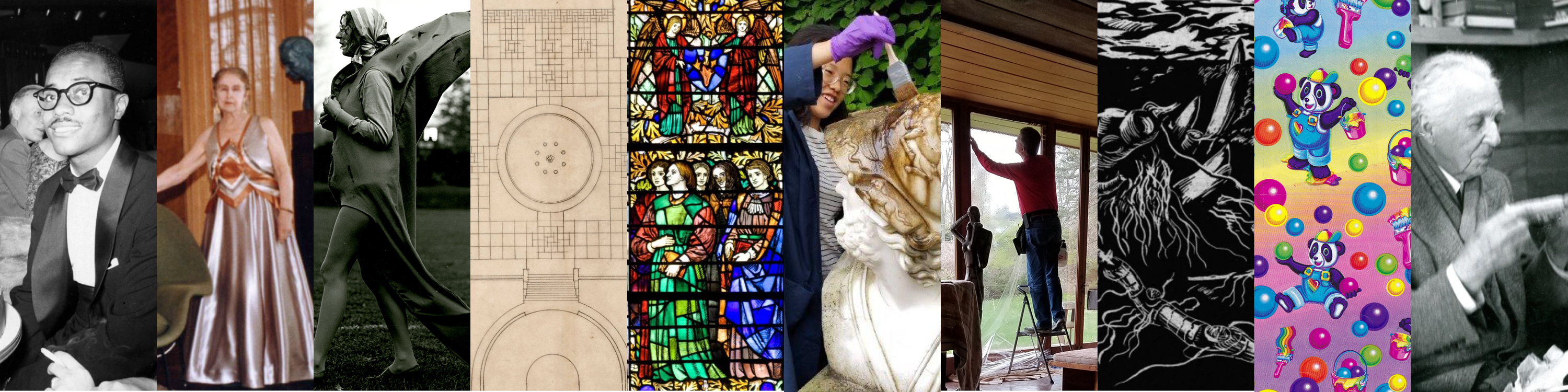
The A-maize-ing Frank Lloyd Wright Finally, a post that was widely shared on Facebook: Wright’s visit to the Smith House and the story of Sara’s serving him corn on the cob!

Map of Cranbrook from 1973 Catalog by Edward Fella

Our most opened (clicked) image in 2019 was this map of Cranbrook. Read more about it here. Map of Cranbrook drawn by Edward Fella (CAA Design 1987), 1972. Printed on the inside cover of the 1973/1975 Cranbrook Academy of Art Course Catalog. Courtesy of Cranbrook Archives.

2019 was a great year for Cranbrook Center for Collections and Research. We are honored so many of you, our readers, joined us on Cranbrook’s campus to attend tours, lectures, exhibitions, and concerts; rode along with us on Day Away trips; or visited Cranbrook Archives to research, volunteer, and explore. If you’re a reader from farther afield, thank you for following our blog and for your continued interest in the many Cranbrook stories. We hope everyone has enjoyed learning more about Cranbrook through the Kitchen Sink!

In addition to continuing our Friday blog posts, the Center has lots of exciting programming coming up in 2020. You can be the first to find out about Center events through our emails (if you’re not subscribed, you can join here), or on the Center’s website.

Happy New Year!

– Kevin Adkisson, Curatorial Associate and Cranbrook Kitchen Sink Blogmaster


Tobogganing at Cranbrook

If you grew up in the Midwest you’ve likely been sledding at some point during the winter months. But have you ever been on a toboggan run?

According to the Olympic Movement:

Sleighing is one of the oldest winter sports. Descriptions of the sport can be found in 16th-century literature, but as a racing sport it can be traced to the mid-19th century, when British tourists started sliding down snowbound roads in the Alps. British and American holidaymakers built the first toboggan run in Davos in 1882.

Images in the archives’ historic photograph collection indicate there were once two such runs on Cranbrook grounds.

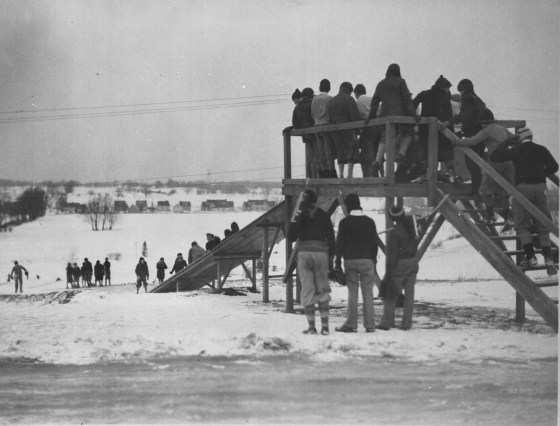
Copyright Cranbrook Archives.

The first photographs of a toboggan run date from 1928 and feature an elevated wooden platform and slide situated by an ice-skating rink at the northern edge of Cranbrook School campus, where the Williams Natatorium now stands. A November 1, 1928 notice in the Birmingham Eccentric provides further evidence: “Construction on a toboggan slide for the Cranbrook students has begun, according to school authorities. It will run down the large hill from behind the school, possibly across the canoe lagoon, and will be ready for use when enough snow permits.” A November 12, 1928 Cranbrook School Crane notice confirms its construction that year: “A toboggan slide is being constructed behind the tennis courts. The starting platform will be of wood, jutting over the hill just north of the courts. The course will begin here and stretch down over the hill into the lagoon. This sport will be greatly enjoyed by all of us.” Perhaps Cranbrook School students were inspired by the Olympic debut of the skeleton event that year in St. Moritz, Switzerland?

CEC3838-2

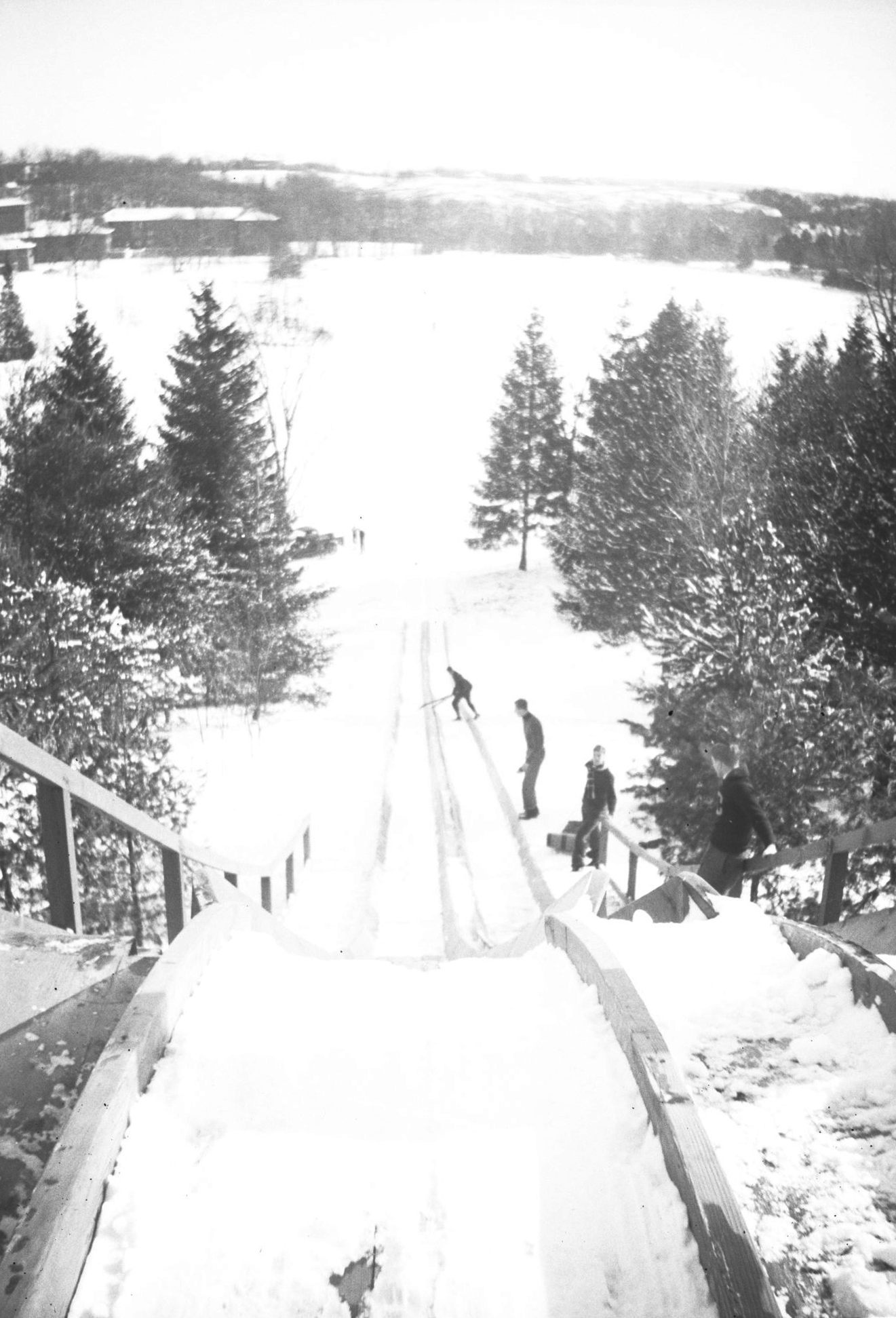
Circa 1930s. Copyright Cranbrook Archives.

Whatever the impetus, by the late 1930s, photographs show a different structure in a decidedly different location, suggesting the 1928 run had been replaced. Following more closely the natural contours of the hill, this toboggan run appears to have started by the Institute of Science and run in the direction of Kingswood Lake, through the existing tree line. A map in the archives refers to this area as “Suicide Hill.” Could the toboggan run have helped earn the hill its name? This image certainly shows an exhilarating ride.

CEC3838-10

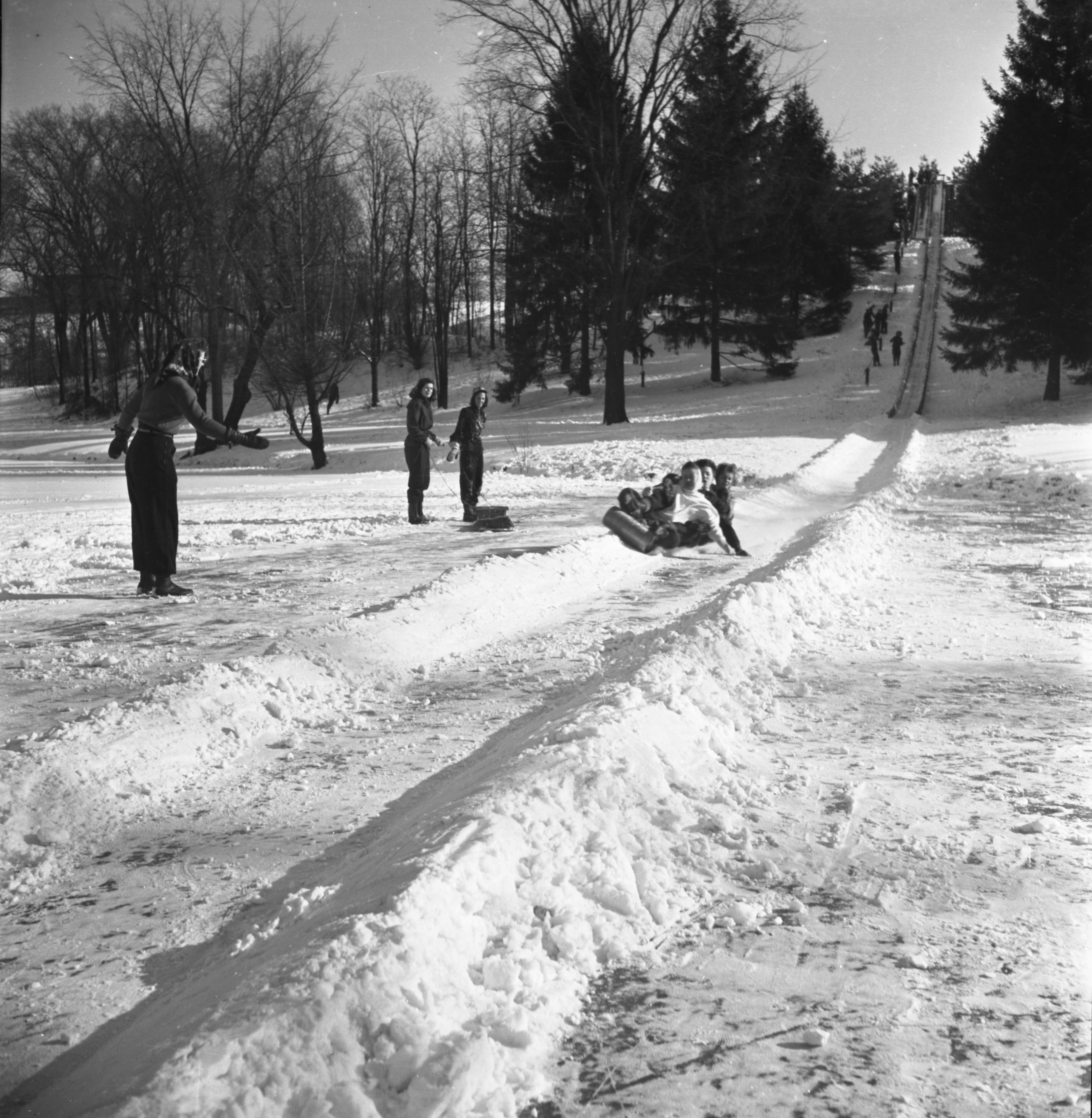
Circa 1930s. Copyright Cranbrook Archives.

A February 1945 Cranbrook Schools Crane story corroborates the building of a second run: “The toboggan slide, built six or seven years ago…” The article goes on to report that outsiders had begun using the slide at all hours of the day and night, and so Cranbrook Foundation took steps to prevent unsupervised use by erecting a padlocked fence around the upper half of the runway. “The slide is to be used only when a reliable person is in charge.”

While the first toboggan slide featured in a February 1929 Cranbrook School outdoor party, to which a few girls were invited, a picture of the second toboggan run in the 1938 Kingswood yearbook Woodwinds implies that it was with the construction of this run that girls were now really participating in the fun. Just how much in its early years is unclear, since tobogganing is not part of the 1939-1940 Kingswood list of social activities along with other winter past times, such as ice skating (Kingswood School Records, 1930-1985). But, by 1944 its popularity seems assured. The December Sports News section of  The Clarion announces the outdoor sports opportunities once snow made them possible: skiing, skating, and tobogganing. A couple of years later, the toboggan is still a prominent winter activity of Kingswood students, as a December 1946 issue states, “Until the snow and cold weather comes, the winter sports group will walk. However, when snow and ice really arrive, this group will toboggan, skate, and ski.” And again, in Dorm News of the March 1947 issue, the slide is mentioned as an example of one of the perks of being a boarding student: “Another advantage that we have is that we can use the toboggan slide on Saturday and Sunday afternoons as well as during sports periods.”

K795-1

February 14, 1947. Copyright Cranbrook Archives.

How long the second toboggan run was in use is uncertain. A February 1948 Clarion issue shows a photograph of sophomores tobogganing right outside Kingswood School, and by 1949 issues, tobogganing (along with other winter outdoor activities) is no longer mentioned. Other images in the historic photograph collection show that in 1955 Cranbrook students were sledding on the hill from Cranbrook Art Museum to Cranbrook House, with no toboggan slide in sight. It would seem that the days of the toboggan run were over.

It’s important to note that these gaps in documentation of the toboggan runs illustrate the challenge often faced in understanding our past. Accurately recreating historical events relies solely on available facts (written, visual, or verbal). Do you have evidence of the operation of a toboggan run at Cranbrook? Help supplement the historical record and let Cranbrook Archives know!

Deborah Rice, Head Archivist

Create a website or blog at WordPress.com