Happy Holidays!

With the end of December quickly approaching, we’ve received several holiday image requests. While looking through different collections, I came across these amazing holiday cards that were made by Cranbrook Academy of Art students and sent to Margueritte Kimball (1906-1995).

Margueritte visited Cranbrook for the first time in 1941. She was introduced to Wallace Mitchell, head of the Painting Department, who examined a few of her drawings, and eventually accepted her as a student to the Academy.  She began attending classes in the summer of 1942 and, at the same time began her career as the Academy’s financial secretary — a position she held for twenty-six years.

Known by many in the Cranbrook community, Margueritte became close with students and faculty at the Academy and collected correspondence and student materials from art exhibitions throughout the years. Although she never graduated from the Academy, she did receive an honorary degree late in her life. I hope you will enjoy some of the holiday samples from her collection. Happy holidays!

Kathryn Keillor (Painting '46)

Kathryn Keillor (Painting ’46)

John Edgar Barthel (Architecture '50)

John Edgar Barthel (Architecture ’50)

Grace Smith (attended Summer courses, 1951)

Grace Smith (attended Summer courses, 1951)

Edward Novak (Design '58)

Edward Novak (Design ’58)


Gina Tecos, Archivist
Think Snow!

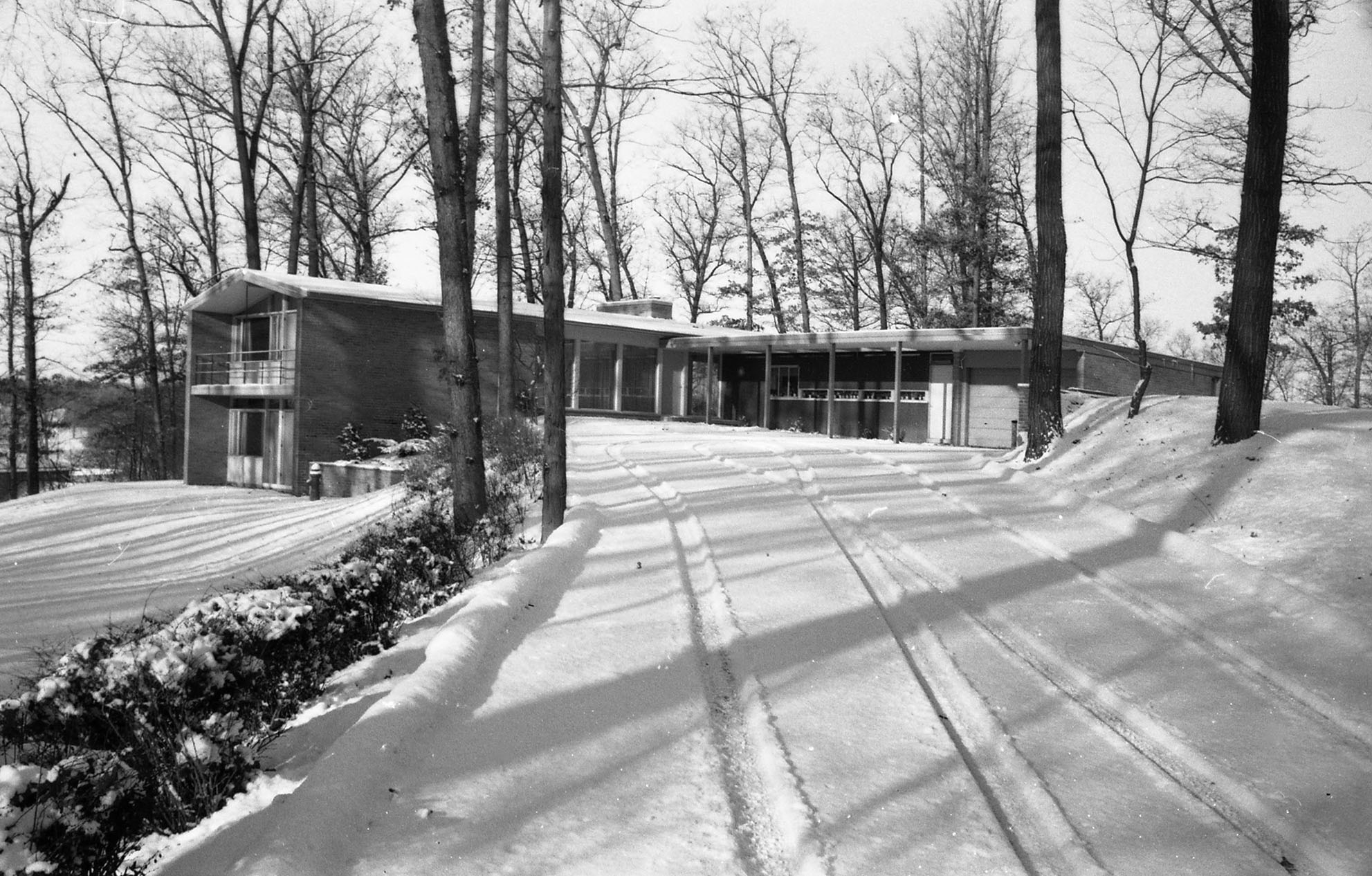
Kingswood School Headmistress residence, 1955.

Kingswood School Headmistress residence, 1955.

Boys from Cranbrook School playing hockey outdoors, 1928.

Boys from Cranbrook School playing hockey outdoors, 1928.

Brookside children ice skating, 1928.

Brookside children ice skating, 1928.

Academy of Art students, Florence Chang and Margueritte Kimball cross-country skiing at Cranbrook, 1944.

Academy of Art students Florence Chang and Margueritte Kimball cross-country skiing at Cranbrook, 1944.

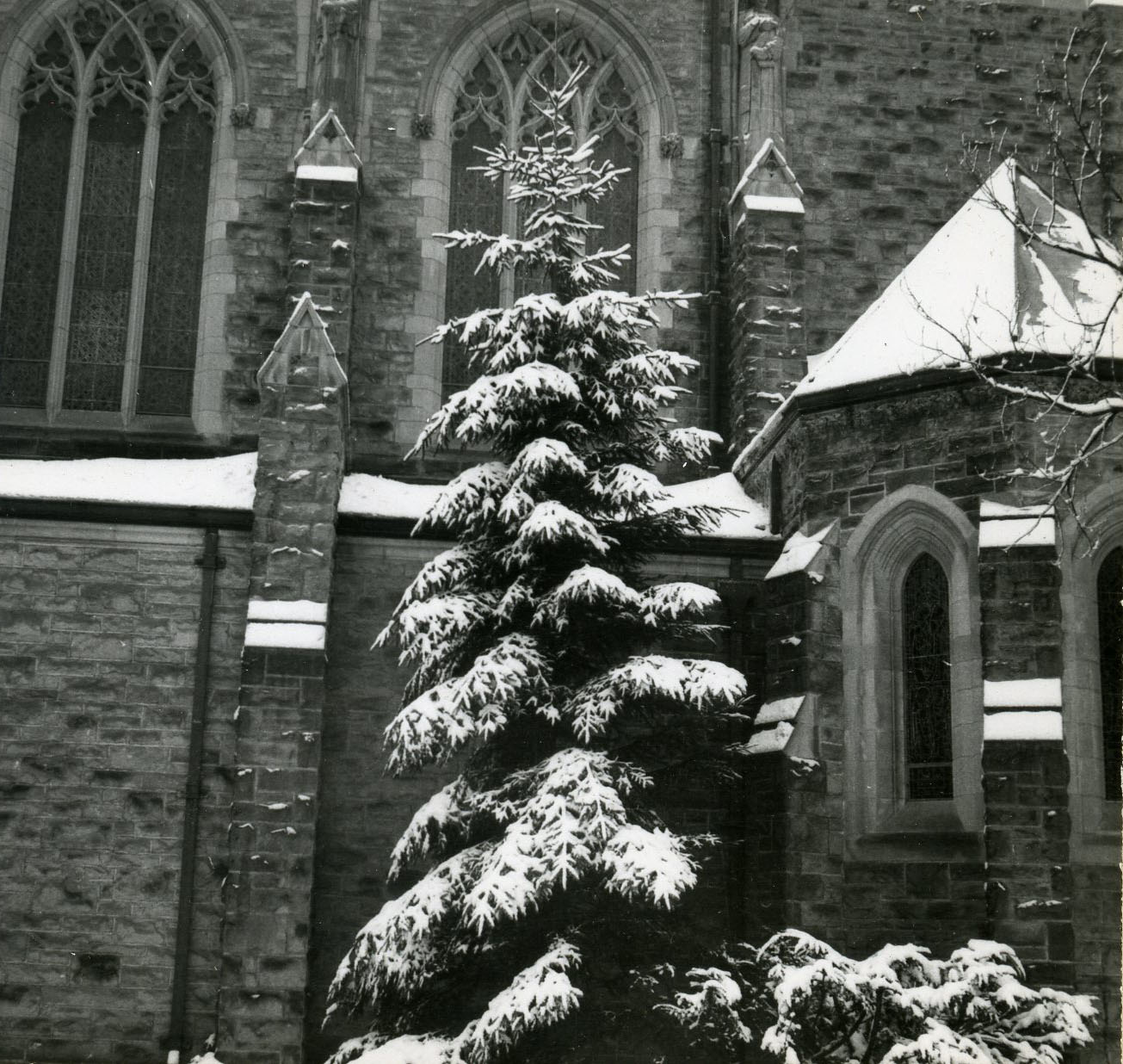
Christ Church Cranbrook, ca 1938.

Christ Church Cranbrook, ca 1938.

Photo Friday: Posters Tell a Story

The Cranbrook Archives exhibition, Designs of the Times: 100 Years of Posters at Cranbrook, opens this weekend. The exhibition documents events and performances that have enhanced and enriched the Cranbrook community for more than a century. The image below is just one of many that will be on display through March 20th, 2016.

yeoman

Performing Arts poster, 1955

This poster, signed “M.W.” was  designed by Michael Justin Wentworth (Cranbrook School ’56). In addition to designing posters, Wentworth was the art editor for both the Brook and the Crane, and designed the sets for the Ergasterion productions and the scenery for the bi-annual Operettas. He received his MA and MFA from University of Michigan, and his PhD from Harvard where he wrote his dissertation on the artist James Tissot, a lifelong interest.

The posters in the exhibition represent all areas of campus – we hope you come check it out!

Gina Tecos, Archivist

Mapping Cranbrook History

Last night I ran across an article in the Huffington Post about a new blog at the Library of Congress called “Worlds Revealed: Geography and Maps.” Maps have always held a fascination for me, in fact, I am trying to teach my daughter to read a road map instead of using “Siri” or Google Maps to find our way somewhere. This generation just does not understand the value and intrinsic beauty of maps. My friend Maria, for example, is a map-aholic. One time we spent several days of our vacation obsessing over a jigsaw puzzle of a map. For the past 35 years, I have used numerous types of maps and atlases in my personal family history research, and in our work here at the Archives, maps, site plans, topographical maps, landscape architecture maps, and more are used weekly by our campus architects, architecture students, and scholars from across the country.

The staff of the Geography and Map Division at the Library of Congress have recently undertaken the “Dynamic Indexing Project” intended to digitize over 2.5 million map sheets. According to Mike Schoelen, a Post-Graduate GIS Research Fellow, “if the collection were stacked into a single pile, it would tower the Washington Monument by over 300 feet.”

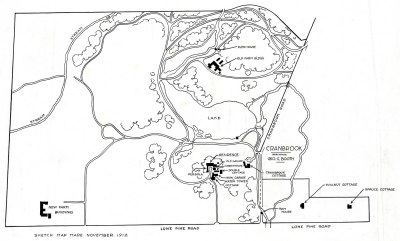
While the map collection at Cranbrook Archives is nowhere near this extensive, we do have an interesting range of maps. Below are some examples.

copper

Map of the Copper Range of Northern Michigan, n.d.

1912.jpg

Sketch Map of Cranbrook, 1912.

hatt532

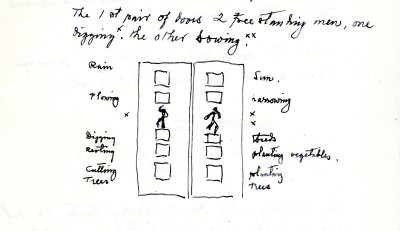
Sketch, Sedalia, CO, 1919. Robert T. Hatt travel journal.

milles533

Finance Building doors, Harrisburg, PA, 1938. Sketch by Carl Milles.

william_mary

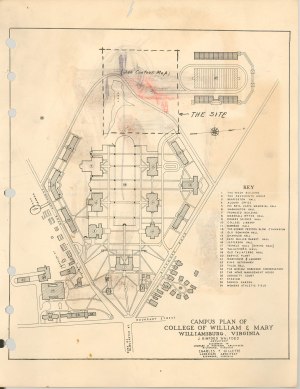
Campus Plan for the College of William and Mary, Competition Packet, 1938.

See Also:

What is a Map?

Maps: Finding Our Place in the World

Maps in the British National Archives

Leslie S. Edwards, Head Archivist

Princess Di’s Dresses in the Archives?

At Cranbrook Archives, much of the work we do—processing manuscripts, arranging documents, scanning photographs—all have a rather similar procedure: repeat.

There is plenty of magnificence to be found in the mundane though. We don’t mind the monotonous details because it’s this repetitive process that wins us the occasional gem. Today, while going through Cranbrook’s historic exhibition brochures printed between the 1940s and 1990s, I came across an image of Princess Diana.

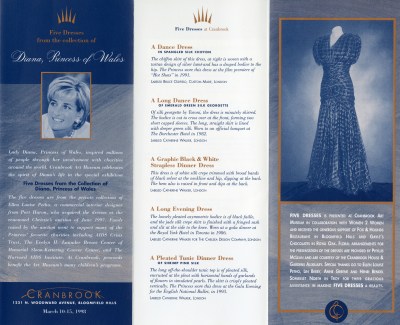
“Five Dresses from the Collection of Diana, Princess of Wales” was an exhibition held at the Cranbrook Art Museum from March 10-15, 1998. The royal dresses were premiered at Cranbrook before becoming part of a worldwide tour that traveled to Russia, Japan, Australia, and England through 1999. This selection from the Princess’s wardrobe was shown in conjunction with the “Art on the Edge of Fashion” exhibition held at Cranbrook at the same time.

2577027

Cranbrook Art Museum exhibition brochure, 1988. Courtesy Cranbrook Archives.

The five dresses were from the private collection of Ellen Louise Petho, a commercial interior designer who, incidentally, was the parent of a Kingswood School alumna. Susan Whitall’s press release in the Detroit News explained how the princess sold dozens of her dresses to benefit AIDs charities just months before her death in 1997. She wrote, “Petho scooped up the five frocks for what became, after Diana’s death, a bargain basement price—less than $100,000.”

The collection included a pleated pink silk tunic dinner dress that Diana wore at the Gala Evening for the English National Ballet and the long jade and black evening dress worn to a dinner at the Royal York Hotel in Toronto in 1986. Four of the five dresses were designed by Catherine Walker and the “piece de resistance,” designed by Bruce Oldfield, was the red dress the princess wore at the premiere of the motion picture “Hot Shots” in 1991.

The Archives are a trove of Cranbrook history. We love rediscovering the hidden materials—it’s what makes the repetition meaningful.

Danae Dracht, Archives Assistant

The Fascinating Notebooks of John Buckberrough

John H. Buckberrough (1874-1955), an immigrant from Ontario, Canada, was a civil engineer for the Cranbrook Foundation from 1927 until he retired in 1955. As described by Henry Scripps Booth:

Buckberrough, a slight man of medium height, started working for Swanson and Booth as that firm’s sole employee two years before Cranbrook officially employed him. That was in the firm’s tiny architectural office located in the below-road-level room of the Ram House section of Brookside’s buildings. … He became one of the first employees of what was known as the Cranbrook Architectural Office in January 1927. … Over the years he was chief surveyor, planned most of the pump rooms, transformer vaults and underground systems, kept copious notes and made detailed plans regarding changes which not only proved increasingly valuable in solving complicated problems but put to shame those who were later supposed to fill his shoes.

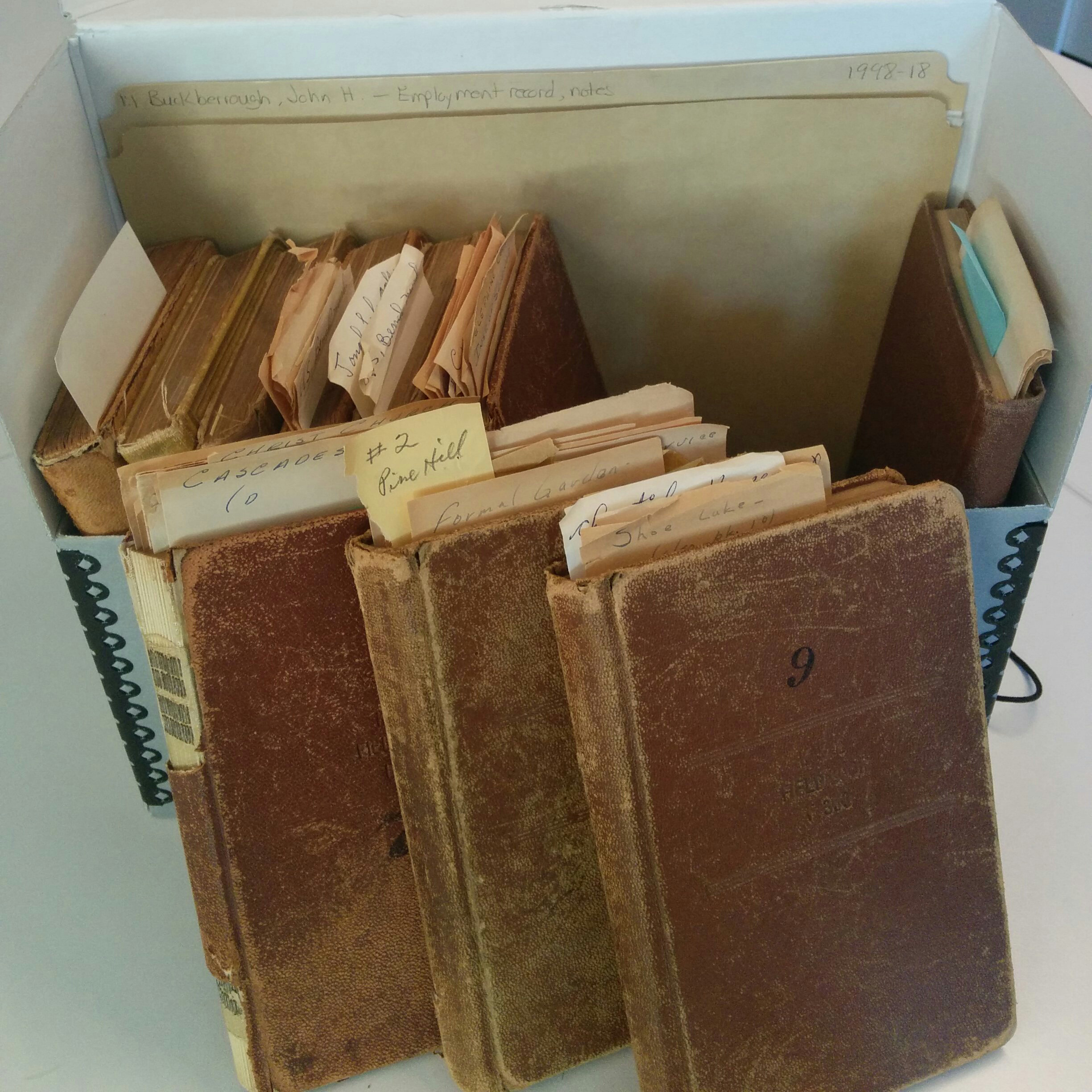
In addition to numerous architectural drawings that bear his signature, Buckberrough’s legacy in the Cranbrook Archives is 10 calfskin engineers’ field books, chock full of drawings and notations, covering 1926-1955.

Courtesy Cranbrook Archives

Courtesy Cranbrook Archives

Descriptions and diagrams of Cranbrook property, heating and plumbing data for Cranbrook buildings, data on Cranbrook roads and lakes, drawings of pump houses, sidewalks, lighting layouts and water lines can be found in the notebooks. Here are some examples:

Design of a bridge.

Bridge at Kingswood Lake, 1938.

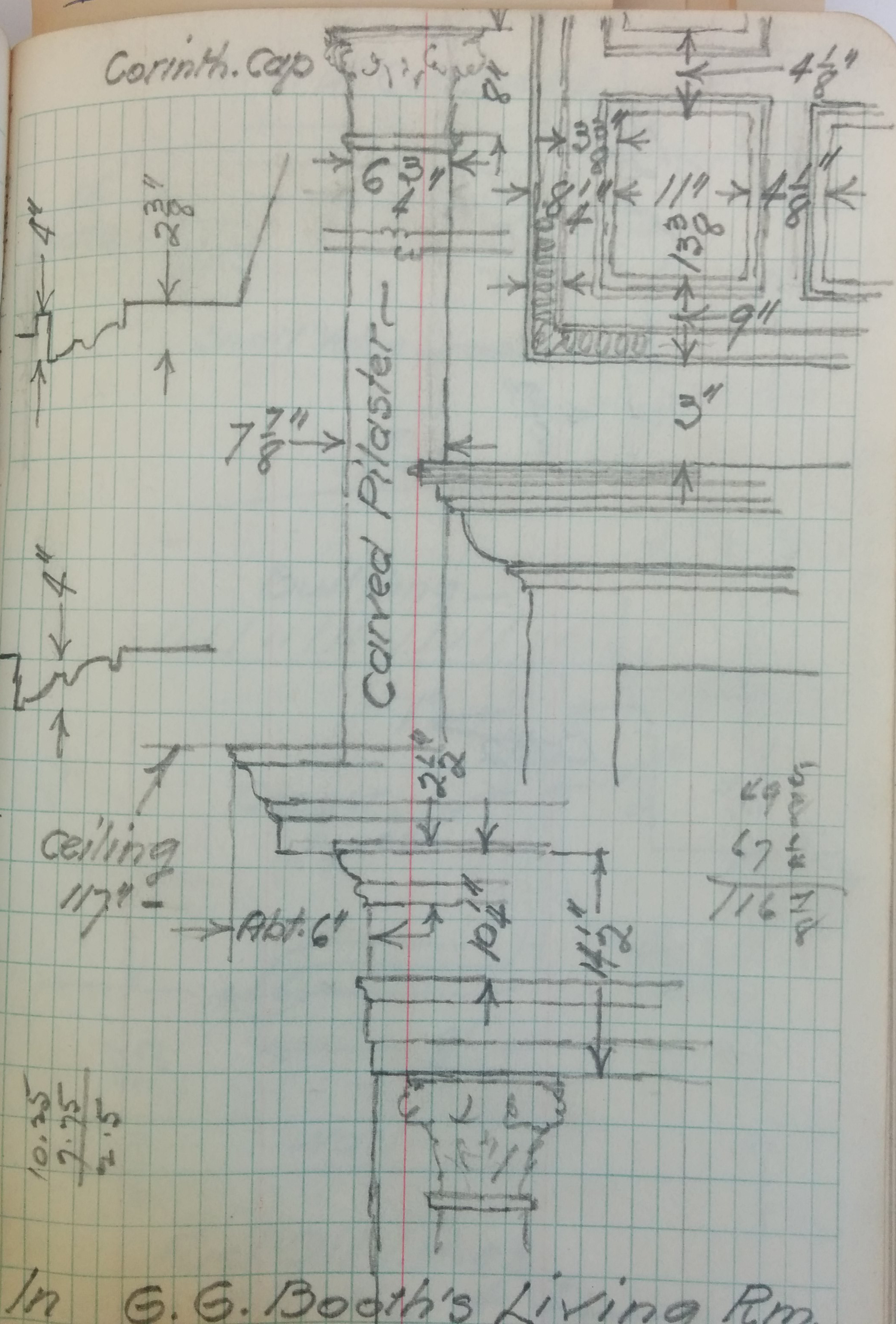
Column design for fireplace in Cranbrook House living room.

Column design for fireplace in Cranbrook House living room.

The Archives’ staff often finds valuable information in the notebooks, which is used for campus restoration and renovation projects including the recent restoration of Cranbrook School Quad. Little did Buckberrough know how valuable his meticulous note-taking would prove to be. Though a search for information requires a careful page-by-page hunt, it’s a pleasant change from the impersonality of electronic resources.

Cheri Y. Gay, Archivist

Lions and Tigers and Mastodons, oh MI!

Don’t worry (or sorry!) if you thought this post was going to be about sports teams in the Detroit area. Today’s post is purely about scientific discovery and serendipity right here in Southeast Michigan! Last month local news services reported that the remains of a wooly mammoth had been discovered in Lima Township (Washtenaw County). This prompted me to do some research about these super-cool prehistoric elephant ancestors. According to the University of Michigan Museum of Paleontology, mammoths and mastodons disappeared from this area about 11,700 years ago. Since that time, the remains of about 300 mastodons and 30 mammoths have been found in Michigan.

In 1934, a WPA project was underway when workers discovered bones while using a steam shovel in Bloomfield Hills. The remains, believed to be dinosaur bones by the workers, were brought to Cranbrook Institute of Science for identification. The bones were determined to be those of a mastodon – now known as “The Bloomfield Hills Mastodon.”

Excavation site of the Bloomfield Hills Mastodon, 1934. Cranbrook Archives.

Excavation site of the Bloomfield Hills mastodon, 1934. Cranbrook Archives.

Only the skull with a few vertebrae and ribs were recovered during the excavation of a small pond, which was deepened to form an artificial lake. The bones were uncovered in a residential district about a quarter of a mile east of Woodward Avenue near Charing Cross Road.

Jaw bone from Bloomfield Hills mastodon, 1934. Cranbrook Archives.

Jaw bone from Bloomfield Hills mastodon, 1934. Cranbrook Archives.

In 1972 a large bone was discovered by a Cranbrook grounds crewman during the process of cleaning up a dump. Warren Wittry, anthropologist and then-CIS director, identified the bone as the central portion of the right scapula of an adult Ice Age mastodon. A”dig” crew was gathered to search for additional bones, but alas only a few additional fragments were found.

Late in 1977, the Institute received an early Christmas present when a partial skull and section of tusk from a young mastodon were discovered by two high school students near Seymour Lake Road in Brandon Township in northern Oakland County. The Institute was very excited about the donation of the bones, which were in an excellent state of preservation. There have been several more mastodon discoveries in Michigan since the 1970s. Personally, I find these stories more interesting to follow than the local sports scene.

Gina Tecos, Archivist

To Sit or Not to Sit

Chair design at Cranbrook has always had its own special niche and fascination among artists and patrons alike. George Booth altered chair designs for his own use at Cranbrook House. Eliel Saarinen designed unique chairs for Cranbrook School and Saarinen House. Ralph Rapson conceived of his chair design for what became known as the Rapson Rocker while a student here. Most of us are familiar with the famous chair designers, but what about projects by less famous designers?

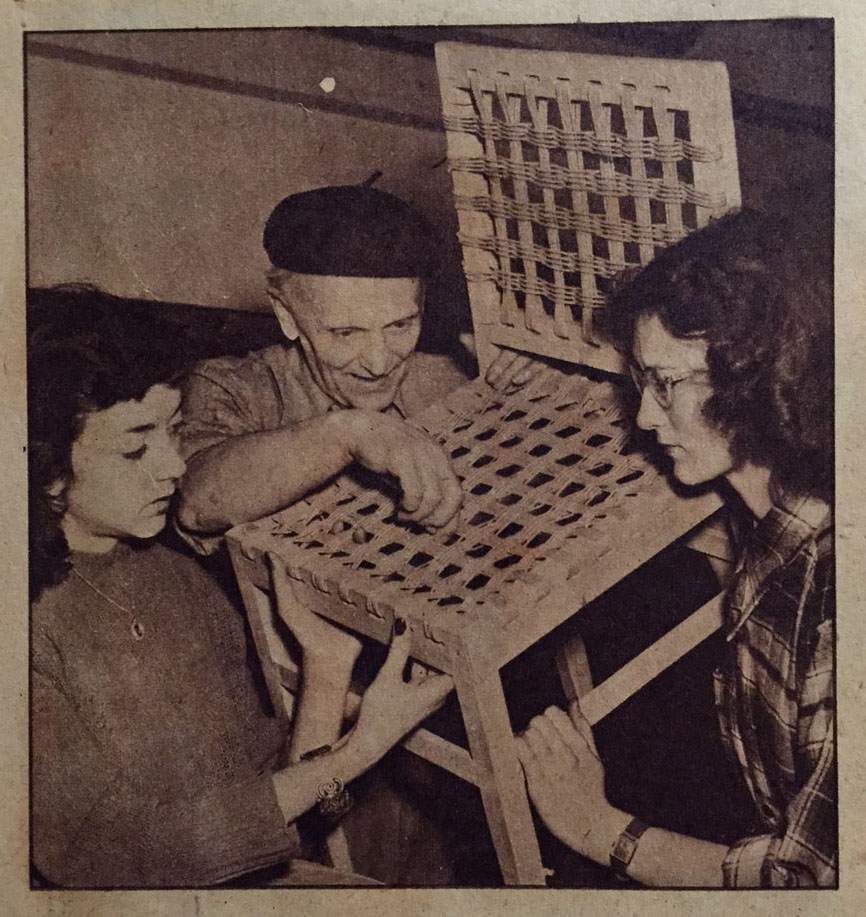
During the war years, Academy of Art students were encouraged to experiment with modern design and new and unusual materials. In 1944, Academy students Gloria Bucerzan and Jean Roberts designed and constructed a chair born of war shortages, by eliminating the use of springs and creating webbing using “non-critical” materials.

Gloria (left) and Jean with woodworking instructor Svend Steen, 1944. Copyright Cranbrook Archives.

Unknown student setting up work for Student Show, 1958. Copyright Cranbrook Archives.

Unknown student setting up work for Student Show, 1958. Copyright Cranbrook Archives.

Art Room, Early Childhood Center at Brookside School, 1997. Chairs designed by Dan Hoffman, Cranbrook Architecture Office. Photograph copyright Christina Capetillo.

Art Room, Early Childhood Center at Brookside School, 1997. Chairs designed by Dan Hoffman, Cranbrook Architecture Office. Photograph copyright Christina Capetillo.

For more on chair design in general, check out the 2012 Year of No-Chair-Design and the Guide to Great Chair Design which features links to chair blogs, the history of chair design, museums, galleries, and books that all feature what else? Chairs!

Leslie S. Edwards, Head Archivist

Photo Friday: Autumn Traditions

With foliage nearing its peak color, there are many reminders of fall here on campus. The image below is yet another tribute to the season—the Kingswood School Autumn Festival. The first Athletic Association Carnival was held in December, 1932, and was the precursor to the Autumn Festival. By 1934 the annual event had been renamed by Headmistress Margaret Augur.

Themes varied, for example, the 1936 festival was fashioned after “modern” America and included an Apache dance and a skyscraper dance by the juniors with the sidewalks of New York as the background set. The 1939 theme was the Old South and ended with a rousing version of “Dixie” as the grand finale. The November 1939 Clarion reports, “Cranbrook as usual was well represented. After their hectic day of soccer, football, tea-dance, etc., we managed to wear them out, so that it was finally decided that bed at eleven was necessary for all. Thus ended the autumn festival.”

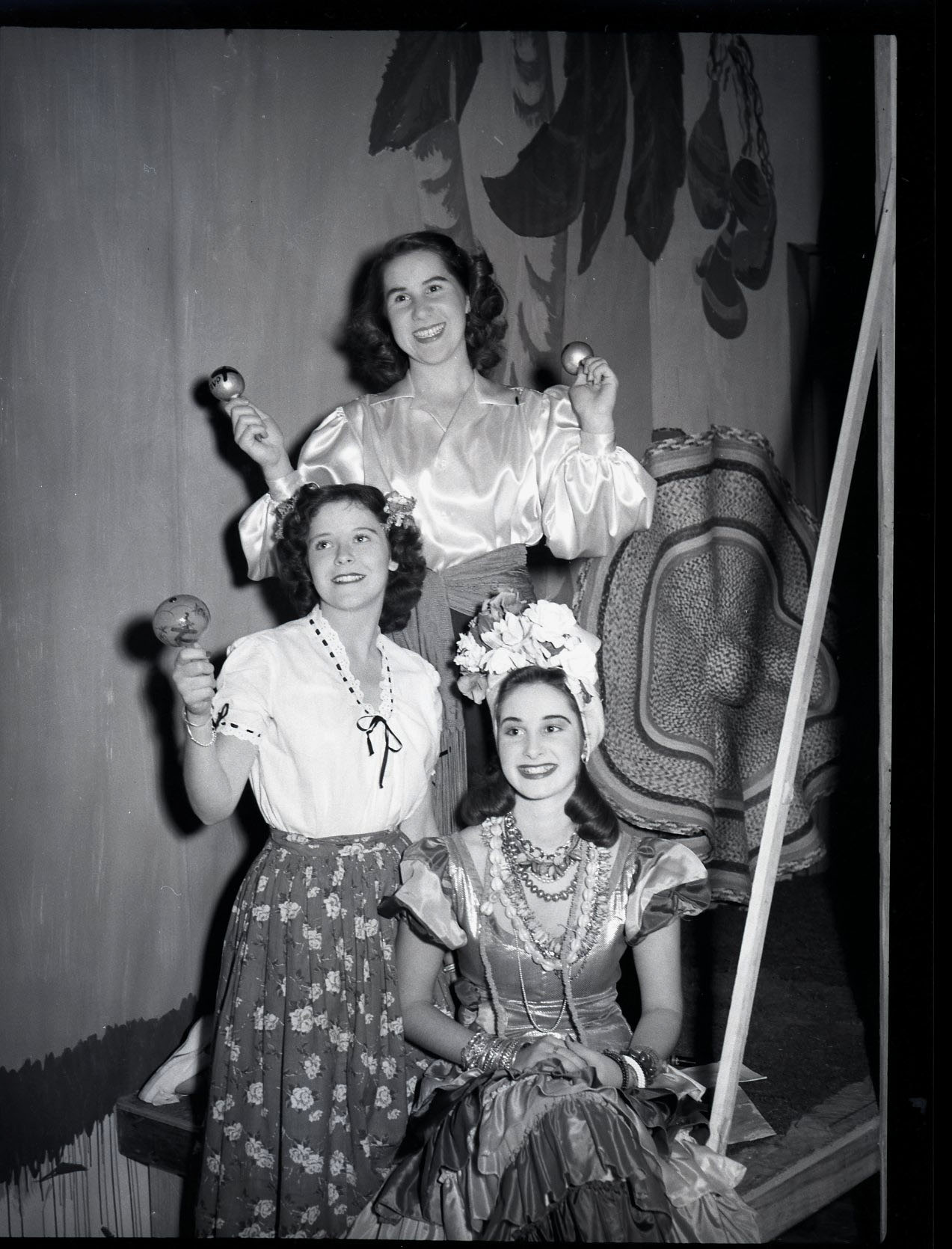
Autumn Festival, Oct 1944.

Autumn Festival, Oct 1944.

The 1944 theme (as shown above) simulated South America. Entertainment included costumed students singing “Down Argentina Way” and “Besame Mucho.” In addition to rumba and samba dancing, the night ended with a lively conga to “Cui Cui .” Wouldn’t it be fun if we could revive this tradition?

Gina Tecos, Archivist
A Treasure Hunt in the Archives

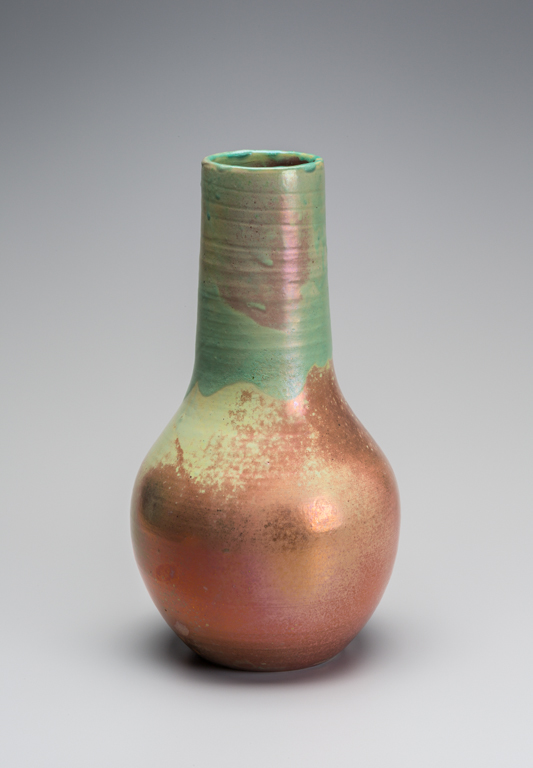
I have had the pleasure of spending much of my time over the last year going through the Cranbrook Archives in search of information about Pewabic Pottery.  This is in preparation for the upcoming exhibition Simple Forms, Stunning Glazes: The Gerald W. McNeely Pewabic Pottery Collection opening December 12. Through the Archives’ amazing resources, including inventories, architectural drawings, correspondence, receipts, historic photographs, and even meeting notes from the founding of Cranbrook School, one of the most awesome discoveries was regarding one of the Pewabic Pottery vases in our collection.

Cranbrook Educational Community Collection, CEC 276 Photographers: Tim Thayer and R. H. Hensleigh

Cranbrook Educational Community Collection, CEC 276
Photographers: Tim Thayer and R. H. Hensleigh

Through inventories we can trace the placement of this vase from during its life in Cranbrook House. It was located in the Living Room in 1921, and by 1933 had been relocated to the Sunset Room. In 1937, George Booth notes the work by its size and a brief description, “14 inch vase- luster- Pewabic.” Cranbrook has 15 Pewabic works purchased during Booth’s lifetime which now reside between the collections of the Art Museum and the Cranbrook Educational Community. While I am still working to place the pieces of the puzzle together to see if we can do this for other work, it may not be possible as some of the receipts and notations are much more cryptic including only “Pewabic Vase” with no dimensions, or description.

It’s treasure hunts like these that make the Archives such a great place to spend my time as you never know what you might find and where it will take you!

Stefanie Dlugosz-Acton, Collections Fellow, Center for Collections and Research

Create a website or blog at WordPress.com