Form Follows Emotion

View-Master 3D Viewer by Design Logic

View-Master 3D Viewer by Design Logic

This is one of the more successful products created by Design Logic, a product design company whose records I’m currently processing. This View-Master 3D Viewer was a new take on an old, familiar product, and reflected the company’s philosophy that every product has both a technical and emotional element. This new version, created in 1985, featured “push-button technology,” and larger image magnification to make it more technologically competitive with other toys of the era, while maintaining the overall look of its predecessor. Time magazine named it one of the best designs of the year.

Design Logic was founded in 1985 by Cranbrook Art Academy graduate David Gresham, and Martin Thayer, a Royal College of Art graduate; the two worked together at ITT Corporation. Operating out of Chicago, the mission of the company was to “create designs that are functional, beautiful, profitable and based on a distinctively American perspective.” The company is no longer in business.

Once the processing of the Design Logic records is complete, a finding aid will be posted on our web site and more images of their creative, unusual products will be in our digital database, so keep an eye out!

– Cheri Gay, Archivist

Photography: The Art of Our Time

croze003

Cranbrook Archives/ Mary Ann Lutowski Papers.

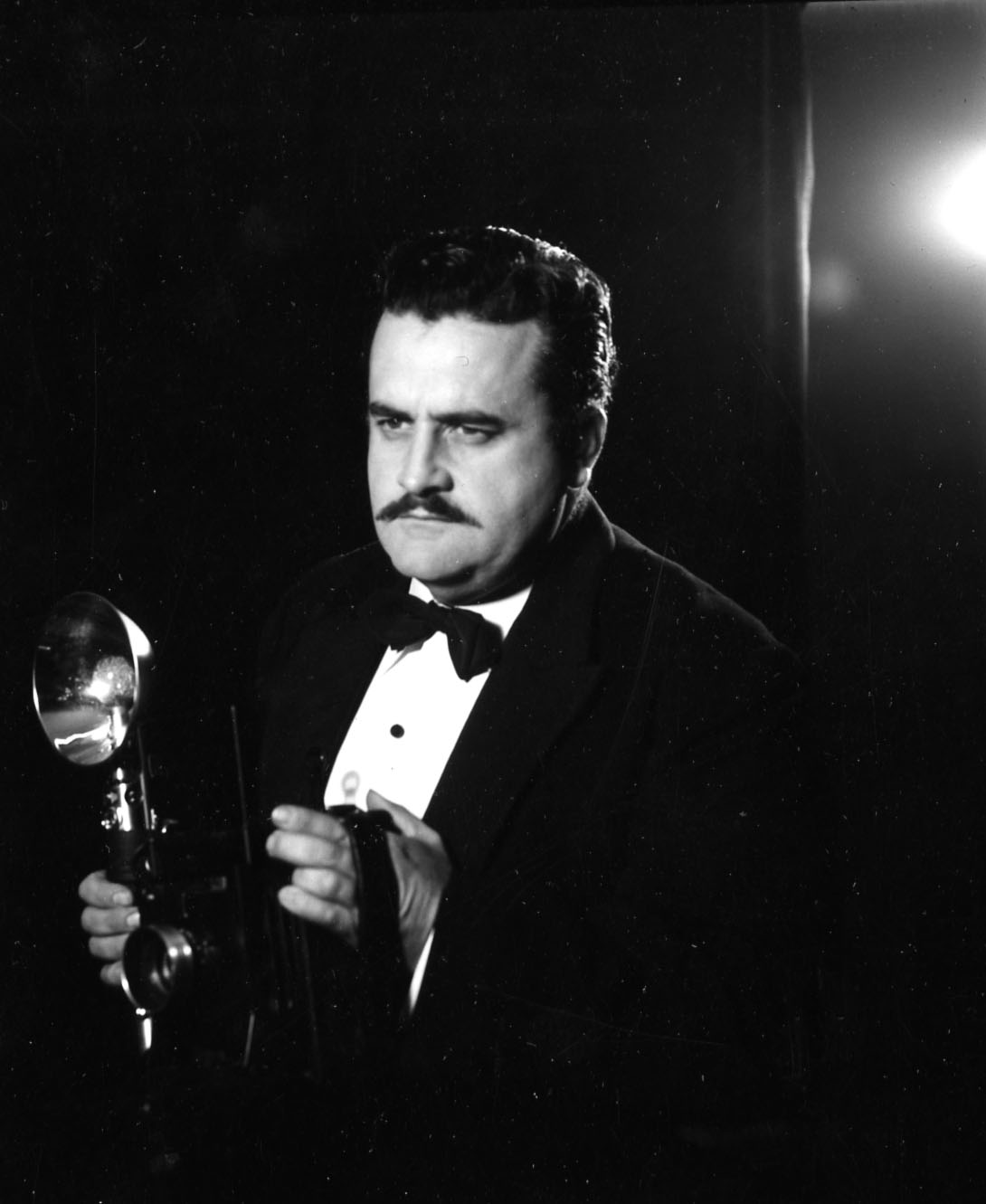
Most people at Cranbrook have heard of Harvey Croze (1904-1973).  From 1944-1970 he served as the primary photographer for the Cranbrook Foundation.  During his tenure here, he produced thousands of photographs, ranging from sculpture and architecture to photographs of school athletics, parties, dances, and any number of other events.  He was particularly beloved by the Cranbrook Kingswood students for his jovial personality and sense of fun. He even wrote a song called the “Cranbrook Waltz” in 1953.

croze1

Cranbrook Archives/ Mary Ann Lutowski Papers.

Croze was born in Houghton, Michigan.  Short and stocky, he sported a big, black mustache and a Leica camera.  A former long distance swimmer who tried out for the 1938 Olympic team (but did not make the cut), Croze was a painter, actor, and Dominican Republic sugar plantation supervisor before photography became his profession.  He studied modern design and photography with Nicholas Haz, took a photography course with Laszlo Moholy-Nagy at the Chicago Institute of Art, and studied photographic techniques with Ansel Adams in Colorado.  He acquired his photo processing skills when he worked as an apprentice in the darkrooms of Chrysler and General Motors.  And, he served on the executive committee of the Auxiliary War Photographer Service where he shot publicity photographs for the Red Cross and the service men at the USO centers during World War II.

croze002

Cranbrook Archives/ Mary Ann Lutowski Papers.

The third of the Cranbrook Foundation staff photographers, Croze was hired in Dec 1943 as photographer and operating manager of the Cranbrook Photo department.  Located in the basement of the Academy of Art Administration Building, the department provided a convenient service to the institutions and in order to provide photographs for press releases, the photo department was available 24 hours/7 days a week.  Not only did Croze take photographs and process them with his assistant Agnes LaGrone, he also taught photography to Academy of Art students and ran his own photography business on the side, primarily catering to Cranbrook-related artists.   During his 27 years at Cranbrook, Croze photographed many well-known celebrities including Carl Sandburg, Frank Lloyd Wright, Basil Rathbone, and General MacArthur.

5496-18

Cranbrook Photo Department, 1940. Richard G. Askew, photographer.


Croze was also nationally recognized for his photographs and exhibited at the Detroit Historical Museum, the Flint Institute of Arts, and the Smithsonian as well as numerous one-man shows here at Cranbrook.   In 1945, he won fourth prize in the San Francisco International Color Slide Salon and in 1960 was awarded a prize in the U.S. Camera magazine photo contest.

In June 1970, Croze’s impending retirement as well as financial deficits of the department led the Cranbrook Foundation to close the photography department. The photographic files were transferred to the Cranbrook Archives where they remain today.

Leslie E. Edwards, Head Archivist


Object in Focus: “The Spirit of Nursing” Monument

Army-Navy Nurse Memorial

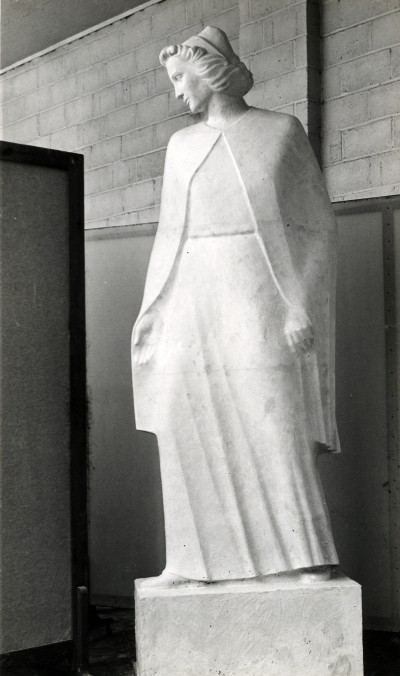
The Army-Navy Nurse Memorial, 1938. Cranbrook Archives.

Although there are many connections to Veteran’s Day within the Cranbrook community, the story I would like to share today is about a woman who left behind a Hollywood movie and stage career to serve her country. Frances Rich (1910-2007)  enlisted in the United States Naval Reserve during World War II and left a lasting legacy for all who visit Arlington National Cemetery.

The daughter of silent film star Irene Rich and the adopted daughter of naval officer Charles Rich, Frances was born in Spokane, WA in 1910. She received her bachelor’s degree in English Literature from Smith College in 1931. Between the years of 1932-1933, Rich appeared in six Hollywood films and one Broadway play. During this time she also became very interested in sculpture and started taking drawing, fresco painting, and clay carving classes in Paris, Rome, and Boston.

While in Paris, Rich met the sculptress Malvina Hoffman (1885-1966) and studied with her for two years. Upon returning to the United States, she continued to hone her craft at the School of the Museum of Fine Arts in Boston. Between 1937-1940 she studied sculpture with Carl Milles at Cranbrook Academy of Art, whom she worked with for 18 years.

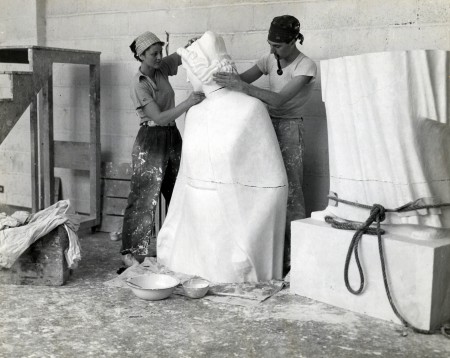
In 1942, Rich enlisted in the U.S. Naval Reserve as a Lieutenant Jr. Grade. She served as the Special Assistant to Mildred McAfee (1900-1994), director of WAVES (Women Accepted for Voluntary Emergency Service). Prior to her enlistment, and while a student at Cranbrook, Rich sculpted the Army-Navy Nurse Memorial (1938). One of her best-known works, the 10-foot high statue was made from Tennessee marble and commemorated nurses who died during military service. The statue resides at Arlington National Cemetery and is often referred to as the “Spirit of Nursing” monument.

Frances Rich working on sculpture

Frances Rich working on the Army-Navy Nurse Memorial at Cranbrook, 1938. Cranbrook Archives.

Today, along with all of the men and women who have bravely served our country, we salute Frances Rich.

Gina Tecos, Archivist

Election Day: Mayor Vettraino

Dominick Vettraino at the wheel of Cranbrook's Fire Truck, ca. 1936. Vettraino Family Papers, Cranbrook Archives.

Dominick Vettraino at the wheel of Cranbrook’s Fire Truck, ca. 1936. Vettraino Family Papers, Cranbrook Archives.

In honor of Election Day I wanted to feature Cranbrook and the polls! In 1958, Cranbrook’s Dominick Vettraino was elected as mayor of Bloomfield Hills, the first native born Bloomfield Hills resident to hold the position!

Dominick Vettraino was the eldest son of Michael and Michaela Vettraino.  Mike was grounds superintendent for Cranbrook from 1905-1955 and all of his children except Dominick were born at Cranbrook. Dominick started working with his father on the grounds when he was 16 years old, and after Mike’s retirement, took over the position of superintendent.  In addition, he contributed substantially to the surrounding community.   After studying at the University of Michigan’s Fire School he was named chief of the Cranbrook Fire Department. He and his brother John Vettraino converted a Ford chassis into Cranbrook’s first fire truck, and eventually Dominick served as the head of Cranbrook’s Police Department.

After his many Cranbrook achievements he went on to serve the larger community of Bloomfield Hills.

Stefanie Dlugosz, Collections Fellow, Center for Collections and Research

Photo Friday: Excavation at Greenwood Mound

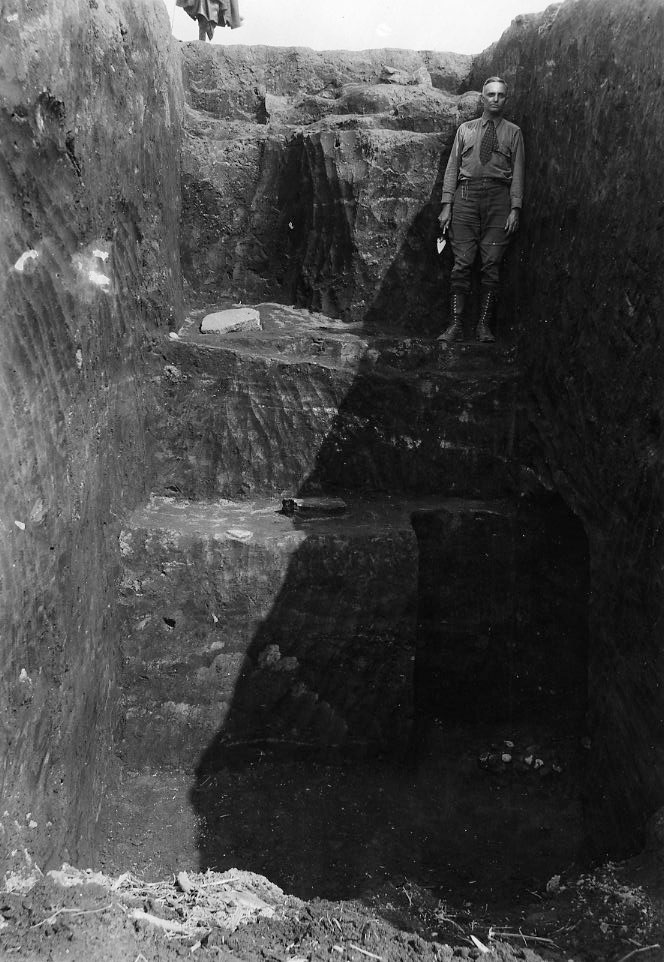
William Colburn, February 1932. Cranbrook Archives

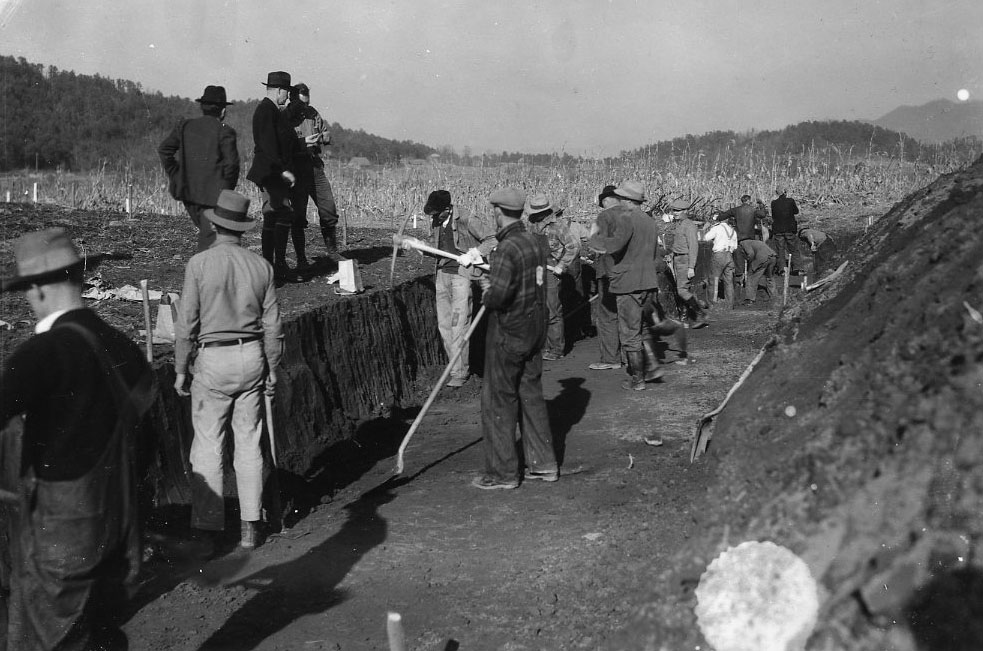
William Colburn, February 1932. The William Colburn Papers, Cranbrook Archives.

Team of men at dig. Cranbrook Archives.

Team of men at dig. The William Colburn Papers, Cranbrook Archives.

In honor of International Archaeology Day, today’s Photo Friday is a tribute to Archaeologist William Colburn (1882-1966). Colburn, a Detroit native, first visited Cranbrook Institute of Science in 1932. He spent a few weeks in December of the same year fixing display and lighting issues the Institute had in the “mineralogical room.” It came to his attention in 1933 that there were multiple collections of mineral specimens held by the Detroit Museum of Art (now the Detroit Institute of Art) that were not being displayed due to lack of space. Colburn secured an indefinite loan of these collections to the Institute, and spent the majority of the summer of 1933 cataloging and displaying them. Subsequently, Colburn accepted a position on the Institute’s Board of Trustees, a position he held from 1933-1944.

Colburns sketch of the bowling alley. Cranbrook Archives.

Colburn’s sketch of the bowling alley. The William Colburn Papers, Cranbrook Archives.

"Showing field rocks on bowling alley after cloudburst." Cranbrook Archives.

Taken after the rain, the arrangement of fieldstones can be seen. The William Colburn Papers, Cranbrook Archives.

Colburn is well-known for an excavation he led in February 1932 of the J.J. Greenwood Mound, a Cherokee civilization near Dillard, Georgia. Although he did not find any major burials or relics, Colburn’s team did come across some interesting finds. In his report, Colburn describes the discovery of a stone alignment that he interpreted as a Cherokee “bowling alley” (a Native American game). A formation of fieldstones was found with a smooth hard-baked clay runway. A rainstorm shortly after the discovery shifted the original arrangement of the stones. Thirty-two disk-shaped stones with rounded edges discovered at the sides of the “runway” were used for the game. One of the stones was found with a chip that had been carefully repaired by the Cherokee.

Colburn's drawing of the mound site. Cranbrook Archives.

Colburn’s drawing of the mound site. The William Colburn Papers, Cranbrook Archives.

Colburn made several innovations for which Cranbrook became known, including internally lit display cases and back-lighting mineral specimens. Colburn  sought out specimens, making numerous trips to the Upper Peninsula, and even the Eastern and Western parts of the country, in order to build the collections at the Institute. Through his many excavations Colburn obtained numerous mineral specimens for the Institute. In addition, he bequeathed a generous amount of specimens to the Institute.

Gina Tecos, Archivist

Lost and Found in a Sea of Cranbrook History

Ye Triumphe Ship

Ye Triumphe Ship, CEC 1918.1

Every day at the Center for Collections and Research brings new adventures and discoveries. During a visit to one of the storage spaces on Cranbrook’s campus, I stumbled upon a curious object, which inspired me to research it and its past. Like most things around here, the object has a great lineage throughout the campus with connections to George Booth, the Detroit Society of Arts and Crafts, and Cranbrook School.

The Ye Triumphe model ship was crafted by Henry Brundage Culver (1869-1946), and although it is a model, it is a large one: about 40 inches long and 32 inches high. George Gough Booth purchased the Ye Triumphe in September 1918 from the Detroit Society of Arts and Crafts. The model, which was advertised in the Detroit Sunday News, had been on display in the window of the Detroit Society of Arts and Crafts shop during that same year.

Henry Brundage Culver worked as an attorney and also served as secretary for The Ship Model Society in New York. He participated in building ship models, and contributed to scholarship on the art of model-making. He produced several publications including Contemporary Scale Models of Vessels of the Seventeenth Century (1926) and The Book of Old Ships: Something of their Evolution and Romance (1924). In the introduction to Contemporary Scale Models Culver compares the art of ship-model building to that of painting.

The finest examples of these miniature vessels are, in the eyes of those best fitted to judge productions of the highest artistic quality, appealing in general composition, line, mass and technical execution, to the aesthetic susceptibilities of those, who have eyes to see, in a no less degree than do the best examples of pictorial art.”

­—Henry B. Culver, Contemporary Scale Models of Vessels of the Seventeenth Century, New York: Payson and Clarke Ltd.1926, pg.ix.

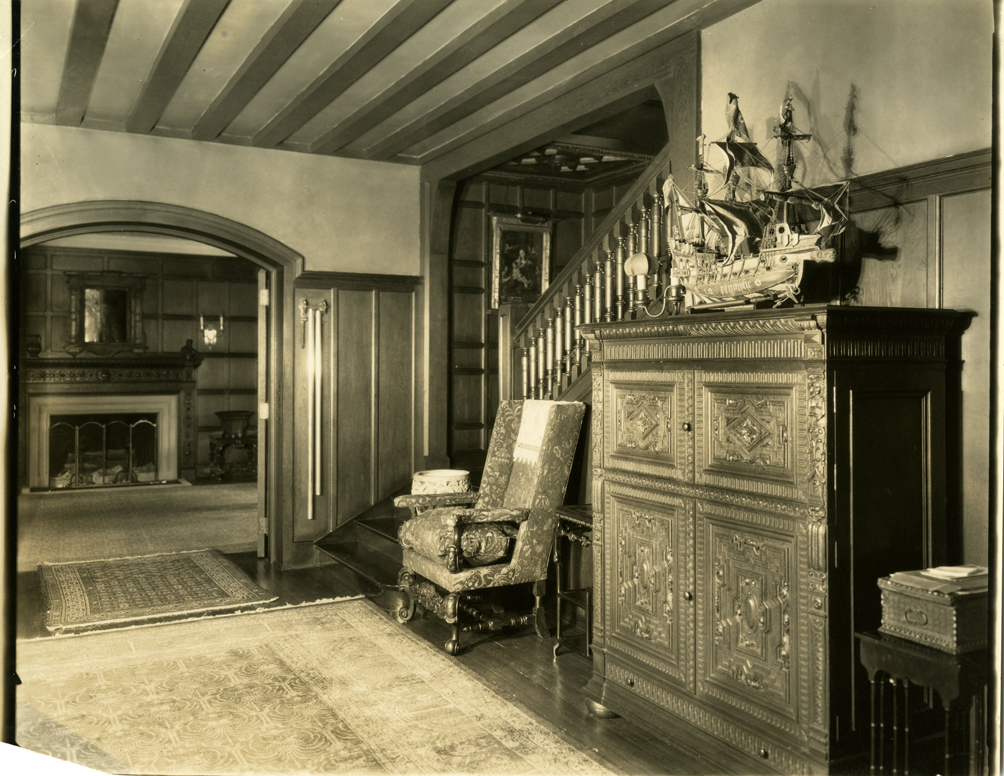
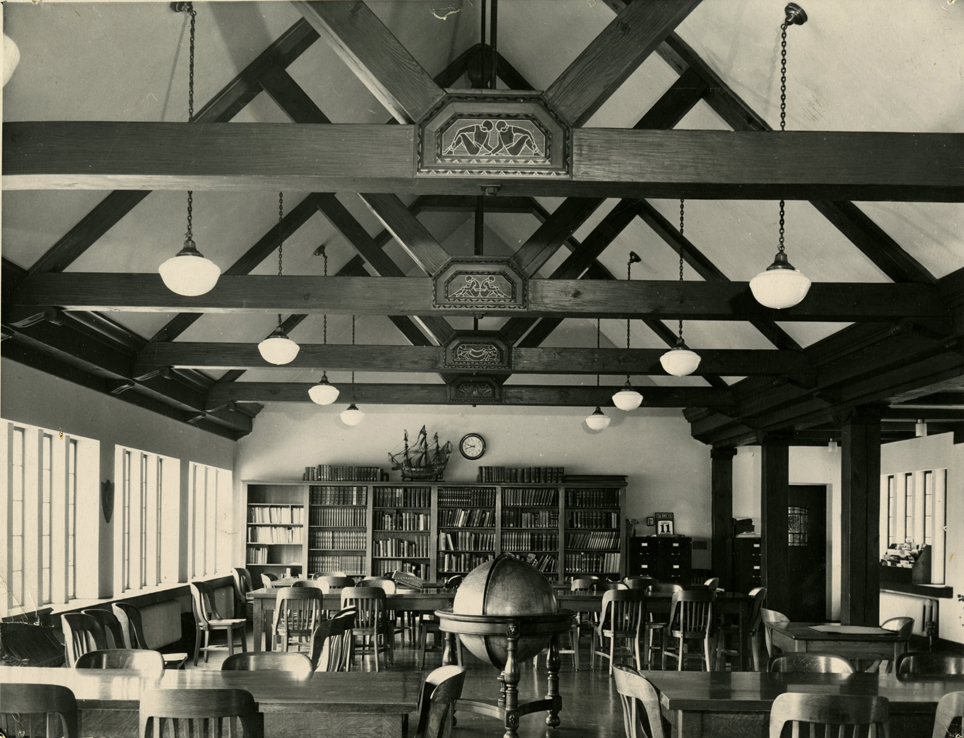
Originally, the ship was placed in the reception hall of Cranbrook House, and was later loaned by Booth for display in the library at Cranbrook School for Boys. Each of the photographs show the ship on display and its presence throughout Cranbrook.
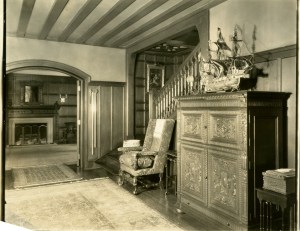
CH_entrance hall_Ship_Blogpost

Cranbrook House reception hall, ca. 1920. Cranbrook Archives

CS_Library_Ship_Blogpost

Cranbrook School for Boys, Library interior, ca. 1945. Cranbrook Archives.

The Ye Triumphe will be returning to view at the Cranbrook Art Museum’s upcoming exhibition The Cranbrook Hall of Wonders: Artworks, Objects, and Natural Curiosities opening November 23rd, 2014. Come and check out the Ye Triumphe and many other fabulous objects from across the Cranbrook campus including works from the Center for Collections and Research, Cranbrook Art Museum, and the Cranbrook Institute of Science!

—Stefanie Kae Dlugosz, Center for Collections and Research, Collections Fellow

Photo Friday: The Fate of the North Gates

Arriving at  Cranbrook House you have probably noticed the large wrought iron entrance gates that welcome guests to the property along Lone Pine Road. A collaborative design by Cranbrook Founder, George Gough Booth (1864 – 1949) and Polish-American blacksmith, Samuel Yellin (1885 – 1940), this pair of gates were completed in 1917and are among the most cherished historic decorative elements at Cranbrook. But did you know that they are not the only gates that were a Booth-Yellin collaboration situated on the property?

North Gates

The North (Woods) Entrance Gates in Yellin’s studio, 1917. Courtesy Cranbrook Archives

Affectionately referred to as the North Gates, the gates seen in this photograph were also a collaborative design by Booth and Yellin. Forged by Yellin in his Philadelphia studio in 1917, the North Gates were installed as a part of a stone entrance wall at the old Cranbrook House entrance drive just north of Kingswood School on Cranbrook Road. When the drive was closed to re-route traffic to the house, the gates were ultimately removed and put into storage where they have remained – until now! Next week the North Gates will be leaving Cranbrook for a short journey to Cleveland for a full restoration. The six month project will include the fabrication of hand-wrought ironwork to replicate missing elements, chiseling to recreate bird faces and leaf veins, sandblasting, and the replication of a historic surface finish. Upon their return next spring the gates will be reinstalled at the new exit drive at Cranbrook House on Lone Pine Road just west of the South Entrance gates. So keep your eyes peeled for the triumphant return of the freshly restored gates!

CECT852det11

The original site of the North Gates as it appears today on Cranbrook Road. Photographer, Gretchen Sawatzki


Gretchen Sawatzki, Associate Registrar


To check out some more gate related information click here and here!

Letters Left Behind: Advertising Local History

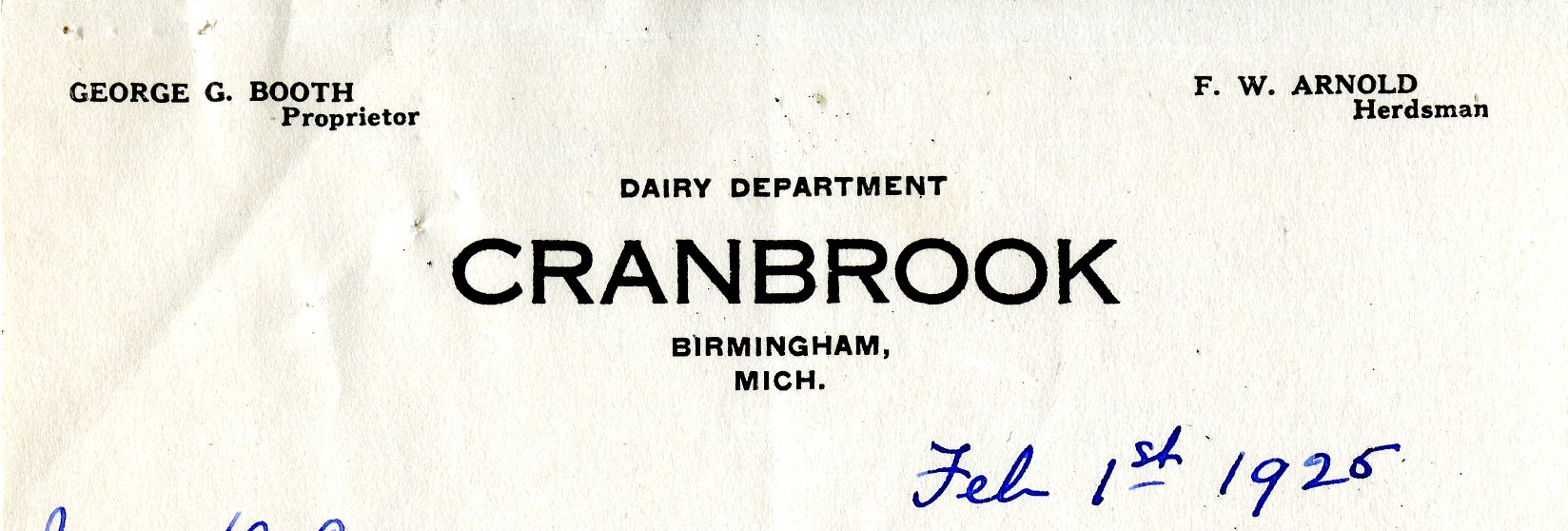
In pulling together the final selections for the Cranbrook Archives’ exhibition “Ephemera: Stories that Letterhead Tells,” I had many difficult choices to make. We have so many fantastic examples of letterhead that span 150 years. It was hard to choose which stories to tell in the exhibition!

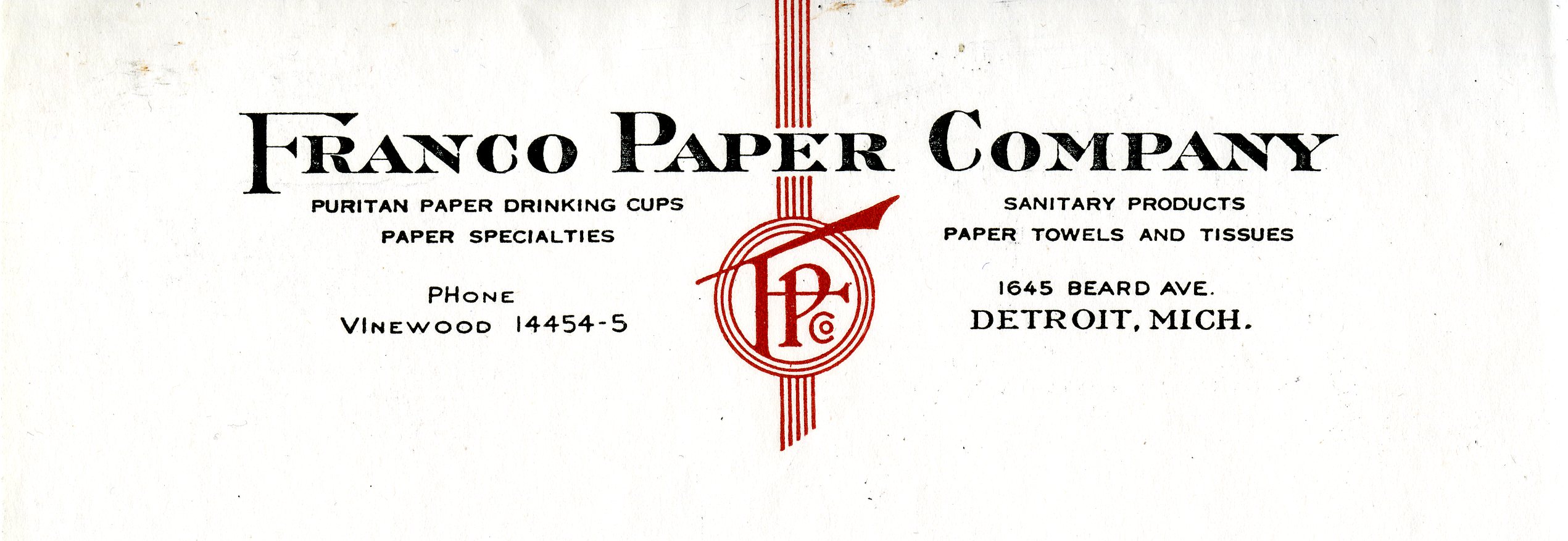
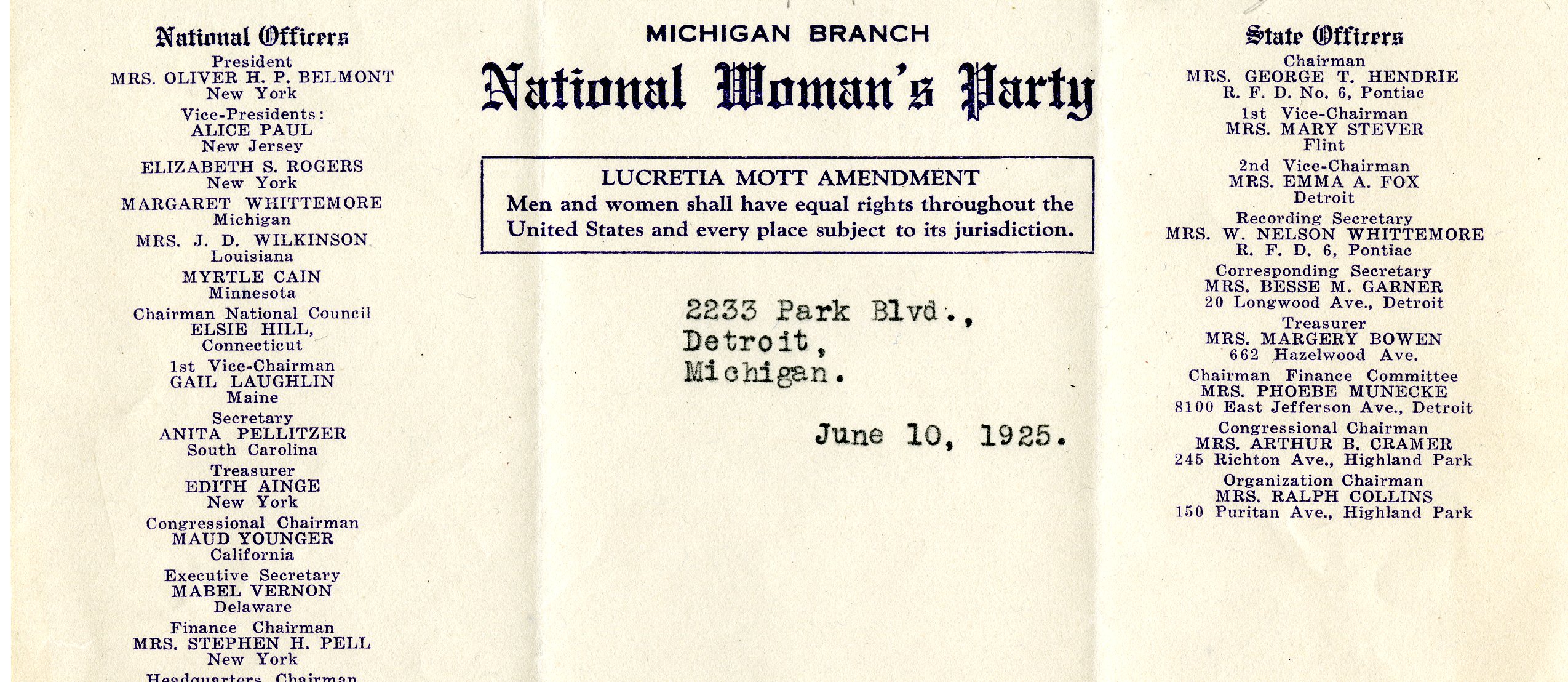
That said, I have to say that some of my favorites are the ones that document Michigan history, and specifically, local area history. Numerous businesses including retail stores, restaurants, gas stations, hotels, industries and civic organizations, are no longer in existence and the letterhead is the last bit of evidentiary proof of existence. This post is an opportunity to spotlight a few of these.

farm003

lumber001

paper007

women006

flag002

Beginning this Thursday, the Archives, as part of the Center for Collections and Research, will be host to a lecture series about Michigan history. In each of the three lectures, the speakers will highlight letterhead from their own institution’s archival collections that relate to the stories they are telling. Please join us this Thursday October 16th for the first in the series: “Boom Town: Detroit in the Roaring ‘20s” by Joel Stone, Senior Curator of the Detroit Historical Society. The lecture will be held in DeSalle Auditorium, Cranbrook Art Museum, from 7-8:30pm and include a tour of the exhibition “Ephemera: Stories that Letterhead Tells.”

Leslie S. Edwards, Head Archivist

Photo Friday: A Labor of Love

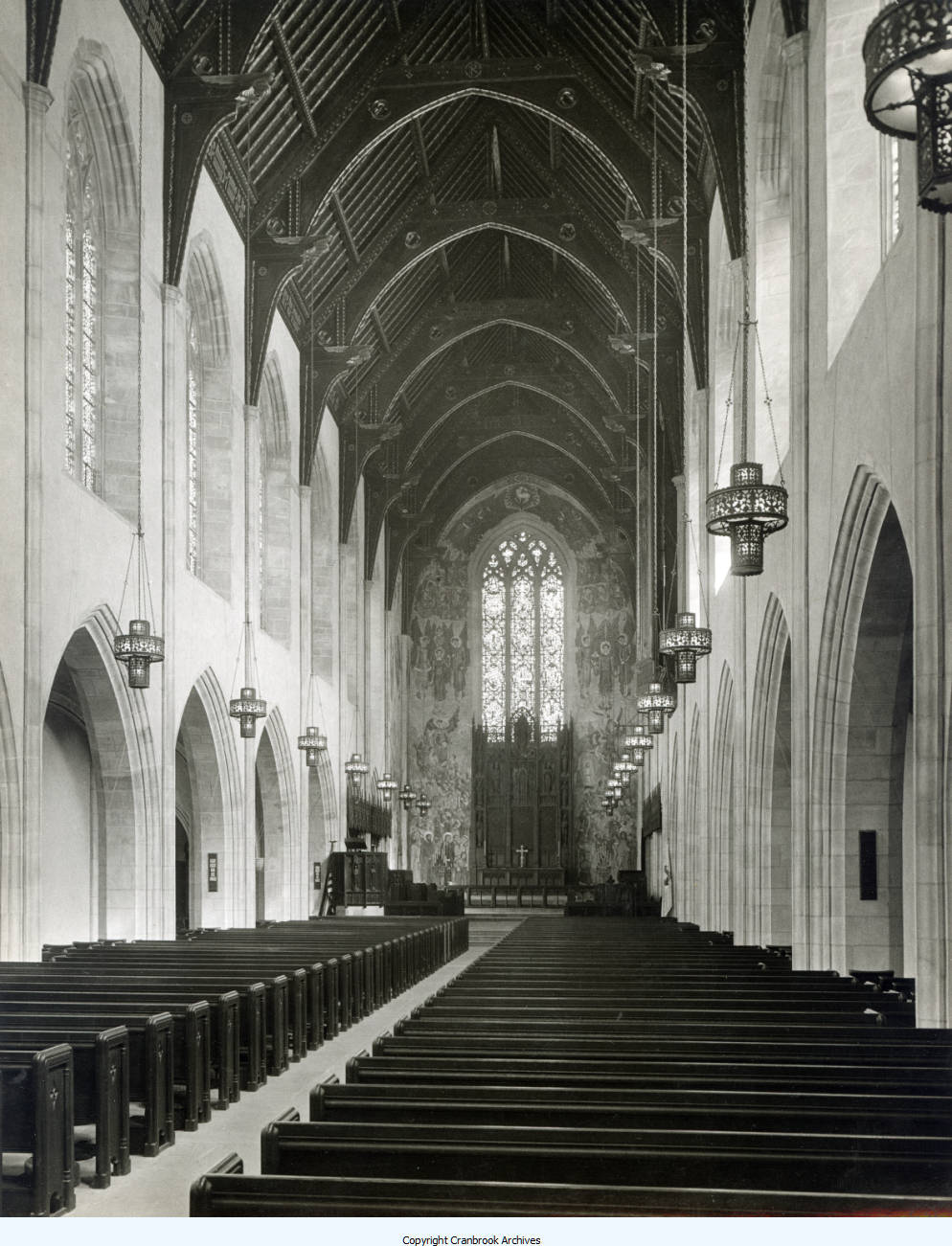
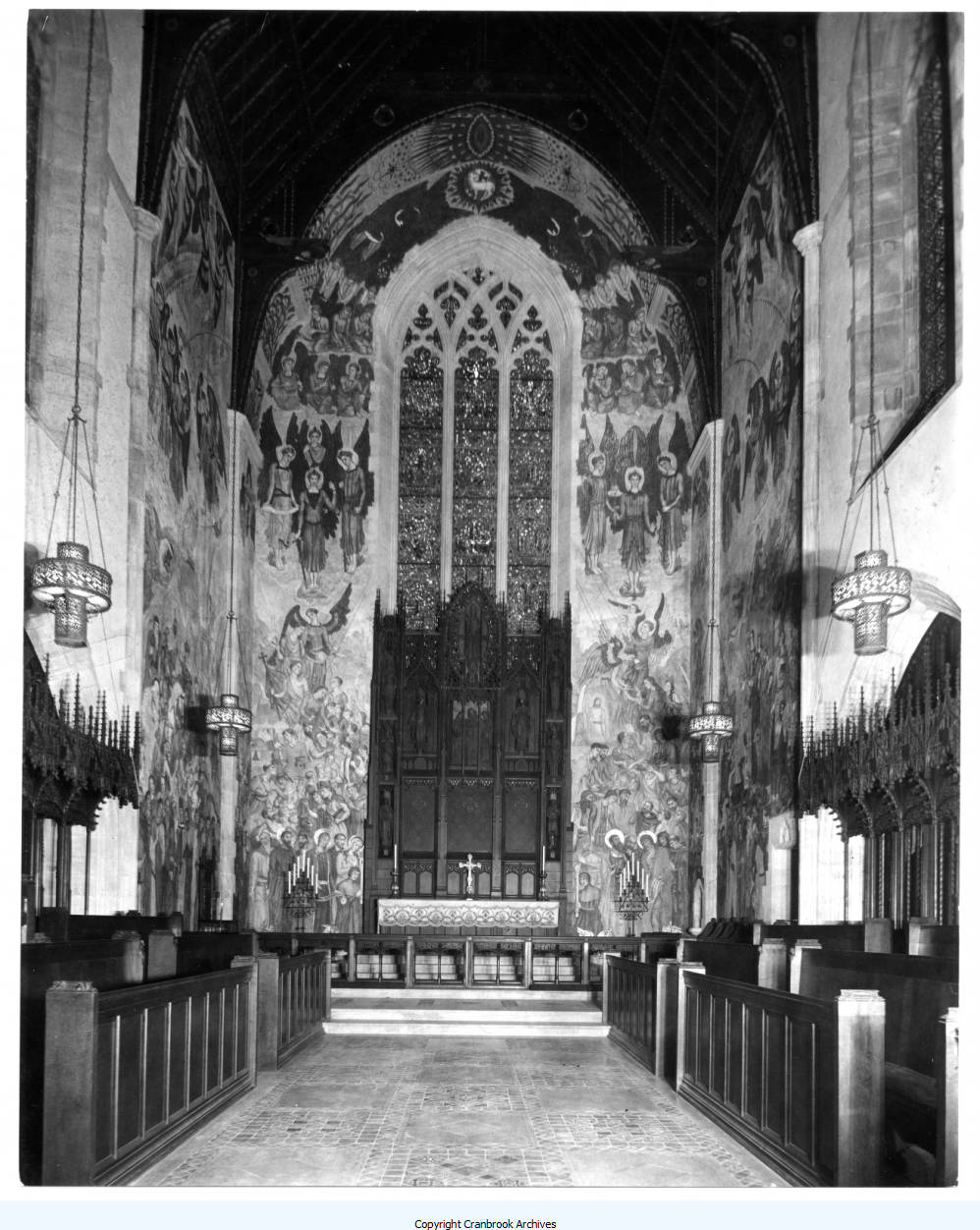
Christ Church Cranbrook Interior. Cranbrook Historic Photograph Collection, Cranbrook Archives.

CCCnave

Christ Church Cranbrook Nave. Cranbrook Historic Photograph Collection, Cranbrook Archives.

After a visit to Christ Church Cranbrook earlier this week, I knew it needed to be highlighted as today’s Photo Friday! George G. Booth conceived Christ Church to be the moral center of the new community which he was building at Cranbrook. The photos show a great overview of the expansiveness of the church and shed some light on the magnitude of the work involved in its design. Each of these elements adds to the overwhelming detail of George Booth’s vision and the care in the design of Christ Church Cranbrook.

The church is Booth’s testament to the Arts and Crafts movement. He carefully acquired and commissioned each work of art to add to the overall wonderment of the church and to pay tribute to those who have devoted their lives toward artistic and altruistic pursuits.  The works of art range from the sterling altar plate to stained glass windows, altar frontals, tilework, woodcarvings, paintings, sculptures, and metalwork, most from noted Arts and Crafts men and women.

These photographs, taken five years after the 1928 dedication of Christ Church Cranbrook show the interior of the church sanctuary and a detail view of the nave of the church. The large fresco flanking the high altar was designed and executed by Katherine McEwen, an old friend of Booth’s, and one of the founding members of the Detroit Society of Arts and Crafts.  From the work of Katherine McEwen to Oscar Bach, Samuel Yellin, and Hildreth Meire, to name a few, Christ Church Cranbrook is an architectural gem which should be experienced in person!

Stefanie Dlugosz, Center for Collections and Research, Collections Fellow
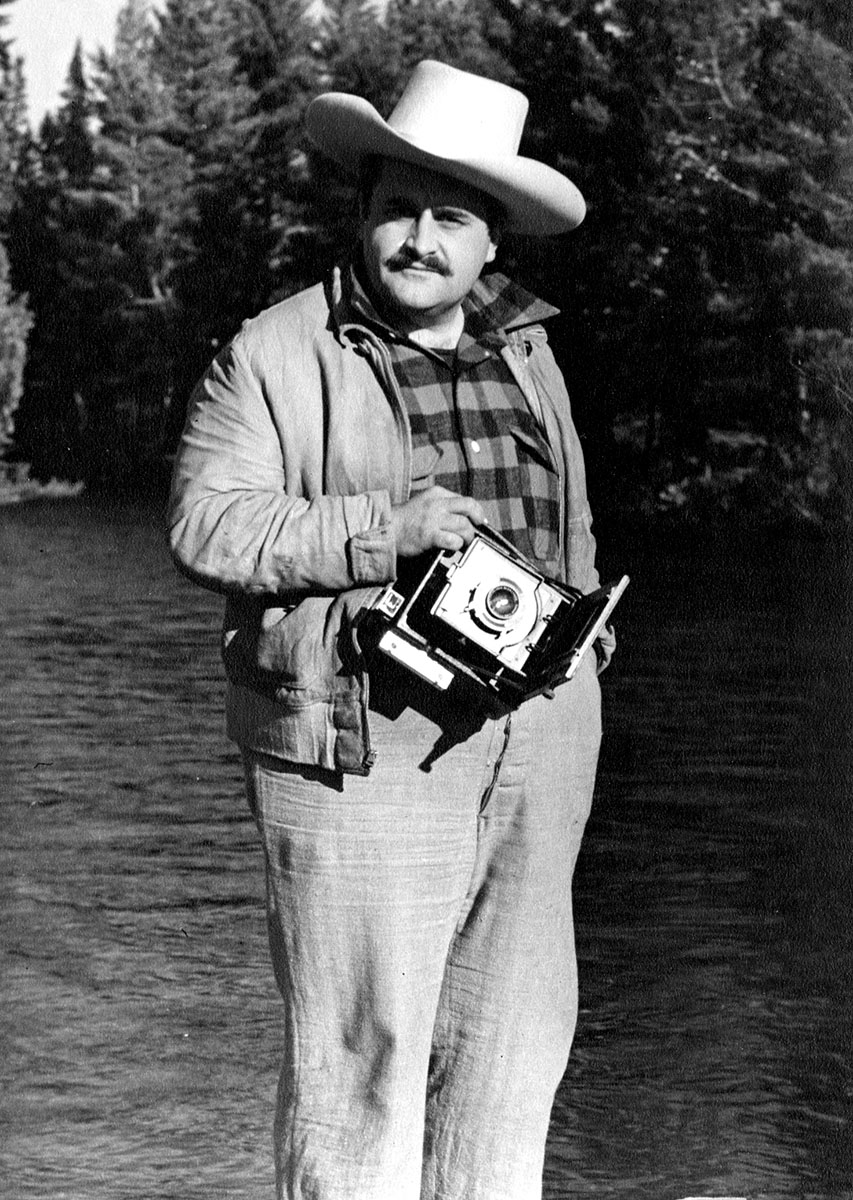
 

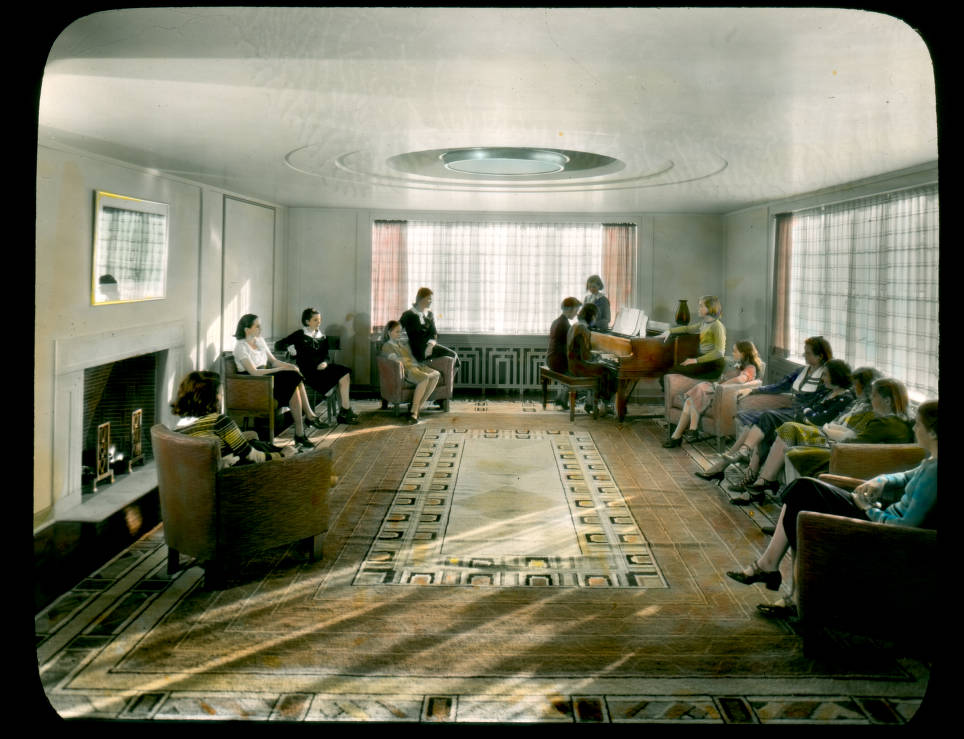
Photo Friday: A Splash of Color

Kingswood School Rose Lounge. Cranbrook Archives

Kingswood School Rose Lounge, The Cranbrook Hand-Colored Lantern Slide Collection. Cranbrook Archives

As the weather here at Cranbrook is more than a little dreary, today’s photo provides a look into a bright and cozy atmosphere perfect for reading, relaxing and being inside. Taken around 1932, it shows a group of students gathered in the lounge of the Kingswood School dormitory (originally known as Reception Room III) listening to two of their peers play the piano. The photograph comes from Cranbrook Archives’ Hand-Colored Lantern Slide Collection. The photographs in this collection were originally black-and-white and were painted with watercolor years later, and not by the original photographer. This jump in time explains the vibrant color choices in the photograph as the painter was not present when the image was originally captured.

The Cranbrook Hand-Colored Lantern Slide Collection contains over 30 images of Cranbrook institutions taken primarily during the 1920s and 1930s. Several of the original black and white images were taken by architectural photographers for inclusion in publications.

Today’s photo was taken by George W. Hance, Cranbrook’s first paid staff photographer (1931-1932). Hance had been commissioned by George Booth as early as 1916 to photograph his art collection and later photographed Cranbrook’s campus and grounds including Kingswood, Cranbrook House (home to George and Ellen Booth) and Thornlea (home to Henry Scripps Booth). Explore more photographs like these on our digital image database or in person at the Archives!

Stefanie Dlugosz, Collections Fellow, Cranbrook Center for Collections and Research


Create a website or blog at WordPress.com