With the Thanksgiving holiday almost upon us, it is time to begin planning and preparing one of the essential parts of any celebration: food. It seems timely, then, to highlight Flora Leslie, Brookside’s long-serving dietician and food director. I would like to introduce her to you in her own voice, recalling a memory of some precarious pumpkin pies:
Floral Leslie interview with Mark Coir, Archivist (OH1990.09.28), November 5, 1987. Courtesy of Cranbrook Archives.
Hearing this story in Flora’s voice brings the memory to life in a different way than simply reading it in written form. Cranbrook Archives’ Oral History Collection holds recordings of many voices that add dynamism and richness to their stories. Flora Leslie’s interview describes her life at Cranbrook and her experience of its people and places in the mid-twentieth century.
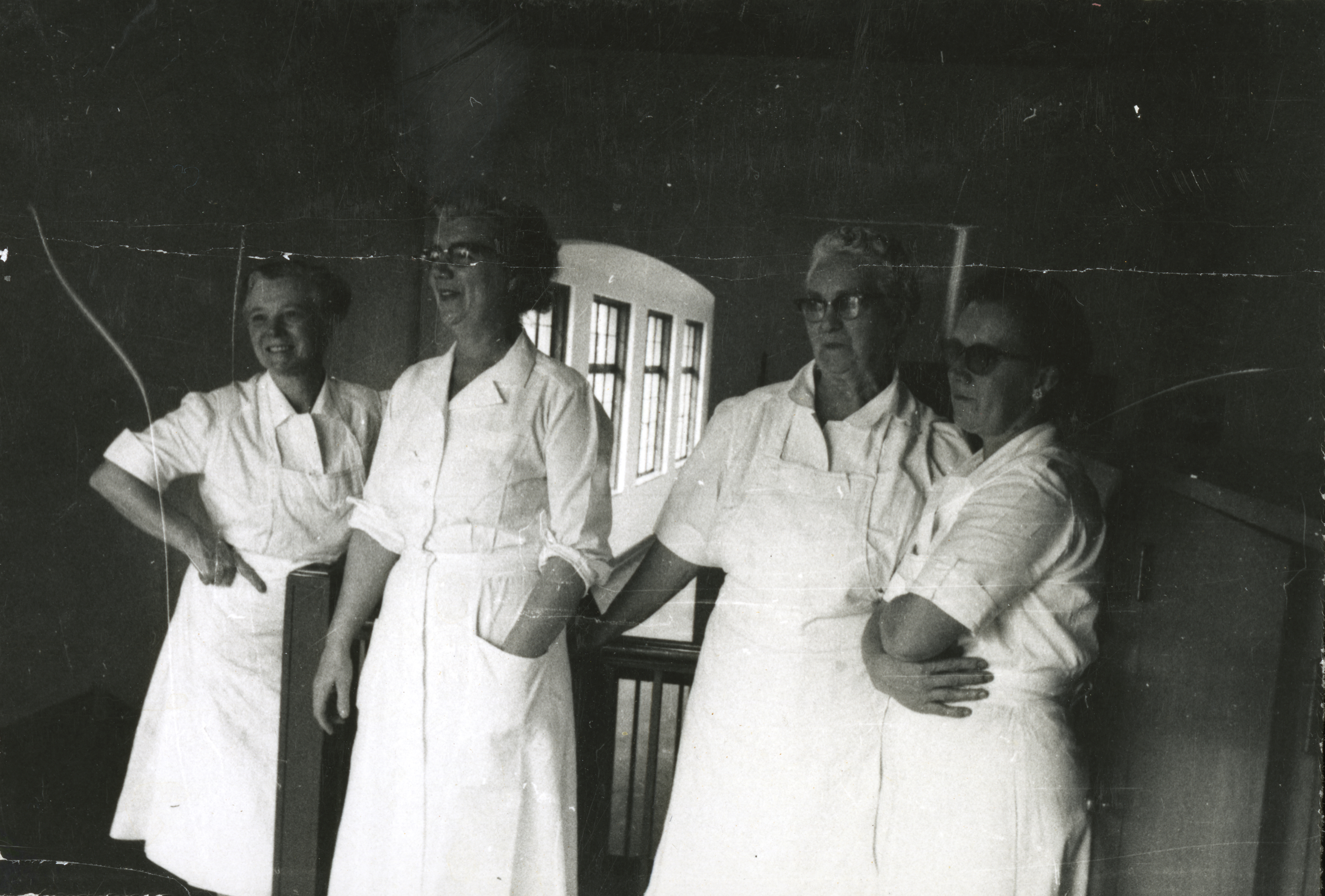
Flora Leslie (second from left) with cooking staff at Brookside School. Courtesy of Cranbrook Archives.
Born Flora MacFarlane in Alexandria, Scotland, in 1906, she made her way to the United States alone in December 1930. Journeying by ship on a very stormy sea, the passengers were required to stay below deck where they got to know each other more than they would have had they been able to wander on deck. Having worked in a photographer’s office in Scotland, Flora initially sought the same occupation in America.
But a fellow passenger Flora met aboard the ship told her that if she had no luck finding work, to contact her for employment. It is thus that Flora began to work for the Ward family in Pontiac, a family whose children were students at Cranbrook.
In 1932, Flora started working at Cranbrook, initially at Kingswood School. Flora married George Leslie in 1934, a landscaper and gardener, and later a superintendent of buildings at Cranbrook.
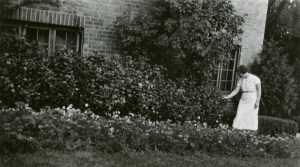
George Leslie (left) and Flora Leslie (right) in the garden of their apartment, the Ram’s House, at Brookside School, circa 1935. Courtesy of Cranbrook Archives.
After several invitations from Jessie Winter, Headmistress of Brookside School, Flora became the dietician and food director at Brookside School, a position she held from 1934-1975. The position came with an apartment, and though at first Flora preferred to stay at Kingswood, which she describes as “light and bright and lovely,” Winter asked Flora and George back to Brookside one further time and had arranged the apartment beautifully. Most importantly, there was a brand-new Frigidaire refrigerator, a novelty in those days. As Flora recalled, seeing this small luxury she told the headmistress, “We’ll come!” The apartment was in the part of Brookside known as the ‘Ram’s House’ and had previously been occupied by Jessie Winter and by J. Robert F. Swanson.
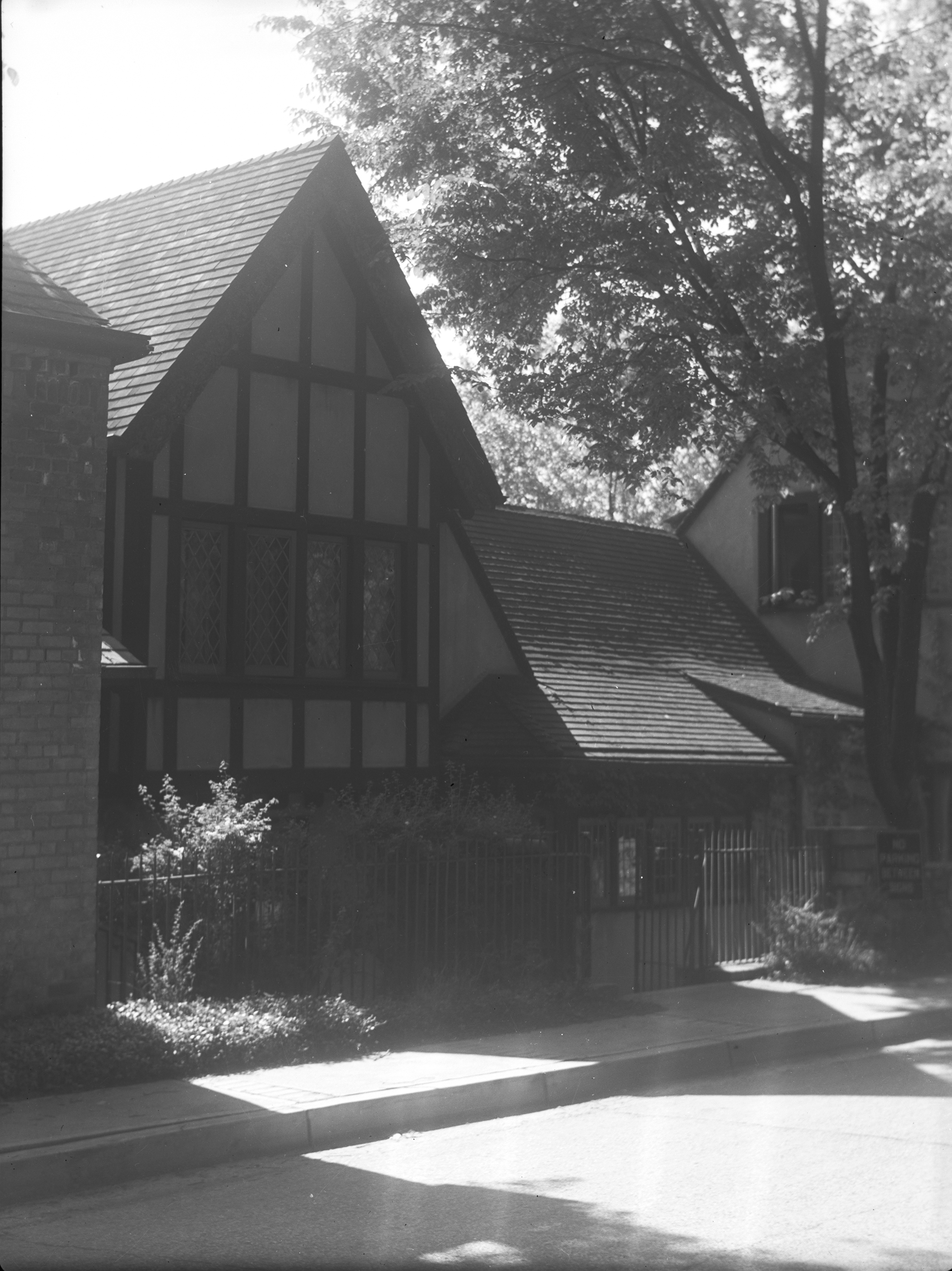
View of the front of George and Flora Leslie’s apartment, known as the Ram’s House, circa 1935-1938. Courtesy of Cranbrook Archives.
During the war years, when food was in short supply, George and Flora Leslie kept Brookside stocked with vegetables—he grew them and she canned them.
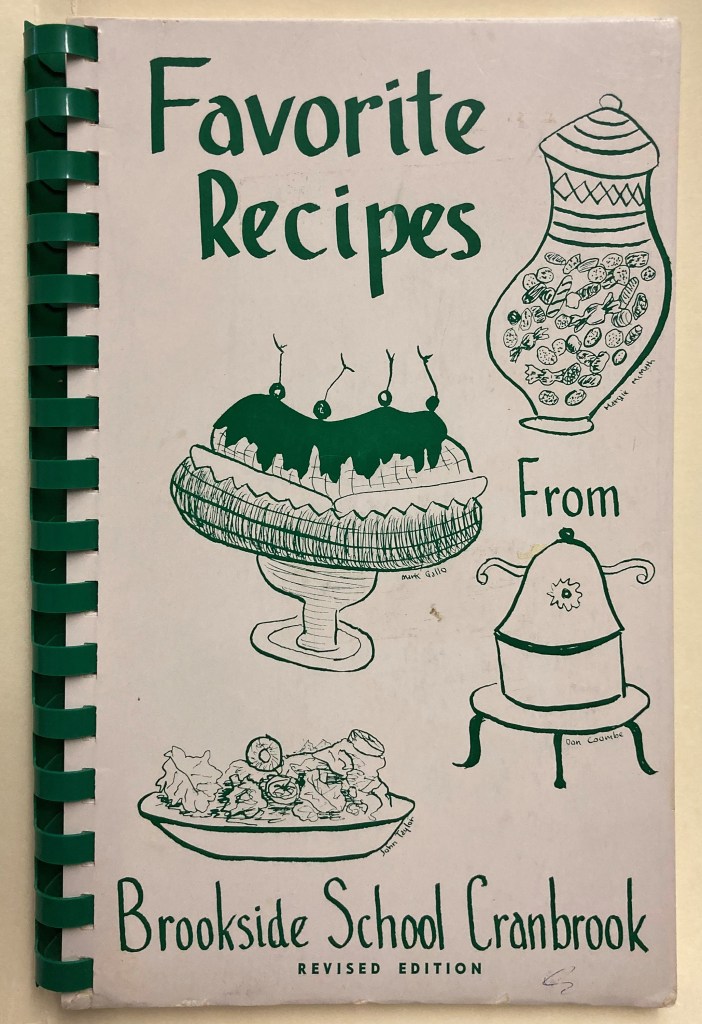
The Favorite Recipes cookbook from Brookside School, 1970.
View of original recipes from Flora Leslie in the Favorite Recipes cookbook from Brookside School, 1970.
View of dessert page from the Favorite Recipes cookbook from Brookside School, 1970.
Favorite Recipes, the Brookside cookbook, 1970. Courtesy of Cranbrook Archives.
After feeding generations of students, Flora published many of her favorite and original recipes in the Brookside cookbook, Favorite Recipes, which are still enjoyed by alumni far and wide. Perhaps you might like to try one of Flora’s original recipes this Thanksgiving, or a dessert recipe from one of the faculty families?
—Laura MacNewman, Associate Archivist, Cranbrook Center for Collections and Research
When asked, late in life, about the furniture he designed for Kingswood School for Girls, Eero Saarinen referred to himself as “a child of my period.” Two chairs in particular show how the young, precocious designer was able to work in both traditional and modern modes. As designers in the 1920s and 1930s debated the merits of traditional and modern design, Eero worked with both.
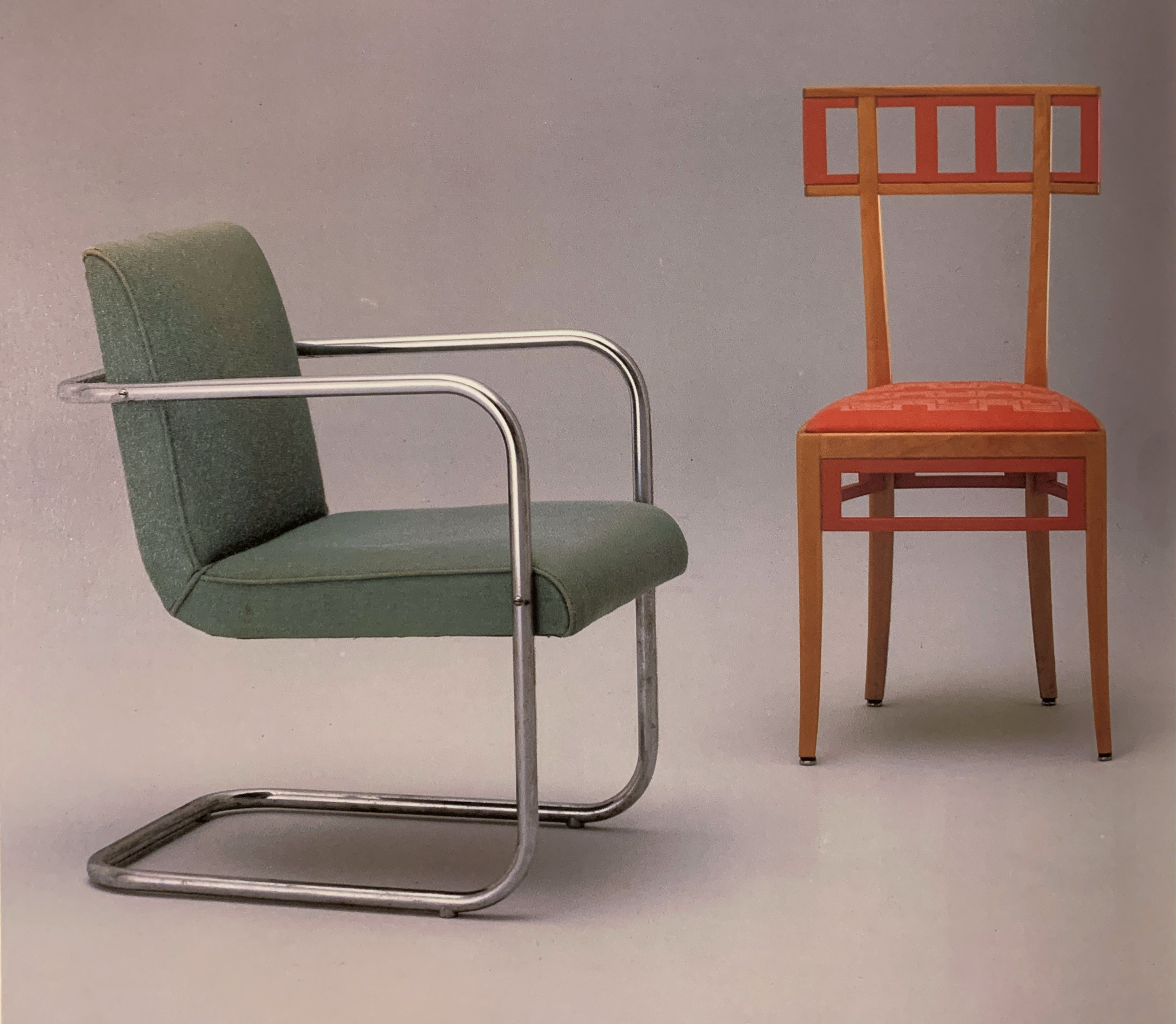
Auditorium and Dining Hall chairs for Kingswood School for Girls by Eero Saarinen, 1929-1931. Cranbrook Art Museum.
He was just 18 years old when he began sketching designs for Kingswood in 1929. Later that year, he departed for Paris to study sculpture for eight months. These two Kingswood chairs show an understanding of two major European designs trends of the era: the evolutionary Art Deco, with its roots in neoclassical design, and the revolutionary Modern movement, emerging most forcefully out of the German Bauhaus.
First, the Kingswood Dining Hall chairs. These birch wood chairs with painted coral-colored elements and linen damask upholstery are delicate adaptations of the ancient Greek klismos chair. The klismos form, which features curving splayed legs and a concave crest rail, became popular in late-18th-century Europe and America as part of the Greek Revival and the neoclassical style. The form again became a favorite among designers in the 1920s, when its clean lines and soft curves were used throughout Art Deco interiors. Kilsmos chairs were especially fashionable in Scandinavian modern design, with architects and designers like Aino and Alvar Aalto, Gunnar Asplund, Erik Bryggman, and Carl Malmsten producing versions of the chair. In fact, Carl Milles had a set of Malmsten-designed klismos chairs in his Cranbrook dining room. Eero Saarinen’s klismos chairs for Kingswood fit perfectly within the clean lines, rich materials, and Swedish Grace-styling of the light-filled dining hall.
Left: Klismos-stlye chair from Carl Milles House at Cranbrook Academy of Art by Carl Malmsten, manufactured by Firma David Blomberg, designed 1926. Right: Chair for Kingswood Dining Hall by Eero Saarinen, manufactured by Stickley Brothers Furniture Company, designed 1929-1931. Courtesy Cranbrook Art Museum.
Second, a chair that eschews historic forms for the avant-garde: the chrome plated, tubular steel Kingswood Auditorium armchair. Eero Saarinen’s cantilevered design recalls the furniture coming out of Germany in the 1920s, particularly the work of Marcel Breuer at the Bauhaus. Breuer was a twenty-three-year-old student at the revolutionary German design school when, inspired by bicycle handlebars, he ordered tubular steel from the bicycle manufacturer Adler and built the world’s first tubular steel chair in 1925. Architect and president of the Bauhaus Walter Gropius was so taken with the initial tubular steel chair he invited Breuer to design most of the furnishings for the school’s new modern buildings in Dessau.
One was from Detroit; one was from Pittsburgh. One attended Kingswood School; the other attended the Academy of Art. One was a writer and women’s rights activist; the other was a sculptor, photographer, and social worker. Both were named Harriet Cooper. Both were on Cranbrook’s campus in 1940.
This was the unusual story I uncovered working recently with the Archives’ digital collections. While tagging images with the names of Cranbrook’s staff photographers, who were responsible for the majority of photographs taken at Cranbrook between the years 1931-1970, I came across the name Harriet Cooper. As one of only two female photographers, I attempted to find out more, and in the process discovered a second Harriet Cooper who was also at Cranbrook around the same time.
What were the odds? And more importantly, which was my Harriet? I had to find out, not only for the sake of photographic description, but to satisfy intellectual curiosity about the lives of two seemingly individual Cranbrook women, who shared the same name and once lived in close proximity (temporal and geographic) to each other.
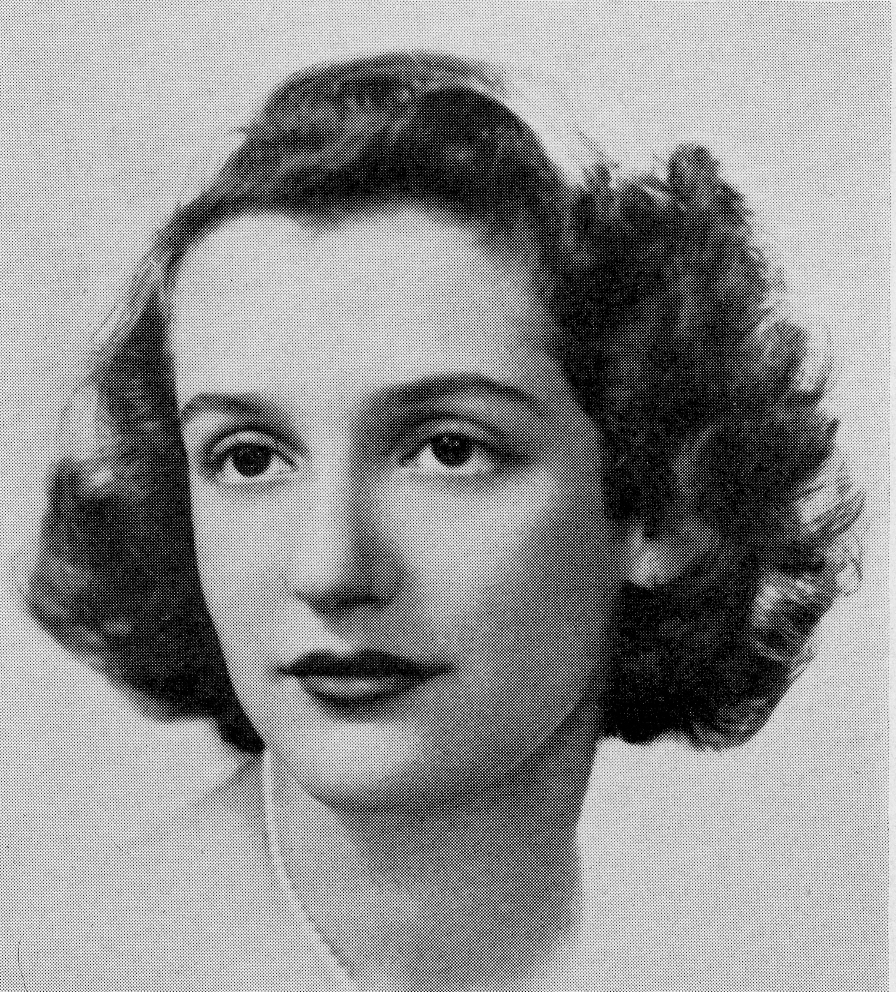
Senior picture of Harriet Cooper in the 1940 yearbook Woodwinds. Courtesy of Cranbrook Archives, Cranbrook Center for Collections and Research
Harriet Cooper Alpern was born in 1923. A Detroit native, she grew up on Chicago Boulevard in the Boston-Edison District. Attending Kingswood School (her twin brother attended Cranbrook School), she was active in theater and served as a reporter for The Clarion, graduating in 1940. According to the yearbook, Woodwinds, she was the senior voted for having the perfect speaking voice and known for splitting sides with her “unconscious humor.” After Kingswood, Harriet attended the University of Michigan, where her future husband E. Bryce Alpern also attended.
Poem appearing in the 1940 yearbook Woodwinds. Courtesy of Cranbrook Archives, Cranbrook Center for Collections and Research.
Harriet “Betty” Cooper, 1938. Courtesy of Cranbrook Archives, Cranbrook Center for Collections and Research.
Harriet Elizabeth (Betty) Cooper Lundquist was born in Valencia, Pennsylvania in 1916. She grew up in Pittsburgh, daughter of social workers and directors of Kingsley House, a settlement house. Betty attended both Antioch College and Yale University School of Fine Arts before coming to Cranbrook Academy of Art to study sculpture under Carl Milles from 1940 to 1942. While here, she also took classes in metalcraft, modeling, and design.
Untitled entry by CAA student Betty Cooper for the War Department Sculpture Competition, May 1, 1941. Courtesy of Cranbrook Archives, Cranbrook Center for Collections and Research.
And, she also took a job with Cranbrook Foundation as a photographer!
Although unknown whether she’d had any previous experience, Betty kept the Photography Department afloat on her own for several weeks during February and March 1942, and then stayed on for another seven months as assistant photographer. After graduation, Betty continued to work as a photographer for the Farm Security Administrationin Washington, D.C., where she met and married Oliver Lundquist.
Unattributed, this photograph of the interior of Milles House featuring Carl Milles’ sculpture collection was likely taken by Betty Cooper in February 1942. Courtesy of Cranbrook Archives, Cranbrook Center for Collections and Research.
While raising three children during the 1950s and 1960s, Betty was active in civil rights causes, including being a founding member of Women Strike for Peacein 1961. In the early 1970s, she went back to school and earned a graduate degree in social work, practicing her parents’ profession for the next thirty years until retirement.
It just goes to show that even while performing routine (but necessary!) archival tasks, fascinating stories reveal themselves, which provide new depth and understanding of Cranbrook’s people.
– Deborah Rice, Head Archivist, Cranbrook Center for Collections and Research
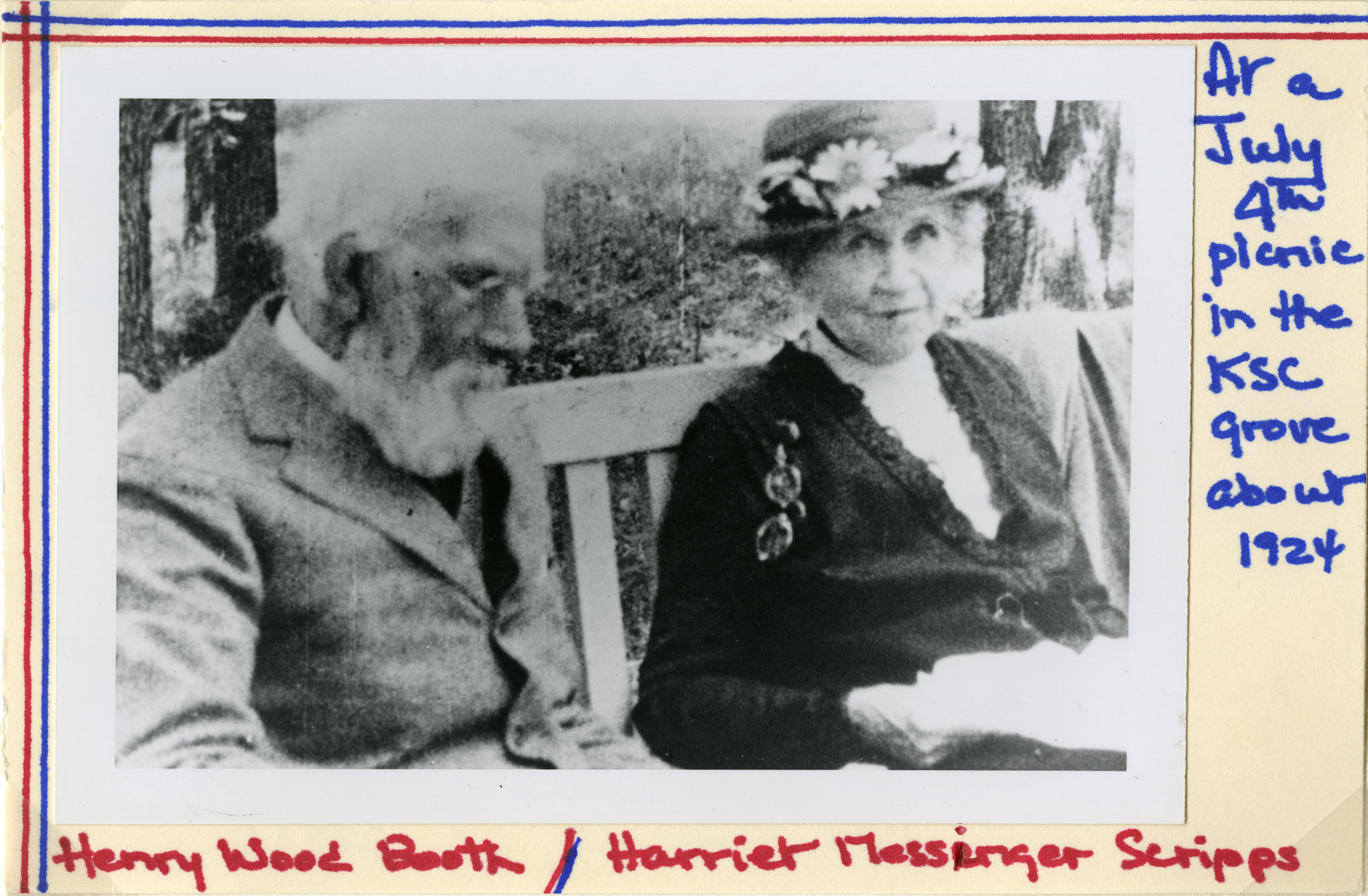
Henry Wood Booth and Harriet Messinger Scripps at a Fourth of July picnic on Kingswood School Grove, 1924. Cranbrook Archives.
In the earliest days of Cranbrook, Fourth of July picnics were held in the shade of a big oak tree on the site of the present Japanese Garden near Kingswood School. In his history, Henry Wood Booth reports that in 1910, George decided a well was needed so that drinking water would not need to be carried down from the house. After much digging, there was no water, and the new well remained dry. The family would need to come back to the project another day.
Later the same evening, Cranbrook Road was flooded with mud and water. The well, having burst through the last layer of mud, was shooting eight feet into the air! A fountain was placed there a few months later and it flowed for fifty or more years until the screen was clogged. In 1963, a new well was drilled nearby.
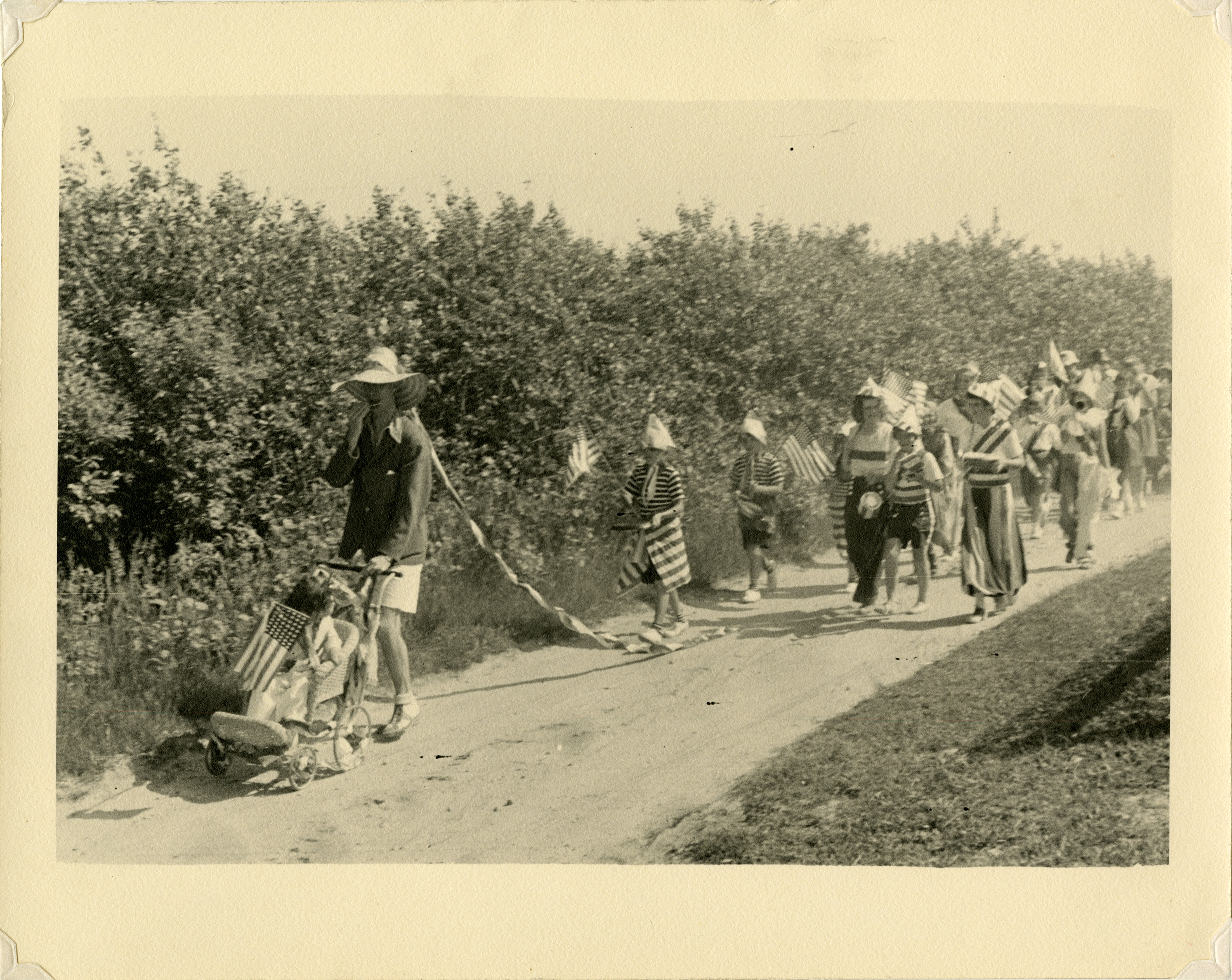
A Fourth of July Parade, Cuttyhunk Island, Massachusetts, 1935. Cranbrook Archives.
The family didn’t always celebrate the Fourth so close to home. Here’s a parade planned by Henry Scripps Booth in 1935 while vacationing on Cuttyhunk Island, south of New Bedford, Massachusetts, on Buzzard’s Bay. Daughter Cynthia Booth is in the carriage pushed by Henry, and sons Stephen and David are in the parade.
Happy Fourth of July, everyone!
—Laura MacNewman, Associate Archivist, Cranbrook Center for Collections and Research
In the past, we have discussed how we cover our stone sculptures on campus to protect them in the winter. But what about the many bronze sculptures? Europe and the Bull? Persephone? The Centaurs?
These pieces are more robust and able to withstand what winter throws at them, but they still need some love each year.
Each spring since 1987, the Community has brought in Venus Bronze Works to recondition the bronzes across the campus. Venus Bronze Works is a member of the American Institute for Conservation of Historic and Artistic Works, which means all the cleaning they do is in accordance with AIC’s Code of Ethics and Guidelines for Practice.
All sculptures are inspected and cleaned by dusting them off with compressed air or wet down and washed with a mild detergent, sponges, soft bristle brushes, and fine cotton pads.
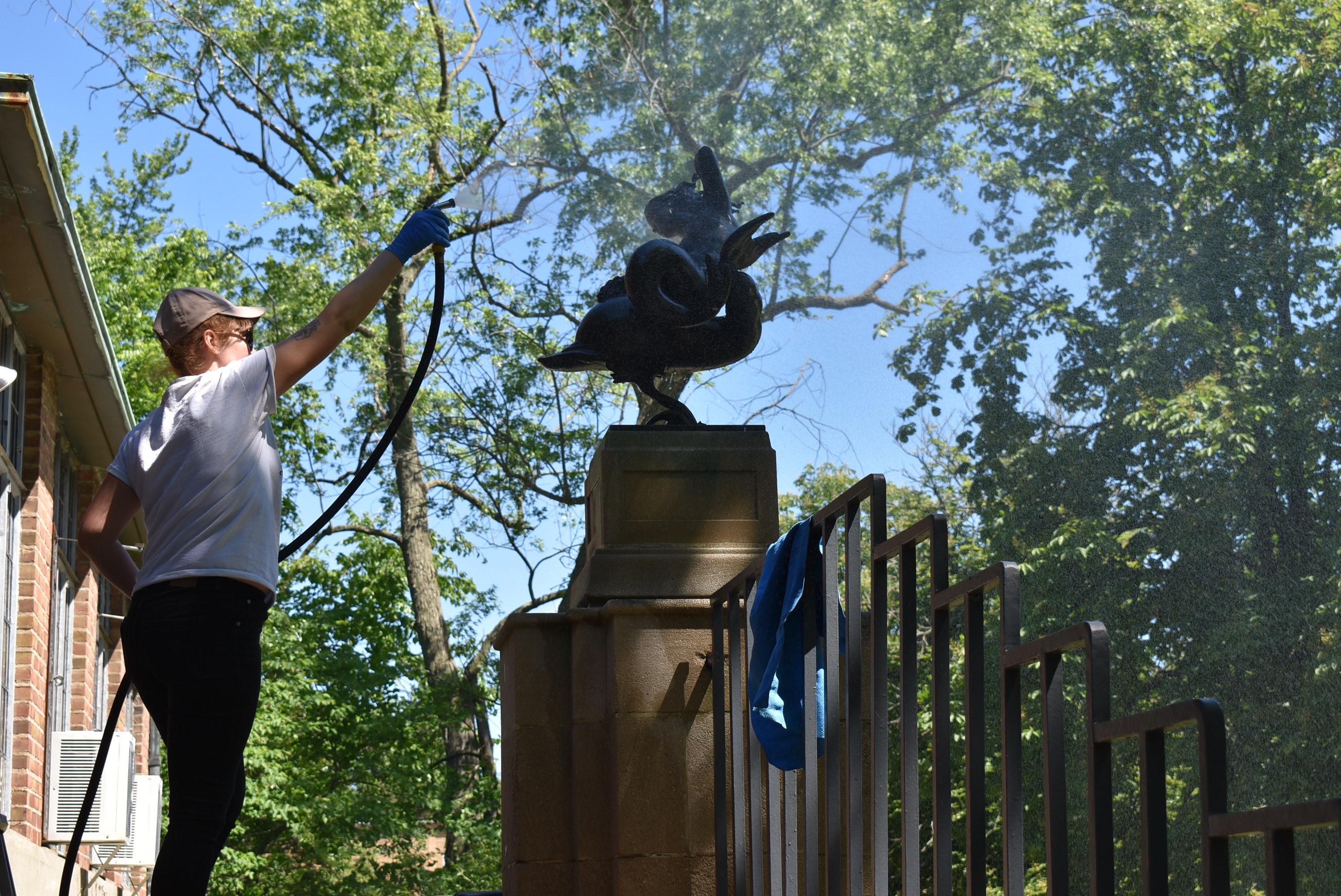
Terra Gillis of Venus Bronze Works gives Carl Milles’s Sunglitter (also know as Naiad and Dolphin, CAM 2002.1) a quick shower, 2020. Photo by Kevin Adkisson.Harlow Toland of Venus Bronze Works gives one of Carl Milles’s Running Deer (CAM 1934.30) a good scrub, 2020. Photo by Kevin Adkisson.
When the works are dried, one or two thin coats of wax are applied and the sculptures are buffed. This wax can be applied directly from the container or applied to a hot surface (by heating the sculpture with a propane-fed torch).
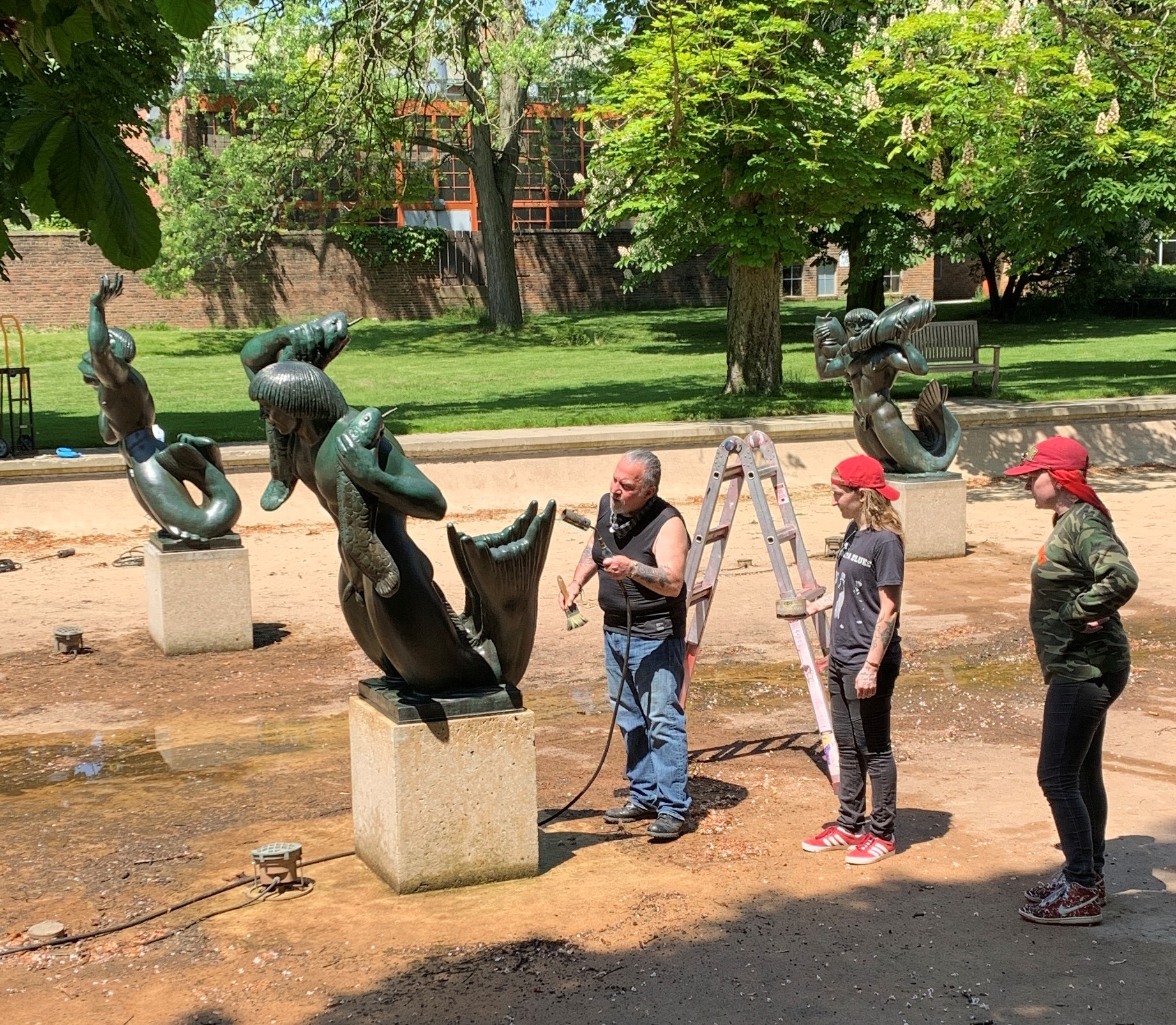
Giorgio Gikas, founder of Venus Bronze Works, holds the torch while his assistants Harlow Toland and Sara Myefski help prepare Triton with Fishes in the Triton Pools at Cranbrook Art Museum to receive a hot wax treatment, 2020. Photo by Kevin Adkisson.
This wax acts as a barrier to the air and humidity on the bronze surface and prevents damaging oxidization or corrosion from developing. When deciding how each individual work is cleaned, we look back to the artist’s intent for each sculpture (was it meant to be patinated green? dark bronze? polished? gilded?) and treat it accordingly.
Venus Bronze Works cleans and waxes all the Milles sculptures at the Cranbrook Art Museum and Cranbrook Academy of Art and the Cranbrook Institute of Science. They also work on such sculptures as Brookside’s Birds in Flight; Kingswood’s Dancing Girls and Diana; Cranbrook House and Gardens’ Fortuna delle Tartaruga (Turtle Fountain); and Cranbrook School’s athletic sculptures. Check out a recent Instagram post about the athletic sculptures below:
In the Architectural Forum of January 1932, an advertisement announced that 160,000 pounds of 16-ounce Anaconda Copper had been used for the newly opened Kingswood School Cranbrook. There are copper gutters, cornices, louvers, moldings, and chimney covers, but most impressive is the 90,000 square foot batten seam copper roof.
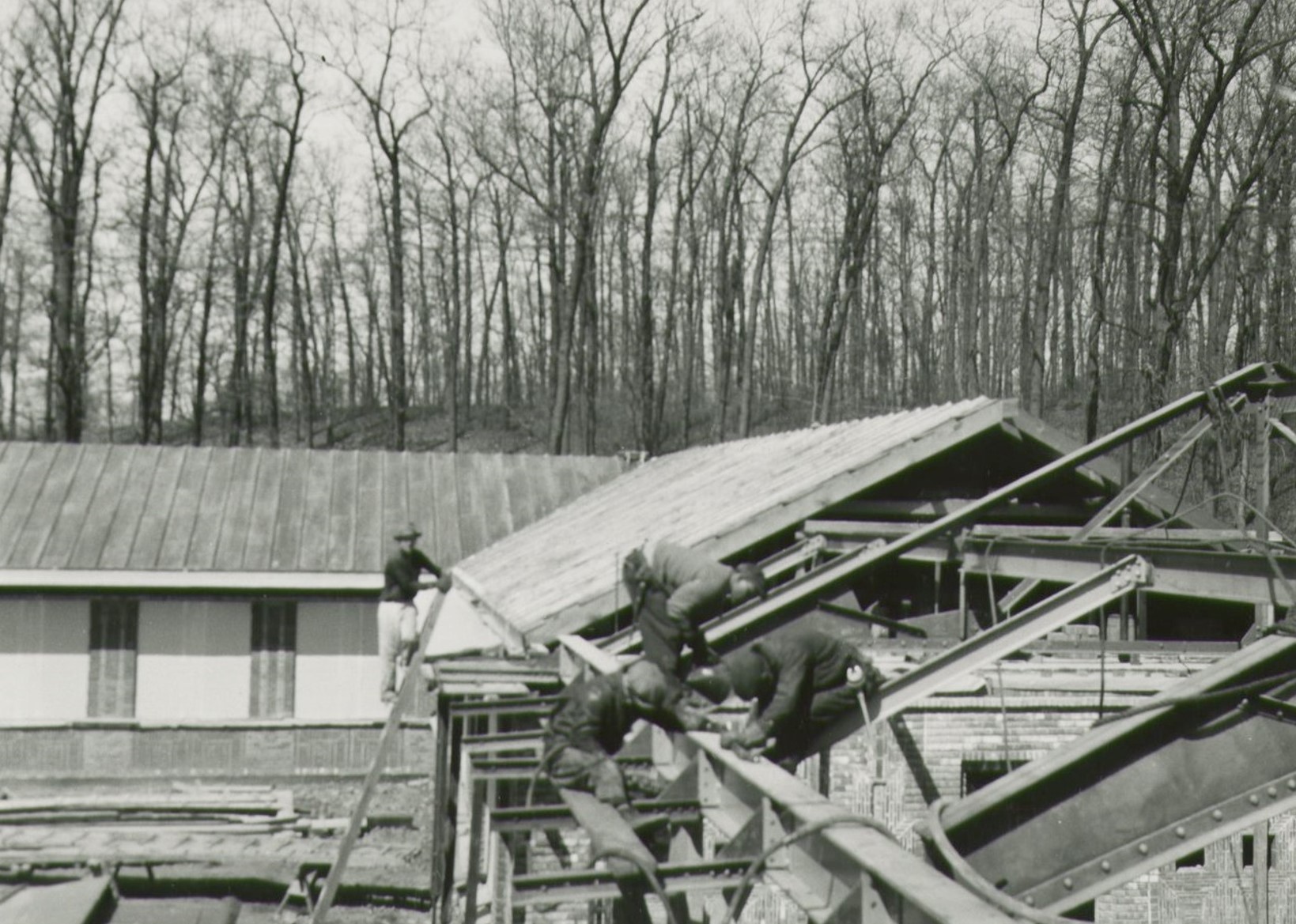
Workers assembling the roof structure above Unit A, the classroom wing of Kingswood School for Girls. The copper roof behind them is already installed. No barrels of uric acid can be spotted in construction photos. c. 1931. Copyright Cranbrook Archives.
There was just one problem with the new copper roof: it was installed with rolls of bright, new-penny-orange, sheet copper. Eliel Saarinen wanted a green roof, and I think he wanted it quickly.
Yes, he could have waited for the shiny new copper to patinate naturally from rain, humidity, and time. But who has the patience for natural aging when you have an architectural tour de force to complete? Instead, Saarinen turned to chemistry. Using a historic technique common in Europe, the contractor, A. C. Wermuth, directed his workmen to collect their urine in small jars and transfer it to barrels on site. These barrels were then hoisted to the ridge line of the roof, where the pungent catalyst was poured down the copper slope and then spread evenly with brooms.
Science did the rest, and Saarinen got his verdigris color which the Architectural Forum described as a “neutralized complement” to the warm tan brick and buff Mankato stone walls which “harmonized admirably with the heavy foliage of the location.”
Color slide of Kingswood School for Girls showing the harmony between landscape, building mass, and materials. c. 1940-1945. Copyright Cranbrook Archives.
The story of more than just rain tinkling on the roof is recorded in Archives as told to former archivist Mark Coir by Dominick Vettraino, who grew up at Cranbrook and served as our landscaper, fireman, superintendent, and jack-of-all-trades. I was asked about the story of peeing-on-the-roof this week by an Upper School chemistry teacher, who’d heard the rumor and is now using it in her lessons for students stuck at home. You, too, can run the experiment: you just need to have a glass, a penny, and be hydrated!
Just like rust develops on iron, patina develops on copper when left exposed to the elements. The copper sulfate on the surface reacts to oxygen in the environment. Unlike rust, the patina actually protects and preserves the copper. However, copper doesn’t turn green quickly: it can take twenty to thirty years for copper to become green! Uric acid can significantly speed up the process. The fact that the Kingswood roof is quite green in early color photos does reinforce the idea that they used a catalyst to age the roof.
The entire copper roof was recycled and replaced in two phases, from 1998 to 2002 and from 2005 to 2007. In the replacement, the copper patination was not accelerated. The fact that the replacement roof is still not green, seventeen to thirteen years on, is to be expected. The roof quickly changed from bright orange to dull brown, and then slowly toward the purplish black you see today. However, I am noticing this spring that when you look at the section of 2002 roof at an acute angle, it’s distinctly turning green at the seams!
Progress on the new roof. Phase one, completed in 2002, is at the far left and already dull brown. The original (though urethane coated) roof is at right. The new copper roof is shining at the center. May 27, 2006. Courtesy of C.A.S.S. Sheet Metal Specialist, Detroit.
The current color of the roof disappoints many graduates, but in time, it will return to the beautiful green color Saarinen and Wermuth achieved through their very affordable, if not very polite, method. And if you were at Kingswood between 1988 and the new roof replacement: you weren’t seeing a green patina, but a mint-green urethane coating sprayed on the entire roof to (unsuccessfully) slow the leaks!
—Kevin Adkisson, Curatorial Associate
PS: Between the joined “Studio #3” and “Dorm # 2” at the Academy, built in 1932 and 1936 respectively, there is a visible difference between the color of the two copper roofs where the patination has never matched. This can be attributed to different batches of copper. In the new Kingswood roof, every delivery of copper sheeting and copper solder delivered to the site was tested for quality and composition: we wouldn’t want the roof to change color irregularly.
Metro Detroiters, out-of-town visitors, and architectural aficionados worldwide have long admired the Penobscot Building in Detroit’s Financial District. Like its close neighbor, the Guardian Building, and the Fisher Building further north in Midtown, it is one of the city’s finest examples of art deco architecture and one of the iconic structures that still make up Detroit’s skyline today. Designed by Wirt C. Rowland of Smith, Hinchman, & Grylls, when its 47 stories were built in 1928, it was the tallest building in the city and the fourth tallest in the nation.
The Penobscot, on the National Register of Historic Places, is perhaps best known architecturally for its tiered upper seventeen floors and the exterior ornament by sculptor Corrado Parducci, whose work can be seen on many other Detroit buildings. It’s also known to locals for the red-lit globe at the top (originally designed as an aviation beacon), the legendary Caucus Club (Barbara Streisand reportedly launched her singing career here), or the famed roof observation deck which offered an excellent panorama of the city.
But, what about the interior of the Penobscot? Well it just so happens there’s a Cranbrook connection!
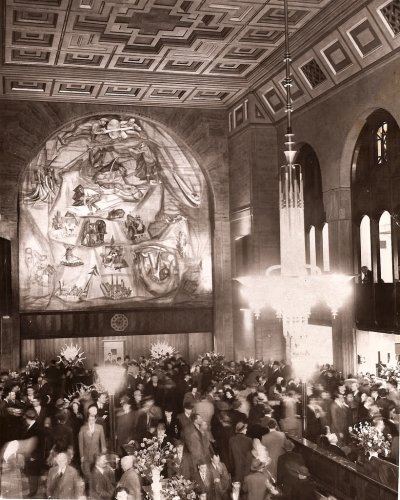
The original bank lobby. Courtesy Detroit Free Press Archives.
The Guardian Detroit Group was the first tenant of the two-story bank hall at 635 Griswold St. before they had their own skyscraper commissioned just a block away. A later occupant, Detroit City Bank, opened in the same space in February 1949. When they did, adorning one wall was a mural painted by Cranbrook Academy of Art graduate and Head of Kingswood School Art Department (1940-1956), Clifford B. West. Known as the “Mural of Michigan” the twenty-six-foot painting depicts scenes representing state commerce and industry. West, who studied under Zoltan Sepeshy, and with fellow muralist David Fredenthal, had already completed a bank mural in Alamosa, Colorado, as well as Detroit-area murals in the Rackham Building, Stockholm Restaurant, and Fox & HoundsRestaurant.
Clifford and Joy Griffin West work on the mural. Cranbrook Archives.
The mural’s upper left quadrant. Cranbrook Archives.
Following a meticulous process that involved a series of sketches at different scales, cartoons plotted to a numbered grid and traced on the wall, and painting in two steps (large blocks of color followed by detail work), the scenes were applied in casein tempera on canvas cemented to the wall. Joining in this process was West’s wife and fellow artist, Joy Griffin West, and several academy students. Fortuitously, each stage of work was captured in a series of photographs by Cranbrook photographer, Harvey Croze.
This slideshow requires JavaScript.
Upon completion of the mural, West mounted an exhibit at Cranbrook Art Museum titled, Progress of a Mural in April 1949, detailing his process for the Penobscot mural, and featuring many of the preliminary sketches and cartoons.
It’s largely unknown whether the Penobscot mural exists today, since a drop ceiling was installed many years ago, completely obscuring West’s creation.
Marthe Julia LeLoupp, born October 10, 1898, in Plogoff, Finistere, France, was an original faculty member of Kingswood School, where she taught French from 1930-1956. Having completed the Diplȏme de fin d’études at the Lysée Brizeaux, Quimper, Finistere, France in 1917, LeLoupp then completed her BA at Macalester College, St. Paul, Minnesota in 1920. She later completed graduate work at the University of Chicago (1929-1931) where she worked on an MA Thesis: Influence du Breton sur le français régional en Bretagne. With teaching experience in schools and colleges in Minnesota, South Dakota, New York, New Jersey, and Indiana, LeLoupp arrived at Cranbrook in 1930.
Marthe LeLoupp, 19 Feb 1952. Photographer, Harvey Croze. Cranbrook Archives.
Correspondence with LeLoupp in the Kingswood School Records is limited but suggests that she would return to France each summer. A letter from LeLoupp, written in Paris on September 17, 1939, tells how she left America in June with ticket safely tucked in her purse for a return September 6th on the Normandie. But, the declaration of war had made this impossible and her ticket had been passed, initially to the DeGrasse to sail on the 13th and then to the Shawnee, due to depart Bordeaux on the 22nd. The Shawnee, she explains, had been, “sent to the rescue of a few hundred thousand American citizens, who are anxiously waiting for transportation westward.” On arriving to Bordeaux on September 22, 1939, Le Loupp writes that they were told, to their great dismay, that the Shawnee would not sail until the 26th. While LeLoupp’s letters were on their way to Cranbrook, Ms. Augur [Kingswood School Headmistress, 1934-1950] was searching for LeLoupp, first sending a telegram and then consulting the American Consul. LeLoupp’s mother returns Ms. Augur’s telegram with a letter explaining her daughter’s situation. Discovering this story recently, I wondered at the extraordinary resonance with current concerns for travelers, and for those unable to complete their journeys.
Telegram, Ms. Augur to Mlle. LeLoupp, September 23, 1939. Cranbrook Archives.
Letter, Mdm LeLoupp to Ms. Augur, September 25, 1939. Cranbrook Archives.
Letter (page 2), Mdm LeLoupp to Ms. Augur, September 25, 1939. Cranbrook Archives.
Despite the harrowing circumstances, LeLoupp did eventually make it across the Atlantic. She continued to teach French at Kingswood School until July 1956, when she writes from Bénodet in France to request to be released from her 1956-57 contract due to poor health, ending the letter, “I find it impossible to express my regret in words.” Not much else is known about LeLoupp’s time at Cranbrook, except that she lived for twelve of her years at Cranbrook in the apartments above Kingswood School, which were converted in 1945 from the ballroom known as Heaven. In the KBC [Kingswood Brookside Cranbrook] Quarterly of May 1973, LeLoupp was remembered thus,
“a “beautiful person” with a “super smile”. She was “sweet and kind” and always beautifully dressed in classic tweeds. Peering over her bi-focals at her students and reciting in her strong French accent the terrible weekly dictes that no one could understand, she was one of those who inspired her girls to excellence or accomplishment in French that is still one of Kingswood’s greatest assets”.
In the collection of the Cranbrook Archives, we have a number of objects related to Kingswood School for Girls. These include uniforms, pennants, and one curious kangaroo tagged “Leapin’ Lena.”
In the Alumni Relations Office for many years, the kangaroo was never the official mascot for Kingswood School Cranbrook (KSC). It was likely part of a popular craze in the 1950s and 1960s, when Collegiate Manufacturing Company, which started out manufacturing school pennants, was promoting stuffed animals as school “mascots” or “personality pets.”
Advertisement for Collegiate Manufacturing Company’s “Personality Pets.” Source: Kagavi.com
Because she’s in mint condition with her tag still on, perhaps our Lena was a sample from one of the many salesmen Collegiate Manufacturing employed?
Most likely just an alliterative name — think “Mickey Mouse” or “Lois Lane” — the name “Leapin’ Lena” could also come from a number of sources. “Leapin’ Lena” has been used as a nickname for a car; a fictional B-52 bomber in the 1944 movie The Purple Heart; a kangaroo in a Rex the Wonder Dog comic in 1952; and a 1954 Cold War hero pigeon.
I like to think our Leapin’ Lena name came from Rex the Wonder Dog, where the character was part of a story line called “The Saga of Leapin’ Lena.” Lena was a kangaroo from an old vaudeville act, that also happened to foil crime.
A page from Rex the Wonder Dog, Volume 1, #5, “The Saga of Leapin’ Lena.” Source: vlcomic.com
I really don’t know how this model marsupial got to the Alumni Relations Office, who then gave it to Archives; nor am I familiar with other Kingswood kangaroo mascots (only Kitty Kingswood). Do you know more about our Leapin’ Lena or other Kingswood kangaroos?
When I’m talking with visitors to Cranbrook about our many famous alumni, there is perhaps only one graduate whose legacy and name recognition so divides responses between “Who is that?” and “Oh-my-gosh, really?!”
If the visitor was born before 1982, they likely have never heard of her. If they’re born after 1982, they almost certainly know her—even if they don’t know she’s a real person: Lisa Frank.
A typical example of Lisa Frank’s art: unicorns, golden retrievers, pandas, and rainbows, c. 2005-2015. Copyright Lisa Frank, Inc.; courtesy of Pinterest.
Lisa Deborah Frank graduated from Kingswood in 1972. For kids in the 80s and 90s, her iconic neon designs decorated our backpacks, Trapper Keepers, pencils, folders, and stickers. Anything that you might possibly need for the daily rigors of preteen life, Lisa Frank could provide. Rainbow kittens and neon unicorns adorned practically everything, and you’d be forgiven if you chalked these creations up to the work of some anonymous office supply conglomerate with a cadre of slightly nutty illustrators.
But no. Lisa Frank is very much a real person and artist, and she has led her company, Lisa Frank, Inc., as a successful commercial art studio since 1979. Her Day-Glo depictions of flora and fauna were sensational, ubiquitous, and often imitated but never equaled. Despite her success at brightening elementary schools across the globe, as an artist and businesswoman she has been a reclusive figure. So who exactly is Lisa Frank?
In 2015, Cranbrook Kingswood alumna Carly Marks interviewed Lisa Frank at her Tucson, Arizona headquarters for the art magazine Foundations, one of the only in-depth interviews Frank has ever sat for. Frank had this to say about her time at Kingswood (1966 to 1972):
“They had real people teaching, accomplished artists. We sat in the original Saarinen chairs. I don’t think we realized what we were surrounded by. I can tell you I wouldn’t be who I am without that experience.”
There was also art at home: Lisa Frank’s father served on the board of the Detroit Institute of Arts and had an impressive collection in their Palmer Woods (Detroit) house, including works by Jasper Johns, Josef Albers, Richard Anuszkiewicz, and Jean Arp. One of Frank’s proudest moments was when her father hung one of her Kingswood-era paintings in the house—not because it was his daughter’s painting, but because he liked the work itself.
At Kingswood, Lisa Frank served on the Woodwinds yearbook staff as the advertising coordinator, among other activities. She also took advantage of the art opportunities, telling Foundations, “I had a senior show of the paintings I made…They were up on the wall, I sold out, and received a ton of commissions. Lee Iacocca, former president of Chrysler, bought a painting.”
Untitled. Lisa Frank, c. 1971-1972. Painted while Frank was a student at Kingswood School for Girls. Photo courtesy of Carly Mark for Foundations magazine, 2015.
Frank’s work at Cranbrook was abstract, using acrylic on Masonite or canvas, and sometimes incorporating paper on the canvas for additional texture. Although the work was nonrepresentational, the bright colors that would become her brand’s signature are present in these early paintings.
Untitled. Lisa Frank, c. 1971-1972. Painted while Frank was a student at Kingswood School for Girls. Photo courtesy of Carly Mark for Foundations magazine, 2015.
Her success in the Kingswood senior show led to early independence: “I lived on those earnings forever. When I was in high school [my dad] was paying for all my materials. When I got the commissions he said, ‘You’re paying for all the supplies.’ Then when I told him I was going to the University of Arizona he said, ‘That’s fine and I love you all the same but I’m not going to support you.’”
In college, Frank supported herself by selling Native American art and jewelry. She noticed what sold and what didn’t, and she encouraged the artisans she represented to make certain pieces for commercial sale. Her knack for knowing what designs would sell extended into her own art.
As she recalls, “At first I didn’t want to do unicorns. The artist in me said no. Then I thought, wait a minute, this is commercial art. Let’s do what’s going to sell.”
She started a line of jewelry made up of plastic fruits assembled with hot glue guns. She sold this line, called Sticky Fingers, at gift shows, and its success led to the establishment of her eponymous business. She entered into the pin/button market, painting licensed figures like Felix the Cat or Betty Boop, along with her own colorful animals with big eyes. These buttons were mass produced in Asia and imported to the U.S. Her breakout moment came in 1982, when teen mall staple Spencer’s Gifts ordered a million dollars’ worth of colorful Lisa Frank-designed stickers. She was only 28 years old.
Panda Painter, Lisa Frank, c. 1982-85. Frank worked with markers, acrylics, and airbrush. By 1989, the production had shifted to computer design. Artwork was created by various artists (including Rondi Kutz, Senior Designer, and Frank’s then-husband James Green, CEO) but always approved by Lisa Frank. Courtesy of Carly Marks for Foundations magazine, 2015.
Her success skyrocketed, and her technicolor art expanded onto the menagerie of product I remember from my own elementary school bookstore in the late 1990s. Since the very beginning of the company, Frank has served as the art director and sole source of product approval. Even with so many thousands of products, she and her team spend hours making each piece of new art. One thing Lisa Frank does not want? Repetition.
To her, using the same imagery over and over is not only bad business, its insulting to the customer. As she notes, “believe it or not, the consumers with less money have a keener eye than the ones with more. Consumers with less money only have so much to spend. For this reason they are critical and want to buy the best of the best. I’ve always appealed to the masses because, I felt so lucky to grow up in a beautiful world, and believe just because someone has less money, why should they not be offered the best of the best, as well?”
Trapper Keeper depicting Markie (unicorn) in Airfluff Island, Lisa Frank, Inc., c. 1990-2000. Markie was one of the early characters from Lisa Frank. According to Frank, Markie enjoys butterflies, exploring, collecting starts, cloud hopping, and dreams. Courtesy of Today.
As for her unique, technicolor style? “I think the reason I made what I made is because I’m unconventional,” she explained. “I am who I am. You read stuff about me; people think it was all influenced by drugs. You couldn’t do what I did if I was on drugs. . . I was running my business. You can’t be just a creative; you have to be a businesswoman, too. You have to have the motivation to get there.”
Panda Painter Scented Sticker sheet, Lisa Frank, Inc. c. 1990-2000. Panda Painter is seen here surrounded by rainbows and gumballs. Gumballs are a common Frank motif, inspired by a childhood gift of an antique gumball machine from her father. Copyright Lisa Frank, Inc.; scan courtesy of Nicole on Flickr.
Even at the helm of a multi-national, billion dollar company, Lisa Frank is still focused on her art: “I feel like I’m fortunate enough to live my passion…There’s a big commitment to making beautiful quality work.” She continues, “I mean, yes, it’s a business but it’s more important that the art is beautiful.”
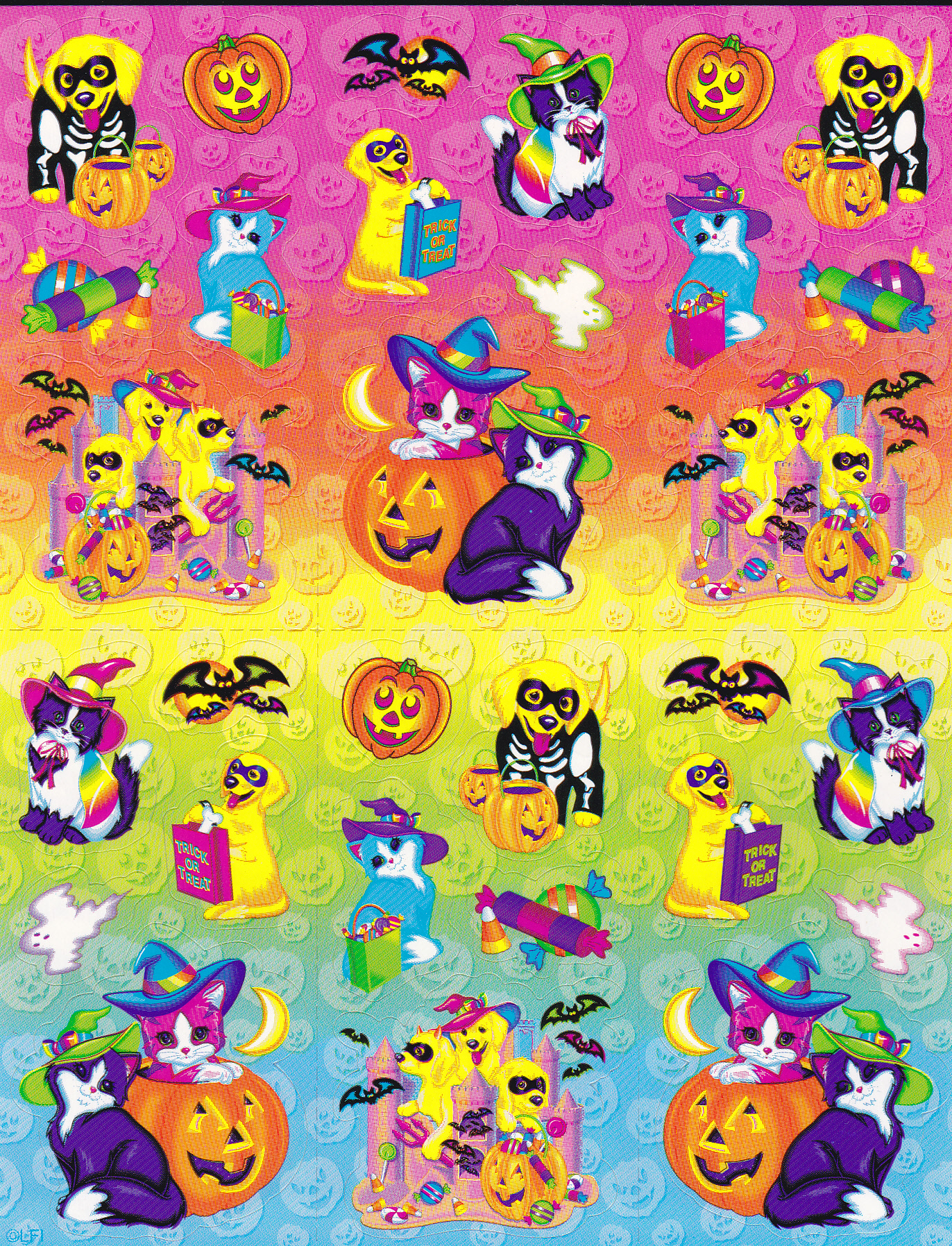
Halloween sticker sheet, Lisa Frank, Inc. c. 1993-2000. The signature bright colors of Lisa Frank are printed using a proprietary four-color print process that keeps the colors from muddying. All licensees producing Lisa Frank, Inc. materials must sign confidentiality agreements as the ink mixtures are a closely-held secret. Copyright Lisa Frank, Inc.; scan courtesy of Nicole on Flickr.
Lisa Frank was awarded the Distinguished Alumna Award in 1994 from the Kingswood Alumnae Association. Perhaps one day we’ll even get an original Lisa Frank for Cranbrook Art Museum!











 Cranbrook Kitchen Sink
