Opulence and Splendor

In the spring of 1927, Cranbrook founders George Gough and Ellen Scripps Booth traveled to Egypt. In addition to visiting Cairo and having their photograph taken after an hour long camelback ride, the Booths visited the tomb of the Egyptian Pharaoh, Tutankhamun (King Tut).

Letter from Cairo, Mar 1927.

Letter from Cairo, Mar 1927.

In a letter to his son Henry, Booth describes in detail the opulent beauty of the tomb: “When in Luxor we went to the Valley of the Kings and saw the tomb – that is we saw one room where the King lay. He is there still in one of the gold coffins – the mummy had over it a gold mask covering head and shoulders and many jeweled ribbons of gold covering the joints of the mummy cloth. Thimbles on each finger and toe… this lay inside a gorgeous solid gold coffin inlaid with stones. This was all in the finest carved sarcophagus and that inside a splendid wooden shrine – and this inside of a beautifully decorated room.”
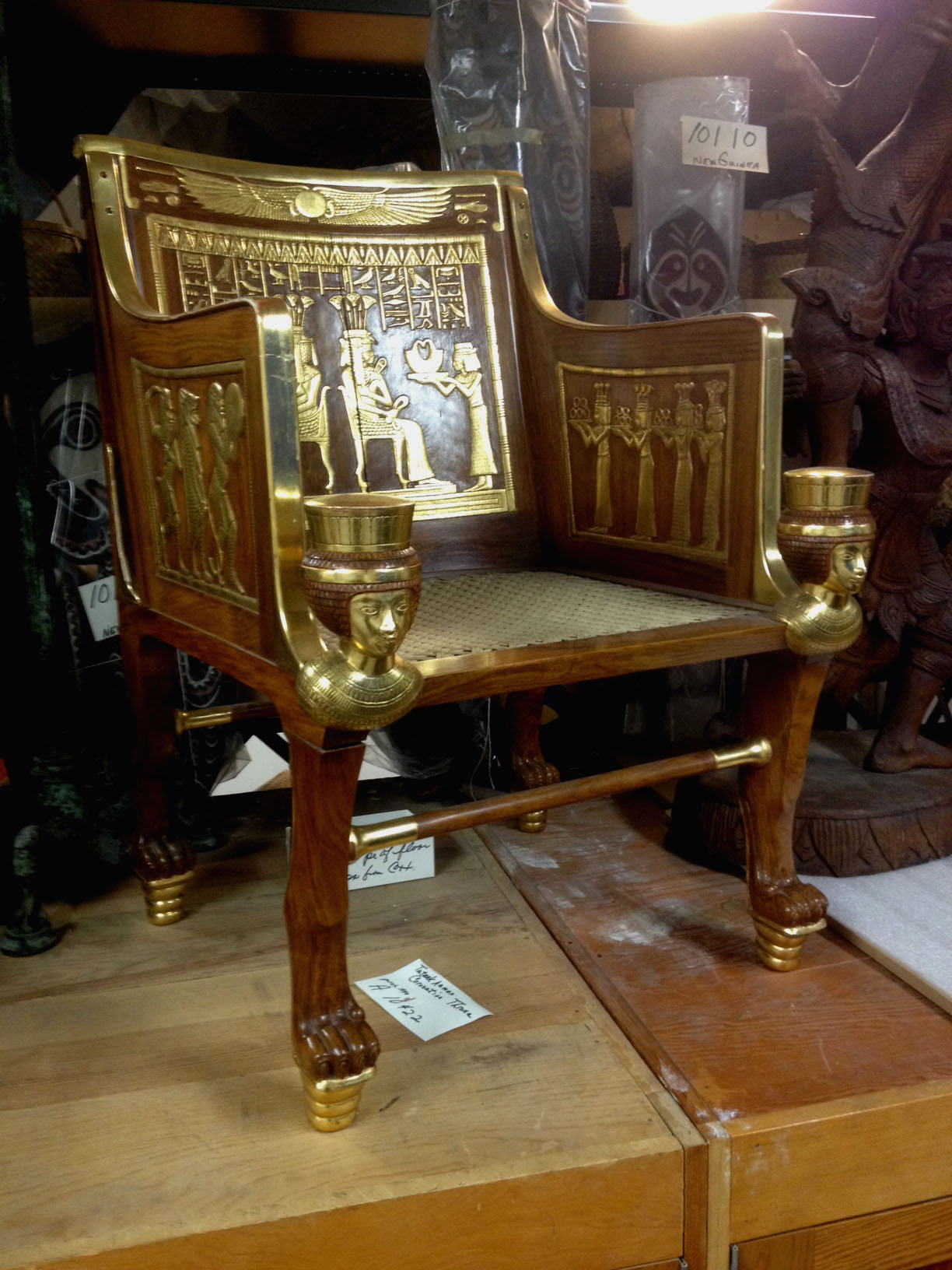
Replica created by Egyptian artisans and purchased by George Booth in 1927. The original chair is in the Egyptian Museum in Cairo. Photograph courtesy of Cranbrook Institute of Science.

Replica created by Egyptian artisans and purchased by George Booth in 1927. The original chair is in the Egyptian Museum in Cairo. Photograph courtesy of Cranbrook Institute of Science.

The Booths also visited the Egyptian Museum while in Cairo. Booth writes that although there is still a great deal in the actual tomb, he is in awe of the exhibition’s craftsmanship and value. He was particularly interested in a chair that at the time was believed to be the State Chair of Queen Taia, wife of King Amenhotep III (grandfather of Tutankhamun). Booth writes to Henry, “I would cheerfully give $10,000 for the throne –  which is an ordinary sized chair, but beautifully wrought.”

Exhibition poster, 1973.

Exhibition poster, 1973.

As the original chair was not for sale, Booth commissioned a replica to be made for the Art Museum collection. The chair, of carved wood with relief decorations covered in gold leaf, was later determined to be the chair of Sitamun, an Egyptian princess (and thought by many scholars to be the mother of King Tutankhamun). The chair was lent to the Institute of Science for a 1973 exhibition titled, “Ancient Egypt and the Tomb of Tutankhamen”. In 1984 the chair was transferred from the Art Museum to the Institute of Science, where it still resides today.

Gina Tecos, Archivist
To Sit or Not to Sit

Chair design at Cranbrook has always had its own special niche and fascination among artists and patrons alike. George Booth altered chair designs for his own use at Cranbrook House. Eliel Saarinen designed unique chairs for Cranbrook School and Saarinen House. Ralph Rapson conceived of his chair design for what became known as the Rapson Rocker while a student here. Most of us are familiar with the famous chair designers, but what about projects by less famous designers?

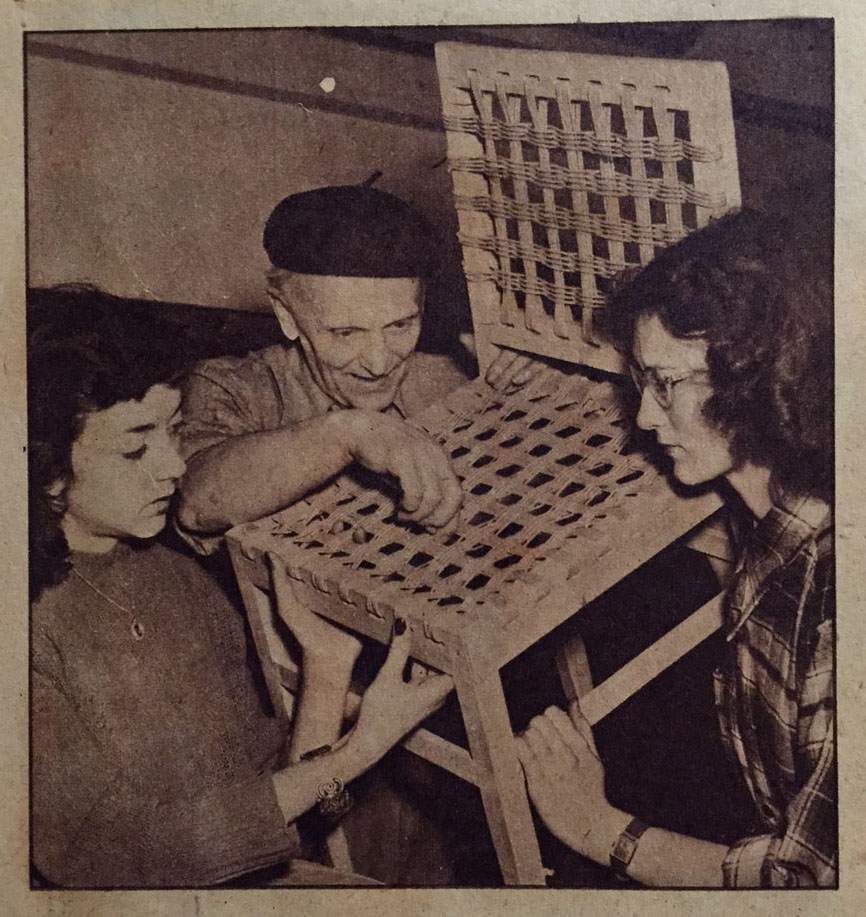
During the war years, Academy of Art students were encouraged to experiment with modern design and new and unusual materials. In 1944, Academy students Gloria Bucerzan and Jean Roberts designed and constructed a chair born of war shortages, by eliminating the use of springs and creating webbing using “non-critical” materials.

Gloria (left) and Jean with woodworking instructor Svend Steen, 1944. Copyright Cranbrook Archives.

Unknown student setting up work for Student Show, 1958. Copyright Cranbrook Archives.

Unknown student setting up work for Student Show, 1958. Copyright Cranbrook Archives.

Art Room, Early Childhood Center at Brookside School, 1997. Chairs designed by Dan Hoffman, Cranbrook Architecture Office. Photograph copyright Christina Capetillo.

Art Room, Early Childhood Center at Brookside School, 1997. Chairs designed by Dan Hoffman, Cranbrook Architecture Office. Photograph copyright Christina Capetillo.

For more on chair design in general, check out the 2012 Year of No-Chair-Design and the Guide to Great Chair Design which features links to chair blogs, the history of chair design, museums, galleries, and books that all feature what else? Chairs!

Leslie S. Edwards, Head Archivist

Alphabet Soup

This morning I was looking for an image from our collection to relate to the Cranbrook Art Museum’s newest exhibition “Read Image, See Text” to post on our Facebook page. I would hazard a guess to say that most, if not all, archivists love books almost as much as historic documents.  Though archives usually do not seek to collect books, and certainly are not lending libraries, books can often comprise part of a collection. So my search for a single image led me to think about the range of books we have in our collection.

The first was written by William O. Stevens, nearly 25 years before he became the first headmaster of Cranbrook School.  After receiving his doctorate at Yale, Stevens taught English at the U.S. Naval Academy for 21 years. The book, which satirized early 20th century Annapolis using twenty-six limericks and illustrations, became an instant success. Find out why it also became controversial.

William O. Stevens, An Annapolis Alphabet: Pictures and Limericks (Baltimore: The Lord Baltimore Press, 1906).

William O. Stevens, An Annapolis Alphabet: Pictures and Limericks (Baltimore: The Lord Baltimore Press, 1906).

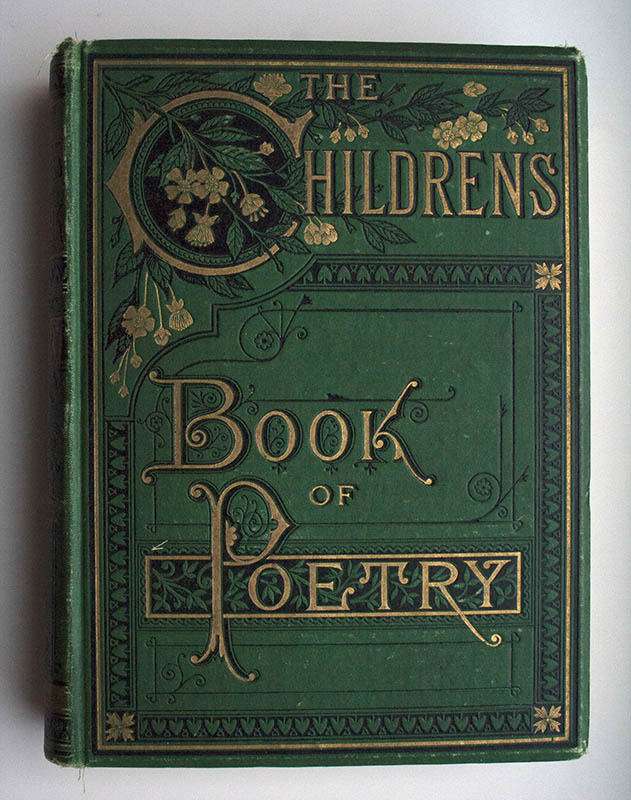
The first edition poetry book below illustrates beautiful text and the tooled binding of the times. It is inscribed: “Ellen W. Scripps, a Christmas present from her Father [James E. Scripps], Detroit 1879.” The editor of the compilation, Henry T. Coates joined the publishing firm of Davis & Porter in 1966; Davis retired the following year and the company became Porter & Coates which became famous for creating Home and Garden magazine and publishing the Horatio Alger Junior titles.

Henry T. Coates (ed.), The Children’s Book of Poetry: carefully selected from the works of the best and most popular writers for children. (Philadelphia: Porter & Coates, 1879).

Henry T. Coates (ed.), The Children’s Book of Poetry: carefully selected from the works of the best and most popular writers for children. (Philadelphia: Porter & Coates, 1879).

Gustaf Strengell, the father of Cranbrook’s textile designer Marianne Strengell, composed and designed this handwritten analysis of the Swedish poet’s writings as part of his graduate thesis. Franz Michael Franzén’s (1772-1847) work expressed the romantic conception of nature as both idyllic and divine, and was influential in the development of Finnish poetry.

Gustaf Strengell., Franzén. (Helsinki, unpublished, 1898)

Gustaf Strengell, Franzén. (Helsinki, unpublished, 1898)

For a really great blog post about related collections, see: Graphic Arts Collection, Rare Books and Special Collections, Princeton University.

Leslie S. Edwards, Head Archivist

Confessions of a Book Nerd

I have a confession to make. The smell of library books, an afternoon at an independent book store, re-reading a favorite novel – these are my ultimate indulgences. I could spend hours reading book blogs, listening to author interviews, or pouring over book-related tchotchkes on Etsy. I am a book nerd. My (nearly) one year as an Archivist at Cranbrook has been heaven. I discover something new every time I have the opportunity to walk into George Booth’s personal library at Cranbrook House. I find profound satisfaction in creating a catalog record for a new book or discussing MARC records with colleagues.

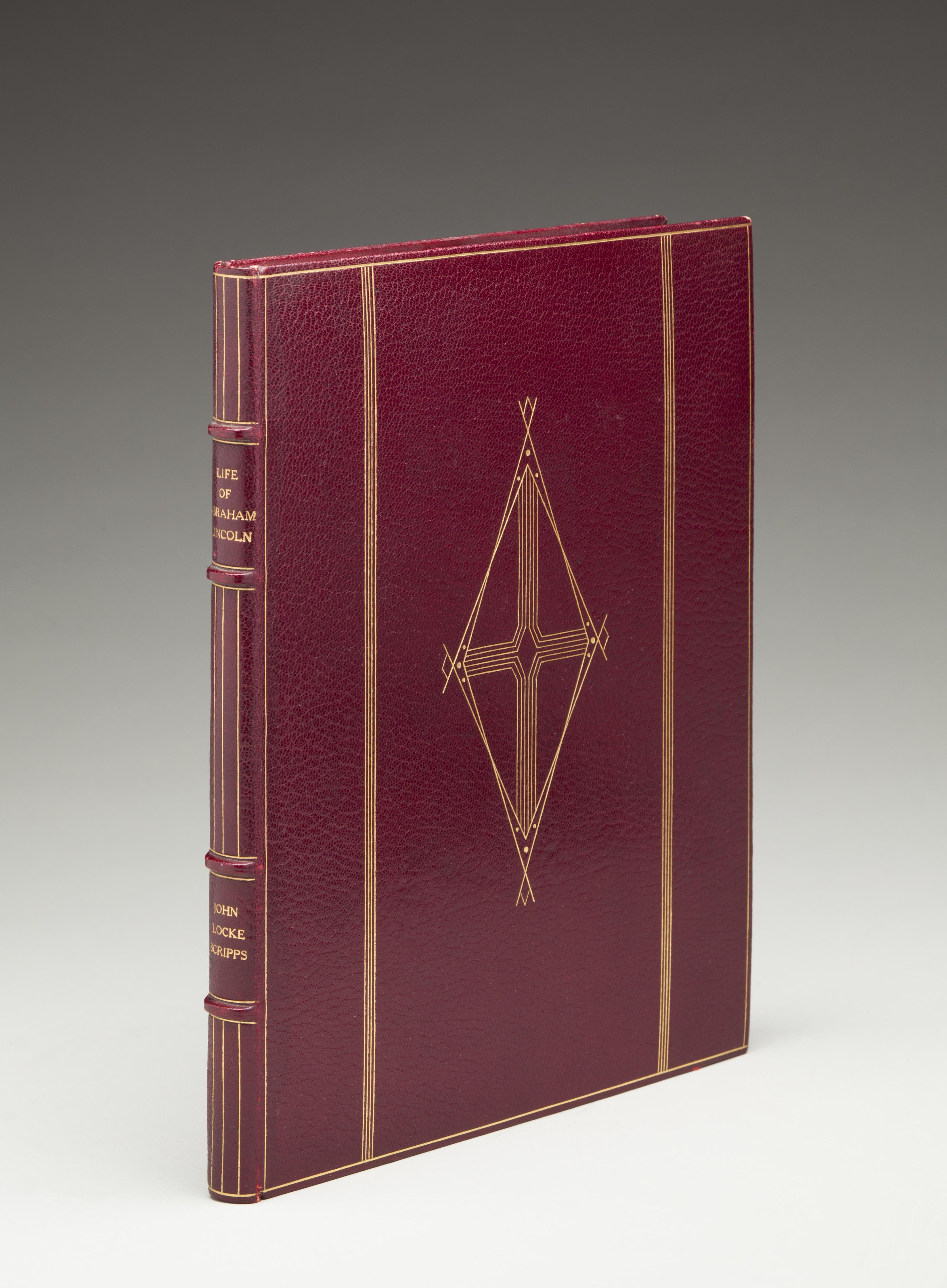
One of my favorite collections at Cranbrook is the Cranbrook Press and Photo Department Records. While working on a Cranbrook Press request recently, I came across the work of the bookbinder, Jean Eschmann (1896-1961), hired by George Booth in 1929. Eschmann was hired to set up the bookbinding workshop in the Arts and Crafts Studios at Cranbrook, where he remained until 1933 when desperate financial times forced the closure of the studio.

Jean Eschmann binding, Cranbrook Archives

English Fairy Tales, tooled leather. ca 1931. Cranbrook Archives.

Educated in Zurich, Eschmann traveled and studied in Austria, France and Switzerland. He came to the United States with his family in 1919. He was a member of the Society of Arts and Crafts in Boston and studied with Mary C. Sears. In 1929 George Booth hired Eschmann to create handmade bindings for the Art library and for his own personal library. Eschmann also taught bookbinding and hand-tooling classes to the community.

211044-145

The First Published Life of Abraham Lincoln, tooled leather. ca 1931. Cranbrook Archives.

Eschmann’s work has been exhibited at various museums in the United States, as well as at the Book Workers Guild in New York. His bindings were included at the World Fair in Paris in 1937 and at the Golden Gate Exposition in San Francisco in 1939. In 1945 Eschmann received the emblem for Meritorious Service from the Civilian Awards Committee of the Surgeon General’s Office for his work in restoring thousands of rare books at the Army Medical Library during World War II.

Evidence of Eschmann’s beautiful leather and tooling work can be seen in several examples in the rare book collections here in the Archives, and also in the Academy of Art library. I hope you enjoy the examples in this post. They definitely make this book nerd swoon!

Gina Tecos, Archivist
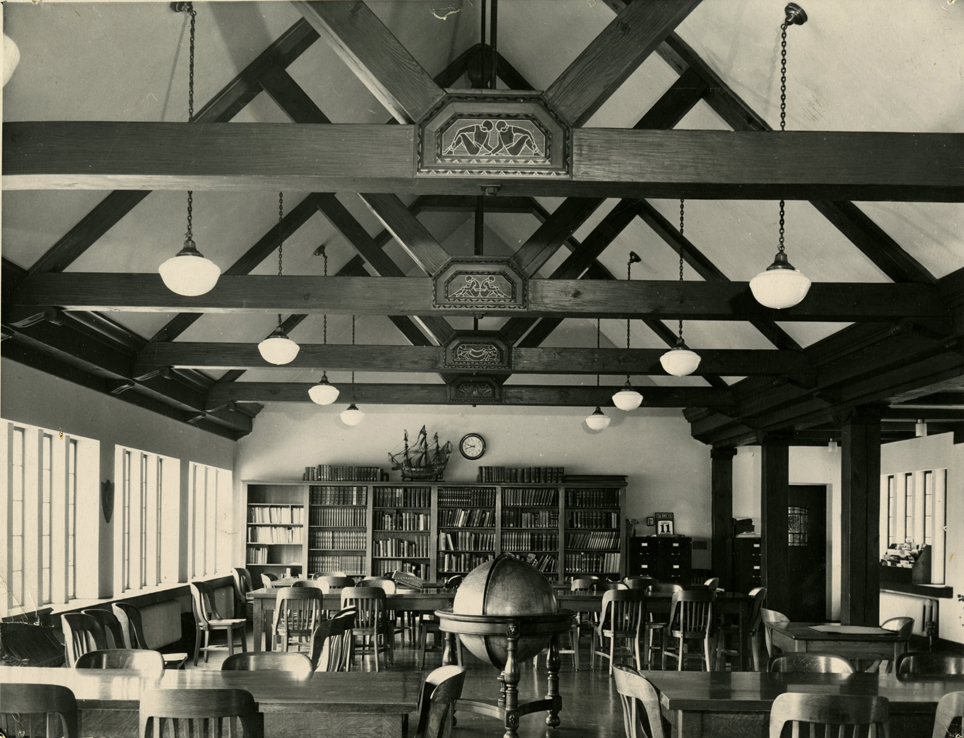
Photo Friday: The Art of Richard Thomas

While researching an archival query this past week I discovered yet more hidden gems in our collection—the work of metalsmith Richard Thomas (1917-1988). Thomas held several positions at Cranbrook, including Head of the Metalsmithing Department, Dean of Students, Registrar, and Administrative Assistant to the President. The Archives has a small collection which documents many of Thomas’ private commissions.

One of the key works he created for Cranbrook was the Ceremonial Mace (1978) at the request of the Cranbrook Educational Community. Traditionally, the Christian processional cross had been carried at Cranbrook and Kingswood Upper School graduation ceremonies, but by the 1970s, upper school students objected to the fact that the cross did not accurately reflect the religious beliefs of the diverse student body. In 1973 and 1974, Kingswood head, Wilfred Hemmer, moved the cross from the front of the processional to the rear, then in 1975 agreed to remove it from the ceremony altogether.

Cranbrook Mace

Photo courtesy Cranbrook Art Museum.

After Hemmer’s resignation in early 1976, acting head Christopher Corkery reinstated the processional cross and a student protest ensued. Letters to the editor were written to both upper school newspapers and four Kingswood seniors refused to attend the Kingswood commencement. By May, ten percent of the student body threatened to boycott the ceremony.

Thomas’ design of the Cranbrook Mace incorporates symbols of four major religions: the Christian cross, the Star of David, the Crescent of Islam, and the symbol of Yin and Yang which represents the Eastern philosophies of China, Japan, India and Indonesia. The seals of the Cranbrook institutions are also a part of the design of the mace, which is made of rosewood, ivory, steel, sterling silver and gold.  The Cranbrook Mace is still used in graduation ceremonies to this day.

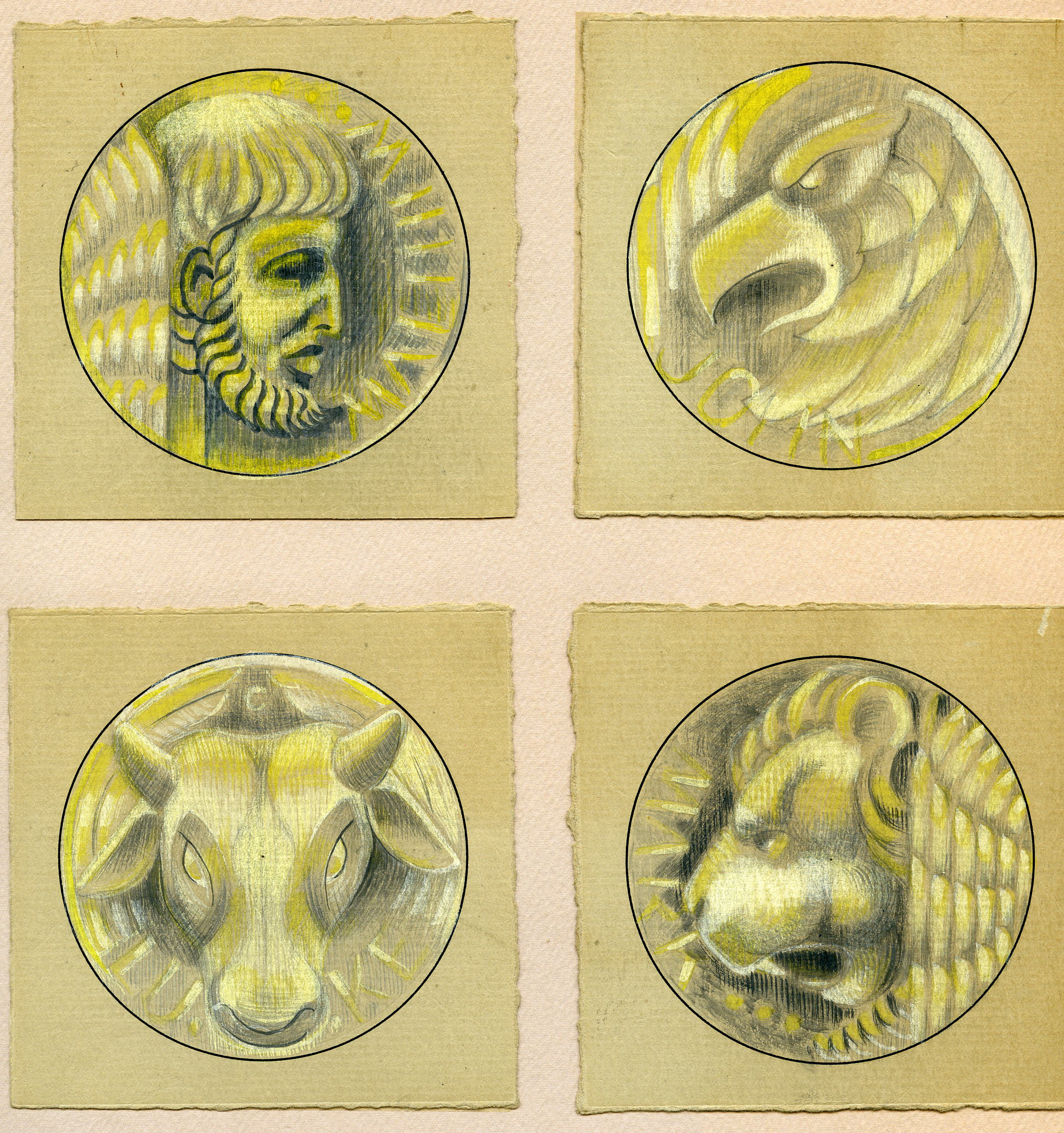
Richard Thomas sketch

Sketch from the Richard Thomas Papers, Cranbrook Archives.

In 1981, Thomas was awarded the Cranbrook’s Founders Medal. His design and fabrication of liturgical objects can be seen in more than ninety churches, synagogues, and temples across the country. He designed the Cranbrook Foundation’s silver punch bowl, the Saarinen Medal, and the commemorative medal for the Academy of Art’s fiftieth anniversary.

Gina Tecos, Archivist and Leslie S. Edwards, Head Archivist

Lighting Up Cranbrook House: Edward F. Caldwell & Co.

HT_2014_1

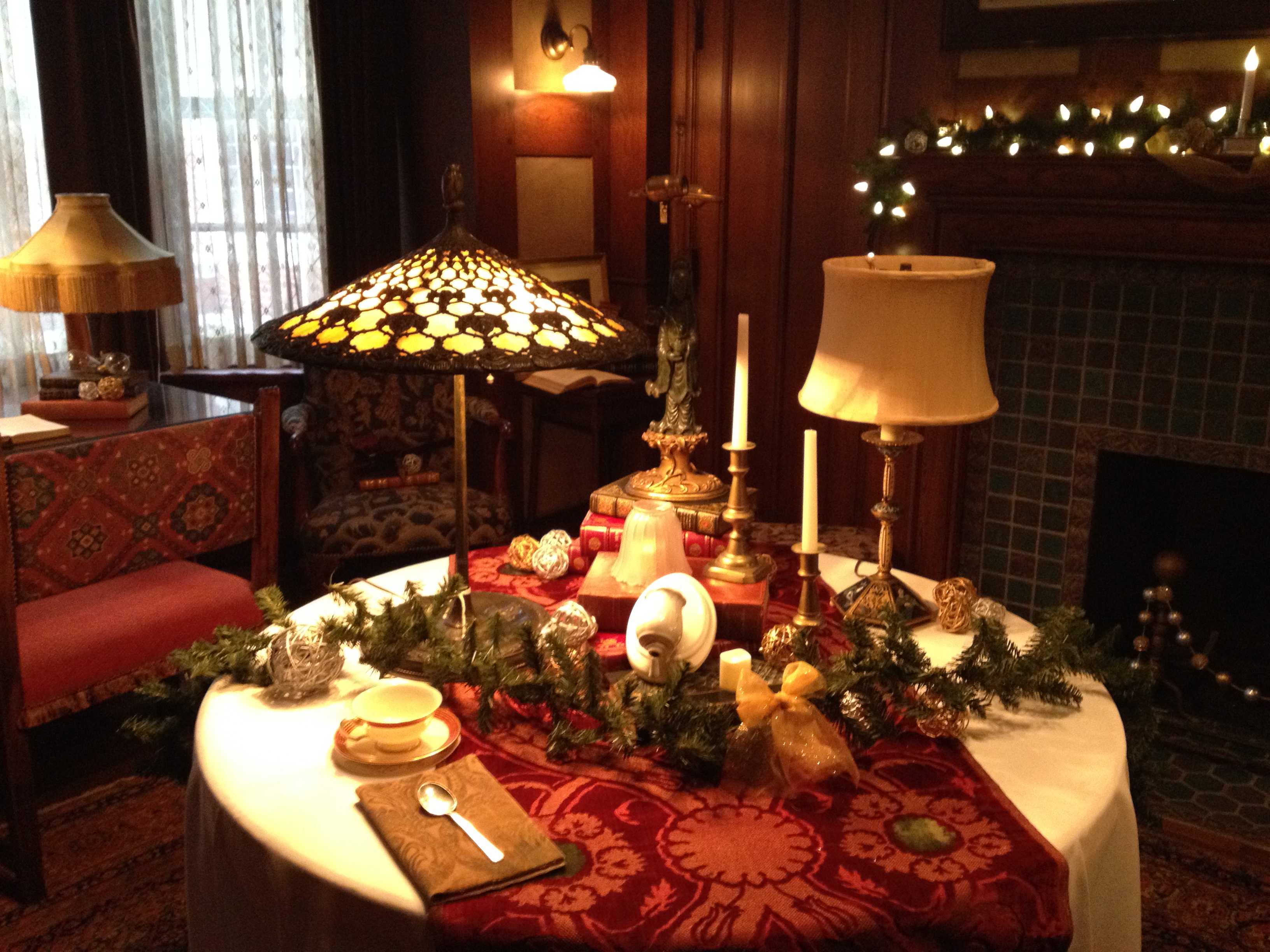
Holiday Tables, 2014. Stefanie Dlugosz, photographer.

This past weekend the Center for Collections and Research put on a display for Holiday Tables at Cranbrook House, organized by the Cranbrook House and Gardens Auxiliary.  Associate Registrar Gretchen Sawatzki and I put together a display highlighting the electric lighting original to the home, focused on lamps and lighting by the Edward F. Caldwell & Company.

Cranbrook House was designed and built in 1908, and George Gough Booth always had the intention of having electric lighting throughout the home. Within the city of Detroit there had been an interest in electricity, and by 1906 there were two power plants on the Detroit River owned and operated by the Detroit Edison Company. However, with Cranbrook House being roughly 20 miles to downtown Detroit, this was an achievement. The Booth’s interest in innovation propelled them to always be ahead of their time by investing in the newly available widespread utility for their home.

HT_2014_2

Holiday Tables, 2014. Stefanie Dlugosz, photographer.

HT_2014_3

Holiday Tables, 2014. Stefanie Dlugosz, photographer.

In the first half of the twentieth century Edward F. Caldwell & Company was America’s premier design and manufacturer for electric light fixtures. The New York firm founded in 1895 created designed and works with several prominent clients at the time including the Frick, Morgan, and Carnegie families. Much of their work was done in tandem with architectural commissions, and therefore clients like Booth were able to provide input and alter details to customize their lighting choices. Booth provided his own ideas about a few pieces for the home, but overall selected most of the pieces directly from their catalogues. During the construction and design of Cranbrook House, George G. Booth was actively involved in conversations with Albert Kahn, the architect, and many of the vendors providing goods and products for the home. Booth was enthusiastically involved in providing input on the design elements of the home, and the lighting was no different. Many of the Edward F. Caldwell & Co. catalogues can be found online through the Cooper-Hewitt Museum Library, Smithsonian Institution Libraries

Stefanie Dlugosz, Collections Fellow, Center for Collections and Research


Photo Friday: Tuning a Concert Grand

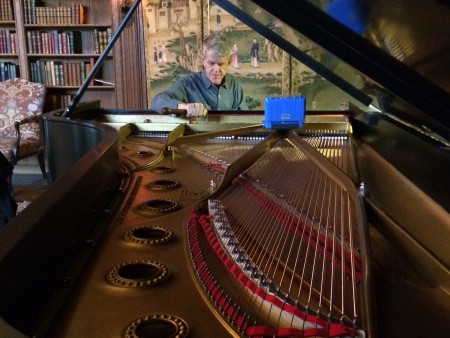
Hugh Gulledge patiently tunes the 1929 Steinway & Sons Model D Concert Grand in the West Wing Library of Cranbrook House. Photographer: Gretchen Sawatzki

Hugh Gulledge patiently tunes the piano in the West Wing Library of Cranbrook House. Photographer: Gretchen Sawatzki.

In 2013, the Cranbrook House and Gardens Auxiliary took action to restore the 1929 Steinway & Sons, Model D Concert Grand Piano currently housed in the West Wing Library of Cranbrook House. After traveling to the Steinway & Sons factory in New York, it underwent a nine-month restoration process which included a new sounding board, bridges, strings, and action components. The piano was returned this past June where it sat acclimating to the environment of the house after taking such an extensive trip and waiting to be played. This past Thursday, Hugh Gulledge, a registered piano technician put the finishing touches on the piano, tuning and voicing it for its official unveiling. On Thursday, November 20, 2014 the Concert Grand will make its public, post-restoration debut at the Cranbrook House and Gardens Auxiliary’s annual fund raising event Holiday Tables 2014

Gretchen Sawatzki, Associate Registrar

Object in Focus: “The Spirit of Nursing” Monument

Army-Navy Nurse Memorial

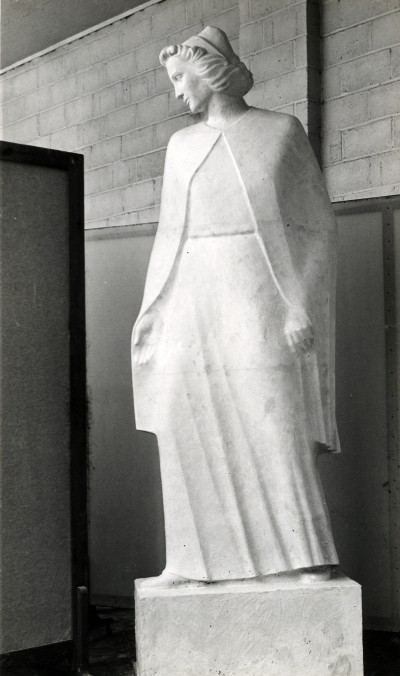
The Army-Navy Nurse Memorial, 1938. Cranbrook Archives.

Although there are many connections to Veteran’s Day within the Cranbrook community, the story I would like to share today is about a woman who left behind a Hollywood movie and stage career to serve her country. Frances Rich (1910-2007)  enlisted in the United States Naval Reserve during World War II and left a lasting legacy for all who visit Arlington National Cemetery.

The daughter of silent film star Irene Rich and the adopted daughter of naval officer Charles Rich, Frances was born in Spokane, WA in 1910. She received her bachelor’s degree in English Literature from Smith College in 1931. Between the years of 1932-1933, Rich appeared in six Hollywood films and one Broadway play. During this time she also became very interested in sculpture and started taking drawing, fresco painting, and clay carving classes in Paris, Rome, and Boston.

While in Paris, Rich met the sculptress Malvina Hoffman (1885-1966) and studied with her for two years. Upon returning to the United States, she continued to hone her craft at the School of the Museum of Fine Arts in Boston. Between 1937-1940 she studied sculpture with Carl Milles at Cranbrook Academy of Art, whom she worked with for 18 years.

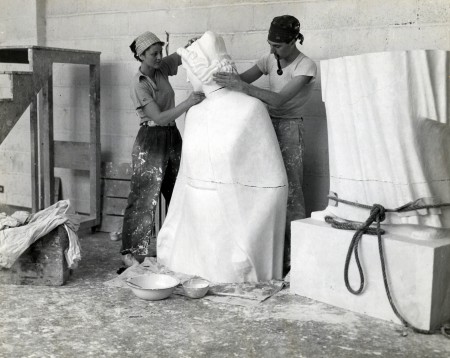
In 1942, Rich enlisted in the U.S. Naval Reserve as a Lieutenant Jr. Grade. She served as the Special Assistant to Mildred McAfee (1900-1994), director of WAVES (Women Accepted for Voluntary Emergency Service). Prior to her enlistment, and while a student at Cranbrook, Rich sculpted the Army-Navy Nurse Memorial (1938). One of her best-known works, the 10-foot high statue was made from Tennessee marble and commemorated nurses who died during military service. The statue resides at Arlington National Cemetery and is often referred to as the “Spirit of Nursing” monument.

Frances Rich working on sculpture

Frances Rich working on the Army-Navy Nurse Memorial at Cranbrook, 1938. Cranbrook Archives.

Today, along with all of the men and women who have bravely served our country, we salute Frances Rich.

Gina Tecos, Archivist

Lost and Found in a Sea of Cranbrook History

Ye Triumphe Ship

Ye Triumphe Ship, CEC 1918.1

Every day at the Center for Collections and Research brings new adventures and discoveries. During a visit to one of the storage spaces on Cranbrook’s campus, I stumbled upon a curious object, which inspired me to research it and its past. Like most things around here, the object has a great lineage throughout the campus with connections to George Booth, the Detroit Society of Arts and Crafts, and Cranbrook School.

The Ye Triumphe model ship was crafted by Henry Brundage Culver (1869-1946), and although it is a model, it is a large one: about 40 inches long and 32 inches high. George Gough Booth purchased the Ye Triumphe in September 1918 from the Detroit Society of Arts and Crafts. The model, which was advertised in the Detroit Sunday News, had been on display in the window of the Detroit Society of Arts and Crafts shop during that same year.

Henry Brundage Culver worked as an attorney and also served as secretary for The Ship Model Society in New York. He participated in building ship models, and contributed to scholarship on the art of model-making. He produced several publications including Contemporary Scale Models of Vessels of the Seventeenth Century (1926) and The Book of Old Ships: Something of their Evolution and Romance (1924). In the introduction to Contemporary Scale Models Culver compares the art of ship-model building to that of painting.

The finest examples of these miniature vessels are, in the eyes of those best fitted to judge productions of the highest artistic quality, appealing in general composition, line, mass and technical execution, to the aesthetic susceptibilities of those, who have eyes to see, in a no less degree than do the best examples of pictorial art.”

­—Henry B. Culver, Contemporary Scale Models of Vessels of the Seventeenth Century, New York: Payson and Clarke Ltd.1926, pg.ix.

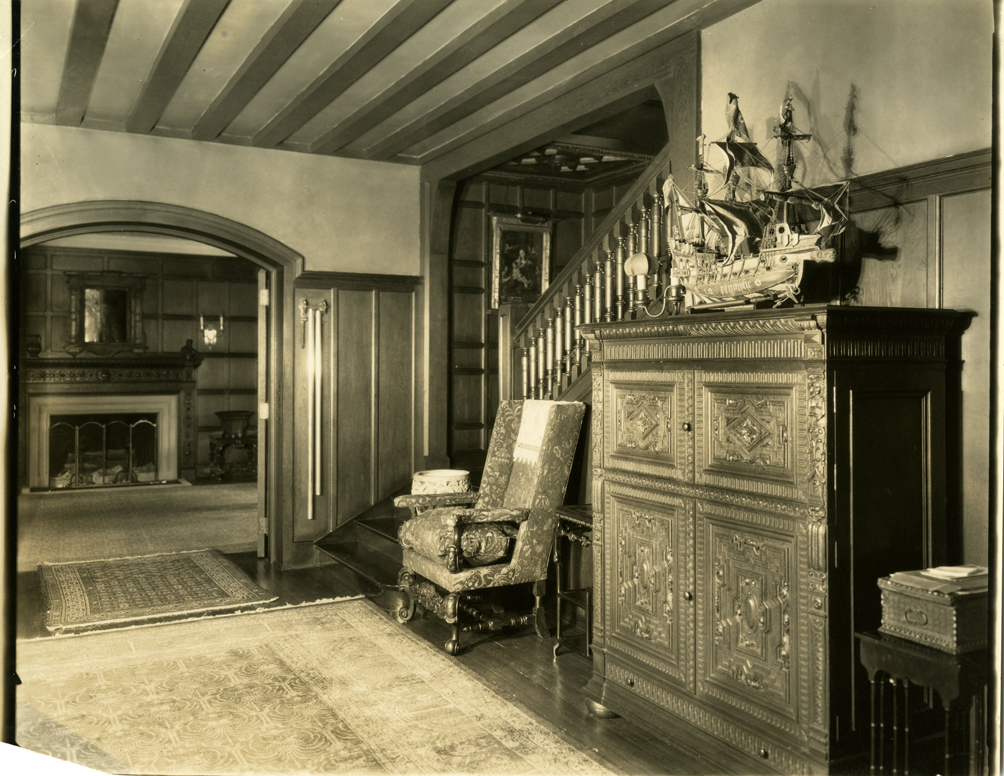
Originally, the ship was placed in the reception hall of Cranbrook House, and was later loaned by Booth for display in the library at Cranbrook School for Boys. Each of the photographs show the ship on display and its presence throughout Cranbrook.

CH_entrance hall_Ship_Blogpost

Cranbrook House reception hall, ca. 1920. Cranbrook Archives

CS_Library_Ship_Blogpost

Cranbrook School for Boys, Library interior, ca. 1945. Cranbrook Archives.

The Ye Triumphe will be returning to view at the Cranbrook Art Museum’s upcoming exhibition The Cranbrook Hall of Wonders: Artworks, Objects, and Natural Curiosities opening November 23rd, 2014. Come and check out the Ye Triumphe and many other fabulous objects from across the Cranbrook campus including works from the Center for Collections and Research, Cranbrook Art Museum, and the Cranbrook Institute of Science!

—Stefanie Kae Dlugosz, Center for Collections and Research, Collections Fellow

Object in Focus: Travel with Saarinen

Full Trunk

Trunks in storage. Photographer, Gretchen Sawatzki.

While organizing and re-arranging some of the cultural properties late last week, Associate Registrar Gretchen Sawatzki and I came across an exciting surprise. Tucked away in a corner of one of the many storage areas across the Cranbrook Campus, we found a pair of steamer trunks. (Steamer trunks are traveling trunks that were used when steamships and ocean liners were the best way to travel overseas.) Upon further inspection we realized that they had many stickers bearing international hotels and transatlantic ocean liners. Painted on one of the trunks we found the initials ES.

E.S. Initials. Photographer, Gretchen Sawatzki.

E.S. Initials. Photographer, Gretchen Sawatzki.

Trunk interior. Photographer, Gretchen Sawatzki.

With a bit more digging and some research we found that these trunks were purchased by Eliel Saarinen from The J.L. Hudson Company in Detroit shortly after his arrival to Michigan in 1923. These trunks traveled with the Saarinens back to Finland, and to other European and international destinations. Check out the inside of the trunks. This is a wardrobe trunk, which you can see from the drawers and hanging section with hangers still inside! Although I don’t think it is practical for travel today, I imagine all the exciting places it voyaged while accompanying Eliel Saarinen on his journeys.

Stefanie Kae Dlugosz, Collections Fellow, Center for Collections and Research

Create a website or blog at WordPress.com