Photo Friday: Fall is Leaf-ing Us

Oriental Bridge, 1980.  Balthazar Korab, photographer.

Oriental Bridge, 1980. Balthazar Korab, photographer.

Autumn is a second spring when every leaf is a flower.     –Albert Camus

Fall is probably my favorite time of year, and on the Cranbrook campus, there is no lack of beautiful spots to capture on film.  Though taken nearly 25 years ago, this photo captures the beauty and serenity found all around us.  Built before 1914, the bridge was originally called the Japanese bridge and was made of arched cypress.  How do we know this?  George Booth had meticulous inventories taken in the early days and every piece of wood, metal, and otherwise was accounted for!  Now, the bridge, part of the Oriental Gardens and known as the Oriental bridge, is painted red and is one of the centerpieces of  the gardens meticulously maintained by members of the Cranbrook House and Gardens Auxiliary.

With the recent winds and rain, the leaves are fast falling from the trees and gracing us with a different set of vistas.    Good-bye autumn leaves until next year.

Leslie E. Edwards, Head Archivist

Election Day: Mayor Vettraino

Dominick Vettraino at the wheel of Cranbrook's Fire Truck, ca. 1936. Vettraino Family Papers, Cranbrook Archives.

Dominick Vettraino at the wheel of Cranbrook’s Fire Truck, ca. 1936. Vettraino Family Papers, Cranbrook Archives.

In honor of Election Day I wanted to feature Cranbrook and the polls! In 1958, Cranbrook’s Dominick Vettraino was elected as mayor of Bloomfield Hills, the first native born Bloomfield Hills resident to hold the position!

Dominick Vettraino was the eldest son of Michael and Michaela Vettraino.  Mike was grounds superintendent for Cranbrook from 1905-1955 and all of his children except Dominick were born at Cranbrook. Dominick started working with his father on the grounds when he was 16 years old, and after Mike’s retirement, took over the position of superintendent.  In addition, he contributed substantially to the surrounding community.   After studying at the University of Michigan’s Fire School he was named chief of the Cranbrook Fire Department. He and his brother John Vettraino converted a Ford chassis into Cranbrook’s first fire truck, and eventually Dominick served as the head of Cranbrook’s Police Department.

After his many Cranbrook achievements he went on to serve the larger community of Bloomfield Hills.

Stefanie Dlugosz, Collections Fellow, Center for Collections and Research

Object in Focus: Gone but Not Forgotten

Buddy_blog

Grave of Buddy. Photo taken by Cheri Gay.

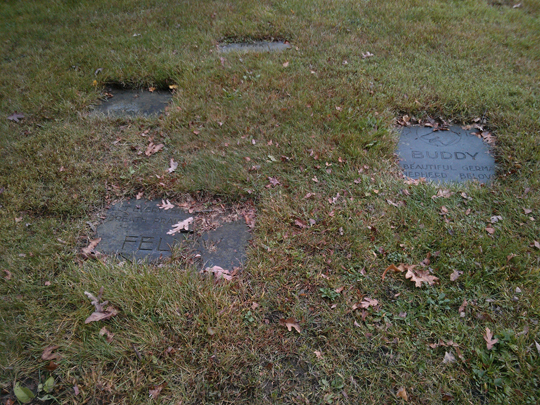
Taking a stroll one day on the grounds of the Thornlea Studio (where Cranbrook Archives was previously housed) I was startled to come across small tombstones, almost buried in the grass. What were these, I wondered? Seeing the names, I immediately understood: Buddy, Homer, Perky, Heinie, Fellow, Ricky, Zorah—a pet cemetery, which had seen better days.

Thornlea Studio was the artistic lair of Henry Scripps Booth, who designed and placed the building across the wide expanse of lawn from his home Thornlea. The family actually lived in the studio in 1949 when “… our daughter Melinda was a student at Kingswood. She was embarrassed by our living in “such a big house” and prevailed on her mother to close the house and move across the lawn to the Studio.”

The Henry Scripps Booth and Carolyn Farr Booth Papers document six dogs, almost all black and tan German shepherds. Receipts from Sheldon Granite Co. in Detroit reveal they made the monuments for Heinie, Perky and the lyrically named, Homer the Wanderer. A 1961 notebook paper receipt identifies Albert Leipold, of Birmingham, as the stone carver for Fellow’s monument for $40.

Mike

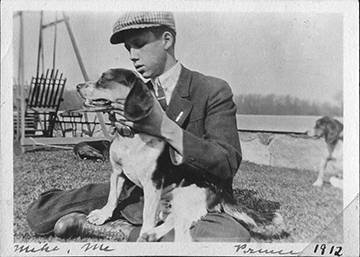
Henry Scripps Booth with Mike, 1912. Cranbrook Archives.

Buddy 1929

Buddy at Thornlea, 1929. Cranbrook Archives.

When Henry was growing up, the Booth family had beagles, Prince and Mike, and a great Dane, Ginger. Mike, according to Henry, “ … loved having a fuss made over him, one time going so far as being pushed around in a doll carriage while wearing a canvas hat.” Oh to have a photograph of that! When Henry had his own family, black and tan German shepherds predominated.

Henry’s photo albums, called Pleasures of Life, include 17 different dogs, though not all are his. His hand-written captions under the photographs always give the dog’s name followed by (dog) in case there’s any doubt, for example, in a photo of Cynthia and Curlytail, who is who.

Though the grounds and building of the Thornlea Studio are maintained, unfortunately that care doesn’t extend to Henry Booth’s lovingly buried companions. It’s a project waiting to happen.

Dog Graveyard_Blog

Thornlea Studio pet cemetery. Photo by Cheri Gay.

–Cheri Gay, Archivist

Photo Friday: Excavation at Greenwood Mound

William Colburn, February 1932. Cranbrook Archives

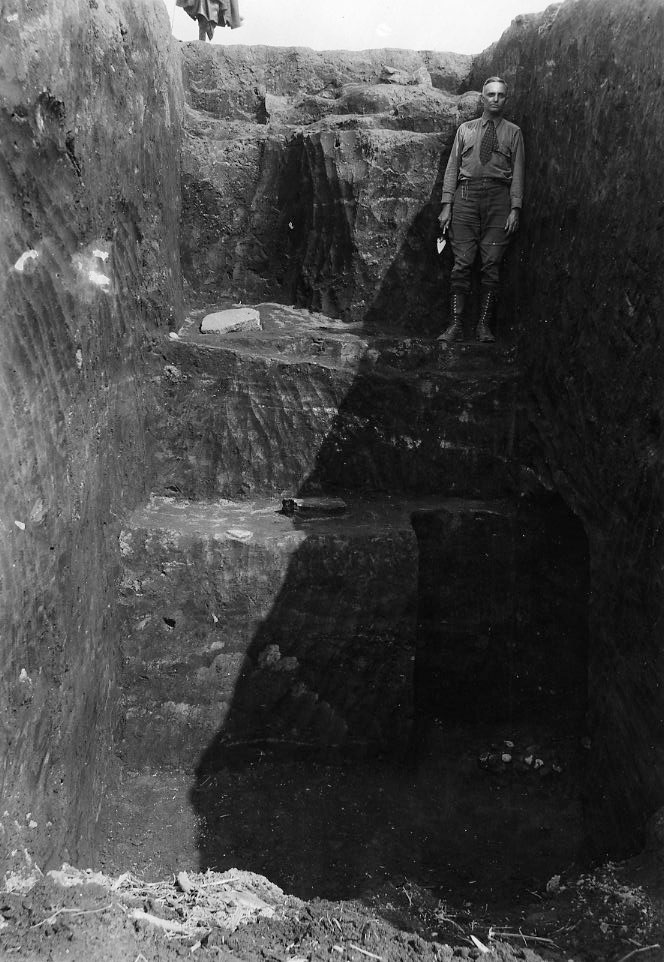
William Colburn, February 1932. The William Colburn Papers, Cranbrook Archives.

Team of men at dig. Cranbrook Archives.

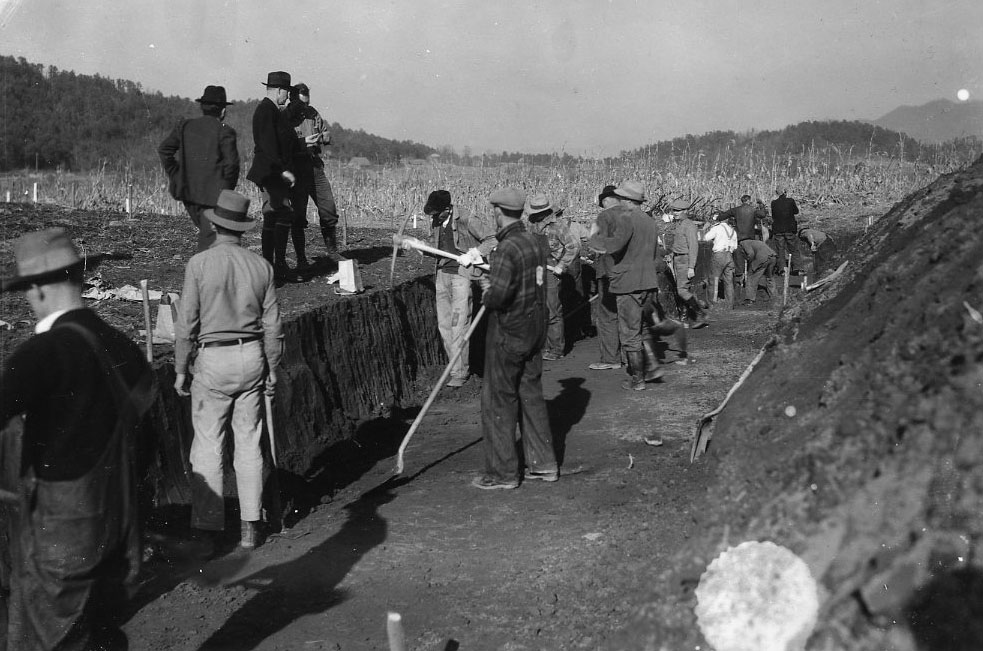
Team of men at dig. The William Colburn Papers, Cranbrook Archives.

In honor of International Archaeology Day, today’s Photo Friday is a tribute to Archaeologist William Colburn (1882-1966). Colburn, a Detroit native, first visited Cranbrook Institute of Science in 1932. He spent a few weeks in December of the same year fixing display and lighting issues the Institute had in the “mineralogical room.” It came to his attention in 1933 that there were multiple collections of mineral specimens held by the Detroit Museum of Art (now the Detroit Institute of Art) that were not being displayed due to lack of space. Colburn secured an indefinite loan of these collections to the Institute, and spent the majority of the summer of 1933 cataloging and displaying them. Subsequently, Colburn accepted a position on the Institute’s Board of Trustees, a position he held from 1933-1944.

Colburns sketch of the bowling alley. Cranbrook Archives.

Colburn’s sketch of the bowling alley. The William Colburn Papers, Cranbrook Archives.

"Showing field rocks on bowling alley after cloudburst." Cranbrook Archives.

Taken after the rain, the arrangement of fieldstones can be seen. The William Colburn Papers, Cranbrook Archives.

Colburn is well-known for an excavation he led in February 1932 of the J.J. Greenwood Mound, a Cherokee civilization near Dillard, Georgia. Although he did not find any major burials or relics, Colburn’s team did come across some interesting finds. In his report, Colburn describes the discovery of a stone alignment that he interpreted as a Cherokee “bowling alley” (a Native American game). A formation of fieldstones was found with a smooth hard-baked clay runway. A rainstorm shortly after the discovery shifted the original arrangement of the stones. Thirty-two disk-shaped stones with rounded edges discovered at the sides of the “runway” were used for the game. One of the stones was found with a chip that had been carefully repaired by the Cherokee.

Colburn's drawing of the mound site. Cranbrook Archives.

Colburn’s drawing of the mound site. The William Colburn Papers, Cranbrook Archives.

Colburn made several innovations for which Cranbrook became known, including internally lit display cases and back-lighting mineral specimens. Colburn  sought out specimens, making numerous trips to the Upper Peninsula, and even the Eastern and Western parts of the country, in order to build the collections at the Institute. Through his many excavations Colburn obtained numerous mineral specimens for the Institute. In addition, he bequeathed a generous amount of specimens to the Institute.

Gina Tecos, Archivist

Lost and Found in a Sea of Cranbrook History

Ye Triumphe Ship

Ye Triumphe Ship, CEC 1918.1

Every day at the Center for Collections and Research brings new adventures and discoveries. During a visit to one of the storage spaces on Cranbrook’s campus, I stumbled upon a curious object, which inspired me to research it and its past. Like most things around here, the object has a great lineage throughout the campus with connections to George Booth, the Detroit Society of Arts and Crafts, and Cranbrook School.

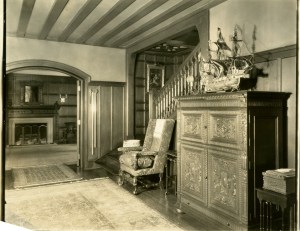
The Ye Triumphe model ship was crafted by Henry Brundage Culver (1869-1946), and although it is a model, it is a large one: about 40 inches long and 32 inches high. George Gough Booth purchased the Ye Triumphe in September 1918 from the Detroit Society of Arts and Crafts. The model, which was advertised in the Detroit Sunday News, had been on display in the window of the Detroit Society of Arts and Crafts shop during that same year.

Henry Brundage Culver worked as an attorney and also served as secretary for The Ship Model Society in New York. He participated in building ship models, and contributed to scholarship on the art of model-making. He produced several publications including Contemporary Scale Models of Vessels of the Seventeenth Century (1926) and The Book of Old Ships: Something of their Evolution and Romance (1924). In the introduction to Contemporary Scale Models Culver compares the art of ship-model building to that of painting.

The finest examples of these miniature vessels are, in the eyes of those best fitted to judge productions of the highest artistic quality, appealing in general composition, line, mass and technical execution, to the aesthetic susceptibilities of those, who have eyes to see, in a no less degree than do the best examples of pictorial art.”

­—Henry B. Culver, Contemporary Scale Models of Vessels of the Seventeenth Century, New York: Payson and Clarke Ltd.1926, pg.ix.

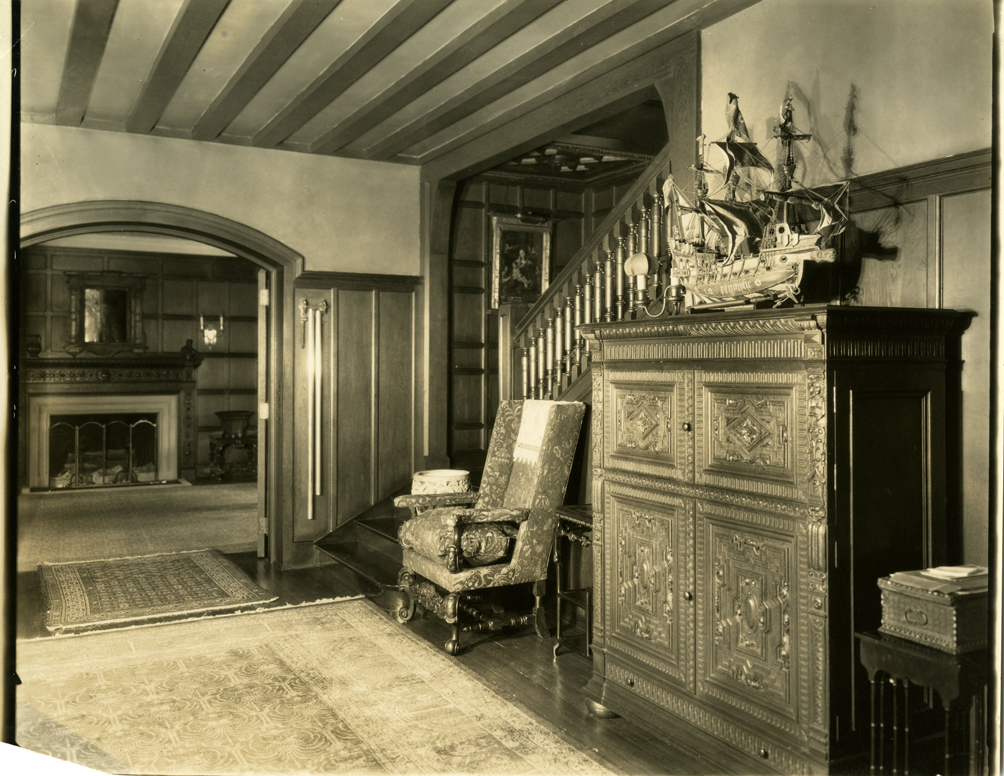
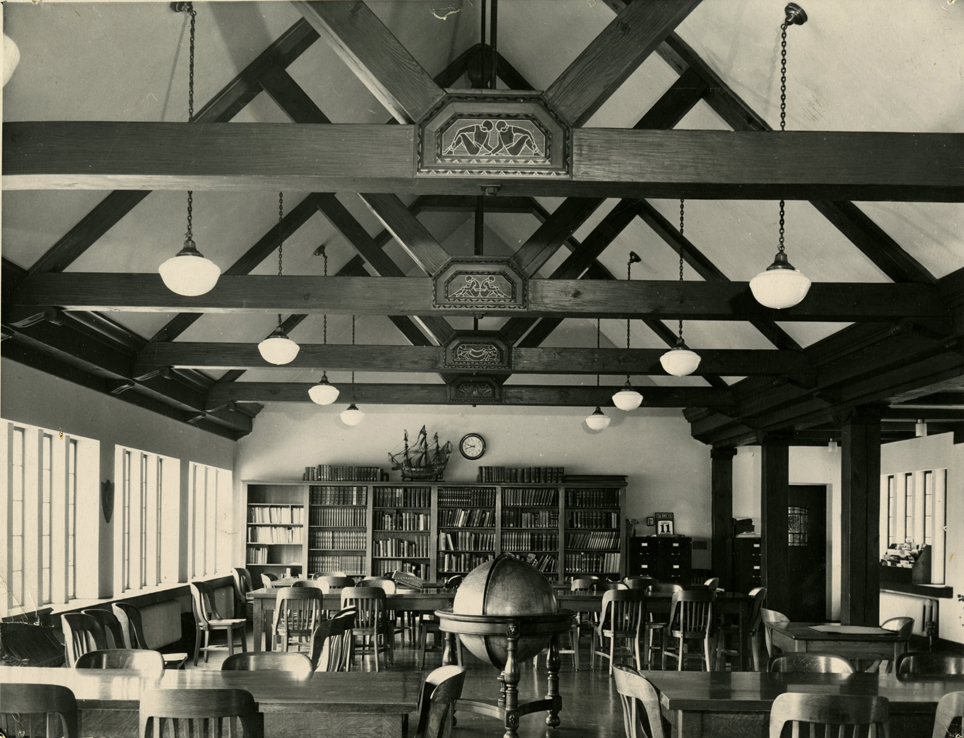
Originally, the ship was placed in the reception hall of Cranbrook House, and was later loaned by Booth for display in the library at Cranbrook School for Boys. Each of the photographs show the ship on display and its presence throughout Cranbrook.
CH_entrance hall_Ship_Blogpost

Cranbrook House reception hall, ca. 1920. Cranbrook Archives

CS_Library_Ship_Blogpost

Cranbrook School for Boys, Library interior, ca. 1945. Cranbrook Archives.

The Ye Triumphe will be returning to view at the Cranbrook Art Museum’s upcoming exhibition The Cranbrook Hall of Wonders: Artworks, Objects, and Natural Curiosities opening November 23rd, 2014. Come and check out the Ye Triumphe and many other fabulous objects from across the Cranbrook campus including works from the Center for Collections and Research, Cranbrook Art Museum, and the Cranbrook Institute of Science!

—Stefanie Kae Dlugosz, Center for Collections and Research, Collections Fellow

Photo Friday: The Fate of the North Gates

Arriving at  Cranbrook House you have probably noticed the large wrought iron entrance gates that welcome guests to the property along Lone Pine Road. A collaborative design by Cranbrook Founder, George Gough Booth (1864 – 1949) and Polish-American blacksmith, Samuel Yellin (1885 – 1940), this pair of gates were completed in 1917and are among the most cherished historic decorative elements at Cranbrook. But did you know that they are not the only gates that were a Booth-Yellin collaboration situated on the property?

North Gates

The North (Woods) Entrance Gates in Yellin’s studio, 1917. Courtesy Cranbrook Archives

Affectionately referred to as the North Gates, the gates seen in this photograph were also a collaborative design by Booth and Yellin. Forged by Yellin in his Philadelphia studio in 1917, the North Gates were installed as a part of a stone entrance wall at the old Cranbrook House entrance drive just north of Kingswood School on Cranbrook Road. When the drive was closed to re-route traffic to the house, the gates were ultimately removed and put into storage where they have remained – until now! Next week the North Gates will be leaving Cranbrook for a short journey to Cleveland for a full restoration. The six month project will include the fabrication of hand-wrought ironwork to replicate missing elements, chiseling to recreate bird faces and leaf veins, sandblasting, and the replication of a historic surface finish. Upon their return next spring the gates will be reinstalled at the new exit drive at Cranbrook House on Lone Pine Road just west of the South Entrance gates. So keep your eyes peeled for the triumphant return of the freshly restored gates!

CECT852det11

The original site of the North Gates as it appears today on Cranbrook Road. Photographer, Gretchen Sawatzki


Gretchen Sawatzki, Associate Registrar


To check out some more gate related information click here and here!

Letters Left Behind: Advertising Local History

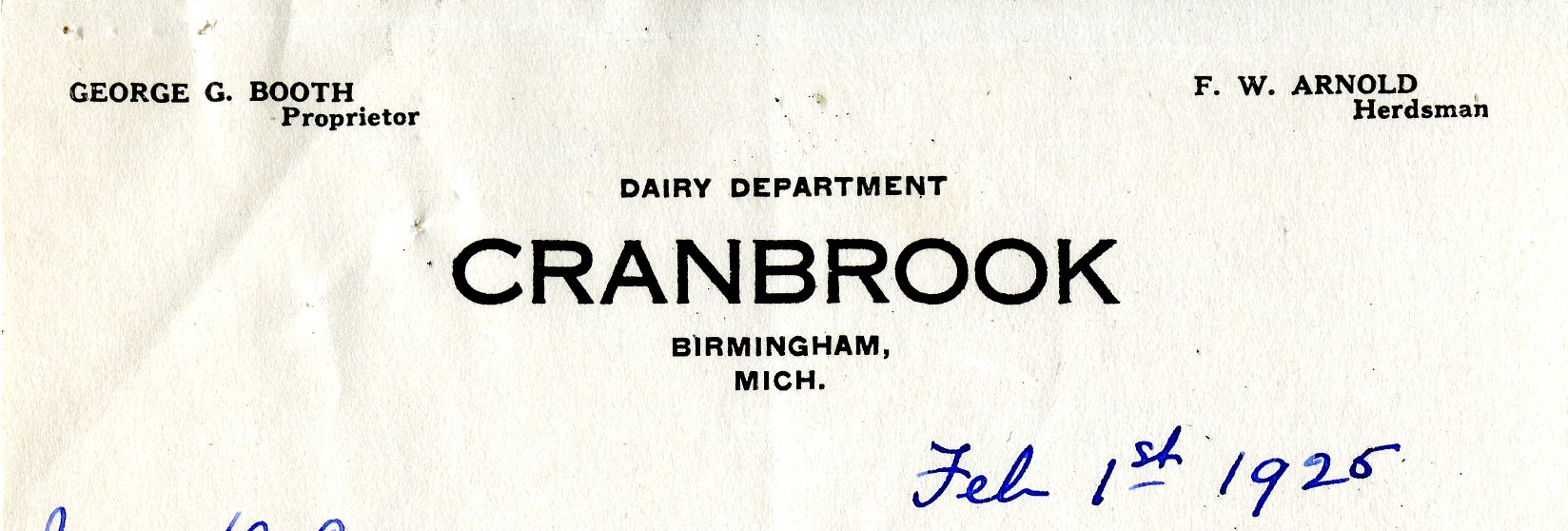
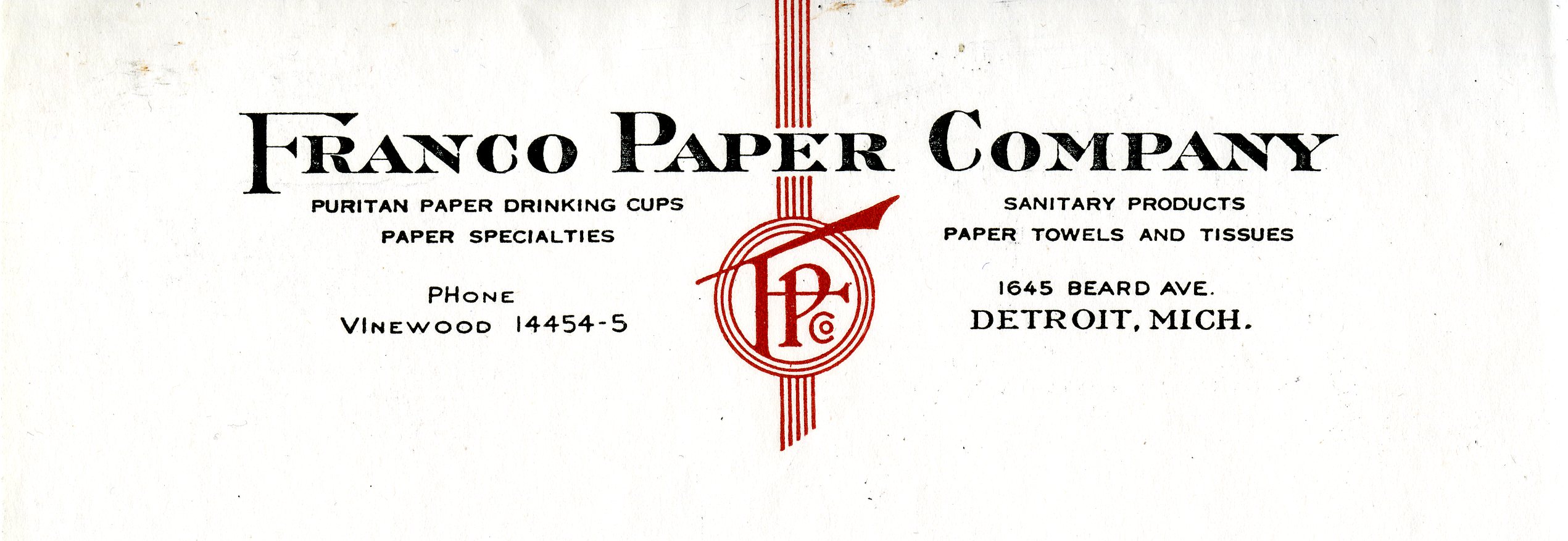
In pulling together the final selections for the Cranbrook Archives’ exhibition “Ephemera: Stories that Letterhead Tells,” I had many difficult choices to make. We have so many fantastic examples of letterhead that span 150 years. It was hard to choose which stories to tell in the exhibition!

That said, I have to say that some of my favorites are the ones that document Michigan history, and specifically, local area history. Numerous businesses including retail stores, restaurants, gas stations, hotels, industries and civic organizations, are no longer in existence and the letterhead is the last bit of evidentiary proof of existence. This post is an opportunity to spotlight a few of these.

farm003

lumber001

paper007

women006

flag002

Beginning this Thursday, the Archives, as part of the Center for Collections and Research, will be host to a lecture series about Michigan history. In each of the three lectures, the speakers will highlight letterhead from their own institution’s archival collections that relate to the stories they are telling. Please join us this Thursday October 16th for the first in the series: “Boom Town: Detroit in the Roaring ‘20s” by Joel Stone, Senior Curator of the Detroit Historical Society. The lecture will be held in DeSalle Auditorium, Cranbrook Art Museum, from 7-8:30pm and include a tour of the exhibition “Ephemera: Stories that Letterhead Tells.”

Leslie S. Edwards, Head Archivist

Photo Friday: A Labor of Love

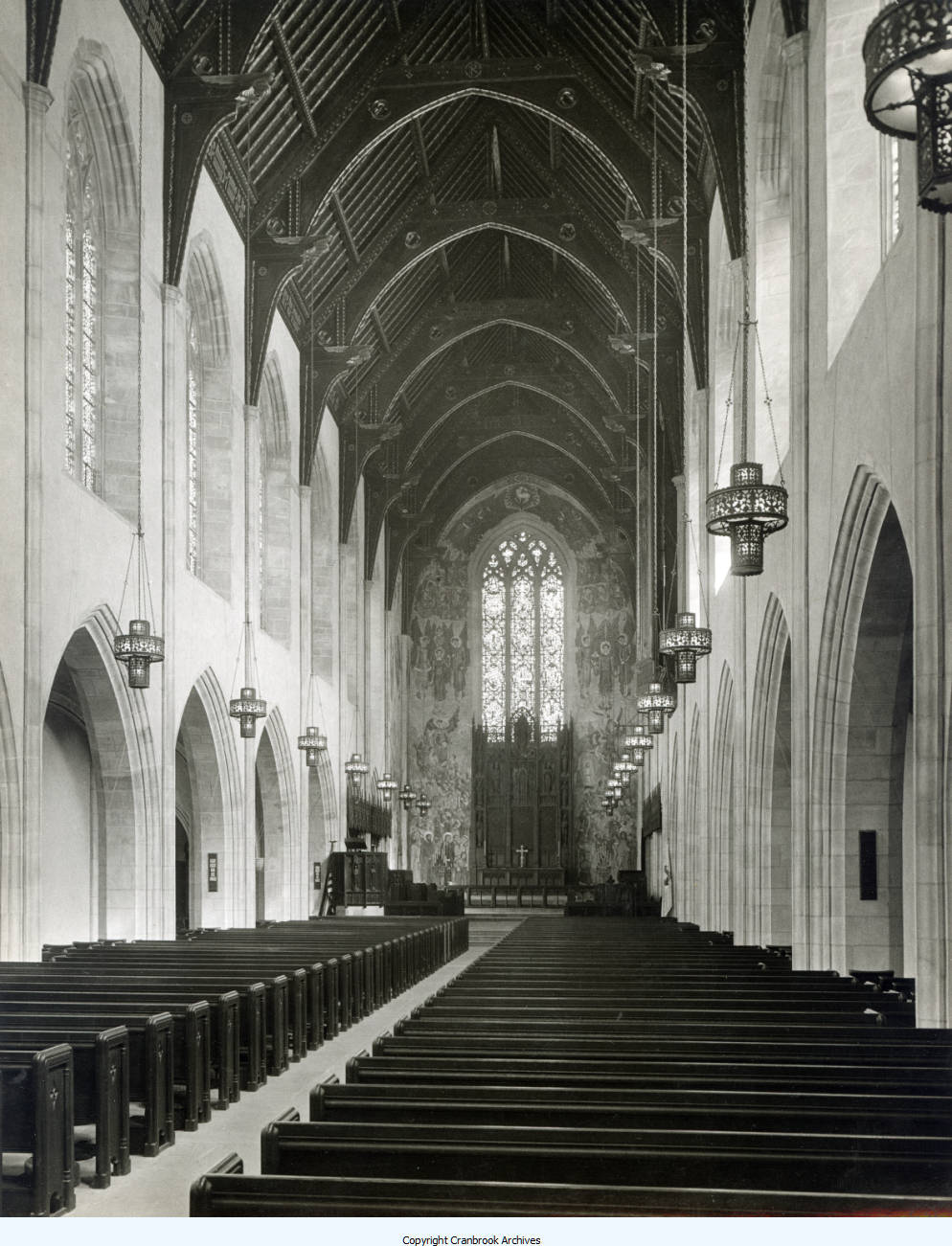
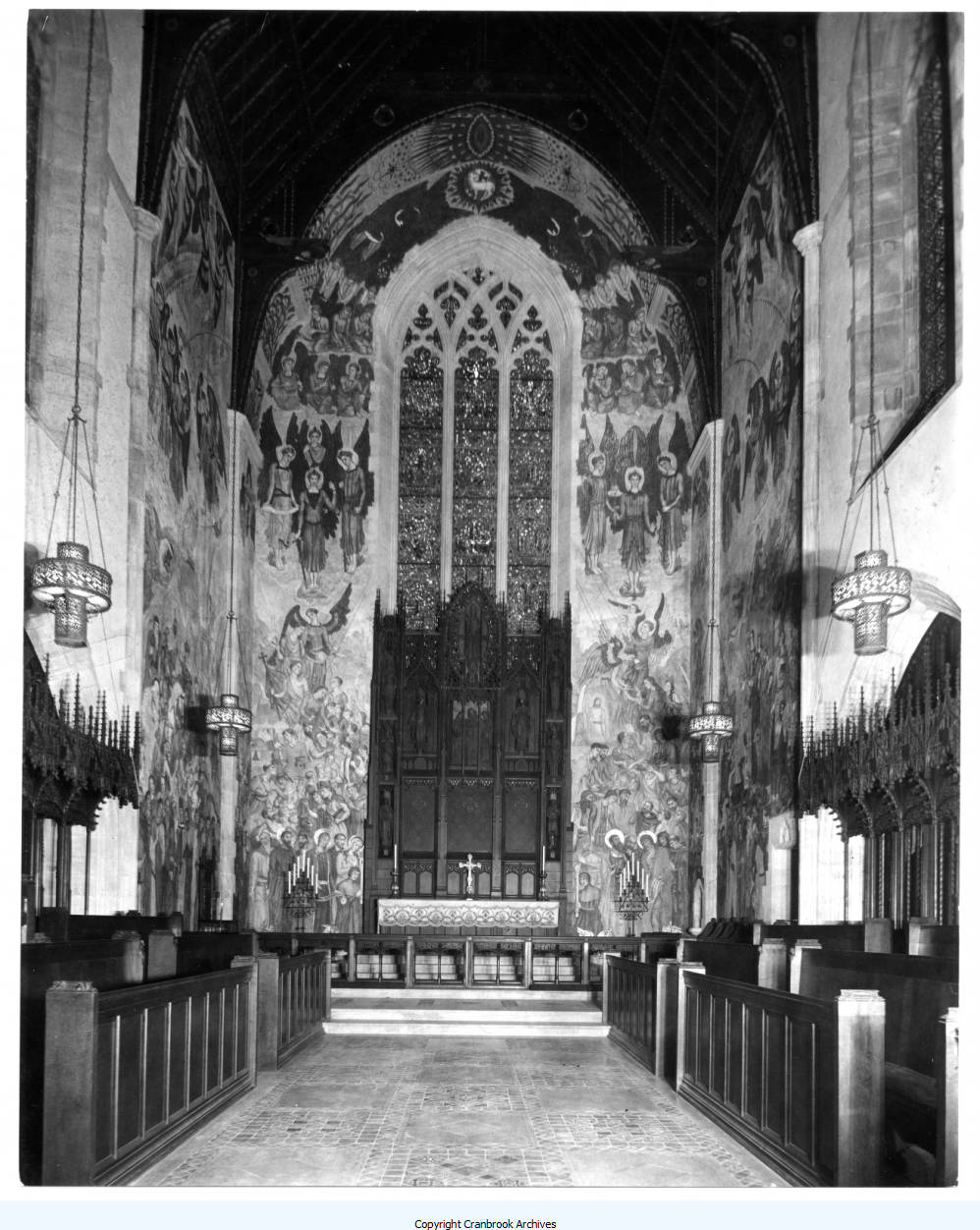
Christ Church Cranbrook Interior. Cranbrook Historic Photograph Collection, Cranbrook Archives.

CCCnave

Christ Church Cranbrook Nave. Cranbrook Historic Photograph Collection, Cranbrook Archives.

After a visit to Christ Church Cranbrook earlier this week, I knew it needed to be highlighted as today’s Photo Friday! George G. Booth conceived Christ Church to be the moral center of the new community which he was building at Cranbrook. The photos show a great overview of the expansiveness of the church and shed some light on the magnitude of the work involved in its design. Each of these elements adds to the overwhelming detail of George Booth’s vision and the care in the design of Christ Church Cranbrook.

The church is Booth’s testament to the Arts and Crafts movement. He carefully acquired and commissioned each work of art to add to the overall wonderment of the church and to pay tribute to those who have devoted their lives toward artistic and altruistic pursuits.  The works of art range from the sterling altar plate to stained glass windows, altar frontals, tilework, woodcarvings, paintings, sculptures, and metalwork, most from noted Arts and Crafts men and women.

These photographs, taken five years after the 1928 dedication of Christ Church Cranbrook show the interior of the church sanctuary and a detail view of the nave of the church. The large fresco flanking the high altar was designed and executed by Katherine McEwen, an old friend of Booth’s, and one of the founding members of the Detroit Society of Arts and Crafts.  From the work of Katherine McEwen to Oscar Bach, Samuel Yellin, and Hildreth Meire, to name a few, Christ Church Cranbrook is an architectural gem which should be experienced in person!

Stefanie Dlugosz, Center for Collections and Research, Collections Fellow


Object in Focus: Travel with Saarinen

Full Trunk

Trunks in storage. Photographer, Gretchen Sawatzki.

While organizing and re-arranging some of the cultural properties late last week, Associate Registrar Gretchen Sawatzki and I came across an exciting surprise. Tucked away in a corner of one of the many storage areas across the Cranbrook Campus, we found a pair of steamer trunks. (Steamer trunks are traveling trunks that were used when steamships and ocean liners were the best way to travel overseas.) Upon further inspection we realized that they had many stickers bearing international hotels and transatlantic ocean liners. Painted on one of the trunks we found the initials ES.

E.S. Initials. Photographer, Gretchen Sawatzki.

E.S. Initials. Photographer, Gretchen Sawatzki.

Trunk interior. Photographer, Gretchen Sawatzki.

With a bit more digging and some research we found that these trunks were purchased by Eliel Saarinen from The J.L. Hudson Company in Detroit shortly after his arrival to Michigan in 1923. These trunks traveled with the Saarinens back to Finland, and to other European and international destinations. Check out the inside of the trunks. This is a wardrobe trunk, which you can see from the drawers and hanging section with hangers still inside! Although I don’t think it is practical for travel today, I imagine all the exciting places it voyaged while accompanying Eliel Saarinen on his journeys.

Stefanie Kae Dlugosz, Collections Fellow, Center for Collections and Research

Photo Friday: A Splash of Color

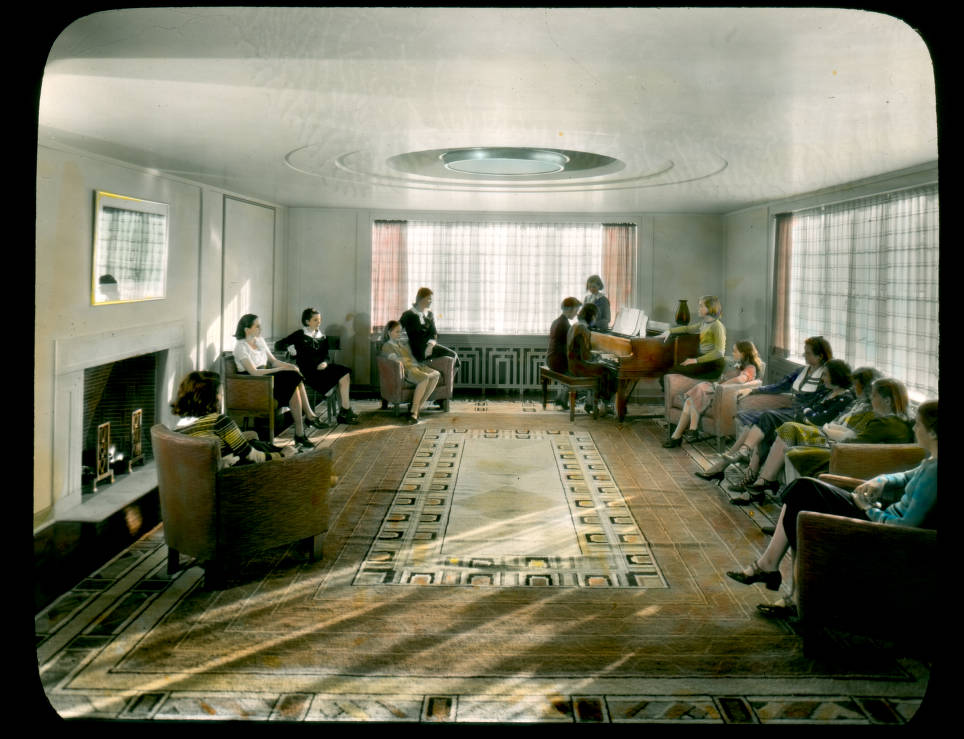
Kingswood School Rose Lounge. Cranbrook Archives

Kingswood School Rose Lounge, The Cranbrook Hand-Colored Lantern Slide Collection. Cranbrook Archives

As the weather here at Cranbrook is more than a little dreary, today’s photo provides a look into a bright and cozy atmosphere perfect for reading, relaxing and being inside. Taken around 1932, it shows a group of students gathered in the lounge of the Kingswood School dormitory (originally known as Reception Room III) listening to two of their peers play the piano. The photograph comes from Cranbrook Archives’ Hand-Colored Lantern Slide Collection. The photographs in this collection were originally black-and-white and were painted with watercolor years later, and not by the original photographer. This jump in time explains the vibrant color choices in the photograph as the painter was not present when the image was originally captured.

The Cranbrook Hand-Colored Lantern Slide Collection contains over 30 images of Cranbrook institutions taken primarily during the 1920s and 1930s. Several of the original black and white images were taken by architectural photographers for inclusion in publications.

Today’s photo was taken by George W. Hance, Cranbrook’s first paid staff photographer (1931-1932). Hance had been commissioned by George Booth as early as 1916 to photograph his art collection and later photographed Cranbrook’s campus and grounds including Kingswood, Cranbrook House (home to George and Ellen Booth) and Thornlea (home to Henry Scripps Booth). Explore more photographs like these on our digital image database or in person at the Archives!

Stefanie Dlugosz, Collections Fellow, Cranbrook Center for Collections and Research


Create a website or blog at WordPress.com