Photo Friday: Posters Tell a Story

The Cranbrook Archives exhibition, Designs of the Times: 100 Years of Posters at Cranbrook, opens this weekend. The exhibition documents events and performances that have enhanced and enriched the Cranbrook community for more than a century. The image below is just one of many that will be on display through March 20th, 2016.

yeoman

Performing Arts poster, 1955

This poster, signed “M.W.” was  designed by Michael Justin Wentworth (Cranbrook School ’56). In addition to designing posters, Wentworth was the art editor for both the Brook and the Crane, and designed the sets for the Ergasterion productions and the scenery for the bi-annual Operettas. He received his MA and MFA from University of Michigan, and his PhD from Harvard where he wrote his dissertation on the artist James Tissot, a lifelong interest.

The posters in the exhibition represent all areas of campus – we hope you come check it out!

Gina Tecos, Archivist

Mapping Cranbrook History

Last night I ran across an article in the Huffington Post about a new blog at the Library of Congress called “Worlds Revealed: Geography and Maps.” Maps have always held a fascination for me, in fact, I am trying to teach my daughter to read a road map instead of using “Siri” or Google Maps to find our way somewhere. This generation just does not understand the value and intrinsic beauty of maps. My friend Maria, for example, is a map-aholic. One time we spent several days of our vacation obsessing over a jigsaw puzzle of a map. For the past 35 years, I have used numerous types of maps and atlases in my personal family history research, and in our work here at the Archives, maps, site plans, topographical maps, landscape architecture maps, and more are used weekly by our campus architects, architecture students, and scholars from across the country.

The staff of the Geography and Map Division at the Library of Congress have recently undertaken the “Dynamic Indexing Project” intended to digitize over 2.5 million map sheets. According to Mike Schoelen, a Post-Graduate GIS Research Fellow, “if the collection were stacked into a single pile, it would tower the Washington Monument by over 300 feet.”

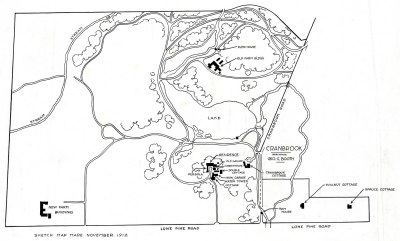
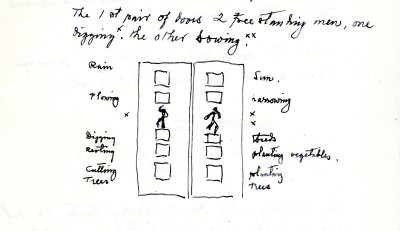
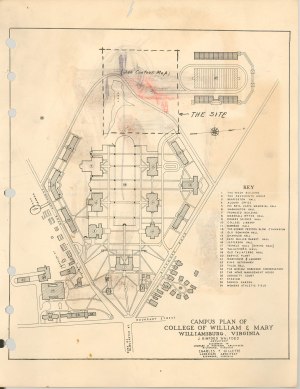
While the map collection at Cranbrook Archives is nowhere near this extensive, we do have an interesting range of maps. Below are some examples.

copper

Map of the Copper Range of Northern Michigan, n.d.

1912.jpg

Sketch Map of Cranbrook, 1912.

hatt532

Sketch, Sedalia, CO, 1919. Robert T. Hatt travel journal.

milles533

Finance Building doors, Harrisburg, PA, 1938. Sketch by Carl Milles.

william_mary

Campus Plan for the College of William and Mary, Competition Packet, 1938.

See Also:

What is a Map?

Maps: Finding Our Place in the World

Maps in the British National Archives

Leslie S. Edwards, Head Archivist

Princess Di’s Dresses in the Archives?

At Cranbrook Archives, much of the work we do—processing manuscripts, arranging documents, scanning photographs—all have a rather similar procedure: repeat.

There is plenty of magnificence to be found in the mundane though. We don’t mind the monotonous details because it’s this repetitive process that wins us the occasional gem. Today, while going through Cranbrook’s historic exhibition brochures printed between the 1940s and 1990s, I came across an image of Princess Diana.

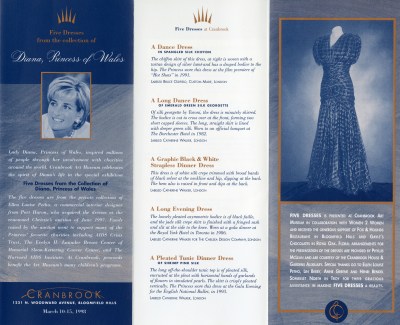
“Five Dresses from the Collection of Diana, Princess of Wales” was an exhibition held at the Cranbrook Art Museum from March 10-15, 1998. The royal dresses were premiered at Cranbrook before becoming part of a worldwide tour that traveled to Russia, Japan, Australia, and England through 1999. This selection from the Princess’s wardrobe was shown in conjunction with the “Art on the Edge of Fashion” exhibition held at Cranbrook at the same time.

2577027

Cranbrook Art Museum exhibition brochure, 1988. Courtesy Cranbrook Archives.

The five dresses were from the private collection of Ellen Louise Petho, a commercial interior designer who, incidentally, was the parent of a Kingswood School alumna. Susan Whitall’s press release in the Detroit News explained how the princess sold dozens of her dresses to benefit AIDs charities just months before her death in 1997. She wrote, “Petho scooped up the five frocks for what became, after Diana’s death, a bargain basement price—less than $100,000.”

The collection included a pleated pink silk tunic dinner dress that Diana wore at the Gala Evening for the English National Ballet and the long jade and black evening dress worn to a dinner at the Royal York Hotel in Toronto in 1986. Four of the five dresses were designed by Catherine Walker and the “piece de resistance,” designed by Bruce Oldfield, was the red dress the princess wore at the premiere of the motion picture “Hot Shots” in 1991.

The Archives are a trove of Cranbrook history. We love rediscovering the hidden materials—it’s what makes the repetition meaningful.

Danae Dracht, Archives Assistant

The Fascinating Notebooks of John Buckberrough

John H. Buckberrough (1874-1955), an immigrant from Ontario, Canada, was a civil engineer for the Cranbrook Foundation from 1927 until he retired in 1955. As described by Henry Scripps Booth:

Buckberrough, a slight man of medium height, started working for Swanson and Booth as that firm’s sole employee two years before Cranbrook officially employed him. That was in the firm’s tiny architectural office located in the below-road-level room of the Ram House section of Brookside’s buildings. … He became one of the first employees of what was known as the Cranbrook Architectural Office in January 1927. … Over the years he was chief surveyor, planned most of the pump rooms, transformer vaults and underground systems, kept copious notes and made detailed plans regarding changes which not only proved increasingly valuable in solving complicated problems but put to shame those who were later supposed to fill his shoes.

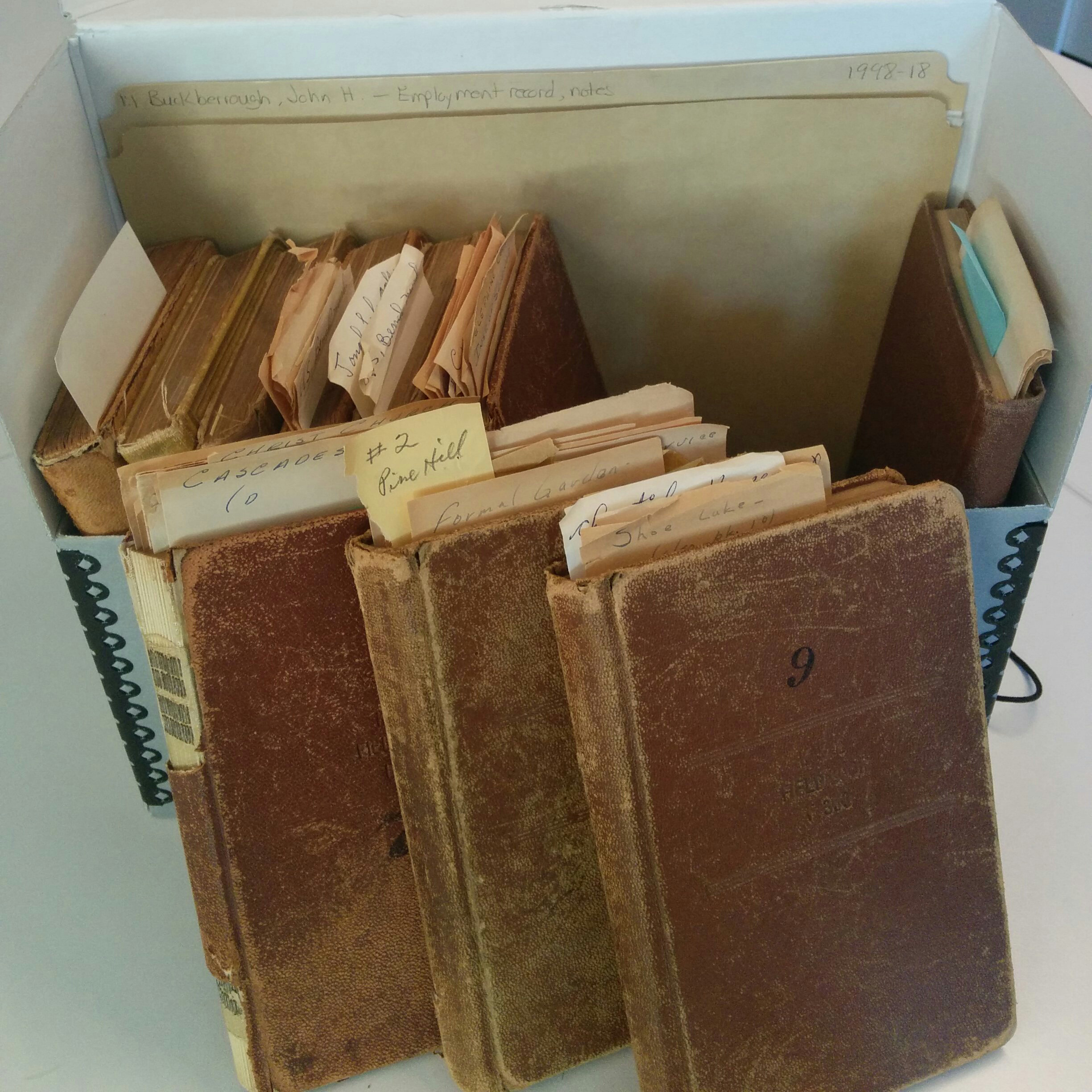
In addition to numerous architectural drawings that bear his signature, Buckberrough’s legacy in the Cranbrook Archives is 10 calfskin engineers’ field books, chock full of drawings and notations, covering 1926-1955.

Courtesy Cranbrook Archives

Courtesy Cranbrook Archives

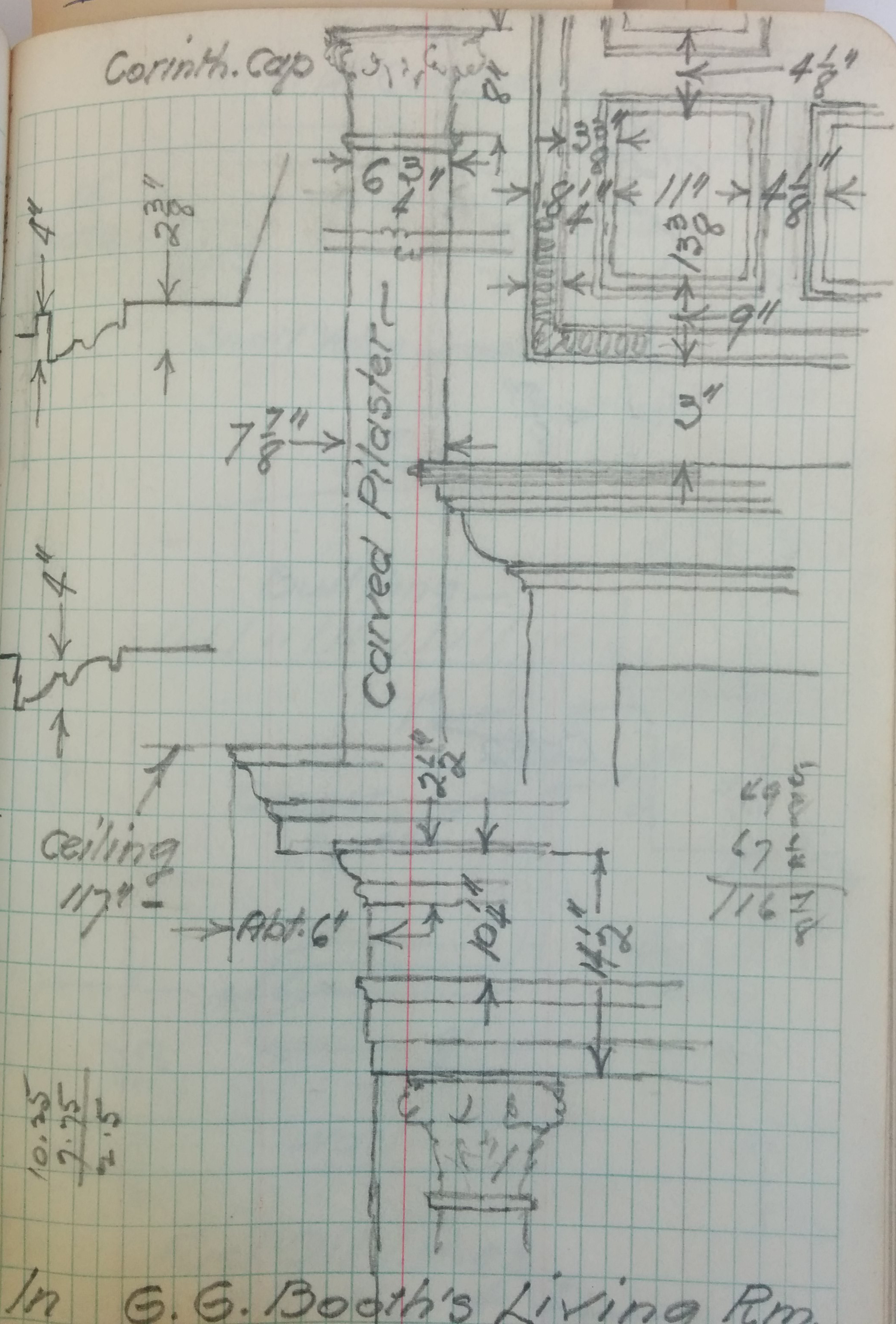
Descriptions and diagrams of Cranbrook property, heating and plumbing data for Cranbrook buildings, data on Cranbrook roads and lakes, drawings of pump houses, sidewalks, lighting layouts and water lines can be found in the notebooks. Here are some examples:

Design of a bridge.

Bridge at Kingswood Lake, 1938.

Column design for fireplace in Cranbrook House living room.

Column design for fireplace in Cranbrook House living room.

The Archives’ staff often finds valuable information in the notebooks, which is used for campus restoration and renovation projects including the recent restoration of Cranbrook School Quad. Little did Buckberrough know how valuable his meticulous note-taking would prove to be. Though a search for information requires a careful page-by-page hunt, it’s a pleasant change from the impersonality of electronic resources.

Cheri Y. Gay, Archivist

To Sit or Not to Sit

Chair design at Cranbrook has always had its own special niche and fascination among artists and patrons alike. George Booth altered chair designs for his own use at Cranbrook House. Eliel Saarinen designed unique chairs for Cranbrook School and Saarinen House. Ralph Rapson conceived of his chair design for what became known as the Rapson Rocker while a student here. Most of us are familiar with the famous chair designers, but what about projects by less famous designers?

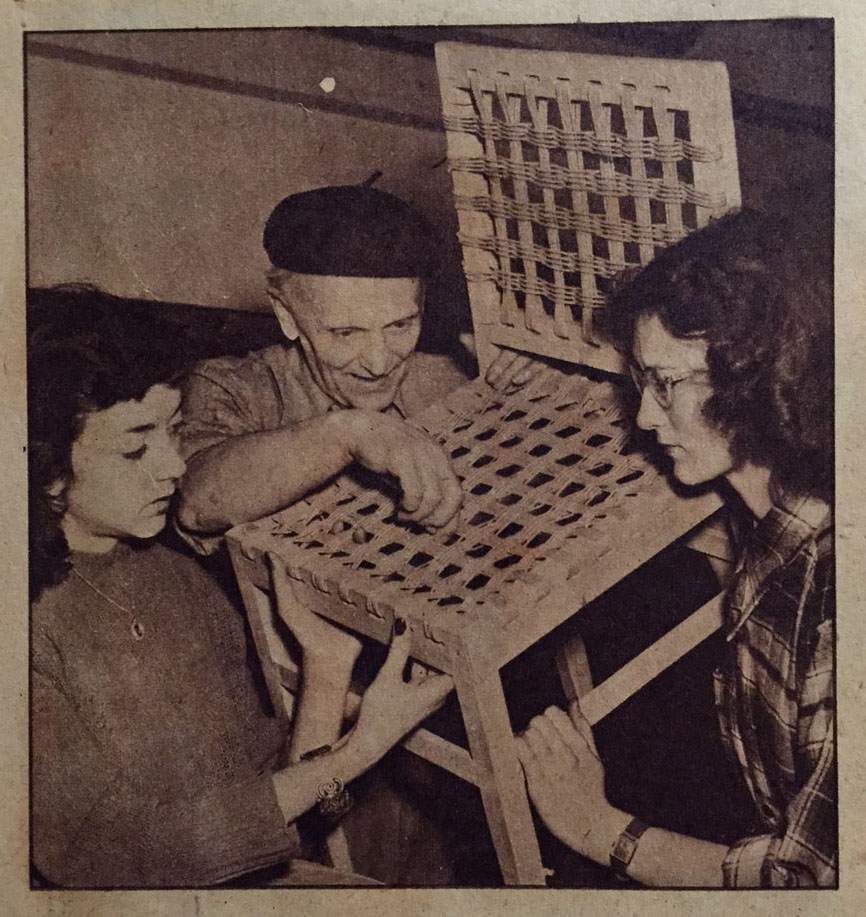
During the war years, Academy of Art students were encouraged to experiment with modern design and new and unusual materials. In 1944, Academy students Gloria Bucerzan and Jean Roberts designed and constructed a chair born of war shortages, by eliminating the use of springs and creating webbing using “non-critical” materials.

Gloria (left) and Jean with woodworking instructor Svend Steen, 1944. Copyright Cranbrook Archives.

Unknown student setting up work for Student Show, 1958. Copyright Cranbrook Archives.

Unknown student setting up work for Student Show, 1958. Copyright Cranbrook Archives.

Art Room, Early Childhood Center at Brookside School, 1997. Chairs designed by Dan Hoffman, Cranbrook Architecture Office. Photograph copyright Christina Capetillo.

Art Room, Early Childhood Center at Brookside School, 1997. Chairs designed by Dan Hoffman, Cranbrook Architecture Office. Photograph copyright Christina Capetillo.

For more on chair design in general, check out the 2012 Year of No-Chair-Design and the Guide to Great Chair Design which features links to chair blogs, the history of chair design, museums, galleries, and books that all feature what else? Chairs!

Leslie S. Edwards, Head Archivist

Photo Friday: Autumn Traditions

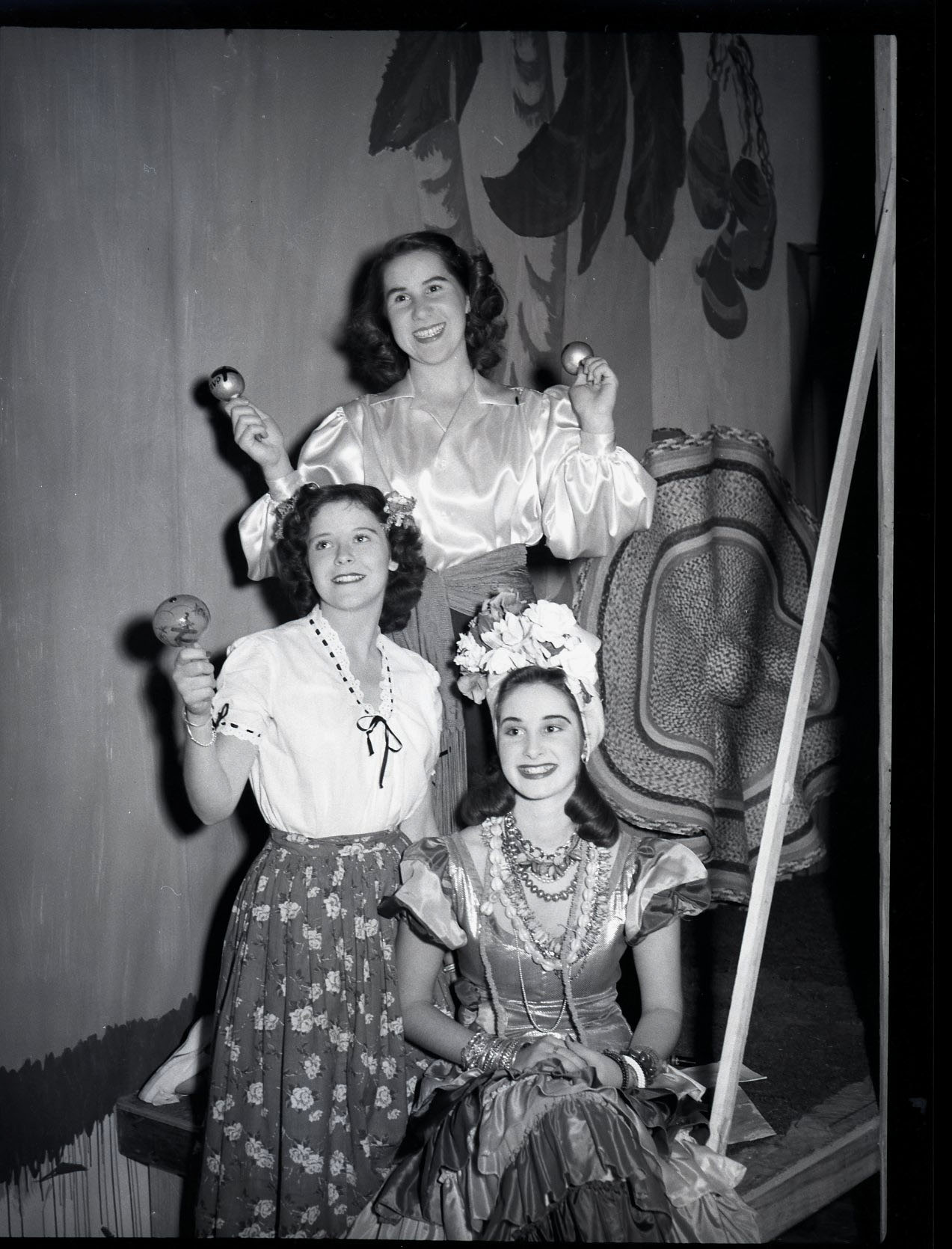
With foliage nearing its peak color, there are many reminders of fall here on campus. The image below is yet another tribute to the season—the Kingswood School Autumn Festival. The first Athletic Association Carnival was held in December, 1932, and was the precursor to the Autumn Festival. By 1934 the annual event had been renamed by Headmistress Margaret Augur.

Themes varied, for example, the 1936 festival was fashioned after “modern” America and included an Apache dance and a skyscraper dance by the juniors with the sidewalks of New York as the background set. The 1939 theme was the Old South and ended with a rousing version of “Dixie” as the grand finale. The November 1939 Clarion reports, “Cranbrook as usual was well represented. After their hectic day of soccer, football, tea-dance, etc., we managed to wear them out, so that it was finally decided that bed at eleven was necessary for all. Thus ended the autumn festival.”

Autumn Festival, Oct 1944.

Autumn Festival, Oct 1944.

The 1944 theme (as shown above) simulated South America. Entertainment included costumed students singing “Down Argentina Way” and “Besame Mucho.” In addition to rumba and samba dancing, the night ended with a lively conga to “Cui Cui .” Wouldn’t it be fun if we could revive this tradition?

Gina Tecos, Archivist

A Treasure Hunt in the Archives

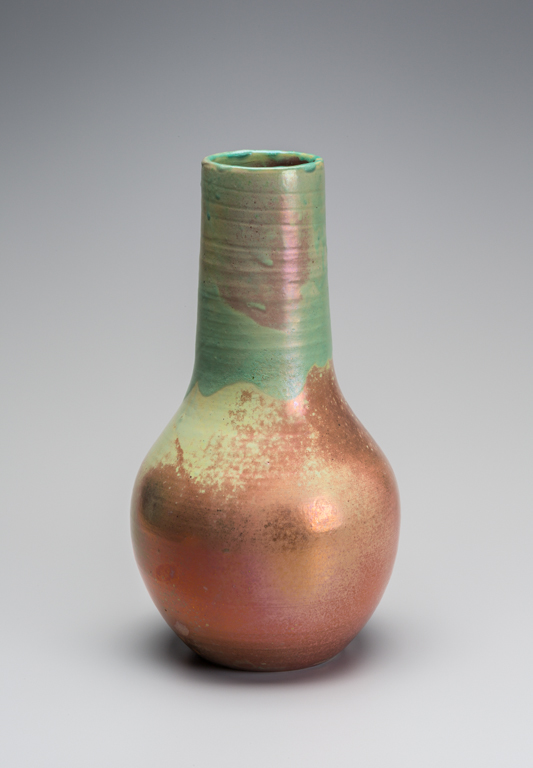
I have had the pleasure of spending much of my time over the last year going through the Cranbrook Archives in search of information about Pewabic Pottery.  This is in preparation for the upcoming exhibition Simple Forms, Stunning Glazes: The Gerald W. McNeely Pewabic Pottery Collection opening December 12. Through the Archives’ amazing resources, including inventories, architectural drawings, correspondence, receipts, historic photographs, and even meeting notes from the founding of Cranbrook School, one of the most awesome discoveries was regarding one of the Pewabic Pottery vases in our collection.

Cranbrook Educational Community Collection, CEC 276 Photographers: Tim Thayer and R. H. Hensleigh

Cranbrook Educational Community Collection, CEC 276
Photographers: Tim Thayer and R. H. Hensleigh

Through inventories we can trace the placement of this vase from during its life in Cranbrook House. It was located in the Living Room in 1921, and by 1933 had been relocated to the Sunset Room. In 1937, George Booth notes the work by its size and a brief description, “14 inch vase- luster- Pewabic.” Cranbrook has 15 Pewabic works purchased during Booth’s lifetime which now reside between the collections of the Art Museum and the Cranbrook Educational Community. While I am still working to place the pieces of the puzzle together to see if we can do this for other work, it may not be possible as some of the receipts and notations are much more cryptic including only “Pewabic Vase” with no dimensions, or description.

It’s treasure hunts like these that make the Archives such a great place to spend my time as you never know what you might find and where it will take you!

Stefanie Dlugosz-Acton, Collections Fellow, Center for Collections and Research

Welcoming Our Two Archives Assistants!

Prior to volunteering at Cranbrook Archives, I had been studying history and had become aware of the importance of primary sources for historiography, and the value of preserving heritage for the wider community. I began volunteering in 2012 which helped me decide to pursue a career in archives, and I began studying for the MA Archive Administration with Aberystwyth University in Wales (distance learning) in 2013. As part of a university assignment, I processed the HUB (Horizons-Upward Bound) Records, and am currently researching George Gough Booth’s interest in tapestries, which he purchased and commissioned for Cranbrook institutions and family members. I am interested in Booth’s involvement in the Arts and Crafts Movement, and the way in which the movement used medieval themes and techniques as a response to the social experience of the time. The Edgewater Looms, Herter Looms, and Morris & Co. tapestries are an ideal focus for exploring these ideas. I am looking forward to learning more about scanning/digitisation/digital preservation/cataloguing. The university modules emphasize access as the flip-side of preservation. I tend to have the latter foremost in my mind, so it will be great to see how the archive is used.

Laura MacNewman, Archives Assistant

Correspondence, George Gough Booth Papers, box 16, folder 11.

Correspondence, George Gough Booth Papers, box 16, folder 11.

As a graduate student mid-way through the Library and Information Science master’s program at Wayne State University, I’ve been given a healthy dose of libraries, archives, and the world of information over the past year. My interest in archives administration began while I was volunteering at the Cranbrook Archives last fall (2014). Here, I was introduced to the process of digitizing manuscripts, taking inventory of donated artist materials, and sifting through photographic negatives for future digital preservation and storage. I’ve also been working on the Cranbrook Archives’ Oral History Project. Much of my work at Cranbrook corresponds to my studies at Wayne State. In fact, this past week Head Archivist Leslie Edwards spoke about Cranbrook Archives’ oral history project in my oral histories course. As a new employee, I am keen to expand the number of digital images available online, help preserve the negative photograph collection, and understand what it really means to be an archivist.

Danae Dracht, Archives Assistant

From left: Carleton McClain, Henry S. Booth and Margaret Russell interviewing former Cranbrook School Headmaster, Harry Hoey at his home, 1964.

From left: Carleton McClain, Henry S. Booth and Margaret Russell interviewing former Cranbrook School Headmaster, Harry Hoey at his home, 1964.

Both Laura and Danae are working for us as part-time Archives Assistants, an entry-level archival position for graduate students. They will be working on a variety of projects during the coming year while gaining experience to propel them in their careers. Look for future blog posts from them in the upcoming months!

Alphabet Soup

This morning I was looking for an image from our collection to relate to the Cranbrook Art Museum’s newest exhibition “Read Image, See Text” to post on our Facebook page. I would hazard a guess to say that most, if not all, archivists love books almost as much as historic documents.  Though archives usually do not seek to collect books, and certainly are not lending libraries, books can often comprise part of a collection. So my search for a single image led me to think about the range of books we have in our collection.

The first was written by William O. Stevens, nearly 25 years before he became the first headmaster of Cranbrook School.  After receiving his doctorate at Yale, Stevens taught English at the U.S. Naval Academy for 21 years. The book, which satirized early 20th century Annapolis using twenty-six limericks and illustrations, became an instant success. Find out why it also became controversial.

William O. Stevens, An Annapolis Alphabet: Pictures and Limericks (Baltimore: The Lord Baltimore Press, 1906).

William O. Stevens, An Annapolis Alphabet: Pictures and Limericks (Baltimore: The Lord Baltimore Press, 1906).

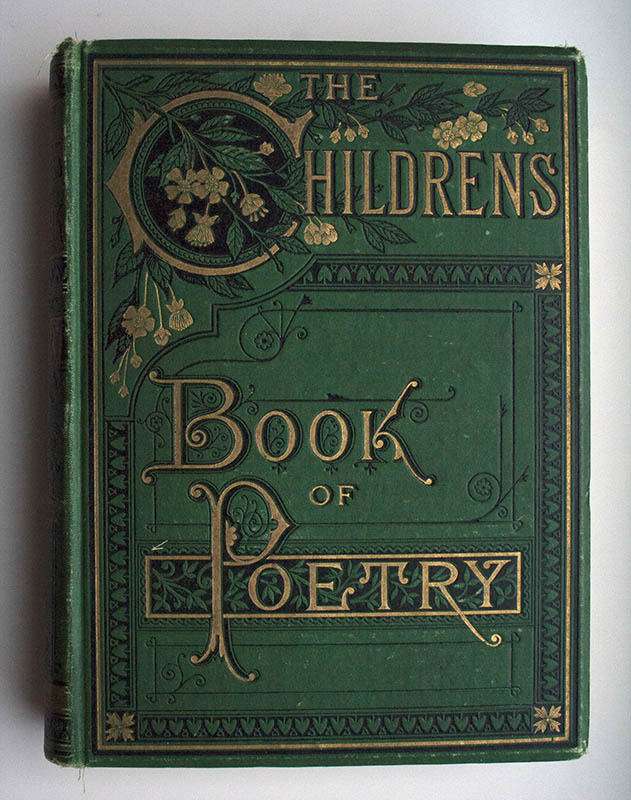
The first edition poetry book below illustrates beautiful text and the tooled binding of the times. It is inscribed: “Ellen W. Scripps, a Christmas present from her Father [James E. Scripps], Detroit 1879.” The editor of the compilation, Henry T. Coates joined the publishing firm of Davis & Porter in 1966; Davis retired the following year and the company became Porter & Coates which became famous for creating Home and Garden magazine and publishing the Horatio Alger Junior titles.

Henry T. Coates (ed.), The Children’s Book of Poetry: carefully selected from the works of the best and most popular writers for children. (Philadelphia: Porter & Coates, 1879).

Henry T. Coates (ed.), The Children’s Book of Poetry: carefully selected from the works of the best and most popular writers for children. (Philadelphia: Porter & Coates, 1879).

Gustaf Strengell, the father of Cranbrook’s textile designer Marianne Strengell, composed and designed this handwritten analysis of the Swedish poet’s writings as part of his graduate thesis. Franz Michael Franzén’s (1772-1847) work expressed the romantic conception of nature as both idyllic and divine, and was influential in the development of Finnish poetry.

Gustaf Strengell., Franzén. (Helsinki, unpublished, 1898)

Gustaf Strengell, Franzén. (Helsinki, unpublished, 1898)

For a really great blog post about related collections, see: Graphic Arts Collection, Rare Books and Special Collections, Princeton University.

Leslie S. Edwards, Head Archivist

Bouquets of Sharpened Pencils

It’s that magical time of year again, daylight is a little bit shorter and parents begin to try and return their kids to a bedtime schedule –it’s back to school time. For some, this is a glorious time of year – a new beginning, the changing leaves as Fall ushers in. September always reminds me of a line from the movie, “You’ve Got Mail.” Joe Fox says to Kathleen Kelly in a chat room, “Don’t you love New York in the Fall? It makes me want to buy school supplies. I would send you a bouquet of newly-sharpened pencils if I knew your name and address.”

Here at The Archives we often receive email and calls from alumni. I recently received an inquiry from a Kingswood alum who shared some amazing stories with me and also piqued my interest in student organizations here at Cranbrook.

From the first days at Cranbrook and Kingswood schools, clubs and organizations were an integral part of student life. In addition to student newspapers, literary publications, and government—students participated in riding clubs, glee club, bridge club, and the stamp club. In 1938, the Areopagus club saw its membership swell. According to The Brook, students could be found “arguing over some minor question that momentarily assumed importance.”

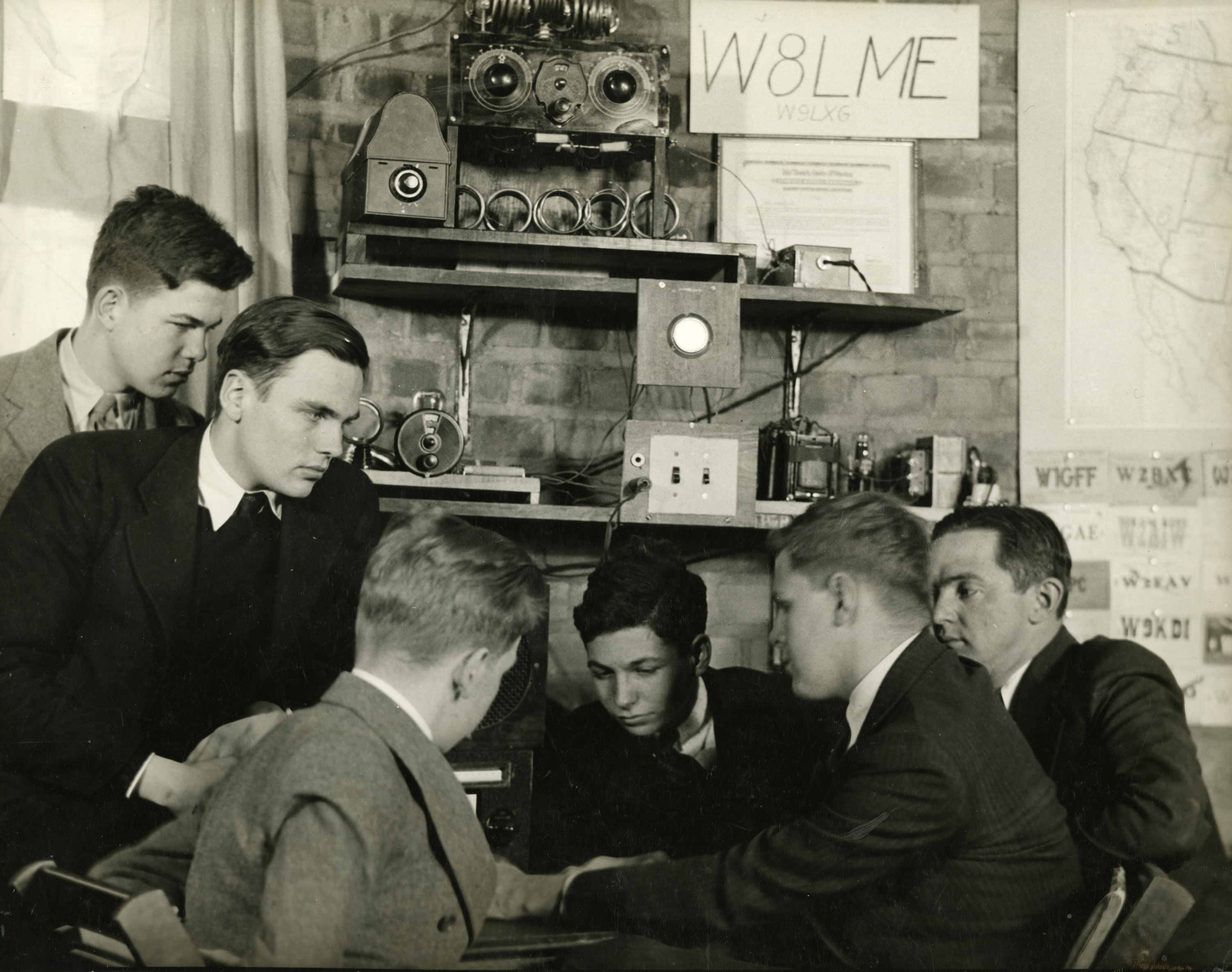
Cranbrook School Radio Club, 1935. Photographer, Richard G. Askew.

Cranbrook School Radio Club, 1935. Photographer, Richard G. Askew.

Several of the earliest clubs and organizations still exist at Cranbrook schools today, including the Radio Club and Ergasterion—an organization representing theatre productions. Other clubs continue to unite alumni, such as “The Trifling Monographs of Birmingham, Michigan,” which had its first meeting in September 1971. The five founding members were Susan Rice (a 5th grade teacher at Brookside School); Lucy Chase Williams, then a Kingswood junior; John Gerard, then a Cranbrook junior; and Michael A. Cooper and Dion Kerr, Cranbrook sophomores.

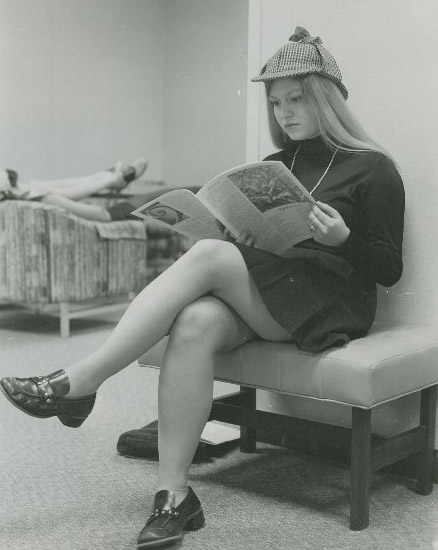
The club was a scion of the Baker Street Irregulars (BSI)—an organization of Sherlock Holmes enthusiasts founded in New York in 1932. The BSI is considered the preeminent Sherlockian group in the U.S. and has published the Baker Street Journal since 1946. A local member of the BSI was a mentor to The Trifling Monographs (TTM) and regularly quizzed the members. The group took several field trips and in 1972 traveled to Canada to see the Windsor Light Opera production of the musical, “Baker Street.” In 1973, when Williams matriculated to Yale, the TTM became a corresponding scion, and remains so to this day.
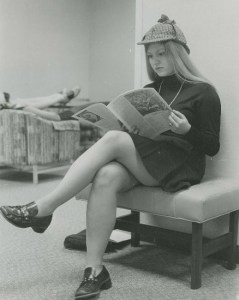
KS student Lucy Chase Williams, head of the TTM, reads an issue of the Clarion in the Kingswood School Common Room, 1973. Photograph courtesy of Lucy Chase Williams.

KS student Lucy Chase Williams, head of the TTM, reads an issue of The Clarion in the Kingswood School Common Room, 1973. Photograph courtesy of Lucy Chase Williams.

As students head back to school after the Labor Day weekend, they will have much to look forward to above and beyond their studies. Today the upper school boasts nearly 40 clubs and organizations, including Anime, Beekeeping, Wilderness Expedition, Chamber Music, and Random Acts of Kindness.

Gina Tecos, Archivist

Create a website or blog at WordPress.com