A Michigan Mural

Metro Detroiters, out-of-town visitors, and architectural aficionados worldwide have long admired the Penobscot Building in Detroit’s Financial District. Like its close neighbor, the Guardian Building, and the Fisher Building further north in Midtown, it is one of the city’s finest examples of art deco architecture and one of the iconic structures that still make up Detroit’s skyline today. Designed by Wirt C. Rowland of Smith, Hinchman, & Grylls, when its 47 stories were built in 1928, it was the tallest building in the city and the fourth tallest in the nation.

The Penobscot, on the National Register of Historic Places, is perhaps best known architecturally for its tiered upper seventeen floors and the exterior ornament by sculptor Corrado Parducci, whose work can be seen on many other Detroit buildings. It’s also known to locals for the red-lit globe at the top (originally designed as an aviation beacon), the legendary Caucus Club (Barbara Streisand reportedly launched her singing career here), or the famed roof observation deck which offered an excellent panorama of the city.

But, what about the interior of the Penobscot? Well it just so happens there’s a Cranbrook connection!

penob-1

The original bank lobby. Courtesy Detroit Free Press Archives.

The Guardian Detroit Group was the first tenant of the two-story bank hall at 635 Griswold St. before they had their own skyscraper commissioned just a block away. A later occupant, Detroit City Bank, opened in the same space in February 1949. When they did, adorning one wall was a mural painted by Cranbrook Academy of Art graduate and Head of Kingswood School Art Department (1940-1956), Clifford B. West. Known as the “Mural of Michigan” the twenty-six-foot painting depicts scenes representing state commerce and industry. West, who studied under Zoltan Sepeshy, and with fellow muralist David Fredenthal, had already completed a bank mural in Alamosa, Colorado, as well as Detroit-area murals in the Rackham Building, Stockholm Restaurant, and Fox & Hounds Restaurant.

Following a meticulous process that involved a series of sketches at different scales, cartoons plotted to a numbered grid and traced on the wall, and painting in two steps (large blocks of color followed by detail work), the scenes were applied in casein tempera on canvas cemented to the wall. Joining in this process was West’s wife and fellow artist, Joy Griffin West, and several academy students. Fortuitously, each stage of work was captured in a series of photographs by Cranbrook photographer, Harvey Croze.

This slideshow requires JavaScript.

Upon completion of the mural, West mounted an exhibit at Cranbrook Art Museum titled, Progress of a Mural in April 1949, detailing his process for the Penobscot mural, and featuring many of the preliminary sketches and cartoons.

It’s largely unknown whether the Penobscot mural exists today, since a drop ceiling was installed many years ago, completely obscuring West’s creation.

Deborah Rice, Head Archivist
Cranbrook’s Crazy Clubs

Most high schools have a lot of clubs in order to foster the interests of their students. Since opening in 1927, Cranbrook School for Boys has had its fair share of extracurricular activities. There has been a Biology Club, a Pre-Med Club, and a club for the boys that had earned their Varsity letter (called the “C” Club). But, there have also been some clubs that were not so traditional.

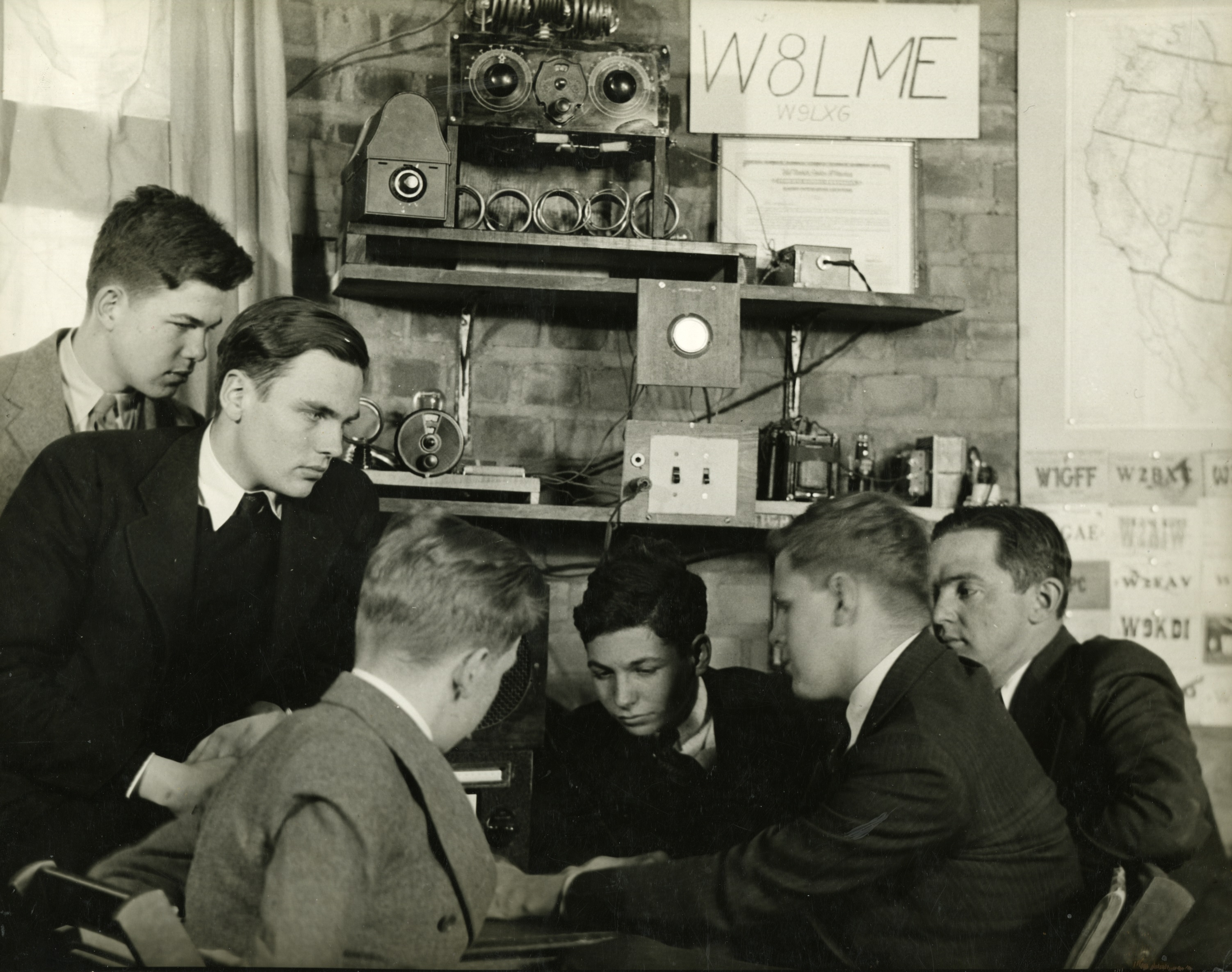
Amateur radio, also known as ham radio, was quite popular at one time. The boys at Cranbrook started their own Radio Club with the help of Science teacher William Schultz, Jr.

Boys sit around a ham radio.

Radio Club members listening to the radio, July 1935. You can see the station’s call sign on the wall: W8LME. Photograph by Harvey Croze. Courtesy Cranbrook Archives.

Then there was the Model Club, which was for boys who enjoyed making models, judging from the picture, mostly of airplanes.

A group of boys standing behind a table of model airplanes

The Model Club, 1952. From left: Faculty Advisor Richard Gregg, David Higbie, Don Young, David Morris, President Richard Gielow, Adams McHenry, Don Hart, Pete Dawkins, Dahmen Brown, Jerry Phillips. Photograph by Harvey Croze. Courtesy Cranbrook Archives.

A Drama Club is not an unusual thing to have at a school, but Cranbrook’s club has an interesting name: Ergasterion Club. Ergasterion is the Greek name for the workshop of craftsman.

Group of boys sitting on a stage.

The Ergasterion “Erg” Club is Cranbrook School’s dramatic society, April 1960. First row, left to right: Louis Beer, Templin Licklider, Jr.; second row: Rick Strong, Bill MacLachlan, Henry Weil, Mike Hilder, Phil Weisenbarger, Richard Foster; third row: Gregg Carr, Boris Nicoloff, Bill Thompson, George Roth, Mitchell Grayson. Photograph by Harvey Croze. Courtesy Cranbrook Archives.

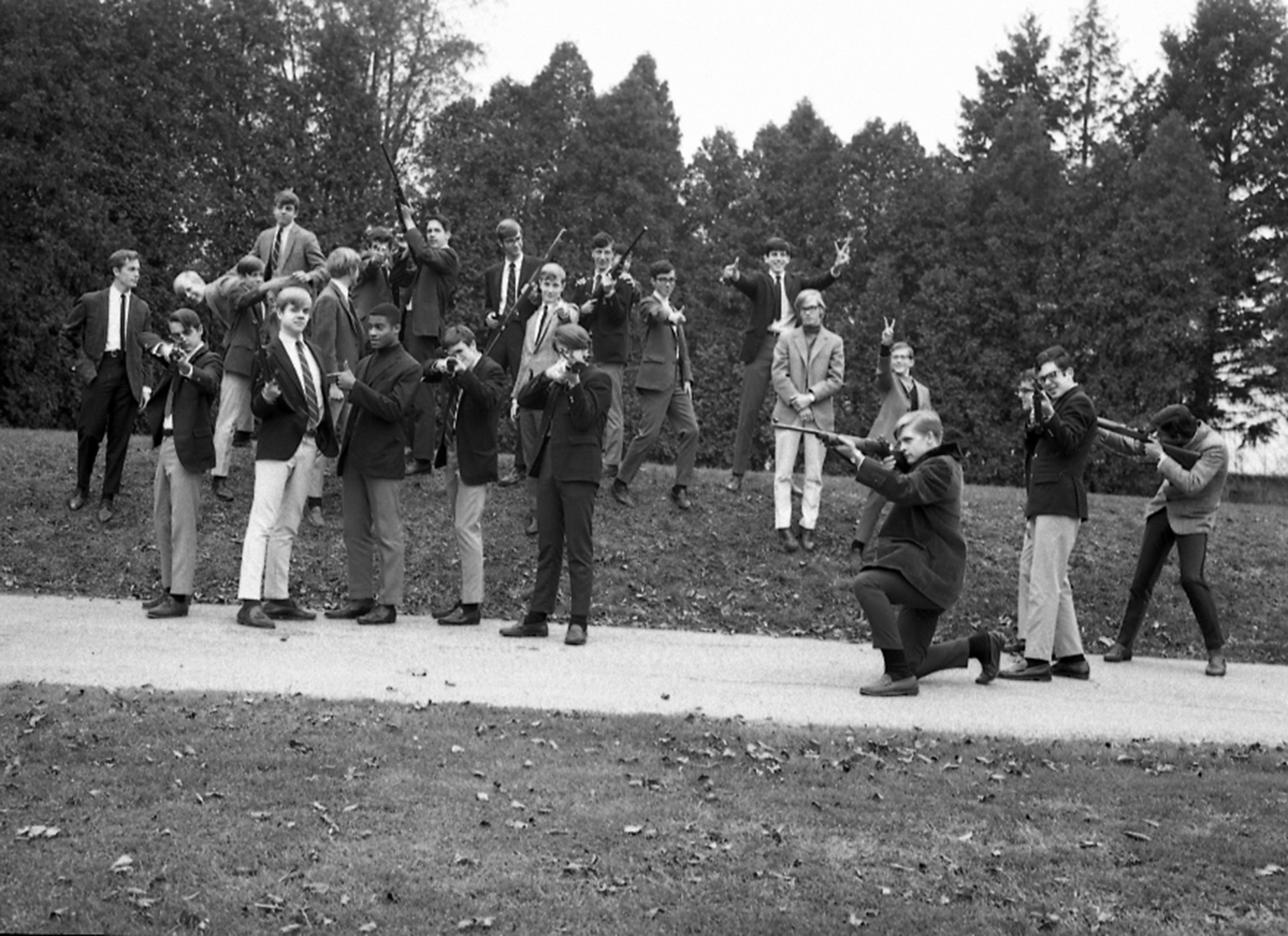
I guess a Rifle Club is not that unusual either, but their yearbook photo was just too great not to share!

A group of boys posing with rifles on a hill

Cranbrook Rifle Club, November 1968. Photograph by Harvey Croze. Courtesy Cranbrook Archives.

In the great state of Michigan, we have a lot of lakes. That is what must have inspired the creation of the SCUBA Club.

Group of boys in SCUBA gear standing in a fountain. of

Cranbrook School SCUBA Club, 1968. From left Thomas O’Hara 69′, Robert O’Hara 70′, Edward Soudeck (language instructor), Thomas Strickland 70′, Marlin Atkinson 70′, Donald Rosiello 70′, and Richard Genthe 70′. Photograph by Harvey Croze. Courtesy Cranbrook Archives.

Today, Cranbrook Schools (co-ed since 1984) continues to have a wide variety of extracurriculars; just ask the members of “The Beyond Earth Club (Space Club)” or the Namtenga Club.

– Leslie Mio, Associate Registrar

From Concept to Cover

The General Motors Technical Center is one of Eero Saarinen’s most acclaimed projects. Dedicated in 1956, the “Corporate Cranbrook” was years in development, starting with initial designs by Eliel Saarinen and J. Robert F. Swanson (with Eero consulting) in 1945.

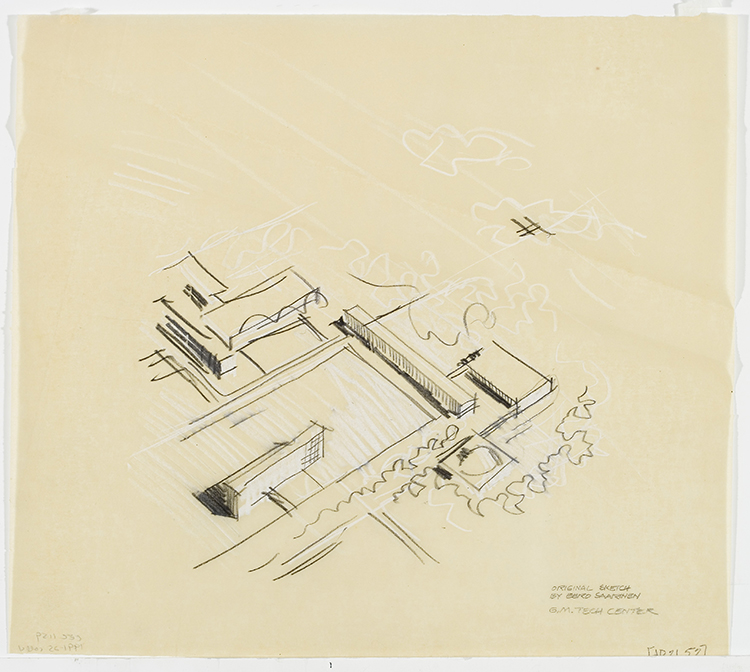
After a hiatus in the project by GM and reorganization of the Saarinen Swanson office, Eero completely redesigned the scheme in late 1948. The new design is high modernism at its finest: clean lines, experimental materials, and a lot of flat roofs. We can see Eero’s boxy proposal here, a treasured sketch from Cranbrook Archives:

Eero Saarinen GM Tech Center Sketch Small ad21-12

Eero Saarinen sketch of General Motors Technical Center, Warren, Michigan, 1949. Copyright Cranbrook Archives.

As the son of a world-famous architect building for one of America’s greatest companies, the project drew lots of attention well before it opened. Architectural Forum, in fact, featured the Tech Center as its cover story in July 1949. But what to show of the yet-constructed campus?

Glen Paulsen Eero Saarinen GM Tech Center Rendering ad21-12

Glen Paulsen drawing depicting Eero Saarinen’s proposed General Motors Technical Center, Saarinen Saarinen and Associates, 1949. Copyright Cranbrook Archives.

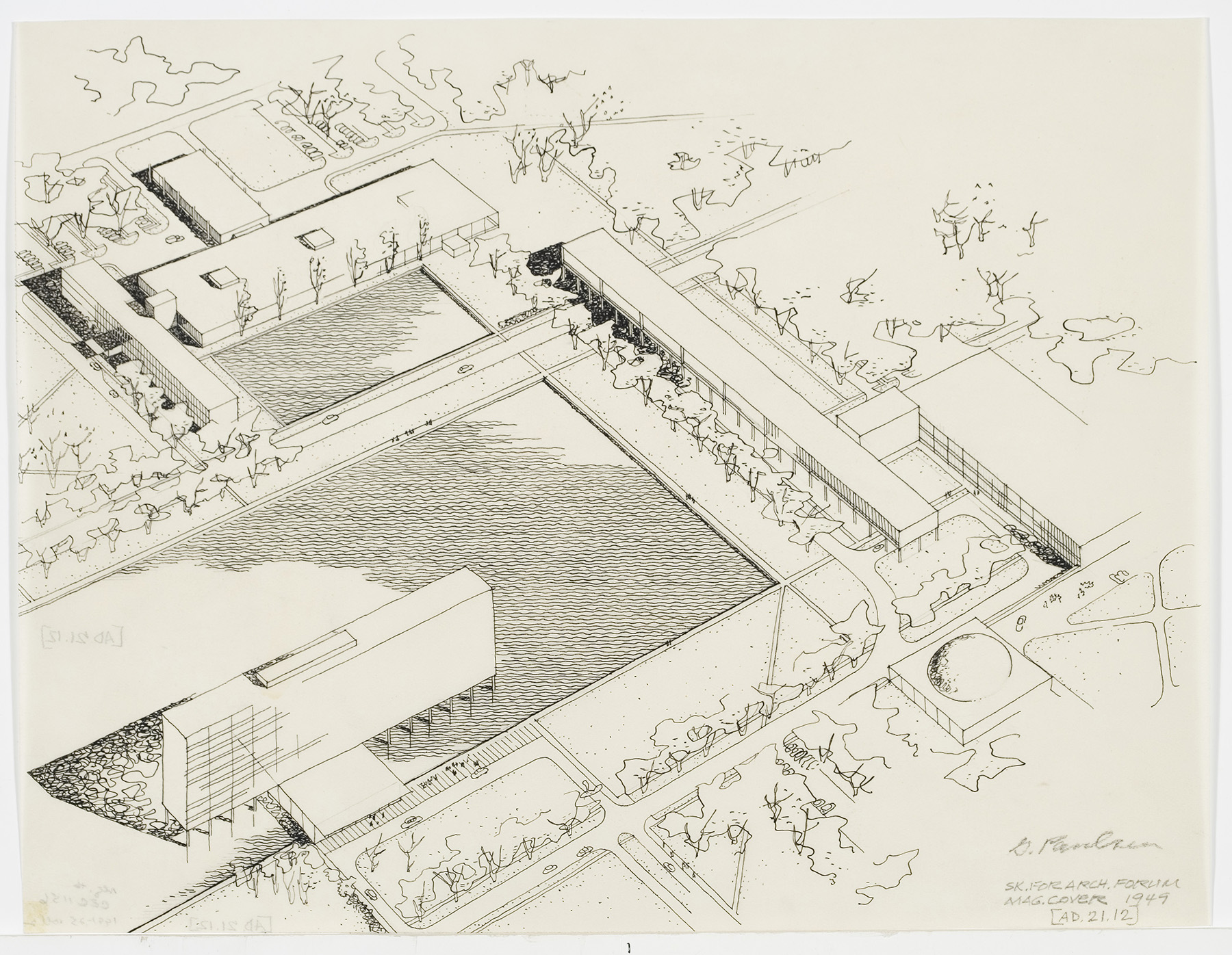
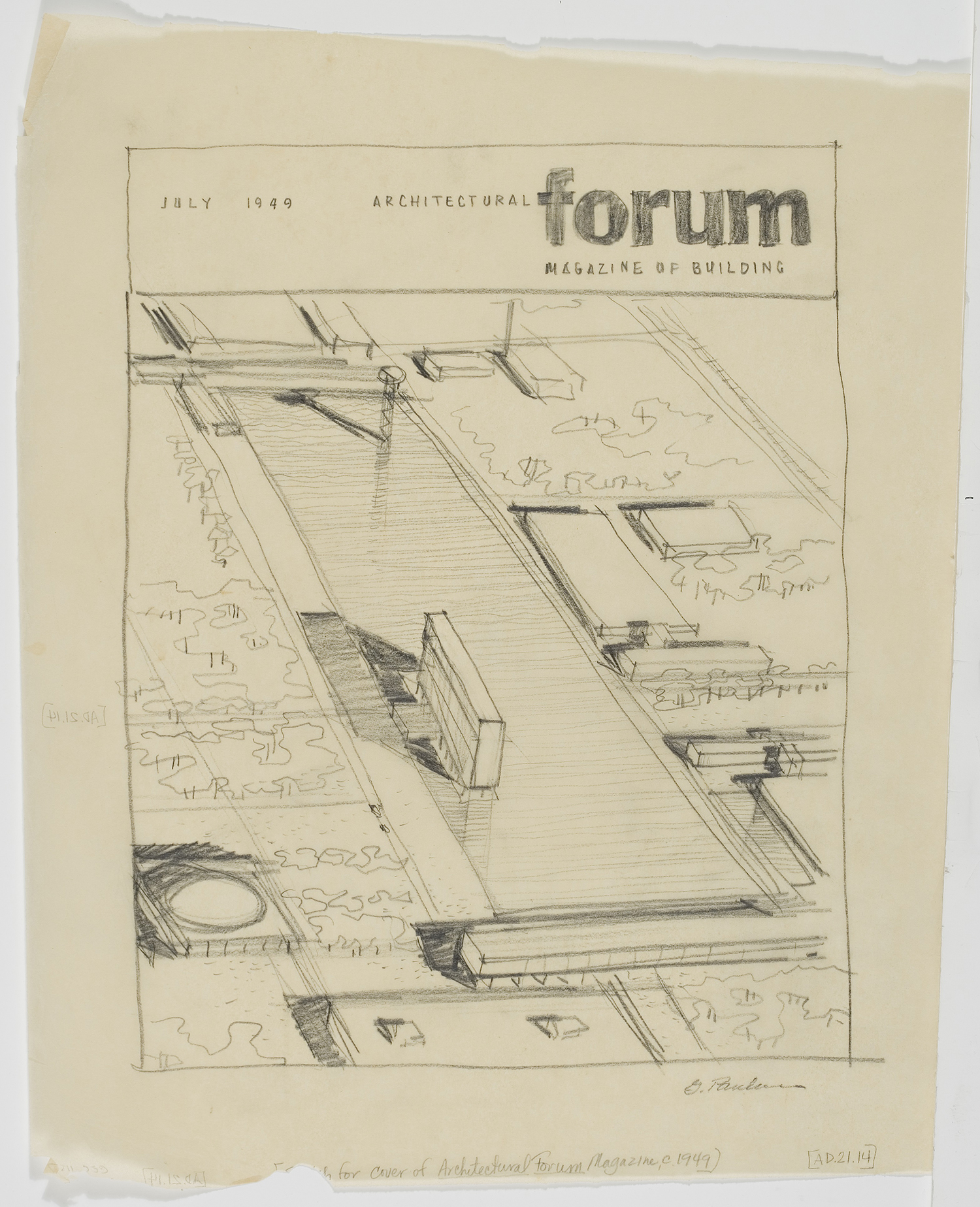
Eero turned to a talented young architect in his office, Glen Paulsen, to delineate the Tech Center for the magazine cover. Paulsen was known for his complex and sophisticated architectural renderings, and had worked for various firms as a renderer before coming to Saarinen’s office in 1949 as a design architect.  He sketched out several different options for Forum , and my favorite includes the entire layout of the cover, not just the buildings:

Arch Forum July 1949 Glen Paulsen rendering Eero Saarinen ad21-14

Concept art for cover of Architectural Forum by Glen Paulsen, depicting Eero Saarinen’s proposed General Motors Technical Center, Saarinen Saarinen and Associates, 1949. Copyright Cranbrook Archives.

Finally, in June 1949, the magazine hit the presses with a crisp, color drawing by Glen Paulsen depicting Eero’s General Motors Tech Center.

Architectural Forum July 1949 Glen Paulsen cover for Eero Saarinen

Architectural Forum 91, no. 1 (July 1949). Cover art by Glen Paulsen of Saarinen Saarinen and Associates. Courtesy of Cranbrook Academy of Art Library.

—Kevin Adkisson, Curatorial Associate

Of Provenance and Harmony

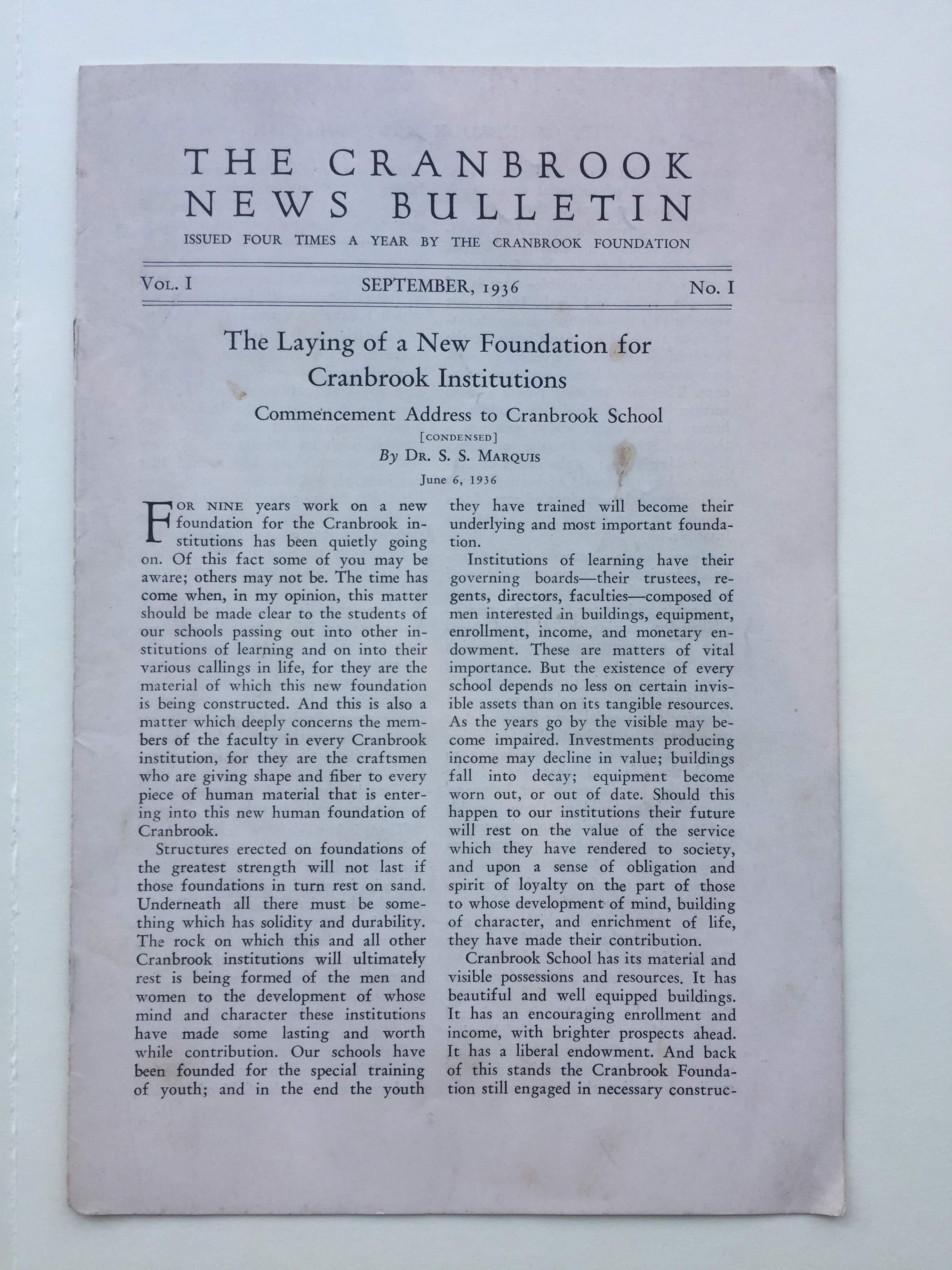
This is a story about the mistaken attribution of a quote, as told through the lens of archival provenance, that further deepened my own understanding and appreciation of the Cranbrook story. A researcher, referring to Cranbrook’s founder George Booth, once asked, “How did he do it? All of this! How do you motivate the finest artisans and craftsmen to come and help build a center for art and education?” It is a marvelous question, and surely one in which each inquirer may draw a different conclusion. When I get similar questions about how Cranbrook came to be, I always turn first to the words of George G. Booth himself, whether they be formalized in a trust document or business letter, crafted for a speech, or in the informal fluidity of a personal letter. Booth always acknowledged, in both his words and artistic compositions, the contributions of many, both contemporaneous and historic, in the building of Cranbrook . The image below shows a document included in the folders containing ‘Talks, 1902-1942’ in the Biographical series of the George G. Booth Papers. At some point during their administrative or archival custody, the talks were enumerated and this one is identified as number 21 with a circa date of 1936. Naturally, I have wondered exactly when and where he gave this talk.

1981-01 1-20 001

The Laying of a New Foundation for Cranbrook Institutions, a document included among the talks of George Gough Booth. Cranbrook Archives.

In my work at Cranbrook Archives, I have observed many times that the answers we find depend upon the phrasing or precision of the questions we ask. I have also learned to remain attentive to questions when I think I have exhausted the search, as oftentimes I have found an answer when I am no longer looking for it. I recently quoted from this talk to emphasize the trajectory from vision and ideal, through words, drawings, and activity to a tangible object or building:

“… the Cranbrook Foundation, dealing with things material and visible, rests in turn upon another foundation made up of things invisible – that is, of thought, vision, and ideals… No product of human hands exists which was not a thought before it became a thing.”

Shortly thereafter, I was researching two reference requests that took me into the Cranbrook series of the Samuel Simpson Marquis Papers, wherein I discovered the original version of the talk with pencil edits to truncate it for publication in The Cranbrook News Bulletin, September 1936. It was identified as a Commencement Address to Cranbrook School by Dr. S. S. Marquis on June 6, 1936. Along with it was a typescript version, the same as the one in Booth’s papers, and a letter from the Executive Secretary of the Cranbrook Foundation, William A. Frayer, which tells us that Marquis had encouraged Frayer to digest the talk for its publication.

1983-07 2-13 004

The Cranbrook News Bulletin, Vol. I, No. I, September 1936. Cranbrook Archives.

Although I had found my quote in a talk among those of George Booth, given to the Archives as part of his papers, here was definitive proof that it was actually part of an address given by Marquis! This discovery highlights the important, but sometimes misleading, concept of provenance of an archival collection, and how archivists continually refine understanding of their collections, even long after they are opened to researchers. In an archival setting, provenance relates to the administrative origin of a collection and ensures that the collection remains intact so that the records accumulated by one person or office are not intermingled with those of another. From an archival standpoint, the talk still belongs in Booth’s Papers, but will now be understood as something he collected rather than created. The principle of provenance dictates that it shall remain there, albeit with a note to advise future archivists and researchers of its authorship. We cannot know for certain how and when and by whose hand it came to be in his papers, but this new knowledge simply adds another layer to the relationship between Booth and Marquis, and the harmony of their thinking.

#1983-07.31

Rev. Dr. Samuel Simpson Marquis, circa 1906-1915. Cranbrook Archives.

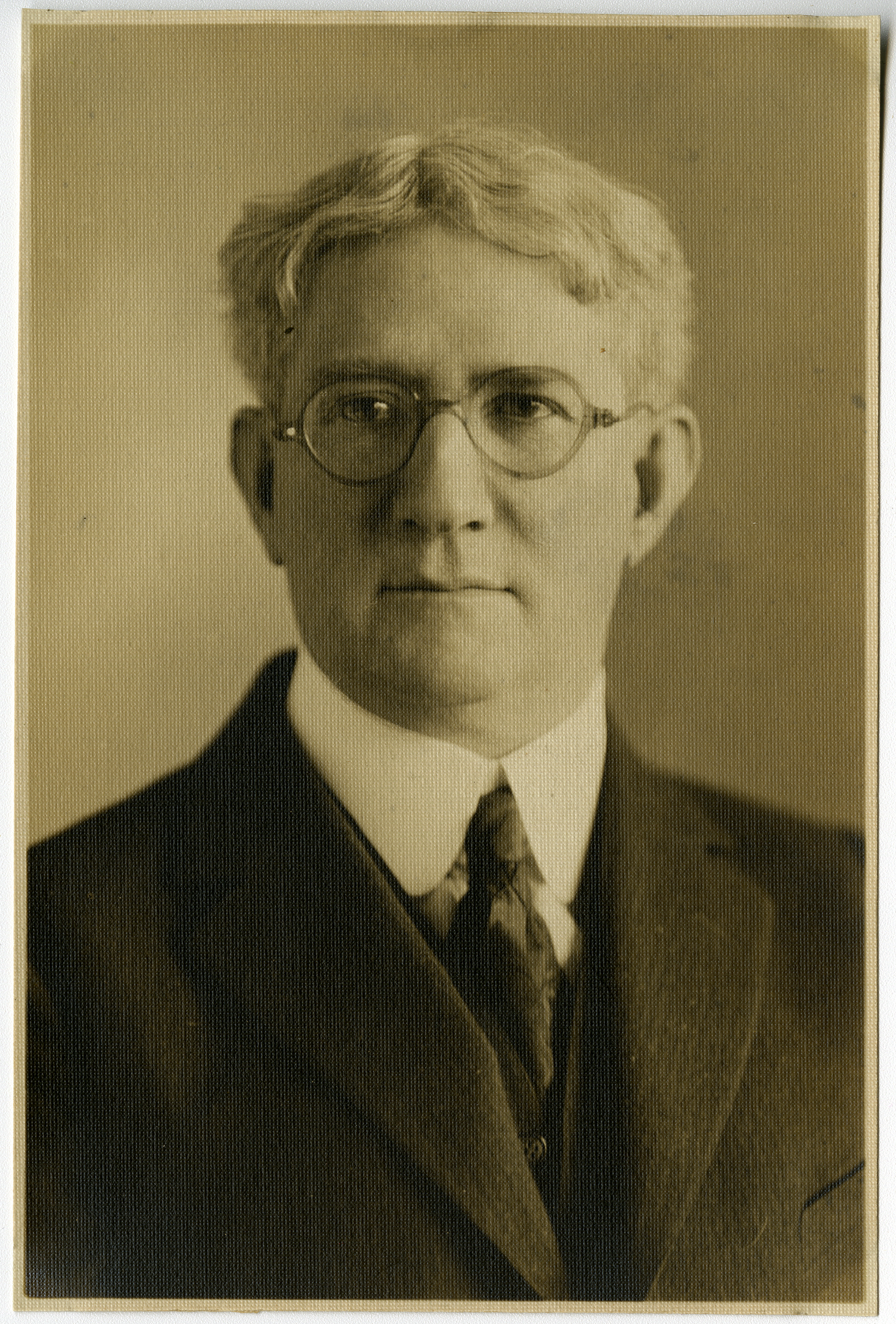
Booth had first met Marquis as the Dean of St. Paul’s Cathedral and subsequently as visiting clergy when missionary services were conducted by Henry Wood Booth in the Meeting House (1918-1923). In October 1923, when the Meeting House began to be used for Bloomfield Hills School (later Brookside School Cranbrook), it was to Marquis that Booth turned with the idea of building a church and school. Moving to Bloomfield Hills the following year, Marquis remained part of the Cranbrook story as rector, teacher, trustee, and friend until his death in 1948.

Laura MacNewman, Associate Archivist


Welcome Nichole Manlove, Archives Assistant!

Nicole Full Size

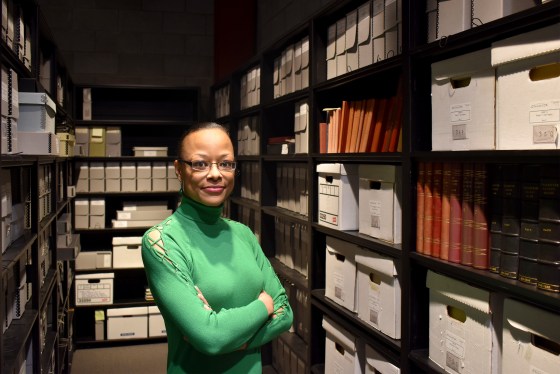
Cranbrook Archives welcomes our newest team member, Nichole Manlove, in the role of Archives Assistant. Nichole received her undergraduate degree in Advertising from Michigan State University and a Master of Library and Information Science degree and Graduate Certificate in Archival Administration  from Wayne State University. Prior to Cranbrook, Nichole most recently worked as a Project Archivist at the Bentley Historical Library, University of Michigan, where she helped preserve, arrange, describe, and make accessible a wide range of archival collections. Nichole has also held several interesting internships and volunteer positions with the Charles H. Wright Museum of African American History, the Detroit Institute of Arts Research Library and Archives, and the Detroit Historical Society Collections Resource Center.

From costume design sketches, 19th century correspondence, and papers of civil rights leaders to broadcast video recordings, student scrapbooks, and architectural drawings of major area firms, Nichole has pretty much seen it all. This wealth of experience will be invaluable in her role at Cranbrook Archives, where she’ll be assisting with the care, management, and discovery of our collections. Nichole is quickly absorbing Cranbrook’s history and our Archives operations in her first few weeks. She’s already deep into arranging and describing a complex collection, and is also working on populating our new collection management system to greatly improve patron access. We are happy to have her and look forward to great things!

Deborah Rice, Head Archivist
Carter for President

Recently, I discovered a few objects that had belonged to Melvyn or Sara Smith, the builders of our Frank Lloyd Wright Smith House. They were from 1976 — the year of the United States Bicentennial and a presidential election.

I discovered that the Smiths were supporters of soon-to-be President Jimmy Carter. Since we just had our presidential primary here in Michigan, I thought they were appropriate to share. 

So, why were the Smiths such big supporters of Carter? They were supporters of the Democratic Party in general.

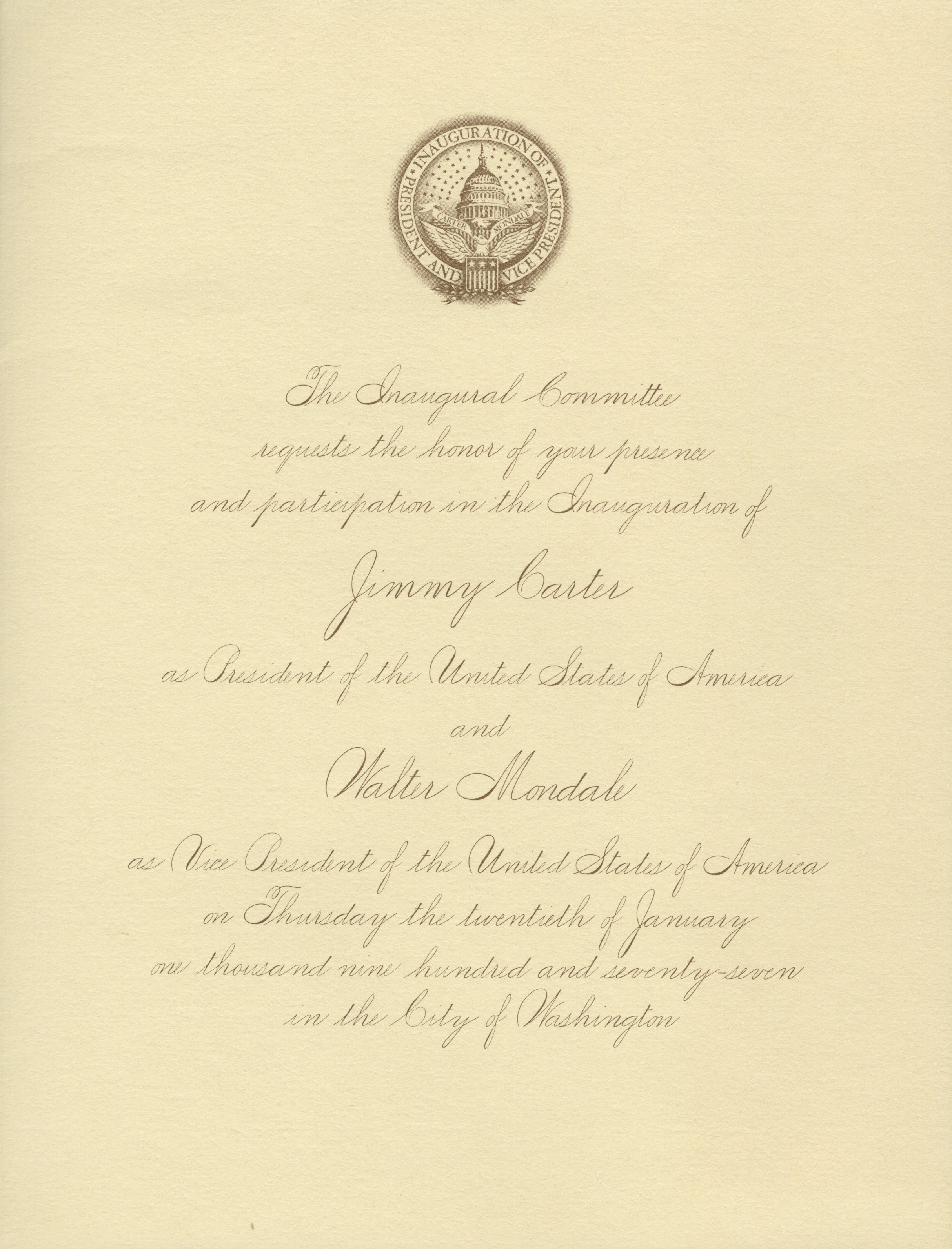
Their son Robert Smith was the National Director of Youth Affairs for the Democratic Party in the 1970s. Melvyn and Sara held fundraisers at their home for Democratic candidates. Melvyn was a member of The President’s Club of the Democratic Party. And the Smiths attended the Inauguration of Jimmy Carter in 1977.

Melvyn and Sara Smith's invitation to the Inauguration of President Jimmy Carter and Walter Mondale, January 20, 1977. Melvyn Maxwell and Sara Evelyn Smith Papers, Cranbrook Archives.

Melvyn and Sara Smith’s invitation to the Inauguration of President Jimmy Carter and Vice President Walter Mondale, January 20, 1977. Melvyn Maxwell and Sara Evelyn Smith Papers, Cranbrook Archives.

Leslie S. Mio, Associate Registrar

Marthe Julia LeLoupp

Marthe Julia LeLoupp, born October 10, 1898, in Plogoff, Finistere, France, was an original faculty member of Kingswood School, where she taught French from 1930-1956. Having completed the Diplȏme de fin d’études at the Lysée Brizeaux, Quimper, Finistere, France in 1917, LeLoupp then completed her BA at Macalester College, St. Paul, Minnesota in 1920. She later completed graduate work at the University of Chicago (1929-1931) where she worked on an MA Thesis: Influence du Breton sur le français régional en Bretagne. With teaching experience in schools and colleges in Minnesota, South Dakota, New York, New Jersey, and Indiana, LeLoupp arrived at Cranbrook in 1930.

P1098

Marthe LeLoupp, 19 Feb 1952. Photographer, Harvey Croze. Cranbrook Archives.

Correspondence with LeLoupp in the Kingswood School Records is limited but suggests that she would return to France each summer. A letter from LeLoupp, written in Paris on September 17, 1939, tells how she left America in June with ticket safely tucked in her purse for a return September 6th on the Normandie. But, the declaration of war had made this impossible and her ticket had been passed, initially to the DeGrasse to sail on the 13th and then to the Shawnee, due to depart Bordeaux on the 22nd. The Shawnee, she explains, had been, “sent to the rescue of a few hundred thousand American citizens, who are anxiously waiting for transportation westward.”  On arriving to Bordeaux on September 22, 1939, Le Loupp writes that they were told, to their great dismay, that the Shawnee would not sail until the 26th. While LeLoupp’s letters were on their way to Cranbrook, Ms. Augur [Kingswood School Headmistress, 1934-1950] was searching for LeLoupp, first sending a telegram and then consulting the American Consul. LeLoupp’s mother returns Ms. Augur’s telegram with a letter explaining her daughter’s situation. Discovering this story recently, I wondered at the extraordinary resonance with current concerns for travelers, and for those unable to complete their journeys.

1980-01 9-14 (1)

Telegram, Ms. Augur to Mlle. LeLoupp, September 23, 1939. Cranbrook Archives.

Despite the harrowing circumstances, LeLoupp did eventually make it across the Atlantic. She continued to teach French at Kingswood School until July 1956, when she writes from Bénodet in France to request to be released from her 1956-57 contract due to poor health, ending the letter, “I find it impossible to express my regret in words.” Not much else is known about LeLoupp’s time at Cranbrook, except that she lived for twelve of her years at Cranbrook in the apartments above Kingswood School, which were converted in 1945 from the ballroom known as Heaven. In the KBC [Kingswood Brookside Cranbrook] Quarterly of May 1973, LeLoupp was remembered thus,

“a “beautiful person” with a “super smile”. She was “sweet and kind” and always beautifully dressed in classic tweeds. Peering over her bi-focals at her students and reciting in her strong French accent the terrible weekly dictes that no one could understand, she was one of those who inspired her girls to excellence or accomplishment in French that is still one of Kingswood’s greatest assets”.

Laura MacNewman — Associate Archivist


Cranbrook-LIFE

2020 marks ninety years of temporary traveling exhibitions at Cranbrook Art Museum. Perhaps one of the best examples that brings to life this aspect of the Museum’s programs is Cranbrook’s brief but wildly successful partnership with LIFE Magazine.

The Cranbrook-LIFE Exhibition of Contemporary American Painting opened in 1940, ten years after Cranbrook Art Museum hosted its first traveling exhibition, organized by the American Union of Decorative Artists and featuring contemporary interior design. The idea of temporary traveling exhibits at Cranbrook began the same year as the permanent collection was established by founder George G. Booth. It furthered Booth’s commitment to presenting contemporary art as foremost a learning tool for Academy of Art students. It was intended “to remind our students that art is a living thing and that the record of our times is being created from day to day by the artists of this age, and in so doing perhaps to stimulate the creative spirit among those who work here.”

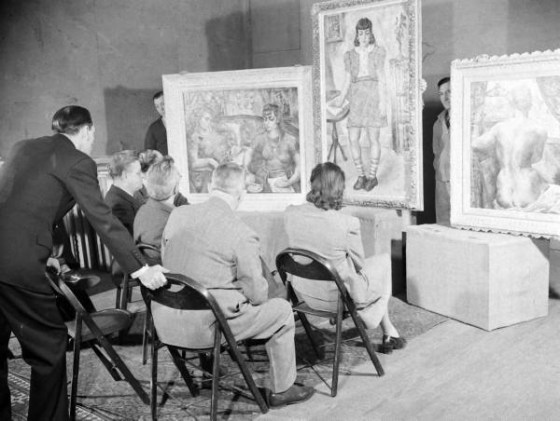
LIFE_judging

Judges examine paintings in New York, April 1940. Hansel Meith, photographer. Copyright Time Inc.

Cranbrook-LIFE was a celebration of contemporary U.S. art meant to symbolize “America’s increasing responsibility as a democratic world art center.” (Life, May 27, 1940) As such, LIFE invited sixty painters, living and working in America, to submit three paintings to be voted on by a jury of six. The painters included Edward Hopper, Charles Sheeler, and Cranbrook’s own Zoltan Sepeshy. The jury, comprised of Sepeshy, two leading art museum directors, an editor at LIFE Magazine, a representative from the Federal Works Agency Section of Fine Arts, and a well-respected American painter and educator, convened in a New York City warehouse where they spent four hours whittling down 180 submissions to the final sixty paintings shipped to Cranbrook for the show. One of these was Grant Wood’s American Gothic! Loaned by the Art Institute of Chicago, the already famous painting appears to be the only piece in the exhibition to come from another art museum.

5523-5

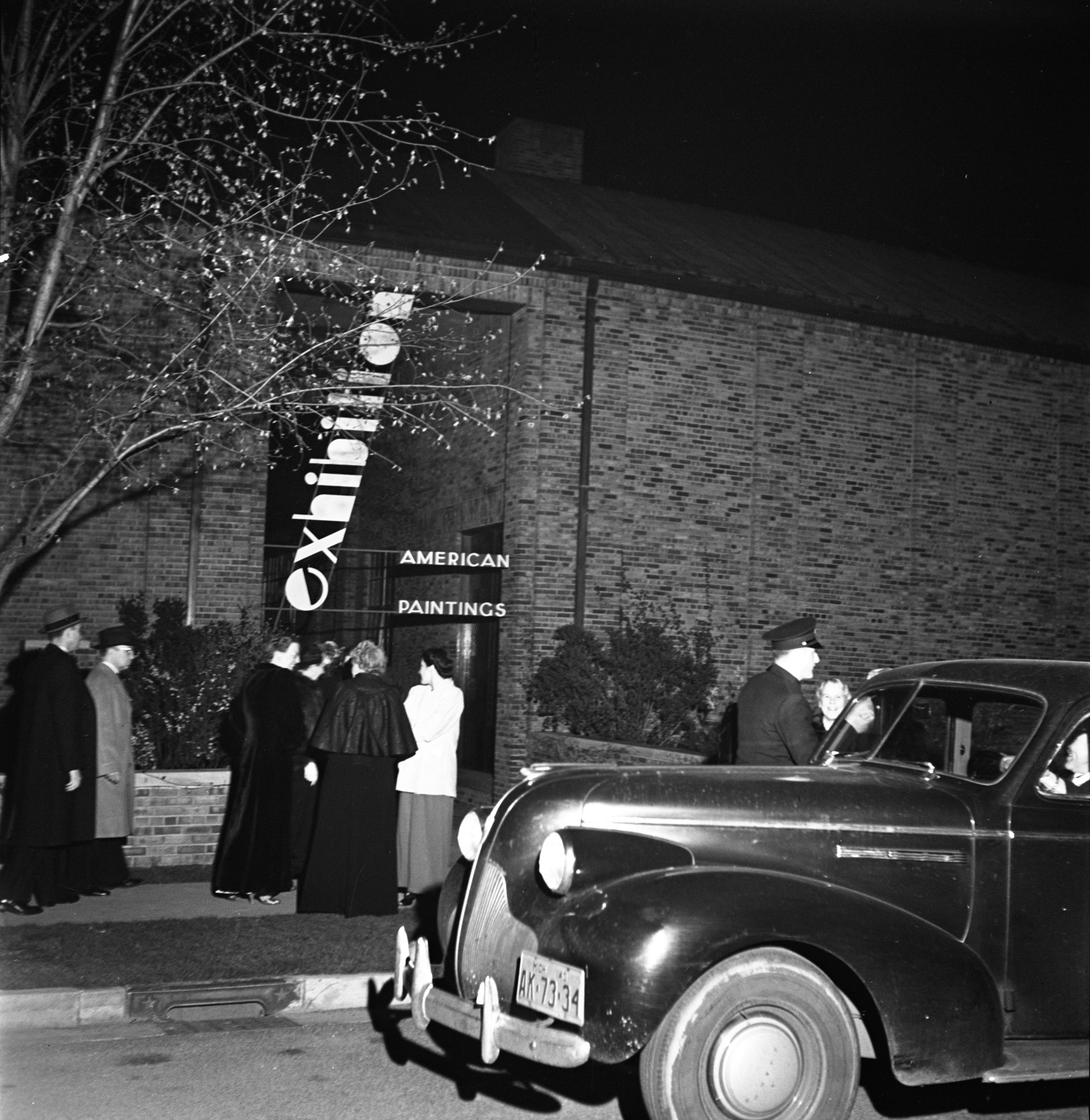
Opening night attendees arrive. Courtesy Cranbrook Archives.

If you’re at all familiar with LIFE, you may be asking yourself why a popular weekly magazine, known for its photographic general-interest stories, would make a foray like this into the art world? According to a 1940 TIME Magazine article, in the previous three years,  “the No. 1 U.S. source of popular knowledge of U.S. art has been LIFE, which has reproduced for the man-in-the-street’s weekly dime some 452 paintings (usually in full color) by U.S. artists.” Your next question might be why it was held at Cranbrook, as opposed to, say, the newly constructed Museum of Modern Art building in New York City? Florence Davies of the Detroit News may have answered that, when she wrote at the time: “Life Magazine picked Cranbrook not only because of the enchanting setting of the place as a whole, but more particularly because it found there ‘work in progress—an atmosphere of creative activity.’”

5523-11

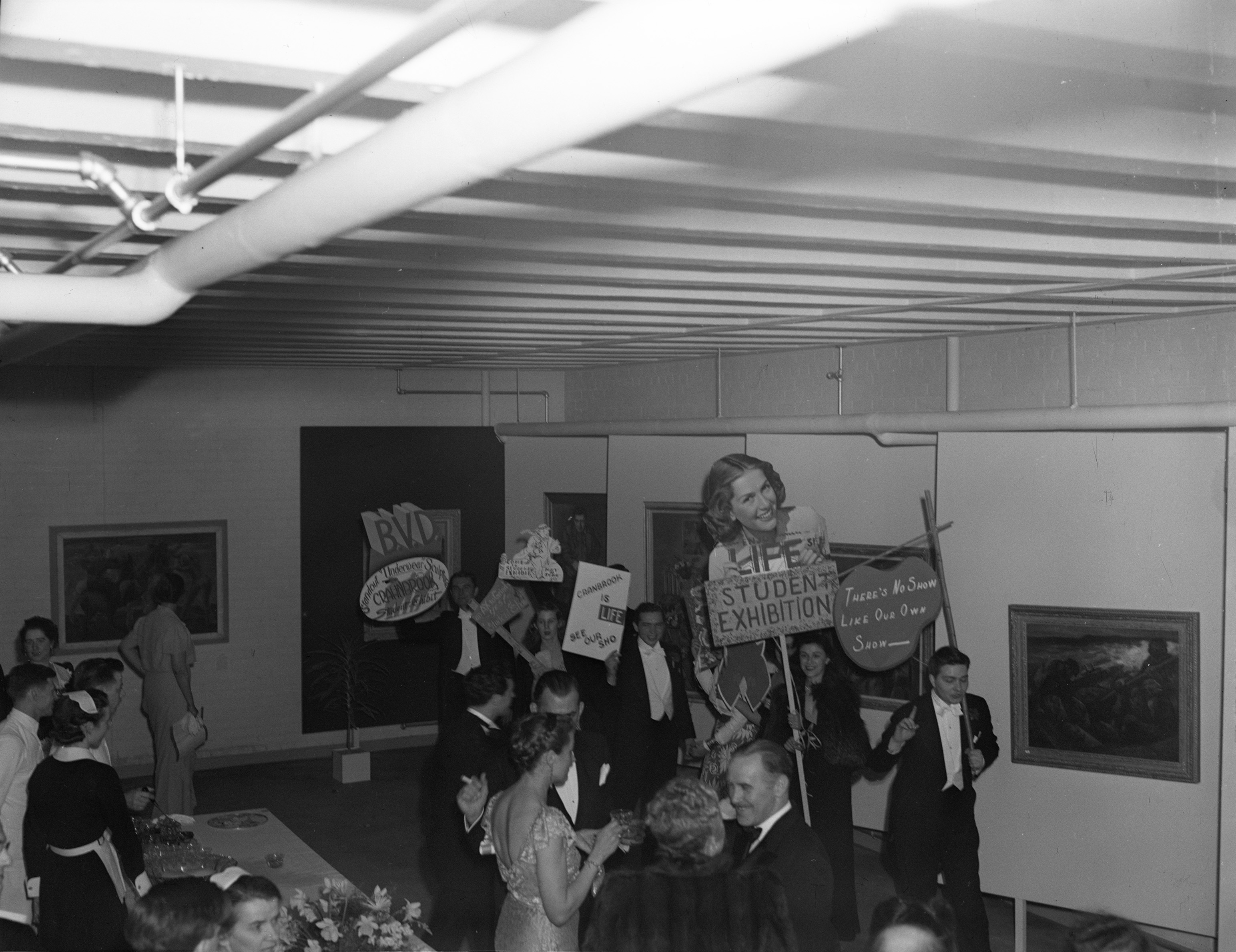
Academy of Art students parade through the opening night gala reminding attendees of the student exhibition simultaneously on display at the Cranbrook Pavilion. Courtesy Cranbrook Archives.

The exhibition drew an estimated 2,500 national and international visitors in the short two weeks it was on display from May 17-June 2, 1940. Because of the size of the show, it could not be held in the current museum building on Lone Pine Road and Academy Way (Eliel Saarinen’s museum building began construction during the exhibition). And, as the Academy student exhibition was currently occupying the Cranbrook Pavilion, the decision was made to utilize the Academy’s Painting Department Studios. Opening night was a festive gala. Attendees, including George and Ellen Booth, Loja and Eliel Saarinen, Edsel B. Ford, Albert Kahn, and “1,000 Detroit socialites braved wintry winds” in formal attire. (Time, June 3, 1940)

5533-1

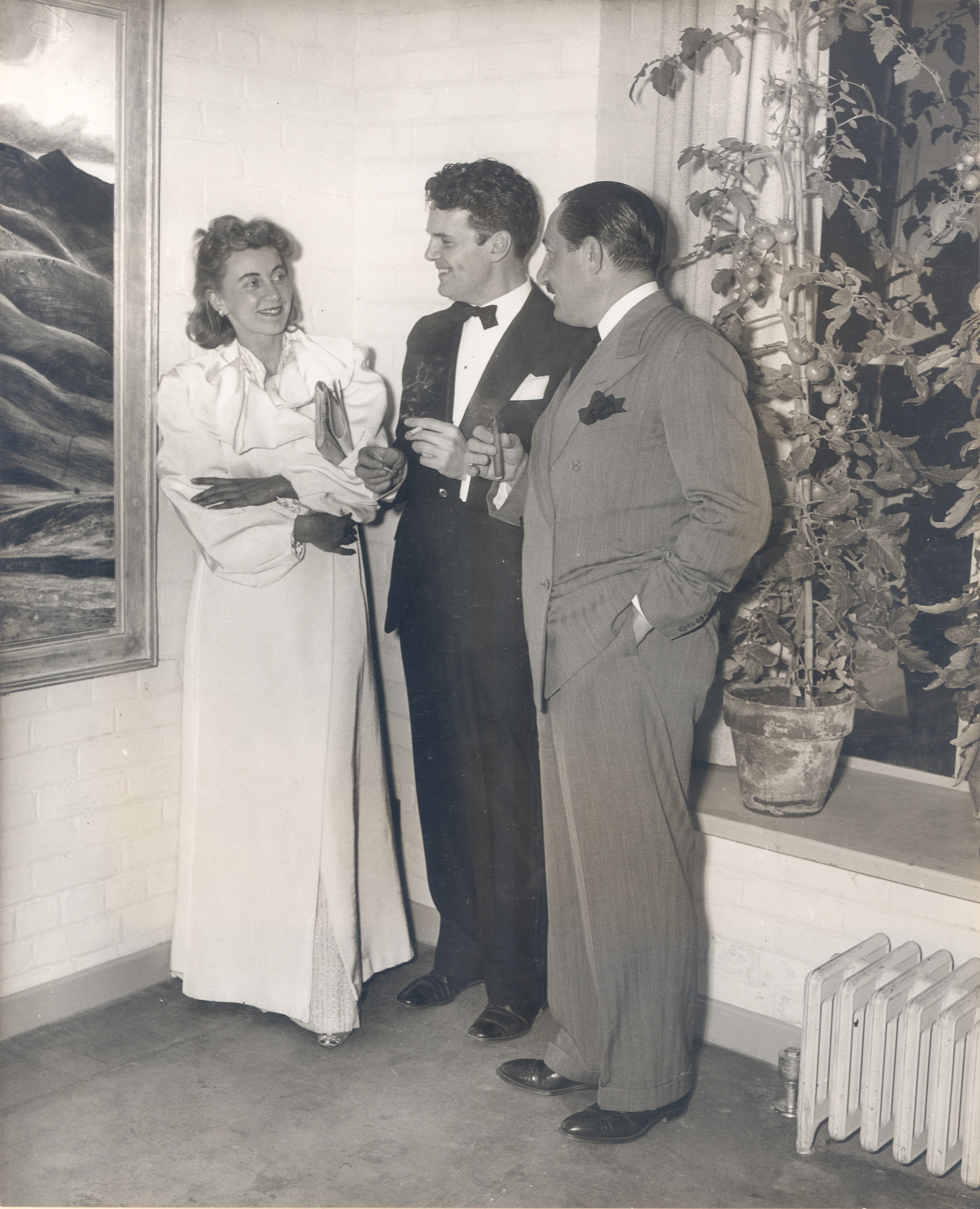
Marianne Strengell, Charles Eames, and Richard Reinhardt. Richard A. Askew, photographer. Courtesy Cranbrook Archives.

Coming on the heels of the Great Depression and during the beginning months of the War in Europe, pro-American sentiment was high, as evidenced by the placement of potted American-grown tomatoes in windowsills as decoration. According to TIME Magazine, the music for the evening was by U.S. composers and refreshments included “Rhine wine flavored to taste like U.S. new-mown hay.” (!?)

Cranbrook-LIFE marks the beginning of the Cranbrook Art Museum Exhibition Records, which illuminate thirty-six years of temporary traveling exhibits, and are rife with names of renowned artists that have exhibited at Cranbrook throughout its history.

It’s not all in the past, though! Don’t miss Cranbrook Art Museum’s current traveling exhibition,  In the Vanguard: Haystack Mountain School of Crafts, 1950-1969, on view until March 8, 2020.

Deborah Rice, Head Archivist

Oliver LaGrone: Sculptor, Poet, Educator, and Humanitarian

Oliver LaGrone (1906 – 1995), was a sculptor, poet, educator, and humanitarian; he was also the first African-American student at Cranbrook Academy of Art.

Oliver LaGrone circa 1941. Courtesy Cranbrook Archives.

Oliver LaGrone circa 1941. Courtesy Cranbrook Archives.

Clarence Oliver LaGrone was born December 9, 1906, in McAlester, Oklahoma Territory, to Lula Evelyn Cochran and William Lee LaGrone. William was a minister at the African Methodist Episcopal Zion Church, and an avid writer. He raised Oliver to appreciate education and his African-American heritage. As Oliver later told a reporter from the Albuquerque Journal (Cranbrook Archives):

My father was a gifted writer, and also a builder, and extremely creative. He regaled us with his poems. I was brought up in an environment like that.

In 1928, Oliver attended Howard University in Washington, D.C., where he studied English and economics, planning on becoming a lawyer. He left school in the summer of 1929 to help his family with their move to Albuquerque, New Mexico. After his father passed away in 1930, he chose not to return to Howard, and in 1934 he began to attend the University of New Mexico. He worked as a teaching assistant to architect-sculptor, William Emmet Burk, Jr.

Oliver graduated from the University of New Mexico in 1938 with a Bachelor’s Degree in sociology and fine arts. He was among the artists employed by the Federal Works Progress Administration (WPA). In 1937, he created his sculpture Mercy for the Carrie Tingley Children’s Hospital.

It was in Albuquerque that he met and married Irmah Cooke, September 21, 1938. During the 1940 census, Oliver, Irmah, and newborn baby Lotus Joy were still living in Albuquerque, where Oliver was working as a mail carrier. However, later in 1940, the family moved to Michigan.

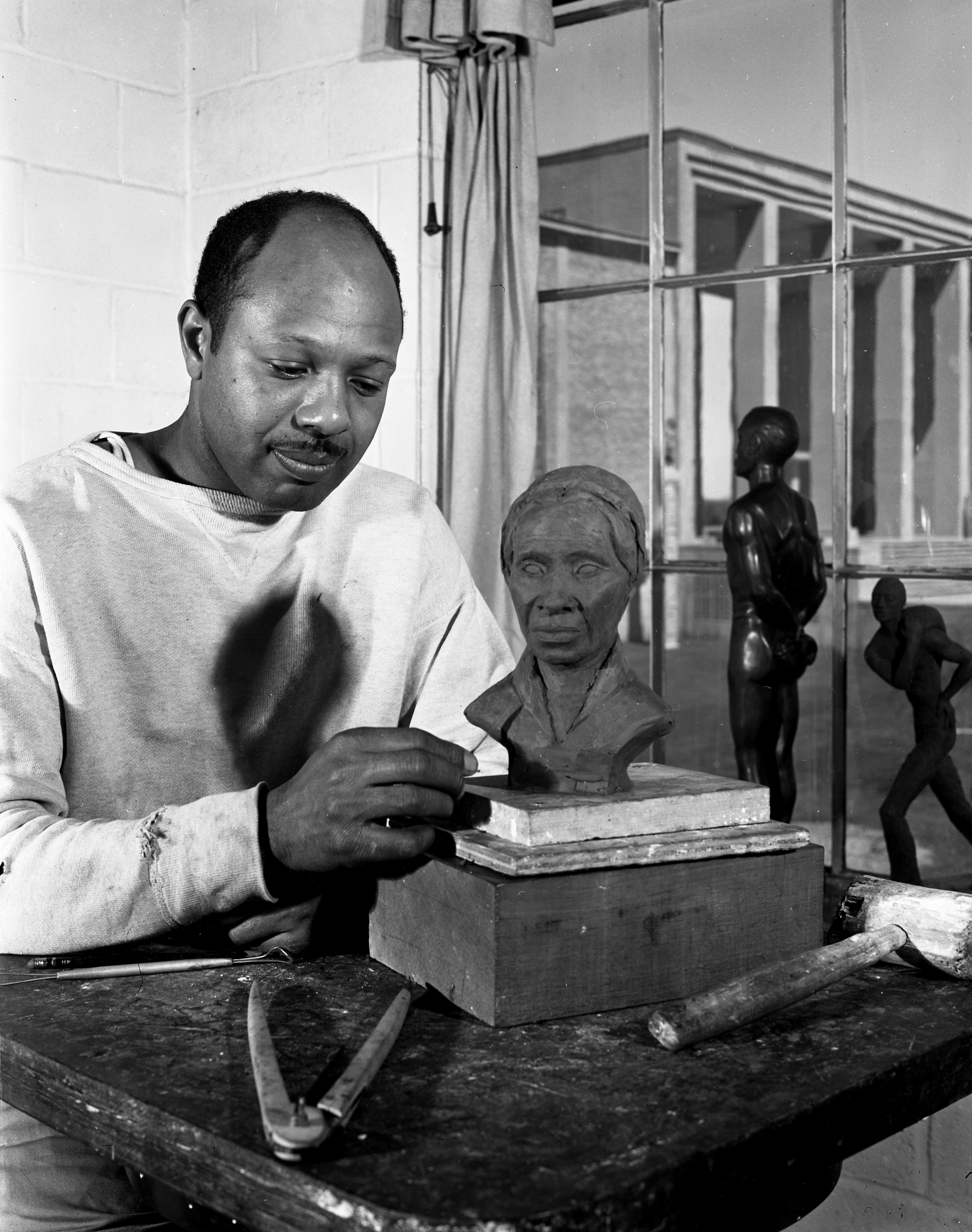
In the fall of 1941, at his wife’s encouragement, Oliver began studying with sculptor Carl Milles at Cranbrook Academy of Art. His tuition was covered by a scholarship from the Student Aid Foundation of Michigan. In March 1942, Oliver won a McGregor Fund scholarship for advanced study in sculpture.

Oliver LaGrone in his studio at Cranbrook Academy of Art circa 1942 with a model of his bust of Harriet Tubman. Courtesy Cranbrook Archives.

Oliver LaGrone in his studio at Cranbrook Academy of Art circa 1942 with a model of his bust of Sojourner Truth. Courtesy Cranbrook Archives.

Upon completing his studies at Cranbrook, Oliver worked a variety of jobs in order to support his family. Because of an old injury, he was not able to enlist in the Army during World War II, but in the 1940s, he worked for Ford at the Detroit Rouge Plant. It was there he came into contact with the United Auto Workers, whom he worked for from 1943 to 1948.

Oliver participated in the renaissance of black artists in Detroit. During this time he wrote his first poetry, gathering them into a collection, Footfalls (1949).

Footfalls: Poetry from America's Becoming by Oliver LaGrone. Courtesy Between the Covers.

Footfalls: Poetry from America’s Becoming by Oliver LaGrone. Courtesy Between the Covers.

During the McCarthy-era Red Scare, Oliver was asked by the Detroit Loyalty Committee to act as an informant and provide “communist” information on his contacts in the art world, particularly Paul Robeson. Oliver refused, lost his UAW job as a result, and had to sell pots and pans door-to-door to make ends meet.

He returned to school, attending Wayne State University from 1956-1960 and received the equivalent of a Master of Arts in Special Education. Oliver worked in Detroit Public schools teaching arts and crafts and special education.

Oliver LaGrone in his studio at Cranbrook Academy of Art circa 1942 with some of his works. Courtesy Cranbrook Archives.

Oliver LaGrone in his studio at Cranbrook Academy of Art circa 1942 with some of his works. Courtesy Cranbrook Archives.

Oliver was always part artist, part activist. He served for two years, 1968-1970, on the Michigan Council on the Arts. He served on the African Art Gallery Fund Committee of the Detroit Institute of Arts. From 1964 on, he was a life member of the National Association for the Advancement of Colored People.

It occurred to me early on that you’re not going to be satisfied until you find a way to combine your art with social commentary.

In 1970, Oliver was invited to lecture in art education and Afro-American history at Pennsylvania State University. In 1972, he was appointed Special Assistant to the Vice President of undergraduate education, and in 1975, became artist-in-residence for all 21 branches of the university system. He then served as artist-in-residence at the Hershey Foundation and the Boas Arts Magnet Center for Learning in Harrisburg, Pennsylvania.

Oliver did not limit his creativity to teaching art and creating sculptures. He also wrote and had several poems and reviews published in Negro Digest and the New York Times Sunday Book Review.

Oliver was a longtime Unitarian Universalist and significantly impacted the church and the Harrisburg community by establishing the Oliver LaGrone Scholarship Fund in 1974. Proceeds from the sale of Oliver’s “The Dancer” was an early contribution to the fund.

Oliver LaGrone at work in his studio at Cranbrook Academy of Art circa 1942. Courtesy Cranbrook Archives.

Oliver LaGrone at work in his studio at Cranbrook Academy of Art circa 1942. Courtesy Cranbrook Archives.

“Oliver LaGrone Day” was proclaimed by the mayors of Harrisburg on February 3, 1980, and again in 1993, in respect for his community contributions.

In the mid-1990s, Oliver returned to Detroit to live near his daughter and her family. Still sculpting and writing poetry, he died in October 1995 at the age of 89. There are two collections related to LaGrone in Cranbrook Archives, one donated by his daughter Lotus Johnson and the other from the Unitarian Church of Harrisburg Scholarship Committee.

Leslie Mio, Associate Registrar

Birds of a Feather …

“… the Cranbrook Foundation, dealing with things material and visible, rests in turn upon another foundation made up of things invisible – that is, of thought, vision, and ideals… No product of human hands exists which was not a thought before it became a thing.”
Rev. Dr. Samuel Simpson Marquis, “The Laying of a New Foundation for Cranbrook Institutions,” Commencement Address to Cranbrook School, June 6, 1936

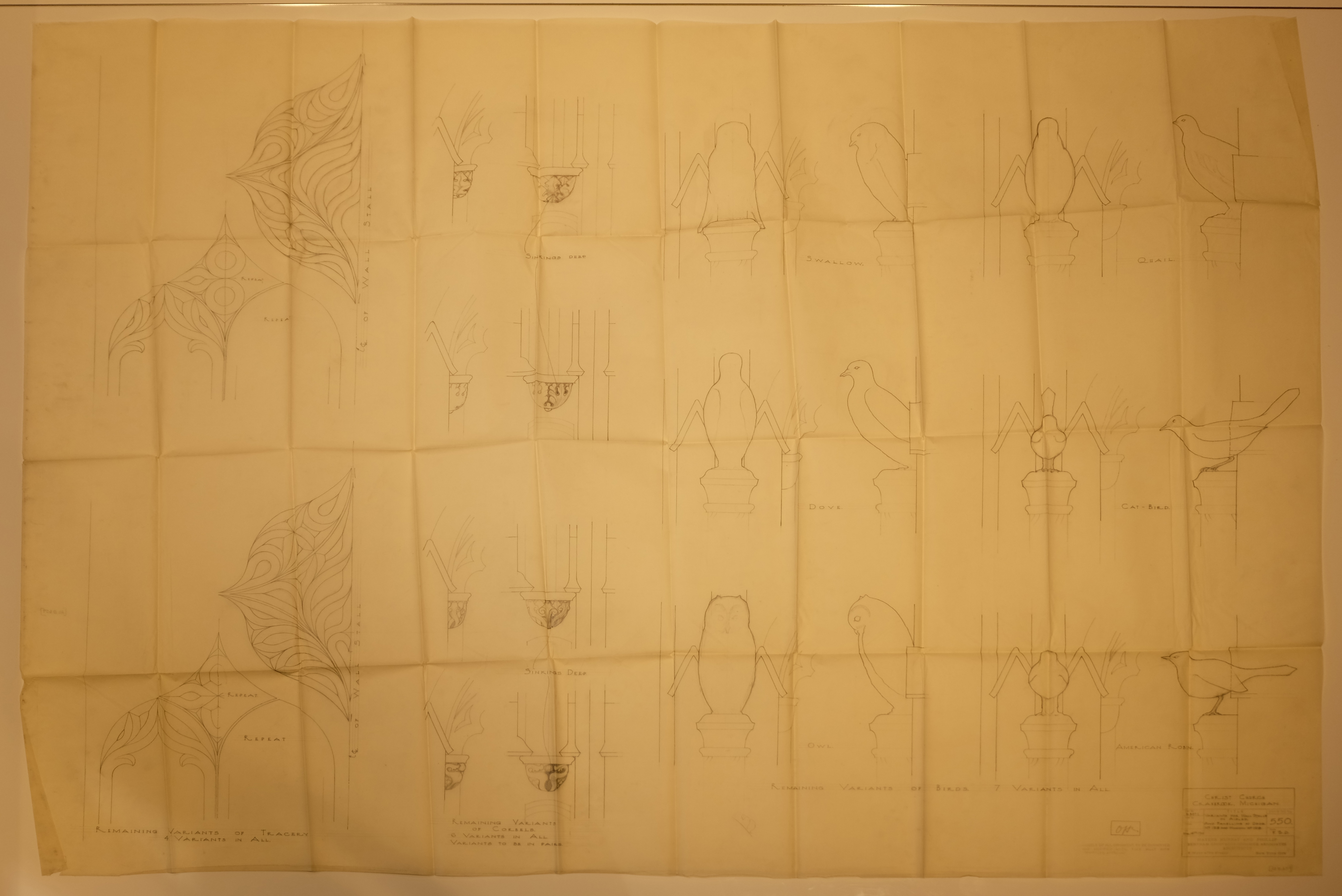
The thought, vision, and ideals of George and Ellen Booth endure in the cultural community and architectural landscape that we enjoy today. One of the great joys of working in the Archives is witnessing the documentary heritage which traces the stories of the people, places, and things that contribute to Cranbrook’s history. All record types — from correspondence, financial records, and reports to written and oral memories and reflections — provide a different insight into the process of making an idea a reality.  I am particularly fond of architectural records, because it is possible to see the built campus in its earliest form. Cranbrook Archives holds a large collection of architectural drawings for the entire Cranbrook Educational Community, as well as for  projects of Cranbrook affiliated firms and architects. The drawings are arranged by division or creator and housed according to their format. One format that is housed separately are detail drawings, which include millwork details and decorative designs. They are pencil on tissue drawings preserved folded in their original envelopes, many for almost a century. I would like to share with you an example of this type of drawing, one that documents the birds sitting atop of the columns of the aisle wall stalls at Christ Church Cranbrook.

CCC birds

View of the aisle wall stalls at Christ Church Cranbrook. Center for Collections and Research.

Finding sources in an archives depends upon the arrangement and description of the collections. Because of their very nature, sometimes a fair amount of detective work is required when the material being described is a visual format. Architectural drawings that have been catalogued are searchable using the Cranbrook Academy of Art library catalog, so the search most often begins there. In my case, a search for the wall stalls at the church returned seven results, none of which refer to the birds specifically. Yet, one of the descriptions suggested that there was great potential that it would include a drawing of the birds and, indeed, that is what I discovered.

AD-10-659_001

Architectural drawing (AD.10.659) Variants for Wall Stalls in Aisles and Paneling at Door #128 and Window #128, March 1930. Cranbrook Archives.

AD-10-659_003

Architectural drawing (AD.10.659), detail of the owl. Cranbrook Archives.

AD-10-659_004

Architectural drawing (AD.10.659), detail of the American robin. Cranbrook Archives.

The discussion between George Booth and Oscar Murray about the design and contract for the stalls began in early December 1929 and the stalls, carved by Irving and Casson, arrived for installation in August 1930. Booth left it to Murray’s judgment as to whether to have a continuous row of the same model for the columns or whether to include the variation. As you can see, this drawing includes two variants of tracery, four variants of corbels, and six of seven variants of birds, including the swallow, quail, dove, cat-bird, owl, and American robin. The seventh bird yet remains a mystery, leaving us something to discover in the future. Discoveries like these, and helping others achieve similar ones, make the job of a Cranbrook Archivist both enjoyable and rewarding.

– Laura MacNewman, Associate Archivist

[Editor’s Note: When this post was first published, the quote was attributed to George Gough Booth. Subsequent research has revealed that it is from an address by the Rev. Dr. Samuel S. Marquis.]

Create a website or blog at WordPress.com