One of my favorite items in the collections of Cranbrook Archives is George Booth’s hand drawn map of Cranbrook, which he created over a 24-year period between 1904 and 1928. It is the earliest topographical record of Cranbrook and visually documents his ideas and plans for developing the landscape. In 1951, George’s son, Henry, created annotations to accompany the map, which are useful both in deciphering the map and identifying locations. Henry’s notes on what was envisioned and what was implemented during those early years, are a good starting point from which to venture into the manuscript collections for verification.
Cranbrook Map drawn by George G. Booth between 1904 and 1928. Courtesy of Cranbrook Archives
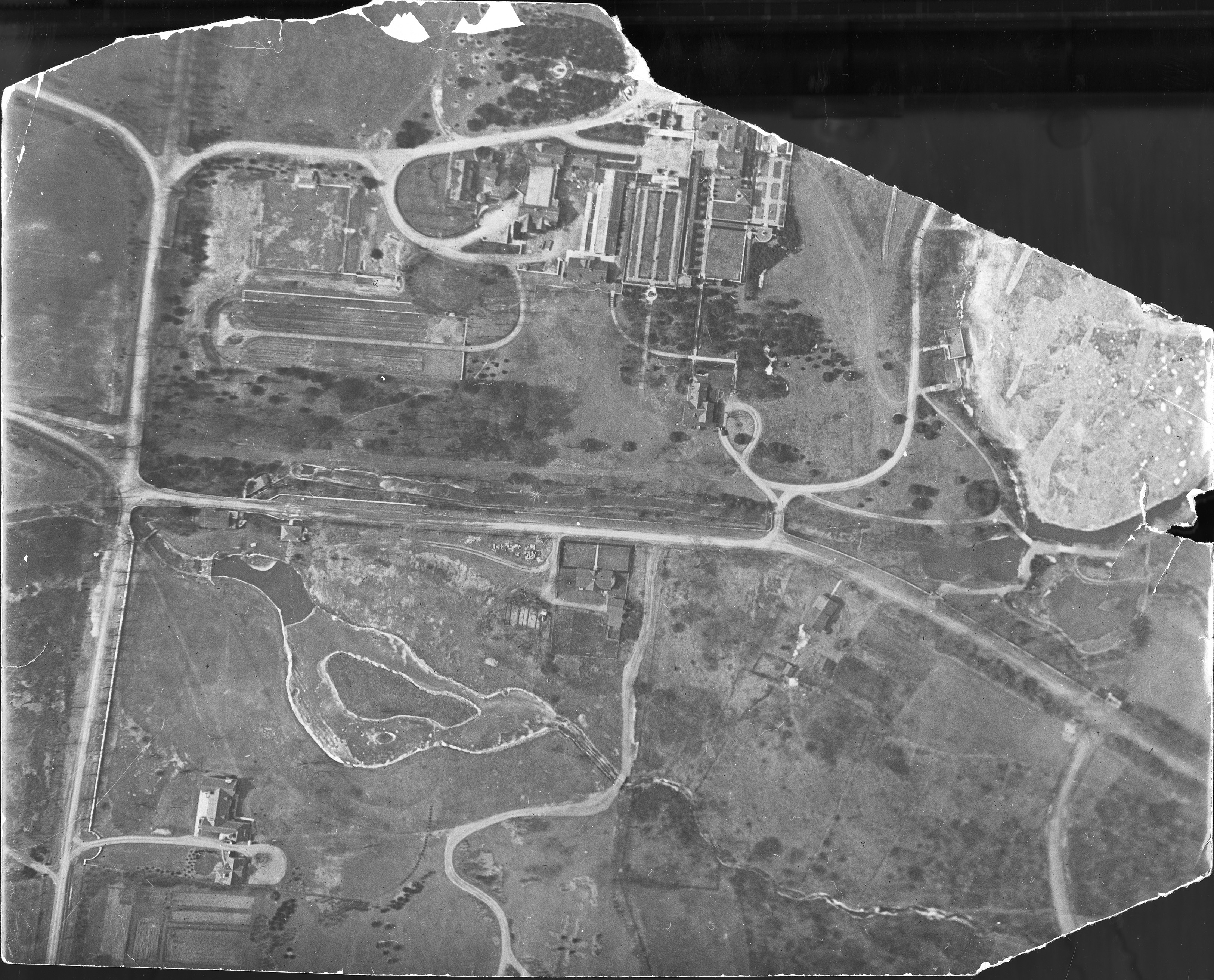
As Cranbrook’s landscape evolved from a family estate into a center for art and education, the means of recording and viewing the topography was assisted by developments in aerial photography, known as photogrammetry. Talbert Abrams, a native of Michigan, is regarded as a key contributor to this field of photography, as he founded the Abrams Aerial Survey Corporation in 1923. The earliest aerial photograph of Cranbrook I could locate is from circa 1918.
Aerial photograph of Cranbrook estate and environs, circa 1918. Courtesy of Cranbrook Archives
In the Cranbrook Photograph Collection there are many aerial photographs taken by Abrams, as well as other photography firms, ranging from the 1920s through the 1990s. Since the purposes of aerial surveys are manifold, correspondence provides some insight into why they were commissioned and how they were specifically used, for example, as publicity and advertising. In 1932 Cranbrook’s public relations manager, Lee A. White, engaged Cranbrook School Headmaster William Stevens to select an image for the coming year’s brochure, and aerial views appear in all the early Cranbrook brochures. Aerial surveys have also been used to assess and understand the landscape prior to making a change to it. This was the case in 1961, when a topographic map and aerial photography were requested for the Off-Street Parking Study.
Letter from Keith A. Smith to Arthur B. Wittliff, November 1961. Courtesy of Cranbrook Archives
Correspondence between Arthur Wittliff, Secretary for the Cranbrook Foundation Board of Trustees, and Abrams Aerial Survey Corporation, provides intriguing details about the scale of the photography and the material base of the prints. The images below are from a December 6, 1961 set of 12 double weight velvet prints of aerials covering 1 square mile at a scale of 1 inch per 600 feet.
Aerial photograph ASP-5 taken by Abrams Aerial Survey Corporation on 6 December 1961. Courtesy of Cranbrook Archives
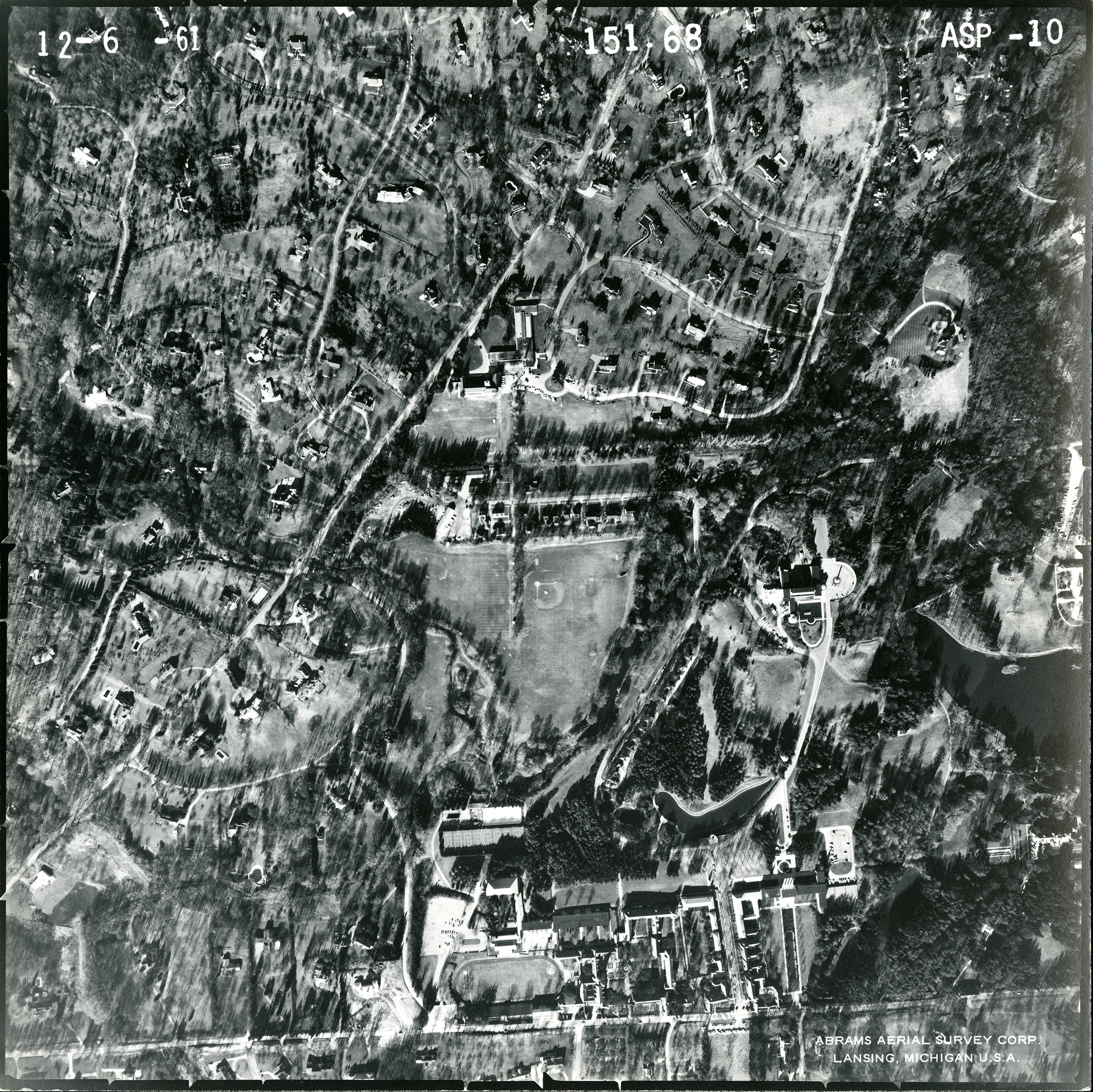
ASP-5 (above) shows the intersection of Cranbrook Road and Lone Pine Road, and includes Kingswood School and Lake, the Institute of Science, Cranbrook House, Brookside School, Christ Church Cranbrook, and the Academy of Art and Academy Way. ASP-10 (below) shows another view of Cranbrook and its environs, encompassing the Institute of Science, Academy of Art, and Cranbrook School.
Aerial photograph ASP-10 taken by Abrams Aerial Survey Corporation on 6 December 1961. Courtesy of Cranbrook Archives
When looking across the topographical history of Cranbrook from George’s map through aerial photographs, it is always fascinating to discern the changing landscape alongside the features that are unchanging. And, for me, the great inspiration of George’s map is that, although each individual project necessitated getting into the weeds and meticulous details, his ideas were always guided by situating them within a bigger picture.
—Laura MacNewman, Associate Archivist, Cranbrook Center for Collections and Research
On a visit to Cranbrook House, Johannes Kirchmayer’s overmantel is one of the first things to catch your attention. Tours and blog posts have examined this chef d’œuvre and its iconography, and admirers tracing the quotation popping out from the carved eglantine find it a typical George Booth choice: art, nature, his love for both. The inscription reads:
“Nature I loved and next to nature art”
Cranbrook is the Booths’ creation, brimming with art and nature and George Booth quotes, but who wrote this line, and how did it end up in such a prominent spot?
Johannes Kirchmayer’s overmantel at Cranbrook House, 1918. The Walter Savage Landor quote is called out in gold leaf at the top of the overmantel. Photograph by PD Rearick, CAA ’10. Cranbrook Center for Collections and Research.
It comes from the pen of Walter Savage Landor.
Born into minor aristocratic wealth in Warwick, England, in 1775, Landor was a wild child, quite possibly because he was sent away to school at 4 ½ years old and was a wonderment to his parents who didn’t know what to do with a child who wrote Latin as well as he wrote English and showed remarkable talent for not obeying rules of any kind.
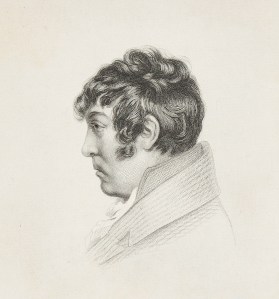
Walter Savage Landor in profile, from Walter Savage Landor: A Biography by John Forster, 1869. Courtesy Heritage Auctions.
Landor enjoyed such violent fights over political opinion that his parents banned him from the dinner table when guests were present. No school could hang onto him. Even Trinity College, Oxford had enough of his rebelliousness, his anti-government stance, his French Revolution republican garb. Landor fought back by writing nasty aphoristic poems about his critics in Latin and English, a practice he continued throughout his life. He was particularly vicious in Latin, partly because in England libel laws did not extend to texts in Latin. He was very clever and iconoclastic, favoring social reform and liberal nationalism. He felt himself superior to others and hated competition just in case it might prove him wrong. Hence his epigram, if not epitaph, written on his 74th birthday in 1849:
FINIS
I strove with none, for none was worth my strife:
Nature I loved, and, next to Nature, Art:
I warmed both hands before the fire of life;
It sinks; and I am ready to depart.
He may have been ready to depart, but it would be another fifteen years before he got around to it.
Much earlier, in 1805, Landor inherited a huge amount of money from his father and determined to set up an estate in Wales, restore an abandoned priory on the property, build a large mansion, and reform the peasantry. Impetuous as ever, he flew off to Spain in 1808 to fight in the Peninsular War against Napoleon’s generals, raising his own regiment. Unfortunately, Landor couldn’t stop himself from quarreling with hosts, commanding officers, and his own troops whereupon he fled back to Wales to find building materials for his hoped-for mansion had trickled away much as had his regiment.
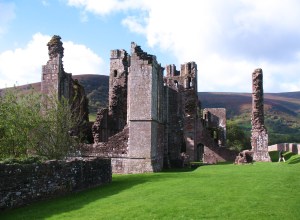
Ruins of Llanthony Priory. Photograph copyright Gordon Hatton, reused by CC BY-SA 2.0.
Here we enter into the realm of coincidence. Landor, an Englishman, building in Wales, found upon his return from Spain that the locals had run off with a lot of his bricks. In an 1809 letter to the local bishop, Landor cursed the Welsh in his inimitable manner insisting that they would demolish the tomb of famed poet Taliesin if they could get away with it. For those readers who are architecture buffs, the name Taliesin can only conjure up one image, not that of the 5th or 6th century Welsh bard, but that of Welsh-connected Frank Lloyd Wright who thus named his east and west architectural compounds, citing the translation as “shining brow.”
But, back to Landor. Once restored to the throne, the king of Spain sent Landor a flock of sheep in recognition for his services. When the sheep arrived at the English docks, they were assumed to be a gift for the king (George III), and try as he might, Landor could not get them back, and one couldn’t sue the king. He had to wait until George IV died before publishing his opinion, one of his most famous attacks:
George the First was always reckoned
Vile, but viler George the Second.
And what mortal ever heard
A good word of George the Third,
But when from earth the Fourth descended
God be praised the Georges ended.
Alas, even though Landor was able to persuade a lovely young woman, 16 years his junior, to marry him in 1811, all was not well. Quarrelsome as always and with no business sense, Landor fled again from Wales to Fiesole outside Florence in Italy where he fared slightly better. In spite of money troubles and a wife who loved to taunt him about his age, this was the period of his great creativity, writing the totally invented Imaginary Conversations between two famous historical people. Poets such as Byron and Robert Southey loved his work, Byron even doing Landor the honor of stealing the Greek name chosen for a young Landor love to apply to the principal lady in his Child Harold. Readers struggled through these long obscure works (or didn’t) and praised a beautifully succinct passage or two, and those are the excerpts along with his crusty aphorisms that made him famous.
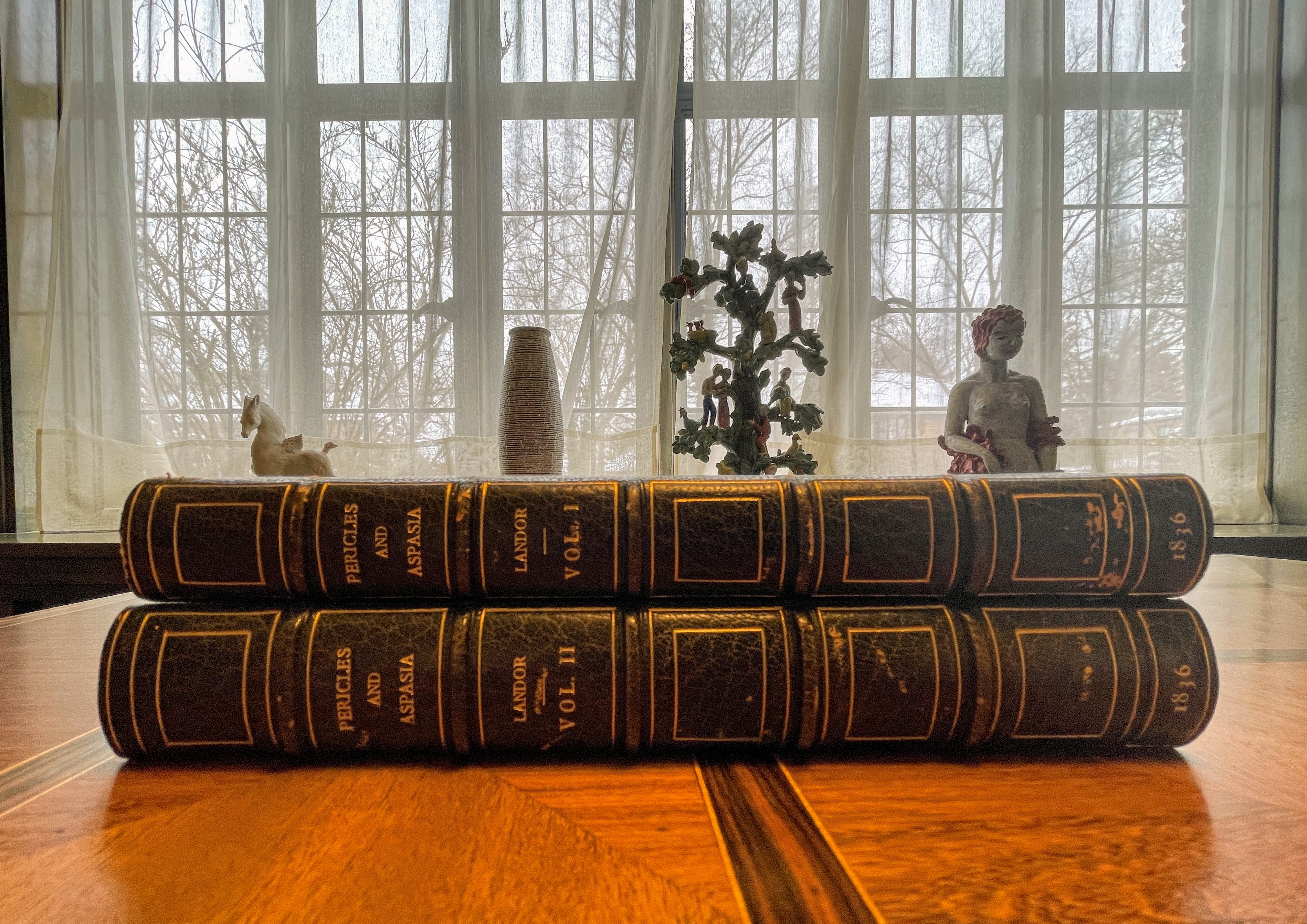
Walter Savage Landor’s two volume Pericles and Aspasia at Saarinen House, a gift from George G. Booth to Eliel Saarinen. Cranbrook Center for Collections and Research.
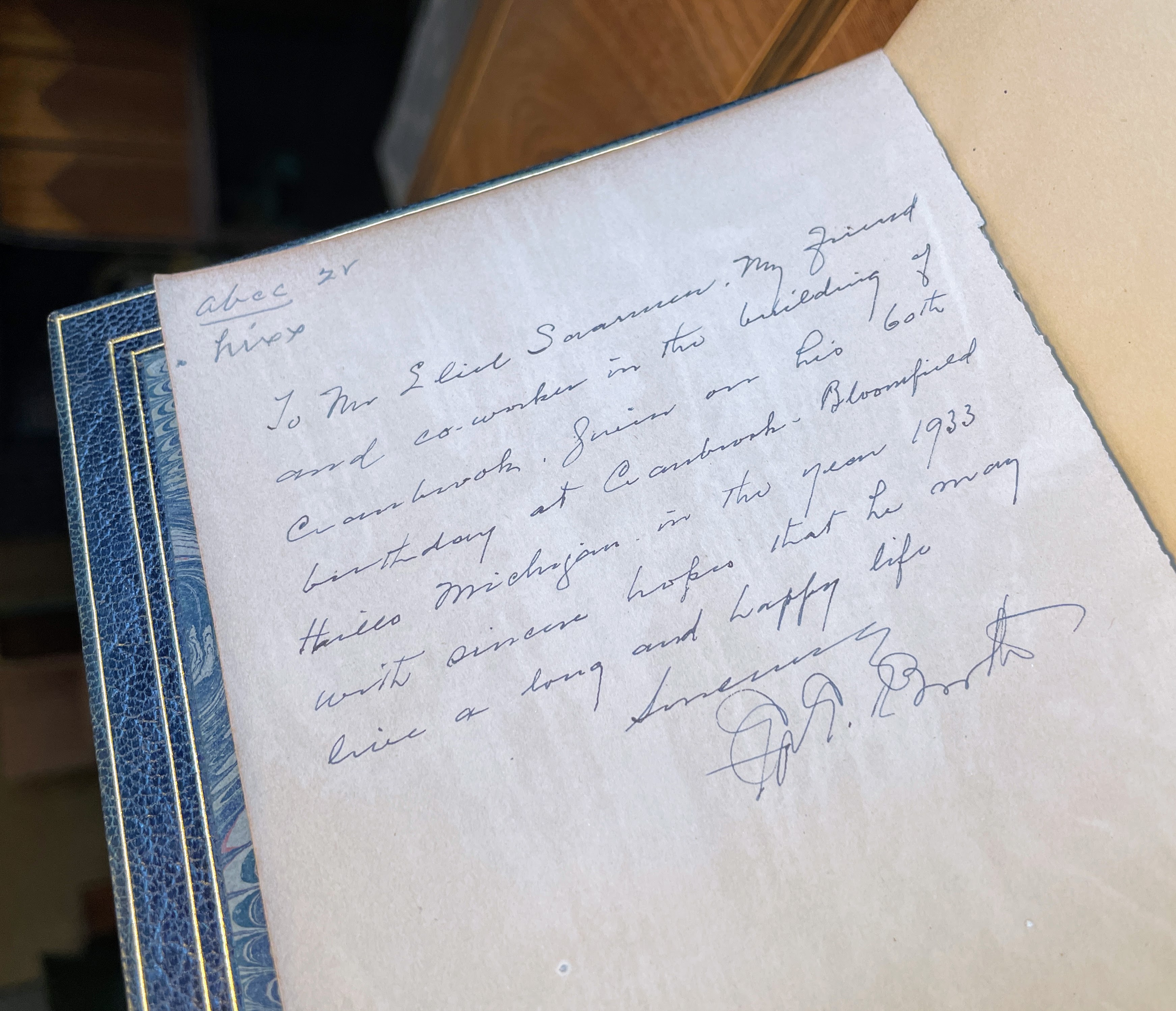
And here is the second coincidence. The inscription in Cranbrook House inspired this blog on Landor, who deserved some recognition. Yet it was while idling in Saarinen House waiting for a COVID-safe tour for Cranbrook students that I found myself looking at the beauty spots of the house. My eye fell on the table in the book room. Upon it lay a couple of tastefully placed little books from the Saarinen collection. I peered at the spine and saw in gold capitals the name LANDOR. They were volumes one and two of his Conversation Pericles and Aspasia, his best-known conversation, first published 1836. The flyleaf revealed the occasion for a gift to Saarinen upon his 60th birthday in 1933, wishing him a happy life, signed G. G. Booth.
Inscribed flyleaf of Pericles and Aspasia from Booth to Saarinen on the latter’s 60th birthday, August 20, 1933. Cranbrook Center for Collections and Research.
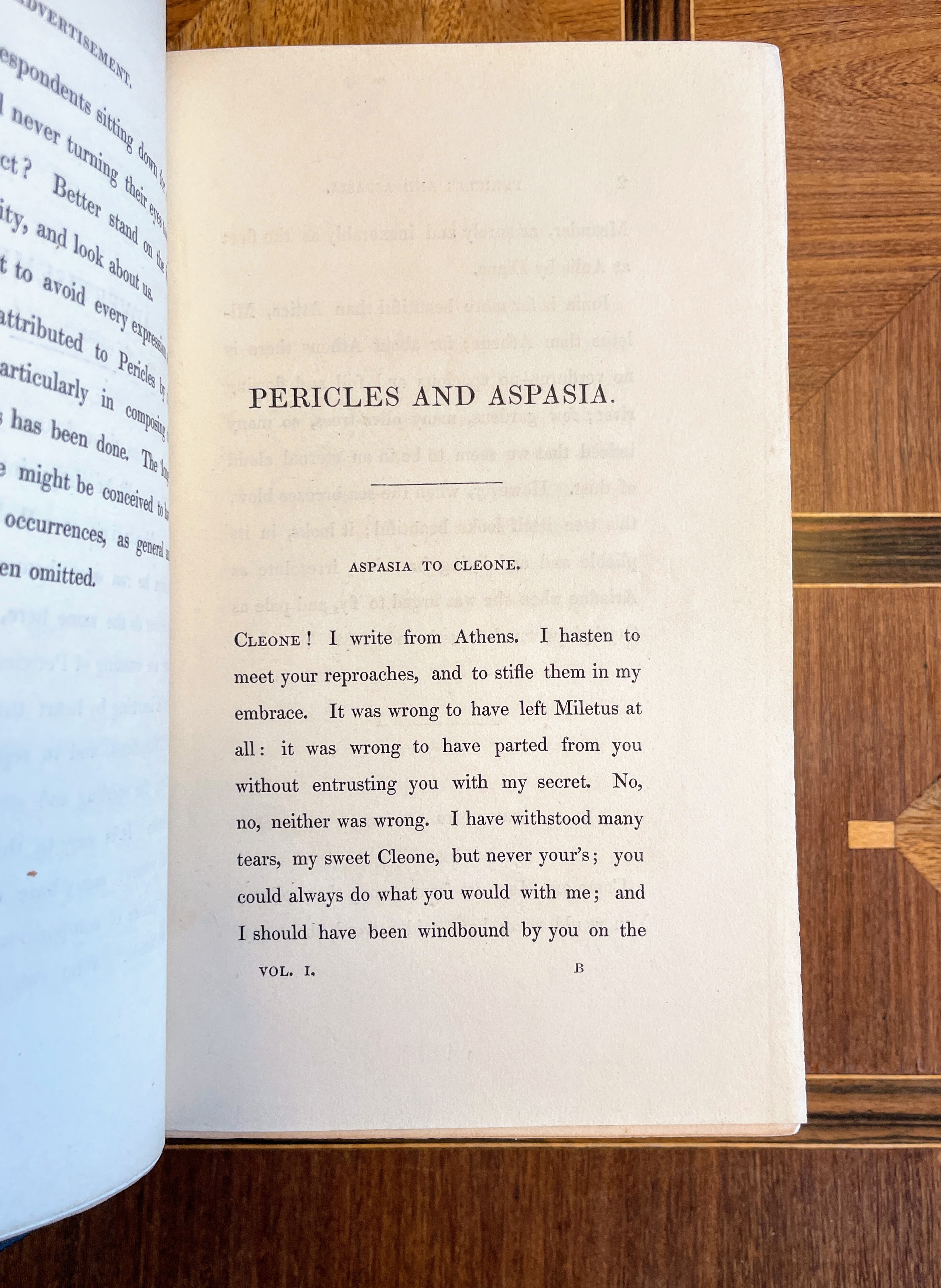
Pericles was the great Athenian general of the 5th century BCE Peloponnesian wars, and Aspasia his female companion. Their conversation by Landor is a series of letters between the lovers and their immediate companions with walk-on roles for Aeschylus, Pindar, Socrates, and Alcibiades.
First page of Landor’s Pericles and Aspasia. Cranbrook Center for Collections and Research.
The language is high-flown and not all that accessible; no wonder Landor is hardly known today.
He continued to quarrel with everyone, finally getting thrown out of his own house in 1835 at age 60 by wife, daughter and one son, and fled Italy after scurrilous Latin verses excited the authorities. Back in England, as irascible as ever, Landor continued to write conversations and poems and found himself the grand old man of letters as his fame grew. Carlyle, Tennyson, Browning, Trollope, and Dickens (Landor appears in Bleak House as Lawrence Boythorn) were admiring dinner companions when Landor wasn’t in too bad a temper.
Villa La Torraccia, or Villa Landor, in Fiesole, Italy. Photograph by Sailko, reused by CC BY 3.0.
His last six years were spent back in Italy. He died, escaping as usual, in a hotel in Florence in 1864. The villa was later bought by explorer Willard Fiske and renamed Villa Landor. The villa, altered over the years, is now the Fiesole School of Music, echoing no doubt to the rages and laughter of its most prominent owner. Llanthony Priory continued to decay until protected by the Welsh government cultural group, Cadw.
Even though Landor’s life can hardly have met his approval, it is not surprising, perhaps, that George Booth found a quote from the grand old man of the previous century to adorn his own masterpiece, though one might find the use of the word “strife” ambiguous. Just as well Booth chose only the line that suited his purpose: “Nature I loved, and, next to Nature, Art.” The grand old man has come to rest.
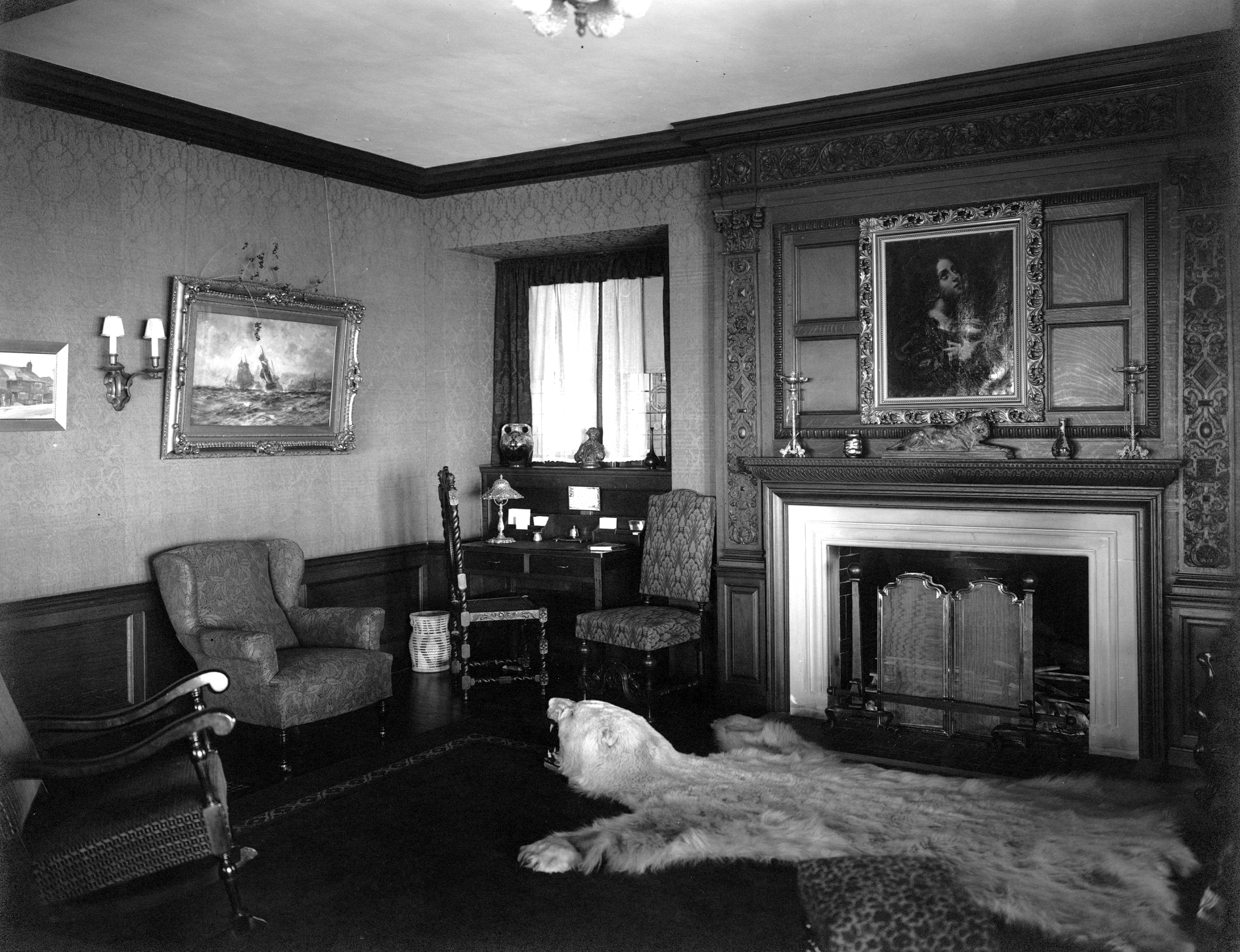
As the temperature dips and the days get shorter, it sure would be nice to end the week reading a book next to a roaring fire. The Booths likely had the same idea their second winter at Cranbrook House, where they could have curled up by the fire…on their new polar bear rug!?
Cranbrook House Living Room, ca. 1909, with one incredible rug. Photo from the collection of Carol Booth. Courtesy Cranbrook Archives, CCCR. Copyright Cranbrook Educational Community.
Elsewhere in the cozy Living Room of 1909, we see objects that are still in Cranbrook House today: the Ships at Sea painting by Robert Hopkin; the bust of Edgar Allen Poe (1898) by George Julian Zolnay; and even the mahogany desk chair, by W. & J. Sloane Company. Some objects are no longer at Cranbrook—the registrar and I can’t quite match the rocking chair, that exact easy chair, the lamp, or the candlesticks to things in the collection. The painting above the fireplace, The Penitent Magdalene after Carlo Dolci, is also no longer here in the house.
Where did these things go? Well, George and Ellen Booth lived in this house for another forty years after this photo was taken! They constantly added to, gifted away, and sold pieces from the collection.
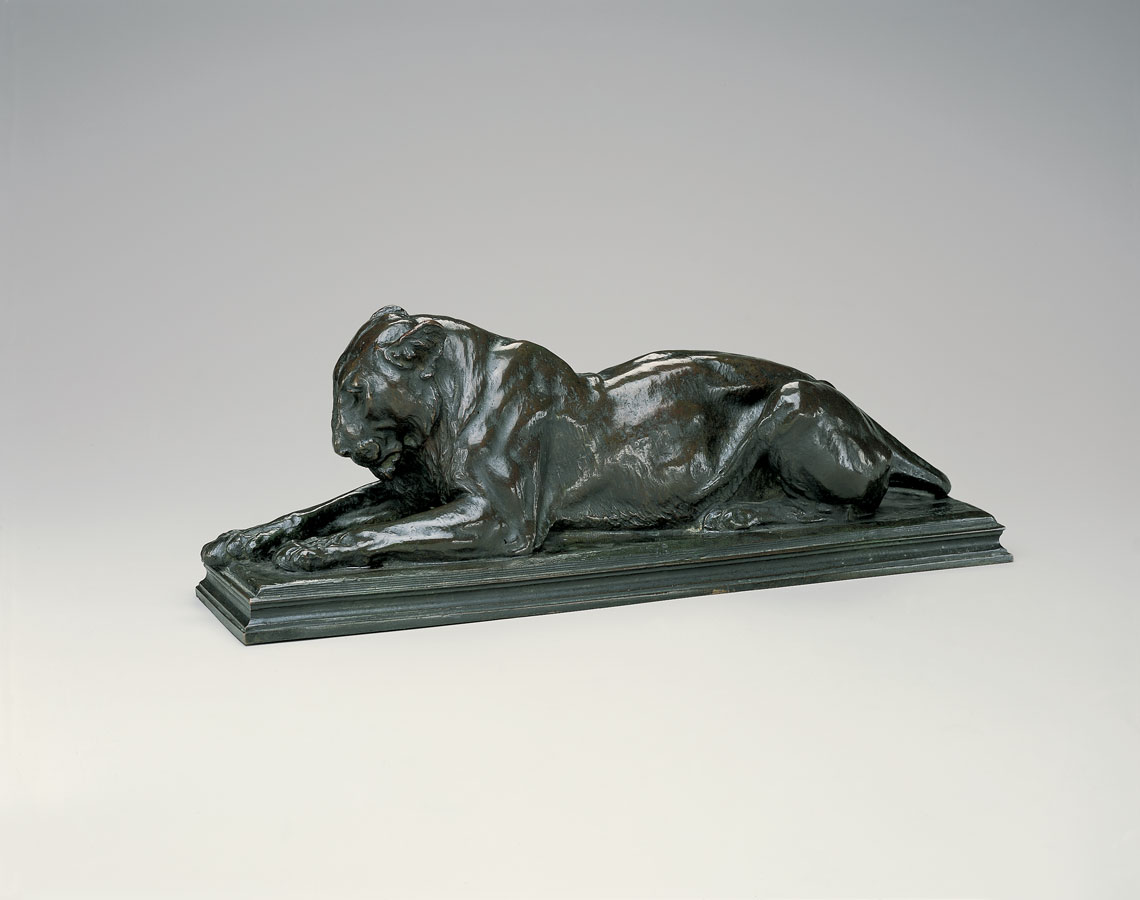
But not everything in this photograph that left the house went entirely off campus. You may notice one piece on the mantle: Recumbent Lioness by Eli Harvey. Booth purchased this sculpture in 1909 from Tiffany & Company in New York. In the 1930s, he gave this lioness to the new Cranbrook Art Museum, where it was assigned the first accession number in the collection: 1909.1. (It’s not actually on campus at the moment: it’s currently on display in Switzerland!)
Recumbent Lioness, Eli Harvey (born 1860, Ogden, Ohio; died 1957, Alhambra, California). Foundry: Pompeian Bronze Works, New York. Bronze; 7.5 x 5 x 21.5 inches. Gift of George Gough Booth and Ellen Scripps Booth, CAM 1909.1. Photograph by R. H. Hensleigh and Tim Thayer. Courtesy of Cranbrook Art Museum.
Using photographs like the one from 1909, as well as diary entries, books, and other records in Cranbrook Archives, I’ve spent the past week re-arranging Cranbrook House’s first floor back to this early aesthetic. On Sunday, the Center is partnering with Cranbrook House & Gardens Auxiliary to present a very special virtual tour: Home for the Holidays at Cranbrook House. I’ll be your host and guide, and will be joined (virtually) by volunteers from the Auxiliary to help share stories from holidays past. I think you’ll really enjoy this tour—there are lots of beautiful things I’ve placed back on display, and we are all very excited to share them with you!
—Kevin Adkisson, Associate Curator, Cranbrook Center for Collections and Research
PS: You’ll need to join our tour Sunday to see if the polar bear rug has made a reappearance!
With the Thanksgiving holiday almost upon us, it is time to begin planning and preparing one of the essential parts of any celebration: food. It seems timely, then, to highlight Flora Leslie, Brookside’s long-serving dietician and food director. I would like to introduce her to you in her own voice, recalling a memory of some precarious pumpkin pies:
Floral Leslie interview with Mark Coir, Archivist (OH1990.09.28), November 5, 1987. Courtesy of Cranbrook Archives.
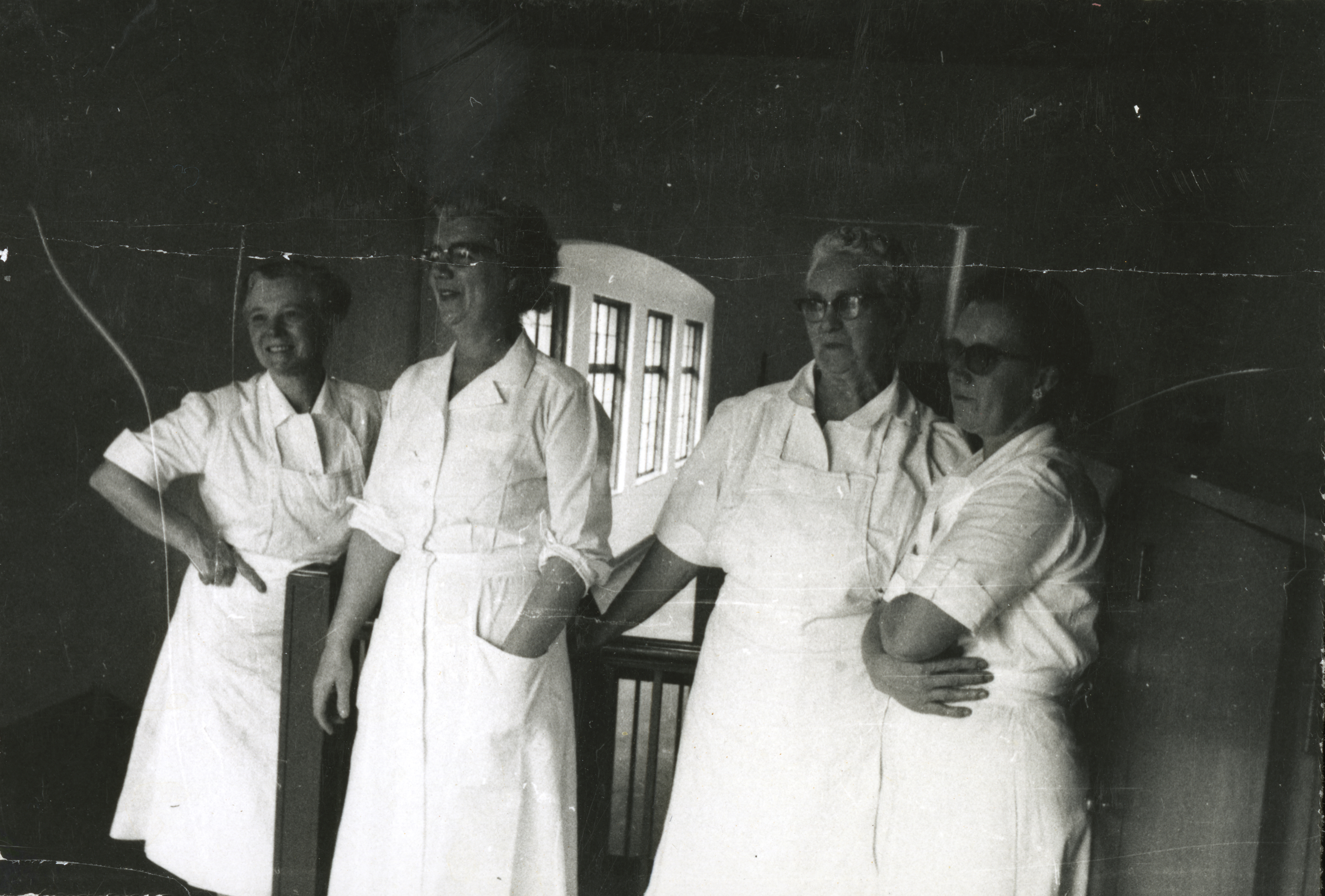
Hearing this story in Flora’s voice brings the memory to life in a different way than simply reading it in written form. Cranbrook Archives’ Oral History Collection holds recordings of many voices that add dynamism and richness to their stories. Flora Leslie’s interview describes her life at Cranbrook and her experience of its people and places in the mid-twentieth century.
Flora Leslie (second from left) with cooking staff at Brookside School. Courtesy of Cranbrook Archives.
Born Flora MacFarlane in Alexandria, Scotland, in 1906, she made her way to the United States alone in December 1930. Journeying by ship on a very stormy sea, the passengers were required to stay below deck where they got to know each other more than they would have had they been able to wander on deck. Having worked in a photographer’s office in Scotland, Flora initially sought the same occupation in America.
But a fellow passenger Flora met aboard the ship told her that if she had no luck finding work, to contact her for employment. It is thus that Flora began to work for the Ward family in Pontiac, a family whose children were students at Cranbrook.
In 1932, Flora started working at Cranbrook, initially at Kingswood School. Flora married George Leslie in 1934, a landscaper and gardener, and later a superintendent of buildings at Cranbrook.
George Leslie (left) and Flora Leslie (right) in the garden of their apartment, the Ram’s House, at Brookside School, circa 1935. Courtesy of Cranbrook Archives.
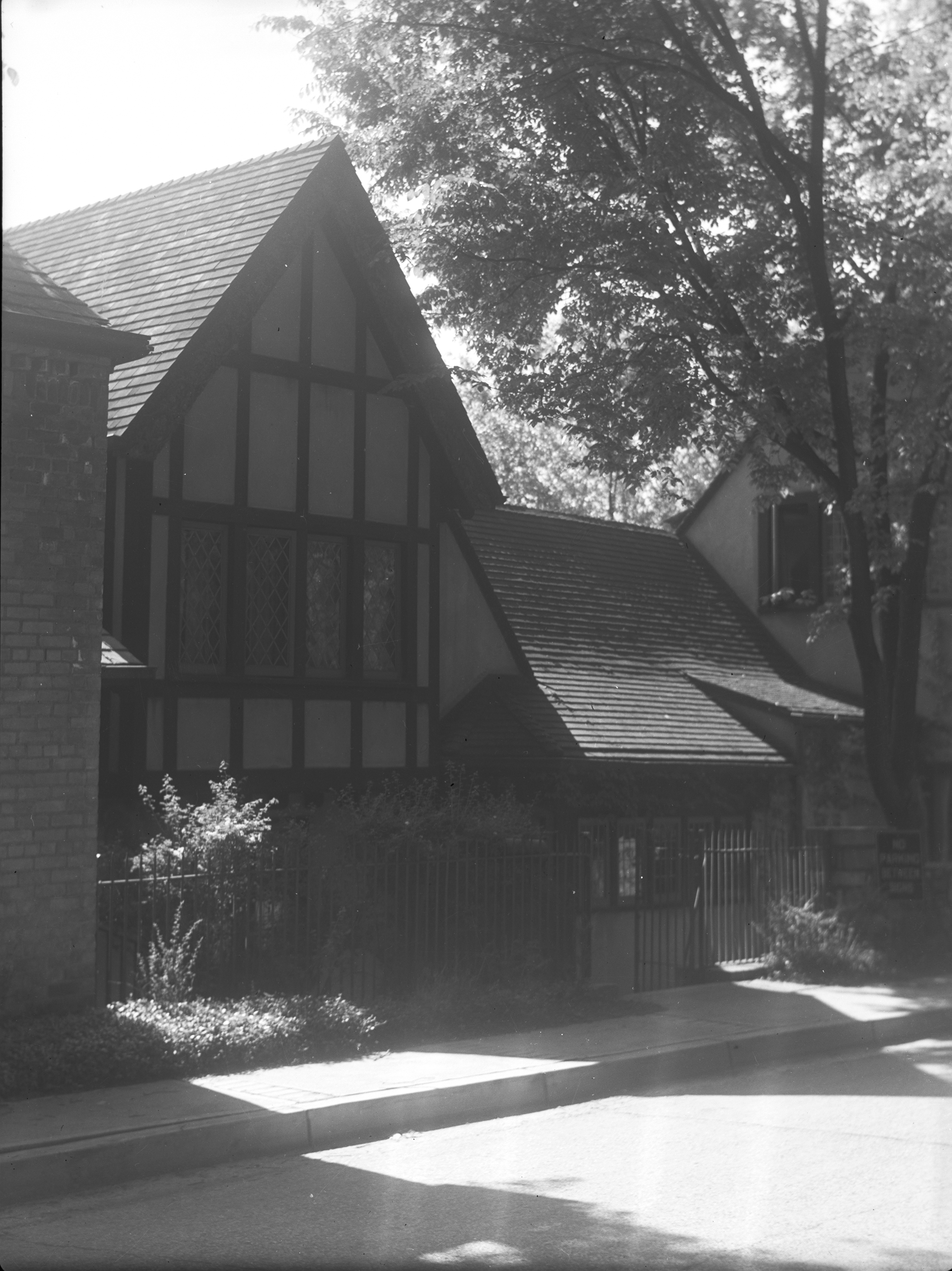
After several invitations from Jessie Winter, Headmistress of Brookside School, Flora became the dietician and food director at Brookside School, a position she held from 1934-1975. The position came with an apartment, and though at first Flora preferred to stay at Kingswood, which she describes as “light and bright and lovely,” Winter asked Flora and George back to Brookside one further time and had arranged the apartment beautifully. Most importantly, there was a brand-new Frigidaire refrigerator, a novelty in those days. As Flora recalled, seeing this small luxury she told the headmistress, “We’ll come!” The apartment was in the part of Brookside known as the ‘Ram’s House’ and had previously been occupied by Jessie Winter and by J. Robert F. Swanson.
View of the front of George and Flora Leslie’s apartment, known as the Ram’s House, circa 1935-1938. Courtesy of Cranbrook Archives.
During the war years, when food was in short supply, George and Flora Leslie kept Brookside stocked with vegetables—he grew them and she canned them.
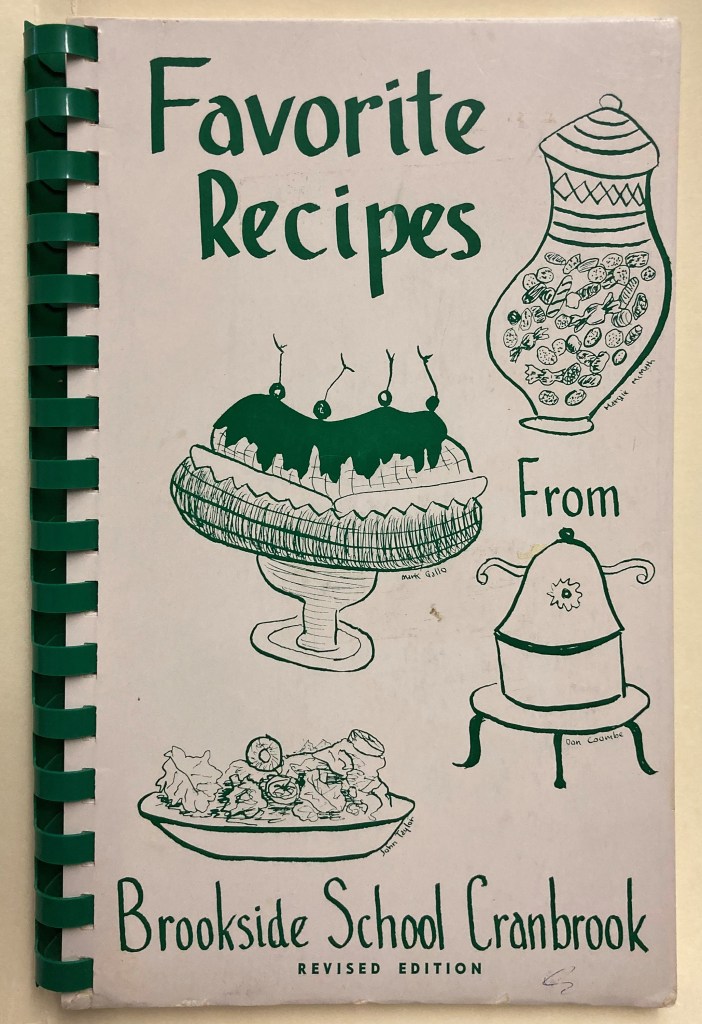
The Favorite Recipes cookbook from Brookside School, 1970.
View of original recipes from Flora Leslie in the Favorite Recipes cookbook from Brookside School, 1970.
View of dessert page from the Favorite Recipes cookbook from Brookside School, 1970.
Favorite Recipes, the Brookside cookbook, 1970. Courtesy of Cranbrook Archives.
After feeding generations of students, Flora published many of her favorite and original recipes in the Brookside cookbook, Favorite Recipes, which are still enjoyed by alumni far and wide. Perhaps you might like to try one of Flora’s original recipes this Thanksgiving, or a dessert recipe from one of the faculty families?
—Laura MacNewman, Associate Archivist, Cranbrook Center for Collections and Research
This is a story about a wonderful discovery and a trial of patience. A few years ago, I processed the F. Shirley Prouty Collection on Johannes Kirchmayer, which documents the life and work of her great uncle and contains many years of meticulous research. It was a wonderful collection to work with, and a trove of information on architects and craftsmen of the American gothic revival.
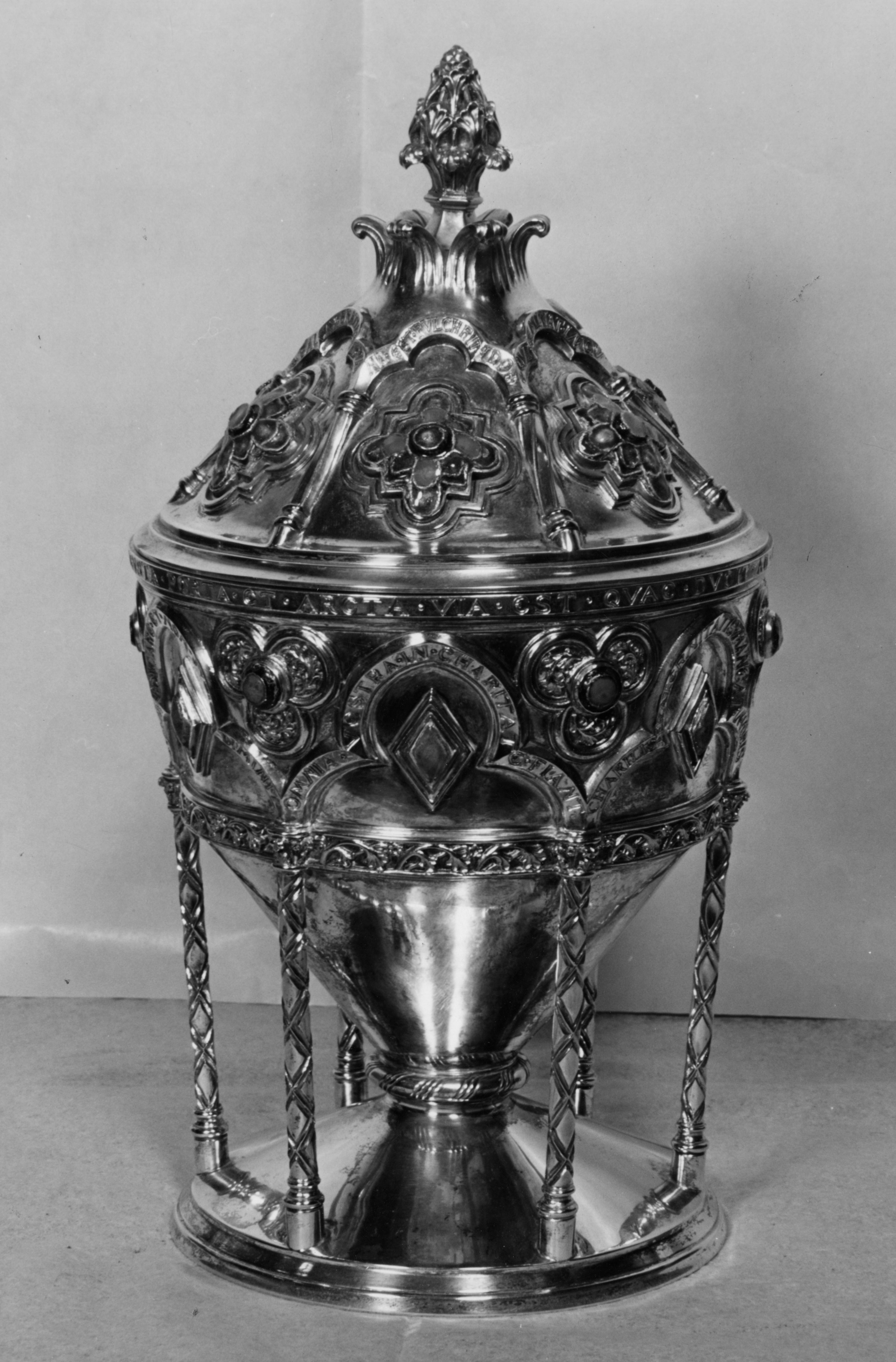
Two of the most outstanding of these are architect Ralph Adams Cram and woodcarver Johannes Kirchmayer, who worked together on many projects. This week I made a wonderful new discovery of another product of their hearts, minds, and hands: a silver and gilt portable font initially commissioned as a gift for the Detroit Museum of Art (now the Detroit Institute of Arts) by George Booth. Cram designed it and Kirchmayer created the sculpture models and chasings for it; then, the piece was executed by silversmithJames T. Woolley and decorated by enamellist Elizabeth Copeland.
Silver gilt font completed in 1920 for Detroit Museum of Art. Ralph Adams Cram, Johannes Kirchmayer, James T. Woolley, and Elizabeth Copeland. Cranbrook Archives.
In February 1918, Cram designed the font, which George Booth hoped to have ready for display at the General Convention of the Episcopal Church, to be held in Detroit for the first time in October of 1919.
The making of the font did not follow the anticipated timeline, but rather than a story of delay and disappointment, it becomes a story of patience and its reward.
During the spring, Booth visited Boston and left the Cram blueprint with Woolley. On May 1st, he enquired to know Woolley’s interest in executing the design and an estimate of cost, to which Woolley replied positively, quoting $450 excluding the enamel parts. Giving the commission to Woolley, Booth advised him to confer with Cram or his assistant, Mr. Cleveland, and that Copeland will complete the enameling work.
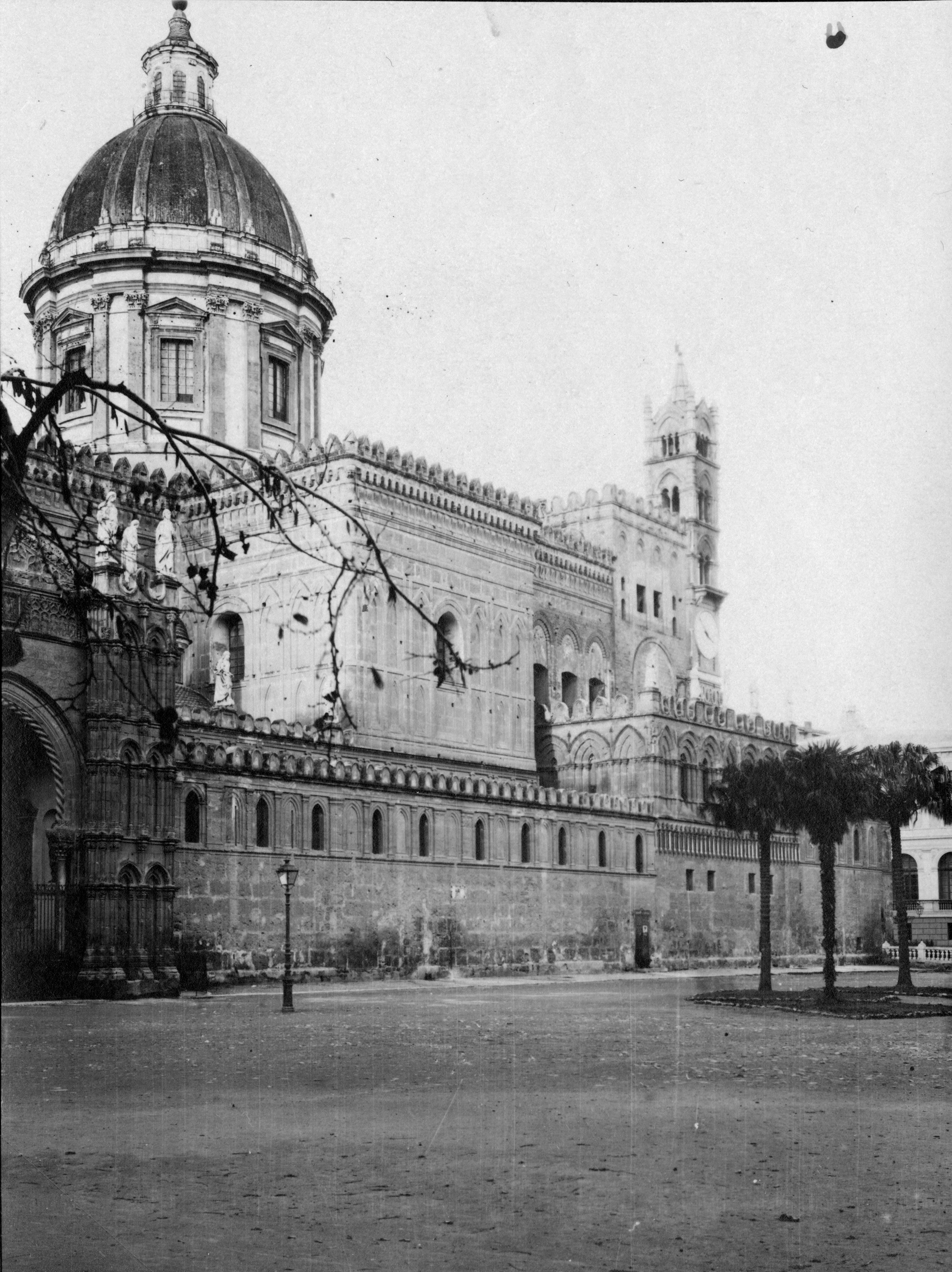
In the center of the Quadrangle at Cranbrook School is a replica of a fountain which stands in the southwestern corner of the cloister of Duomo Monreale in Palermo, Sicily. Completed in 1182, the cathedral unites Arabic, Byzantine, and Norman architectural and cultural influences and is famed for its mosaics.
The inspiration for the fountain’s long-treasured presence on the Cranbrook campus dates back to 1922, when Henry Scripps Booth first saw the original in the cathedral cloister. This was a site that Henry seems to have particularly wanted to see while on a ten-month architectural study tour of Scandinavia, Germany, Switzerland, Italy, Great Britain, and France, with his friend, J. Robert F. Swanson.
View of the Duomo Monreale, December 1922. Henry Scripps Booth, photographer. Cranbrook Archives.
Writing to his father, Cranbrook founder George G. Booth, on December 26, 1922, he describes the cathedral thus:
“Mosaic everywhere — luminous gold, and dull colors — with intricate geometric patterns in abundance and fine but rather arcaic [sic] representations of Biblical stories roofed over with a richly decorated trussed ceiling. The cloister in the cathedral’s shade is that delightful one with such delicate columns in pairs, decorated by mosaics, that is illustrated so frequently.”
View of the Duomo Monreale, December 1922. Henry Scripps Booth, photographer. Cranbrook Archives.
Henry laments that there isn’t time enough to study the monuments as closely as he would like, to measure them and draw them up, for if they did, they would end up knowing only one thing well but miss out on so many others. His letter includes this sketch of the fountain:
Letter from Henry Scripps Booth to George Gough Booth, December 24-26, 1922. Cranbrook Archives.
Several years later, George is in Naples, Italy, at one of his favored workshops, the Chiurazzi Foundry. On March 2, 1927, George wrote to Henry to tell him of numerous purchases he made at the foundry, all to be gifts to the new Cranbrook School for Boys. While the specific uses of the items might be determined later, as was characteristic of George he had a tentative plan for all of them. The most important was the replica of the Monreale fountain. Here, we can see George’s sketch of the replica fountain, showing its dimensions:
When George and Ellen Booth moved from Detroit to Bloomfield in 1904, they named their estate ‘Cranbrook’ after George’s ancestral home of Cranbrook, Kent, England. As the institutions and landscape developed, many of them were also named after places in and around the ancestral Cranbrook. George’s father,Henry Wood Booth, was born there in 1837, where his father, Henry Gough Booth, and grandfather, George Booth, werecoppersmiths.
In 1901, Henry Wood Booth along with George and Ellen took a trip to England, and the photographs from this trip are held in the Henry Wood Booth Papers in Cranbrook Archives. I invite you on a virtual “walking” tour of Cranbrook, Kent, using these historical images alongside the same places in the present day.
Cranbrookis a small town situated on the River Crane with anindustrial history in iron-making, that goes back to Roman times, and cloth-making, stimulated by the settlement of Flemish weavers in 1331. Cranbrook belongs to a group of towns known as the Weald, which comes from a West Saxon word for “forest”. During the middle ages, Kent was divided into seven “lathes” (an administrative unit peculiar to Kent), and Cranbrookwas one of seven “hundreds” (the smallest administrative unit about the same size as a parish) belonging to the lathe of Scray.
The map below pinpoints the places that we will visit so that you can follow the route as we tour the town.
Walking tour directions. Google, 2020.
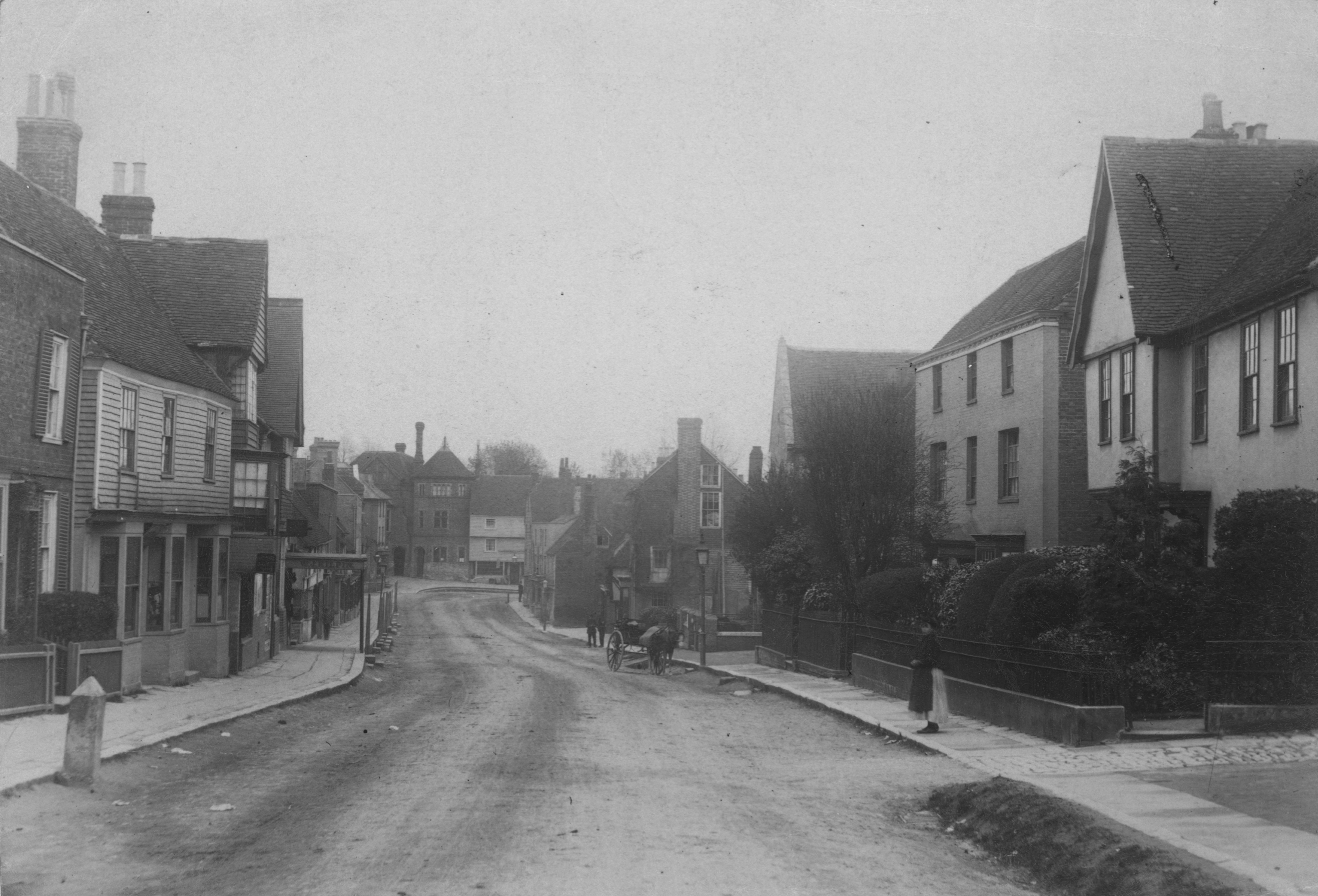
1. View down High Street towards Town Hall
Cranbrook is comprised of one main road, the High Street, which intersects with another smaller road, Stone Street. Most English towns have a “High Street,” just like “Main Street” in the US, and we will begin our tour on the High Street that leads into the town center.
View of the High Street looking down to the Town Hall, 1901. Cranbrook Archives.
View of Cranbrook High Street. May 2019. Google.
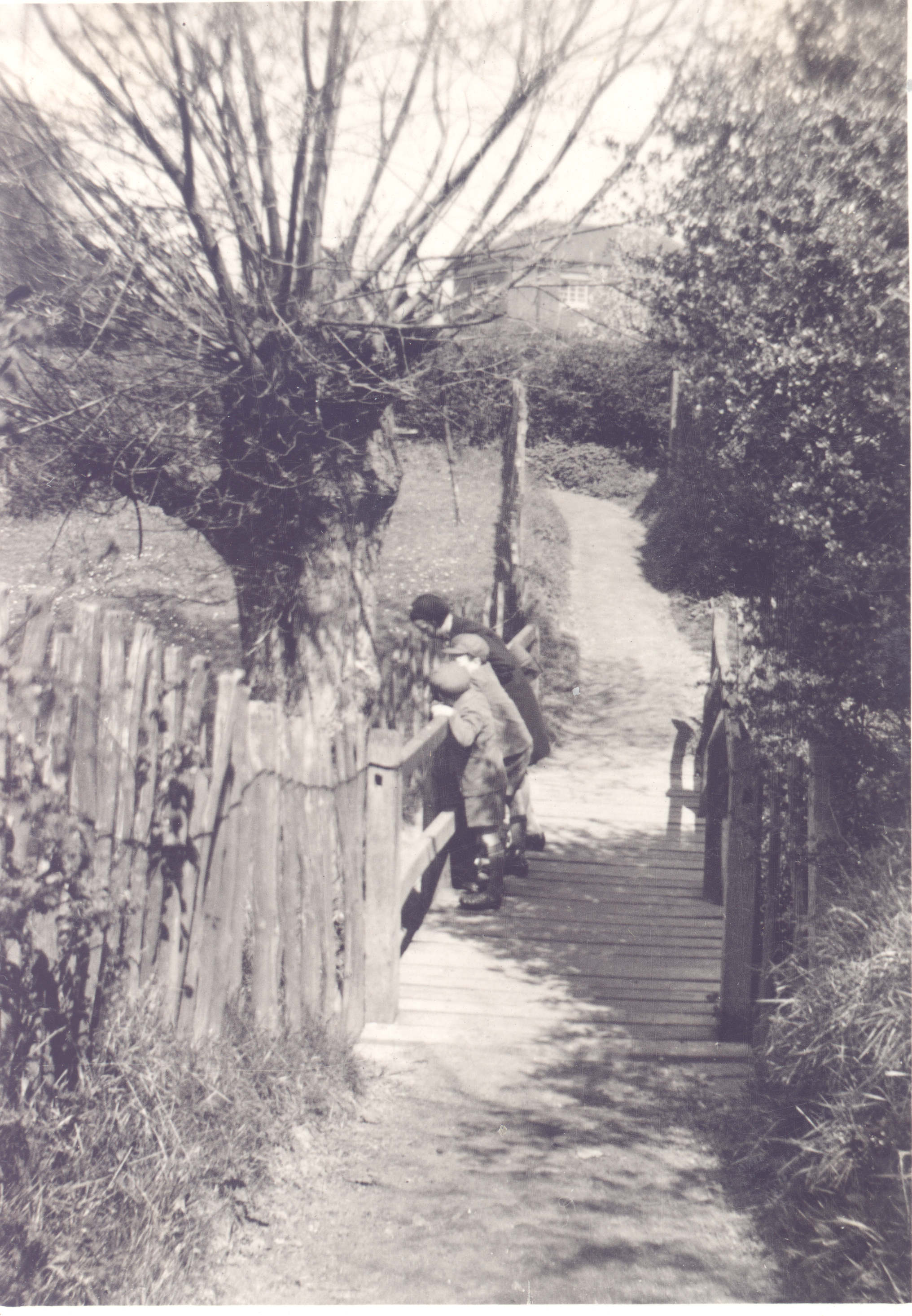
2. Crane Lane
At the end of the High Street, there is a small lane called Crane Lane. The Booth family lived on the High Street nearby this lane. The symbolism of the Crane is well known on the Cranbrook campus and you can see its history rooted in the etymology of the ancestral Cranbrook, which is named for the gathering of cranes at the brook.
View of Crane Lane, 1901. Cranbrook Archives.
This is a bird’s eye view of Crane Lane showing the brook. If you click and zoom out on the map you can see that it leads to a small unbuilt area and eventually to a road named “Brookside”.
Satellite map showing Crane Brook and Crane Lane. 2020. Google.
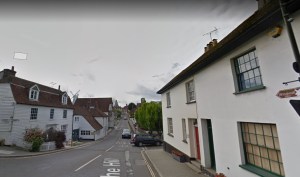
3. Turning right onto Stone Street – you can see the George Hotel on the right:
View of Stone Street with the George Hotel on the right, 1901. Cranbrook Archives.
The George Hotel is still there today:
View of Stone Street. May 2019. Google.
4. At the intersection of Stone Street and Hill Road, which leads to the Union Mill, there was a blacksmith’s shop on the corner. Henry Wood Booth’s birthplace is on the left on Hill Road:
View of Hill Road leading to Union Mill, 1901. Cranbrook Archives.
The view today is quite similar:
View of Hill Road. May 2019. Google.
Union Millis the last remaining of four smock mills in Cranbrook. It is still used to grind flour which you can see here.
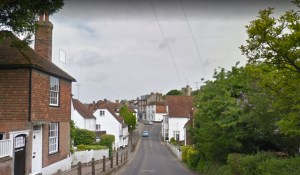
5. Heading back to the center of town, you can see St. Dunstan’s in the distance:
This is the view today:
View looking down Hill Road from the site of the mill. May 2019. Google.
7. St. Dunstan’s Church
You may be familiar with this name from St. Dunstan’s Theatre and St. Dunstan’s Chapel.St. Dunstan’s Church is the parish church of Cranbrook in the Diocese of Canterbury. It is known as the Cathedral in the Weald and, while records show that a church was there almost 1000 years ago, the present building is over 500 years old. St. Dunstan himself is the patron saint of metalsmiths.
St. Dunstan’s Church, 1901. Cranbrook Archives.
In the surrounding area, there are other sites with names that you will recognize from Cranbrook campus, namelyAngley Wood and Glassenbury Manor (Kingswood Lakewas once called Glassenbury Lake).
I hope you have enjoyed the trip and discovered something new about Cranbrook past and present.
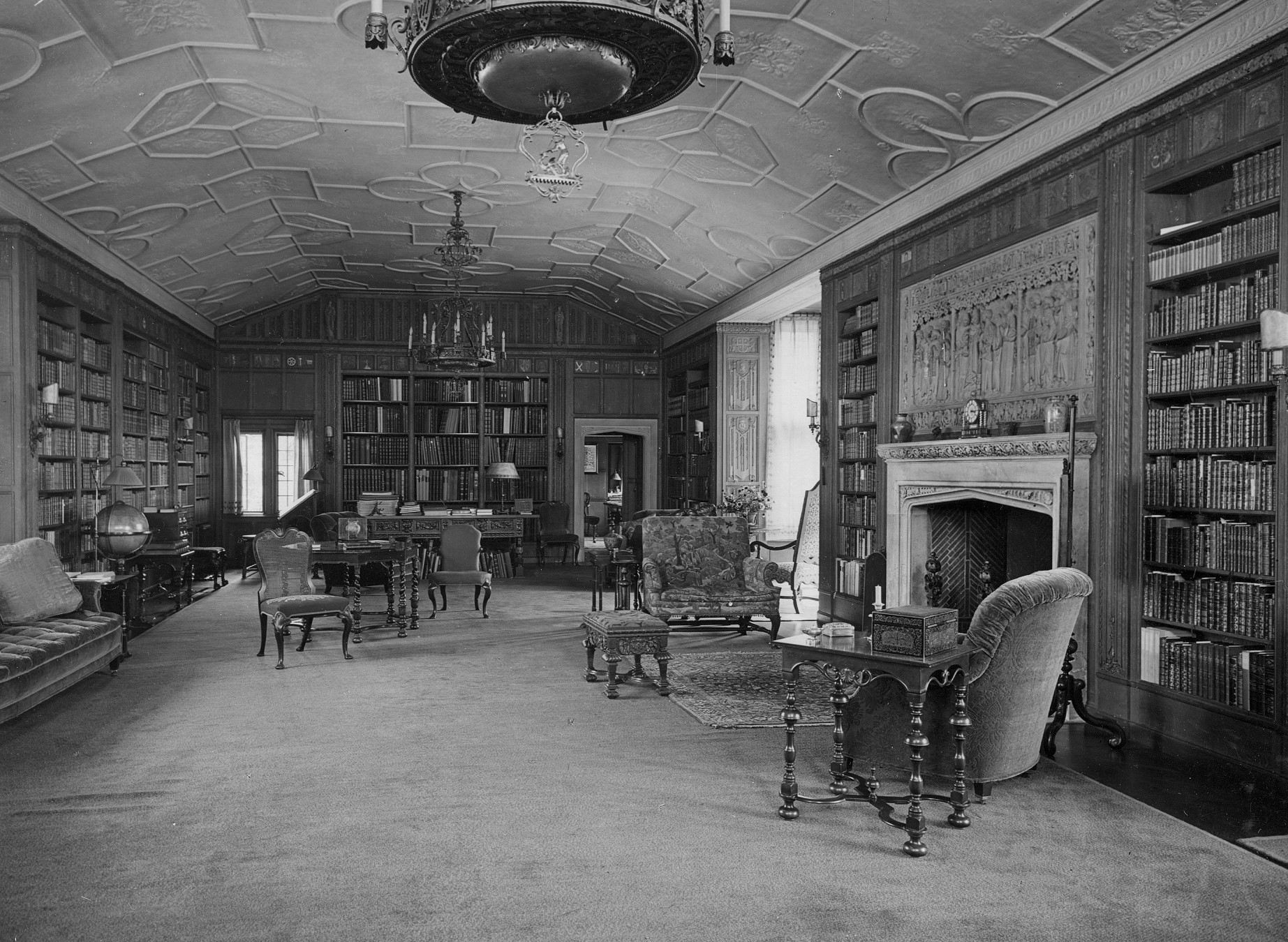
For all of us who are confined to quarters and find ourselves condemned to read from our own library, let me invite you into George and Ellen Booth’s ample domain. Those of you who know Cranbrook House, the Booths’ Albert Kahn mansion, will have visited the library or attended events there. Perhaps your attention was more taken up by the Herter tapestry or the Kirchmeyer overmantel than by what is on the actual shelves, but art aside, let’s look at the books.
George Booth may well have had a jobber buying books for him to fill those shelves, and he certainly would have been aware of the 1909 Collier’s Harvard Classics, consisting of all the books Harvard President Charles Eliot deemed essential background reading for an educated man of substance.
View of the south end of the Cranbrook House library, 1920. Photo by John Wallace Gillies. Courtesy Cranbrook Archives.
So, books to impress and accessorize, yes, but now we need to read: we want to be lost in a book that takes us away from this turbulent world. What’s on offer? We will skip Dante’s Inferno, however much we may feel it appropriate, and pick some things at random which you can read either through your e-reader or your library access to Hoopla! and which may do the trick.
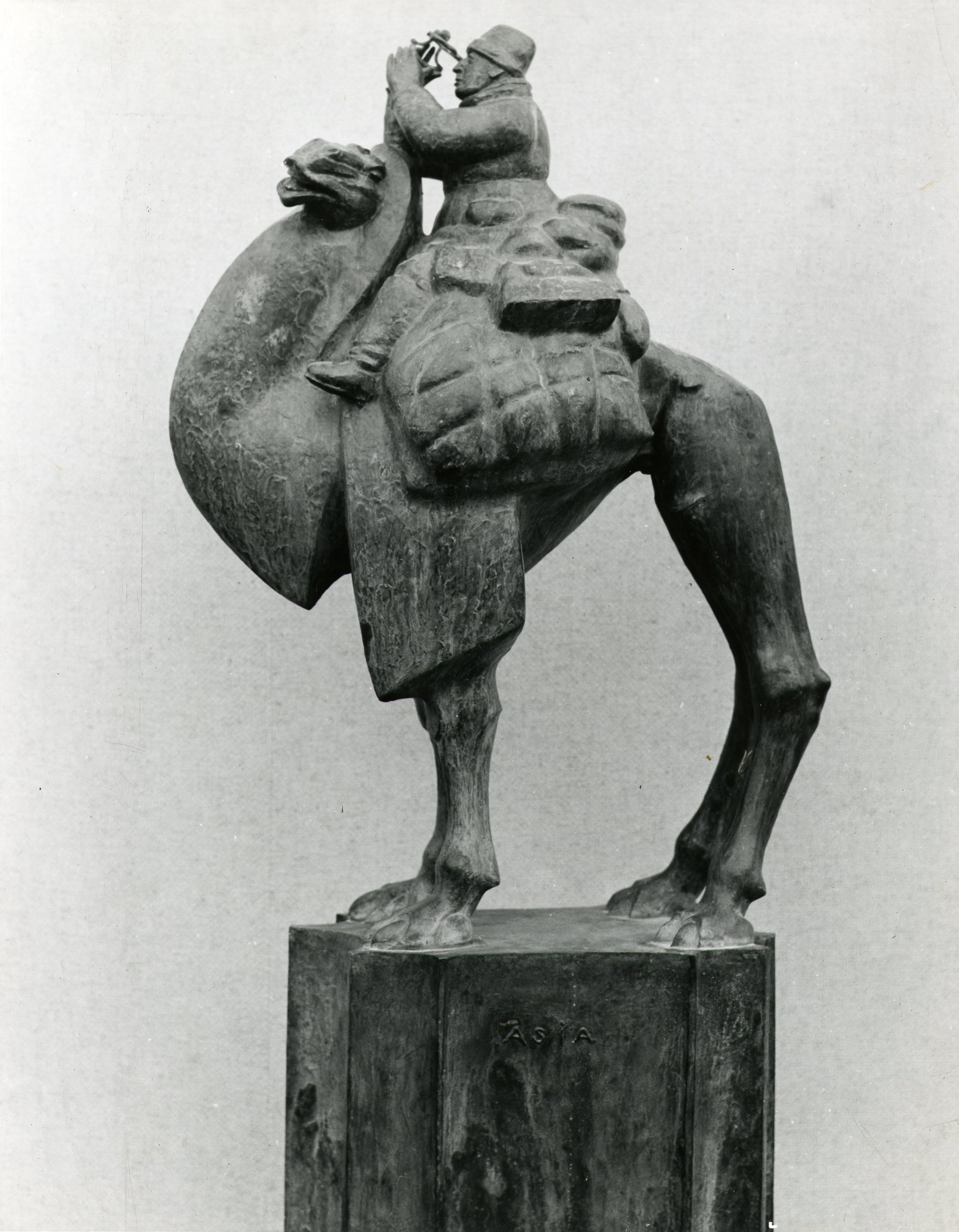
Nonfiction: Sven Hedin’s Through Asia. Remember Sven Hedin from Carl Milles’s sculpture at the Institute of Science?
Carl Milles’s “Sven Hedin” (1932), which sits beside the reflecting pool at the Cranbrook Institute of Science. Courtesy Cranbrook Archives.
Hedin was a Swedish explorer of Central Asia in the 1920s. His accounts are absorbing and illustrated copiously by Hedin himself. Read Hedlin here.
Who doesn’t love the memoirs of a spy? Here comes Bruce Lockhart’s best-selling Memoirs of a British Agent, his 1932 account of diplomatic shenanigans in Moscow, trying to keep Russia in the war against Germany in 1918. This was the book to be reading in 1933. Purchase Lockhart here.
Memoirs of a British Agent in the Booth Library, 11th Printing, 1933. Courtesy of Cranbrook Center for Collections and Research.
This next one is really quite a story and a book I knew nothing about. On the Booth shelves it is called A German Prince and His Victim, but in Google Play you will find it as Memoirs of a Young Greek Lady. This is no novel but the autobiographical account of a 14-year-old girl and her abduction by Prince Ernest of Saxe-Coburg. The Coburgs, though minor princelings in theory, ended up marrying into all the royal families of Europe including Russia. This good duke was the philandering father of Queen Victoria’s Albert, and not at all of the same character. If you have watched the PBS series, Victoria, you will remember that the brothers Ernest and Albert were embarrassed that their father was their father. The writing is histrionic, to say the least, but the story is riveting, the duke dreadful, the girl tenacious: the forerunner to reports you will find in newspapers today. I have to say I was mesmerized by this story and gobbled it up. Read the memoirs here.
Portrait of Ernest I, Duke of Saxe-Coburg-Gotha, by George Dawe, 1819. Courtesy of The Royal Collection.
And novels: I was glad to see that the Booths have a copy of Thackeray’s Vanity Fair. I am told there is a great TV serialization of this comédie humaine, but the book contains everything you will ever need to know about human nature, told with humor and restraint. The writers of the TV serialization of Sanditon, the would-be adaptation of the Jane Austen tale, have certainly borrowed from this novel. Read Thackeray here.
Vanity Fair title page in the Booth Library, from The Works of William Makepeace Thackeray Vol. I, 1878. Courtesy of Cranbrook Center for Collections and Research.
If you have never read these books, you should; the stories are magnificent and the nineteenth century novelistic version of the action movie, and quite possibly the archetype of swashbuckling in movies or anywhere else: The Three Musketeers series by Alexandre Dumas. They are a great read for young adults too. Read Dumas here.
One of the twenty-one illustrations of “The Three Musketeers” by A. J. Lalauze in the Collection of the Cranbrook Art Museum (CAM 1955.360.15).
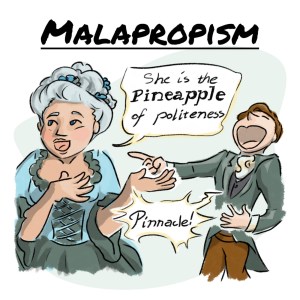
Family time. Try reading Sheridan’s The Rivals out loud. It’s a challenge but very funny. This play has the great Mrs. Malaprop who manages to misuse words in a most perplexing fashion. Your reading out loud will improve immeasurably, and you may even find that some of the expressions find their way in your life. Read Sheridan here.
There are lots of great reads in the Booth library, whether intentionally collected or not. We are just scratching the surface here!
Just a note: the books remaining on the library shelves today represent only a portion of the Booth collection, many of the more notable volumes being housed in theAcademy of Art Library or Cranbrook Archives.
If you want to know what happened to the “victim” of the German prince after the period in question, reply in the comments and we can fill you in.
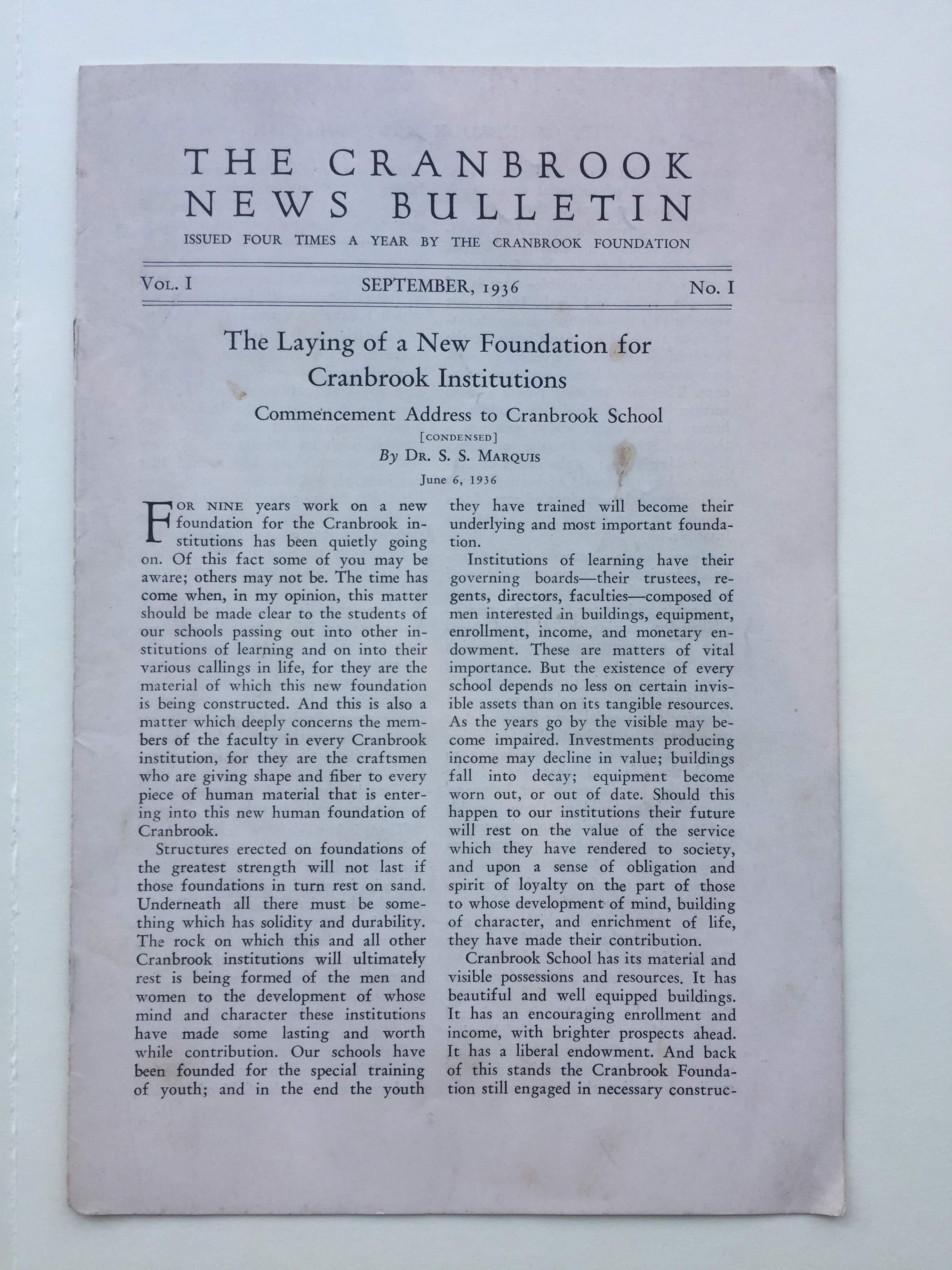
This is a story about the mistaken attribution of a quote, as told through the lens of archival provenance, that further deepened my own understanding and appreciation of the Cranbrook story. A researcher, referring to Cranbrook’s founder George Booth, once asked, “How did he do it? All of this! How do you motivate the finest artisans and craftsmen to come and help build a center for art and education?” It is a marvelous question, and surely one in which each inquirer may draw a different conclusion. When I get similar questions about how Cranbrook came to be, I always turn first to the words of George G. Booth himself, whether they be formalized in a trust document or business letter, crafted for a speech, or in the informal fluidity of a personal letter. Booth always acknowledged, in both his words and artistic compositions, the contributions of many, both contemporaneous and historic, in the building of Cranbrook . The image below shows a document included in the folders containing ‘Talks, 1902-1942’ in the Biographical series of the George G. Booth Papers. At some point during their administrative or archival custody, the talks were enumerated and this one is identified as number 21 with a circa date of 1936. Naturally, I have wondered exactly when and where he gave this talk.
The Laying of a New Foundation for Cranbrook Institutions, a document included among the talks of George Gough Booth. Cranbrook Archives.
In my work at Cranbrook Archives, I have observed many times that the answers we find depend upon the phrasing or precision of the questions we ask. I have also learned to remain attentive to questions when I think I have exhausted the search, as oftentimes I have found an answer when I am no longer looking for it. I recently quoted from this talk to emphasize the trajectory from vision and ideal, through words, drawings, and activity to a tangible object or building:
“… the Cranbrook Foundation, dealing with things material and visible, rests in turn upon another foundation made up of things invisible – that is, of thought, vision, and ideals… No product of human hands exists which was not a thought before it became a thing.”
Shortly thereafter, I was researching two reference requests that took me into the Cranbrook series of the Samuel Simpson Marquis Papers, wherein I discovered the original version of the talk with pencil edits to truncate it for publication in The Cranbrook News Bulletin, September 1936. It was identified as a Commencement Address to Cranbrook School by Dr. S. S. Marquis on June 6, 1936. Along with it was a typescript version, the same as the one in Booth’s papers, and a letter from the Executive Secretary of the Cranbrook Foundation, William A. Frayer, which tells us that Marquis had encouraged Frayer to digest the talk for its publication.
The Cranbrook News Bulletin, Vol. I, No. I, September 1936. Cranbrook Archives.
Although I had found my quote in a talk among those of George Booth, given to the Archives as part of his papers, here was definitive proof that it was actually part of an address given by Marquis! This discovery highlights the important, but sometimes misleading, concept of provenance of an archival collection, and how archivists continually refine understanding of their collections, even long after they are opened to researchers. In an archival setting, provenance relates to the administrative origin of a collection and ensures that the collection remains intact so that the records accumulated by one person or office are not intermingled with those of another. From an archival standpoint, the talk still belongs in Booth’s Papers, but will now be understood as something he collected rather than created. The principle of provenance dictates that it shall remain there, albeit with a note to advise future archivists and researchers of its authorship. We cannot know for certain how and when and by whose hand it came to be in his papers, but this new knowledge simply adds another layer to the relationship between Booth and Marquis, and the harmony of their thinking.
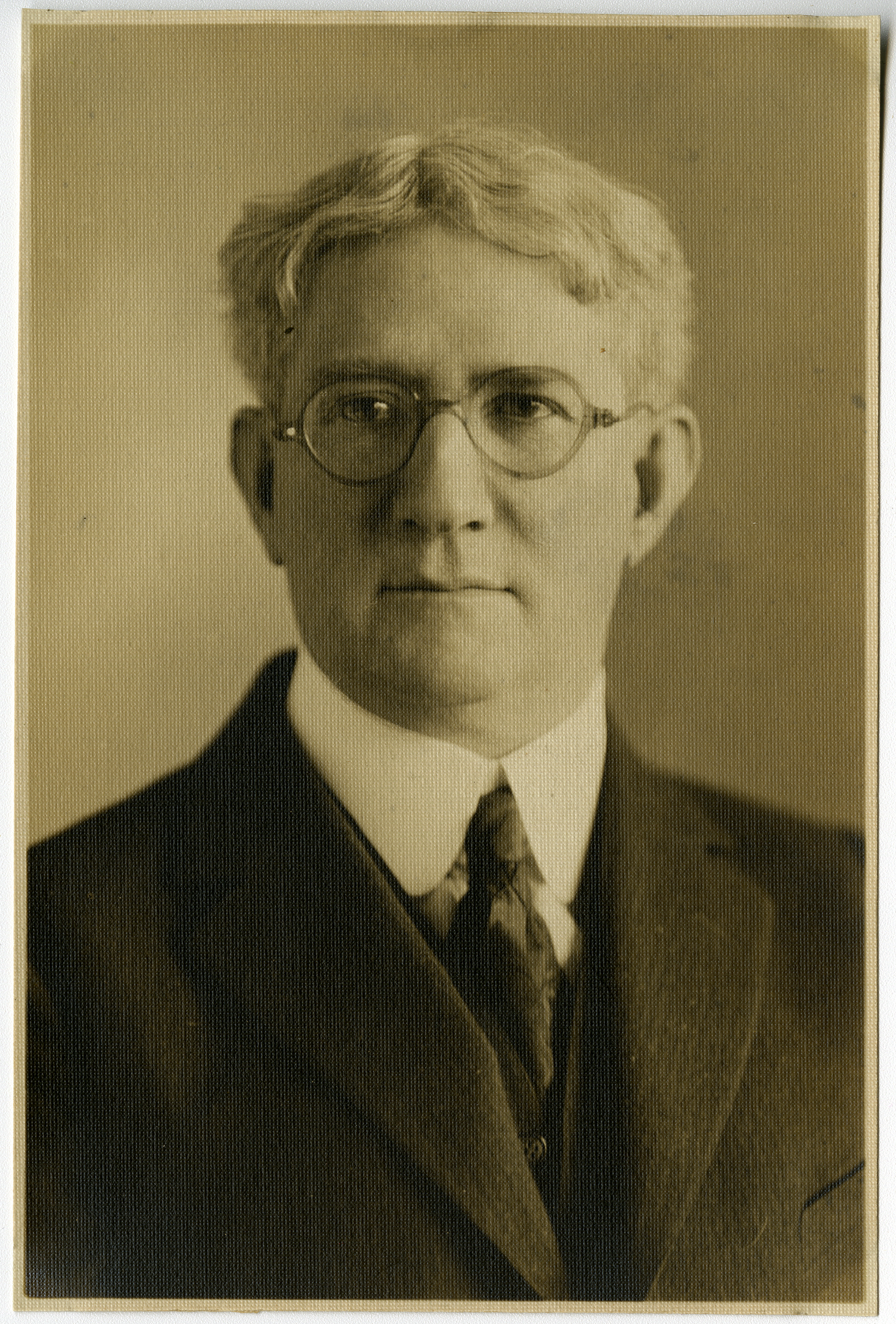
Rev. Dr. Samuel Simpson Marquis, circa 1906-1915. Cranbrook Archives.
Booth had first met Marquis as the Dean of St. Paul’s Cathedral and subsequently as visiting clergy when missionary services were conducted byHenry Wood Boothin the Meeting House(1918-1923). In October 1923, when the Meeting House began to be used for Bloomfield Hills School (later Brookside School Cranbrook), it was to Marquis that Booth turned with the idea of building a church and school. Moving to Bloomfield Hills the following year, Marquis remained part of the Cranbrook story as rector, teacher, trustee, and friend until his death in 1948.
“… the Cranbrook Foundation, dealing with things material and visible, rests in turn upon another foundation made up of things invisible – that is, of thought, vision, and ideals… No product of human hands exists which was not a thought before it became a thing.”
Rev. Dr. Samuel Simpson Marquis, “The Laying of a New Foundation for Cranbrook Institutions,” Commencement Address to Cranbrook School, June 6, 1936
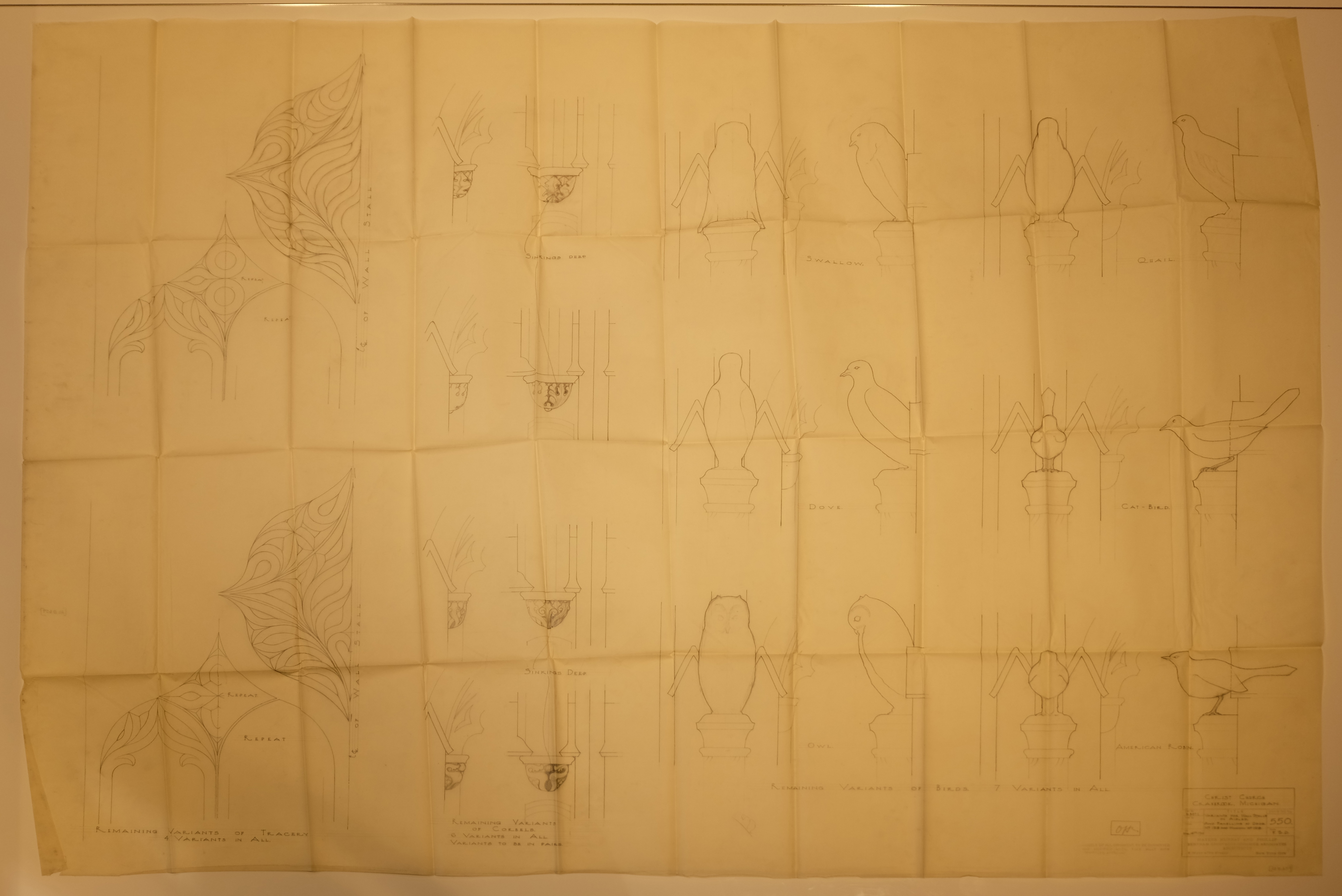
The thought, vision, and ideals of George and Ellen Booth endure in the cultural community and architectural landscape that we enjoy today. One of the great joys of working in the Archives is witnessing the documentary heritage which traces the stories of the people, places, and things that contribute to Cranbrook’s history. All record types — from correspondence, financial records, and reports to written and oral memories and reflections — provide a different insight into the process of making an idea a reality. I am particularly fond of architectural records, because it is possible to see the built campus in its earliest form. Cranbrook Archives holds a large collection of architectural drawings for the entire Cranbrook Educational Community, as well as for projects of Cranbrook affiliated firmsand architects. The drawings are arranged by division or creator and housed according to their format. One format that is housed separately are detail drawings, which include millwork details and decorative designs. They are pencil on tissue drawings preserved folded in their original envelopes, many for almost a century. I would like to share with you an example of this type of drawing, one that documents the birds sitting atop of the columns of the aisle wall stalls at Christ Church Cranbrook.
View of the aisle wall stalls at Christ Church Cranbrook. Center for Collections and Research.
Finding sources in an archives depends upon the arrangement and description of the collections. Because of their very nature, sometimes a fair amount of detective work is required when the material being described is a visual format. Architectural drawings that have been catalogued are searchable using the Cranbrook Academy of Art library catalog, so the search most often begins there. In my case, a search for the wall stalls at the church returned seven results, none of which refer to the birds specifically. Yet, one of the descriptions suggested that there was great potential that it would include a drawing of the birds and, indeed, that is what I discovered.
Architectural drawing (AD.10.659) Variants for Wall Stalls in Aisles and Paneling at Door #128 and Window #128, March 1930. Cranbrook Archives.
Architectural drawing (AD.10.659), detail of the owl. Cranbrook Archives.
Architectural drawing (AD.10.659), detail of the American robin. Cranbrook Archives.
The discussion between George Booth and Oscar Murray about the design and contract for the stalls began in early December 1929 and the stalls, carved by Irving and Casson, arrived for installation in August 1930. Booth left it to Murray’s judgment as to whether to have a continuous row of the same model for the columns or whether to include the variation. As you can see, this drawing includes two variants of tracery, four variants of corbels, and six of seven variants of birds, including the swallow, quail, dove, cat-bird, owl, and American robin. The seventh bird yet remains a mystery, leaving us something to discover in the future. Discoveries like these, and helping others achieve similar ones, make the job of a Cranbrook Archivist both enjoyable and rewarding.
– Laura MacNewman, Associate Archivist
[Editor’s Note: When this post was first published, the quote was attributed to George Gough Booth. Subsequent research has revealed that it is from an address by the Rev. Dr. Samuel S. Marquis.]





















 Cranbrook Kitchen Sink
