Observing Landscapes: Topography and Photogrammetry

One of my favorite items in the collections of Cranbrook Archives is George Booth’s hand drawn map of Cranbrook, which he created over a 24-year period between 1904 and 1928. It is the earliest topographical record of Cranbrook and visually documents his ideas and plans for developing the landscape. In 1951, George’s son, Henry, created annotations to accompany the map, which are useful both in deciphering the map and identifying locations. Henry’s notes on what was envisioned and what was implemented during those early years, are a good starting point from which to venture into the manuscript collections for verification.

Cranbrook Map drawn by George G. Booth between 1904 and 1928.
Courtesy of Cranbrook Archives

As Cranbrook’s landscape evolved from a family estate into a center for art and education, the means of recording and viewing the topography was assisted by developments in aerial photography, known as photogrammetry. Talbert Abrams, a native of Michigan, is regarded as a key contributor to this field of photography, as he founded the Abrams Aerial Survey Corporation in 1923. The earliest aerial photograph of Cranbrook I could locate is from circa 1918.
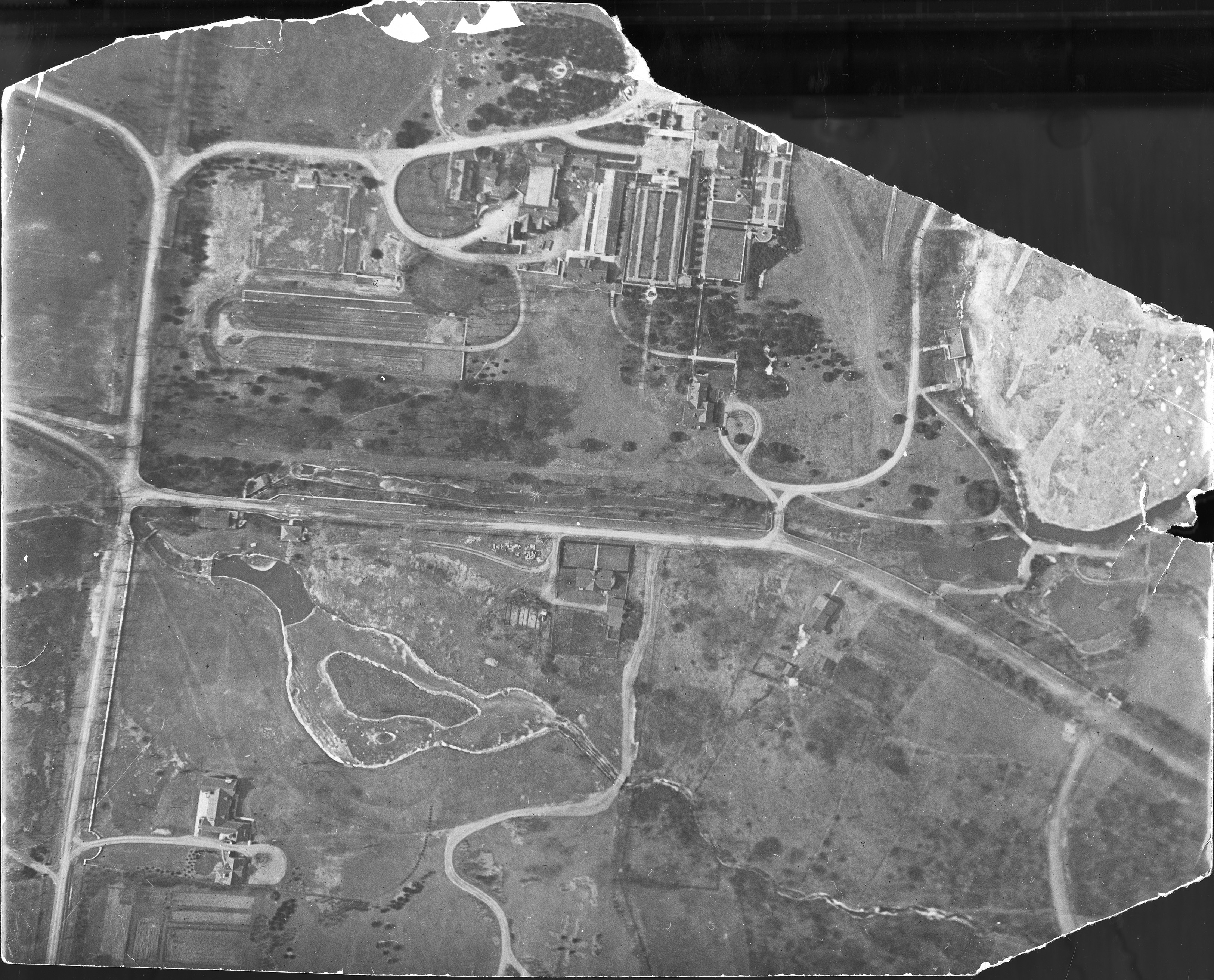
Aerial photograph of Cranbrook estate and environs, circa 1918.
Courtesy of Cranbrook Archives

In the Cranbrook Photograph Collection there are many aerial photographs taken by Abrams, as well as other photography firms, ranging from the 1920s through the 1990s. Since the purposes of aerial surveys are manifold, correspondence provides some insight into why they were commissioned and how they were specifically used, for example, as publicity and advertising. In 1932 Cranbrook’s public relations manager, Lee A. White, engaged Cranbrook School Headmaster William Stevens to select an image for the coming year’s brochure, and aerial views appear in all the early Cranbrook brochures. Aerial surveys have also been used to assess and understand the landscape prior to making a change to it. This was the case in 1961, when a topographic map and aerial photography were requested for the Off-Street Parking Study.

Letter from Keith A. Smith to Arthur B. Wittliff, November 1961.
Courtesy of Cranbrook Archives

Correspondence between Arthur Wittliff, Secretary for the Cranbrook Foundation Board of Trustees, and Abrams Aerial Survey Corporation, provides intriguing details about the scale of the photography and the material base of the prints. The images below are from a December 6, 1961 set of 12 double weight velvet prints of aerials covering 1 square mile at a scale of 1 inch per 600 feet.

Aerial photograph ASP-5 taken by Abrams Aerial Survey Corporation on 6 December 1961.
Courtesy of Cranbrook Archives

ASP-5 (above) shows the intersection of Cranbrook Road and Lone Pine Road, and includes Kingswood School and Lake, the Institute of Science, Cranbrook House, Brookside School, Christ Church Cranbrook, and the Academy of Art and Academy Way. ASP-10 (below) shows another view of Cranbrook and its environs, encompassing the Institute of Science, Academy of Art, and Cranbrook School.
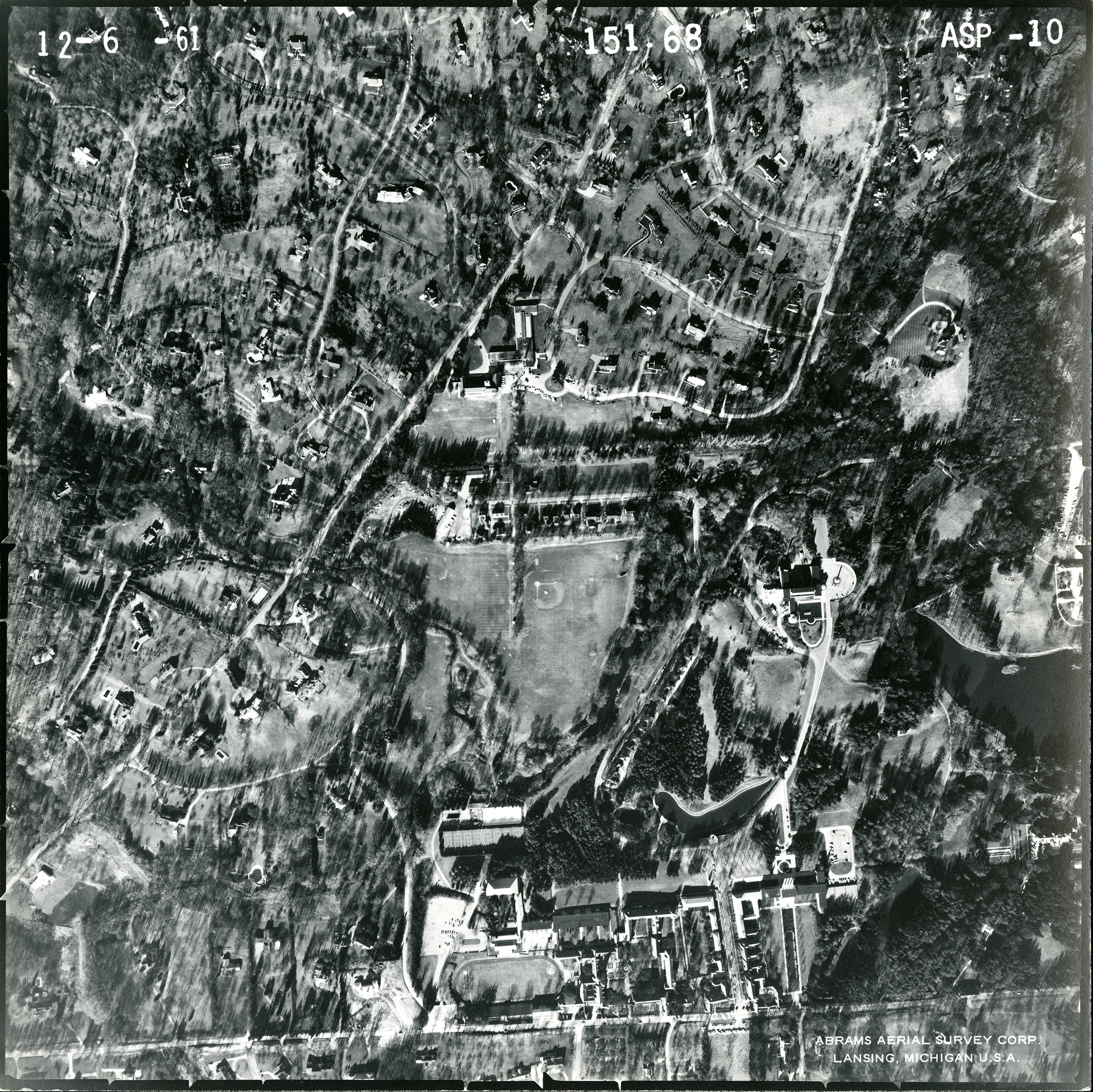
Aerial photograph ASP-10 taken by Abrams Aerial Survey Corporation on 6 December 1961.
Courtesy of Cranbrook Archives

When looking across the topographical history of Cranbrook from George’s map through aerial photographs, it is always fascinating to discern the changing landscape alongside the features that are unchanging. And, for me, the great inspiration of George’s map is that, although each individual project necessitated getting into the weeds and meticulous details, his ideas were always guided by situating them within a bigger picture.

Laura MacNewman, Associate Archivist, Cranbrook Center for Collections and Research

De Profundis: Olga Milles’ Drawings of the Soul

Olga Milles lived in the very depths. In her art, almost exclusively devoted to portrait painting, she sought to draw out the character from the depths of her models and to find the soul behind the façade. Using a variety of techniques including charcoal, crayon, pastel, watercolor, tempera, and oil in her work, Olga was considered an artistic prodigy and developed her talent from a young age, yet her art is largely unknown. In 1988, twenty-one years after her death, Cranbrook Art Museum hosted an exhibition in collaboration with Millesgården, Olga Milles Emerges, to exhibit examples of her art from both museums’ collections.

In the foreword to the exhibition catalog, Staffan Carlén, former Director of Millesgården, describes her as having an intuitive talent that produced factual character studies of extreme precision, with an “overwhelmingly melancholic” tone. In reading Inger Wahlöö’s account of Olga’s life, based on correspondence at Millesgården, Carlen’s interpretation of Olga’s artwork can almost be read as a profile of Olga herself:

“Sparseness of shadowed areas and stretched areas disrobe the faces and make them appear in a serious, introverted nakedness. Her efforts are primarily directed towards interpreting the character of the soul. This she did with great coloristic refinement, and with tenderness in the form. In her drawings, there is consistently a sensitive enlargement of the mouth, sometimes in interaction with the dreaming mood of the eyes, sometimes as a tension-filled contrast of unconscious sensuality.”

Staffan Carlen, Olga Milles Emerges
Print of Drawing of Carl Milles by Olga Milles, 1917. Courtesy of Cranbrook Archives.

Born Olga Granner in 1874 in Leibniz, Austria, she had two brothers and two sisters. She had a deep loyalty to her family, whom she visited for several months every year, except during World War II. Having been born and raised in the Catholic church, she initially aspired to become an art teacher in a convent. However, in early adulthood, Olga questioned what it meant to be disobedient to the church and broke away, while cultivating an increasingly ascetic life.

Continue reading

Swedish Sculptors-in-Arms: Soderlind and Milles

The Nona Bymark Soderlind archival collection consists solely of one scrapbook, yet its contents provide an intriguing glimpse of the woman to which it is dedicated. In doing so, it also illuminates a brief but prolific period in the history of the Academy of Art and reveals a personal side to one of Cranbrook’s most celebrated Artists-in-Residence, the sculptor Carl Milles.

Nona Bymark Soderlind, circa February 1936. Courtesy of Cranbrook Archives.

Born Eleanora Maria Bymark on July 16, 1900 in a small Swedish immigrant community just outside of Minneapolis, Minnesota, Nona attended the Minneapolis School of Art (1920-1922) on a full scholarship, where she studied sculpture under Charles S. Wells. She later attended the University of Minnesota where she studied under the painter Samuel Chatwood Burton. In 1927 Nona returned for a semester at the School of Art, around the time she had her first child with husband Dr. Ragnar Soderlind. The Soderlinds had three young boys (two, eight, and nine years of age) when in 1936 Nona boarded a train to Detroit to study under Carl Milles.

Nona Bymark Soderlind works on a sculpture in Carl Milles Studio, 1936. Courtesy of Cranbrook Archives.

A February 13th letter from Richard Raseman, Academy of Art Executive Secretary, confirms Soderlind’s visit to campus and includes details of associated tuition and living costs required for the minimum period of study with Milles. Cross-referenced with items in her Academy student file, it is evident she had been invited by Milles to study for a month and arrived on the 18th. Perhaps it was Milles’ 1936 commission for Vision of Peace, in St. Paul, Minnesota that had first brought them in touch with each other?

Continue reading

Photographer Jack Kausch and Cranbrook

In many of the posts we put up on Facebook or on the Kitchen Sink, the credit line “Photographer Jack Kausch” appears. Since he took so many iconic images of Cranbrook’s people and places in the second half of the twentieth century, I’d like to introduce you to Jack Kausch himself.

Jack Kausch at work developing photographs while at Cranbrook School, The Brook 1947. Courtesy Cranbrook Archives, Cranbrook Center for Collections and Research.

John William (Jack) Kausch was born in 1929, in Queens, New York. His family moved to Detroit shortly after he was born. Jack’s interest in photography began at age eight, when his mother gave him a camera and dark room set. He earned a scholarship to attend Cranbrook School for Boys, graduating in 1947. While a student at Cranbrook, he became a photographer for The Crane student newspaper and The Brook yearbook.

Jack Kausch’s Senior entry in The Brook, 1947. Courtesy Cranbrook Archives, Cranbrook Center for Collections and Research.

Jack went on to attend the University of Michigan. The Korean War interrupted his studies, and he joined the Air National Guard. Stationed on a base in New England, he serviced radar equipment and handled the base’s photography lab. When the war ended, the G.I. bill enabled him to return to the University of Michigan. He helped his mother run a construction firm while he attended night school, earning a bachelor’s degree in Physics in 1956.

In September 1957, Jack married Elizabeth (Betsy) Drake. He then took a job with General Motors Photographic in 1960, where he worked for the next seventeen years. During this time, he returned to the University of Michigan to earn a Master’s in Business Administration. He opened Jack Kausch Photography in 1976 in Birmingham, Michigan. It was around this time he returned to Cranbrook to again take photographs for various Cranbrook publications and events.

Shortly after his death in 2002, Jack was posthumously awarded the 2001-2002 Birmingham Bloomfield Cultural Arts Award’s Lifetime Achievement Award. In 2009, an exhibit about his life and work, Jack Kausch, A Photographer’s Retrospective, was presented by the Birmingham Museum.

I thought I would share some of my favorite Kausch photographs of Cranbrook’s people and places:

Continue reading

Winter at Cranbrook

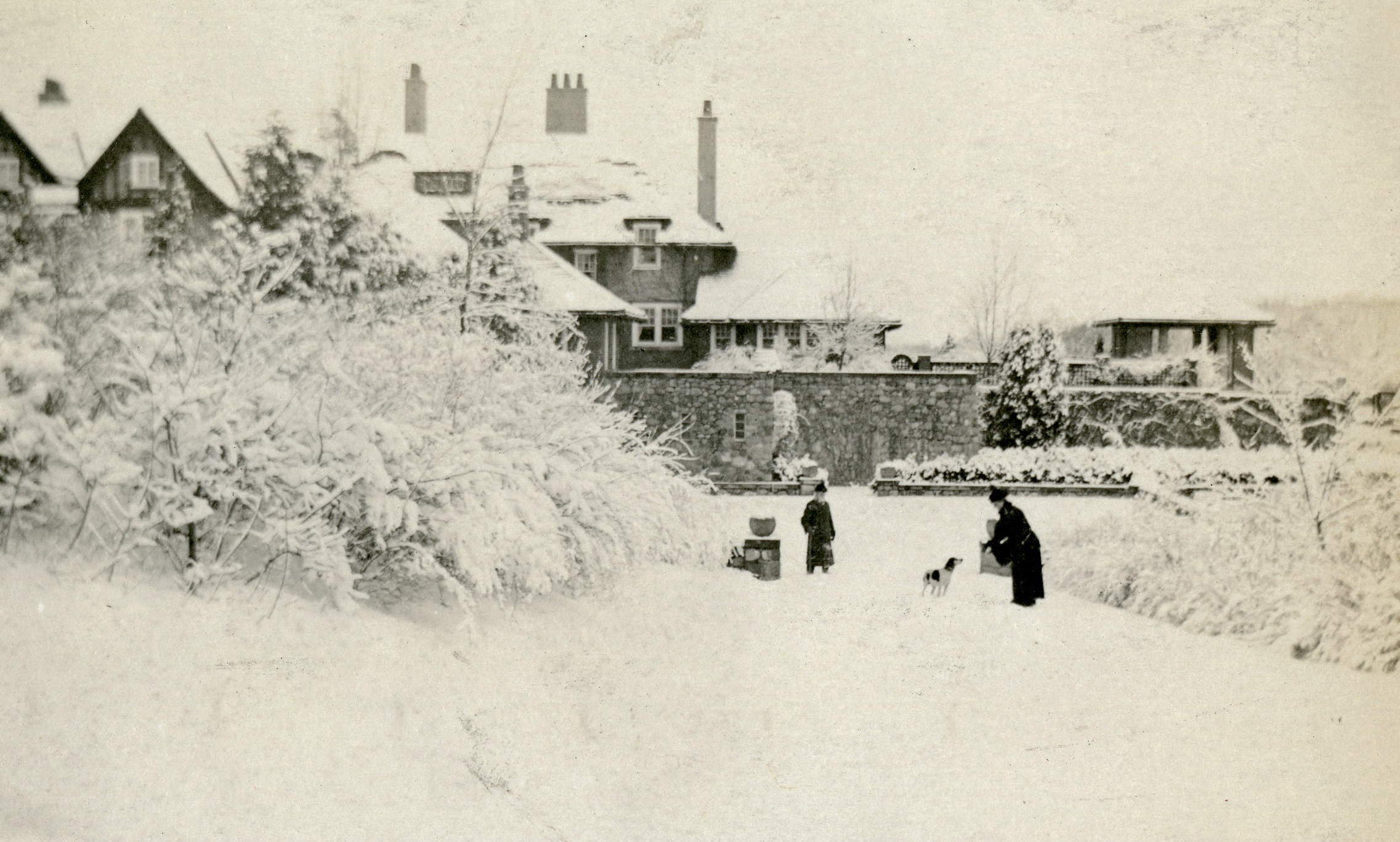
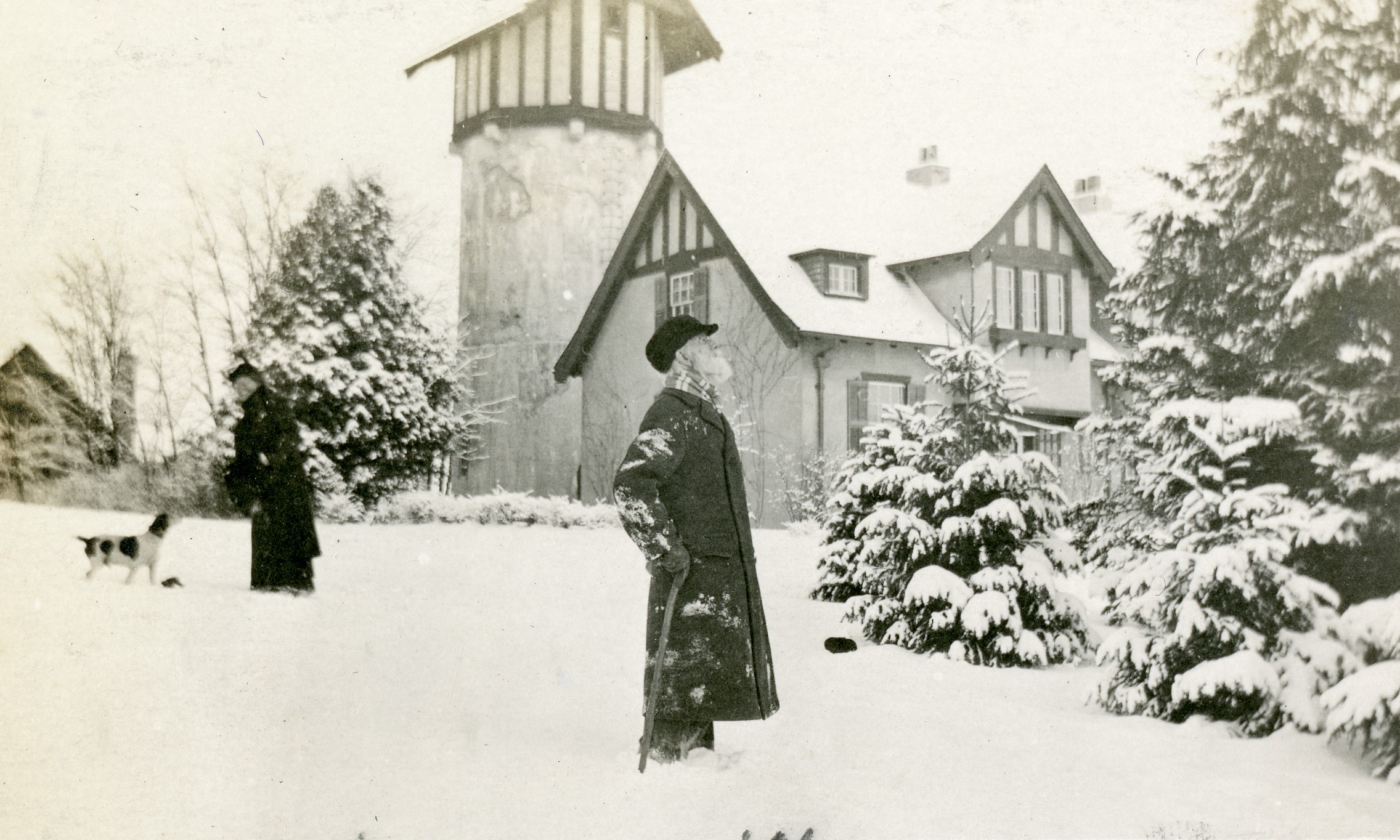
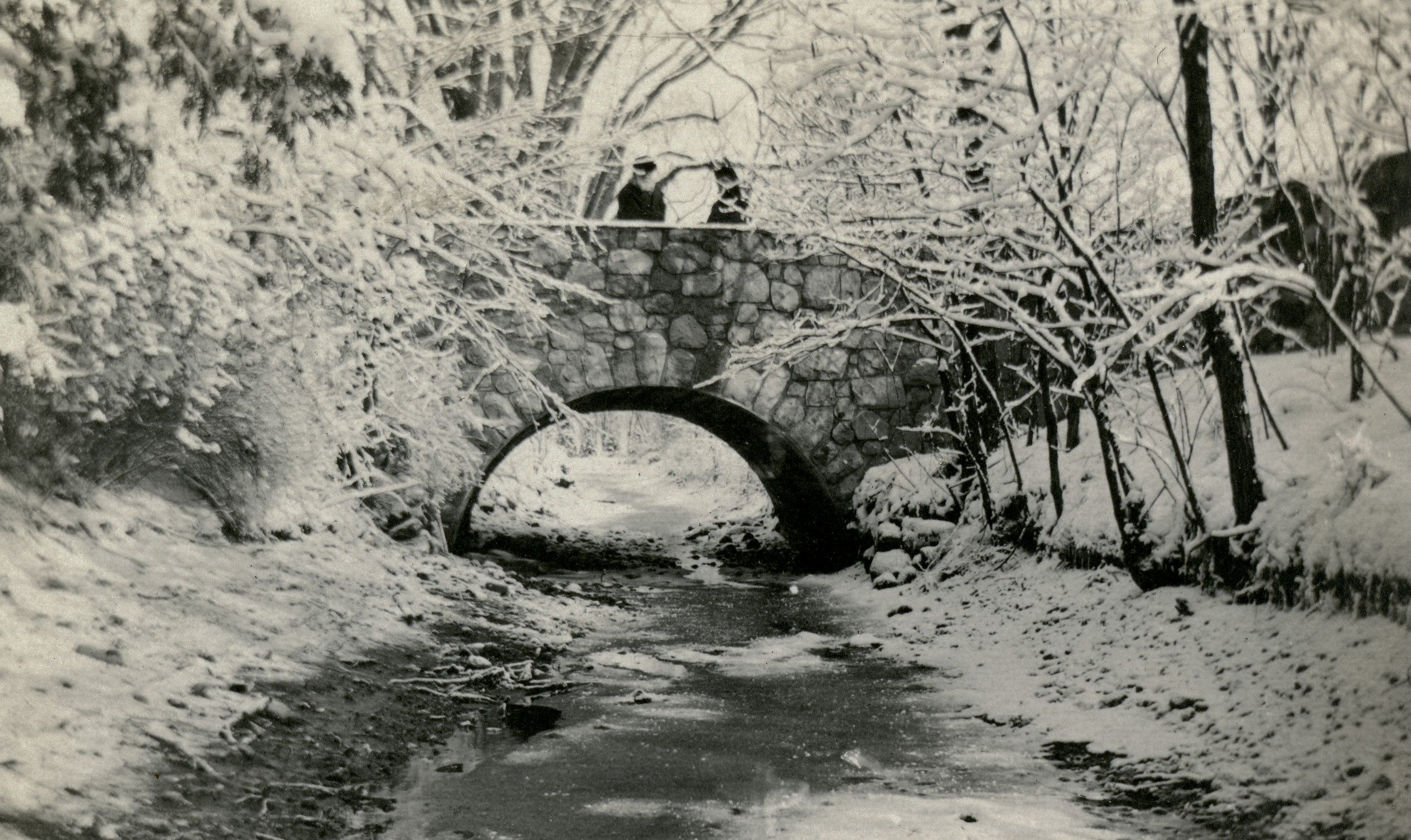
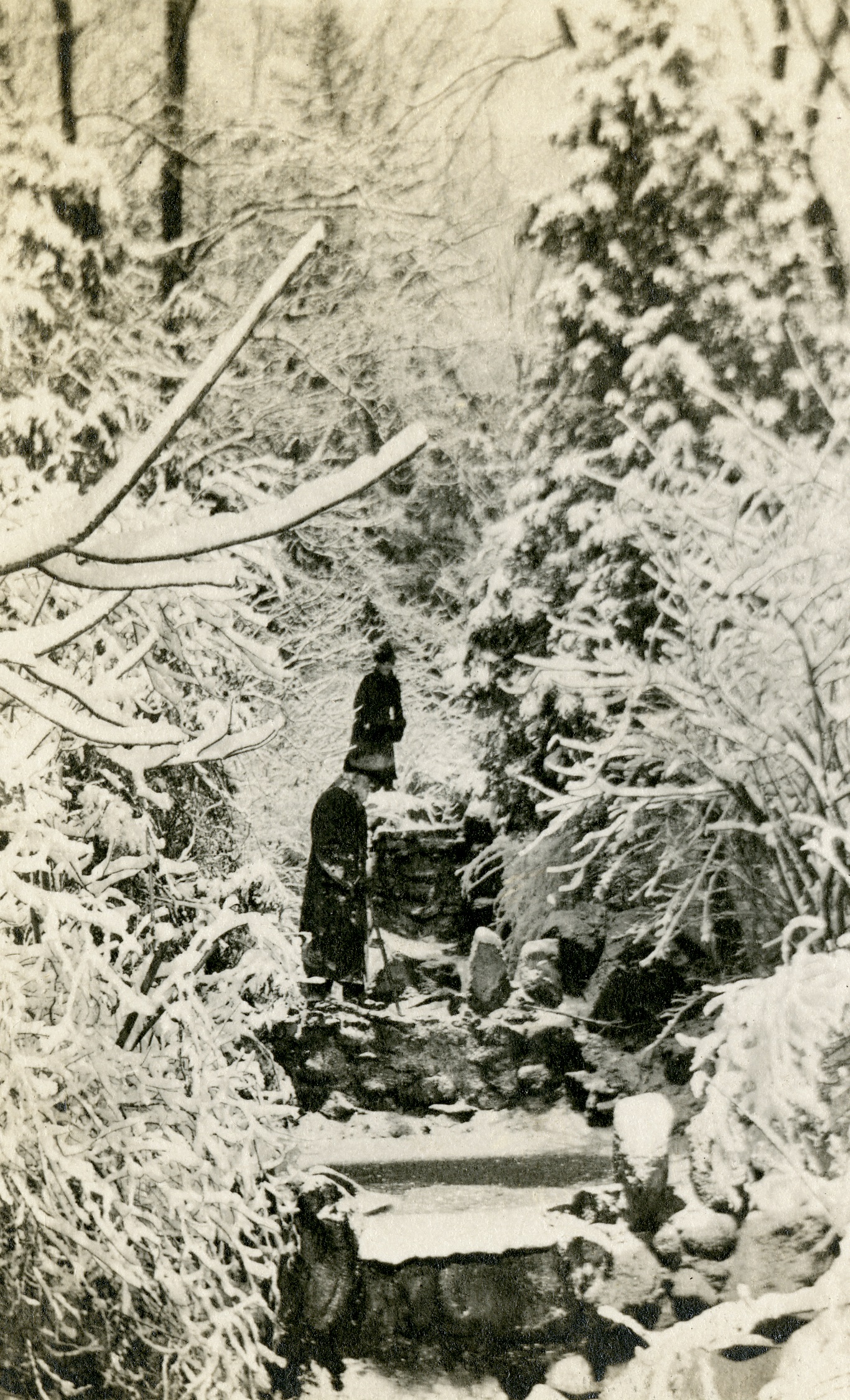
As we start a new year, I thought I would share some winter scenes at Cranbrook from 105 years ago. In the Winter of 1916, Henry Wood Booth and his daughter Alice Booth Miller took a stroll around the grounds of a snow-covered Cranbrook Estate. The journey was documented in pictures now in the Estate Albums in Cranbrook Archives.

Henry Wood Booth and Alice Booth Miller on the trail between the Cottage and Cranbrook House, March 1916.
Henry Wood Booth and Alice Booth Miller on the road to the Service Court, just above the Sunken Garden, at Cranbrook House, March 1916.
Henry Wood Booth and Alice Booth Miller beside Tower Cottage (then known as the Summer Cottage and water tower), March 1916.
Henry Wood Booth and Alice Booth Miller on the arched bridge over the Mill Race, March 1916.
Henry Wood Booth and Alice Booth Miller at the Cascades (now the site of the Morris Mill), March 1916.

Best wishes for a happy and healthy New Year from your friends at Cranbrook Center for Collections and Research!

Leslie S. Mio, Associate Registrar, Cranbrook Center for Collections and Research
Photo Friday: Cranbrook House, 1909

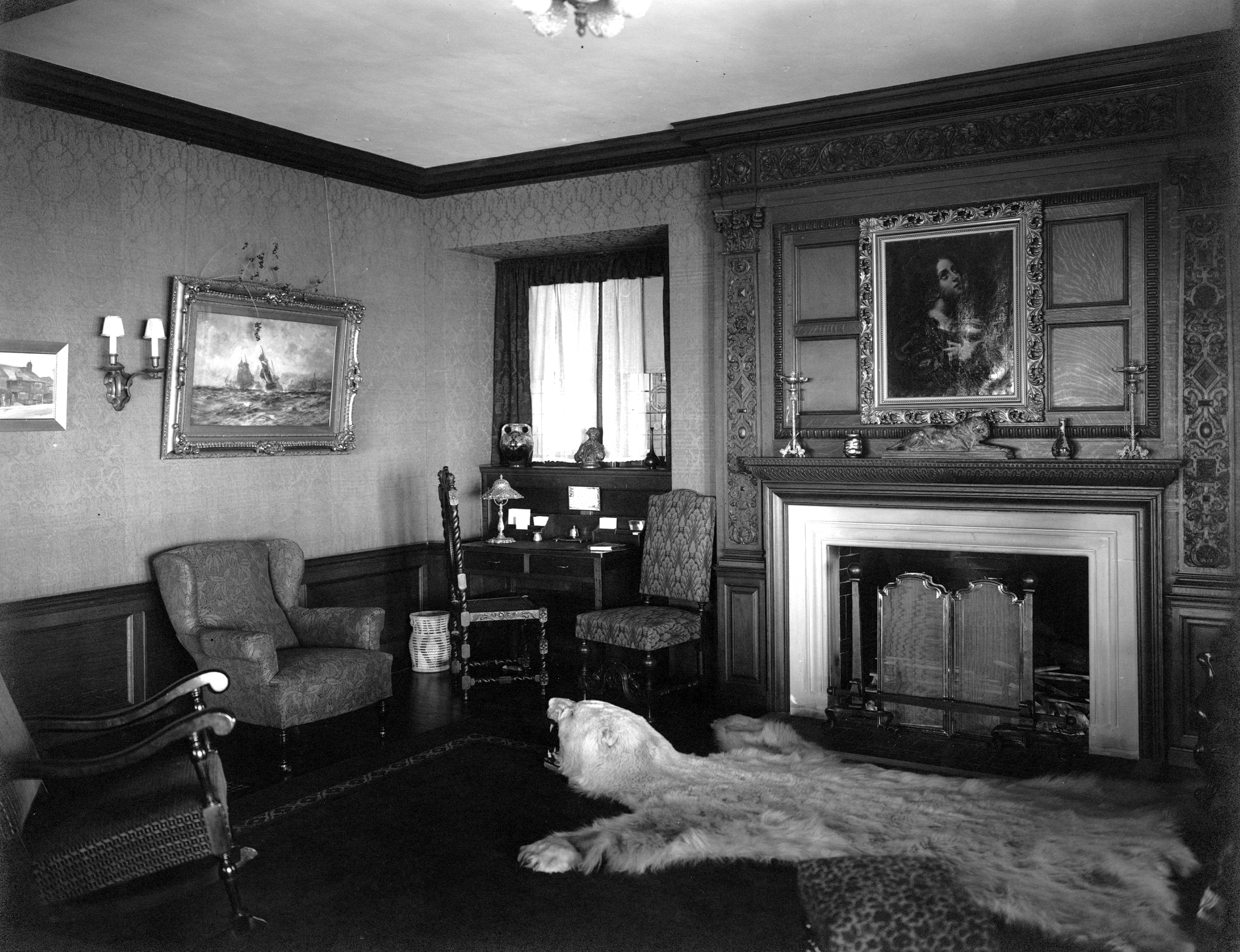
As the temperature dips and the days get shorter, it sure would be nice to end the week reading a book next to a roaring fire. The Booths likely had the same idea their second winter at Cranbrook House, where they could have curled up by the fire…on their new polar bear rug!?

Cranbrook House Living Room, ca. 1909, with one incredible rug. Photo from the collection of Carol Booth. Courtesy Cranbrook Archives, CCCR. Copyright Cranbrook Educational Community.

Elsewhere in the cozy Living Room of 1909, we see objects that are still in Cranbrook House today: the Ships at Sea painting by Robert Hopkin; the bust of Edgar Allen Poe (1898) by George Julian Zolnay; and even the mahogany desk chair, by W. & J. Sloane Company. Some objects are no longer at Cranbrook—the registrar and I can’t quite match the rocking chair, that exact easy chair, the lamp, or the candlesticks to things in the collection. The painting above the fireplace, The Penitent Magdalene after Carlo Dolci, is also no longer here in the house.

Where did these things go? Well, George and Ellen Booth lived in this house for another forty years after this photo was taken! They constantly added to, gifted away, and sold pieces from the collection.

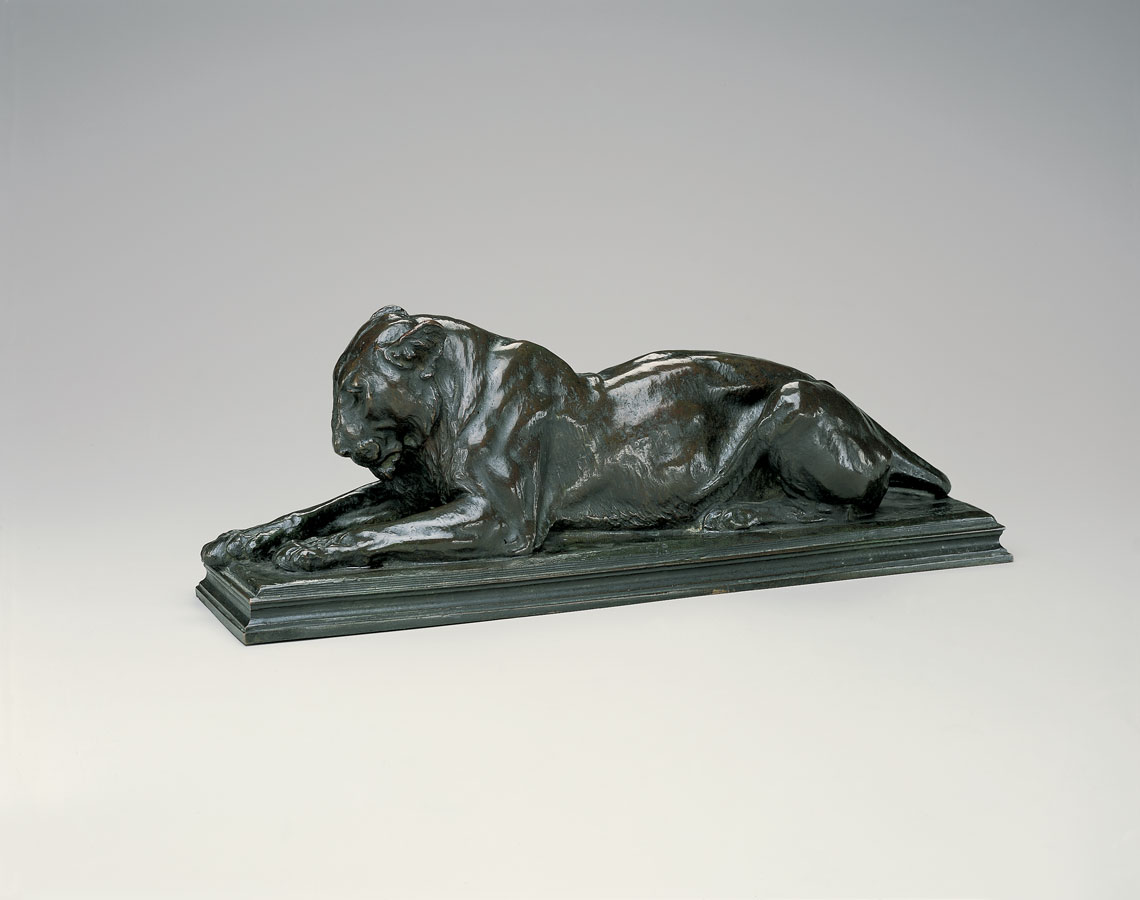
But not everything in this photograph that left the house went entirely off campus. You may notice one piece on the mantle: Recumbent Lioness by Eli Harvey. Booth purchased this sculpture in 1909 from Tiffany & Company in New York. In the 1930s, he gave this lioness to the new Cranbrook Art Museum, where it was assigned the first accession number in the collection: 1909.1. (It’s not actually on campus at the moment: it’s currently on display in Switzerland!)

Recumbent Lioness, Eli Harvey (born 1860, Ogden, Ohio; died 1957, Alhambra, California). Foundry: Pompeian Bronze Works, New York. Bronze; 7.5 x 5 x 21.5 inches. Gift of George Gough Booth and Ellen Scripps Booth, CAM 1909.1. Photograph by R. H. Hensleigh and Tim Thayer. Courtesy of Cranbrook Art Museum.

Using photographs like the one from 1909, as well as diary entries, books, and other records in Cranbrook Archives, I’ve spent the past week re-arranging Cranbrook House’s first floor back to this early aesthetic. On Sunday, the Center is partnering with Cranbrook House & Gardens Auxiliary to present a very special virtual tour: Home for the Holidays at Cranbrook House. I’ll be your host and guide, and will be joined (virtually) by volunteers from the Auxiliary to help share stories from holidays past. I think you’ll really enjoy this tour—there are lots of beautiful things I’ve placed back on display, and we are all very excited to share them with you!

Kevin Adkisson, Associate Curator, Cranbrook Center for Collections and Research

PS: You’ll need to join our tour Sunday to see if the polar bear rug has made a reappearance!

Flora Leslie, Brookside’s Dietician and Food Director

With the Thanksgiving holiday almost upon us, it is time to begin planning and preparing one of the essential parts of any celebration: food. It seems timely, then, to highlight Flora Leslie, Brookside’s long-serving dietician and food director. I would like to introduce her to you in her own voice, recalling a memory of some precarious pumpkin pies:

Floral Leslie interview with Mark Coir, Archivist (OH1990.09.28), November 5, 1987.
Courtesy of Cranbrook Archives.

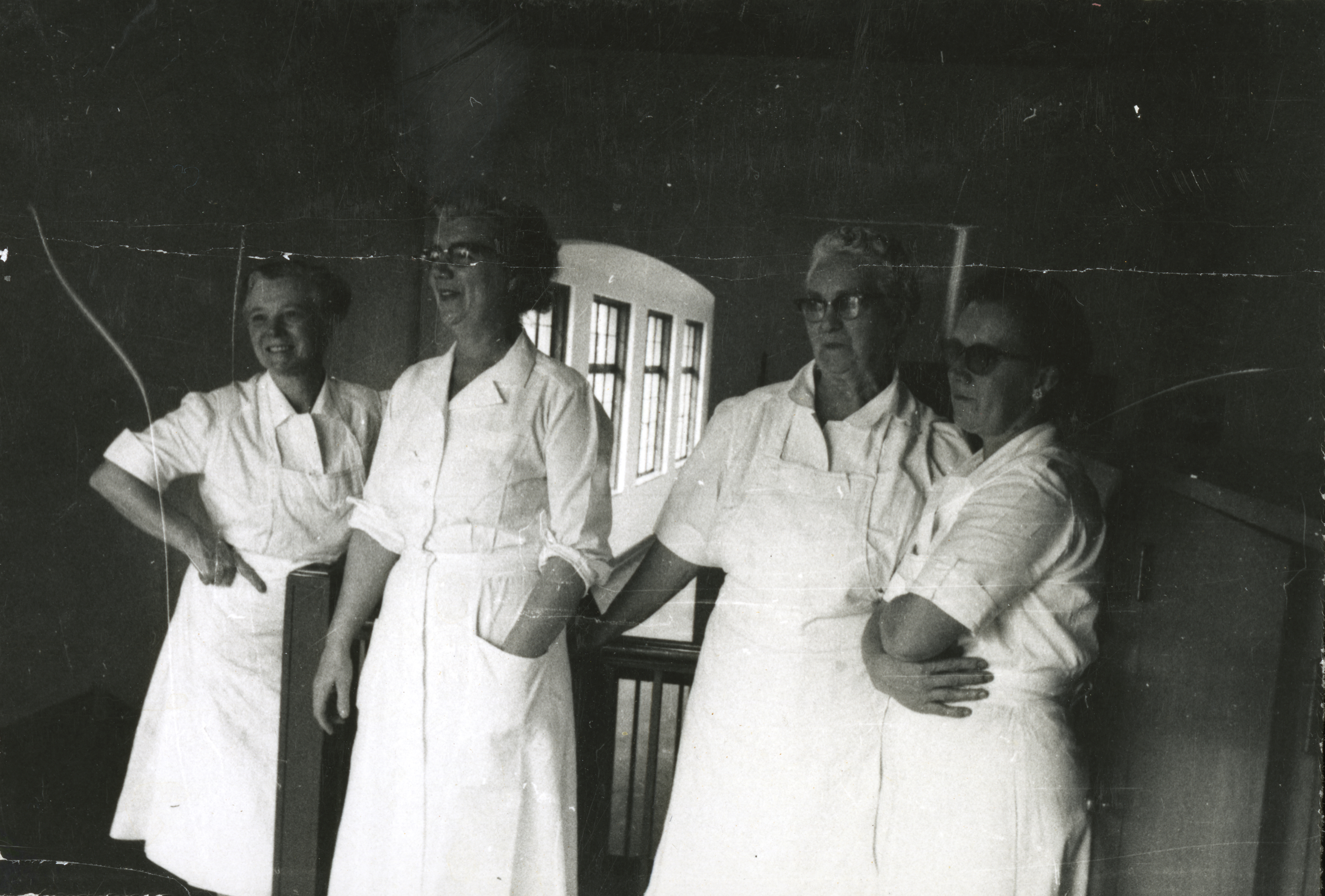
Hearing this story in Flora’s voice brings the memory to life in a different way than simply reading it in written form. Cranbrook Archives’ Oral History Collection holds recordings of many voices that add dynamism and richness to their stories. Flora Leslie’s interview describes her life at Cranbrook and her experience of its people and places in the mid-twentieth century.

Flora Leslie (second from left) with cooking staff at Brookside School. Courtesy of Cranbrook Archives.

Born Flora MacFarlane in Alexandria, Scotland, in 1906, she made her way to the United States alone in December 1930. Journeying by ship on a very stormy sea, the passengers were required to stay below deck where they got to know each other more than they would have had they been able to wander on deck. Having worked in a photographer’s office in Scotland, Flora initially sought the same occupation in America.

But a fellow passenger Flora met aboard the ship told her that if she had no luck finding work, to contact her for employment. It is thus that Flora began to work for the Ward family in Pontiac, a family whose children were students at Cranbrook.

In 1932, Flora started working at Cranbrook, initially at Kingswood School. Flora married George Leslie in 1934, a landscaper and gardener, and later a superintendent of buildings at Cranbrook.

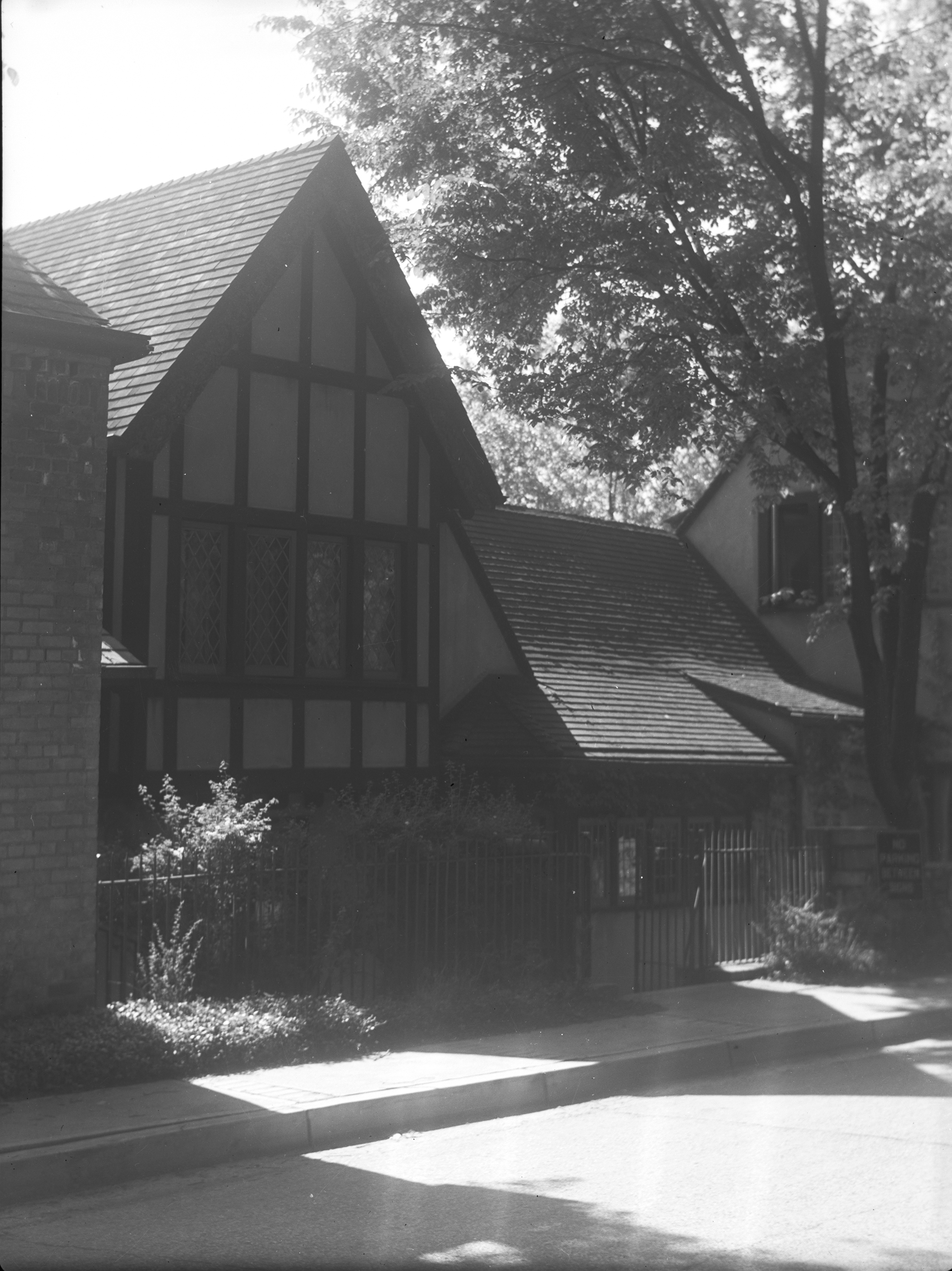
After several invitations from Jessie Winter, Headmistress of Brookside School, Flora became the dietician and food director at Brookside School, a position she held from 1934-1975. The position came with an apartment, and though at first Flora preferred to stay at Kingswood, which she describes as “light and bright and lovely,” Winter asked Flora and George back to Brookside one further time and had arranged the apartment beautifully. Most importantly, there was a brand-new Frigidaire refrigerator, a novelty in those days. As Flora recalled, seeing this small luxury she told the headmistress, “We’ll come!” The apartment was in the part of Brookside known as the ‘Ram’s House’ and had previously been occupied by Jessie Winter and by J. Robert F. Swanson.

View of the front of George and Flora Leslie’s apartment, known as the Ram’s House, circa 1935-1938. Courtesy of Cranbrook Archives.

During the war years, when food was in short supply, George and Flora Leslie kept Brookside stocked with vegetables—he grew them and she canned them.

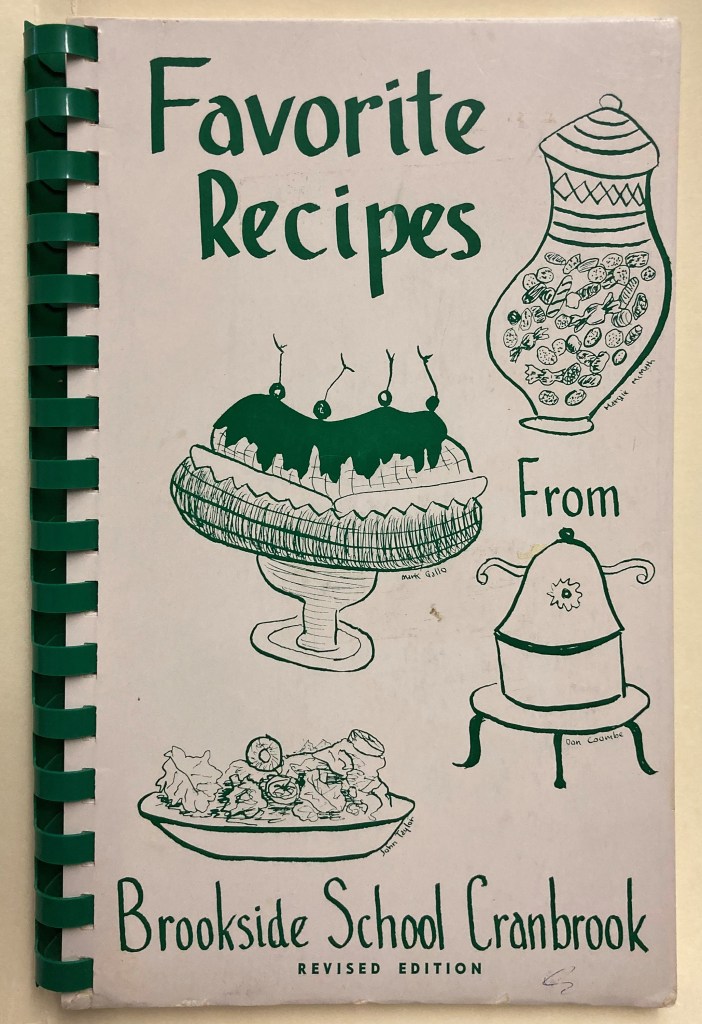
After feeding generations of students, Flora published many of her favorite and original recipes in the Brookside cookbook, Favorite Recipes, which are still enjoyed by alumni far and wide. Perhaps you might like to try one of Flora’s original recipes this Thanksgiving, or a dessert recipe from one of the faculty families?

Laura MacNewman, Associate Archivist, Cranbrook Center for Collections and Research

“Crime, it seems, sometimes does pay”

Actor Edward G. Robinson is often remembered for playing gangsters and wise guys, or, my person favorite role, as Dathan in Cecil B. DeMille’s epic film The Ten Commandments (1956). What most people do not know is that Robinson was an art collector.

Edward G. Robinson as a gangster in Little Caesar (1931). Unknown author, Public domain, via Wikimedia Commons.

That is not exactly true. According to Robinson, at the time of the exhibition Forty Paintings from the Edward G. Robinson Collection at the Museum of Modern Art in 1953, “I am not a collector. I’m just an innocent bystander who has been taken over by a collection . . . I am just a lover of paintings. I do what I do for the sheer joy of it!”

Robinson continues, “If I hadn’t become a movie gangster, it is highly probable that not one of my paintings would have had the chance to collect me. Here is a paradox: Turn killer and you have the means to satisfy your thirst for beauty . . . Crime, it seems, sometimes does pay.”

Edward G. Robinson’s home. View of living room, October 3, 1944. Dorothy Liebes papers, circa 1850-1973. Archives of American Art, Smithsonian Institution.

Unfortunately, in February 1957, Robison was forced to sell his art collection as part of the divorce settlement with his first wife Gladys Lloyd Cassell Robinson. Immediately after, he began to collect again. This second collection would be even bigger than the first.

Unlike film moguls or actors who pay experts to place a couple of easily recognizable masterpieces above their fireplaces, Robinson selected his artworks himself. He bought on instinct and impulse, guided by what he loved. As he said, “You don’t collect paintings – they collect you.”

You may say, this is all very interesting, but what is the Cranbrook connection?

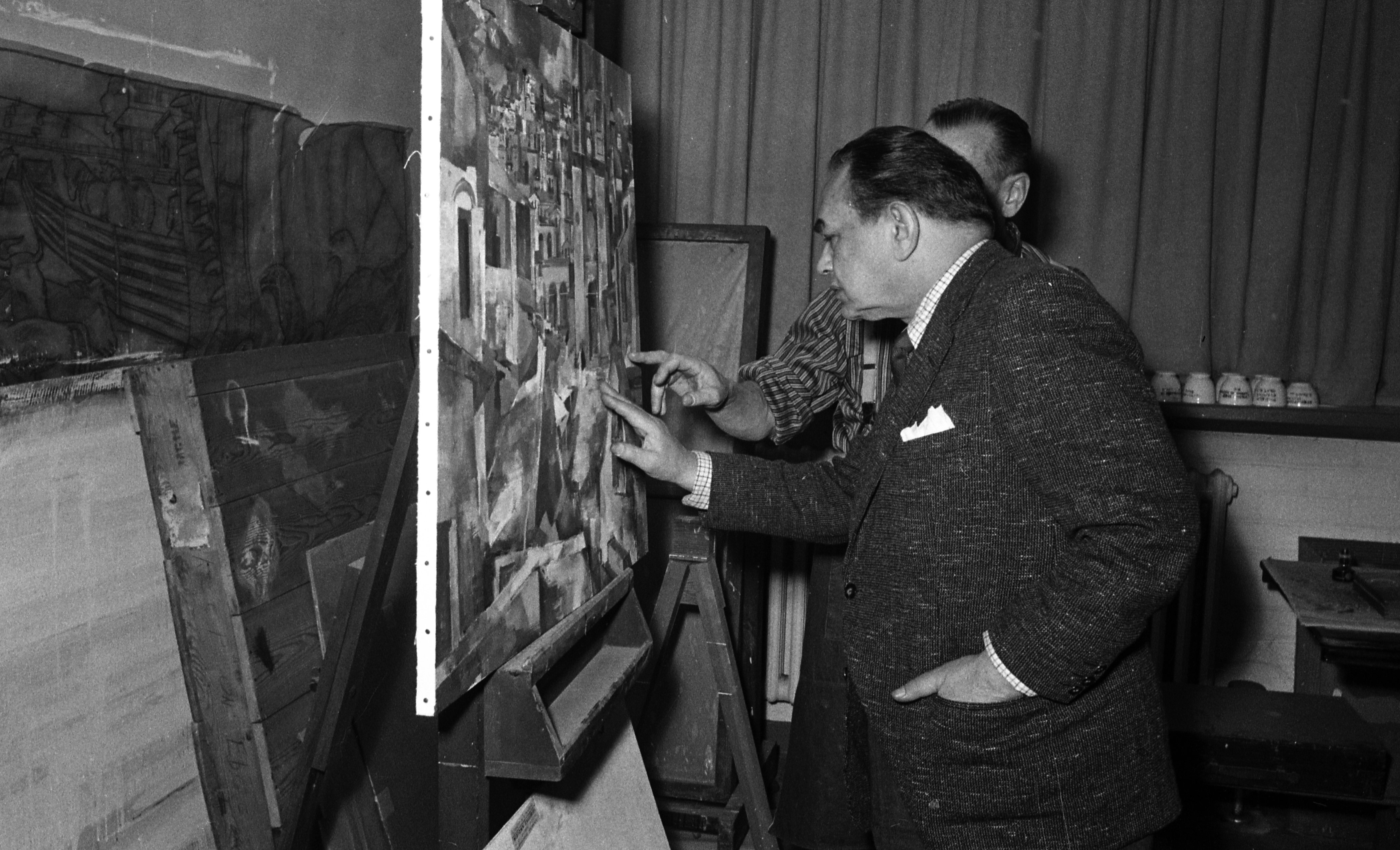
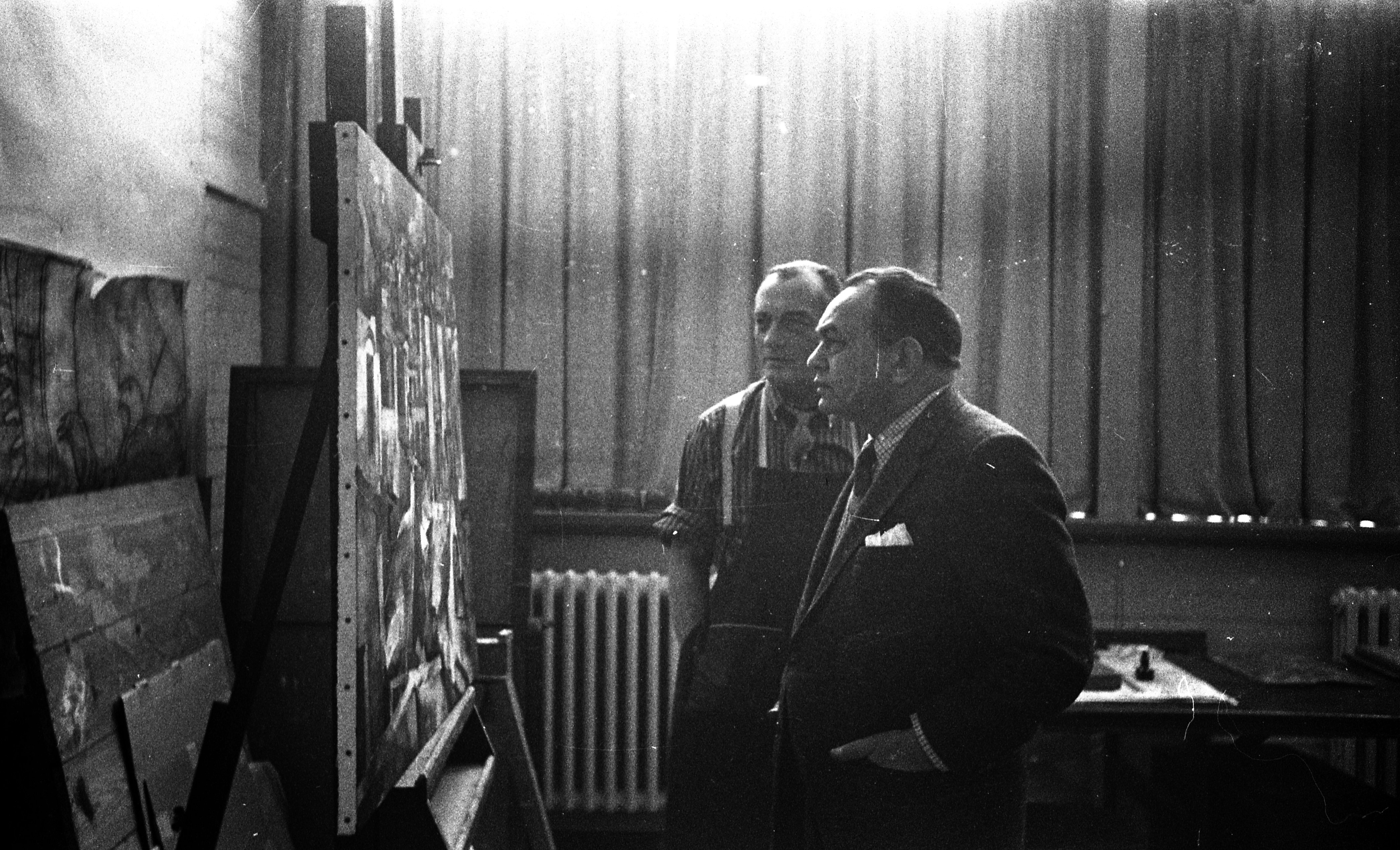
In December 1957, Robinson was in a play “Middle of the Night” at Cass Theatre in Detroit. According to the Sunday, December 15, 1957, Detroit Free Press, “A distinguished art lover, Edward G. Robinson, the actor, dropped in at Cranbrook Academy of Art Tuesday to chat with an old friend, Zolton (sic) Sepeshy, director of the Academy.”

Cranbrook Archives holds the “proof” of this visit, by way of wonderful images from our campus photographer, Harvey Croze.

I did some digging, and Robinson’s personal archives at Boston University have no mention of Cranbrook or Sepeshy. I also could not confirm if Robinson had any of Sepeshy’s art in his collection; none appear in the 1953 exhibition or in the coffee table book about his second collection, Edward G. Robinson’s World of Art (1971).

I imagine it was simply his love of art that brought Robinson out to Cranbrook in 1957, the same reason so many of us are drawn to campus today.

Leslie S. Mio, Associate Registrar, Cranbrook Center for Collections and Research

One Competition, Many Designs: Ralph Rapson and the Jefferson National Expansion Memorial

Of the 5,000 plus architectural drawings in Cranbrook Archives, one of my favorite series is the work of Ralph Rapson. His drawings convey a seemingly endless stream of unique inspiration, and his letters to his friends and colleagues are always wonderfully lively and convivial. Rapson’s work covers diverse projects including residences, embassies, businesses, and competitions.

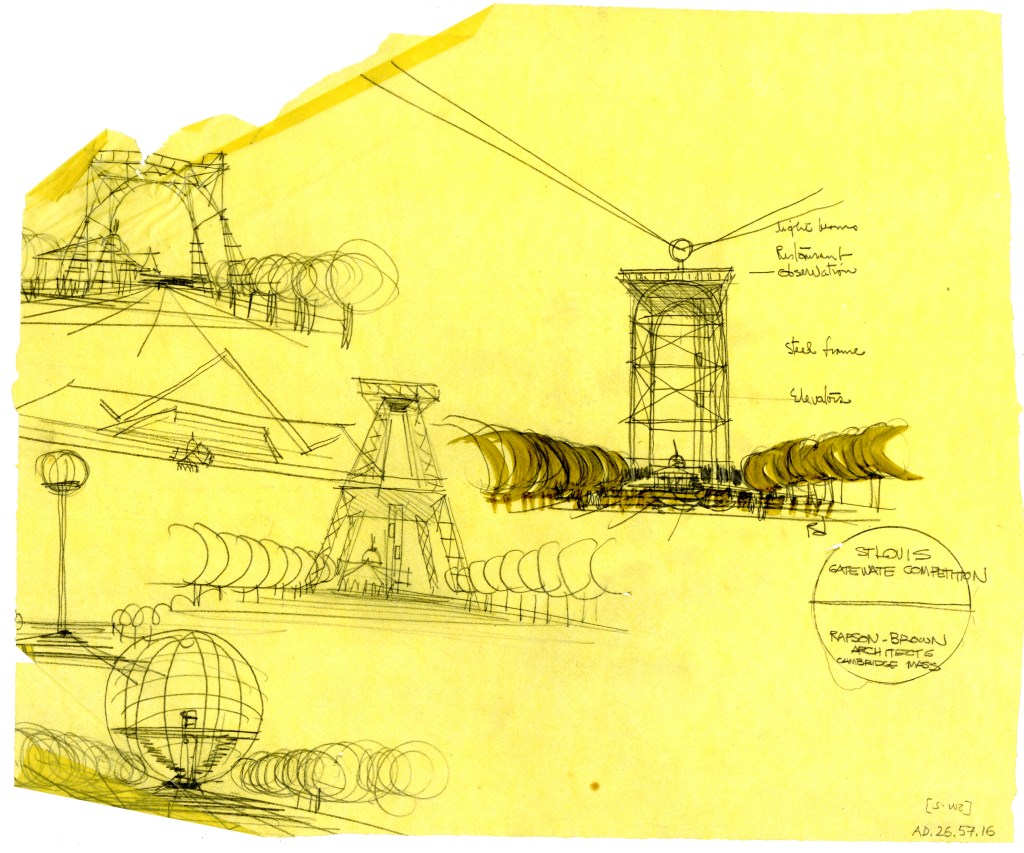
Today, I want to share some examples from just one architectural competition to showcase this creativity: Rapson’s studies for his entry into the Jefferson National Expansion Memorial competition.

Ralph Rapson’s preliminary study for a submission to the Jefferson National Expansion Memorial competition in 1948. This is very similar to his final submission.

A decade before the Memorial competition, Rapson had been invited to study architecture and urban planning at Cranbrook Academy of Art by Eliel Saarinen. Saarinen had been much impressed by Rapson’s submission to the George G. Booth Traveling Fellowship at the University of Michigan in 1938. After studying at the Academy between 1938 and 1940, Rapson collaborated on various projects with Saarinen and his associates before moving to teaching positions in Chicago during the early 1940s and at MIT in 1946.

Ralph Rapson, January 1943. Cranbrook Archives

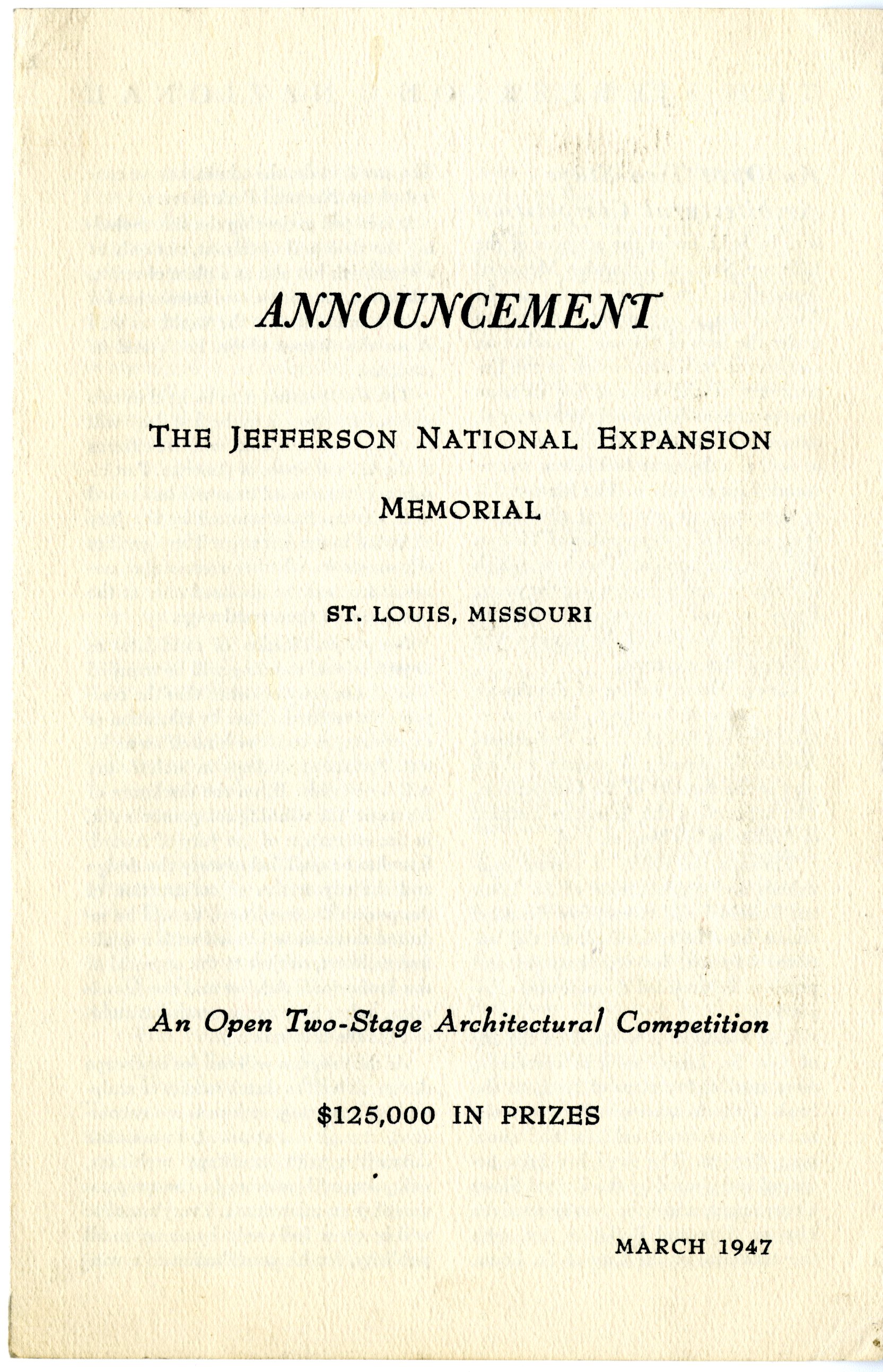
In March 1947, the Jefferson National Expansion Memorial Association announced an ‘Open Two-Stage Competition’ to design and execute a memorial located in St. Louis, Missouri. The first stage of the competition was open to all architects who were citizens of the United States and the second stage was limited to five competitors as selected by the jury in the first stage.

The competition brief was distributed to some 1,100 architects and students around the country. 172 entries were received by the September 1, 1947 deadline. Cranbrook Archives.

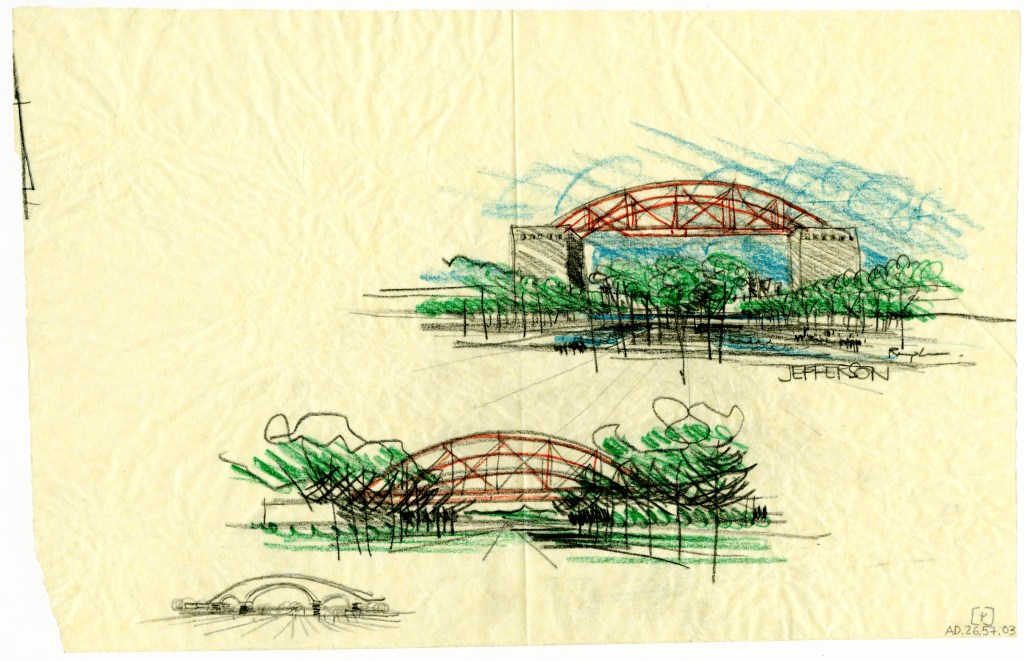
In the architectural drawing set for Rapson’s submission, there are nineteen conceptual studies. These have recently been digitized and added to the Ralph Rapson Projects in our Digital Collections online. Below is a selection of his studies that show the diversity and breadth of Rapson’s creative vision:

It is interesting to see Rapson work out his ideas in ink and colored pencil about what shape, materials, and structure might best serve as a memorial to Jefferson’s Louisiana Purchase and America’s westward expansion.

In addition to Rapson, Cranbrook alumni and faculty including Charles and Ray Eames, Harry Weese, Gyo Obata, and both Eliel and Eero Saarinen submitted designs. Of course, it was Eero’s monumental stainless steel arch that won the competition and remains an iconic landmark to this day.

There is much to see and learn from Rapson’s drawings for just this one project. As we hold sets of drawings for another 87 of his projects, stay tuned to the Kitchen Sink—there is so much more to see and say about Ralph Rapson.

Laura MacNewmanAssociate Archivist, Cranbrook Center for Collections and Research

Eds. Note: On Tuesday, October 27, 2020, Associate Curator Kevin Adkisson will deliver our next Uncovering Cranbrook virtual lecture. This month’s lecture, Eero Saarinen and Yale University: Education and Architecture, will examine the younger Saarinen’s time at Yale as both a student of architecture and designer of three important campus buildings. Tickets are available now for the 10:00am and 7:00pm EDT lectures.

Cranbrook, Kent: Then and Now

When George and Ellen Booth moved from Detroit to Bloomfield in 1904, they named their estate ‘Cranbrook’ after George’s ancestral home of Cranbrook, Kent, England. As the institutions and landscape developed, many of them were also named after places in and around the ancestral Cranbrook. George’s father, Henry Wood Booth, was born there in 1837, where his father, Henry Gough Booth, and grandfather, George Booth, were coppersmiths.

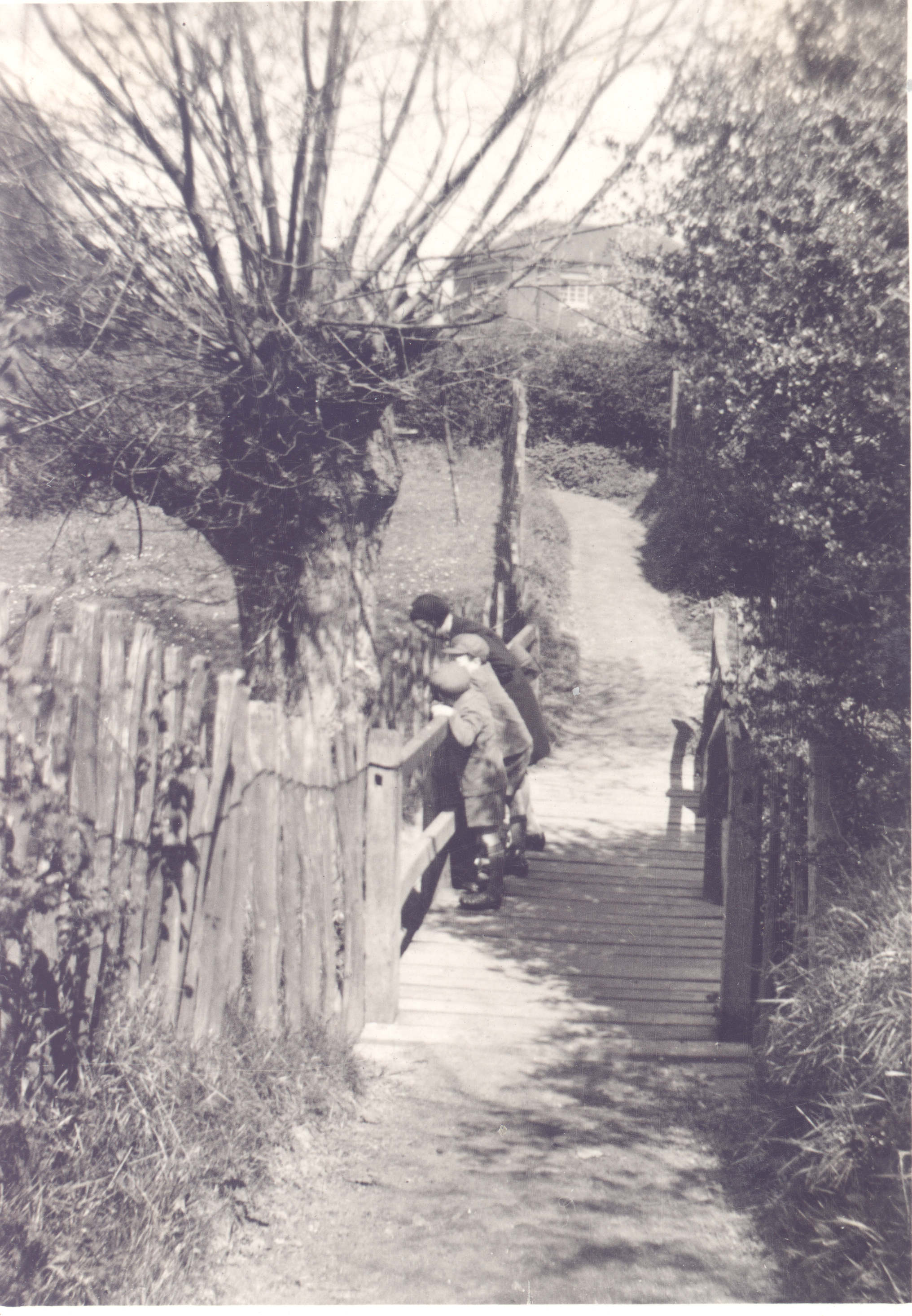
In 1901, Henry Wood Booth along with George and Ellen took a trip to England, and the photographs from this trip are held in the Henry Wood Booth Papers in Cranbrook Archives. I invite you on a virtual “walking” tour of Cranbrook, Kent, using these historical images alongside the same places in the present day.

Cranbrook is a small town situated on the River Crane with an industrial history in iron-making, that goes back to Roman times, and cloth-making, stimulated by the settlement of Flemish weavers in 1331. Cranbrook belongs to a group of towns known as the Weald, which comes from a West Saxon word for “forest”. During the middle ages, Kent was divided into seven “lathes” (an administrative unit peculiar to Kent), and Cranbrook was one of seven “hundreds” (the smallest administrative unit about the same size as a parish) belonging to the lathe of Scray.

The map below pinpoints the places that we will visit so that you can follow the route as we tour the town.

Map_of_walk

Walking tour directions. Google, 2020.

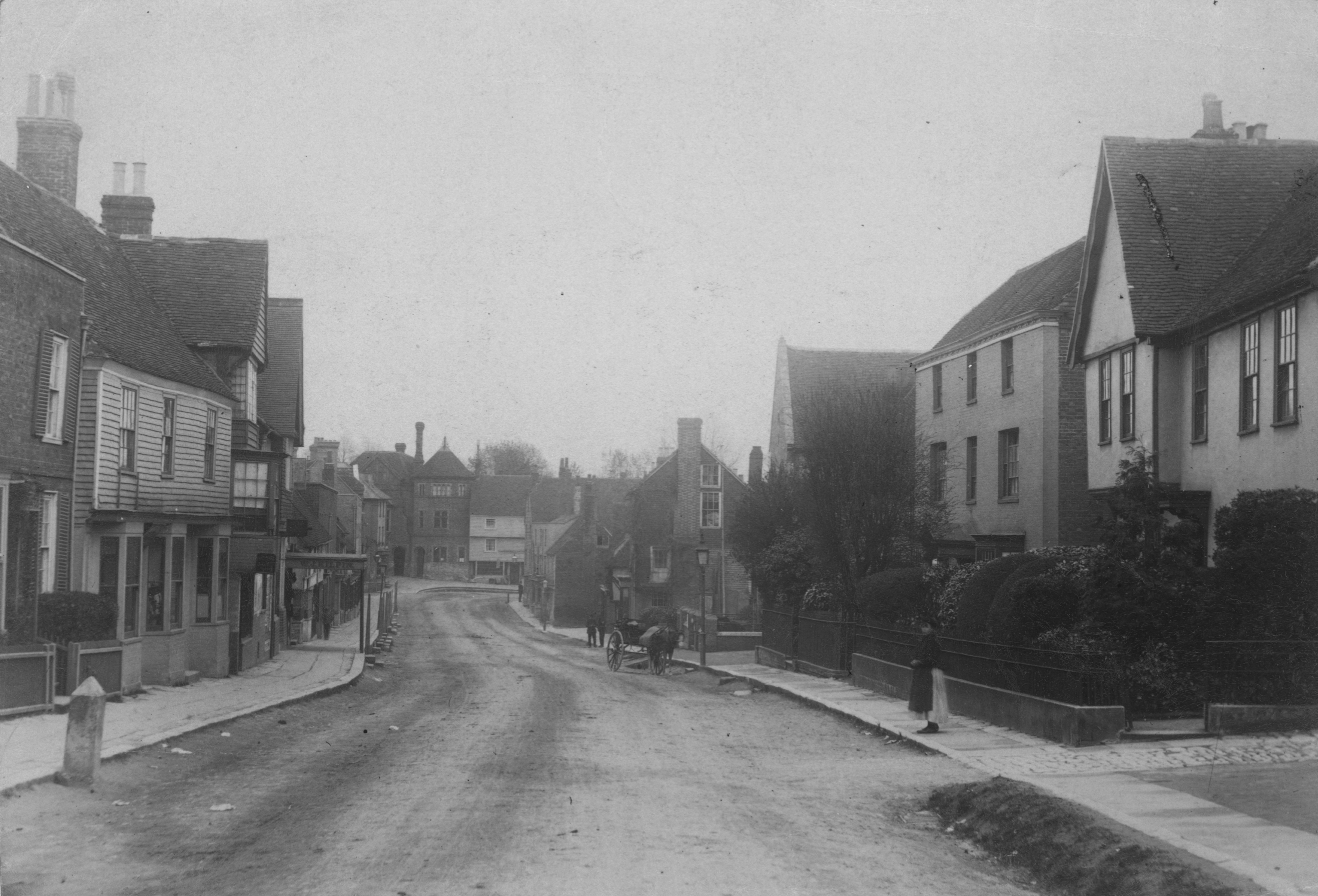
1. View down High Street towards Town Hall

Cranbrook is comprised of one main road, the High Street, which intersects with another smaller road, Stone Street. Most English towns have a “High Street,” just like “Main Street” in the US, and we will begin our tour on the High Street that leads into the town center.

Cranbrook_15

View of the High Street looking down to the Town Hall, 1901. Cranbrook Archives.

Cranbrook_Kent_High_ Street

View of Cranbrook High Street. May 2019. Google.

2. Crane Lane

At the end of the High Street, there is a small lane called Crane Lane. The Booth family lived on the High Street nearby this lane. The symbolism of the Crane is well known on the Cranbrook campus and you can see its history rooted in the etymology of the ancestral Cranbrook, which is named for the gathering of cranes at the brook.

Cranbrook_3

View of Crane Lane, 1901. Cranbrook Archives.

This is a bird’s eye view of Crane Lane showing the brook. If you click and zoom out on the map you can see that it leads to a small unbuilt area and eventually to a road named “Brookside”.

Crane_Lane

Satellite map showing Crane Brook and Crane Lane. 2020. Google.

3. Turning right onto Stone Street – you can see the George Hotel on the right:

Cranbrook_9

View of Stone Street with the George Hotel on the right, 1901. Cranbrook Archives.

The George Hotel is still there today:

Stone Street

View of Stone Street. May 2019. Google.

4. At the intersection of Stone Street and Hill Road, which leads to the Union Mill, there was a blacksmith’s shop on the corner. Henry Wood Booth’s birthplace is on the left on Hill Road:

Cranbrook_16

View of Hill Road leading to Union Mill, 1901. Cranbrook Archives.

The view today is quite similar:

The_Hill_to_Mill

View of Hill Road. May 2019. Google.

Union Mill is the last remaining of four smock mills in Cranbrook. It is still used to grind flour which you can see here.

5. Heading back to the center of town, you can see St. Dunstan’s in the distance:

Cranbrook_8

This is the view today:

Mill_to_St_Dunstans

View looking down Hill Road from the site of the mill. May 2019. Google.

7. St. Dunstan’s Church

You may be familiar with this name from St. Dunstan’s Theatre and St. Dunstan’s Chapel. St. Dunstan’s Church is the parish church of Cranbrook in the Diocese of Canterbury. It is known as the Cathedral in the Weald and, while records show that a church was there almost 1000 years ago, the present building is over 500 years old. St. Dunstan himself is the patron saint of metalsmiths.

Cranbrook_29

St. Dunstan’s Church, 1901. Cranbrook Archives.

In the surrounding area, there are other sites with names that you will recognize from Cranbrook campus, namely Angley Wood and Glassenbury Manor (Kingswood Lake was once called Glassenbury Lake).

I hope you have enjoyed the trip and discovered something new about Cranbrook past and present.

–Laura MacNewman, Associate Archivist

Create a website or blog at WordPress.com